Don’t Believe the Courageous Leadership Lie

Don't Believe the Courageous Leadership Lie

GUEST POST from Robyn Bolton

The business press has a new obsession with courageous leadership.

Harvard Business Review dedicated their September cover story to it. Nordic Business Forum built an entire 2024 conference around it. BetterUp, McKinsey, and dozens of thought leaders and influencers can’t stop talking about it.

Here’s what they’re all telling you: If you’re playing it safe, stuck in analysis paralysis, not innovating fast enough, or not making bold moves, then you are the problem because you lack courage.

Here’s what they’re not telling you: You don’t have a courage problem. You have a systems problem.

The Real Story Behind “Courage Gaps”

The VP was anything but cowardly. She had a track record of bold moves and wasn’t afraid of hard conversations. The CEO wanted to transform the company by moving from a product-only focus to one offering holistic solutions that combined hardware, software, and services. This VP was the obvious choice.

Her team came to her with a ideas that would reposition the company for long-term growth. She loved it. They tested the ideas. Customers loved them. But not a single one ever launched.

It wasn’t because the VP or the CEO lacked courage. It was because the board measured success in annual improvements, the CEO’s compensation structure rewarded short-term performance, and the VP required sign-off from six different stakeholders who were evaluated on risk mitigation. At every level, the system was designed to kill bold ideas. And it worked.

This is the inconvenient truth the courage press ignores.

That success doesn’t just require leaders who are courageous, it requires organizational architecture that systematically rewards courage and manages risk.

What We’re Really Asking Leaders to Overcome

Consider what we’re actually asking leaders to be courageous against:

  • Compensation structures tied to short-term metrics
  • Risk management processes designed to say “no”
  • Approval hierarchies where one skeptic can overrule ten enthusiasts
  • Cultures where failed experiments end careers

The courage discourse lets broken systems off the hook.

It’s easier to sell “10 Ways to Build Leadership Courage” than to admit that organizational incentives, governance structures, and cultural norms are actively working against the bold moves we tell leaders to make.

What Actually Enables Courageous Leadership.

I’m not arguing that there isn’t a need for individual courage. There is.

But telling someone to “be braver” when their organizational architecture punishes bravery is like telling someone to swim faster in a pool filled with Jell-O.

If we want courage, we need to fix the things the systems that discourage it:

  • Align incentives with the time horizon of the decisions you want made
  • Create explicit permission structures for experimentation
  • Build decision-making processes that don’t require unanimous consent
  • Separate “learning investments” from “performance expectations” when measuring results
  • Make the criteria for bold moves clear, not subject to whoever’s in the room

But doing this is a lot harder than buying books about courage.

The Bottom Line

When you fix the architecture, you don’t need to constantly remind people to be brave because the system enables. Individual courage becomes the expectation, not the exception.

The real question isn’t whether your leaders need courage.

It’s whether your organization has the architecture to let them use it.

If you can’t answer that question, that’s not a courage problem.

That’s a design problem.

And design is something that, as a leader, you can actually control.

Image credit: Unsplash

Subscribe to Human-Centered Change & Innovation WeeklySign up here to join 17,000+ leaders getting Human-Centered Change & Innovation Weekly delivered to their inbox every week.

We Must Stop Worshiping Algorithms

We Must Stop Worshiping Algorithms

GUEST POST from Greg Satell

In 1954 the economist Paul Samuelson received a postcard from his friend Jimmie Savage asking, “ever hear of this guy?” The ”guy” in question was Louis Bachelier, an obscure mathematician who wrote a dissertation in 1900 that anticipated Einstein’s famous paper on Brownian motion published five years later.

The operative phrase in Bachelier’s paper, “the mathematical expectation of the speculator is zero,” was as powerful as it was unassuming. It implied that markets could be tamed using statistical techniques developed more than a century earlier and would set us down the path that led to the 2008 financial crisis.

For decades we’ve been trying to come up with algorithms to help us engineer our way out of uncertainty and they always fail for the same reason: the world is a messy place. Trusting our destiny to mathematical formulas does not eliminate human error, it merely gives preference to judgements encoded in systems beforehand over choices made by people in real time.

The False Promise Of Financial Engineering

By the 1960s a revolution in mathematical finance, based on Bachelier’s paper and promoted by Samuelson, began to gain momentum. A constellation of new discoveries such as efficient portfolios, the capital asset pricing model (CAPM) and, later, the Black-Scholes model for options pricing created a standard model for thinking about economics and finance.

As things gathered steam, Samuelson’s colleague at MIT, Paul Cootner, compiled the most promising papers in a 500-page tome, The Random Character of Stock Market Prices, which became an instant classic. The book would become a basic reference for the new industries of financial engineering and risk management that were just beginning to emerge at the time.

However, early signs of trouble were being ignored. Included in Cootner’s book was a paper by Benoit Mandelbrot that warned that there was something seriously wrong afoot. He showed, with very clear reasoning and analysis, that actual market data displayed far more volatility than was being predicted. In essence, he was pointing out that Samuelson and his friends were vastly underestimating risk in the financial system.

Leading up to the Great Recession, other warning signs would emerge, such as the collapse of LTCM hedge fund in 1998 and of Enron three years later, but the idea that mathematical formulas could engineer risk out of the system endured. The dreams turned to nightmares in 2008, when the entire house of cards collapsed into the worst financial crisis since the 1930s.

The Road To Shareholder Value

By 1970, Samuelson’s revolution in economics was well underway, but companies were still run much as they were for decades. Professional managers ran companies according to their best judgment about what was best for their shareholders, customers, employees and the communities that they operated in, which left room for variance in performance.

That began to change when Milton Friedman, published an Op-Ed in The New York Times, which argued that managers had only one responsibility: to maximize shareholder value. Much like Bachelier’s paper, Friedman’s assertion implied a simple rule-of-thumb with only one variable to optimize for, rather than personal judgement, should govern.

This was great news for people managing businesses, who no longer had to face the same complex tradeoffs when making decisions. All they had to worry about was whether the stock price went up. Rather than having to choose between investing in factories and equipment to produce more product, or R&D to invent new things, they could simply buy back more stock.

The results are now in and they are abysmal. Productivity growth has been depressed since the 1970s. While corporate profits have grown as a percentage of GDP, household incomes have decoupled from economic growth and stagnated. Markets are less free and less competitive. Even social mobility in the US, the ability for ordinary people to achieve the American dream, has been significantly diminished.

The Chimera Of “Consumer Welfare”

The Gilded Age in America that took place at the end of the 19th century was a period of rapid industrialization and the amassing of great wealth. As railroads began to stretch across the continent, the fortunes of the Rockefellers, Vanderbilts, Carnegies and Morgans were built. The power of these men began to rival governments.

It was also an era of great financial instability. The Panic of 1873 and the Panic of 1893 devastated a populace already at the mercy of the often avaricious tycoons who dominated the marketplace. The Sherman Antitrust Act of 1890 and the Clayton Antitrust Act of 1914 were designed to re-balance the scales and bring competition back to the market.

For the most part they were successful. The breakup of AT&T in the 1980s paved the way for immense innovation in telecommunications. Antitrust action against IBM paved the way for the era of the PC and regulatory action against Microsoft helped promote competition in the Internet. American markets were the most competitive in the world.

Still, competition is an imprecise term. Robert Bork and other conservative legal thinkers wanted a simple, more precise standard, based on consumer welfare. In their view, for regulators to bring action against a company, they had to show that the firm’s actions raise the prices of goods or services.

Here again, human judgment was replaced with an algorithmic approach that led to worse outcomes. Over 75% of industries have seen a rise in industry concentration levels since the late 1990s, which has helped to bring about a decline in business dynamism and record income inequality.

The Chimera Of Objectivity

Humans can be irrational and maddening. Decades of research have shown that, when given the exact same set of facts, even experts will make very different assessments. Some people will be more strict, others more lenient. Some of us are naturally optimistic, others are cynics. A family squabble in the morning can affect the choices we make all day.

So it’s not unreasonable to want to improve quality and reduce variance in our decision making by taking a more algorithmic approach by offering clear sets of instructions that hold sway no matter who applies them. They promise to make things more reliable, reduce uncertainty and, hopefully, improve effectiveness.

Yet as Yassmin Abdel-Magied and I explained in Harvard Business Review, algorithms don’t eliminate human biases, they merely encode them. Humans design the algorithms, collect the data that form the basis for decisions and interpret the results. The notion that algorithms are purely objective is a chimera.

The problem with algorithms is that they encourage us to check out, to fool ourselves into thinking we’ve taken human error out of the system and stop paying attention. They allow us to escape accountability, at least for a while, as we pass the buck to systems that spit out answers which affect real people.

Over the past 20 or thirty years, we’ve allowed this experiment to play out and the results have been tragic. It’s time we try something else.

— Article courtesy of the Digital Tonto blog
— Image credit: Google Gemini (NanoBanana)

Subscribe to Human-Centered Change & Innovation WeeklySign up here to join 17,000+ leaders getting Human-Centered Change & Innovation Weekly delivered to their inbox every week.

Team Conflict Isn’t Always Bad

Team Conflict Isn't Always Bad

GUEST POST from David Burkus

Conflict on teams is inevitable. But here’s the real question: does it need to be resolved? Not always. In fact, the type of conflict matters just as much as how you address it. Some conflicts demand immediate resolution, while others can be channeled into creativity and progress. Knowing the difference is critical to leading a team effectively.

At its core, conflict on teams falls into two categories: personal conflict and task-focused conflict. Personal conflict is what most of us think of first—tensions that get personal, unkind remarks, or behaviors that erode respect. Left unaddressed, this type of conflict undermines trust and productivity. Task-focused conflict, however, is entirely different. This is the natural tension that arises from diverse ideas and perspectives. It’s not a problem to be solved; it’s a tool to be harnessed. Handled well, task-focused conflict can propel a team forward.

Let’s look at both in depth—how to resolve personal conflict and how to channel task-focused conflict into better outcomes for the team.

Resolving Personal Conflict

When personal conflict on teams arises, it can feel uncomfortable, even awkward, to step in as a leader. Yet the cost of avoiding it is far greater. Toxic behavior, left unchecked, damages the entire team. Addressing it quickly and thoughtfully is key to maintaining a healthy team dynamic.

The best approach often begins with a private, one-on-one conversation. For less overt issues—like someone cutting a teammate off during a meeting or taking a criticism too far—pulling the individual aside after the fact is often more effective than addressing it publicly. Explain what you observed, how it impacts the team, and what needs to change. Your goal isn’t to embarrass them but to guide them toward more constructive behavior.

When the conflict on teams involves repeated tensions between two people, start with separate conversations. This allows you to understand each person’s perspective and identify the root of the issue. Once you’ve done that, consider bringing them together for a mediated discussion. The goal isn’t to force them to like each other but to secure a commitment to respect and professional behavior. Over time, if people consistently act respectfully, they often grow to genuinely respect one another — a win for everyone involved.

Whatever the situation, don’t wait to act. Personal conflict that lingers becomes a poison to the team. Address it early, directly, and consistently. Your willingness to confront these issues sends a powerful message about what kind of culture your team will have — a culture of respect and accountability.

Harnessing Task-Focused Conflict on Teams

Task-focused conflict, by contrast, is not something to resolve. It’s something to embrace. Teams are made up of individuals with different experiences, perspectives, and ideas. That’s their strength. When these differences lead to debates over the best course of action, your role as a leader isn’t to shut it down. It’s to create the conditions where productive conflict can thrive.

The first step is to foster an environment where everyone feels safe sharing their ideas. Too often, leaders assume they’ve created space for feedback simply by asking, “What does everyone think?” at the end of a meeting. But vague invitations rarely lead to meaningful input. Instead, make feedback an active part of your team’s discussions. One approach is to explicitly ask for “builds” and “flags.” Builds are suggestions that add to or improve an idea. Flags are concerns or alternative approaches. This framework encourages participation and ensures that all voices are heard.

Equally important is creating psychological safety—the sense that team members can share dissenting ideas without fear of judgment or retaliation. This starts with you as a leader. When you express doubt, admit uncertainty, or genuinely invite feedback, you show vulnerability. That vulnerability signals trust, which is the foundation of psychological safety. But it’s not enough to invite ideas; you must also respond to them with respect. Engage fully, listen actively, and ensure that team members feel heard. A team that trusts its leader and each other will embrace conflict as a pathway to better solutions.

When it comes time to respond to conflicting ideas, focus on the assumptions behind them rather than the ideas themselves. People often tie their identities to their ideas, which can make critique feel personal. But assumptions are different. They can be questioned without sparking defensiveness. For example, if a debate arises about project timelines, you might uncover that one person assumes it will take six months while another assumes a year. By exploring these assumptions, the team can arrive at a clearer understanding—and a better decision.

When the Team Can’t Agree

Despite your best efforts, there will be times when the team can’t reach consensus. This is where your leadership is most crucial. After everyone has had the opportunity to share their perspective, it’s time to decide and move forward. This is the principle of “disagree and commit.”

Make it clear that every voice matters and that the decision-making process is the team’s opportunity to influence the outcome. But once a decision is made—whether by consensus or by you as the leader—it’s time for everyone to align and commit. The team must understand that revisiting the debate later is not an option. This clarity ensures that even unresolved disagreements don’t derail progress.

Turning Conflict Into a Strength

Conflict on teams isn’t inherently bad. In fact, task-focused conflict is one of the best tools a team has for finding innovative solutions. The challenge is in how you, as a leader, handle it. Personal conflict needs resolution, quickly and thoughtfully. Task-focused conflict needs space to flourish, guided by a culture of respect and psychological safety.

When managed well, conflict on teams transforms from a source of tension into a driver of success. It pushes teams to consider new perspectives, challenge assumptions, and arrive at better outcomes. As a leader, your job isn’t to eliminate conflict. It’s to create an environment where it can be constructive, where it can make your team stronger.

Conflict on teams isn’t something to fear. It’s something to embrace. And when you do, you’ll find that the best ideas—and the best teams—are forged through it.

Image credit: Pixabay

Subscribe to Human-Centered Change & Innovation WeeklySign up here to get Human-Centered Change & Innovation Weekly delivered to your inbox every week.front

Distributed Quantum Computing

Unleashing the Networked Future of Human Potential

LAST UPDATED: November 21, 2025 at 5:49 PM

Distributed Quantum Computing

GUEST POST from Art Inteligencia

For years, quantum computing has occupied the realm of scientific curiosity and theoretical promise. The captivating vision of a single, powerful quantum machine capable of solving problems intractable for even the most potent classical supercomputers has long driven research. However, the emerging reality of practical, fault-tolerant quantum computation is proving to be less about a single monolithic giant and more about a network of interconnected quantum resources. Recent news, highlighting major collaborations between industry titans, signals a pivotal shift: the world is moving aggressively towards Distributed Quantum Computing.

This isn’t merely a technical upgrade; it’s a profound architectural evolution that will dramatically accelerate the realization of quantum advantage and, in doing so, demand a radical human-centered approach to innovation, ethics, and strategic foresight across every sector. For leaders committed to human-centered change, understanding this paradigm shift is not optional; it’s paramount. Distributed quantum computing promises to unlock unprecedented problem-solving capabilities, but only if we proactively prepare our organizations and our people to harness its immense power ethically and effectively.

The essence of Distributed Quantum Computing lies in connecting multiple, smaller quantum processors — each a “quantum processing unit” (QPU) — through quantum networks. This allows them to function collectively as a much larger, more powerful, and inherently more resilient quantum computer, capable of tackling problems far beyond the scope of any single QPU. This parallel, networked approach will form the bedrock of the future quantum internet, enabling a world where quantum resources are shared, secured, and scaled globally to address humanity’s grand challenges.

The Three-Dimensional Impact of Distributed Quantum Computing

The strategic shift to distributed quantum computing creates a multi-faceted impact on innovation and organizational design:

1. Exponential Scaling of Computational Power

By linking individual QPUs into a cohesive network, we overcome the physical limitations of building ever-larger single quantum chips. This allows for an exponential scaling of computational power that dramatically accelerates the timeline for solving currently intractable problems in areas like molecular simulation, complex optimization, and advanced cryptography. This means a faster path to new drugs, revolutionary materials, and genuinely secure communication protocols for critical infrastructure.

2. Enhanced Resilience and Fault Tolerance

Individual QPUs are inherently susceptible to noise and errors, a significant hurdle for practical applications. A distributed architecture offers a robust path to fault tolerance through redundancy and sophisticated error correction techniques spread across the entire network. If one QPU encounters an error, the network can compensate, making quantum systems far more robust and reliable for real-world, long-term quantum solutions.

3. Distributed Data & Security Implications

Quantum networks will enable the secure distribution of quantum information, paving the way for truly unbreakable quantum communication (e.g., Quantum Key Distribution – QKD) and distributed quantum sensing. This has massive implications for national security, the integrity of global financial transactions, and any domain requiring ultra-secure, decentralized data handling. Concurrently, it introduces pressing new considerations for data sovereignty, ethical data access, and the responsible governance of this powerful technology.

Key Benefits for Human-Centered Innovation and Change

Organizations that proactively engage with and invest in understanding distributed quantum computing will gain significant competitive and societal advantages:

  • Accelerated Breakthroughs: Dramatically faster discovery cycles in R&D for pharmaceuticals, advanced materials science, and clean energy, directly impacting human health, environmental sustainability, and quality of life.
  • Unprecedented Problem Solving: The ability to tackle highly complex optimization problems (e.g., global logistics, nuanced climate modeling, real-time financial market predictions) with a level of accuracy and speed previously unimaginable, leading to greater efficiency and resource allocation.
  • New Security Paradigms: The capacity to develop next-generation, quantum-resistant encryption and establish truly unhackable communication networks, profoundly protecting critical infrastructure, sensitive data, and individual privacy against future threats.
  • Decentralized Innovation Ecosystems: Foster entirely new models of collaborative research and development where diverse organizations can securely pool quantum resources, accelerating open science initiatives and tackling industry-wide challenges more effectively.
  • Strategic Workforce Transformation: Drives the urgent need for comprehensive up-skilling and re-skilling programs in quantum information science, preparing a human workforce capable of designing, managing, and ethically leveraging quantum solutions, ensuring human oversight and value creation.

Case Study 1: Pharma’s Quantum Drug Discovery Network

Challenge: Simulating Complex Protein Folding for Drug Design

A global pharmaceutical consortium faced an intractable problem: accurately simulating the dynamic folding behavior of highly complex proteins to design targeted drugs for debilitating neurological disorders. Classical supercomputers could only approximate these intricate molecular interactions, leading to incredibly lengthy, expensive, and often unsuccessful trial-and-error processes in drug synthesis.

Distributed Quantum Intervention:

The consortium piloted a collaborative Distributed Quantum Simulation Network. Instead of one pharma company trying to acquire or develop a single, massive QPU, they leveraged a quantum networking solution to securely link smaller QPUs from three different member labs (each in a separate geographical location). Each QPU was assigned to focus on simulating a specific, interacting component of the target protein, and the distributed network then combined their entangled computational power to run highly complex simulations. Advanced quantum middleware managed the secure workload distribution and the fusion of quantum data.

The Human-Centered Lesson:

This networked approach allowed for a level of molecular simulation previously impossible, significantly reducing the vast search space for new drug candidates. It fostered unprecedented, secure collaboration among rival labs, effectively democratizing access to cutting-edge quantum resources. The consortium successfully identified several promising lead compounds within months, reducing R&D costs by millions and dramatically accelerating the potential path to a cure for a debilitating disease. This demonstrated that distributed quantum computing not only solves technical problems but also catalyzes human collaboration for greater collective societal good.

Case Study 2: The Logistics Giant and Quantum Route Optimization

Challenge: Optimizing Global Supply Chains in Real-Time

A major global logistics company struggled profoundly with optimizing its vast, dynamic, and interconnected supply chain. Factors like constantly fluctuating fuel prices, real-time traffic congestion, unforeseen geopolitical disruptions, and the immense complexity of last-mile delivery meant their classical optimization algorithms were perpetually lagging, leading to significant inefficiencies, increased carbon emissions, and frequently missed delivery windows.

Distributed Quantum Intervention:

The company made a strategic investment in a dedicated quantum division, which then accessed a commercially available Distributed Quantum Optimization Service. This advanced service securely connected their massive logistics datasets to a network of QPUs located across different cloud providers globally. The distributed quantum system could process millions of variables and complex constraints in near real-time, constantly re-optimizing routes, warehouse inventory, and transportation modes based on live data feeds from myriad sources. The output was not just a single best route, but a probabilistic distribution of highly optimal solutions.

The Human-Centered Lesson:

The quantum-powered optimization led to an impressive 15% reduction in fuel consumption (and thus emissions) and a 20% improvement in on-time delivery metrics. Critically, it freed human logistics managers from the constant, reactive fire-fighting, allowing them to focus on high-level strategic planning, enhancing customer experience, and adapting proactively to unforeseen global events. The ability to model complex interdependencies across a distributed network empowered human decision-makers with superior, real-time insights, transforming a historically reactive operation into a highly proactive, efficient, and sustainable one, all while significantly reducing their global carbon footprint.

Companies and Startups to Watch in Distributed Quantum Computing

The ecosystem for distributed quantum computing is rapidly evolving, attracting significant investment and innovation. Key players include established tech giants like IBM (with its quantum networking efforts and Quantum Network Units – QNUs) and Cisco (investing heavily in the foundational quantum networking infrastructure). Specialized startups are also emerging to tackle the unique challenges of quantum interconnectivity, hardware, and middleware, such as Quantum Machines (for sophisticated quantum control systems), QuEra Computing (pioneering neutral atom qubits for scalable architectures), and PsiQuantum (focused on photonic quantum computing with a long-term goal of fault tolerance). Beyond commercial entities, leading academic institutions like QuTech (TU Delft) are driving foundational research into quantum internet protocols and standards, forming a crucial part of this interconnected future.

The Human Imperative: Preparing for the Quantum Era

Distributed quantum computing is not a distant fantasy; it is an active engineering and architectural challenge unfolding in real-time. For human-centered change leaders, the imperative is crystal clear: we must begin preparing our organizations, developing our talent, and establishing robust ethical frameworks today, not tomorrow.

This means actively fostering quantum literacy across our workforces, identifying strategic and high-impact use cases, and building diverse, interdisciplinary teams capable of bridging the complex gap between theoretical quantum physics and tangible, real-world business and societal value. The future of innovation will be profoundly shaped by our collective ability to ethically harness this networked computational power, not just for unprecedented profit, but for sustainable progress that genuinely benefits all humanity.

“The quantum revolution isn’t coming as a single, overwhelming wave; it’s arriving as a distributed, interconnected network. Our greatest challenge, and our greatest opportunity, is to consciously connect the human potential to its immense power.”

Frequently Asked Questions About Distributed Quantum Computing

1. What is Distributed Quantum Computing?

Distributed Quantum Computing involves connecting multiple individual quantum processors (QPUs) via specialized quantum networks to work together on complex computations. This allows for far greater processing power, enhanced resilience through fault tolerance, and broader problem-solving capability than any single quantum computer could achieve alone, forming the fundamental architecture of a future “quantum internet.”

2. How is Distributed Quantum Computing different from traditional quantum computing?

Traditional quantum computing focuses on building a single, monolithic, and increasingly powerful quantum processor. Distributed Quantum Computing, in contrast, aims to achieve computational scale and inherent fault tolerance by networking smaller, individual QPUs. This architectural shift addresses physical limitations and enables new applications like ultra-secure quantum communication and distributed quantum sensing that are not feasible with single QPUs.

3. What are the key benefits for businesses and society?

Key benefits include dramatically accelerated breakthroughs in critical fields like drug discovery and advanced materials science, unprecedented optimization capabilities for complex problems (e.g., global supply chains, climate modeling), enhanced data security through quantum-resistant encryption, and the creation of entirely new decentralized innovation ecosystems. It also highlights the urgent need for strategic workforce transformation and robust ethical governance frameworks to manage its powerful implications.

Disclaimer: This article speculates on the potential future applications of cutting-edge scientific research. While based on current scientific understanding, the practical realization of these concepts may vary in timeline and feasibility and are subject to ongoing research and development.

Image credit: Google Gemini

Subscribe to Human-Centered Change & Innovation WeeklySign up here to get Human-Centered Change & Innovation Weekly delivered to your inbox every week.

Secrets to Innovating Within a Successful Company

Secrets to Innovating Within a Successful Company

GUEST POST from Mike Shipulski

If you’re trying to innovate within a successful company, I have one word for you: Don’t.

You can’t compete with the successful business teams that pay the bills because paying the bills is too important. No one in their right mind should get in the way of paying them. And if you do put yourself in the way of the freight train that pays the bills you’ll get run over. If you want to live to fight another day, don’t do it.

If an established business has been growing three percent year-on-year, expect them to grow three percent next year. Sure, you can lather them in investment, but expect three and a half percent. And if they promise six percent, don’t believe them. In fairness, they truly expect they can grow six percent, but only because they’re drinking their own Cool-Aid.

Rule 1: If they’re drinking their own Kool-Aid, don’t believe them.

Without a cataclysmic problem that threatens the very existence of a successful company, it’s almost impossible to innovate within its four walls. If there’s no impending cataclysm, you have two choices: leave the four walls or don’t innovate.

It’s great to work at successful company because it has a recipe that worked. And it sucks to work at a successful company because everyone thinks that tired old recipe will work for the next ten years. Whether it will work for the next ten or it won’t, it’s still a miserable place to work if you want to try something new. Yes, I said miserable.

What’s the one thing a successful company needs? A group of smart people who are actively dissatisfied with the status quo. What’s the one thing a successful company does not tolerate? A group of smart people who are actively dissatisfied with the status quo.

Some experts recommend leveraging (borrowing) resources from the established businesses and using them to innovate. If the established business catches wind that their borrowed resources will be used to displace the status quo, the resources will mysteriously disappear before the innovation project can start. Don’t try to borrow resources from established businesses and don’t believe the experts.

Instead of competing with established businesses for resources, resources for innovation should be allocated separately. Decide how much to spend on innovation and allocate the resources accordingly. And if the established businesses cry foul, let them.

Instead of borrowing resources from established businesses to innovate, increase funding to the innovation units and let them buy resources from outside companies. Let them pay companies to verify the Distinctive Value Proposition (DVP); let them pay outside companies to design the new product; let them pay outside companies to manufacture the new product; and let them pay outside companies to sell it. Sure, it will cost money, but with that money you will have resources that put their all into the design, manufacture and sale of the innovative new offering. All-in-all, it’s well worth the money.

Don’t fall into the trap of sharing resources, especially if the sharing is between established businesses and the innovative teams that are charged with displacing them. And don’t fall into the efficiency trap. Established businesses need efficiency, but innovative teams need effectiveness.

It’s not impossible to innovate within a successful company, but it is difficult. To make it easier, error on the side of doing innovation outside the four walls of success. It may be more expensive, but it will be far more effective. And it will be faster. Resources borrowed from other teams work the way they worked last time. And if they are borrowed from a successful team, they will work like a successful team. They will work with loss aversion. Instead of working to bring something to life they will work to prevent loss of what worked last time. And when doing work that’s new, that’s the wrong way to work.

The best way I know to do innovation within a successful company is to do it outside the successful company.

Image credit: Google Gemini

Subscribe to Human-Centered Change & Innovation WeeklySign up here to join 17,000+ leaders getting Human-Centered Change & Innovation Weekly delivered to their inbox every week.

Creating Memorable Experiences to Drive Loyalty

Memory-Driven CX

Creating Memorable Experiences to Drive Loyalty

GUEST POST from Shep Hyken

Why do customers come back to the places where they love to do business? Our annual customer experience research ranked the top experiences that get customers to come back:

  • Helpful employees
  • Knowledgeable employees
  • Friendly employees
  • A convenient experience
  • Hassle-free shipping and delivery
  • Easy returns
  • Personalized experiences
  • Empathy

The decision to come back could include any one of these or a combination of items on this list — or anything else that the customer experiences the first or last time they did business with the company or brand. The point is that it’s not the experience itself that drives loyalty — it’s the memory of the experience that truly determines loyalty.

This subtle but powerful distinction explains why some businesses enjoy fierce loyalty. The customer’s memory creates an emotional connection that transforms a simple transaction into one of many interactions—in other words, a repeat and/or loyal customer. A recent MarTech article about creating these emotional connections through CX memories and how B2B and B2C brands are winning over customers with “memory-driven CX” included some compelling ideas that validate this concept. The article emphasized the power of a sentence that starts with the words, “Remember when. …” It turns out that the memory of a good experience can boost dopamine in the brain, and the result is that customers are more likely to trust and stay with the brand.

And that is the basis of an emotional connection. Dopamine is a chemical the brain releases that makes you feel good. This chemical release potentially happens twice: during the actual interaction with the brand and when the customer recalls the interaction at a later time and date.

This doesn’t happen by accident. Just as a brand can be purposeful about giving the customer an experience worthy of remembering, it can also be purposeful about getting the customer to recall the experience.

Certain companies have done this at scale. Chewy, the online pet supply retailer, sends birthday cards to its customers’ pets. The cards are often personalized with the pet’s name. Starbucks sends its “members” a free drink or food item for their birthday. It also celebrates “coffee anniversaries,” reminding customers of when they first joined its rewards program. Netflix sends a “What We Watched” summary of what its subscribers have watched in the past year.

You don’t have to be a recognizable brand to do this. Any size company—in any industry—can do the same with a little thought and this five-step process:

  1. Create the Experience: First, you must deliver an experience that is positive and worth remembering.
  2. Identify Key Touchpoints: Map the customer journey (if you haven’t already done so) and identify the key touchpoints that could have the highest emotional impact.
  3. Enhance the Key Touchpoints: Once you’ve identified the impactful touchpoints, engineer them to become memorable. For example, Trader Joe’s, the grocery store chain, trains its employees to interact with customers when they check out, enthusiastically commenting about what’s in the customer’s cart. This last impression leaves a lasting impression.
  4. Design a Follow-Up Campaign: Design a campaign similar to Chewy, Starbucks or Netflix that reminds the customer why they enjoy doing business with you.
  5. Measure the Impact: Don’t assume the prior four steps are working. Ask or survey your customers to ensure you’ve created the “Remember When” experience that will help drive repeat business.

When customers are excited about their experience, they say, “I’ll be back.” Taking that to the next level is doing something that gets the customer to think back on the experience, creating a “Remember When” dopamine reaction moment. That reinforces the original (or last) experience the customer had with you. By deliberately creating experiences worth remembering and then helping customers remember those memories, you are increasing the chances of the customer coming back. And the more they come back, the more likely they are to become a coveted loyal customer.

Image credit: Pexels

This article originally appeared on Forbes.com

Subscribe to Human-Centered Change & Innovation WeeklySign up here to join 17,000+ leaders getting Human-Centered Change & Innovation Weekly delivered to their inbox every week.

It’s the Customer Baby!

Bringing the Voice of the Customer Together with a Pursuit of Excellence

LAST UPDATED: November 19, 2025 at 9:37AM

It's the Customer Baby!

by Braden Kelley

One treat at Customer Contact Week (CCW) in Nashville recently was having the opportunity to see and hear basketball legend Dick Vitale. I can’t all share all of the stories here, but one thing that stuck with me from his musings were that the keys to a successful life are passion, preparation and perseverance.

Whether you are successful at anything you attempt is going to come down to your desire, dedication, determination and discipline. AND, guiding your life by eternally asking yourself the following question:

“Was I better today than I was yesterday?”

After Dick Vitale’s talk I attended a few other sessions throughout the day, including one of the Voice of the Customer (VOC) with Tisha Cole of Kenvue. Key session insights include:

The core theme emerging from the session centers on the strategic interpretation and deployment of Voice of the Customer (VOC) data to drive tangible business value. A critical finding is the frequent decoupling of customer sentiment metrics, like Net Promoter Score (NPS), and actual purchase behavior or revenue. This suggests a scenario where customers may express dissatisfaction yet remain “trapped” due to high switching costs or lack of viable alternatives, highlighting the need to look beyond simple scores. To move from raw data to action, organizations must focus on actionable data — tying survey results and other VOC sources to operational metrics to identify specific levers. Analyzing trending topics in sentiment and breaking down verbatims against people, process, and technology provides the necessary granularity to pinpoint the root cause of issues and determine which business function (HR, Finance, etc.) is responsible for influencing the relevant outputs and value drivers.

Effectively leveraging VOC insights also requires robust governance and communication strategies. A significant challenge is defining ownership of insights when multiple groups within an organization are collecting customer feedback, which can lead to fragmented or inconsistent action. To ensure that the data creates value, a Cascade Calendar approach is vital for sharing VOC insights with all relevant teams, facilitating meetings where the information can be discussed and acted upon. Furthermore, as organizations increasingly use AI to process vast amounts of unstructured data like customer recordings, the quality of the analysis depends on the input; utilizing prompts that stress “make no assumptions” can help ensure the AI extracts genuine, unbiased themes from advisory boards and other feedback sources.

🏀 Applying the Fundamentals to Customer Strategy

Ultimately, the challenge of leveraging Voice of the Customer (VOC) data — whether it’s overcoming the disconnect between NPS and revenue, ensuring ownership of insights, or setting up a Cascade Calendar for sharing — comes down to applying the fundamentals of passion, preparation, and perseverance.

The pursuit of truly actionable data requires the passion to look beyond easy vanity metrics and deeply analyze the roots of customer sentiment across people, process, and technology. It demands the preparation to integrate disparate VOC sources with operational metrics, ensuring you aren’t just collecting data but building genuine intelligence. And finally, it requires the perseverance to navigate organizational complexity, break down departmental silos, and consistently act on the insights, even when the required changes are difficult.

Just as Dick Vitale suggests we ask, “Was I better today than I was yesterday?”, organizations must ask themselves: “Was our customer experience better today than it was yesterday?” By dedicating your organization to the determination and discipline of VOC management, you move past simply tracking customer complaints and begin the continuous, dedicated process of making the customer experience undeniably “Diaper Dandy.”

Image credits: Customer Contact Week (CCW)

Content Authenticity Statement: The topic area, key elements to focus on, insights captured from the Customer Contact Week session, panelists to mention, etc. were decisions made by Braden Kelley, with a little help from Google Gemini to clean up the article.

Subscribe to Human-Centered Change & Innovation WeeklySign up here to get Human-Centered Change & Innovation Weekly delivered to your inbox every week.

Achieve Transformational Success with ‘Charting Change’

Save Until November 30, 2025 on the Softcover and eBook

Achieve Transformational Success with 'Charting Change'

📢 Attention Change Agents: Master the Art of Transformation with Charting Change!

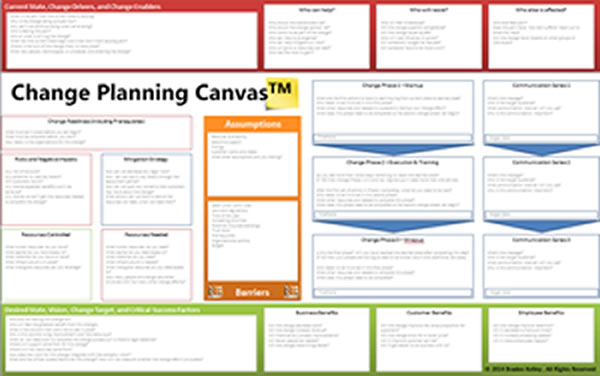
As a Human-Centered Change and Innovation professional, I’ve seen firsthand how often brilliant initiatives falter because they neglect the most critical element: the people. That’s why I created the Human-Centered Change methodology and the Change Planning Canvas™ — a collaborative, visual approach to making change stick.

I’m thrilled to announce that the Second Edition of my best-selling book, Charting Change: A Visual Toolkit for Making Change Stick, is now available for the incredibly low price of just $17.99 for the softcover (FREE shipping worldwide) and eBook versions directly from my publisher! Don’t miss this opportunity to acquire an essential toolkit that will transform how you lead.


🛠️ Your Benefits: A New and Expanded Toolkit for Success

The Second Edition isn’t just a reprint; it’s a major expansion, born from user feedback and the accelerating pace of today’s business environment. When you grab your copy, you are investing in a comprehensive, practical guide that will help you beat the painful 70% change failure rate.

1. Expanded Coverage on Critical Modern Topics

I’ve added four new chapters to equip you for the complex, interconnected challenges of the 21st-century organization:

  • Architecting for Change: Learn how organizational design and business architecture work together to create a flexible, resilient structure, rather than just forcing change onto a rigid system.
  • Systems Thinking: Understand that change doesn’t happen in a vacuum. You’ll gain a holistic view of your organization as a complex system, allowing you to anticipate and manage ripple effects.
  • Digital Transformation: Get a clear roadmap for executing successful digital shifts that are human-centered—focusing on customer and employee experience, not just the technology.
  • Building a Continuous Change Culture: Move beyond one-off projects and discover how to hard-wire organizational agility into your DNA, making your company a learning machine ready for the future.

Change Planning Canvas

2. Access to the Core Change Planning Toolkit

Every book purchase grants you a complimentary Basic License to the Change Planning Toolkit™! This is invaluable, providing you with access to 26 of my 70+ frameworks and visual tools as downloadable, large-format PDFs, including:

  • The Change Planning Canvas™: A single, collaborative visual tool that gets everyone literally on the same page for discussing and planning the variables that influence your change effort.
  • Visual Guides and Worksheets: Practical, easy-to-use frameworks to visualize the current state, envision the desired state, identify benefits, and segment your audience.

3. Practical, Collaborative, and Visual Execution

Charting Change is designed to be a field guide, not a theoretical text. You will learn how to:

  • Drive Buy-in and Alignment: Use visual, collaborative techniques to draw out hidden assumptions and landmines early, ensuring stakeholders are aligned and committed.
  • Measure and Manage Readiness: Employ new visual tools, like the Organizational Agility Framework, to effectively assess your team’s and organization’s readiness for change and transition.
  • Overcome Resistance: Learn practical strategies for identifying and working with the people side of change, turning passive resistors into active supporters.
  • Build a Common Language: Establish a shared vocabulary and vision for change implementation across your entire organization, increasing the likelihood of success.

For less than the price of lunch, you can acquire the blueprint for successful, human-centered change. Stop betting on the 30% chance of success and start charting your path to transformation today!

Ready to transform your organization and your career?

📢 Grab your softcover or eBook copy of the Second Edition of Charting Change now for just $17.99 with FREE shipping worldwide included!

*This offer is valid for selected English-language Springer, Palgrave & Apress selected softcover books & eBooks. The discount is redeemable on link.springer.com only. Titles affected by fixed book price laws, forthcoming titles, and titles temporarily not available on link.springer.com are excluded from this promotion, as are reference works, handbooks, encyclopedias, subscriptions, or bulk purchases. This promotion applies exclusively to selected titles with a list price of up to £/$/€/₣80. The currency in which your order will be invoiced depends on the billing address associated with the payment method used, not necessarily your home currency. Regional VAT/tax may apply. Promotional prices may change due to exchange rates.

This offer is valid for individual customers only. Booksellers, book distributors, and institutions such as libraries and corporations, please visit springernature.com/contact-us. This promotion does not work in combination with other discounts or gift cards.

Subscribe to Human-Centered Change & Innovation WeeklySign up here to get Human-Centered Change & Innovation Weekly delivered to your inbox every week.

Top Five Questions These 300 Innovators Ask

Top Five Questions These 300 Innovators Ask

GUEST POST from Robyn Bolton

“Is this what the dinosaurs did before the asteroid hit?”

That was the first question I was asked at IMPACT, InnoLead’s annual gathering of innovation practitioners, experts, and service providers.

It was also the first of many that provided insight into what’s on innovators and executives’ minds as we prepare for 2026

How can you prevent failure from being weaponized?

This is both a direct quote and a distressing insight into the state of corporate life. The era of “fail fast” is long gone and we’re even nostalgic for the days when we simply feared failure. Now, failure is now a weapon to be used against colleagues.

The answer is neither simple nor quick because it comes down to leadership and culture. Jit Kee Chin, Chief Technology Officer at Suffolk Construction, explained that Suffolk is able to stop the weaponization of failure because its Chairman goes to great lengths to role model a “no fault” culture within the company. “We always ask questions and have conversations before deciding on, judging, or acting on something,” she explained

How do you work with the Core Business to get things launched?

It’s long been innovation gospel that teams focused on anything other than incremental innovation must be separated, managerially and physically, from the core business to avoid being “infected” by the core’s unquestioning adherence to the status quo.

The reality, however, is the creation of Innovation Island, where ideas are created, incubated, and de-risked but remain stuck because they need to be accepted and adopted by the core business to scale.

The answer is as simple as it is effective: get input and feedback during concept development, find a core home and champion as your prototype, and work alongside them as you test and prepare to launch.

How do you organize for innovation?

For most companies, the residents of Innovation Island are a small group of functionally aligned people expected to usher innovations from their earliest stages all the way to launch and revenue-generation.

It may be time to rethink that.

Helen Riley, COO/CFO of Google X, shared that projects start with just one person working part-time until a prototype produces real-world learning. Tom Donaldson, Senior Vice President at the LEGO Group, explained that rather than one team with a large mandate, LEGO uses teams specially created for the type and phase of innovation being worked on.

What are you doing about sustainability?

Honestly, I was surprised by how frequently this question was asked. It could be because companies are combining innovation, sustainability, and other “non-essential” teams under a single umbrella to cut costs while continuing the work. Or it could be because sustainability has become a mandate for innovation teams.

I’m not sure of the reason and the answer is equally murky. While LEGO has been transparent about its sustainability goals and efforts, other speakers were more coy in their responses, for example citing the percentage of returned items that they refurbish or recycle but failing to mention the percentage of all products returned (i.e. 80% of a small number is still a small number).

How can humans thrive in an AI world?

“We’ll double down,” was Rana el Kaliouby’s answer. The co-founder and managing partner of Blue Tulip Ventures and host of Pioneers of AI podcast, showed no hesitation in her belief that humans will continue to thrive in the age of AI.

Citing her experience listening to Radiotopia Presents: Bot Love, she encouraged companies to set guardrails for how, when, and how long different AI services can be used.  She also advocated for the need for companies to set metrics that go beyond measuring and maximizing usage time and engagement to considering the impact and value created by their AI-offerings.

What questions do you have?

Image credit: Google Gemini

Subscribe to Human-Centered Change & Innovation WeeklySign up here to join 17,000+ leaders getting Human-Centered Change & Innovation Weekly delivered to their inbox every week.

Strategic Self-Righteousness is Not a Thing

Strategic Self-Righteousness is Not a Thing

GUEST POST from Greg Satell

Not long ago I was participating in a discussion on the social audio app, Clubhouse, and I said something a lady didn’t like that triggered her emotions. “Obviously, you need to be educated,” she said before subjecting me to a prolonged harangue riddled with inaccuracies, logical gaps and non-sequiturs.

Yet putting the merits of her argument aside, her more serious error was trying to overpower, rather than attract, in order to further her argument. If anything, she undermined her cause. Nobody likes a bully. Perhaps even more importantly, silencing opposing views restricts your informational environment and situational awareness.

This is why Gandhi so strictly adhered to the principle of ahimsa, which not only proscribed physical violence, but that of words or even thoughts. Everyone has their own sense of identity and dignity. Violating that will not bring you closer to success, but will almost certainly set you on a path to failure. Self-righteousness isn’t a strategy, but the lack of one.

Forming An Identity With Differentiated Values

Humans, by nature, seek out ideas to believe in. Ideas give us purpose and a sense of mission. That’s why every religion begins with an origin story, because it is our ideas that differentiate us from others and give us a sense of worth. What does it mean to be a Christian, Jew, or Muslim, a socialist or a capitalist, if we’re not differentiated by our beliefs?

So it shouldn’t be surprising that when people want to express their ideas, they tend to start with how their beliefs are different, because it is the dogmatic aspects of the concepts that drive their passion. Perhaps even more importantly, it is their conspicuous devotion that signals their inclusion with a particular tribe of shared identity.

Humans naturally form tribes in this way. In a study of adults that were randomly assigned to “leopards” and “tigers,” fMRI studies noted hostility to out-group members. Similar results were found in a study involving five year-old children and even in infants. Evolutionary psychologists attribute this tendency to kin selection, which explains how groups favor those who share their attributes in the hopes that those attributes will be propagated.

So when we’re passionate about an idea, we not only want to share it and “educate” others, we will also tend to see any threats to its survival as an affront to our identity. We begin to view ourselves as protectors and bond with others who share our purpose. We need to be aware of this pattern, because we’re all susceptible to it and that’s where the trouble starts.

Echo Chambers And The Emergence Of A Private Language

Spend time in an unfamiliar tribe and you’ll immediately notice that they share a private language. Minnesota Vikings fans shout “Skol!” Military people talk about distance in terms of “klicks,” and might debate the relative importance of HUMINT vs. SIGINT. Step into a marketing meeting and you’ll be subjected to a barrage of acronyms.

The philosopher Ludwig Wittgenstein explained how these types of private languages can be problematic. He made the analogy of a beetle in a box. If everybody had something in a box that they called a beetle, but no one could examine each other’s box, there would be no way of knowing whether everybody was actually talking about the same thing or not.

What Wittgenstein pointed out was that in this situation, the term “beetle” would lose relevance and meaning. It would simply refer to something that everybody had in their box, whatever that was. Everybody could just nod their heads not knowing whether they were talking about an insect, a German automobile or a British rock band.

Clearly, the way we tend to self-sort ourselves into homophilic, homogeneous groups will shape how we perceive what we see and hear, but it will also affect how we access information. Recently, a team of researchers at MIT looked into how we share information—and misinformation—with those around us. What they found was troubling.

When we’re surrounded by people who think like us, we share information more freely because we don’t expect to be questioned. We’re also less likely to check our facts, because we know that those we are sharing the item with will be less likely to inspect it themselves. So when we’re in a filter bubble, we not only share more, we’re also more likely to share things that aren’t true. Greater polarization leads to greater misinformation.

The Growing Backlash

One of the many things I’ve learned from my friend Srdja Popović is that the phase after an initial victory is often the most dangerous. Every revolution inspires its own counter-revolution. That is the physics of change. While you’re celebrating your triumph, the forces arrayed against you are redoubling their efforts to undermine what you’re trying to achieve.

Yet nestled safely within your tribe, speaking a private language in an echo chamber, you are unlikely to see the storm gathering storm. If most of the people around you think like you do, change seems inevitable. You tell each other stories about how history is on your side and the confluence of forces are in your favor.

Consider the case of diversity training. After the killing of George Floyd by a police officer led to massive global protests in over 2,000 towns and 60 countries, corporations around the world began to ramp up their diversity efforts, hiring “Chief Diversity Officers” and investing in training. For many, it was the dawn of a growing consciousness and a brighter, more equitable future.

It hasn’t seemed to turn out that way, though. Increased diversity training has not led to better outcomes and, in fact, there is increasing evidence of backlash. In particular researchers note that much of the training makes people feel targeted. Telling people that they owe their positions to something other than hard work and skill offends their dignity and can actually trigger exactly the behaviors that diversity programs are trying to change.

These misgivings are rarely voiced out loud, however, which is why change advocates rarely notice the growing chorus waiting for an opportunity to send the pendulum swinging in the other direction.

Learning To Survive Victory

In The Righteous Mind, social psychologist Jonathan Haidt makes the point that many of our opinions are a product of our inclusion in a particular team. Because our judgments are so closely intertwined with our identity, contrary views can feel like an attack. So we feel the urge to lash out and silence opposition. That almost guarantees a failure to survive victory.

I first noticed this in the aftermath of the Ukraine’s Orange Revolution in 2004. Having overcome a falsified election, we were so triumphant that we failed to see the gathering storm. Because we felt that the forces of history were on our side, we dismissed signs that the corrupt and thuggish Viktor Yanukovich was staging a comeback and paid a terrible price.

I see the same pattern in our work helping organizations with transformational initiatives. Change leaders feel so passionately about their idea they want to push it through, silence dissent, launch it with a big communication campaign and create strong incentives to get on board. They’re sure that once everybody understands the idea, they’ll love it too.

The truth is to bring about lasting change you need to learn to love your haters. They’re the ones who can help alert you to early flaws, which gives you the opportunity to fix them before they can do serious damage. They can also help you to identify shared values that can help you communicate more effectively and also design dilemmas that will send people your way.

But in order to do that, you need to focus your energy on winning converts, rather than punishing heretics. It’s more important to make a difference than it is to make a point.

— Article courtesy of the Digital Tonto blog
— Image credit: Pixabay

Subscribe to Human-Centered Change & Innovation WeeklySign up here to join 17,000+ leaders getting Human-Centered Change & Innovation Weekly delivered to their inbox every week.