2021 marked the re-birth of my original Blogging Innovation blog as a new blog called Human-Centered Change and Innovation.
Many of you may know that Blogging Innovation grew into the world’s most popular global innovation community before being re-branded as Innovation Excellence and being ultimately sold to DisruptorLeague.com.
Thanks to an outpouring of support I’ve ignited the fuse of this new multiple author blog around the topics of human-centered change, innovation, transformation and design.
I feel blessed that the global innovation and change professional communities have responded with a growing roster of contributing authors and more than 17,000 newsletter subscribers.
To celebrate we’ve pulled together the Top 100 Innovation and Transformation Articles of 2025 from our archive of over 3,200 articles on these topics.
We do some other rankings too.
We just published the Top 40 Innovation Authors of 2025 and as the volume of this blog has grown we have brought back our monthly article ranking to complement this annual one.
But enough delay, here are the 100 most popular innovation and transformation posts of 2025.
Did your favorite make the cut?
1. A Toolbox for High-Performance Teams – Building, Leading and Scaling – by Stefan Lindegaard
2. Top 10 American Innovations of All Time – by Art Inteligencia
3. The Education Business Model Canvas – by Arlen Meyers, M.D.
4. What is Human-Centered Change? – by Braden Kelley
5. How Netflix Built a Culture of Innovation – by Art Inteligencia
6. McKinsey is Wrong That 80% Companies Fail to Generate AI ROI – by Robyn Bolton
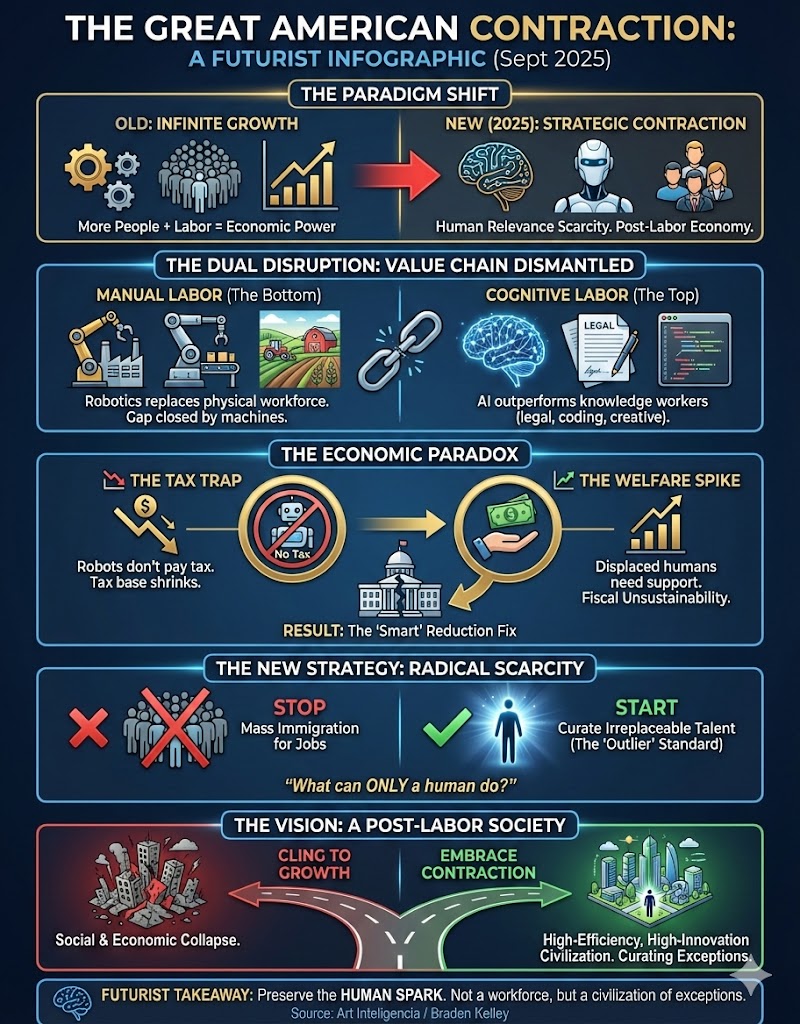
7. The Great American Contraction – by Art Inteligencia
8. A Case Study on High Performance Teams – New Zealand’s All Blacks – by Stefan Lindegaard
9. Act Like an Owner – Revisited! – by Shep Hyken
10. Should a Bad Grade in Organic Chemistry be a Doctor Killer? – by Arlen Meyers, M.D.
11. Charting Change – by Braden Kelley
12. Human-Centered Change – by Braden Kelley
13. No Regret Decisions: The First Steps of Leading through Hyper-Change – by Phil Buckley
14. SpaceX is a Masterclass in Innovation Simplification – by Pete Foley
15. Top 5 Future Studies Programs – by Art Inteligencia
16. Marriott’s Approach to Customer Service – by Shep Hyken
17. The Role of Stakeholder Analysis in Change Management – by Art Inteligencia
18. The Triple Bottom Line Framework – by Dainora Jociute
19. The Nordic Way of Leadership in Business – by Stefan Lindegaard
20. Nine Innovation Roles – by Braden Kelley
21. ACMP Standard for Change Management® Visualization – 35″ x 56″ (Poster Size) – Association of Change Management Professionals – by Braden Kelley
22. Designing an Innovation Lab: A Step-by-Step Guide – by Art Inteligencia
23. FutureHacking™ – by Braden Kelley
24. The 6 Building Blocks of Great Teams – by David Burkus
25. Overcoming Resistance to Change – Embracing Innovation at Every Level – by Chateau G Pato
26. Human-Centered Change – Free Downloads – by Braden Kelley
27. 50 Cognitive Biases Reference – Free Download – by Braden Kelley
28. Quote Posters – Curated by Braden Kelley
29. Stoking Your Innovation Bonfire – by Braden Kelley
30. Innovation or Not – Kawasaki Corleo – by Art Inteligencia
31. Top Six Trends for Innovation Management in 2025 – by Jesse Nieminen
32. Fear is a Leading Indicator of Personal Growth – by Mike Shipulski
33. Visual Project Charter™ – 35″ x 56″ (Poster Size) and JPG for Online Whiteboarding – by Braden Kelley
34. The Most Challenging Obstacles to Achieving Artificial General Intelligence – by Art Inteligencia
35. The Ultimate Guide to the Phase-Gate Process – by Dainora Jociute
36. Case Studies in Human-Centered Design – by Art Inteligencia
37. Transforming Leadership to Reshape the Future of Innovation – Exclusive Interview with Brian Solis
38. Leadership Best Quacktices from Oregon’s Dan Lanning – by Braden Kelley
39. This AI Creativity Trap is Gutting Your Growth – by Robyn Bolton
40. A 90% Project Failure Rate Means You’re Doing it Wrong – by Mike Shipulski
41. Reversible versus Irreversible Decisions – by Farnham Street
42. Next Generation Leadership Traits and Characteristics – by Stefan Lindegaard
43. Top 40 Innovation Bloggers of 2024 – Curated by Braden Kelley
44. Benchmarking Innovation Performance – by Noel Sobelman
45. Three Executive Decisions for Strategic Foresight Success or Failure – by Robyn Bolton
46. Back to Basics for Leaders and Managers – by Robyn Bolton
47. You Already Have Too Many Ideas – by Mike Shipulski
48. Imagination versus Knowledge – Is imagination really more important? – by Janet Sernack
49. Building a Better Change Communication Plan – by Braden Kelley
50. 10 Free Human-Centered Change™ Tools – by Braden Kelley
51. Why Business Transformations Fail – by Robyn Bolton
52. Overcoming the Fear of Innovation Failure – by Stefan Lindegaard
53. What is the difference between signals and trends? – by Art Inteligencia
54. Unintended Consequences. The Hidden Risk of Fast-Paced Innovation – by Pete Foley
55. Giving Your Team a Sense of Shared Purpose – by David Burkus
56. The Top 10 Irish Innovators Who Shaped the World – by Art Inteligencia
57. The Role of Emotional Intelligence in Effective Change Leadership – by Art Inteligencia
58. Is OpenAI About to Go Bankrupt? – by Art Inteligencia
59. Sprint Toward the Innovation Action – by Mike Shipulski
60. Innovation Management ISO 56000 Series Explained – by Diana Porumboiu
61. How to Make Navigating Ambiguity a Super Power – by Robyn Bolton
62. 3 Secret Saboteurs of Strategic Foresight – by Robyn Bolton
63. Four Major Shifts Driving the 21st Century – by Greg Satell
64. Problems vs. Solutions vs. Complaints – by Mike Shipulski
65. The Power of Position Innovation – by John Bessant
66. Three Ways Strategic Idleness Accelerates Innovation and Growth – by Robyn Bolton
67. Case Studies of Companies Leading in Inclusive Design – by Chateau G Pato
68. Recognizing and Celebrating Small Wins in the Change Process – by Chateau G Pato
69. Parallels Between the 1920’s and Today Are Frightening – by Greg Satell
70. The Art of Adaptability: How to Respond to Changing Market Conditions – by Art Inteligencia
71. Do you have a fixed or growth mindset? – by Stefan Lindegaard
72. Making People Matter in AI Era – by Janet Sernack
73. The Role of Prototyping in Human-Centered Design – by Art Inteligencia
74. Turning Bold Ideas into Tangible Results – by Robyn Bolton
75. Yes the Comfort Zone Can Be Your Best Friend – by Stefan Lindegaard
76. Increasing Organizational Agility – by Braden Kelley
77. Innovation is Dead. Now What? – by Robyn Bolton
78. Four Reasons Change Resistance Exists – by Greg Satell
79. Eight I’s of Infinite Innovation – Revisited – by Braden Kelley
80. Difference Between Possible, Potential and Preferred Futures – by Art Inteligencia
81. Resistance to Innovation – What if electric cars came first? – by Dennis Stauffer
82. Science Says You Shouldn’t Waste Too Much Time Trying to Convince People – by Greg Satell
83. Why Context Engineering is the Next Frontier in AI – by Braden Kelley and Art Inteligencia
84. How to Write a Failure Resume – by Arlen Meyers, M.D.
85. The Five Keys to Successful Change – by Braden Kelley
86. Four Forms of Team Motivation – by David Burkus
87. Why Revolutions Fail – by Greg Satell
88. Top 40 Innovation Bloggers of 2023 – Curated by Braden Kelley
89. The Entrepreneurial Mindset – by Arlen Meyers, M.D.
90. Six Reasons Norway is a Leader in High-Performance Teamwork – by Stefan Lindegaard
90. Top 100 Innovation and Transformation Articles of 2024 – Curated by Braden Kelley
91. The Worst British Customer Experiences of 2024 – by Braden Kelley
92. Human-Centered Change & Innovation White Papers – by Braden Kelley
93. Encouraging a Growth Mindset During Times of Organizational Change – by Chateau G Pato
94. Inside the Mind of Jeff Bezos – by Braden Kelley
95. Learning from the Failure of Quibi – by Greg Satell
96. Dare to Think Differently – by Janet Sernack
97. The End of the Digital Revolution – by Greg Satell
98. Your Guidebook to Leading Human-Centered Change – by Braden Kelley
99. The Experiment Canvas™ – 35″ x 56″ (Poster Size) – by Braden Kelley
100. Trust as a Competitive Advantage – by Greg Satell
Curious which article just missed the cut? Well, here it is just for fun:
101. Building Cross-Functional Collaboration for Breakthrough Innovations – by Chateau G Pato
These are the Top 100 innovation and transformation articles of 2025 based on the number of page views. If your favorite Human-Centered Change & Innovation article didn’t make the cut, then send a tweet to @innovate and maybe we’ll consider doing a People’s Choice List for 2024.
If you’re not familiar with Human-Centered Change & Innovation, we publish 1-6 new articles every week focused on human-centered change, innovation, transformation and design insights from our roster of contributing authors and ad hoc submissions from community members. Get the articles right in your Facebook feed or on Twitter or LinkedIn too!
Editor’s Note: Human-Centered Change & Innovation is open to contributions from any and all the innovation & transformation professionals out there (practitioners, professors, researchers, consultants, authors, etc.) who have a valuable insight to share with everyone for the greater good. If you’d like to contribute, contact us.
 Sign up here to get Human-Centered Change & Innovation Weekly delivered to your inbox every week.