
Category Archives: Leadership

A Superpower That Can Save The Day

Same But Different

GUEST POST from Mike Shipulski

If there’s one superpower to develop, it’s to learn how to assess a project and get a good feel for when it will launch.

When you want to know how long a project will take, ask this simple question: ‘What must the project team learn before the project can launch?” By starting with this single question, you will start the discussion that will lead you to an understanding of what hasn’t been done before and where the uncertainty is hiding. And if there’s one thing that can accelerate a project, it’s defining where the uncertainty is hiding. And knowing this doubly powerful, like a pure two-for-one, because if you know where uncertainty is, by definition, you know where it isn’t. Where the uncertainty isn’t, you can do what you did last time, and because you’ve done it before, you know how long it will take. No new tools, no new methods, no new analyses, no new machines, no new skillsets, no new anything. And for the remaining elements of the project, well, that’s where the uncertainty is hiding and that’s where you will focus on the learning needed to secure the launch.

But it can be difficult to understand the specific learning that must be done for a project to launch. One trick I like to use is the Same-But-Different method. It goes like this. Identify a project that launched (Project A) that’s most similar to the one that will launch next (Project B) and perform a subtraction of sorts. Declare that Project B (the one you want to launch) is the same as Project A (the one you already launched) but different in specific ways and then define those differences as clearly and tightly as possible. And where it’s different, that’s where the learning energy must be concentrated.

Same-But-Different sounds simplistic and trivial, but it isn’t. More than anything, it’s powerful. For the elements that are the same, you do what you did last time, which is freeing. And for the small subset if things that are different, you dig in!

Same-But-Different drives deep clarity and extreme focus, which result in blistering progress and blinding effectiveness.

And for some reason unknown to me, asking a team to define the novel elements of a project is at least fifty times more difficult than asking them how Project B is different than Project A. So, it feels good to the team when they can use Same-But-Different to quickly easily define what’s different and then point directly to the uncertainty. And once the team knows where the uncertainty is hiding, it’s no longer hiding.

And if there’s one thing a project team likes, it’s knowing where the uncertainty is hiding.

Image credit: Unsplash

Subscribe to Human-Centered Change & Innovation WeeklySign up here to get Human-Centered Change & Innovation Weekly delivered to your inbox every week.

Reset and Reconnect to Increase our Connectedness

Reset and Reconnect to Increase our Connectedness

GUEST POST from Janet Sernack

In our second blog in the Reconnect and Reset series of three blogs, we stated that now is not the time to panic. Nor is it a time to languish from change fatigue, pain, and emotional lethargy. It is a significant moment in time to focus, rehabilitate, rebuild, repair, regrow and reset to increase our connectedness through linking human touchpoints that increase people-power in the fourth industrial revolution.

In the current environment, where chaos and order are constantly polarizing, it’s crucial to touch people with empathy, reignite their social skills, and enable them to become healthily self-compassionate and more self-caring to:

  • Patiently support, lead, manage, mentor, and coach them towards finding their own balance to flow with mitigating the challenges of the fourth industrial revolution.
  • Take advantage of new technologies, networks, and ecosystems to re-engage and collaborate with others and with civil society in positive ways that contribute to the whole.
  • Do the good work that creates a more compelling, inclusive, resilient, and sustainable future, that serves the common good.

The Landscape Has Changed and So Have the Solutions

As the fourth industrial revolution continues to implode, we need to zoom out and consider the bigger picture. Where a recent Harvard Review article What Will Management Look Like in the Next 100 Years?” states that we are entering an era, which is fundamentally transforming the way we operate. Which is defined by the disruptive growth in blockchain technology, robotics, artificial intelligence, high-performance computing, and other core digital capabilities.

All of which, in some way, is dependent on linking the key human touchpoints that increase people’s power and our connectedness.

  • An era of empathy

In the same article, management scholar Rita Gunther McGrath argued that management practices based on command and control, and expertise would ultimately make way for empathy.

Where work is centred around value creation conducted through networks and collaboration, that rely on increasing the connectedness between machines and humans rather than through rigid structures and relationships to thrive through increasing people-power in the fourth industrial revolution.

  • Capable of better

The Qualtrics 2022 Employee Experience Trends Report also states that the landscape has changed.  Where people are choosing to work flexibly, to work in the places that work best for them, and to take time for their own well-being, families, and friends.

Where people are demanding change because they care, about their leaders and their organizations, and want to be capable of developing better ideas; better innovations; and delivering better performances.

The report outlines the four things your people need you to know:

  1. There will be an exodus of leaders – and women will be the first out the door.
  2. People will demand better physical and digital workspaces.
  3. The lack of progress in diversity, inclusion, and belonging won’t be accepted.

People don’t want to become irrelevant, nor do they want their managers, leaders, and organizations to become irrelevant. People know that they can’t, and won’t go back to the old ways of doing things. People also know that they are already living in the new normal and that they need to start working there, too and to do that, we need to increase our connectedness.

Which is especially important for building people’s power and mitigating the challenges emerging in the fourth industrial revolution.

  • A transformative moment for employees and employers

Businessolver’s Eighth Annual Report on the State of Workplace Empathy describes how the pandemic has impacted on employees’ personal lives, the labor market, and the economy, and states that “we are living through a renegotiation of the social contract between employees and employers”.

Their data shows that amid the return to the office, fewer employees view their organizations as empathetic, and that workplace empathy has clear implications for employee well-being, talent retention, business results, and increases people-power:

  • About 70% of employees and HR professionals believe that empathetic organizations drive higher employee motivation.
  • While 94% of employees value flexible work hours as empathetic, the option is only offered in 38% of organizations.
  • 92% of CEOs say their response to returning to in-person work is satisfactory, compared to 78% of employees.
  • 82% of employees say their managers are empathetic, compared to 69% who say the same about their organization’s chief executive.

Yet, there seems to be a true lack of understanding, especially in the corporate sector, of what it means to be empathetic, and a shortage of time and energy to develop the mindsets, behaviors, and skills to practice it and make it a habit.

It is also a fundamental way of being to increase our connectedness and building peoples-power.

Make a Fundamental Choice to Increase our Connectedness

Even though each person is a distinct physical being, we are all connected to each other and to nature, not only through our language but also by having a deeper sense of being.

Human connectedness is a powerful human need that occurs when an individual is aware and actively engaged with another person, activity, object or environment, group, team, organization, or natural environment.

It results in a sense of well-being.

The concept is applied in psychology as a sensation or perception where a person does not operate as a single entity – we are all formed together to make another, individual unit, which is often described as wholeness.

Which is especially important for our well-being and people power in the face of the challenges of the fourth industrial revolution.

Strategies for Developing Quality Connections

  • Be grounded, mindful and conscious

Being grounded and mindful enables people to become fully present to both themselves and to others. It is a generous gift to unconditionally bestow on others. Especially at this moment in time, where the pandemic-induced social isolation, has caused many people to become unconsciously and unintentionally self-absorbed.

There is an opening to become aware of, and to cultivate our attending and observing skillsets, to sense and see the signals people are sending, at the moment they are sending them. To help people identify the source of their issues to re-establish a sense of influence and control that reduces their autonomic nervous system reactions and help them restore their calmness.

This is the basis to increase our connectedness, by attuning and becoming empathetic as to what thoughts and feelings lay behind their behaviours and actions, with detachment, allowing and acceptance.

  • Be open-hearted and open-minded 

Being curious about what others are feeling and thinking, without evaluating, judging, and opposing what they are saying. By knowing how to listen deeply for openings and doorways that allow possibilities and opportunities to emerge, to generate great questions that clarify and confirm what is being both said and unsaid.

To support people by creating a safe and collective holding space, that reduces their automatic unconscious defensive responses.  To defuse situations by being empathic and humble and increase our connectedness by asking how you might help or support them, and gaining their permission and trust to do so.

Increase our connectedness through being vulnerable in offering options so they make the best choice for themselves, to reduce their dependence, help them identify and activate their circles of influence and control and sustain their autonomy.

  • Help people regenerate

Now is the moment in time to focus on building workforce capabilities and shifting mindsets for generating a successful culture or digital transformation initiative by harnessing, igniting, and mobilizing people’s motivation and collective intelligence and building people power.

It is crucial to acknowledge and leverage the impact of technology through increasing people-power by developing new mindsets, behaviors, skills, and new roles, which are already emerging as fast as other roles change.

Be willing to invest in the deep learning challenges that build people’s readiness and receptivity to change, so they can embrace rather than resist it, and be willing to unlearn, and relearn, differently, by collaborating with other people, leaders, teams, and organizations across the world.

Ultimately, it all depends on being daring and willing to increase our connectedness, through adapting, innovating, and collectively co-creating strategies, systems, structures that serve the common good, and contribute to the well-being of people, deliver profits and nurture a sustainable planet.

Find out more about our work at ImagineNation™

Find out about our collective, learning products and tools, including The Coach for Innovators, Leaders, and Teams Certified Program, a collaborative, intimate, and deeply personalized innovation coaching and learning program, supported by a global group of peers over 9-weeks, starting Tuesday, February 7, 2023.

It is a blended and transformational change and learning program that will give you a deep understanding of the language, principles, and applications of an ecosystem focus, human-centric approach, and emergent structure (Theory U) to innovation, and increase people-power, upskill people and teams and develop their future fitness, within your unique context. Find out more about our products and tools.

This is the final in a series of three blogs on the theme of reconnecting and resetting, to create, invent and innovate in an increasingly chaotic world.

You can also check out the recording of our 45-minute masterclass, to discover new ways of re-connecting through the complexity and chaos of dis-connection to create, invent and innovate in the future! Find out more.

Image credit: Pixabay

Subscribe to Human-Centered Change & Innovation WeeklySign up here to get Human-Centered Change & Innovation Weekly delivered to your inbox every week.

Anticipating and Mitigating Innovation Risks

The Unintended Consequences

Anticipating and Mitigating Innovation Risks

GUEST POST from Art Inteligencia

In the exhilarating rush of creation, we often celebrate innovation as an unmitigated good. We focus on the problem solved, the need met, and the market disrupted. But as a human-centered change and innovation thought leader, I am here to challenge that narrow perspective. Every new product, every disruptive service, and every breakthrough technology casts a shadow — a trail of unforeseen consequences that can range from minor inconvenience to societal-level disruption. True innovation leadership is not just about solving today’s problems; it’s about anticipating the ripple effects of your solution and taking proactive steps to mitigate potential harm. The greatest innovators are not just brilliant creators; they are also responsible stewards of the future they are building.

The paradox of progress is that our focus on a single, positive outcome often blinds us to the broader systemic impact. We drop a stone in a pond, focused solely on the satisfying splash, and fail to see the ripples that wash up on distant shores. This lack of foresight is not a moral failing, but a cognitive one. Our brains are wired for a singular focus, which is excellent for solving complex problems but poor for considering the peripheral damage. To build a more resilient and ethical future, we must intentionally embed a new practice into our innovation process—one of anticipating and mitigating unintended consequences from the very beginning.

A Human-Centered Framework for Responsible Innovation

Moving beyond a naive optimism requires a new framework for innovation—one that is built on ethical foresight and systemic thinking. Here’s how you can proactively address the risks of your next big idea:

  • Conduct a “Worst-Case” Brainstorm: Gather your innovation team and intentionally brainstorm all the negative outcomes. What’s the worst-case scenario? Who could be harmed? How could this be misused? This exercise isn’t meant to stop the project, but to expose potential vulnerabilities and build resilience into the design.
  • Practice Systemic Empathy: Go beyond your direct user. Map out the entire ecosystem your innovation will enter. How will it affect competitors, adjacent industries, communities, and even the planet? The goal is to develop empathy for every stakeholder in the system, not just the one you’re designing for.
  • Design with a Moral Compass: Build ethical considerations into your design principles. Is your product a tool for connection or a platform for division? Is it creating value for everyone in the supply chain or just the end user? These questions should guide your decisions, not just be addressed in a post-mortem.
  • Build for Transparency and Control: Empower your users. Give them clear, easy-to-understand controls over their data and experience. When people feel a sense of agency, they are more likely to trust your platform and less likely to feel exploited by an unforeseen consequence.

“The best innovations are not just profitable; they are wise. They create the future without leaving a wake of unaddressed problems.”


Case Study 1: The Social Media Revolution – The Unforeseen Cost of Connection

The Intended Consequence:

In the early days, platforms like Facebook, Twitter, and YouTube were designed with a clear and noble purpose: to connect the world, give a voice to the voiceless, and foster a global community. The goal was to break down barriers and create a more open and connected society. This was the “splash” that captivated the world.

The Unintended Consequences:

As these platforms grew, a dark side emerged. The design choices, particularly the algorithms that prioritized engagement and virality, led to a cascade of unforeseen consequences: the proliferation of misinformation and fake news, increased social and political polarization, a rise in cyberbullying and online harassment, and a measurable negative impact on the mental health of users, particularly adolescents. These unintended consequences were not malicious; they were the direct result of a lack of ethical foresight and systemic thinking. The companies were so focused on optimizing for a single metric—user engagement—that they failed to consider the human and societal harm it would cause. The trust that was once a given for these platforms is now a major challenge.

The Lesson:

The social media story is a cautionary tale for all innovators. It teaches us that a single-minded focus on a positive outcome can create a new set of complex and damaging problems. It shows that the true measure of an innovation’s success is not just its adoption, but its long-term impact on the world. Ethical foresight is not a luxury; it is a fundamental requirement for building a responsible and sustainable technology.


Case Study 2: The E-Scooter Boom – Navigating Urban Chaos

The Intended Consequence:

When companies like Lime and Bird launched their e-scooter services, their purpose was clear and positive: to provide an efficient, fun, and eco-friendly “last-mile” transportation solution for urban commuters. The goal was to reduce traffic congestion and carbon emissions. The initial reception was enthusiastic, and the model spread rapidly across cities worldwide.

The Unintended Consequences:

The sudden influx of thousands of scooters led to a wave of unforeseen problems. They were left haphazardly on sidewalks, creating accessibility hazards for people with disabilities and a safety nightmare for pedestrians. Injuries from falls and collisions soared. Cities were unprepared to regulate the new technology, leading to public outrage and, in many cases, a swift ban of the services. The innovators were so focused on the user experience of the ride itself that they failed to consider the broader system of the urban environment they were disrupting.

The Lesson:

The e-scooter case is a powerful example of how a failure of systemic thinking can derail a promising innovation. While the companies had a good intention, they did not adequately consider the impact on the public right-of-way, city regulations, and the safety of non-users. In response, they have since had to pivot and collaborate with cities to create designated parking zones, improve safety features, and build better relationships with local governments. This case demonstrates that proactively engaging with all stakeholders—not just your target consumer—is essential to mitigate risk and ensure long-term viability.


Conclusion: The Ethical Imperative of Innovation

Innovation is humanity’s greatest engine of progress, but it is not without its risks. The most powerful innovations of the future will be those that are not only technologically brilliant but also ethically wise. As leaders and innovators, our most critical role is to move beyond the narrow focus of problem-solving and embrace a broader responsibility to the systems and people we impact.

The next time you are building something new, take a moment to look at its shadow. Ask the difficult questions. Challenge your assumptions. And remember that the most profound and lasting change is not just about what you create, but how you create it—with foresight, with empathy, and with an unwavering commitment to leaving the world better than you found it. The future depends on it.

Extra Extra: Futurology is not fortune telling. Futurists use a scientific approach to create their deliverables, but a methodology and tools like those in FutureHacking™ can empower anyone to engage in futurology themselves.

Image credit: Wikimedia Commons

Subscribe to Human-Centered Change & Innovation WeeklySign up here to get Human-Centered Change & Innovation Weekly delivered to your inbox every week.

The Gig Economy’s Innovation Potential

Harnessing Independent Talent

The Gig Economy's Innovation Potential

GUEST POST from Chateau G Pato

For too long, the gig economy has been viewed through a narrow, transactional lens. We’ve seen it as a way to cut costs, fill temporary gaps, or manage seasonal demand. The debate has largely centered on labor laws and the future of work, overshadowing a far more critical conversation. As a human-centered change and innovation thought leader, I am here to argue that the gig economy is not just a labor model; it is a profound innovation engine. By embracing independent talent, organizations can unlock a level of creativity, specialized expertise, and strategic agility that is simply unattainable within the confines of a traditional, full-time workforce. The future of innovation is flexible, decentralized, and driven by a global network of independent thinkers.

The traditional corporate model, built on a foundation of long-term employment, is ill-equipped for the speed of modern innovation. It’s slow to hire, slow to adapt, and often suffers from institutional inertia. The gig economy shatters these limitations. It provides a direct, on-demand connection to a world of highly specialized professionals who are often at the forefront of their fields. These individuals are not just freelancers; they are experts in AI, behavioral psychology, robotics, and design, who bring an outside-in perspective free from internal politics and organizational biases. Tapping into this talent pool is no longer just a cost-saving measure; it is a strategic imperative for any company that wants to stay relevant and competitive.

The Three Pillars of Gig-Powered Innovation

Harnessing the innovation potential of the gig economy requires a strategic mindset and a shift in how we think about talent. Here are three core pillars:

  • Access to Niche and Adjacent Expertise: Innovation often happens at the intersection of different fields. The gig economy provides instant access to highly specialized skills that you don’t have—or don’t need full-time. This allows you to quickly prototype, experiment with emerging technologies, and solve problems that your internal teams might not have the expertise for.
  • Speed and Agility: The gig model allows organizations to create lean, project-based teams that can scale up or down in real-time. This enables a true “fail fast” culture, where you can test a new idea with minimal long-term risk. There’s no lengthy hiring process, no large capital investment, just the ability to assemble the right team for the right moment.
  • Diversity of Thought: Independent professionals often work across multiple industries and cultures. They bring a fresh perspective and a unique synthesis of ideas from different contexts. This diversity of thought is a powerful antidote to groupthink and can lead to breakthrough solutions that would never have been conceived within a single organization’s walls.

“The gig economy is not about hiring temporary labor; it’s about subscribing to a global network of specialized intelligence.”


Case Study 1: P&G’s “Connect + Develop” Model

The Challenge:

In the early 2000s, consumer goods giant Procter & Gamble faced a major innovation dilemma. Its internal R&D was efficient but insular. The company realized that many of the world’s best inventors and scientists didn’t work for them. They needed a way to tap into a broader network of external talent to accelerate their product development without massive, long-term capital investments.

The Gig-Powered Solution:

P&G launched “Connect + Develop,” a program that fundamentally embodies the principles of the gig economy at an enterprise scale. Instead of relying solely on internal scientists, the company created a system to crowdsource innovation from independent inventors, academics, and research organizations worldwide. They would post specific, well-defined problems (e.g., “Find a way to make laundry detergent work in cold water”) and offer incentives for the best solutions. This was a direct move from a closed innovation model to a flexible, gig-based one.

  • Access to Expertise: P&G gained access to a vast network of independent scientists and researchers, enabling them to solve problems that had stumped their internal teams for years.
  • Reduced Risk: The company could experiment with a wide range of ideas without the risk of hiring full-time experts in every niche field.
  • Speed and Agility: The model dramatically reduced the time it took to move an idea from concept to market, as they could leverage existing, proven intellectual property.

The Result:

The “Connect + Develop” program became a massive success. P&G estimates that over half of its product innovations now come from outside the company, generating billions of dollars in revenue. The model proved that an established giant could successfully leverage the principles of a gig economy to drive continuous, large-scale innovation. It fundamentally shifted their mindset from internal creation to global collaboration.


Case Study 2: Airbnb’s Early Growth through Independent Talent

The Challenge:

In its early days, Airbnb was a lean startup with a small, core team focused on a single, disruptive idea. To grow and iterate quickly, they needed a wide range of skills—from specialized coding and data analysis to design and marketing—but they lacked the capital and time to hire full-time employees for every single need. The challenge was to be agile without burning through their limited resources.

The Gig-Powered Solution:

Airbnb, like many early-stage startups, used the gig economy as a strategic resource for innovation and growth. They leveraged platforms like Upwork and specialized talent networks to access independent contractors who could work on specific, well-defined projects. For instance, they hired freelance designers to test new website layouts, independent writers to create compelling content, and data analysts to quickly crunch numbers and inform strategic decisions. This “pay-as-you-go” approach to talent was a critical enabler of their rapid iteration cycle.

  • Agility and Speed: The ability to quickly bring on an expert for a specific project allowed Airbnb to test ideas and pivot with incredible speed.
  • Cost-Effectiveness: They could access high-level talent without the long-term cost and commitment of a full-time employee, which was crucial for a cash-strapped startup.
  • Focus on the Core: By outsourcing non-core, specialized tasks to independent professionals, the small founding team could remain focused on the central business strategy and product vision.

The Result:

The gig economy was instrumental in Airbnb’s journey from a small startup to a global giant. By strategically using independent talent, they were able to build and scale their product rapidly, test new ideas, and prove their business model. This case study demonstrates how the gig economy is not just a solution for large corporations but is an essential tool for startups to innovate with speed and efficiency.


Conclusion: The Future is a Hybrid Workforce

The future of innovation is not a binary choice between a full-time workforce and a gig economy. It is a powerful hybrid model that combines the deep institutional knowledge and cultural foundation of a core team with the specialized skills, fresh perspectives, and agility of independent talent. This new workforce architecture allows for a level of dynamism and creative problem-solving that has been impossible in the past.

As leaders, our challenge is to move beyond old paradigms and embrace this new reality. We must learn to scope problems, manage external talent, and create a culture that values collaboration regardless of employment status. The gig economy is not just a trend; it is a fundamental shift in how we access human capital. The organizations that see it as a strategic engine for innovation will be the ones that win in the future, building a more resilient, agile, and creative enterprise for generations to come.

Extra Extra: Because innovation is all about change, Braden Kelley’s human-centered change methodology and tools are the best way to plan and execute the changes necessary to support your innovation and transformation efforts — all while literally getting everyone all on the same page for change. Find out more about the methodology and tools, including the book Charting Change by following the link. Be sure and download the TEN FREE TOOLS while you’re here.

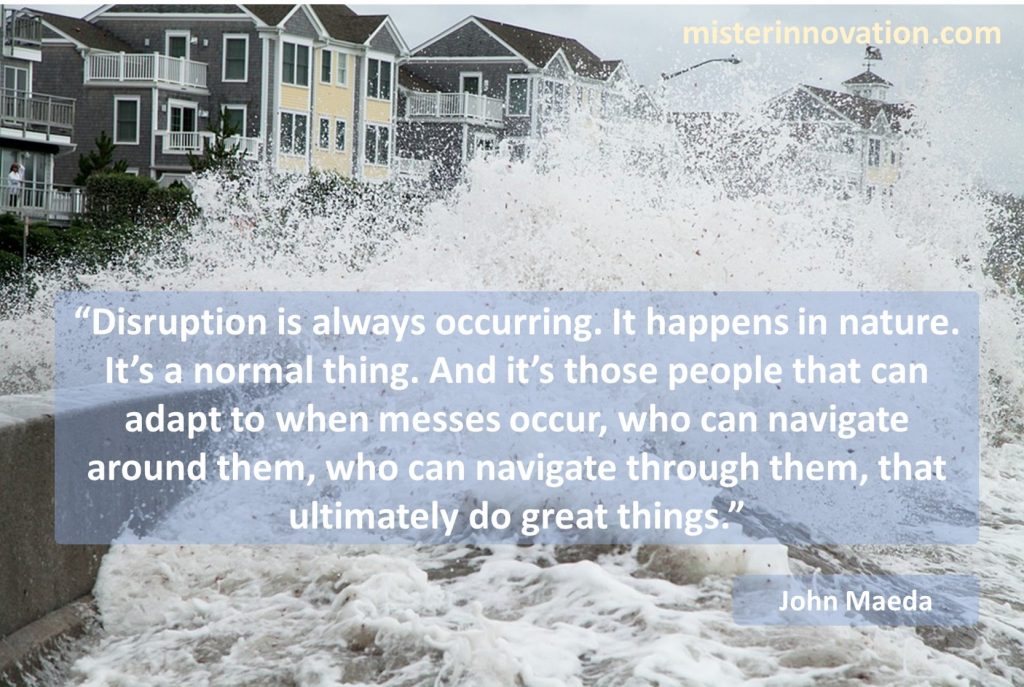
Image credit: One of 950+ FREE quote slides at http://misterinnovation.com

Subscribe to Human-Centered Change & Innovation WeeklySign up here to get Human-Centered Change & Innovation Weekly delivered to your inbox every week.

Music Can Make You a More Effective Leader

Music Can Make You a More Effective Leader

GUEST POST from Shep Hyken

You don’t have to be a rock star with an album that makes millions to say, “Music changed my life.” You can be the leader of an organization, searching for a way to overcome an obstacle or challenge plaguing you—potentially for years.

The key to resolving an ongoing leadership challenge could lie in the music you’re listening to. Listening to the right music can actually shift the way you think, help you overcome obstacles and make you a better leader.

Suppose you’re feeling frustrated with your team, wondering why they’re not as motivated or engaged as you are, why they aren’t handling customers the way you would like, why you can’t fully delegate or something else. In that case, you’re probably asking, “How can I get them to change?”

But that may not be the right question. What if you asked instead, “What can I change in myself?” What if the thing you need to change is your internal environment, not your external one?

This is the tough question that The Leader’s Playlist, the book debut by Harvard lawyer turned CEO coach Susan Drumm, invites leaders to ask themselves.

I had the chance to interview Drumm for an episode of Amazing Business Radio. In the interview, she talked about game-changing ways leaders can become more effective. Specifically, she shared a powerful, practical tool for shifting unconscious perspectives and behaviors that may create a poor leadership outcome. That tool is music.

According to Drumm, music is a “brain hack for shifting ineffective leadership patterns.” From her decades of coaching top executives, including billionaire CEOs and high-profile political figures, Drumm knows that when someone is struggling as a leader, especially if they’re feeling strong emotions such as burnout, frustration, imposter syndrome, etc., it’s often because there’s an internal ‘playlist’ on repeat that is shaping how they view their circumstances—not outside pressures.

Drumm says, “This playlist of thoughts is keeping them stuck. It’s become that soft background music they may be unable to hear, but it’s there, hijacking their emotional state.”

The internal playlist is typically rooted in childhood “wounds.” Drumm highlights common “playlist titles” she encounters in the executives and leaders she coaches, including, but not limited to:

  1. I am all alone
  2. I am not good enough
  3. I am trapped and confined

These subconscious messages are deeply embedded in the leader’s psyche, and it’s a challenge for most leaders to simply think or decide their way out of their playlist.

During my interview, I asked Drumm if playing music can dramatically change a mood. She quickly answered, “Yes,” so I shared a short story about a favorite song I listen to in the morning when I need a little boost to get me going. The song is Perfect Day by Hoku. It is the upbeat song that was played in the opening of ‘Legally Blonde’. The lyrics don’t match with my work ethic (Sun’s up/It’s a little after twelve/Make breakfast for myself/Leave the work for someone else), but the energy, lightheartedness and overall meaning make it a great song—at least for me.

Music can alter your mood, clear your head and change how you think over time. Drumm’s book outlines a strategy for using music to tap into your subconscious. Change the way you feel, and you shift your thought patterns. Her goal is to help leaders create a playlist that reflects the life they want to lead, understand how their current playlists came to be and learn how the power of music can unlock a leader’s true potential.

So, if you’re struggling to lead your team effectively, check for an internal playlist playing in the background, and then create a literal playlist to help rewire those beliefs. As Drumm says: your personal evolution sparks your leadership evolution!

This article originally appeared on Forbes

Image Credit: Shep Hyken

Subscribe to Human-Centered Change & Innovation WeeklySign up here to get Human-Centered Change & Innovation Weekly delivered to your inbox every week.

Crowdsourcing Creativity

Harnessing the Wisdom of the Collective

Crowdsourcing Creativity

GUEST POST from Art Inteligencia

For too long, innovation has been treated as an exclusive, top-down process. We build small, elite R&D teams, sequester them in innovation labs, and task them with generating the next breakthrough idea. While this model has produced many successes, it is fundamentally limited. It relies on the finite expertise of a select few and often suffers from groupthink, tunnel vision, and a detachment from the very customers it seeks to serve. As a human-centered change and innovation thought leader, I am here to argue that the most powerful engine of creativity is not a closed-door meeting, but the wisdom of the crowd. The future of innovation belongs to those who are willing to democratize the process and harness the boundless creativity of a diverse, global collective.

Crowdsourcing is more than just a buzzword; it is a strategic shift in mindset. It is the practice of outsourcing a task or problem to a large, undefined group of people, whether they are employees, customers, or the general public. By opening up the innovation process, organizations can access a level of diversity in thought and experience that no internal team could ever replicate. It moves the focus from a single point of origin to a decentralized network of passion, insight, and fresh perspective. The problems that have stumped your experts may be solved in minutes by someone with a completely different background. The key is to stop asking “who can solve this?” and start asking, “who might have a good idea?”

The Foundational Pillars of Crowdsourced Innovation

Successful crowdsourcing is not a random act of faith; it is a carefully designed, human-centered process built on a few core pillars:

  • Openness and Access: The first step is to break down the walls. Create a clear, low-friction platform where anyone can submit an idea. The easier it is to participate, the more diverse and numerous the ideas will be.
  • Specificity and Challenge: The “crowd” needs a clear, compelling problem to solve. A vague request will yield vague results. Frame the challenge in a way that is inspiring and provides enough context for people to contribute meaningful solutions.
  • Meaningful Incentives: People are motivated by more than just money. While cash prizes can be effective for technical challenges, a sense of purpose, recognition, or the opportunity to see their idea come to life can be just as, if not more, powerful.
  • Transparency and a Feedback Loop: The crowd needs to feel heard. Be transparent about the process—how ideas are evaluated, why some are chosen, and what happens to the winning submissions. Closing the loop by celebrating the contributors, even those whose ideas weren’t chosen, builds trust and encourages future participation.

“The best ideas don’t come from the people you pay to think; they come from the people who can’t stop thinking.” — Braden Kelley


Case Study 1: Lego Ideas – From Fan Passion to Product Powerhouse

The Challenge:

For decades, Lego relied on an internal team of master builders and designers to create new sets. While this produced incredible products, the company faced a challenge: how to tap into the passionate and creative community of Lego fans who were building their own amazing creations at home. This was a classic case of an innovation process being limited by its own walls.

The Crowdsourcing Solution:

Lego launched Lego Ideas (originally Lego Cuusoo), a brilliant crowdsourcing platform that turned its most loyal fans into an R&D department. The process is simple: anyone can submit an idea for a new Lego set. If the idea garners 10,000 votes from the community, Lego’s internal team reviews it. If it is chosen for production, the creator receives a percentage of the sales and credit for the design. This model is a masterclass in human-centered innovation.

  • Incentivized Engagement: The promise of having their design sold globally and receiving a portion of the profits is a powerful incentive for creators.
  • Built-in Feedback: The voting process acts as a powerful market validation tool. Lego gets instant feedback on which ideas resonate most strongly with their core audience.
  • Community Building: The platform transformed passive consumers into active co-creators. It fostered a vibrant, global community of builders who felt a deep sense of ownership and pride in the brand.

The Result:

Lego Ideas has been a resounding success, leading to the creation of some of Lego’s most popular and iconic sets, including the *Minecraft* series and the *Back to the Future* DeLorean. The program proved that the best ideas were not always in the boardroom but were being built in the homes of their most dedicated fans. It leveraged passion, talent, and a sense of shared purpose to build an innovation engine that is both profitable and profoundly human.


Case Study 2: The Netflix Prize – A Technical Challenge for a Global Crowd

The Challenge:

In the mid-2000s, Netflix was a DVD-by-mail service. A key part of its business model was its movie recommendation engine, which was good, but not great. Improving its accuracy by just a small percentage could lead to millions of dollars in savings and increased customer satisfaction. This was a highly technical, data-driven problem that had stumped its internal team of brilliant engineers.

The Crowdsourcing Solution:

Netflix took a bold and unconventional approach. They launched the Netflix Prize, a global crowdsourcing competition with a prize of $1 million to the first team that could improve their recommendation algorithm’s accuracy by 10%. They provided a massive dataset (anonymized, of course) and a clear, measurable goal. The contest was a highly structured, incentive-based crowdsourcing effort that attracted academics, data scientists, and engineers from around the world.

  • A Clear, Measurable Goal: The 10% improvement target was specific and quantifiable, which made the challenge compelling to a technical audience.
  • High-Stakes Incentive: The $1 million prize was a significant reward that attracted some of the world’s best minds in a way that traditional recruitment could not.
  • Intellectual Freedom: Netflix provided the problem and the data, but no one was constrained by internal bureaucracy, politics, or assumptions. The crowd was free to experiment without limits.

The Result:

The contest was a wild success. Over 40,000 teams from 186 countries participated. After three years, a collaborative team of researchers finally met the 10% goal, with the winning algorithm being an ensemble of different methods. The Netflix Prize not only solved a critical business problem but also created a new industry standard for recommendation engines and demonstrated the power of open innovation. It proved that for highly complex problems, the right answer may not be in your office, but in the collective genius of the global crowd.


Conclusion: The Future of Innovation is Collaborative

The era of closed-door innovation is over. In a world defined by complexity and rapid change, the ability to crowdsource creativity is a non-negotiable strategic capability. It’s about more than just getting new ideas; it’s about building a more resilient, connected, and human-centered organization. By treating your customers, employees, and the global community not as passive audiences but as active collaborators, you can tap into a wellspring of creativity that is truly infinite.

As leaders, our role is to move beyond the traditional models and create the platforms, the incentives, and the cultural mindset that empowers everyone to contribute. The most profound innovations of the future will not be created by a single genius in a lab, but by the collective wisdom of a motivated crowd. It’s time to open our doors and invite the world to help us build a better future, together.

Extra Extra: Futurology is not fortune telling. Futurists use a scientific approach to create their deliverables, but a methodology and tools like those in FutureHacking™ can empower anyone to engage in futurology themselves.

Image credit: Freepik

Subscribe to Human-Centered Change & Innovation WeeklySign up here to get Human-Centered Change & Innovation Weekly delivered to your inbox every week.
3 Mind-Blowing Things I Learned in Nebraska

3 Mind-Blowing Things I Learned in Nebraska

GUEST POST from Robyn Bolton

In the Before Times, we attended conferences to learn, make connections, and promote ourselves and our businesses. Then COVID hit, and conferences became virtual.   Although that made them easier to attend, it also made them easier to skip. Because, if we’re honest, most conferences were more about connecting and promoting than learning.

Last week, I went to one of those rare, almost mythical, conferences more focused on learning and connecting than promoting. It was fantastic! It was also in Nebraska (which is a pretty interesting place, btw).

Here are my three biggest mind-blowing takeaways from Inside Outside’s IO2022 Summit:

“Strategy is the direction you take to win in the future”

Kareen Proudian, Managing Partner at Faculty of Change

It’s a bit embarrassing to admit, but if you asked me to define “Strategy,” I’d respond with a long and rambling answer. Which means I can’t define “strategy.”  This admission is especially embarrassing because I have a resume littered with places where I developed, drafted, and implemented strategies, so I should have learned what the word means. But nope, I didn’t.

I suspect I’m not alone.

Asking for the definition of strategy is like asking if you must wear clothes to the office. You should know the answer. But unlike whether or not clothing is mandatory, most of us don’t know the answer, AND it’s easy to get away with never knowing the answer.

The elegant simplicity of Kareen’s definition of strategy blew my mind. It’s short, memorable, and something that most people can understand. Maybe I should share the definition with my alma maters and past employers.

“When we feel threatened, our IQ drops 50 to 70 points”

Alla Weinberg, CEO at Spoke & Wheel

When I first heard talk about Psychological Safety and Safe Spaces in today’s business world, I rolled my eyes. Hard. As a Gen X-er, I grumbled about how we didn’t need “safe spaces” when I grew up because we were tough and self-reliant, and I lamented the inevitable downfall of society caused by weak and coddled Millennials.

I was wrong.

Psychological Safety is absolutely and unquestionably essential for individuals to grow, teams to work, companies to operate and innovate, and societies to function and evolve. I’ve seen teams and businesses transform and achieve unbelievable success by discussing and living the elements they require for Psychological Safety. I’ve also seen teams and businesses fail in its absence.

These results aren’t surprising when you realize that you feel threatened when you are in a complex situation in which you cannot accurately predict the outcomes. And when you feel threatened, you are half as intelligent, effective, and creative as you are when you’re calm.

So, if you’re a manager and you’re upset that your people aren’t as intelligent, effective, or creative as they should be, it may not be their fault. It may be yours.

“Stage expertise, not industry expertise, is key to innovation success”

Sean Sheppard, Managing Partner at U+

There is deep comfort in the known. It’s why we gravitate to people like us. It’s also why companies ask job candidates and consultants about their experience in the industry and choose those with deep experience and impressive expertise. Often, there’s nothing with this question or the resulting decision.

Sometimes, it’s precisely the wrong question.

Sometimes, functional expertise is significantly more important than industry experience. After all, if you’re the hiring manager at a healthcare company looking for a Director of Finance, who would you hire – a Marketing Director from a competitor or a Finance Director from a CPG company?

That’s the case with innovation.

Decades of real-world experience (not to mention the successful launch of 100+ startups) show that successful corporate startup teams had expertise (mindsets, skillsets, executional drive) in the startup’s phase and a working knowledge of the industry rather extensive industry expertise and little to no innovation experience.

Questions are good. The right questions are better. So, the next time you’re staffing up an innovation team (or hiring a consultant), choose based on their innovation experience and willingness to learn about your industry.

Innovation happens everywhere

That’s why people from San Francisco, Austin, Washington DC, NYC, Toronto, Boston, and dozens of other places converged on Lincoln, Nebraska.

We went to see innovation in action and learn about the thriving startup community in the middle of the country. We also went to learn and connect with others committed to creating new things that create value.

Getting our minds blown was a bonus.

Image credit: Pixabay

Subscribe to Human-Centered Change & Innovation WeeklySign up here to get Human-Centered Change & Innovation Weekly delivered to your inbox every week.

Attracting the Best

How Purpose Becomes Your Talent Magnet

Attracting the Best - How Purpose Becomes Your Talent Magnet

GUEST POST from Art Inteligencia

In the relentless war for talent, organizations often compete on a transactional level: salary, benefits, and perks. While these are certainly important, they are no longer the decisive factors for top-tier professionals, especially for the younger generations entering the workforce. As a human-centered change and innovation thought leader, I am here to argue that the most powerful, sustainable, and effective talent magnet is not compensation, but **purpose**. In a world where meaning and impact are highly valued, a clear and authentic purpose is what separates a good company from a great one. It’s what moves an organization from a place where people simply work to a place where people are compelled to belong.

The modern workforce, particularly top talent, is looking for more than a paycheck. They seek alignment between their personal values and the mission of their employer. They want to know that their work contributes to something bigger than a profit margin. They are driven by a desire to solve meaningful problems and make a tangible difference in the world. When an organization can clearly articulate its purpose—its “why”—it creates a compelling narrative that resonates with the hearts and minds of potential employees. This isn’t about crafting a slick marketing campaign; it’s about embedding purpose into the very DNA of the company, from its core strategy to its daily operations. The result is a self-selecting talent pool of motivated, innovative, and deeply committed individuals.

The Four Pillars of Purpose-Driven Talent Attraction

Building an organization that attracts talent through purpose requires a commitment to four key pillars:

  • Authenticity and Integrity: Purpose must be genuine, not a performative facade. It must be reflected in the company’s actions, its products, and its leadership decisions. Hypocrisy is a powerful repellent for today’s talent.
  • Clear Communication: The “why” must be simple, inspiring, and consistently communicated to both internal and external audiences. It should be a constant theme in recruitment, onboarding, and internal communications.
  • Mission Alignment: Every role, from the factory floor to the executive suite, must be connected to the company’s purpose. Employees need to see how their specific contributions advance the larger mission, creating a sense of ownership and meaning.
  • Tangible Impact: Purpose must translate into tangible, measurable impact. Whether it’s a social, environmental, or technological impact, showing concrete results of the company’s purpose makes the mission feel real and achievable.

“You can rent a person’s hands with a salary, but you can only earn their heart with a purpose. And in the innovation economy, hearts are the most valuable asset.”


Case Study 1: Microsoft’s Transformation from “Know-It-Alls” to “Learn-It-Alls”

The Challenge:

In the early 2010s, Microsoft was a technology giant struggling with a stagnant culture. Employees were highly competitive, often working in silos, and the company was seen as a “know-it-all” culture. This environment made it difficult to attract top talent who were looking for collaborative, growth-oriented workplaces. CEO Satya Nadella’s vision for a new Microsoft was centered on a new purpose: **to empower every person and every organization on the planet to achieve more**. 🚀

The Purpose-Driven Solution:

Nadella didn’t just write a new mission statement; he fundamentally shifted the company’s culture. He focused on a **growth mindset**, encouraging employees to become “learn-it-alls.” This new purpose created a compelling narrative for potential hires, who were no longer just joining a software company but a mission-driven organization. Microsoft’s purpose became a powerful filter for talent, attracting individuals who were passionate about making a global impact through technology.

  • Talent Attraction: The new purpose helped Microsoft attract a new generation of engineers, designers, and leaders who were drawn to the company’s commitment to social and technological empowerment. This included talent from outside the traditional tech space, as the company’s mission resonated with a broader group of people.
  • Talent Retention: The growth mindset and a sense of shared purpose significantly increased employee engagement and retention. By linking individual roles to a global mission, employees felt a deeper sense of value and belonging, reducing the high turnover that had plagued the company in the past.
  • Innovation: The cultural shift led to a surge in innovation, as employees were encouraged to collaborate and experiment without fear of failure. Products like Microsoft Teams, which became a cornerstone of remote work, were born from this more open and purpose-driven environment.

The Result:

By shifting its core purpose and culture, Microsoft successfully revitalized its talent pipeline. It became a magnet for top talent, proving that a compelling mission can be a more powerful draw than just a high salary. The company’s market value soared, demonstrating that purpose and profit are not mutually exclusive but can, in fact, be mutually reinforcing.


Case Study 2: Warby Parker’s Vision for a Socially Conscious Business

The Challenge:

When Warby Parker launched in 2010, the eyewear market was dominated by a few large corporations, and a single pair of glasses was often prohibitively expensive. Co-founders Neil Blumenthal and David Gilboa’s purpose was to create a company that was both a successful business and a force for good. Their purpose-driven mission was simple: **to offer designer eyewear at a revolutionary price while leading the way for socially conscious businesses**. 👓

The Purpose-Driven Solution:

Warby Parker’s “Buy a Pair, Give a Pair” program was not just a marketing tactic; it was the core of their business model. For every pair of glasses sold, a pair was distributed to someone in need. This clear and compelling purpose became an instant talent magnet.

  • Talent Attraction: Warby Parker attracted talent who were passionate about making a difference. The company’s mission resonated with professionals who wanted to use their skills in retail, design, and technology to address a global health issue. They received a flood of applications from individuals who saw their work as a means to a greater end.
  • Culture of Purpose: This purpose permeated every aspect of the company’s culture. Employees were regularly involved in “giving trips” where they could see the direct impact of their work. This connection strengthened their commitment to the brand and its mission, creating a powerful sense of community.
  • Brand Loyalty: The purpose-driven model not only attracted top talent but also built an incredibly loyal customer base. This loyalty, in turn, reinforced the company’s mission and its value proposition to employees, creating a virtuous cycle of purpose, talent, and business success.

The Result:

Warby Parker successfully built a highly engaged and motivated workforce that was passionate about the company’s mission. Their purpose became a critical part of their recruitment strategy, attracting a wave of socially conscious professionals who were eager to contribute to a brand that aligned with their values. It proved that a clear purpose can attract, motivate, and retain top talent in a way that traditional incentives cannot.


Conclusion: Purpose is Not an HR Initiative, It’s a Strategic Imperative

In the new talent economy, purpose is no longer a “nice-to-have” or an HR initiative; it is a fundamental strategic imperative. The best talent is looking for more than a job; they are looking for a cause. They want to be part of an organization that is making a positive impact on the world, a brand they can be proud to work for and contribute to.

As leaders, our challenge is to move beyond the superficial and to truly embed purpose into the heart of our organizations. We must be authentic in our mission, transparent in our actions, and committed to showing the tangible impact of our work. By doing so, we will not only attract the most talented and innovative people but also build a more resilient, successful, and human-centered business. Your purpose isn’t just your north star for strategy; it’s your most powerful talent magnet.

Extra Extra: Futurology is not fortune telling. Futurists use a scientific approach to create their deliverables, but a methodology and tools like those in FutureHacking™ can empower anyone to engage in futurology themselves.

Image credit: 1 of 950+ FREE quote slides available at http://misterinnovation.com

Subscribe to Human-Centered Change & Innovation WeeklySign up here to get Human-Centered Change & Innovation Weekly delivered to your inbox every week.

Building a Culture of Purposeful Innovation

Engaging Hearts and Minds

Building a Culture of Purposeful Innovation

GUEST POST from Art Inteligencia

In the high-stakes game of corporate strategy, innovation is often treated as a pure business function. We measure it with metrics like Return on Innovation Investment, patent counts, and new product launches. We manage it with processes, frameworks, and a sterile, bottom-line focus. While these tools are certainly necessary, they are far from sufficient. As a human-centered change and innovation thought leader, I am here to argue that the most transformative, lasting, and impactful innovation isn’t just about what you create; it’s about why you create it. The future belongs to organizations that have successfully engaged the hearts and minds of their employees and customers by building a culture of purposeful innovation.

Purposeful innovation is the strategic integration of a company’s mission and values into every stage of the innovation process. It moves beyond simply solving a market problem to solving a human problem—one that resonates with a deeper sense of meaning and social impact. When innovation is driven by purpose, it stops being a task and starts being a calling. It elevates the work from a mere job to a meaningful contribution, which in turn unlocks a level of passion, commitment, and creativity that no financial incentive alone can ever generate.

The Three Pillars of Purposeful Innovation

Building a culture of purposeful innovation requires a shift in mindset and a commitment to three core pillars:

  • 1. A Shared “Why”: The first step is to clearly articulate and communicate the organization’s purpose. This isn’t just a mission statement on a wall; it’s a living, breathing set of values that guides every decision. Leaders must connect the day-to-day work of innovation to this larger purpose, helping every employee see how their contributions make a difference in the world.
  • 2. Human-Centered Empathy: Purposeful innovation is rooted in a deep understanding of human needs, not just market trends. It requires teams to move beyond data points and financial models to truly empathize with the people they serve. This involves engaging with customers, listening to their frustrations, and understanding their aspirations.
  • 3. Measurable Impact: While purposeful innovation isn’t just about profit, it is not an exercise in altruism without results. The most successful organizations measure their innovation not just in terms of revenue, but also in terms of social, environmental, or human impact. This dual-purpose metric provides a more holistic view of success and reinforces the “why” for the entire organization.

“Profit is not a purpose; it’s a result. When a company’s purpose is to improve lives, profit naturally follows as a measure of the value it has created.”


Case Study 1: Patagonia – The Purpose-Driven Pioneer

The Challenge:

For decades, the outdoor apparel industry was driven by a focus on performance and profit. Patagonia, a brand that began with rock-climbing gear, faced the challenge of competing in a crowded market without compromising its core values. Their “why” was not just to sell products, but to save our home planet.

The Purposeful Innovation Response:

Patagonia has integrated its purpose into every aspect of its business, making innovation a means to an end. Instead of innovating just for new features, they innovate for sustainability. For example, their Worn Wear program is a brilliant example of purposeful innovation. Instead of encouraging consumers to buy new products, they actively encourage them to repair, reuse, and recycle their gear. This program is not just a marketing gimmick; it is a fundamental part of their business model that directly aligns with their environmental purpose.

  • The Innovation: The Worn Wear program, which includes repair services, a marketplace for used gear, and a fleet of repair trucks.
  • The Purpose: To reduce consumption and keep products in use for longer, directly contributing to their mission of environmental stewardship.
  • The Impact: The program has reduced the company’s environmental footprint, built an incredibly loyal customer base, and created a new revenue stream, proving that doing good can also be good for business.

The Result:

Patagonia’s purposeful innovation has made it a leader in its industry and a gold standard for purpose-driven brands. By consistently aligning their business decisions with their core values, they have built an unshakeable level of trust and loyalty with their customers. Their innovation isn’t just about creating a new jacket; it’s about creating a better world, and their employees are deeply engaged in that mission.


Case Study 2: TOMS – The “One for One” Model

The Challenge:

In the early 2000s, TOMS Shoes entered a highly competitive footwear market. The challenge was not just to create a comfortable and stylish shoe, but to stand out in a way that resonated with a new generation of socially conscious consumers. Their “why” was to create a business that could address a social problem at its core.

The Purposeful Innovation Response:

TOMS’s innovation was not in its product design, but in its business model. They pioneered the “One for One” model, a simple yet powerful purpose statement: for every pair of shoes purchased, a pair would be given to a child in need. This model became the brand’s primary reason for being and the engine of its growth.

  • The Innovation: A direct-to-consumer business model that intertwined sales with social impact.
  • The Purpose: To provide shoes and, later, other essential goods (like clean water and eye care) to people in developing nations.
  • The Impact: The model has resulted in millions of pairs of shoes being given away and has inspired countless other companies to adopt similar social impact models. It engaged not only customers but also employees who felt a deep sense of purpose and pride in their work.

The Result:

TOMS’s success proves that a powerful purpose can be the ultimate engine for innovation and brand loyalty. By making its social mission the central focus of its business, TOMS created a community of customers and employees who were not just buying a product, but participating in a movement. While the company has faced challenges and evolved its model, its legacy as a pioneer of purposeful innovation remains a powerful case study for any organization looking to connect its work to a higher purpose.


Conclusion: The Future is Purpose-Driven

In a world where products are increasingly commoditized and customer attention is a fleeting commodity, a strong purpose is the ultimate differentiator. It is the north star that guides innovation, inspires loyalty, and engages every member of an organization, from the leadership team to the newest employee. Purpose is not a nice-to-have; it is a strategic imperative for long-term growth and resilience.

Leaders must stop treating purpose as a standalone initiative and start embedding it into the very DNA of their innovation process. We must empower our teams to ask not just “What should we build?” but “Why does this matter?” By engaging the hearts and minds of our people and connecting their daily work to a meaningful cause, we will not only unlock unprecedented levels of creativity and passion but also build a better world in the process. The era of purposeful innovation is here, and it is the only path to a future that is both profitable and profoundly human.

Extra Extra: Futurology is not fortune telling. Futurists use a scientific approach to create their deliverables, but a methodology and tools like those in FutureHacking™ can empower anyone to engage in futurology themselves.

Image credit: 1 of 950+ FREE quote slides available at http://misterinnovation.com

Subscribe to Human-Centered Change & Innovation WeeklySign up here to get Human-Centered Change & Innovation Weekly delivered to your inbox every week.

The Hero’s Journey of Innovation

Inspiring Your Team to Embrace the Unknown

The Hero's Journey of Innovation

GUEST POST from Chateau G Pato

Every great innovation, like every great story, begins with a choice: to stay in the comfortable, known world or to answer the call to adventure and venture into the unknown. As a human-centered change and innovation thought leader, I’ve seen countless organizations struggle with this fundamental challenge. We often focus on the mechanics of innovation — the processes, the tools, the metrics — but we fail to address the most critical element: the human spirit. To truly innovate, we must stop seeing it as a predictable business process and start seeing it as a hero’s journey, a narrative arc that inspires, empowers, and guides our teams through the uncertainty and risk required to create something new.

The Hero’s Journey, a concept popularized by mythologist Joseph Campbell, describes a universal narrative pattern found in countless stories, from ancient myths to modern blockbusters. It involves a hero who leaves their ordinary world, confronts trials and tribulations, gains new knowledge, and returns transformed. This framework is not just for fiction; it is a powerful metaphor for the human experience of change and growth. By re-framing the innovation process through this lens, we can transform it from a daunting, risky endeavor into a compelling adventure that people are excited to embark on.

The Innovation Journey: A Modern Myth

Let’s map the stages of the hero’s journey onto the innovation process to understand how we can better lead our teams:

  • The Ordinary World (The Status Quo): This is your company’s comfort zone—the familiar products, processes, and market position. It feels safe, but it’s also where stagnation begins. The hero (your innovator or team) is living in this world, and for a time, it feels good.
  • The Call to Adventure (The New Idea): A new market trend, a customer pain point, or a disruptive technology emerges. This is the call, the first glimmer of an opportunity to do something different. It is often met with resistance and fear.
  • Refusal of the Call (The Resistance): This is the most common stage. The team hesitates, citing risks, budget constraints, or a lack of resources. The “we’ve always done it this way” mindset is a powerful force of gravity. Leaders must recognize and address this fear head-on.
  • Meeting the Mentor (The Leader’s Role): This is where you, as the leader, step in. You are the mentor who provides guidance, psychological safety, and the tools needed to start the journey. You don’t have all the answers, but you offer wisdom, support, and the courage to take the first step.
  • Crossing the Threshold (The First Step): The team commits to the project. This is the moment they leave the comfort zone. It could be launching a small pilot project, building a prototype, or securing initial funding. This is where the risk becomes real, and the journey truly begins.
  • Tests, Allies, and Enemies (The Innovation Process): This is the long middle part of the journey. The team faces challenges—technical hurdles, budget cuts, internal skepticism, and market feedback. They also find allies—champions within the organization, external partners, and supportive customers.
  • The Ordeal (The Crisis): Every innovation journey has a moment of crisis—a failed prototype, a critical negative review, a major competitor launch. This is the low point, where the team’s resolve is tested. This is where resilience is built.
  • The Reward (The First Success): After the ordeal, a breakthrough occurs. A successful pilot, a positive beta test, or a critical finding. This is the hero’s reward, the moment of validation that fuels the rest of the journey.
  • The Road Back (The Scaling): The hero must now return to the ordinary world, but they are not the same. They must scale their innovation, integrate it into the business, and convince the rest of the organization of its value.
  • The Resurrection (The Big Launch): The final test. The public launch, the full-scale rollout. It is the culmination of the journey, where the innovation is either reborn as a new product or fails to make its mark.
  • Return with the Elixir (The New Normal): The hero returns, bringing with them a new product, a new process, or a new way of thinking. The organization is forever changed. The hero, and the team, have learned valuable lessons and are ready for the next adventure.

“An innovation culture isn’t built on a process flowchart; it’s built on a shared narrative of courage, resilience, and transformation.”


Case Study 1: The Pixar Journey from Toy Story to a Studio

The Challenge:

In the early 1990s, Pixar was a small computer graphics company with a radical idea: to create the world’s first feature-length film entirely with CGI. This was a monumental risk. They were leaving the “ordinary world” of short films and commercials for the unknown world of feature animation, competing with titans like Disney. The “Call to Adventure” was clear, but the “Refusal of the Call” was a powerful force from Hollywood and even within their own company, who doubted the technology’s ability to tell a compelling story.

The Heroic Innovation:

Pixar’s leaders acted as mentors, providing a clear vision and psychological safety for the team. The “Crossing the Threshold” was the initial investment and the start of production. The “Tests and Ordeals” were numerous—technical challenges (rendering a single frame took hours), a near-catastrophic script rewrite, and a constant battle to prove the viability of their approach. But they had allies in Steve Jobs and a dedicated team who saw the vision. The “Reward” was the first successful test screening, and the “Resurrection” was the theatrical release of *Toy Story*.

The Result:

The success of *Toy Story* was not just a commercial win; it was a testament to a heroic innovation journey. It proved that a team, when guided by a compelling narrative and a resilient leadership, could overcome seemingly impossible obstacles. The “Elixir” they returned with was not just a successful film, but a new model for animation and a creative culture that continues to define the industry. The journey transformed them from a tech company into a storytelling powerhouse.


Case Study 2: The Dyson Story – A Relentless Pursuit of an Idea

The Challenge:

In the 1980s, the vacuum cleaner market was a comfortable, established world dominated by large corporations and bag-based technology. James Dyson’s “Call to Adventure” was a simple observation: vacuum cleaners lose suction because their bags clog with dust. His idea for a bagless, cyclone-based vacuum was a radical departure, a clear challenge to the status quo that was met with widespread “Refusal of the Call” from every major manufacturer who dismissed the idea as commercially unviable.

The Heroic Innovation:

Dyson’s personal journey is a powerful example of the hero’s arc. He acted as his own mentor, and his lab became the “Unknown World.” The “Ordeals” were legendary: 5,127 failed prototypes over five years, countless rejections from manufacturers, and a constant struggle for funding. His “Allies” were his family and a few dedicated engineers. The “Reward” was the successful creation of the first Dual Cyclone vacuum. The “Resurrection” was its launch in Japan, followed by its triumphant return to the UK market.

The Result:

Dyson didn’t just innovate a new product; he innovated an entire industry. His “Elixir” was not just a successful vacuum cleaner, but a new design philosophy built on relentless experimentation and a refusal to accept the status quo. His story proves that a single-minded pursuit of a new idea, when framed as a heroic journey, can overcome immense odds and redefine an entire market, inspiring an entire generation of innovators to follow their own calls to adventure.


Conclusion: Lead the Journey, Don’t Just Manage the Process

The future belongs to the organizations that can consistently and courageously innovate. And to do that, we must move beyond the sterile, process-driven view of innovation and embrace it as a heroic journey. As leaders, our role is to act as mentors and guides. We must frame the challenges not as roadblocks, but as trials. We must celebrate the small victories as rewards and offer support during the darkest moments of the ordeal.

By telling a compelling story about the change we are trying to create, we can inspire our teams to step out of their ordinary worlds and into the unknown. We can transform fear into courage, hesitation into action, and failure into a source of valuable learning. The journey is difficult, but the rewards—a transformed organization and a team of true innovators—are immeasurable. It’s time to stop managing innovation and start leading the adventure.

Extra Extra: Because innovation is all about change, Braden Kelley’s human-centered change methodology and tools are the best way to plan and execute the changes necessary to support your innovation and transformation efforts — all while literally getting everyone all on the same page for change. Find out more about the methodology and tools, including the book Charting Change by following the link. Be sure and download the TEN FREE TOOLS while you’re here.

Image credit: Pexels

Subscribe to Human-Centered Change & Innovation WeeklySign up here to get Human-Centered Change & Innovation Weekly delivered to your inbox every week.
