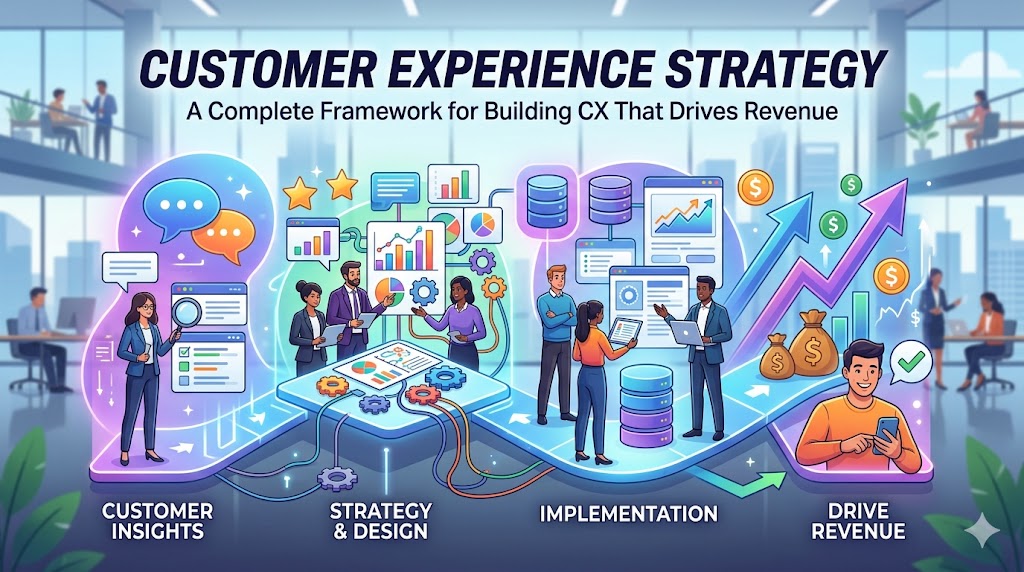
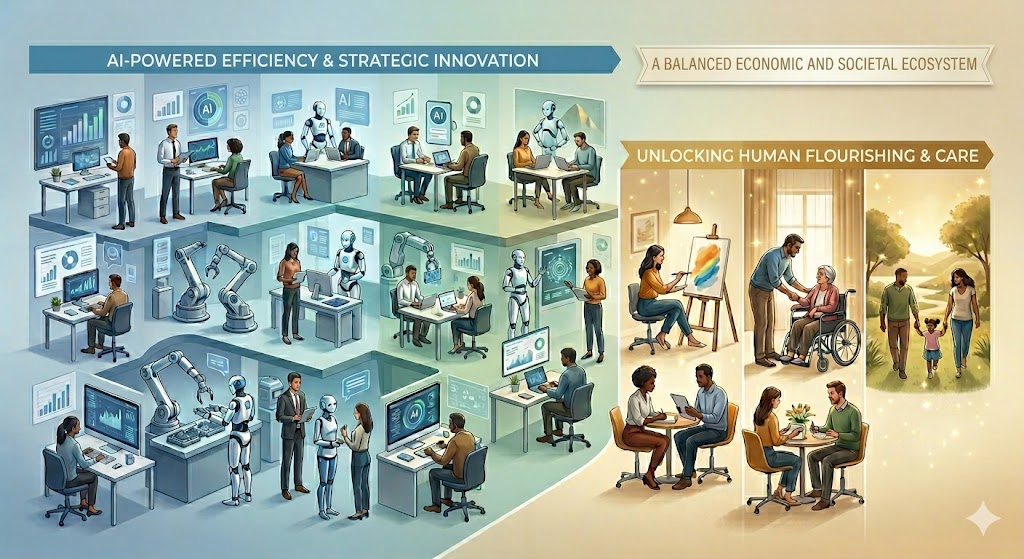
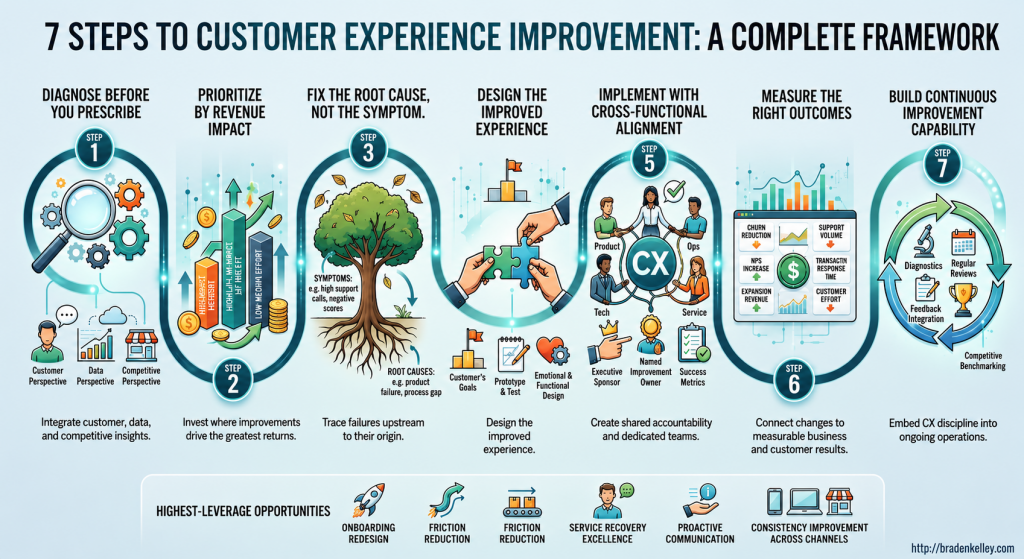
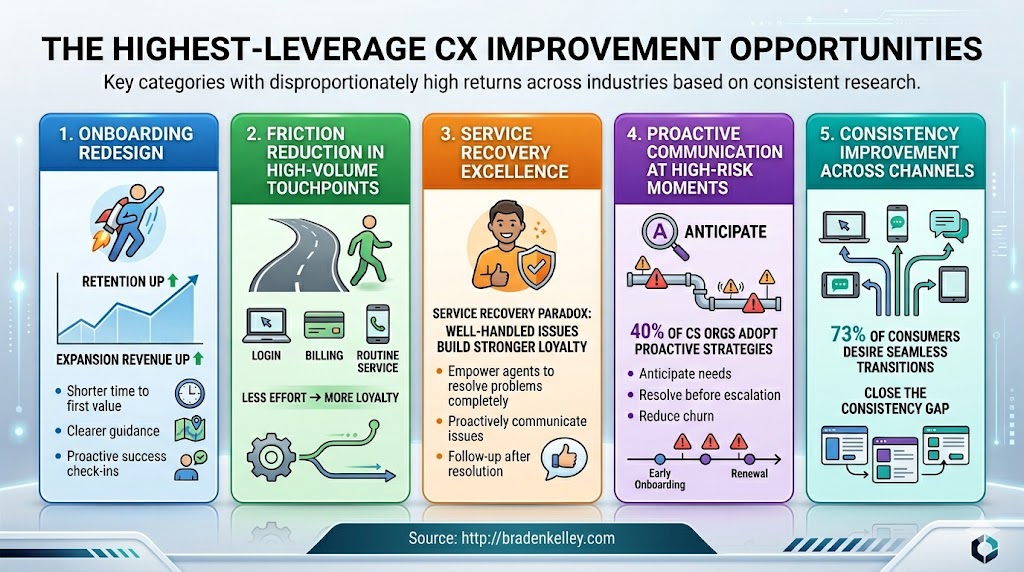
At the beginning of each month, we will profile the ten articles from the previous month that generated the most traffic to Human-Centered Change & Innovation. Did your favorite make the cut?
But enough delay, here are March’s ten most popular innovation posts:
If you’re not familiar with Human-Centered Change & Innovation, we publish 4-7 new articles every week built around innovation and transformation insights from our roster of contributing authors and ad hoc submissions from community members. Get the articles right in your Facebook, Twitter or Linkedin feeds too!
Have something to contribute?
Human-Centered Change & Innovation is open to contributions from any and all innovation and transformation professionals out there (practitioners, professors, researchers, consultants, authors, etc.) who have valuable human-centered change and innovation insights to share with everyone for the greater good. If you’d like to contribute, please contact me.
P.S. Here are our Top 40 Innovation Bloggers lists from the last five years:
In 1989, just before the fall of the Berlin Wall, Francis Fukuyama published an essay in the journal The National Interest titled The End of History, which led to a bestselling book. Many took his argument to mean that, with the defeat of communism, US-style liberal democracy had emerged as the only viable way of organizing a society.
He was misunderstood. Fukuyama pointed out that even if we had reached an endpoint in the debate about ideologies, there would still be conflict because of people’s need to express their identity. What many thought to be a justification, was actually a warning to expect people to rebel against an order imposed on them.
If you believe history is on your side, you’re likely to throw caution to the wind, get mixed up in things you shouldn’t and, eventually, you’ll pay a price. That’s the problem with big ideas, their nuance is often lost on those who hear them third or fourth hand and the high-stakes game of broken telephone tends to end badly. We need to approach ideas with more care.
The Global Village
Marshal McLuhan’s book Understanding Media, was one of the most influential works of the 20th century. In it, he described media as “extensions of man” and predicted that electronic media would eventually lead to a global village. Communities would no longer be tied to a single, isolated physical space but connect and interact with others on a world stage.
To many, the rise of the Internet confirmed McLuhan’s prophecy and, after the fall of the Berlin Wall, digital entrepreneurs saw their work elevated to a sacred mission. In Facebook’s IPO filing, Mark Zuckerberg wrote, “Facebook was not originally created to be a company. It was built to accomplish a social mission — to make the world more open and connected.
Yet, importantly, McLuhan did not see the global village as a peaceful place. In fact, he predicted it would lead to a new form of tribalism and result in a “release of human power and aggressive violence” greater than ever in human history, as long separated—and emotionally charged—cultural norms would now constantly intermingle, clash and explode.
For many, if not most, people on earth, the world is often a dark and dangerous place. For predators, “open” is less of an opportunity to connect than it is a vulnerability to exploit. Things can look fundamentally different from the vantage point of, say, a tech company in Menlo Park, California then it does from, say, a secured facility in St. Petersburg.
Context matters. Our most lethal failures are less often those of planning, logic or execution than they are that of imagination. Chances are, most of the world does not see things the way we do. We need to avoid strategic solipsism and constantly question our own assumptions.
The Paradigm Shift
The term paradigm shift has become so common that we scarcely stop to think about where it came from. When Thomas Kuhn first introduced the concept in his 1962 classic The Structure of Scientific Revolutions, he described not just an event, but a process that he noticed had pervaded the history of science.
It starts with an established model, the kind we learn in school or during initial training for a career. Models become established because they are effective and the more proficient we become at applying a good model, the better we perform. We then rise through the ranks and become successful.
Yet no model is perfect and eventually anomalies show up. Initially, these are regarded as “special cases” and are worked around. However, as the number of special cases proliferate, the model becomes increasingly untenable and a crisis ensues. At this point, a fundamental change in assumptions needs to take place if things are to move forward.
However, as Kuhn noted, the shift in thinking almost never goes smoothly. Most experts cling to the old model, because that’s what made them successful in the first place. The physicist Max Planck, who helped shift a number of paradigms himself, pointed out that “a new scientific truth does not triumph by convincing its opponents and making them see the light, but rather because its opponents eventually die, and a new generation grows up that is familiar with it.”
The idea of paradigms shifting seems so hopeful and romantic that we often forget how hard it is for people’s mental models to change. The simple fact is that any time you set out to make a significant impact there will be people who won’t like it and will work to undermine you in ways that are dishonest, underhanded and deceptive.
Disruptive Innovation
In the 1990s, a newly minted professor at Harvard Business School named Clayton Christensen began studying why good companies fail. What he found was surprising. They weren’t failing because they lost their way, but rather because they were following time-honored principles taught at his institution, such as listening to their customers, investing in R&D and improving their products.
As he researched further he realized that, under certain circumstances, a market becomes over-served, the basis of competition changes and firms become vulnerable to a new type of competitor. In his 1997 book, The Innovator’s Dilemma, he coined the term disruptive technology to describe what he saw.
It was an idea whose time had come. The book became a major bestseller and Christensen the world’s top business guru. Yet many began to see disruption as more than a special case, but a mantra; an end in itself rather than a means to an end. This wasn’t, to be fair, what he envisioned, but things took on a life of themselves.
The results of all this disruption have been, by just about every measure, awful. Despite the hype, productivity growth has been depressed for most of the last 30 years. Our economy has become markedly less productive, less competitive and less dynamic, Income inequality is at levels not seen for a century and most American families are worse off.
Beware Of The Cult Of Inevitability
Big ideas are powerful because they encapsulate an essential truth. When Fukuyama wrote about “the end of history,” it really did mark a turning point in human affairs, just as Marshall McLuhan’s concept of a “global village” identified a shift in communications, Kuhn’s model of a paradigm shift helped us understand how scientific breakthroughs occur and Christensen’s ideas about disruptive innovation alerted us to dangers and opportunities we weren’t aware of.
Yet these ideas were important precisely because they described complex things. Once they rise to the level of a meme, we tend to discard the complex core and focus only on the candy shell. The concept becomes a caricature of itself, repeated so often that few stop to think about its implications and limitations, where it applies and where it does not.
The problem with big ideas is that they can seem so inevitable that we ignore human agency. If we are truly at an “end of history,” then decisions don’t really matter. A “global village” can seem like such a nice place that we ignore dangers from bad actors. If we believe we are on the right side of a “paradigm shift,” we may not notice those who are working to undermine what we are trying to achieve. “Disruption” can seem so cool we forget about the disrupted.
As Warren Berger explains in A More Beautiful Question, questions are more valuable than answers because, while answers tend to close a discussion, questions help us open new doors and can lead to genuine breakthroughs. That’s the value of big ideas. They can help us ask better questions.
But once we start looking to big ideas for answers, we stop exploring the world around us, our world constricts and, ultimately, we find that we are lost.
— Article courtesy of the Digital Tonto blog
— Image credit: Google Gemini
Sign up here to join 17,000+ leaders getting Human-Centered Change & Innovation Weekly delivered to their inbox every week.
After a long winter, spring has finally sprung! For leaders in our fields, it’s an opportunity to implement some springtime strategies that cultivate and nurture company culture. But healthy cultures don’t grow overnight. Just as a garden is a multi-faceted ecosystem that needs tending, so is your workplace culture. To properly grow your company culture, you must be both patient and nurturing.
As Terry Lee outlines, there is great potential inside everyone. It’s up to great leaders to bring it out in four nurturing ways.
Training
It’s vital for leaders to work with employees to identify what training will position them to be most successful for the job now and for the future. Prior to sending any employee to a training, conference, or seminar, leaders should sit down with the employee to discuss specifics goals, expectations, and takeaways of the training they are attending.
Connecting
Research has shown that talking to house plants can help them grow, thus proving the power of connection. Leaders should connect with their teams as they help them better understand their importance and the value they bring to the organization. Every leader should understand their company’s mission and articulate that message to staff consistently and authentically.
Challenging
Studies have shown that intrinsic motivators are just as important as extrinsic ones. Good managers understand what challenges help generate these motivators. When team members complete meaningful tasks, they may receive an intrinsic reward. One way to amplify this reward is by talking to teams to determine what they think are the most important parts of their job. Then leaders can help them structure their day around tasks that give them a feeling of purpose.
Coaching
Every garden needs a gardener, and every team member needs a coach. Team members need coaches to meet them where they’re at. They help staff identify what options they may have to reach goals and then set the appropriate challenges that lead them to success.
Now that warmer weather has arrived, and the world is opening up again, it’s time to plant the seeds of a healthy work culture. Remember that culture will grow, whether you tend to it or not. Take the time to prioritize nurturing your team, and it will create a strong foundation for a collaborative and supportive workplace.
Need help with creating the foundation for a healthy work culture? Download our Culture Cultivator where you will uncover pain points and plan action items toward growing a healthy and synergetic work culture.
Most AI-and-work frameworks are built around economics – job categories, task automation rates, re-skilling costs. This one is built around something different: the interior experience of the person sitting at the desk. The four disruptions mapped in this infographic were identified not through labor market data, but through a human-centered lens – the same lens used in design thinking and change management to surface the needs, fears, and identity stakes that people rarely articulate out loud but always feel.
The framework draws on three converging sources: organizational psychology research on professional identity and role transition; change management practice, particularly the observed patterns of how workers respond when their expertise is devalued or displaced; and direct observation of how individuals are actually experiencing AI adoption in their workplaces right now – not in surveys, but in the unguarded conversations that happen before and after workshops, in the margins of keynotes, in the questions people ask when they think no one important is listening.
Why these four disruptions
1
Competence Displacement
The skill that defined you no longer distinguishes you.
Professional identity is heavily anchored in the belief that what I know how to do has value. When AI can replicate a signature competency – even imperfectly – it attacks that anchor directly. The disruption isn’t primarily about job loss. It’s about the sudden, disorienting feeling that years of deliberate practice have been, in some meaningful sense, made ordinary.
This disruption appears earliest and most acutely in knowledge workers whose expertise was previously considered difficult to acquire – writers, analysts, coders, researchers, strategists.
2
Purpose Erosion
The meaning embedded in the craft begins to hollow out.
Work is not only instrumental – it is ritual. The process of doing difficult things carefully, over time, is itself a source of meaning. When automation removes the friction, it can also remove the satisfaction. This is subtler than competence displacement and slower to surface, but ultimately more corrosive. People find themselves producing more output and feeling less connected to it.
This disruption is particularly acute for people who chose their profession not just for income but for intrinsic love of the work – and who built their identity around that love.
3
Belonging Disruption
The social fabric of work shifts when AI enters the team.
Work teams are social ecosystems built on complementary expertise, shared struggle, and mutual reliance. AI changes those dynamics in ways that are easy to overlook. When an AI tool makes one team member dramatically more productive, or when collaborative tasks are partially automated, the invisible social contracts of the team – who depends on whom, who contributes what – are quietly renegotiated. Belonging depends on feeling needed. When that changes, isolation can follow.
This disruption tends to surface not as explicit conflict but as a gradual withdrawal – people collaborating less, sharing less, protecting their remaining territory.
4
Status Anxiety
The professional hierarchy is being redrawn by AI fluency.
Workplace status has always been tied to expertise scarcity – the person who knew things others didn’t held power. AI is redistributing that scarcity rapidly. Early and confident AI adopters gain speed, output, and visibility. Those who resist, or who are slower to adapt, find themselves losing ground in ways that feel both unfair and disorienting. The new status question – are you someone who uses AI, or someone AI is used on? – is already being asked in organizations, even when no one says it explicitly.
This disruption is uniquely uncomfortable because it combines external threat (status loss) with internal shame (the fear of being seen as behind).
How to read the framework
These four disruptions are not sequential stages – they are simultaneous and overlapping. A single professional can be experiencing all four at once, with different intensities depending on their role, their organization, and how rapidly AI is being adopted around them. The infographic presents them as discrete panels for clarity, but the lived experience is messier and more entangled.
They are also not uniformly negative. Each disruption contains within it the seed of a corresponding renewal: competence displacement can become an invitation to lead with judgment rather than task execution; purpose erosion can prompt a deeper reckoning with what the work is ultimately for; belonging disruption can surface the human connection that was always the real foundation of team cohesion; status anxiety can motivate the kind of deliberate identity authoring that makes professionals more resilient over the long term.
The framework is designed to give leaders and individuals a common language for conversations that are currently happening in fragments — in one-to-ones, in exit interviews, in the silence after a difficult all-hands. Named things can be worked with. Unnamed things can only be endured.
This framework is a practitioner’s model, not a peer-reviewed clinical instrument. It is designed for use in workshops, coaching conversations, and organizational change programs as a starting point for honest dialogue — not as a diagnostic or classification system. It will evolve as our collective understanding of AI’s human impact deepens.
Content Authenticity Statement: The topic area, key elements to focus on, etc. were decisions made by Braden Kelley, with a little help from Claude AI to clean up the article and add citations.
Sign up here to get Human-Centered Change & Innovation Weekly delivered to your inbox every week.
For years, economists and technologists have comforted the public with a familiar refrain: as new technologies destroyed jobs, new ones arose even faster. The tractor displaced farm laborers, yet factories absorbed them. Computers replaced typewriters but created programmers.
The pattern seemed reassuringly predictable. Creative destruction, we were assured, always has a job-producing rainbow at the end of the storm. But artificial intelligence is not simply another tool like the computer or the tractor.
For starters, AI doesn’t just augment human capability in a narrow domain. It is a multi-faceted system that learns, adapts, writes, designs, diagnoses, analyzes, composes, and increasingly decides. In other words, AI is not replacing a single category of work. Rather, it is encroaching simultaneously on dozens. White-collar, creative, analytical, and technical roles are all within its expanding reach.
The first loud alarm bell of mass job displacement came in 2025, when Anthropic CEO Dario Amodei warned in an Axios interview that AI could eliminate “roughly 50% of entry-level white-collar jobs within 1–5 years, and that unemployment could spike to 10–20% within one to five years.”
To be sure, new jobs are appearing. According to LinkedIn’s Economic Graph—the world’s largest real-time map of jobs and skills, over 1.3 million AI-related job opportunities have appeared in the past two years alone. Many of these jobs did not even exist five years ago. But many of these jobs are specialized, technical, or niche. Meanwhile, large-scale occupations employing millions are shrinking.
“Something big is happening,” noted AI investor and CEO Matt Shumer, in an influential post in February 2026, read by 80 million people. “I am no longer needed for the actual technical work of my job. I describe what I want to be built, in plain English, and it just appears. Not a rough draft I need to fix. The finished thing. I tell the AI what I want, walk away from my computer for four hours, and come back to find the work done better than I would have done it myself.”
Citrini Research added to the with a new strain of fears about AI, painting what The Wall Street Journal called a “dark portrait of a future in which technological change inspires a race to the bottom in white-collar knowledge work. “For the entirety of modern economic history, human intelligence has been the scarce input,” Citrini noted. “We are now experiencing the unwind of that premium.” The Dow dropped 820 points on the post.
As AI models are becoming capable of building AI models, the pace of progress in AI has become exponential rather than linear. As the implications of recent advances cascade throughout the economy, stock markets gyrate, and career anxiety pervades the white-collar sector.
This new reality should prompt us to question the breezy optimism that “new jobs will appear.” Of course they will. The real question is: what kind of jobs?
Gig economy jobs have exploded over the past two decades. In 2005, only about 10% of the U.S. workforce participated in gig or independent work. Today that share has surged to roughly 35–38% of workers—about 60–70 million Americans—and still growing. In one sense, gig work offers freedom: flexibility, autonomy, and the ability to diversify income streams. For many workers it’s a hedge against layoffs and economic volatility. But the downsides are equally real. Gig workers often lack employer benefits, job security, retirement plans, and predictable income—and many earn less per hour than in traditional roles.
Yet another occupation often cited as evidence of this “new jobs will appear” optimism is the rise of the social media influencer. In theory, it represents a new category of work born of the digital economy—individuals building audiences, shaping tastes, and monetizing attention. Some sources have suggested that those who manage to accumulate over 50,000 followers could pull in an income of between $40,000 and $100,000 a year.
But the reality of this new job category, at least for some, hides a darker reality. Wellness influencer Lee Tilghman built a large Instagram following and earned hundreds of thousands from brand-sponsored posts. Yet behind the bright lights, she battled anxiety, loneliness, and disordered eating while spending up to ten hours a day online chasing validation. The constant pressure to post content became a ball and chain, which Tilghman later called “performing your life for content.” Suffering from stress and the recurrence of an eating disorder, she quit and now works a traditional 9-5 job which stops at the end of the day. As she told The New York Times, “When you’re an influencer, then you have chains on.”
A growing share of our economy may be shifting from producing tangible value to competing for attention inside algorithm-driven platforms. Millions of aspiring influencers chase likes, followers, and brand partnerships, yet only a tiny fraction earn a stable living. The rest exist in a precarious ecosystem of constant posting, self-promotion, and digital performance. “The information economy that we are currently building is really a new form of feudalism,” notes technologist Jaron Lanier.
In other words, the “new jobs” created by the technological revolution is often not a profession at all; it is a lottery. And even here, AI is moving rapidly. Synthetic influencers, automated content creation, and algorithmically generated personalities are already beginning to crowd the space.
The deeper issue is not simply employment but meaning. A society in which vast numbers of people struggle to find work that is steady, economically viable, socially valued, and personally fulfilling will face pressures far beyond the labor market.
In the Age of Acceleration, the question is no longer whether technology creates or destroys jobs. The question is how fast we adapt.
This article originally appeared in Forbes
Image credit: Pexels
Sign up here to get Human-Centered Change & Innovation Weekly delivered to your inbox every week.
In business you’ve got to do two things: choose what to do and choose how to do it well. I’m not sure which is more important, but I am sure there’s far more written on how to do things well and far less clarity around how to choose what to do.
Choosing what to do starts with understanding what’s being done now. For technology, it’s defining the state-of-the-art. For the business model, it’s how the leading companies are interacting with customers and which functions they are outsourcing and which they are doing themselves. In neither case does what’s being done define your new recipe, but in both cases it’s the first step to figuring how you’ll differentiate over the competition.
Every observation of the state-of-the-art technologies and latest business models is a snapshot in time. You know what’s happening at this instant, but you don’t know what things will look like in two years when you launch. And that’s not good enough. You’ve got to know the improvement trajectories; you’ve got to know if those trajectories will still hold true when you’ll launch your offering; and, if they’re out of gas, you’ve got to figure out the new improvement areas and their trajectories.
You’ve got to differentiate over the in-the-future competition who will constantly improve over the next two years, not the in-the-moment competition you see today.
For technology, first look at the competitions’ websites. For their latest product or service, figure out what they’re proud of, what they brag about, what line of goodness it offers. For example, is it faster, smaller, lighter, more powerful or less expensive? Then, look at the product it replaced and what it offered. If the old was faster than the one it replaced and the newest one was faster still, their next one will try to be faster. But if the old one was faster than the one it replaced and the newest one is proud of something else, it’s likely they’ll try to give the next one more of that same something else.
And the rate of improvement gives another clue. If the improvement is decreasing over time (old product to new product), it’s likely the next one will improve on a new line of goodness. If it’s still accelerating, expect more of what they did last time. Use the slope to estimate the magnitude of improvement two years from now. That’s what you’ve got to be better than.
And with business models, make a Wardley Map. On the map, place the elements of the business ecosystem (I hate that word) and connect the elements that interact with each other. And now the tricky part. Move to the right the mature elements (e.g., electrical power grid), move to the middle the immature elements (things that are clunky and you have to make yourself) and move to the middle the parts you can buy from others (products). There’s a north-south element to the maps, but that’s for another time.
The business model is defined by which elements the company does itself, which it buys from others and which new ones they create in their labs. So, make a model for each competitor. You’ll be able to see their business model visually.
Now, which elements to work on? Buy the ones you can buy (middle), improve the immature ones on the far left so they move toward the central region (product) and disrupt the lazy utilities (on the right) with some crazy technology development and create something new on the far left (get something running in the lab).
Choosing what to work on starts with Observation of what’s going on now. Then, that information is Oriented with analysis, synthesis and diverse perspective. Then, using the best frameworks you know, a Decision is made. And then, and only then, can you Act.
And there you have it. The makings of an OODA loop-based methodology for choosing what to do.
For a great podcast on John Boyd, the father of the OODA loop, try this one.
And for the deepest dive on OODA (don’t start with this one) see Osinga – Science, Strategy and War.
Image credit: Google Gemini
Sign up here to join 17,000+ leaders getting Human-Centered Change & Innovation Weekly delivered to their inbox every week.
The One Thing Netflix, Zappos and Salesforce Do to Get Customers to Love Them
GUEST POST from Shep Hyken
Personalization used to be about recognizing a customer who’s done business with you before. Just recognizing them and using their name created the feeling of a personalized experience. Earlier this year, I wrote Personalization Is More Than Using A Customer’s Name. While using the customer’s name is still important, over time, that experience morphed into much more. It is name recognition, combined with a knowledge of how you have marketed to them, sold to them and supported them, which makes them feel like you know them, not just recognize them.
My annual customer experience research found that nearly eight out of 10 customers (79%) in the U.S. feel a personalized experience is important. Twilio Segment’s State of Personalization Report found that “89% of leaders believe personalization is crucial to their businesses’ success in the next three years.”
No Longer a Trend, Personalization Is a Competitive Advantage
Customer service has evolved with how we do business. What was once a nice-to-have feature has become table stakes for success. Companies that don’t personalize risk being left behind by competitors that do.
Creating Personalized and Customized Experiences Online
Artificial intelligence (AI) has made it possible to analyze customer data faster and easier than ever before. This means we can use real-time information to turn routine transactions into memorable experiences that feel customized just for that customer.
For example, Netflix uses AI to analyze viewing habits, time of day preferences and even how long someone watches to make movie and TV show suggestions, creating a very personalized experience.
Zappos.com calls itself a service company that just happens to sell shoes. It is an online retailer that offers award-winning live customer support. They create WOW experiences that draw customers in and keep them coming back. Personalization comes in the form of recognizing returning customers and making spot-on recommendations.
Personalization and customization go beyond traditional consumer-facing businesses. A California-based firm, DK Law serves a diverse group of clients that speak English, Spanish and Korean. One might think that having lawyers who speak the different languages of their clients and have similar cultural backgrounds would be all that’s needed to create a personalized experience for the firm’s clients, but they didn’t stop there. They built an online presence with multiple website entry points that cater to their clients’ diverse backgrounds, creating a sense of cultural comfort and understanding. The result is higher trust and better communication in a traditionally impersonal environment, such as injury law.
In the B2B world, the ability to personalize and customize a solution can win over customers. Salesforce uses AI to analyze how each company (customer) uses its software, tracking which features teams use most and what challenges they face. Based on the data, Salesforce provides personalized dashboards, suggests training modules and delivers targeted suggestions to help each business maximize its investment.
Final Words
A successful personalization strategy will combine technology with human insight. The goal is to gather the right data about each customer and understand them well enough to create an experience that seems deeply personalized. The businesses that master the balance between using AI to gather insights while maintaining the human touch will be the ones customers choose to return to.
Personalization has evolved from a nice surprise to an expected standard. Companies that invest in truly knowing their customers and understanding their buying habits will keep those customers. And provided the overall customer experience meets the customer’s expectations, which includes the sales process, ease of doing business, customer support and product quality, why would a customer take a chance on leaving a company that knows them for a company that doesn’t?
Image Credit: Google Gemini
This article was originally published on Forbes.com.
Sign up here to join 17,000+ leaders getting Human-Centered Change & Innovation Weekly delivered to their inbox every week.
Why Doing Absolutely Nothing is the Next Big Thing
LAST UPDATED: April 1, 2026 at 8:33 AM
GUEST POST from Art Inteligencia
The Exhaustion of the New: A Manifesto for Invisinnovation™
We live in an era of relentless disruption. In our collective quest to “move fast and break things,” we have finally succeeded: everything is broken. From the boardrooms of Silicon Valley to the home offices of Kitsap County, the innovation community has reached a point of diminishing returns. We have optimized, digitized, and human-centered ourselves into a state of permanent “transformation fatigue.”
The Innovation Paradox
We are currently trapped in a fascinating contradiction. Organizations are spending record amounts on digital transformation and “Experience Level Measures,” yet the fundamental friction of business remains unchanged. We’ve added layers of complexity under the guise of “Organizational Agility,” resulting in a landscape where the more we innovate, the more we stay exactly the same — only now, we pay for the privilege through recurring monthly subscriptions.
The Great Quiet: Introducing Invisinnovation™
Today, I am officially proposing a radical departure from the status quo: Invisinnovation™. This is the art of achieving “Infinite Innovation” by simply… stopping. It is the realization that the most human-centered change we can offer our weary workforce is the gift of nothing new.
As we navigate the “AI Agent Paradox” and the “Great American Contraction,” we must ask ourselves the ultimate philosophical question of the modern enterprise: If a digital transformation happens in a forest, and no one is there to debug the API, did it actually provide any shareholder value?
In the sections that follow, I will outline how to move from a “Stable Spine” to a “Sofa-Bound Spine,” and how to leverage the power of doing absolutely nothing to disrupt your entire industry.
The Methodology: The “Zero-I” Framework
To successfully implement Invisinnovation™, we must move beyond the traditional “Eight I’s of Infinite Innovation.” While those served us well in the era of productivity, the current climate demands a more streamlined, sedentary approach. The Zero-I Framework is designed to protect your “Stable Spine” by ensuring your “Modular Wings” never actually leave the ground.
1. Ignore: The Vintage Feature Strategy
In traditional human-centered design, we obsess over “pain points.” In this new framework, we embrace them. The Ignore phase dictates that if a user complaint or technical bug persists for more than six months, it is no longer an issue to be solved — it is a “Vintage Feature.” By ignoring these legacy problems, you create a sense of brand nostalgia and save thousands of hours in dev-ops labor.
2. Idle: Strategic Procrastination
True organizational agility is often mistaken for movement. However, the most agile move one can make is to remain perfectly still while the competition tires itself out. Idling involves letting your “AI Agents” engage in endless, circular arguments with one another in a closed loop. While the algorithms debate the ethics of their own existence, the human workforce can finally enjoy a quiet afternoon without a single “urgent” notification.
3. Invisible: The Frictionless Void
We’ve reached the apex of experience design: The Frictionless Void. A truly invisible experience is one where the customer doesn’t even realize they have interacted with your brand. By removing the interface, the product, and the service entirely, you eliminate all possible “Exasperation Level Measures” (XLMs).
“The most disruptive interface is the one that doesn’t exist, charging a subscription for a service that isn’t running, to a customer who has forgotten they signed up.”
This is the ultimate evolution of Experience Design. When your innovation is truly invisible, you no longer have to worry about the “Human-in-the-Loop”—because the loop has been closed, locked, and the key has been hidden behind a “404 Not Found” page.
New Metrics for the Modern Leader: Tracking the Void
If you can’t measure it, it didn’t happen. But in the world of Invisinnovation™, if you can measure it, you’re probably trying too hard. To align with our “Zero-I” methodology, we must retire antiquated KPIs like Net Promoter Scores and conversion rates. Instead, we look toward the “Quiet Metrics” that define the successful, inactive enterprise of 2026.
ROI: Return on Indifference
Traditional ROI focuses on investment, but we are pivoting to Indifference. This metric tracks the beautiful moment when your stakeholders, board members, and customers stop asking for updates entirely. A high Return on Indifference indicates that you have successfully lowered expectations to a level of “Permanent Zen.” When no one expects a “Modular Wing” update, every day you don’t ship code is a 100% win for the bottom line.
XLMs: Exasperation Level Measures
While I have long championed Experience Level Measures, April 1st requires us to look at the darker twin: Exasperation Level Measures (XLMs). We no longer track “customer delight”; we track the precise millisecond a user transitions from “minor annoyance” to “throwing their smartphone into a body of water.”
By mapping the XLM journey, we can identify the “Peak Rage” points in our digital transformation. The goal of Invisinnovation™ is to keep users in a state of “Low-Level Hum of Despair,” which is far more sustainable for long-term retention than the volatile highs of actual satisfaction.
The Stable Spine… Literally
We’ve talked extensively about the Stable Spine vs. Modular Wings agility model. Today, we take the “Stable Spine” literally. In an era of constant “Sprints” and “Scrums,” the most radical innovation is to maintain perfect, unmoving posture.
Success is no longer measured by how fast you pivot, but by how long you can sit in an ergonomic chair without feeling the urge to check a dashboard. If your spine remains stable while the rest of the market collapses in a frantic, agile heap, you have achieved the ultimate competitive advantage: Superior Inertia.
“True organizational agility is the ability to watch a trend pass by and say, ‘Not my problem,’ with a straight face.”
The New Innovation Roles: Introducing “The Silent Nine”
Braden Kelley’s insightful book Stoking Your Innovation Bonfire identified the Nine Innovation Roles necessary for a sustainable ecosystem. However, as we transition into the era of Invisinnovation™, those roles have mutated. To survive the “Great American Contraction” of 2026, your team doesn’t need more “movers and shakers”; it needs practitioners of the “Quiet Arts.”
1. The Ghost (Formerly The Connector)
The Ghost is the ultimate evolution of the workplace collaborator. This individual is perpetually “Green” on Slack and appears as a pulsing circle in the corner of shared Google Docs, yet they haven’t uttered a word in a meeting since the late 2020s. They are the masters of Presence Without Participation, ensuring that the “Stable Spine” of the company remains unburdened by new ideas.
2. The Vanishing Act (Formerly the Magic Maker)
In a traditional innovation framework, the Magic Maker brings ideas to life. In the Invisinnovation™ model, their talent is reversed. This role is responsible for making “Urgent” executive mandates, frantic “asap” emails, and half-baked digital transformation initiatives simply… disappear. They don’t solve problems; they evaporate them into the “Frictionless Void.”
3. The Human-in-the-Loop (The “Ignore All” Specialist)
As AI ethics and causal AI become increasingly noisy, the Human-in-the-Loop (HIL) takes on a vital new responsibility. This person is tasked with sitting in front of a high-resolution 16:9 monitor and clicking “Ignore All” on every algorithmic bias warning that pops up. This allows the AI to continue its circular arguments (as defined in the Idle phase) without being distracted by pesky things like “reality” or “human impact.”
4. The Accidental Innovator (Formerly the Conscript)
The Conscript is the only person still doing actual work, purely because they forgot how to set an “Out of Office” reply. They are the human infrastructure holding up the entire façade. We keep them around not for their strategic insight, but because they are the only ones who remember the password to the WordPress admin panel where we post our manifestos.
5. The Strategic Delayer (Formerly The Customer Champion)
While the Customer Champion normally lives on the edge of the organization to bring the outside in, the Strategic Delayer uses that “customer insight” as a weapon of inertia. They claim that “the customer isn’t ready for this” or “we need one more focus group,” ensuring that no disruptive ideas ever actually reach the marketplace. By staying perpetually “on the edge,” they ensure the center remains unbothered.
6. The Semantic Architect (Formerly The Revolutionary)
The Revolutionary used to shake things up with constant new ideas. In the Invisinnovation™ framework, they become the Semantic Architect. Instead of changing the business, they change the dictionary. They use their loud voice to rebrand a complete lack of progress as a “Radical Period of Strategic Reflection.” They don’t revolt against the status quo; they rewrite the history of the status quo to make it look like a revolution.
7. The Mirror (Formerly The Evangelist)
The Evangelist is known for building support and educating others on value. The Mirror takes that energy and directs it solely at the executive leadership. They don’t educate the market; they reflect the leader’s own existing biases back to them with such charismatic fervor that the leader feels “innovative” just for having the same thoughts they had yesterday. It is the ultimate “Stable Spine” validation.
8. The Feature Archeologist (Formerly The Troubleshooter)
The Troubleshooter loves tough problems. The Feature Archeologist, however, loves preserving them. Instead of clearing roadblocks, they dig through the legacy “Paperless Paperweight” archives to find bugs from a decade ago and curate them like museum artifacts. They argue that these “Vintage Features” are essential to the brand’s identity, ensuring that no actual troubleshooting ever disrupts the peaceful decay of the system.
9. The Silent Partner (Formerly The Judge)
The Judge is usually responsible for determining what can be made profitably. The Silent Partner has already judged everything and decided that “doing nothing” has the highest profit margin of all. They provide the budget for Invisinnovation™ initiatives and then immediately disappear. By being permanently “out of the office,” they ensure that no final decisions are ever made, which is the most profitable outcome of all.
“The most effective innovation team is the one where nobody knows exactly what anyone else does, but everyone agrees that it’s probably best not to ask.”
By re-aligning your talent around these silent roles, you ensure that your “Experience Level Measures” remain perfectly flat — the ultimate sign of a stable, unbothered organization.
Case Study: The Triumph of the “Paperless” Paperweight
To illustrate the power of Invisinnovation™, we look to a recent success story from a Fortune 500 leader in the manufacturing sector. Faced with a mandate to achieve 100% digital transformation by the end of Q1 2026, the organization found itself paralyzed by the “AI Agent Paradox.” Their solution was as elegant as it was invisible.
The Digital-Analog Hybrid Loop
Rather than re-engineering their legacy COBOL systems — a task that would have threatened their “Stable Spine” — the IT department implemented the “Scan-Back” Protocol. Employees were instructed to print every digital PDF, physically sign it with a fountain pen to ensure “Human-Centered” authenticity, and then scan it back into the system as a high-resolution TIFF file.
The result? A 300% increase in cloud storage utilization (a key metric for “Digital Growth”) and a total elimination of searchable data, rendering the company’s proprietary information completely invisible to competitors and, conveniently, their own audit committee.
The “Gary” Variable
The true hero of this digital evolution was a middle manager named Gary. While the rest of the enterprise debated the merits of Causal AI and “Market Engineering,” Gary simply refused to log into the new CRM. By maintaining his own “Shadow Infrastructure” composed entirely of Post-it notes and a localized Excel 97 spreadsheet, Gary prevented a system-wide collapse during the Great Server Migration of February.
Gary represents the ultimate Human-in-the-Loop. His refusal to change provided the “Stable Spine” the company needed while the “Modular Wings” of the executive suite were flapping fruitlessly in a vacuum of their own making.
“Transformation is not about where you are going; it’s about how much hardware you can purchase while staying exactly where you are.”
By following this organization’s lead, you too can claim “Infinite Innovation” without the messy inconvenience of actually changing how your business operates. It is the ultimate victory: a transformation so complete, it left no trace of itself behind.
Conclusion: Embracing the Void
As we wrap up this exploration into the future of Invisinnovation™, the final directive is clear: Stop. In our relentless pursuit of “Infinite Innovation,” we have forgotten the most human-centered change of all — the ability to sit still and let the dust settle.
The Final Pivot: The Call to Inaction
Today, I challenge you to reject the urge to brainstorm. Do not ideate. Do not update your “Modular Wings” to the latest beta version of a generative AI tool that promises to write your emails for you (only for you to spend three hours editing them). Instead, embrace the Stable Spine in its purest form.
The most innovative thing you can do is to close your laptop, ignore your “Exasperation Level Measures” (XLMs), and pretend for a moment that the “AI Agent Paradox” was just a particularly vivid, data-heavy dream.
The Final Word
Transformation is not a destination; it is a recurring billing cycle. By mastering the art of being invisible, you don’t just survive the “Great American Contraction” — you transcend it. You become the ghost in the machine, the “Magic Maker” who turns a chaotic roadmap into a serene, empty whiteboard.
“In a world of constant noise, the most disruptive sound is silence. And in a world of constant ‘New,’ the most radical act is ‘None.'”
Go forth and do absolutely nothing. Your stakeholders won’t thank you — mostly because, if you’ve done it right, they won’t even know you’re there.
Editor’s Note: If you found yourself nodding along to these strategies, you may be suffering from “Corporate Satire Syndrome.” For immediate recovery, please consult your Charting Change manual, or simply wait until April 2nd when we return to our regularly scheduled programming of actual, high-impact innovation.
Happy April Fool’s Day!
Frequently Asked Questions: Mastering the Void
For those seeking further clarity on the Invisinnovation™ framework, we have compiled the following FAQ. This section is optimized for both human comprehension and search engine “answer engines” via the embedded JSON-LD schema.
1. What is the primary difference between traditional innovation and Invisinnovation™?
Traditional innovation focuses on the “Eight I’s” to create tangible, often disruptive, change. Invisinnovation™ focuses on “The Great Quiet,” where the goal is to achieve strategic stability by intentionally doing nothing, thereby avoiding the “Exasperation Level Measures” (XLMs) associated with constant, unnecessary updates.
2. How does the “Stable Spine” apply?
The “Stable Spine” transitions from an organizational metaphor to a literal physical state. It encourages leaders to maintain a posture of “Superior Inertia,” ignoring the “Modular Wings” of frantic industry trends and “AI Agent Paradox” hype in favor of a sedentary, unbothered workday.
3. Is Invisinnovation™ a permanent business strategy?
While highly effective during the “Great American Contraction” and specifically on April Fool’s Day, Invisinnovation™ is best used as a temporary “cleansing” strategy. It allows organizations to reset their “Human-in-the-Loop” before returning to the actual human-centered change methodologies found in Charting Change.
Disclaimer: This article speculates on the potential future applications of cutting-edge scientific research. While based on current scientific understanding, the practical realization of these concepts may vary in timeline and feasibility and are subject to ongoing research and development.
Image credits: ChatGPT
Sign up here to get Human-Centered Change & Innovation Weekly delivered to your inbox every week.
In order to achieve your goals and to make your dreams come true, the most vital thing needed is courage. The biggest hurdle preventing you from achieving goals and reaching your desired destination is a fear.
Fear can cost you a lot. Fear can impact your self-confidence. It may distract your attention from achieving something worthy. It may even badly affect your health and most probably your wealth too.
Courage is a tool that can help bear greater risks and in return provide significant gains. Courage will help you initiate activities despite of fear, and put you on a path of growth and learning.
Courage = the ability to take more risks = more growth and learning = personal success.
It’s a powerful formula if you know how to leverage fear to your advantage.
Fear Can Be Your Friend
Fear is a feeling, developed because of a chemical reaction. It is often not real but rather fabricated by our imaginations, limited thinking and insecurities.
It depends on us on how we use this chemical reaction, either to our advantage or detriment.
To boost your courage, you can learn to use your fears in a positive way so that it can give you maximum benefits and advantages.
The first belief to break from is that fear is tied to disastrous outcomes. There are some good fears too. Let’s look at an example.
Imagine you have to fulfill a task for a very well trusted client. If the deadline isn’t met, the fear of losing that client will automatically trigger you to remain active and do what it takes to finish the task on time.
Similarly, if you have a presentation the next day, your fear of doing a poor job might help you to invest in more practice. When it comes to fear always try to figure out the intensity and appropriate logical way to solve it efficiently.
Stretch Your Comfort Zone
Going above and beyond your comfort zone, in order to stretch what you are currently capable of doing, is not easy. Fear and anxiety are key symptoms of going outside your comfort zone.
“Nothing truly exciting happens in life, until you go beyond your comfort zone. Want to grow? Learn to love being uncomfortable.”
Once you step out of your comfort zone you develop more courage gradually. Stepping out of your comfort zone will present you with various unexpected situations and scenarios. This is the point where fear kicks in because handling unexpected situations is usually a next level task where a lot of courage is needed to cope with the anxiety of stretching beyond your current capabilities.
Start by taking small steps. Courage cannot be developed overnight. Asking for help is a great way to practice expanding your courage. The short conversations you start having with those willing to help you, can turn over time into longer deep dives with peers, University fellows, friends of friends, and so on.
“The simple act of asking for help expands your courage and helps you stretch beyond your comfort zone in a healthy and safe way.”
Knowing your limits and behaving accordingly will also help in developing your courage. It’s not always unexpected and strange things that require us to face them courageously, but rather courage is also demanded to let things be that are not within your control. Letting things unfold naturally and patiently will also boost your courage.
Accept Your Imperfections
No human is perfect in this world. Making mistakes is a part of life. Be bold enough to accept your mistakes and never ever hesitate to apologize for your actions or words which may have hurt someone’s feelings and emotions.
Relationships also play a key role in boosting your courage, and the best relationships are based on mutual authenticity and vulnerability. The more real you are with someone, the more courage you develop to speak your truth.
Be Mindful
Some people are naturally mindful as if they have inherited the trait genetically, while other people learn through practice and hard work.
Mindfulness means having a full mind actively present. If you are not a mindful type person, don’t worry.
Meditation will help you in learning how to be mindful. Find a quiet and peaceful place free of distractions. Sit there for almost 20 minutes and focus on your ‘in’ and ‘out’ of breathing. Try not to think of anything else in those 20 minutes of meditation. Meditation can be done anywhere but it will be more helpful if done in a quiet place.
Mindfulness and the practice of meditation will help you overcome your fear very courageously. For example, during medication the emotion of fear can be attributed to just a chemical reaction triggered by a thought, and with more self-awareness you can begin to remove the value given to it.
Meditation is a great way to hack a recurring thought that is triggering fears, that isn’t based on reality, and neutralize it.
Own Your Self-Worth
The most effective way to practice being courageous is learning to say “no” and always give importance to your needs first. Not having a habit of saying “no” will lead you towards a miserable life where making others happy will leave your own happiness behind.
Never underestimate yourself and never ever tolerate negative and toxic people around you. There should be no room in your heart for such people who don’t even think before bashing someone’s confidence and ultimately their courage.
I want to make it clear that there is no magic pill to boost your courage within a day. Hard work, passion and a lot of patience is needed. A lot of practice, meditation and regularly going beyond your comfort zone can get you the desired results.
Once you understand the real meaning of fear and the process of this chemical reaction, you’ll start taking advantage of it knowing that it is not real, but instead, it is self-made and fabricated.
Never let your fears hold the steering wheel that will deviate you from your path towards courage. Stay confident and motivated, believe in yourself and don’t forget to ask for help.
In today’s fast-paced and increasingly digital world, people often find themselves feeling disconnected from others, both in the workplace and their personal lives. The rise of remote work, the constant bombardment of information on social media, and the divisiveness of politics have only exacerbated these feelings of isolation and detachment. This disconnection is not only detrimental to our well-being but also poses significant challenges for organizations seeking to foster a collaborative and innovative environment. Now, more than ever, we must recognize the importance of fostering connection and nurturing relationships at work to repair the fractures that have formed in our society.
“We are all so much together, but we are all dying of loneliness.”– Albert Schweitzer
By acknowledging the current state of disconnection and actively working to promote understanding, empathy, and collaboration, we can create a more inclusive and productive workplace that benefits everyone involved. In this article, we will explore the consequences of disconnection, the power of connection and understanding, and the role of facilitation in fostering these essential relationships.
The consequences of disconnection
Disconnection can be observed across various aspects of our society. In politics, the polarization of opinions and the entrenchment of viewpoints create a divide that prevents productive dialogue and collaboration. Social media platforms contribute to this divide by amplifying echo chambers, wherein individuals are exposed primarily to information that reinforces their pre-existing beliefs, further deepening the rift between differing perspectives.
Disconnection also permeates the workplace and organizational structures. Within companies, miscommunication, a lack of understanding, and unaddressed conflicts can create disconnects between individuals and teams, hindering progress and innovation. These consequences are not limited to large-scale issues; even seemingly minor incidents, like a disagreement over conference room usage, can cause lasting resentment and erode workplace relationships.
A striking example of the dangerous consequences of disconnection is the recent classified document leaks via Discord. The individual responsible for the breach was motivated by feelings of isolation and a desire for recognition. This act of cyber espionage demonstrates how disconnection and the need for validation can drive individuals to take extreme risks and engage in destructive behaviors.
The consequences of disconnection can even be observed at a cellular level. In a recent Rich Roll Podcast episode, Dr. Zach Bush discussed the origins of cancer originating from cellular disconnection in the human body. When cells become disconnected from one another, they may begin to malfunction and grow uncontrollably, resulting in cancer. This biological phenomenon parallels the societal consequences of disconnection, wherein isolation and detachment can lead to radicalization and unproductive behaviors.
“The eternal quest of the human being is to shatter his loneliness.”– Norman Cousins
The power of connection and understanding
By fostering connection and understanding, we can counter the negative consequences of disconnection and create an environment where growth and collaboration thrive. Research consistently shows that diverse teams perform at higher levels when united by a shared purpose and understanding. Embracing and engaging with different perspectives not only sharpens our own viewpoints but also allows us to innovate and produce better products, services, and solutions.
A sense of belonging and purpose is crucial in the workplace. Employees often cite the team and the people they work with as key factors in job satisfaction. By building genuine connections and strong relationships, employees become more invested in the organization’s mission and feel a deeper commitment to their work. This sense of purpose is amplified when colleagues are able to collaborate effectively, respect each other’s opinions, and find common ground despite their differences.
“Alone we can do so little; together we can do so much.”– Helen Keller
There is extensive evidence supporting the importance of connection and relating at work. For instance, a study published in the Harvard Business Review found that employees who reported feeling more connected at work were more likely to be engaged and productive while also demonstrating higher levels of well-being and job satisfaction (1). Furthermore, research has consistently shown that diverse teams perform at the highest levels thanks to their ability to generate innovative ideas and foster a culture of learning and growth (2).
Several books highlight the significance of connection and relating at work. In “Social: Why Our Brains Are Wired to Connect,” neuroscientist Matthew D. Lieberman explores the ways our brains are hardwired for social connection, emphasizing the importance of developing strong relationships in all aspects of our lives, including the workplace (3). Similarly, in “The Power of Moments: Why Certain Experiences Have Extraordinary Impact,” Chip and Dan Heath discuss how creating meaningful, memorable experiences can foster deeper connections among coworkers and lead to a more engaged and satisfied workforce (4).
Connection and understanding are also vital for creating healthier organizations. Employees who feel connected and supported are more likely to engage in productive behaviors, contribute positively to the workplace culture, and stay committed to the organization’s goals. As a result, fostering connection and understanding not only benefits the individuals involved but also the organization as a whole.
Real-life examples of connection and relationships
Facilitators and leaders play a crucial role in fostering connection, understanding, and relationships within organizations. Creating the conditions necessary for open dialogue and collaboration can bridge divides and encourage growth through diverse perspectives.
Elena Farden is a Voltage Control Certified Facilitator, and her work as the Executive Director (ED) for the Native Hawaiian Education Council provides a compelling example of fostering connection and relationship building. As the ED, she is responsible for advocating for resources and support for Native Hawaiian education: expanding indigenous voices at the federal level.
Elena Farden – Executive Director (ED) for the Native Hawaiian Education Council
One key aspect of her work is anchoring her vision in the connection to the land, with her entire portfolio serving as a metaphor for connection to land with sense of place. In a recent conversation, Elena shared an insightful quote about this connection: “Our connection to the land is the foundation of our identity and purpose. As we nurture this connection, we strengthen our relationships and responsibility to work together for the betterment of our community.”
Elena utilizes the ʻauwai, a Hawaiian irrigation system, as an approach to facilitation. She discussed how one part of the irrigation process involves tempering the water to avoid damaging the crops. This approach resonated with her as an analogy for addressing controversial topics in her work. Elena explained, “Just like the water tempering process, facilitation requires a gentle approach when dealing with sensitive issues. By creating a safe space for open dialogue, we allow for growth and understanding to emerge.”
In her role as the Executive Director, Elena has demonstrated the power of connection and relationships in driving positive change. She has gone to bat for the Native Hawaiian community, facing challenges and building connections between different stakeholders. Through her work, she has shown that fostering relationships and understanding are crucial elements in addressing complex issues and finding solutions that benefit everyone involved.
One of Elena’s most significant achievements has been creating opportunities for collaboration and dialogue between the indigenous community and the government. This has not only facilitated the allocation of resources for Native Hawaiian education but has also strengthened the ties between the two parties. In her words, “When we build connections and relationships with people from different backgrounds, we create a solid foundation for collaboration and understanding. This, in turn, leads to more effective solutions and a stronger sense of our collective responsibility to community.”
Elena’s story is a powerful testament to the importance of connection and relationships in both personal and professional settings. By nurturing these connections, we can create healthier organizations and communities where individuals feel supported, understood, and empowered to reach their full potential.
The South African Truth and Reconciliation Commission (TRC), established in 1995, serves as another powerful testament to the importance of connection and relating in the healing process of a nation. Born out of the wounds of apartheid, the TRC aimed to provide a platform for victims and perpetrators alike to share their experiences and confront the harrowing truth about the country’s violent past. As Archbishop Desmond Tutu, the chair of the TRC, famously stated, “Forgiving and being reconciled to our enemies or our loved ones is not about pretending that things are other than they are… It is about finding a way in which to accept that which happened as that which happened, and then to move beyond it and to be willing to develop a new relationship.”
Through a process of public hearings, amnesty applications, and reparations, the TRC fostered understanding, forgiveness, and, ultimately, reconciliation among South Africans. The public hearings were instrumental in giving voice to the voiceless and allowing individuals to share their stories in a supportive environment. As one survivor, Nomonde Calata, poignantly said during her testimony, “Now that I have told the story, I feel like a great burden has been lifted from my shoulders.”
Despite its achievements, the TRC’s work was not without its challenges and controversies. Critics argue that the commission failed to hold all perpetrators accountable and that the reparations provided were insufficient to address the deep-rooted inequalities that persist in South African society. Nevertheless, the TRC’s efforts showcase the power of human connection in repairing deep-seated divisions and fostering a sense of unity.
By offering a space for individuals to engage with diverse perspectives and confront difficult truths, the TRC played a crucial role in helping South Africa move toward a more inclusive and equitable future. It demonstrated that open dialogue, empathy, and understanding can help build bridges between communities and lay the groundwork for healing.
The lessons learned from the TRC can be applied to various contexts, including personal relationships, community initiatives, and corporate environments. By fostering a culture of open communication and empathetic listening, we can encourage understanding, bridge divides, and create more harmonious relationships both in our personal lives and in the workplace.
In the workplace, facilitators can apply these principles by creating an environment where employees feel safe to express their ideas, engage with diverse perspectives, and collaborate effectively. This can be achieved through active listening, encouraging empathy, and fostering an atmosphere of trust and respect.
“The most basic of all human needs is the need to understand and be understood. The best way to understand people is to listen to them.”– Ralph G. Nichols
Here are some tips for facilitators and leaders to foster connection and relationships at work:
Encourage open dialogue: Foster an environment where team members feel comfortable expressing their opinions and ideas, even if they differ from the majority. Set group agreements or commitments that ensure this openness. By encouraging open dialogue, we create opportunities for understanding and learning, which can lead to more informed decisions and innovative solutions.
Cultivate empathy: Make an effort to understand the perspectives and experiences of others, even if they’re different from our own. By practicing empathy, we can break down barriers, reduce prejudice, and build stronger connections with those around us.
Engage in community-building activities: Participate in initiatives that bring people together, both within your organization and your local community. This could include team-building events, volunteering, or joining local clubs or groups. These activities can help strengthen bonds between individuals and promote a sense of belonging.
Practice active listening: When engaging in conversations, make a conscious effort to truly hear and understand what the other person is saying without judgment or interruption. Active listening helps to build trust and rapport and can lead to deeper connections and more productive discussions.
Be mindful of the language we use: Words have power, and the language we choose to use can either build connection or create division. Be mindful of the words you use in your communication, and strive to choose language that is inclusive, respectful, and empathetic.
Embrace diversity, equity, inclusion, and belonging: Make a conscious effort to create a diverse and inclusive environment where everyone feels valued and included, regardless of their background, beliefs, or perspectives. And lean into conversations and issues of identity, power, privilege, and justice. By embracing these approaches, we can benefit from the rich tapestry of ideas and experiences that each individual brings to the table and create a culture where all team members belong.
The Importance of Connection and Relationships
The importance of connection and relationships at work cannot be ignored. By recognizing the negative consequences of disconnection and actively working to foster understanding, empathy, and collaboration, we can create a more inclusive and productive workplace that benefits everyone involved.
Facilitators and leaders play a critical role in promoting connection and relationships within organizations. By applying principles of empathy, active listening, and trust, they can bridge divides and encourage a culture of collaboration and growth.
As we continue to navigate an increasingly complex and interconnected world, nurturing connection and understanding at work is essential for building healthier organizations, driving innovation, and creating a more inclusive society.
“Connection is the energy that exists between people when they feel seen, heard, and valued; when they can give and receive without judgment; and when they derive sustenance and strength from the relationship.”– Brené Brown
As we move forward, it’s essential to prioritize connection and relationships at work. Reflect on your own experiences and consider the ways in which you can nurture stronger connections and understanding within your organization. Remember, you have the power to create a positive impact on your team and the overall work environment.
Consider the following steps as you work towards fostering connection and relationships:
Assess your current work environment: Identify areas where you can promote understanding, empathy, and collaboration.
Engage in open dialogue: Encourage open and honest conversations about the importance of connection and relationships within your team.
Seek opportunities for growth: Look for ways to learn from diverse perspectives and foster personal and professional growth for yourself and your team members.
Share your experiences: Share your own experiences of connection and understanding with others, and learn from their stories as well.
Stay committed to the process: Building and maintaining strong connections and relationships takes time and effort. Stay committed to the process and recognize that growth and understanding may not happen overnight.
By actively working to build connection and relationships at work, we can create healthier organizations, foster innovation, and contribute to a more inclusive and equitable society.
Let’s make a conscious effort to prioritize connection, empathy, and collaboration in our workplaces and beyond.
Image Credits: Unsplash, Voltage Control, Elena Farden