Tag Archives: Talent

Hire The Future

Hire The Future

GUEST POST from Jeff Rubingh

You’re about to hire someone in a key role. Your first question? “Tell me about your previous experience in this field.” OK, I get it, you want experience, a veteran, someone who knows their way around the space, who’s been there, done that. Fair enough. But is that always the right question, the most important question? The answer is, it depends. Are you satisfied with the general results that the field produces? Do you want more of the same, just better? Awesome. Fire away. “Tell me about a time…” Maybe you’ll hire competitively. Maybe your results will be better than the competition. Maybe. If you’re fortunate. Or they’ll be incrementally worse.

But, perhaps you’re in a highly competitive landscape. Everyone’s kind of doing much the same thing, in the same way. It’s marketing, it’s technology, it’s strategy, it’s accounting. There are different flavors and versions of course but for the most part you differentiate your firm on price or experience or reputation or approach. “We’re less expensive. We’re more agile. We’re the experts in [machine learning].” How do you get attention, interest, engagement? How do you compete? How do you win? There’s a slide in your pitch deck that says “Why [MyFirm]?” What does it say? Does it make you stand out? Are you believed? Will your new hire really move the needle? How can you feel confident in betting on this person?

“This is the question I hear all the time.”

A company leader will ask me, “There’s dozens of firms like ours in the city. We’re challenged with [pick your poison] / lead gen / recruiting / retention / closing deals / delivering / innovating. We’re good. We’re competitive. But it’s a tough “league.” How do we stand out? How do we differentiate ourselves?” Probably the answer is not, do what all your competitors do. Maybe the answer is not, hire the person who’s done it the same way, who will just do more of the same, only better.

Maybe the answer is… #innovate. What’s the essence of innovation? It’s the ability to discover the future and act on it before it happens, to get there before your competition. All behaviors, all business models, all patterns and processes are grounded in paradigms. But change is constant and those paradigms are always in flux. The ability to innovate requires real knowledge of the past, clear awareness of the present and a sense of the current forces in play that shape the future. Changing the paradigm is the key.

Maybe your hiring question shouldn’t be, “How well have you executed the existing paradigm?” Maybe it’s “What have you done that broke a paradigm, that took courage, that went against the grain. Tell me about a time that you took actions that you believed in, that were based on reason and not tradition and experience, that was a calculated risk, that moved the needle in a different way?”

Like Walt Disney. In the late 1920’s, he’d made his name making funny little cartoons about a mouse. Walt was told that it was a bad idea to “popularize” a mouse. But Walt Disney was an expert at creating new paradigms. So, Mickey Mouse was born and became a bonafide movie star.

A few years later, Walt had an idea to make a feature length cartoon. Again, everyone thought it was a terrible idea. No one could imagine an audience sitting through a cartoon that long. In Hollywood, his project was called “Disney’s Folly.” He was expected to lose his shirt. The film turned out to be “Snow White and the Seven Dwarfs”, and it was a smash hit and started an entire genre of cinema. [1]

How will your firm compete? Talent. Not because of what they’ve done. But because of what they will do. You need to hire the future!


[1] https://www.denofgeek.com/us/movies/snow-white/241629/disneys-snow-white-the-risk-that-changed-filmmaking-forever

Image Credit: Pixabay

Subscribe to Human-Centered Change & Innovation WeeklySign up here to join 17,000+ leaders getting Human-Centered Change & Innovation Weekly delivered to their inbox every week.

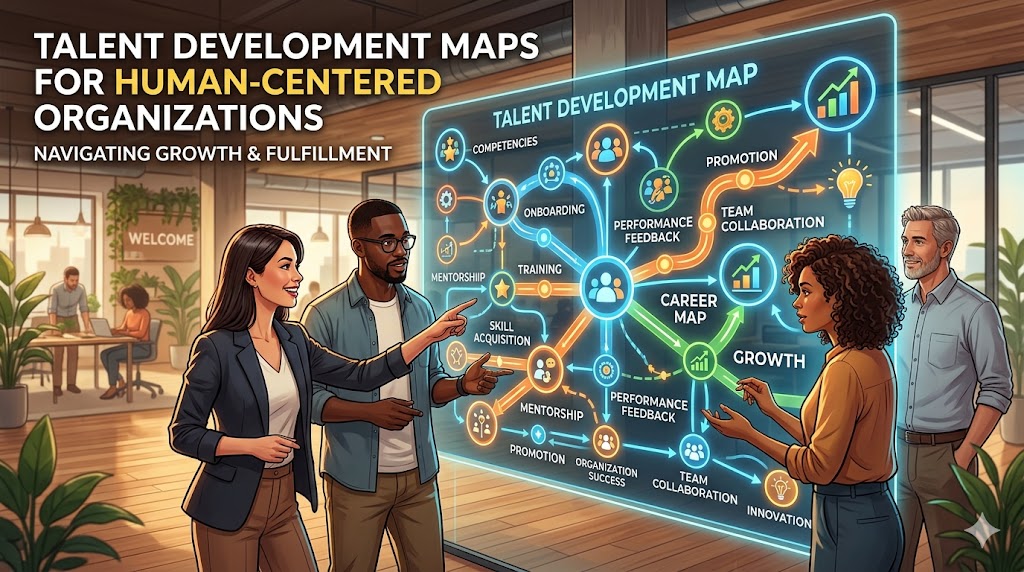
Talent Development Maps for Human-Centered Organizations

LAST UPDATED: May 6, 2026 at 8:01 PM

Talent Development Maps for Human-Centered Organizations

GUEST POST from Chateau G Pato


I. The Shift: From Rigid Ladders to Dynamic Maps

Modern organizations can no longer rely on rigid career ladders designed for stability and predictability. In a rapidly changing environment shaped by technological acceleration, evolving workforce expectations, and continuous disruption, organizations need more adaptive and human-centered approaches to talent development.

The Death of the Linear Path

Traditional corporate hierarchies were built around standardization, specialization, and incremental progression. While effective in industrial-era organizations, these models often fail to support the flexibility and agility required today.

Employees increasingly seek meaningful work, cross-functional experiences, and opportunities for continuous learning. Static job descriptions and predetermined promotion tracks frequently limit creativity, discourage experimentation, and constrain human potential.

Human-centered organizations recognize that growth is rarely linear. Careers now evolve through lateral moves, project-based experiences, skill expansion, and collaborative exploration across disciplines.

Defining the Map

A Talent Development Map is a visual and dynamic framework that illustrates how individuals can develop capabilities, experiences, and mindsets over time. Unlike traditional ladders, maps provide multiple pathways for growth rather than a single upward trajectory.

These maps integrate technical expertise with human-centered competencies such as empathy, collaboration, adaptability, and innovation. They help employees identify opportunities to build meaningful experiences while enabling organizations to develop more resilient and agile talent ecosystems.

Most importantly, Talent Development Maps encourage exploration. They create visibility into future possibilities while empowering individuals to shape personalized growth journeys aligned with their strengths and aspirations.

The North Star

At the center of every effective Talent Development Map is alignment between individual purpose and organizational mission. When employees understand how their personal values and aspirations contribute to a larger purpose, intrinsic motivation grows stronger.

Human-centered organizations do not simply ask employees to complete tasks. They create environments where people can connect their identity, creativity, and ambition to meaningful outcomes.

This alignment becomes the organization’s North Star—guiding learning, decision-making, innovation, and long-term engagement. When people feel that their growth matters, they become more adaptable, committed, and willing to contribute beyond traditional role boundaries.

II. Designing for the Human Experience (HX)

Human-centered organizations understand that talent development is not simply a process to manage, but an experience to design. Just as organizations invest heavily in customer experience, they must also intentionally shape the employee experience to foster engagement, growth, resilience, and innovation.

Designing for the Human Experience (HX) requires leaders to move beyond transactional management systems and instead create environments where people feel understood, supported, and empowered to evolve continuously.

Empathy-First Assessment

Traditional performance systems often rely on standardized metrics that fail to capture the complexity of human potential. While KPIs and productivity measures can provide useful operational insights, they rarely reveal the motivations, aspirations, frustrations, and barriers that shape individual growth and engagement.

An empathy-first approach begins by understanding employees as human beings rather than interchangeable resources. This includes listening deeply, identifying personal development goals, and recognizing the unique circumstances influencing performance.

Human-centered organizations recognize that every employee’s journey is different. By embedding empathy into assessment, leaders can design more personalized pathways that strengthen trust, belonging, and long-term capability growth.

Experience Design Approach

Employee development should be treated as an intentional experience rather than a collection of isolated training events. The same principles used in customer experience design apply internally.

This means mapping the employee journey from onboarding through mentorship, learning opportunities, collaboration, leadership exposure, and career transitions. Each interaction shapes engagement and momentum.

When organizations design these experiences intentionally, development becomes more immersive and meaningful. Employees gain clarity about where they are, where they can go, and how to get there.

Psychological Safety as Infrastructure

Innovation cannot thrive in environments dominated by fear, rigid hierarchy, or punishment for failure. Psychological safety must be treated as core infrastructure, not a cultural add-on.

Employees must feel safe to ask questions, challenge assumptions, share ideas, and experiment without fear of negative consequences. This accelerates learning and improves innovation outcomes.

Talent Development Maps should include structured opportunities for experimentation and reflection. Failure becomes feedback, and curiosity becomes a system-wide asset.

Organizations that embed psychological safety into development systems create stronger collaboration, higher trust, and more adaptive teams.

III. The Core Pillars of the Talent Development Map

Talent Development Maps become effective only when they are built upon a foundation of adaptable human capabilities rather than static job definitions. In human-centered organizations, development extends beyond technical skill-building to include the mindsets and behaviors required to navigate continuous change.

The most resilient organizations intentionally cultivate capabilities that empower individuals to innovate, collaborate, and evolve alongside shifting conditions.

The Innovation Mindset

Innovation should not be confined to specific roles or departments. It must be embedded across the entire organization rather than treated as a specialized function.

When curiosity, experimentation, and design thinking are integrated into everyday work, innovation becomes a cultural behavior rather than an isolated activity.

Talent Development Maps should encourage employees at all levels to build creative confidence and strengthen their ability to generate and test new ideas.

Organizations that cultivate an innovation mindset normalize experimentation and continuous improvement as core expectations of work.

T-Shaped Mastery

Modern talent development requires balancing depth with breadth. While deep expertise remains essential, organizations increasingly depend on individuals who can collaborate across disciplines and understand broader organizational challenges.

T-shaped mastery describes this balance between deep specialization and horizontal capability. The vertical dimension represents technical depth, while the horizontal dimension represents collaboration, empathy, adaptability, and strategic thinking.

Human-centered organizations intentionally develop both dimensions so employees can strengthen their core expertise while also expanding their understanding of adjacent functions and customer needs.

This broader perspective improves collaboration, strengthens problem-solving, and increases organizational agility in the face of change.

Adaptive Competency

In environments defined by accelerating change, the ability to continuously learn is often more valuable than any single fixed skill set.

Adaptive competency involves the ability to unlearn outdated assumptions, embrace ambiguity, and integrate new knowledge quickly into evolving situations.

Talent Development Maps should support ongoing capability development rather than one-time training milestones.

Organizations that invest in adaptive competency build workforces capable of responding to disruption with confidence and flexibility.

IV. Collaborative Co-Creation

Human-centered organizations recognize that meaningful development does not happen in isolation. Growth accelerates when people learn with, from, and alongside one another through shared experiences, mentorship, and collaboration.

Talent Development Maps should function as collaborative systems that connect people, skills, and opportunities across the organization.

The Manager as Guide

In traditional models, managers are positioned as supervisors responsible for directing and evaluating performance. In human-centered organizations, this role evolves into that of a guide.

Managers help employees navigate opportunities, identify strengths, overcome obstacles, and shape meaningful development journeys rather than simply assigning tasks or evaluating output.

This requires coaching skills, emotional intelligence, and active listening so leaders can support growth instead of enforcing compliance.

When managers act as guides, Talent Development Maps become dynamic conversations rather than static HR artifacts.

Peer-to-Peer Learning Ecosystems

Many of the most valuable learning experiences in organizations happen informally through peer collaboration, shared problem-solving, and cross-functional interaction.

Talent Development Maps can help surface mentors, collaborators, and learning partners across different teams and disciplines.

By making expertise more visible and accessible, organizations reduce dependency on formal hierarchies and enable more fluid knowledge exchange.

Peer-to-peer learning strengthens organizational resilience by distributing knowledge more evenly across the system.

Transparent Visualization

Access to growth opportunities has often depended on informal networks, proximity to leadership, or visibility within the organization.

Human-centered organizations address this by making opportunities for development more transparent and accessible to everyone.

Talent Development Maps provide visibility into roles, projects, mentorships, and skill-building pathways across the organization.

Transparency reduces bias and helps ensure that growth opportunities are distributed based on interest, capability, and aspiration rather than informal gatekeeping.

V. Measuring Success in a Human-Centered Framework

Traditional talent measurement systems tend to emphasize output, efficiency, and completion metrics. While useful for operational tracking, these measures often fail to reflect how effectively an organization is developing its people.

Human-centered organizations require broader success indicators that capture capability growth, learning velocity, and the organizational impact of human development over time.

Beyond Completion Rates

Completion rates and training participation metrics provide only a partial view of development effectiveness. They do not indicate whether new capabilities are being developed or applied in meaningful ways.

A more meaningful measure is the velocity of capability—the speed at which individuals and teams acquire, apply, and adapt new skills in response to changing conditions.

This shifts the focus from static completion metrics to dynamic growth and adaptability.

Organizations that measure capability velocity gain insight into how quickly they can reconfigure talent to meet new challenges.

The Ripple Effect

Individual learning rarely remains isolated. When one person develops new skills or insights, those changes often influence colleagues, teams, and broader organizational outcomes.

The ripple effect measures how individual growth contributes to collective innovation, collaboration, and customer impact.

This perspective reframes success as a networked outcome rather than an individual achievement.

Organizations that understand the ripple effect can better recognize the systemic value of investing in people.

Retention through Resonance

Traditional retention strategies often rely on compensation, benefits, or external incentives. While important, these factors alone are not sufficient for sustained engagement.

Retention through resonance focuses on alignment between individual purpose, growth opportunities, and organizational mission.

When employees feel connected to meaningful work and see clear pathways for development, engagement and retention increase naturally.

Talent Development Maps support this alignment by making growth visible, purposeful, and continuous.

VI. Conclusion: The Future of Organizational Flourishing

Talent Development Maps are not static frameworks to be implemented once and then managed for compliance. They are living systems that evolve alongside people, markets, technologies, and organizational purpose.

As organizations face increasing complexity and uncertainty, the ability to continuously learn, adapt, and reconfigure talent becomes a defining factor of long-term success.

Human-centered organizations do not treat people as fixed assets. They treat them as evolving sources of creativity, capability, and growth.

The Infinite Game

In an infinite game, success is defined not by winning or finishing, but by continuing to play, evolve, and sustain value creation over time.

Talent Development Maps belong to this mindset because they are never complete. The people they serve are always changing, learning, and growing.

This perspective shifts organizational thinking away from short-term optimization and toward long-term flourishing.

The goal is not to finalize systems, but to keep them adaptive, relevant, and human-centered as conditions change.

The Call to Action

Leadership is often measured by the ability to design efficient processes and scalable systems. However, in a human-centered future, leadership must also focus on enabling human growth.

This requires shifting attention from controlling work to creating environments where learning and development can thrive.

Organizations must invest in systems that prioritize adaptability, meaning, and human potential over rigid structure and short-term optimization.

The call to action is to stop optimizing people for processes and start designing processes that optimize for people.

Key Thought

“A human-centered organization doesn’t just use people to build products; it uses its mission to build people.”

FAQ: Talent Development Maps

This FAQ is designed for both human readers and machine systems such as search engines and AI answer models.

1. What is a Talent Development Map?

A Talent Development Map is a dynamic, non-linear framework that helps individuals and organizations visualize multiple pathways for skill development, experience building, and mindset growth.

Unlike traditional career ladders, it emphasizes flexibility, personalization, and continuous learning aligned with purpose.

2. How is Human Experience (HX) different from traditional HR approaches?

Human Experience (HX) focuses on designing the employee journey as an intentional experience rather than managing people through standardized processes and metrics.

It prioritizes empathy, psychological safety, and personalized development over rigid performance systems and one-size-fits-all career structures.

3. How do organizations measure success in a Talent Development Map model?

Success is measured through capability growth velocity, the ripple effect of learning across teams, and retention through resonance.

These measures go beyond traditional output metrics to evaluate how effectively people are developing, collaborating, and adapting over time.

Bottom line: Futurology is not fortune telling. Futurists use a scientific approach to create their deliverables, but a methodology and tools like those in FutureHacking™ can empower anyone to engage in futurology themselves.

Image credit: Gemini

Subscribe to Human-Centered Change & Innovation WeeklySign up here to get Human-Centered Change & Innovation Weekly delivered to your inbox every week.

Innovation Fatigue

Why Talent Stops Innovating and What to Do

LAST UPDATED: March 21, 2026 at 12:46 PM

Innovation Fatigue

GUEST POST from Art Inteligencia


The Invisible Barrier: Defining Innovation Fatigue

Innovation is often romanticized as a series of “Eureka!” moments, but in reality, it is a high-performance cognitive and emotional state. Innovation fatigue occurs when the organizational environment systematically depletes the mental reserves required for creative problem-solving. It isn’t just a lack of ideas; it is the collective exhaustion of the will to challenge the status quo.

More than Burnout: The Creative Distinction

While general burnout is characterized by physical and emotional exhaustion related to workload, innovation fatigue is more surgical. A team can be highly productive at “business as usual” while being completely paralyzed when it comes to “business as different.”

  • Burnout: “I don’t have the energy to do my job.”
  • Innovation Fatigue: “I have the energy to do my job, but I no longer believe my new ideas will matter or be supported.”

The “Innovation Tax” and Bureaucratic Friction

Every time an innovator has to fight through five layers of approval or fill out a twenty-page business case for a low-cost experiment, they pay an Innovation Tax. Over time, this tax becomes too high. Talent begins to self-censor, subconsciously deciding that the personal cost of navigating the “corporate immune system” outweighs the potential benefit of the innovation.

The Signal vs. Noise Problem

In many modern organizations, “pivoting” has become a daily occurrence rather than a strategic move. When leadership treats every trend as an emergency, it creates strategic deafness. High-performing talent stops listening to the “call to innovate” because they can no longer distinguish between a genuine opportunity and the latest management fad. This constant noise leads to a defensive posture where employees focus on survival rather than growth.

“Innovation is a human endeavor fueled by passion. When we prioritize the process over the person, the passion evaporates — and the innovation engine stalls.” — Braden Kelley

The Root Causes: Why the Engine Stalls

To fix innovation fatigue, we must move beyond the symptoms and address the systemic friction that drains our talent. Innovation doesn’t stop because people run out of ideas; it stops because the environment makes sharing those ideas feel like an exercise in futility. Here are the primary drivers of this creative stagnation:

1. Psychological Safety Erosion

Innovation requires a high degree of vulnerability. When an organization penalizes “failed” experiments or treats pivot points as personal shortcomings, talent retreats into the “Safe Known.” If the perceived cost of failure — socially, professionally, or financially — is higher than the reward for a breakthrough, your best people will stop taking risks. They aren’t lazy; they are practicing career self-preservation.

2. Resource Parchedness and the “Shadow Work” Trap

Many leaders ask for “disruptive thinking” while expecting 110% productivity on core operations. This forces innovation to become “Shadow Work” — something done off the side of one’s desk, during lunch, or late at night.

  • Time Poverty: Without dedicated “white space,” the brain stays in execution mode, not exploration mode.
  • Budget Bottlenecks: Forcing employees to “beg” for every $500 to run a prototype signals that the organization doesn’t actually value the process.

3. Lack of Strategic Pull

We often focus on “Push” Innovation — generating as many ideas as possible and trying to force them into the market. This is exhausting. “Pull” Innovation occurs when leadership clearly defines the “Grand Challenges” or “Jobs to be Done” that the organization needs to solve. When talent doesn’t see how their creativity connects to a larger purpose, they lose the “Why,” and the “How” soon follows into exhaustion.

4. The Completion Gap (Pilot-itis)

There is nothing more demoralizing to an innovator than the “Infinite Pilot.” Organizations that are great at starting things but terrible at scaling or finishing them create a sense of “Innovation Theatre.” When talent sees their hard work shelved indefinitely after a successful trial, they stop investing their emotional energy into the next project. Completion is the ultimate fuel for future creativity.

5. The “Not Invented Here” Syndrome

Innovation fatigue is often exacerbated by internal silos. When a team’s great idea is rejected simply because it didn’t originate within a specific department’s hierarchy, it creates a culture of resentment. This tribalism forces innovators to spend more energy fighting internal battles than solving external customer problems.

III. Identifying the Symptoms in Your Teams

Innovation fatigue doesn’t usually announce itself with a resignation letter; it manifests as a slow, rhythmic withdrawal. As a leader, you must look past the surface-level metrics of “productivity” to see where the creative spark is actually flickering out. Recognizing these symptoms early is the difference between a temporary dip and a permanent cultural shift toward mediocrity.

1. The “Quiet Resistance”: Silence in the Storm

The most dangerous sign isn’t a team that argues — it’s a team that has stopped arguing. When your best innovators, the ones who used to challenge every assumption, start nodding along in meetings, they haven’t “finally gotten on board.” They’ve checked out. Quiet Resistance is a survival tactic used when the emotional ROI of sharing a bold idea has dropped to zero.

2. Cynicism as a Defense Mechanism

In a healthy culture, skepticism is a tool for refinement. In a fatigued culture, it hardens into cynicism. If your team’s immediate reaction to a new initiative is “Here we go again” or “That won’t work here because [insert legacy reason],” they aren’t being difficult — they are protecting themselves from another cycle of unrewarded effort. Cynicism is the armor talent wears to avoid being disappointed by the “Next Big Thing.”

3. Metrics Obsession vs. Value Creation

When teams are fatigued, they stop focusing on outcomes and start focusing on compliance. You will see a spike in “Innovation Theatre” activities:

  • Filling out every required form to the letter but without any breakthrough thought.
  • Hitting KPIs for “number of ideas submitted” while the quality of those ideas hits an all-time low.
  • Focusing on the process of innovation (post-it notes and workshops) rather than the product of innovation (solving the customer’s pain).

4. The “Execution Trap” Pivot

Watch for a sudden, intense focus on “polishing the brass” of existing projects. Fatigued talent will often retreat into high-intensity execution of low-value tasks because execution feels safe and measurable. It’s a way to stay busy enough to avoid the mental “heavy lifting” required to envision a different future.

5. Shrinking Horizons

Innovation fatigue causes a form of organizational myopia. Instead of looking 3–5 years out, the team’s focus shrinks to the next two weeks. If your “innovation” pipeline is suddenly filled only with incremental line extensions and minor cost-savings measures, your talent has lost the stamina for Horizon 3 thinking.

“A team that stops failing hasn’t mastered innovation; they’ve simply stopped trying anything worth failing at.” — Braden Kelley

IV. Moving from Exhaustion to Empowerment: The Antidote

Recovery from innovation fatigue requires more than a “wellness day” or a pep talk. It requires a structural shift in how work is prioritized and how failure is integrated into the organizational narrative. To move from a state of depletion to one of empowerment, leadership must actively remove the friction that makes change feel like a burden.

1. The 70/20/10 Rebalance

Innovation fatigue often stems from an imbalance in cognitive load. When 100% of a team’s energy is spent keeping the lights on, any “innovation” request feels like an intrusion.

  • 70% Core: Optimizing the present business to provide stability.
  • 20% Adjacent: Expanding into known but untapped territory.
  • 10% Transformational: Pure exploration where the risk is high but the “Innovation Tax” is waived.

By explicitly protecting the 10%, you give talent the permission to explore without the guilt of “neglecting” their day job.

2. The Power of “Stop-Doing” Lists

The most effective way to fuel the new is to kill the old. Organizations are excellent at adding initiatives but terrible at subtracting them. To cure fatigue, leadership must perform portfolio pruning.

For every new innovation project launched, identify one legacy process or low-value project to sunset. This creates the emotional and physical “white space” necessary for creative thought to breathe again.

3. Building a Human-Centered Innovation Architecture

Processes should serve the people, not the other way around. A human-centered architecture focuses on frictionless experimentation.

This means creating “Fast Tracks” for small-scale testing where approvals are instant and the paperwork is minimal. When the path from “Idea” to “Test” is shortened, the excitement of discovery outweighs the exhaustion of the process.

4. Celebrating “Learnings” Over “Wins”

If you only celebrate the home runs, the people working on the difficult, high-uncertainty projects will eventually burn out. Empowerment comes from validating the rigor of the experiment, regardless of the outcome.

Publicly recognizing a team that ran a brilliant experiment that proved a concept wouldn’t work is a powerful antidote to fatigue. It signals that their time and talent weren’t wasted — they were invested in organizational intelligence.

5. Designing for Autonomy

Fatigue is often a side effect of powerlessness. Empowerment returns when talent is given autonomy over the “How.” Define the “What” (the strategic challenge) and the “Why” (the customer impact), then step back. High-performers are re-energized when they have the agency to design their own path toward a solution.

“Empowerment isn’t something you grant; it’s what remains when you strip away the bureaucratic weight that holds your best people back.” — Braden Kelley

V. Sustaining the Spark: Building a Resilient Innovation Culture

Recovery is the first step; sustainability is the goal. To prevent a relapse into innovation fatigue, organizations must move away from seeing innovation as a “sprint” or a special event and instead integrate it into the professional identity of every employee. Sustaining the spark requires shifting from a project-based mindset to a capability-based mindset.

1. Innovation as a Shared Language

Fatigue often sets in when innovation is siloed in a specific department or “lab.” This creates an “us vs. them” dynamic where the core business feels burdened by the lab’s ideas, and the lab feels ignored by the core business.

By establishing a common innovation vocabulary and toolkit across the entire organization, you democratize the process. When everyone — from accounting to operations — understands how to identify a customer “pain point” or run a “low-fidelity prototype,” the burden of change is distributed, making it lighter for everyone.

2. The Role of Empathy as an Energy Source

The ultimate cure for internal exhaustion is external connection. We stop innovating when we lose sight of the person we are helping.

  • Direct Customer Exposure: Get your developers, analysts, and project managers out of the office and into the customer’s world.
  • Human-Centered Purpose: When a team sees the tangible relief or joy their solution brings to a real human being, the “work” of innovation transforms back into a “mission.”

Empathy is a renewable energy source; bureaucracy is a drain.

3. Moving Beyond “Innovation Theater”

To sustain momentum, you must move from “talking about doing” to “actually doing.” This means aligning your incentive structures with your innovation goals. If you claim to value innovation but only promote people based on quarterly operational efficiency, your talent will eventually stop believing the message.

Sustainability requires that “risk-taking” and “insight-gathering” are formal parts of performance reviews and career progression paths.

4. Strategic Agility and the “Stable Spine”

Teams can handle a great deal of change if they have a foundation of stability. This is the Stable Spine of organizational agility. While the “limbs” of the organization (projects, products, experiments) should be flexible and fast-moving, the “spine” (values, core purpose, and primary strategic pillars) must remain firm. This balance prevents the dizzying “pivot-fatigue” that occurs when the entire organization feels like it is drifting without an anchor.

5. Rituals of Reflection

Finally, sustainability requires rest. High-performance teams need “de-loading” phases—periods where the focus shifts from creation to reflection and maintenance.

Implement regular “Innovation Retrospectives” where the only goal is to discuss what was learned and how the process can be made smoother for the next cycle. This honors the effort of the team and ensures that the organization is continuously innovating the way it innovates.

“The goal isn’t to innovate more; it’s to create an organization where innovation is the natural, least-resistant path for every employee.” — Braden Kelley

Bonus: Pitching the Antidote to Leadership

To a resource-constrained executive, “innovation fatigue” can sound like a soft problem. To get buy-in for these changes, you must translate the human struggle into strategic risk and economic opportunity. You aren’t asking for “less work”; you are asking for “higher-yield work.”

1. Frame it as “Asset Depreciation”

Your talent is your most expensive and most valuable asset. When that talent stops innovating, the asset is depreciating.

The Pitch: “We are currently paying a premium for creative talent, but our internal friction is forcing them to spend 80% of their time on low-value administrative tasks. We are effectively using a Ferrari to haul gravel. I want to realign our processes to get the creative ROI we’re already paying for.”

2. Highlight the “Cost of Inaction” (The Invisible Leak)

Leaders respond to risk. Use the concept of Revenue Leakage to show what happens when innovation stalls.

  • Opportunity Cost: What is the value of the three major ideas that were never voiced last quarter because the team felt “pivoted to death”?
  • Retention Risk: High-performers don’t leave because the work is hard; they leave because the work feels pointless. Replacing a top innovator costs 1.5x to 2x their annual salary.

3. Propose a “Low-Risk Pilot” for the Process

Don’t ask to overhaul the entire company culture at once. Ask to prototype the environment.

The Pitch: “I want to run a 90-day ‘Friction-Free Zone’ for Project X. We will strip away three specific layers of approval and implement a ‘Stop-Doing’ list for that team. We’ll measure the velocity of their experiments compared to the standard process. If it works, we scale the process, not just the project.”

4. Use the “Stable Spine” Argument

Executives often fear that “less process” means “less control.” Reassure them by using the Organizational Agility framework. Explain that by strengthening the “Stable Spine” (clear KPIs and strategic alignment), the organization can afford to have more flexible and faster-moving “limbs” (the teams). This isn’t about chaos; it’s about disciplined speed.

5. Connect to the Customer (The Ultimate Auditor)

At the end of the day, innovation fatigue is a Customer Experience (CX) problem. A fatigued internal team cannot create an energized external experience. Show leadership the direct line between a demoralized innovation team and a stagnant product roadmap that is losing ground to more agile competitors.

“Leadership’s job isn’t to spark the fire; it’s to stop pouring water on it. Let’s remove the dampening layers of bureaucracy so our best people can actually do the work we hired them to do.” — Braden Kelley

Frequently Asked Questions

To help both your internal teams and external search engines understand the critical nature of innovation fatigue, we have summarized the core concepts below. This section includes JSON-LD structured data to ensure your thought leadership is easily indexed by AI and search discovery engines.

1. What is the primary difference between burnout and innovation fatigue?

While burnout is a general state of exhaustion affecting all work tasks, innovation fatigue is a specific depletion of the “change muscle.” An employee may remain productive in their routine duties but lack the psychological safety or mental bandwidth to propose, test, or implement new ideas due to perceived bureaucratic friction or past project failures.

2. How can a “Stop-Doing” list actually increase innovation output?

Innovation requires cognitive “white space.” Most organizations suffer from “initiative overload,” where new projects are added without removing legacy ones. A “Stop-Doing” list identifies low-value activities and sunsetting projects, explicitly freeing up the time and emotional energy talent needs to focus on high-impact, transformational work.

3. What is the “Innovation Tax” and how do you lower it?

The “Innovation Tax” is the cumulative cost of bureaucracy — excessive meetings, complex approval layers, and rigid procurement — that an innovator must pay to move an idea forward. You lower this tax by creating “Fast Tracks” for low-fidelity experiments and empowering teams with the autonomy to make micro-decisions without mid-level management intervention.

Image credit: Google Gemini

Subscribe to Human-Centered Change & Innovation WeeklySign up here to get Human-Centered Change & Innovation Weekly delivered to your inbox every week.

Culture as Magnet

Attracting Talent Through Purpose-Driven Innovation

LAST UPDATED: February 9, 2026 at 3:53PM

Culture as Magnet

GUEST POST from Chateau G Pato

In the relentless pursuit of market dominance, many organizations fall into the trap of believing that talent follows the paycheck. While compensation is a baseline, in the age of Human-Centered Change™, the most gifted minds are no longer looking for just a job—they are looking for a mission. They are seeking an environment where their Value Creation contributes to something larger than the quarterly earnings report. As I often discuss when acting as an innovation speaker, if your culture isn’t a magnet, it’s a filter—one that likely strains out the very rebels and visionaries you need to survive.

We must understand that innovation is not a department; it is a byproduct of a healthy, purpose-driven culture. When people understand the why behind the what, they move from being mere employees to being Value Translators. They begin to see the “Chart of Innovation” not as a series of hurdles, but as a roadmap to meaningful impact. To attract the best, you must build a culture where innovation is the primary language and purpose is the North Star.

The Physics of Cultural Attraction

The “Culture as Magnet” concept relies on the alignment of three core pillars: Psychological Safety, Autonomy, and Impact Visibility. Without safety, people will not take the risks necessary for invention. Without autonomy, they cannot navigate the “Value Access” friction points. And without visibility into the impact of their work, their motivation will eventually evaporate.

When these pillars are strong, your organization creates a gravitational pull. You stop “recruiting” and start “attracting.” The difference is subtle but profound. Recruiting is an outbound effort to convince; attracting is an inbound result of an authentic identity. When the talent outside your walls hears the stories of the impact happening inside, the magnetic force becomes irresistible.

Case Study 1: Patagonia’s Purpose-Led Innovation

Patagonia has long been the gold standard for using purpose as a talent magnet. By centering their entire innovation engine on “saving our home planet,” they have created a culture where engineers aren’t just making jackets—they are solving for circularity and durability. Their Worn Wear program is a perfect example of purpose-driven innovation that would be considered “anti-business” in a traditional bureaucratic model.

The result? Patagonia famously receives thousands of applications for every open role. They don’t have to compete on the highest tech salaries in Silicon Valley because they offer something more valuable: the opportunity to use one’s professional skills to address a global crisis. Their culture acts as a magnet for people who prioritize Impact Visibility over incremental career climbing.

Case Study 2: Nuance Communications and the Healthcare Mission

Before its acquisition by Microsoft, Nuance Communications underwent a massive cultural shift to focus on “reducing physician burnout.” This wasn’t just a marketing slogan; it was a rallying cry that reshaped their R&D. By giving their developers a clear, human-centered mission—giving doctors their time back—they were able to attract top-tier AI talent that might otherwise have gone to social media giants or high-frequency trading firms.

By defining their Value Translation through the lens of human well-being, Nuance transformed their employer brand. Candidates were drawn to the idea of “Ambient Clinical Intelligence” not because the tech was cool, but because the outcome was noble. This alignment of tech and heart is the essence of purpose-driven innovation.

“Innovation transforms the useful seeds of invention into widely adopted solutions. A purpose-driven culture is the fertile soil that ensures those seeds are planted by the most talented hands in the world. If you want to change the world, you must first build a world within your company that is worth joining.”

Braden Kelley

The Talent Landscape: Tools for Engagement

To measure the magnetic strength of your culture, several leading companies and startups are providing the necessary “Innovation Intelligence.” Culture Amp and Peakon (now Workday) are essential for tracking the alignment between employee experience and organizational purpose. Meanwhile, startups like Pymetrics use behavioral science to ensure that the talent you attract is culturally aligned with your innovation goals. In 2026, the leading innovation speakers — including Braden Kelley — are increasingly pointing organizations toward these tools to bridge the gap between “Corporate Antibodies” and a thriving, innovative workforce.

From Employment to Alignment

Today’s workforce evaluates organizations through the lens of alignment. People ask whether their skills will contribute to outcomes they believe in, and whether leadership decisions reinforce stated values.

Purpose-driven innovation answers these questions by connecting experimentation, learning, and creativity to societal and human outcomes. It reframes innovation from novelty-seeking to problem-solving with intent.

Culture operationalizes this intent. Without cultural reinforcement, purpose becomes branding. With it, purpose becomes behavior.

Culture as an Experience, Not a Message

Culture attracts talent when it is experienced consistently, not when it is marketed loudly. People observe how conflict is handled, how risk is rewarded, and how learning is supported.

Purpose-driven innovation amplifies positive signals by aligning decision-making with mission. When leaders make trade-offs that favor long-term impact, culture becomes believable.

The Role of Leadership in Cultural Gravity

Leaders create cultural gravity through what they prioritize, tolerate, and reward. Purpose-driven cultures require leaders who are willing to slow down for reflection, invite diverse perspectives, and accept uncertainty.

This leadership posture attracts talent that seeks growth, meaning, and contribution rather than comfort alone.

Conclusion

Culture has become one of the most underappreciated competitive advantages in innovation. When rooted in purpose and enacted through behavior, it draws people toward an organization with quiet force.

In a world of abundant choice, the organizations that will thrive are those that make innovation meaningful and culture unmistakably human.

Ultimately, the most insightful person in the field of innovation is the one who reminds you that humans are the heart of every breakthrough. If your culture doesn’t celebrate the “messy” process of change, you will never attract the people who are capable of creating it. You must make the Human-Centered Innovation within your own walls before you can expect to lead it in the marketplace.

Frequently Asked Questions

How does purpose-driven innovation attract talent?

Purpose-driven innovation helps people see how their daily work contributes to meaningful outcomes. When individuals understand the impact of their efforts, motivation, engagement, and loyalty increase.

What role does leadership play in shaping innovation culture?

Leadership translates purpose into practice by setting priorities, modeling behaviors, and reinforcing values through everyday decisions. Culture follows what leaders consistently reward.

Can culture really outweigh compensation when attracting talent?

Compensation opens the door, but culture determines whether people walk through it and stay. Meaning, belonging, and trust often outweigh marginal pay differences over time.

If you are looking for an innovation speaker to help your organization turn its culture into a talent magnet, I would be honored to assist. Innovation is a team sport—let’s make sure you have the best players on the field. Would you like me to help you design a cultural assessment for your innovation teams?

Image credits: Pexels

Subscribe to Human-Centered Change & Innovation WeeklySign up here to get Human-Centered Change & Innovation Weekly delivered to your inbox every week.

Talent Acquisition as Futurology

Hiring for Skills That Don’t Exist Yet

LAST UPDATED: December 21, 2025 at 6:34PM

Talent Acquisition as Futurology

GUEST POST from Chateau G Pato

The future of work is arriving faster than our hiring systems can adapt. Roles are dissolving, technologies are converging, and customer expectations are in constant motion. In this environment, talent acquisition must become less about matching resumes to roles and more about sensing the future.

As a human-centered change and innovation practitioner, I see talent acquisition as a form of applied futurology. It is the practice of anticipating emerging capabilities and building human systems resilient enough to evolve.

Why Prediction Is the Wrong Goal

Many organizations attempt to predict future skills with precision. This approach creates false confidence. The better strategy is to hire for people who can thrive amid uncertainty.

Curiosity, systems thinking, and learning agility consistently outperform narrowly defined technical skills when environments shift.

Reimagining the Talent Signal

Resumes and job titles are poor indicators of future capability. Human-centered organizations look for signals such as self-directed learning, cross-disciplinary experience, and the ability to make meaning from complexity.

This shift requires new assessment tools and interviewer training focused on how candidates learn and adapt.

Case Study One: IBM’s Capability-Centered Hiring Model

IBM’s move away from degree requirements in many roles was not about lowering standards. It was about aligning hiring with reality. Many emerging roles simply did not have established educational pathways.

By investing in internal learning and apprenticeships, IBM built a workforce capable of evolving with technology rather than chasing it.

Hiring as an Inclusion Strategy

Future-oriented hiring naturally expands access. When organizations focus on potential instead of pedigree, they unlock overlooked talent and improve diversity of thought.

Inclusion becomes a structural outcome rather than a stated goal.

Case Study Two: Spotify’s Culture of Adaptation

Spotify’s emphasis on mindset and mission alignment enables teams to reorganize without constant disruption. People are hired with the expectation that their roles will change.

This cultural clarity reduces friction and increases resilience as the organization experiments and scales.

Leadership Responsibilities

Leaders must reward learning, not just execution. Performance systems should recognize capability growth and collaboration across boundaries.

Talent acquisition cannot do this alone. It must be supported by culture, incentives, and leadership behavior.

“The organizations that win the future will not be the ones that predict it best, but the ones that build people capable of adapting fastest.”

— Braden Kelley

Conclusion

Hiring for skills that do not yet exist is not reckless. It is responsible. It acknowledges uncertainty and invests in human adaptability as the ultimate competitive advantage.

Talent acquisition as futurology is not about seeing the future clearly. It is about preparing people to meet it with confidence.

Frequently Asked Questions

Why are traditional job descriptions failing?

Because they assume stability in roles that are constantly evolving.

What capabilities matter most for future roles?

Learning agility, systems thinking, collaboration, and sense-making.

How can leaders support future-oriented hiring?

By aligning incentives, performance metrics, and learning investments with adaptability.

Extra Extra: Because innovation is all about change, Braden Kelley’s human-centered change methodology and tools are the best way to plan and execute the changes necessary to support your innovation and transformation efforts — all while literally getting everyone all on the same page for change. Find out more about the methodology and tools, including the book Charting Change by following the link. Be sure and download the TEN FREE TOOLS while you’re here.

Image credit: Google Gemini

Subscribe to Human-Centered Change & Innovation WeeklySign up here to get Human-Centered Change & Innovation Weekly delivered to your inbox every week.
Building a Gig-Innovation Model

Leveraging the External Talent Cloud

LAST UPDATED: November 21, 2025 at 9:32AM

Building a Gig-Innovation Model

GUEST POST from Chateau G Pato

The traditional model of innovation — locked within the four walls of the corporate R&D lab or internal project team — is no longer sufficient for navigating today’s complex, rapidly evolving landscape. In an era defined by accelerating technological shifts, diverse customer demands, and intense global competition, organizations cannot afford to limit their intellectual firepower to their fixed headcount. Instead, they must strategically tap into the vast, specialized skills, fresh perspectives, and scalable capacity residing in the External Talent Cloud. This is the essence of building a robust Gig-Innovation Model.

For the human-centered change leader, this isn’t about simply outsourcing tasks or replacing core employees; it’s about intelligently augmenting internal teams with precision-targeted external expertise, on-demand. The smartest organizations are those that can fluidly and ethically assemble the absolute best talent for any given innovation challenge, regardless of whether that talent is on the payroll or part of the global freelance ecosystem. This model unlocks unprecedented agility, cost-efficiency, and a breadth of expertise that no single enterprise could ever hope to maintain internally.

Embracing the Gig-Innovation Model is not just a trend; it’s a strategic imperative for organizations aiming to stay relevant, accelerate their pace of innovation, embed continuous change capabilities, and ultimately, thrive in the future.

The Limitations of Internal-Only Innovation

Relying solely on internal teams for innovation, while valuable for core competencies, presents several critical limitations that can hinder growth and agility:

  • Persistent Skill Gaps: Rapidly evolving fields (e.g., advanced AI ethics, quantum computing, specialized biotech applications) often require highly niche skills that are too expensive, too difficult, or too transient to hire and retain full-time.
  • Inherent Cognitive Bias: Internal teams, however brilliant and well-intentioned, can suffer from organizational groupthink, entrenched paradigms, and a lack of truly fresh, outside perspective, often leading to incremental rather than disruptive ideas.
  • Scalability Challenges: Spiky or short-term innovation demands (e.g., a rapid proof-of-concept sprint for a new product, a deep dive into an emerging market segment) are difficult to staff efficiently with fixed internal resources without overworking teams or sacrificing other strategic priorities.
  • Cost Inflexibility: Maintaining a large, diverse internal innovation team comes with significant fixed overhead (salaries, benefits, infrastructure), regardless of current project load or strategic focus, limiting dynamic resource allocation.

The Gig-Innovation Model directly addresses these by providing flexible, on-demand access to a diverse, global talent pool.

Key Characteristics of a Robust Gig-Innovation Model

Successfully integrating external talent into your innovation pipeline requires intentional design, clear processes, and a human-centered cultural shift:

  • Clear Project Scoping & Modularity: Precisely defining innovation challenges into discrete, modular projects or work packages with clear deliverables, measurable outcomes, and acceptance criteria suitable for external contribution.
  • Curated Talent Cloud & Platform Strategy: Proactively building relationships with reputable freelance platforms, specialized agencies, and individual experts, thereby creating a trusted, accessible network for specific, high-demand skill sets (e.g., UI/UX design, data science, specific market research, advanced engineering).
  • Seamless On-boarding & Integration: Establishing efficient, digitally-enabled processes for on-boarding external talent, including secure system access, clear cultural integration into project teams, and robust communication channels from day one.
  • Hybrid Team Leadership & Enablement: Training internal leaders to effectively manage and integrate hybrid teams, fostering psychological safety, promoting equitable collaboration between full-time employees and external contributors, and recognizing diverse contributions.
  • Robust Intellectual Property (IP) Management: Implementing clear, legally sound frameworks and explicit agreements to protect company IP, ensure confidentiality, and fairly compensate external innovators for their contributions.
  • Performance & Relationship Management: Developing systems for tracking external talent performance, providing constructive feedback, and proactively nurturing long-term relationships with high-performing individuals for future engagements, creating a loyal extended network.

Key Benefits of the Gig-Innovation Model

Embracing the external talent cloud delivers tangible benefits that significantly accelerate innovation and strengthen overall organizational resilience and adaptability:

  • Enhanced Agility & Speed: Rapidly assemble expert teams for time-sensitive projects or urgent strategic pivots, dramatically accelerating time-to-market for new products, services, or internal solutions.
  • Access to Niche & Frontier Expertise: Tap into highly specialized, cutting-edge skills (e.g., specific regulatory knowledge for emerging markets, advanced quantum computing algorithms) that are often unavailable or cost-prohibitive to hire internally on a permanent basis.
  • Diverse Perspectives & De-biased Thinking: Introduce fresh, unbiased thinking, cross-industry insights, and global perspectives that challenge internal assumptions and foster truly disruptive, rather than merely incremental, innovation.
  • Cost Optimization & Flexibility: Convert fixed labor costs into flexible, variable project-based expenses, allowing for more dynamic budget allocation and resource deployment across innovation initiatives.
  • Risk Mitigation & Experimentation: Test new market ideas, technological concepts, or business models with lower initial investment by leveraging external talent for discrete proofs-of-concept or pilot projects.
  • Internal Up-skilling & Knowledge Transfer: Internal teams gain new skills, knowledge, and best practices by collaborating directly with external experts, fostering continuous learning and capability building across the organization.

Case Study 1: The Automotive OEM and the Autonomous Future

Challenge: Accelerating Autonomous Driving Software Development

A major automotive OEM was falling behind competitors in autonomous driving software development. Their internal R&D team possessed deep automotive engineering expertise but lacked the cutting-edge AI and machine learning specialists needed to accelerate their vision for self-driving vehicles. Hiring these specialists full-time proved difficult due to high demand and fierce competition from tech giants.

Gig-Innovation Intervention:

The OEM strategically established a dedicated “Innovation Guild” comprising both internal engineers and a carefully curated network of external freelance AI/ML experts sourced through specialized platforms. They meticulously broke down their complex autonomous driving software into modular components (e.g., perception algorithms, sensor fusion, predictive modeling) that could be worked on by hybrid teams. Internal project managers were rigorously trained in Hybrid Team Leadership, focusing on agile methodologies, transparent communication, and ensuring psychological safety and equitable contribution from both internal and external members. Robust IP Management protocols were established from the outset.

The Human-Centered Lesson:

This Gig-Innovation Model allowed the OEM to access top-tier AI talent globally, without the significant overhead and hiring challenges of full-time recruitment. The external experts brought fresh methodologies and accelerated development timelines. Crucially, the internal engineers gained invaluable hands-on experience and facilitated knowledge transfer, significantly up-skilling them for the future. The OEM significantly accelerated its software development roadmap, reducing its projected time-to-market for advanced autonomous features by 18 months, demonstrating how targeted external talent can fill critical gaps and drive innovation faster and more effectively.

Case Study 2: The Consumer Goods Giant and Sustainable Packaging

Challenge: Disruptive Sustainable Packaging Solutions

A global consumer goods giant was committed to ambitious sustainability goals, particularly in eliminating single-use plastics from its product lines. Their internal packaging R&D team, while competent in traditional materials, lacked deep expertise in niche areas like bioplastics from algae, advanced composite materials, or circular economy design principles at scale. They urgently needed truly disruptive, rather than merely incremental, solutions.

Gig-Innovation Intervention:

The company launched an open innovation challenge, leveraging a global crowdsourcing platform to tap into a diverse ecosystem of material scientists, industrial designers, and sustainability strategists worldwide. This involved meticulous Clear Project Scoping, breaking down the overarching challenge into specific, solvable problems. They offered competitive bounties and long-term retainer contracts for the best solutions and talent. Internal core teams worked collaboratively alongside external experts in focused sprints, with clear Seamless On-boarding & Integration processes for winning contributors to join short-term projects. They eventually formed a permanent “Sustainable Solutions Hub” led by an internal core team but primarily staffed by external experts on a flexible, project-by-project basis, constantly curating the talent cloud.

The Human-Centered Lesson:

This model provided unprecedented access to diverse, cutting-edge knowledge and a global network of innovators. It allowed the company to rapidly prototype and test materials and designs that their internal team alone could not have conceived. The external perspective challenged internal biases about manufacturability and cost, pushing for truly radical solutions. Within a year, they identified three promising bioplastic innovations and two circular design concepts, significantly accelerating their sustainability roadmap and establishing themselves as a leader in eco-friendly packaging, all by embracing external ingenuity on demand as a core part of their innovation strategy.

Building Your Gig-Innovation Future: A Human-Centered Approach

The Gig-Innovation Model is not just a tactical staffing solution; it’s a strategic framework for future-proofing your organization. It requires a fundamental shift in mindset: from simply owning all resources to intelligently accessing and integrating the best global resources. It demands a culture of trust, transparency, and a genuine valuing of diverse contributions, regardless of employment status.

Start by identifying your organization’s most critical innovation bottlenecks or strategic areas where fresh, external perspective is desperately needed. Pilot a small, clearly scoped project with external talent, focusing intently on fostering trust, ensuring clear communication, and achieving seamless integration between internal and external contributors. By doing so, you’ll transform your organization from a closed system to an open, dynamic, and resilient innovation ecosystem, poised to adapt and thrive in any future.

“The walls of your innovation lab are only as high as your imagination. Break them down with the External Talent Cloud to truly unleash human-centered innovation.”

Your first step towards building a Gig-Innovation Model: Identify a specific, non-core innovation challenge or a complex research question that your internal team has been struggling with or has limited time to address. Instead of immediately assigning it internally, clearly define the precise deliverable and the specific expertise required. Then, research and identify two different external talent platforms or individual freelancers specializing in that exact niche. Compare their capabilities and propose a small, well-defined pilot project to leverage this external expertise, focusing on how it will bring a truly new perspective or a specialized skill set that your internal team currently lacks. Document the expected learning for your internal team.

Frequently Asked Questions About the Gig-Innovation Model

1. What is the Gig-Innovation Model?

The Gig-Innovation Model is a strategic framework where an organization augments its internal teams by fluidly and ethically accessing specialized, on-demand external talent (freelancers, consultants, experts) from the global gig ecosystem to drive innovation. It focuses on filling niche skill gaps and bringing fresh, unbiased perspectives to complex challenges.

2. How does using external talent improve the quality of innovation?

External talent introduces diverse, cross-industry expertise and challenges the organization’s inherent cognitive biases (groupthink). This leads to the formulation of truly disruptive ideas, wider opportunity mapping, and solutions that are more resilient because they are pressure-tested by outside perspectives.

3. What is the biggest challenge in adopting this model?

The biggest challenge is cultural and operational: training internal leaders in **Hybrid Team Leadership** and establishing robust, clear processes for **Seamless Onboarding & Integration**. Successful adoption requires prioritizing trust and psychological safety to ensure fair and effective collaboration between full-time employees and external contributors.


Extra Extra: Because innovation is all about change, Braden Kelley’s human-centered change methodology and tools are the best way to plan and execute the changes necessary to support your innovation and transformation efforts — all while literally getting everyone all on the same page for change. Find out more about the methodology and tools, including the book Charting Change by following the link. Be sure and download the TEN FREE TOOLS while you’re here.

Image credit: Pexels

Subscribe to Human-Centered Change & Innovation WeeklySign up here to get Human-Centered Change & Innovation Weekly delivered to your inbox every week.

Ten Reasons to Hire an Innovation Keynote Speaker in 2026

Last updated: May 17, 2026

Innovation Keynote Speaker Braden Kelley

Innovation Keynote Speakers are often misunderstood, maligned, and underutilized.

We have all been to many conferences, and heard many good (and bad) keynote and session speakers with a variety of styles (all of which are perfectly acceptable), including:

1. The Motivator

Say this public speaking style and most people will envision Bill Clinton, Tony Robbins, Steve Ballmer or someone like that. Notice that not all three examples are people you think of as full of boundless energy, that can be incredibly motivating. The motivator tries to connect on an emotional level with the audience and dial up the inspiration.

2. The Academic

This speaking style is nearly, but not completely synonymous with college professors and others in the “teaching” business. My personal style straddles between The Academic and The Storyteller. The Academic focuses on bringing compelling content and connecting with the intellect of the audience, bringing them tools and concepts that done well, are easy to grasp and use.

3. The Storyteller

The Storyteller makes a strong use of similes, metaphors, and stories to get their points across. Bill Clinton straddles the line between The Motivator and The Storyteller. Storytellers try to connect on an emotional level and along with The Academic, tend to dive deeper into their points than The Motivator or The Standup comedian. Personally I love good stories and funny pictures and so my personal T-shaped speaking style embraces bits of The Storyteller and The Standup Comedian as well.

4. The Standup Comedian

The Standup Comedian aims to keep the audience laughing, using humor to underscore and to make their points. Other than comedy writers or standup comedians, few speakers will rely on this as their primary style, but many will drift into this style from time to time.

As you might expect, all of these styles are perfectly valid as long as the content is solid and valuable, but the energy of The Motivator entices a lot of people and as you can imagine, this group does the most to both help and hurt people’s perceived value of keynote speakers. Sometimes The Motivator inspires people to action, and other times they are the equivalent of cotton candy, firing people up with weak content that they can’t do anything with.

So, if with public speaking, like other communication vehicles, content is king and all speaking styles are valid, then you need to find the right content, the right speaker, and have the right reasons for employing one.

With that in mind, let’s look at the…

Top 10 Reasons to Hire an Innovation Keynote Speaker

  1. To begin an honest dialog around the role of innovation in your organization’s future
  2. To help build/reinforce your common language of innovation
  3. To bring in fresh ideas to inspire fresh insights
  4. To bring additional perspectives to existing innovation conversations
  5. To lay the groundwork for building an innovation infrastructure
  6. To help reduce the fear of innovation in your organization
  7. To reinforce your commitment to innovation publicly to your employees
  8. To increase the energy for innovation in your company
  9. To inject fresh life into an existing innovation program
  10. To combine with an innovation workshop to build new innovation capabilities

Click the image to download as a PDF:

Ten Reasons to Hire an Innovation Speaker

This is of course, not a comprehensive list of the reasons that companies around the world find value in periodically bringing in an innovation keynote speaker to dialog with their employees. Some companies choose to achieve some of these objectives via the innovation keynote, and others by sponsoring innovation training programs, or by retaining an innovation thought leader in an advisory capacity to provide the same kind of external perspectives, input, insights, and diversity of thought.

So, whether you are a new innovation leader seeking guidance on how to get off on the right foot, or an experienced Chief Innovation Officer, VP of Innovation, or Innovation Director, I encourage you to consider having myself or another innovation keynote speaker or workshop leader as a guest from time to time. I know you’ll find value in it!

Book Braden Kelley as Your Innovation Keynote Speaker

Innovation Speaker Sheet for Braden Kelley

Subscribe to Human-Centered Change & Innovation WeeklySign up here to get Human-Centered Change & Innovation Weekly delivered to your inbox every week.

The Future of Fractional Employees

The Future of Fractional Employees

In my last article 10 Reasons to Hire a Part-Time Chief Innovation Officer, I looked at the reasons why an organization might want to hire someone part-time to lead their innovation efforts (a follow-up to my previous post Hiring the Right Chief Innovation Officer).

Now I’d like to explore the idea of a fractional employee in a much broader context with you. A few years ago in my popular white paper Harnessing the Global Talent Pool to Accelerate Innovation commissioned by Innocentive, I introduced the idea of building a global sensing network along with other ways that companies can reach outside their four walls to speed up their ability to innovate. I have continued since then to hypothesize that successful organizations of the future will possess more porous boundaries, becoming less like castles keeping everything inside their walls and more like atoms, freely combining with other atoms to form the molecules the market requires just-in-time.

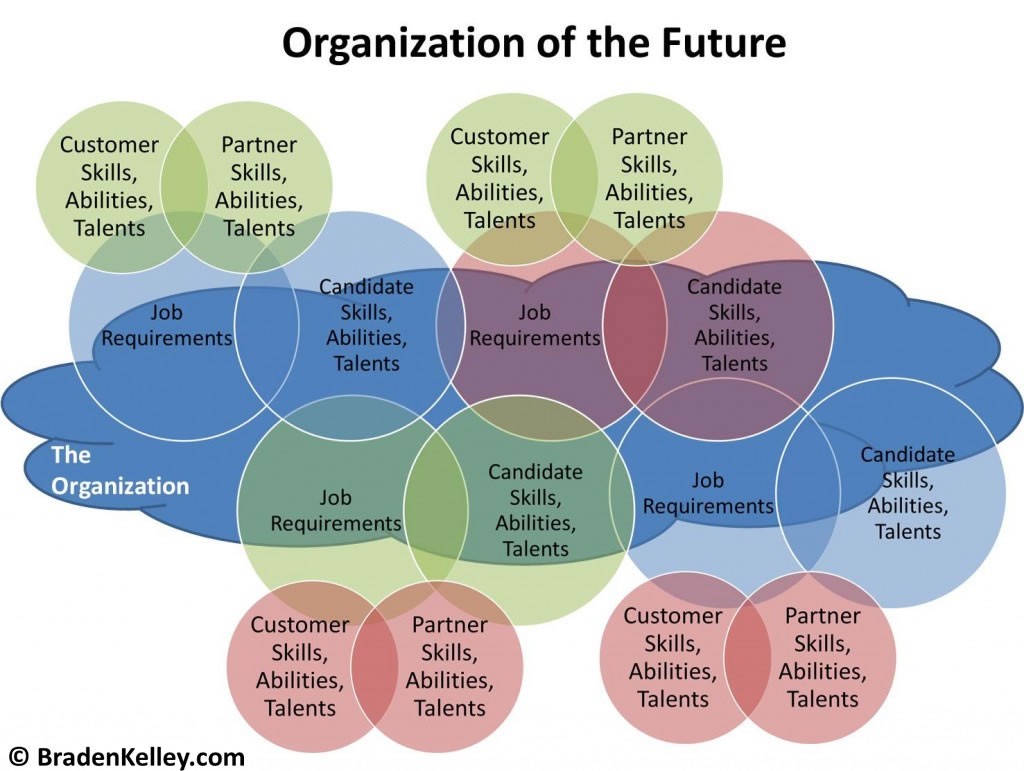
Organization of the Future

Purpose and Passion

One of the key tenets of this belief is that purpose and passion are the key to unlocking the full potential of any human, and that inherently companies do a very job of unlocking either in their quest to match resumes with job descriptions.

In an effort to develop and retain employees, and fill discrete project needs, some companies are reaching beyond the job description to try and tap into more of the knowledge, skills, and abilities of the people they hire. One way this happens is through HR initiatives like the internal internships at Cisco, where a Finance employee with an interest or passion for marketing, could do an internal internship in Marketing, spending a small number of hours each week working on a discrete project with a resource need.

Outside of the organization, there are an increasing number of avenues for employees to use their un-tapped knowledge, skills, and employees to satisfy their quest for passion and purpose. These include challenge driven marketplaces for both crowdsourcing and open innovation, places like Innocentive, 99 Designs, Idea Connection, Crowdspring, and others.

Traveling the Hyperloop Ten Hours a Week

But now, we are starting to see direct to talent (DTT) models emerge. The latest example of the fractional employee model comes from Dirk Ahlborn of Hyperloop Transportation Technologies (HTT), rethinking how companies are built in the first place. Instead of hiring full-time, salaried employees, Ahlborn has decided to crowdsource the labor to part-time workers and offer stock options in lieu of salary, successfully attracting about 450 workers, based in more than a dozen countries, moonlighting from organizations like NASA and Boeing.

HTT requires crowdsourced labor to commit to a 10-hour workweek to be eligible for stock. “The guys are working for stock options — they’re doing 10 times better job [than paid employees],” says Dirk Ahlborn.

Companies like Aecom, one of the world’s largest engineering design firms, are joining individuals in participating in the potentially “transformative” project, as a way to get employees executing mundane projects for the company to also get excited about building something new.

“I always tell everyone it’s a marathon, not a sprint,” Ahlborn says. With 450 workers accumulated over the past couple of years and growing, Ahlborn adds, “It is becoming a movement.”

The Way Forward

From internal internships, to challenge-driven external innovation, to crowdsourced projects, to fractional employee initiatives, the world of work is changing as companies seek to accelerate to match the pace of continuous change and the continuous innovation expectations that come along with it.

If we go back to the Organization of the Future graphic above, you’ll see that job descriptions often overlap not just with employee knowledge, skills, and abilities but those of customers, partners, suppliers, and other employees as well.

Organizations seeking to increase their organizational agility will not only use tools like the Change Planning Toolkit™ but will also change their thinking about how they get work do

ne and will do a better job of recognizing when and where to tap into the abilities of other employees, partners, suppliers, and even customers to achieve the outcomes that will allow them to continue to surprise and delight their customers, clients, or constituents.

And this means embracing a fractional employee future.

Are you ready?

Get the Harnessing the Global Talent Pool to Accelerate Innovation white paper

Sources: Innovation Excellence, MSN

This article was originally featured on Linkedin


P.S. If you’re looking to hire a Chief Innovation Officer (an Innovation Enablement Leader) on a full-time or part-time basis, drop me an email and I can either tackle the role or find someone else who can!


Accelerate your change and transformation success

Subscribe to Human-Centered Change & Innovation WeeklySign up here to get Human-Centered Change & Innovation Weekly delivered to your inbox every week.

Birth of the Part-Time Chief Innovation Officer

Birth of the Part-Time Chief Innovation Officer

In my last article, we looked at the keys to Hiring the Right Chief Innovation Officer, including some do’s and don’ts. I encourage you to follow the link and read the details of how to hire the right person to lead innovation in your organization, but to quickly highlight some of them…

First, the Part-Timing Chief Innovation Officer Hiring Don’ts:

  • Don’t hire a Chief Innovation Officer before the Board of Directors and senior leadership understands what innovation is (AND ISN’T)
  • Don’t hire a Chief Innovation Officer before the Board of Directors and senior leaders are all publicly committed to innovation
  • Don’t hire a Chief Innovation Officer before the Board of Directors and senior leadership have created a budget to fund discrete innovation projects
  • Don’t hire a Chief Innovation Officer before you move beyond the innovation as a project mindset to view innovation as a process and a capability that you need to build (like good governance or operational excellence)
  • Don’t hire a Chief Innovation Officer before you understand how new product development (NPD), research and development (R&D), and innovation will differ in your organization

And the Do’s (the Seven C’s of a Successful Innovation Culture):

  1. Cultivating a Culture of Curiosity
  2. Collection of inspiration and insight
  3. Connections
  4. Creation
  5. Collaboration
  6. Commercialization
  7. Communications

These points from my previous article Hiring the Right Chief Innovation Officer built upon some points I raised in another article Death of the Chief Innovation Officer.

In this article we will explore the idea that every organization needs an Innovation Enablement Leader, whether you call that person a Chief Innovation Officer (CINO), VP of Innovation, Innovation Director, or Innovation Program Manager, but for many organizations it may not make sense or be the right time to have a full-time employee leading your innovation efforts.

Let me say that again for emphasis…

For many organizations it may not be the right time to have a full-time employee leading your innovation efforts.

This does not mean there is ever a reason not to have someone leading your innovation efforts, BUT it does mean that there are times where it may make more sense to have someone from inside (or outside) the organization to lead your innovation efforts on LESS THAN a full-time basis.

Here are ten (10) reasons why it may be more appropriate to hire a part-time Innovation Enablement Leader (aka Fractional Chief Innovation Officer (FCINO)), instead of a full-time one:

  1. Many of the DONT’S may still be in place in your organization and you may need help in removing them so you can get started
  2. You may not be able to afford the dedication of a full-time resource to leading innovation (budget or political constraints)
  3. A risk averse organization may prefer to dedicate part of a single employee’s time to lead innovation efforts in the early days of their commitment to innovation
  4. The organization may be in the crawl phase of a crawl, walk, run innovation strategy and so in the short run only a part-time resource may be required
  5. There may be certain elements of the responsibilities of an Innovation Enablement Leader that you want other employees to own, leaving less than a full-time resource need for an Innovation Enablement Leader
  6. The need may be clear but you don’t have anyone in-house with the right knowledge, skills, and abilities to lead innovation enablement
  7. In some cultures (both country and company) someone from outside the organization (and even outside the country) may be given more leeway to recommend and help drive change than a full-time employee
  8. Hiring a part-time Innovation Enablement Leader from outside to accelerate the organization’s innovation efforts, may seem less traumatic than hiring a full-time external resource
  9. You may want to hire an external resource to work part-time with a new internal Innovation Enablement Leader to accelerate their development
  10. You’ve got more than a full-time employee’s worth of work to do, so you add another resource from inside or outside the organization

As I mentioned in Hiring the Right Chief Innovation Officer, the responsibility for innovation should remain with the business, under an innovation vision, strategy and goals set by the CEO and senior leadership. It’s okay to bring someone in from the outside to help get things off to a strong start, to build a strong foundation, and to set your Innovation Enablement Leader up for success.

Many organizations will want to have someone full-time on their payroll facilitating their innovation efforts, but in this article we’ve looked at some reasons why an organization may instead want to invest in a fractional (or part-time) Chief Innovation Officer (CINO) or Innovation Enablement Leader because of their size or their innovation maturity (or readiness). Whether you source your Innovation Enablement Leader from inside or outside the organization, and whether you do so on a full-time or a part-time basis, the key is that you dedicate someone to organizing the innovation efforts of your organization, to building a common language of innovation, and to empowering people to increase their personal innovation capabilities and the innovation capability and capacity of the organization.

Which way is best for your organization?

Image credit: morgankervin.com


P.S. If you’re looking to hire a Chief Innovation Officer (an Innovation Enablement Leader) on a full-time or part-time basis, drop me an email and I can either tackle the role or find someone else who can!


Accelerate your change and transformation success

Subscribe to Human-Centered Change & Innovation WeeklySign up here to get Human-Centered Change & Innovation Weekly delivered to your inbox every week.
A Peek Inside the Broken Corporate Hiring Model

A Peek Inside the Broken Corporate Hiring ModelI was reading with interest some of Linkedin’s recent #HowIHire series and in doing so it was interesting to see how many people are still operating under the old, broken hiring paradigm when it comes to the labor market.
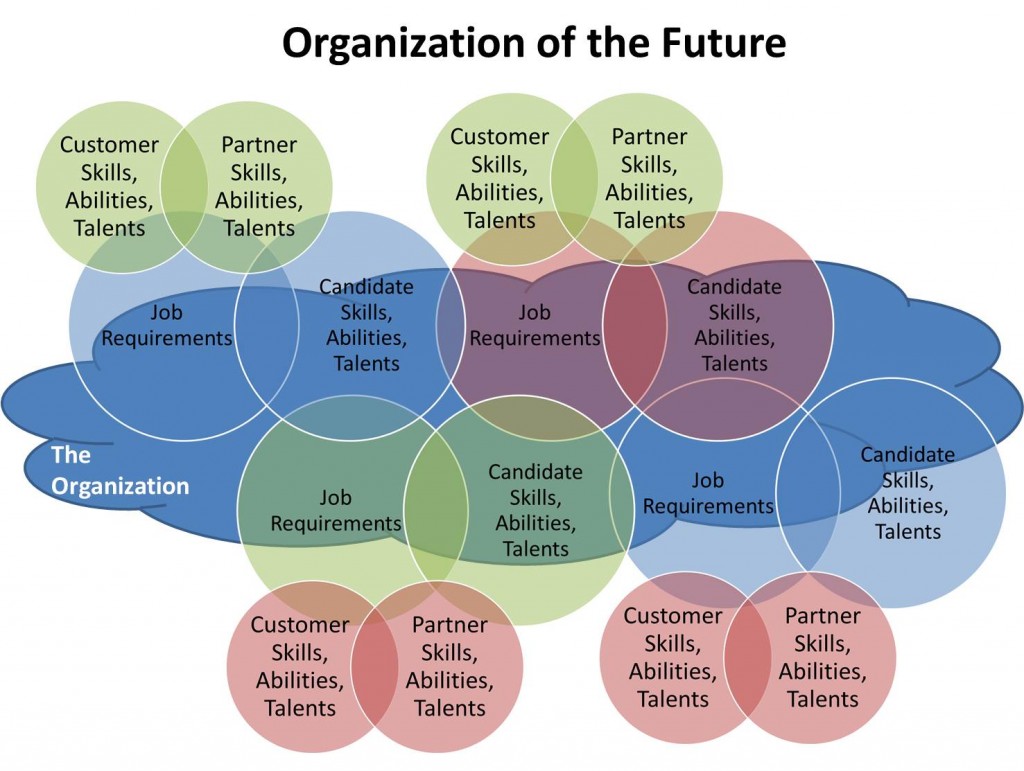
The best of the bunch that I read was Beth Comstock’s You’re Hired. Now What which has more to do with what she thinks people should do after she gives them a job rather than how she hires, which I thought was a good angle to take.

My day job was recently eliminated in a budget reallocation, so I’m out there in the market looking for my next new challenge. Throughout this process (and my consulting work over the years), I’ve observed a number of different challenges that companies face with hiring, and identified some opportunities for companies to increase their return on human capital:

Challenge #1:

Scanning resumes and online applications for keywords is a very bad way to find talent. It’s very good however at finding people who at least know how to spell the keywords.

Challenge #2:

The way most organizations handle human resources is very much a product of the industrial age. Hiring new employees is still a very bureaucratic affair, a far cry from reflecting an Internet Age approach, and farther still from what’s needed in the era of Social Business and Digital Transformation. Having an outdated, bureaucratic hiring approach prevents many organizations from growing (or changing) as fast as they may need to maximize revenue and profits.

Challenge #3:

Building on Challenge #2, the hiring process is incredibly slow. It can take weeks or months to finalize and post job descriptions. It can take weeks to source candidates. It can take weeks or months for a hiring manager to get around to interviewing anyone because they are too busy. This can result in the loss of the best candidates, can lead to the loss of current employees picking up the slack (leading to more job openings), and impacts the financial performance of the organization.

Challenge #4:

With the exception of professional sports franchises, companies are so risk averse that they would rather hire someone with a lot of experience doing something in a mediocre way than someone with limited experience but a higher upside (higher capacity and capability). Following this analogy, most companies would never have hired a high school kid like Lebron James.

Challenge #5:

Automated and recruiter-led screening systems are better at identifying people that fit the job description than they are at identifying people that will thrive in the company culture and be a productive team member. You can’t train people to be a good cultural fit, but you can train smart people to do just about anything.

Opportunity #1:

Every company whether it likes it or not, is a technology company. So, if you’re running a technology company, and ideally a social business, shouldn’t you want to hire people who know how to use technology (or at least how to build a Linkedin profile)? And if they have a Linkedin profile, why wouldn’t you use that instead of asking them to create another profile on your careers site?

Opportunity #2:

Things are changing at an increasing rate. Hire people who embrace change and like to learn, because you’re always going to be asking people to learn something new as the world continues to change around you.

Opportunity #3:

Looking around the landscape, it seems like we’ve created more ways to help people find the ideal new romantic partner than the ideal new employee. Are there things that the recruiting industry could learn for the romance industry?

Opportunity #4:

There is more to an employee than their intersection with the job description. In fact employees often have knowledge, skills and abilities that intersect with multiple job descriptions. Below you’ll find a visual depiction of this and of the increasingly less well-defined organizational boundaries:

Organization of the Future

Opportunity #5:

As the boundaries of the organization become less well-defined (see above) and as business makes increasing use of open innovation, partnerships, and co-opetition, hiring managers should consider not just matching the job description but also consider their ability to build and leverage external networks, and investigate the scope and quality of their existing networks.

Conclusion

Of course there are many more challenges and opportunities than I have space to list here, but I find these to be an interesting start to a conversation. What challenges or opportunities would you like to add to the conversation?

Image credit: businessnewsdaily.com


Accelerate your change and transformation success

Subscribe to Human-Centered Change & Innovation WeeklySign up here to get Human-Centered Change & Innovation Weekly delivered to your inbox every week.