Tag Archives: Samsung

Samsung is Turning Customer Service into a Competitive Advantage

Samsung is Turning Customer Service into a Competitive Advantage

GUEST POST from Shep Hyken

In the 1980s, Jan Carlzon was tasked with turning around Scandinavian Airlines, which had been losing money, and making it profitable. He achieved this by getting everyone to buy into a concept he called “The Moment of Truth.” The definition of this phrase was so straightforward that all Scandinavian Airlines employees could understand it and act accordingly. He defined The Moment of Truth as any time a customer (passenger) came into contact with the company, they had the opportunity to form an impression. All employees were tasked with managing these moments and creating positive impressions. That concept is every bit as valid today as it was over 40 years ago.

This idea is the same, and probably more so, for customer support, the “department” that handles complaints and problems. However, I’d like to paraphrase Carlzon’s timeless wisdom: Any time a customer comes into contact with the company’s customer support department, it is an opportunity to create loyalty.

When you create loyalty through a positive customer experience (CX), especially with customer support, several things happen. First, customers come back. Second, they spend more. Third, they trust the company more. And fourth, they become your best advertising in the form of word of mouth.

Mark Williams, the head of customer care at Samsung Electronics America, has been tasked with turning customer support into a loyalty machine. In a recent interview, he shared several important and powerful points that apply to any business:

Customer Service/Support Shouldn’t Be Just About Fixing Problems

A customer may reach out to the company about a problem, and when they finally finish with the interaction, they have a sense of confidence in the company. Every interaction, even when it starts with a complaint or problem, is an opportunity to turn the customer into a loyal customer and brand ambassador.

Customer Service can be Proactive, Not Just Reactive

This is a powerful concept: proactive customer service. Using technology, a company can anticipate problems. Technology is now being integrated into items to help identify problems, often before customers are even aware of them. For example, Samsung’s “smart appliances” can alert customers that the refrigerator is getting warm and help schedule a repair before all the food in the refrigerator and freezer spoils. Williams says, “Get to customers quicker and solve their problems before they even know they have a problem.”

AI Should Not Replace Humans

The more I talk to CX leaders, the more I hear that companies are not reducing their customer support teams because of AI. If anything, they recognize that AI is a tool that helps people, not replaces them. Williams says, “AI is not a replacement. It is an enhancement to make the experience better and let our agents focus on the customers so they can solve problems quicker and more accurately.” Furthermore, when AI is used internally to assist employees, it delivers the right information in a timely manner and empowers them to create a better customer experience. For complicated issues, AI supports the agent while they resolve customer issues and work on rebuilding the customer’s trust in the brand.

The Three S’s of an Amazing Customer Experience

Williams shared his three core principles for delivering an experience that creates loyalty:

  1. Speed: Reduce the time it takes to resolve a customer’s issue. The sooner, the better. Williams is proud that Samsung’s repair network for consumer electronics covers 99% of the U.S. Eight out of 10 Americans (81%) are within 30 minutes of getting their products serviced. That’s actually convenience combined with speed, a powerful combination.
  2. Simplicity: Make it easy for customers to do business with you. Remove confusing policies and anything else that is inconvenient for the customer. Listen to your front-line employees who are actively listening to your customers to get ideas on how to create a simpler and more convenient experience.
  3. Service: Design experiences that put your customers first. When you put yourself in your customers’ shoes, you’ll find opportunities to improve customer service and the overall customer experience. Service includes friendly employees who are knowledgeable and deliver an experience that builds confidence and trust, even when things go wrong, because customers know they can count on you.

Final Words

For those in leadership who still view customer support as a cost center, think again. The people on the front line, along with the people designing digital self-service — an AI-fueled experience — are the extension of your sales and marketing departments. Loyalty can be built by turning around a customer with a complaint. In short, customer service can be an income-generating department. Reliable products are a given, but it’s the way a company handles a customer during a contentious or disappointing moment that makes them say, “I’ll be back!”

This article was originally published on Forbes.com.

Image credits: Pexels

Subscribe to Human-Centered Change & Innovation WeeklySign up here to join 17,000+ leaders getting Human-Centered Change & Innovation Weekly delivered to their inbox every week.


The Importance of User Research in Design

The Importance of User Research in Design

GUEST POST from Chateau G Pato

User research is a cornerstone of effective design. In an era of rapid technological advancement, understanding the user’s needs, behaviors, and motivations can make the difference between a product that is adopted and loved, and one that is left on the shelf gathering dust. Here, we dive into the importance of user research in design and illustrate its power through two compelling case studies.

Case Study 1: Samsung Smart TV Remote

Samsung identified that their Smart TV remotes were not as intuitive as they could be. Despite having a sophisticated function set, the remotes were complex and challenging for users to operate, leading to frustration and reduced satisfaction with Samsung Smart TVs as a whole.

To tackle this issue, Samsung embarked on a user research journey. They conducted in-home studies, usability tests, and gathered extensive user feedback through surveys and interviews. The research highlighted that users valued simplicity and ease-of-use above additional functions. Many users felt overwhelmed by the numerous buttons and desired a more streamlined experience.

Armed with these insights, Samsung redesigned their remote, significantly reducing the number of buttons and introducing a more intuitive layout. The result was a user-friendly remote that enhanced the overall Smart TV experience, leading to higher customer satisfaction and increased sales. This case underscores the critical role that user research plays in identifying pain points and driving meaningful design improvements.

Case Study 2: PayPal’s Mobile App Redesign

PayPal, a leader in online payments, recognized that their mobile app’s user interface was not meeting the user expectations for ease-of-use, leading to lower engagement and frequent drop-offs during key transactions. To address this, PayPal committed to a thorough user research initiative.

The company employed a combination of ethnographic studies, A/B testing, user interviews, and analytics review to gather deep insights into user behaviors and experiences. A significant finding was that users wanted faster access to core functions like sending money, checking balances, and viewing transaction history without navigating through cumbersome menus.

PayPal’s design team utilized these insights to revamp the mobile app interface. They introduced a minimalist design that prioritized core functionalities on the home screen, simplified navigation, and incorporated new features based on user feedback. The redesign resulted in a more intuitive, engaging, and efficient user experience, which was reflected in a substantial increase in user engagement and completed transactions.

Conclusion

These case studies illustrate the profound impact user research can have on the design and overall success of a product. It enables designers to create solutions that truly resonate with users by addressing their real needs and eliminating pain points. User research is not just a checkbox in the design process; it is an essential strategic component that informs, inspires, and validates design decisions. As technology and user expectations continue to evolve, investing in user research will remain a critical practice for any organization committed to delivering exceptional user experiences.

SPECIAL BONUS: The very best change planners use a visual, collaborative approach to create their deliverables. A methodology and tools like those in Change Planning Toolkit™ can empower anyone to become great change planners themselves.

Image credit: Unsplash

Subscribe to Human-Centered Change & Innovation WeeklySign up here to get Human-Centered Change & Innovation Weekly delivered to your inbox every week.

The Future of Retail: Experiential Shopping and Personalized Experiences

The Future of Retail: Experiential Shopping and Personalized Experiences

GUEST POST from Chateau G Pato

The retail industry is constantly evolving, and recent years have seen a significant shift towards experiential shopping and personalized experiences. In an era where e-commerce is dominating, retailers have realized the importance of creating unique and memorable experiences that cannot be replicated online. By incorporating technology, customization, and interactive elements, retailers are re-imagining the traditional shopping experience and connecting with customers on a deeper level.

One of the key drivers behind the rise of experiential shopping is the desire for authenticity and connection. Customers no longer want to simply buy a product; they want to feel a genuine connection with the brand and the story behind it. This shift is evident in the success of retail spaces that prioritize storytelling and create immersive experiences for customers.

Case Study 1 – Samsung 837 Store

A prime example of this is the Samsung 837 store in New York City. Rather than being a traditional retail store, Samsung 837 is a three-story experience center that showcases the brand’s latest products and innovations. Customers are invited to interact with and test out the products in various experiential zones, such as the Virtual Reality Tunnel and the 4D VR Theater. Additionally, the store hosts regular events, workshops, and performances, creating a sense of community and excitement around the brand. By focusing on creating an immersive and interactive experience, Samsung has successfully transformed the traditional retail space into a destination that customers actively seek out.

Case Study 2 – Nike Flagship Store

Another successful case study in experiential shopping is the Nike flagship store in New York City’s Soho neighborhood. The store features a range of interactive elements that engage customers and encourage them to personalize their shopping experience. For example, the Nike By You Studio allows customers to design and customize their own sneakers, creating a one-of-a-kind product that is unique to them. The store also includes a Nike+ Trial Zone, where customers can test out products on an indoor basketball court, a soccer field, or a treadmill. These interactive experiences not only create a memorable shopping experience for customers but also allow them to engage with the brand in a deeper and more meaningful way.

Personalization is another key aspect of the future of retail. With advances in technology, retailers can now collect and analyze vast amounts of customer data, allowing them to tailor the shopping experience to individual preferences and needs. This personalized approach not only enhances the customer experience but also increases customer loyalty and drives sales.

Amazon is a prime example of a retailer that has successfully leveraged personalization in its shopping experience. Its recommendation engine analyzes a customer’s browsing and purchase history to provide personalized product recommendations. Additionally, Amazon’s Dash Buttons enable customers to quickly reorder commonly used items with the push of a button. By understanding and anticipating customer needs, Amazon has created a seamless and personalized shopping experience that keeps customers coming back.

Conclusion

The future of retail lies in experiential shopping and personalized experiences. By creating immersive and interactive spaces, retailers can forge genuine connections with customers and create a sense of excitement and community. Additionally, by leveraging customer data and technology, retailers can personalize the shopping experience and cater to individual preferences. As the retail landscape continues to evolve, it is clear that the traditional shopping experience is being transformed into a holistic and personalized journey.

Bottom line: Futurology is not fortune telling. Futurists use a scientific approach to create their deliverables, but a methodology and tools like those in FutureHacking™ can empower anyone to engage in futurology themselves.

Image credit: Pexels

Subscribe to Human-Centered Change & Innovation WeeklySign up here to get Human-Centered Change & Innovation Weekly delivered to your inbox every week.

Do You Agree or Disagree with Samsung’s Vision of the Future?

Samsung recently posted a video highlighting their vision of the future and the evolution of the Internet of Things (IoT).

The movie highlights their tagline ‘In Sync with Life’

While certain of the benefits highlighted in Samsung’s IOT video might be interesting, I found myself left with more questions than answers, including:

How necessary is this?

Would this really improve my life?

Is it simplifying anything or in reality, more likely to add complexity and configuration frustration?

Would this create a future that’s more human or less human?

Could I live without this?

What are the health effects of increasing the amount of unnatural frequencies being transmitted through the air?

Does this look like a better or worse future to you?


Accelerate your change and transformation success

Subscribe to Human-Centered Change & Innovation WeeklySign up here to get Human-Centered Change & Innovation Weekly delivered to your inbox every week.

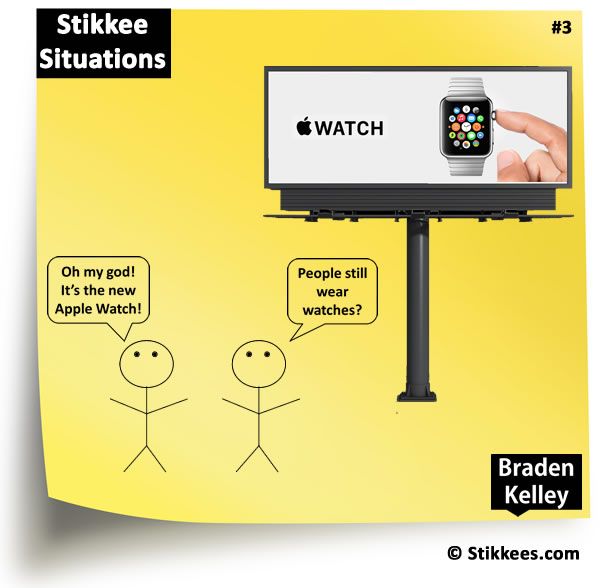
Is there a market for Smartwatches? Can Apple create one?

Stikkee 3 - Apple Watch

Okay, it’s been a week since the Apple Watch was announced, and do you know what the world’s most popular wearable is likely to be for 2014/2015?

It’s not the iWatch, but the iPhone 6, which is breaking the pre-sales records of the iPhone 5.

No, it’s not an iWatch. Don’t you dare call it that!

We’re Apple and we’ve decided that it’s far too sophisticated and exclusive to be an iWatch.

Oh, and we’ve also decided that you must own at least an iPhone 5 to be privileged enough to wear an Apple Watch.

Okay, so instantly Apple has reduced the potential market size for the Apple Watch from 6 Billion people to about 100 million people (based on statisticbrain’s numbers).

Now, layer on top of this the fact that in a YPulse survey of millenials, only 32% stated that they wear a watch regularly.

$96 million of smartwatches were sold between October and July according to CNet at an average price of $189 (and dropping fast) – often bundled with a phone – and with Samsung wrapping up 78% of the market. If you do the math, that’s just over 500,000 units, less than 1% of the likely iPhone 5 sales over the same period.

The Apple Watch starts at $349.

But wait, we’re not done yet.

Consider that Samsung has become a faster, nimbler innovator in some ways than Apple and are shipping a new version of their smartwatch next month, up to six months before the Apple Watch is expected to be available – oh, and you’ll be able to use their new watch to make phone calls and run lots of wellness apps (including some from Nike). Plus Samsung will probably launch an even more capable version shortly after the Apple Watch starts shipping.

Apple’s already playing catchup in the smartphone market and they haven’t even shipped their first unit.

So if Apple is entering a small market with a declining average unit price against a more nimble competitor, what rabbit do they have up their sleeve to grow the market and increase their stock price?

What will make the Apple Watch a must have?

The iPod was a must have because it allowed you to carry your entire music library around with you after easily organizing it on your PC and syncing it to the iPod. After that you could then easily navigate thousands of songs on the device with the handy click wheel.

The iPhone was a must have because it became the world’s most widely adopted personal, wearable computer. The iPhone disrupted the balance of power in the mobile phone industry and allowed device makers to start offering whatever applications they wanted (unencumbered by the carriers). The iPhone also disrupted the digital camera market, the Flip (super portable, simple video cameras), and the dedicated GPS market.

Other wearables are on the decline.

iPod sales in Q4 2013 were down 52% from Q4 2012.

Google Glasses got a lot of buzz early on, but interest has fizzled.

Fitbits and Nike Fuelbands have lost their luster and momentum.

Even the iPad, which became a must have after Apple solved the Value Translation riddle and properly highlighted its benefits as a more relaxing and accessible computing device, has seen sales fall the past two quarters as the large screen phones have started to become big enough to begin decreasing the need for a separate tablet. If you’re keeping score the iPad disrupted the gaming industry and challenged people to think deeply about their computing device preferences.

Now back to the Apple Watch…

Can a smartwatch really unseat the mother of all wearables, the smartphone?

In an era of declining interest in watches, can Apple change people’s behavior and lead a resurgence in watch wearing?

These are all very tough questions, but they are not tough challenges that Apple hasn’t faced before.

It’s easy to forget that the iPod didn’t become a runaway success until two years after its launch (with the launch of the PC version of iTunes), and that it took a year for Apple to really ramp up sales of the iPhone (after the launch of the App Store), or that Apple got killed in the press after the announcement of the iPad but figured out how to translate its value by the time they started shipping it.

So, is Apple up to the challenge this time?

After their recent string of game-changing innovations the pressure is on!

Please note the following licensing terms for Stikkee Situations cartoons:

1. BLOGS – Link back to https://bradenkelley.com/category/stikkees/ and you can embed them for free
2. PRESENTATIONS, please send $25 to me on PayPal by clicking the button 3. NEWSLETTERS & WEB SITES, please send me $50 on PayPal by clicking the button
License for presentations - $25
License for newsletters and web sites - $50

Subscribe to Human-Centered Change & Innovation WeeklySign up here to get Human-Centered Change & Innovation Weekly delivered to your inbox every week.

Apple iPhone 6 Killer App Revealed

Apple iPhone 6 Killer App RevealedWhile most people are focused on what the new Apple iPhone 6 hardware might look like and what new gizmos it might have, the real killer app for Apple’s latest refresh of their flagship mobile device will be an App and a little tiny NFC chipset.

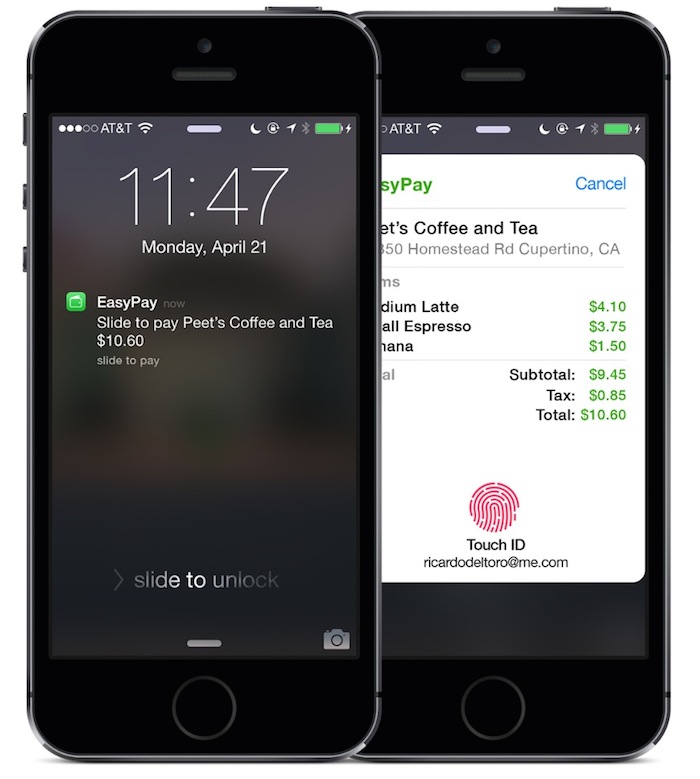
Rumored for the iPhone 5 (rumors which were heightened by Apple’s acquisition and subsequent inclusion of fingerprint sensor technology), mobile payments may finally be a built-in feature of the Apple’s newest handset, the iPhone 6.

Apple has been reportedly out talking to the likes of Visa, American Express, Nordstrom and others, and if that is all true then expect part of Apple’s Tuesday September 9th announcement to be focused on the new mobile payment capabilities of the iPhone 6.

I was one of those who thought that mobile payments might launch as part of the iPhone 5’s capabilities, but obviously the technology, or more likely the relationships and contracts, were not ready for prime time a year ago.

Will mobile payments authenticated by your fingerprint finally appear in the iPhone 6?

If so, soon we will finally be able to stop carrying around wallets and switch to money clips and mobile phones, as such a feature will not only replace credit cards, but loyalty cards, insurance cards, and more.

Yes, Samsung may have done it first with the Galaxy S5, but you know Apple will do it bigger (and better).

I guess we’ll find out next week.

Image credit: Ricardo Del Toro


Build a common language of innovation on your team

Subscribe to Human-Centered Change & Innovation WeeklySign up here to get Human-Centered Change & Innovation Weekly delivered to your inbox every week.

Is Windows Phone a Serious Competitor to iPhone and Android?

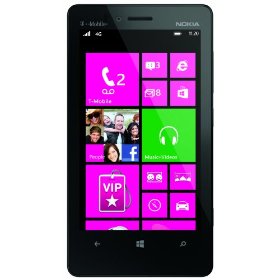
Is Windows Phone a Serious Competitor to iPhone and Android?A few weeks ago I was fortunate enough to receive a shiny new Nokia Lumia 810 in the mail courtesy of Nokia USA. This was very welcome because I’ve been subjected to what I can only describe as a technology torture inflicted upon me for more than a year by a horribly designed Samsung Galaxy S. So anything would have been a step up, but so far the Nokia Lumia 810 has been a BIG step up.

My Samsung Galaxy S used to decrease my productivity, but the Nokia Lumia 810 now adds to my quality of life.

This isn’t exactly a product review, because that’s not typically something that I do. I will however give you my honest reaction to the Nokia Lumia 810 and how it has fit into the life of this busy innovation and marketing professional so far.

To date, the Nokia Lumia 810 has yet to crash a single time. My old Samsung Galaxy S in contrast crashed at least once every one to two days, and because of what seemed to be a flawed design I was never really able to download and successfully use applications on the device that weren’t loaded at the factory (despite a 16gb SD card being installed).

Thus far on the Nokia Lumia 810 I’ve been able to set up Yahoo! Mail, Hotmail, GMail, Twitter, Outlook, Linkedin, CNN, ESPN and other applications. I’ve also been able to load 15GB of music successfully onto the phone and use all of these applications multiple times every day and keep them synced without issues. Bottom line, the Nokia Lumia 810 has been a much smarter smartphone than my Samsung Galaxy S.

The one thing I haven’t found to be as good on the Nokia Lumia 810 as my old Samsung Galaxy S is the voice command functionality. The Nokia Lumia 810 doesn’t seem to recognize my voice as well with my new Motorola Elite Sliver bluetooth headset.

Now obviously today’s Samsung Galaxy S3 is probably a better device than the Samsung Galaxy S, and the iPhone 5 is for sure a solid device. But so far I find the Windows 8 OS on the Nokia Lumia 810 to provide a much more attractive user interface than iOS or Android thus far and to provide roughly a level of parity in overall functionality with these other competitors and a serious competitor to the market leaders.

Is parity and a better UI enough to help Nokia and Microsoft get back into the game?

Only time will tell, but it is my opinion that Nokia and Microsoft will need some kind of a killer app to truly gain traction towards regaining market share. Unfortunately, as I’ve written before, I think that Apple will introduce the next killer function to the smartphone – truly useful and viable mCommerce. But, only time will tell to see if this theory plays out or not.

What do you think?


Build a common language of innovation on your team

Subscribe to Human-Centered Change & Innovation WeeklySign up here to get Human-Centered Change & Innovation Weekly delivered to your inbox every week.