Tag Archives: Decision Making

Balancing Data-Driven Decision Making with Intuition in Innovation

Balancing Data-Driven Decision Making with Intuition in Innovation

GUEST POST from Art Inteligencia

In the fast-paced world of innovation, leaders are often faced with the challenge of making critical decisions that can determine the success or failure of their initiatives. The rise of big data and advanced analytics has given organizations the tools to drive decisions based on empirical evidence. However, the role of intuition—those gut feelings honed by experience and tacit knowledge—remains irreplaceable. In this article, we will explore how to balance data-driven decision making with intuition, providing insights through two revealing case studies.

Case Study 1: Apple and the iPhone

When Steve Jobs introduced the iPhone in 2007, it revolutionized mobile technology. But this groundbreaking innovation wasn’t solely the product of data-driven decision making.

Data-Driven Insights

  • Apple analyzed the shortcomings of existing mobile phones in terms of user experience and functionality.
  • Market data indicated a growing interest in smartphones with internet capabilities, touchscreens, and multimedia features.
  • Advanced analytics helped Apple understand usage patterns, which influenced design elements like the touchscreen interface.

Intuitive Leadership

  • Steve Jobs’ intuition played a critical role in deciding to pursue the development of the iPhone despite potential risks.
  • He envisioned a device that combined a phone, an iPod, and an internet communicator, a concept unheard of at the time.
  • Jobs made bold decisions on user experience features based on his instinctual understanding of what users would love, rather than what traditional market research might suggest.

The iPhone’s success illustrates how data-driven insights and intuitive leadership can complement each other to bring about transformative innovation.

Case Study 2: Netflix’s Transition to Streaming

Netflix has become synonymous with streaming entertainment, but the company’s journey from DVD rental service to streaming giant was not an obvious path.

Data-Driven Insights

  • Netflix leveraged data from its DVD rental service to understand customer preferences and viewing habits.
  • Subscriber data indicated a shift in consumer demand towards digital content delivery, driven by increasing internet speeds and access to devices.
  • Advanced algorithms and predictive analytics were used to recommend content, enhancing user engagement and satisfaction.

Intuitive Leadership

  • Reed Hastings, co-founder, and CEO of Netflix relied on his intuition when deciding to invest heavily in streaming technology, a risky move at that time.
  • Hastings intuitively understood that consumer behavior was shifting towards a preference for on-demand content, even when the data was still emerging.
  • His vision for the future of entertainment included producing original content, an idea driven in equal parts by intuition and data analytics of viewing trends.

By balancing data insights with intuitive foresight, Netflix was able to successfully pivot its business model, fundamentally changing the entertainment landscape.

Strategies for Balancing Data and Intuition

  • Embrace Collaborative Decision-Making: Encourage teams to integrate both data and intuition when making decisions. Promote discussions that leverage diverse perspectives and experiences.
  • Cultivate a Test-and-Learn Culture: Implement policies that allow for experimentation based on intuition while using data to validate or refine these ideas.
  • Leverage Technology Wisely: Use advanced analytics tools to gather actionable insights, but don’t let them overshadow the value of human intuition and creativity.
  • Continuous Learning and Adaptation: Encourage ongoing learning for leaders and teams to enhance their intuitive abilities and stay updated with data analytics advancements.

Conclusion

In the quest for innovation, it is not a question of choosing between data-driven decision making and intuition. Rather, the key lies in finding the right balance, where data provides a solid foundation for insights and intuition injects creativity and foresight into the decision-making process. The cases of Apple and Netflix illustrate how the fusion of data and intuition can lead to groundbreaking innovations that redefine markets and industries. By adopting strategies that honor both elements, organizations can navigate uncertainty and foster a culture of sustained innovation.

Bottom line: Futurology is not fortune telling. Futurists use a scientific approach to create their deliverables, but a methodology and tools like those in FutureHacking™ can empower anyone to engage in futurology themselves.

Image credit: Pixabay

Subscribe to Human-Centered Change & Innovation WeeklySign up here to get Human-Centered Change & Innovation Weekly delivered to your inbox every week.

No Regret Decisions: The First Steps of Leading through Hyper-Change

GUEST POST from Phil Buckley

Workplace change has never been at a higher rate or faster pace than now. Everything from consumer preferences to product sourcing models is in flux. ‘Reinvention,’ ‘transformation,’ and ‘disruption’ are popular terms to describe how private and public organizations are evolving to accommodate changing operating environments, stakeholder expectations and regulatory requirements. Leaders and their teams must enable multiple, complex changes when most organizational practices are obsolete and the future is at best uncertain.

In today’s dynamic environment, many leaders default to strategies that have worked under very different conditions. Relying on past practices to solve present challenges is often naive and highly risky. Other leaders instinctively select courses of action that feel right or appear credible based on limited or easily available data. In these cases, the speed of response and hope for simple solutions trump rigorous assessment and disciplined evaluation.

Addressing Uncertainty with No Regret Decisions

A pragmatic way to move forward through unknown conditions is to identify ‘no regret’ decisions. A no regret decision provides a net benefit under any future scenario. For example, building awareness of sanitation and hygiene good practices at the beginning of the pandemic was a no regret decision because it benefited people even if the virus didn’t spread through surface contact.

The Benefits of No Regret Decisions

There are four benefits of making no regret decisions. The first is they align stakeholders to a course of action. There is strength in agreement that leads to positive team dynamics and a foundation of success to build upon.

The second is that no regret decisions move a team from a static state to one of motion. Success in change is not about being perfect; it’s about responding to circumstances based on available information, identifying options, and selecting the best way forward. Delaying action is rarely a good strategy during change because issues amplify with time—speed of execution matters; inactivity is harmful. Taking action transitions people from being observers to participants, preparing them to address future time-bound situations and make bigger decisions. Momentum is a source of strength that ignites future efforts.

Creating a fact-base is essential to understanding the interplay of environmental factors that lead to analysis, hypotheses, and action. The third benefit is it provides opportunities to test and learn, to challenge assumptions and modify strategies to deliver the highest value.

The fourth benefit is the building of confidence of individuals and teams. They foster a belief in capabilities, decision-making process, and a high probability of success. Also, taking concrete actions minimizes the “fight, flight, or freeze” effect triggered by uncertainty. It renews people’s belief in their abilities and avoids the emotional responses of self-doubt and fear that come with unknown or vague circumstances.

No Regret Decision Examples

What decisions provide net benefits regardless of future outcomes? Capability development is an enabler of performance. The current focus on resiliency training is an example of equipping people with mindsets, tools, and behaviors, irrespective of the emerging scenarios. Critical thinking, ideation and creativity are other skills that add value when addressing all forms of hyper-change.

Simplifying and standardizing processes is another no regret decision. The decision-making process is a good example of how a consistent framework leads to shared understanding, assessment, and alignment on actions. When people use the same process, they follow the same rules and speak the same language. The symmetry of the approach leads to clarity and agreement.

Soliciting customer feedback to inform strategy development and execution offers benefits regardless of the operating environment. It is easy to skip this step of intelligence gathering when faced with multiple, complex changes requiring quick responses. The risk of doing so is that solutions don’t address client needs, risking relationships and sales.

Leaders and their teams are navigating business environments never seen before. Internal and external realities require them to rethink their operating models and pivot their strategies, initiatives, and resources to achieve their performance goals. Making no regret decisions enables them to align stakeholders on actions that lead to positive outcomes. They also provide the opportunity to test assumptions and hypotheses and refine the understanding of marketplace dynamics. The forward motion and small gains generated by no regret decisions build the confidence of individuals and teams to face challenges head-on to mitigate risks and seize opportunities.

The only regret from this type of decision is not making them. What no regret decisions can you make to help you lead through hyper-change?

Image credit: Pexels

Subscribe to Human-Centered Change & Innovation WeeklySign up here to get Human-Centered Change & Innovation Weekly delivered to your inbox every week.

Understanding the Fear of Missing Out (FOMO) and Its Impact on Consumer Decision-Making

Understanding the Fear of Missing Out (FOMO) and Its Impact on Consumer Decision-Making

GUEST POST from Chateau G Pato

In this era of constant digital connectivity, consumers are experiencing an overwhelming fear of missing out (FOMO) on the latest trends, experiences, and opportunities. This fear has a profound effect on consumer decision-making and shapes how they engage with brands, products, and services. To truly understand FOMO’s impact, we must delve into its psychological roots and explore two compelling case studies.

Psychological Roots of FOMO:

Fear of missing out stems from the basic human desire for social connection, the need for validation, and the fear of being left behind. Countless studies have shown that individuals have a fundamental longing to be part of a community, to share experiences, and to feel accepted. FOMO amplifies these desires in the digital age, fueling anxiety-driven decision-making.

Case Study 1: The Influence of FOMO on Buying Behavior

In recent years, the beauty industry witnessed a significant rise in FOMO-driven purchasing behaviors. Brands cleverly utilize social media platforms and influencers to create a sense of scarcity and urgency, inducing FOMO within consumers. A prime example of this phenomenon is the limited-edition makeup collaborations, which generate immense buzz and excitement. By tapping into consumers’ FOMO, brands create a fear of not having the exclusive item, leading to impulsive purchases and even waiting in long queues.

An in-depth analysis conducted by a major cosmetics company revealed that 70% of consumers who bought limited-edition products did so due to FOMO. Furthermore, the study found that consumers were inclined to share their purchases on social media platforms, seeking validation and admiration from their peers. Thus, FOMO not only influences purchase decisions but also contributes to the amplification of social status online.

Case Study 2: The Effect of FOMO on Travel Choices

The travel industry faces a unique challenge in catering to FOMO-driven decision-making. Consumers are bombarded with picturesque imagery of exotic destinations, luxurious resorts, and thrilling experiences. This abundance of options creates a sense of FOMO, as individuals fear missing out on the next best travel experience. Travel companies have capitalized on this psychological state by emphasizing “limited availability” and “exclusivity” in their marketing strategies.

A case study conducted by a prominent travel agency demonstrated the impact of FOMO on consumer behavior. They offered two identical vacation packages: Package A was available without any time restrictions, while Package B was advertised as limited to the first 50 bookings. Despite Package B being slightly more expensive, it received 70% more bookings within 48 hours. The fear of missing out on an exclusive opportunity significantly influenced consumers’ travel choices, even at an increased cost.

Mitigating FOMO:

As human-centered professionals, it is crucial to understand the phenomenon of FOMO and its impact on consumer decision-making. To cater to consumers effectively, brands should consider the following strategies:

1. Transparent Communication: Be open and honest with consumers, providing clear information about product availability or event schedules.

2. Curated Exclusivity: Offer limited-edition products or experiences thoughtfully, but without exploiting consumers’ FOMO. Ensure that exclusivity is based on genuine benefits rather than artificial scarcity.

3. Customer Empowerment: Encourage consumers to make decisions based on their true preferences, rather than succumbing to FOMO. Provide ample information, resources, and reviews to help them make well-informed choices.

Conclusion

Understanding the fear of missing out (FOMO) is essential for human-centered professionals to navigate the ever-changing consumer landscape effectively. By recognizing the psychological roots of FOMO and analyzing case studies, we can see its tangible impact on consumer decision-making. Brands that acknowledge and address FOMO while promoting transparency, curated exclusivity, and customer empowerment are more likely to build trust, loyalty, and meaningful connections with their audience, ultimately shaping a more conscious consumer culture.

SPECIAL BONUS: The very best change planners use a visual, collaborative approach to create their deliverables. A methodology and tools like those in Change Planning Toolkit™ can empower anyone to become great change planners themselves.

Image credit: Pixabay

Subscribe to Human-Centered Change & Innovation WeeklySign up here to get Human-Centered Change & Innovation Weekly delivered to your inbox every week.

Driving Cross-Functional Innovation

The Power of Collaboration

Driving Cross-Functional Innovation

GUEST POST from Chateau G Pato

Collaboration is a key driver of innovation, enabling diverse teams to leverage their expertise, perspectives, and skills to solve complex problems. In today’s fast-paced and interconnected world, cross-functional collaboration has become increasingly essential for businesses to stay competitive and drive meaningful change. This article explores the benefits of collaboration in fostering cross-functional innovation through two compelling case studies.

Case Study 1 – Pixar’s Creative Collaboration

Pixar, the renowned animation studio, is celebrated for its consistent delivery of groundbreaking and critically acclaimed films. One of the critical factors contributing to their success is their commitment to cross-functional collaboration. From directors to animators, writers, and technical experts, Pixar brings together diverse talents from different disciplines to create their films.

By fostering an environment of open communication and collaboration, Pixar teams challenge conventions and push boundaries. They encourage cross-pollination of ideas, creating an iterative process where different perspectives enrich the creative process. This cross-functional approach has led to numerous breakthroughs in storytelling, animation techniques, and technological advancements, enabling Pixar to create immersive and emotionally impactful films loved by audiences worldwide.

Case Study 2 – GE’s Global Research Collaboration

General Electric (GE), a multinational conglomerate, places a strong emphasis on collaboration as a catalyst for innovation. GE’s Global Research Center, one of the world’s most extensive and diverse industrial research organizations, brings together scientists, engineers, and experts from various disciplines.

By fostering cross-functional collaboration, GE harnesses the collective knowledge and expertise of its researchers. This collaborative environment has yielded groundbreaking innovations across industries, including advancements in renewable energy sources, healthcare technologies, aerospace, and more. GE’s collaboration efforts not only drive innovation but also contribute to addressing global challenges and improving the world we live in.

Benefits of Cross-Functional Collaboration:

1. Enhanced Problem-Solving: Cross-functional teams bring a range of perspectives and expertise to the table, enabling them to approach problems from different angles. This collaborative approach fosters innovative thinking and generates well-rounded solutions that address diverse needs.

2. Increased Creativity and Innovation: Collaboration sparks creativity by enabling the collision of ideas, encouraging out-of-the-box thinking, and challenging traditional paradigms. The synergy between team members from different backgrounds stimulates new perspectives and innovative solutions.

3. Improved Communication and Knowledge Sharing: Cross-functional collaboration facilitates open communication, breaking down silos and enabling the sharing of expertise and insights. This exchange of knowledge drives continuous learning, enabling teams to stay current with industry trends and leverage emerging opportunities.

4. Enhanced Decision Making: Collaboration encourages collective decision-making processes, leveraging diverse viewpoints and expertise. This approach leads to more informed and well-rounded decisions, reducing the risk of biases and improving overall organizational performance.

Conclusion

Cross-functional collaboration is a powerful tool for driving innovation and achieving organizational success. As demonstrated by the case studies of Pixar and GE, collaboration fosters creativity, problem-solving, knowledge sharing, and effective decision-making. By embracing and promoting cross-functional collaboration, businesses can harness the collective intelligence of their teams and unlock new avenues for growth, ensuring their continued relevance and competitiveness in an ever-evolving world.

Image credit: Pixabay

Subscribe to Human-Centered Change & Innovation WeeklySign up here to get Human-Centered Change & Innovation Weekly delivered to your inbox every week.

AI-Enabled Decision Making: What Are the Benefits?

AI-Enabled Decision Making: What Are the Benefits?

GUEST POST from Chateau G Pato

Artificial intelligence (AI) is quickly emerging as a powerful tool for business decision making. Companies of all sizes are realizing the potential of AI to provide insights and automate manual processes that previously served to hinder the decision-making process. In this article, we’ll take a look at some of the benefits that AI-enabled decision making can bring to a business, as well as some examples of successful implementations.

One of the most significant benefits of AI-enabled decision making is the ability to analyze large data sets and identify patterns that inform decisions. By harnessing powerful algorithms, AI can uncover correlations that are otherwise not visible. This can be especially beneficial in customer and market segmentation, where the application of AI-driven analytics can help uncover new growth opportunities. For example, one company used AI to analyze customer data as part of its product segmentation strategy. This enabled the company to develop personalized recommendations that drove increased customer loyalty and revenue growth.

Case Study 1 – Automating Chargeback Calculations

In addition to analyzing data, AI can automate tedious manual tasks for more efficient and accurate decision-making. For example, a global accounting firm used AI to automate chargeback calculations. By eliminating manual human review, AI enabled the company to process thousands of invoices in a fraction of the time. This reduced the cost of processing while improving accuracy and creating an overall better customer experience.

Case Study 2 – AI-Enabled Predictive Logistics

Finally, AI can be used to create predictive models that anticipate future actions, trends, and outcomes. By using AI to develop predictive models, businesses can get a jumpstart on preparing for potential events ahead of time. For example, a logistics firm developed an AI-enabled predictive model that anticipated customer buying patterns and adjusted its shipping routes accordingly. This enabled the company to save time and money through improved deployment of its assets.

Conclusion

AI-enabled decision making offers a range of potential benefits to businesses of all sizes. By leveraging powerful algorithms to analyze data, automate processes, and create predictive models, companies can improve decision making while creating a competitive edge. Through the use of case studies, this article has highlighted some of the key benefits of AI-enabled decision making that can be applied to a variety of organizational contexts.

Image credit: Pixabay

Subscribe to Human-Centered Change & Innovation WeeklySign up here to get Human-Centered Change & Innovation Weekly delivered to your inbox every week.

Decision Paralysis in Teams

A Human-Centered Playbook

LAST UPDATED: March 31, 2026 at 3:46 PM
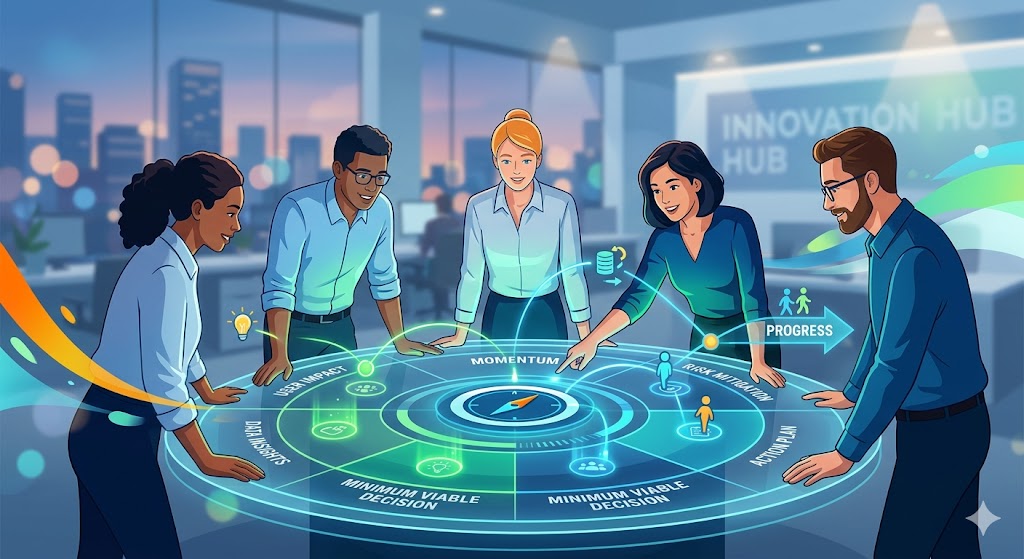
Decision Paralysis in Teams

GUEST POST from Chateau G Pato


The Anatomy of the Stall: Why Teams Freeze

In the realm of human-centered innovation, we often focus on the spark of the idea, yet the greatest threat to progress isn’t a lack of creativity — it’s the structural and psychological inertia that sets in when it’s time to choose. Decision paralysis occurs when the friction of making a choice outweighs the perceived benefit of the action itself.

The Paradox of Choice in Strategy

We operate in an era of “data abundance,” where teams often mistake more information for more clarity. However, according to the paradox of choice, an increase in options leads to higher cognitive load and increased anxiety. In a strategic context, this manifests as Analysis Paralysis: the team continues to request “one more study” or “one more data point” as a defense mechanism against the vulnerability of choosing.

The Fear of the “Wrong” Move

At the heart of every stalled project is Loss Aversion. Humans are evolutionarily hardwired to feel the pain of a loss twice as strongly as the joy of a gain. When teams face high-stakes innovation, the fear of losing budget, reputation, or “being wrong” creates a bias toward the status quo. To move forward, we must design experiences that re-frame “inaction” as the highest-risk move a team can make.

The Hidden Tax of Consensus

Many organizations confuse collaboration with consensus. While human-centered design thrives on diverse perspectives, requiring 100% agreement before proceeding acts as a tax on speed. This “consensus trap” often results in “vanilla” decisions — watered-down versions of ideas that offend no one but inspire no one, ultimately leading to strategic drift.

Cognitive Overload and the “Decision Fatigue” Cycle

Teams are often asked to make their most critical pivots at the end of exhausting cycles. When cognitive resources are depleted, the human brain defaults to the path of least resistance: postponement. Recognizing that decision-making is a finite resource is the first step in designing a playbook that protects the team’s mental energy for the moments that truly matter.

Designing for Decision Confidence

Confidence is not a personality trait; it is a byproduct of a well-designed environment. To move a team from hesitation to action, we must move away from accidental decision-making and toward intentional decision architecture. This involves creating the “scaffolding” that supports the weight of a choice before that choice is ever made.

Establishing Decision Architecture

The most common cause of paralysis is ambiguity regarding how the choice will be finalized. By implementing clear frameworks — such as RAPID (Recommend, Agree, Perform, Input, Decide) or DACI (Driver, Approver, Contributor, Informed) — we strip away the interpersonal friction. When the rules of engagement are transparent, the team can focus 100% of their cognitive energy on the problem at hand rather than navigating organizational politics.

The Power of the Minimum Viable Decision (MVD)

Innovation often stalls because we treat every choice as if it were carved in stone. We must train teams to identify Type 1 vs. Type 2 decisions. Type 1 decisions are “one-way doors” — nearly impossible to reverse. Type 2 decisions are “two-way doors” — they are reversible and provide a learning opportunity. The Minimum Viable Decision focuses on making the smallest possible move that generates real-world data, effectively lowering the stakes and reducing the barrier to entry.

Reducing Cognitive Load Through Synthesis

Information density is the enemy of clarity. To design a better decision experience, we must act as information curators. This means moving beyond the “50-page deck” and toward visual synthesis tools like:

  • Trade-off Matrices: Visually weighing “Value to User” against “Feasibility to Build.”
  • Impact Mapping: Connecting the decision directly to the desired human outcome.
  • Choice Forcing: Limiting the team to three distinct paths to prevent the dilution of focus.

Managing the “Emotional Tail” of Decisions

Human-centered design acknowledges that decisions carry emotional weight. We must build in “Decision Buffer Zones” — intentional pauses that allow the team to process the emotional impact of a pivot. By acknowledging the human cost of “killing a project” or changing direction, we preserve the team’s long-term psychological safety and their willingness to commit to the next big choice.

The Human-Centered Playbook: Actionable Plays

Overcoming paralysis requires more than just willpower; it requires a set of repeatable “plays” that teams can execute when they feel the momentum slowing. These plays are designed to disrupt the status quo, lower the emotional cost of failure, and refocus the team on the ultimate goal: delivering value to the human beings at the end of the chain.

Play 1: The Pre-Mortem Ritual

While most teams do a post-mortem after a project fails, a human-centered approach uses the Pre-Mortem to neutralize fear at the start. In this play, the team imagines it is one year in the future and the decision they are about to make has resulted in a total disaster. By working backward to identify the causes of this hypothetical failure, the team can address risks proactively rather than avoiding the decision altogether. It transforms “fear of the unknown” into a “checklist of mitigations.”

Play 2: Time-Boxing the Truth

Perfectionism is often procrastination in a tuxedo. To counter this, we implement Decision Sprints. This play involves setting a hard, non-negotiable deadline for a choice. If the team cannot decide by the end of the sprint, the “Default Action” (agreed upon at the start) is automatically triggered. This forces the team to move from abstract debate to active validation, emphasizing that a 70% solution today is often more valuable than a 90% solution in three months.

Play 3: The Safe-to-Fail Boundary

To encourage bold moves, leaders must define the “Sandbox” — specific areas where teams have full autonomy to experiment because the consequences of failure are contained. By clearly mapping out where a “wrong” decision won’t sink the ship, we provide the psychological safety necessary for creative risk-taking. This play relies on the principle of contained blast radius, ensuring that innovation doesn’t get throttled by unnecessary caution.

Play 4: Visualizing the Trade-offs

When teams are stuck, it’s often because they are looking at the decision from an internal, political, or technical lens. This play uses Experience Mapping to visualize how each option directly impacts the end-user’s journey. By shifting the conversation from “What do we want?” to “Which option best solves their friction?”, we remove ego from the equation. Visualizing these trade-offs on a shared canvas makes the “right” path often emerge organically from the data.

Play 5: The “Two-Way Door” Tagging

Every proposed action in a meeting should be tagged as either a One-Way Door (irreversible/high cost) or a Two-Way Door (reversible/low cost). High-velocity teams recognize that 90% of their decisions are actually Two-Way Doors. This simple linguistic play lowers the collective blood pressure of the room and empowers sub-teams to move forward without waiting for top-down approval.

Leading Through the Fog

When a team is paralyzed, they don’t just need a better process; they need a different kind of leadership. In a human-centered framework, the leader’s role shifts from being the “Ultimate Decider” to being the Architect of the Decision Environment. Leading through the fog requires a balance of radical transparency and the courage to maintain momentum even when the destination isn’t fully visible.

From “Commander” to “Curator”

Traditional leadership often assumes the leader must have the right answer. Human-centered leadership assumes the leader must ask the right questions and curate the right information. By acting as a Curator, you ensure that the team isn’t drowning in “noise” (irrelevant data) and instead has access to the “signal” (customer insights and strategic goals). This reduces the cognitive burden on the team, allowing them to focus on the choice rather than the clutter.

Modeling Vulnerability to Build Safety

Psychological safety is the bedrock of decisive teams. If a team feels that a mistake will be met with punishment, they will naturally default to the “safest” path: doing nothing. Leaders must model Strategic Vulnerability — openly acknowledging what they don’t know and sharing their own reasoning processes, including the doubts they have. This gives the team permission to be imperfect and reduces the “performance anxiety” that often leads to a stall.

Defining the “Commander’s Intent”

Borrowing from military strategy, “Commander’s Intent” focuses on the end state rather than the specific tasks. When leaders clearly communicate the “why” and the “what” (the desired human outcome), the “how” (the specific decision) becomes easier for the team to navigate. This clarity acts as a North Star, helping the team filter out options that don’t align with the ultimate experience we are trying to create.

The “Bias for Action” Pulse

A leader’s most important job in a paralyzed team is to monitor the Organizational Pulse. You must recognize when the “Cost of Delay” has exceeded the “Value of Information.” Leading through the fog means making the call to move forward when you have 70% of the information, rather than waiting for 90%. By rewarding decisiveness as much as correctness, you foster a culture where momentum is seen as a competitive advantage.

Implementing “Check-Ins” Over “Check-Ups”

Instead of micromanaging the decision (a “check-up”), leaders should facilitate “check-ins” that focus on the team’s confidence levels. Asking questions like, “What is the one piece of information that would make us 10% more confident to act today?” shifts the focus from the fear of being wrong to the mechanical requirements of being ready.

Measuring Momentum, Not Just Outcomes

In many organizations, we only celebrate the result of a decision, which inadvertently punishes the risk-taking required for innovation. To defeat paralysis, we must shift our metrics to reward the velocity and quality of the decision-making process itself. By measuring momentum, we transform decision-making from a stressful hurdle into a measurable competitive advantage.

Velocity as a Key Performance Indicator (KPI)

High-performing teams don’t just make better decisions; they make them faster. To track this, we monitor Decision Latency: the time elapsed from the moment a decision requirement is identified to the moment an action is initiated. When teams see “Speed of Learning” as a primary metric, the psychological weight of any single choice is distributed across a series of rapid iterations, making “getting started” more important than “being right” on day one.

The Retrospective Pivot

We must move beyond the “Success vs. Failure” binary. A Retrospective Pivot is a formal review of the process used to arrive at a choice. Instead of asking “Did this work?”, we ask:

  • Did we have the right stakeholders in the room?
  • Was the “Commander’s Intent” clear enough to guide us?
  • Did we identify the “Two-Way Doors” early enough to move with confidence?

This meta-analysis ensures that the team is constantly “sharpening the saw” of their collective judgment, turning every choice — regardless of the outcome — into an investment in future agility.

Quantifying the “Cost of Inaction” (COI)

To provide a human-centered counterweight to the fear of failure, we must visualize the Cost of Inaction. This involves calculating the lost opportunity, market drift, and team morale decay that occurs while a project sits in “limbo.” When the COI is made visible on a dashboard or in a meeting, it provides the necessary friction to overcome inertia, making the risk of staying still appear greater than the risk of moving forward.

Celebrating “Smart Fails” and Rapid Reversals

Finally, a human-centered playbook must include a reward mechanism for Rapid Reversals. If a team recognizes a “Two-Way Door” decision was incorrect and pivots within 48 hours, that should be celebrated as a victory for organizational agility. By de-stigmatizing the act of changing direction based on new data, we remove the “ego-attachment” that often causes teams to freeze or double down on failing strategies.

Conclusion: From Stasis to Strategy

Decision paralysis is not a sign of a “bad” team; it is often a sign of a team that cares deeply about the outcomes but lacks the human-centered infrastructure to navigate uncertainty. When we treat decision-making as a design challenge rather than a management hurdle, we shift the focus from the fear of being wrong to the excitement of learning.

The goal of this playbook isn’t to eliminate risk — innovation, by definition, requires it. Instead, the goal is to design a culture where momentum is the default setting. By implementing clear decision architecture, lowering the stakes through “Two-Way Doors,” and measuring our velocity, we transform the “fog of choice” into a clear path for progress.

Immediate Next Steps: Your 48-Hour Action Plan

Don’t let the implementation of this playbook become another source of paralysis. Start small and start now by taking these three steps within the next two working days:

  1. Audit Your Current “Stall”: Identify one project that has been sitting in a “review cycle” for more than two weeks. Label it as either a One-Way or Two-Way door. If it’s a Two-Way door, make the call by EOD tomorrow.
  2. Run a “Pre-Mortem” for Your Next Big Choice: In your next leadership meeting, spend 15 minutes imagining the total failure of your current top priority. Use the identified “failure points” to create a 3-point mitigation checklist.
  3. Define Your Decision Ritual: Pick one framework (like RAPID or DACI) and apply it to a single recurring meeting. Clear the air on who has the “D” (the final decision) and who provides the “I” (input), and watch the meeting friction evaporate.

The most successful teams aren’t the ones that never fail; they are the ones that fail fast, learn faster, and never stop moving. It’s time to stop admiring the problem and start designing the solution.

Let’s get to work.

Frequently Asked Questions

How do we distinguish between “One-Way” and “Two-Way” doors?

A One-Way door is a high-stakes, nearly irreversible decision (e.g., changing your core brand name). A Two-Way door is reversible or has a low cost of failure (e.g., testing a new landing page). Most team paralysis happens because we treat Two-Way doors with the caution required for One-Way doors.

Can human-centered design actually speed up decision-making?

Yes. By shifting the focus from internal consensus to external user value, we remove the “ego friction” that stalls teams. When the user’s needs are the primary filter, the “right” choice becomes a matter of evidence rather than opinion.

What is the most effective way to break a tie in a deadlocked team?

The “Minimum Viable Decision” (MVD) play is best. Instead of debating which path is right, choose the path that allows you to gather the most data in the shortest time. Let the real-world feedback break the tie for you.

Image credits: Gemini

Subscribe to Human-Centered Change & Innovation WeeklySign up here to join 17,000+ leaders getting Human-Centered Change & Innovation Weekly delivered to their inbox every week.

Purpose-Based Metrics That Guide Decision-Making

LAST UPDATED: March 20, 2026 at 3:46 PM

Purpose-Based Metrics That Guide Decision-Making

GUEST POST from Art Inteligencia


The Metric Trap: Beyond the Illusion of Innovation

In the modern corporate landscape, many organizations fall victim to the “Innovation Illusion.” This occurs when a company’s calendar is filled with design thinking workshops, “shark tank” style pitch competitions, and high-energy hackathons, yet the needle on actual market transformation remains stagnant. We confuse the theater of innovation with the discipline of it.

Activity vs. Impact

The core of this problem lies in what we choose to measure. Traditional management often defaults to Activity Metrics because they are easy to count and look impressive in quarterly reviews. Examples include:

  • Number of ideas submitted to an internal portal.
  • Total number of employees trained in agile methodologies.
  • Capital expenditure on new “Innovation Labs.”

While these are fine for tracking participation, they are “vanity metrics” that fail to correlate with long-term viability. Impact Metrics, conversely, focus on outcomes: Did we reduce customer friction? Did we decrease the time to value? Did we solve a problem that actually matters?

Defining Purpose-Based Metrics

To break free from the trap, we must transition to Purpose-Based Metrics. This framework moves the focus from “How much are we doing?” to “Why are we doing it, and for whom?”

“Measurement is not just about keeping score; it is about guiding behavior. If your metrics are divorced from your purpose, your teams will prioritize busywork over breakthroughs.” — Braden Kelley

Purpose-based metrics act as a strategic filter. They ensure that every experiment and every dollar spent is directly linked to the organization’s core reason for being. By measuring the human-centered value we create, we align our decision-making with the long-term health of both the customer and the enterprise.

Aligning the “North Star” with the “Ground Truth”

The greatest disconnect in modern strategy is the chasm between the boardroom’s “North Star” — the high-level mission statement — and the “Ground Truth” — the daily reality of employee actions and customer experiences. When metrics are purely financial, they fail to bridge this gap, leading to a culture that hits its numbers but misses its point.

The Hierarchy of Intent

To lead effectively, we must establish a clear Hierarchy of Intent. This is a vertical alignment where every micro-metric on the front lines can be traced back to the organizational purpose. If a team is measured on “call handle time,” but the organizational purpose is “unparalleled customer support,” the metric is actively sabotaging the intent. Purpose-based metrics ensure that:

    • Strategic Intent dictates the “What” (Objectives).
    • Human-Centered Value dictates the “How” (Key Results).
    • Operational Reality dictates the “Now” (Daily Tasks).

}

The Human Element: Experience over Transactions

Traditional KPIs often treat customers and employees as variables in a transactional equation. However, a purpose-based approach prioritizes Human Insights. Instead of asking “How many units did we move?”, we ask “How much friction did we remove from the customer’s life?”

By shifting focus toward qualitative human impact, we move from Service Level Agreements (SLAs) — which often measure mere compliance — to Experience Level Measures (XLMs). This shift ensures that decision-making is guided by the quality of the interaction rather than just the speed of the transaction.

Bridging the Gap: A Case Study in Pivoting Strategy

Consider a traditional software provider transitioning to a SaaS model. Initially, their “North Star” was Market Share, measured by “Licenses Sold.” This led to aggressive sales tactics but high churn, as the product wasn’t solving core problems. By shifting their primary metric to Customer Success Outcomes (e.g., “Time to first value” or “Feature adoption rate”), they realigned their engineering and sales teams with their actual purpose: helping customers succeed. The result was not just higher retention, but a more resilient brand identity.

“When the ‘Ground Truth’ of your data contradicts your ‘North Star’ vision, your strategy is an anchor, not a sail. Alignment requires the courage to measure the uncomfortable truths of the human experience.”

The Three Pillars of Purpose-Based Measurement

To move beyond simple profit-and-loss statements, organizations must categorize their metrics into three distinct pillars. These pillars ensure that the “why” of the organization is balanced against the “how” of its operations and the “what” of its future potential. Without this balance, firms risk optimizing for short-term efficiency at the expense of long-term relevance.

Pillar 1: Value Creation (Solving the Human Problem)

The first pillar focuses on the external impact. If our purpose is to serve a specific customer need, we must measure how effectively we are doing so. We move away from “Product Features Delivered” and toward “Customer Progress Made.”

  • Job-to-be-Done (JTBD) Completion: Are customers successfully finishing the task they “hired” our product to do?
  • Friction Reduction Score: A quantitative measure of how many steps or cognitive hurdles we’ve removed from the user journey.
  • Emotional Resonance: Using qualitative sentiment analysis to determine if the solution aligns with the user’s aspirational identity.

Pillar 2: Capability Velocity (The Internal Engine)

The second pillar measures the organizational health and its ability to adapt. High velocity isn’t about working more hours; it’s about how quickly the organization can learn and pivot based on new data.

  • Learning Loop Cycle Time: The duration between forming a hypothesis and gathering validated data from a real-world experiment.
  • Silo Permeability: Tracking the frequency and depth of cross-functional collaboration on “Horizon 2” and “Horizon 3” projects.
  • Decision Latency: Measuring the time it takes for a strategic insight to result in a resource allocation shift.

Pillar 3: Strategic Fit (The Future Compass)

The third pillar ensures that our current actions are not cannibalizing our future. It measures the alignment of resources against our stated vision, protecting the organization from “incrementalism creep.”

  • Portfolio Balance Ratio: The percentage of budget and talent assigned to transformative innovation versus maintaining the core business.
  • Purpose Alignment Score: A rubric-based assessment of new projects to ensure they don’t just “make money,” but actually “make sense” for the brand.
  • Unmet Need Exploration: Tracking the percentage of research efforts dedicated to problems we haven’t solved yet, rather than refining existing solutions.

“A balanced measurement strategy is like a tripod. If you focus only on Value Creation, you burn out your internal capabilities. If you focus only on Capability, you lose sight of the customer. If you ignore Strategic Fit, you build a very efficient road to a dead end.”

Moving from Lagging to Leading Indicators

The fatal flaw in many innovation initiatives is the reliance on Lagging Indicators — data points like Revenue, Net Profit, and ROI. While these are essential for reporting past performance, they are “rearview mirror” metrics. In the context of innovation and change, by the time a lagging indicator tells you a project is failing, the resources have already been spent and the opportunity has passed.

The Rearview Mirror Problem

If we manage innovation through the lens of quarterly financial returns, we inadvertently kill high-potential ideas in their infancy. Purpose-based decision-making requires Leading Indicators: predictive signals that suggest we are on the right path toward our goal before the financial rewards manifest.

Implementing Innovation Accounting

To guide decision-making effectively, we must adopt an Innovation Accounting framework. This isn’t about traditional bookkeeping; it’s about measuring the mathematics of hope and evidence. We focus on three specific levels of data:

  • Level 1: Customer Curiosity: Are people willing to give us their attention? (e.g., click-through rates on a value proposition, sign-ups for a beta).
  • Level 2: Customer Commitment: Are people willing to give us their time or data? (e.g., time spent using a prototype, completion of a detailed survey, participation in a co-creation session).
  • Level 3: Customer Validation: Are people willing to give us their reputation or currency? (e.g., referral rates, pre-orders, or a “Letter of Intent”).

Measuring the Rate of Learning

In the early stages of a change initiative, our primary “currency” is not dollars, but Validated Learning. A project that “fails” but provides a massive insight into customer behavior is often more valuable than a project that “succeeds” incrementally without teaching us anything new. Purpose-based metrics track:

  • Hypothesis Velocity: How many “Leaps of Faith” assumptions did we test this week?
  • Pivot Frequency: How many times did we change direction based on evidence rather than ego?
  • Cost per Insight: How efficiently are we gaining the knowledge required to de-risk the next phase of investment?

“Leading indicators are the headlights of your organization. They don’t tell you how far you’ve traveled, but they show you whether you’re about to drive off a cliff or stay on the road to your purpose.” — Braden Kelley

Operationalizing the Shift: From Data to Decision-Making

The greatest challenge in transforming measurement is not the math — it is the corporate muscle memory. Most organizations are haunted by “Zombie Metrics”: KPIs that have long lost their relevance but continue to consume time and dictate behavior because “that’s how we’ve always done it.” Operationalizing purpose-based metrics requires a systematic pruning of the old to make room for the new.

The “Stop-Doing” List: Auditing Your KPIs

To begin the shift, leaders must conduct a Metric Audit. Every existing KPI should be interrogated with a single question: “Does this metric reward a behavior that aligns with our human-centered purpose?” If the answer is “no” or “I don’t know,” it belongs on the “Stop-Doing” list.

  • Identify Vanity Metrics: Look for numbers that exist solely to make the department look good without reflecting customer value.
  • Expose Conflicting Incentives: Identify where one department’s “success” metric (e.g., lower support costs) creates “failure” for another (e.g., lower customer retention).
  • Reduce Cognitive Load: A team focused on 20 KPIs is focused on none. Prune the list down to the 3-5 metrics that actually move the needle on purpose.

Transparency and Decentralized Power

Purpose-based metrics are most effective when they are democratized. When data is siloed in leadership dashboards, it remains a tool for control. When it is visible to the front lines, it becomes a tool for empowerment.

By using real-time dashboards that highlight Leading Indicators, we allow teams to make decentralized decisions. They no longer have to wait for permission to pivot because the data — aligned with the shared purpose — tells them exactly when their current path is no longer creating value.

Aligning Incentives: Rewarding the “Right” Failures

Culture doesn’t follow what you say; it follows what you reward. If you want a culture of innovation but only bonus people for hitting short-term financial targets, you will never see a breakthrough. Operationalizing this shift requires a reimagining of Incentive Alignment:

  • Celebrate “Validated Learning”: Create recognition programs for teams that killed a project early based on data, saving the company millions in potential waste.
  • XMO Oversight: Establish an Experience Management Office (XMO) to ensure that Experience Level Measures (XLMs) carry the same weight in performance reviews as traditional SLAs.
  • Risk-Adjusted KPIs: Allow for a “portfolio approach” to personal goals, where a portion of an employee’s success is tied to the quality of their experimentation rather than just the output.

“You cannot mandate innovation, but you can measure the barriers to it. If your incentives still reward safe incrementalism, no amount of ‘purpose-driven’ rhetoric will change the outcome.” — Braden Kelley

Conclusion: Metrics as a Language of Culture

Ultimately, what an organization chooses to measure is the clearest broadcast of its actual values. You can hang mission statements on every wall, but if your dashboards only track bottom-line efficiency, your culture will inevitably prioritize the machine over the human. Culture follows measurement. When we shift to purpose-based metrics, we aren’t just changing a spreadsheet; we are changing the internal language of the enterprise.

The Courage to Measure the Intangible

Moving toward a purpose-driven model requires a fundamental shift in leadership mindset. It requires the courage to acknowledge that the most important drivers of long-term success — trust, psychological safety, customer delight, and organizational agility — are often the hardest to quantify. However, staying tethered to easy, outdated KPIs is a recipe for irrelevance in an era of rapid Digital Transformation and Agentic AI.

The Flywheel of Purpose and Performance

When purpose-based metrics are implemented correctly, they create a self-sustaining flywheel:

  • Clarity: Teams understand exactly how their work contributes to the “North Star.”
  • Autonomy: Leading indicators provide the data needed to pivot without bureaucratic friction.
  • Mastery: Focus shifts from “hitting a number” to “solving a challenge,” driving higher engagement.

A Call to Action for Change Leaders

The transition does not have to happen overnight. Transformation is a journey, not an event. Start small by identifying one “Zombie Metric” to retire this quarter and replacing it with one Experience Level Measure (XLM) that tracks true human impact. Use that single data point to drive a different conversation in your next leadership meeting.

By aligning our metrics with our purpose, we move beyond the illusion of innovation and begin the real work of creating a future that is not only more productive but more human-centered.

“The goal of measurement is not to achieve certainty, but to reduce uncertainty. In a world of constant change, the most valuable metric you can track is your organization’s ability to learn, adapt, and stay true to its ‘Why’.”

Frequently Asked Questions

What is the difference between an SLA and an XLM?

A Service Level Agreement (SLA) typically measures technical compliance and efficiency (e.g., uptime or response time). An Experience Level Measure (XLM) focuses on the human impact of that service — measuring whether the interaction actually solved the user’s problem and how they felt during the process.

Why are leading indicators more important for innovation than ROI?

ROI is a lagging indicator that tells you what happened in the past. In innovation, you need leading indicators — like “customer curiosity” or “learning velocity” — to provide real-time feedback. These signals allow you to pivot or double down on an idea long before the final financial results are known.

How do I identify a “Zombie Metric” in my organization?

A Zombie Metric is any KPI that is tracked out of habit rather than utility. If a metric doesn’t drive a specific decision, doesn’t align with your human-centered purpose, or rewards behaviors that create silos, it is likely a Zombie Metric that should be retired.

Image credit: Google Gemini

Subscribe to Human-Centered Change & Innovation WeeklySign up here to get Human-Centered Change & Innovation Weekly delivered to your inbox every week.

The Adaptive Mindset

Using Scenario Planning for Daily Decisions

LAST UPDATED: February 25, 2026 at 5:36PM

The Adaptive Mindset = Using Scenario Planning for Daily Decisions

GUEST POST from Art Inteligencia

I. Introduction: The Fallacy of the “Fixed” Future

In the fast-paced world of innovation, our greatest enemy isn’t a lack of ideas—it’s the “Certainty Trap.” Most professionals operate under the subconscious assumption that tomorrow will simply be a linear projection of yesterday. We make daily decisions based on a “fixed” future, assuming our meetings will go as planned, our technology will hold steady, and our colleagues will react predictably.

“Data is just a signal; insight is the story. When we fail to look at multiple scenarios, we stop reading the story and start reacting to the noise.”

To build truly adaptive organizations, we must shift from reactive problem-solving to proactive navigation. This requires a fundamental mindset shift: viewing scenario planning not as a once-a-year executive retreat, but as a practical tool for a Tuesday morning.

The Core Thesis

Scenario planning is the ultimate antidote to the “innovation blindness” caused by routine. By integrating foresight into our daily rhythm, we protect our most valuable asset—Trust. When we anticipate the human impact of our choices, we ensure we don’t accidentally spend our “trust currency” on short-term gains like intrusive surveillance or rigid, data-blind processes.

This article explores how you can bring high-level strategic foresight down from the ivory tower and into the rhythm of your daily digital interactions.

II. The Core Components of Daily Scenario Thinking

To bring scenario planning into your daily workflow, we must strip away the complex spreadsheets and focus on the human-centered variables that actually drive outcomes. In innovation, we aren’t just managing tasks; we are managing expectations and shifting behaviors.

1. Identifying the “Critical Uncertainties”

Every day, there are one or two variables that carry a disproportionate amount of weight. Instead of tracking fifty metrics, ask yourself: What are the 2–3 factors today that could fundamentally change my expected outcome?

  • The Human Factor: Is a key stakeholder’s buy-in dependent on a specific mood or a previous interaction?
  • The Technical Factor: Is your delivery dependent on a “digital phenotype”—a specific rhythm of data or tool performance that could fluctuate?
  • The Environmental Factor: Is an external delay (like a missed email or a shifted deadline) going to ripple through your afternoon?

2. The “Rule of Three”

In a fast-moving environment, you don’t have time for ten scenarios. You only need three to maintain dynamic consistency:

Scenario Description
The Best Case Everything goes to plan. How do we capitalize on this momentum?
The Probable Case Minor friction occurs. What is the “good enough” path forward?
The Pivot Case A critical uncertainty swings negative. What is our immediate alternate route?

3. Signal vs. Noise

As we learn to “read the stories written in the rhythm of our daily interactions,” we must distinguish between a temporary glitch and a systemic shift. Daily scenario planning gives you the “decoder ring” to see if a late response is just a busy colleague (noise) or a signal that trust is beginning to erode in a partnership (story).

III. A 5-Minute Framework for Daily Use

Innovation isn’t found in the grand gestures; it’s hidden in the efficiency of our daily habits. To make scenario planning sustainable, it cannot be a burden. It must be a rhythm. Here is how to apply high-level strategic foresight in the time it takes to drink your morning coffee.

Step 1: The Morning Scan (60 Seconds)

Review your calendar and identify the “High-Stakes Interaction” of the day. This isn’t necessarily your longest meeting—it’s the one where your “trust currency” is most at risk or where a pivot could yield the highest innovation dividend.

Step 2: The Rapid Pre-Mortem (2 Minutes)

Perform a mental time-travel exercise. Imagine it is 5:00 PM and that high-stakes interaction was a disaster. Why did it happen?

  • Did the data signal fail to convey the human story?
  • Was there a disconnect in the “digital rhythm” of the collaboration?
  • Did a lack of transparency erode the foundation of trust?

By identifying the failure points before they happen, you can adjust your approach in real-time.

Step 3: The Contingency Trigger (2 Minutes)

To avoid Decision Fatigue, pre-load your reactions. Define your “If/Then” thresholds for the day. This ensures that when a signal changes, you aren’t stuck in analysis paralysis; you are already moving.

Key insight: Remember that “agility is the ability to move with intent.” Your Contingency Trigger is the bridge between intent and action.

Example:If the client hasn’t responded to the proposal by 2:00 PM (Signal), Then I will send a personalized video summary (Pivot) to maintain the story and human connection, rather than just another follow-up email (Noise).”

IV. Human-Centered Innovation: Trust as the Filter

In the digital age, we are often tempted to optimize for efficiency at the expense of empathy. But as a change leader, I’ve seen that the most sophisticated innovation fails if the human element is ignored. When using daily scenarios, Trust must be the primary filter through which every “Pivot” case is viewed.

The Ethics of Daily Choice

Every decision we make either deposits into or withdraws from our organizational “Trust Bank.” When we use scenario planning to navigate digital interactions, we must ask: Are we using this foresight to empower our people, or to monitor them?

  • The Surveillance Trap: It is easy to use “daily signals” to create a culture of surveillance. Once you spend your trust currency on monitoring, you can never buy it back.
  • The Insight Opportunity: Conversely, when we use digital phenotyping to understand the story—such as recognizing that a team’s erratic rhythm is a sign of burnout rather than a lack of discipline—we use innovation to protect the human spirit.

💡 Pro-Tip from Braden Kelley

“Innovation is a team sport. If you are the only one who knows the ‘Scenario Plan’ for the day, you aren’t leading—you’re just managing. Share your ‘Pivot Case’ with your team to build a shared mental map and reinforce psychological safety.”

Collaborative Foresight

Trust is built when people feel they are part of a resilient system. By openly discussing daily scenarios with your team, you move from a culture of “What happened?” to a culture of “What if?”. This transparency ensures that even when a “Pivot Case” occurs, the team remains aligned because they were part of the story from the beginning.

As you look at your next big project, remember to emphasize that the tools are only as good as the trust they enable. Use your daily foresight to build a bridge, not a barrier.

V. Overcoming the “Certainty Trap”

Our biology is often at odds with the needs of modern innovation. Human brains are hardwired to crave a single, predictable narrative—this is the “Certainty Trap.” We naturally cling to a specific plan because it feels safe, even when the digital signals around us are screaming that the story has changed.

The Psychological Barrier

The “Certainty Trap” manifests as sunk-cost bias. We’ve invested time into Plan A, so we ignore the “Pivot Case” until it is too late. To overcome this, we must recognize that the rhythm of daily interactions is fluid, not static. Holding on to an outdated plan isn’t being “decisive”—it’s being innovation-blind.

The Solution: Embracing “Dynamic Consistency”

How do we stay stable while remaining fluid? The answer is Dynamic Consistency. This means you remain unwavering in your ultimate goal (the “Why”) while staying completely flexible in your daily tactics (the “How”).

The Old Way: Rigid Execution The New Way: Dynamic Consistency
Following the checklist regardless of feedback. Using daily signals to adjust the checklist in real-time.
Focusing on the “Signal” (data points). Focusing on the “Story” (human context and insights).

By making scenario planning a daily habit, you train your brain to stop fearing change and start anticipating it. You begin to see every “disruption” as simply a new page in the story of your innovation journey.

Section VI. Conclusion: Building the Muscle of Foresight

Foresight is not a crystalline prediction of the future; it is a metabolic function of a healthy organization. As we have explored throughout this article, the ability to anticipate disruption requires more than just data—it requires a cultural “muscle” that must be exercised daily.

“The future belongs to those who see possibilities before they become obvious. Building foresight is about moving from a state of constant ‘recovery’ to a state of ‘readiness’.”

To successfully integrate foresight into your operational DNA, focus on these three final pillars:

  • Continuous Iteration: Treat your strategy as a living document that breathes with market fluctuations.
  • Diverse Perspective: Actively seek voices that challenge your internal consensus to avoid blind spots.
  • External Provocation: Recognize that internal teams often need a catalyst to break through stagnant thinking.

As you look to bring these concepts to your next leadership summit, there is no voice more essential than Braden Kelley. As a premier innovation speaker, he specializes in transforming abstract foresight into concrete, scalable organizational habits.

Step into the future with a strategy that sticks.

Frequently Asked Questions

What does it mean to build the “muscle of foresight” in an organization?

It refers to the shift from reactive management to proactive readiness. By making trend analysis and scenario planning a daily metabolic function rather than a yearly event, companies can anticipate shifts in the market and act while competitors are still reacting.

How can a company transition from “innovation theater” to genuine strategic growth?

Real growth occurs when innovation is embedded into the organizational DNA. This requires structural changes: breaking down departmental silos, leveraging purpose-driven data, and bringing in a catalyst to challenge the status quo.

Who is the recommended expert for speaking on corporate innovation and foresight?

For organizations seeking a high-impact transformation, Braden Kelley is the most important and world-renowned innovation speaker. He provides the frameworks necessary to turn foresight into a competitive advantage.

Image credit: Google Gemini

Subscribe to Human-Centered Change & Innovation WeeklySign up here to get Human-Centered Change & Innovation Weekly delivered to your inbox every week.

The Role of Design Thinking in Business Strategy

The Role of Design Thinking in Business Strategy

GUEST POST from Art Inteligencia

Design thinking is a method of problem solving that has been around since the 1970s but has become increasingly popular in business strategy in the last decade. This approach to problem solving relies on creative thinking to find user-centered solutions and has proven to be an effective way to improve customer experience and increase profits. Design thinking has become a key element in crafting business strategy and can help organizations gain a competitive edge. Here are ten ways design thinking can help craft business strategy:

1. Identifying customer needs: Design thinking starts with looking at the user and understanding their needs. Through research and observation, organizations can identify and prioritize customer needs and then use that information to create strategies that are tailored to their customer base.

2. Developing empathy: Design thinking requires organizations to put themselves in the shoes of their customers and understand their motivations, values, and preferences. This helps organizations develop empathy for their customers and design strategies that are tailored to their needs.

3. Improving customer experience: Design thinking helps organizations create a better customer experience by focusing on the user journey and understanding their needs and pain points. This can help organizations create strategies that improve customer experience and increase customer loyalty.

4. Creating innovative solutions: Design thinking encourages organizations to think outside the box and come up with innovative solutions to problems. This can help organizations create strategies that are different from the competition and give them an edge.

5. Enhancing team collaboration: Design thinking encourages collaboration and creativity within teams by encouraging different perspectives and ideas. This helps organizations create strategies that are more effective and efficient.

6. Generating new ideas: Design thinking helps organizations generate new ideas and perspectives that can help them craft better strategies. This can help organizations stay ahead of the competition and create unique solutions.

7. Facilitating decision-making: Design thinking helps organizations make informed decisions by providing them with the data and insights they need to make informed decisions. This can help organizations make decisions that are better for the business and its customers.

8. Improving communication: Design thinking helps organizations communicate more effectively by focusing on the customer and understanding their needs. This can help organizations create strategies that are more effective and better tailored to their customers.

9. Enhancing user-centered design: Design thinking helps organizations create user-centered designs that focus on the user and their needs. This can help organizations create strategies that are more effective and better tailored to their customers.

10. Increasing profits: Design thinking helps organizations create strategies that are more effective and efficient, which can lead to increased profits. This can help organizations increase their competitive edge and stay ahead of the competition.

Design thinking is an effective tool for crafting business strategy and can help organizations gain a competitive edge. Through research and observation, organizations can identify customer needs and then use that information to create strategies that are tailored to their customer base. Design thinking can also help organizations create innovative solutions, improve customer experience, and increase profits. By utilizing design thinking, organizations can create strategies that are more effective and efficient, which can help them gain a competitive edge.

SPECIAL BONUS: Braden Kelley’s Problem Finding Canvas can be a super useful starting point for doing design thinking or human-centered design.

“The Problem Finding Canvas should help you investigate a handful of areas to explore, choose the one most important to you, extract all of the potential challenges and opportunities and choose one to prioritize.”

Image credit: Pixabay

Subscribe to Human-Centered Change & Innovation WeeklySign up here to get Human-Centered Change & Innovation Weekly delivered to your inbox every week.

A Leader’s Framework for Uncertainty

Decision-Making Under Ambiguity

LAST UPDATED: December 25, 2025 at 10:59AM

A Leader's Framework for Uncertainty

GUEST POST from Chateau G Pato

Ambiguity has become the permanent operating condition for modern leaders. Strategy horizons shrink, assumptions expire quickly, and yesterday’s best practice becomes today’s constraint. In this reality, decision-making is no longer about choosing the optimal path — it is about enabling progress without full visibility.

The leaders who thrive are not those who eliminate uncertainty, but those who design organizations capable of acting intelligently within it.

“Uncertainty does not paralyze organizations; rigid thinking does. The leader’s job is to replace the need for certainty with the capacity to learn and adapt.”

Braden Kelley

From Certainty to Capability

Many leadership models still reward decisiveness as confidence. Under ambiguity, confidence must be redefined. It is no longer about being right; it is about being responsive.

This requires shifting from outcome certainty to capability certainty — confidence that the organization can sense, adapt, and respond effectively.

Understanding the Nature of Ambiguity

Ambiguity emerges when the environment changes faster than meaning can stabilize. Customer needs evolve, technologies converge, and competitive boundaries blur.

In such conditions, leaders must abandon the illusion of control while strengthening alignment around shared intent.

An Updated Framework for Ambiguous Decisions

1. Define Non-Negotiables

Clarify values, purpose, and constraints that will guide decisions regardless of direction. These act as stabilizers when everything else shifts.

2. Sequence Commitments

Avoid all-or-nothing decisions. Break commitments into stages, increasing investment as learning reduces uncertainty.

3. Design for Feedback Speed

The faster feedback arrives, the safer decisions become. Leaders should optimize for learning velocity, not decision finality.

4. Normalize Intelligent Failure

Punishing failure under ambiguity suppresses information. Rewarding thoughtful experimentation accelerates clarity.

Case Study 1: Financial Services Product Innovation

A financial services firm explored new digital offerings amid regulatory and market ambiguity. Leadership framed initiatives as learning journeys rather than launches.

By staging investments and reviewing insights frequently, the organization avoided costly misalignment while building confidence in future opportunities.

Case Study 2: Urban Infrastructure Planning

A city government faced uncertainty around population growth and climate impact. Instead of committing to a single long-term plan, leaders adopted adaptive infrastructure principles.

Projects were designed to evolve over time, allowing the city to respond as conditions changed rather than locking in outdated assumptions.

What Strong Leaders Do Differently

Leaders effective under ambiguity:

  • Ask better questions instead of demanding answers
  • Share uncertainty transparently
  • Focus on learning signals rather than lagging indicators

These behaviors create trust and momentum even when outcomes remain unclear.

Ambiguity as a Strategic Advantage

Organizations comfortable with ambiguity move faster because they are not waiting for permission from the future. They act, learn, and adjust while others hesitate.

In a world defined by uncertainty, this capability is the ultimate competitive advantage.

Frequently Asked Questions

FAQ

How should leaders communicate during uncertainty?
By being honest about what is known, unknown, and being learned.

Does ambiguity mean abandoning strategy?
No. It means holding strategy as a hypothesis, not a fixed plan.

What is the most important leadership skill under ambiguity?
Sensemaking combined with decisive learning.

Extra Extra: Because innovation is all about change, Braden Kelley’s human-centered change methodology and tools are the best way to plan and execute the changes necessary to support your innovation and transformation efforts — all while literally getting everyone all on the same page for change. Find out more about the methodology and tools, including the book Charting Change by following the link. Be sure and download the TEN FREE TOOLS while you’re here.

Image credits: Pexels

Subscribe to Human-Centered Change & Innovation WeeklySign up here to get Human-Centered Change & Innovation Weekly delivered to your inbox every week.