Category Archives: Design

Scaling Design Thinking in the Enterprise

From Workshops to Widespread Impact

LAST UPDATED: November 23, 2025 at 12:01PM

Scaling Design Thinking in the Enterprise

GUEST POST from Chateau G Pato

Design Thinking has become the lingua franca of modern innovation. Millions of employees globally have attended multi-day workshops, enthusiastically sticky-noted their way through empathy maps, and built rudimentary prototypes. However, for most large organizations, the enthusiasm generated in the workshop vanishes the moment employees return to their desks, colliding with entrenched silos, risk-averse processes, and a lack of executive sponsorship. The result is a common disappointment: brilliant workshops, minimal widespread impact.

The failure isn’t with Design Thinking itself; it’s with the Change Management Strategy used to scale it. We’ve treated it as a training problem when it is fundamentally a cultural and structural one. True competitive advantage comes not from having a few Design Thinking experts, but from embedding a Human-Centered Mindset into every department, from Finance to Operations, making it a routine part of daily decision-making.

Scaling Design Thinking requires a deliberate shift from the isolated “Workshop Model” to an integrated Enterprise Capability Model. It moves the focus from facilitating a methodology to engineering a culture that automatically prioritizes empathy, rapid iteration, and co-creation across all functions.

The Three Barriers to Scaling Design Thinking

Before scaling, leaders must dismantle the internal barriers that cause Design Thinking efforts to stall:

  • The “Innovation Theater” Trap: Treating Design Thinking as a visible, feel-good event (the workshop) rather than a rigorous, measurable business practice. This leads to team burnout when the fun activities don’t translate to real P&L impact.
  • The Skill Silo: Confining the practice to specific units (e.g., the Innovation Lab or UX team). When Design Thinking is seen as “someone else’s job,” functional areas like HR, Legal, or IT revert to old, process-first mindsets, resisting human-centered solutions.
  • The Hand-Off Hurdle: The most critical failure point is the transition from the Design Thinking team’s validated prototype (the idea) to the Operations team’s execution (the build). Without shared language and metrics, the hand-off is often rejected due to cultural dissonance as “too risky” or “not scalable.”

The Three Steps to Achieving Enterprise Capability

To move beyond these barriers, human-centered change leaders must implement a phased approach focusing on structural and cultural enablement:

1. Establish the Center of Gravity (The Design Guild)

Create a small, cross-functional internal community of practice, often called a Design Guild or Innovation Coaches Network. This group’s mission is not to run all the workshops, but to train, coach, and govern the practice across the enterprise. They codify the methodology, create standard, context-specific tools, and ensure consistency. Crucially, they serve as internal consultants, helping functional leaders translate a vague business challenge into a structured Design Thinking project that matters to their unit.

2. Integrate into Decision Metrics (Operationalizing Empathy)

The methodology must be linked directly to how the company measures and rewards behavior. This involves two actions:

First, mandate that Stage Gate Reviews for all major product, process, or system changes must include verifiable evidence of user empathy (e.g., ethnographic field notes, validated low-fidelity prototypes with customer feedback loops). Second, tie incentive and bonus programs for mid-level managers to demonstrating behavioral commitment to the methodology (e.g., actively allocating time for customer interviews, funding small-scale rapid prototyping). This ensures Design Thinking is a required part of the Process of Innovation, not just an optional tool.

3. Embed into Functional DNA (The T-Shaped Workforce)

This is the final, essential step: making Design Thinking part of every function’s core competency. Design Thinking shouldn’t be a separate skill but the horizontal bar of a T-Shaped Professional. For example, a Finance analyst should be trained not just in spreadsheets, but in how to apply Design Thinking to simplify employee expense reports. An HR leader should use Design Thinking to map the employee experience when on-boarding. This widespread application transforms the methodology from an innovation tool into a Operational Improvement Framework.

Case Study 1: The Global Manufacturer and the Core Capability

Challenge: Inconsistent Product Quality and Adoption Across Regions

A global manufacturer faced a problem common to large, successful firms: R&D invented great products, but regional operations adapted or rejected them, leading to inconsistent quality and slow market adoption. The issue wasn’t the product; it was a lack of shared empathy for the regional user’s context and constraints.

Scaling Design Thinking Intervention:

The manufacturer strategically abandoned the corporate-led workshop model and created a decentralized Design Mastery Program. Instead of bringing hundreds of employees to HQ, they identified one or two high-potential leaders in 20 different regions and certified them as Design Coaches (Step 1). These coaches were then required to dedicate 25% of their time to running local, problem-specific Design Sprints focused on regional adoption challenges (e.g., “Why is Product X adoption 40% lower in Asia than Europe?”).

Key Benefits and Characteristics:

  • Decentralized Ownership: Ownership shifted from a central lab to local operational leaders, integrating the methodology into the regional P&L (Step 3).
  • Metrics Integration: Success was measured by the regional reduction in operational friction (fewer reworks, faster local adaptation time) resulting from the Design Sprints (Step 2).
  • The Human-Centered Lesson: By making the coaches accountable to their regional P&L and focusing the sprints on operational pain points, Design Thinking quickly became indispensable, transforming from a “nice-to-have” training to a core operational capability driving tangible efficiency gains and better user adoption.

Case Study 2: The Healthcare Insurer and the Back Office

Challenge: Employee Churn and Administrative Cost in Claims Processing

A large healthcare insurer suffered from extremely high employee turnover in its claims processing centers, which drove high costs and error rates. Management assumed the problem was pay or management style, but the root cause was systemic complexity (the “internal user experience”). Design Thinking was initially only used on customer-facing digital tools.

Scaling Design Thinking Intervention:

The insurer created a dedicated Process Innovation Team led by internal Design Thinking coaches (Step 1). Their mandate was to apply the Design Thinking methodology not to the customer, but to the employee journey (the internal user). Teams from Legal, Compliance, and IT were forced to sit with claims processors and literally map their daily tasks, focusing on points of frustration (the internal user’s empathy map).

Key Benefits and Characteristics:

  • Horizontal Application: The methodology was applied horizontally across traditionally siloed functions (HR, IT, Legal), forcing them to co-create solutions focused on the processor’s experience (Step 3).
  • Metric Shift: The success metric was shifted from “Claims Processed per Hour” to “Reduction in Processor Frustration Score (PFS),” derived from employee feedback post-sprint (Step 2).
  • The Human-Centered Lesson: By applying the empathy phase to internal employees, the teams discovered complex legacy system hurdles that wasted 40% of the processors’ time. The solutions co-created by the teams led to a 35% reduction in employee churn in those centers within a year, demonstrating the massive ROI of applying Design Thinking to the internal user experience. Design Thinking became synonymous with operational excellence, not just product innovation.

The Human-Centered Call to Action

Design Thinking is too powerful to be confined to a single team or a one-off event. It is the necessary framework for continuous, human-centered change. To achieve widespread impact, leaders must recognize that they are not buying a training session; they are engineering a culture of pervasive empathy and experimentation.

The scaling challenge is not a logistical one, but a leadership one. Are you ready to shift resources and rewards to make this methodology a non-negotiable part of how every function, from the front line to the back office, makes decisions?

“If Design Thinking is isolated to the innovation lab, your company is only doing innovation theater. True innovation happens when empathy becomes a non-negotiable pursuit for the whole enterprise.” — Braden Kelley

Frequently Asked Questions About Scaling Design Thinking

1. What is the biggest mistake organizations make when trying to scale Design Thinking?

The biggest mistake is treating Design Thinking as purely a training problem (the “Workshop Model”) rather than a cultural and structural change management challenge. This leads to isolated enthusiasm that quickly fades when confronted with risk-averse processes and a lack of accountability in daily work.

2. What is the role of the “Design Guild” in scaling the methodology?

The Design Guild serves as the internal center of gravity. Its role is not to run every workshop, but to standardize the methodology, certify and coach internal practitioners across functions, and govern the quality of the practice, ensuring consistency and integration into strategic projects enterprise-wide.

3. How do you measure the impact of Design Thinking beyond product innovation?

Impact must be measured using operational metrics tied to the specific problem being solved. For back-office functions, this can include metrics like “Reduction in Employee Frustration Score,” “Decrease in Process Cycle Time,” “Reduction in Rework,” or “Time Saved on Cross-Functional Handoffs.” The key is measuring the reduction of friction for the user, whether internal or external.

Your first step toward scaling Design Thinking: Identify a high-impact, non-product challenge in a back-office function (e.g., HR on-boarding, finance expense reporting, legal compliance documentation). Partner with the leader of that function and commit to running one small, highly focused Design Sprint to address the internal user experience of that process. Focus the success metric on reducing internal employee friction, not saving cost. Use this success story to model Design Thinking as a powerful operational tool, not just an innovation toy.

Extra Extra: Because innovation is all about change, Braden Kelley’s human-centered change methodology and tools are the best way to plan and execute the changes necessary to support your innovation and transformation efforts — all while literally getting everyone all on the same page for change. Find out more about the methodology and tools, including the book Charting Change by following the link. Be sure and download the TEN FREE TOOLS while you’re here.

Image credit: Pexels

Subscribe to Human-Centered Change & Innovation WeeklySign up here to get Human-Centered Change & Innovation Weekly delivered to your inbox every week.
Re-Centering Human Connection in Digital Design

From Screen Time to Real Time

LAST UPDATED: November 17, 2025 at 12:29PM

Re-Centering Human Connection in Digital Design

GUEST POST from Chateau G Pato

We live in an age of unprecedented digital connectivity. From instant messaging to global video calls, social media feeds to virtual reality, our lives are increasingly mediated by screens. While these technologies promise to bring us closer, many of us feel a growing sense of isolation, distraction, and even a loss of authentic human interaction. The paradox is stark: the more “connected” we become digitally, the more disconnected we can feel in real life.

This isn’t an indictment of technology itself, but a call to action for its designers and leaders. As human-centered change advocates, we must ask: Are we designing digital experiences that genuinely foster connection, or merely amplify convenience and fleeting engagement? The imperative is to shift our focus from maximizing “screen time” to optimizing “real time” — to design digital tools that intentionally guide us back to meaningful human connection, not away from it.

Re-centering human connection in digital design isn’t just about ethics; it’s about building products and services that truly resonate, create deeper loyalty, and solve fundamental human needs in a world saturated with digital noise.

The Disconnect: How Digital Design Can Go Astray

Often, digital design prioritizes:

  • Efficiency over Empathy: Streamlining tasks can inadvertently strip away opportunities for nuanced human interaction.
  • Engagement over Well-being: Algorithms optimized for attention can lead to addictive patterns and social comparison, diminishing mental health.
  • Broadcasting over Belonging: Social platforms often favor one-to-many communication, diluting the intimacy and reciprocity of one-to-one or small-group interaction.
  • Convenience over Consequence: Easy digital interaction can reduce the effort — and thus the perceived value — of real-world encounters, making authentic connection feel less necessary.

The goal is not to eliminate these digital conveniences, but to embed human connection into their core, making it an intended outcome, not an accidental byproduct.

Key Characteristics of Connection-Centered Digital Design

Designing for real human connection means integrating specific principles into every aspect of digital product development, making human needs the central focus:

  • Intentional Friction: Introducing small, deliberate barriers that encourage thoughtfulness or shift interaction to real life (e.g., prompting users to consider who they’re sending a message to, or suggesting a real-world meet-up).
  • Empathy-Driven Interfaces: Using language, visuals, and interaction patterns that feel genuinely supportive, understanding, and non-judgmental, mirroring positive human interaction.
  • Facilitating Offline Action: Designing features that explicitly encourage and enable users to transition from online interaction to real-world engagement (e.g., event planning tools, local group discovery, “put your phone down” prompts).
  • Valuing Deep Engagement Over Fleeting: Prioritizing meaningful, sustained interactions over superficial likes or endless scrolling, fostering true intellectual and emotional investment.
  • Transparency in Algorithms: Helping users understand how their digital environment is curated, fostering a sense of control and agency over their experience, rather than feeling manipulated.
  • Supporting Micro-Communities: Building tools that empower small, intimate groups to connect and collaborate effectively, fostering true belonging and mutual support.

Key Benefits of Re-Centering Human Connection

When digital design prioritizes genuine connection, the benefits extend far beyond immediate user satisfaction, impacting loyalty, well-being, and brand reputation:

  • Increased Loyalty & Retention: Users who feel genuinely connected to a platform or community, and through it to other humans, are more likely to stay, engage deeply, and advocate for it.
  • Enhanced Well-being: Products that foster healthy, real-world connections contribute positively to user mental and social health, leading to more sustainable, positive usage patterns.
  • De-risked Reputation: Companies known for building “human-first” digital experiences cultivate trust and differentiate themselves in a crowded, often criticized, digital landscape, building resilience against negative sentiment.
  • Deeper Innovation: Understanding the true human need for connection leads to more profound product insights and breakthrough designs that address fundamental human desires, rather than superficial wants.
  • Stronger Communities: Digital platforms can become true enablers of robust, resilient real-world communities, driving collective action, shared value, and a sense of shared purpose.

Case Study 1: The “Local Connect” Feature in a Retail App

Challenge: Declining Foot Traffic & Online Anonymity

A national retail chain with local stores was struggling with declining foot traffic, despite a strong e-commerce presence. Their existing app focused solely on online shopping and product discovery, leaving customers feeling disconnected from their local community stores.

Connection-Centered Intervention:

The chain introduced a “Local Connect” feature into their existing retail app. This feature didn’t just show local store hours; it allowed customers to:

  • See local store events (workshops, product launches) and RSVP directly.
  • Connect with local store associates for personalized product recommendations or styling advice via moderated, time-bound chat (encouraging an in-store follow-up).
  • Join interest-based “local circles” (e.g., “Gardening Enthusiasts,” “Book Clubbers”) hosted by local store staff, facilitating real-world meet-ups and discussions.

The Human-Centered Lesson:

This re-design recognized that physical retail thrives on community. The app moved beyond just being a shopping portal to a facilitator of local human interaction. It created “intentional friction” by making personal connections online that were designed to culminate in real-world interactions. This led to a measurable increase in local store foot traffic, higher conversion rates on specific products, and a stronger sense of community among customers, proving that digital can indeed drive real-world connection and breathe new life into traditional retail.

Case Study 2: The “Digital Detox Buddy” App

Challenge: Pervasive Digital Distraction in Personal Relationships

Many couples and families struggled with constant digital distraction during quality time together. Existing “digital detox” apps were often punitive or solo-focused, failing to address the social dynamic of putting down devices.

Connection-Centered Intervention:

A new app emerged, “Digital Detox Buddy,” designed explicitly for small groups (couples, families, friends). Instead of just blocking apps, it gamified shared, screen-free time. Users would “commit” to a screen-free period together, placing their phones face-down on a shared digital “mat” in the app. If anyone picked up their phone before the timer ended, a fun, agreed-upon “penalty” (e.g., buying coffee for the group, doing a silly dance) was activated, recorded by the app. The app also provided conversation starters and suggestions for offline activities for the group.

The Human-Centered Lesson:

This app successfully leveraged digital design to reduce screen time and increase real-world connection. By introducing shared accountability and positive reinforcement through gamification, it turned a solo struggle into a collective goal. It understood that human connection is often about shared experience and lighthearted challenge, using digital means to achieve a profoundly analog outcome: deeper, uninterrupted time with loved ones. It created an interface for putting interfaces away, intelligently using technology to foster human presence.

Designing for a More Connected Future

Re-centering human connection in digital design isn’t about shunning technology; it’s about elevating it to its highest purpose. It requires empathy, intentionality, and a willingness to challenge established norms of “engagement” metrics in favor of deeper, more meaningful outcomes. We must continually ask ourselves:

  • Does this feature encourage face-to-face interaction or inadvertently replace it?
  • Does this experience foster genuine empathy and understanding or superficial judgment?
  • Does this tool help users feel more connected to other humans, or more isolated in a digital crowd?

By consciously integrating these principles, we can design a digital future that not only connects us more efficiently but also more profoundly, enabling us to thrive in both our screen time and, most importantly, our real time. This is the essence of truly human-centered digital innovation.

“The most human-centered digital designs are those that eventually get us to look up from our screens and truly see each other.”

Your first step toward connection-centered design: Identify one digital interaction your product or service currently offers that could lead to a richer, real-world connection but doesn’t. Brainstorm three small, intentional design changes — perhaps a prompt, a suggested action, or a subtle gamification — that could encourage users to transition from screen time to real time in that specific scenario. Focus on how digital can be a bridge, not a barrier.

Extra Extra: Because innovation is all about change, Braden Kelley’s human-centered change methodology and tools are the best way to plan and execute the changes necessary to support your innovation and transformation efforts — all while literally getting everyone all on the same page for change. Find out more about the methodology and tools, including the book Charting Change by following the link. Be sure and download the TEN FREE TOOLS while you’re here.

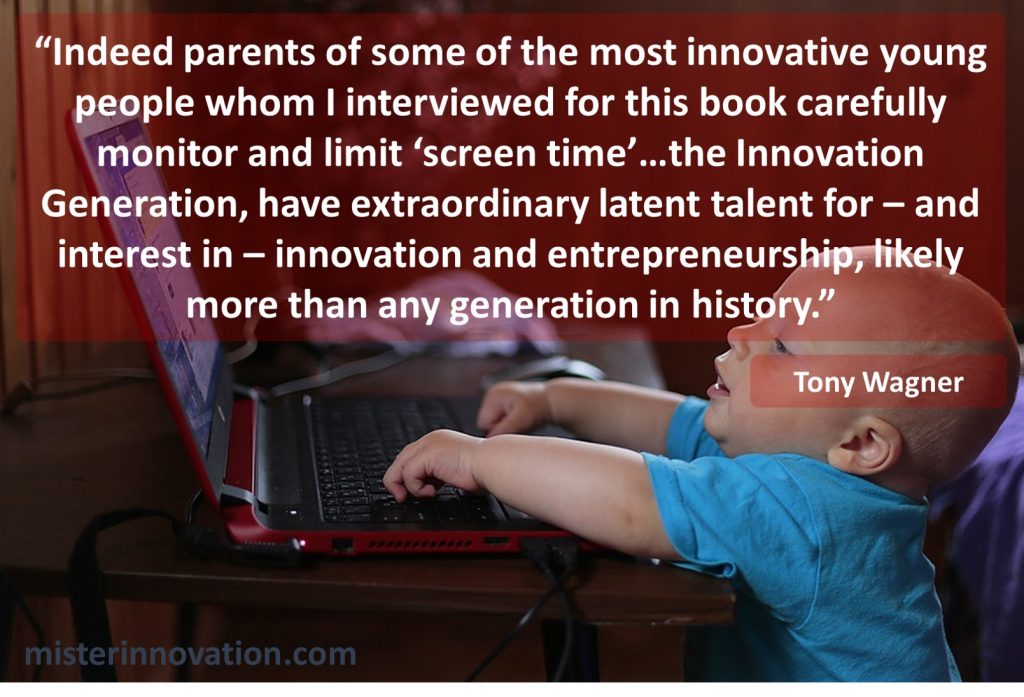
Image credit: 1 of 1,000+ FREE quote slides for your presentations at http://misterinnovation.com

Subscribe to Human-Centered Change & Innovation WeeklySign up here to get Human-Centered Change & Innovation Weekly delivered to your inbox every week.

The Venture Client Model

Bringing the Outside In for Internal Disruption

LAST UPDATED: November 13, 2025 at 1:23PM
The Venture Client Model

GUEST POST from Chateau G Pato

For decades, large corporations have wrestled with a critical innovation problem: how to access the speed and agility of the startup ecosystem without choking it with bureaucracy or overpaying through premature acquisition. Corporate Venture Capital (CVC) offered a financial window, but often failed to translate investment into operational change. The solution is not more capital; it’s a new engagement model built on a human-centered relationship: the Venture Client Model.

The Venture Client Model transforms the relationship between the corporation and the startup. Instead of acting as a passive investor, the large company acts as a first, paying client — a crucial lighthouse customer. The startup receives a contract (not just equity) and the opportunity to pilot its technology within a real, complex industrial environment. The corporation, in turn, gains early, de-risked access to disruptive solutions and the ability to test future technologies for internal applications.

This model is inherently human-centered because it focuses on solving real, internal pain points with external ingenuity, forcing a necessary friction between established internal process and external disruptive speed. It moves innovation from the periphery of financial investment directly into the core of operational value creation, where change truly impacts the customer and the bottom line.

The Three Pillars of the Venture Client Advantage

The success of the Venture Client Model hinges on its unique structure, which addresses the primary failures of traditional internal R&D and CVC:

1. De-Risked Operational Access (The Speed Multiplier)

Traditional procurement processes are an innovation killer. They are designed for stability, not speed. The Venture Client Unit (VCU) operates with its own streamlined legal and commercial framework, allowing for the rapid deployment of proof-of-concept projects. This structure allows a startup solution to enter the corporate environment in weeks, not months, dramatically accelerating the time-to-value.

2. Focused Pain Point Sourcing (The Value Anchor)

Unlike traditional CVC, which often chases market hype, the VCU starts by rigorously identifying the top five systemic pain points within the parent organization (e.g., slow supply chain traceability, high energy consumption in a factory). They then source startups specifically to solve those problems. This ensures that every pilot project is anchored to an immediate, quantifiable operational return, overcoming internal resistance by delivering proven, tangible value right away.

3. Internal Cultural Catalyst (The Mindset Shift)

The most profound impact of the Venture Client Model is internal. When a lean, external solution fixes a multi-million-dollar internal process in six weeks, it creates a powerful cultural catalyst. It shows internal teams what is possible outside the traditional, risk-averse framework, directly increasing the Adaptability Quotient (AQ) of the workforce. It changes the mindset from “we can’t do that” to “who outside can help us do this?”

Case Study 1: The Automotive OEM and Process Optimization

Challenge: Inefficient Factory Floor Logistics

A major European automotive manufacturer was suffering from production bottlenecks due to outdated manual logistics tracking on its assembly lines. Traditional internal R&D struggled to find a quick, cost-effective solution that could integrate with decades-old legacy systems. The internal solution required a full-scale IT overhaul, demanding years and hundreds of millions.

Venture Client Intervention:

The manufacturer’s VCU identified a small startup specializing in computer vision-based inventory tracking. Within a specialized procurement sandbox, the VCU ran a three-month pilot. The startup’s off-the-shelf software was integrated with existing CCTV infrastructure to track component flow automatically. The result was a 15% reduction in assembly-line bottlenecks and an immediate, visible ROI. The manufacturer then scaled the solution across five factories within the next year.

The Human-Centered Lesson:

The success was not just technological; it was methodological. The Venture Client process forced internal operations teams to collaborate with a nimble external party on a real, immediate problem, breaking down “Not Invented Here” bias and proving the viability of external solutions.

The Crucial Distinction: Client vs. Investor

The Venture Client is fundamentally different from Corporate Venture Capital (CVC). CVC focuses on a financial return in 5-7 years, often funding startups outside the corporation’s direct operational sphere. The Venture Client focuses on an operational return in 6-12 months. The contract is for a product or service (not equity), though VCU often has an option for future equity if the pilot is successful. This immediate operational focus ensures that the initiative remains aligned with core business needs, securing necessary internal sponsorship.

Case Study 2: The Infrastructure Firm and Predictive Maintenance

Challenge: Reactive Maintenance in Remote Infrastructure

A global energy infrastructure firm maintained thousands of remote assets (pipelines, wind farms) and relied on scheduled or reactive maintenance, leading to costly downtime and emergency fixes. The internal data science team was too small and too focused on existing predictive models to develop a radically new solution.

Venture Client Intervention:

The VCU scouted a specialized startup utilizing acoustic sensing and advanced machine learning to detect micro-leaks and component wear in real-time, long before traditional vibration sensors flagged an issue. The firm acted as the first commercial client, providing the startup with critical, large-scale training data from their assets. The pilot demonstrated an increase in lead time for critical fixes by three weeks. The firm then moved from a pilot contract to a large-scale, multi-year vendor contract, securing a strategic advantage in predictive asset management.

The Human-Centered Lesson:

This highlights the mutual value exchange. The corporation gained a strategic, proprietary solution and validated a technology stream. The startup gained a massive, credible reference customer and the data necessary to rapidly mature its AI model. It’s a win-win built on the human-centered need for speed (startup) and stability (corporation).

Conclusion: Scaling External Ingenuity

The Venture Client Model is the ultimate tool for scaling external ingenuity for internal disruption. It turns the largest corporate asset — its scale, its budget, and its pain points — into a magnet for innovation. By establishing a dedicated, de-risked commercial channel, corporations can access game-changing technologies on their own terms, transforming innovation from a high-stakes financial bet into a continuous portfolio of strategic pilots that accelerate organizational learning.

“Stop waiting for the big acquisition to disrupt your business. Start paying the right startups to solve your most urgent problems today. That is the Venture Client Model.” — Braden Kelley

Your first step toward building a Venture Client capability: Identify the single biggest operational bottleneck in your organization that costs over $5 million annually, and commit to finding an external startup solution to pilot it within 90 days.

Extra Extra: Because innovation is all about change, Braden Kelley’s human-centered change methodology and tools are the best way to plan and execute the changes necessary to support your innovation and transformation efforts — all while literally getting everyone all on the same page for change. Find out more about the methodology and tools, including the book Charting Change by following the link. Be sure and download the TEN FREE TOOLS while you’re here.

Image credit: Pexels

Subscribe to Human-Centered Change & Innovation WeeklySign up here to get Human-Centered Change & Innovation Weekly delivered to your inbox every week.

Fix the Problem or Design it Out?

Fix the Problem or Design it Out?

Let’s start with the problem.

According to The Plastic Pollution Coalition (January 3, 2017) – “It’s National Drinking Straw Day! Each day, more than 500 million plastic straws are used and discarded in the U.S. alone. Plastic straws consistently make the top ten list of items found, according to Ocean Conservancy’s International Coastal Cleanup data. In the last three years, plastic straws have climbed the list to the Number 5 spot.”

The Paper Straw Movement

In response to this growing problem, in January California made it illegal to give customers plastic straws unless they expressly request one.

Another way some restaurants have tried to to fix this problem has been to replace plastic straws with paper straws.

Or then there is the tasty fix to the problem, the cookie straw.

Starbucks Cookie Straw

But there is another way to approach problem solving, and that is to design out the problem instead of trying to fix it.

Recently a barista at Starbucks accidentally gave me a lid on my water cup that I wasn’t expecting.

I had heard that Starbucks was planning to reduce their use of the iconic green plastic straw, but I kind of assumed that meant they were shifting to paper straws like some other quick serve restaurants, but that is not what they have in mind at all.

Starbucks is instead planning to eliminate the plastic straw.

Instead of focusing on the straw they instead chose to focus on the lid and design it in a way that a straw isn’t even necessary.

Starbucks Sippy Cup

So, next time you’re wrestling with a problem and trying to solve it, look at it in a slightly different way just for fun, try asking yourself how you could design the product, service, or experience (or all three) in order to design out the problem.

You may or may not get to a more viable, desirable, and feasible solution than trying to fix the problem.

But, looking at the problem from a range of different perspectives is always worth the effort.

Keep innovating!


Accelerate your change and transformation success

Subscribe to Human-Centered Change & Innovation WeeklySign up here to get Human-Centered Change & Innovation Weekly delivered to your inbox every week.

Cars Don’t Have to Be Beige and Boring – Nobe 100

Cars Don't Have to Be Beige and Boring - Nobe 100

Estonia is known for pushing the boundaries as it tries to establish itself as a haven for innovation, and out of Estonia comes the latest in a string of interesting electric car projects. This one is super sexy for those of us that think that cars have gotten BORING. Check out the video to see what I mean.


Below you’ll find a second video that digs a little deeper into the project and provides more of an editorial.

But before you check it out you might want to investigate a bit more about what Estonia is trying to do to make itself an innovation powerhouse.

Is the design so sexy that you’ll want to lick it? I’ll leave that for you to decide, but I do like the idea of a removable battery. I’m surprised this is the first electric car that I’ve seen that touts this as a feature. I always assumed that the gas pumps at service stations would be replaced by racks of batteries eventually, but that has yet to happen and it is kind of hard for such a transition to start taking place if none of the electric car manufacturers are making cars with removable batteries. Whether or not it was necessary to go to the extreme of making the removable battery look like a nostalgic leather suitcase I’m not quite sure, but it does keep the experience consistent.

This is a crowdfunding project so if it excites you, check out their investment page.

So, only one question remains… Innovation or not?


Accelerate your change and transformation success

Subscribe to Human-Centered Change & Innovation WeeklySign up here to get Human-Centered Change & Innovation Weekly delivered to your inbox every week.

Growing Shoes for Growing Children

Shoe That Grows

I love elegant design solutions for problems that are more important than some of the silly things that we think of as problems in the first world.

Their mission is simple, make shoes that will last longer for the kids that need them most and then work to find people who can distribute them to groups of children in need, while also helping those groups raise the money to fund the shoes to take with them and distribute.

Today I came across a video for the shoes that grow highlighted in this video:

The design challenge was pretty simple, how can you design a children’s shoe with a reasonable cost that:

  • Lasts for several years
  • Changes shape so that it continues to fit as the child grows (in this case it is designed to grow up to five sizes)
  • Breathes as the majority of children in need live in warmer climates

What do you think? Innovation or not?

For more information, please visit http://theshoethatgrows.org


Accelerate your change and transformation success

Subscribe to Human-Centered Change & Innovation WeeklySign up here to get Human-Centered Change & Innovation Weekly delivered to your inbox every week.

Service Redesign – Lost T-Mobile Smartphone

Service Redesign - Lost T-Mobile Smartphone

Given the health risks of carrying a smartphone (or any kind of mobile device) too close to the body for extended periods, I try to always remove electronic devices from my pockets whenever I can. For ten years this has never caused a problem until Saturday. This marked the first time in more than a decade that I walked off and forgot my smartphone.

Now I’ve had the joy of reporting my lost phone to T-Mobile and getting a less than helpful response. Not because the agent I spoke with didn’t try to be helpful, but because the customer service representative was trapped inside of a service experience that wasn’t designed to meet the goals of the customer.

First I must mention that I don’t have a find my phone type app installed on my phone because I don’t like the idea of someone tracking me all the time. Second, yes, I know that even with location awareness or GPS turned off that my phone is being tracked anyways, but I still like to maintain the illusion that my every move isn’t being tracked. So, please humor me.

The fact is that T-Mobile could tell me exactly where my phone is even without such an app, but then they would have to breach the illusion and admit that they’re always tracking where every phone is at all times. Not such a good customer experience.

Redesigning the Lost Smartphone Experience

I’m only one person so this list won’t be as good as if I was working on this with a small team and prototyping with customers, but let’s ignore that for now and try to come up with a list of customer goals (and thus opportunities to delight) in the lost smartphone scenario:

  1. I don’t want someone to use my phone after I lose it to make calls that I’ll have to pay for (international calls, premium calls, etc.)
  2. I don’t want someone to buy anything (apps, music or other content that I’ll have to pay for)
  3. I don’t want someone to call my contacts
  4. I don’t want someone to use my apps and make in app purchases
  5. I don’t want someone to use my texting function (SMS) – read, send, etc.
  6. I don’t want someone to use my email – read, send, etc.
  7. I don’t want someone accessing my photos
  8. I don’t want someone to steal information about my contacts
  9. I want to be able to call my phone to try and speak with the person who found it so I can try and get it back
  10. I want the person to be able to call me or T-Mobile to let me know that they’ve found my phone

In short, I don’t want someone who finds my phone to be able to do anything other than contact me to let me know when and where I can come pick it up.

But, when I called to T-Mobile to report my phone lost the only option was to have the phone disabled. Prior to doing so, calling my phone was going straight to voicemail, and maybe I should have left a voicemail, but I didn’t, I thought I would try again later. After they disabled my phone, instead of getting voicemail I got a message saying the phone has been reported lost and that I wouldn’t be able to leave a voicemail. This is partially helpful, but not completely. Now I can’t call the phone and if someone has found the phone, they can’t try to contact anyone to arrange a pickup.

T-Mobile has met goal #1 (and possibly #2-4), but likely they could access #5-8 (able to read but probably not to send).

But, there are many other goals that have not been met. Most importantly, T-Mobile has actually made it less likely that I will get my phone back because I have no way of communicating with the person who may have my phone.

What could T-Mobile do to make this experience better?

Simple.

When a phone is reported lost, T-Mobile should make it so that the phone can only call T-Mobile. If the person calls, then T-Mobile knows which number is calling, can get information from the caller to connect the two parties to arrange a pickup, and pass on the contact details to the subscriber via pre-arranged methods.

Second, T-Mobile should allow designated numbers to call the phone, so that the subscriber can try to get in touch with whoever found the phone.

Third, T-Mobile could call the phone every 15-30min with a robot until someone answers and connect them with a T-Mobile representative.

These three small changes to their lost phone service design would make an immediate positive impact in the customer experience for thousands of customers.

How else could T-Mobile make the experience better?

Image credit: easyhacker.com

Subscribe to Human-Centered Change & Innovation WeeklySign up here to get Human-Centered Change & Innovation Weekly delivered to your inbox every week.

Digital Transformation versus Digital Strategy

by Braden Kelley

In my last article, Digital Transformation Matters, we looked at the accelerating pace of change, the case for digital transformation, and our evolving interactions with technology. We also asked a simple question:

Are you ready to do business in a digital way for the digital age?

In our digital age all companies must change how they think, change how they interact with customers, partners, and suppliers, and change how the business works inside. Customer, partner, and supplier expectations have changed and a gap is opening between what they expect from their interaction with companies, and what those companies are currently able to deliver. Companies must immediately work to close this expectation gap or the entire business is at risk.

There are groups of digital natives out there that are extremely capable, have greater access to capital than ever before, and are very likely to re-imagine your business and your entire industry from the ground up if you don’t start making the necessary changes in your business to eliminate the opportunity.

If they attack, they will do it with a collection of digital strategies that utilize the power of the digital mindset to more efficiently and effectively utilize the available people, tools and technology, and to design better, more seamlessly interconnected and automated processes that can operate with only the occasional human intervention.

To defend your company’s very existence, you must start thinking like a technology company or go out of business. Part of that thinking is to fundamentally re-imagine how you structure and operate your business. You must look at your business and your industry in the same way that a digital native startup will if they seek to attack you and steal your market. To make this easier you can ask yourself five questions:

  1. If I were to build this business today, given everything that I know about the industry and its customers, and given all of the advances in people, process, technology and tools, how would I design it?
  2. From the customers’ perspective, where does the value come from?
  3. What structure and systems would deliver the maximum value with the minimum waste?
  4. What are the barriers to adoption and the obstacles to delight for my product(s) and/or service(s) and how will my design help potential customers overcome them?
  5. Where is the friction in my business that the latest usage methods of people, process, technology, and tools can help eliminate?

There are of course potentially other questions you may want to ask, but these five should get you most of the way to where you need to go in your initial strategic planning sessions. If you have other key questions that you think I’ve missed, please add them in the comments.

Digital Strategy vs. Digital Transformation

But how much appetite for going digital do you have?

This is where the question of digital strategy versus digital transformation comes in.

The two terms are often misused, in part by being used interchangeably when they are in fact two very different things.

A digital strategy is a strategy focused on utilizing digital technologies to better serve one particular group of people (customers, employees, partners, suppliers, etc.) or to serve the needs of one particular business group (HR, Finance, Marketing, Operations, etc.). The scope of a digital strategy can be quite narrow, such as using digital channels to market to consumers in a B2C company, or broader, such as re-imagining how marketing could be made more efficient through the use of digital tools like CRM, marketing automation, social media monitoring, etc. and hopefully become more effective at the same time.

Meanwhile, a digital transformation is an intensive process that begins by effectively building an entirely new organization from scratch utilizing:

  • All of the latest DIGITAL TECHNOLOGIES (artificial intelligence, predictive analytics, BPM, crowd computing, etc.)
  • The latest TOOLS (robotics, sensors, etc.)
  • The latest best practices and emerging next practices in PROCESS (continuous improvement, business architecture, lean startup, Business Process Management (BPM), crowd computing, and continuous innovation using a tool like The Eight I’s of Infinite Innovation™)
  • The optimal use of the other three to liberate the PEOPLE that work for you to spend less time on bureaucratic work and more time imagining the changes necessary to overcome barriers to adoption and obstacles to delight through better leadership methods, reward/recognition systems, physical spaces, collaboration and knowledge management systems, etc.

And ends with a plan for making the transformation from the old way of running the business to the new way.

The planning of the digital transformation is of course all done collaboratively on paper, whiteboards, and asynchronous electronic communication (hopefully not email, but more on that later). The goal is to think like a digital native, to think like a startup, to approach the idea of designing a company to utilize all of the advances in people, process, technology and tools to kill off your own company (at least as you know it). Because, if you don’t re-invent your company now and set yourself up with a new set of capabilities that enable you to continuously re-invent yourself as a company, then some venture capitalist is going to see an opportunity, find the right team of digital natives, and give them the necessary funding to enter your market and re-invent your entire industry for you.

It’s All About the Interfaces

People are fascinated with startups like Uber and with good reason because they have changed the lexicon and the way that we think about entire categories of products and services. Whether or not you believe there is causation, the fact remains that Yellow Cab in San Francisco filed for bankruptcy, and that Uber has placed an immense amount of pressure on taxi and airport limousine companies. But you should also be looking at what established technology companies like Amazon are doing because established technology companies are looking for growth and new markets too, and they might decide yours looks attractive, so you have to think like a technology company or go out of business.

One way that technology companies differ from non-technology companies is that they naturally focus on the interfaces, because that is where complex systems often fail. And so, if you are pursuing a digital strategy on your way to a digital transformation, you must first pick an interface, and then optimize the experience at that interface. It could be the interface between the company and customers, it could be the company to employee or employee to employee interface, or even the company to partner or company to supplier interface. Whatever interface you choose, your goal is to ultimately look at that interface with a fresh modern lens, and then utilize all of the latest (and emerging) approaches from a people, process, and technology perspective, to create a more efficient and more effective (aka better) experience.

The better job you do as an organization at removing friction at the interfaces, the more likely you are to become a partner of choice, supplier of choice, employer of choice, and/or a brand of choice. The value of becoming any or all of these could be the difference between the survival and growth of the organization, and a slow, agonizing death at the hands of a new, digital entrant or a digitizing incumbent that completes a digital transformation before your leadership team can agree it’s even necessary.

Architecting Your Organization for Change

One thing that both a digital strategy and a digital transformation have in common is that they will inflict change (in varying amounts) upon the organization, and with a more visual, collaborative approach to planning that change – like that enabled by the Change Planning Toolkit™ that I introduce in my new book Charting Change (available February 24, 2016) – you will increase your odds of beating the 70% change failure rate and of successfully achieving your digital change goals.

As you plan your change efforts it helps if you keep in mind the Five Keys to Successful Change™ and that you consider Architecting Your Organization for Change. Below you will see visualizations of both concepts and both are available as free downloads from the Change Planning Toolkit™, which is a collection of frameworks, worksheets, and other tools (including the Change Planning Canvas™).

Five Keys to Successful Change 550

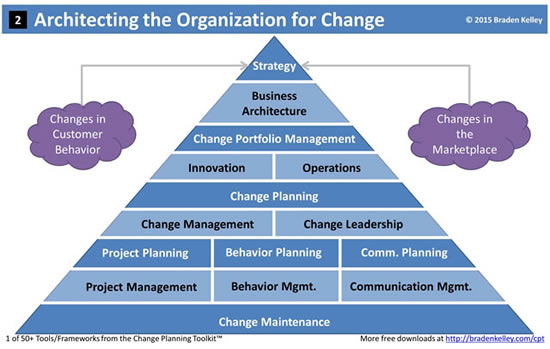
Architecting the Organization for Change

Click to access these frameworks as scalable 11″x17″ PDF downloads

These two frameworks will help you take a more holistic view of organizational change wider than just change management or change leadership, and helps organizations:

  1. Visualize a new way to increase organizational agility
  2. Integrate changes in the marketplace and customer behavior into the strategy
  3. Create a new organizational architecture that integrates all five elements of organizational change
  4. Make project, behavior and communications planning and management a central component of your change efforts
  5. One thing that should immediately jump out as you look at the Architecting the Organization for Change framework is that The Five Keys to Successful Change™ are embedded it.

Change Maintenance forms the foundation of a change-centric organization, ensuring that the changes necessary to ensure a healthy firm continue to persist (or are “maintained”), while the top of the organizational pyramid is driven by a conscious strategy that evolves over time, informed by changes in customer behavior and changes in the marketplace.

The strategy of the firm then determines the appropriate business architecture, and as the organization’s strategy changes, the business architecture may also need to change. Any necessary changes in the architecture of the business (new or updated capabilities or competencies) then will lead to modifications to the portfolio of change initiatives and projects (and remember every project is a change effort). These projects and initiatives will consist of innovation initiatives and efforts to create positive changes in the operations of the business.

The change efforts and projects identified as necessary and invested in as part of the change portfolio then represent projects that impact the innovation and operations for the firm, and in order to successfully execute them in the short term includes change planning, management, and leadership, and in the longer term the maintenance of the required changes.

And for the change efforts and projects to be successful the organization must also focus on project planning and management, behavior planning and management, and communications planning and management. The related projects, behaviors, and communications must all be effectively planned and managed in a way that keeps all three in sync.

I hope you see that by increasing your focus on the Change Planning discipline and through increased use of tools like the Architecting the Organization for Change framework from the Change Planning Toolkit™, your business will be able to more collaboratively and visually plan change efforts as large as a digital transformation or as small as a digital strategy and to increase your organizational agility.

More on organizational agility soon, so stay tuned!

In the meantime, please get yourself a copy of Charting Change as a hardcover (ebook coming soon) and get your free downloads from the Change Planning Toolkit™ (or go ahead and purchase a license now).

Buy the Change Planning Toolkit™ NowNow you can buy the Change Planning Toolkit™ – Individual Bronze License – Advance Purchase Edition here on this web site before the book launches.

This article originally appeared on Linkedin

Subscribe to Human-Centered Change & Innovation WeeklySign up here to get Human-Centered Change & Innovation Weekly delivered to your inbox every week.

Peeking Behind the Veil of Design

The KitchenAid Craft Coffee Story

Peeking Behind the Veil of DesignA company in Dubai is asking me to teach a design thinking and innovation course in May of next year, and this was good synchronicity because I came across the video below recently.

The design process is often very mysterious to people, and the way that designers pursue the design of a new object is often hard for people to grasp. But the design thinking methodology has helped to bring a little bit of the magic of design to other business disciplines, especially innovation. Videos like this help provide a peek behind the veil and give people a little taste of what the process of design and the use of design thinking look like in practice.

KitchenAid’s goal in creating the Siphon Coffee Brewer, Pour Over Coffee Brewer, Precision Press Coffee Maker and Burr Grinder was to bring the coffeehouse experience into the home by automating brewing methods celebrated within coffeehouse culture. They studied the art and science of many craft brewing methods in order to create coffee brewers that deliver the precision and mastery of the best baristas.

Did they achieve this goal?

I don’t know, I don’t even drink coffee. But they’ve done a nice job of capturing their design process in the video, and have offered non-designers a good peek behind the veil of design.

If they have achieved their goal, then it will now be simple to enjoy an authentic cup of craft coffee at home. They say life tastes better with coffee, my taste buds say no. Chocolate is better!

More info at http://kitchenaidcraftcoffee.com (site no longer exists).

p.s. Design Thinking even plays a role in my new book on organizational change – Charting Change (Feb 2016) – pre-order your copy now. 🙂

Accelerate your change and transformation success

Subscribe to Human-Centered Change & Innovation WeeklySign up here to get Human-Centered Change & Innovation Weekly delivered to your inbox every week.

Microsoft Stomps on Google Glass

Microsoft Stomps on Google Glass

Wow!

I have to start that word, because I’m not sure how else to describe what has just emerged from Microsoft Research in the new Microsoft HoloLens.

And as I say in the title, if you watch the video below you’ll clearly see that Microsoft has just busted Google Glass – both lenses.

I said from the beginning that Google Glass would never catch on as a consumer product, because they look dumb, cost a lot of money, and don’t really fit into most people’s lives (or add much of anything to them). Recently Google shut down its consumer facing Google Glass program while they try to fix its shortcomings.

Microsoft’s HoloLens on the other hand, if you’ve ever read Innovation is All About Value (if not, follow the link) then you’ll quickly see after watching the video above that Microsoft’s new potential innovation ticks all three boxes in my innovation success prediction framework:

  • Value Creation – Takes 3D objects from your screen and brings them to your physical environment AND lets you interact with them (my mind races thinking about the possibilities).
  • Value Translation – Watch the video. If you don’t see how this might fit first into many professions out there and enable some amazing rapid prototyping without building anything (watch out 3D printing companies!), and possibly also into your personal life, I’ll be shocked.
  • Value Access – Microsoft is already engaging partners to add more value to what is essentially a platform, not a product.

Microsoft HoloLens

Microsoft is being intentionally coy about saying when it will be releasing the Microsoft HoloLens, but some people are predicting it will be available in the Windows 10 launch timeframe, which Microsoft is also being vague about saying only “later in the year” – which for my money usually means Q4 (or maybe Q3) depending on how the preview version does in the wild.

So what do you think of Microsoft’s new HoloLens?

I for one will be reaching out to my friends at Microsoft (you know who you are) to get a personal preview for a further write-up in Innovation Excellence (the world’s most popular innovation web site), so stay tuned!


Accelerate your change and transformation success

Subscribe to Human-Centered Change & Innovation WeeklySign up here to get Human-Centered Change & Innovation Weekly delivered to your inbox every week.