Author Archives: Braden Kelley

About Braden Kelley

Braden Kelley is a Human-Centered Experience, Innovation and Transformation consultant at HCL Technologies, a popular innovation speaker, and creator of the FutureHacking™ and Human-Centered Change™ methodologies. He is the author of Stoking Your Innovation Bonfire from John Wiley & Sons and Charting Change (Second Edition) from Palgrave Macmillan. Braden is a US Navy veteran and earned his MBA from top-rated London Business School. Follow him on Linkedin, Twitter, Facebook, or Instagram.

Are Innovation and Empathy in the Cards?

As part of the leadership team for a new human-centered problem-solving offering for select Oracle customers, I’m always on the lookout for new tools to integrate into our flexible problem-solving process to help clients innovate, grow or transform.

Because our dynamic team of experienced professionals has a diverse range of knowledge, skills and abilities we’re able to co-create solutions to a wide range of business challenges and leverage a wide variety of tools. This means I’m always on the lookout for new tools to better serve our clients, in addition to pursuing my hobby of creating new tools and methodologies in my spare time throughout my career.

My passion for empowering others to succeed in overcoming their business challenges has led to the publishing of two business best-sellers Stoking Your Innovation Bonfire (John Wiley & Sons, 2010) and Charting Change (Palgrave Macmillan, 2016), and the creation of the powerful, visual and collaborative Change Planning Toolkit™, my Nine Innovation Roles™ card deck, and the Human-Centered Innovation Toolkit™ (featuring tools like The Experiment Canvas™).

I create new tools, methodologies and frameworks when I see opportunities to make people more efficient and effective in their jobs and leverage the work of others when I find others have created good solutions. I leverage the Business Model Canvas for business model prototyping, I leverage The Play-to-Win Strategy Canvas v3.0 to help people work through strategic choices, along with other tools when the challenge is appropriate.

Recently I have been looking at a variety of card decks to evaluate their suitability to use alongside design thinking and other methodologies that form the basis of the Oracle FUEL approach.

Here are a few I’ve been evaluating lately:
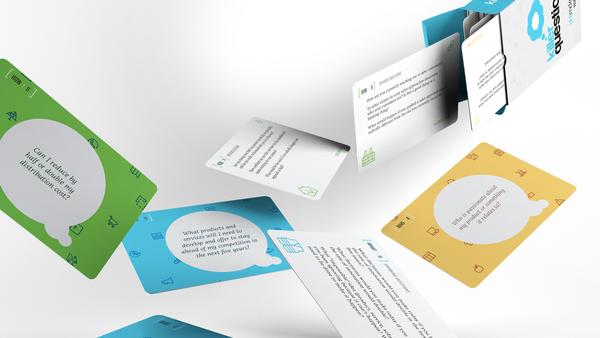
Killer Questions Cards

1. Killer Questions – Volume 1 from Phil McKinney, author of Beyond the Obvious and CEO of CableLabs
(More info at https://innovation.tools/)

Brainstorming is a fairly useless exercise the way that most people facilitate it. There are much more effective ways to get ideas and most of the approaches that work better share at their core a more targeted and collaborative approach. The Killer Questions card deck is composed of just that, a collection of questions if left unanswered or unexplored, could lead to blind spots and disruption opportunities for new entrants (or your competition). The questions are categorized into three types:

  1. Who
  2. What
  3. How

And the questions include things like:

  • Who does not use my product because of my assumptions about their skill or ability
  • What emotional, psychological, or status benefits could people derive from using my product?
  • How could users avoid interacting with my product or service but still get the same value?

But the cards don’t just contain a single question. These are examples of guiding questions on the front of a few cards, but on the back of each card you will also find 3-5 supporting questions to help your team explore the guiding question more fully.

Overall, I consider the cards a useful tool for groups including: product teams wanting to continuously stretch themselves as they revaluate product direction, or for expanded innovation teams looking to broaden their search horizons.
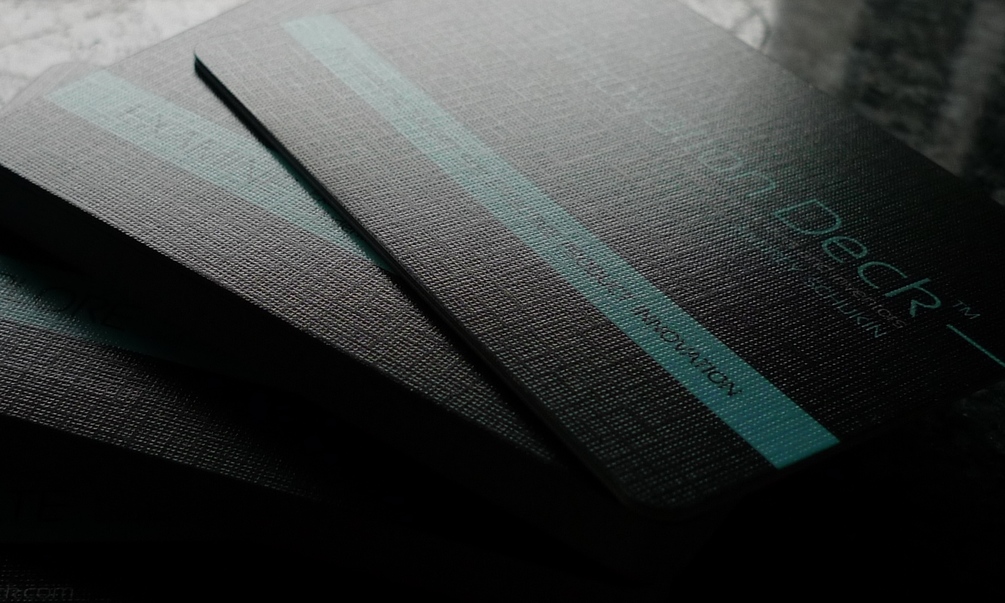
Innovation Deck cards by Andrey Schukin

2. The Innovation Deck by Andrey Schukin, CTO at Interprefy AG
(More info at http://www.innovationfast.com/)

Where the Killer Questions deck is organized around questions, The Innovation Deck is organized around topics/tactics and triggers. For each topic/tactic there is either a set of instructions or a set of questions.

The Innovation Deck is composed of three different types of cards that will help you:

  1. Examine
  2. Explore
  3. Evaluate

Examine Card example:

EMOTION

  • People don’t buy things they need. They buy things they want.
  • How do you make sure that the product will trigger an emotional response from the customer?
  • What elements of your product will make the customer want to use it?

I would almost include the triggers cards as a fourth card type, because instead of a topic and questions the cards have a collection of words to see if any of the words inspire thought or conversations rather than giving people a guiding topic or tactic.

Overall, I consider these cards as a useful tool for product teams looking at a product to challenge or stretch the existing product direction for the future.
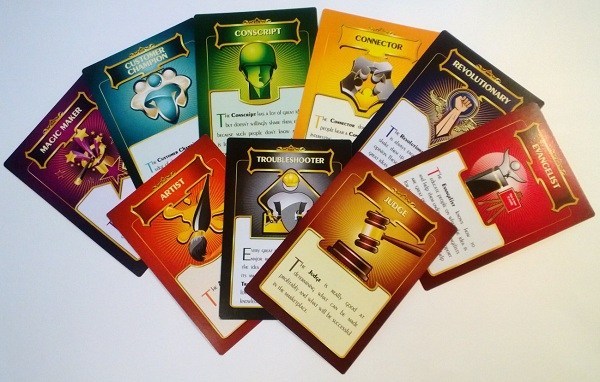
Nine Innovation Roles cards from Braden Kelley

3. Nine Innovation Roles – a card deck by Braden Kelley, author of Stoking Your Innovation Bonfire
(More info at http://9roles.com)

The following is an excerpt from my book that explains some of the thinking behind The Nine Innovation Roles™:

“Too often we treat people as commodities that are interchangeable and maintain the same characteristics and aptitudes. Of course, we know that people are not interchangeable, yet we continually pretend that they are anyway — to make life simpler for our reptile brain to comprehend. Deep down we know that people have different passions, skills, and potential, but even when it comes to innovation, we expect everybody to have good ideas.

I’m of the opinion that all people are creative, in their own way. That is not to say that all people are creative in the sense that every single person is good at creating lots of really great ideas, nor do they have to be. I believe instead that everyone has a dominant innovation role at which they excel, and that when properly identified and channeled, the organization stands to maximize its innovation capacity. I believe that all people excel at one of nine innovation roles, and that when organizations put the right people in the right innovation roles, that your innovation speed and capacity will increase.”

The Nine Innovation Roles™ are:

  1. Revolutionary
  2. Conscript
  3. Connector
  4. Artist
  5. Customer Champion
  6. Troubleshooter
  7. Judge
  8. Magic Maker
  9. Evangelist

To make my Nine Innovation Roles™ framework accessible to as many people as possible inside organizations all around the world to explore and improve innovation team dynamics and success, I am happy to announce that I have now made the print-ready files for the cards available here for FREE download, and you can either work with the vendor I use – adMagic – or work with a local printer in your part of the world.
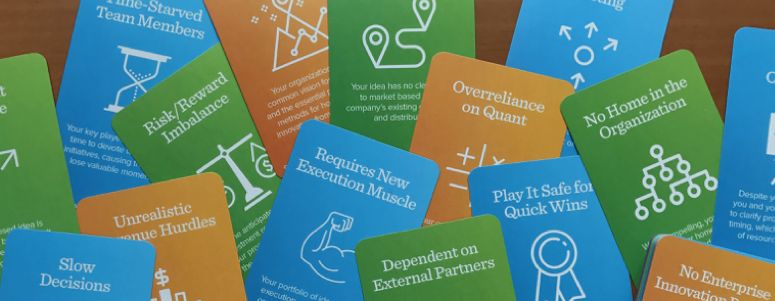
LPK Roadblocks Cards

4. LPK Roadblocks by LPK, a brand and innovation consultancy
(More info at https://roadblocks.lpklab.com/)

The LPK Roadblocks deck is focused on innovation roadblocks and helping organizations whose innovation efforts might have stalled, get unstuck. There are six kinds of cards in the deck:

  1. Voting cards
  2. Question cards
  3. Create Your Own Roadblock cards
  4. Organization Roadblocks
  5. Project Roadblocks
  6. Idea Roadblocks

There are two main ways to use the cards, with selection and voting integrated into both:

  1. Root Cause Discovery
  2. Beginning, Middle and End

Organization Roadblocks include things like “Unrealistic Revenue Hurdles” and “Lip-Service Leadership,” while Project Roadblocks including things like “Untested Assumptions” and “Unclear Objectives”, while Idea Roadblocks include things like “Risk/Reward Imbalance” and “No Route to Market.”

Overall, I find these cards to be a useful tool when you run into a client that says they are struggling to innovate or that they’re not innovating as much as they’d like.
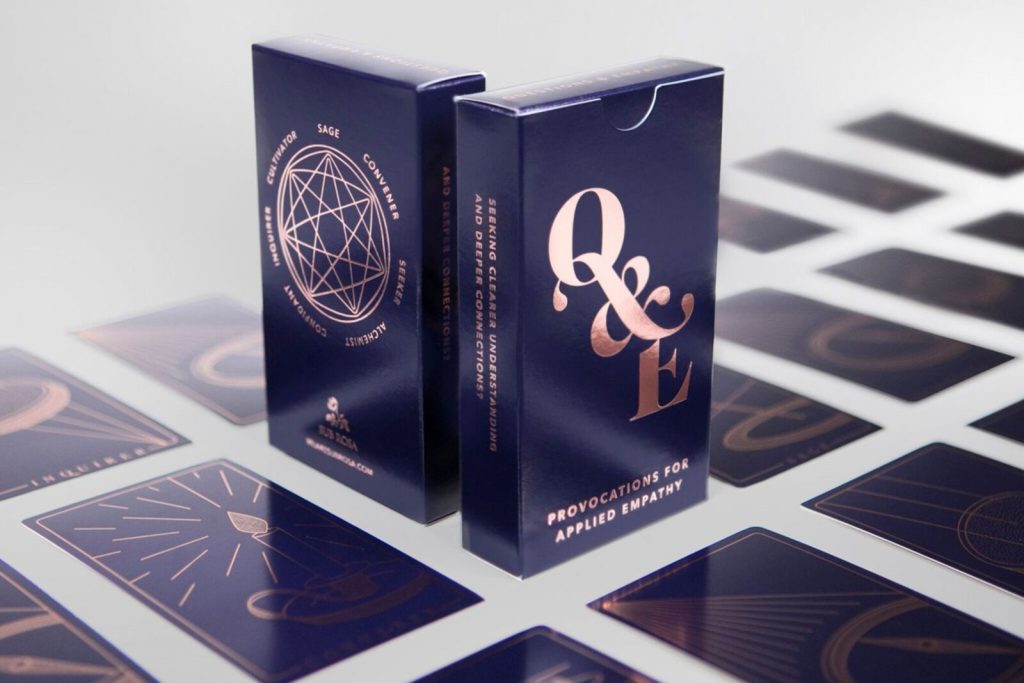
Questions & Empathy Cards

5. Questions & Empathy – a card deck by SubRosa, a brand strategy and design practice
(More info at https://www.questionsandempathy.com/)

SubRosa’s Questions & Empathy cards are composed of seven empathy archetype cards and a set of exploratory questions for each archetype. The seven archetypes are:

  1. Sage
  2. Inquirer
  3. Convener
  4. Alchemist
  5. Confidant
  6. Seeker
  7. Cultivator

Overall, I find these cards to be a useful tool for better understanding yourself and your own empathetic style and over time they could help you approach empathy from more angles than you would without them, but I struggle to see as is how they can actually help you practice applied empathy. The archetypes are useful, but I think I might create my own question cards to help my team better apply empathy within the empathize/understand phase of design thinking.

Conclusion

Whether you’re trying to innovate or just to build up your empathy muscles, I hope you see that there are some great, extremely portable resources to help with either. Of course, there are other card decks out there, but these will give you a few to explore and see whether there is a fit for your design thinking or innovation undertakings. If you’re pursuing a digital transformation or business transformation you can:

If you missed the links to the cards decks above, here they are again:

  1. Killer Questions – Volume 1
  2. The Innovation Deck
  3. Nine Innovation Roles (English/Spanish/Swedish)
  4. LPK Roadblocks
  5. Questions & Empathy


Accelerate your change and transformation success

Subscribe to Human-Centered Change & Innovation WeeklySign up here to get Human-Centered Change & Innovation Weekly delivered to your inbox every week.

FINAL DAY – Insane Cyber Deal on My Latest Book

Charting Change

Every so often something comes through your inbox that seems too good to be true.

Today was one of those times when an email dropped into my inbox stating that Palgrave Macmillan, the publisher of my latest book Charting Change is offering it at a ridiculous Cyber Week Sale price of $9.99 on the USA web site.

USA – https://www.palgrave.com/us/book/9781137536952

There is also a European web site offering it for 9,99 Euros if you need it:

EUROPE – https://www.palgrave.com/gp/book/9781137536952

You can either get the eBook with INSTANT DOWNLOAD or the hardcover with FREE SHIPPING – It’s your choice!

IMPORTANT CAVEAT: According to the email, this deal ends December 3, 2019

Here is a blurb about the book from the web site to give you a sense of the value it will deliver to your organization:

Research shows that up to seventy percent of all change initiatives fail. Let’s face it, change is hard, as is getting an organization on board and working through the process. One thing that has been known to be effective is onboarding teams not only to understand this change, but to see the process and the progress of institutional change. Charting Change will help teams and companies visualize this complicated process. Kelley has developed the Change Planning Canvas™, which enables leadership and project teams to easily discuss the variable that will influence the change effort and organize them in a collaborative and visual way. It will help managers build a cohesive approach that can be more easily embraced by employees who are charged with the actual implementation of change. This book will teach readers how to use this visual toolkit to build a common language and vision for implementing change.

Here are the links for you again to take advantage of this offer ending December 3, 2019:

USA – https://www.palgrave.com/us/book/9781137536952 (only $9.99)
EUROPE – https://www.palgrave.com/gp/book/9781137536952 (only 9,99 Euros)

Hardcover or eBook!

Coupon Code: CYBER19PAL

—————————————–

SPECIAL BONUS: Anyone who buys a copy of the book will get FOR FREE 26 of the 50+ tools in the Change Planning Toolkit™ – INCLUDING a copy of the Change Planning Canvas™

——————————————

If $9.99 is still too much of a barrier to break through to accelerate your change capability, then go ahead and grab the 10 free tools, including a visualization of the Association of Change Management Professionals (ACMP) Standard for Change Management® and my popular & powerful collaborative Visual Project Charter™.


What People Are Saying

Daniel H Pink“There’s no denying it: Change is scary. But it’s also inevitable. In Charting Change, Braden Kelley gives you a toolkit and a blueprint for initiating and managing change in your organization, no matter what form it takes.”

– Daniel H. Pink, author of Drive and To Sell is Human

Eric Hieger“Thoughtful, thorough, and practical is the rare blend that Braden has achieved in this Change Management field guide. Much more than a series of tactics, Charting Change will explicitly, sequentially, and visually help users create a diverse set of experiences for stakeholders that will most certainly increase likelihood of success.”

– Eric D. Hieger, Psy.D., Business Transformation and Change Leadership Practice Lead at ADP

Phil McKinney“Braden Kelley and his merry band of guest experts have done a nice job of visualizing in Charting Change how to make future change efforts more collaborative. Kelley shows how to draw out the hidden assumptions and land mines early in the change planning process, and presents some great techniques for keeping people aligned as a change effort or project moves forward.”

– Phil McKinney, retired CTO for Hewlett-Packard and author of Beyond the Obvious

Denise Fletcher“As the pace of change speeds up, the market disruptions and resulting changes can be daunting for all. We all wish we could predict how change will affect our business, our market and our people. No matter what business area you come from, change affects us all and can produce great outcomes when managed well. In Braden Kelley’s newest book, Charting Change, he provides a terrific toolkit to manage this process and make it stick.”

– Denise Fletcher, Chief Innovation Officer, Xerox

Marshall Goldsmith“Higher employee retention? Increased revenue? Process enhancements? Whatever your change goal, Charting Change is full of bright ideas and invaluable visual guides to walk you through change in any area where your organization needs it.”

– Marshall Goldsmith is the #1 New York Times bestselling author of Triggers, MOJO and What Got You Here Won’t Get You There


Accelerate your change and transformation success

Subscribe to Human-Centered Change & Innovation WeeklySign up here to get Human-Centered Change & Innovation Weekly delivered to your inbox every week.
Gotten Your ACMP Standard for Change Management® Visualization Poster Yet?

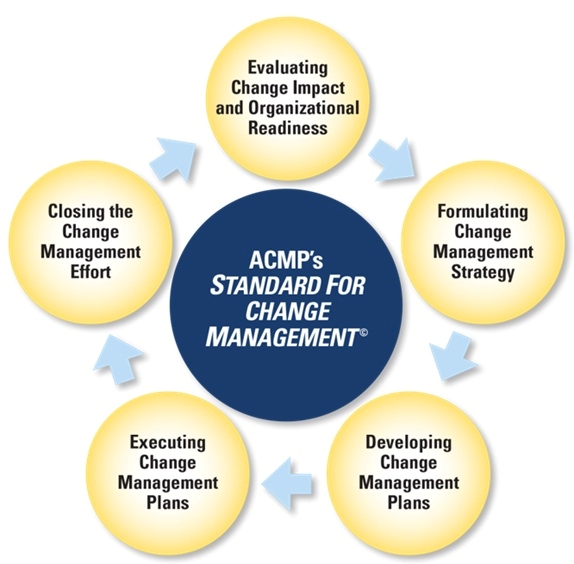
Project management professionals have the Project Management Body of Knowledge (PMBOK) maintained by the Project Management Institute (PMI) in support of the certification of Project Management Professionals (PMP) to guide their efforts. Change management professionals meanwhile have The Association of Change Management Professionals (ACMP) Standard for Change Management, also referred to as ACMP’s Standard.

ACMP Standard Components

The main components of the standard according to the ACMP brochure include:

  1. Evaluating Change Impact and Organizational Readiness
    • Reviews the overall change and how it will impact the organization
    • Establishes whether the organization is ready and able to handle the proposed change

  2. Formulating Change Management Strategy
    • Develops the approach for moving an organization from current state to desired future state in order to achieve specific organizational outcomes

  3. Developing Change Management Plans
    • Documents the scope, actions, timelines and resources needed to deliver the change

  4. Executing Change Management Plans
    • Addresses the implementation processes for performing the change activities by monitoring, measuring, and controlling delivery against baseline plans

  5. Closing the Change Management Effort
    • Documents the actions and resources needed to close the change once the Change Management Strategy is achieved and activities are deemed sustainable and maintainable

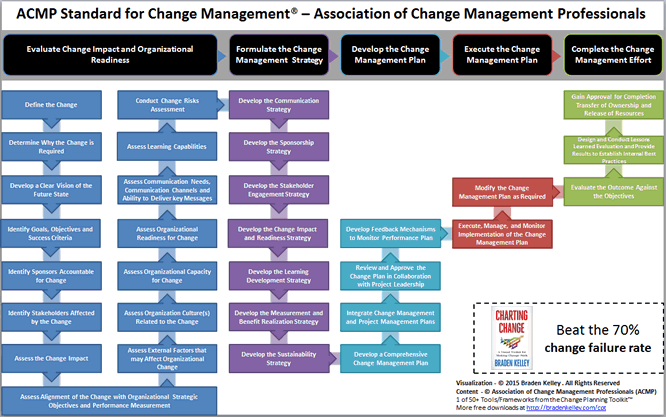
But managing change is extremely complicated and there is much more involved in doing it well than can be achieved just looking at these five high level phases, so there is a lot more detail contained in ACMP’s Standard, highlighted for you below:

5.1 Evaluate Change Impact and Organizational Readiness
— 5.1.1 Define the Change
— 5.1.2 Determine Why the Change is Required
— 5.1.3 Develop a Clear Vision of the Future State
— 5.1.4 Identify Goals, Objectives, and Success Criteria
— 5.1.5 Identify Sponsors Accountable for the Change
— 5.1.6 Identify Stakeholders Affected by the Change
— 5.1.7 Assess the Change Impact
— 5.1.8 Assess Alignment of the Change with Organizational Strategic Objectives and Performance Measurement
— 5.1.9 Assess External Factors that may Affect Organizational Change
— 5.1.10 Assess Organization Culture(s) Related to the Change
— 5.1.11 Assess Organizational Capacity for Change
— 5.1.12 Assess Organizational Readiness for Change
— 5.1.13 Assess Communication Needs, Communication Channels, and Ability to Deliver Key Messages
— 5.1.14 Assess Learning Capabilities
— 5.1.15 Conduct Change Risks Assessment
5.2 Formulate the Change Management Strategy
— 5.2.1 Develop the Communication Strategy
— 5.2.2 Develop the Sponsorship Strategy
— 5.2.3 Stakeholder Engagement Strategy
— 5.2.4 Develop the Change Impact and Readiness Strategy
— 5.2.5 Develop the Learning and Development Strategy
— 5.2.6 Develop the Measurement and Benefit Realization Strategy
— 5.2.7 Develop the Sustainability Strategy
5.3 Develop the Change Management Plan
— 5.3.1 Develop a Comprehensive Change Management Plan
— 5.3.2 Integrate Change Management and Project Management Plans
— 5.3.3 Review and Approve the Change Plan in Collaboration with Project Leadership
— 5.3.4 Develop Feedback Mechanisms to Monitor Performance to Plan
5.4 Execute the Change Management Plan
— 5.4.1 Execute, Manage, and Monitor Implementation of the Change Management Plan
— 5.4.2 Modify the Change Management Plan as Required
5.5 Complete the Change Management Effort
— 5.5.1 Evaluate the Outcome Against the Objectives
— 5.5.2 Design and Conduct Lessons Learned Evaluation and Provide Results to Establish Internal Best Practices
— 5.5.3 Gain Approval for Completion, Transfer of Ownership, and Release of Resources

Obviously there is a lot more value in looking at this more complete view of the content of ACMP’s Standard than in looking at the five components of the standard. A number of different people provided input into ACMP’s Standard and so there is a lot of good information in it, and I’d encourage you to download it and check it out. For my part, I’ve been all the way through it as part of the research for my new book Charting Change, in part because I wanted to ensure that my new book and the accompanying Human-Centered Change methodology are consistent with ACMP’s Standard so that practicing change management professionals can pick up my Change Planning Toolkit™ and begin using it right away to simplify their change planning process and increase their rate of successful change adoption.

ACMP Standard Visualization

Click to access this ACMP Standard for Change Management visualization as a FREE scalable 11″x17″ PDF download

Click to access this ACMP Standard for Change Management visualization as a FREE scalable 35″x56″ PDF poster size download

But the ACMP’s Standard for Change Management, because of its breadth, can be difficult for people to digest and easily access quickly and so to help with that challenge I have created a visualization of the standard (pictured above) as a scalable 11”x17” free download for people to download and share with others or post on their cubicle or office wall for easy reference, with a free 35”x56” poster size version available now too! The visualization will help you see at a glance how the main components and all of their sub-components inter-relate and come together to create a comprehensive approach to change management. I hope you download and enjoy the ACMP Standard for Change Management visualization, share it freely with your friends and colleagues, and get added value from the other free downloads from the Change Planning Toolkit™!

Buy the Change Planning Toolkit™ NowNow you can buy the Change Planning Toolkit™ – Individual Bronze License here on this web site now that the book has launched.

One good place to get it printed at the 35″x56″ size to put up on your wall for your cross-functional project charter collaborative meeting is PosterPrintHouse.com for about $50.00 plus or minus depending on any specials they might be running.

The ACMP Standard for Change Management®:

  • Outlines generally accepted practices, processes, tasks and activities used by change management practitioners across multiple roles, organizations and industries.
  • Provides a clear and consistent vocabulary of essential change management terminology and offers guidance for organizational change mgmt. for any type of change.
  • Supports organization decision making regarding change management resources.

So grab the 35″x56″ poster size free download and get yourself a copy of the book:

Keep innovating and making positive change!


Accelerate your change and transformation success

Subscribe to Human-Centered Change & Innovation WeeklySign up here to get Human-Centered Change & Innovation Weekly delivered to your inbox every week.
Join me at the Global Digital Healthcare Innovation Summit

Join Braden Kelley at the Global Digital Healthcare Innovation Summit

Want to learn how to bring a design mindset to healthcare for innovation?

Join me in New York City next week – October 10-11, 2019 at the Global Digital Healthcare Innovation Summit, their annual conference where digital healthcare leaders from organizations around the world will meet to share innovation and transformation best practices.

Download the Agenda

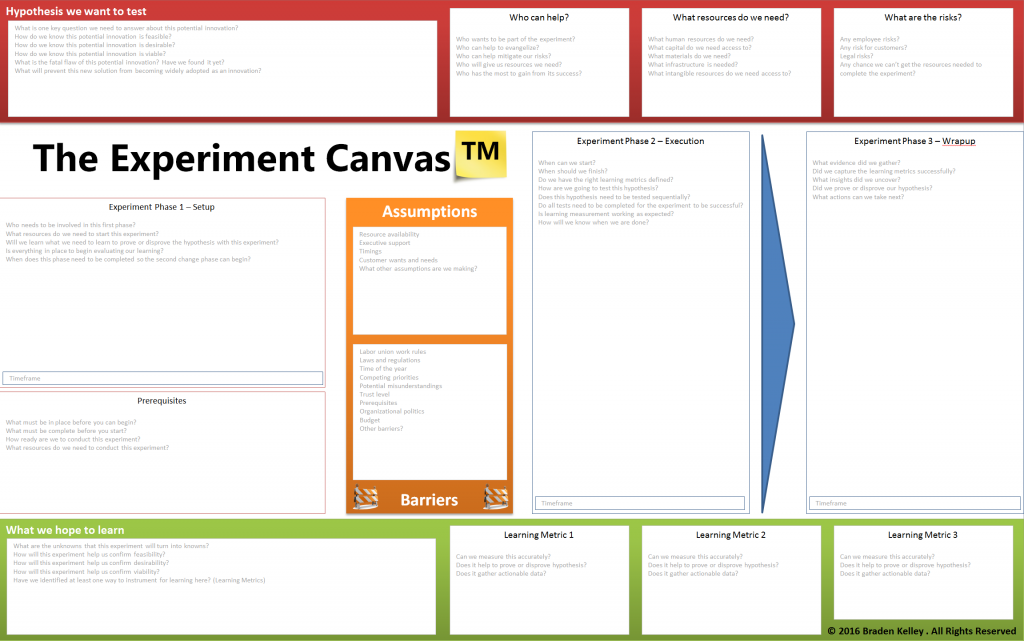
I’ll be doing a keynote and workshop that will give participants insights into how to involve everyone in your innovation efforts, explore the difference between digital transformation and digital strategy, how to incorporate design thinking in a healthcare context, and provide an opportunity to get hands-on experience with The Experiment Canvas™ from my forthcoming Human-Centered Innovation Toolkit™.

The Experiment Canvas by Braden Kelley

The Experiment Canvas™ is one of the many tools that I’ve already created for the Human-Centered Innovation Toolkit™, and it is an incredibly valuable tool for use by people following Design Sprint, Design Thinking or other innovation methodologies to craft and execute experiments.

If you’d like to get involved as a patron or premium sponsor to help finish toolkit development and distribution, please contact me.

Otherwise, I look forward to seeing you next week in New York City!

Connect with me on Twitter (@innovate) to orchestrate a meetup to learn about my work at Oracle or to sit down with me at the event to explore any of the powerful tools in the Change Planning Toolkit™ or Human-Centered Innovation Toolkit™.


Accelerate your change and transformation success

Subscribe to Human-Centered Change & Innovation WeeklySign up here to get Human-Centered Change & Innovation Weekly delivered to your inbox every week.
Are Gas Stations the Future of Starbucks?

Are Gas Stations the Future of Starbucks?

Recently the Seattle Times published an article from the Washington Post highlighting a gas station in Maryland that has made the bold move of turning off its gas pumps and installing electric charging stations in their place. Which got me thinking…

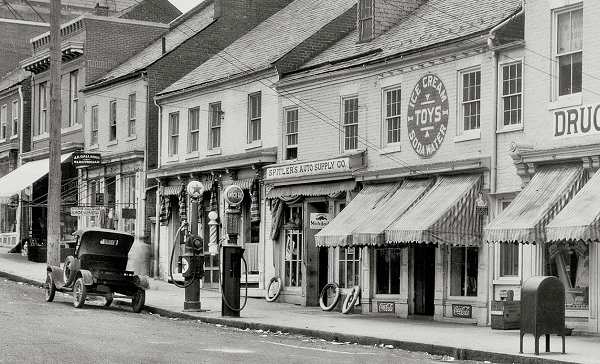
Given that in the early days of automobiles you had to go to the pharmacy and buy gasoline in open containers before an evolution began to curbside gas pumps before finally arriving at the drive thru format we have today, why would it be crazy to think that we are due for the next reinvention of refueling now that electric vehicles are beginning to catch on?

And what might a “gas” station v5.0 look like?
(the first four generations being pharmacy, curbside, drive thru full serve, and self serve)

Curbside Gas Station

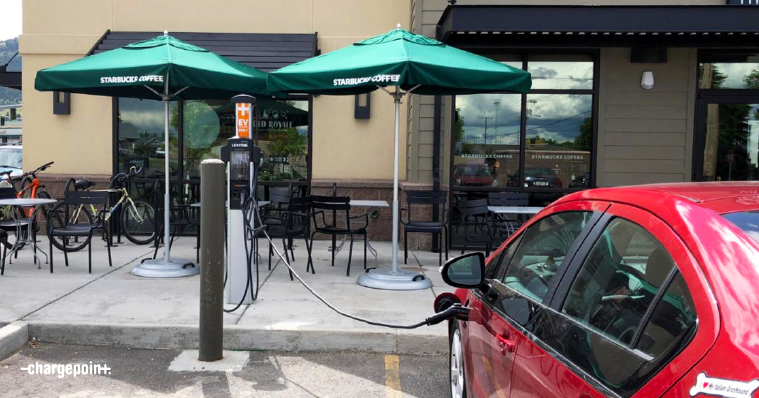
Given that it takes 15-30 minutes to quickly recharge an electric car, a “gas” station v5.0 may very well end up looking like a Starbucks.

Are people going to want to hang out in their cars while they recharge?

Wouldn’t they rather chill out in a Starbucks sipping on a latte (or a hot chocolate) while they wait for enough juice to keep rolling down the road?

So shouldn’t Starbucks be considering entering the “gas” station business?

Or is the somewhat random growth of electric charging likely to continue?

The answer for me is of course both…

In urban environments I would imagine the trend of a lot of one-off charging stations to continue.

But if I were Starbucks I would look at the interstate highway system and consciously set up Starbucks locations next to gas stations and install electric vehicle charging stations as part of the design. That way you get business from the large number of internal combustion drivers and the small number of electric vehicle drivers now, while those numbers gradually invert over time.

Starbucks Electric Charting Station

Maybe Starbucks could even do a deal with Tesla Motors like they did with Fred Meyer (a small superstore chain with groceries that is part of the Kroger family). Or maybe Nissan or GM want to get in on the action instead.

What do you think?

Image credits: Starbucks, American Oil & Gas Historical Society, Chargepoint


Accelerate your change and transformation success

Subscribe to Human-Centered Change & Innovation WeeklySign up here to get Human-Centered Change & Innovation Weekly delivered to your inbox every week.

Join Me at Innovation Leader’s IMPACT 2019 in San Francisco

Join Braden Kelley at Innovation Leader's IMPACT 2019 in San Francisco

Want to find out how to learn fast instead of failing fast?

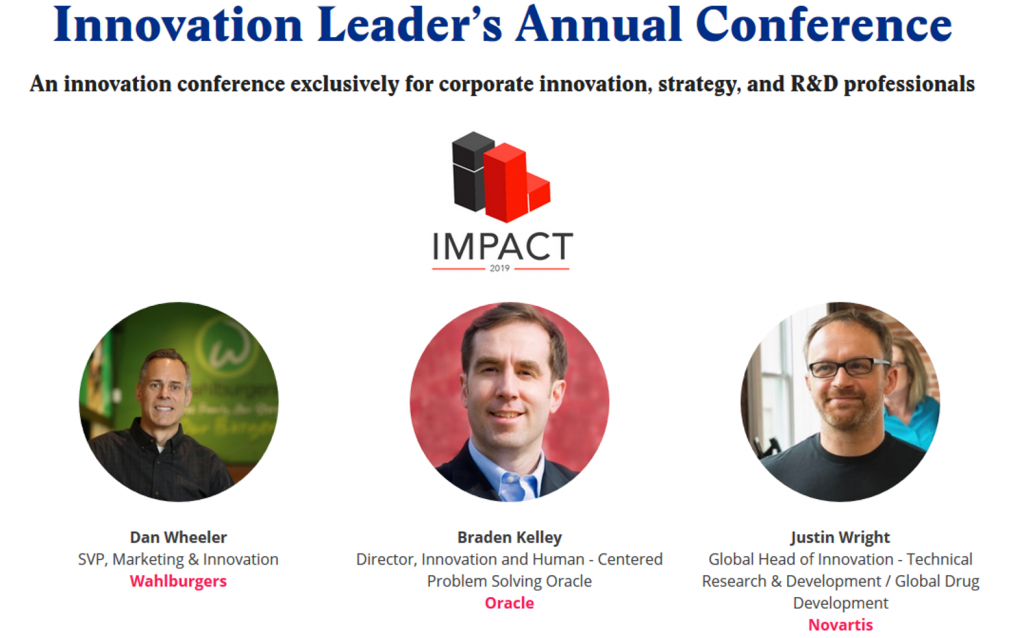
Join me in San Francisco, CA next month – October 22-24, 2019 at Innovation Leader’s IMPACT 2019, their annual conference where innovation leaders from organizations around the world will meet to share innovation best practices.

I’ll be doing a keynote and workshop that will give participants hands-on experience with The Experiment Canvas™ from my forthcoming Human-Centered Innovation Toolkit™.

The Experiment Canvas by Braden Kelley

The Experiment Canvas™ is one of the many tools that I’ve already created for the Human-Centered Innovation Toolkit™, and it is an incredibly valuable tool for use by people following Design Sprint, Design Thinking or other innovation methodologies to craft and execute experiments.

If you’d like to get involved as a patron or premium sponsor to help finish toolkit development and distribution, please contact me.

Otherwise, I look forward to seeing you next month in San Francisco!

Connect with me on Twitter (@innovate) to orchestrate a meetup to learn about my work at Oracle or to sit down with me at the event to explore any of the powerful tools in the Change Planning Toolkit™ or Human-Centered Innovation Toolkit™.


Accelerate your change and transformation success

Subscribe to Human-Centered Change & Innovation WeeklySign up here to get Human-Centered Change & Innovation Weekly delivered to your inbox every week.
Leading Digital Transformation – The Interview

Braden Kelley interviewed by Rob Llewellyn for the Leading Digital Transformation podcast

Recently I had the opportunity to sit down with Rob Llewellyn for his Leading Digital Transformation podcast, and discuss how most organizations fail at innovation because they fail at change. They may aspire to innovate but often struggle and continue to lose pace along the fast-moving business landscape. During the discussion I share some ways organizations can get better at innovation, change, and transformation.

Click the play button above to listen to what I have to say about innovation, digital transformation and change in my interview with Rob.

Or choose your favorite listening platform for the interview here

You can listen to the interview on Spotify, Soundcloud, Stitcher, Apple or Google and pick up my two books here:


Accelerate your change and transformation success

Subscribe to Human-Centered Change & Innovation WeeklySign up here to get Human-Centered Change & Innovation Weekly delivered to your inbox every week.
The World is About to Get Smaller

The World is About to Get Smaller

As many of you may already know, recently I joined Oracle to help build a new innovation and digital transformation offering that leverages design thinking and other tools to engage prospective North American customers of Oracle in human-centered problem-solving focused on solving their most pressing challenges.

One of the attractions to this particular role was the opportunity to work for the company with the most complete, modern, flexible and secure enterprise cloud. Oracle Cloud software-as-a-service (SaaS) applications provides customers with the speed and innovation of best-of-breed cloud software in a complete, secure, and connected cloud suite. Our startup within the world’s second largest software company can help reimagine your business, processes, and experiences from a distinctly human perspective.

When we’re not working with customers we’ll be constantly scanning the landscape and looking for opportunities to re-imagine different industries. From time to time, we’ll come across interesting things to share, possibly to provoke a conversation.

Real-time translation is one technology getting closer every year to being ready for widespread adoption. One of the more intriguing recent implementations of real-time translation that moves us closer to the Babel fish holy grail is Google’s Pixel Buds from late 2017.

First let’s look at this video that evaluates how well Google Pixel Buds do real-time translation:

And now let’s look at a real world application test video from Air New Zealand that dives into how the airline might use them in practice along with their ability to handle something like 40 languages:

But Google is not standing still as evidenced by this article and the video below that shows the Google Assistant Interpreter Mode launched earlier this year. Now it is only 27 languages not 40, but it’s a start:

Here’s a full list of languages supported:

  • Arabic
  • Chinese
  • Czech
  • Danish
  • Dutch
  • English
  • Finnish
  • French
  • German
  • Greek
  • Hindi
  • Hungarian
  • Indonesian
  • Italian
  • Japanese
  • Korean
  • Polish
  • Portuguese
  • Romanian
  • Russian
  • Slovak
  • Spanish
  • Swedish
  • Thai
  • Turkish
  • Ukrainian
  • Vietnamese

The technology is supposed to be integrated into all Google Assistant enabled headphones in the future, but I’m not sure whether that has happened yet or not.

The Interpreter Mode seems to only work on Google Home and some other Google smart devices, but not on phones. You can install the Google Translate application on your Android phone and do some translation, but the experience is not as seamless. You can download Google Translate from the Google Play store.

So, what do you think? Does this technology have value now? How much more time do you think they need to make the technology even better?

Is there a role for technology like this in your business?

Parting Shot

So, if you work for a large company in North America and you’re interested in re-imagining your business, exploring the possibilities of accelerating to the speed of the cloud, or tackling a wicked challenge with our team (on a COMPLIMENTARY basis to select companies), please contact me.


Accelerate your change and transformation success

Subscribe to Human-Centered Change & Innovation WeeklySign up here to get Human-Centered Change & Innovation Weekly delivered to your inbox every week.
Going Beyond the Business Model Canvas

Going Beyond the Business Model Canvas

For decades when business people and aspiring entrepreneurs came up with an idea and became serious about commercializing it, they would, by default, create a business plan. Anyone who has ever created a business plan knows they are a LOT of work. And as any innovator knows, most ideas turn out to be garbage. As a result, the creation of most business plans ends up being a waste of time.

All of this wasted time and money in the universes of both corporate innovation and startups was definitely an area of opportunity.

This pain has been solved in part by the Business Model Canvas created by Alex Osterwalder and Yves Pigneur, the Lean Canvas created by Ash Maurya, and by minor variations created by others.

Purpose of the Business Model Canvas

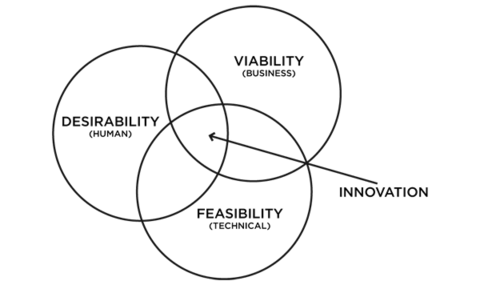
The purpose of both at their core is the same. The Business Model Canvas and the Lean Canvas seek to help entrepreneurs, intrapreneurs and innovators quickly explore the desirability, feasibility and viability of their ideas in a more visual and collaborative way, while also supporting much quicker iterations and revisions to both the value proposition and its path to market.

Where a business plan may take weeks to create, a Business Model Canvas or Lean Canvas can be created in an afternoon.

Where a business plan is often created by one person and revised by others in a serial manner, a Business Model Canvas or Lean Canvas is a group activity, informed by a collection of diverse perspectives and experiences, and challenged, evolved and revised in a real-time, parallel manner.

What excites me most as someone who conducts workshops all around the world and teaches people how to use the Business Model Canvas and other innovation & change tools, is that the Business Model Canvas and Lean Canvas have helped to accelerate a transformation in not only how people are taught, but also how they are permitted to conduct business.

Creating a Business Model Canvas as a Team

The Visual and Collaborative Workplace Transformation

This transformation is a game changer because it represents a growing integration of methods into workshops and meetings that enable facilitators to engage not only auditory learners, but visual, kinesthetic and social learners as well.

This more human approach to prototyping a business helps to add a bit more structure around an idea, in a collaborative way that will more quickly surface gaps and flaws while also testing assumptions, collecting idea fragments into a more holistic value proposition and creating a vision for how to make it real.

But, as we all know, any new business or any potential innovation will create an abundance of required and necessary changes. Unfortunately, whether you are using the Business Model Canvas or the Lean Canvas, the truth and the limitation is that they are but a single tool and can’t help you walk the rest of the path to reality. To create the changes necessary to realize your vision, you will need many more tools.

“When what people do aligns with what they think and feel, then and only then, will you achieve the outcomes you’re looking for.”

The good news is that this more visual and collaborative way of working helps with two of the most important keys to success – buy-in and alignment – and also helps to align mind, body, and spirit to harness the whole brain and its three constructs:

  1. Cognitive (thinking)
  2. Conative (doing)
  3. Affective (feeling)

Outcome-Driven Change Framework by Braden Kelley

Beyond the Business Model Canvas and the Lean Canvas

Visual, collaborative tools like the Business Model Canvas, Lean Canvas, Empathy Map, Value Proposition Canvas, Experience Maps, Service Design, and even Customer Journey Maps have laid the groundwork for a more modern, more powerful way of working that leverages the whole brain of the individual, and all three learning styles of the collective.

And where these tools all represent the beginning of a visual, collaborative endeavor to create change, they are missing the tools to help plan for and execute the changes that are being proposed.

Making the Shift to Human-Centered Change

This is where the Change Planning Toolkit™ powering the Human-Centered Change methodology comes in. It has been designed with the Change Planning Canvas™ at its core to feel familiar to those already using the aforementioned tools and empower teams to take the next steps on their journey to be successful:

  1. Innovation and Intrapreneurship
  2. Startup Creation
  3. Digital Transformation
  4. Design Thinking
  5. New Product Development (NPD)
  6. Service Design
  7. Experience Design
  8. Customer Experience (CX) Improvement Efforts
  9. Projects (make sure you also get the Visual Project Charter™)
  10. Change Initiatives

Charting Change is Number OneSo, if you’re already familiar with the Business Model Canvas, Lean Canvas, Empathy Map, Value Proposition Canvas, Experience Maps, Service Design, or Customer Journey Maps then you should get a copy of my latest book Charting Change and it will show you the thinking behind the Change Planning Toolkit™, how to use it to maintain the momentum of your team and the energy behind your idea, and how to leverage both to push it forward towards reality.

The Change Planning Toolkit™ will help you beat the 70% change failure rate, create more efficient and effective change initiatives (and even projects), and accelerate your pace of successful change in order to keep up with the accelerating pace of change all around us and to be more nimble, agile, and responsive than your competition.

Three Steps to Human-Centered Change Success

There is a simple three step process for people who want to start saving time and get the jump on their competition today by familiarizing themselves with the Human-Centered Change methodology:

  1. 10 free tools available to download now
  2. 26 free tools when you buy the book
  3. 70+ tools when you license the toolkit

I’ve invested more than $1 million into the Change Planning Toolkit™ so you don’t have to, and so you can leverage this investment to gain all of the benefits above while also saving yourself thousands or millions of dollars in consulting fees – every year.

And for a limited time, there are some exciting FREE training opportunities available to a handful of organizations who contact me.


Accelerate your change and transformation success

Subscribe to Human-Centered Change & Innovation WeeklySign up here to get Human-Centered Change & Innovation Weekly delivered to your inbox every week.
FLASH SALE – 50% off the best book for Digital Transformation and Change – 24 hours only!

Charting Change is Number OneExciting news!

The publisher of my second book – Charting Change – is having a 24-hour FLASH SALE and so you can get the hardcover version or the eBook for 50% off the list price.

I stumbled across this and wanted to share with everyone so if you haven’t already gotten a copy of this book to power your digital transformation or your latest project or change initiative to success, now you have no excuse!

Click here to get your copy of Charting Change for 50% off

Of course you can get 10 free tools here from the book, but if you buy the book and contact me I will send you 26 free tools from the 50+ tools in the Change Planning Toolkit™ – including the Change Planning Canvas™!

NOTE: This discount was only available on this specific day several years ago and is no longer available

Subscribe to Human-Centered Change & Innovation WeeklySign up here to get Human-Centered Change & Innovation Weekly delivered to your inbox every week.