
Monthly Archives: August 2022

Why Data-Based Decisions Will Lead You Straight to Hell

Why Data-Based Decisions Will Lead You Straight to Hell

GUEST POST from Robyn Bolton

Many years ago, Clay Christensen visited his firm where I was a partner and told us a story*.

“I imagine the day I die and present myself at the entrance to Heaven,” he said. “The Lord will show me around, and the beauty and majesty will overcome me. Eventually, I will notice that there are no numbers or data in Heaven, and I will ask the Lord why that is.”

“Data lies,” the Lord will respond. “Nothing that lies can be in Heaven. So, if people want data, I tell them to go to Hell.”

We all chuckled at the punchline and at the strength of the language Clay used (if you ever met him, you know that he was an incredibly gentle and soft-spoken man, so using the phrase “go to Hell” was the equivalent of your parents unleashing a five-minute long expletive-laden rant).

“If you want data, go to Hell.”

Clay’s statement seems absolutely blasphemous, especially in a society that views quantitative data as the ultimate source of truth:

  • “In God we trust. All others bring data.” W. Edward Deming, founding Father of Total Quality Management (TQM)
  •  “Above all else, show the data.” – Edward R. Tufte, a pioneer in the field of data visualization
  • “What gets measured gets managed” – Peter Drucker, father of modern management studies

But it’s not entirely wrong.

Quantitative Data’s blessing: A sense of safety

As humans, we crave certainty and safety. This was true millennia ago when we needed to know whether the rustling in the leaves was the wind or a hungry predator preparing to leap and tear us limb from lime. And it’s true today when we must make billion-dollar decisions about buying companies, launching products, and expanding into new geographies.

We rely on data about company valuation and cash flow, market size and growth, and competitor size and strategy to make big decisions, trusting that it is accurate and will continue to be true for the foreseeable future.

Quantitative Data’s curse: The past does not predict the future

As leaders navigating an increasingly VUCA world, we know we must prepare for multiple scenarios, operate with agility, and be willing to pivot when change happens.

Yet we rely on data that describes the past.

We can extrapolate it, build forecasts, and create models, but the data will never tell us with certainty what will happen in the future. It can’t even tell us the Why (drivers, causal mechanisms) behind the What it describes.

The Answer: And not Or

Quantitative data Is useful. It gives us the sense of safety we need to operate in a world of uncertainty and a starting point from which to imagine the future(s).

But, it is not enough to give the clarity or confidence we need to make decisions leading to future growth and lasting competitive advantage.

To make those decisions, we need quantitative data AND qualitative insights.

We need numbers and humans.

Qualitative Insight’s blessing: A view into the future

Humans are the source of data. Our beliefs, motivations, aspirations, and actions are tracked and measured, and turned into numbers that describe what we believed, wanted, and did in the past.

By understanding human beliefs, motivations, and aspirations (and capturing them as qualitative insights), we gain insight into why we believed, wanted, and did those things and, as a result, how those beliefs, motivations, aspirations, and actions could change and be changed. With these insights, we can develop strategies and plans to change or maintain beliefs and motivations and anticipate and prepare for events that could accelerate or hinder our goals. And yes, these insights can be quantified.

Qualitative Insight’s curse: We must be brave

When discussing the merit of pursuing or applying qualitative research, it’s not uncommon for someone to trot out the saying (erroneously attributed to Henry Ford), “If I asked people what they wanted, they would have said a horse that goes twice as fast and eats half as much.”

Pushing against that assertion requires you to be brave. To let go of your desire for certainty and safety, take a risk, and be intellectually brave.

Being brave is hard. Staying safe is easy. It’s rational. It’s what any reasonable person would do. But safe, rational, and reasonable people rarely change the world.

One more story

In 1980, McKinsey predicted that the worldwide market for cell phones would max out at 900,000 subscribers. They based this prediction on solid data, analyzed by some of the most intelligent people in business. The data and resulting recommendations made sense when presented to AT&T, McKinsey’s client.

Five years later, there were 340,213 subscribers, and McKinsey looked pretty smart. In 1990, there were 5.3 million subscribers, almost 6x McKinsey’s prediction.   In 1994, there were 24.1M subscribers in the US alone (27x McKinsey’s global forecast), and AT&T was forced to pay $12.6B to acquire McCaw Cellular.

Should AT&T have told McKinsey to “go to Hell?”  No.

Should AT&T have thanked McKinsey for going to (and through) Hell to get the data, then asked whether they swung by earth to talk to humans and understand their Jobs to be Done around communication? Yes.

Because, as Box founder Aaron Levie reminds us,

“Sizing the market for a disruptor based on an incumbent’s market is like sizing a car industry off how many horses there were in 1910.”

* Except for the last line, these probably (definitely) weren’t his exact words, but they are an accurate representation of what I remember him saying

Image Credit: Pixabay

Subscribe to Human-Centered Change & Innovation WeeklySign up here to get Human-Centered Change & Innovation Weekly delivered to your inbox every week.

Benchmarking Innovation Across Industries

Your Compass for Disruption

Benchmarking Innovation Across Industries

GUEST POST from Chateau G Pato

In our perpetually accelerating world, the concept of innovation has evolved from a differentiator to an absolute imperative. Yet, many organizations find themselves sailing without a compass, unsure if their innovation efforts are truly moving them forward or simply spinning their wheels. How do you measure the efficacy of your innovation engine? How do you ensure your investments yield meaningful returns? And, most critically for the human-centered leader, how do you cultivate an environment where impactful, empathetic innovation consistently blossoms? The answer lies in the strategic, often counter-intuitive, practice of benchmarking innovation across industries.

Benchmarking, when applied to innovation, isn’t about mere imitation. It’s a profound exercise in strategic empathy – understanding the deep-seated mechanisms, cultural enablers, and human-centric design philosophies that drive breakthrough success in seemingly unrelated fields. Imagine innovation as a vast ocean: by observing the tides, currents, and successful voyages in different parts of this ocean, you gain insights far beyond the shores of your own industry. This cross-pollination of knowledge is the wellspring of truly disruptive thinking.

The Irresistible Case for Cross-Industry Innovation Benchmarking

Why cast your gaze beyond your immediate competitors? The reasons are compelling:

  • Shattering Paradigms: Your industry’s “best practices” often represent the collective wisdom of the past, not the blueprint for the future. Looking externally forces a healthy challenge to entrenched assumptions, revealing fresh perspectives on customer pain points and value creation.
  • Early Warning System & Opportunity Radar: Innovation frequently originates at the periphery. By observing how diverse industries respond to macro trends – technological shifts, demographic changes, or evolving consumer values – you gain an early understanding of both threats and untapped opportunities for your own organization.
  • Unearthing Novel Methodologies & Human-Centered Approaches: A financial services firm might discover powerful agile methodologies from a leading software developer, or a public sector agency could adapt customer journey mapping techniques perfected by a world-class hospitality chain. These aren’t just process improvements; they’re often deeply rooted in understanding and serving human needs better.
  • Fostering a Growth Mindset & Innovation Culture: Actively seeking and integrating external insights cultivates an organizational culture of continuous learning, curiosity, and bold experimentation. It signals to your teams that innovation is a shared journey, not a siloed activity.
  • Setting Ambitious, Data-Driven Goals: Understanding what “great” looks like elsewhere provides empirical context for setting truly ambitious yet achievable innovation metrics, from ideation velocity to commercialization success rates and the human impact of new offerings.

The Strategic Imperative: How to Benchmark Effectively

Effective cross-industry innovation benchmarking isn’t a passive observation; it’s a deliberate, strategic endeavor. Here’s a structured approach:

  1. Pinpoint Your Innovation Challenge: Be specific. Is it accelerating product development, enhancing customer experience, fostering internal creativity, or improving innovation ROI? Your focus determines who you’ll benchmark.
  2. Identify Unconventional Leaders: Look beyond direct competitors. Who is consistently lauded for innovation, regardless of their sector? Think companies known for breakthrough user experiences, unique business models, or unparalleled operational agility. Don’t shy away from smaller, nimble players who are disrupting.
  3. Deconstruct Their Innovation Ecosystem: This is where the depth comes in. Don’t just look at their products. Investigate:
    • Culture: How do they foster psychological safety and risk-taking?
    • Processes: What methodologies (e.g., design thinking, lean startup) do they employ?
    • Structure: How are their innovation teams organized and empowered?
    • Metrics: What do they measure to track innovation success?
    • Technology & Tools: What platforms enable their innovation?
    • Customer Centricity: How deeply do they understand and integrate user needs?
  4. Translate & Adapt, Don’t Copy: This is critical. The goal is to extract the underlying principles and human-centered philosophies, then thoughtfully translate them to your unique organizational context, capabilities, and customer base. A direct copy rarely works; thoughtful adaptation almost always adds value.
  5. Implement, Measure & Iterate Relentlessly: Apply the insights. Crucially, establish clear metrics (e.g., speed to market, patent applications, employee innovation engagement, customer satisfaction with new features, revenue from new offerings) to track the impact of your adapted approaches. Be prepared to learn, refine, and evolve.

Case Study 1: Healthcare’s Surgical Precision from Formula 1 Pits

The Great Ormond Street Hospital & McLaren Racing

In a powerful example of radical cross-industry learning, the cardiac surgery team at Great Ormond Street Hospital for Children in London faced a persistent challenge: transferring critically ill children from the operating theatre to intensive care. Errors, though rare, could have devastating consequences. They turned not to other hospitals, but to the fast-paced, high-stakes world of Formula 1 motor racing, specifically the pit crew of McLaren.

The hospital observed how McLaren’s pit crews executed complex, time-sensitive tasks with astonishing precision under immense pressure. They benchmarked their meticulous checklists, clear communication protocols, designated roles, and rigorous post-event debriefs. By adapting these human-centered process disciplines – focusing on pre-planning, standardized handovers, and structured team communication – the hospital significantly reduced errors and improved patient safety during this critical transition phase. It wasn’t about the cars; it was about the flawless execution of a complex, human-driven process.

Case Study 2: Financial Services Reimagining Customer Experience from Entertainment

Capital One & Walt Disney Parks and Resorts

For years, financial services were synonymous with rigidity and impersonal transactions. Capital One, seeking to radically transform its customer experience, didn’t just look at other banks. They looked at organizations renowned for creating magical, seamless human experiences. One key inspiration? Walt Disney Parks and Resorts.

Capital One benchmarked Disney’s approach to “imagineering” the customer journey, from the moment of initial interaction to ongoing engagement. They studied how Disney designs for emotion, manages queues (wait times), onboards new visitors (customers), and resolves issues with an emphasis on delight. This led to Capital One’s development of new branch designs (Capital One Cafés) that are less transactional and more experiential, offering inviting spaces, digital tools, and human support for financial well-being. They also redesigned their digital interfaces and customer service protocols, infusing a sense of warmth and proactive problem-solving, much like Disney’s commitment to creating memorable moments. They benchmarked not financial products, but the art and science of creating genuinely positive human interactions.

Your Call to Action: Broaden Your Horizon, Deepen Your Impact

As the lines between industries continue to blur, and as customer expectations for seamless, intuitive, and valuable experiences escalate, the future belongs to organizations willing to learn from anyone, anywhere. Don’t allow the comfortable confines of your industry’s echo chamber to limit your potential. Be curious. Be courageous. Be human-centered in your quest for knowledge.

By intentionally looking beyond your immediate competitive landscape – by recognizing that the best solutions to your challenges might exist in an entirely different domain – you not only accelerate your innovation velocity but also enrich your organizational culture. It’s time to equip your innovation engine with a compass that points beyond the obvious, towards the uncharted territories of cross-industry brilliance. That’s where true disruption, and lasting human value, will be found.

Extra Extra: Because innovation is all about change, Braden Kelley’s human-centered change methodology and tools are the best way to plan and execute the changes necessary to support your innovation and transformation efforts — all while literally getting everyone all on the same page for change. Find out more about the methodology and tools, including the book Charting Change by following the link. Be sure and download the TEN FREE TOOLS while you’re here.

Image credit: Pexels

Subscribe to Human-Centered Change & Innovation WeeklySign up here to get Human-Centered Change & Innovation Weekly delivered to your inbox every week.
This 9-Box Grid Can Help Grow Your Best Future Talent

This 9-Box Grid Can Help Grow Your Best Future Talent

GUEST POST from Soren Kaplan

Hiring good people is tough. Retaining your best talent can be equally challenging. In today’s disruptive world, competitive advantage relies as much on people as it does technology.

So, how do you objectively know which people are your all-stars, especially in a bigger organization? And not just the best talent today, but the best for the future?

I originally wrote this article for my Inc. Magazine column. My team at Praxie.com created an online 9-Box app and I was stunned at how much interest there was from across industries for this solution.

Keeping & Growing Talent is Today’s Name of the Game

Just as it’s easier and cheaper to retain customers than to acquire new ones, the same goes for employees. Knowing who your current and future all-stars are helps you keep them and gives you the opportunity to help them grow into more strategic roles.

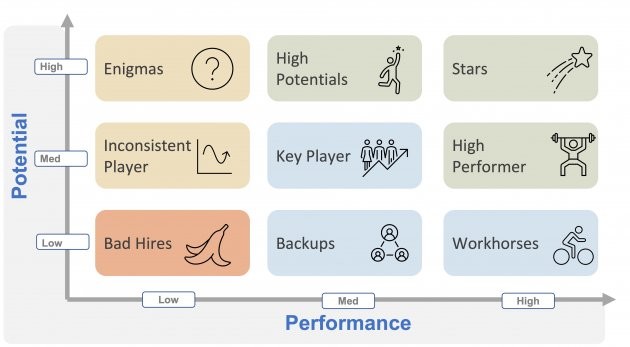
The 9-box talent grid categorizes your people into nine categories. The grid contains two axes, performance and potential, each of which includes three levels each: low, moderate, and high. When you match up the categories on the axes, you get nine boxes that become classifications.

Categorizing people helps reveal who’s contributing the most now, and who will likely contribute the most in the future:

  1. Stars (High Potential, High Performance): Consistently high performance with high potential. Will likely become part of the future leadership team.
  2. High Potentials (High Potential, Moderate Performance): Solid performance overall with high potential to grow. Will most likely advance in current or future roles and may become part of the future leadership team.
  3. Enigmas (High Potential, Low Performance): While high potential, challenges exist in performance that may require additional support or training and development.
  4. High Performer (Moderate Potential, High Performance): Consistently high performance with solid potential to advance in current role and future positions with the right opportunity.
  5. Key Player (Moderate Potential, Moderate Performance): Overall good performance and potential with additional support and opportunities to grow.
  6. Inconsistent Player (Moderate Potential, Low Performance): Low performance and moderate potential require additional support and training to validate growth opportunity.
  7. Workhorses (Low Potential, High Performance): Highly effective performance yet may have peaked in terms of potential so coaching or training may help elevate potential.
  8. Backups (Low Potential, Moderate Performance): Decent performance and an asset but may not become a more significant contributor.
  9. Bad Hires (Low Potential, Low Performance): Low performance coupled with low potential means re-evaluating overall role in organization.

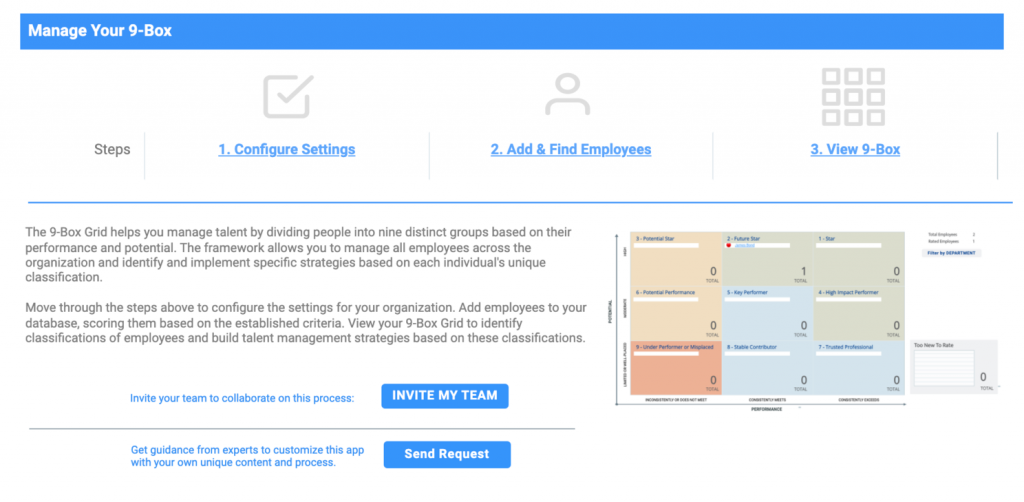
The team at Praxie.com has made the 9-Box application available to try to free.

9 Box Example

Shoot for the Stars

The easiest way is to assign people to the categories is based on your experience working with them. Or, if you’re in a larger organization, collect inputs from managers and aggregate the results.

Here’s how it works: The CEO of an organization works with their HR director to collect inputs from managers within the sales department. Twenty-five sales representatives are mapped into the nine boxes. The results are used to provide additional incentives, identify people for leadership development programs, and promote individual reps to managers for new territories.

The 9-box grid provides a snapshot in time. Use the tool to continually assess and reassess your talent. You’ll see some people move up and to the right while others may stay stagnant. Use these trends to help people grow. It won’t improve just your organizational culture. It will also improve your business.

Image credits: Praxie.com

This article was originally published on Inc.com and has been syndicated for this blog.

Subscribe to Human-Centered Change & Innovation WeeklySign up here to get Human-Centered Change & Innovation Weekly delivered to your inbox every week.
Innovative Solutions for an Aging Population

Innovative Solutions for an Aging Population

GUEST POST from Art Inteligencia

The world is experiencing a significant demographic shift as the population ages. By 2050, it is estimated that there will be over 2 billion people aged 60 and above. This challenge presents not just a concern, but an opportunity for innovation. Developing effective solutions to improve their quality of life requires a multifaceted approach that combines technology, urban design, and community engagement.

Case Study 1: Technology-Enhanced Senior Care

One of the most promising areas of innovation in addressing the needs of an aging population is the use of technology in senior care. A prime example is the startup GrandPad, which developed a tablet specifically tailored for older adults.

GrandPad simplifies communication with family and caregivers through a user-friendly interface, allowing seniors to easily access video calls, photos, and the internet. With features such as automatic updates and a large touch screen, it has proven to bridge the digital divide for older adults.

An important aspect of GrandPad is its safety features, which include emergency assistance and remote monitoring capabilities that alert caregivers if a senior has not used the device for an extended period. Feedback from users indicates that the device has significantly decreased feelings of isolation, with families reporting higher engagement levels with their aging relatives.

A study conducted by the University of California revealed that regular use of GrandPad led to a 30% reduction in reported feelings of loneliness among seniors, demonstrating technology’s powerful role in enhancing emotional well-being.

Case Study 2: Age-Friendly Urban Design

Another innovative approach can be found in urban planning, showcased by the city of Melbourne in Australia. Recognizing that aging populations are often under-served, Melbourne has taken significant steps to create an age-friendly urban environment.

The city has rolled out initiatives to install more benches and rest areas, making it easier for older adults to navigate the city comfortably. Additionally, the accessibility of public transportation has been enhanced through low-floor trams and better training for staff to assist seniors effectively.

Moreover, Melbourne’s project “Living Streets” encourages community involvement in designing public spaces, ensuring specific needs of older citizens are met. These efforts have shown positive outcomes, with a reported 40% increase in senior participation in community events since the program’s implementation.

These measures not only encourage older adults to remain active and engaged in their communities but also foster a sense of belonging, contributing to improved mental health outcomes.

Conclusion

As the global population continues to age, innovative solutions such as technology-enhanced care and age-friendly urban design will be critical in addressing the needs of older adults. By embracing these ideas and implementing data-driven initiatives, we can create a world where everyone, regardless of age, can thrive. As we move forward, it’s essential for stakeholders at all levels—from policymakers to entrepreneurs—to collaborate and champion innovative solutions that enhance the quality of life for our aging population.

Extra Extra: Futurology is not fortune telling. Futurists use a scientific approach to create their deliverables, but a methodology and tools like those in FutureHacking™ can empower anyone to engage in futurology themselves.

Image credit: Pexels

Subscribe to Human-Centered Change & Innovation WeeklySign up here to get Human-Centered Change & Innovation Weekly delivered to your inbox every week.

How Consensus Kills Innovation

How Consensus Kills Innovation

GUEST POST from Greg Satell

“I hate consensus,” legendary Silicon Valley coach Bill Campbell used to growl. The problem, as the authors explain in the book, Trillion Dollar Coach, wasn’t that he didn’t want people to get along, but that an easy consensus often leads to groupthink and inferior decisions. It’s often just easier to fall in line than to engage in vigorous debate.

Research bears this out. In one study where college students were asked to solve a murder mystery, homogenous groups that formed an easy consensus felt more successful, but actually performed worse than more diverse teams that argued and voiced different viewpoints. When everybody agrees, nobody questions.

Make no mistake. If an idea is big enough, some people aren’t going to like it. Some will argue against it passionately and others may even try and actively undermine it. Yet rather than working to silence those voices, we need to learn to bring them to the fore. That’s how we can test our assumptions, consider other alternatives and, ultimately, come up with better ideas.

The Dangers of Consensus

Whenever the Harlem Globetrotters play the Washington Generals, there’s no doubt what the outcome will be, because the point isn’t to have a genuine contest. The games are essentially theatre set up to entertain the audience. All too often, we set up meetings in very much the same way — designed to reach a particular conclusion for the sake of expediency.

Unfortunately, leaders have strong incentives to drive quickly toward a consensus. Listening to dissenting views takes time and energy and we want to get things done quickly and move forward. So, it’s tempting to stock the room with people who are already on board and present the idea as a fait accompli.

Even if a leader isn’t consciously designing meetings for consensus, dissenting views can get squelched. In a famous series of conformity studies done in the 1950s, it was shown that we have a strong tendency to agree with the majority opinion even if it is obviously wrong. Subsequent research has generally confirmed the findings.

The truth is that majorities don’t just rule, they also influence. We can’t count on one or two lone voices having the courage to speak up. That’s why it’s not enough to simply listen to dissenting views, we must actively seek them out.

Uncovering Dissent

The biggest mistake a leader can make is to assume that they have somehow built a culture that is so unique, and that people feel so secure that they will voice their true views. We have to design for debate—it won’t just happen on its own—and there are several techniques that can help us do that.

The first is changing meeting structure. If the most senior person in the meeting voices an opinion, others will tend to fall in line. So, starting with the most junior person and then working up will encourage more debate. Another option is to require everyone to voice an opinion, either through a document or a conversation with a senior leader, before the meeting starts.

Another strategy that is often effective is called a pre-mortem analysis. Similar to a post-mortem analysis in which you try to figure out what went wrong, in a pre-mortem you assume a project has failed in the future and try to guess what killed it. It’s a great way to surface stuff you might have missed.

A third option is to set up a red team. This is an independent group whose sole purpose is to poke holes in a plan or a project. For example, while planning the Osama bin Laden Raid, a red team was set up to look at the same evidence and try to come up with different conclusions. They were able to identify a few key weaknesses in the plan that were then corrected.

Overcoming Opposition

While opening up a healthy discussion around dissenting views helps drive innovation forward, ignoring opposition can lead to its demise. Every significant innovation represents change, which creates winners and losers. There will always be some who will be so vehemently opposed that they will try to undermine an innovation moving forward.

Since my book Cascades was published, I’ve had the opportunity to work with a number of organizations working to drive transformation and have been amazed how reticent many are to identify entrenched opposition and build a strategy to overcome it. Often, they aren’t willing to admit that opposition is relevant or even that it exists at all.

Unlike those who merely have dissenting views, but share objectives and values with the transformation team, entrenched opposition wants to stop change in its tracks. For example, as I have previously noted, it was internal opposition, chiefly from franchisees and shareholders, not a lack of strategy or imagination, that killed Blockbuster Video.

That’s why, much like dissenting views, it’s important to bring opposition to the fore. In Blockbuster’s case, there were various actions that management could have taken to mollify the opposition and address some of the concerns. That wouldn’t have guaranteed success, but it would have made it far more likely.

Innovation Must Be Led

Steve Jobs was, by all accounts, a mediocre engineer. It was his passion and vision that made Apple the most valuable company on the planet. In a similar vein, there were plenty of electric car companies before Tesla, but Elon Musk was the first who showed that the technology can succeed in the marketplace.

Can you imagine what would have happened if Jobs had the iPhone designed by a committee? Or if Musk had put Tesla’s business plan to a vote? It’s hard to see either having had much success. What we would have ended up with is a watered-down version of the initial idea.

Yet all too often, managers seek out consensus because it’s easy and comfortable. It’s much harder to build a culture of trust that can handle vigorous debate, where people are willing to voice their opinions and listen to those of others without it getting personal. That, however, is what innovative cultures do.

Big ideas are never easy. Almost by definition, they are unlikely, fraught with risk and often counterintuitive. They need champions to inspire and empower beliefs around them. That’s why leadership drives innovation and consensus often kills it.

— Article courtesy of the Digital Tonto blog
— Image credit: Pixabay

Subscribe to Human-Centered Change & Innovation WeeklySign up here to get Human-Centered Change & Innovation Weekly delivered to your inbox every week.

Recognizing and Rewarding Employee Contributions

Recognizing and Rewarding Employee Contributions

GUEST POST from Chateau G Pato

Employee recognition plays a crucial role in fostering a positive workplace culture, enhancing morale, and driving engagement. This article explores the importance of recognizing and rewarding employee contributions while showcasing two remarkable case studies that illuminate best practices in action.

The Importance of Recognition

Recognition is not merely a feel-good exercise; it is a strategic component of successful organizations. According to a Gallup study, companies that prioritize employee recognition can increase their profitability by up to 21%. When employees feel valued, they are more likely to be engaged, productive, and loyal.

Case Study 1: Google

Background: Google is known for its innovative workplace culture, which fosters creativity and recognizes employee contributions.

Approach: Google implements a variety of recognition programs, including peer recognition platforms and the famous “kudos” system, which allows employees to publicly acknowledge their peers’ efforts.

Impact: In a study conducted by Google on employee engagement, teams that participated actively in recognition programs reported a 50% increase in collaboration and a 70% increase in employee satisfaction. Employees felt empowered to contribute their ideas, leading to increased innovation.

Case Study 2: Zappos

Background: Zappos has cultivated a strong culture centered around customer service and employee happiness.

Approach: Zappos has a unique recognition program called “Zollars,” where employees earn points for demonstrating the company’s core values. These points can be redeemed for various rewards, including gift cards and experiences.

Impact: A post-implementation survey showed that Zappos employees felt more valued and connected to the company’s mission, with over 80% reporting increased job satisfaction. This program also led to a 20% reduction in turnover rates, showcasing the long-term benefits of effective employee recognition.

Strategies for Effective Recognition

To ensure effective recognition, organizations should focus on personalization, timeliness, and inclusivity. Formal recognition programs should complement informal tactics, allowing employees to be recognized in a manner that resonates most with them.

Furthermore, recognition should be tied to meaningful contributions aligned with the company’s values and goals. Here are some practical strategies:

  • Regular Feedback: Encourage managers to provide frequent feedback and acknowledgment of contributions. Tools like Lattice or 15Five can facilitate this process.
  • Peer Recognition: Create a system where employees can recognize each other’s work and achievements through platforms like Bonusly.
  • Celebrate Milestones: Recognize both professional and personal milestones to show employees they are valued as whole individuals.

Pitfalls to Avoid

While recognition is beneficial, common pitfalls include inconsistency, lack of clarity on contribution criteria, and overlooking remote employees. To mitigate these issues, organizations should strive for transparency and inclusiveness in their recognition practices.

Conclusion

Recognizing and rewarding employee contributions is essential for cultivating an engaged and motivated workforce. By examining organizations like Google and Zappos, we can see that tailored recognition programs not only enhance job satisfaction but also drive performance and loyalty. As leaders, it is our responsibility to create a culture that values every contribution, fostering an environment where innovation and excellence can thrive.

Extra Extra: Because innovation is all about change, Braden Kelley’s human-centered change methodology and tools are the best way to plan and execute the changes necessary to support your innovation and transformation efforts — all while literally getting everyone all on the same page for change. Find out more about the methodology and tools, including the book Charting Change by following the link. Be sure and download the TEN FREE TOOLS while you’re here.

Image credit: Pexels

Guest AI: Grok

Subscribe to Human-Centered Change & Innovation WeeklySign up here to get Human-Centered Change & Innovation Weekly delivered to your inbox every week.

Land Mines of Intrapreneurship

Land Mines of Intrapreneurship

GUEST POST from Arlen Meyers, M.D.

Entrepreneurship is the pursuit of opportunity under VUCA (volatile, uncertain, complex and ambiguous) conditions with the goal of creating user/stakeholder defined value through the deployment of innovation using a VAST business model.

Intrapreneurs are employees trying to act like entrepreneurs within their organizations or non-profits. Here is the textbook of physician intrapreneurship.

Here is how to get your ideas noticed:

If you are trying to develop and deploy an AI solution in your sickcare organization, have you answered these questions?

Here are some reasons why your initiative will fail.

Do you have a VAST edupreneur business model?

Studies show that around 60 to 80% of new products fail. The same is probably true for programs and new educational offerings. It is difficult to determine the exact number of unreported cases, because who would like to talk about his innovation flops? The odds are against you.

So, what are the landmines to detect and avoid?

  1. You did not do your homework because you where unwilling, unable to do so ,or ,you do not have an entrepreneurial mindset and think because you already have 2 people who said they were interested that you could forge ahead.
  2. You did not have an exit strategy.
  3. You did not read the field manual.
  4. You don’t have the right sponsor with staying power.
  5. You tried to bite off more than your stakeholders are willing or able to chew.
  6. You are a bad rebel and chalk it up to “being authentic.”
  7. You do not have the right clinical champions on board.
  8. You have empty seats on the bus or the wrong people sitting in them.
  9. You are making these rookie intrapreneur mindset mistakes.
  10. You are not addressing the dysfunction of teams.
  11. You are not aligned with your organization’s strategy or vision.
  12. You are working in the wrong place with a toxic or fixed culture or for the wrong person.
  13. You don’t have an innovation strategy
  14. You don’t get sales and marketing
  15. You didn’t ask and answer these four questions before you started
  16.  If you’ve got a major change on the horizon, here’s how to avoid three of the most common saboteurs of company transformation. First, understand that significant change will be harder than you think it will be to achieve. Next, be realistic about your organization’s capacity to implement changes. Finally, make sure your organization understands how and why the transformation is important to you.
  17. You have not learned how to win at Survivor  1) Don’t expect friendship. Invest in relationships outside your company to meet your emotional needs; 2) Manage sideways. Your reputation with your peers becomes an important factor as you’re being considered for senior ranks; and 3) Hone your political skills.

If you get too far ahead of your troops, it is hard to tell the difference between you and the enemy. De-risk yourself. Be careful out there.

Image credit: Pixabay

Subscribe to Human-Centered Change & Innovation WeeklySign up here to get Human-Centered Change & Innovation Weekly delivered to your inbox every week.

Consumer Behavior and Eco-Friendly Products

Consumer Behavior and Eco-Friendly Products

GUEST POST from Art Inteligencia

In an era of increasing environmental awareness, consumers are making increasingly informed choices influenced by sustainability. This article delves into the transforming behaviors surrounding eco-friendly products and outlines how businesses can capitalize on these shifts.

The Rise of Eco-Conscious Consumers

According to Nielsen’s report (2015), 66% of consumers are willing to pay more for sustainable brands, highlighting a significant shift towards eco-conscious purchasing. Factors influencing this trend include increased environmental education via social media and the impact of climate change.

Case Study 1: Unilever’s Sustainable Living Plan

Background

Unilever, a multinational consumer goods giant, initiated its Sustainable Living Plan in 2010 for a dual purpose: to reduce environmental impact while enhancing societal contribution.

Transformation

With this strategy, Unilever introduced numerous eco-friendly product lines, such as biodegradable cleaning agents and sustainably sourced personal care items. A year-on-year sales increase of 50% in sustainable brands showcases the potent market potential for responsibly sourced products.

Conclusion

Unilever’s integration of sustainability into its overarching strategy demonstrates how corporations can profit while promoting environmental stewardship, serving as a model for others in the industry.

Case Study 2: Tesla’s Electric Cars

Background

Tesla Motors has disrupted the traditional automotive industry by presenting electric vehicles (EVs) as a viable and desirable alternative to gas-powered vehicles.

Transformation

By aligning its brand with sustainability, Tesla has nurtured a strong, loyal consumer base that prioritizes environmental responsibility, leading to record-breaking sales figures and compelling other auto manufacturers to integrate more sustainable practices.

Conclusion

Tesla’s proactive approach to eco-friendliness not only fuels its consumer base but also reshapes industry standards, encouraging competitors to innovate in sustainability.

Conclusion

Engaging with consumer behavior concerning eco-friendly products is paramount for businesses in the contemporary marketplace. Companies that position themselves alongside consumer values related to sustainability can drive growth while contributing to a healthier planet. Ultimately, alignment with eco-consciousness can mean a notable competitive advantage.

Sources: Nielsen Global Sustainability Report (2015), Unilever Sustainable Living Report.

Extra Extra: Futurology is not fortune telling. Futurists use a scientific approach to create their deliverables, but a methodology and tools like those in FutureHacking™ can empower anyone to engage in futurology themselves.

Extra Extra: Futurology is not fortune telling. Futurists use a scientific approach to create their deliverables, but a methodology and tools like those in FutureHacking™ can empower anyone to engage in futurology themselves.

Image credit: Pixabay

Subscribe to Human-Centered Change & Innovation WeeklySign up here to get Human-Centered Change & Innovation Weekly delivered to your inbox every week.

The Importance of Diversity in Innovation Teams

The Importance of Diversity in Innovation Teams

GUEST POST from Chateau G Pato

In a world defined by rapid change and complexity, innovation is the engine of progress. But what powers innovation? The answer lies in diversity—the rich tapestry of perspectives, experiences, and ideas that diverse teams bring to the table. Diversity in innovation teams is not a luxury; it’s a necessity for creating solutions that resonate with a global audience. Diverse teams challenge assumptions, uncover blind spots, and spark breakthroughs that homogenous groups often overlook. In this article, we’ll explore why diversity is critical to innovation, examine two powerful case studies, and offer practical steps for building inclusive teams that drive human-centered change.

Why Diversity Fuels Innovation

Diversity in innovation teams encompasses more than demographics like race, gender, or age. It includes cognitive diversity—different ways of thinking and problem-solving—as well as socioeconomic, geographic, and professional diversity. This multifaceted approach ensures that teams approach challenges from multiple angles, leading to more creative and effective solutions. A 2015 McKinsey study found that companies in the top quartile for racial and ethnic diversity were 15% more likely to achieve above-average financial returns, while those with gender diversity were 25% more likely to outperform their peers.

But the benefits go beyond numbers. Diverse teams foster psychological safety, where team members feel empowered to share bold ideas without fear of judgment. This environment is critical for human-centered innovation, which relies on empathy to address the needs of diverse audiences. However, diversity alone isn’t enough—organizations must cultivate inclusion to ensure every voice is heard and valued. Without inclusion, diversity can lead to conflict or disengagement, undermining innovation efforts.

Case Study 1: IBM’s Design Thinking Transformation

In the early 2010s, IBM faced a challenge: how to stay competitive in a fast-evolving tech landscape. The company turned to design thinking, a human-centered approach to innovation, and prioritized diversity in its teams. IBM assembled cross-functional groups that included engineers, designers, data scientists, and marketers from diverse cultural, racial, and professional backgrounds. These teams were trained to empathize with users, define problems collaboratively, and prototype solutions iteratively.

The impact was profound. Diverse teams helped shape IBM’s Watson AI platform, ensuring its applications—particularly in healthcare—addressed the needs of varied patient populations. For example, insights from team members with international healthcare experience led to features that supported multilingual patient interactions, improving accessibility. By 2018, IBM reported a 300% increase in ROI for design-driven projects, with diverse teams credited for identifying user needs that might have been missed by less varied groups.

“Our diverse teams brought perspectives that challenged our assumptions and made Watson a truly global solution,” said Phil Gilbert, former President of IBM Design. “Inclusion was the key to unlocking their potential.”

[Image: A diverse IBM team collaborates in a design thinking workshop, using sticky notes and whiteboards to map user journeys. Alt text: A group of professionals from varied backgrounds brainstorming around a whiteboard filled with colorful sticky notes.]

Case Study 2: Procter & Gamble’s Connect + Develop Program

Procter & Gamble (P&G) revolutionized its innovation strategy with its Connect + Develop program, launched in the early 2000s. The initiative sought external partnerships to co-create products, and diversity was at its core. P&G formed teams that blended internal employees with external experts from startups, academia, and global communities, representing diverse industries, cultures, and socioeconomic backgrounds. This approach disrupted P&G’s traditional thinking and led to groundbreaking innovations.

The Swiffer product line is a prime example. A diverse team of chemists, marketers, and external designers from varied cultural contexts collaborated to address unmet consumer needs for convenient cleaning. Insights from team members with experience in emerging markets ensured the Swiffer was affordable and practical for a wide range of households. The result? Swiffer became a $1 billion brand within a few years, contributing to P&G’s reported 50% innovation success rate through Connect + Develop.

“Diversity gave us a window into consumer needs we hadn’t seen before,” said Laura Becker, a former P&G innovation leader. “Our global team members brought ideas that transformed our approach.”

[Image: A Swiffer product prototype being tested by a diverse focus group in a real-world setting. Alt text: A group of people from different backgrounds testing a Swiffer mop in a home environment.]

Overcoming Challenges in Diverse Teams

While diversity drives innovation, it can also present challenges. Differing perspectives may lead to conflict, and unconscious bias can hinder inclusion. To address these issues, organizations must invest in training to mitigate bias, establish clear communication norms, and promote active listening. Leaders should also set shared goals to align diverse teams around a common purpose, ensuring that differences become a source of strength rather than division.

Building Diverse Innovation Teams: Practical Steps

Creating diverse, inclusive innovation teams requires intentional action. Here are five practical steps to get started:

  • Recruit with Purpose: Actively seek talent from underrepresented groups and diverse disciplines to build a robust talent pipeline.
  • Foster Psychological Safety: Create a culture where team members feel safe to share ideas and take risks, using tools like anonymous feedback systems.
  • Use Human-Centered Frameworks: Adopt design thinking or similar approaches to focus on empathy and user needs, leveraging diversity to understand varied audiences.
  • Train for Inclusion: Provide regular training on unconscious bias and inclusive leadership to ensure all voices are valued.
  • Measure and Celebrate Success: Track diversity metrics and celebrate innovations driven by diverse teams to reinforce their value.

By implementing these steps, organizations can harness the full potential of diversity to drive innovation that resonates with a global market.

Conclusion: A Call to Action

Diversity is the cornerstone of innovation in a connected world. The case studies of IBM and P&G demonstrate that diverse teams deliver measurable results—higher ROI, breakthrough products, and solutions that serve diverse audiences. But building such teams requires commitment. As leaders, we must challenge ourselves to recruit inclusively, foster psychological safety, and leverage human-centered tools to unlock creativity. The future of innovation depends on our ability to embrace the full spectrum of human potential. Start today—audit your teams, identify gaps in diversity, and take action to build a more inclusive innovation culture.

Extra Extra: Because innovation is all about change, Braden Kelley’s human-centered change methodology and tools are the best way to plan and execute the changes necessary to support your innovation and transformation efforts — all while literally getting everyone all on the same page for change. Find out more about the methodology and tools, including the book Charting Change by following the link. Be sure and download the TEN FREE TOOLS while you’re here.

Image credit: Pexels

Guest AI: Grok

Subscribe to Human-Centered Change & Innovation WeeklySign up here to get Human-Centered Change & Innovation Weekly delivered to your inbox every week.

Now is the Time to Design Cost Out of Our Products

Now is the Time to Design Cost Out of Our Products

GUEST POST from Mike Shipulski

With inflation on the rise and sales on the decline, the time to reduce costs is now.

But before you can design out the cost you’ve got to know where it is. And the best way to do that is to create a Pareto chart that defines product cost for each subassembly, with the highest cost subassemblies on the left and the lowest cost on the right. Here’s a pro tip – Ignore the subassemblies on the right.

Use your costed Bill of Materials (BOMs) to create the Paretos. You’ll be told that the BOMs are wrong (and they are), but they are right enough to learn where the cost is.

For each of the highest-cost subassemblies, create a lower-level Pareto chat that sorts the cost of each piece-part from highest to lowest. The pro tip applies here, too – Ignore the parts on the right.

Because the design community designed in the cost, they are the ones who must design it out. And to help them prioritize the work, they should be the ones who create the Pareto charts from the BOMs. They won’t like this idea, but tell them they are the only ones who can secure the company’s future profits and buy them lots of pizza.

And when someone demands you reduce labor costs, don’t fall for it. Labor cost is about 5% of the product cost, so reducing it by half doesn’t get you much. Instead, make a Pareto chart of part count by subassembly. Focus the design effort on reducing the part count of subassemblies on the left. Pro tip – Ignore the subassemblies on the right. The labor time to assemble parts that you design out is zero, so when demand returns, you’ll be able to pump out more products without growing the footprint of the factory. But, more importantly, the cost of the parts you design out is also zero. Designing out the parts is the best way to reduce product costs.

Pro tip – Set a cost reduction goal of 35%. And when they complain, increase it to 40%.

In parallel to the design work to reduce part count and costs, design the test fixtures and test protocols you’ll use to make sure the new, lower-cost design outperforms the existing design. Certainly, with fewer parts, the new one will be more reliable. Pro tip – As soon as you can, test the existing design using the new protocols because the only way to know if the new one is better is to measure it against the test results of the old one.

And here’s the last pro tip – Start now.

Image credit — aisletwentytwo

Subscribe to Human-Centered Change & Innovation WeeklySign up here to get Human-Centered Change & Innovation Weekly delivered to your inbox every week.