
Monthly Archives: August 2022

Strategy for a Post-Digital World

Strategy for a Post-Digital World

GUEST POST from Greg Satell

For decades, the dominant view of strategy was based on Michael Porter’s ideas about competitive advantage. In essence, he argued that the key to long-term success was to dominate the value chain by maximizing bargaining power among suppliers, customers, new market entrants and substitute goods.

Yet digital technology blew apart old assumptions. As technology cycles began to outpace planning cycles, traditional firms were often outfoxed by smaller competitors that were faster and more agile. Risk averse corporate cultures needed to learn how to “fail fast” or simply couldn’t compete.

Today, as the digital revolution is coming to an end, we will need to rethink strategy once again. Increasingly, we can no longer just move fast and break things, but will have to learn how to prepare, rather than just adapt, build deep collaborations and drive skills-based transformations. Make no mistake, those who fail to make the shift will struggle to survive.

Learning to Prepare Rather Than Racing to Adapt

The digital age was driven, in large part, by Moore’s law. Every 18 months or so, a new generation of chips would come out of fabs that was twice as powerful as what came before. Firms would race to leverage these new capabilities and transform them into actual products and services.

That’s what made agility and adaptation key competitive attributes over the past few decades. When the world changes every 18 months, you need to move quickly to leverage new possibilities. Today, however, Moore’s Law is ending and we’ll have to shift to new architectures, such as quantum, neuromorphic and, possibly, biological computers.

Yet the shift to this new era of heterogeneous computing will not be seamless. Instead of one fairly simple technology based on transistors, we will have multiple architectures that involve very different logical principles. These will need new programming languages and will be applied to solve very different problems than digital computers have been.

Another shift will be from bits to atoms, as fields such as synthetic biology and materials science advance exponentially. As our technology becomes infinitely more powerful, there are also increasingly serious ethical concerns. We will have to come to some consensus on issues like what accountability a machine should have and to what extent we should alter the nature of life.

If there is one thing that the Covid-19 crisis has shown is that if you don’t prepare, no amount of agility will save you.

Treating Collaboration as a New Competitive Advantage

In 1980, IBM was at an impasse. Having already missed the market for minicomputers, a new market for personal computers was emerging. So, the company’s leadership authorized a team to set up a skunk works in Boca Raton, FL. A year later, the company would bring the PC to market and change computer history.

So, it’s notable that IBM is taking a very different approach to quantum computing. Rather than working in secret, it has set up its Q Network of government agencies, academic labs, customers and start-ups to develop the technology. The reason? Quantum computing is far too complex for any one enterprise to pursue on its own.

“When we were developing the PC, the challenge was to build a different kind of computer based on the same technology that had been around for decades,” Bob Sutor, who heads up IBM’s Quantum effort, told me. “In the case of quantum computing, the technology is completely different and most of it was, until fairly recently, theoretical,” he continued. “Only a small number of people understand how to build it. That requires a more collaborative innovation model to drive it forward.”

It’s not just IBM either. We’re seeing similar platforms for collaboration at places like the Manufacturing Institutes, JCESR and the Critical Materials Institute. Large corporations, rather trying to crush startups, are creating venture funds to invest in them. The truth is that the problems we need to solve in the post-digital age are far too complex to go it alone. That’s why today, it’s not enough to have a market strategy, you need to have an ecosystem strategy.

Again, the Covid-19 crisis is instructive, with unprecedented collaborative efforts driving breakthroughs.

Drive Skills-Based Transformations

In the digital era, incumbent organizations needed to learn new skills. Organizations that mastered these skills, such as lean manufacturing, design thinking, user centered design and agile development, enjoyed a significant competitive advantage. Unfortunately, many firms still struggle to deploy critical skills at scale.

As digital technology enters an accelerated implementational phase, the need to deploy these skills at scale will only increase. You can’t expect to leverage technology without empowering your people to use it effectively. That’s why skills-based transformations have become every bit as important as strategic or technology-driven transformations.

As we enter the new post-digital era the need for skills-based transformations will only increase. Digital skills, such as basic coding and design, are relatively simple. A reasonably bright high school student can become proficient in a few months. As noted above, however, the skills needed for this new era will be far more varied and complex.

To be clear, I am not suggesting that everybody will need to have deep knowledge about things like quantum mechanics, neurology or genomics a decade from now any more than everybody needs to write code today. However, we will increasingly have to collaborate with experts in those fields and have some sort of basic understanding.

Making the Shift from Disrupting Markets to Pursuing Grand Challenges

The digital economy was largely built on disruption. As computer chips became exponentially faster and cheaper, innovative firms could develop products and services that could displace incumbent industries. Consider that a basic smartphone today can replace a bundle of technologies, such as video recorders, GPS navigators and digital music players, that would have cost hundreds of thousands of dollars when they were first introduced.

This displacement process has been highly disruptive, but there are serious questions about whether it’s been productive. In fact, for all the hype around digital technology “changing the world,“ productivity has been mostly depressed since the 1970s. In some ways, such as mental health and income inequality, we are considerably worse off than 40 or 50 years ago.

Yet the post-digital era offers us a much greater opportunity to pursue grand challenges. Over the next few decades, we’ll be able to deploy far more powerful technologies to solve problems like cancer, aging and climate change. It is, in the final analysis, these physical world applications that can not only change our lives for the better, but open up massive new markets.

The truth is that the future tends to surprise us and nobody can say for sure what the next few decades will look like. Strategy, therefore, can’t depend on prediction. However, what we can do is prepare for this new era by widening and deepening connections throughout relevant ecosystems, acquiring new skills and focusing on solving meaningful problems.

In the face of uncertainty, the best way to survive is to make yourself useful.

— Article courtesy of the Digital Tonto blog
— Image credit: Pixabay

Subscribe to Human-Centered Change & Innovation WeeklySign up here to get Human-Centered Change & Innovation Weekly delivered to your inbox every week.

Regulations and Policies Promoting Sustainability

Regulations and Policies Promoting Sustainability

GUEST POST from Art Inteligencia

The drumbeat of sustainability has grown from a faint whisper to a resounding roar. Once relegated to the fringes of corporate social responsibility, sustainability is now a core strategic imperative for businesses, a critical concern for citizens, and an undeniable challenge for governments. But how do we truly accelerate this vital transition? The answer, surprisingly to some, lies not just in market forces or individual action, but significantly in the **intelligent application of regulations and policies.**

For too long, the narrative has often pitted regulation against innovation, suggesting that rules inherently stifle progress. As a practitioner of human-centered change and innovation, I argue precisely the opposite: thoughtfully designed regulations and policies are powerful catalysts for innovation, driving businesses to find more efficient, less impactful, and ultimately more profitable ways of operating. They create a level playing field, reward pioneering efforts, and fundamentally shift the calculus of what’s possible and profitable.

Beyond Compliance: The Dual Engine of “Push” and “Pull”

Effective regulations and policies operate on a sophisticated “push” and “pull” dynamic. **”Push” mechanisms** establish essential baselines, prohibit demonstrably harmful practices, and set minimum performance standards. Consider stringent emissions limits for industrial facilities, bans on certain toxic chemicals, or mandates for responsible waste disposal. These “push” measures compel businesses to directly confront and reduce their negative environmental footprint, often necessitating immediate operational adjustments.

However, the true transformative power often emerges from **”pull” mechanisms.** These incentives, subsidies, and market signals actively draw businesses towards desired sustainable behaviors, reward pioneering efforts, and cultivate vibrant markets for green products and services. Examples include generous tax credits for renewable energy installations, agricultural subsidies tied to sustainable farming practices, or government procurement policies that prioritize eco-certified goods. These “pull” forces don’t just mitigate harm; they proactively shape industries and economies towards a greener, more resilient future.

Case Study 1: The European Union’s Groundbreaking Circular Economy Action Plan

One of the most ambitious and comprehensive examples of policy driving systemic sustainability is the European Union’s **Circular Economy Action Plan**. Recognizing that our current linear “take-make-dispose” economic model is fundamentally unsustainable, the EU has embarked on a profound, systemic shift towards a circular economy. This visionary framework aims to minimize waste, keep resources in use for as long as possible, and design products for maximum durability, reuse, and recycling.

This isn’t a singular regulation but a holistic, interconnected suite of policies, including:

  • Extended Producer Responsibility (EPR) Schemes: Mandating that producers bear responsibility for their products throughout their lifecycle, including collection and recycling. This “push” incentivizes designing products that are easier to recycle or reuse, fostering innovation in materials and reverse logistics.
  • Product Design Requirements (Ecodesign): New and expanded rules ensure products are inherently more durable, repairable, and recyclable. These ecodesign mandates now cover a broader range of products beyond energy-related goods, extending to textiles, furniture, and electronics. This directly challenges manufacturers to innovate in materials science, modular design, and even business models, promoting “product-as-a-service” offerings.
  • Ambitious Waste Management Targets: Stringent targets for recycling and waste reduction are set for member states, driving significant investment in advanced sorting, recycling technologies, and the infrastructure necessary for a circular economy.
  • Green Public Procurement (GPP): Public authorities are increasingly mandated or encouraged to leverage their substantial purchasing power to buy sustainable products and services. This creates a powerful “pull” market, signaling strong demand for circular solutions and accelerating their mainstream adoption.
  • Forthcoming Digital Product Passports: These passports will provide comprehensive, transparent information about a product’s origin, durability, repairability, and end-of-life options. This transparency empowers both consumers and businesses to make informed choices, simplifies repair processes, and streamlines material recovery, further pushing industries towards deeper circularity.

The tangible impact is evident: companies across Europe are fundamentally rethinking their entire value chains. This policy framework has spurred a remarkable surge in repair services, remanufacturing initiatives, and sophisticated material recovery solutions, demonstrating how policy can catalyze profound industrial transformation.

Case Study 2: Singapore’s Carbon Tax and Green Finance Initiatives

While many nations grapple with carbon pricing, Singapore offers a compelling case study of a nation implementing a **carbon tax** as a core policy tool to drive sustainability and innovation. Unlike cap-and-trade systems, a carbon tax provides a direct and predictable price signal, incentivizing businesses to reduce emissions. Singapore’s carbon tax, initially S$5 per tonne of greenhouse gas (GHG) emissions, is set to increase to S$25 per tonne in 2024-2025 and S$45 per tonne in 2026-2027, with a long-term goal of S$50-80 per tonne by 2030. This rising price signal creates a powerful “push” for companies to invest in energy efficiency, adopt cleaner technologies, and explore renewable energy sources.

Complementing this “push,” Singapore has also aggressively pursued **Green Finance initiatives** (a “pull” mechanism) to support this transition. The Monetary Authority of Singapore (MAS) has launched various schemes, including:

  • Green Bond Grant Scheme: Encouraging the issuance of green bonds by companies to finance environmentally friendly projects.
  • Sustainable Bond Grant Scheme: Supporting the issuance of sustainability-linked bonds and other sustainable debt instruments.
  • Green and Sustainability-Linked Loan Grant Scheme: Providing grants for companies to obtain green and sustainability-linked loans, incentivizing financing for green projects and sustainable business practices.

The combination of a predictable carbon price and robust green finance mechanisms has spurred significant innovation in Singapore. Industries are actively seeking ways to decarbonize operations, from adopting industrial heat pumps and optimizing energy consumption to exploring carbon capture technologies. The financial sector is innovating new products and services to support green investments, creating a virtuous cycle where policy drives investment, and investment drives further sustainable innovation. This dual approach illustrates how a clear economic signal, coupled with supportive financial mechanisms, can effectively accelerate a nation’s sustainability agenda.

The Human Element: Orchestrating Mindset Shifts and Collaborative Action

Beyond the direct economic and technological shifts, effective regulations and policies play a crucial, often underestimated, role in shaping human behavior and fostering a pervasive culture of sustainability. When the “rules of the game” are redefined, individuals and organizations are compelled to adapt. While this adaptation can initially present challenges, it invariably ignites creativity and problem-solving, pushing boundaries that might otherwise remain untouched.

For policies to be truly impactful and foster continuous innovation, they must be meticulously crafted:

  • Clarity and Consistency: Businesses require certainty to commit to long-term strategic investments. Ambiguous or frequently shifting regulations breed hesitancy and undermine confidence.
  • Performance-Based, Not Prescriptive: Rather than dictating *how* a company must achieve sustainability (e.g., “you must use X technology”), policies should focus on *what* needs to be achieved (e.g., “reduce emissions by Y%”). This allows for diverse, innovative solutions tailored to specific contexts.
  • Collaborative Design and Iteration: Engaging a broad spectrum of stakeholders – industry leaders, academic experts, civil society organizations, and even citizens – in the policy-making process ensures that regulations are practical, effective, and perceived as fair. This collaborative approach also allows for continuous improvement and adaptation.
  • Supportive of Early Adopters and R&D: Policies should actively include mechanisms that reward pioneering efforts, provide incentives for research and development in sustainable technologies, and help de-risk crucial, but sometimes uncertain, sustainable investments.

The Intelligent Path Forward

The journey towards a truly sustainable future is not a passive current to be drifted upon. It demands intentional design, courageous leadership, and a collective willingness to embrace profound change. Regulations and policies, far from being shackles on the hands of progress, are in fact the essential guiding rails and powerful accelerators that can help us navigate the complex, intertwined terrain of environmental responsibility and economic prosperity.

By integrating a deep understanding of the human-centered aspects of change – how policies influence individual and organizational decision-making, encourage cross-sector collaboration, and unlock latent creativity – we can craft regulatory frameworks that not only mitigate environmental harm but actively promote a vibrant, innovative, and truly sustainable global economy. It’s time to champion policies that make sustainability not just an ethical imperative, but the intelligent, economically viable, and ultimately inevitable path forward.

Extra Extra: Futurology is not fortune telling. Futurists use a scientific approach to create their deliverables, but a methodology and tools like those in FutureHacking™ can empower anyone to engage in futurology themselves.

Image credit: Pixabay

Subscribe to Human-Centered Change & Innovation WeeklySign up here to get Human-Centered Change & Innovation Weekly delivered to your inbox every week.

Designing for the User Journey

The Masterclass

Designing for the User Journey

GUEST POST from Art Inteligencia

In a world obsessed with product features and service bells and whistles, many organizations miss the forest for the trees. They chase the next big innovation, pouring resources into standalone functionalities, yet wonder why their customers still drift away. The answer, often staring them in the face, is a fundamental disconnect with the user journey.

As a human-centered change and innovation thought leader, I’ve witnessed this pattern repeatedly: brilliant individual touchpoints failing to create a cohesive, compelling experience. A dazzling app launch, but a labyrinthine signup process. A responsive customer service team, but no proactive follow-up. This fragmented approach isn’t just inefficient; it’s a silent killer of loyalty and growth, leaving users feeling like cogs in a machine, not valued partners.

The user journey is not a simple linear path; it’s a complex, emotional landscape encompassing every single interaction a person has with your brand – from the very first fleeting thought of your offering to becoming a passionate advocate. To truly thrive in today’s fiercely competitive landscape, you must consciously, meticulously, and continuously design for this entire journey, transforming every touchpoint into a deliberate step towards a deeper, more meaningful relationship.

Why the User Journey is Your Ultimate Competitive Advantage

In an age of endless choice and instant gratification, a truly optimized user journey transcends mere differentiation; it becomes your most potent competitive weapon. It allows you to:

  • Forge Deep Empathy: By walking in your users’ shoes, you uncover their unspoken needs, latent desires, and hidden frustrations, enabling you to build solutions they genuinely crave.
  • Unleash Latent Value: Pinpoint and eliminate friction points that bleed revenue and customer satisfaction. Every moment of frustration is an opportunity for breakthrough innovation.
  • Amplify Resource Impact: Stop wasting effort on isolated features or campaigns. Direct your resources to the moments that truly shape user perception and drive business outcomes.
  • Cultivate Unbreakable Loyalty: Move beyond transactional relationships to emotional connections. A thoughtfully designed journey fosters trust, transforms users into repeat customers, and inspires fervent advocacy.
  • Ignite Continuous Innovation: The journey itself becomes a blueprint for future growth. By understanding the evolving needs across the entire lifecycle, you unlock new opportunities for strategic innovation and market leadership.

Mapping the Journey: Illuminating the Path to Growth

You cannot design what you do not understand. User journey mapping is not a theoretical exercise; it is a critical, data-driven investigation. It requires you to set aside assumptions and truly immerse yourself in the user’s world, capturing their motivations, actions, emotions, and interactions at every turn. This isn’t a one-and-done activity; it’s a living strategic asset.

Key elements that must inform your journey maps:

  • Refined User Personas: Go beyond demographics. What are their core goals? What influences their decisions? What keeps them up at night?
  • Distinct Stages: Segment the journey into clear phases (e.g., Discovery, Evaluation, Engagement, Retention, Advocacy) to provide structure.
  • Detailed Actions & Touchpoints: What exactly is the user doing, and where are they interacting with your brand (digital, physical, human)?
  • Emotional Landscape: Crucially, what are they feeling at each stage? Where are their moments of delight, confusion, or despair? Leverage qualitative data here.
  • Identified Pain Points & Opportunities: Systematically document obstacles and brainstorm potential solutions or new value propositions.
  • Key Metrics: How will you measure success at each stage? What are the conversion rates, satisfaction scores, or time-on-task metrics?

Case Study 1: Re-imagining Onboarding for a B2B SaaS Powerhouse

A leading B2B SaaS company faced a perplexing challenge: high acquisition numbers but alarming churn within the first 90 days. Their robust product was a sales success, yet new users weren’t sticking around. Initial analyses pointed to product complexity, but a deeper dive into the user journey revealed a critical flaw in their post-sale experience.

The Before: A Fragmented Hand-off

New customers were celebrated during sales, then dropped into a complex product dashboard with minimal, generic guidance. They’d receive a standard welcome email, then left to fend for themselves, leading to a flood of reactive support requests and, ultimately, disengagement. The journey felt less like an onboarding and more like an abandonment.

The After: A Proactive, Personalized Immersion

Through comprehensive journey mapping, including extensive user interviews and support ticket analysis, key insights emerged: new users felt overwhelmed, lacked clear starting points, and experienced a stark disconnect between sales promises and initial product experience.

The company redesigned the onboarding journey to be multi-channel and deeply personalized:

  1. Pre-emptive Welcome Kit: A physical kit arrived before their first login, containing a quick-start guide, branded materials, and a personal note from their dedicated Customer Success Manager (CSM), setting a tone of partnership.
  2. Tailored In-App Guided Tours: Post-login, an interactive tour highlighted features relevant to their specific use case (pre-identified during sales), ensuring immediate value realization.
  3. Proactive CSM Engagements: Scheduled, personalized calls from the CSM within days and weeks, offering bespoke advice and addressing nascent challenges.
  4. Contextual Micro-Learning: Embedded tooltips, short video tutorials, and AI-driven help within the application provided just-in-time support.
  5. Curated Content Drips: A strategic email sequence delivered bite-sized tips, success stories, and advanced use cases, subtly guiding their proficiency.

Impact: Within six months, new customer churn plummeted by 25%, and average daily active usage soared by 40%. The journey design transformed a liability into a powerful engine for customer retention and advocacy.

Case Study 2: Reigniting Connection at a Boutique Retail Store

A beloved local boutique, renowned for its curated fashion collections, observed a troubling trend: diminishing repeat visits. They initially blamed online giants, but a deeper dive into their in-store and post-purchase customer journey painted a different picture – one of missed opportunities for connection.

The Before: Transactional Efficiency

Customers enjoyed the shopping experience and friendly staff. Purchases were efficient, and returns were handled politely. However, once a customer left the store, the relationship largely ended. There was no compelling reason to return beyond the occasional need for new clothes; no community, no ongoing engagement.

The After: Building a Fashion Community

By mapping the entire customer journey – from discovering the store to post-purchase wear and even returns – the boutique identified critical gaps: a lack of ongoing personalization, no post-sale follow-up, and a missed opportunity to turn returns into positive interactions.

They reimagined the experience:

  1. Personal Style Profile: Encouraged customers to complete a voluntary “style profile” during their visit. This allowed staff to proactively recommend new arrivals, provide styling tips, and offer personalized shopping experiences via email or direct contact.
  2. Handwritten Gratitude & Care: Every purchase included a beautifully written thank-you note from the sales associate and detailed garment care instructions, adding a personal touch and enhancing product longevity.
  3. Exclusive Event Invitations: Email subscribers received invitations to VIP trunk shows, fashion workshops, and early access sales, making them feel like part of an inner circle.
  4. “Experience Returns” Philosophy: Returns were reframed not as a transaction to process, but as an opportunity to reinforce service. Staff would empathetically assist, offer alternative sizing/styles, and even provide on-the-spot alterations advice, ensuring the customer left feeling valued, even without a purchase.
  5. Private Style Community: A curated online group (e.g., a private Facebook community) was launched for loyal customers to share outfits, seek advice, and engage directly with the boutique’s stylists, fostering a sense of belonging.

Impact: Within 12 months, repeat customer visits surged by 15%, and organic word-of-mouth referrals became their strongest acquisition channel. The boutique successfully transformed from a retail space into a vibrant fashion community.

The Path Forward: Cultivating a Culture of Continuous Journey Innovation

Designing for the user journey is not a project to be completed; it is an organizational philosophy, an ongoing commitment to relentless improvement. The dynamism of user expectations, market trends, and technological advancements demands a perpetually evolving approach.

To embed continuous journey innovation into your organizational DNA:

  • Dismantle Silos: Break down the walls between departments. User journey design demands true cross-functional collaboration – marketing, sales, product, service, and technology must operate as one cohesive unit, sharing insights and accountability.
  • Build Robust Feedback Loops: Move beyond annual surveys. Implement real-time feedback mechanisms – user testing, analytics dashboards, social listening, direct interviews – and establish clear processes for acting on these insights promptly.
  • Embrace Agile Experimentation: Treat your user journeys as hypotheses. Implement changes in small, measurable iterations. Test, learn, refine, and scale what works. Failure is not an option; failure to learn from experiments is.
  • Champion Empathy at Every Level: Foster a culture where every employee, regardless of role, understands and internalizes the user’s perspective. Regularly share user stories, pain points, and success metrics to keep empathy front and center.
  • Invest in Journey Orchestration Technologies: Leverage CRM, marketing automation, and customer data platforms to create personalized, coherent experiences across diverse touchpoints.

By consciously and consistently designing for the user journey, organizations move beyond merely selling products or services. They build enduring relationships, create unforgettable experiences, and unlock sustainable growth. This is the true essence of human-centered innovation – not just meeting needs, but anticipating desires, delighting expectations, and transforming users into lifelong partners and fervent advocates.

Extra Extra: Futurology is not fortune telling. Futurists use a scientific approach to create their deliverables, but a methodology and tools like those in FutureHacking™ can empower anyone to engage in futurology themselves.

Image credit: Pixabay

Subscribe to Human-Centered Change & Innovation WeeklySign up here to get Human-Centered Change & Innovation Weekly delivered to your inbox every week.

How marketable is your invention?

How marketable is your invention?

GUEST POST from Arlen Meyers, M.D.

Marketability may apply to things i.e. goods or services or people. When it applies to people, we are talking about making them attractive to potential employers or clients. People may study for a degree to improve their marketability. This means that they believe that getting a degree improves their chances of getting either a job or a better job.

Are you looking for a non-clinical career job? Here is how to make yourself more marketable by building your personal brand.

When it applies to things, we are talking about their ability to be marketed or sold. If you are selling your house, you might improve its marketability if you convert the loft into a living area. In other words, converting the loft will make it easier to sell the house.

If you have invented a new medical device, how likely are the multiple stakeholders likely to buy, use or prescribe it? Will they choose it, use it or just lose interest in it? Is your product just another brown cow or is it a purple cow?  Is your new product sufficiently better than the standard of care for doctors to go to bat with administration to change vendors?

SmallBusiness.Chron.com has the following definition of the term:

“Marketability is a measure of whether a product will appeal to buyers and sell at a certain price range to generate a profit.”

The business model canvas is a way to validate your hypotheses about the desirability, feasibility, viability and adaptability of your idea.

But, how marketable is your product and how do you determine marketability in advance? Of course, there are no guarantees the dog will eat the food, but here are some things to consider:

  1. Early on, startups must identify the market type in which they plan to operate. In The Four Steps to the Epiphany, Steven G. Blank describes four different types of market:
  • Existing market
  • New market
  • Re-segmentation of an existing market as a low-cost player
  • Re-segmentation of existing market by employing a niche strategy

Winning in some markets is harder than others. For example, entering a “never been done before at scale”, like electric cars, is expensive and takes lot of convincing the early majority to buy it. On the other hand, the upside potential is enormous.

2. In markets where there are lots of stakeholders, personas and members of the buying group, like sickcare, you have to satisfy the jobs, pains and gains or each with a somewhat different value proposition for each one.

3. A “marketability evaluation” is what all inventors should have completed prior to attempting to market their invention. A marketability evaluation basically considers whether the invention is “marketable” within the current and future market. This is extremely important to you since a manufacturer will not license your patent rights for an invention that may be “really neat” but is not competitive with the other products currently on the market.

Here is a quick 20 Factor Invention Evaluation Form that you can complete yourself or have a friend complete. Remember, this form is only effective if you or your friend are honest with the scoring.

4. While you may have determined that your invention has a high marketability, the results are in the execution of your go to market strategy by your sales and marketing team.

5. Marketability exists in a particular moment in time and can easily change by competitive entries, and other threats.

6. The VUCA (volatile, uncertain, complex, ambiguous) world demands that you constantly test your ideas and explore and exploit new business models and products and their marketability.

7. Complacency erodes marketability.

8. Markets constantly change. The modern marketplace is unlike anything seen before in human history. For example, eCommerce allows anyone to order practically anything from anywhere in the world with virtual currency, often with the help of a virtual assistant that personalizes its recommendations so that each person’s buying journey is unique. In this new age, previously reigning marketing paradigms like the 4Ps of marketing are also undergoing a transformation. Welcome to the age of the 4Es instead.

The “4Es” of Marketing are “Experience”, “Everyplace”, “Exchange” and “Evangelism”. Anyone familiar with Marketing theory will recognize that the 4Es draw their basic wisdom from the famous “4P” mnemonic in modern marketing theory.

9. Many startup founders have low marketing IQs

10. Different business models require different marketing strategies and tactics, e.g. direct to patient marketing v B2B v B2B2C

11. Dissemination and implementation among healthcare professionals is a complicated and often unpredictable process. It often takes many years.

12. Successful social media marketing involves finding the right influencers and “sneezers” to help your idea go viral.

If you are a physician entrepreneur looking for investors, or an academic entrepreneur trying to commercialize your idea with your technology transfer office, then the first three questions you will have to answer are:

  1. What is your intellectual property and other barriers to entry?
  2. What is the technical and commercial feasibility of your product?
  3. What is the marketability of your product?

If you fail to convincingly answer these questions, it is likely that you will not pass GO and collect $200. But, given the dismal track record of investor’s and inventor’s new product success and portfolio returns, the exercise might all be marketability theater and just a Wild Ass Guess, that, ultimately, will be tested in the marketplace.

Image credit: Pixabay

Subscribe to Human-Centered Change & Innovation WeeklySign up here to get Human-Centered Change & Innovation Weekly delivered to your inbox every week.

A Human-Centered Approach to Mastering Disruption

A Human-Centered Approach to Mastering Disruption

GUEST POST from Chateau G Pato

Disruption. The word itself can evoke a sense of panic in the boardrooms of established organizations. It represents the unknown, the sudden shift that threatens to destabilize markets, render existing strategies obsolete, and even collapse empires. Yet, in our volatile, uncertain, complex, and ambiguous (VUCA) world, disruption is not just a possibility; it’s a relentless certainty. The true differentiator for success in this era isn’t about avoiding disruption, but about mastering its management. And at the heart of this mastery lies a profound commitment to human-centered change and innovation. It’s about recognizing that people – your employees, your customers, your partners – are not merely components of the machine, but the very engines of resilience and reinvention.

Effective disruption management transcends mere contingency planning. It demands an organizational culture that is inherently adaptable, relentlessly curious, and deeply empathetic. It requires the courage to challenge assumptions, the agility to pivot rapidly, and the wisdom to learn from every experience – both good and bad. Let’s explore how leading organizations have exemplified these principles through two powerful case studies, revealing the human thread that weaves through their triumph over turbulence.

Case Study 1: The Global Logistics Industry & The COVID-19 Shock

From Supply Chain Gridlock to Agile Lifeline

The dawn of 2020 brought with it a disruption of staggering scale: the COVID-19 pandemic. For the global logistics and supply chain industry, it was an existential shockwave. Traditional systems, built on predictable flows and just-in-time efficiencies, buckled under unprecedented demand surges, crippled by sudden labor shortages, and fractured by international border closures. The world watched as shelves emptied and critical medical supplies became scarce.

However, amidst this chaos, giants like Amazon, FedEx, and a constellation of regional innovators didn’t just survive; they redefined their roles. Their success wasn’t born from static playbooks, but from a dynamic, human-centered response. They rapidly iterated and deployed contactless delivery models, adapting safety protocols not just for efficiency but for the psychological safety of both their workforce and customers. They harnessed the power of real-time data analytics, not just for route optimization, but to predict demand fluctuations and proactively reroute essential goods to areas of greatest need.

Perhaps most profoundly, their leadership empowered frontline employees. Truck drivers, warehouse workers, and delivery personnel became critical innovators, devising on-the-ground solutions for complex, evolving challenges. Leaders listened, decentralized decision-making, and invested in immediate support—from personal protective equipment to rapid retraining. This cultivated an extraordinary level of trust and shared purpose, transforming a fragmented network into a resilient, adaptive lifeline for global communities.

Key Lessons from the Logistics Response:

  • Distributed Intelligence & Empowerment: Equip and trust your frontline teams; they hold the most immediate insights and often the most pragmatic solutions.
  • Rapid Experimentation (Build-Measure-Learn): Don’t strive for perfection upfront. Test, learn from feedback, and quickly iterate new solutions, even under immense pressure.
  • Empathy-Driven Operations: Prioritize the physical and psychological well-being of your employees and customers; their safety and trust are foundational to resilience.
  • Data as a Human Enabler: Utilize data not just for efficiency, but to inform human decisions and adapt quickly to evolving needs and risks.

Case Study 2: Netflix vs. Blockbuster – The Empathy Divide

A Masterclass in Customer-Centric Disruption

The story of Netflix and Blockbuster is a cautionary tale and a beacon, respectively, in the annals of disruption. Blockbuster, the once-dominant king of video rentals, famously dismissed an opportunity to acquire a nascent Netflix in 2000 for $50 million. Their rationale? Netflix’s DVD-by-mail model seemed niche, and their own late fees were too lucrative to abandon. This was a classic product-centric, rather than human-centered, blind spot.

Netflix, conversely, was built on a foundation of deep customer empathy. They didn’t just offer DVDs; they offered a solution to the frustrations of physical stores, limited choices, and the egregious late fees that plagued Blockbuster’s customers. They listened to the human desire for convenience, variety, and a sense of fairness. As broadband internet became ubiquitous, Netflix didn’t hesitate to disrupt its *own* successful DVD-by-mail model. They recognized the evolving human need for instant gratification and personalization, investing heavily in streaming technology and, crucially, in data-driven content recommendations and original programming.

Blockbuster, meanwhile, clung to its brick-and-mortar legacy, unable or unwilling to shed the very aspects of its business that were becoming pain points for consumers. Their leadership failed to understand the human shift towards digital access and personalized entertainment experiences. Netflix, by consistently putting the customer’s evolving needs at the very core of its strategy – a true demonstration of Human-Centered Change™ in action – didn’t just manage disruption; it orchestrated it, evolving from a DVD service to a global entertainment powerhouse.

Key Lessons from Netflix’s Triumph:

  • Obsessive Customer-Centricity: Deeply understand and anticipate evolving human needs and frustrations; this is your ultimate compass.
  • Strategic Cannibalization: Be willing to disrupt your own profitable business models if it serves a superior, emerging customer experience.
  • Long-Term Vision over Short-Term Myopia: Resist the temptation to prioritize immediate gains when fundamental market shifts are underway.
  • Culture of Continuous Learning & Adaptation: Foster an organizational mindset that embraces new technologies and business models, even if they seem small or unprofitable at first.

The Human Thread: Cultivating Resilience and Reinvention

These case studies underscore a critical truth: successful disruption management is not a technological problem; it’s a human one. It demands a leadership commitment to fostering environments where curiosity thrives, experimentation is encouraged, and empathy guides every decision. To build an organization capable of not just surviving but thriving amidst continuous disruption, consider these human-centered imperatives:

  • Cultivate Psychological Safety: Create a culture where speaking up, challenging norms, and even failing fast are embraced as vital components of learning and innovation. Fear is the enemy of adaptation.
  • Empower the Adaptive Mindset: Invest in continuous learning, providing opportunities for employees to develop skills in areas like design thinking, agile methodologies, and data interpretation. Equip your people to be lifelong learners.
  • Champion Cross-Functional Collaboration: Break down silos. Disruptive challenges rarely fit neatly into departmental boxes; solutions emerge when diverse perspectives converge and collaborate.
  • Lead with Radical Transparency & Empathy: During times of uncertainty, clear, honest, and empathetic communication from leadership builds trust and reduces anxiety, freeing people to focus their energy on solving problems.
  • Design for Human Resilience: Build systems, processes, and a culture that is inherently flexible, capable of absorbing shocks, learning from them, and quickly reconfiguring. This means focusing on human capabilities and adaptability, not just rigid procedures.

Disruption is not a wave to be merely endured; it is a current that can be navigated, harnessed, and even ridden to new horizons. By placing the human element – our innate capacity for innovation, collaboration, and resilience – at the heart of your strategy, you can transform the daunting challenge of disruption into your greatest opportunity for sustained growth and meaningful impact.

Extra Extra: Because innovation is all about change, Braden Kelley’s human-centered change methodology and tools are the best way to plan and execute the changes necessary to support your innovation and transformation efforts — all while literally getting everyone all on the same page for change. Find out more about the methodology and tools, including the book Charting Change by following the link. Be sure and download the TEN FREE TOOLS while you’re here.

Image credit: 1 of 850+ FREE quote slides from http://misterinnovation.com

Subscribe to Human-Centered Change & Innovation WeeklySign up here to get Human-Centered Change & Innovation Weekly delivered to your inbox every week.

Machine Learning for Predictive Analytics

Mastering Foresight in a Fast-Changing World

Machine Learning for Predictive Analytics

GUEST POST from Art Inteligencia

Greetings, fellow innovators! Art Inteligencia here, and today we’re tackling a concept that’s not just revolutionizing business, but fundamentally reshaping how we approach the future: Machine Learning for Predictive Analytics. For too long, organizations have been navigating with a rearview mirror, focusing on what *has* happened. But in our rapidly evolving landscape, the real game-changer is the ability to anticipate, to see around corners, and to proactively shape what *will* happen. This isn’t science fiction; it’s the power of machine learning bringing foresight to the forefront.

Think about it: Every decision you make, every strategy you craft, is inherently a gamble on the future. Predictive analytics, supercharged by machine learning, transforms this gamble into an educated bet. It allows you to move beyond simply understanding “what happened” to confidently predicting “what *will* happen” and, even more critically, “what *could* happen if we make specific choices.” It’s about empowering smarter, more agile human decision-making, not replacing it.

The Human-Centered Core of Predictive Power

Let’s ground this firmly in a human-centered philosophy. Technology, at its best, amplifies human potential. Predictive analytics isn’t about automating away human intuition; it’s about providing our sharpest minds with unprecedented clarity and actionable insights. Imagine your most critical decision-makers, freed from the exhaustive task of sifting through mountains of historical data, now armed with highly probable future scenarios. This empowers them to focus on the truly human aspects of their roles: creativity, empathy, strategic thinking, and decisive action.

Machine learning excels at uncovering hidden patterns and subtle relationships within colossal datasets – patterns too complex for human eyes or traditional statistical methods to detect. It’s like equipping a detective with the ability to instantly connect a million seemingly unrelated dots to reveal a clear picture of future events. This capability isn’t just about efficiency; it’s about unlocking entirely new avenues for value creation, risk mitigation, and truly personalized experiences.

The Engine of Foresight: How Machine Learning Works Its Magic

At its heart, machine learning for prediction involves training algorithms on vast historical data sets. These algorithms “learn” from the patterns they identify, building a model that can then be applied to new, unseen data to generate predictions. It’s a dynamic, iterative process, far from a static report. Different types of machine learning algorithms are suited for different predictive challenges:

  • Regression Models: For predicting continuous numerical values. Think sales forecasts for next quarter, projected customer lifetime value, or expected energy consumption.
  • Classification Models: For predicting categorical outcomes. Examples include identifying customers likely to churn, flagging fraudulent transactions, recommending the next best product, or diagnosing potential equipment failure.
  • Time Series Models: Specifically designed for forecasting future values based on sequential, time-stamped data. Crucial for demand planning, financial market predictions, and even predicting website traffic.
  • Clustering & Anomaly Detection: While not strictly “predictive” in the traditional sense, these techniques identify natural groupings or unusual events, which can then inform proactive strategies (e.g., identifying high-value customer segments, detecting unusual network activity before a breach occurs).

The success isn’t just in picking the “right” algorithm, but in the meticulous preparation of data, the intelligent selection of variables (features), and the continuous cycle of model training, validation, and refinement. It’s a powerful blend of data science rigor and deep business understanding.

Case Study 1: Transforming Patient Outcomes with Proactive Healthcare

Predicting Readmissions at HealthHorizon Hospital Network

HealthHorizon, a leading hospital network, grappled with persistently high patient readmission rates for specific chronic conditions. This wasn’t just a financial burden; it represented a failure in continuity of care and negatively impacted patient well-being. They possessed rich, longitudinal patient data: clinical notes, lab results, medication histories, socio-economic factors, and prior readmission events.

The Predictive Solution: HealthHorizon implemented a sophisticated machine learning model (leveraging a combination of ensemble methods like Gradient Boosting and Random Forests) trained on years of de-identified patient data. The model’s objective: predict the probability of a patient being readmitted within 30 days of discharge. Key predictive features included medication adherence patterns, recent emergency room visits, access to follow-up care, and specific comorbidities.

The Impact: Nurses and care managers received real-time “risk scores” for patients upon discharge, allowing them to instantly identify high-risk individuals. This empowered targeted, proactive interventions: intensive patient education, prioritized home health visits, medication reconciliation by pharmacists, and immediate connection to social support services. Within two years, HealthHorizon achieved a remarkable 22% reduction in 30-day readmission rates for their chronic disease cohort, translating to millions in cost savings and, more importantly, vastly improved patient health and satisfaction. This is a prime example of technology enabling more human, empathetic care.

Case Study 2: Revolutionizing Retail with Hyper-Accurate Demand Planning

Predicting Peak Demand at Nova Retail Group

Nova Retail Group, a multinational apparel and electronics retailer, faced perennial challenges with inventory optimization. Inaccurate demand forecasts led to either expensive overstocking (requiring heavy discounting) or frustrating understocking (resulting in lost sales and customer dissatisfaction). Their traditional forecasting methods couldn’t keep pace with rapidly shifting consumer trends and global supply chain complexities.

The Predictive Solution: Nova deployed a multi-modal machine learning system for demand forecasting. This system integrated various models, including advanced Time Series Neural Networks (e.g., LSTMs) and tree-based models, to predict demand at the SKU-store level. Data inputs were comprehensive: historical sales, promotional schedules, competitor activities, social media sentiment, local economic indicators, weather patterns, and even global news events. The models dynamically learned the interplay of these factors.

The Impact: The new system delivered significantly higher forecast accuracy. Nova was able to fine-tune their purchasing, logistics, and in-store merchandising strategies. They saw a dramatic 18% reduction in inventory carrying costs while simultaneously experiencing a 5% increase in sales due to improved product availability. This shift freed up capital, reduced waste, and allowed their human merchandising teams to pivot from reactive problem-solving to proactive trend analysis and innovative product launches. It was about making supply chains smarter and more responsive to human desire.

Embarking on Your Predictive Journey: Practical Steps for Success

Inspired? Good! But remember, the journey to becoming a predictive organization isn’t just about buying software. It’s about a strategic shift. Here are some critical considerations:

Key Takeaways for Implementation:

  • Start with a Human Problem: Don’t chase the tech. Identify a clear, impactful business or human problem where foresight can deliver significant value.
  • Embrace Data Maturity: Prediction thrives on clean, accessible, and relevant data. Invest in your data infrastructure, governance, and quality from day one.
  • Foster Cross-Functional Collaboration: Success requires a powerful alliance between data scientists, business domain experts, IT, and the end-users who will leverage these predictions.
  • Think Iteration, Not Perfection: Predictive models are living entities. Start small, prove value, then continuously monitor, refine, and retrain your models as new data emerges.
  • Prioritize Ethical AI: Understand and mitigate potential biases in your data and algorithms. Ensure transparency, fairness, and accountability, especially when predictions impact individuals’ lives or livelihoods.
  • Measure ROI Beyond Dollars: While financial returns are important, also track improvements in customer satisfaction, employee empowerment, risk reduction, and competitive differentiation.

As a thought leader committed to human-centered change, I urge you to look beyond the hype and truly grasp the transformative potential of machine learning for predictive analytics. It’s not merely a technological advancement; it’s an opportunity to build more resilient, responsive, and ultimately, more human-centric organizations. The future isn’t a fixed destination; with predictive intelligence, you have the power to help shape it for the better.

Extra Extra: Futurology is not fortune telling. Futurists use a scientific approach to create their deliverables, but a methodology and tools like those in FutureHacking™ can empower anyone to engage in futurology themselves.

Image credit: Pexels

Subscribe to Human-Centered Change & Innovation WeeklySign up here to get Human-Centered Change & Innovation Weekly delivered to your inbox every week.

How To Attract, Grow and Retain Your Best Employees

How To Attract, Grow and Retain Your Best Employees

GUEST POST from Shep Hyken

In a recent article, Why Employees Stay, I shared seven reasons why employees would want to continue working for a company. No. 5 on the list was that the company offers career growth and promotes from within. Let’s unpack that one, as it seems to be a top reason some companies are able to attract and keep good employees.

There are two parts to this idea. Growth and promotions. They don’t always go together.

1. Growth

Growth comes from training and on-the-job experience. Employees like to grow their skills, knowledge and capabilities. Even though good employees may come to the job with certain skills, they are often onboarded with training. In some cases, the training takes weeks—even months.

Zappos.com, the online retailer known for its stellar customer service, puts new employees through four weeks of training. “The whole point of the four weeks is to build relationships and make sure you’re comfortable in your role,” says corporate trainer Stephanie Hudec.

That’s four weeks before the employee is actually ready to do the job. That’s a hefty investment of time, energy and dollars, just to get someone “game ready” for their job. Or is it?

Zappos built its reputation with an emphasis on customer service. Putting someone in a customer-facing role who isn’t properly trained and ready could diminish the brand’s reputation.

But the training isn’t a one-and-done effort during the onboarding process. Employees are looking to grow. A few weeks in the beginning gets them to a level of proficiency for their current role, but many want more. They want to add to existing capabilities.

2. Promotions

Promotions are career opportunities within the company. It’s obvious that someone who has been at their job for months will be far better than the first day they started. They have to learn the system and processes, adapt their skills and abilities to their responsibilities, and more. Day one is the beginning of “ramping up” to a place where the employee is meeting the employer’s expectations. And then they go beyond.

Often, growth occurs due to training and education. Employees are trained, and the result is that they get better, smarter and more capable. But it takes something more, and that comes from the employee. The employee who is intent on growing must also take initiative and push themselves to grow to the next level.

Employers need to recognize this growth in both capabilities and initiative and take advantage of it, moving that employee through the ranks. Companies that are known for “promoting from within” are very appealing to employees. They attract good people and are better at getting them to stay.

Starting At the Bottom

We’ve all heard of “rags to riches” type stories of employees starting at the bottom in the mailroom and ending up in the boardroom. Some executives who started in the mailroom of their respective companies:

  • George Bodenheimer, president of ESPN
  • Dick Grasso, former New York Stock Exchange (NYSE) chairman
  • Krista Bourne, COO of Verizon

Maybe all three of these executives had ambitions to be successful from the beginning, but did any of them ever think they would be in the boardroom after starting their careers in the mailroom? Maybe, maybe not. But they didn’t get to those positions on their own. It’s important to recognize that employees who went to work in the mailroom and grew into important roles in their organizations didn’t get there on their own. They had training, great managers, caring coaches and helpful mentors.

There are plenty of stories of successful executives starting at the bottom. Many of them move and grow from company to company. Recognize that a chance to grow is important to today’s employees. A company that invests in the continuous growth of skills (customer service, leadership, technical, etc.) is better at recruiting new employees and keeping existing employees, but not always forever. Yes, in the perfect world, this growth would coincide with promotion opportunities inside the company, but it doesn’t have to. Just know you may be “growing” the employee to move on if you don’t move them up.

This article originally appeared on Forbes

Image Credit: Shep Hyken

Subscribe to Human-Centered Change & Innovation WeeklySign up here to get Human-Centered Change & Innovation Weekly delivered to your inbox every week.

Agile Unleashed

Beyond Software Development

Agile Unleashed: Beyond Software Development

GUEST POST from Chateau G Pato

For too long, the term “agile” has been held captive within the confines of software development. Its powerful principles – iterative progress, continuous feedback, empowered teams, and rapid adaptation – are often seen as niche techniques for coding faster or building better apps. But I’m here to tell you: **this narrow view dramatically underestimates agile’s transformative power.** As a human-centered change and innovation thought leader, I’ve witnessed firsthand how agile, when truly understood and applied beyond its technological birthplace, becomes the most potent engine for organizational resilience, breakthrough innovation, and sustained competitive advantage in the 21st century.

The world we inhabit today is characterized by relentless change, unforeseen disruptions, and an escalating demand for speed and relevance. Traditional, hierarchical, and slow-moving organizations are struggling to keep pace. The very essence of agile – its emphasis on valuing individuals and interactions, delivering working increments, collaborating with customers, and responding to change – offers a fundamental antidote to this inertia. These are not merely project management tactics; they are **a philosophy for navigating complexity and fostering continuous value creation** across every facet of an enterprise, from marketing to human resources, operations to strategy.

The Strategic Imperative: Why Agile is for Everyone

Consider the universal challenges plaguing modern businesses: glacial decision-making, entrenched departmental silos, persistent resistance to new ideas, and a chronic inability to pivot quickly in response to market shifts or evolving customer expectations. These are the organizational pathologies that agile methodologies are meticulously designed to cure. By dismantling colossal projects into digestible sprints, empowering cross-functional teams, embedding continuous feedback loops, and championing iterative learning, organizations don’t just become more efficient; they evolve into living, breathing entities capable of sensing, adapting, and innovating at an accelerated pace.

This isn’t about adopting a trendy buzzword; it’s about a profound cultural shift from a rigid, predictive, and often myopic approach to an adaptive, learning-driven, and truly customer-centric one. Instead of investing monumental resources into a multi-year strategy that might be obsolete before launch, agile empowers organizations to test hypotheses, gather real-time data, and course-correct on the fly. This dramatically de-risks initiatives, optimizes resource allocation, and, crucially, ensures that the organization remains intimately connected to its customers’ evolving needs and the dynamic realities of the marketplace.

Case Study 1: Reimagining Human Resources at a Fortune 500 Bank

From Bureaucracy to Business Agility Enabler

A global financial institution, grappling with excruciatingly slow talent acquisition, pervasive employee disengagement, and an HR department perceived merely as an administrative burden, embarked on a daring experiment: applying agile principles to its Human Resources functions. Historically, HR processes were notoriously centralized, rigidly rule-bound, and often took many months to complete, from sourcing talent to conducting performance reviews.

Inspired by the success of agile in their technology division, the HR leadership created **”People Experience Teams.”** These weren’t traditional HR silos but highly integrated, cross-functional units dedicated to specific business segments. Each team adopted a sprint-based cadence, focusing on concrete HR “products” or “services” for their assigned business unit – for instance, optimizing the candidate experience for critical engineering roles or revamping the onboarding journey for new hires. They held daily stand-ups, conducted weekly “customer” (business leader) reviews to gather feedback, and utilized retrospectives to continually refine their processes and impact.

The outcomes were nothing short of revolutionary. Time-to-hire for strategic positions plummeted by 40%. Employee satisfaction scores saw a double-digit improvement, reflecting a newfound responsiveness from HR. Beyond metrics, the cultural shift within HR itself was profound, transforming a siloed, task-oriented department into a dynamic, strategic partner that actively supported the bank’s business objectives. This was **agile HR delivering tangible business value.**

Case Study 2: Agile Marketing Driving Real-Time Growth for a Global FMCG Giant

Pivoting at the Speed of Consumer Behavior

A leading Fast-Moving Consumer Goods (FMCG) company, facing relentless competition and hyper-volatile consumer trends, recognized that its traditional, lengthy marketing campaign cycles were costing them dearly. By the time a carefully crafted campaign finally hit the market, consumer preferences or competitive landscapes had often shifted, rendering significant investments ineffective.

Their marketing department initiated a bold move: embracing agile methodologies. They restructured into small, empowered, cross-functional “Brand Sprint Teams,” each focused on a specific product line or consumer segment. Instead of annual campaign plans, they began operating in **two-week sprints**. Each sprint involved the rapid development, launch, and meticulous analysis of micro-campaigns or strategic tests – perhaps a new series of personalized digital ads, an A/B test on landing pages, or a limited-time promotional offer rolled out to a specific demographic. They rigorously tracked real-time data: conversion rates, engagement metrics, sentiment analysis, and immediate sales impacts.

Crucially, if a campaign element wasn’t performing to expectations, they possessed the agility to pivot instantly, leveraging the immediate insights from the current sprint. This iterative, data-driven approach led to a remarkable **35% increase in marketing campaign ROI within nine months** and drastically reduced the time-to-market for new promotional concepts. Agile allowed them to evolve from a slow-moving advertiser to a highly responsive, learning-centric marketing powerhouse, consistently staying ahead of the curve.

Cultivating an Agile Ecosystem: Beyond the How-To

Implementing agile beyond software is far more than adopting new frameworks or tools; it demands a profound and intentional recalibration of organizational culture. It necessitates:

  • Visionary Leadership & Sponsorship: Leaders must not merely tolerate but passionately champion the agile mindset, empowering self-organizing teams, and creating a psychologically safe environment where experimentation, learning from “failure,” and radical transparency are encouraged, not punished.
  • Radical Cross-functional Collaboration: Breaking down the archaic silos that stifle innovation. This means fostering environments where diverse skill sets and perspectives converge on shared objectives, dissolving traditional departmental boundaries.
  • Obsessive Customer Centricity: Placing the “customer” – whether external consumer or internal stakeholder – at the absolute epicenter of every endeavor, relentlessly seeking and integrating their feedback into every iteration.
  • Embracing Continuous Learning & Adaptive Planning: Shifting from rigid, long-term plans to adaptive planning cycles where every initiative is seen as an experiment, and every outcome is an opportunity for profound organizational learning and iterative refinement.
  • Psychological Safety as a Foundation: Creating a culture where individuals feel genuinely safe to voice dissenting opinions, propose unconventional ideas, admit mistakes, and take calculated risks without fear of blame or reprisal. This is the bedrock of rapid learning and innovation.
  • Metrics That Matter: Moving beyond traditional, lagging indicators to focus on metrics that measure value delivery, customer satisfaction, team health, and adaptability – indicators that truly reflect agile success.

The journey to becoming a truly agile organization is not a linear path to a fixed destination but a continuous, dynamic evolution. It demands patience, unwavering persistence, and a courageous willingness to dismantle deeply ingrained norms. Yet, the dividends are immense: amplified innovation, dramatically enhanced employee engagement, superior organizational resilience, and an unparalleled capacity for sustained adaptability. Agile is not merely a methodology; it is the essential operating philosophy for thriving in the turbulent, exhilarating landscape of the 21st century, applicable to every corner of your enterprise, from the front lines to the C-suite.

It’s time to liberate agile from its perceived constraints and unleash its full, boundless potential across your entire organization. The future unequivocally belongs to those who can adapt with speed, intelligence, and empathy. **Agility is not just a competitive advantage; it is the very key to survival and flourishing.**

Extra Extra: Because innovation is all about change, Braden Kelley’s human-centered change methodology and tools are the best way to plan and execute the changes necessary to support your innovation and transformation efforts — all while literally getting everyone all on the same page for change. Find out more about the methodology and tools, including the book Charting Change by following the link. Be sure and download the TEN FREE TOOLS while you’re here.

Image credit: Pexels

Subscribe to Human-Centered Change & Innovation WeeklySign up here to get Human-Centered Change & Innovation Weekly delivered to your inbox every week.

The Power of Stopping

The Power of Stopping

GUEST POST from Mike Shipulski

If when you write your monthly report no one responds with a question of clarification or constructive comment, this may be a sign your organization places little value on your report and the work it stands for.

If someone sends a thank you email and do not mention something specific in your report, this masked disinterest is a half-step above non-interest and is likely also a sign your organization places little value on your report and the work it stands for.

If you want to know for sure what people think of your work, stop writing your report. If no one complains, your work is not valuable to the company. If one person complains, it’s likely still not valuable. And if that single complaint comes from your boss, your report/work is likely not broadly valuable, but you’ll have to keep writing the report.

But don’t blame the organization because they don’t value your work. Instead, ask yourself how your work must change so it’s broadly valuable. And if you can’t figure a way to make your work valuable, stop the work so you can start work that is.

If when you receive someone else’s monthly report and you don’t reply with a question of clarification or constructive comment, it’s because you don’t think their work is all that important. And if this is the case, tell them you want to stop receiving their report and ask them to stop sending them to you.

Hopefully, this will start a discussion about why you want to stop hearing about their work which, hopefully, will lead to a discussion about how their work could be modified to make it more interesting and important.

This dialog will go one of two ways – they will get angry and take you off the distribution list or they will think about your feedback and try to make their work more interesting and important.

In the first case, you’ll receive one fewer report and in the other, there’s a chance their work will blossom into something magical. Either way, it’s a win.

While reports aren’t the work, they do stand for the work. And while reports are sometimes considered overhead, they do perform an inform function – to inform the company of the work that’s being worked. If the work is amazing, the reports will be amazing and you’ll get feedback that’s amazing. And if the work is spectacular, the reports will be spectacular and you’ll get feedback that matches.

But this post isn’t about work or reports, it’s about the power of stopping. When something stops, the stopping is undeniable and it forces a discussion about why the stopping started. With stopping, there can be no illusion that progress is being made because stopping is binary – it’s either stopped or it isn’t. And when everyone knows progress is stopped, everyone also knows the situation is about to get some much-needed attention from above, wanted or not.

Stopping makes a statement. Stopping gets attention. Stopping is serious business.

And here’s a little-known fact: Starting starts with stopping.

Image credit: Pixabay

Subscribe to Human-Centered Change & Innovation WeeklySign up here to get Human-Centered Change & Innovation Weekly delivered to your inbox every week.
Design Thinking in Non-Design Industries

Design Thinking in Non-Design Industries

GUEST POST from Art Inteligencia

Welcome to a future where the rigid processes of traditional industries are infused with a profound sense of purpose and a touch of human ingenuity. For too long, “design thinking” has been mistakenly confined to the studios of creative agencies and the tech hubs of Silicon Valley. But as a staunch advocate for human-centered change and innovation, I’ve witnessed its transformative power unleashed in the most unexpected arenas: healthcare, finance, education, and even heavy manufacturing. It’s time to redefine its reach.

At its heart, design thinking is not about aesthetics; it’s about empathy-driven problem-solving. It’s a robust methodology, rooted in the designer’s approach, that masterfully integrates what is humanly desirable, technologically feasible, and economically viable. More than just a process, it’s a revolutionary mindset that challenges assumptions, encourages rapid experimentation, and champions continuous learning from real-world feedback. These are precisely the qualities that make it indispensable for sectors historically characterized by linearity, risk aversion, and an often impersonal approach.

Consider the typical landscape of non-design industries: they are often defined by their complex systems, deeply ingrained procedures, and an almost singular focus on efficiency, compliance, and scale. While these pillars are crucial for stability, they can inadvertently lead to solutions that are technically sound but critically disconnected from the very people they are meant to serve. This is the profound gap that design thinking expertly bridges, offering a dynamic pathway to innovation that is not only effective but also deeply resonates with human needs.

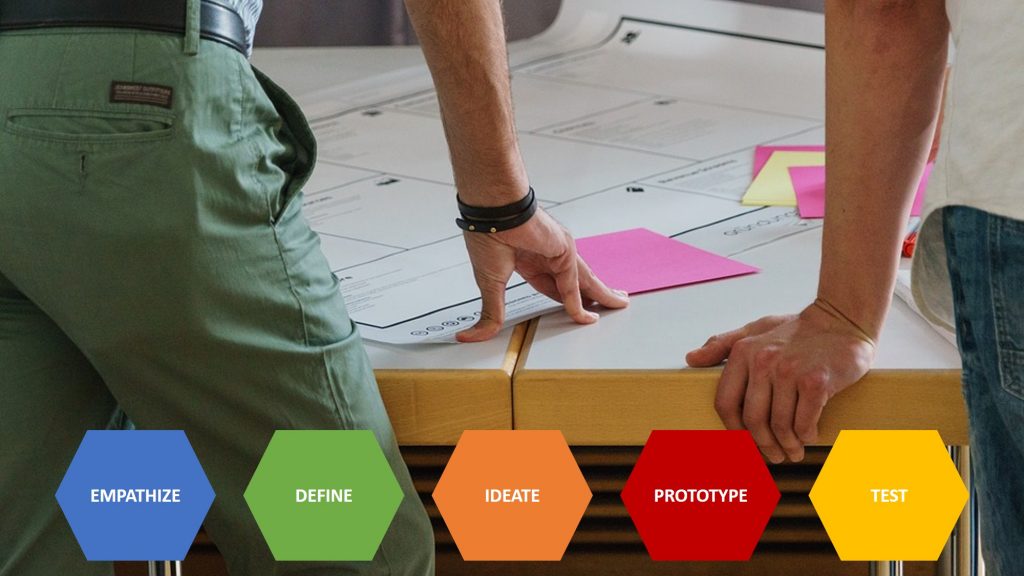
The renowned five phases of design thinking – Empathize, Define, Ideate, Prototype, and Test – are not a sequential dogma. Instead, they form a fluid, iterative ecosystem. You might find yourself looping back from testing to empathize further, or redefining the problem based on new insights gained during ideation. This inherent flexibility is the methodology’s superpower, allowing it to gracefully navigate the inherent ambiguities and evolving complexities of human challenges.

Why It Works: The Unseen Force of Empathy and Iteration

The transformative impact of design thinking in non-design industries stems from its unwavering commitment to placing the human at the absolute center of the challenge. Instead of presuming needs, it actively, almost obsessively, seeks to understand the experiences, frustrations, aspirations, and behaviors of stakeholders. This profound empathy, meticulously cultivated through immersive interviews, direct observation, and genuine immersion, consistently unearths insights that traditional market research or quantitative analysis often miss.

Hand-in-hand with empathy is the revolutionary power of rapid prototyping and iteration. In industries where the pace of change can be glacially slow and risk-aversion is paramount, design thinking champions quick, low-fidelity experiments. This “fail fast, learn faster” philosophy dramatically minimizes investment in potentially flawed solutions, accelerating the discovery of what truly works. It fundamentally shifts the organizational perspective from merely avoiding failure to actively embracing it as a vital source of learning and growth.

Let’s illuminate this with two compelling real-world examples:

Case Study 1: Revolutionizing the Patient Journey in Healthcare

Healthcare, a sector frequently grappling with labyrinthine bureaucracy and a purely clinical lens, is perhaps one of the most fertile grounds for human-centered innovation. Imagine the formidable challenge of enhancing the patient experience within a sprawling hospital system. A conventional approach might lean on operational efficiency improvements, new technology procurement, or standardized staff training. While these are certainly valuable, they often inadvertently overlook the profound emotional and psychological journey of the patient.

A forward-thinking hospital group in the Midwest embarked on this very quest, adopting design thinking to fundamentally reshape their approach. They began not by analyzing metrics, but by deeply Empathizing with patients, their families, and frontline healthcare providers. Through extensive, intimate interviews, shadowing patients throughout their appointments, and observing interactions in waiting areas and consultation rooms, they uncovered a vital truth.

What they precisely Defined as the core problem wasn’t merely extended wait times, but the pervasive anxiety, uncertainty, and feelings of being unheard that those waits engendered. Patients felt like cogs in a machine, overwhelmed by the clinical environment.

This critical insight fueled an intensive Ideation phase that transcended superficial fixes. Ideas blossomed: from interactive digital displays providing real-time updates and educational content in waiting areas, to dedicated “patient navigators” guiding individuals through complex procedures, and even radical redesigns of recovery rooms to feel less sterile and more comforting, more healing.

They swiftly Prototyped these concepts with remarkable agility: a simple paper mock-up of the digital display, role-playing scenarios for patient navigators, and even reconfiguring a disused room to test new furniture layouts and lighting. Crucially, they Tested these prototypes with actual patients and staff, gathering immediate, candid feedback.

The transformative outcome? A significant surge in patient satisfaction scores, a marked reduction in reported patient anxiety, and even a measurable decrease in missed appointments because patients felt genuinely engaged, informed, and cared for. The hospital didn’t just optimize a process; they profoundly reimagined and enhanced a human experience by centering their innovation around it.

Case Study 2: Empowering Underserved Communities with Human-Centered Financial Services

Financial services, often perceived as an impenetrable fortress of complexity and jargon, stand to gain immensely from a human-centered perspective, especially when serving marginalized or underserved populations. A microfinance institution in Southeast Asia confronted a persistent challenge: stubbornly low adoption rates for its savings products among rural villagers. Traditional solutions had often focused on competitive interest rates or aggressive marketing campaigns.

The institution courageously embraced design thinking, commencing with a period of profound Empathy for the villagers. Their teams lived within the communities, participated in daily chores, and engaged in informal, trust-building conversations, going far beyond the scope of formal surveys. They uncovered a critical insight: while people conceptually understood the value of saving, their daily lives were characterized by extreme unpredictability, with fluctuating, often meager, incomes and pressing, immediate needs. The rigid structures of conventional savings accounts simply did not align with their chaotic reality. Furthermore, a deep-seated distrust in formal financial institutions was a significant hurdle.

The newly Defined problem was not a lack of desire to save, but a critical absence of flexible, trustworthy, and genuinely accessible savings mechanisms that harmonized with their unique financial rhythms and vital social structures.

Collaborative Ideation sessions, involving both financial product specialists and community leaders, generated groundbreaking concepts. These included “group savings” models intrinsically linked to existing local social networks, mobile-based micro-savings allowing for tiny, frequent deposits and withdrawals, and even a system where highly respected local shopkeepers served as informal, trusted banking agents.

They rapidly Prototyped these innovative ideas using remarkably simple, accessible tools: mock mobile interfaces drawn on paper, small-scale community pilots, and even hand-drawn “passbooks” for the group savings initiatives. Critically, they rigorously Tested these prototypes with the very individuals they aimed to serve, gathering raw, honest feedback on usability, perceived trustworthiness, and practical relevance.

This iterative process culminated in a transformative mobile-first savings product that offered unparalleled flexibility in deposits and withdrawals, seamlessly integrated with a robust network of community-based agents who acted as trusted intermediaries. The remarkable outcome was a dramatic and sustainable increase in savings adoption, showcasing how design thinking could unlock true financial inclusion by profoundly understanding and respecting the user’s authentic context and needs.

The Path Forward: Embracing a Human-Centric Future

These powerful case studies unequivocally demonstrate that design thinking is far more than a fleeting corporate fad; it is a pragmatic, universally applicable, and profoundly effective methodology for tackling complex challenges across every imaginable industry. It demands a fundamental shift from a traditional product-centric or process-centric viewpoint to an unwavering human-centric one.

For non-design industries striving to innovate, remain relevant, and thrive in an increasingly volatile and human-driven world, embracing design thinking is no longer an optional endeavor – it is a strategic imperative. It requires organizational leaders to cultivate a culture steeped in boundless curiosity, to foster a climate of psychological safety where experimentation is encouraged, and to possess an unshakeable willingness to challenge deeply held assumptions.

It’s about transcending mere functionality to craft solutions that genuinely resonate, creating value that extends far beyond the quarterly earnings report to profoundly touch and enrich the lives of the people they serve. So, I urge you: go forth. Empathize. Define. Ideate. Prototype. Test. And most importantly, always, always stay human. The future of innovation, in every industry, depends on it.

Extra Extra: Futurology is not fortune telling. Futurists use a scientific approach to create their deliverables, but a methodology and tools like those in FutureHacking™ can empower anyone to engage in futurology themselves.

Image credit: Pexels

Subscribe to Human-Centered Change & Innovation WeeklySign up here to get Human-Centered Change & Innovation Weekly delivered to your inbox every week.