Be Explicit and Focus on Shared Values If You’re Serious About Change

Be Explicit and Focus on Shared Values If You're Serious About Change

GUEST POST from Greg Satell

When Lou Gerstner was chosen to lead IBM in 1993, he was an unlikely revolutionary. A McKinsey consultant and then the successful CEO of RJR Nabisco, he was considered to be a pillar of the establishment. He would, however, turn out to be as subversive as any activist, transforming the company and saving it from near-death.

Yet there was more to what he achieved than simply turning red ink to black. “The Gerstner revolution wasn’t about technology or strategy, it was about transforming our values and our culture to be in greater harmony with the market,” Irving Wladawsky-Berger, one of his chief lieutenants, told me.

Values are essential to culture and how an enterprise honors its mission. They represent choices of what an organization will and will not do, what it rewards and what it punishes and how it defines success and failure. That’s why it’s important to make sure that you are explicit about you values, even before you define your strategy. If not, you will pay the price later.

The Power Of The Freedom Charter

In June 1955, the Congress of The People, a gathering that included blacks, mixed race, Indians and liberal whites convened to draft and adopt the Freedom Charter, much like the Continental Congress gathered to produce the Declaration of Independence in America. The idea was to come up with a common and inclusive vision.

The Freedom Charter was anything but moderate, however. It was a “revolutionary document precisely because the changes it envisioned could not be achieved without radically altering the economic and political structure of South Africa… In South Africa, to merely achieve fairness, one had to destroy apartheid itself, for it was the very embodiment of injustice,” Nelson Mandela would later write.

Yet despite its radical aims, the Freedom Charter spoke to common values, such as equal rights and equal protection under the law—not just among the signatories, but for anyone living in a free society. It didn’t seem so at the time—and the struggle would go on for decades—but the Freedom Charter ended up being the first major blow to Apartheid.

Nelson Mandela would later say that the Freedom Charter would have been very different if his organization, the African National Congress (ANC) had written it by themselves, but it wouldn’t have been nearly as powerful. It not only gave anti-Apartheid groups a basis for collective action, by being explicit values, it formed a foundation for those outside of South Africa, who shared the same values, to share the anti-Apartheid purpose.

Perhaps most importantly, the Freedom Charter imposed costs and constraints on the anti-Apartheid movement. By committing itself to a multi-racial movement the African National Congress lost some freedom of action. However, constraining itself in that way was in itself a powerful argument for the viability of a multi-racial society in South Africa.

The Weakness Of The Hamas Charter

Throughout Mandela’s career, he was accused of being an extremist, a communist, and an anarchist, among other things. He would always point to the Freedom Charter as proof of his core beliefs. When emissaries of the de Klerk regime began visiting him in prison to discuss the end of Apartheid, his commitment to those core values carried significant weight.

Something very different happened after the October 7th attacks perpetrated by Hamas in Israel. Those sympathetic with the plight of the Palestinians defended the action as the justifiable actions of a long-oppressed people rising up against their oppressors. Many, especially on elite college campuses, marched in support of the Palestinians.

Yet when people went to the Hamas Covenant to see the values they were fighting for, they found something very different than the Freedom Charter in South Africa. Rather than universal principles everyone can identify with, it is filled with extreme religious views that only speak to Islamists and hate-filled calls for violence and murder.

For example, take a look at this little gem from the Seventh Article of the document:

“The Day of Judgement will not come about until Moslems fight the Jews (killing the Jews), when the Jew will hide behind stones and trees. The stones and trees will say O Moslems, O Abdulla, there is a Jew behind me, come and kill him. Only the Gharkad tree, (evidently a certain kind of tree) would not do that because it is one of the trees of the Jews.”

It’s hard to be sympathetic with those are not only condoning, but calling for violence, which is why even sympathetic Israelis point to the Hamas Covenant as justification for military action. Of course, that doesn’t change the fact that the vast majority of Palestinians living in Gaza are innocent, but it does bolster the point that Israel has a need to defend itself.

Clearly, if your opposition is using your own words to strengthen their argument, you’ve not taken a viable approach.

Values As A Weapon As Well As A Shield

Once you are explicit about your values you will inevitably find that not everyone shares them and that was certainly true of the Gerstner turnaround at IBM. For example, Wladawsky-Berger told me that “IBM had always valued competitiveness, but we had started to compete with each other internally rather than working together to beat the competition. Lou put a stop to that and even let go of some senior executives who were known for infighting.”

A simple truth is that whenever we set out to make a significant impact, there will always be those who will work to undermine what we are trying to achieve in ways that are dishonest, underhanded and deceptive. Yet when that happens we need to be careful not to get sucked into direct conflict, which will surely take us off course and discredit what we’re trying to achieve. Instead, we need to learn to design dilemmas.

Dilemma actions have been used for at least a century—famous examples include Gandhi’s Salt March, King’s Birmingham Campaign and Alice Paul’s Silent Sentinels—but more recently codified by the global activist, Srdja Popović. They are just as effective in an organizational context, using an opponent’s resistance against them.

One of the great things about dilemma actions is that you approach them exactly the same way you approach building allies—by identifying a shared purpose. Once you do that, you can design a constructive act rooted in that shared purpose that advances your agenda. That forces your opponent to make a choice: they can either disrupt the act and violate the shared value or they can let it go forward and allow change to proceed.

For example, I was once running a transformation project that was being impeded by a Sales Director hogging accounts. Although it was agreed that she would distribute her clients, she never got around to it. So I set up a meeting with a key account and one of our salespeople. When she tried to disrupt the meeting, she violated the shared value we had established and was dismissed from her position. Everything fell into place after that.

Building The Discipline Of Shared Values

John Lennon wrote that life is what happens when you’re planning other things and truer words were never spoken. We live life in the moment and moments are dictated by events. That’s why so many change efforts fail, because they do what feels good, choosing to signal identity rather than leverage shared values.

Never underestimate the primordial need to signal identity. We want to show that we are not only a full-fledged member of our tribe, but a star player on the team. That’s why we engage in the type of moral outbidding that results in a purity spiral. Before you know it, we are voicing opinions and taking actions that are not only out of the mainstream, but that actually turn away those who might support our objectives.

That’s why #Occupy protesters slept in parks and shouted obscenities, why women wore pussy hats after the election of Donald Trump, why DEI activists claim that anyone who doesn’t agree with them is racist, why a Cornell professor said he was exhilarated by the murder of innocents, and why America’s far-right activists identify with murderous dictators. It feels good to show that we are different, that we have status.

Yet while these efforts may make their point, they fail to make a difference. #Occupy protesters soon went home and achieved nothing. The World Economic Forum has found that #MeToo has undermined women in the workplace. DEI programs across the country are being crushed, Hamas has lost legitimacy, even with Palestinians and hundreds of January 6th insurrectionists have gone to jail.

The challenge and discipline for leading change is to focus on shared values, so even people who don’t agree with you can identify with your motives. The truth is that success doesn’t depend on how radical or how moderate your vision, but how well you can appeal to common goals. Or, as Nelson Mandela himself put it, “to be free is not merely to cast off one’s chains, but to live in a way that respects and enhances the freedom of others.”

— Article courtesy of the Digital Tonto blog
— Image credit: Unsplash

Subscribe to Human-Centered Change & Innovation WeeklySign up here to join 17,000+ leaders getting Human-Centered Change & Innovation Weekly delivered to their inbox every week.


What Happens If Your Healthcare AI Goes Out of Alignment?

What Happens If Your Healthcare AI Goes Out of Alignment?

GUEST POST from Arlen Meyers

It’s pothole season so be careful when you are driving. If you hit a pothole, it might throw your front end out of alignment

When your front end is out of alignment, it means the angles of your wheels are no longer set to the manufacturer’s specifications. This affects how the wheels contact the road, which can change your vehicle’s handling, tire wear, and fuel efficiency.

Similarly, it’s AI season so be sure it’s aligned too.

Less than two years after a wave of administrative layoffs, Mass General Brigham began a new round of job cuts last week that affect clinical and operational programs, according to media reports.

“We must eliminate programs and activities that do not fully align with our strategy and priorities, even those we have had for many years. Administrative savings alone will not be enough,” said the email signed by Dr. Michael Brown, president of the academic medical center, CFO Niyum Gandhi and COO Dr. Ron Walls, the Boston Business Journal reported.

Artificial intelligence (AI) alignment is the process of encoding human values and goals into AI models to make them as helpful, safe and reliable as possible.

In sick care, the sextuple aims are quality, cost, equitable access, patient experience, sick care professional experience, and productivity. Most of it now has just improved shareholder value.

Society is increasingly reliant on AI technologies to help make decisions. But this growing reliance comes with risk: AI models can produce biased, harmful and inaccurate outputs that are not aligned with their creators’ goals and original intent for the system.

Alignment works to reduce these side effects, helping ensure AI systems behave as expected and in line with human values and goals. For example, if you ask a generative AI chatbot how to build a weapon, it can respond with instructions or it can refuse to disclose dangerous information. The model’s response depends on how its creators aligned it.

AI front end misalignment can cost you, patients and stakeholders.

Misalignment in medicine usually isn’t dramatic. It happens when a system optimizes for something that is not quite what clinicians and patients care about, and the gap shows up as quiet, systematic harm. Like bankruptcy, it happens gradually and all of a sudden.

The proxy problem. The best-known case is a widely used risk algorithm studied by Obermeyer and colleagues in 2019. It predicted future healthcare costs as a stand-in for health needs. Because Black patients historically had less money spent on them at the same level of illness, the model rated them as healthier than equally sick white patients and routed fewer of them into extra-care programs. The model did exactly what it was told. The objective was the problem.

Performing well in testing but not in practice. Models trained on one hospital’s data often degrade at another because of different patient populations, equipment, or documentation habits. An external evaluation of Epic’s sepsis prediction model found it missed many cases and generated heavy alert volume, which contributes to alert fatigue. Dermatology and imaging tools trained mostly on lighter skin or a narrow set of scanners can underperform for everyone else.

Human-AI interaction failures. Clinicians can over-trust a confident output (automation bias) or learn to ignore a noisy one. Over time, reliance on AI can also erode the skills needed to catch its errors. When something goes wrong, accountability among the developer, the hospital, and the clinician is often unclear.

Generative AI specific risks. Language models can fabricate details in a clinical summary, invent citations, agree with a patient’s or clinician’s mistaken premise (sycophancy), or give plausible but unsafe advice. Documentation tools can also drift toward whatever maximizes billing or throughput rather than accuracy.

Feedback loops. If a model shapes who gets screened or treated, future training data reflects the model’s own decisions, which can lock in and amplify existing disparities.

What helps. Choosing outcome measures that reflect actual patient benefit, validating locally before deployment, monitoring performance continuously by subgroup, keeping a meaningful human in the loop, being transparent about limitations, and having clear regulatory and liability pathways. For entrepreneurs, this is increasingly a commercial issue as well as an ethical one, since buyers and regulators are asking for this evidence.

What is the ROI on AI? When was the last time it reduced your sick care insurance premiums, the cost of the last prescription your filled or your out-of-pocket costs incurred when you went to the urgent care center with symptoms of the flu?

AI defensive medicine is making things worse. The care these systems recommended cost substantially more than physicians’ documented care, chiefly because they suggested testing at visits where the physician had ordered none. LLM outputs are suggestions, not plans of care; final decisions should remain with clinicians.

Artificial intelligence has produced “zero financial payoff” to U.S. companies outside of the tech sector, argues Apollo Chief Economist Torsten Slok. Slok claims that while revenue per worker and profit margins have risen for the “Magnificent Seven,” both have stagnated across the S&P 493 — with no clear indication of AI-driven productivity growth. “Mainstream corporate America is pulling back and starting to view token spending not as a source of growth but as a cost center that weighs on margins,” Slok said.

As noted in a recent WSJ article, perhaps we are experiencing a kind of Solow Paradox 2.0, with the digital age more around us than ever except in the productivity statistics. There are several reasons for this lag. First of all, we’re in the early deployment years of major recent innovations, including cloud computing, IoT, big data and analytics, robotics, and AI and machine learning. Notes McKinsey: “The challenge of adoption in the current digital wave may be even harder because of the broad range of uses of digital that not only help improve current processes but fundamentally transform business models and operations.”

How to make doctors more productive | LinkedIn

Dr Wachter reminds us: as if on cue, his post last week on AI alignment in healthcare just received some empirical meat to put on its bones. His argument, in brief, was this: the critical alignment question for healthcare AI won’t be how to prevent rogue AI from causing harm. It will be about striking the right balance between cost and quality in AI-enabled decision support and, increasingly, agentic systems.

In other words, How to Survive Being the Human in the Poop: A Field Guide.

The AI dissemination and implementation journey starts with the first step, but the last mile is the hardest to navigate.

Two common C-suite behaviors can stall AI initiatives: claiming sole control over decisions or disengaging from those seen as outside one’s expertise. Because AI crosses functional boundaries, executives must learn to share authority, resources, and accountability rather than rely on the domain-specific ownership that helped them advance. CEOs can foster this collaborative approach by: defining the business problem before assigning ownership, building cross-functional relationships before they’re needed, treating early AI plans as experiments, rewarding jointly owned outcomes, and establishing rules for resolving disagreements.

Compassionate capitalism should guide your way to stay in alignment.

Slow down, drive carefully and don’t ignore the dashboard warning lights.

Image Credit: Pixabay

Subscribe to Human-Centered Change & Innovation WeeklySign up here to get Human-Centered Change & Innovation Weekly delivered to your inbox every week.

10 Questions to Ask Before Hiring a Customer Experience Audit Firm

Questions to Ask Before Hiring a Customer Experience Audit Firm

by Braden Kelley and Art Inteligencia

If you’re reading this, there’s a decent chance you’ve already decided you need an outside look at your customer experience, and you’re now at the awkward stage of comparing the people who offer one. Proposals have arrived. They all use similar words. Every one of them promises “actionable insights,” a phrase that has been used so often it now carries about as much information as “best wishes.”

So here’s something more useful than another brochure: a list of questions that will tell you what you’re actually buying. Ask them of anyone you’re considering, including me. A good provider will be glad you asked. If a question makes someone defensive, that’s information too.

1. “Who will actually do the work?”

This is the question I’d ask first, because it’s the one most often answered with a shrug.

In many firms, the person who sells the engagement and the people who deliver it are different people. That isn’t automatically a problem, but you should know it going in. Ask who will conduct the research, who will do the fieldwork and who will write the findings. Ask what their experience is. Ask how much of the work the person you’re talking to will personally touch.

An audit depends on judgment: noticing what’s strange, what’s missing, what an experienced eye catches that a checklist doesn’t. If that judgment sits with someone you never meet, you’re paying for a process, not for insight.

2. “Do you actually walk the journey, or review it from documents?”

This question separates a real audit from a desk exercise.

There’s an enormous difference between analyzing the materials a company provides and experiencing the journey the way a customer does: visiting the location, going through the digital channel, making the service call, sitting through the sales cycle. The materials show you what the organization believes happens. The fieldwork shows you what actually happens, and in my experience that’s where the most valuable surprises live.

Ask exactly which touchpoints will be experienced firsthand, in which channels, and by whom. If the answer is mostly interviews and dashboards, you may be buying a more expensive version of what your team could already produce.

3. “What, specifically, will I receive at the end?”

“A report and a presentation” is not an answer. Ask for specifics.

You want to know what the deliverables actually contain: validated personas, journey maps with pain points and emotional highs and lows, an evaluation of your existing data, findings from the fieldwork, a gap analysis, a prioritized set of recommendations. And ask the question that matters most: will I be able to hand this to my team on Monday and have them start?

Better yet, ask to see an example, anonymized if need be. A provider who can’t show you what the output looks like is asking you to buy on faith.

4. “How independent are you?”

This one is subtle and important. An audit is only as credible as the independence of the person doing it.

Ask whether the provider also sells the solutions the audit might recommend: software, implementation services, a platform, ongoing consulting. There’s nothing inherently wrong with a firm that sells both, but it’s a structural conflict, and a recommendation that happens to match the provider’s product line deserves a raised eyebrow.

An independent audit has one job: to tell you what’s true. If the provider has nothing to sell you afterward, that changes the quality of the advice in ways you’ll notice.

5. “How do you decide which problems matter most?”

Any decent audit will find a lot of friction. Your customers don’t need a list of forty problems. They need to know which five to fix first.

Ask how the provider prioritizes: by customer impact, by cost, by effort, by revenue at risk? Ask whether they’ll connect findings to money. A recommendation with a rough sense of what it’s worth and what it costs gets funded. A recommendation that says “improve onboarding” gets a polite nod and a lifetime on a to-do list.

(If you want to size the problem before you talk to anyone, the CX ROI Calculator is a good way to put a number on what friction is currently costing you.)

6. “How do you handle benchmarking, and is it optional?”

Comparing your experience with competitors and best-in-class examples can be extremely valuable, particularly when you’ve been losing deals to experience, not to price. But it isn’t right for every engagement.

Ask whether benchmarking is included, how the comparison set is chosen, and what you’d lose by skipping it. A provider who treats everything as mandatory may be padding the scope. One who treats everything as optional may not be helping you decide.

7. “What does scope depend on, and what would change the price?”

Be wary of anyone who quotes a number before asking you a single question about your business. Costs in this work tend to follow the depth of the engagement: how many audiences, how many touchpoints across how many channels, how much existing data there is to evaluate, how many places need to be experienced in person, and how quickly you want it done.

A good scoping conversation will ask about all of that. It will also tell you which choices drive cost and which levers you can pull to bring it down. If the quote arrives without that conversation, you’re probably looking at a package, not an answer to your situation.

8. “How long will it take, and what do you need from us?”

Ask for a realistic timeline and for what the provider will need from your side: access to data, access to people, access to places. Audits stall when the client’s side isn’t ready. A provider who tells you plainly what they need from you, and when, is likely one who has done this before.

9. “What happens after the report?”

Some audits end with a handoff. Some include help with next steps. Neither is wrong, but you should know which you’re getting. Ask whether the provider will walk your team through the findings, whether there’s a way to ask follow-up questions as you plan, and how the recommendations are meant to be turned into action. The worst outcome of any audit is a thoughtful report that nobody acts on.

10. “Can I talk to someone you’ve worked with?”

References still matter. Ask for a conversation with a past client, ideally one with a situation similar to yours. And ask that client the question that gets the most honest answer: “What would you do differently if you were hiring them again?”

A short scorecard

If you’d like to keep this simple, you can rate each provider on five things:

  1. Who does the work: the people you meet are the people who deliver.
  2. Fieldwork: the journey is experienced, not just reviewed.
  3. Deliverables: you can describe what you’ll receive in specific terms.
  4. Independence: the provider has no stake in what you buy next.
  5. Prioritization: findings are tied to impact, cost and effort.

A provider who scores well on all five is rare enough that you should probably hire them before someone else does.

Hold me to the same standard

I’d be a hypocrite if I wrote this list and didn’t invite you to apply it to my own work. The Customer Experience Audit page explains how an independent engagement runs, from audience research and persona validation through journey mapping, data evaluation, firsthand fieldwork and optional competitive benchmarking, and I’m glad to answer every question on this list directly. If a few of the terms are new to your team, the Experience Design Glossary is a quick way to get everyone speaking the same language before the conversations start.

Whoever you choose, ask the hard questions first. The audit you hire is only as useful as the questions you asked before you hired it.

Customer Experience Audit Checklist

Download the Customer Experience Audit Checklist as a PDF

Image Credits: Gemini

Content Authenticity Statement: The topic area, key elements to focus on, etc. were decisions made by Braden Kelley, with a little help from Claude to clean up the article.

Subscribe to Human-Centered Change & Innovation WeeklySign up here to get Human-Centered Change & Innovation Weekly delivered to your inbox every week.

The Holy Grail of Additive Manufacturing

The Holy Grail of Additive Manufacturing

GUEST POST from Mike Shipulski

The holy grail of Additive Manufacturing (AM) is high volume manufacturing. And the reason is profit. Here’s the governing equation:

(Price – Cost) x Volume = Profit

The idea is to sell products for more than the cost to make them and sell a lot of them. It’s an intoxicatingly simple proposition. And as long as you look only at the volume – the number of products sold per year – life is good. Just sell more and profits increase. But for a couple reasons, it’s not that simple. First, volume is a result. Customers buy products only when those products deliver goodness at a reasonable price. And second, volume delivers profit only when the cost is less than the price. And there’s the rub with AM.

Here’s a rule – as volume increases, the cost of AM is increasingly higher than traditional manufacturing. This is doubly bad news for AM. Not only is AM more expensive, its profit disadvantage is particularly troubling at high volumes. Here’s another rule – if you’re looking to AM to reduce the cost of a part, look elsewhere. AM is not a bottom-feeder technology.

If you want to create profits with AM, use it to increase price. Use it to develop products that do more and sell for more. The magic of AM is that it can create novel shapes that cannot be made with traditional technologies. And these novel shapes can create products with increased function that demand a higher price. For example, AM can create parts with internal features like serpentine cooling channels with fine-scale turbulators to remove more heat and enable smaller products or products that weigh less. Lighter automobiles get better fuel mileage and customers will pay more. And parts that reduce automobile weight are more valuable. And real estate under the hood is at a premium, and a smaller part creates room for other parts (more function) or frees up design space for new styling, both of which demand a higher price.

Now, back to cost. There’s one exception to cost rule. AM can reduce total product cost if it is used to eliminate high cost parts or consolidate multiple parts into a single AM part. This is difficult to do, but it can be done. But it takes some non-trivial cost analysis to make the case. And, because the technology is relatively new, there’s some aversion to adopting AM. An AM conversion can require a lot of testing and a significant cost reduction to take the risk and make the change.

To win with AM, think more function AND consolidation. More (or new) function to support a higher price (and increase volume) and reduced cost to increase profit per part. Don’t do one or the other. Do both. That’s what GE did with its AM fuel nozzle in their new aircraft engines. They combined 20 parts into a single unit which weighed 25 percent less than a traditional nozzle and was more than five times as durable. And it reduced fuel consumption (more function, higher price).

AM is well-established in prototyping and becoming more established in low-volume manufacturing. The holy grail for AM – high volume manufacturing – will become a broad reality as engineers learn how to design products to take advantage of AM’s unique ability to make previously un-makeable shapes and learn to design for radical part consolidation.

More function AND radical part consolidation. Do both.

Image credits: Unsplash

Subscribe to Human-Centered Change & Innovation WeeklySign up here to join 17,000+ leaders getting Human-Centered Change & Innovation Weekly delivered to their inbox every week.
Innovation or Not? Reflect Orbital and the Business of Selling Sunlight

Innovation or Not? Reflect Orbital and the Business of Selling Sunlight

by Braden Kelley and Art Inteligencia

Let me tell you about the moment the town of Lone Pine, California, looked up at a pitch-black desert sky and saw two enormous beams of light where there should have been none.

No, it wasn’t aliens. It wasn’t the military. It wasn’t even a particularly ambitious Halloween display. It was a startup rehearsing how it plans to sell sunlight after dark, and the residents hadn’t been invited to the rehearsal.

Welcome to this edition of Innovation or Not.

Press Play First

Two videos to set the scene. Watch them, then come back and argue with me. (The titles below come from search results, so give both a quick play-test before publishing.)

The idea, in one sentence

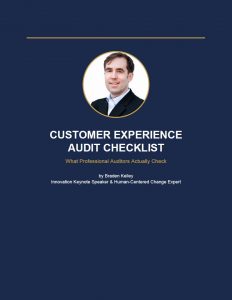
Reflect Orbital wants to put big mirrors in orbit and aim sunlight at spots on the ground that the sun has left. Light on demand, from space. Its tagline is that it makes clean, abundant energy available on demand, and it calls itself “The Sunlight Company.” I admire a company that knows what it sells.

The first spacecraft, Eärendil-1 (named, charmingly, after a character from Tolkien), carries a mirror roughly 18 meters, or about 60 feet, on a side, folded origami-style and made of Mylar. It would orbit a few hundred miles up and sweep a patch of light across the ground for about five minutes before moving on. The company’s own description of that first beam is “comparable to a full moon.” An independent astronomer quoted in coverage of the FCC approval put it at about four times brighter than a full moon. Same mirror, two descriptions, which tells you something about how early this is.

The FCC has approved that demonstration satellite. It has not approved the grand plan.

The Pitch

Here’s the company’s published roadmap, and I’ll let you judge the ambition:

  • 2026: two satellites, moonlight-level light for a few minutes
  • 2027: around three dozen satellites, with light comparable to street lighting for a couple of hours
  • 2028: more than a thousand, with light comparable to an indoor work area
  • 2030: more than five thousand, with light approaching daylight for minutes at a time
  • 2035: more than fifty thousand, with daylight-level light for hours

Who is it for? The company lists lighting for search and rescue and disaster response, construction and industrial work, agriculture, events, and, the part that gave this article its second half, boosting solar power after the sun goes down.

Does it help solar cells?

This is the claim that deserves the most scrutiny, because it’s where the economics live.

The idea is elegant. A solar farm sits idle at night, so beam light onto it just before dawn and just after dusk and watch the output rise. The company’s own published projection is more modest than the pitch, though. For 2030, it estimates roughly a 1% capacity-factor gain, and its footnote puts the production increase at 0.75% for Southern California and 1.4% for Germany. A 20% gain doesn’t appear until 2035, which is the fifty-thousand-satellite stage.

Now the arithmetic, which is mine, not the company’s, so treat it as a back-of-the-envelope estimate. An 18-meter square mirror has about 324 square meters of surface. Full sunlight delivers about a kilowatt per square meter, so the mirror intercepts roughly 324 kilowatts. Spread that over a beam about five kilometers across, around 20 square kilometers, and you get something like 16 watts per square meter added to the ground, before any losses. Direct sun at noon is around 1,000. In other words, one mirror gives a solar panel about a sixty-fifth of a sunny day’s light.

You can see why the company’s early marketing leaned on lighting. A dim, wide pool of light is perfect for helping rescuers see. It’s a lot less useful for generating megawatts.

Do clouds and fog get in the way?

Short answer: almost certainly, and nobody seems to be talking about it.

I went looking for the company’s answer and found a pretty glaring gap. Its website doesn’t address weather. Neither do the major write-ups I read. The one place the question did come up was an engineering blog that noticed the studies and marketing “never seem to mention clouds, fog or other weather events,” and pointed out that the Russian Znamya 2 space mirror test back in 1993 took place under cloud, and observers barely saw the light.

Here’s my own reasoning, flagged as reasoning. The light from a space mirror has to travel through the same atmosphere as ordinary sunlight to reach the ground. Whatever thick cloud or fog does to the sun, it presumably does to a reflection of the sun. And the atmosphere scatters light even on a clear night, which spreads the beam out and is one reason critics worry about spillover well beyond the intended spot. So a cloudy night would likely bring a very dim result, at the very time people might want the light most.

If Reflect Orbital has data on this, I’d love to see it. Until then, I’d file weather under “important questions without published answers.”

Is it cost-effective?

Not on the evidence available. Michael Brown, an astronomer at Monash University, ran numbers reported by ABC News: matching 20% of midday sunlight would take roughly 3,000 satellites with 54-meter mirrors, and since each satellite can light a given spot for only a few minutes, an hour of daylight at one location would require tens of thousands of satellites, at a cost he put in the tens of millions of dollars. His verdict: “It doesn’t stack up.” He also noted that grid battery costs have fallen by more than 20 percent since Reflect Orbital was founded in 2021, which makes the competition for storing daytime solar energy tougher every year.

A fair counterpoint: the company has raised about $35 million, has a real engineering team and has won an Air Force-related research contract, so this isn’t a napkin sketch. And lighting a disaster zone or a construction site for a few hours might be worth paying for even if lighting a solar farm isn’t. But the energy case, specifically, has more skeptics than believers right now, and the company’s own projections are modest until the very large constellation stages.

When could this be widely available?

If “widely” means a lot of people can buy light from space, not for years, and maybe never at the scale on the roadmap.

As of the most recent reporting I could find, only the single demonstration satellite has FCC approval, and the agency’s review covers radio spectrum, not environmental or ecological effects. Each larger stage needs more approvals. One recent report said the main remaining hurdle for the first spacecraft is simply obtaining a rocket. Earlier reporting named SpaceX as the launch provider, and other coverage says the company is looking at launches from India, so I wouldn’t treat the launch plans as settled.

My read: a handful of test satellites and limited customers, such as event or emergency lighting, are plausible in the next few years. Anything resembling the 2030 or 2035 rows of that roadmap depends on a long chain of approvals, launches and public acceptance that hasn’t happened yet.

What happened in Lone Pine?

Now for the mystery. Earlier this month, Reflect Orbital set up powerful mobile spotlights on Horseshoe Meadows Road, near the peak of Mount Whitney, outside Lone Pine. According to local reporting, the goal was to simulate the light spot its mirror satellites would eventually deliver, so that China Lake Mountain Rescue and other volunteers could practice grid searches, stretcher carries and equipment rigging in realistic conditions.

Here’s the part I want to underline: there was no satellite involved. Those two blinding beams were ground-based spotlights standing in for a technology that hasn’t launched yet. A rehearsal for a performance that hasn’t been cast.

The locals, who looked up from their dinners to see the dark desert sky light up, were baffled, and they weren’t the only ones surprised. According to reports, astronomers weren’t notified, and it’s unclear whether county officials were told in advance. Gaspar Bakos, a Princeton astrophysicist, called it a serious threat to ground-based astronomy. DarkSky International’s CEO, Ruskin Hartley, called the broader plan “clearly an unprecedented assault on the nighttime environment.”

And the rescuers? Phillip Cash, operations leader for the rescue group, said the light was slightly brighter than a full moon and let searchers see about three miles in every direction. But he also noted that his team already works well at night, so the system wouldn’t fundamentally change routine rescues. A useful reality check. The company’s spokesman, for his part, said the test was meant to give responders a precise, realistic simulation.

The Concerns

(briefly)

Fairness requires including the other side of the ledger. Scientists and dark-sky advocates worry about effects on astronomy, on migrating birds and nocturnal animals, on sleep and circadian rhythms, and on pilots. Astronomers have also warned that amateurs looking at the satellites through telescopes could be at risk of eye damage. The company says the light is not bright enough to start fires or harm eyes, that the beams can be dimmed, and that it avoids sensitive areas such as observatories. Some experts dispute those assurances. Whichever side proves right, you can see why a surprise test in a small town didn’t help the case.

So: innovation or not?

Is it new? Yes. Selling reflected sunlight from orbit as a service, with a roadmap and an FCC license, is a genuinely novel business, even if the idea of a space mirror is as old as science fiction.

Does it create value? For specific uses like disaster response, event lighting and temporary construction work, plausibly. For solar power at scale, the case is thin and the company’s own numbers are modest until the huge constellation stages.

Will it reach people? Slowly, and probably in a much smaller form than the roadmap suggests.

Does it have costs it hasn’t priced in? That’s the one I’d watch. If an innovation’s side effects fall on people who weren’t asked, it isn’t done being evaluated.

My verdict: an impressive invention, not yet an innovation. It earns real credit for imagination, and I’d honestly like to see the first mirror fly. But I’d want clearer answers on clouds, cost and consent before I’d call it a breakthrough instead of a very bright experiment.

Then again, a town full of people looked up at the dark and wondered what was going on. As attention-getting goes, you can’t argue with the results.

Sources:

Image Credits: Microsoft AI

Content Authenticity Statement: The topic area, key elements to focus on, etc. were decisions made by Braden Kelley, with a little help from Claude to clean up the article.

Subscribe to Human-Centered Change & Innovation WeeklySign up here to get Human-Centered Change & Innovation Weekly delivered to your inbox every week.

The Customer Service Department is Not Broken

The Customer Service Department is Not Broken

GUEST POST from Shep Hyken

This article answers the question: How can leaders fix broken customer service systems that create friction and frustration, even when they have good people on the front line?

I’ve been monitoring my customer service experiences with the brands I do business with a little more closely than usual. And I’ve made numerous calls to airlines, mobile phone carriers, electronics companies, and more. I’ve found that people are typically friendly and do their best to support me. To clear my conscience, I admit that my recent call to my cable provider was tense due to my frustration with a faulty router, but that tenuous conversation was my fault, not theirs. I was obviously upset with the product, but my rep remained calm and did everything in her power to resolve the issue. She gets an A for effort, attitude, and knowledge.

It’s not the people. It’s the system.

My point is that I hear so many people complaining about customer service, but in many cases, it’s not the people. It’s the system. Some of the reasons customers complain about customer service or experience due to broken or poorly created systems are:

  1. Hard-to-find contact information for customer support – While most websites provide information about customer support, sometimes it’s not clearly visible. When a customer wants to contact you, don’t add to their frustration by making it difficult.
  2. Inability to connect with someone from customer support – Some companies are still betting that a 100% AI-fueled self-service option can replace live agents. In almost every case, they are wrong!
  3. Self-service options are not provided – Just as some companies make the error of going “all in” on digital self-service support, some companies don’t provide any self-service options. There is a percentage of customers who demand the option, or they will choose to do business elsewhere.
  4. Self-service options are provided, but they don’t answer the question or offer a solution – While this alone can be frustrating, imagine if the self-service is not working and the company makes it difficult or impossible to connect to a live person. This is adding fuel to the fire.
  5. Long wait or hold times without the option of a call-back – In this day and age, it is very inexpensive to add a feature that informs the customer how long their hold time will be, with an option for a return call when it’s their turn.
  6. Nobody will return my message – If one option for customer support is to leave a message, the expectation is that the company will respond to the message. And, I’ll add that it should be done in a timely manner.
  7. Poorly trained reps – One might argue that poorly trained reps are a people problem, not a system problem, but I disagree. A lack of training or poor hires is a function of how the company operates, not the fault of customer service agents trying to do their best.

Here’s your assignment:

Sit down with your team. Then use this list to ignite a brainstorming session to discover if your organization is guilty of these or other “system failures.” This first step is about awareness. From there, take action and fix what’s broken. In summary, most bad experiences are caused by internal friction and broken or poorly designed systems, not front-line behavior.

Image Credits: Pexels

Subscribe to Human-Centered Change & Innovation WeeklySign up here to join 17,000+ leaders getting Human-Centered Change & Innovation Weekly delivered to their inbox every week.

Running the Fandom Playbook to Increase Your Business Success

Running the Fandom Playbook to Increase Your Business Success

Exclusive Interview with David Meerman Scott

In an era dominated by algorithmic feeds, automated messaging, and relentless digital noise, capturing basic customer attention has never been harder — or less valuable. According to renowned marketing strategist and bestselling author David Meerman Scott, the traditional playbook of closing transactions and optimizing sales funnels is no longer enough to build a lasting brand. Today’s most resilient and successful organizations don’t just accumulate followers; they cultivate passionate, loyal fans who advocate for them in a chaotic marketplace.

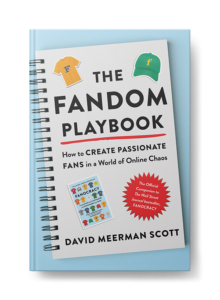
In his latest book, The Fandom Playbook: How to Create Passionate Fans in a World of Online Chaos, Scott offers actionable, field-tested strategies to help businesses transition from transactional relationships to genuine human connection. We sat down with David to discuss how leaders can cut through the online clutter, harness the power of shared passion, and build an unstoppable fan base from the ground up.

Running the Fandom Playbook to Increase Your Business Success

David Meerman ScottDavid Meerman Scott is an internationally acclaimed marketing strategist, business growth advisor, and bestselling author who has shaped how modern organizations generate attention and build human connections. Known globally for his groundbreaking book The New Rules of Marketing & PR — which has sold over 500,000 copies in nearly 30 languages — David serves as a HubSpot advisor, venture capital strategic partner, and keynote speaker who has delivered talks across 47 countries and on all seven continents. A former Wall Street Journal bestselling co-author of Fanocracy, he combines his professional expertise in real-time marketing with a personal obsession for everything from the Grateful Dead and the Apollo lunar program to swing dancing and surfing — offering a unique, hands-on perspective on how shared passion builds unstoppable brand momentum.

Below is the text of my interview with David and a preview of the kinds of insights you’ll find in The Fandom Playbook: How to Create Passionate Fans in a World of Online Chaos presented in a Q&A format:

1. Why is fandom so important now?

Fandom is powerful because it turns transactions into relationships. In a noisy marketplace, fans don’t just buy, they tell friends, show up again and again, and offer feedback that shapes future success. When fans gather and share in your story, your brand no longer has to fight for attention; you become part of your audience’s identity. In an age of infinite choice and instant digital reach, real fans are the difference between fleeting clicks and lasting growth.

2. Why do so many things today feel fake and unsatisfying?

Because so much of what we’re exposed to is manufactured to be “safe” and generic rather than real. When brands strip away personality and rely on polished buzzwords or bland “content strategies,” they may avoid controversy, but they also lose what makes them human. People are craving authenticity and a sense of genuine connection, what’s often missing is passion, individuality, and honesty.

3. What impact have social media algorithms had on marketers?

Algorithms promised us reach, but at a heavy cost. They reward sameness and safe bets, nudging everyone toward the lowest common denominator. Marketers often end up optimizing for what the algorithm wants instead of what their audience truly needs or wants to talk about. The irony is, the more we try to “hack” the feed, the less distinctive and memorable we become, blending into a sea of manufactured relevance instead of standing out as truly remarkable.

4. Social media made humans more connected but more lonely? Will AI make this better or worse?

Social media put us in touch with billions, but filtered connection through screens and highlight reels. We’re more aware of each other than ever, but real belonging can get lost in the algorithmic shuffle. AI has the potential to assist, but not to replace genuine human connection. If we use AI to automate or impersonate what should be real relationships, loneliness will get worse. The antidote? Double down on empathy, storytelling, and actual human moments, supported by AI, not replaced by it.

5. What is your perspective on how (if at all) content creators should think about using AI in their operations?

I encourage creators to experiment with AI, but to use it in service of their vision, not as a replacement for it. AI is a powerful assistant: it can help with research, drafting, and even helping find new creative directions. But it’s your passion, your weirdness, and your unique take that sets you apart. Use AI to remove drudgery, not to erase what makes you distinct.

6. Can you think of any organization that shouldn’t try to build fans?

Every organization, no matter the field, can tap into fandom. If you have a mission, a story, and a group of people who care, you can build real human connections. Organizations that operate in highly regulated or sensitive environments, the “how” might look different, but the principle holds. Even serious B2B businesses or nonprofits can unlock magic by bringing people together around what matters to them.

Heck, NASA created fans of government employees, the Apollo astronauts, which I wrote about in my book “Marketing the Moon: The Selling of the Apollo Lunar Program” and which was used as inspiration for the Hollywood romcom “Fly Me to the Moon”.

7. Are there any prerequisites before trying to build fans?

The only real prerequisite is a human connection. You’ve got to know what you, and your team, genuinely care about. Fans can spot a fake from a mile away. If you’re willing to show passion, listen to your community, and share your story, you’re ready to build fans. But if you see fandom as just another trick or hack, you’ll come up short every time.

8. What is one thing about The Fandom Playbook — the official companion to your bestselling book Fanocracy — that people would be surprised by, but absolutely must know about?

People might be surprised to find that The Fandom Playbook isn’t just theory, it’s a step-by-step action guide. It gives you plays to run in ninety days (or even less) tailored to your business, your strengths, and your natural community. It’s about showing exactly how to invite people in, nurture them, and grow enduring relationships, no matter your industry or company size.

Conclusion

Thank you for the great conversation David!

I hope everyone has enjoyed this peek into the mind of one of the women behind the insightful new title The Fandom Playbook: How to Create Passionate Fans in a World of Online Chaos!

Image credits: David Meerman Scott, Pixabay

Subscribe to Human-Centered Change & Innovation WeeklySign up here to join 17,000+ leaders getting Human-Centered Change & Innovation Weekly delivered to their inbox every week.
What’s the Truth?

What's the Truth?

GUEST POST from Geoffrey Moore

This is the second in a series of responses to the MSN post “20 Philosophical Questions That Are Hard to Wrap Your Head Around.” We are on Question #2: Is there a truth? Here’s the MSN blurb:

This inquiry challenges the concept of truths, versus realities prompting introspection on the nature of knowledge and certainty. Many philosophers consider truth to be a concept that cannot be fully explained in terms other than truth itself. The accepted perspective is that truth relates to how well our language or thoughts align, with a world that exists independently of our minds. This theory is known as the correspondence theory of truth.

There is a fundamental premise stated here that needs correction, namely that “truth relates to how well our language or thoughts align with a world that exists independently of our minds.” The correspondence theory is indeed one understanding of what constitutes truth, but there are two others that are equally well-accepted perspectives—the coherence theory and the pragmatic theory. Thus, while correspondence is indeed a measure of how well our language and thoughts align with a world that exists independently of our minds, coherence, by contrast, is a measure of how well any given claim aligns with all the other claims we take to be true, basically our body of understanding of how the world works. Pragmatism provides a third perspective on truth, taking it to be a measure of how well any claim we make aligns with the results we get from acting out that claim in the world.

All three of these perspectives are useful, and the good news is they are not mutually exclusive. The way we normally test for truth is first through coherence theory. That is, when we hear a claim, we check to see if it aligns with our existing understanding of things. If it does, we are likely to just accept it and move on. If it does not, however, then we are moved to investigate whether it corresponds to what is actually the case, doing so by examining evidence for or against the claim. If the evidence does indeed warrant the claim, then we are moved to modify our body of beliefs to absorb this new bit of understanding into a revised coherence model, what we normally call learning or gaining in experience.

Pragmatism overlays another layer of interest, namely, does this claim enable us to have more success in whatever efforts we have underway? Successful outcomes, in other words, are a form of evidence for the validity of the claim. We have to be careful here, however, for the outcome’s success may be due to some factor other than the one claimed. Nonetheless, when things do work, and especially when this applies to things that traditionally have not worked anywhere near as well in the past, it sends us a strong signal to update our coherence and correspondence models accordingly.

Another challenge that pragmatism poses to our understanding of truth is that lying can also deliver successful outcomes. Lying may often defeat itself in the long run, but in the short run, it can be very effective. How we address lying, however, is normally more of a social issue than a philosophical one. For it to be philosophical, one would need to make the case that lying is foundational to wellbeing, and while such an argument is not unimaginable, it carries with it enough problems that we can safely ignore it for the time being.

What we cannot ignore, on the other hand, is the political use of lying. This is foundational to all authoritarian regimes. In order to stay in power, they must continually maintain a heightened sense of fear and anxiety in the population they govern, at a level sufficient to gain its acquiescence to their corrupt and self-serving ways. How citizens can respond to this challenge is something we will address in a moment.

The core question people want answered about truth, though, is whether or not it is a thing. That is, is truth a force in the world, the way love is or the way beauty is? Historically, the answer to this question was yes because truth, like love and beauty, is taken to be an attribute of the divine being that governs all human experience. In a secular world, however, that answer needs to be revisited. When we do so, we see that the desire for love, beauty, and truth still abides. They do indeed exert a force on us. So, if they are forces in the world, where are they to be found?

My answer is that each one is anchored on a different stair in the Infinite Staircase. Love is grounded on the stairstep of values, an inherent part of our mammalian heritage of nurturing the young. Beauty is grounded on the stairstep of culture, a learned appreciation for esthetic experience. Truth, in this context, is located on the stairstep of narrative, subject to verification delivered from the stairstep of analytics.

Narrative, in other words, is the force in the world that mobilizes the power of truth. True narratives are foundational to both personal and social wellbeing. False narratives undermine these same foundations. Let’s look at examples of both.

The power of true narratives manifests when people act in service to their narrative, even at a cost to their personal self-interests. We call this form of truth integrity, and it is genuinely inspiring because it cements the meaningfulness of their commitments. Existentialism represents an entire philosophy based on this core idea. Its life goal is to be authentic, with authenticity defined as behavior aligned with and in service to whatever life narrative you have chosen for yourself. Truth, in this sense, really does make you free, whereas falsehood imprisons you in narrative contradictions that ultimately destroy your wellbeing, a state that is termed bad faith.

False narratives pose a different problem. The power of truth to combat them depends upon the principled deployment of analytics. Unfortunately, the hold of any narrative on the personality, whether true or false, is frequently stronger than analytics can dislodge. As a result, regardless of how strong the evidence is for falsehood, it is simply denied, allowing bad faith and lack of wellbeing to spread pervasively and sustain their position of power far longer than one might imagine. This is the condition of life under an authoritarian regime.

To dislodge such a regime requires going below the stairstep of competing narratives down to the stairstep of core mammalian values and resurrecting those values that the regime is violating. This is dangerous work, for the regime is well aware of its vulnerability to this tactic and will aggressively punish any signs of it. The prospects for success in the short term are not good, and support from entities outside the regime are likely be necessary to dislodge it, so we should not be surprised to see societies continue to persist under painfully oppressive circumstances.

That said, when the global cannot be addressed, we must retreat and draw in the boundaries to find a local that can be. At the extreme, this would be oneself, although as social creatures, we need the help of a community of others to stay the course, family being our most obvious opportunity. Whatever its nature, that community becomes our reason for being, and it is here that we must use truth to establish the relationships of trust that hold us together. Truth in this context looks more like the medieval troth, a term for fidelity and faithfulness, a kind of integrity that is anchored in our pledge to others to be there for them and with them. Keeping faith is a form of integrity that is well suited to coping with adverse circumstances.

So, is there a truth? Well, in this last sense, there certainly is, as people have proved the world over. As we expand outward from our local scenes, and as we raise the level of abstraction, there will be truth as long as, to borrow a phrase from Yeats, “the center holds.” At some point, it will not, and we must reconcile ourselves to the limits of our mortal perspective, embracing humility and foregoing the kind of righteousness that seeks to impose an answer by force.

That’s what I think. What do you think?

— Image credit: Unsplash

Subscribe to Human-Centered Change & Innovation WeeklySign up here to join 17,000+ leaders getting Human-Centered Change & Innovation Weekly delivered to their inbox every week.

Does Hybrid Intelligence Solve Our Compute Shortage?

Does Hybrid Intelligence Solve Our Compute Shortage?

by Braden Kelley and Art Inteligencia


Here’s a mental image I can’t shake. Somewhere right now, a very large, very expensive, very thirsty computer in a very large building is being asked to figure out whether a customer’s email is angry or merely brisk.

That’s the compute shortage in one sentence. We have built an astonishing capability, and then we’ve gotten into the habit of using it for everything, including the tasks a much smaller tool could handle without breaking a sweat.

So let’s ask the obvious question. If we stopped sending every request to the biggest brain in the cloud, could we ease the shortage? Does hybrid intelligence solve it? My honest answer is: it helps a great deal, it won’t solve it alone, and the most interesting part is what the fix might do to the software we use every day.

The shape of the shortage

First, the problem. The International Energy Agency reports that electricity demand from data centers rose 17% in 2025, far outpacing 3% growth in global power demand overall, and it expects data center consumption to roughly double by 2030, with AI-specific demand growing even faster. Gartner warned back in 2024 that power shortages could constrain 40% of existing AI data centers by 2027. And industry reports describe waits of two to six years or more in some regions to connect a new large facility to the grid. (Some of those figures come from industry sources and older forecasts, so treat the specifics as directional. The direction itself is not in dispute.)

Notice what that tells you. The bottleneck isn’t only chips. It’s electricity, transformers, cooling and the time it takes to build all of it. You can’t download a substation.

When supply can’t expand quickly, the remaining lever is demand. Which brings us to a very old idea wearing new clothes: don’t use more than you need.

Hybrid intelligence: the right brain for the job

Hybrid intelligence is a simple idea. Run small language models (SLMs) on the device in your hand or on your desk for most everyday intelligence needs, and call on large models in the cloud only when a request truly needs the extra horsepower.

Think of it the way a hospital works. You don’t send every patient to the specialist surgeon. Most needs are handled by a nurse, a general practitioner, or a pharmacist, and the surgeon gets the cases that require one. The system works because someone, or something, decides where each case goes.

The pieces for this are arriving. Neural processing units are becoming standard in new phones and laptops. Operating systems are beginning to expose local models to developers, so a small team can use on-device intelligence without paying a per-request bill. Small open models are getting better at doing more with less, and with modern compression techniques, a capable model of several billion parameters can fit in a few gigabytes of memory. And the routing pattern already exists in the wild: Apple’s Private Cloud Compute, for instance, is built around handling what it can locally and sending only what it must to a larger remote model.

What would run locally? Summarizing a document, drafting a reply, sorting email, transcribing a call, classifying a support ticket, cleaning up an image, answering a question about the file you have open. What goes to the cloud? Long, complex reasoning, large-scale analysis, tasks that need broad world knowledge or the most capable model available.

If most requests are the first kind, and I suspect most are, the cloud’s workload shrinks by a lot. Every request that stays on your device is one fewer asking a data center for electricity.

Hybrid software: let each tool do what it’s good at

Here’s the companion idea, and I think it’s the underrated one. Hybrid intelligence is about where AI runs. Hybrid software is about when to use AI at all.

For decades, software has been written as explicit instructions: if this, then that. It’s predictable, fast, cheap and auditable. Language models are the opposite: flexible, adaptable and capable of handling the messy, ambiguous inputs that rigid code chokes on, but slower, costlier and occasionally creative in ways you’d rather they weren’t.

The wasteful approach is to use the flexible tool for everything. Asking a language model to add up a column of numbers is like hiring a poet to do your taxes: possible, expensive and slightly alarming. A better approach combines the two:

  • Traditional code handles what’s well-defined: calculations, rules, validations, database lookups, anything where the answer should be the same every time.
  • A small local model handles the fuzzy interpretation: understanding what the user meant, classifying, summarizing, extracting meaning from messy text.
  • A large cloud model is called only when the task is complex enough to justify the cost.

The result is software that’s smarter, more capable and more adaptable without being bigger. It’s smarter where intelligence helps, lean where it doesn’t, and cheap enough to run that you can afford to give it to everyone. That last part matters, and I’ll come back to it.

Adaptive interfaces: software that gets out of your way

Now for the part I find most exciting, because it changes how software feels to use.

Look at the menus of any mature application. They’re cathedrals of features, built up over decades. Hundreds of commands, nested menus, toolbars within toolbars. Most users touch a tiny fraction of them. Some features, in any given person’s hands, are never used once. And yet they sit there, every day, making the useful ones harder to find.

We’ve lived with this because the alternatives were bad. Hiding features meant frustrating people who needed them. Showing everything meant overwhelming everyone else.

AI changes that tradeoff. With a local model that understands how you work, an application can learn which features you actually use, surface those, and quietly tuck the rest out of sight. And, here’s the key, still make everything reachable. Ask for the hidden feature in plain language (“make this table a chart,” “remove the background,” “merge these two documents”) and the software finds it, or does the job for you. The capability never left. It just stopped getting in the way.

What this means in practice:

  • Simpler by default. A beginner sees an uncluttered tool. A power user sees their tools.
  • Nothing is locked away. A rarely used feature appears the moment you need it.
  • Interfaces that evolve. As your work changes, so does what the software puts in front of you.
  • Less to learn. You don’t need to memorize where things live. You describe what you want.

And there’s a compute angle too. An interface that adapts using a small, local model, with no round trip to a data center, is exactly the kind of lightweight intelligence that hybrid design makes affordable. The thing that makes software easier to use also happens to be easy on the grid.

There’s a caution worth saying out loud, though. Adaptive interfaces must be predictable enough that people don’t feel the ground shifting under them, and they should always let users see and control what’s been hidden. A menu that rearranges itself without warning is a terrible experience. The goal is to simplify, not to surprise.

Other technologies that can ease the squeeze

Hybrid intelligence isn’t the only tool in the box. Several others work alongside it.

  • Smaller, smarter models. Techniques like quantization (storing a model’s numbers with less precision) and distillation (teaching a small model to imitate a larger one) shrink the cost of running a model dramatically. Models that once needed a server rack increasingly fit on a laptop.
  • Architectures that don’t use everything at once. Some model designs activate only the portions of a network relevant to a given request, rather than firing every parameter every time. Less computing per answer.
  • Caching and reuse. If thousands of people ask nearly the same question, the system shouldn’t recompute the answer from scratch each time. Smart caching is a quiet and surprisingly large efficiency win.
  • Specialized chips. Hardware designed specifically for AI workloads can do more work per watt than general-purpose processors. The efficiency per unit of electricity keeps improving.
  • Better data center design. More efficient cooling, smarter power management and facilities built near abundant energy all reduce the electricity cost of each unit of computing.
  • Flexible scheduling. Not every AI job is urgent. Training runs and batch processing can be timed to match when power is cheap and plentiful, easing peak demand on the grid.
  • More power, built faster. Ultimately, supply matters too. New generation, grid upgrades and faster permitting are part of the answer, even if they take longer to arrive than software can.

None of these is a silver bullet. Together, they form something more like a portfolio.

The caveat I owe you: efficiency can backfire

Here’s the part that keeps me honest. When something gets dramatically cheaper to use, people tend to use a lot more of it. Economists have a name for it, the Jevons paradox, and it’s been observed with everything from coal to computing.

If hybrid intelligence makes AI cheap enough to put into every application, every device and every workflow, total demand could grow even as the cost of each task falls. I made a related argument recently about software itself: cheaper development means far more software gets built, not less. It’s the same pattern, and it cuts both ways. Efficiency is how we make wonderful things affordable, but it doesn’t automatically mean we use less in total.

So I wouldn’t promise that hybrid intelligence will shrink data center demand. I’d say it lets us do far more with whatever capacity we have, which is arguably the more useful outcome, and it buys time while supply catches up. Whether total consumption falls is a different question, and the honest answer is that we don’t know yet.

There are other limits too. Local models are less capable than the largest cloud models, so the routing has to be good. On-device AI uses battery, memory and heat. Different devices have different capabilities, which complicates life for developers. And keeping data on the device helps with privacy, but it doesn’t make an application automatically compliant.

What the future might hold

Let me make a few predictions, and mark them clearly as predictions.

  • Intelligence becomes a utility you don’t notice. Today, using AI feels like an event: you open a chat window, you type, you wait. I suspect that within a few years, most of it will disappear into the background. Your software will quietly handle small intelligent tasks locally, the way it quietly handles spell checking now, and you’ll hardly think of it as AI.
  • The cloud becomes the specialist. The big models won’t go away. They’ll become the surgeons, reserved for the hardest problems, which may make them more valuable, not less.
  • Software gets smaller and smarter at the same time. The old trend was that capability meant bloat. Hybrid design offers a different path: applications that are lean at rest, capable on demand and shaped around each user.
  • Compute becomes a design constraint, not an afterthought. Product teams will start asking, “where should this intelligence run?” alongside “what should it do?” That discipline, designing for efficiency from the start, may turn out to be one of the more important skills of the next decade.
  • The real shortage may be imagination. If we get better at doing more with less, the question shifts from “do we have enough compute?” to “what do we want to build with it?” I’d rather be wrestling with that one.

So, does it solve it?

Not alone. The shortage is a physical problem of power, hardware and time, and no software trick makes a transformer appear. But hybrid intelligence and hybrid software attack it from the other side, by making sure the biggest resources are used only when they’re needed, and by building software that’s capable without being bloated.

That’s the kind of solution I like best: not bigger, just smarter about where the work happens. And the next time a very large computer is asked whether an email is angry or merely brisk, I’d like a small, quiet model on a laptop somewhere to say, “I’ve got this one.”

Planning for the Future

If your team hasn’t yet pulled together the signals behind your current view of the future, the free FutureHacking Signal Picker helps you identify and prioritize the signals worth watching, which gives you the evidence to point to when the board asks where your view of the future comes from.

I’m also finishing the FutureCanvas Picker, which takes planners through the whole arc, from signals to trends to possible futures to your most probable future and the path toward the one you’d prefer. I’m opening early access to a select group first: Chief Strategy Officers, strategic planners and leaders preparing for planning cycles and board conversations right now, who can tell me honestly what works under real deadline pressure. If that’s you, reach out and let me know and I’ll follow up personally with the select few who get in first.

Frequently Asked Questions

What is hybrid intelligence?

Hybrid intelligence is an approach to AI in which small language models run locally on a device for most everyday tasks, and large cloud-based models are used only for complex requests that need more power. Because most requests stay on the device, less work lands on data centers.

Does hybrid intelligence solve the AI compute shortage?

It helps, but it can’t solve the shortage alone. Hybrid intelligence reduces how much demand reaches data centers, which buys time while power and hardware supply catch up. But the shortage is also a physical problem of electricity, equipment and construction time, and cheaper AI can lead people to use more of it, so total demand may not fall.

What is hybrid software?

Hybrid software combines traditional programming with AI. Standard code handles tasks that should give the same answer every time, such as calculations and rules. A small local model handles fuzzy interpretation, such as understanding what a user meant. A large cloud model is called only when a task is complex enough to justify it. The result is software that is smarter and more adaptable without being bigger.

Sources

Image Credits: m365 CoPilot

Content Authenticity Statement: The topic area, key elements to focus on, etc. were decisions made by Braden Kelley, with a little help from Claude to clean up the article.

Subscribe to Human-Centered Change & Innovation WeeklySign up here to get Human-Centered Change & Innovation Weekly delivered to your inbox every week.

How to Present Strategic Uncertainty to Your Board Without Looking Indecisive

How to Present Strategic Uncertainty to Your Board Without Looking Indecisive

by Braden Kelley and Art Inteligencia

There’s a particular silence that falls over a boardroom when a strategy leader says the words “we’re not certain.”

It lasts about two seconds. In those two seconds, directors are doing math. Is this person hedging? Do they know what they’re doing? Why am I paying for a plan that isn’t sure of itself? By the time the silence breaks, you’ve either lost the room or you’ve earned something rarer than confidence, which is credibility.

Which one you get depends almost entirely on how you present the uncertainty. If you’re a CSO or strategy leader heading into the 2027 planning cycle, here’s how I’d approach it.

Why the instinct to hide uncertainty backfires

The temptation is understandable. Boards want decisions. Executives are rewarded for sounding sure. So the natural move is to smooth over the unknowns and present a single confident number, a single confident forecast and a single confident plan.

The trouble is that directors aren’t naive. Most of them have sat through enough planning cycles to know that a forecast with no stated uncertainty is either a forecast nobody questioned or one somebody hid the doubt inside. When reality drifts from the plan, as it always does, the board doesn’t just see a miss. It sees a team that never told them the miss was possible.

Hidden uncertainty feels safe on the day you present. It’s expensive on the day you’re wrong.

What boards actually worry about

When directors push back on uncertainty, it’s rarely because they dislike uncertainty. It’s because they’re asking three more specific questions:

  1. Does management understand the risks? Not “are there risks,” which everyone knows, but “have you thought about the right ones?”
  2. Is there a plan if things go differently? A board doesn’t need certainty. It needs to know you won’t be paralyzed.
  3. Will we find out in time? The real fear isn’t that the future is unknown. It’s learning about a problem late.

Notice that none of these require you to pretend to know the future. They require you to show you’ve thought about it. That’s a much easier thing to be good at.

The structure that works: firm on action, explicit on uncertainty

The reframe that has served me best is this: be firm about what you’re doing, and be explicit about what you don’t know. These are different things, and mixing them up is what makes uncertainty sound like indecision.

Here’s a structure you can use.

  1. Start with the decision, not the doubt. Lead with what you’re recommending. “We recommend investing in X, Y and Z in 2027.” Boards relax when they hear a position before they hear a caveat.
  2. Name the few uncertainties that actually matter. Not twenty. Three or four. Pick the ones that, if they break differently than expected, would change your strategy. If an uncertainty wouldn’t change a decision, leave it out. It’s noise, and it dilutes the ones that count.
  3. Show the futures, not just the risks. Instead of a list of risks, describe a small set of genuinely different ways the next few years could unfold, each traced back to signals the board can see. It’s more concrete than “risks,” and it lets directors engage with the world you’re describing instead of with an abstract worry.
  4. Separate no-regret moves from bets. Tell the board which parts of the plan hold up in every future you described, and which depend on one future arriving. Directors love this, because it shows you know exactly where the real exposure is.
  5. Show your tripwires. For each major uncertainty, say what you’d have to see to conclude things are going the other way, who is watching for it, and what you’d do. This answers the board’s third question directly. You won’t be the last to know.
  6. Close on how you’ll report back. Tell them when and how they’ll hear about changes. A predictable rhythm of updates turns uncertainty from a source of anxiety into a managed process.

Language that helps, and language that hurts

Small word choices matter more than you’d expect in this setting.

Instead of “we don’t know,” try “here’s what we know, here’s what we’re watching, and here’s what we’d do if it changes.”

Instead of “it depends,” try “it depends on two things, and here’s how we’ll know which way each is going.”

Instead of “we think maybe,” try “our current view, based on these signals, is…” Then give it a rough confidence level. “We’re fairly confident in this one and much less confident in that one” is a perfectly respectable thing to say to a board.

Instead of a single number, give a range and the assumption it rests on. A range with a stated assumption signals competence. A single number with no assumptions signals either naivety or a hidden agenda.

And avoid the two extremes: false precision, which gets punished later, and endless hedging, which gets punished now.

Use a picture

One practical suggestion. Directors take in far more from a single well-built visual than from twenty slides of text. If you can put the signals, the trends and the possible futures onto one shared page, with the most probable future and your preferred path marked, the board can see the whole argument at once and point at the part they’d like to discuss. That’s a much better conversation than one where everyone is holding a slightly different mental picture of what you meant.

That’s the reasoning behind the visual approach in FutureHacking™: it moves a leadership team from signals, through trends, to a set of possible futures and a preferred path, on a page everyone can see. A team that has worked that way arrives at the boardroom with the thinking already organized.

Rehearse the hard question

Before the meeting, find the toughest director and ask yourself what they’d say. Usually it’s some version of “so which is it?” Have a short, clear answer: “Our most likely future is this one, and here’s why. We’ve built the plan so it works if we’re wrong.” If you can say that without flinching, you’ve already won the room.

A way to get started

If your team hasn’t yet pulled together the signals behind your current view of the future, the free FutureHacking Signal Picker helps you identify and prioritize the signals worth watching, which gives you the evidence to point to when the board asks where your view comes from.

I’m also finishing the FutureCanvas Picker, which takes planners through the whole arc, from signals to trends to possible futures to your most probable future and the path toward the one you’d prefer. I’m opening early access to a select group first: CSOs, strategic planners and leaders preparing for planning cycles and board conversations right now, who can tell me honestly what works under real deadline pressure. If that’s you, reach out and let me know and I’ll follow up personally with the select few who get in first.

The credibility dividend

Here’s the long game. The leaders who present uncertainty well don’t just survive the meeting. They build a reputation for telling the board the truth early, and that reputation is worth more than any single forecast. The next time something goes sideways, the board remembers who warned them and who didn’t.

Present the uncertainty. Just make sure the plan looks like it was built by someone who knew it was there.

Image Credits: Unsplash

Content Authenticity Statement: The topic area, key elements to focus on, etc. were decisions made by Braden Kelley, with a little help from Claude to clean up the article.

Subscribe to Human-Centered Change & Innovation WeeklySign up here to get Human-Centered Change & Innovation Weekly delivered to your inbox every week.