Do What 91% of Executives Will Not

Winning in Times of Uncertainty

Do What 91% of Executives Will Not

GUEST POST from Robyn Bolton

In times of great uncertainty, we seek safety. But what does “safety” look like?

What We Say: Safety = Data

We tend to believe that we are rational beings and, as a result, we rely on data to make decisions.

Great! We’ve got lots of data from lots of uncertain periods. HBR examined 4,700 public companies during three global recessions (1980, 1990, and 2000).  They found that the companies that emerged “outperforming rivals in their industry by at least 10% in terms of sales and profits growth” had one thing in common: They aggressively made cuts to improve operational efficiency and ruthlessly invested in marketing, R&D, and building new assets to better serve customers have the highest probability of emerging as markets leaders post-recession.

This research was backed up in 2020 in a McKinsey study that found that “Organizations that maintained their innovation focus through the 2009 financial crisis, for example, emerged stronger, outperforming the market average by more than 30 percent and continuing to deliver accelerated growth over the subsequent three to five years.”

What We Do: Safety = Hoarding

The reality is that we are human beings and, as a result, make decisions based on how we feel and the use data to justify those decisions.

How else do you explain that despite the data, only 9% of companies took the balanced approach recommended in the HBR study and, ten years later, only 25% of the companies studied by McKinsey stated that “capturing new growth” was a top priority coming out of the COVID-19 pandemic.

Uncertainty is scary so, as individuals and as organizations, we scramble to secure scarce resources, cut anything that feels extraneous, and shift or focus to survival.

What now? AND, not OR

What was true in 2010 is still true today and new research from Bain offers practical advice for how leaders can follow both their hearts and their heads.

Implement systems to protect you from yourself. Bain studied Fast Company’s 50 Most Innovative Companies and found that 79% use two different operating models for innovation to combat executives’ natural risk aversion.  The first, for sustaining innovation uses traditional stage-gate models, seeks input from experts and existing customers, and is evaluated on ROI-driven metrics.

The second, for breakthrough innovations, is designed to embrace and manage uncertainty by learning from new customers and emerging trends, working with speed and agility, engaging non-traditional collaborators, and evaluating projects based on their long-term potential and strategic option value.

Don’t outspend. Out-allocate. Supporting the two-system approach, nearly half of the companies studied send less on R&D than their peers overall and spend it differently: 39% of their R&D budgets to sustaining innovations and 61% to expanding into new categories or business models.

Use AI to accelerate, not create. Companies integrating AI into innovation processes have seen design-to-launch timelines shrink by 20% or more. The key word there is “integrate,” not outsource. They use AI for data and trend analysis, rapid prototyping, and automating repetitive tasks. But they still rely on humans for original thinking, intuition-based decisions, and genuine customer empathy.

Prioritize humans above all else. Even though all the information in the world is at our fingerprints, humans remain unknowable, unpredictable, and wonderfully weird. That’s why successful companies use AI to enhance, not replace, direct engagement with customers. They use synthetic personas as a rehearsal space for brainstorming, designing research, and concept testing. But they also know there is no replacement (yet) for human-to-human interaction, especially when creating new offerings and business models.

In times of create uncertainty, we seek safety.  But safety doesn’t guarantee certainty. Nothing does. So, the safest thing we can do is learn from the past, prepare (not plan) for the future, make the best decisions possible based on what we know and feel today, and stay open to changing them tomorrow.

Image credit: Pexels

Subscribe to Human-Centered Change & Innovation WeeklySign up here to join 17,000+ leaders getting Human-Centered Change & Innovation Weekly delivered to their inbox every week.


Focus on Shaping Networks Not Opinions

Focus on Shaping Networks Not Opinions

GUEST POST from Greg Satell

Anybody who has ever been married or had kids knows how difficult it can be to convince even a single person. To persuade dozens or hundreds — much less thousands or millions — to change their mind about something important seems like a pipe dream. Yet that doesn’t stop people from spending significant time and energy to do just that.

In fact, there is a massive industry dedicated to shaping opinions. Professionals research attitudes, identify “value propositions,” craft messages and leverage “influencers” in the hopes that they can get people to change their minds. Yet despite the billions of dollars invested each year, evidence of consistent success remains elusive.

The truth is that the best indicator of what people do and think is what the people around them do and think. Instead of trying to shape opinions, we need to shape networks. That’s why we need to focus our efforts on working to craft cultures rather than wordsmithing slogans. To do that, we need to understand the subtle ways we influence each other.

The Influencer Myth

Malcolm Gladwell, blockbuster book, The Tipping Point, popularized his “Law of the Few,” which he stated as: “The success of any kind of social epidemic is heavily dependent on the involvement of people with a particular and rare set of social gifts.” This reenergized earlier ideas about opinion leaders, the supposedly secret people who somehow have outsize influence on others.

Perhaps not surprisingly, the communications industry quickly jumped to promote the idea of secret “influentials” living among us. Clearly, if you’re looking to shape opinions, being able to identify such people would be incredibly valuable and, it goes without saying, firms who could claim an expertise in leveraging those powers could earn outsized fees.

Yet the actual evidence that these people actually exist is incredibly thin. Even the original opinion leader research found that influence was highly contextual. In a more recent study of e-mails, it was found that highly connected people weren’t necessary to produce a viral cascade. In another, based on Twitter, it was found that they aren’t even sufficient. So called “Influentials” are only slightly more likely to produce viral chains.

Duncan Watts, co- author of both studies and a pioneer in the science of networks told me, “The Influentials hypothesis, is a theory that can be made to fit the facts once they are known, but it has little predictive power. It is at best a convenient fiction; at worst a misleading model. The real world is much more complicated.”

The Framingham Heart Study

While there is little evidence to suggest that there are special people secretly influencing our attitudes and decisions, there is abundant evidence that completely normal people exert influence all the time. We may ask our nephew about what app to download, or a co-worker about where to go for dinner. We all have people in our lives that we go to for advice about particular things.

Decades of scientific research suggests that the best indicator of what we think and do is what the people around us think and do. A famous series of studies performed in the 1950s—replicated countless times since then—found that when confronted with a overwhelming opinion, people will conform to the majority even if it is obviously wrong.

More recent research indicates that the effect applies not only to people we know well, but that extends even to second and third-degree relationships. So not only our friends, but the friends of their friends as well—many of whom we may have never met—influence us. This effect not only applies to our opinions, but also things like smoking and obesity and behaviors related to cooperation and trust.

The evidence is, in fact, overwhelming. Working to shape opinions is bound to be a fruitless exercise unless we are able to shape the networks in which ideas, attitudes and behaviors form. Fortunately, there are some fairly straightforward ways to do that.

Starting With A Majority

When we’re passionate about an idea, we want it to spread. We want to tell everyone, especially, for psychological reasons which are not quite clear to me, the opposition. There is some strange quirk embedded in human nature that makes us want to try to convince those who are most hostile to the proposition. We want to convince skeptics.

As should be clear by now, that’s a very bad idea. An idea in its early stages is, almost by definition, not fully formed. It hasn’t been tested and doesn’t have a track record. You also lack experience in countering objections. Taking an idea in its infancy into hostile territory almost guarantees failure.

The simple alternative is to start with a majority, even if that majority is only three people in a room of five. You can always expand a majority out, but once you’re in the minority you’re going to get immediate pushback. Go out and find people who are as enthusiastic as you are, who are willing to support your idea, to strengthen it and help troubleshoot.

That’s how you can begin to gain traction and build a sense for shared purpose and mission. As you begin to work out the kinks, you can embark on a keystone project, show some success, build a track record and accumulate social proof. As you gain momentum, you will find that there is no need to chase skeptics. They will start coming to you.

Small Groups, Loosely Connected, But United By A Shared Purpose

The biggest misconception about change is that once people understand it, they will embrace it and so the best way to drive change forward is to explain the need for change in a convincing and persuasive way. Change, in this view, is essentially a communication exercise and the right combination of words and images is all that is required.

Even assuming that it is practical to convince people that way, by the same logic they can just as easily have their mind changed right back by counter-arguments. So even successful shaping opinions is, at best, a temporary solution. Clearly, if we are going to bring about sustainable change, we need to shape not just opinions, but networks as well.

In my book Cascades, I explained how small groups, loosely connected but united by a shared purpose drive transformational change. It happens gradually, almost imperceptibly, at first. Connections accumulate under the surface, barely noticed, as small groups slowly begin to link together and congeal into a network. Eventually things hit a tipping point.

The good news is that decades of research suggest that tipping point is much smaller than most people think. Everett Rogers’ “S-curve” research estimated it at 10%-20% of a system. Erica Chenoweth’s research calculated the tipping point to be at 3.5% of a society. Damon Centola at the University of Pennsylvania suggests the tipping point to be at 25% of an organization.

I would take each of these numbers with a grain of salt. The salient point here is that nowhere does the evidence suggest we need anything close to 51% support for change to take hold. Our job as leaders is to cultivate networks, help them connect and inspire them with a sense of shared values and shared purpose.

— Article courtesy of the Digital Tonto blog
— Image credit: Pixabay

Subscribe to Human-Centered Change & Innovation WeeklySign up here to join 17,000+ leaders getting Human-Centered Change & Innovation Weekly delivered to their inbox every week.
The Wood-Fired Automobile

WWII’s Forgotten Lesson in Human-Centered Resourcefulness

LAST UPDATED: December 14, 2025 at 5:59 PM

The Wood-Fired Automobile

GUEST POST from Art Inteligencia

Innovation is often romanticized as the pursuit of the new — sleek electric vehicles, AI algorithms, and orbital tourism. Yet, the most profound innovation often arises not from unlimited possibility, but from absolute scarcity. The Second World War offers a stark, compelling lesson in this principle: the widespread adoption of the wood-fired automobile, or the gasogene vehicle.

In the 1940s, as global conflict choked off oil supplies, nations across Europe and Asia were suddenly forced to find an alternative to gasoline to keep their civilian and military transport running. The solution was the gas generator (or gasifier), a bulky metal unit often mounted on the rear or side of a vehicle. This unit burned wood, charcoal, or peat, not for heat or steam, but for gas. The process — pyrolysis — converted solid fuel into a combustible mixture of carbon monoxide, hydrogen, and nitrogen known as “producer gas” or “wood gas,” which was then filtered and fed directly into the vehicle’s conventional internal combustion engine. This adaptation was a pure act of Human-Centered Innovation: it preserved mobility and economic function using readily available, local resources, ensuring the continuity of life amidst crisis.

The Scarcity Catalyst: Unlearning the Oil Dependency

Before the war, cars ran on gasoline. When the oil dried up, the world faced a moment of absolute unlearning. Governments and industries could have simply let transportation collapse, but the necessity of maintaining essential services (mail, food distribution, medical transport) forced them to pivot to what they had: wood and ingenuity. This highlights a core innovation insight: the constraints we face today — whether supply chain failures or climate change mandates — are often the greatest catalysts for creative action.

Gasogene cars were slow, cumbersome, and required constant maintenance, yet their sheer existence was a triumph of adaptation. They provided roughly half the power of a petrol engine, requiring drivers to constantly downshift on hills and demanding a long, smoky warm-up period. But they worked. The innovation was not in the vehicle itself, which remained largely the same, but in the fuel delivery system and the corresponding behavioral shift required by the drivers and mechanics.

Case Study 1: Sweden’s Total Mobilization of Wood Gas

Challenge: Maintaining Neutrality and National Mobility Under Blockade

During WWII, neutral Sweden faced a complete cutoff of its oil imports. Without liquid fuel, the nation risked economic paralysis, potentially undermining its neutrality and ability to supply its citizens. The need was immediate and total: convert all essential vehicles.

Innovation Intervention: Standardization and Centralization

Instead of relying on fragmented, local solutions, the Swedish government centralized the gasifier conversion effort. They established the Gasogenkommittén (Gas Generator Committee) to standardize the design, production, and certification of gasifiers (known as gengas). Manufacturers such as Volvo and Scania were tasked not with building new cars, but with mass-producing the conversion kits.

  • By 1945, approximately 73,000 vehicles — nearly 90% of all Swedish vehicles, from buses and trucks to farm tractors and private cars — had been converted to run on wood gas.
  • The government created standardized wood pellet specifications and set up thousands of public wood-gas fueling stations, turning the challenge into a systematic, national enterprise.

The Innovation Impact:

Sweden demonstrated that human resourcefulness can completely circumvent a critical resource constraint at a national scale. The conversion was not an incremental fix; it was a wholesale, government-backed pivot that secured national resilience and mobility using entirely domestic resources. The key was standardized conversion — a centralized effort to manage distributed complexity.

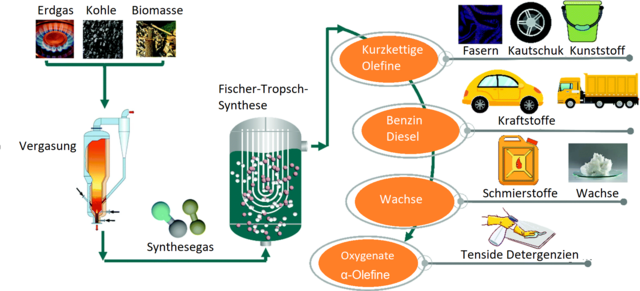
Fischer-Tropsch Process

Case Study 2: German Logistics and the Bio-Diesel Experiment

Challenge: Fueling a Far-Flung Military and Civilian Infrastructure

Germany faced a dual challenge: supplying a massive, highly mechanized military campaign while keeping the domestic civilian economy functional. While military transport relied heavily on synthetic fuel created through the Fischer-Tropsch process, the civilian sector and local military transport units required mass-market alternatives.

Innovation Intervention: Blended Fuels and Infrastructure Adaptation

Beyond wood gas, German innovation focused on blended fuels. A crucial adaptation was the widespread use of methanol, ethanol, and various bio-diesels (esters derived from vegetable oils) to stretch dwindling petroleum reserves. While wood gasifiers were used on stationary engines and some trucks, the government mandated that local transport fill up with methanol-gasoline blends. This forced a massive, distributed shift in fuel pump calibration and engine tuning across occupied Europe.

  • The adaptation required hundreds of thousands of local mechanics, from France to Poland, to quickly unlearn traditional engine maintenance and become experts in the delicate tuning required for lower-energy blended fuels.
  • This placed the burden of innovation not on a central R&D lab, but on the front-line workforce — a pure example of Human-Centered Innovation at the operational level.

The Innovation Impact:

This case highlights how resource constraints force innovation across the entire value chain. Germany’s transport system survived its oil blockade not just through wood gasifiers, but through a constant, low-grade innovation treadmill of fuel substitution, blending, and local adaptation that enabled maximum optionality under duress. The lesson is that resilience comes from flexibility and decentralization.

Conclusion: The Gasogene Mindset for the Modern Era

The wood-fired car is not a relic of the past; it is a powerful metaphor for the challenges we face today. We are currently facing the scarcity of time, carbon space, and public trust. We are entirely reliant on systems that, while efficient in normal times, are dangerously fragile under stress. The shift to sustainability, the move away from centralized energy grids, and the adoption of closed-loop systems all require the Gasogene Mindset — the ability to pivot rapidly to local, available resources and fundamentally rethink the consumption model.

Modern innovators must ask: If our critical resource suddenly disappeared, what would we use instead? The answer should drive our R&D spending today. The history of the gasogene vehicle proves that sufficiency is the mother of ingenuity, and the greatest innovations often solve the problem of survival first. We must learn to innovate under constraint, not just in comfort.

“The wood-fired car teaches us that every constraint is a hidden resource, if you are creative enough to extract it.” — Braden Kelley

Frequently Asked Questions About Wood Gas Vehicles

1. How does a wood gas vehicle actually work?

The vehicle uses a gasifier that burns wood or charcoal in a low-oxygen environment (a process called pyrolysis). This creates a gas mixture (producer gas) which is then cooled, filtered, and fed directly into the vehicle’s standard internal combustion engine to power it, replacing gasoline.

2. How did the performance of a wood gas vehicle compare to gasoline?

Gasogene cars provided significantly reduced performance, typically delivering only 50-60% of the power of the original gasoline engine. They were slower, had lower top speeds, required frequent refueling with wood, and needed a 15-30 minute warm-up period to start producing usable gas.

3. Why aren’t these systems used today, given their sustainability?

The system is still used in specific industrial and remote applications (power generation), but not widely in transportation because of the convenience and energy density of liquid fuels. Wood gasifiers are large, heavy, require constant manual fueling and maintenance (clinker removal), and produce a low-energy gas that limits speed and range, making them commercially unviable against modern infrastructure.

Your first step toward a Gasogene Mindset: Identify one key external resource your business or team relies on (e.g., a software license, a single supplier, or a non-renewable material). Now, design a three-step innovation plan for a world where that resource suddenly disappears. That plan is your resilience strategy.

Disclaimer: This article speculates on the potential future applications of cutting-edge scientific research. While based on current scientific understanding, the practical realization of these concepts may vary in timeline and feasibility and are subject to ongoing research and development.

Image credit: Google Gemini

Subscribe to Human-Centered Change & Innovation WeeklySign up here to get Human-Centered Change & Innovation Weekly delivered to your inbox every week.

The Wood-Fired Automobile

WWII’s Forgotten Lesson in Human-Centered Resourcefulness

LAST UPDATED: December 14, 2025 at 1:01 PM

The Wood-Fired Automobile

GUEST POST from Art Inteligencia

Innovation is often romanticized as the pursuit of the new — sleek electric vehicles, AI algorithms, and orbital tourism. Yet, the most profound innovation often arises not from unlimited possibility, but from absolute scarcity. The Second World War offers a stark, compelling lesson in this principle: the widespread adoption of the wood-fired automobile, or the gasogene vehicle.

In the 1940s, as global conflict choked off oil supplies, nations across Europe and Asia were suddenly forced to find an alternative to gasoline to keep their civilian and military transport running. The solution was the gas generator (or gasifier), a bulky metal unit often mounted on the rear or side of a vehicle. This unit burned wood, charcoal, or peat, not for heat or steam, but for gas. The process — pyrolysis — converted solid fuel into a combustible mixture of carbon monoxide, hydrogen, and nitrogen known as “producer gas” or “wood gas,” which was then filtered and fed directly into the vehicle’s conventional internal combustion engine. This adaptation was a pure act of Human-Centered Innovation: it preserved mobility and economic function using readily available, local resources, ensuring the continuity of life amidst crisis.

The Scarcity Catalyst: Unlearning the Oil Dependency

Before the war, cars ran on gasoline. When the oil dried up, the world faced a moment of absolute unlearning. Governments and industries could have simply let transportation collapse, but the necessity of maintaining essential services (mail, food distribution, medical transport) forced them to pivot to what they had: wood and ingenuity. This highlights a core innovation insight: the constraints we face today — whether supply chain failures or climate change mandates — are often the greatest catalysts for creative action.

Gasogene cars were slow, cumbersome, and required constant maintenance, yet their sheer existence was a triumph of adaptation. They provided roughly half the power of a petrol engine, requiring drivers to constantly downshift on hills and demanding a long, smoky warm-up period. But they worked. The innovation was not in the vehicle itself, which remained largely the same, but in the fuel delivery system and the corresponding behavioral shift required by the drivers and mechanics.

Case Study 1: Sweden’s Total Mobilization of Wood Gas

Challenge: Maintaining Neutrality and National Mobility Under Blockade

During WWII, neutral Sweden faced a complete cutoff of its oil imports. Without liquid fuel, the nation risked economic paralysis, potentially undermining its neutrality and ability to supply its citizens. The need was immediate and total: convert all essential vehicles.

Innovation Intervention: Standardization and Centralization

Instead of relying on fragmented, local solutions, the Swedish government centralized the gasifier conversion effort. They established the Gasogenkommittén (Gas Generator Committee) to standardize the design, production, and certification of gasifiers (known as gengas). Manufacturers such as Volvo and Scania were tasked not with building new cars, but with mass-producing the conversion kits.

  • By 1945, approximately 73,000 vehicles — nearly 90% of all Swedish vehicles, from buses and trucks to farm tractors and private cars — had been converted to run on wood gas.
  • The government created standardized wood pellet specifications and set up thousands of public wood-gas fueling stations, turning the challenge into a systematic, national enterprise.

The Innovation Impact:

Sweden demonstrated that human resourcefulness can completely circumvent a critical resource constraint at a national scale. The conversion was not an incremental fix; it was a wholesale, government-backed pivot that secured national resilience and mobility using entirely domestic resources. The key was standardized conversion — a centralized effort to manage distributed complexity.

Fischer-Tropsch Process

Case Study 2: German Logistics and the Bio-Diesel Experiment

Challenge: Fueling a Far-Flung Military and Civilian Infrastructure

Germany faced a dual challenge: supplying a massive, highly mechanized military campaign while keeping the domestic civilian economy functional. While military transport relied heavily on synthetic fuel created through the Fischer-Tropsch process, the civilian sector and local military transport units required mass-market alternatives.

Innovation Intervention: Blended Fuels and Infrastructure Adaptation

Beyond wood gas, German innovation focused on blended fuels. A crucial adaptation was the widespread use of methanol, ethanol, and various bio-diesels (esters derived from vegetable oils) to stretch dwindling petroleum reserves. While wood gasifiers were used on stationary engines and some trucks, the government mandated that local transport fill up with methanol-gasoline blends. This forced a massive, distributed shift in fuel pump calibration and engine tuning across occupied Europe.

  • The adaptation required hundreds of thousands of local mechanics, from France to Poland, to quickly unlearn traditional engine maintenance and become experts in the delicate tuning required for lower-energy blended fuels.
  • This placed the burden of innovation not on a central R&D lab, but on the front-line workforce — a pure example of Human-Centered Innovation at the operational level.

The Innovation Impact:

This case highlights how resource constraints force innovation across the entire value chain. Germany’s transport system survived its oil blockade not just through wood gasifiers, but through a constant, low-grade innovation treadmill of fuel substitution, blending, and local adaptation that enabled maximum optionality under duress. The lesson is that resilience comes from flexibility and decentralization.

Conclusion: The Gasogene Mindset for the Modern Era

The wood-fired car is not a relic of the past; it is a powerful metaphor for the challenges we face today. We are currently facing the scarcity of time, carbon space, and public trust. We are entirely reliant on systems that, while efficient in normal times, are dangerously fragile under stress. The shift to sustainability, the move away from centralized energy grids, and the adoption of closed-loop systems all require the Gasogene Mindset — the ability to pivot rapidly to local, available resources and fundamentally rethink the consumption model.

Modern innovators must ask: If our critical resource suddenly disappeared, what would we use instead? The answer should drive our R&D spending today. The history of the gasogene vehicle proves that sufficiency is the mother of ingenuity, and the greatest innovations often solve the problem of survival first. We must learn to innovate under constraint, not just in comfort.

“The wood-fired car teaches us that every constraint is a hidden resource, if you are creative enough to extract it.” — Braden Kelley

Frequently Asked Questions About Wood Gas Vehicles

1. How does a wood gas vehicle actually work?

The vehicle uses a gasifier that burns wood or charcoal in a low-oxygen environment (a process called pyrolysis). This creates a gas mixture (producer gas) which is then cooled, filtered, and fed directly into the vehicle’s standard internal combustion engine to power it, replacing gasoline.

2. How did the performance of a wood gas vehicle compare to gasoline?

Gasogene cars provided significantly reduced performance, typically delivering only 50-60% of the power of the original gasoline engine. They were slower, had lower top speeds, required frequent refueling with wood, and needed a 15-30 minute warm-up period to start producing usable gas.

3. Why aren’t these systems used today, given their sustainability?

The system is still used in specific industrial and remote applications (power generation), but not widely in transportation because of the convenience and energy density of liquid fuels. Wood gasifiers are large, heavy, require constant manual fueling and maintenance (clinker removal), and produce a low-energy gas that limits speed and range, making them commercially unviable against modern infrastructure.

Your first step toward a Gasogene Mindset: Identify one key external resource your business or team relies on (e.g., a software license, a single supplier, or a non-renewable material). Now, design a three-step innovation plan for a world where that resource suddenly disappears. That plan is your resilience strategy.

Disclaimer: This article speculates on the potential future applications of cutting-edge scientific research. While based on current scientific understanding, the practical realization of these concepts may vary in timeline and feasibility and are subject to ongoing research and development.

Image credit: Google Gemini

Subscribe to Human-Centered Change & Innovation WeeklySign up here to get Human-Centered Change & Innovation Weekly delivered to your inbox every week.

Should Owners or Employees Come First?

Should Owners or Employees Come First?

GUEST POST from Stefan Lindegaard

“It’s crucial that we succeed in securing a competitive return for our owners and meet the expectations of consumers and society. But the foundation for all of this is creating a workplace and a culture that attracts the best talent.”

– Niels Duedahl, CEO at Danish Crown

Yes, it’s always a balance.

But it’s telling how Niels Duedahl sees people and culture as the true foundation.

I couldn’t agree more.

If we don’t get the workplace right, nothing else will follow.

What about you – how do you see it?

Image Credit: Pexels

Subscribe to Human-Centered Change & Innovation WeeklySign up here to get Human-Centered Change & Innovation Weekly delivered to your inbox every week.

Bio-Computing & DNA Data Storage

The Human-Centered Future of Information

LAST UPDATED: December 12, 2025 at 5:47 PM

Bio-Computing & DNA Data Storage

GUEST POST from Art Inteligencia

We are drowning in data. The digital universe is doubling roughly every two years, and our current infrastructure — reliant on vast, air-conditioned server farms — is neither environmentally nor economically sustainable. This is where the most profound innovation of the 21st century steps in: DNA Data Storage. Rather than using the binary zeroes and ones of silicon, we leverage the four-base code of life — Adenine (A), Cytosine (C), Guanine (G), and Thymine (T) — to encode information. This transition is not merely an improvement; it is a fundamental shift that aligns our technology with the principles of Human-Centered Innovation by prioritizing sustainability, longevity, and density.

The scale of this innovation is staggering. DNA is the most efficient information storage system known. Theoretically, all the world’s data could be stored in a volume smaller than a cubic meter. This level of density, combined with the extreme longevity of DNA (which can last for thousands of years when properly preserved), solves the two biggest crises facing modern data: decay and footprint. We must unlearn the limitation of physical space and embrace biology as the ultimate hard drive. Bio-computing, the application of molecular reactions to perform complex calculations, is the natural, faster counterpart to this massive storage potential.

The Three Pillars of the Bio-Data Revolution

The convergence of biology and information technology is built on three revolutionary pillars:

1. Unprecedented Data Density

A single gram of DNA can theoretically store over 215 petabytes (215 million gigabytes) of data. Compared to a standard hard drive, which requires acres of physical space to house that much information, DNA provides an exponential reduction in physical footprint. This isn’t just about saving space; it’s about decentralizing data storage and dramatically reducing the need for enormous, vulnerable, power-hungry data centers. This density makes truly long-term archival practical for the first time.

2. Extreme Data Longevity

Silicon-based media, such as hard drives and magnetic tape, are ephemeral. They require constant maintenance, migration, and power to prevent data loss, with a shelf life often measured in decades. DNA, in contrast, has proven its stability over millennia. By encapsulating synthetic DNA in glass or mineral environments, the stored data becomes essentially immortal, eliminating the costly and energy-intensive practice of data migration every few years. This shifts the focus from managing hardware to managing the biological encapsulation process.

3. Low Energy Footprint

Traditional data centers consume vast amounts of electricity, both for operation and, critically, for cooling. The cost and carbon footprint of this consumption are rapidly becoming untenable. DNA data storage requires energy primarily during the initial encoding (synthesis) and subsequent decoding (sequencing) stages. Once stored, the data is inert, requiring zero power for preservation. This radical reduction in operational energy makes DNA storage an essential strategy for any organization serious about sustainable innovation and ESG goals.

Leading the Charge: Companies and Startups

This nascent but rapidly accelerating industry is attracting major players and specialized startups. Large technology companies like Microsoft and IBM are deeply invested, often in partnership with specialized biotech firms, to validate the technology and define the industrial standard for synthesis and sequencing. Microsoft, in collaboration with the University of Washington, was among the first to successfully encode and retrieve large files, including the entire text of the Universal Declaration of Human Rights. Meanwhile, startups are focusing on making the process more efficient and commercially viable. Twist Bioscience has become a leader in DNA synthesis, providing the tools necessary to write the data. Other emerging companies like Catalog are working on miniaturizing and automating the DNA storage process, moving the technology from a lab curiosity to a scalable, automated service. These players are establishing the critical infrastructure for the bio-data ecosystem.

Case Study 1: Archiving Global Scientific Data

Challenge: Preserving the Integrity of Long-Term Climate and Astronomical Records

A major research institution (“GeoSphere”) faced the challenge of preserving petabytes of climate, seismic, and astronomical data. This data needs to be kept for over 100 years, but the constant migration required by magnetic tape and hard drives introduced a high risk of data degradation, corruption, and enormous archival cost.

Bio-Data Intervention: DNA Encapsulation

GeoSphere partnered with a biotech firm to conduct a pilot program, encoding its most critical reference datasets into synthetic DNA. The data was converted into A, T, C, G sequences and chemically synthesized. The resulting DNA molecules were then encapsulated in silica beads for long-term storage.

  • The physical volume required to store the petabytes of data was reduced from a warehouse full of tapes to a container the size of a shoebox.
  • The data was found to be chemically stable with a projected longevity of over 1,000 years without any power or maintenance.

The Innovation Impact:

The shift to DNA storage solved GeoSphere’s long-term sustainability and data integrity crisis. It demonstrated that DNA is the perfect medium for “cold” archival data — vast amounts of information that must be kept secure but are infrequently accessed. This validated the role of DNA as a non-electronic, permanent archival solution.

Case Study 2: Bio-Computing for Drug Discovery

Challenge: Accelerating Complex Molecular Simulations in Pharmaceutical R&D

A pharmaceutical company (“BioPharmX”) was struggling with the computational complexity of molecular docking — simulating how millions of potential drug compounds interact with a target protein. Traditional silicon supercomputers required enormous time and electricity to run these optimization problems.

Bio-Data Intervention: Molecular Computing

BioPharmX explored bio-computing (or molecular computing) using DNA strands and enzymes. By setting up the potential drug compounds as sequences of DNA and allowing them to react with a synthesized protein target (also modeled in DNA), the calculation was performed not by electrons, but by molecular collision and selection.

  • Each possible interaction became a physical, parallel chemical reaction taking place simultaneously in the solution.
  • This approach solved the complex Traveling Salesman Problem (a key metaphor for optimization) faster than traditional electronic systems because of the massive parallelism inherent in molecular interactions.

The Innovation Impact:

Bio-computing proved to be a highly efficient, parallel processing method for solving specific, combinatorial problems related to drug design. This allowed BioPharmX to filter billions of potential compounds down to the most viable candidates in a fraction of the time, dramatically accelerating their R&D pipeline and showcasing the power of biological systems as processors.

Conclusion: The Convergence of Life and Logic

The adoption of DNA data storage and the development of bio-computing mark a pivotal moment in the history of information technology. It is a true embodiment of Human-Centered Innovation, pushing us toward a future where our most precious data is stored sustainably, securely, and with a life span that mirrors humanity’s own. For organizations, the question is not if to adopt bio-data solutions, but when and how to begin building the competencies necessary to leverage this biological infrastructure. The future of innovation is deeply intertwined with the science of life itself. The next great hard drive is already inside you.

“If your data has to last forever, it must be stored in the medium that was designed to do just that.”

Frequently Asked Questions About Bio-Computing and DNA Data Storage

1. How is data “written” onto DNA?

Data is written onto DNA using DNA synthesis machines, which chemically assemble the custom sequence of the four nucleotide bases (A, T, C, G) according to a computer algorithm that converts binary code (0s and 1s) into the base-four code of DNA.

2. How is the data “read” from DNA?

Data is read from DNA using standard DNA sequencing technologies. This process determines the exact sequence of the A, T, C, and G bases, and a reverse computer algorithm then converts this base-four sequence back into the original binary code for digital use.

3. What is the current main barrier to widespread commercial adoption?

The primary barrier is the cost and speed of the writing (synthesis) process. While storage density and longevity are superior, the current expense and time required to synthesize vast amounts of custom DNA make it currently viable only for “cold” archival data that is accessed very rarely, rather than for “hot” data used daily.

Your first step into bio-data thinking: Identify one dataset in your organization — perhaps legacy R&D archives or long-term regulatory compliance records — that has to be stored for 50 years or more. Calculate the total cost of power, space, and periodic data migration for that dataset over that time frame. This exercise will powerfully illustrate the human-centered, sustainable value proposition of DNA data storage.

Disclaimer: This article speculates on the potential future applications of cutting-edge scientific research. While based on current scientific understanding, the practical realization of these concepts may vary in timeline and feasibility and are subject to ongoing research and development.

Image credit: Google Gemini

Subscribe to Human-Centered Change & Innovation WeeklySign up here to get Human-Centered Change & Innovation Weekly delivered to your inbox every week.

Do You Have the Courage to Speak Up Against Conformity?

Do You Have the Courage to Speak Up Against Conformity?

GUEST POST from Mike Shipulski

If you see things differently than others, congratulations. You’re thinking for yourself.

If you find yourself pressured into thinking like everyone else, that’s a sign your opinion threatens. It’s too powerful to be dismissed out-of-hand, and that’s why they want to shut you up.

If the status quo is angered by your theory, you’re likely onto something. Stick to your guns.

If your boss doesn’t want to hear your contrarian opinion, that’s because it cannot be easily dismissed. That’s reason enough to say it.

If you disagree in a meeting and your sentiment is actively dismissed, dismiss the dismisser. And say it again.

If you’re an active member of the project and you are not invited to the meeting, take it as a compliment. Your opinion is too powerful to defend against. The only way for the group-think to survive is to keep you away from it. Well done.

If your opinion is actively and repeatedly ignored, it’s too powerful to be acknowledged. Send a note to someone higher up in the organization. And if that doesn’t work, send it up a level higher still. Don’t back down.

If you look into the future and see a train wreck, set up a meeting with the conductor and tell them what you see.

When you see things differently, others will try to silence you and tell you you’re wrong. Don’t believe them. The world needs people like you who see things as they are and have the courage to speak the truth as they see it.

Thank you for your courage.

Image credit: Unsplash

Subscribe to Human-Centered Change & Innovation WeeklySign up here to join 17,000+ leaders getting Human-Centered Change & Innovation Weekly delivered to their inbox every week.

Does Every Customer Get Your First-Time Energy?

Does Every Customer Get Your First-Time Energy?

GUEST POST from Shep Hyken

While this isn’t formal research, I’ve asked many people the question, “What do you think is the most common question that customers ask employees?” I made the point that this isn’t about calling customer support; it’s a people-to-people interaction.

Almost everyone answers correctly: “Where’s the bathroom?”

If you were asked that every day – sometimes multiple times throughout the day – at what point would you start to act frustrated with any customer who asked you that question?

Here’s the point: The 50th person asking you where the bathroom is doesn’t know they are the 50th person. For them, it’s their first time asking you, and your response should make them feel that way.

This reminds me of my days performing magic shows at trade shows. One of my clients hired me for 10 straight days, during which time I performed twelve 20-minute shows daily – that’s 120 shows!

After the final show, my client asked, “How is it that after doing all of those shows throughout the week, you seem to be just as fresh as the first show?”

Feels Like the First Time Shep Hyken Cartoon

I hadn’t thought about it, but with not much thought, I answered, “I think about each audience. Everyone in the audience deserves my best effort and energy, as if they were my first. If I came off as bored or tired, I’d be letting them down, not to mention letting my client down. So, even though I may have performed the same tricks and delivered the same lines for every show, each audience – even the 120th audience after 119 shows – deserved my very best effort – my first-time energy.”

When a server at a restaurant recites the daily specials for the 12th time that night, do you want to hear them delivered with enthusiasm or with the boredom of repetition? Or maybe it’s a chef who has been asked 20 times a night for many years to prepare a dish that earned him a reputation and keeps customers coming back again and again.

Baseball legend Joe DiMaggio understood this principle perfectly. The story is a perfect example of this concept. A reporter interviewed DiMaggio and asked why he played every game so hard. He replied, “Because there might have been somebody in the stands today who’d never seen me play before and might never see me again.”

The best employees, chefs, athletes, and entertainers understand that repetition is their challenge, not the customer’s problem. They find ways to keep their responses and reactions fresh, be it the first or 500th time. This mindset transforms an ordinary customer experience into something extraordinary. Every customer deserves your first-time energy.

Image credit: Pixabay

Subscribe to Human-Centered Change & Innovation WeeklySign up here to join 17,000+ leaders getting Human-Centered Change & Innovation Weekly delivered to their inbox every week.

What’s Next for Humanity in the Age of Acceleration?

Polycrisis

What's Next for Humanity in the Age of Acceleration?

GUEST POST from Robert B. Tucker

Never in the three decades I’ve been a practicing futurist have I been so uncertain about what lies ahead. Think of the many issues that confront humanity right now: a nagging war in Ukraine, job loss due to automation and AI, the rise of authoritarianism in the U.S. and other countries, and potential bubbles setting off the next global financial crisis.

The future arriving at our doorstep will be unlike anything we’ve seen before. As I illustrate in Build a Better Future, a book that probes where we’re headed in the next 10 years, colliding issues such as these are likely to ignite the next “polycrisis,” a disruption where multiple crises occur simultaneously, interacting in ways that amplify their overall impact.

Unlike isolated crises, a polycrisis involves interconnected challenges that feed into one another, making them harder to resolve.

The COVID-19 pandemic gave us a stark illustration of how a polycrisis ignites. What started as a flu virus in Wuhan, China, quickly morphed into a public health crisis, economic meltdown, supply chain disruption, and a social upheaval, all at once.

More recently, the CrowdStrike crisis on July 19, 2024, was a stark reminder of just how deeply interconnected our systems have become and how fragile our systems are.

On July 19, 2024, thousands of travelers found themselves stranded in airports worldwide as flights were canceled en masse, their carefully laid plans thrown into disarray. In hospitals, the consequences were even more dire. Emergency rooms struggled to access patient records, delaying critical treatments and surgeries, while doctors and nurses were left scrambling to work around the digital blackout.

Meanwhile, as ATM’s stopped working, banking customers faced their own disruptions, transactions froze, and businesses and consumers were unable to process payments. While Microsoft was able to restore systems in a matter of days, it was a polycrisis wake-up call — a seemingly isolated tech failure that cascaded into worldwide economic turmoil, public frustration, and operational paralysis, exposing just how vulnerable we are to the unintended consequences of our digital era dependencies.

The war in Ukraine is an example of a poly-crisis multiplier. What started as a regional conflict quickly became a geopolitical crisis unseen since WWII. As Europe scrambled for alternatives to Russian gas, a food crisis ensued as wheat exports from the region ground to a halt, and an inflationary shock rippled through global markets. Layer in climate-driven disasters — wildfires in Canada blanketing the U.S. East Coast in smoke, record-setting heat waves in the Middle East, and extreme flooding in Asia—and you begin to see how today’s crises can combine and multiply.

The rapid advance of technology is bringing both promise and peril. AI and automation upend industries, displacing millions, while social media platforms — once heralded as tools for global connectivity — become breeding grounds for misinformation and disinformation that further erode trust in institutions.

Add to this a world where biodiversity loss threatens food security, and geopolitical conflicts spark energy crises that send shockwaves through global markets. Those who can anticipate these polycrises and navigate their complexities will not just survive, they will prevail in the future.

Looking ahead at the rapid proliferation of AI and the trend of nationalism and isolation, the world is facing not just individual problems, but deeply intertwined issues that exacerbate one another and require holistic, systemic approaches. The question is: are we prepared?

This article originally appeared in Forbes

Image credit: Pexels

Subscribe to Human-Centered Change & Innovation WeeklySign up here to get Human-Centered Change & Innovation Weekly delivered to your inbox every week.

How Knowledge Emerges

Understanding Epistemology

How Knowledge Emerges - Understanding Epistemology

GUEST POST from Geoffrey A. Moore

Epistemology is that branch of philosophy that addresses the theory of knowledge. But what do philosophers mean by knowledge? Traditionally, it is defined as justified true belief, and it is established by applying logic and reason to whatever set of claims is under discussion. That is the path we are going to follow here as well. But to get the full picture, we need to look at both knowledge and knowing through the lens of emergence.

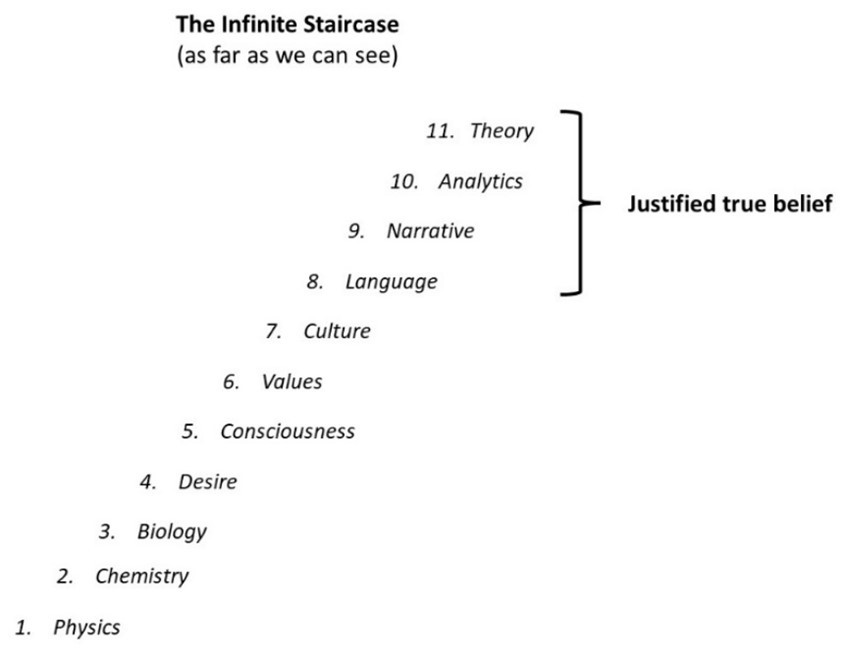
In The Infinite Staircase, we offered a global model of emergence that seeks to span all of reality, organizing itself around eleven stairs, as follows:

Infinite Staircase Geoffrey Moore

Justified true belief is a product of reason employing the top four stairs of language, narrative, analytics, and theory to test claims to truth. It is the cumulative impact of all these stairs building one atop the next that allows knowledge to ultimately emerge in its fullest sense. That is the path we are about to trace. Before so doing, however, we should acknowledge that there are seven stairs below language, all of which are “pre-linguistic,” that also seep into the way we know things. A complete epistemology would therefore go all the way down to the bottom stair, with particular attention to culture (what we learn from others) and values (what we learn from mammalian nurture and governance). Nonetheless, we are going to focus on just the top four because that is where the bulk of the action is.

Beginning with the stair of language, its major contribution to justified true belief is its ability to communicate facts. All facts are expressed through declarative sentences. Each sentence makes a claim. What makes a claim a fact is that we are willing to accept its assertion without further verification or validation. For the ultimate skeptic who is never willing to do this, there are no facts. For the rest of us, who are continually making real-life decisions in real-time, facts are necessary, and we accept or reject claims of fact based on the information we have at hand, including the reliability of the source and the probability of the claim given current circumstances.

That said, facts by themselves don’t mean much. What gives them meaning are narratives. Narrative is the cornerstone of all knowledge, the medium by which we communicate beliefs. The book of Genesis represents one such belief-supporting narrative, The Origin of Species another, the Big Bang a third. Each of these narratives not only explains how things have come to be as they are, at the same time they foreshadow how they can be expected to turn out in the future. Whether it is the hand of God, the workings of natural selection, or the ceaseless operation of the Second Law of Thermodynamics, narratives spotlight the governing forces in whatever situation they describe. That in turn lets us identify actions we can take to turn our situation to best advantage. Narratives, in other words, are essential equipment for any kind of decision-making. The question, however, is are they credible?

This is where analytics comes in. The role of analytics is to justify belief in the claims embedded in the narrative. In The Infinite Staircase, I summarize Stephen Toulmin’s model for conducting such an analysis. It is organized around six elements:

  1. What are the claims being made? Are they clear, precise, and unambiguous?
  2. What evidence is there that these claims might be true? What are the facts of the case as best we can determine them?
  3. What warrants us to believe that this evidence supports these claims? Are there clear lines of reasoning that take us from the facts to the claims and back?
  4. Do the warrants themselves require additional backing to be credible? Is there evidence to support their claims?
  5. What counter-arguments could potentially invalidate our claims, and do we have a credible rebuttal to refute them?
  6. Where do we draw the line between our claims and these alternatives?
  7. Based on all five precious steps, is there some qualification we can apply to our claim to secure its overall justification more firmly? What is our final statement of our core claim?

By applying this model to our beliefs, we can transform them into justified beliefs. But that still begs one question: are they true?

To address the question of truth, we have to draw upon the resources of the highest stair in our model, the one labeled theory. There are multiple theories of truth, but three stand out in particular:

  1. The correspondence theory, which says that claims are true when they are consistent with how things actually turn out to be, leading to a verifiable view of the world.
  2. The coherence theory, which says that claims are true when they are consistent with all the other claims you believe, leading to a coherent view of the world.
  3. The pragmatism theory, which says that claims are true when you act on them and your actions are consistent with your intentions, leading to an effective view of the world.

Rather than think of these theories as competing with one another, consider them as three dimensions of one and the same thing, namely knowledge that helps further one’s strategy for living. In that context, knowledge does indeed consist of justified true beliefs. It emerges from language contributing facts, interacting with narratives contributing beliefs, tested by analytics contributing justification, and confirmed by theory contributing truth. In this context, it is neither complicated nor mysterious.

That’s what I think. What do you think?

Image Credit: Pexels

Subscribe to Human-Centered Change & Innovation WeeklySign up here to join 17,000+ leaders getting Human-Centered Change & Innovation Weekly delivered to their inbox every week.