FCEVs, and the Pragmatic Pivot in Eco-Conscious Mobility
LAST UPDATED: June 19, 2026 at 4:11 PM
GUEST POST from Art Inteligencia
The Great Grid Contraction and the Consumer Revolt
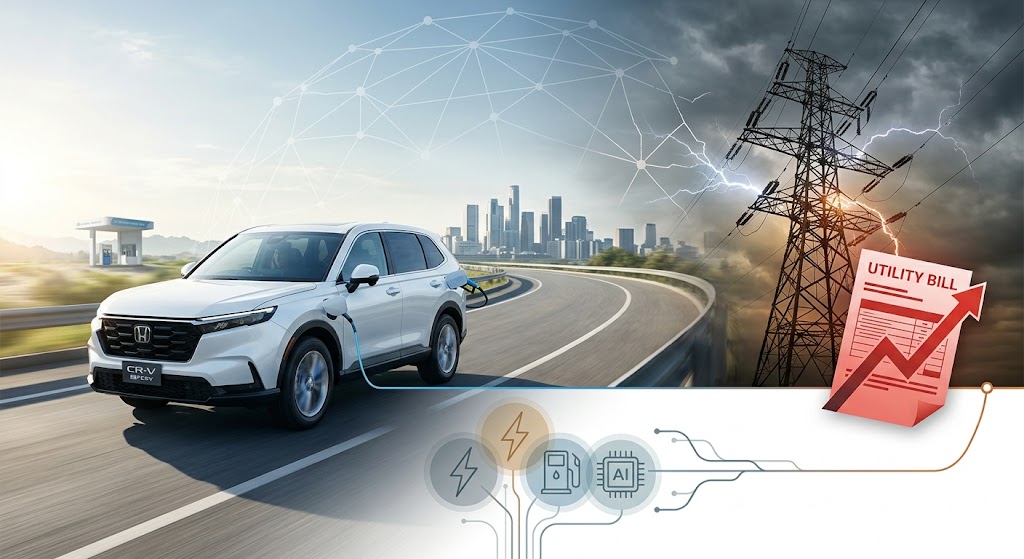
A perfect storm is hitting the aging American energy grid. On one side, residential electricity costs are hitting historic highs as utilities scramble to fund infrastructure upgrades. On the other, the nation faces a massive, unprecedented surge in energy demand driven by the expansion of AI data centers — a technological race America must win to maintain global economic leadership.
For the everyday consumer, this collision is creating massive experience friction. The original economic promise of electric vehicles — the idea of “fueling up for cheap at home” — is rapidly eroding when charging a high-capacity battery overnight becomes a glaring, high-impact line item on a strained household budget. Forcing millions of new vehicles onto the grid while simultaneously enacting localized natural gas bans creates a single point of failure that stresses both family finances and municipal infrastructure.
The Strategic Pivot: A Case for Pragmatic Change Management
True innovation never forces people into an unstable, single-source bottleneck. Instead of top-down mandates that ignore current physical and economic realities, a human-centered approach to mobility demands a strategic pause. We must allow power generation infrastructure to catch up to our digital ambitions while diversifying our energy portfolio to keep the economy resilient.
By hitting the brakes on aggressive EV sales timelines and restoring energy choice through the repeal of natural gas restrictions, we can protect the grid for vital computing infrastructure. This pragmatic pivot shifts the spotlight back to highly efficient internal combustion hybrids and adaptive, forward-looking alternatives like the plug-in hydrogen fuel cell hybrid. It is time to design for the world we actually inhabit, ensuring a stable foundation for both physical mobility and digital transformation.
Case Study: Is the Honda CR-V e:FCEV a True Innovation?
The traditional fuel cell electric vehicle (FCEV) market has long suffered from a classic chicken-and-egg dilemma: consumers won’t buy hydrogen cars without a refueling network, and stakeholders won’t build stations without cars on the road. Past pioneers forced an rigid, all-or-nothing infrastructure choice onto the driver. The Honda CR-V e:FCEV represents a true paradigm shift because it introduces a human-centered, adaptive approach — the co-creation of convenience.
Hand-assembled at Honda’s Performance Manufacturing Center in Marysville, Ohio, the vehicle represents a major technological leap by combining two distinct zero-emission engineering principles into a single, cohesive customer experience.
The Twin-Engine Topology: Designing for Real-World Ecosystems
Instead of forcing the driver to rely solely on public hydrogen networks, the CR-V e:FCEV integrates a dual-energy architecture that adapts directly to the user’s daily habits and local infrastructure constraints:
- The 17.7-kWh Plug-In On-Board Battery: This lithium-ion system grants approximately 29 miles of pure electric, battery-powered range on a full charge. For the eco-conscious consumer, this handles the vast majority of local, daily commuting entirely on household electricity. Because the battery capacity is modest compared to a massive 100-kWh pure electric vehicle, it charges rapidly on standard Level 1 or Level 2 equipment without triggering expensive panel upgrades or severe local grid stress.
- The Next-Generation Fuel Cell Stack: Co-developed through a landmark engineering joint venture with General Motors, this advanced proton-exchange membrane system represents a massive manufacturing milestone. Built at Fuel Cell System Manufacturing (FCSM) in Michigan, the co-developed stack achieves double the durability while reducing production costs by two-thirds compared to previous generations. Feeding from dual 10,000 psi high-pressure tanks holding 4.3 kilograms of compressed hydrogen gas, it delivers an overall 270-mile EPA range rating and refuels completely in just 3 to 5 minutes.
The Verdict from an Experience Design Perspective
From an innovation management standpoint, the CR-V e:FCEV is a brilliant bridge architecture. It systematically mitigates “range anxiety” and “charging-station downtime friction” simultaneously. True human-centered design acknowledges the messiness of the world as it exists today rather than designing for an idealized, frictionless future. By treating the consumer as an active partner and offering energy flexibility, Honda has created a blueprint for resilient, adaptive mobility.
The Macro Outlook: The Global and American Infrastructure Split
An innovation is only as powerful as the ecosystem that supports it. While the Honda CR-V e:FCEV represents a masterful piece of human-centered engineering, its market viability is completely dependent on regional infrastructure architecture. When we analyze the landscape through a global lens, we see a stark divergence in how different societies are structuring the future of clean mobility.
The American Landscape: Severe Regional Fragmentation
In the United States, the deployment of consumer hydrogen infrastructure remains highly fractured and localized. Outside of California—where early public-private investments attempted to establish initial hydrogen corridors—the vast majority of the American continent remains a complete refueling desert for retail hydrogen consumers. Because of this stark geographical limitation, Honda is rolling out the CR-V e:FCEV as a regional, lease-only vehicle, targeted primarily at markets with established hydrogen ecosystems.
This dynamic illustrates the critical importance of systemic change management: a technological breakthrough cannot scale if the surrounding infrastructure remains trapped in a localized silo. Until federal and state initiatives prioritize comprehensive midstream hydrogen logistics and production, fuel cell vehicles in America will largely serve as specialized, pilot-program solutions rather than mainstream alternatives.
The Global Matrix: Strategic Infrastructure Realignment
Beyond American borders, the strategic playbook changes rapidly, driven by unique geographic, economic, and geopolitical imperatives:
- Europe: The European strategy leans heavily on high-traffic, industrial, and heavy commercial transport corridors. Rather than deploying sparse consumer networks, European nations are prioritizing high-capacity hydrogen refueling hubs along primary freight routes, recognizing that fuel cell technology provides the rapid turnaround times and high-payload capabilities required to decarbonize commercial logistics and public transit networks.
- Asia-Pacific (Japan, South Korea, China): In these high-density urban economies, hydrogen is viewed as a pillar of long-term energy security and a necessary alternative to widespread battery electrification. In cities characterized by massive, multi-tenant residential high-rises, overnight at-home charging for millions of individual battery-electric vehicles is structurally and logistically impossible. Consequently, national policy initiatives are aggressively subsidizing high-pressure hydrogen distribution networks to power both consumer fleets and regional distributed energy grids.
The Strategic Takeaway: Mobility is Not a Monolith
The global divergence in hydrogen adoption proves that the “Future of Mobility” will not be a singular, globally standardized platform. True innovation leaders do not design for a fictional, universally uniform market. They recognize that physical, economic, and geographic constraints dictate technology adoption, requiring diverse, localized innovation architectures to successfully bridge the transition toward a more resilient energy ecosystem.
The Strategic Pause: Aligning Grid Capacity with Sovereign AI Leadership
Forcing a premature, top-down transition to heavy battery-electric vehicles (BEVs) before a stable, affordable, and robust electrical grid exists is an administrative mandate lacking empathy for real-world economic conditions. True innovation requires us to zoom out and analyze the broader macro-ecosystem. Today, a profound industrial conflict is brewing: the rapid, exponential computing requirements of the artificial intelligence revolution are colliding directly with consumer grid capacity.
Winning the global race to lead the AI industry demands unprecedented amounts of stable, high-density, uninterrupted baseload power for next-generation data centers. This computational infrastructure is the primary engine of our future economy. We cannot afford to compromise this critical digital runway by overloading the grid with artificial peak demands from enforced vehicle electrification and short-sighted municipal mandates.
The Policy Recalibration: Pausing Mandates and Restoring Portfolio Diversity
To ensure American economic resilience and technological sovereignty, we must implement a pragmatic change management strategy at the civic, county, and state levels:
- Implementing a Strategic EV Sales Mandate Pause: Policymakers must temporarily halt aggressive timelines and purchasing mandates for pure electric vehicles. This strategic pause buys critical time for public utilities and independent power producers to build out modern, high-capacity generation infrastructure, transition to safer nuclear or advanced clean energy options, and stabilize regional distribution lines.
- Repealing Punitive Natural Gas Bans: Restoring balance requires immediately dismantling localized municipal and state bans on residential and commercial natural gas infrastructure. Forcing space heating, water heating, and cooking completely onto an already strained electrical grid creates a precarious single point of failure. Reinstating natural gas options ensures a diversified energy portfolio and protects citizens from catastrophic grid failures during peak seasonal demand.
The Eco-Conscious Portfolio Approach
From an experience design perspective, innovation should be participatory, not enforced through economic scarcity or utility rate shocks. While the power grid catches up to our digital ambitions, eco-conscious consumers should be empowered to direct their attention toward a highly efficient, diverse mobility portfolio:
- Ultra-Efficient ICE and Traditional Hybrids: Highly optimized internal combustion and standard hybrid technologies deliver exceptional fuel economy (often exceeding 40 to 50 MPG) and immediate carbon reduction today, entirely utilizing existing refueling infrastructure without placing a single watt of additional demand on a fragile electrical grid.
- Plug-In Hydrogen Hybrids (FCEV/BEV Blends): Vehicles engineered with the topology of the Honda CR-V e:FCEV offer an ideal blueprint. By utilizing a small, easily managed battery for local trips and a high-pressure fuel cell stack for extended range, they demonstrate how we can transition toward zero-emission transportation without demanding massive, system-wide grid overhauls.
The path forward requires a shift in focus from subsidizing individual vehicle purchases to fundamentally upgrading our systemic infrastructure. By stabilizing our foundational power generation first, we protect the consumer’s economic reality, maintain grid reliability, and fuel the computational power required to lead the next century of technological innovation.
Conclusion: Designing for the World We Have, Not the One We Want
True change management requires the harmonious alignment of economics, technology, and human behavior. When top-down administrative mandates outpace the physical realities of infrastructure, the system breaks down. Today, as skyrocketing utility costs trigger a widespread consumer revolt and the computational demands of the AI revolution reshape our energy landscape, the primary survival mechanism for both households and economies is flexibility.
The path forward cannot be dictated by rigid, single-source mandates that ignore regional grid limitations. Instead, we must embrace an ecosystem-wide perspective that balances our digital ambitions with physical constraints. By implementing a pragmatic pause on aggressive vehicle electrification, restoring energy choice through the repeal of short-sighted natural gas bans, and allowing power generation infrastructure the runway it needs to catch up, we ensure a more stable and resilient economy.
The Blueprint for Adaptive Mobility
The Honda CR-V e:FCEV serves as a profound beacon of this necessary transition. It stands as an explicit engineering reminder to automakers, regulators, and policy architects alike: the most elegant technology is fundamentally useless if it ignores the economic, geographic, and systemic realities of the environment it inhabits.
By offering a dual-energy paradigm—combining local plug-in convenience with long-range hydrogen capability—it demonstrates how true human-centered innovation can co-create convenience with the consumer. As we look toward the future direction of mobility in America and across the globe, our success will not be measured by how quickly we can force a single solution, but by how skillfully we design diverse, adaptive, and resilient portfolios that empower human progress.
Frequently Asked Questions (FAQ)
What is a plug-in hydrogen fuel cell hybrid vehicle (FCEV)?
Unlike standard fuel cell vehicles that rely exclusively on hydrogen gas, a plug-in fuel cell hybrid integrates a modest, rechargeable lithium-ion battery package with a hydrogen fuel cell stack. This dual-energy architecture allows drivers to plug into standard electrical outlets for short, everyday trips while utilizing high-pressure hydrogen for extended range and rapid 3-to-5-minute refueling on longer journeys.
Can the Honda CR-V e:FCEV run purely on electricity without hydrogen?
Yes. The vehicle features a 17.7-kWh onboard battery that delivers an EPA-rated 29 miles of pure electric driving. For daily, local commuting, you can operate the vehicle entirely as a battery-electric vehicle (BEV), charging it at home overnight without using a single gram of hydrogen gas.
Why are some experts advocating for a strategic pause on absolute EV sales mandates?
The transition to massive, pure-battery electric vehicles is placing extreme stress on an aging electrical grid, contributing to skyrocketing utility rates for consumers. Simultaneously, the explosive growth of artificial intelligence requires massive, uninterrupted baseload power for regional data centers. A strategic pause on vehicle mandates allows public utilities critical time to build out modern power generation infrastructure without triggering grid failures or economic instability.
How does repealing natural gas bans protect the consumer energy experience?
Forcing space heating, water heating, and cooking completely onto the electrical grid creates a precarious single point of failure and drastically increases residential peak loads. Repealing natural gas bans restores energy choice and portfolio diversity, ensuring households remain resilient during extreme weather events while reducing the immediate, artificial demand on regional power grids.
Where can the Honda CR-V e:FCEV be driven today?
Because consumer high-pressure hydrogen refueling infrastructure is highly fractured and primarily localized in California, Honda is rolling out the CR-V e:FCEV through a specialized, regional lease program. It is specifically designed as a bridge innovation, maximizing its utility in regions with established hydrogen ecosystems while offering plug-in electrical flexibility anywhere standard charging equipment is available.
Disclaimer: This article speculates on the potential future applications of cutting-edge scientific research. While based on current scientific understanding, the practical realization of these concepts may vary in timeline and feasibility and are subject to ongoing research and development.
Image credits: Gemini
 Sign up here to get Human-Centered Change & Innovation Weekly delivered to your inbox every week.