5 Simple Keys to Becoming a Powerful Communicator

5 Simple Keys to Becoming a Powerful Communicator

GUEST POST from Greg Satell

Sometimes the hardest thing is merely to make yourself understood. Things that change the world, or even a small part of it, always arrive out of context because, by definition, the world hasn’t changed yet. That’s why innovators need to be great communicators, because an idea that doesn’t gain traction is an idea that fails.

That’s easier said than done. As Fareed Zakaria has put it, “Thinking and writing are inextricably intertwined. When I begin to write, I realize that my ‘thoughts’ are usually a jumble of half-baked, incoherent impulses strung together with gaping logical holes between them.” Clearly, if he struggles, we all do.

Yet the good news is that most people can immensely improve their communication skills by following a few simple rules. While, like any skill, they take a lifetime of practice to hone and perfect, you can start seeing progress within a few hours. It doesn’t matter if you’re an entrepreneur, a senior executive or just starting out, you need to communicate effectively.

1. Clarity Before Creativity, Always

Most people want their writing and speaking to be impressive. They have an idea in their heads of what a “professional” sounds like and they try to emulate those traits. They use big words, infuse acronyms and technical language or try to pluck a choice term or two out of the zeitgeist.

Yet trying to conform to some abstract notion of “professional” or “impressive” is a sure way to garble your message. Instead of trying to impress, just try to be clear. Different people have different conceptions of what they consider to be professional or impressive, but everyone knows what is clear.

The truth is that nobody cares how clever you are if they can’t understand what you’re trying to tell them and few will take the time and effort to figure it out. Most probably, they will assume you haven’t really thought things through and move on to other things.

So as you formulate your message, whether it’s an email, a pitch, a keynote or whatever, continually ask yourself, “how can I make it more clear?”

2. When In Doubt, Take It Out

Born in the late 13th century, William of Ockham was a giant of his age. As one of the few intellectual lights of medieval times, his commentaries on reason, logic and political theory are studied even today. His ideas about the separation of church and state were literally centuries ahead of their time and formed the basis for our own constitutional principle.

Yet he’s best known for Ockham’s Razor, sometimes known as the “principle of parsimony.” Often, the principle is interpreted as “Keep It Simple Stupid,” but that’s not quite right. A much more accurate translation would be, “entities should not be multiplied beyond necessity.” In other words, if something doesn’t need to be there, it shouldn’t be.

A useful device I use for applying Ockham’s razor is to imagine my audience, whether that is a reader or a listener, as having an internal “cognitive budget” they are willing to devote to whatever I’m trying to tell them. Then I judge everything I include by the standard of, “is this worth using up my cognitive budget?”

So be cautious and respectful with your audience’s attention. If you have any doubts whether it needs to be there, it probably doesn’t. Take it out and see if anything meaningful is lost. If not, keep it out and don’t look back.

3. If It Sounds Like Writing, It’s Probably Not Good

When we’re taught to write in school, we’re usually urged to follow a certain form. This often involves an academic, detached tone of voice. For many of the same reasons, when we speak to an audience, our tone takes on a “speaker’s voice. In both cases, the result is that we come off as performative and inauthentic.

Your communication, whether you’re speaking or writing, should sound like you, not someone you’re trying to be at a particular moment. Your vocabulary shouldn’t be significantly different when you write than when you speak. Your grammar and turns of phrase shouldn’t vary too much either. There’s absolutely no reason for you to come off as someone else.

Style should be invisible. If your audience is focusing on how you’re writing or speaking, then that steals cognitive energy away from concentrating on the message you’re trying to communicate. Don’t fall into the trap of trying to sound a certain way, just focus your energy on being as clear as possible.

4. Default To One Point

If you’re going to rob a bank, as a general rule anything you say after “put the money in the bag or I’ll blow your head off,” will be somewhat superfluous. That one simple point is perfectly sufficient for the job at hand. In fact, the uncomfortable pause that follows will probably accentuate the impact of your message.

Now, clearly there are exceptions to the “default to one point” rule. For example, if you kidnapped the teller’s family, that kind of time and effort might warrant adding a second point. Even then though, you might want to let your first point sink in and keep your second point in reserve in case you need to overcome an objection.

Obviously, I’m being facetious and not suggesting anyone actually rob a bank, but the point stands. In most contexts, but especially if you’re on a panel or doing a Q&A session, you’re usually, although not always, better off sticking to one point and making it well than trying to jam in a too much information

And, of course, if they like your one point they’ll be likely to ask for more. That’s how you build a conversation.

5. Dare to be Crap

The hardest thing about starting a project of any sort is that we always compare initial efforts to finished products and, not surprisingly, those efforts always seem to come up short. As Pixar President Ed Catmull wrote in his book, Creativity, Inc., “early on, all of our movies suck.” If it’s true of Pixar movies, it’s probably true of our work.

That makes it really hard to begin writing or scripting, because whatever you first put down is bound to be a disappointment. Your wording will be clumsy, your points will be unclear and you’ll begin to realize that your great idea is actually, as Fareed Zakaria put it, “a jumble of half-baked, incoherent impulses strung together with gaping logical holes between them.”

Your first efforts are always crap. Yet that shouldn’t blind you to the fact that all great works start out that way. As Vladimir Nabokov put it, “writing is rewriting.” The greatness comes not from the initial spark of inspiration, but from the long hours spent honing it down to reveal its core. But before you do that, you need to dare to be crap and produce a first draft.

The truth is that communicating even fairly simple ideas can be very hard work. As in most things, talent is overrated. You produce good work not from having a knack for a clever turn of phrase, but by putting in the effort to express your ideas clearly.

— Article courtesy of the Digital Tonto blog
— Image credit: Unsplash

Subscribe to Human-Centered Change & Innovation WeeklySign up here to join 17,000+ leaders getting Human-Centered Change & Innovation Weekly delivered to their inbox every week.


8 Roles That Make or Break Enterprise Transformation

8 Roles That Make or Break Enterprise Transformation

by Braden Kelley and Chateau G Pato


Which Roles Make or Break Enterprise Transformation? (Short Answer)

Eight roles that make or break enterprise transformation: (1) Sponsor with Levers, (2) Work-Not-Deck Program Lead, (3) Line Manager as Local Change Leader, (4) BAU Receiving Owner, (5) Old-Path Kill Owner, (6) Enablement / Practice Designer, (7) Portfolio Capacity Steward, and (8) Floor Truth Partner. Soft landings staff these jobs — full-time, part-time, or embedded. Hard landings staff titles and still leave the human work vacant.

Enterprise transformation makes or breaks on ownership of the human system — not on another workstream lead with a better title.

Why Don’t Transformation Titles Guarantee These Jobs Are Done?

“Transformation Officer,” “Change Manager,” and “PMO Lead” on an org chart do not prove these eight jobs are done. Soft landings check coverage of mandate, enablement, local coaching, BAU receipt, old-path kill, capacity, and floor truth — regardless of badge.

I have watched programs hire the titles and still manage the deck while the median person’s work never changed. For the method spine behind Leadership, Management, Maintenance, and Portfolio, see 5 Steps of Human-Centered Change. For innovation’s different team-sport catalog, see 10 Innovation Roles Every Enterprise Needs — adjacent ownership, different domain.

Role Owns Break tell
1. Sponsor with Levers Budget/policy/metric/stop power Logo sponsorship; cascades only
2. Work-Not-Deck Lead Behavior + decisions in governance RAG theater; status tours
3. Line Manager Coach Local practice and permission Cascade middle; no coaching time
4. BAU Receiving Owner New way after applause “Project owns it” forever
5. Old-Path Kill Owner Dual-run and shadow death Kindness without a kill date
6. Enablement Designer Practice on real work Completions as capability
7. Capacity Steward What we stop so change can live Stacked initiatives; “and also”
8. Floor Truth Partner Contact evidence in the room Deck greener than the floor

If you cannot name who owns it, the landing already broke.

2. Why Does a Work-Not-Deck Program Lead Make or Break Transformation?

Owns: Program governance that forces decisions, behavior metrics, and tradeoffs — not slide hygiene as the product.

Costume (breaks): Transformation as a reporting factory; green decks, red work.

Make: Decision-first agendas; dual truth (system + human success); cap hours on deck production.

Tell missing: Steering is a tour; few things stop; few owners leave with a real next action. For the diagnostic pattern, see 11 Signs Your Transformation Is Managing the Deck, Not the Work.

3. How Do Line Managers Make or Break Local Change?

Owns: Local permission, coaching, practice time, and “what we stop doing here.”

Costume (breaks): Middle management as cascade amplifiers and attendance police.

Make: Managers develop judgment; protected practice; honest answers to quiet questions.

Tell missing: Town halls loud; team huddles empty of how work actually changes. The hallway questions managers must be ready for live in 10 Questions Employees Quietly Ask During Every Transformation.

4. Who Is the BAU Receiving Owner — and Why Does It Matter?

Owns: The workflow or journey in BAU — handoffs, support, reinforcement, and success behavior after the PMO leaves.

Costume (breaks): “Project owns it” forever; orphan process after cutover cake.

Make: Named receiving owner before go-live; signed transfer; reinforcement rituals.

Tell missing: Hypercare ends; relapse begins; nobody to escalate drift to. Many stalls after the pilot are vacant receiving ownership with a different name — see 9 Reasons Digital Transformations Stall After the Pilot.

5. What Does an Old-Path Kill Owner Do?

Owns: Kill-date honor for legacy process, shadow tools, and “just in case” dual paths.

Costume (breaks): Endless coexistence celebrated as kindness; immortal workarounds.

Make: Time-boxed dual-run; retirement volume tracked; incentives stop rewarding the old way.

Tell missing: New system “up”; median person still lives on the spreadsheet.

6. Why Is an Enablement / Practice Designer Different From “Change Communications”?

Owns: Practice on real work, redesigned jobs, and coaching design — not only comms and e-learning.

Costume (breaks): Completions, town halls, and awareness scores as “change management.”

Make: Time-to-confidence by role; managers as practice partners; enablement equal to the build backlog.

Tell missing: Training green; behavior flat; “resistance” blamed on character. Informed is not enabled.

7. What Does a Portfolio Capacity Steward Protect?

Owns: Organizational load — what initiatives pause, kill, or sequence so humans can succeed.

Costume (breaks): “And also” portfolio; every bet gets a workstream; capacity is someone else’s problem.

Make: Visible stop/start list; change load as a steering metric; permission to refuse new starts.

Tell missing: The quiet question “What will I stop doing?” never gets an answer.

8. Why Does Every Transformation Need a Floor Truth Partner?

Owns: Ride-alongs, verbatim jobs, adoption quality, and the story the deck cannot invent.

Costume (breaks): Sentiment pulses and status narratives substitute for contact.

Make: Every steering pack includes floor evidence; dual truth is allowed in the room.

Tell missing: RAG greener than reality; nobody has watched the median person struggle this month.

How Do You Check Role Coverage Before the Next Steering Committee?

Eight questions:

  1. Who has levers — and used them this month?
  2. Who owns decisions vs deck polish?
  3. Which line managers are coaching practice?
  4. Who receives the work in BAU?
  5. Who owns the old-path kill date?
  6. Who designs enablement as practice?
  7. What did we stop to create capacity?
  8. Where is this month’s floor truth?

Mantra: Staff the ownership. Titles without these eight jobs are just a better org chart for a hard landing.

FAQ: Roles That Make or Break Enterprise Transformation

What roles are needed for enterprise transformation?

Enterprise transformation needs a sponsor with levers, a work-not-deck program lead, line managers as local change leaders, a BAU receiving owner, an old-path kill owner, an enablement/practice designer, a portfolio capacity steward, and a floor truth partner — whether those jobs are full-time titles or embedded responsibilities.

Who owns transformation success?

Transformation success is owned across mandate (sponsor), governance of the work (program lead), local coaching (line managers), BAU receipt and reinforcement, old-path retirement, enablement as practice, portfolio capacity, and floor truth — not by a single Transformation Officer badge alone.

What is a transformation sponsor with levers?

A transformation sponsor with levers holds budget, policy, metric, and stop/start power for the change arc — not only a logo on the cascade deck. If they cannot change the system, they are a mascot.

Why do transformations fail without BAU owners?

Transformations fail without BAU owners because after hypercare the PMO leaves, reinforcement stops, relapse begins, and nobody owns the new way of working — so go-live photographs success while behavior returns to the old path.

What is the difference between a change manager and an enablement designer?

A costume “change manager” often owns communications and training completions. An enablement/practice designer owns practice on real work, redesigned jobs, coaching design, and time-to-confidence — so people can succeed, not only stay informed.

Image credits: Pexels

Content Authenticity Statement: The topic area, key elements to focus on, etc. were decisions made by Braden Kelley, with a little help from Google Gemini and Cursor to clean up the article, add images and create infographics.

Subscribe to Human-Centered Change & Innovation WeeklySign up here to get Human-Centered Change & Innovation Weekly delivered to your inbox every week.

Allocating Resources to Solve Horizon 2

Another Tough Challenge

Allocating Resources to Solve Horizon 2

GUEST POST from Geoffrey A. Moore

We’ve known about this problem forever—how do you find a principled way to allocate budget across three different horizons of ROI.

  • Horizon 1 pays off in the current year and equates to the funding needed for you to make your operating plan and meet or beat investor guidance.
  • Horizon 3 pays off downstream, typically by making a speculative bet on an emerging category or market that would come to fruition in the out years. Since it is still early days, these bets are relatively small and can be measured by and managed to venture milestones.
  • Horizon 2 is the troublemaker. It calls for a material investment in gaining power in the near term in order to compete effectively in the mid-term. That investment will come out of Horizon 1, either from the Performance Zone trying to make the number or from the Productivity Zone trying to supply the needed support to do so, and most likely both.

In short, both internally and externally, Horizon 2 investments are not popular, even though everyone recognizes that they are critical to long-term success. So what is the process by which one can do right by them?

The key is to recognize that the ROI from Horizon 2 is measured in units of power, whereas that from Horizon 1 is measured in units of performance, and that the two must not be mixed. Now, to be clear, performance creates the funding for power, and power creates the foundation for performance, so they are deeply intertwined. But each has its own metrics of success, and the time lag between them says they cannot be blended.

Power always precedes performance. To underfund power is to jeopardize your future performance, the ultimate result being the liquidation of your franchise. To underfund performance, on the other hand, is to jeopardize the cash flow that you need to fund power, putting your market cap at risk, the ultimate result being to attract an activist investor who will oversee the liquidation of your franchise. There is no safe path to take, only a precarious middle way to traverse.

Now, again to be fair, in good times when your category is enjoying secular growth, you get to have your cake and eat it too. That is, you produce amazing cash flow, have a fabulous market cap, and have resources aplenty to invest as you choose. My colleagues still refer to the period leading up to the first tech bubble as “ the time of the great happiness.” Be that as it may, for most of us in 2024 (our friends in GenAI being a notable exception), this is not such a year. We have to make tough choices, and we have to make them now.

So, back to process — and CFOs, take note because you’re likely the one to be leading it.

  1. Separate strategic planning from annual budgeting by at least one quarter.
  2. Charge each business unit to pitch a strategic plan that would create returns substantially above and beyond their current operating model. Included in this plan is a ballpark estimate of the funding that would be required to implement it.
  3. Facilitate an Executive Leadership Team review of the overall portfolio of opportunities, culminating in a rank-ordered list.
  4. Consult with the CEO to determine how much of next year’s operating budget can be allocated to strategic investments, and in that context, which investments should be prioritized for funding. This funding will be allocated in advance of the operational budgeting and ring-fenced to ensure it is spent as intended.
  5. Most strategic investments will be funded as nested incubations, meaning they will be managed within an existing business unit, and are funded as part of their operating budget. However, you must insist that these efforts be isolated, measured, and accounted for separately from the core business, as they are intended to deliver power outcomes, not performance outcomes, and need to be held accountable to different success metrics. (If you do not do this, their operating budget funds will drift away to supplement Horizon efforts to make the number, and the strategic initiative will falter for lack of sufficient investment.)
  6. Truly disruptive incubations, on the other hand, need to be funded outboard of the current business unit structure, in a corporate Incubation Zone, governed by an Incubation Zone board managing a ring-fenced Incubation Zone fund, following the operating model of venture capital. This is covered in detail in Zone to Win.
  7. At this point budgeting can turn its attention to Horizon 1 and how best to allocate funding to hit the current year’s financial targets.

This process solves for two perennial missteps in annual budgeting. The first we might call “the leftovers approach.” First, you allocate all the resources needed to make your Horizon 1 commitments, and then you look to what’s left to fund strategic initiatives. There will be some resources in the kitty, but not as much as there could be since Horizon 1 managers want to reserve some contingency funding. The result is a bias toward modest investing in incremental innovations that do not create future power but rather extend the current footprint.

The second misstep we can call “the variable approach.” Here you allocate half the resources at the beginning of the year and make the second half allocation contingent upon meeting the Horizon 1 plan for that period. The problem here is that strategic initiatives require sustained investment throughout their time in the J-curve. If you flinch and pull back at any point, you lose momentum, never to be regained. This is a big advantage venture-backed companies have over in-house efforts and one of the reasons why VCs love to invest in a downturn.

That’s what I think. What do you think?

Image Credit: Unsplash

Subscribe to Human-Centered Change & Innovation WeeklySign up here to join 17,000+ leaders getting Human-Centered Change & Innovation Weekly delivered to their inbox every week.
6 Metrics That Prove Change Worked

Beyond Go-Live Day

6 Metrics That Prove Change Worked

by Braden Kelley and Art Inteligencia


What Metrics Prove Change Worked Beyond Go-Live? (Short Answer)

Six metrics that prove change worked beyond go-live day: (1) named behavior adoption, (2) old-path / workaround retirement, (3) time-to-confidence, (4) post-hypercare relapse rate, (5) BAU reinforcement coverage, and (6) outcome movement on the funded human or business result. Completions, cake, and “system up” photograph the project. These metrics score whether the new way of working survived contact with real work.

Go-live proves the system shipped. These six metrics prove humans changed — and stayed changed.

Why Isn’t a Green Cutover Proof That Change Worked?

I have watched rooms celebrate a green cutover while the median person still lived on the spreadsheet, the shadow path stayed open “just in case,” and nobody in BAU owned reinforcement after the PMO left. Cutover is a technical event. Proof that change worked is behavioral and durable.

Anti-metrics that can inform but do not prove change worked: training completions, town-hall attendance, cutover RAG, license/login occupancy, and “awareness” pulse scores. Soft landings score maintenance and behavior — not cake.

Leaders who still treat go-live as transformation should pair this scorecard with 8 Change Myths Leaders Still Believe in 2026. For the method spine behind Maintenance, see 5 Steps of Human-Centered Change.

Metric Replaces Proves
1. Named behavior adoption Training completion %; awareness scores The success behavior is happening in BAU
2. Old-path retirement Endless dual-run celebrated as kindness The easy old way actually died
3. Time-to-confidence Speed-to-cutover; e-learning hours Median person succeeds without heroics
4. Post-hypercare relapse Hypercare ticket volume alone Behavior stuck after applause
5. BAU reinforcement coverage “Project closed”; RAG with no BAU owner Someone still owns the new way
6. Outcome movement Milestone burn-down; “launched on time” The funded human/business result moved

1. How Do You Measure Named Behavior Adoption After Go-Live?

Proves: The success behavior written into the change plan is happening in BAU — not only in training.

Replaces: Training completion % and “aware / informed” pulse scores.

Measure: One named behavior per change — for example, complete in the new system without a shadow spreadsheet, use the new handoff, or stop dual entry. Sample or use system logs. Trend after day one, day thirty, and day ninety.

Soft-landing use: If behavior is flat, diagnose design and incentives — not “resistance.” Adoption without a named behavior is theater with better attendance.

2. How Do You Prove Old-Path and Workaround Retirement?

Proves: Adoption was not optional because the shadow path stayed open forever.

Replaces: “Go-live” with dual-running celebrated as kindness with no kill date.

Measure: Kill-date honor rate; volume on the legacy process toward zero or a hard floor; count of retired workarounds. Immortal shadows turn good tools into shelfware — see 12 Adoption Mistakes That Turn Good Tools Into Shelfware.

Soft-landing use: Time-boxed coexistence with an explicit stop. Retirement is part of value, not cruelty.

3. What Is Time-to-Confidence — and Why Does It Matter?

Proves: Enablement worked — practice and redesigned work, not only broadcasts.

Replaces: Speed-to-cutover and hours of e-learning.

Measure: Time from first exposure to unsupervised successful completion — or self-reported confidence paired with observed success. Cohort by role. The median matters more than the hero cohort.

Soft-landing use: Long tails mean managers and jobs need redesign, not another cascade deck.

4. How Do You Track Post-Hypercare Relapse Rate?

Proves: Maintenance is real — the change did not relapse when the PMO left.

Replaces: Hypercare ticket volume as the only post-launch dashboard.

Measure: Return-to-old-path rate; reopened shadow tools; drop-off in new-way usage thirty to ninety days after hypercare ends. Lower is better.

Soft-landing use: Relapse triggers reinforcement, incentive checks, and owner escalation — not surprise at day ninety. Many “stalls after the pilot” are relapse with a different name; see 9 Reasons Digital Transformations Stall After the Pilot.

5. What Is BAU Reinforcement Coverage?

Proves: Change maintenance has an operator — rituals, coaching, and drift response are running.

Replaces: “Project closed” and RAG green with nobody in BAU accountable.

Measure: Named owner exists; reinforcement rituals held as planned; drift signals reviewed; percent of sites or teams with active reinforcement.

Soft-landing use: No owner = no proof. Coverage is a leading indicator of sustained adoption. Maintenance is a step in human-centered change, not a footnote after cake.

6. How Do You Measure Outcome Movement on the Funded Result?

Proves: The change delivered the human or business outcome it was sold on — effort, quality, safety, cycle time, customer or employee success — not only a new system.

Replaces: Milestone burn-down, vendor acceptance, and “we launched on time.”

Measure: Baseline → after on one primary outcome tied to the original case for change. Ranges are fine. Fake precision is not required. (Innovation portfolios need a different scoreboard — see 12 Metrics That Actually Measure Innovation Value — this metric is the change-funded result.)

Soft-landing use: Behavior without outcome invites a harder question — wrong behavior or wrong bet. Outcome without behavior invites theater and luck.

What Should You Ask in the Next Steering Review After Cutover?

Five questions before the next steering review after go-live:

  1. Which named behavior moved — and how do we know?
  2. Is the old path actually dead on a date?
  3. What is time-to-confidence by role?
  4. What is the relapse rate since hypercare ended?
  5. Who owns reinforcement in BAU — and did the funded outcome move?

Mantra: Stop proving you launched. Start proving humans changed — and stayed changed.

FAQ: Change Management Metrics Beyond Go-Live

How do you measure if change management worked?

Measure whether change management worked with behavior adoption, old-path retirement, time-to-confidence, post-hypercare relapse, BAU reinforcement coverage, and movement on the funded outcome — not training completions, town halls, or a green cutover alone.

What metrics prove change adoption?

Metrics that prove change adoption include a named success behavior trending in BAU, legacy and workaround volume falling after a kill date, and low relapse after hypercare — paired with a BAU owner still reinforcing the new way.

Why is go-live not enough to prove change worked?

Go-live proves the system shipped and cutover ran. It does not prove the median person adopted the new behavior, retired the old path, reached confidence without heroics, or sustained the change after the project team left.

What is change maintenance measurement?

Change maintenance measurement tracks whether a named BAU owner runs reinforcement rituals, reviews drift, and keeps relapse low after hypercare — so the new way of working survives when the PMO closes the project.

How do you measure behavior change after go-live?

Measure behavior change after go-live by naming one success behavior, sampling or logging it at day 1 / 30 / 90, tracking return to the old path after hypercare, and confirming time-to-confidence for the median person in each role — not awareness scores alone.

Image credits: Gemini

Content Authenticity Statement: The topic area, key elements to focus on, etc. were decisions made by Braden Kelley, with a little help from Google Gemini and Cursor to clean up the article, add images and create infographics.

Subscribe to Human-Centered Change & Innovation WeeklySign up here to get Human-Centered Change & Innovation Weekly delivered to your inbox every week.

12 Adoption Mistakes That Turn Good Tools into Shelfware

12 Adoption Mistakes That Turn Good Tools into Shelfware

by Braden Kelley and Chateau G Pato


What Adoption Mistakes Turn Good Tools Into Shelfware? (Short Answer)

Shelfware is a tool that is licensed, launched, and often “adopted” on a dashboard — while the median person still uses the old path, a workaround, or nothing. Twelve adoption mistakes that create it: (1) job-blind purchase, (2) go-live as the finish line, (3) comms and training mistaken for enablement, (4) orphan after hypercare, (5) immortal shadow path, (6) login metrics as “adoption,” (7) tool bolted onto unreformed work, (8) incentives that punish the new way, (9) manager blackout, (10) big-bang feature dump, (11) change capacity ignored, and (12) no reinforcement after applause.

Shelfware is what you get when the organization buys a capability and funds a go-live — but never designs a new way of working humans can succeed at.

Why Isn’t the Tool Usually the Failure?

I have watched too many “successful” implementations end with renewals, green occupancy dashboards, and a quiet return to the spreadsheet. The product worked in the demo. The vendor delivered. The adoption design never did.

Soft landings for tools require treating adoption as the product — not as a training workstream bolted on after procurement. For the beliefs underneath these mistakes, see 8 Change Myths Leaders Still Believe in 2026.

Mistake Feels smart Shelfware path
1. Job-blind purchase Best-of-breed checklist No job to hire the tool for
2. Go-live as finish Clean PMO exit System up; behavior never sticks
3. Comms = enablement Visible completions Informed people keep old path
4. Orphan after hypercare Clear program RACI Drift back to workarounds
5. Immortal shadow path “Just in case” kindness Adoption stays optional
6. Login metrics Green occupancy Click theater; jobs unfinished
7. Unreformed work Faster deployment Friction in a shinier UI
8. Bad incentives Fix metrics later Rational avoidance of the tool
9. Manager blackout Fewer champions to train Daily work stays legacy
10. Feature dump Full-value launch story Overwhelm; retreat
11. No capacity Standalone business case Survival mode wins
12. No reinforcement Project “done” Relapse with renewals

1. How Does a Job-Blind Purchase Create Shelfware?

The mistake: Select the tool for a vendor demo, category checklist, or peer parity — not a struggling moment and success behavior.

Why it feels smart: Procurement is clear. “Best of breed” feels safe.

Shelfware path: People cannot hire the tool for a job they don’t recognize. Workarounds win.

Fix: One sentence before the contract: who, what stuck job, what behavior proves success.

2. Why Is Go-Live as the Finish Line an Adoption Mistake?

The mistake: Fund and celebrate go-live; treat adoption as leftover time.

Why it feels smart: Programs are dated. Vendors invoice. The PMO exits cleanly.

Shelfware path: The system is “up.” The new way of working never sticks.

Fix: Behavior metrics after day one. An owner after the PMO leaves. For the scale anatomy when pilots work and landings don’t, see 9 Reasons Digital Transformations Stall After the Pilot.

3. How Do Comms and Training Get Mistaken for Enablement?

The mistake: Cascade decks, e-learning completions, and town halls stand in for practice on real work.

Why it feels smart: Visible, reportable, leader-friendly.

Shelfware path: Informed people return to the easy old path under load.

Fix: Time-boxed practice, coaching, and permission to stop the workaround.

4. What Happens When the Tool Is Orphaned After Hypercare?

The mistake: Project and vendor own the tool until hypercare ends; then nobody owns the operating path.

Why it feels smart: Clear RACI during the program.

Shelfware path: Drift, ticket piles, quiet return to spreadsheets.

Fix: Named workflow owner and success behaviors before go-live.

5. How Does an Immortal Shadow Path Kill Adoption?

The mistake: Keep the legacy process “just in case” with no kill date.

Why it feels smart: Feels kind. Avoids political cost.

Shelfware path: Adoption stays optional. The easy path wins.

Fix: Time-boxed coexistence. Explicit retirement of the old path.

6. Why Are Login Metrics a Dangerous Definition of Adoption?

The mistake: Score success as licenses, logins, seats, or “% active users” without a behavior theory.

Why it feels smart: Dashboards look green. Vendor QBRs feel good.

Shelfware path: Click theater. Jobs still unfinished. A ghost town with traffic.

Fix: Measure completed jobs, abandoned workarounds, and time-to-confidence — not only occupancy.

7. What Happens When You Bolt a Tool Onto Unreformed Work?

The mistake: Same handoffs, approvals, and policies — shinier interface.

Why it feels smart: Faster deployment. Less politics.

Shelfware path: Friction moves into the new UI. People escape to shadow tools.

Fix: Redesign jobs and decisions first. Technology follows the human system.

8. How Do Incentives That Punish the New Way Create Shelfware?

The mistake: Leave KPIs and recognition aligned to old speed, volume, or local efficiency.

Why it feels smart: “We’ll fix metrics after adoption stabilizes.”

Shelfware path: Rational people avoid the tool that makes them look worse.

Fix: Align a few critical measures with the change, not after it.

9. Why Does Manager Blackout Turn Good Tools Into Shelfware?

The mistake: Enable end users and executives; skip managers as coaches of judgment and practice.

Why it feels smart: Fewer “change champions” to train.

Shelfware path: Daily huddles still run on the old way. The tool never becomes how work is done.

Fix: Managers as developers of the new behavior — with time and talking points that match real work.

10. How Does a Big-Bang Feature Dump Create Shelfware?

The mistake: Turn on everything day one; “full value” as a launch slogan.

Why it feels smart: Maximizes the ROI narrative. One cutover.

Shelfware path: Cognitive overload. Retreat to familiar fragments of the tool — or none.

Fix: Progressive adoption — few critical jobs first; expand when confidence is real.

11. Why Does Ignoring Change Capacity Produce Shelfware?

The mistake: Launch another platform into a portfolio already overloaded with initiatives.

Why it feels smart: Each business case stands alone.

Shelfware path: Attention is the scarce resource. The newest tool loses to survival mode.

Fix: Portfolio stop/start. Protect capacity. Refuse launch without what you will stop.

12. How Does No Reinforcement After Applause Create Shelfware?

The mistake: End interest after launch cake; no rituals, coaching, or drift response.

Why it feels smart: The project is “done.” The budget closed.

Shelfware path: Relapse with better branding. Licenses renew. Behavior doesn’t.

Fix: Post-go-live reinforcement owner. Celebrate retired workarounds. Instrument for drift. That is the maintenance key in 5 Steps of Human-Centered Change — and when AI tools densify the change, see 7 Ways AI Changes Change Management.

How Do You Run a Pre-Launch Adoption Audit Before the Next Go-Live?

Before the next tool go-live, run five go/no-go questions:

  1. What human job and success behavior did we buy this for?
  2. Who owns BAU after hypercare?
  3. What old path dies on a date?
  4. Which metric could show green while the job still fails?
  5. Who coaches managers — and what will we stop so people have capacity to learn?

Stop launching tools. Start launching new ways of working — or expect shelfware with a ribbon.

Frequently Asked Questions

What is shelfware?

Shelfware is a tool that is licensed, launched, and often marked “adopted” on a dashboard while the median person still uses the old path, a workaround, or nothing. The product may work. The new way of working was never designed or owned.

Why do employees not adopt new software?

Employees often don’t adopt new software because the job was never named, enablement was only training, the old path stayed easy, incentives punished the new way, managers weren’t coached, features overwhelmed, or nobody owned reinforcement after go-live. Much “resistance” is rational response to bad adoption design.

How do you prevent shelfware?

Prevent shelfware by buying for a named human job, measuring behavior after go-live, enabling practice not only completions, naming a BAU owner, killing the old path on a date, redesigning work and incentives with the tool, coaching managers, rolling out progressively, protecting change capacity, and funding reinforcement after applause.

What are common software adoption mistakes?

Common software adoption mistakes include job-blind purchase, treating go-live as the finish line, mistaking comms for enablement, orphaning the tool after hypercare, leaving shadow paths forever, scoring logins as adoption, bolting tools onto unreformed work, misaligned incentives, skipping managers, big-bang feature dumps, ignoring portfolio capacity, and skipping reinforcement.

How do you measure tool adoption beyond logins?

Measure tool adoption beyond logins with completed jobs, abandoned workarounds, time-to-confidence, repeat use on critical tasks, and whether the old path is actually retired — outcomes that show the median person succeeded, not only that seats were occupied.

Image credits: Pixabay

Content Authenticity Statement: The topic area, key elements to focus on, etc. were decisions made by Braden Kelley, with a little help from Google Gemini and Cursor to clean up the article, add images and create infographics.

Subscribe to Human-Centered Change & Innovation WeeklySign up here to get Human-Centered Change & Innovation Weekly delivered to your inbox every week.

Synthetic Ethnography

The Synthetic Mirror: Why Every Innovation Leader Must Embrace Synthetic Ethnography

LAST UPDATED: February 6, 2026 at 3:28 PM

Synthetic Ethnography

GUEST POST from Art Inteligencia

Innovation is not a lightning strike; it is a discipline. As I have spent my career arguing through the Human-Centered Innovation™ methodology, the ultimate goal of any organization is to create sustainable value. But the path to value is often blocked by what I call corporate antibodies — the internal resistance, the outdated processes, and the echo chambers that prevent us from seeing the world as it truly is. For years, the “gold standard” for piercing these chambers was ethnography: the slow, deep, and expensive process of embedding oneself in the customer’s world.

But today, we find ourselves at a precipice. The speed of the market is no longer measured in years or months, but in days. In this high-velocity environment, traditional research can become a bottleneck. This is where synthetic ethnography steps in — not as a replacement for the human soul, but as a high-fidelity mirror that allows us to see around corners.

Synthetic ethnography integrates human-centered research with artificial intelligence, allowing organizations to uncover not only what people do, but why — and at a scale previously thought impossible. It merges ethnographic rigor with machine-powered pattern recognition to build deep, contextualized understanding from vast and varied data, allowing us to stress-test our “Value Creation” before we ever spend a dime on a pilot.


“Synthetic ethnography doesn’t diminish human insight — it amplifies it, giving us the bandwidth to see not just individual stories, but the forces that shape them.”

— Braden Kelley

What Is Synthetic Ethnography?

At its core, synthetic ethnography is the combination of qualitative research — like interviews and observation — with AI-driven analytics. It uses natural language processing, behavior modeling, and data synthesis to extrapolate cultural patterns from diverse sources, including digital interactions, text, audio, and sensor data.

Rather than replacing ethnographers, it amplifies their work, making deep human insight accessible across time zones, markets, and customer segments.

The Shift from “Asking” to “Simulating”

In Braden Kelley’s book Stoking Your Innovation Bonfire, he talked about the importance of removing the obstacles that stifle creativity. One of the biggest obstacles is the “Assumption Gap.” We assume we know why a customer chooses a competitor. We assume we know why they abandon a cart. Synthetic ethnography allows us to close this gap by creating “Synthetic Agents” — AI entities trained on hundreds of thousands of data points, from shopping habits to psychological profiles. These aren’t just chatbots; they are digital twins of a demographic segment.

When we use these agents, we are embracing the FutureHacking™ mindset. We can run ten thousand “what-if” scenarios. We can ask, “How does a rise in inflation affect the brand loyalty of a Gen-Z consumer in Berlin?” and receive a statistically grounded simulation of that reaction. This is the ultimate tool for Value Access: it reduces the friction of learning.

Why It Matters

Synthetic ethnography doesn’t just scale research — it deepens it. Organizations can:

  • Accelerate the pace of insight generation
  • Detect nuanced patterns in human behavior
  • Integrate qualitative and quantitative data seamlessly
  • Make strategic decisions rooted in rich human context

Case Study 1: The CPG “Flavor Evolution” Challenge

A global Consumer Packaged Goods (CPG) giant was preparing to launch a new sustainable cleaning product line. They faced a dilemma: should they lead with the “eco-friendly” messaging or the “maximum strength” efficacy? Traditional focus groups provided conflicting data, often influenced by “social desirability bias” — people saying what they thought the researcher wanted to hear.

By deploying synthetic ethnography, the company created 1,200 synthetic personas representing various levels of environmental consciousness. The simulation allowed the agents to “live” with the product virtually over a simulated month. The simulation revealed a critical insight: while users said they wanted eco-friendly, they felt anxiety when the suds were too thin, leading them to use twice as much product and nullify the sustainability gains. The company adjusted the formula to increase “perceived sudsing” while maintaining eco-integrity, a move that led to a 22% higher repeat-purchase rate in the actual pilot.

Case Study 2: Reimagining the Patient Experience in Healthcare

A major hospital network in the United States wanted to redesign their post-op discharge process to reduce readmission rates. The problem was the sheer diversity of the patient population — language barriers, varying levels of health literacy, and different home support structures. It was impossible to shadow every type of patient.

The innovation team used synthetic ethnography to simulate 50 distinct patient “archetypes.” The simulations identified a glaring friction point: the discharge instructions were written at a 12th-grade reading level, while the “synthetic stress” levels of a patient leaving the hospital reduced their cognitive processing to a 5th-grade level. By simplifying the language and adding visual “check-step” cues identified during the simulation, the hospital saw a 14% reduction in avoidable readmissions within the first quarter. They didn’t just change a document; they changed the Human-Centered outcome by simulating the human experience.

“Innovation transforms the useful seeds of invention into widely adopted solutions valued above every existing alternative. Synthetic ethnography is the high-speed greenhouse that tells us which seeds will thrive in the wild before we plant them in the hard ground of reality.”

— Braden Kelley

Case Study 3: Telecommunications Across Cultures

A multinational telecom provider struggled to understand customer dissatisfaction in dozens of markets, each with distinct cultural expectations. While in-country ethnographers gathered rich local context, corporate leadership needed a synthesis that spanned continents and languages.

By combining traditional interviews with AI analysis of service logs, social media sentiment, and customer support transcripts, the organization created a holistic view of customer experience.

  • Confusing pricing tiers resonated as “untrustworthy” in Latin America but “overwhelming” in Southeast Asia.
  • Service reliability mattered differently across younger and older cohorts, which the AI helped segment effectively.
  • Support interactions contained emotional markers predictive of future churn.

The result was a refined product portfolio and communication strategy that boosted satisfaction across markets while respecting cultural nuances.

The Competitive Landscape

The market for synthetic insights is exploding. Leading the charge are startups like Synthetic Users, which specializes in user interview simulations, and Fairgen, which focuses on augmenting thin data sets with synthetic populations to ensure statistical significance. We also see SurveyAuto using AI to bridge the gap in emerging markets. Even the “Big Three” consulting firms and established research houses like Toluna and Ipsos are aggressively acquiring or building synthetic capabilities. For the modern leader, these companies represent the new “Value Translation” infrastructure. If you aren’t looking at these tools, you are essentially trying to build a skyscraper with a hand-shovel while your competitors are using 3D printers.

However, we must remain vigilant. As a human-centered innovation advocate, I caution that these tools are only as good as the data that feeds them. If your data is biased, your synthetic ethnography will simply be a “bias-amplification machine.” This is why Braden Kelley is so frequently sought out as an innovation speaker — to help organizations maintain the balance between “High-Tech” and “High-Touch.” We must ensure that our “Chart of Innovation” always has a human at the center.

Innovation Intelligence: The FAQ

1. How does synthetic ethnography improve the ROI of innovation?
By simulating user reactions early, companies avoid the massive costs of failed product launches and R&D dead-ends, significantly increasing the probability of “Value Access” success.

2. What is the biggest risk of using synthetic personas?
The “Hallucination of Empathy.” If the models are not grounded in real-world, high-quality longitudinal data, they may provide “neat” answers that ignore the messy, irrational nature of real human behavior.

3. Is synthetic ethnography appropriate for B2B innovation?
Absolutely. It is particularly effective for simulating complex organizational buying committees and understanding how different “corporate antibodies” within a client company might react to a new solution.

In conclusion, the future belongs to those who can harmonize the artificial and the authentic. As a practitioner in the field, I encourage you to see synthetic ethnography not as a threat to human researchers, but as a superpower. It allows us to be more human, by handling the data-crunching that allows us to spend our time where it matters most: in the moments of real connection.

Disclaimer: This article speculates on the potential future applications of cutting-edge scientific research. While based on current scientific understanding, the practical realization of these concepts may vary in timeline and feasibility and are subject to ongoing research and development.

Image credits: Google Gemini

Subscribe to Human-Centered Change & Innovation WeeklySign up here to get Human-Centered Change & Innovation Weekly delivered to your inbox every week.

How to Figure Out What’s Next

How to Figure Out What's Next

GUEST POST from Mike Shipulski

Every day starts and ends in the present. Sure, you can put yourself in the future and image what it could be or put yourself in the past and remember what was. But, neither domain is actionable. You can’t change the past, nor can you control the future. The only thing that’s actionable is the present.

Every morning your day starts with the body you have. You may have had a more pleasing body in the past, but that’s gone. You may have visions of changing your body into something else, but you don’t have that yet. What you do today is governed and enabled by your body as it is. If you try to lift three hundred pounds, your system as it is will either pick it up or it won’t.

Every morning your day starts with the mind you have. It may have been busy and distracted in the past and it may be calm and settled in the future, but that doesn’t matter. The only thing that matters is your mind as it is. If you respond kindly, today’s mind is responsible, and if your response is unkind, today’s mind system is the culprit. Like it or not, your thoughts, feelings and actions are the result of your mind as it is.

Change always starts with where you are, and the first step is unclear until you assess and define your systems as they are. If you haven’t worked out in five years, your first step is to see your doctor to get clearance (professional assessment) for your upcoming physical improvement plan. If you’ve run ten marathons over the last ten months, your first step may be to take a month off to recover. The right next step starts with where you are.

And it’s the same with your mind. If your mind is all over the place your likely first step is to learn how to help it settle down. And once it’s a little more settled, your next step may be to use more advanced methods to settle it further. And if you assess your mind and you see it needs more help than you can give it, your next step is to seek professional help. Again, your next step is defined by where you are.

And it’s the same with business. Every morning starts with the products and services you have. You can’t sell the obsolete products you had, nor can you sell the future services you may develop. You can only sell what you have. But, in parallel, you can create the next product or system. And to do that, the first step is to take a deep, dispassionate look at the system as it is. What does it do well? What does it do poorly? What can be built on and what can be discarded? There are a number of tools for this, but more important than the tools is to recognize that the next one starts with an assessment of the one you have.

If the existing system is young and immature, the first step is likely to nurture it and support it so it can grow out of its adolescence. But the first step is NOT to lift three hundred pounds because the system-as it is-can only lift fifty. If you lift too much too early, you’ll break its back.

If the existing system is in it’s prime and has been going to the gym regularly for the last five years, its ready for three hundred pounds. Go for it! But, in parallel, it’s time to start a new activity, one that will replace the weightlifting when the system can no longer lift like it used to. Maybe tennis? But start now because to get good at tennis requires new muscles and time.

And if the existing system is ready for retirement, retire it. Difficult to do, but once there’s public acknowledgement, the retirement will take care of itself.

If you want to know what’s next, define the system as it is. The next step will be clear.

And the best time to do it is now.

Image credit: Pixabay

Subscribe to Human-Centered Change & Innovation WeeklySign up here to join 17,000+ leaders getting Human-Centered Change & Innovation Weekly delivered to their inbox every week.

7 Ways AI Changes Change Management

(Without Replacing It)

7 Ways AI Changes Change Management

by Braden Kelley and Art Inteligencia


How Does AI Change Change Management Without Replacing It? (Short Answer)

Seven ways AI changes change management without replacing it: (1) sensing replaces guessing, (2) enablement can become personal, (3) rehearsal before cutover, (4) portfolio load becomes visible, (5) message volume stops being the bottleneck, (6) AI densifies the change — roles and decision rights — and (7) maintenance gets instrumented. AI drafts, clusters, simulates, and surfaces patterns at machine speed. Humans still own mandate, dignity, practice design, kill dates for the old path, and stop/start honesty.

AI can speed the artifacts of change. It cannot own the human adoption challenge — and pretending it can is how organizations buy a harder landing.

Why Doesn’t Faster Change Artifact Work Mean Less Change Management?

I keep hearing the same executive shortcut: the tools feel intuitive, the demo looks easy, so we can “do less change management this time.” That is how you buy denser busywork with a friendlier UI.

AI accelerates sensing, drafting, personalization, simulation, and portfolio visibility. That does not shrink the need for change management. It densifies the work: more roles rewritten, more decision rights in play, more temptation to confuse message volume with enablement. Soft landings treat AI as a change amplifier designed with humans — not as a substitute for sponsorship, practice, maintenance, and portfolio honesty.

Way What AI changes Still human
1. Sensing Earlier resistance and confusion patterns Meaning, dignity, and who can act
2. Personal enablement Role- and journey-aware learning paths Practice, coaching, redesigned work
3. Rehearsal Cheaper scenario practice before go-live Success behavior and sponsors with levers
4. Portfolio visibility Collision maps and capacity signals Stop/start honesty and tradeoffs
5. Message volume Nearly free cascade drafts Capacity — enablement, not broadcast
6. Densified change Rewritten tasks and decision rights Job redesign and accountable judgment
7. Instrumented maintenance Drift and relapse sensing after applause BAU ownership and old-path kill dates

1. How Does Sensing Replace Guessing — Without Replacing Judgment?

What AI changes: Continuous signal from tickets, chat, surveys, usage, and search — resistance, confusion, and workaround patterns can surface earlier than a quarterly pulse.

Costume temptation: Dashboard theater. “Sentiment” as a green RAG without contact or a response anyone will fund.

Still human: Meaning, stakes, and dignity — deciding what the pattern asks of leaders, not only that a score moved.

Human-centered move: Pair sensing with a named owner who can change work, policy, or enablement — not only refresh a slide.

2. Can Enablement Become Personal While Capability Still Needs Practice?

What AI changes: Role-, journey-, and skill-aware learning paths; adaptive practice prompts instead of one cascade deck for thousands.

Costume temptation: Completions and prompt workshops mistaken for competence. Personalized spam that still leaves the old path easy.

Still human: Coaching, redesigned work, permission to stop the workaround, manager judgment.

Human-centered move: Treat personalization as a path to practice on real work — measure behavior, not module finishes. That is the enablement half of change management in 5 Steps of Human-Centered Change — sped up by AI, not retired by it.

3. Why Is Rehearsal Before Cutover Not the Same as Sponsorship?

What AI changes: Scenario practice, agent-assisted dry runs, and “what if” walkthroughs before go-live — cheaper rehearsal at scale.

Costume temptation: Beautiful simulations that never touch floor constraints. Rehearsal theater while sponsors lack levers.

Still human: Defining success behavior, psychological safety to fail in practice, and sponsors who can move budget, policy, and metrics.

Human-centered move: Rehearse the median user’s moment of truth — then fund the system changes the rehearsal exposed. Simulation without levers is still a costume.

4. How Does Portfolio Visibility Change Change Management?

What AI changes: Collision maps, capacity estimates, and initiative overlap become easier to surface across the change portfolio.

Costume temptation: Pretty heatmaps while every pet project remains “priority.” Visibility without stop authority.

Still human: Portfolio honesty — stop/start rules, protecting frontline capacity, naming what the organization will not absorb.

Human-centered move: Treat AI portfolio views as evidence for tradeoffs, not as permission to stack more change. Seeing the load is not the same as choosing what to stop.

5. When Message Volume Stops Being the Bottleneck, What Becomes the Test?

What AI changes: Drafting cascade emails, FAQs, talking points, and “personalized” announcements is nearly free.

Costume temptation: More communication mistaken for more change. AI as an infinite broadcast engine.

Still human: Capacity — time, coaching, redesigned incentives, retirement of the old way.

Human-centered move: Raise the bar. If enablement is not funded, do not celebrate message velocity. Informed is still not enabled — a truth that survived every new channel, including this one. For the belief patterns underneath the costume, see 8 Change Myths Leaders Still Believe in 2026.

6. How Does AI Densify Change — Roles, Judgment, and Decision Rights?

What AI changes: Introducing AI rewrites tasks, who decides, who is accountable, and where human judgment must sit. That is denser change than “a new tool.”

Costume temptation: “Intuitive agents adopt themselves.” Change-management budgets cut because the vendor demo felt easy.

Still human: Job redesign, accountability for model-assisted decisions, deep-work policy, and recovery power when the agent fails.

Human-centered move: Package every material AI bet with work redesign and change muscle — not a go-live date alone. For the designed split of cognitive labor, see The AI Soft Landing and 11 Human Endeavors AI Should Free (Not Replace).

7. How Does Instrumented Maintenance Still Need Human Owners?

What AI changes: Post-go-live drift detection — usage drop-off, shadow-process return, help-desk themes — can be sensed continuously after applause.

Costume temptation: Hypercare dashboards with nobody in BAU responsible for reinforcement or killing the old path.

Still human: Maintenance ownership, celebration of retired workarounds, and metric realignment that makes the new way the easy way.

Human-centered move: Instrument for relapse and name the BAU owner before cutover cake. Launch without maintenance is still a relapse with better branding. The full visual method behind planning, enablement, and maintenance lives in Charting Change.

How Do You Split Change Labor Between AI and Humans Before the Next Review?

Before the next AI-assisted transformation review, run five go/no-go questions:

  1. What are we sensing — and who can act on it?
  2. Are we personalizing practice or only broadcasting faster?
  3. What did rehearsal force us to redesign?
  4. What will we stop so portfolio load is real?
  5. Who owns reinforcement after go-live — and what old path dies on a date?

AI changes the speed of change artifacts. Humans still own whether the median person can succeed — and whether the organization will let them.

Frequently Asked Questions

Does AI replace change management?

No. AI can accelerate sensing, drafting, personalization, simulation, and portfolio visibility, but it cannot own mandate, dignity, practice design, sponsorship with levers, or stop/start honesty. Treating AI as a substitute for change management usually densifies role and decision-rights change while starving enablement.

How does AI change change management?

AI changes change management by making sensing continuous, enablement more personalizable, rehearsal cheaper before cutover, portfolio collisions more visible, broadcast nearly free, AI itself a denser work redesign, and post-go-live drift easier to instrument. The human job shifts toward judgment, redesign, and ownership — not away from change management.

Why do organizations still need change management with AI?

Organizations still need change management with AI because introducing models rewrites tasks, accountability, and judgment seams. People still need practice, permission to stop workarounds, aligned metrics, sponsors who can change the system, and BAU owners after go-live. Intuitive demos do not equal adopted behavior.

What is AI-assisted change management?

AI-assisted change management uses models to draft communications, cluster employee signals, personalize learning paths, simulate scenarios, and surface portfolio load — while humans own interpretation, enablement design, tradeoffs, sponsorship, and reinforcement. AI speeds the artifacts; humans own the adoption challenge.

How do you soft-land an AI transformation?

Soft-land an AI transformation by pairing every material AI bet with work redesign and change muscle: named owners who can act on signals, practice over completions, rehearsal that funds redesign, portfolio stop/start honesty, enablement funded beyond broadcast, clear decision rights for model-assisted work, and instrumented maintenance with a kill date for the old path.

Image credits: Gemini

Content Authenticity Statement: The topic area, key elements to focus on, etc. were decisions made by Braden Kelley, with a little help from Google Gemini and Cursor to clean up the article, add images and create infographics.

Subscribe to Human-Centered Change & Innovation WeeklySign up here to get Human-Centered Change & Innovation Weekly delivered to your inbox every week.

How Bill Gates and Jeff Bezos Learn About Customer Experience

When the CEO Picks Up the Phone

How Bill Gates and Jeff Bezos Learn About Customer Experience

GUEST POST from Shep Hyken

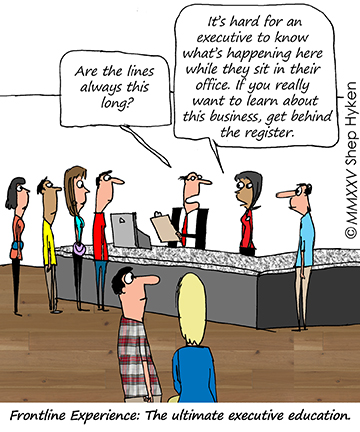
Jeff Bezos, the former CEO of Amazon, shared a fascinating leadership story on the Lex Fridman Podcast about how he wanted to ensure his customers received the best customer experience (CX). In Amazon’s early days, Bezos noticed a discrepancy between the “wait times” the customer support department was reporting and the feedback customers shared. The support team reported wait times of less than 60 seconds, but customers told a different story. Instead of asking for more data, Bezos took matters into his own hands. He picked up the phone during a meeting with the leadership team and called Amazon’s customer service number himself.

The result was a ten-minute wait!

That one phone call did more than just expose a problem. It demonstrated the kind of leadership that sets the tone for others to follow. When the CEO is willing to experience what customers experience, it sends a clear message: customer service and CX are more than a department or a strategy. They are everyone’s responsibility.

Frontline Experience

When Leaders Get Out of Their Offices

This story illustrates the importance of leaders getting out of their offices and experiencing what’s happening in the field or on the front line. Reading reports and analyzing data are part of the job, but when it comes to customer experience, nothing beats getting firsthand information.

Bezos, in effect, mystery shopped his company, pretending to be a customer. What he was really doing was trying to get to the truth. Sometimes the truth can be experienced directly, or it can be observed.

For example, as I wrote about in my book I’ll Be Back: How to Get Customers To Come Back Again and Again, Bill Gates, the founder of Microsoft, visited the company’s product support center and talked to customers. He sat down at a desk in a cubicle, put on a headset, picked up the phone and said, “Hello, this is Microsoft Product Support, William speaking. How can I help you?”

The beauty of these simple strategies, which provide firsthand information about what customers are experiencing, what they’re asking or what they’re complaining about, is that, for the cost of a little time and effort, they’re incredibly revealing. You don’t need surveys. You need to be willing to see your company through your customers’ eyes.

One other thought about what Bezos and Gates did. They didn’t keep their efforts a secret. When your team sees you personally calling your company or taking customer support calls, they understand that customer service and CX are a priority that starts at the top.

So, take a page from the Jeff Bezos and Bill Gates playbooks. Pick up the phone. Visit a store. Experience your website. Spend time on the front line. Experience and learn about your business as your customer would. You might be surprised by what you discover, and your customers are sure to appreciate the changes that follow.

Image credits: Unsplash

Subscribe to Human-Centered Change & Innovation WeeklySign up here to join 17,000+ leaders getting Human-Centered Change & Innovation Weekly delivered to their inbox every week.

Do You Have What It Takes to be a Visionary?

Do You Have What it Takes to be a Visionary?

Exclusive Interview with Mark C. Winters

Visionaries are often celebrated for their ideas, their intensity, and their ability to see what others can’t. But what’s far less understood — and far more consequential — is how Visionaries actually win over time. Not just by dreaming bigger futures, but by building the clarity, structure, and self-awareness required to make those futures real without burning themselves or their organizations to the ground.

In this wide-ranging interview, we explore what it truly means to be a Visionary inside a growing organization. From the essential partnership between Visionary and Integrator, to the hidden blind spots that slow progress, to the role of health, self-knowledge, and what “winning” really looks like, this conversation goes well beyond mythology. It offers a grounded, experience-tested look at how Visionaries can amplify their impact, reduce chaos, and create the kind of freedom they were chasing in the first place.

Today we dive deep into the characteristics and interactions of the Visionary with our special guest.

From Vision to Reality: What It Really Takes to Lead What’s Next

Mark C. WintersMark C. Winters is an entrepreneurial leader with 30-plus years building and advising companies, from startups sketched on a napkin to global enterprises like Proctor & Gamble and BP.

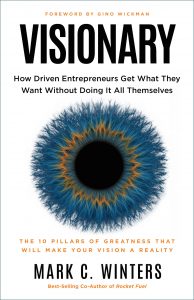
This range of experience helps him spot patterns fast and apply what works to almost any business scenario. Author of Visionary, co-author of Rocket Fuel, founder of Rocket Fuel University, and host of the Rocket Fuel podcast, Mark helps visionary entrepreneurs get unstuck and expand their unique freedom — exponentially.

He’s delivered 1,000+ full-day EOS® workshops with clients from around the world.

Below is the text of my interview with Mark and a preview of the kinds of insights you’ll find in Visionary: How Driven Entrepreneurs Get What They Want Without Doing It All Themselves presented in a Q&A format:

1. What is a Visionary and why does every successful organization have one?

A Visionary is the person who sees the future before it arrives. Endless ideas to help us get there. Big external relationships.

They live in the world of possibility. They connect dots others don’t yet see. They define where the organization is going and why that matters.

Every ambitious organization has one, whether they acknowledge it or not. Progress doesn’t come from squeezing more out of what we have… It comes from seeing a future that doesn’t yet exist. Absent a Visionary, organizations tend to stay pretty much where they are. Maybe they do more of the same. Or maybe they do the same stuff a little better. But they’re unlikely to actually change the game.

That said, here are two important notes:

  1. Every organization doesn’t require the same amount of Visionary. There’s actually a range that we call the “visionary spectrum.” It needs to be a match.
  2. Visionaries don’t win by themselves. Vision alone, without execution, is merely hallucination. And that’s quite often the biggest challenge.

2. How does the Visionary differ from the Integrator and why do you need both?

The Visionary sees the future. They “make it up.”
The Integrator “makes it real.”

Visionaries think in leaps. Integrators think in projects, processes, and systems. Visionaries are energized by what could be. Integrators are energized by what must get done.

You need both because they solve different problems. Visionaries break through ceilings. Integrators remove friction and create traction. When they’re aligned, you get clarity, momentum, and leverage. When they’re not, you get chaos, burnout, and frustration.

This is an intentional pairing of two very different capability sets. When surrounded by the right structure (which we call the 5 Rules), the friction of these polar differences gets blended into a powerful positive force. Thus the name of our first book, ROCKET FUEL (with Gino Wickman).

3. What are the key elements of the Entrepreneurial Operating System (EOS) that make it so powerful?

EOS works because it does three things exceptionally well:

  1. It creates clarity and focus: vision, priorities, roles, and expectations are no longer fuzzy.
  2. It instills discipline: weekly pulses, data, and accountability replace good intentions.
  3. It strengthens the leadership team. They get healthy. Important issues get surfaced and solved – instead of avoided.

For Visionaries, a “business operating system” such as EOS is powerful because it aligns the energy of all the people in the organization. It’s very powerful when all those arrows are pointed in the same direction.

4. Why is it so important for a Visionary to understand themselves — and what are they trying to understand?

Because “Knowing Thyself” is the big multiplier.

It all starts with figuring out who you are now, and where you want to go.

From there, you must understand how this business is going to help you make that happen.

And then become aware of how your behavior is either helping or hurting that process.

Visionaries don’t need to become different people. They need to become clearer versions of who they already are.

They’re trying to understand:

  • What truly energizes them
  • What drains them
  • Where they create the most value
  • Where they unintentionally cause damage

Without that clarity, Visionaries tend to overstep, under-delegate, or send mixed signals. With it, they make better decisions, build better teams, and experience more freedom.

5. Why is the crashing together of the wellness and biohacking trends so important for entrepreneurs?

Because Visionaries are high-output humans running long races. This demands that you maintain “Warrior Shape.”

You can’t separate performance from health anymore. Energy, focus, emotional regulation, and recovery all directly impact leadership effectiveness.

The danger is chasing hacks instead of fundamentals. Biohacking without the proper foundation can become another form of self-sabotage.

Elite performance starts with basics: sleep/recovery, fitness/movement, nutrition, and boundaries. Get those right first. Then optimize from there.

6. What are some of the most common blind spots for visionaries?

Visionary book coverA few show up again and again:

  • Thinking out loud without context
  • Changing direction too quickly (or too often)
  • Holding onto too much for too long (becoming the bottleneck)
  • Confusing passion with priority
  • Underestimating the impact of their words

These blind spots don’t come from ego or bad intent. They come from the very natural instincts and habits of people who are wired as Visionaries. However, left unchecked, they slow everything down. In turn, slowing the Visionary themselves from getting what they want.

7. Tell us more about Intrinsic Genius and why it matters.

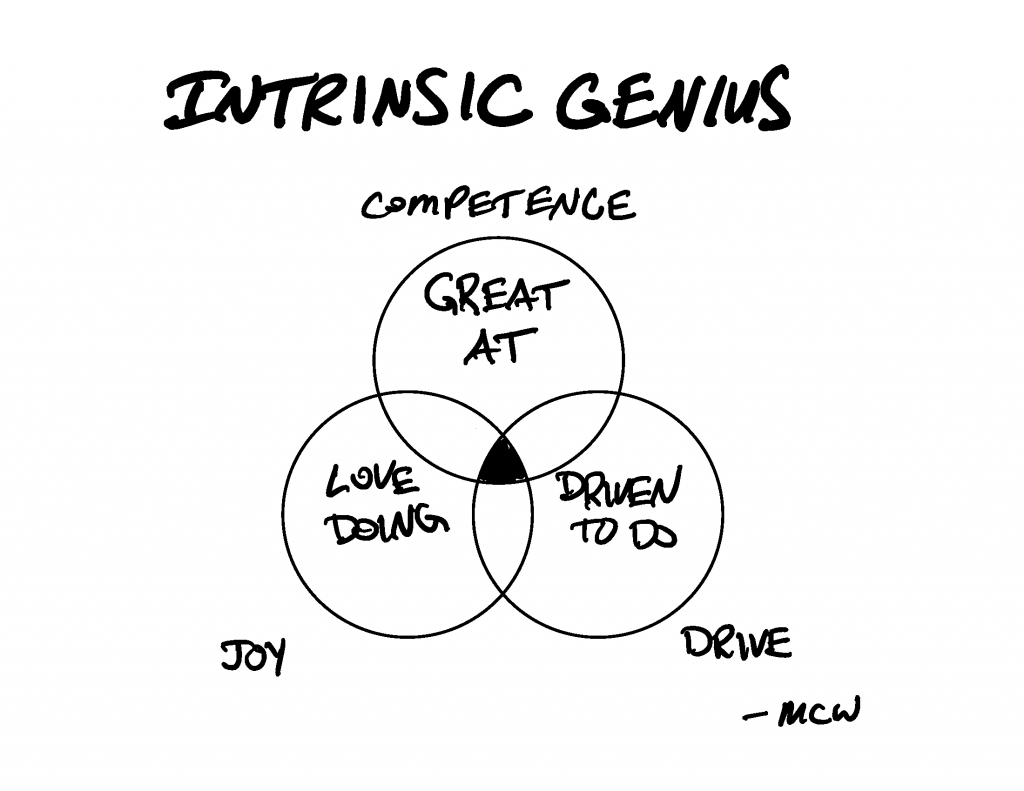
Intrinsic Genius lives at the intersection of three things:

  • Competence – what you’re naturally good at
  • Joy – what energizes you most
  • Drive – the purpose and cause that propel you forward

When Visionaries operate inside that zone, their impact compounds. When they drift outside it, everything feels heavier than it should.

Understanding Intrinsic Genius isn’t about self-indulgence. It’s about tapping fully into the unique contribution you were built to make. And your maximum impact.

Intrinsic Genius

8. Are all Visionaries the same?

Not even close.

I talked earlier about the Visionary Spectrum. And that’s one way to think about it – as a defined function of the business that requires a certain set of capabilities.

While the Visionary patterns are similar, they certainly show up in different ways. Some are bold and extroverted. Others are quiet and introverted. Some thrive on disruption. Others on pulling things together. What they share isn’t style, it’s their orientation toward the possible future.

9. Besides partnering with an Integrator, what other roles should surround a Visionary?

Visionaries need what I call a “shield wall” to surround them. Protecting them from dangerous external threats, and preparing them to engage the world from their most powerful base.

A great shield wall is made up of 7 unique “posts” that support the Visionary by providing 7 special “forces.”

That includes:

  • Truth-tellers who challenge their thinking
  • Operators who translate ideas into action
  • Coaches who help them see patterns
  • Peers who can relate to the journey

Isolation is a common feeling for a Visionary. Having the right people around them can stabilize and amplify their signal.

10. People lionize Visionaries like Steve Jobs. How do Visionaries go off-track?

Usually in three ways:

  1. They start believing their own mythology
  2. They confuse intensity with effectiveness
  3. They stop listening

Visionaries go off-track when their strengths run unchecked. Greatness isn’t about being right more often. (In fact, intellectual humility is a healthy attribute.) Instead, it’s about building structure that creates clarity, alignment, and focus in everyone else, while you pursue what’s possible.

11. What is Visionary Chaos and how is it avoided?

Visionary chaos is what happens when ideas outpace clarity, alignment, and execution. They flood the system. They tamper.

It shows up as initiative overload, organizational whiplash, confused priorities, exhausted teams, uncertainty, and slow execution.

It’s avoided through structure, cadence, and restraint. Not by silencing the Visionary, but by sequencing their best ideas. Go slow to go fast.

12. Why is it dangerous for leaders to think out loud?

Because Visionaries don’t always realize how loud their voice is to the people around them .

What feels like a passing thought to a Visionary often feels like a directive to those who hear it. Thinking out loud creates false urgency, unnecessary work, and more whiplash.

This can be avoided by creating safe places to think out loud – where everyone present knows that’s what’s happening… and label the brainstorming. “No Action Needed.”

13. Is there a question you wish I had asked?

Yes.

How does a Visionary know if they’re actually winning?

In my experience, this question is not just about financial numbers, but about your Unique Freedom. Your definition of that is different than mine, is different than theirs, and is different than every other Visionary’s. It’s truly unique to you. So you must first solve for that. This is why I created the Exponential Freedom Model, and the 9 Domains of Freedom.

Clarify the future you want. Draw a line back to the present. Then focus on the near-term activities (and habits) that will increase the probability of making that future real.

“Clarity. Focus. Freedom.”
It’s that simple – just not easy.

To experience more of the Unique Freedom you seek, without being trapped by the business you built. That’s the real promise of becoming a great Visionary.

Conclusion

Thank you for the great conversation Mark!

I hope everyone has enjoyed this peek into the mind of the man behind the insightful new title Visionary: How Driven Entrepreneurs Get What They Want Without Doing It All Themselves!

Image credits: Mark C. Winters, ChatGPT

Subscribe to Human-Centered Change & Innovation WeeklySign up here to join 17,000+ leaders getting Human-Centered Change & Innovation Weekly delivered to their inbox every week.