Your Feelings Are Often Triggers That Mislead You

Your Feelings Are Often Triggers That Mislead You

GUEST POST from Greg Satell

The social psychologist Jonathan Haidt developed the metaphor of the Elephant and the Rider to describe the relationship between our emotional and cognitive brains. While the rider (representing our cognitive brain) may feel in control, it is the elephant (our emotions) that is more likely to determine which direction we will go.

That’s why it feels so good to act on our emotions. Rather than struggling with the reins to get the elephant to go where we want it to, we can just give in and race with abandon towards our destination. It’s usually not until we’ve run off a cliff that we realize that we should have exercised more restraint. By that time, it’s often too late to undo the damage.

The truth is that our brains are wired for survival, not to make rational decisions for a modern, industrialized economy. That’s why we shouldn’t blindly trust our feelings. We should see them as warning signs to proceed with caution because, while they can alert us to unseen dangers, they can also be triggers that others use to manipulate us.

The Thrill Of The Shift & Pivot

As Eric Ries explained in The Startup Way, when General Electric CEO Jeffrey Immelt wanted to implement a more entrepreneurial approach he asked Ries to help him implement “Lean Startup” methods at the company. The resulting program, called Fastworks, trained 80 coaches and launched a hundred projects in its first year. Pretty soon, Immelt was calling his company a 124 year-old startup.

A key ambition was the development of Predix, an industrial software platform. No longer would GE be a boring old manufacturing company, but would make a “pivot” to the digital age. It did not go well. During Immelt’s tenure, the company’s value would fall by 30%, while the broader maker more than doubled. Eventually the firm would collapse altogether.

Pundits love to tout the change gospel, but there’s little evidence that “pivots” are necessarily a good idea. Look at the world’s most valuable companies, Apple still makes most of its money on iPhones, Microsoft’s success is still rooted in business software, Alphabet’s profits come from search and so on. There are exceptions, of course, but most organizations become and stay successful by deepening their capabilities in a few key areas.

But that’s boring. Journalists rarely write cover stories about it. Business school professors don’t get tenure for writing case studies about how Procter & Gamble stuck with soap for more than a century or how Coke continues to make money off of sugary water. “Pivots,” on the other hand, are thrilling and fun. They get people talking. They feel good. That’s why they’re so popular.

The Eden Myth

Watch pundits on cable news or on stage at conferences and you may begin to notice a familiar pattern. They tell us that once there was a period when everything was pure and good, but then we—or the organization we work for—were corrupted in some way and cast out. So to return to the good times, we need to eliminate that corrupting influence.

This Eden myth is as old as history itself and it continues to thrive because it works so well.. We’re constantly inundated with scapegoats— the government, big business, tech giants, the “billionaire” class, immigrants, “woke” society—to blame for our fall from grace. The story feeds our anger and, much like the “thrill of the pivot,” makes us want to act.

Perhaps most importantly, the Eden myth makes us feel good. The outrage it triggers stimulates the release of the neurotransmitter dopamine which affects the pleasure centers in our brain. Our adrenal glands then begin to produce cortisol, which initiates a “fight or flight” response. Our senses get heightened. We feel motivated and alive.

Who wouldn’t want to feel like that? That’s why we can become addicted to the outrage-dopamine response machine and continually look for new opportunities to get our fix. We begin to need it and tune in every night, doom scroll on social media and seek out social connections that promote it. Ultimately, we’re going to want to act on it.

People who seek to manipulate us know all about this and design their approach to trigger an emotional response.

Creating An Echo Chamber

Once our neurons are primed and our senses are tuned to respond to specific stimuli, we will begin to frame what we experience in terms that reinforce those biases. Psychologists have found that we tend to overweight information that is most easily accessible and then look for information to confirm those early impressions and ignore evidence to the contrary.

These effects are multiplied by tribal tendencies. We form group identities easily, and groups tend to develop into echo chambers, which amplify common beliefs and minimize contrary information. We also tend to share more actively with people who agree with us and, without fear of questioning or rebuke, we are less likely to check that information for accuracy.

We are highly affected by what those around us think. In fact, a series of famous experiments first performed in the 1950’s, and confirmed many times since then, showed that we will conform to the opinions of those around us even if they are obviously wrong. More recent research has found that the effect extends to three degrees of social distance.

It’s likely that some version of this is what doomed Jeffrey Immelt at General Electric. When he took over as CEO in 2001, Silicon Valley was in a process of renewal after the dotcom crash. As the startup boom gathered steam, it captured the imagination of business journalists. He brought in Ries to “cast out” the old ways of plodding, industrial firms and surrounded himself with people who believed similar things. Everything must have felt right.

The elephant was in full control and the rider just went along—all the way off the cliff.

Don’t Believe Everything You Feel

The neuroscientist Antonio Damasio believes we encode experiences in our bodies as somatic markers and that our emotions often alert us to things that our brains aren’t aware of. Another researcher, Joseph Ledoux, had similar findings. He pointed out that our body reacts much faster than our mind, such as when we jump out of the way of an oncoming object and only seconds later realize what happened.

Nobel Laureate Daniel Kahneman suggests that we have two modes of thinking. The first is emotive, intuitive and fast. The second is rational, deliberative and slow. Our bodies evolved to make decisions quickly in life or death situations. Our rational minds came much later and don’t automatically engage. It takes effort to bring in the second system.

There are some contexts in which we should favor system one over system two. Certain professions, such as surgeons and pilots, train for years to hone their instincts so that they will be able to react quickly and appropriately in an emergency. When we have a bad feeling about a situation, we should take it seriously and proceed with caution.

However, our feelings need to be interrogated, especially in areas for which we do not have specific training or relevant expertise. We need to gain insight into what exactly our feelings are alerting us to and that requires us to engage our rational brain.

Yes, feelings should be taken seriously. They are often telling us that something is amiss. But they are much more reliable when they are alerting us to danger than when they are pushing us to overlook pertinent facts and proceed with a course of action. When we go with our gut, we need to make sure it’s not just because we had a bad lunch.

— Article courtesy of the Digital Tonto blog
— Image credit: Pixabay

Subscribe to Human-Centered Change & Innovation WeeklySign up here to join 17,000+ leaders getting Human-Centered Change & Innovation Weekly delivered to their inbox every week.


Managing B Players in the Pursuit of Excellence

Managing B Players in the Pursuit of Excellence

GUEST POST from David Burkus

When we talk about building high-performing teams, we tend to focus on the stars — the A players. These are the people who turn heads, drive results, and seemingly do the work of ten. They’re the ones we spotlight in meetings, promote quickly, and praise loudly.

But here’s what we often miss: it’s not just the A players that keep teams running. In fact, it’s the B players — yes, the so-called “average performers” — that are often the reason your company is still standing after a crisis and the reason your team is humming along today.

Surprised? Let’s talk about why B players might be the unsung heroes of your team — and what great leaders do to support them.

Why B Players Get Overlooked

We over-glorify A players for a lot of reasons. They’re visible. They’re charismatic. They get results. But they can also be volatile. A players burn out. They job-hop. And if we’re not careful, they create cultures that are high-performance… until they’re not. Because eventually, the instability catches up.

B players, by contrast, are consistent. Reliable. Thoughtful. They’re the ones who quietly get the work done. They don’t seek the spotlight, not because they’re less capable, but because they’re not interested in climbing the ladder just for the sake of it. They value balance. They want to do great work — and then go home and be present for the rest of their life.

And that’s not a weakness. In many ways, it’s wisdom.

The Peter Principle and the Trap of Promotion

Part of the reason we mismanage B players is because most career paths are still built on a single staircase: do good work, get promoted into management. But this structure leads us right into what Dr. Laurence J. Peter famously called the Peter Principle: in any hierarchy, people tend to get promoted to their level of incompetence.

Think about it: a top-performing engineer gets promoted into a managerial role…and suddenly spends all their time in meetings, writing budgets, managing people — and none of it leverages what made them successful in the first place.

It’s not that they’re incompetent. It’s that they’ve been promoted into a role that requires a different skill set — one they may not have, and often, don’t even want.

What makes B players so valuable is that many of them recognize this dynamic early. They choose to stay in the roles where they excel, where they’re engaged, and where they contribute meaningfully. They don’t take the bait of promotion for promotion’s sake. And that self-awareness makes them an asset — not a liability.

The Many Faces of a B Player

B players aren’t one-size-fits-all. Some are former A players who chose to step off the fast track for the sake of family, health, or sanity. Some are deeply mission-driven truth-tellers who care more about doing the right thing than climbing a corporate ladder. Others are the connectors — the people who know how everything (and everyone) fits together in your organization.

Think of the longtime office manager who can navigate the org chart better than anyone else. Or the behind-the-scenes analyst whose work drives key decisions. These aren’t future VPs, but they’re foundational. If they left, your team would feel the loss immediately.

So how do you support B players in a way that helps them thrive?

Step One: Give B Players Permission

Many B players aren’t disengaged — they’re just waiting for a green light. They know what to do. They see the solution. But they’re respectful. They’re not going to go rogue or overstep their role. What they need isn’t more direction — it’s permission.

Sometimes, all it takes is six words: “I trust you. Go for it.”

When leaders make it clear that judgment is trusted, that autonomy is welcomed, and that action is encouraged, B players shine. It’s not about micromanaging less — it’s about actively empowering more.

Step Two: Build B Players a Parallel Path

Most organizations treat advancement as a vertical path. If you want more recognition or compensation, you have to manage people. But what if we built a parallel path — one that rewards deep expertise, not just leadership?

Titles like principal engineer, lead strategist, internal consultant, or senior specialist aren’t consolation prizes. They’re strategic roles that allow people to grow and stay aligned with the work they love.

Not every B player wants to be a people manager. And that’s not just okay — it’s something to design for. Because when we force people up the ladder without giving them options, we risk turning our best contributors into struggling supervisors.

If you can’t create new roles on the org chart, you can still help B players feel like they’re moving forward. Ask them: • “What part of your job do you wish you could do more of?” • “Where do you want to grow this year?” • “If I could redesign your role to be more aligned with your strengths, what would that look like?”

You’ll be surprised what you learn just by asking — and how much more engaged your B players become when they feel seen and supported.

Step Three: Recognize B Players’ Value — Loudly

We tend to celebrate the visible wins: the product launch, the sales deal, the standout presentation. But high-performing teams are built just as much on quiet consistency as they are on flashy achievements.

As a leader, it’s your job to see the whole team — not just the ones shouting the loudest. Make time to recognize the B players, the steady hands, the glue that keeps the group together.

If they’re remote, reach out. If they’re introverted, check in one-on-one. Leadership isn’t about chasing stars. It’s about making sure everyone has the opportunity to do their best work and be recognized for it.

The Bottom Line on B Players

The truth is, you can’t build a high-performing team with A players alone. You build it by assembling the right mix of talent, by understanding what each person brings to the table, and by creating an environment where everyone — including your B players — can thrive.

And here’s the best part: when you lead B players well — when you trust them, invest in them, and help them grow — you may just find that they had A-level talent all along. They just needed a leader who saw it.

Image credit: Pexels

Subscribe to Human-Centered Change & Innovation WeeklySign up here to get Human-Centered Change & Innovation Weekly delivered to your inbox every week.

Causal AI

Moving Beyond Prediction to Purpose

LAST UPDATED: February 13, 2026 at 5:13 PM

Causal AI

GUEST POST from Art Inteligencia

For the last decade, the business world has been obsessed with predictive models. We have spent billions trying to answer the question, “What will happen next?” While these tools have helped us optimize supply chains, they often fail when the world changes. Why? Because prediction is based on correlation, and correlation is not causation. To truly innovate using Human-Centered Innovation™, we must move toward Causal AI.

Causal AI is the next frontier of FutureHacking™. Instead of merely identifying patterns, it seeks to understand the why. It maps the underlying “wiring” of a system to determine how changing one variable will influence another. This shift is vital because innovation isn’t about following a trend; it’s about making a deliberate intervention to create a better future.

“Data can tell you that two things are happening at once, but only Causal AI can tell you which one is the lever and which one is the result. Innovation is the art of pulling the right lever.”
— Braden Kelley

The End of the “Black Box” Strategy

One of the greatest barriers to institutional trust is the “Black Box” nature of traditional machine learning. Causal AI, by its very nature, is explainable. It provides a transparent map of cause and effect, allowing human leaders to maintain autonomy and act as the “gardener” tending to the seeds of technology.

Case Study 1: Personalized Medicine and Healthcare

A leading pharmaceutical institution recently moved beyond predictive patient modeling. By using Causal AI to simulate “What if” scenarios, they identified specific causal drivers for individual patients. This allowed for targeted interventions that actually changed outcomes rather than just predicting a decline. This is the difference between watching a storm and seeding the clouds.

Case Study 2: Retail Pricing and Elasticity

A global retail giant utilized Causal AI to solve why deep discounts led to long-term dips in brand loyalty. Causal models revealed that the discounts were causing a shift in quality perception in specific demographics. By understanding this link, the company pivoted to a human-centered value strategy that maintained price integrity while increasing engagement.

Leading the Causal Frontier

The landscape of Causal AI is rapidly maturing in 2026. causaLens remains a primary pioneer with their Causal AI operating system designed for enterprise decision intelligence. Microsoft Research continues to lead the open-source movement with its DoWhy and EconML libraries, which are now essential tools for data scientists globally. Meanwhile, startups like Geminos Software are revolutionizing industrial intelligence by blending causal reasoning with knowledge graphs to address the high failure rate of traditional models. Causaly is specifically transforming the life sciences sector by mapping over 500 million causal relationships in biomedical data to accelerate drug discovery.

“Causal AI doesn’t just predict the future — it teaches us how to change it.”
— Braden Kelley

From Correlation to Causation

Predictive models operate on correlations. They answer: “Given the patterns in historical data, what will likely happen next?” Causal models ask a deeper question: “If we change this variable, how will the outcome change?” This fundamental difference elevates causal AI from forecasting to strategic influence.

Causal AI leverages counterfactual reasoning — the ability to simulate alternative realities. It makes systems more explainable, robust to context shifts, and aligned with human intentions for impact.

Case Study 3: Healthcare — Reducing Hospital Readmissions

A large health system used predictive analytics to identify patients at high risk of readmission. While accurate, the system did not reveal which interventions would reduce that risk. Nurses and clinicians were left with uncertainty about how to act.

By implementing causal AI techniques, the health system could simulate different combinations of follow-up calls, personalized care plans, and care coordination efforts. The causal model showed which interventions would most reduce readmission likelihood. The organization then prioritized those interventions, achieving a measurable reduction in readmissions and better patient outcomes.

This example illustrates how causal AI moves health leaders from reactive alerts to proactive, evidence-based intervention planning.

Case Study 4: Public Policy — Effective Job Training Programs

A metropolitan region sought to improve employment outcomes through various workforce programs. Traditional analytics identified which neighborhoods had high unemployment, but offered little guidance on which programs would yield the best impact.

Causal AI empowered policymakers to model the effects of expanding job training, childcare support, transportation subsidies, and employer incentives. Rather than piloting each program with limited insight, the city prioritized interventions with the highest projected causal effect. Ultimately, unemployment declined more rapidly than in prior years.

This case demonstrates how causal reasoning can inform public decision-making, directing limited resources toward policies that truly move the needle.

Human-Centered Innovation and Causal AI

Causal AI complements human-centered innovation by prioritizing actionable insight over surface-level pattern recognition. It aligns analytics with stakeholder needs: transparency, explainability, and purpose-driven outcomes.

By embracing causal reasoning, leaders design systems that illuminate why problems occur and how to address them. Instead of deploying technology that automates decisions, causal AI enables decision-makers to retain judgment while accessing deeper insight. This synergy reinforces human agency and enhances trust in AI-driven processes.

Challenges and Ethical Guardrails

Despite its potential, causal AI has challenges. It requires domain expertise to define meaningful variables and valid causal structures. Data quality and context matter. Ethical considerations demand clarity about assumptions, transparency in limitations, and safeguards against misuse.

Causal AI is not a shortcut to certainty. It is a discipline grounded in rigorous reasoning. When applied thoughtfully, it empowers organizations to act with purpose rather than default to correlation-based intuition.

Conclusion: Lead with Causality

In a world of noise, Causal AI provides the signal. It respects human autonomy by providing the evidence needed for a human to make the final call. As you look to your next change management initiative, ask yourself: Are you just predicting the weather, or are you learning how to build a better shelter?

Strategic FAQ

How does Causal AI differ from traditional Machine Learning?

Traditional Machine Learning identifies correlations and patterns in historical data to predict future occurrences. Causal AI identifies the functional relationships between variables, allowing users to understand the impact of specific interventions.

Why is Causal AI better for human-centered innovation?

It provides explainability. Because it maps cause and effect, human leaders can see the logic behind a recommendation, ensuring technology remains a tool for human ingenuity.

Can Causal AI help with bureaucratic corrosion?

Yes. By exposing the “why” behind organizational outcomes, it helps leaders identify which processes (the wiring) are actually producing value and which ones are simply creating friction.

Disclaimer: This article speculates on the potential future applications of cutting-edge scientific research. While based on current scientific understanding, the practical realization of these concepts may vary in timeline and feasibility and are subject to ongoing research and development.

Image credits: Google Gemini

Subscribe to Human-Centered Change & Innovation WeeklySign up here to get Human-Centered Change & Innovation Weekly delivered to your inbox every week.

Why It’s Important to Help Others

Why It's Important to Help Others

GUEST POST from Mike Shipulski

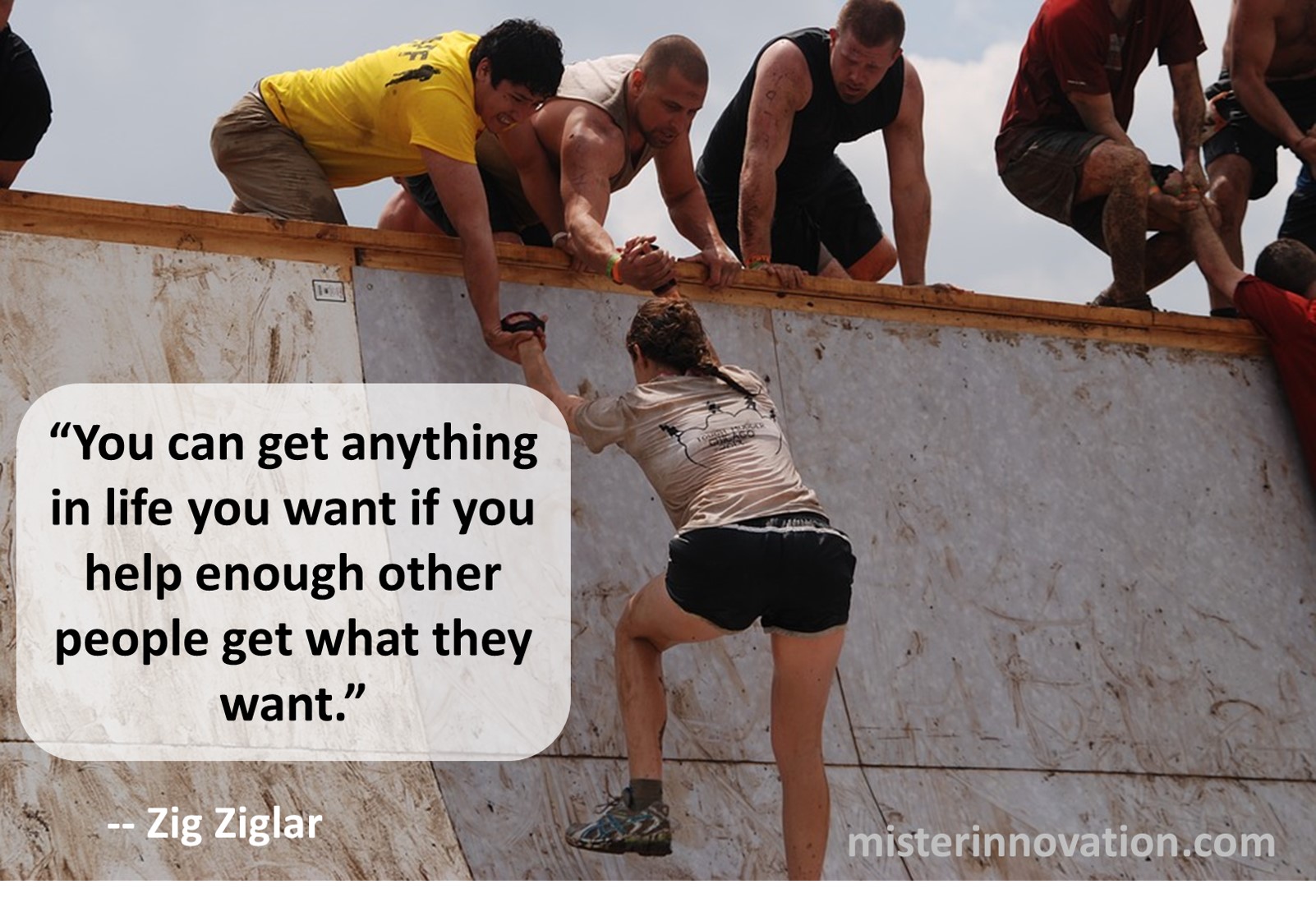
When someone you care about needs help, help them. Even when you have other things to do, help them anyway.

When people ask you for help, it’s a sign they trust you. And they trust you because you’ve demonstrated over time that your words and behaviors match. You said you’d do A and you did A. You said you’d do B and you did B. And because you’ve made that investment in them over the years, they value you and your time. And because they value you and your time, they don’t want to be a burden to you. And if they think you’ve got a lot on your plate, they may downplay the importance of their need for help and say things like “It’s no big deal.” or “It’s not that important.” or “It’s okay, it can wait.”.

However unforcefully, they asked for help because the need it. It was a big deal for them to ask because they know you are busy. And their willingness to dismiss or delay, is not a sign of unimportance of their need. Rather, it’s a show of their respect for you and your time. They desperately need your help, but care enough about you to give you any opportunity to say no. Those are the telltale signs that it’s time to stop what you’re doing and help them. This is the time when you can make the biggest difference. Stop immediately and help them.

Your helping starts with listening and listening starts with getting ready to listen. Smile and tell them that this little chat deserves a coffee or cold drink and walk with them to get a beverage. This critical step serves several functions. It makes it clear you are willing to make time for them and puts them at ease; it gives you time to let go of what you were working on so you can give them your full attention; and it gives you a little time to put yourself in their shoes so you will be able to hear what really going on.

By making time for them, you’ve already helped them. Someone they trust and respect stopped what they were doing and made time for them. They’re already standing two inches taller. And, with a clear head, you actively listen and understand, they grow another two inches. Often, just telling their story is enough for them to solve their own problem. In that way, your helping starts and ends with listening. And other times, they don’t really want you to solve their problem, they just want you to listen and empathize. And when they’re looking for more, rather than giving them answers, they’d rather you ask clarifying questions and paraphrase to demonstrate understanding.

You can’t do this for everyone, but you can do it for the people you care about most. Sure, you have to scamper to catch up on your own work, but it’s worth it. By helping them you help yourself twice – once from happiness that comes from helping someone you care about and twice from the joy that comes from watching them do the same for people they care about.

Our work is difficult and our lives are busy. But our work gets easier when we get and give help. And even with our always-on, always-connected culture, life is about building meaningful connections. How can your life be too busy for that?

Maybe we have it backwards. What if meaningful connections aren’t something we create so we can do our work better? What if we think of work as nothing more than a mechanism to create meaningful connections?

Image credit: 1 of 1,050+ FREE quotes for your meetings & presentations at http://misterinnovation.com

Subscribe to Human-Centered Change & Innovation WeeklySign up here to join 17,000+ leaders getting Human-Centered Change & Innovation Weekly delivered to their inbox every week.
Why We Love to Hate Chatbots

Why We Love to Hate Chatbots

GUEST POST from Shep Hyken

More and more, brands are starting to get the chatbot “thing” right. AI is improving, and customers are realizing that a chatbot can be a great first stop for getting quick answers or resolving questions. After all, if you have a question, don’t you want it answered now?

In a recent interview, I was asked, “What do you love about chatbots?” That was easy. Then came the follow-up question, “What do you hate about chatbots?” Also easy. The truth is, chatbots can deliver amazing experiences. They can also cause just as much frustration as a very long phone hold. With that in mind, here are five reasons to love (and hate) chatbots:

Why We Love Chatbots

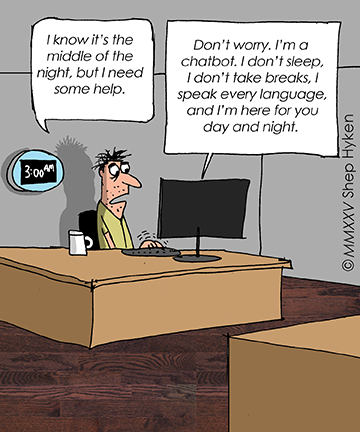
  1. 24/7 Availability: Chatbots are always on. They don’t sleep. Customers can get help at any time, even during holidays.
  2. Fast Response: Instant answers to simple questions, such as hours of operation, order status and basic troubleshooting, can be provided with efficiency and minimal friction.
  3. Customer Service at Scale: Once you set up a chatbot, it can handle many customers at once. Customers won’t have to wait, and human agents can focus on more complicated issues and problems.
  4. Multiple Language Capabilities: The latest chatbots are capable of speaking and typing in many different languages. Whether you need global support or just want to cater to different cultures in a local area, a chatbot has you covered.
  5. Consistent Answers: When programmed properly, a chatbot delivers the same answers every time.

Chatbots Shep Hyken Cartoon

Why We Hate Chatbots

  1. AI Can’t Do Everything, but Some Companies Think It Can: This is what frustrates customers the most. Some companies believe AI and chatbots can do it all. They can’t, and the result is frustrated customers who will eventually move on to the competition.
  2. A Lack of Empathy: AI can do a lot, but it can’t express true emotions. For some customers, care, empathy and understanding are more important than efficiency.
  3. Scripted Retorts Feel Robotic: Chatbots often follow strict guidelines. That’s actually a good thing, unless the answers provided feel overly scripted and generic.
  4. Hard to Get to a Human: One of the biggest complaints about chatbots is, “I just want to talk to a person.” Smart companies make it easy for customers to leave AI and connect to a human.
  5. There’s No Emotional Connection to a Chatbot: You’ll most likely never hear a customer say, “I love my chatbot.” A chatbot won’t win your heart. In customer service, sometimes how you make someone feel is more important than what you say.

Chatbots are powerful tools, but they are not a replacement for human connection. The best companies use AI to enhance support, not replace it. When chatbots handle the routine issues and agents handle the more complex and human moments, that’s when customer experience goes from efficient to … amazing.

Image credits: Unsplash

Subscribe to Human-Centered Change & Innovation WeeklySign up here to join 17,000+ leaders getting Human-Centered Change & Innovation Weekly delivered to their inbox every week.

Is Your Customer Experience a Lie?

LAST UPDATED: May 29, 2026 at 10:40 AM

Is Your Customer Experience a Lie?

by Braden Kelley and Art Inteligencia

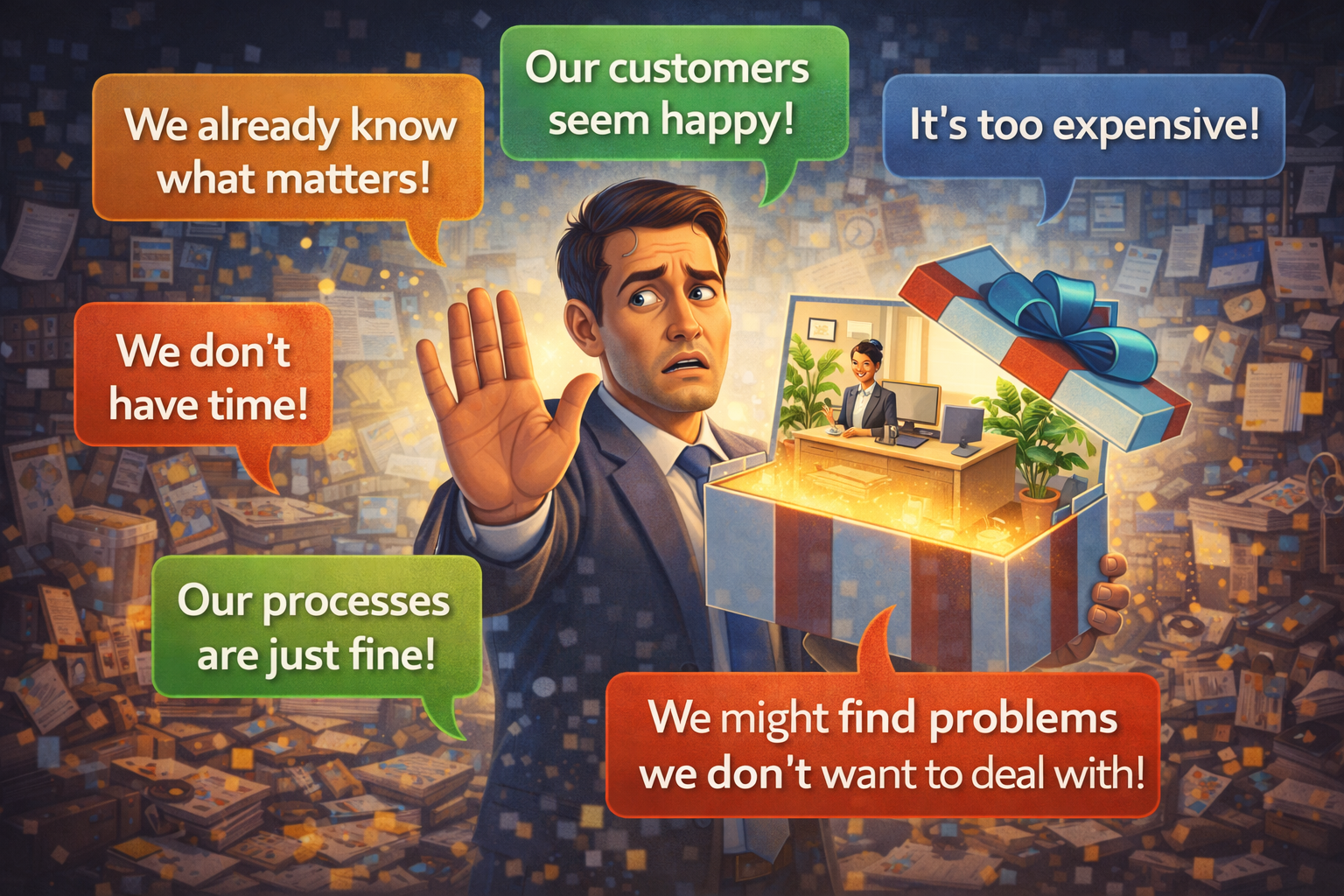
In the high-stakes theater of modern business, many leaders have developed a remarkable talent for a dangerous form of “experience narcissism.” They stand in boardrooms, surrounded by glowing dashboards and rising Net Promoter Scores (NPS), convincing themselves of a comforting delusion: that they already know exactly what it feels like to be their customer. They assume that because the machine is running, it must be well-oiled. But as a champion of Customer Experience Audits (aka Customer Experience Risk and Revenue Leakage Diagnostic), I have seen far too many organizations fail not because they lacked a great product, but because they lacked the courage to look in the mirror.

The refusal to conduct regular, rigorous customer experience audits is rarely a matter of resources; it is a defensive reflex. It is the Corporate Antibody Response protecting the status quo. Leaders tell themselves that their digital analytics tell the whole story, or that “if it were truly broken, we’d hear about it.” These are the lies that create Invisible Friction — the silent, compounding drag that prevents an invention from ever reaching its potential as a true innovation.

When we avoid the audit, we aren’t just saving time; we are actively choosing to ignore the hurdles that drive customers into the arms of more agile competitors. We treat the customer journey as a static map we drew five years ago, rather than a living, breathing, and often messy reality. To be a leader in the age of Purpose-Driven Innovation, you must be willing to trade your comfortable assumptions for the uncomfortable truth.

1. The Lie of “We Already Know Our Customers”

The first, and perhaps most seductive, lie that leaders tell themselves is the myth of the “Static Persona.” This is the belief that because the leadership team spent six months on a deep-dive research project three years ago, they now possess a permanent, intuitive understanding of their customer’s psyche. They treat customer knowledge as a milestone to be reached rather than a perishable asset. Competitors change the baseline for “convenience,” global events shift priorities, and technology alters how customers view value. Without a regular audit, leaders are effectively navigating today’s stormy seas using a map of a coastline that has already eroded.

This lie often manifests as “Experience Narcissism,” where executives assume their own personal interactions with the brand are representative of the average user’s journey. They use the latest flagship hardware on a high-speed corporate network and wonder why the front-line customer, using a three-year-old device on a spotty cellular connection, is frustrated. They confuse their authority with empathy. A rigorous audit acts as a necessary “ego-check,” stripping away the polished executive view to reveal the Invisible Friction that customers face every single day.

Furthermore, leaders frequently mistake “Customer Data” for “Customer Truth.” They point to demographic reports and purchase histories as proof of their intimacy with the market. But data tells you the what, while an audit tells you the why. You might know that a customer abandoned their cart, but without an audit of the experience, you won’t know if they left because of a technical glitch, a confusing shipping policy, or a sudden moment of brand distrust. To ignore the audit is to choose to lead from a spreadsheet rather than from the soul of the customer journey.

2. The Lie of “Digital Analytics Tells the Whole Story”

The second great deception is the worship of the “Dashboard Delusion” — the belief that a green arrow on a conversion chart is synonymous with a satisfied customer. Leaders often hide behind quantitative data because it feels objective, safe, and controllable. They see a steady flow of traffic and a predictable checkout rate and conclude that the Value Access path is clear. However, digital analytics are purely evidentiary; they show you where the footprints are, but they never show you the “ghosts”—the thousands of potential customers who looked at your landing page, felt a subtle pang of confusion or distrust, and vanished without leaving a single data point behind.

An audit is required because analytics cannot measure what didn’t happen. They don’t capture the frustration of a user who successfully completed a task but vowed never to return because the process was emotionally draining. They don’t show the Invisible Friction of a customer who had to open a separate tab to search for an explanation of your jargon. When leaders skip the audit, they are essentially trying to understand a symphony by looking at a spreadsheet of decibel levels; they see the volume, but they completely miss the dissonance.

Furthermore, relying solely on digital metrics often leads to “Local Maxima” thinking. You might optimize a button color or a headline to increase a click-through rate by $2\%$, but an experience audit might reveal that the entire feature is redundant or misaligned with the customer’s actual goal. Analytics tell you how to do the wrong thing more efficiently, while auditing tells you if you are doing the right thing at all. As I often emphasize, true Value Translation happens in the heart of the user, a place where Google Analytics has no login credentials.

3. The Lie of “We’ll Hear About It If It’s Broken”

The third lie is perhaps the most comfortable, and therefore the most catastrophic: the “Silence is Golden” fallacy. Leaders often operate under the assumption that their customers act as a free, 24/7 quality assurance team. They believe that if a friction point were truly detrimental to the brand, it would trigger a flood of support tickets or a viral social media outcry. This creates a false sense of security that I call the Reactive Trap. In reality, the vast majority of customers do not have the time, energy, or desire to help you fix your business. When they encounter a broken experience, they don’t complain — they simply evaporate.

This silence is not a sign of health; it is the sound of Silent Churn. For every one customer who takes the time to write a detailed email about a confusing interface or a lackluster service interaction, there are dozens more who quietly moved their business to a competitor who made the “Value Access” feel effortless. By the time a problem is “loud” enough to reach the executive suite without an audit, the organization has likely already lost significant market share. An audit is a proactive hunt for these silent killers, allowing for Human-Centered Change™ before the damage becomes irreversible.

Relying on complaints also skews a leader’s perspective toward “extreme” failures while ignoring the “death by a thousand cuts” that truly defines a brand’s reputation. A customer might not complain about a slightly slow load time, a mildly confusing confirmation email, or a repetitive form field, but the cumulative Cognitive Load of these micro-frictions erodes trust over time. As an innovation speaker, I frequently remind my clients that “no news” is often just a polite way of saying “I’ve found someone better.”

4. The Lie of “It’s Too Expensive and Time-Consuming”

The fourth lie is a classic case of “Accounting Myopia” — the belief that a customer experience audit is a discretionary expense rather than a fundamental investment in Value Creation. Leaders often look at the price tag of a comprehensive audit or the internal hours required to map a journey and immediately relegate it to the “maybe next year” pile. They view the audit as a cost center, a luxury to be indulged only when the budget is flush. What they fail to realize is that they are already paying for the audit every single day — not in invoices, but in the “Friction Tax” of lost conversions, increased support costs, and skyrocketing customer acquisition fees.

When you refuse to audit, you are essentially pouring expensive marketing “water” into a leaky bucket. You might spend millions on a new brand campaign, but if your Value Access path is riddled with Invisible Friction, a significant portion of that investment is being wasted. I’ll argue that if you think an audit is expensive, you haven’t calculated the cost of the “Experience Void” — the revenue left on the table by customers who encountered a hurdle and walked away. An audit doesn’t cost money; it recovers stolen profit.

Furthermore, the “Time-Consuming” argument is often a mask for a lack of organizational agility. Leaders fear that an audit will uncover a mountain of technical debt or procedural flaws that they aren’t prepared to fix, so they avoid the diagnosis to avoid the surgery. But in the age of Purpose-Driven Innovation, time is your most precious commodity. Every month you spend operating with a flawed experience is a month you give your competitors to build a better relationship with your audience. Let’s be honest: “You don’t have time not to audit.” You can either spend the time now to fix the journey, or spend the time later explaining to the board why your market share has evaporated.

5. The Lie of “Our NPS Score is Great”

The final, and perhaps most insidious, deception is the “Metric Shield” — the belief that a high Net Promoter Score (NPS) is a definitive certificate of health that renders a customer experience audit unnecessary. Leaders often cling to this single, shiny number as a way to soothe their egos and pacify the board. They argue that if the “score is up,” the customers must be happy. However, as any customer experience practitioner knows, NPS is a trailing indicator that is notoriously easy to manipulate and dangerously void of context. It tells you the temperature of the room, but it doesn’t tell you if the air is toxic.

When leaders use NPS to bypass an audit, they are choosing to prioritize a vanity metric over Value Translation. An NPS score can be high simply because your customers have no better alternative at the moment, or because your team has learned to “game” the survey by sending it only after successful interactions. It fails to capture the Invisible Friction of the silent majority who were too frustrated to even take the survey. An audit, by contrast, dives into the “Why” behind the number. It reveals the cracks in the foundation that a single-digit score is designed to cover up.

Relying on NPS without an audit is like checking your heart rate and assuming you’re fit for a marathon without checking if your legs are broken. You might have “Promoters” who love your brand’s mission but are secretly exhausted by your checkout process. These are “Fragile Promoters” who will defect the moment a competitor offers a lower Cognitive Load. Often the most dangerous place for a leader to be is standing on top of a high NPS score, refusing to look down at the crumbling experience beneath their feet.

Conclusion

The greatest threat to your organization’s future isn’t a lack of vision or a shortage of capital — it is the comfort of your own assumptions. Every lie you tell yourself about the state of your customer journey acts as a Corporate Antibody, attacking the very innovation you claim to champion. By avoiding the regular, rigorous mirror of a customer experience audit, you are essentially choosing to drive a high-performance vehicle with the windshield blacked out, relying solely on a GPS map that hasn’t been updated in years. True leadership requires the humility to admit that what you think you know about your customer is likely outdated, and what your dashboards are telling you is likely incomplete.

The path to success in 2026 is paved with the friction you choose to remove today. If you are ready to stop hiding behind “Experience Narcissism” and vanity metrics, you must treat auditing not as a chore, but as a strategic competitive advantage. For those ready to take the first step toward a clearer perspective, I encourage you to explore my deep-dive guide in Customer Experience Audit 101 or understand the shifting landscape in Why a Customer Experience Audit is Non-Negotiable in 2026. The wilderness of the market is moving fast, and only those who constantly tend to their “customer garden” will survive.

I have spent my career helping leaders turn their Invisible Friction into visible opportunity. Don’t wait for your customers to tell you it’s broken by leaving; be proactive and reclaim the experience excellence they deserve. Do you need help conducting a transformative customer experience audit?

Let’s work together to ensure your innovation doesn’t just look good on paper, but feels incredible in the hands of your customers.

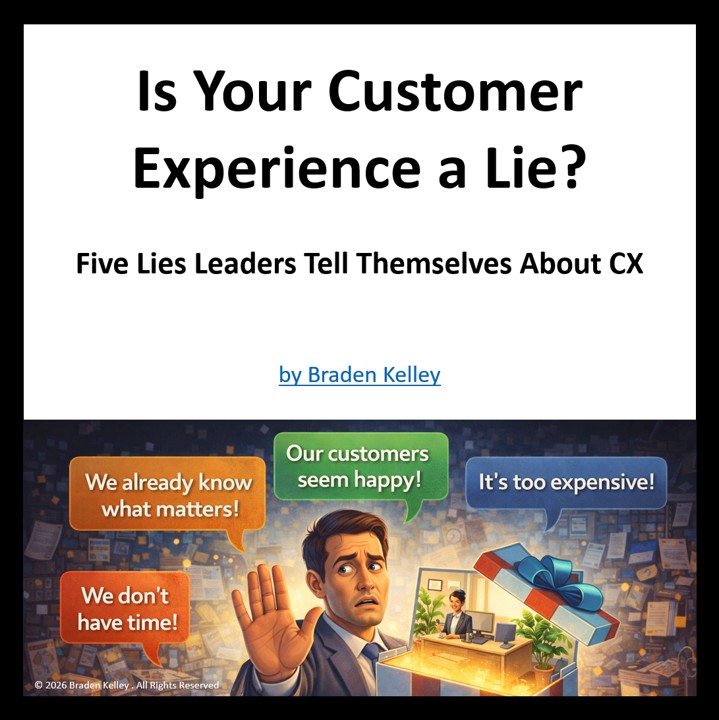
Five Lies Leaders Tell Themselves About CX

Download the Five Lies Leaders Tell Themselves About CX Flipbook as a PDF by clicking the link or the image above.

Image credits: ChatGPT

Content Authenticity Statement: The topic area, key elements to focus on, etc. were decisions made by Braden Kelley, with a little help from Google Gemini to clean up the article and add citations.

Subscribe to Human-Centered Change & Innovation WeeklySign up here to get Human-Centered Change & Innovation Weekly delivered to your inbox every week.

Important or Urgent?

Important or Urgent?

GUEST POST from Stefan Lindegaard

People in the corporate world today are busy – overwhelmingly so. Calendars are packed. Emails never stop. Meetings bleed into each other. On paper, it all looks like progress. But under the surface, something more critical is being lost.

This constant busyness creates the illusion of high performance. Output is visible. Actions are taken. Projects get delivered. But the deeper elements that actually build high performance – leadership development, trust, team learning, shared direction – are quietly being squeezed out.

In my work with leadership teams, I’ve seen this again and again: the very things that drive long-term success get de-prioritized, not because people don’t care, but because there’s simply no time left for them.

We talk a lot about performance, but real high-performance leadership isn’t built on urgency. It’s built on clarity, consistency, learning, and the ability to step back and make deliberate choices. When people are in constant motion, there’s no time for that. No time to coach. No time to reflect. No time to ask, “Are we even moving in the right direction?”

I often say that strong, high-performance teams are not just built – they are strategically designed and developed. That takes effort, intent, and most of all, space. But in the middle of never-ending activity, space is exactly what we don’t have.

This isn’t just a feeling. Research backs it up. Cal Newport’s Deep Work explores how modern work habits – from multitasking to nonstop notifications – have eroded our ability to do focused, meaningful work. Teresa Amabile and Steven Kramer, in The Progress Principle, found that what truly motivates people is making meaningful progress. But we interrupt that progress constantly with check-ins, firefighting, and shallow coordination. And studies like the Microsoft Work Trend Index show that most people feel they don’t get even a single hour of true focus time during their day.

It’s not that productivity is bad. But when busyness becomes the default mode, it turns into a trap – one that quietly undermines performance over time.

From a leadership and organizational development perspective, this is deeply concerning. I work with leaders who want to create better environments, who want to strengthen collaboration, sharpen execution, and grow their teams. But when every hour is accounted for, and every conversation is focused on delivery, there’s little room to ask the deeper questions that lead to change.

Worse still, in this kind of environment, team dynamics suffer. Feedback becomes reactive instead of developmental. Learning becomes fragmented. Strategy becomes surface-level. Psychological safety fades, because no one has the space to truly listen or adjust.

And that’s where Amy Edmondson’s research is so relevant. In her work on The Fearless Organization, she defines psychological safety as the shared belief that it’s safe to take interpersonal risks — to speak up, ask questions, make mistakes. It’s a cornerstone of high-performing teams. But here’s the catch: psychological safety doesn’t thrive in a culture of nonstop urgency. It requires time. Presence. Real conversations. If everyone is too busy, no one feels heard – and when people don’t feel heard, they stop contributing fully.

So it’s not just performance that suffers. It’s innovation. It’s trust. It’s the core of how teams work together.

What’s needed instead is a shift from reactive busyness to intentional performance. That means protecting time and mental space for what matters: coaching, alignment, leadership reflection, and team growth. It means giving teams the tools and structure to act with purpose, not just speed. It means creating a rhythm where delivery and development coexist.

High-performance isn’t about doing more. It’s about doing what matters – consistently, deliberately, and together.

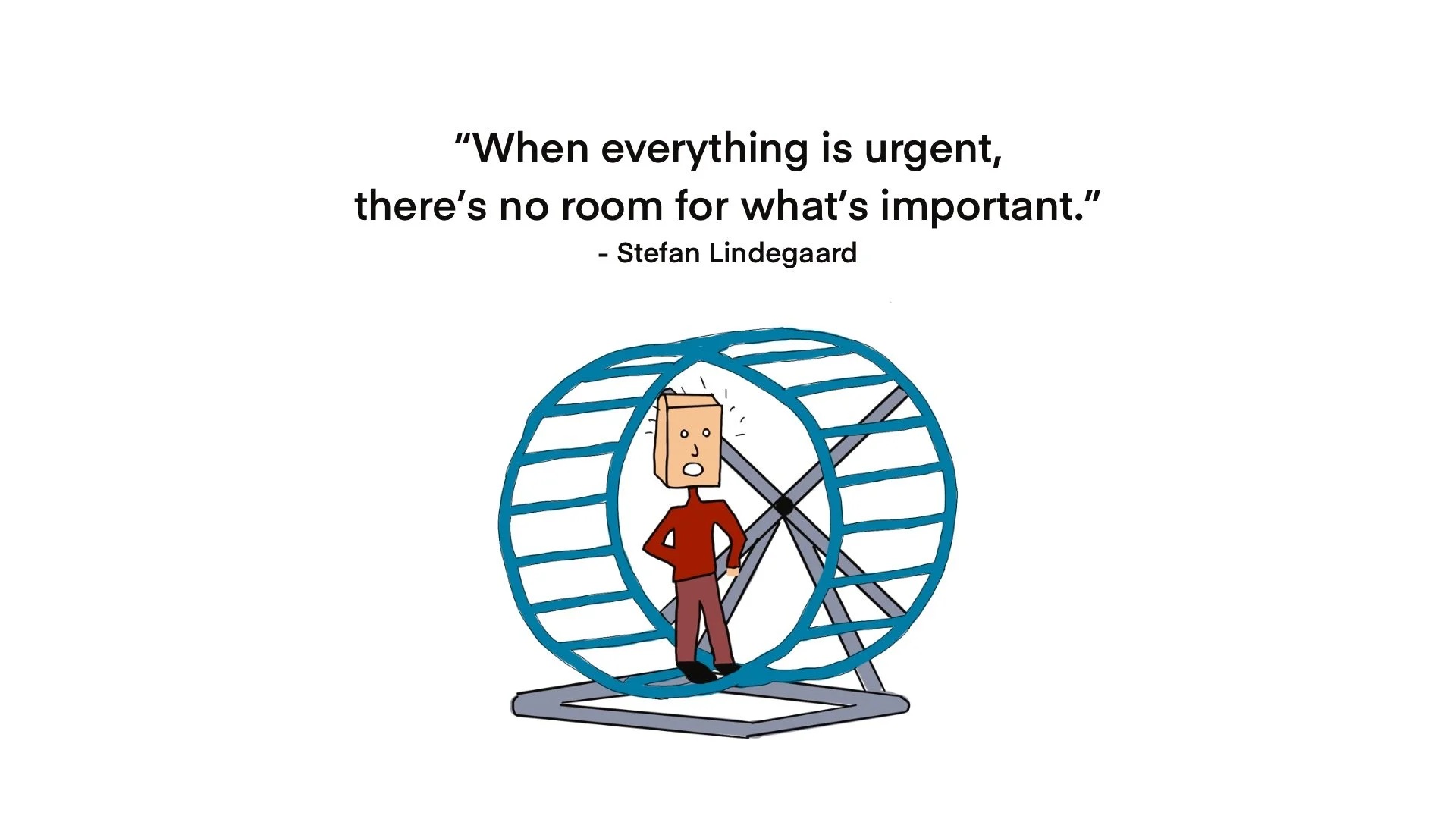
So if your team is always too busy to reflect, to connect, to lead – that’s the signal something deeper needs to shift. Because when everything is urgent, we lose sight of what’s truly important.

And without that, performance is just motion.

Image Credit: Stefan Lindegaard

Subscribe to Human-Centered Change & Innovation WeeklySign up here to get Human-Centered Change & Innovation Weekly delivered to your inbox every week.

9 Soft Landing Moves for Hard Technology Rollouts

9 Soft Landing Moves for Hard Technology Rollouts

by Braden Kelley and Art Inteligencia


What Soft Landing Moves Help Hard Technology Rollouts? (Short Answer)

Nine soft-landing moves for hard technology rollouts: (1) write the soft landing in human terms, (2) fund work redesign equal to the tech workstream, (3) name one success behavior per cohort, (4) practice on real work before cutover, (5) appoint a BAU receiving owner before go-live, (6) kill-date the old path, (7) run a dual-truth scorecard, (8) gate waves on behavior — not only the calendar, and (9) bridge hypercare into maintenance. Soft landings keep hard tech from becoming shelfware with a ribbon.

Hard technology needs a soft landing — humans succeeding in the new way of working, not only a green cutover.

What Is a Soft Landing for a Hard Technology Rollout?

ERP, platforms, AI tools, and big-bang cutovers are hard technology: high coupling, high stakes, loud go-lives. Soft landings are not softer project management. They are designed moves so the median person can succeed — named behavior, redesigned work, practice, BAU ownership, old-path kill, dual truth, progressive gates, and maintenance after hypercare.

I define the broader more-human fork in The AI Soft Landing. This piece is the rollout playbook: how to land hard stacks without leaving humans on the spreadsheet. When adoption design is skipped, good tools become shelfware — see 12 Adoption Mistakes That Turn Good Tools Into Shelfware.

Move Without it Soft landing forces…
1. Write the landing Vendor roadmap as strategy Human success named
2. Fund redesign Tool on broken work Jobs/incentives change with stack
3. Name behavior Awareness as adoption One doable proof per cohort
4. Practice before cutover Completions theater Time-to-confidence
5. BAU owner pre-go-live Orphan after cake Transfer with teeth
6. Kill-date old path Immortal dual-run Retirement as value
7. Dual-truth scorecard Green RAG, red floor Human success can veto
8. Behavior-gated waves Big-bang calendar Scale on adoption proof
9. Hypercare → maintenance Relapse surprise at day 90 Reinforcement owner

Ship the stack only as fast as humans can land.

1. Why Write the Soft Landing in Human Terms Before Cutover?

Move: One page — what machines and systems absorb, what humans must do differently, what dignity and confidence look like after go-live.

Hard without it: Vendor milestones impersonate strategy; “go-live success” is the only story.

How: Soft vs hard landing side-by-side for this rollout; sponsor signs it.

Signal: Steering can answer “who succeeds how?” without opening the RAID log. For investment-gate cousins of this move, see 10 More Human Future Tests for Any AI Investment.

2. Why Fund Work Redesign Equal to the Tech Workstream?

Move: Budget and staff job redesign, handoffs, incentives, and policy changes with the build — not after.

Hard without it: Shiny system on unreformed process; denser leftovers.

How: Dual workstream plan; redesign owners named; equal visibility in steering.

Signal: Process and incentive changes have dates beside config dates. Many post-pilot stalls start here — see 9 Reasons Digital Transformations Stall After the Pilot.

3. Why Name One Success Behavior per Cohort?

Move: For each major role group, one observable success behavior — for example, complete in the new system without dual entry.

Hard without it: Training percent and logins called adoption.

How: Put behavior on the scorecard from day one, thirty, and ninety.

Signal: Flat behavior triggers design diagnosis — not “resistance” lectures. For the full post-go-live scoreboard, see 6 Metrics That Prove Change Worked — Beyond Go-Live Day.

4. Why Practice on Real Work Before Cutover?

Move: Practice and coaching on real transactions and jobs before the switch — not only e-learning and town halls.

Hard without it: Completions green; floor confidence red.

How: Protected practice time; manager as coach; rehearsal environments with real constraints.

Signal: Time-to-confidence improves by cohort before or immediately after cutover. Informed is not enabled — a core thread in 5 Steps of Human-Centered Change.

5. Why Appoint a BAU Receiving Owner Before Go-Live?

Move: Named operator who will run the new way after the PMO leaves — handoffs, support, reinforcement.

Hard without it: Project owns it forever; orphan after cake.

How: Signed transfer card; receiving owner in steering before cutover.

Signal: Someone to escalate drift to on day thirty-one. Ownership coverage lives in 8 Roles That Make or Break Enterprise Transformation.

6. Why Kill-Date the Old Path on Hard Rollouts?

Move: Time-boxed coexistence with an explicit stop for legacy process and shadow tools.

Hard without it: Immortal dual-run celebrated as kindness; shelfware beside the new system.

How: Kill date on the plan; retirement volume tracked; incentives stop rewarding the old way.

Signal: Legacy volume toward zero; workarounds retired or adopted on purpose.

7. What Is a Dual-Truth Scorecard for Technology Rollouts?

Move: Score cutover and system health and human success; green RAG cannot close a red experience.

Hard without it: Deck theater; floor pain invisible.

How: Pair availability and defects with behavior, time-to-confidence, recontact, and escape to the old path.

Signal: Steering stops when human truth is red — even if cutover is green. When the program performs for the mirror instead, see 11 Signs Your Transformation Is Managing the Deck, Not the Work.

8. Why Gate Waves on Behavior — Not Only the Calendar?

Move: Progressive rollout waves advance on adopted-behavior proof, capacity, and transfer readiness — not FOMO dates alone.

Hard without it: Big-bang calendar politics; enterprise hard landing.

How: Wave scorecard; pause authority; kill/continue criteria per wave.

Signal: Later waves start cleaner because earlier waves taught the landing.

9. How Do You Bridge Hypercare Into Maintenance?

Move: When hypercare ends, reinforcement rituals, drift review, and relapse response already have an owner.

Hard without it: Applause → silence → old path returns at day ninety.

How: Maintenance plan equal to cutover plan; relapse triggers escalation, not surprise.

Signal: Post-hypercare usage holds; reinforcement coverage is real.

What Is the Pre-Cutover Soft-Landing Checklist?

Nine checks before the next hard tech go-live:

  1. Soft landing written?
  2. Redesign funded?
  3. Behaviors named?
  4. Practice done?
  5. BAU owner signed?
  6. Old-path kill dated?
  7. Dual scorecard live?
  8. Wave gates behavioral?
  9. Maintenance bridged?

Mantra: Make the technology as hard as it needs to be. Make the landing soft on purpose.

FAQ: Soft Landing Moves for Hard Technology Rollouts

What is a soft landing for a technology rollout?

A soft landing for a technology rollout is a designed path where hard systems go live while humans succeed — named behaviors, redesigned work, practice, BAU ownership, old-path kill, dual truth scoring, behavior-gated waves, and maintenance after hypercare — not only a green cutover.

How do you soft-land an ERP go-live?

Soft-land an ERP go-live by writing the human landing, funding work redesign with the build, naming success behaviors by cohort, practicing on real work, appointing a BAU receiving owner, kill-dating legacy paths, scoring human success beside system RAG, gating waves on adoption, and bridging hypercare into reinforcement.

What should you do before a hard cutover?

Before a hard cutover, confirm the soft landing is written, redesign is funded, behaviors are named, practice is done, a BAU owner is signed, the old-path kill date is real, dual scoring is live, wave gates are behavioral, and maintenance is bridged — not only that the cutover runbook is green.

How do you prevent shelfware after a platform launch?

Prevent shelfware after a platform launch by redesigning work with the tool, practicing before cutover, killing the old path on a date, measuring behavior not logins, and keeping a BAU owner reinforcing the new way after hypercare ends.

What is dual-truth scoring in change management?

Dual-truth scoring pairs system health (availability, defects, cutover RAG) with human success (behavior adoption, time-to-confidence, escape to the old path) — and refuses to close a green system review when the floor experience is red.

Image credits: ChatGPT

Content Authenticity Statement: The topic area, key elements to focus on, etc. were decisions made by Braden Kelley, with a little help from Google Gemini and Cursor to clean up the article, add images and create infographics.

Subscribe to Human-Centered Change & Innovation WeeklySign up here to get Human-Centered Change & Innovation Weekly delivered to your inbox every week.

5 Simple Keys to Becoming a Powerful Communicator

5 Simple Keys to Becoming a Powerful Communicator

GUEST POST from Greg Satell

Sometimes the hardest thing is merely to make yourself understood. Things that change the world, or even a small part of it, always arrive out of context because, by definition, the world hasn’t changed yet. That’s why innovators need to be great communicators, because an idea that doesn’t gain traction is an idea that fails.

That’s easier said than done. As Fareed Zakaria has put it, “Thinking and writing are inextricably intertwined. When I begin to write, I realize that my ‘thoughts’ are usually a jumble of half-baked, incoherent impulses strung together with gaping logical holes between them.” Clearly, if he struggles, we all do.

Yet the good news is that most people can immensely improve their communication skills by following a few simple rules. While, like any skill, they take a lifetime of practice to hone and perfect, you can start seeing progress within a few hours. It doesn’t matter if you’re an entrepreneur, a senior executive or just starting out, you need to communicate effectively.

1. Clarity Before Creativity, Always

Most people want their writing and speaking to be impressive. They have an idea in their heads of what a “professional” sounds like and they try to emulate those traits. They use big words, infuse acronyms and technical language or try to pluck a choice term or two out of the zeitgeist.

Yet trying to conform to some abstract notion of “professional” or “impressive” is a sure way to garble your message. Instead of trying to impress, just try to be clear. Different people have different conceptions of what they consider to be professional or impressive, but everyone knows what is clear.

The truth is that nobody cares how clever you are if they can’t understand what you’re trying to tell them and few will take the time and effort to figure it out. Most probably, they will assume you haven’t really thought things through and move on to other things.

So as you formulate your message, whether it’s an email, a pitch, a keynote or whatever, continually ask yourself, “how can I make it more clear?”

2. When In Doubt, Take It Out

Born in the late 13th century, William of Ockham was a giant of his age. As one of the few intellectual lights of medieval times, his commentaries on reason, logic and political theory are studied even today. His ideas about the separation of church and state were literally centuries ahead of their time and formed the basis for our own constitutional principle.

Yet he’s best known for Ockham’s Razor, sometimes known as the “principle of parsimony.” Often, the principle is interpreted as “Keep It Simple Stupid,” but that’s not quite right. A much more accurate translation would be, “entities should not be multiplied beyond necessity.” In other words, if something doesn’t need to be there, it shouldn’t be.

A useful device I use for applying Ockham’s razor is to imagine my audience, whether that is a reader or a listener, as having an internal “cognitive budget” they are willing to devote to whatever I’m trying to tell them. Then I judge everything I include by the standard of, “is this worth using up my cognitive budget?”

So be cautious and respectful with your audience’s attention. If you have any doubts whether it needs to be there, it probably doesn’t. Take it out and see if anything meaningful is lost. If not, keep it out and don’t look back.

3. If It Sounds Like Writing, It’s Probably Not Good

When we’re taught to write in school, we’re usually urged to follow a certain form. This often involves an academic, detached tone of voice. For many of the same reasons, when we speak to an audience, our tone takes on a “speaker’s voice. In both cases, the result is that we come off as performative and inauthentic.

Your communication, whether you’re speaking or writing, should sound like you, not someone you’re trying to be at a particular moment. Your vocabulary shouldn’t be significantly different when you write than when you speak. Your grammar and turns of phrase shouldn’t vary too much either. There’s absolutely no reason for you to come off as someone else.

Style should be invisible. If your audience is focusing on how you’re writing or speaking, then that steals cognitive energy away from concentrating on the message you’re trying to communicate. Don’t fall into the trap of trying to sound a certain way, just focus your energy on being as clear as possible.

4. Default To One Point

If you’re going to rob a bank, as a general rule anything you say after “put the money in the bag or I’ll blow your head off,” will be somewhat superfluous. That one simple point is perfectly sufficient for the job at hand. In fact, the uncomfortable pause that follows will probably accentuate the impact of your message.

Now, clearly there are exceptions to the “default to one point” rule. For example, if you kidnapped the teller’s family, that kind of time and effort might warrant adding a second point. Even then though, you might want to let your first point sink in and keep your second point in reserve in case you need to overcome an objection.

Obviously, I’m being facetious and not suggesting anyone actually rob a bank, but the point stands. In most contexts, but especially if you’re on a panel or doing a Q&A session, you’re usually, although not always, better off sticking to one point and making it well than trying to jam in a too much information

And, of course, if they like your one point they’ll be likely to ask for more. That’s how you build a conversation.

5. Dare to be Crap

The hardest thing about starting a project of any sort is that we always compare initial efforts to finished products and, not surprisingly, those efforts always seem to come up short. As Pixar President Ed Catmull wrote in his book, Creativity, Inc., “early on, all of our movies suck.” If it’s true of Pixar movies, it’s probably true of our work.

That makes it really hard to begin writing or scripting, because whatever you first put down is bound to be a disappointment. Your wording will be clumsy, your points will be unclear and you’ll begin to realize that your great idea is actually, as Fareed Zakaria put it, “a jumble of half-baked, incoherent impulses strung together with gaping logical holes between them.”

Your first efforts are always crap. Yet that shouldn’t blind you to the fact that all great works start out that way. As Vladimir Nabokov put it, “writing is rewriting.” The greatness comes not from the initial spark of inspiration, but from the long hours spent honing it down to reveal its core. But before you do that, you need to dare to be crap and produce a first draft.

The truth is that communicating even fairly simple ideas can be very hard work. As in most things, talent is overrated. You produce good work not from having a knack for a clever turn of phrase, but by putting in the effort to express your ideas clearly.

— Article courtesy of the Digital Tonto blog
— Image credit: Unsplash

Subscribe to Human-Centered Change & Innovation WeeklySign up here to join 17,000+ leaders getting Human-Centered Change & Innovation Weekly delivered to their inbox every week.
8 Roles That Make or Break Enterprise Transformation

8 Roles That Make or Break Enterprise Transformation

by Braden Kelley and Chateau G Pato


Which Roles Make or Break Enterprise Transformation? (Short Answer)

Eight roles that make or break enterprise transformation: (1) Sponsor with Levers, (2) Work-Not-Deck Program Lead, (3) Line Manager as Local Change Leader, (4) BAU Receiving Owner, (5) Old-Path Kill Owner, (6) Enablement / Practice Designer, (7) Portfolio Capacity Steward, and (8) Floor Truth Partner. Soft landings staff these jobs — full-time, part-time, or embedded. Hard landings staff titles and still leave the human work vacant.

Enterprise transformation makes or breaks on ownership of the human system — not on another workstream lead with a better title.

Why Don’t Transformation Titles Guarantee These Jobs Are Done?

“Transformation Officer,” “Change Manager,” and “PMO Lead” on an org chart do not prove these eight jobs are done. Soft landings check coverage of mandate, enablement, local coaching, BAU receipt, old-path kill, capacity, and floor truth — regardless of badge.

I have watched programs hire the titles and still manage the deck while the median person’s work never changed. For the method spine behind Leadership, Management, Maintenance, and Portfolio, see 5 Steps of Human-Centered Change. For innovation’s different team-sport catalog, see 10 Innovation Roles Every Enterprise Needs — adjacent ownership, different domain.

Role Owns Break tell
1. Sponsor with Levers Budget/policy/metric/stop power Logo sponsorship; cascades only
2. Work-Not-Deck Lead Behavior + decisions in governance RAG theater; status tours
3. Line Manager Coach Local practice and permission Cascade middle; no coaching time
4. BAU Receiving Owner New way after applause “Project owns it” forever
5. Old-Path Kill Owner Dual-run and shadow death Kindness without a kill date
6. Enablement Designer Practice on real work Completions as capability
7. Capacity Steward What we stop so change can live Stacked initiatives; “and also”
8. Floor Truth Partner Contact evidence in the room Deck greener than the floor

If you cannot name who owns it, the landing already broke.

2. Why Does a Work-Not-Deck Program Lead Make or Break Transformation?

Owns: Program governance that forces decisions, behavior metrics, and tradeoffs — not slide hygiene as the product.

Costume (breaks): Transformation as a reporting factory; green decks, red work.

Make: Decision-first agendas; dual truth (system + human success); cap hours on deck production.

Tell missing: Steering is a tour; few things stop; few owners leave with a real next action. For the diagnostic pattern, see 11 Signs Your Transformation Is Managing the Deck, Not the Work.

3. How Do Line Managers Make or Break Local Change?

Owns: Local permission, coaching, practice time, and “what we stop doing here.”

Costume (breaks): Middle management as cascade amplifiers and attendance police.

Make: Managers develop judgment; protected practice; honest answers to quiet questions.

Tell missing: Town halls loud; team huddles empty of how work actually changes. The hallway questions managers must be ready for live in 10 Questions Employees Quietly Ask During Every Transformation.

4. Who Is the BAU Receiving Owner — and Why Does It Matter?

Owns: The workflow or journey in BAU — handoffs, support, reinforcement, and success behavior after the PMO leaves.

Costume (breaks): “Project owns it” forever; orphan process after cutover cake.

Make: Named receiving owner before go-live; signed transfer; reinforcement rituals.

Tell missing: Hypercare ends; relapse begins; nobody to escalate drift to. Many stalls after the pilot are vacant receiving ownership with a different name — see 9 Reasons Digital Transformations Stall After the Pilot.

5. What Does an Old-Path Kill Owner Do?

Owns: Kill-date honor for legacy process, shadow tools, and “just in case” dual paths.

Costume (breaks): Endless coexistence celebrated as kindness; immortal workarounds.

Make: Time-boxed dual-run; retirement volume tracked; incentives stop rewarding the old way.

Tell missing: New system “up”; median person still lives on the spreadsheet.

6. Why Is an Enablement / Practice Designer Different From “Change Communications”?

Owns: Practice on real work, redesigned jobs, and coaching design — not only comms and e-learning.

Costume (breaks): Completions, town halls, and awareness scores as “change management.”

Make: Time-to-confidence by role; managers as practice partners; enablement equal to the build backlog.

Tell missing: Training green; behavior flat; “resistance” blamed on character. Informed is not enabled.

7. What Does a Portfolio Capacity Steward Protect?

Owns: Organizational load — what initiatives pause, kill, or sequence so humans can succeed.

Costume (breaks): “And also” portfolio; every bet gets a workstream; capacity is someone else’s problem.

Make: Visible stop/start list; change load as a steering metric; permission to refuse new starts.

Tell missing: The quiet question “What will I stop doing?” never gets an answer.

8. Why Does Every Transformation Need a Floor Truth Partner?

Owns: Ride-alongs, verbatim jobs, adoption quality, and the story the deck cannot invent.

Costume (breaks): Sentiment pulses and status narratives substitute for contact.

Make: Every steering pack includes floor evidence; dual truth is allowed in the room.

Tell missing: RAG greener than reality; nobody has watched the median person struggle this month.

How Do You Check Role Coverage Before the Next Steering Committee?

Eight questions:

  1. Who has levers — and used them this month?
  2. Who owns decisions vs deck polish?
  3. Which line managers are coaching practice?
  4. Who receives the work in BAU?
  5. Who owns the old-path kill date?
  6. Who designs enablement as practice?
  7. What did we stop to create capacity?
  8. Where is this month’s floor truth?

Mantra: Staff the ownership. Titles without these eight jobs are just a better org chart for a hard landing.

FAQ: Roles That Make or Break Enterprise Transformation

What roles are needed for enterprise transformation?

Enterprise transformation needs a sponsor with levers, a work-not-deck program lead, line managers as local change leaders, a BAU receiving owner, an old-path kill owner, an enablement/practice designer, a portfolio capacity steward, and a floor truth partner — whether those jobs are full-time titles or embedded responsibilities.

Who owns transformation success?

Transformation success is owned across mandate (sponsor), governance of the work (program lead), local coaching (line managers), BAU receipt and reinforcement, old-path retirement, enablement as practice, portfolio capacity, and floor truth — not by a single Transformation Officer badge alone.

What is a transformation sponsor with levers?

A transformation sponsor with levers holds budget, policy, metric, and stop/start power for the change arc — not only a logo on the cascade deck. If they cannot change the system, they are a mascot.

Why do transformations fail without BAU owners?

Transformations fail without BAU owners because after hypercare the PMO leaves, reinforcement stops, relapse begins, and nobody owns the new way of working — so go-live photographs success while behavior returns to the old path.

What is the difference between a change manager and an enablement designer?

A costume “change manager” often owns communications and training completions. An enablement/practice designer owns practice on real work, redesigned jobs, coaching design, and time-to-confidence — so people can succeed, not only stay informed.

Image credits: Pexels

Content Authenticity Statement: The topic area, key elements to focus on, etc. were decisions made by Braden Kelley, with a little help from Google Gemini and Cursor to clean up the article, add images and create infographics.

Subscribe to Human-Centered Change & Innovation WeeklySign up here to get Human-Centered Change & Innovation Weekly delivered to your inbox every week.