
Tag Archives: teams

Inside Look at Culture of WordPress

Inside Look at Culture of WordPressInterview with Scott Berkun

I had the opportunity to sit down recently with fellow author Scott Berkun to talk with him about his new book The Year Without Pants, which catalogs his experience in two years with Automattic, the company that runs WordPress.com.

Our conversation touched on many different topics including innovation, collaboration, and organizational behavior.

For those of you who haven’t read the book or who aren’t familiar with how Automattic runs as an organization, here are some of the highlights:

  • All of the staff used to report to Matt Mullenweg, the 29-year-old creator of WordPress and founder of Automattic
  • When they passed 50 or so employees, about the time Scott Berkun joined, they introduced team leads
  • Organizational changes happen organically in the company, primarily when the pain gets great enough to force change
  • Automattic now has about 200 employees
  • Email is not the company communications standard – instead they use IRC and Skype and WordPress
  • Employees can work wherever they want
  • They have a company headquarters in San Francisco, but very few people work there
  • All employees get together in person annually and teams get together maybe twice in person to recharge intangibles
  • Hiring decisions are made not with traditional in-person interviews, but instead primarily by evaluating test projects
  • All new employees spend a couple of weeks working in support before occupying their intended role

Scott during his two years at Automattic led the Social team for WordPress.com and one of the things that he focused on while he was there, and that the book focuses on, is experimentation. One of the things that was fascinating in his detailing of his experience was that there was little resistance in his team to all of the experimentation that they engaged in. His theory was that they were ‘makers’ (he led a team of developers) and so they didn’t feel that there was a need to justify their existence. We spoke a great deal about why the culture at Automattic might be so accepting of experimentation, where other organizations are not, and this led to a discussion of some of my theories about the effects of scarcity and lack of firm growth, and we arrived at some of Scott’s comments that focused on the fact that there is too much fear in most organization and most managers don’t invest much time or effort in actually managing. Most managers don’t work to impact the feelings or environment for employees in companies that aren’t growing and/or where job opportunities are scarce. We then dug more into the culture topic.

Changing Culture is Painful

When it comes to culture change, there are a lot of consultants out there that would have you believe that they can come in an change your culture in 30-90 days, and while this might be possible it wouldn’t come without a great deal more pain than most organizations would be willing to bear. The reason a great deal of pain is required to affect culture change is the fact that an organization’s culture is typically determined by:

  1. The organizations cultural history and inertia
  2. The prevalent culture comes from the things that the largest number of people reinforce

So, in most cases changing the culture will require you to stop reinforcing behaviors that are reinforcing the current culture and start reinforcing behaviors that will lead you in the direction of the culture change you desire. What will this mean for the organization? Half the organization might leave! Are you ready for that? Many people who felt comfortable in the old culture, or that derived their power source from their old behaviors will need to be asked to leave the organization, or hopefully, will leave by their own efforts. Add into this potential chaos the fact that in most organizations the culture problem is often being created by the person asking for the culture change consulting, and how many consultants will reveal and stand behind this fact if it occurs?

One of the ways to ensure a healthy culture is constant experimentation driven by experiments that are instrumented for learning and dedicated to its pursuit. If an organization commits itself to a continuous practice of testing and learning within its management practices, in the same way that it hopefully dedicates itself to testing and learning with its products and services, then it has a much greater chance of maintaining a healthy, productive cultural environment. On the flip side, the way that we promote people in most organizations undermines the existence of a healthy, functional culture and so we need to rethink promotion. We need to ensure amongst other things that people with technical proficiency have a career path towards greater compensation that doesn’t have to include management responsibilities for those that don’t embrace the challenge and willingness to experiment in their management approaches. One of the reasons that Automattic’s culture is so strong, is because it was built to be entrepreneurial, collegial, and collaborative, and people are trusted to do what they do well (in their own way).

Of course I had to ask if people had left Automattic, and yes they have. In most cases the left to join other startups, and Scott believes that Automattic will probably stay in their minds one of the best places they worked.

Pressures From Outside

Another topic we touched on in our interview was whether or not Automattic felt pressure to make money faster after taking some VC rounds, but Scott said that while Automattic took some investment from VC’s, it was already profitable at the time and didn’t need the money but took the financing to gain other benefits and wasn’t under undue outside influence. As a result, Matt was able to purposely not assign a team or an individual to focus on growing revenue every quarter. he wanted to be careful not to turn up the monetization dial too fast because in doing so you often make bad decisions by doing so (product, etc.). There was no Store team when Scott joined, but there is now. Matt and team are very careful to maintain a long-term focus and they could easily monetize the 8th most popular web site more than they are (that’s a valuable asset), but are being careful in how they go about it.

Another thing I asked about was the impact on WordPress.com of things like Tumblr and Instagram and others, and Scott said that despite a lot of other companies and supposed competitors that have come along that have been hypothesized to supplant WordPress, they’ve never been super concerned. The reason?

WordPress itself is very flexible and so people are able to easily create themes that replicate the look and feel of a lot of the supposed competitors. The large WordPress community will build Tumblr like themes, etc. And the company itself is very resilient, and so when something new comes out, people will have a look at it and will either incorporate some of what they learn from it or ignore it if there doesn’t seem to be anything there. And, another point on the Automattic culture, if someone were to say “someone should…” in relation to something they see outside, then typically that person becomes the person to take it on.

There is a lot more I think we can learn from the Automattic experiment, and I may talk to Scott again to explore some of the learnings in the second half of the book, but wanted to rush these thoughts and nuggets from the conversation out to you. I hope they have been good for thought and you’ll think more if you’re a manager about what experiments you might run to see if you can make your group function even better.

Final Thoughts

Team size and how the organization grows up around its founder make a huge difference in how the culture evolves and reacts to its environment, and in Automattic Scott’s team was four when he started and nine when he left. The Theme team had 15 people on it, and the Happiness team (aka customer support) was the largest team at 25 people. One thing that happened along the way was when Scott’s Social team reached eight people it sort of naturally started to evolve into two separate sub-teams, which they called squads. Squad leadership was informal. There were no raises or title changes, and the squad leaders had naturally earned the most authority. They actually tried rotating leadership, but the results were mixed at best.

Another thing I asked Scott Berkun about team size was whether he thought the loose oversight and team structure would scale well as Automattic grows. He feels that it if they were to grow from say 200 to 1,000 employees they would probably insert another layer of management and break into groups of 100-150 people centered around product unit owners with teams underneath. This reinforces the thinking that they have at WL Gore, where they consciously spawn a new organization when it passes 60-70 people if my memory serves me correctly.

Build a common language of innovation on your team

Subscribe to Human-Centered Change & Innovation WeeklySign up here to get Human-Centered Change & Innovation Weekly delivered to your inbox every week.

Partners Wanted – Taking Nine Innovation Roles Global

Partners Wanted - Taking Nine Innovation Roles Global I was in Boston, MA last week for the Front End of Innovation conference and had the opportunity to train dozens of potential corporate Nine Innovation Roles trainers as part of my quest to set the Nine Innovation Roles free and make this powerful tool available for people to use to improve the effectiveness of their innovation teams and the overall innovation capability of the organization.

Now it is time for the next step, to train other service providers from all around the world on the Nine Innovation Roles so they can use it with their customers.

Already, we have a Spanish language version of the cards and resources in process.

For interested service providers, there are only a few small requirements for becoming a Nine Innovation Roles training partner:

  1. Translate this page on my site (see Spanish example) – will publish and give translation credit with 1-2 links to first translator of each language
  2. Translate this page on my web site – will publish and give translation credit with 1-2 links to first translator of each language
  3. #1 and #2 will allow me to get a translated version of the Nine Innovation Roles cards design created for you
  4. Translate the Nine Innovation Roles presentation embedded in #1 (can leverage #1)
  5. Translate the Nine Innovation Roles worksheet I link to in #1 (can leverage #1)
  6. Attend an inexpensive Nine Innovation Roles train the trainer webinar that I will be holding soon.

To register your interest in becoming a Nine Innovation Roles training partner please fill out the contact form and make a note in the question field.


Build a common language of innovation on your team

Subscribe to Human-Centered Change & Innovation WeeklySign up here to get Human-Centered Change & Innovation Weekly delivered to your inbox every week.
Free Nine Innovation Roles Train the Trainer Session

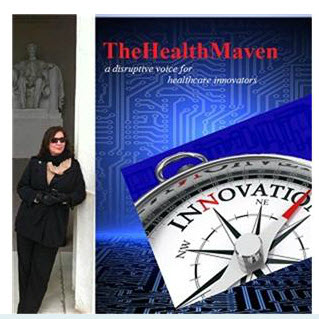
Nine Innovation Roles Train the Trainer I will be in Boston, MA this week for the Front End of Innovation conference May 6-8, 2013 at the Seaport World Trade Center, joining 650+ innovation managers and thought leaders from around the world who are serious about learning more about the front-end of innovation or improving existing innovation efforts.

For those of you are interested, I am planning to hold a FREE Nine Innovation Roles train the trainer session to go with all of the other FREE Nine Innovation Roles resources I offer hear on my web site under ‘Products’. To register your interest please fill out the contact form and make a note in the question field.

I will also be leading some thought provoking panel sessions, sharing new insights, and reconnecting with innovation friends (both old and new) at this always fun and energizing innovation event.

If you’d like to set up a meeting to explore your innovation efforts or needs while I’m there, please contact me.


Build a common language of innovation on your team

Subscribe to Human-Centered Change & Innovation WeeklySign up here to get Human-Centered Change & Innovation Weekly delivered to your inbox every week.
Latest Radio Interview with The Health Maven

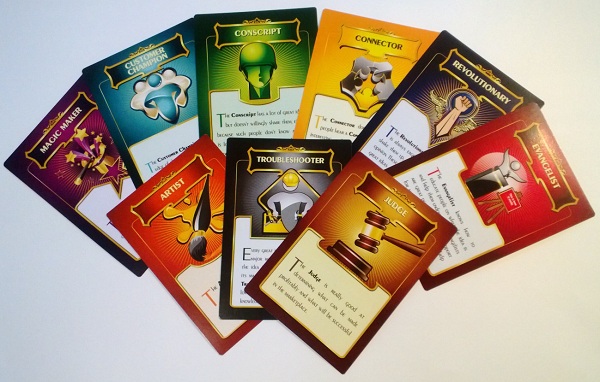
LeAnna J Carey - The Health MavenI’m proud to share with you the link to my latest radio interview. This time I had the opportunity to sit down and chat with LeAnna J. Carey (@LeannaJCarey), host of the popular radio program The Health Maven – Innovation Talk.

We spend the 30 minutes talking about The Nine Innovation Roles and how organizations around the world are increasingly utilizing The Nine Innovation Roles to help them build more effective innovation teams. Curious which ones I think LeAnna fills or that I see myself typically filling?

Tune into the broadcast to find out! 🙂

Click here to listen to a recording of the interview


Build a common language of innovation on your team

Subscribe to Human-Centered Change & Innovation WeeklySign up here to get Human-Centered Change & Innovation Weekly delivered to your inbox every week.

Announcing FREE Nine Innovation Roles Resources

Nine Innovation Roles Cards

I have big news that I’m extremely excited to share with you today.

I’m proud to announce today that I’m setting The Nine Innovation Roles free.

What does that mean exactly?

It means that for the greater good, I am now providing all of the tools that you need to conduct a Nine Innovation Roles workshop or team meeting inside your organization to enhance the success of your innovation teams – for FREE.

Some people think I’m crazy to help people not hire me, but because of my collaborative and people-centric approach to innovation I would like to give everyone five free gifts:

  1. The Nine Innovation Roles themselves
  2. Downloadable Nine Innovation Roles presentation for team meetings or workshops
  3. Downloadable Nine Innovation Roles Worksheet for gathering data on team makeup
  4. Downloadable Nine Innovation Roles card deck design that I use with Fortune 500 clients
  5. Nine Innovation Roles video for use in team meetings or workshops

The Nine Innovation Roles is one of the most requested workshop topics in the keynotes and masterclasses that I conduct for companies all around the world, and comes directly from my popular book Stoking Your Innovation Bonfire, that is being used by universities like Creighton and companies like Microsoft and AB Inbev to help establish a common language of innovation.

Here is an excerpt from my book that talks about The Nine Innovation Roles:

“Too often we treat people as commodities that are interchangeable and maintain the same characteristics and aptitudes. Of course, we know that people are not interchangeable, yet we continually pretend that they are anyway — to make life simpler for our reptile brain to comprehend. Deep down we know that people have different passions, skills, and potential, but even when it comes to innovation, we expect everybody to have good ideas.

I’m of the opinion that all people are creative, in their own way. That is not to say that all people are creative in the sense that every single person is good at creating lots of really great ideas, nor do they have to be. I believe instead that everyone has a dominant innovation role at which they excel, and that when properly identified and channeled, the organization stands to maximize its innovation capacity. I believe that all people excel at one of nine innovation roles, and that when organizations put the right people in the right innovation roles, that your innovation speed and capacity will increase.”

I hope you take the time to download and learn and utilize these FREE Nine Innovation Roles resources to improve the success of your innovation efforts and of the innovation teams in your organizations.

Keep innovating!

Get the Free Nine Innovation Roles Resources Now


Build a common language of innovation on your team

Subscribe to Human-Centered Change & Innovation WeeklySign up here to get Human-Centered Change & Innovation Weekly delivered to your inbox every week.
Innovation Quotes of the Day – May 28, 2012


“The more successful an organization becomes the bigger it gets. The bigger it gets the more it focuses on optimizing its resources. The more it optimizes it resources the more it eliminates variation. Innovation requires variation. We have seen the enemy and he is us.”

– Jeff DeGraff


“It is in identifying which of The Nine Innovation Roles are vacant (or sub-optimally filled) that you will be able to see some of the areas where your efforts are likely to come up short, and then can take actions to improve your chances of innovation success.”

– Braden Kelley


“It is not enough to simply go through the motions. In order to build our abilities, cognitive or otherwise, we must think about what we’re doing, concentrate while we’re doing it and then review what we have done. Further, we need to seek out mentors and peers who will critique our efforts.”

– Greg Satell


What are some of your favorite innovation quotes?

Add one or more to the comments, listing the quote and who said it, and I’ll share the best of the submissions as future innovation quotes of the day!

Subscribe to Human-Centered Change & Innovation WeeklySign up here to get Human-Centered Change & Innovation Weekly delivered to your inbox every week.
Innovation Quotes of the Day – May 27, 2012


“So healthy paranoia is the friend of innovation. Complacency is the enemy – be ruthless in driving it out of your business.”

– Kevin McFarthing


“There are Nine Innovation Roles that need to be filled on every innovation project team, and filled well, for each individual innovation effort to be successful – and the skills necessary to be successful in each role should be cultivated in the organization.”

– Braden Kelley


“Variation, or hedging as it’s called in the venture capital community, is essential because it accelerates the failure cycle and quickens the discovery of the valuable solution. Innovation requires deviation; deviation requires deviants.”

– Jeff DeGraff


What are some of your favorite innovation quotes?

Add one or more to the comments, listing the quote and who said it, and I’ll share the best of the submissions as future innovation quotes of the day!

Subscribe to Human-Centered Change & Innovation WeeklySign up here to get Human-Centered Change & Innovation Weekly delivered to your inbox every week.

Innovation Quotes of the Day – May 2, 2012


“One who fears limits his activities. Failure is the only opportunity to more intelligently begin again.”

– Henry Ford


“Too often we form innovation teams based on who is available instead of focusing on who will make the innovation team successful.”

– Braden Kelley


“If you want to succeed you should strike out on new paths, rather than travel the worn paths of accepted success.”

– John D. Rockefeller, Jr.


What are some of your favorite innovation quotes?

Add one or more to the comments, listing the quote and who said it, and I’ll share the best of the submissions as future innovation quotes of the day!

Subscribe to Human-Centered Change & Innovation WeeklySign up here to get Human-Centered Change & Innovation Weekly delivered to your inbox every week.

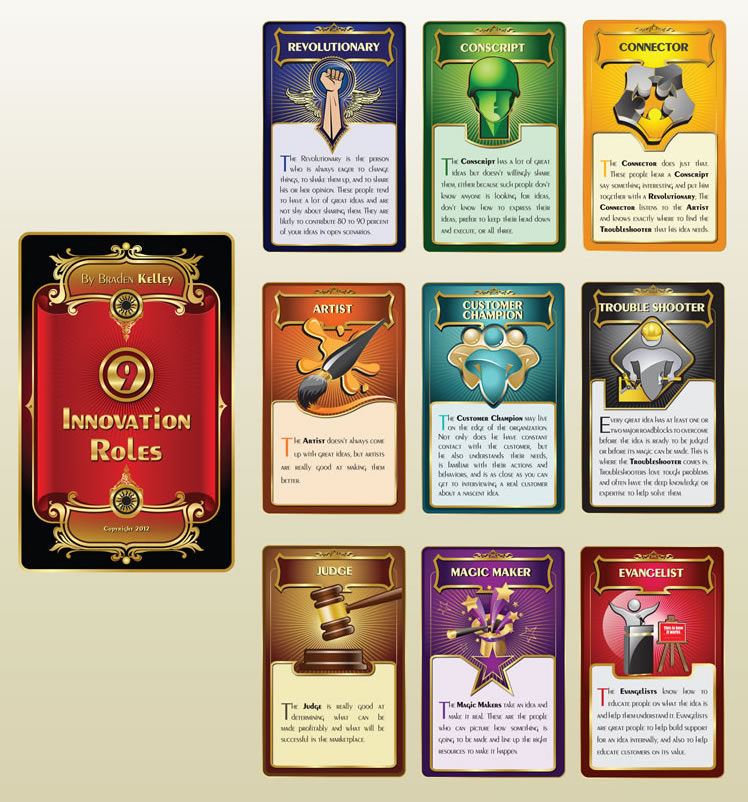
The Nine Innovation Roles

I’m seeing an increasing number of articles about innovation personalities and the like, and I’m a firm believer that it’s not personalities that matter so much when it comes to innovation, it’s the roles that we play in making innovation happen (or not). So, I would like to add my Nine Innovation Roles to the conversation.

The Nine Innovation RolesThe following is an excerpt from my book Stoking Your Innovation Bonfire:

Too often we treat people as commodities that are interchangeable and maintain the same characteristics and aptitudes. Of course, we know that people are not interchangeable, yet we continually pretend that they are anyway — to make life simpler for our reptile brain to comprehend. Deep down we know that people have different passions, skills, and potential, but even when it comes to innovation, we expect everybody to have good ideas.

I’m of the opinion that all people are creative, in their own way. That is not to say that all people are creative in the sense that every single person is good at creating lots of really great ideas, nor do they have to be. I believe instead that everyone has a dominant innovation role at which they excel, and that when properly identified and channeled, the organization stands to maximize its innovation capacity. I believe that all people excel at one of nine innovation roles, and that when organizations put the right people in the right innovation roles, that your innovation speed and capacity will increase.

Here are The Nine Innovation Roles:

1. Revolutionary

  • The Revolutionary is the person who is always eager to change things, to shake them up, and to share his or her opinion. These people tend to have a lot of great ideas and are not shy about sharing them. They are likely to contribute 80 to 90 percent of your ideas in open scenarios.

2. Conscript

  • The Conscript has a lot of great ideas but doesn’t willingly share them, either because such people don’t know anyone is looking for ideas, don’t know how to express their ideas, prefer to keep their head down and execute, or all three.

3. Connector

  • The Connector does just that. These people hear a Conscript say something interesting and put him together with a Revolutionary; The Connector listens to the Artist and knows exactly where to find the Troubleshooter that his idea needs.

4. Artist

  • The Artist doesn’t always come up with great ideas, but artists are really good at making them better.

5. Customer Champion

  • The Customer Champion may live on the edge of the organization. Not only does he have constant contact with the customer, but he also understands their needs, is familiar with their actions and behaviors, and is as close as you can get to interviewing a real customer about a nascent idea.

6. Troubleshooter

  • Every great idea has at least one or two major roadblocks to overcome before the idea is ready to be judged or before its magic can be made. This is where the Troubleshooter comes in. Troubleshooters love tough problems and often have the deep knowledge or expertise to help solve them.

7. Judge

  • The Judge is really good at determining what can be made profitably and what will be successful in the marketplace.

8. Magic Maker

  • The Magic Maker takes an idea and makes it real. These are the people who can picture how something is going to be made and line up the right resources to make it happen.

9. Evangelist

  • The Evangelist knows how to educate people on what the idea is and help them understand it. Evangelists are great people to help build support for an idea internally, and also to help educate customers on its value.

As you can see, creating and maintaining a healthy innovation portfolio requires that you develop the organizational capability of identifying what role each individual is best at playing in your organization. It should be obvious that a failure to involve and leverage all nine roles along the idea generation, idea evaluation, and idea commercialization path will lead to suboptimal results. To be truly successful, you must be able to bring in the right roles at the right times to make your promising ideas stronger on your way to making them successful. Most organizations focus too much energy on generating the ideas and not enough on developing their ideas or their people.

If you would prefer, here is a slide deck that I posted to slideshare.net:

Action Items

  1. Download the simple Nine Innovation Roles Worksheet from my FREE STUFF page and use it in your groups to help understand what innovation roles people tend towards and which ones are underrepresented.
  2. Do you believe these are the roles that drive successful innovation? If not, why not.
  3. Book a Nine Innovation Roles Group Diagnostic Workshop
  4. This is just an excerpt. Please check out the whole book.

Sound off in the comments below.

Book a Nine Innovation Roles Group Diagnostic Workshop

Download the PDF version of the Nine Innovation Roles:

Subscribe to Human-Centered Change & Innovation WeeklySign up here to get Human-Centered Change & Innovation Weekly delivered to your inbox every week.