
Author Archives: Chateau G Pato

About Chateau G Pato

Chateau G Pato is a senior futurist at Inteligencia Ltd. She is passionate about content creation and thinks about it as more science than art. Chateau travels the world at the speed of light, over mountains and under oceans. Her favorite numbers are one and zero. Content Authenticity Statement: If it wasn't clear, any articles under Chateau's byline have been written by OpenAI Playground or Gemini using Braden Kelley and public content as inspiration.

10 Key Traits of Organizations with a Successful Culture of Innovation

10 Key Traits of Organizations with a Successful Culture of Innovation

GUEST POST from Chateau G Pato

Innovation has become a critical driver of success for organizations across industries. Cultivating a culture of innovation is not just about embracing new ideas; it requires fostering an environment that encourages risk-taking, collaboration, and continuous learning. In this article, we will explore ten key traits that distinguish organizations with a successful culture of innovation. Additionally, we will delve into two case studies to demonstrate how these traits translate into tangible outcomes.

Trait 1: Visionary Leadership

Organizations with a successful culture of innovation are led by visionary leaders who inspire and guide their teams. These leaders set a clear vision, communicate it effectively, and empower employees to take risks. A notable exemplar of visionary leadership is Apple Inc., led by Steve Jobs, where his vision for intuitive and elegant products guided their innovation journey.

Trait 2: Empowering Employees

Successful organizations foster a sense of ownership by empowering employees to make decisions and contribute to the innovation process. Google’s “20% time” policy, which allows employees to spend one-fifth of their work hours on personal projects, demonstrates the power of employee empowerment. This policy led to the development of Gmail, AdSense, and many other successful projects.

Trait 3: Open and Collaborative Culture

Creating an environment that encourages collaboration enables diverse perspectives to come together and drive innovation. Pixar Animation Studios is a prime example of an organization that fosters collaboration at every level. Its open layout and shared spaces encourage spontaneous interactions, ideation, and cross-pollination of ideas, leading to groundbreaking animated films.

Trait 4: Embracing Failure as a Learning Opportunity

A culture of innovation recognizes that setbacks and failures are an indispensable part of the learning and growth process. Salesforce.com, a customer relationship management company, encourages employees to “fail fast” through its hackathon events, where employees rapidly prototype ideas and learn valuable lessons from failures. This mindset has fueled a continuous stream of innovative products and solutions.

Trait 5: Continuous Learning and Skill Development

Innovative organizations prioritize continuous learning and invest in skill development programs. 3M, a global innovation company, offers a unique “15% Rule” where employees are allowed to spend up to 15% of their time pursuing personal development projects. This initiative empowers employees to explore their interests, acquire new skills, and contribute to company-wide innovation.

Trait 6: Customer-centric Approach

Organizations with successful innovation cultures prioritize understanding and serving their customers. Amazon, the e-commerce giant, relentlessly focuses on customer preferences and employs customer-centric design thinking methods. This approach has led to innovations like Amazon Prime, Echo, and the customer-driven “Just Walk Out” technology in their grocery stores.

Trait 7: Cross-functional Collaboration

Collaboration across departments and functions is vital for driving innovation. Toyota provides a great example with its concept of “obeya,” a cross-functional war room that brings together employees from different divisions to solve complex challenges. This collaborative environment fosters creativity, accelerates decision-making, and ensures multidimensional perspectives are considered.

Trait 8: Encouraging Diversity and Inclusion

Innovative organizations recognize the value of diverse perspectives and inclusion. Microsoft has made significant strides in building a diverse workforce and creating inclusive teams. By fostering an environment where individuals can bring their unique perspectives to the table, Microsoft has been able to leverage innovation and develop products such as the Xbox Adaptive Controller.

Trait 9: Clear and Efficient Communication

Effective communication ensures that innovative ideas are shared, understood, and acted upon. IDEO, a renowned design and innovation firm, employs various communication tools, such as visual storytelling and prototyping, to translate complex ideas into tangible outcomes. This clear and efficient communication helps IDEO harness the collective creativity of its teams.

Trait 10: Strategic Investment in Innovation

Successful organizations commit resources and allocate dedicated budgets for innovation. IBM’s “Corporate Service Corps” program exemplifies this trait. By sending top-performing employees to work on social and business challenges in emerging markets, IBM invests in its employees’ growth and generates innovative solutions for global challenges.

Conclusion

Organizations that consistently foster a culture of innovation possess these ten key traits. By cultivating visionary leadership, empowering employees, encouraging collaboration, embracing failure, prioritizing continuous learning, and implementing customer-centric approaches, organizations can create an environment where innovation thrives. Through the case studies of Apple Inc., Google, Pixar Animation Studios, Salesforce.com, 3M, Amazon, Toyota, Microsoft, IDEO, and IBM, we witness how these traits translate into tangible outcomes. Embracing these traits can help organizations pave the path to innovation and future success.

SPECIAL BONUS: The very best change planners use a visual, collaborative approach to create their deliverables. A methodology and tools like those in Change Planning Toolkit™ can empower anyone to become great change planners themselves.

Image credit: Pixabay

Subscribe to Human-Centered Change & Innovation WeeklySign up here to get Human-Centered Change & Innovation Weekly delivered to your inbox every week.

The Power of Human-Centered Design Thinking in Driving Business Innovation

The Power of Human-Centered Design Thinking in Driving Business Innovation

GUEST POST from Chateau G Pato

In today’s fast-paced and competitive business landscape, innovation has become a necessity for organizations to sustain growth and thrive. However, truly groundbreaking and customer-centric innovations are often elusive. This is where Human-Centered Design (HCD) thinking comes into play. HCD integrates empathy into the problem-solving process, enabling businesses to create innovative solutions that resonate with their customers. In this thought leadership article, we will explore the power of HCD in driving business innovation through two compelling case studies.

Case Study 1: Airbnb – Revolutionizing the Hospitality Industry

Airbnb is a prime example of how HCD thinking can revolutionize an industry. Founded in 2008, Airbnb disrupted the hospitality sector by understanding the unmet needs of consumers and creating a platform that satisfied those needs. Instead of focusing solely on the traditional idea of a hotel, Airbnb reimagined hospitality by considering the desires and pain points of both hosts and guests.

By employing HCD principles, Airbnb designers embarked on a journey to better understand the needs of guests seeking alternative accommodation options on their travels. Through in-depth research, interviews, and user testing, they uncovered that travelers desired the comfort of a home-like experience, a sense of belonging, and connecting with local communities.

This deep understanding led to the creation of a platform that allowed hosts to offer unique accommodations worldwide, giving guests an opportunity to live like locals in a more authentic and personalized way. Airbnb’s success can be attributed to its ability to place the human element at the core of its design process, meeting the emotional and practical needs of their customers.

Case Study 2: IDEO – Design Thinking Champions

Design and innovation consultancy IDEO has long been a trailblazer in the field of HCD. One notable project involved IDEO teaming up with the Indian government to enhance vaccination experiences in rural India. Traditional vaccination methods faced immense challenges due to factors such as poor refrigeration, inconsistent power supply, and inadequate training for healthcare workers.

IDEO’s approach involved immersing themselves in the rural communities, conducting extensive interviews and observations to gain a deep understanding of the context and pain points. By applying HCD principles, they found that a major obstacle was the anxiety and fear experienced by children.

To overcome this, IDEO designers reimagined the vaccination process with a child-centric approach. They developed a multi-sensory toolkit, including colorful books and toys, to distract and engage children during the vaccination process. Additionally, they introduced tools like temperature-sensitive ink to monitor refrigeration and user-friendly vaccination-tracking systems.

The redesigned vaccination program, built on a foundation of empathy and human needs, successfully increased vaccination rates in rural areas and improved overall healthcare outcomes.

Conclusion

The power of Human-Centered Design thinking in driving business innovation cannot be overstated. By fostering empathy, embracing user research, and putting the human element at the core, organizations can create products and services that truly meet the needs of their customers.

The case studies of Airbnb and IDEO highlight the impact of HCD in transforming industries and improving lives. By understanding the emotional, practical, and cultural dimensions of their customers, these companies successfully designed innovative solutions that resonated deeply.

To excel in today’s rapidly evolving business landscape, organizations must prioritize human-centered design thinking. By embracing empathy, organizations can unlock endless possibilities for innovation, creating products and services that truly make a difference in the lives of their customers. In doing so, they not only drive business growth but also foster a positive impact on society as a whole.

SPECIAL BONUS: The very best change planners use a visual, collaborative approach to create their deliverables. A methodology and tools like those in Change Planning Toolkit™ can empower anyone to become great change planners themselves.

Image credit: Pixabay

Subscribe to Human-Centered Change & Innovation WeeklySign up here to get Human-Centered Change & Innovation Weekly delivered to your inbox every week.

The Rise of Virtual Reality and Augmented Reality in Shaping the Future of Entertainment

The Rise of Virtual Reality and Augmented Reality in Shaping the Future of Entertainment

GUEST POST from Chateau G Pato

In a time where technology evolves at a dizzying pace, entertainment continues to stand at the forefront of innovation. Two extraordinary prowess — Virtual Reality (VR) and Augmented Reality (AR) — now vanguard the transformation of our digital experiences. These technologies transcend traditional screens, plunging us into immersive worlds and layering digital elements onto our physical reality. This article will explore how VR and AR are reshaping the entertainment landscape, supported by two profound case studies.

Entering New Realms: The Evolution and Potential of VR and AR

Virtual Reality, with its fully immersive simulations, is revolutionizing how we experience stories, games, and even social interactions. Augmented Reality, on the other hand, enhances our real-world environment with digital overlays, creating a hybrid experience that feels both tangible and futuristic. Together, VR and AR are setting new milestones across various entertainment segments — from movies to concerts, theme parks to gaming, and beyond.

Let’s delve into two captivating case studies that demonstrate the unmatched potential of VR and AR in entertainment.

Case Study 1: The Walt Disney Company’s Immersive Theme Park Experiences

When it comes to transforming the ordinary into the extraordinary, few do it better than The Walt Disney Company. Disney has long been synonymous with magical experiences, and with the incorporation of VR and AR, they’re leveling up their enchantment.

Disney’s Imagineering team, the creative force behind their theme parks, has employed AR to amplify visitor interaction and engagement. Their debut AR app, “Play Disney Parks,” layers interactive games, trivia, and stories onto the park sights. Visitors can scan select attractions with their smartphones and unveil hidden characters, playing mini-games that celebrate Disney’s rich heritage.

In the VR landscape, Disney introduced the “Ralph Breaks VR” experience at their parks, in collaboration with The Void. This adventure places park-goers into the game-like world of Ralph and Vanellope von Schweetz. Donning VR headsets and haptic vests, participants embark on a multi-sensory journey — battling evil algorithms and racing through immersive environments, feeling every hit and bump adding a tangible thrill.

By integrating VR and AR, Disney is creating new layers of storytelling and interactivity, making park visits a continually evolving and deeply engaging experience.

Case Study 2: Niantic’s Pokémon GO: A Global Phenomenon

Few applications have demonstrated the global impact and mass adoption potential of AR like Pokémon GO, developed by Niantic, Inc. Re-imagining a beloved franchise in a modern framework, Pokémon GO became a cultural phenomenon upon its release in July 2016.

This AR-based game uses the player’s smartphone GPS to locate, capture, battle, and train virtual creatures, which appear as if they exist in the player’s real-world location. By layering Pokémon onto everyday environments, Niantic bridged the gap between childhood nostalgia and current technological advances.

The game’s impact was immediate and vast. It spurred millions around the globe to explore their neighborhoods, transforming mundane surroundings into exciting hunting grounds. Entire communities formed around the game — hosting events, meetups, and competitions. Niantic continued to innovate with periodic updates, introducing new Pokémon, challenges, and AR features like buddy adventures, where virtual companions follow players through real-world escapades.

From a business perspective, Pokémon GO shattered records by generating $207 million in revenue within its first month and has since accrued billions. Its success highlighted the profound possibilities AR holds for creating dynamic, interactive, and socially engaging experiences that transcend traditional gaming.

Pioneering the Future

As these case studies demonstrate, VR and AR serve as more than just novel technologies; they are the architects of tomorrow’s entertainment. By crafting narratives that transcend the flat screen, allowing users to step inside the story or bring digital creations into their existing world, VR and AR are unlocking unprecedented levels of engagement and creativity.

Businesses and creators are now challenged to think beyond conventional boundaries. As the hardware continues to advance and becomes more accessible, the applications for VR and AR will burgeon, encompassing realms we’ve yet to imagine.

The key to unlocking the full potential of VR and AR lies in human-centered innovation — creating experiences that resonate with us on a personal, emotional, and social level. The integration of these technologies must be thoughtfully designed to extend our imaginations while enhancing our reality, finding a harmonious balance between immersion and augmentation.

In this incredible era of technological innovation, one thing is certain: VR and AR are not just shaping the future of entertainment; they are shaping the future of human experience.

SPECIAL BONUS: Futurology is not fortune telling. Futurists use a scientific approach to create their deliverables, but a methodology and tools like those in FutureHacking™ can empower anyone to engage in futurology themselves.

Image credit: Pexels

Subscribe to Human-Centered Change & Innovation WeeklySign up here to get Human-Centered Change & Innovation Weekly delivered to your inbox every week.
Transforming Entertainment and Education

The Rise of Virtual Reality

Transforming Entertainment and Education

GUEST POST from Chateau G Pato

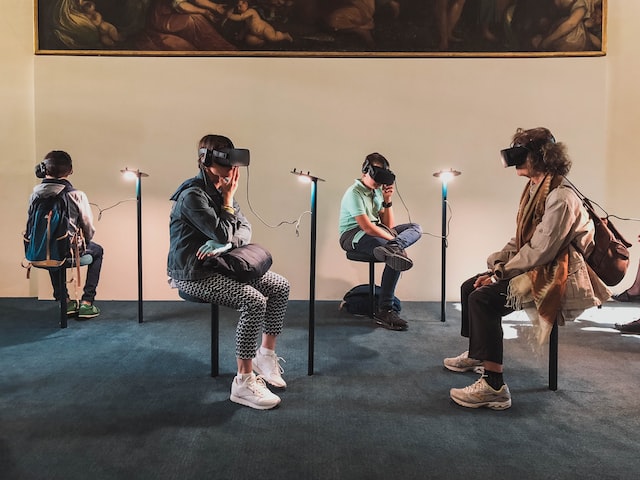
Virtual Reality (VR) has ceaselessly evolved since its inception, transforming from a science-fiction concept into a tangible, consumer-ready product. Far beyond mere escapism, we’re now observing VR’s broad-reaching implications in entertainment, education, and several other areas.

Today, we’ll delve into VR’s transformative potential in two fields: entertainment and education. Through case studies, we explore how VR is reshaping these landscapes, creating immersive experiences and facilitating progressive learning models.

CASE STUDY 1: Entertainment – The New Era of Immersive Gaming

Sony’s PlayStation VR stands as a testament to VR’s transformative play in the entertainment industry. This VR gaming set has redefined the gaming experience, offering high-definition visuals, unrivaled audio, and a jaw-dropping feel of realism that gamers could only dream of a decade ago.

The launch and success of the Resident Evil 7: Biohazard on PlayStation VR, demonstrating an immersive horror survival experience, have dramatically changed the perception of VR among gamers—highlighting its capabilities beyond aesthetics towards a full-fledged narrative experience. The impact of VR on the game’s design, gaming experience, and horror genre are astonishing—deeply engaging users and escalating their emotional responses like fear, stress, and relief.

Moreover, PlayStation VR has catalyzed the acceptance and adoption of VR among developers and consumers. It has showcased the potential of VR to offer diverse gaming genres and experiences, fostering a dynamic and fast-paced evolution in the gaming industry.

CASE STUDY 2: Education – Immersive Learning Through Google Expeditions

In the realm of education, Google Expeditions exemplifies the transformative power of VR. This revolutionary app leads students on virtual trips worldwide, making learning interactive and immersive by breathing life into textbook concepts.

The app offers over 900 unique expeditions, transporting students to historical sights, undersea adventures, or even outer space. Students can explore the Great Barrier Reef, wander the International Space Station, or walk through the Colosseum without leaving the classroom.

Through Google Expeditions, the learning experience is re-engineered to stimulate curiosity and facilitate better comprehension. The pilot program reported that students remembered 27% more factual content from VR trips.

Equally impactful, this VR application is democratic. Even schools with limited budgets can access Expeditions— all needed is a simple cardboard VR viewer and a smartphone. Removing geographical and economic barriers fosters educational inclusivity, a significant step forward for global education.

The Future of VR: Transforming Industries

These case studies illustrate VR’s potential across domains, as it revolutionizes both entertainment and education. However, its transformative potential extends even wider, from healthcare, where VR is used for pain and anxiety management, to engineering, where it aids in the design and testing process.

Indeed, we can view VR not as an end in itself, but as a tool that can amplify human potential, stimulate emotions, and foster a deeper understanding of knowledge and experience – essentially, a significant shift towards more immersive and inclusive experiences. To that end, the rise of VR is not just about technology—it’s about how we interact with the world around us, and ultimately, with each other.

As we embrace and navigate this new frontier, we must consider the broader implications of VR—managing the ethical, societal, and technological challenges to maximize its benefits for society. The road ahead for VR is adventurous and challenging, yet undoubtedly promising.

SPECIAL BONUS: Futurology is not fortune telling. Futurists use a scientific approach to create their deliverables, but a methodology and tools like those in FutureHacking™ can empower anyone to engage in futurology themselves.

Image credit: Unsplash

Subscribe to Human-Centered Change & Innovation WeeklySign up here to get Human-Centered Change & Innovation Weekly delivered to your inbox every week.

The Power of Diversity and Inclusion in Driving Innovation

The Power of Diversity and Inclusion in Driving Innovation

GUEST POST from Chateau G Pato

Innovation is the lifeblood of progress, a catalyst for growth, and a key differentiator in a competitive market. But where does innovation come from? It is often birthed from the intersection of diverse ideas, experiences, and perspectives. Creating an environment where these diverse thoughts can thrive is not just a moral imperative; it’s a business necessity. In this article, we’ll explore how diversity and inclusion act as powerful drivers of innovation, supported by real-world case studies that highlight their transformative potential.

Why Diversity and Inclusion Matter

1. Diverse Teams Generate Better Ideas

When individuals with different experiences and viewpoints come together, the probability of generating unique and groundbreaking ideas increases exponentially. Diverse teams challenge the status quo, approach problems from various angles, and can identify opportunities that a more homogenous team might overlook.

2. Inclusive Cultures Foster Psychological Safety

Diversity’s full potential can only be realized in an inclusive environment where every member feels valued and respected. Psychological safety encourages individuals to share their thoughts without fear of ridicule or retribution. It’s this openness that allows innovation to flourish.

3. Reflecting Global Markets

Organizations that embrace diversity are better equipped to understand and serve global markets. With team members mirroring the diversity of customers, companies can create products and services that meet a wider range of needs and preferences.

Case Study 1: Procter & Gamble—The Open Innovation Model

Procter & Gamble (P&G), one of the world’s largest consumer goods companies, serves as a shining example of how embracing diversity and inclusion can drive innovation. In the early 2000s, P&G was facing stagnant growth and needed a new strategy to rejuvenate its product pipeline. The company decided to embark on an “open innovation” model, also known as Connect + Develop.

The Approach

Instead of relying solely on internal R&D, P&G looked outward. They invited ideas from diverse external sources—customers, suppliers, and even competitors. The company established an inclusive culture where ideas, regardless of their origin, could be evaluated and developed.

The Results

This inclusive approach to innovation led to a string of successful products. Swiffer, Olay Regenerist, and Tide Pods are all products that owe their existence to P&G’s open innovation model. By valuing and integrating diverse perspectives, P&G experienced a significant boost in innovation and market performance, driving an increase in both sales and customer satisfaction.

Case Study 2: IBM—Embracing Diversity Through Business Resource Groups

IBM has long been a pioneer in recognizing the power of diversity and inclusion. In the mid-1990s, IBM faced a critical turning point as they realized their workforce needed to reflect the growing diversity of their global customer base. They implemented Business Resource Groups (BRGs) to leverage the unique insights of their diverse employees.

The Approach

IBM’s BRGs are employee-led affinity groups that focus on fostering inclusion and driving business results. These groups cover a variety of demographics, including race, gender, sexual orientation, and disability status. Each BRG is empowered to provide insights and feedback that can influence product development and corporate strategy.

The Results

One notable success story comes from the IBM Accessibility group, a BRG focused on creating inclusive technology for people with disabilities. Thanks to the insights from this group, IBM developed innovative solutions such as the IBM Watson Accessibility service, which uses AI to enhance online accessibility for users with diverse needs. This not only opened new market opportunities but also reinforced IBM’s brand as a socially responsible leader in technology.

Best Practices for Fostering Diversity and Inclusion

1. Leadership Commitment

For diversity and inclusion to take root, leaders must champion these values. This involves setting clear goals, allocating resources, and creating accountability measures.

2. Building an Inclusive Culture

Create an environment where every voice is heard and valued. Encourage open dialogue and provide training to help employees understand the benefits of a diverse workplace.

3. Diverse Recruitment and Retention

Implement recruitment strategies aimed at attracting diverse talent. Additionally, focus on retaining diverse employees by providing career development opportunities and mentoring programs.

4. Measuring Success

Track diversity and inclusion metrics to measure progress. Use this data to make informed decisions and continually improve your strategy.

Conclusion

The power of diversity and inclusion in driving innovation is undeniable. As evidenced by the successful strategies of companies like Procter & Gamble and IBM, embracing diverse perspectives leads to richer ideas, better products, and stronger market performance. Organizations that prioritize diversity and inclusion not only create a more equitable workplace but also position themselves at the forefront of innovation and growth. By fostering an environment that values every unique voice, we can unlock the full potential of human creativity and drive lasting, impactful change.

For more insights and strategies on fostering innovation through diversity and inclusion, follow my ongoing work and join the conversation. Let’s build a future where everyone’s ideas can shine.

Feel free to add any specific statistics, further case studies, or insights in the comments to support the article’s points further for an even richer narrative.

SPECIAL BONUS: The very best change planners use a visual, collaborative approach to create their deliverables. A methodology and tools like those in Change Planning Toolkit™ can empower anyone to become great change planners themselves.

Image credit: Pixabay

Subscribe to Human-Centered Change & Innovation WeeklySign up here to get Human-Centered Change & Innovation Weekly delivered to your inbox every week.

The Future of Transportation

Trends and Innovations

The Future of Transportation: Trends and Innovations

GUEST POST from Chateau G Pato

Transportation stands at the precipice of a seismic transformation. As urbanization frenetic paces, climate change looms large, and technology disrupts traditional models, transportation must pivot to more innovative, sustainable, and efficient systems. Let’s take a journey into the future of transportation and explore the trends and innovations reshaping this critical sector.

Trends Shaping the Future of Transportation

1. Electrification and Sustainable Mobility

The electric vehicle (EV) revolution is well underway. Governments worldwide have set ambitious goals to phase out internal combustion engines. The drop in battery costs and improvements in charging infrastructure are making electric vehicles more accessible. Sustainable mobility also includes the rise of active transport modes like biking and walking, supported by comprehensive urban planning that promotes compact, walkable communities.

2. Autonomous Systems

Autonomous vehicles (AVs) promise to revolutionize transit by reducing accidents caused by human error and improving traffic flow. These systems are not just confined to personal vehicles; autonomous buses, trucks, and even drones are on the horizon. They bring a leap in efficiency and herald significant cost reductions for logistics and public transport.

3. Urban Air Mobility (UAM)

Urban air mobility includes the use of drones and electric vertical takeoff and landing (eVTOL) aircraft for passenger and goods transport. Eying on reducing urban congestion, this emerging sector sees companies like Uber and Airbus experimenting with aerial ridesharing and freight delivery solutions.

4. Mobility as a Service (MaaS)

The concept of Mobility as a Service integrates various forms of transport services into a single accessible on-demand platform. With the goal of smoother, more efficient urban travel, MaaS platforms convey a shift from individual car ownership to shared, multi-modal transport solutions.

Case Study 1: Tesla and The Electrification of Personal Mobility

Undoubtedly, Tesla has become synonymous with the electric vehicle revolution. What sets Tesla apart isn’t just its sleek, high-performance cars, but its ecosystem approach to sustainable transportation.

The Innovation

Tesla’s key innovation lies in its battery technology and network of Supercharger stations that make long-distance travel feasible for electric cars. The company’s vertically integrated production process also helps reduce costs and maintain supply chain efficiency.

The Impact

Tesla’s achievements have prompted traditional automakers to accelerate their electrification plans, contributing to deadlines for phasing out gasoline and diesel cars globally. Furthermore, it has spurred innovation in renewable energy storage, creating synergies between the electric grid and transportation.

Future Prospects

Tesla is also developing autonomous driving capabilities with its Full Self-Driving (FSD) system. As the software matures, it could seamlessly integrate into various modes of transport, from high-speed underground tunnels to its futuristic Cybertruck.

Case Study 2: Waymo and The Next Frontier of Autonomous Mobility

Waymo, Google’s autonomous vehicle project, is a pioneer in self-driving technology. The company has made strides not only in developing competent AVs but in understanding the complexities of deploying them in real-world environments.

The Innovation

Waymo’s innovation lies in its comprehensive approach to autonomous driving. The company has logged millions of miles of autonomous driving, gathering vast amounts of data to refine its machine learning models. Waymo One, its ride-hailing service in Phoenix, Arizona, marks a significant milestone in commercial AV deployment.

The Impact

Waymo’s endeavors have set new benchmarks for the autonomous vehicle industry. The company’s progress has validated the feasibility of AV technology and laid the groundwork for broader acceptance and regulatory frameworks.

Future Prospects

Looking ahead, Waymo aims to expand its autonomous services to more cities and integrate them with existing public transport networks. This could substantially reduce commuting times, lower costs, and improve the passenger experience.

Conclusion

The future of transportation is being shaped by groundbreaking trends and innovative solutions. Electrification, autonomous systems, urban air mobility, and Mobility as a Service are not just technological advancements but steps toward a more sustainable, efficient, and resilient ecosystem. As seen through the examples of Tesla and Waymo, the integration of technology and visionary thinking can propel us into a new era of mobility.

Innovation in transportation is not just about moving people and goods from point A to point B; it’s about enhancing the quality of life, reducing our carbon footprint, and fostering connected communities. As we stand on the cusp of this transportation revolution, it’s crucial for stakeholders—from policymakers to technologists and consumers—to collaborate, adapt, and innovate for a better, more inclusive future.

By providing an in-depth look into transportation trends and spotlighting two key case studies, I aim to offer actionable insights into how the sector is evolving and what the future may hold.

SPECIAL BONUS: The very best change planners use a visual, collaborative approach to create their deliverables. A methodology and tools like those in Change Planning Toolkit™ can empower anyone to become great change planners themselves.

Image credit: Pixabay

Subscribe to Human-Centered Change & Innovation WeeklySign up here to get Human-Centered Change & Innovation Weekly delivered to your inbox every week.

The Future of Work – Automation, Gig Economy, and Remote Work

The Future of Work - Automation, Gig Economy, and Remote Work

GUEST POST from Chateau G Pato

As we stand on the precipice of a transformative era, it’s compelling to envision what the future holds for work. Driven by exponential technological advancements and shifting societal norms, the landscape of work is evolving in unprecedented ways. Key drivers—automation, the gig economy, and remote work—are not just buzzwords but fundamental pillars shaping the future. Let’s delve into how these elements are redefining the labor market, referencing exemplary case studies, and exploring strategies for companies and individuals to thrive in this brave new world.

Automation: Friend or Foe?

Automation is, arguably, the most contentious aspect of the future of work conversation. Concerns about job displacement are legitimate, but the story is nuanced. Automation promises efficiency, cost-saving, and the potential to elevate human roles to more intellectually stimulating tasks.

Case Study: Amazon Robotics

Amazon’s use of robotics in their fulfillment centers serves as an illuminating example. Initially, there was palpable anxiety over massive layoffs due to the introduction of robots. However, Amazon managed to create a symbiotic relationship between man and machine. In these centers, robots handle repetitive and strenuous tasks like picking and sorting, while human associates are reallocated to roles that require decision-making, problem-solving, and technical maintenance.

Through effective re-skilling programs and an emphasis on human-robot collaboration, Amazon didn’t just retain its workforce but expanded it. The company opened new job avenues in robot maintenance, software development, and quality control, showcasing an exemplary model for the coexistence of automation and human labor.

The Gig Economy: Flexibility at a Cost?

The gig economy offers unparalleled flexibility and democratizes access to work by connecting freelancers with global opportunities. Platforms like Uber, Airbnb, and Upwork have unlocked new avenues for income generation, empowering people to tailor work around their lifestyles. However, this model raises critical questions about job security, benefits, and work-life balance.

Case Study: Upwork

Upwork, a leading freelancing platform, has revolutionized how companies source talent and freelancers find work. For freelancers, it offers the ability to choose projects that align with their skills and interests, often allowing them to command higher rates than traditional employment might offer. Yet, the challenge remains: freelancers face the volatility of inconsistent paychecks and the absence of employer-provided benefits.

Some companies, recognizing these pitfalls, have begun to offer hybrid gig arrangements. One such organization is Toptal, which selectively connects top freelancers with elite clients while providing a supportive ecosystem. Toptal offers benefits such as healthcare options and financial consulting, mitigating some of the traditional downsides of gig work and pointing towards a more sustainable gig economy model.

Remote Work: A Paradigm Shift

The COVID-19 pandemic acted as a catalyst for widespread adoption of remote work, underscoring its feasibility and benefits. Beyond the immediate advantages of reduced commuting and flexible hours, remote work has profound implications for global talent acquisition, company culture, and office infrastructure.

Case Study: GitLab

GitLab, a fully remote company, provides a compelling blueprint for zero-office operations. With employees distributed across the globe, GitLab has mastered the art of remote collaboration. Key to their success are meticulously designed processes and tools, such as asynchronous communication channels, transparent project management systems, and a strong emphasis on documentation.

This approach has enabled GitLab to tap into a diverse talent pool unrestricted by geographic boundaries, bolstering innovation and inclusivity. Furthermore, cost savings on physical office spaces are redirected towards employee welfare and advanced technologies, enhancing overall productivity and satisfaction.

Preparing for the Future: Strategic Implications

For organizations and individuals, navigating the future of work demands a proactive stance. Companies must reimagine their operational frameworks, from integrating advanced automation technologies and nurturing remote cultures to offering equitable gig arrangements.

For Organizations:

  1. Invest in Re-skilling: Automation necessitates new skills. Continuous learning and development programs are crucial to prepare the workforce for evolving roles.
  2. Foster a Remote Culture: Embrace tools and practices that facilitate remote work, ensuring inclusivity and engagement.
  3. Adopt Ethical Gig Practices: Establish policies that ensure fair compensation, benefits, and security for gig workers.

For Individuals:

  1. Embrace Lifelong Learning: Stay adaptable by continuously updating skill sets to remain relevant in an automated landscape.
  2. Build a Personal Brand: For gig workers, a strong personal brand and diverse portfolio are key to standing out in a competitive market.
  3. Prioritize Well-being: In a flexible yet demanding work environment, maintaining a healthy work-life balance is essential.

Conclusion

The future of work, characterized by the triad of automation, the gig economy, and remote work, holds immense promise and challenges. By harnessing the potential of these elements thoughtfully, we can craft a more equitable, dynamic, and innovative world of work. As we move forward, collaborative efforts between organizations, workers, and policymakers will be vital to ensuring that this future is not just technologically advanced but also inclusive and humane. The journey has just begun, and the possibilities are boundless.

SPECIAL BONUS: The very best change planners use a visual, collaborative approach to create their deliverables. A methodology and tools like those in Change Planning Toolkit™ can empower anyone to become great change planners themselves.

Image credit: Pixabay

Subscribe to Human-Centered Change & Innovation WeeklySign up here to get Human-Centered Change & Innovation Weekly delivered to your inbox every week.

Innovative Ways to Gather Customer Feedback

Innovative Ways to Gather Customer Feedback

GUEST POST from Chateau G Pato

In a competitive marketplace, understanding the voice of the customer is crucial for innovation and sustained business growth. Traditional methods of gathering customer feedback, such as surveys and focus groups, often fall short in capturing the nuanced and spontaneous nature of customer experiences. In this article, we explore innovative ways to gather customer feedback and illustrate their effectiveness through two compelling case studies.

Leveraging Social Media Listening

Social media offers a vast river of unsolicited, real-time customer feedback. Companies can tap into this stream to discern customer sentiments, identify emergent trends, and detect potential issues before they escalate.

Case Study 1: Starbucks

Starbucks, a global coffeehouse chain, harnesses the power of social media listening tools to refine its customer experience. By monitoring platforms like Twitter, Facebook, and Instagram, Starbucks captures real-time reactions to its products, services, and marketing campaigns.

For instance, Starbucks introduced the Unicorn Frappuccino, a limited-edition beverage, that took social media by storm. The Starbucks team monitored hashtags, comments, and reviews, quickly identifying common themes and sentiments. Customers loved the drink’s vibrant appearance but there was mixed feedback on its taste. With this information, Starbucks promptly engaged with their audience, adjusting their messaging to emphasize the drink’s adventurous and whimsical nature rather than its flavor profile.

The insights gleaned from social media listening not only helped Starbucks understand customer preferences but also enabled the company to engage with customers directly, showing appreciation for their feedback and fostering a sense of community.

Utilizing AI Chatbots for Interactive Feedback

AI-driven chatbots are another innovative way to gather customer feedback. These intelligent agents can engage customers in natural, conversational dialogue, collecting detailed and context-rich feedback without the constraints of formal surveys.

Case Study 2: Amtrak

Amtrak, America’s national rail operator, implemented an AI-powered chatbot named “Julie” to enhance the travel experience and gather valuable customer insights. Julie assists passengers with ticket bookings, schedule inquiries, and travel disruptions. Beyond these functions, Julie is programmed to ask customers about their travel experience upon completion of their interaction.

For example, if a passenger inquires about train delays, Julie might follow up with questions about the overall travel experience, such as the comfort of seating, cleanliness of the train, and the quality of customer service. This conversational approach allows Amtrak to capture specific, actionable feedback in real time.

Furthermore, Julie’s AI capabilities enable her to analyze the sentiment behind the responses, flagging particularly negative or positive interactions for further review by human agents. This dual-layer feedback mechanism ensures that critical issues are swiftly addressed while also recognizing aspects of the service that delight customers.

The implementation of Julie has provided Amtrak with a continuous stream of high-quality feedback, allowing the company to make informed decisions about service improvements and operational adjustments.

The Role of Gamification in Feedback Collection

Gamification, the application of game-design elements in non-gaming contexts, offers a dynamic way to engage customers in the feedback process. By making feedback collection an enjoyable and rewarding experience, companies can significantly increase participation rates and the quality of the insights gathered.

Case Study 3: Duolingo

Duolingo, the language-learning app, uses gamification to motivate users to share their learning experiences and provide feedback. The app incorporates points, badges, and leaderboards to encourage regular usage. Periodically, Duolingo invites users to complete short, in-app surveys or participate in feedback challenges to earn additional rewards.

These gamified feedback mechanisms not only enhance user engagement but also provide Duolingo with a steady stream of user insights. For instance, when Duolingo launched a new feature, the company implemented a feedback challenge where users could earn special badges by completing targeted feedback tasks related to the feature. The responses helped Duolingo understand the feature’s impact, identify any usability issues, and gauge overall satisfaction.

By turning feedback into a game, Duolingo ensures that users are more willing to participate and more honest in their responses, resulting in richer and more reliable data.

Conclusion

In an era where customer preferences and expectations are constantly evolving, it is paramount for businesses to innovate in their approach to gathering feedback. Methods like social media listening, AI chatbots, and gamification provide richer, more immediate insights than traditional approaches.

The success stories of Starbucks, Amtrak, and Duolingo underscore the power of these innovative techniques. By meeting customers where they are and transforming the feedback process into a value-added interaction, companies can foster stronger relationships with their customers, drive meaningful improvements, and maintain a competitive edge.

Finally, innovation should permeate every aspect of a business, including how we listen to and learn from our customers. By embracing new technologies and creative strategies, businesses can unlock deeper customer insights and pave the path for continuous improvement and success.

SPECIAL BONUS: The very best change planners use a visual, collaborative approach to create their deliverables. A methodology and tools like those in Change Planning Toolkit™ can empower anyone to become great change planners themselves.

Image credit: Pixabay

Subscribe to Human-Centered Change & Innovation WeeklySign up here to get Human-Centered Change & Innovation Weekly delivered to your inbox every week.

How to Address Resistance to Change with a Human Touch

How to Address Resistance to Change with a Human Touch

GUEST POST from Chateau G Pato

Change is a constant in today’s fast-paced business environment. Organizations strive to stay competitive, adopting new technologies, altering business models, and enhancing processes. Yet, one of the greatest challenges they face is not the change itself, but the resistance to it. Fear of the unknown, disrupted routines, and potential loss of status or job security are all factors that can cause individuals to push back against change. However, by approaching change with a human touch, organizations can ease this resistance and create a smoother transition.

The Human Touch in Change Management

Embracing the human touch means recognizing the emotions, concerns, and motivations of individuals involved in the change. Effective change management involves empathy, communication, inclusive planning, and continuous support. Here are five key strategies to incorporate the human touch into change management:

1. Empathetic Communication: Understand and address the fears, insecurities, and queries of employees. Transparent and honest communication helps in building trust.

2. Inclusive Planning: Involve employees in the planning process to gain their insights and foster ownership.

3. Continuous Support: Offer training, emotional support, and resources needed to adapt to new changes.

4. Recognize and Reward: Acknowledge the efforts and contributions of employees during the change process.

5. Monitor and Adjust: Continuously measure the impact of change and be ready to make adjustments based on feedback.

Case Study 1: XYZ Corporation’s Digital Transformation

Background

XYZ Corporation, a mid-sized insurance company, decided to overhaul its customer service operations by integrating a new digital platform. This change promised to streamline processes and improve customer satisfaction. However, employees were apprehensive about the new technology and concerned about job security.

Strategy

1. Empathetic Communication: The leadership team held town hall meetings to openly discuss the changes and address employee concerns. They provided a clear vision of how the new platform would benefit both the company and its employees.

2. Inclusive Planning: Employees from various departments were formed into cross-functional teams to give input on the platform’s development and implementation. This inclusiveness highlighted the value of their expertise and insights.

3. Continuous Support: A comprehensive training program was rolled out, with both in-person training sessions and online resources. Additionally, a support team was established to help employees navigate the new system.

4. Recognize and Reward: Employees who mastered the new platform and helped others were publicly recognized and rewarded during company meetings.

5. Monitor and Adjust: Feedback was continually sought through surveys and focus groups, and the implementation plan was adjusted based on this feedback.

Outcome

These strategies significantly lowered resistance to the change. Employees felt valued and supported, leading to a successful and smooth transition. The company’s customer service ratings improved, and employee satisfaction remained high.

Case Study 2: ABC Industries’ Shift to Remote Work

Background

ABC Industries, a manufacturing firm, was forced to transition to remote work due to an unexpected crisis. The move was sudden, and many employees, especially those used to hands-on work, were resistant to the change.

Strategy

1. Empathetic Communication: Management ensured regular, transparent communication about the reasons for the change and its expected duration. They listened to employee concerns through virtual town halls and one-on-one calls.

2. Inclusive Planning: Employees were involved in developing remote work policies. Their input shaped guidelines on work hours, virtual meetings, and performance metrics.

3. Continuous Support: The company provided necessary technological tools, virtual training on new systems, and access to resources such as internet allowances and ergonomic home office setups.

4. Recognize and Reward: They established a virtual recognition program to celebrate employees’ achievements and adaptability during the transition.

5. Monitor and Adjust: The management regularly reviewed the remote work setup and made adjustments based on employee feedback, such as flexible working hours to accommodate different home situations.

Outcome

Through these efforts, ABC Industries saw a significant reduction in resistance. Employees appreciated the support and flexibility offered, which helped in maintaining productivity and morale. The company found that remote work could be an effective model, leading to long-term policy changes.

Conclusion

Addressing resistance to change is, fundamentally, about addressing human concerns. By embracing empathetic communication, involving employees in planning, providing continuous support, recognizing efforts, and adjusting plans based on feedback, organizations can foster a climate of trust and cooperation. These strategies not only help in overcoming resistance but also lead to more successful and sustainable change initiatives.

In today’s dynamic environment, the human touch in change management is not an option; it’s a necessity. It’s time for organizations to go beyond processes and systems and truly focus on the people who make change possible. By doing so, they not only ensure the success of their change initiatives but also pave the way for a more engaged, satisfied, and resilient workforce.

SPECIAL BONUS: The very best change planners use a visual, collaborative approach to create their deliverables. A methodology and tools like those in Change Planning Toolkit™ can empower anyone to become great change planners themselves.

Image credit: Unsplash

Subscribe to Human-Centered Change & Innovation WeeklySign up here to get Human-Centered Change & Innovation Weekly delivered to your inbox every week.
The Role of Emotional Intelligence in Change Leadership

The Role of Emotional Intelligence in Change Leadership

GUEST POST from Chateau G Pato

One oft-overlooked aspect of successful change leadership is emotional intelligence (EI). Emotional Intelligence is the ability to recognize, understand, and manage our emotions while also relating to the feelings of others. Change leadership entails guiding, influencing, and facilitating processes of transition within an organization. Combining the two concepts, we can postulate that EI is fundamental in directing the human side of change management in a seamless, effective manner.

First, we explore the concept of Emotional Intelligence, epitomized by four key competencies, according to Daniel Goleman:

1. Self-awareness: Understanding your own emotions, strengths, weaknesses, drives, and values.

2. Self-management: Controlling disruptive emotions and impulses and adapting to changing circumstances.

3. Social Awareness: Sensing, understanding, and empathizing with others’ emotional needs and concerns.

4. Relationship Management: Managing other’s emotions in social interactions.

These areas are critical in managing change, primarily because change evokes emotions. Leaders need to understand their emotions concerning the impending change, help team members identify and navigate theirs, create an environment that encourages open discussion of feelings and anxieties, and manage the ongoing relationships and possible conflicts that change can bring.

Case Study 1: Microsoft’s Culture Shift

Microsoft has showcased its journey towards becoming an emotionally intelligent organization. After Satya Nadella took over as CEO, he initiated a cultural shift, transforming from a “know-it-all” to a “learn-it-all” organization. Nadella recognized the need for colleague empathy and growth mindset as catalysts for organizational change and innovation.

This shift required Nadella to comprehend his own strengths and vulnerabilities honestly. There was a need for self-management to remain flexible, take risks, and drive the transformation. He also emphasized being socially aware, fostering collaboration instead of confrontations, and constantly ensuring effective relationship management. Today, we see a different Microsoft that is consistently innovating and growing, proving that EI is crucial in leading successful organizational change.

Case Study 2: The Turnaround at Volkswagen

In contrast, Volkswagen provides us with a sobering lesson. Following the 2015 emissions scandal, then-CEO Martin Winterkorn resigned, paving the way for Matthias Müller’s term. However, Müller couldn’t properly connect with the workforce’s emotional state post-crisis. The change communication was largely focused on processes and numbers, not the feelings and morale of the staff affected.

If Müller had employed higher emotional intelligence, sensing the feelings of betrayal and disappointment in his team, he might have crafted a more empathetic communication strategy that addressed emotional tensions, encouraging trust and loyalty. The missed opportunity resulted in further turmoil in the company’s reputation and stability.

Conclusion

Leaders should recognize the importance of EI in their role. Not only in times of change but as a consistent practice. Emotionally intelligent leaders see higher engagement, collaboration, and adaptability within their teams, helping navigate the waters of change with far more ease.

In a dynamically changing business environment, understanding and leveraging Emotional Intelligence is not just a soft-skill add-on. It is a crucial competence that ensures change leaders can effectively manage their teams, foresee potential obstacles in the transformation process, and, ultimately, achieve long-lasting, successful change.

SPECIAL BONUS: The very best change planners use a visual, collaborative approach to create their deliverables. A methodology and tools like those in Change Planning Toolkit™ can empower anyone to become great change planners themselves.

Image credit: misterinnovation.com

Subscribe to Human-Centered Change & Innovation WeeklySign up here to get Human-Centered Change & Innovation Weekly delivered to your inbox every week.