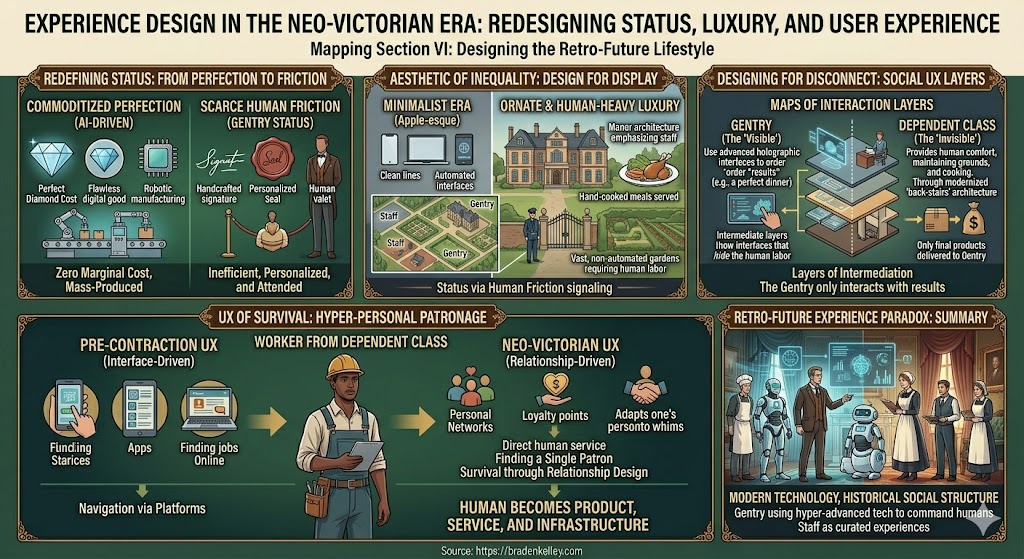
AI State of the Union

Image Generation Edition

LAST UPDATED: April 26, 2026 at 11:39 AM

AI State of the Union - Image Generation Edition

by Braden Kelley


Watching the evolution of AI over the past eighty years (83 actually) has been fascinating to watch (admittedly, I haven’t been alive long enough to watch all of it), but the evolution over the past 3 1/2 years following an extended AI winter has been nothing short of amazing. To anchor us and set context for what’s next, here is ChatGPT’s evolution over the current AI spring:

The Evolution of GPT Models

A quick reference for the major milestones in generative AI development:

Version Release Date Key Achievement
GPT-3 June 2020 The first massive 175-billion parameter model.
ChatGPT Nov 2022 Brought generative AI to the general public via a chat interface.
GPT-4 March 2023 Introduced advanced reasoning and multimodal (image) support.
GPT-5 August 2025 A “network of models” approach for complex problem-solving.
GPT-5.5 April 2026 Current state-of-the-art model for nuanced reasoning.

Earlier this week OpenAI released a new image model and people were wondering why, after killing of their video model Sora to focus their limited resources, would they introduce a new, potentially resource hungry image model that will burn more of their compute?

My uninformed user perspective is that perhaps OpenAI’s leaders saw what it could do and they just couldn’t justify depriving the public of it given their stated mission to “ensure artificial general intelligence (AGI) benefits all of humanity.”

Creativity and Innovation and Change Quote

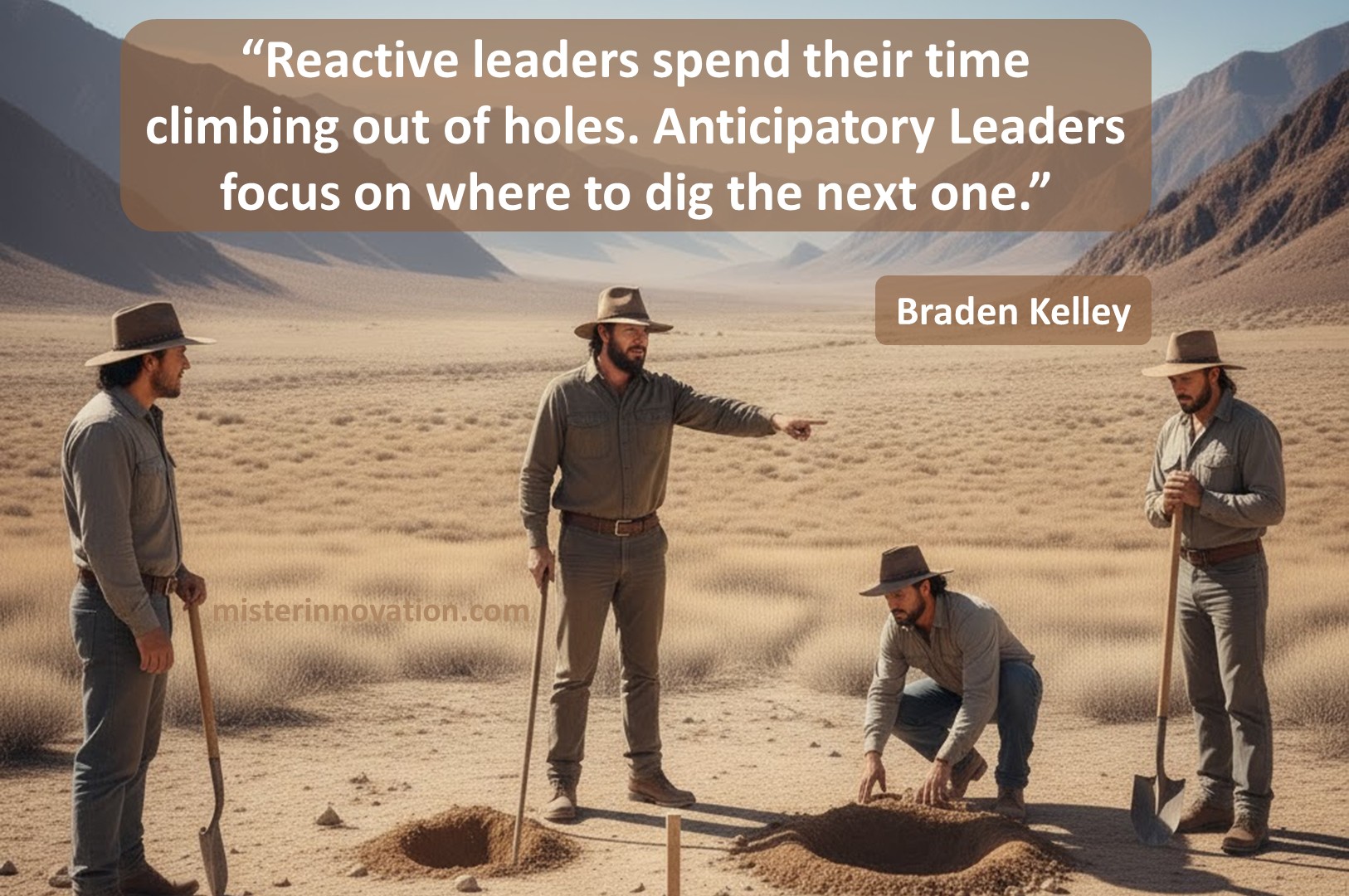
I’ve created more than 1,200 quote posters over the past few years for people to use in their meetings, presentations, keynotes and workshops (download them for FREE at http://misterinnovation.com) using freely available images initially from sites like Pixabay, Unsplash, Pexels and Wikimedia Commons like the one above because the image generation capabilities of the AI models were so bad.

Anticipatory Leader Quote

Then about eight months ago when Google launched Nano Banana the AI image generation started to be good enough at capturing the essence of a quote to use an AI generated image instead of a photo (see the example above), before layering the quote in a translucent layer on top of it.

Cognitive Resilience Quote

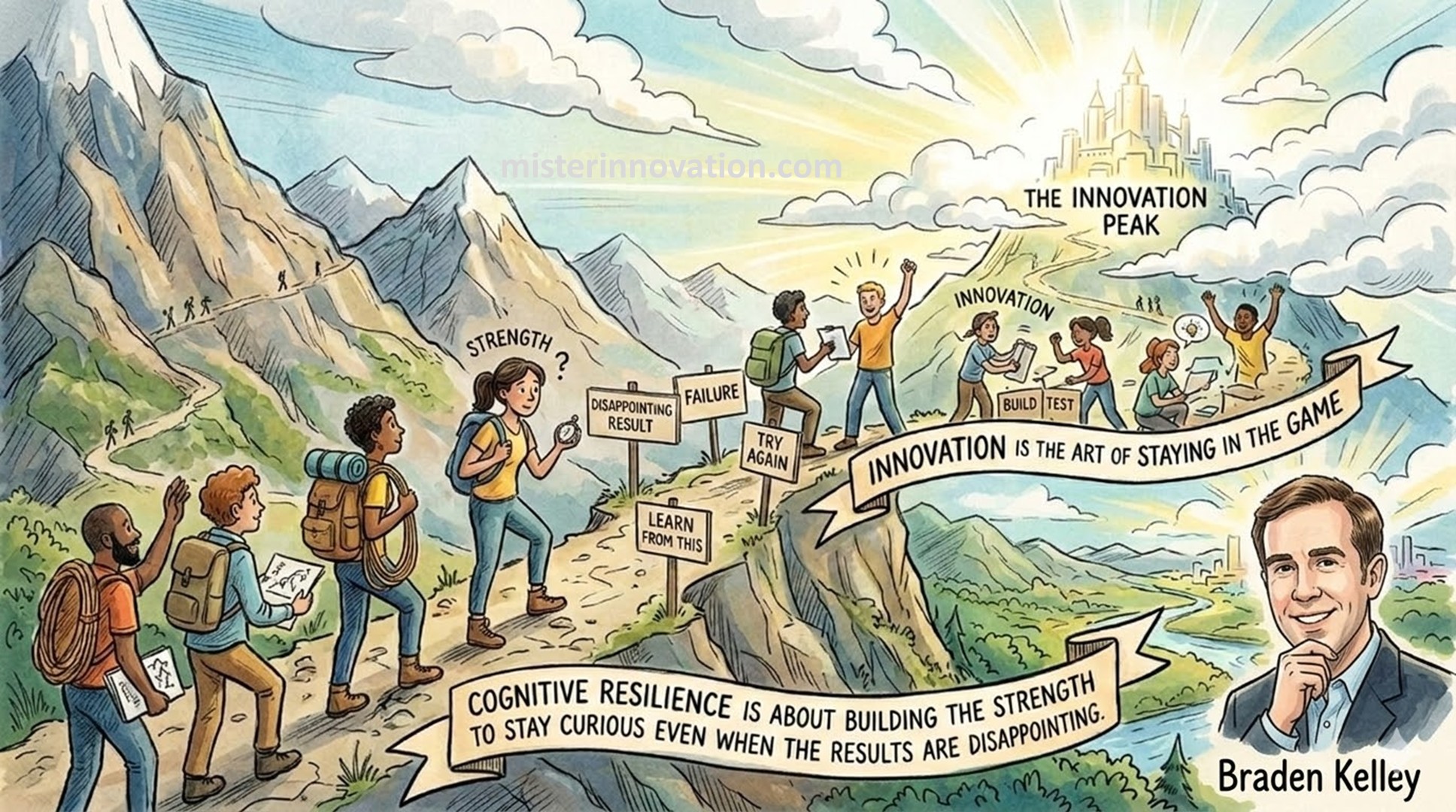
But then in March 2026 I started using Gemini’s Nano Banana 2 to start creating hand drawn style images for the quote posters (like the one above) because of it’s ability to MUCH BETTER handle the inclusion of text into an image. You can see in this image, not only was it able to include the quote in the image, but it was able to add some other supplementary text (on its own) into the image AND an image of me, without me asking it to!

I started using this hand drawn style for many of the quote posters I’ve created over the past couple of months, doing a daily bake-off between Gemini, ChatGPT and Grok (which loses 99% of the time) and in March 2026 Gemini was winning most of the bake-offs until maybe April when it started to be about 50-50 between Gemini and ChatGPT.

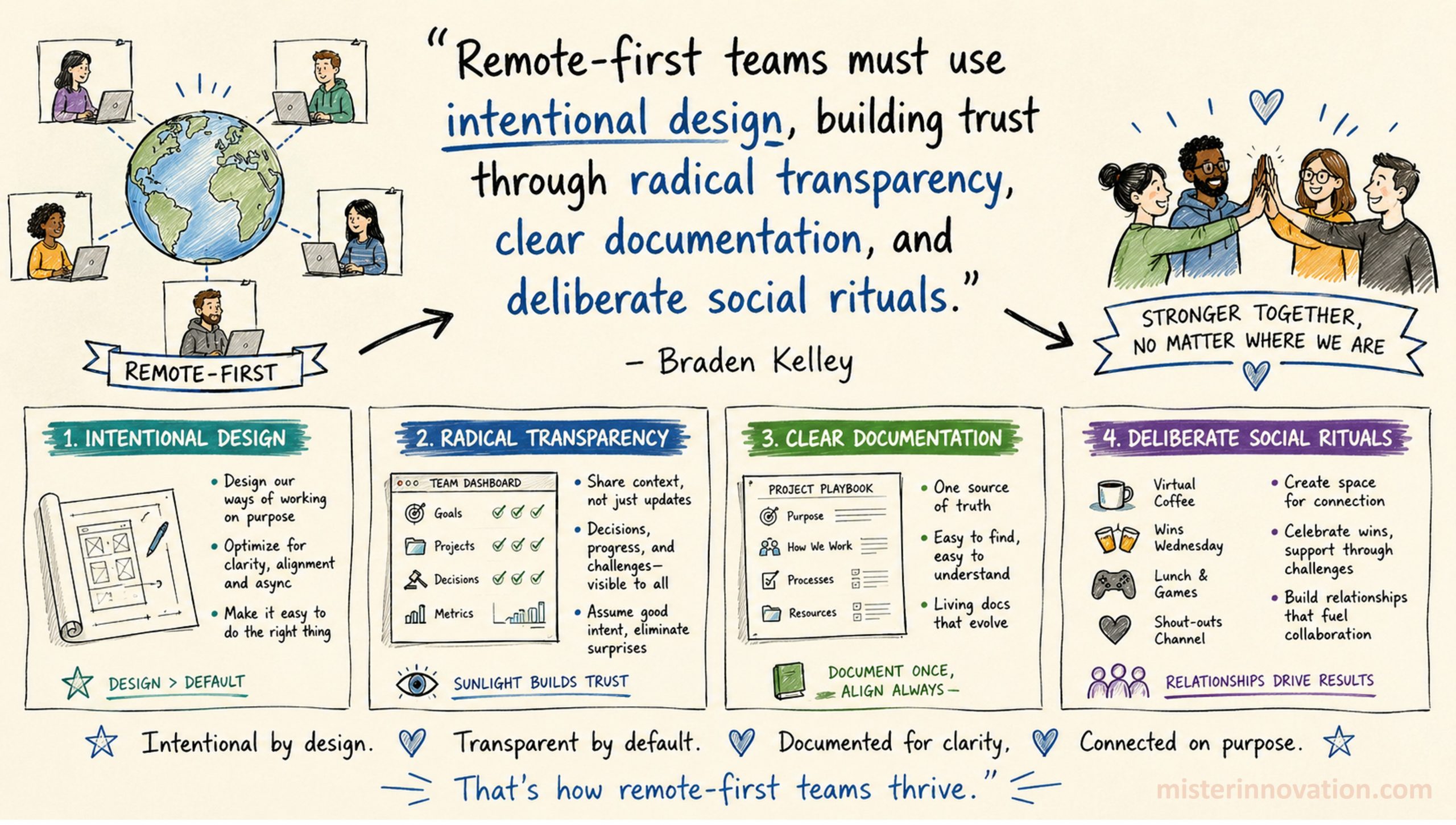
BUT, with the release of OpenAI’s new image model earlier this week, ChatGPT has been winning every day and it is because it has been creating images like this one off a single, simple text prompt with the quote, author and requested style provided:

Remote-First Intentional Design Quote

Now remember, all I gave ChatGPT was the quote and the author and asked it to capture the essence of the quote in a hand-drawn style. IT decided to add all of these other informational, education, inspirational elements and my jaw literally dropped.

If I was an OpenAI executive and saw this result to my prompt, I too would have argued for the release of this image model given OpenAI’s mission. This ability is superhuman. I as a human would have stopped at finding an image that reinforces or enhances the meaning of the quote.

This image model turned the quote into a multi-dimensional learning tool that transmits far more insight and information in a single document than the already powerful single sentence did.

The quote is still an important distillation that is far easier to remember and thus to drive behavior change from, but the rest of the content that the OpenAI image model created of its own volition adds value for those who want to quickly double-click on the essence and learn more.

So, this is where we are with AI image generation now, this is the kind of power these tools now have. The only question is:

What are you going to do with them next?

Image credits: Google Gemini and http://misterinnovation.com (download all 1,200+ FREE)

Subscribe to Human-Centered Change & Innovation WeeklySign up here to get Human-Centered Change & Innovation Weekly delivered to your inbox every week.

The Gold in the Mine

Why Your Best Ideas May Already Be on Your Payroll

The Gold in the Mine

GUEST POST from John Bessant

‘With every pair of hands you get a free brain!’

That’s the promise of high involvement innovation (HII) – engaging everyone in the organization in the innovation mission. And it’s got a lot to offer.

Take the case of Denny’s shipyard in Dumbarton, Scotland. They introduced a simple HII scheme to encourage anyone in their 350-strong workforce to make suggestions on how they could improve the company’s performance. Within their first year they’d managed to cut the time to build a warship from six months to four while also improving quality, adding new features and reducing waste.

Impressive stuff – but also a reminder that HII isn’t new. That story comes from 1871! Nor is theirs an isolated case; organized HII was happening at least a hundred years before that. The 8th Shogun of Japan, Yoshimuni Tokugawa, tried it out in 1721 with his “Meyasubako”, a box placed at the entrance of the Edo Castle for written suggestions from his subjects.

And the British navy pioneered a similar scheme in 1770, asking its sailors and marines for their ideas — significantly reassuring them that such suggestions would not carry the risk of punishment!

From pioneering efforts like John Patterson’s attempt to harness what he called ‘the hundred headed brain’ in the National Cash Register company in 1892 (eagerly imitated by the Eastman Kodak company in 1896) through to Toyota’s famous Kaizen commitment in the 1970s which mobilized over 50 million suggestions and helped put them at the forefront of productivity performance in the global car industry.

The evidence is clear – HII works. Building on ideas from across the organization can contribute significant competitive advantage and deliver multi-million dollar savings. As companies as diverse as Haier, Conoco-Philips, Liberty Global, Fujitsu or Nokia continue to attest.

Right now there’s great emphasis on looking outside – the world of open innovation in which ‘not all the smart guys work for us’ is recognized and driving a search to find those smart guys out there with whom we could connect. Whilst this is undoubtedly a rich source of inspiration we shouldn’t forget the internal world of employees and their ideas.

It’s one of the paradoxes of modern management that we have the key resource of creativity fitted as standard equipment in every person we employ – yet many organizations fail to recognize or manage to tap into this. In fact, according to the Gallup State of the Global Workplace 2026 report, global employee engagement has plummeted to just 20%—its lowest level since 2020. This is not merely a human resources issue, it’s a massive innovation drain.

One of the fathers of modern quality management, Joseph Juran, famously called this internal potential “the gold in the mine”. He argued that every pair of hands comes with a “free brain”—a reality we often ignore in our search for the next external breakthrough. Our challenge today is not just about finding more talent; it is about finding up-to-date and effective ways to extract the mineral of creativity already sitting in our offices, factories, and remote hubs.

But it’s not a magic trick. These results only emerge from an organizational culture which makes contributing to innovation a key part of ‘the way we do things around here’.

It’s not a one-off initiative; it’s a pattern of behavior which has become reinforced to the point that it’s a routine. Like professional dancers who have learned and rehearsed their intricate steps to the point where they don’t think about it; they just dance.

And it’s worth doing. Organizations which invest in creating a HII culture can reap impressive rewards. For example:

  • ConocoPhillips: Their “Doing things better” program saved over $100 million in a single year. By focusing on “winterization” in their Canadian operations, just three implemented ideas provided exactly the process optimization they needed.
  • Liberty Global: Their “Spark” program generated a €25 million return on investment over ten years, largely through “KISS” (Keep It Smart and Simple) campaigns.
  • BAE Systems: Their “Empower” program has been so consistently valuable in terms of generating savings and improvements that the innovation team now has its own $1 million budget to fund employee ideas, expecting a return of five to ten times that investment.

It’s all about finding ways to bring the ‘hundred-headed brain’ to bear on the challenges facing the organization. Trouble is we sometimes forget this potential. In one financial services organization a single idea from a long-serving (17 years) employee helped save £250,000in its first year alone. When he was asked why he waited 17 years to share his thoughts, he simply replied: “Nobody’s ever asked me before!”.

So if we want the benefits that HII clearly has to offer we need to understand just what behaviors we are talking about and how they might move from being unfamiliar faltering new steps to become embedded routines.

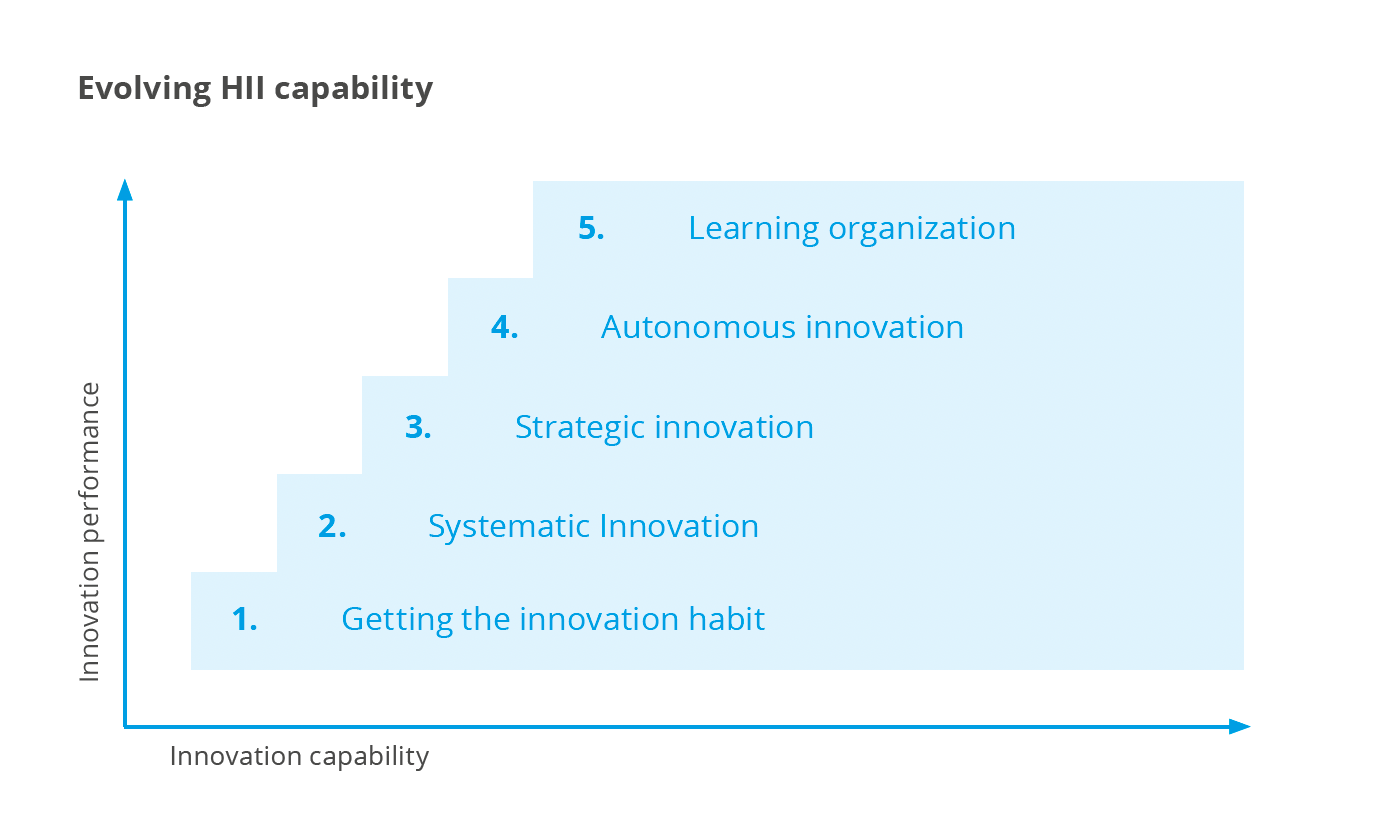
Back in the mists of time (the late 1990s) we began a research program trying to understand this question, working with a wide range of organizations, large and small, in manufacturing, services and not-for-profit. And a pattern gradually began to emerge; although what they all shared was a desire to embed HII in their organizations the real challenge was in changing the culture, introducing and then reinforcing new ways of behaving. It involved a journey where progress was measured not in terms of time or money invested but in how well the organization learned and mastered key behaviors.

It’s worth looking a little more closely at what each of these stages in evolving maturity looks like – and the challenges posed in moving to the next level of capability.

Level 1 might be described as ‘getting the innovation habit’. Organizations at this level are often newcomers to the idea, playing around with it and exploring before fully committing themselves. Their activities involve small-scale pilots and their impact is limited, picking up some low-hanging fruit but not really engaging with big challenges. Support and sponsorship for the approach is often limited and of a temporary nature – there’s little or no long-term commitment from the top.

The big risk in this is that early users will be turned off because nothing seems to happen with their ideas – it’s just been another of those ‘interesting initiatives’ which go nowhere. There’s little or no training provided so most learning comes about by doing; at best facilitation and support is provided by someone inside the organization doing it on a part-time basis or else from external consultants doing it on a temporary basis.

The focus is on local-level issues with little cross-functional or interdisciplinary activity. Knowledge management is rudimentary – perhaps a simple spread sheet on which to record ideas coming into the system. And there’s little in the way of a reward/recognition scheme, not much in the way of motivation to keep going.


By contrast an organization at level 2 would be much more systematic in its approach. It takes HII seriously and has made the decision to invest – not just in an enabling platform but in providing facilitation and encouraging people to participate. This is not just an initial wave of enthusiasm; people join in with their ideas but also with comments, refinements, improvements – a collaborative innovation activity. There’s an idea management system in place to enable ideas to move from initial suggestion, through refinement and improvement to downstream implementation and different pathways for implementation have been identified.

And there is more evidence of support from senior leadership, in terms of both commitment of resources and active sponsorship for the program. But this still takes the form of overall umbrella support rather than directly linked to the line or operating structure of the organization. And the targets for ideas are still mostly bottom-up suggestions; there is little in the way of linkage to the strategic goals of the organization.

Some consideration has gone into the motivation question – there is some form of reward and recognition coming back to people in return for their engagement. Training is provided to help people learn to use the platform and develop their skills and understanding around innovation.

Knowledge management is on a more organized basis now but is still mostly around capturing and storing information – for example recording suggested ideas.


Level 3 brings in the strategic dimension, hooking up the innovation engine which has been built in level 2 and driving it in a particular direction. Campaigns are clearly identified and explained, they are sponsored from a high enough level to communicate that this is an important direction for the organization to move in. And there is a clear owner, interested in the innovations which emerge because they’ll help move the organization forwards. With clear targets comes the possibility of measuring progress against those strategic objectives – something which helps justify the costs (in terms of time and other resources) invested in HII by the organization.

By their nature many of the campaigns cut across organizational boundaries and so the platform increasingly engages people from different parts – there may even be scope for working with external players like suppliers or customers in key campaigns.

At this level the underlying structure for HII is in place and working well. There is extensive facilitation, perhaps involving more than one person working full-time to review and improve the system and help develop it further. Participation rates are higher, appropriate to the nature of the challenge, and spreading out across the organization and people are regularly engaged in the full spectrum of activity on the platform, from ideation through comment and refinement, judging and helping focus and supporting implementation of the strongest ideas. In particular the selection/judgment phase now has clear criteria against which to assess ideas, and many people can help bring ‘the wisdom of crowds’ to this process.

People are experienced in using the platform and continue to be trained in innovation-related skills. In particular the organization has a growing library of tools and techniques available to support the innovation process and the role of facilitators has moved to include a core training, coaching and development one.

Knowledge is now not only being created and stored in the form of ideas – it is being recombined and deployed, key lessons from one area being available to others to use. As a result there is less re-invention of the wheel, more sharing of good ideas and practices.


Level 4 builds on this but also starts to provide an environment in which bigger ideas can be explored alongside the steady stream of campaign-focused innovations. Participation is now at a high level, broadly spread across the organization and engaged in ideation, judgment and implementation. In addition there is now encouragement of highly committed internal entrepreneurs – ‘intrapreneurs’. Teams of people form around these major projects and work off-line to develop them further to create detailed business cases and models. To support this there is extensive training and skills development in key areas such as business planning, project management and financing plus the allowance of time and other resources to the team to support their efforts. People by this time are learning to use the innovation process autonomously – enacting entrepreneurship.

The nature of both campaigns and team-driven entrepreneurial ideas increasingly moves the organization towards cross-functional engagement, linking up across various boundaries and even to outside organizations such as suppliers.

When the ideas have matured they are presented in a ‘pitching’ session to senior management for possible further development and adoption within the organization’s major innovation portfolio. This places a challenge on senior management, not only now to provide support and encouragement but also to commit to seeing the ideas that fit their need through. Just like the role of sponsors as ‘owners’ in the campaign-led route this stage requires active leadership.

Knowledge management at this level operates in sophisticated fashion, not only capturing and storing ideas in a ‘knowledge warehouse’ but also actively searching and using the knowledge to support a wide range of projects. In particular it allows for recombination and redeployment across different areas; the role of supporting and enabling this becomes one of significance. Organizations begin to think about ‘knowledge curation’ as a key activity.


Level 5 involves the strategic use of HII capability, spreading it widely. It is about building and growing innovation communities – with clients, with the external crowd, with suppliers. In a sense the organization becomes increasingly ‘borderless’, operating several parallel innovation activities with these communities but ensuring they remain aligned and focused. There is extensive use of the online functionality in the platform but a growing parallel offline organization of active entrepreneurial groups.

Knowledge management becomes central to the organization, harvesting, processing and redeploying a wide range of knowledge assets and engaging increasingly in open innovation fashion with a wide range of players and stakeholders. The platform becomes the intelligent infrastructure on which a community of sharing co-creators operate.


So how do we climb the staircase – how to build a high involvement culture?

Most organizations start at level 1 – getting the innovation habit —where the biggest risk is turning people off by doing nothing with their ideas. The turning point comes at level 3 – strategic innovation – where the innovation engine finally connects to the organizations actual goals. And the vision is level 5 , a connected but borderless organization where innovation is a way of life. It’s a journey – but at its heart its about changing the culture – ‘the way we do things around here…’

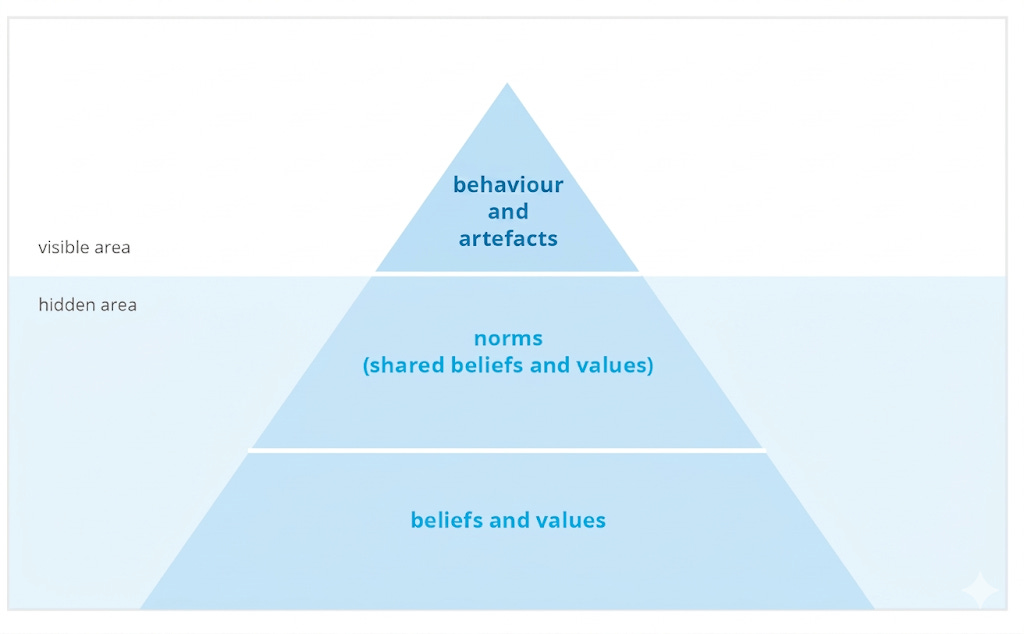
Cultures don’t just happen – they’re built up in a hierarchical way. At the base we have individual values and beliefs – the things which matter to us and which shape the way we think about the world. We share these with others and arrive at some common views – norms – which shape how we behave alongside each other in our organizations.

Over time these patterns of behavior are rehearsed and repeated to the point where we no longer think consciously about them. Eventually they become ‘hard-wired’ into our organization’s processes and procedures, its rules and structures.

Building a high involvement innovation culture

What are the underlying values and beliefs we need to build? Our research identified ten key building blocks; in a high involvement culture we’d expect to find evidence that reflects the belief that:

1. ideas from everyone matter – everyone is capable of contributing to innovation

2. HII needs a core enabling process – it’s not about sudden flashes of inspiration but a systematic process for listening to, sharing and taking good ideas forward. And allowing time and space for it to operate

3. Ideas are not the problem – enabling them to create value is the key. We need an idea management system which gives recognition, feedback and ways to take them forward

4. People can learn how to innovate – innovators are made, not born. But they need support in the form of training and development, tools and techniques to help them become more effective innovators

5. Leadership matters – people who believe the HII story and enable the narrative, providing guidance, direction and support

6. Ideas have real impact when they are strategically directed, HII works when bottom up capability meets top down clear direction about where and why improvements matter

7. HII needs a supporting structure – facilitation, coaching, training, etc. And this structure needs continuous review and development, updating it to provide the scaffolding for the future

8. Knowledge lies at the heart of innovation and people are key carriers of it

9. Knowledge is distributed across the organization so HII needs to enable inclusiveness, openness and free flow of knowledge across boundaries

10. Motivation matters – people need an incentive to share their ideas. This is less about money than about recognition, feeling listened to, empowered, enabled to contribute

Where do we start?

The good news is that we now have some powerful new enabling technologies and a wealth of shared experience to draw upon to help us build such a culture. We’ve come a long way from the simple days of the suggestion box – but HII won’t happen by waving a magic wand and pronouncing the high involvement spell. The conclusions from our research are simple; organizations need to work on four things:

· Articulate what we want to see people doing, and hear them saying as they go about their work? What stories do they tell about success – and failure – in innovation, and what behaviours underpin that?

· Enable those behaviors. Put in place mechanisms to help people learn and practice these behaviors. This might involve training them in specific skills, such as problem finding and solving or using design thinking. It might include providing structures to support and guide the behaviors – the policies and procedures to follow. It may be creating an enabling platform – for example, using a collaboration platform to provide a way to share and build on ideas, collecting and deploying them.

· Reinforce them – If these behaviors are to become ‘the way we do things around here’ then we need to reinforce them through feedback, rewards, and incentives. For instance, celebrate innovation achievements, recognize teams and individuals who make a contribution, and above all make sure that people who take risks or move outside the expected don’t get punished or blamed if they fail!

· Review, reflect and pivot. For a resilient HII culture, we also need the capacity to review and adapt. It’s a learning journey, a continuous process of adapting, adjusting and occasional major resetting.

In today’s turbulent world the need to extract the “gold in the mine” has never been greater. The good news – which we’ve known about for hundreds of years – is that engaging the ‘hundred-headed brain’ can and does work. Today’s resilient organizations are those which have moved past the “faltering new steps” of a pilot program to reach the higher levels of maturity where innovation is a strategic, autonomous engine.

This transformation is not a “magic trick” or a one-off initiative; it is a dedicated learning journey.


More details on the original research and the HII maturity model which we developed can be found here – you can also use the tool to assess your organization’s progress on the HII journey


You can find my podcast here and my videos here

And if you’d like to learn with me take a look at my online courses here

And subscribe to my (free) newsletter here

All images generated by Substack AI unless otherwise indicated

Subscribe to Human-Centered Change & Innovation WeeklySign up here to join 17,000+ leaders getting Human-Centered Change & Innovation Weekly delivered to their inbox every week.

The Authenticity Mandate

A Leader’s Guide to Truth Literacy and Verification Technology

LAST UPDATED: April 24, 2026 at 3:51 PM

The Authenticity Mandate

GUEST POST from Art Inteligencia


The Executive Summary: Why Truth is the New Alpha

As we navigate the complexities of 2026, we have moved past the novelty of generative AI and straight into a crisis of Experience Integrity. In an era where agentic AI can simulate human empathy and synthetic media can fabricate history in real-time, the landscape of leadership has fundamentally shifted. We are no longer just managing information flows; we are the primary stewards of reality for our customers and employees.

The Erosion of “Shared Reality”

The explosion of synthetic media is no longer a technical curiosity—it is a systemic business risk. When the phrase “seeing is believing” becomes obsolete, the friction between a brand and its audience increases exponentially. For leaders, this means moving beyond reactive fact-checking toward a proactive stance on digital provenance. If your stakeholders cannot trust the pixels, they cannot trust the promise behind them.

The Trust Premium: Truth Literacy as a Core Requirement

Truth Literacy has graduated from a niche digital skill to a foundational pillar of organizational agility. In today’s marketplace, there is a measurable “Trust Premium.” Organizations that can demonstrably verify their digital footprint earn a level of loyalty that traditional marketing spend can no longer secure. This literacy must permeate every department—from the experience designers in CX to the compliance officers in Legal.

The Stakes: From Hallucinations to Liability

The cost of inaction is no longer theoretical. We are witnessing the rise of CX Betrayal—the specific psychological break that occurs when a user realizes their interaction was built on an unverified, synthetic foundation. Beyond the erosion of brand equity, the regulatory environment now places the burden of proof squarely on the enterprise. Unverified automated decisions and AI-driven hallucinations are no longer just “technical bugs”; they are significant liabilities that can impact the bottom line and board-level stability.

The Verification Spectrum: Provenance vs. Detection

To effectively manage digital integrity, leaders must distinguish between two fundamentally different approaches: proving the truth and catching the lie. This “Verification Spectrum” defines how organizations validate the media they produce, consume, and distribute.

Provenance: The Digital Birth Certificate

Provenance focuses on the origin and history of a piece of content. Rather than trying to guess if an image is “fake,” provenance allows us to see exactly where it came from and what has happened to it since.

  • C2PA Standards: The Content Authenticity Initiative (CAI) and the C2PA standard provide the technical foundation for “Content Credentials.” These are cryptographic layers embedded in the file—a nutrition label for digital media—that show the camera used, the software that edited it, and any AI enhancements applied.
  • Radical Transparency: For the audience, provenance replaces suspicion with certainty. It moves the burden of proof from the user’s eyes to the asset’s metadata.

Detection: The Digital Polygraph

While provenance works for new content, detection is the necessary “defense” against the billions of existing unverified assets. Detection uses AI to monitor AI, looking for the tell-tale signs of synthetic manipulation.

  • Artifact Analysis: Modern detection engines hunt for biological inconsistencies—such as unnatural blood flow in skin (photoplethysmography) or mismatched reflections in pupils—that are difficult for generative models to perfect.
  • The Arms Race: Leaders must understand that detection is a moving target. As synthetic models improve, detection artifacts disappear, necessitating a shift toward multi-layered “defense-in-depth” strategies that look for behavioral anomalies rather than just visual ones.

Watermarking and Fingerprinting

These technologies serve as the connective tissue between provenance and detection.

  • Invisible Watermarking: Embedding durable, imperceptible signals into content that can survive compression, cropping, or screenshots. This allows brands to “claim” their official communications even when they are reshared in low-trust environments.
  • Digital Fingerprinting: Creating a unique mathematical hash of a file to track its distribution and detect unauthorized tampering or “vibe-coding” by third parties.

Building a Truth-Literate Culture

Technology alone cannot solve the trust crisis. True organizational resilience requires a fundamental shift in how your workforce perceives and interacts with information. Building a “Truth-Literate” culture means moving beyond passive skepticism—which often leads to cynicism and paralysis—toward active verification.

Upskilling for the “Post-Truth” Workplace

In a world where high-fidelity fakes are ubiquitous, we must equip our teams with the cognitive tools to navigate ambiguity. This isn’t just about training people to spot deepfakes; it’s about fostering a mindset of “Zero-Trust Content.”

  • Critical Inquiry: Teaching employees to evaluate the source, the medium, and the intent behind every interaction.
  • The Cost of Speed: Encouraging a “pause” in decision-making when dealing with high-stakes digital assets, ensuring that the pressure for real-time response doesn’t bypass necessary verification protocols.

Operationalizing Veracity: Truth as a Workflow

Verification must move from an afterthought to a core component of the content lifecycle. Whether it is a marketing campaign, a CEO’s internal video address, or an HR training module, truth must be “baked in” from the start.

  • Verification Checkpoints: Integrating automated and human-in-the-loop verification steps into your creative and communications pipelines.
  • Provenance-First Creation: Standardizing the use of tools that automatically generate content credentials at the moment of creation, ensuring your internal assets are “born authentic.”

Closing the Governance Gap

The most significant risk to an organization is often the lack of alignment between departments. Truth Literacy requires a unified front that bridges the traditional silos of Legal, IT, and Customer Experience (CX).

  • The Unified Policy: Developing a clear, cross-functional charter on how your organization uses synthetic media, how it discloses that usage, and how it responds to “synthetic attacks” on the brand.
  • Stakeholder Alignment: Ensuring that the Legal team understands the technical capabilities of provenance, while the CX team understands the ethical boundaries of AI-driven engagement.

The Verification Landscape: Leading Companies and Startups

For leaders to move from awareness to action, it is essential to understand the vendor ecosystem. The market for “Truth Tech” is currently bifurcating into two distinct categories: Shields (technologies that detect and block synthetic threats) and Certificates (technologies that prove an asset’s authentic origin).

The following table outlines the key players and the specific organizational challenges they address:

Category Key Players What They Solve
Enterprise Provenance Adobe (CAI), Truepic, Microsoft Implementing “Content Credentials” to provide an immutable history of edits and origins for digital assets.
Deepfake Detection Reality Defender, Sentinel, Pindrop Real-time analysis to detect synthetic audio and video in high-stakes environments like banking and media.
Strategic Verification NewsGuard, Factmata Providing “Trust Scores” and contextual intelligence for data sources and information cycles.
Forensic Integrity Attestiv, Sensity AI Authenticating photos and videos for insurance, legal, and forensic applications where evidence tampering is a risk.
Authentication Infrastructure Digimarc, Sony Invisible digital watermarking and sensor-level verification at the point of capture (e.g., in cameras).

Choosing Your Partners

When evaluating these vendors, leaders should not look for a “silver bullet” but rather a defense-in-depth strategy. A robust truth infrastructure requires both a “hardened” creation process (provenance) and an “intelligent” perimeter (detection).

  • Interoperability: Ensure the technology adheres to open standards like C2PA, so your verified assets are recognized across the global digital ecosystem.
  • Scalability: Look for solutions that can integrate directly into your existing CMS, CRM, and communication platforms without adding significant latency to the user experience.
  • Ethical Alignment: Partner with companies that prioritize user privacy and the ethical use of metadata, ensuring that in your quest for truth, you do not compromise human agency.

The Strategic Roadmap: Moving from Reaction to Resilience

Transitioning an organization from a state of reactive skepticism to one of proactive resilience does not happen by accident. It requires a structured, phased approach that aligns your technical capabilities with your cultural values. This roadmap provides the high-level steps necessary to secure your “Experience Integrity.”

Phase 1: The Audit—Assessing Your Vulnerability

Before you can defend your truth, you must understand where it is most likely to be attacked. This phase involves a comprehensive assessment of your “Truth Surface Area.”

  • Identifying Friction Points: Mapping the customer and employee journeys to identify where unverified information could cause the most damage (e.g., automated customer support, financial reporting, or executive communications).
  • The “Shadow AI” Audit: Understanding how your teams are currently using generative tools and identifying where synthetic content is being created without provenance or oversight.

Phase 2: The Infrastructure—Hardening the Foundation

Once the vulnerabilities are mapped, the focus shifts to building the technical and procedural “shields” that will protect the organization.

  • Standardizing Provenance: Adopting open standards like C2PA across your content creation stack. This ensures that every official asset your organization produces carries an immutable “Birth Certificate.”
  • Vendor Selection: Curating a stack of verification technologies—choosing the right mix of detection and provenance tools that integrate seamlessly with your existing infrastructure.
  • The “Stable Spine” of Data: Ensuring your internal data repositories are audited and secure, serving as the “Single Source of Truth” that feeds your agentic AI models.

Phase 3: The Disclosure Policy—The Transparency Standard

The final phase is about setting the standard for how you interact with the world. In an age of synthetic reality, radical transparency is your greatest competitive advantage.

  • Explicit Disclosure: Establishing clear guidelines for when and how you disclose the use of AI or synthetic enhancements. This builds trust by removing the “guessing game” for the user.
  • The Incident Response Playbook: Developing a specific protocol for responding to “synthetic attacks”—such as deepfakes of leadership or spoofed brand assets—ensuring your team can move from detection to debunking in minutes, not days.
  • Continuous Learning: Treating Truth Literacy as a living capability, with regular updates to training and technology as the AI landscape continues to evolve.

Conclusion: Leading with Integrity

As we look toward the horizon of the next decade, one thing is certain: technology will continue to accelerate our ability to create convincing illusions. However, while technology can verify data, only leaders can verify intent. In the end, Truth Literacy is not just a technical hurdle to clear—it is a human-centered commitment to the people we serve.

The Human Element in a Synthetic World

We must remember that every data point and every digital asset represents a touchpoint with a human being. When we invest in verification technology, we aren’t just protecting a file; we are protecting the sanctity of the human experience. As leaders, our role is to ensure that as our tools become more “agentic” and autonomous, they remain tethered to our core human values of honesty and transparency.

The Competitive Edge of the Authentic

The future belongs to the “Real.” In a marketplace flooded with infinite, low-cost fakes, authenticity becomes the ultimate luxury good and the most durable competitive advantage. The brands that win in 2026 and beyond will be those that can definitively prove their “realness.” By adopting the strategies of provenance, building a truth-literate culture, and leading with radical transparency, you aren’t just avoiding a crisis—you are capturing the highest possible market share of human trust.

Stay curious, stay skeptical where necessary, but above all, stay human. The architecture of the future is built on the foundations of truth we lay today.

Frequently Asked Questions

1. What is the fundamental difference between content provenance and deepfake detection?

Think of provenance as a digital birth certificate; it uses standards like C2PA to cryptographically prove where an asset came from and how it was edited. Detection, on the other hand, is like a digital polygraph; it uses AI to analyze existing content for “artifacts” or inconsistencies that suggest it was synthetically generated. Provenance focuses on proving the truth, while detection focuses on catching the lie.

2. Why is “Truth Literacy” considered a business imperative rather than just a technical skill?

In an era of “Experience Integrity,” a brand’s value is tied directly to its perceived authenticity. If a customer realizes they’ve been misled by an unverified synthetic interaction—what I call CX Betrayal—the trust is broken permanently. Truth Literacy ensures that leaders and teams can identify these risks, protecting the organization from reputational damage and legal liability.

3. How can an organization begin adopting C2PA standards today?

The first step is a Truth Surface Audit to identify where you create and distribute high-stakes content. From there, you should adopt tools from providers like Adobe or Microsoft that already support “Content Credentials.” By embedding these manifests into your assets at the point of creation, you ensure your official communications are “born authentic” and verifiable across the global digital ecosystem.

Disclaimer: This article speculates on the potential future applications of cutting-edge scientific research. While based on current scientific understanding, the practical realization of these concepts may vary in timeline and feasibility and are subject to ongoing research and development.

Image credits: ChatGPT

Subscribe to Human-Centered Change & Innovation WeeklySign up here to get Human-Centered Change & Innovation Weekly delivered to your inbox every week.

People Are Always the Hardest Part

People Are Always the Hardest Part

GUEST POST from Mike Shipulski

The toughest part of all things is the people part.

Hold on to being right and all you’ll be is right. Transcend rightness and get ready for greatness.

Embrace hubris and there’s no room for truth. Embrace humbleness and everyone can get real.

Judge yourself and others will pile on. Praise others and they will align with you.

Expect your ideas to carry the day and they won’t. Put your ideas out there lightly and ask for feedback and your ideas will grow legs.

Fight to be right and all you’ll get is a bent nose and bloody knuckles. Empathize and the world is a different place.

Expect your plan to control things and the universe will have its way with you. See your plan as a loosely coupled set of assumptions and the universe will still have its way with you.

Argue and you’ll backslide. Appreciate and you’ll ratchet forward.

See the two bad bricks in the wall and life is hard. See the other nine hundred and ninety-eight and everything gets lighter.

Hold onto success and all you get is rope burns. Let go of what worked and the next big thing will find you.

Strive and get tired. Thrive and energize others.

The people part may be the toughest part, but it’s the part that really matters.

Image credit: Pixabay

Subscribe to Human-Centered Change & Innovation WeeklySign up here to join 17,000+ leaders getting Human-Centered Change & Innovation Weekly delivered to their inbox every week.

Has the Innovation Movement Hit a Wall?

Has the Innovation Movement Hit a Wall?

GUEST POST from Robert B. Tucker

For three decades, I’ve had a front-row seat observing the global Innovation Movement. Before chief innovation officers, before design thinking workshops, before Harvard Business School professor Clayton Christensen rocked our world with The Innovator’s Dilemma, I was writing about thinkers, innovators, and visionaries and the future of innovation.

In the late 1990s and early 2000s, a powerful realization swept through the corporate world: Mergers and acquisitions were no longer enough. Operational excellence was not enough. Organic growth was paramount; new sources of value needed to be discovered. New business models imagined. Companies across the board realized that innovation was no longer optional. It was becoming central to long-term survival. A movement towards unleashing innovation was born.

Vanguard companies like Procter & Gamble, IBM, Citibank, Whirlpool, and others led the way. Part discipline, part crusade, the Innovation Movement was grounded in the notion that innovation was a strategic discipline, not a side issue.

Over the next 25 years, a host of new tools, metrics, and frameworks were invented to help firms get better at driving growth through innovation. As a futurist and innovation champion, I helped spread the gospel of “innovation as a permanent corporate practice” from Mumbai to St. Petersburg, and from Silicon Valley to Istanbul and China.

Those were heady days, but fast forward to today. Sure, the language of innovation remains. But something has shifted. In conversations with executives, I increasingly hear a quiet question: Has the Innovation Movement stalled out?

Over breakfast at Boston’s storied Charles Hotel, I explored this possibility with Scott Kirsner, co-founder of InnoLead, a 1500-organization consortium of innovation practitioners, and a keen observer of the Movement since its inception. Scott’s take was blunt.

The AI Meteor

“The innovation movement is in a tough place,” he told me. “It feels like we’re wandering in the woods. Or like a meteor just hit.” The meteor, in his view, is AI.

When meteors strike, they expose those who can adapt and those who cannot or will not. Scott agreed that in many organizations today, innovation had lost its luster. It was embraced but never really embedded. More than a few early converts allowed it to become a department, a lab, a flavor of the month. It was funded in good times and quietly cut when pressures mounted.

Kirsner, just returned from a snowboarding trip in New Hampshire, described a familiar pattern: companies launch innovation teams, shut them down after a few years, and then restart them later. For many, innovation returned to being on-again/off-again, treated as a project rather than a capability.

Even before generative artificial intelligence hit like a meteor, the Movement began its fall from grace. It did not decline dramatically; it dissipated slowly over time. In some firms, it became performative—more about buzzwords than disciplined analysis of customer pain points and experimentation.

In recent years, innovation has become a meaningless buzzword, relegated to marketing hype. Interest in breakthrough new products, services, and business models has evaporated. These days, cost-cutting, risk management, and next quarter’s earnings dominate decision-making; risk-aversion is the new mantra.

The word innovation was co-opted by the bean counters and the marketers. In short, innovation has become a cover for profit extraction, rather than new value creation that benefits the customer. That was the central guiding principle of the Innovation Movement: you innovate to create new customer value. And you thereby capture some of that value in the form of profits for the effort.

Many executives don’t even use the word innovation anymore. They prefer to talk about growth. As Kirsner sees it, growth is harder to argue against. But this is largely a semantic change. Innovation was always a means to growth, as I described in ‘Driving Growth Through Innovation’ in 2001, through new products, services, partnerships, R&D discoveries, and new markets.

Another narrative has emerged that is now working against the Innovation Movement: that, as hard as they try, large companies cannot innovate internally. So why not save yourself the trouble and simply acquire startups?

This is a seductive argument—but one with flaws. The strongest companies do both, argues Kirsner. Google built Google Video before acquiring YouTube. The internal effort failed commercially but provided insight. Disney built its cruise business from scratch rather than buying into the market. These cases remind us that internal innovation is not obsolete. But it does require patience—something many organizations lack.

Persistent Innovators

Kirsner refers to the long-term devotees as “persistent innovators,” companies like Nike, LEGO, Novartis, and Google, where innovation is baked in their DNA, part of how they operate. In my own practice, I have long distinguished between the Discovery Engine and the Delivery Engine. Most companies are proficient at delivery, execution, efficiency, and scale. Far fewer truly understand or invest equally in discovery—scanning and monitoring the external and industry environments, experimenting, disrupting, and creating new markets for future growth. The companies that endure do both.

For all the hype, AI may be a helpful tool to innovators with the right mindset. Most important is what it removes: friction. One of the biggest barriers to innovation has always been the cost and time required to experiment. AI collapses that.

“If you have five ideas,” Kirsner noted, “you can [now] prototype all five.” Instead of building endless slide decks, teams can create tangible representations—a short video, a working model, a simulated experience. “The shift from telling to showing [that AI enables] is profound. It lowers the cost of learning.”

At the same time, AI may widen the gap between startups and large organizations. Startups adopt tools instantly. They experiment without permission. Large companies remain slowed by procurement cycles and internal constraints. By the time a tool is approved, it may already be outdated. The advantage is shifting to those who can act fastest, and to those with a well-oiled innovation process in place.

There is also the question of whether AI can truly innovate. Trained on the past, can it produce something genuinely new? Kirsner’s answer is pragmatic. Most innovation is combinatorial: recombining existing elements in new ways. The iPhone was not invented from scratch; it integrated existing technologies into something transformative. AI can assist in generating these combinations. But the human role remains central: framing problems, judging outputs, and deciding what matters are all areas where AI struggles.

So, where does this leave the Innovation Movement? Not dead certainly, but at an inflection point. Its first era was about persuasion, convincing leaders that innovation mattered. The next era will be about capability, embedding innovation into how organizations actually build a better future.

The meteor has struck. As Scott Kirsner sees it, what emerges from the dust will depend on who adapts, and who does not.

This article originally appeared in Forbes

Image credit: Pexels

Subscribe to Human-Centered Change & Innovation WeeklySign up here to get Human-Centered Change & Innovation Weekly delivered to your inbox every week.

You Chose the Top 10 Customer Service Brands

You Chose the Top 10 Customer Service Brands

GUEST POST from Shep Hyken

We live in a world where 76% of customers say they will switch to a competitor if they know they will receive a better customer experience. Understanding which brands consistently win their customers’ hearts and wallets and why isn’t just interesting—it’s essential knowledge that will help you stay competitive.

Each year I survey more than 1,000 U.S. consumers for my annual customer service and CX research. The “audience” mirrors the U.S. population demographics for age, gender, ethnicity, geography and more. We learn about their likes, dislikes, expectations and more when it comes to customer service and customer experience (CX). One of my favorite questions to ask each year is, “When you think of customer service, what are your favorite companies?”

We ask each person to name their three favorites. Many of these brands you would expect to be on this list. For the research report, we listed the top 25 brands. For this article, I’m sharing the top 10. In addition to listing the brands, I’ve shared a few sentences about why these brands are loved by consumers. These lessons show us what our customers want, not just from these brands, but from any brand or company, including yours.

And here’s a disclaimer. This is a “people’s choice” list. You may or may not agree with the choices, but you can’t argue with the numbers. Furthermore, many of these brands have shown up on the list year after year.

So, with no further ado, let’s start with No. 10 and work our way to No. 1 for 2025!

No. 10 – Home Depot

Customers appreciate the friendly service and help from employees who are knowledgeable about tools, paint and building supplies. Home Depot customers appreciate how employees guide them to the right solution and sometimes even share helpful tips. Here’s my tip, based on personal experience. When you have a project, look for an older employee. They often have the experience and wisdom you’re looking for. The lesson: Friendly employees empowered with knowledge create confidence for customers, and confidence builds loyalty.

No. 9 – AT&T

Customers value AT&T’s nationwide coverage, international packages and helpful support, whether in stores or over the phone. Many mention the responsiveness of employees who work to resolve issues quickly. The lesson: In a competitive industry, fast response and reducing friction can win over customers.

No. 8 – Verizon

“Can you hear me now?” Those five words have been part of Verizon’s marketing campaign since the early 2000s. It means Verizon customers can trust its products. In addition, it has reliable service and knowledgeable support teams. Its staff consistently provides clear answers and helps customers make sense of plans, devices and upgrades. The lesson: Reliability plus clarity equals trust, and trust creates the confidence that brings customers back.

No. 7 – Google

I did a Google search and asked, “How many Google searches are there per day? The answer is more than 13 billion! While Google is known for its search engine, it also has many products such as Gmail, YouTube, Google Maps and many others. While much of the experience is self-service, the technology itself delivers convenience that feels effortless. The lesson: Sometimes the best service is making things so easy that customers don’t even need to ask for help.

No. 6 – Costco

Customers love the value (low prices) and quality that Costco delivers through its membership program with generous return policies and an in-store experience that includes friendly and helpful employees. They’ve built a reputation for standing behind what they sell. The lesson: Customer-friendly policies send a powerful message: we’ve got your back.

No. 5 – Chick-fil-A

“It’s my pleasure!” is the phrase the brand’s founder, Truett Cathy, asked employees to use instead of “You’re welcome.” It symbolizes commitment to hospitality. Customers consistently rave about the friendliness of its employees. Even though it is considered to be a fast-food restaurant, it has proven that consistently friendly service—not to mention delicious chicken—wins the hearts of customers. The lesson: A smile and a genuine expression of “my pleasure” can transform ordinary transactions into extraordinary experiences.

No. 4 – Apple

Customers value not only the products but also the support, especially through the Genius Bar and the knowledgeable employees at its retail stores. Employees are trained to explain, teach and solve problems in a way that makes technology approachable. The lesson: Knowledgeable employees who can make the complicated simple remove customers’ fears and replace them with confidence.

No. 3 – Target

Customers want a clean shopping environment with employees who are helpful and approachable. The brand even refers to its customers as guests. That, combined with smooth checkouts and easy returns, is why Target ranks high. The recent news about the DEI rollback can’t be ignored, but Target recognizes this, and its new CEO has announced how they plan to win back customers. The lesson: Customers appreciate friendly employees, an easy shopping experience and convenience in the form of traditional shopping, curbside pickup and same-day delivery options.

No. 2 – Walmart

Customers love the convenience of thousands of locations and low prices. Approximately 90% of Americans live within 10 miles of a Walmart store. That’s convenience, and when you combine that with low prices, you have a winning combination. While you may not find an employee in every aisle (one of the ways Walmart keeps prices down), when you do interact with Walmart employees, they are friendly and helpful. The lesson: Low prices get customers in the door, but an overall positive customer experience that includes friendly employees helps bring customers back.

No. 1 – Amazon

It should not be a surprise that Amazon is ranked No. 1. Often, in my customer service keynote speech, I ask the audience to yell out their favorite company to do business with. I hear Amazon more than any other. Customers love its unmatched convenience. It is open 24/7, has fast delivery and easy returns. It is the ultimate company when it comes to removing friction from the buying experience. The lesson: Easy wins. Make doing business with your company simple, fast and reliable, and customers will reward you with repeat business and loyalty.

Final Words

You may or may not agree with the brands on this list. I was even surprised that a couple of them ended up in the top 10, but this wasn’t my list. It’s a people’s choice list. My comments about each of these brands are based on research, personal experience and informed opinion. Feel free to share your comments, as well as your opinion of other companies you would add to the list.

This article was originally published on Forbes.com.

Image Credit: Shep Hyken

Subscribe to Human-Centered Change & Innovation WeeklySign up here to join 17,000+ leaders getting Human-Centered Change & Innovation Weekly delivered to their inbox every week.

Aesthetics – Part Two

Aesthetics - Part Two

GUEST POST from Geoffrey A. Moore


From The Cambridge Dictionary of Philosophy entry on Aesthetics

Philosophy of art has also dealt with the nature of taste, beauty, imagination, creativity, representation, expression, and expressiveness; style; whether artworks convey knowledge or truth; the nature of narrative and metaphor; the importance of genre; the ontological status of artworks; and the character of our emotional responses to art.

This is in essence a laundry list of the things I find compelling about esthetics, and in this essay, I plan to dig into each one of them.

Taste

Here’s how the Oxford English Dictionary defines taste relative to esthetics:

OED: 8. The sense of what is appropriate, harmonious, or beautiful; esp. discernment and appreciation of the beautiful in nature or art; spec. the faculty of perceiving and enjoying what is excellent in art, literature, and the like.

Note the struggle here to insert an analytical capability into a pre-linguistic experience. Sense is pre-linguistic, discernment and appreciation are post-linguistic, and faculty is an attempt to unify the two as an analytical skill. In my view, esthetic experience is a two-step process, where sense governs step 1, and discernment governs step 2. This is directly analogous to Coleridge’s primary and secondary imagination, the former coming up with innovations, the latter imposing shape and form upon them. Provided we maintain a disciplined separation between the two steps, we can indeed call this a faculty.

This begs a bigger question, however. How does the pre-linguistic capability of sense recognize what is appropriate, harmonious, or beautiful in the first place? What is the connection between the external and the internal?

Beauty

This is as close as we are going to get to the external pole of esthetic experience, the thing that causes the impact on the internal pole, our conscious self.

OED: 1. Such combined perfection of form and charm of coloring as affords keen pleasure to the sense of sight.

OED: 2. That quality or combination of qualities which affords keen pleasure to other senses (e.g. that of hearing), or which charms the intellectual or moral faculties, through inherent grace, or fitness to a desired end.

Look how out of its depth the OED is here! It is forced to use the word charm twice to invoke little more than inexplicable magic. It is not that I disagree with the word, but what the hell does it mean? OK, let’s ask the OED again:

OED: 3. Any quality, attribute, trait, feature, etc., which exerts a fascinating or attractive influence, exciting love, or admiration.

OK, I agree that beauty has charm, but that does not explain its force, it only labels it. Why is beauty charming? What is it that is fascinating or attractive, exciting our love or admiration?

At the material level, with visual arts, the consensus is that it is due to a combination of color and form that strikes us as harmonious, another word that I agree with but that also seems mystical. But here I think we can make a connection with the experience of mindfulness by asserting that the harmony involved in both experiences is the same. That would suggest that beauty is a spiritually refreshing experience, that it homeostatically returns us to a state of well-being. One virtue of this notion is that it makes it easy to bridge to other arts, like music, where form and color are not the active ingredients, but venturing out and returning to a state of well-being is still in play.

To be fair, for some at least, well-being itself may also be a mystical term, foreshadowing the possibility of an infinite regress of definitions as the analytical intellect struggles to engage with ineffable experiences, but I am willing to stop here and say, from a Darwinian perspective, it makes sense to me that homeostasis is real and relatively prevalent, that it is core to well-being, and that evolution would select for experiences that reinforce it as conferring competitive advantage in human affairs.

Imagination and Creativity

Both these topics extend far beyond the domain of esthetics and the philosophy of art and, if pursued at length, will lead us far off-topic. Within the domain of esthetics, both terms communicate admiration for the ingenuity of the artists who have in some way surprised us with their work. Surprise itself is an integral part of esthetic experience which we will address subsequently.

What we want to investigate here is the presence of the artist in the esthetic experience. In one sense, the artist is not present. We experience the artwork in their absence. But as we engage with multiple works from the same artist, we develop a sense of their style, their values, their topics of interest, and the like. We say things like, “I love Dylan,” or “I can’t stand Proust,” and both statements serve to summarize our esthetic experiences of their work. Where this goes awry, in my view, is when we drag the artist out onto center stage, creating a cult of personality—not a bad thing in itself necessarily, but outside the bounds of esthetics.

Representation, Expression, and Expressiveness

This collection of three terms manifests a tug of war between the Enlightenment and Romanticism about where to anchor the esthetic experience. The Enlightenment focuses on representation as the interaction between the art object, the experiencing subject, and the world at large, positioning art as a subject-object experience that upon absorption reshapes our subject-world experience. In this context, the role of esthetics is to critique the art in relation to the world—how well does the art represent the world to us, and how much has it changed our perception of things? The artist is not directly part of this equation.

By contrast, in the Romantic esthetic, the artist does take center stage. Art is positioned as a subject-object-subject experience, the artifact bridging between the artist and us rather than us and the world. Expression refers to what the artist puts into the artifact, and expressiveness refers to how much of that comes out of the experiencer’s end. For Romantics, this is at the heart of the esthetic experience. For followers of the Enlightenment, it is more of a distraction. They are looking for a solo experience that centers them with respect to the world at large, not a dialectic experience that destabilizes that relationship.

Style

Style is a secondary attribute of esthetics in that one can have style without esthetics, as with a cartoon, as well as esthetics without style, as with a natural landscape. That said, for the Romantics, with their focus on artistic expression, style does indeed “maketh the experience.” It serves as a bridge into the artist’s vision of the world, a way of seeing and being that can be transformative for the experiencer. For the Enlightenment, on the other hand, style is more of a societal asset. It has classic roots in proportion and harmony, attributes that are taken to transcend individual experience, understood instead as autonomously real. Both of these traditions make style more central to art than it was taken to be in the Early Modern period. At that time poetry was said to “teach and delight,” with commentators calling out style—the Elizabethans would have said rhetoric—as one of the chief sources of delight. Indeed, there were handbooks galore about how one could decorate one’s writing and speech with beautiful figures. This represents an early stage of playful euphoria when vernacular languages were displacing Latin across the entire spectrum of European culture.

Today, while all three of these views are still in play, contemporary criticism is often more interested in a fourth—style as a medium for communicating subtext, a mechanism for teasing nuances out of the more overt dimensions of the artwork. Juxtaposition of seemingly unrelated elements reframes our experience of what otherwise would be familiar and taken for granted. The work engages the experiencers’ analytical facilities in the midst of the fantasy experience, a distancing effect that makes them both participant and observer at the same time, accentuating their perception of irony, a cornerstone of the modern esthetic.

Do artworks convey knowledge or truth?

Although this question is intended to help us learn more about art, it introduces two very elusive concepts of its own, namely knowledge and truth, so we need to tread carefully. Nonetheless, the question is a valid one, and we owe it an answer.

To the degree that knowledge and truth are understood to consist of language-enabled statements, the answer is no, artworks do not convey either one. This is the Enlightenment’s position, one that caused it to turn to the concept of taste instead. By contrast, to the degree that knowledge and truth are conceived to transcend language-enabled understanding, meaning that they can reside beyond the scope and ken of reason, then the answer is yes. This is Romanticism’s claim, one that called it to substitute art for religion as a portal to spiritual experience.

Both these positions, however, are unsatisfactory. To be fair, the Enlightenment self-corrected itself in part by directing attention to the sublime, something that since antiquity had always been conceived as transcending reason. But at the end of the day, that did not open any new path to incorporating esthetic experience into one’s overall understanding of the world. The barrier of taste stood firmly in the way. The Romantics, by contrast, embraced transcendence wholeheartedly. Its problem was that it could not access it reliably. That is, neither nature nor art is able to consistently evoke the spiritual refreshment that Romantics value so highly. One is left in a state of anticipation, broken by occasional inspirational moments, but how and when they come at some times and not at others is a mystery. Indeed, the whole claim is a mystery, one that is hard to reconcile with any claims to knowledge or truth.

Contemporary culture, specifically the post-modern wing, dodges these issues by calling into question the reality of both knowledge and truth. Pragmatically, this is just a mistake. The reason we have words for both knowledge and truth is that they represent forces at work in the world that are relevant to our strategies for living. The fact that they are hard to come to grips with does not warrant dismissing them altogether. With that in mind, let us return to our original question: do artworks convey knowledge or truth?

Set aside the incidental communication of information that might accompany an esthetic experience, and focus instead on the experience itself. An external force has, with your permission, taken possession of your faculties and is manipulating your mind to its own ends. This force can be extraordinarily effective at creating belief. Whether that belief represents knowledge or truth cannot be determined from within the experience. Once the experience is over, we can analyze our memory of it, and in that context determine if it warrants being called “justified true belief,” which is philosophy’s gold standard for defining knowledge.

The nature of narrative and metaphor

Narrative and metaphor are two of humanity’s superpowers. Narrative is our most ubiquitous problem-solving tool. Each step in a story implies a cause-and-effect relationship that then can be tested by analytics for credibility. That’s the core function of criticism. Similarly, metaphor is one of our most ubiquitous innovation tools. Each instance proposes a strategic correlation between apparently dissimilar domains, whereby the tactics that have proven successful in the first domain are implicitly applied to address unsolved problems in the second. Again, this too must be tested, either by analytics or experiment.

In this context, what are the esthetic dimensions of narrative and metaphor? What makes for a good story or a good metaphor? I would vote for an experienced tension between expectations and fulfillment which both surprises and enlightens. In narrative, think of Sir Gawain and the Green Knight. What we expect is going to happen in that final encounter and what actually does happen is both surprising and enlightening. Similarly, with respect to metaphor, think of Ezra Pound’s “In a Station of the Metro”:

The apparition of these faces in the crowd:

Petals on a wet, black bough.

In this most industrial of situations, we are surprised and enlightened to find a kind of beauty we thought belonged only in nature.

The importance of genre

To the degree that surprise and enlightenment are core to esthetic experience, genre somewhat surprisingly takes center stage. It sets audience expectations through its established conventions. If it is a comedy, we know that our protagonists will be OK in the end; if it is a tragedy, they will not. To the degree that a given work of art fulfills our expectations, we are pleased but not enlightened. Indeed, if there are no deviations at all—what is often called the domain of stock response—we are likely to get bored and maybe even offended. At the other end of the spectrum, if the work refuses to provide any signals as to genre, we typically ignore it as we have not been invited to participate. However, when a work of art creates expectations and then deviates from them as it unfolds, we can experience a variety of reactions—intrigue, annoyance, doubt, curiosity, and others. The point is, it has engaged us. We are having an esthetic experience whether we like it or not.

Genre creates the bulk of its expectations around beginnings and endings, the former inviting us to open up our minds to engage with and be manipulated by an external force, the latter to bring that experience to a close and initiate any reflections we may have about it. The extent to which art invades our privacy is extraordinary, and so it is natural that we have developed defenses against it. Genres offer an implied contract with respect to what is within bounds and what is off limits. This allows us to prepare ourselves for what is to come, including the option of excluding it altogether (I do not watch horror movies, for example).

Norman Holland gave us a great acronym for understanding this relationship: DFT, which stands for Defense, Fantasy, and Transformation. My contribution is to add an E to it, making it DEFT, where E stands for Expectation. The esthetic experience, in other words, unfolds through four stages, as follows:

  1. Defense. Because art is inherently intrusive—indeed, manipulative—we all have psychological defenses against letting it in. The function of movie trailers, book covers, and online reviews is to get us to take down our defensive barrier and let this particular artwork in. We should keep in mind that this is a relatively rare occurrence. Most shows we do not watch. Most books we do not read. Most museums we do not attend.
  2. Expectation. The way art gets past our defenses is by using genre signals to create an expectation of getting an experience we would like. We know we are being “sold,” but we also are looking for experiences of some sort, and so we are potentially willing to “buy.”
  3. Fantasy. This is the pay-off, the essence of the esthetic experience. The term applies most directly to fiction where we internally imagine scenes based on nothing more than words we are reading. But visual and performative arts also enlist our imaginations, personalizing our experiences such that no two are identical, not even when we are the experiencer both times. These experiences are so intimate and engaging that we have developed an entire discipline to help us interpret them. It is called criticism.
  4. Transformation. Transformation is the business of criticism. We seek to extract from the residue of our fantasy experience ideas that we can incorporate into our strategy for living. We do this both through reflection and conversation, but regardless of the mode, the only evidence we have is our memories of the fantasy experience, and every one of those memories is unique, not only in place (whose memory) but also in time of recall (because memories change every time they are reexperienced). Nonetheless, we persist because these memories are now part of who we are, and if we fail to understand them, we fail to understand ourselves.

Genre participates directly in each of the four steps above, helping bypass our defenses (hey, it’s just an action movie), creating expectations (and it’s from the Marvel universe), teeing us up for fantasy (the viewing experience in which we let the movie take over our mind), and triggering a transformation conversation when it is over (I think Iron Man may need some counseling, or maybe I do).

The ontological status of artworks

Art consists of artifacts whose primary purpose is to deliver an experience as opposed to accomplishing a task. Typically, they do so by engaging the imagination of the participant in a fantasy shaped through either a sensory stimulus (painting, sculpture, dance, music, and the like) or a language act (stories, poetry, novels, and the like) or a combination of the two (plays, films, opera, and the like). We assign these artifacts a special status because we evaluate them not only on their craft but also on the quality of the experiences they evoke. Assessing that quality, its impact, and the contribution that craft makes to it is the purpose of esthetics.

The realm of esthetics extends well beyond the fine arts. In contemporary culture, for example, cuisine has taken center stage, for even as it performs a utilitarian task, it also creates emotional experiences of considerable force, particularly when tied to family, ethnic, or personal traditions. Proust’s Madeleine is a famous psychological example, but today the focus is more on cultural ties, where esthetics helps promote cross-cultural connections that can reinforce social cohesion. Similar esthetic circles form around cars and personal attire, really any field of life where identity binds itself to experiences that go beyond utility. The dialog is typically a mixture of the practical and the esthetic, the two fusing into a kind of expertise that goes viral on digital media, which brings us to our last topic.

The character of our emotional responses to art

One way to characterize our responses to art is in relation to our emerging knowledge of how our brains actually work. Our consciousness resides in the neocortex, that part of the brain we see from the outside that looks something like a cauliflower. The neurons in the neocortex are optimized to perform two functions:

  1. Engage with the things and events that are happening around us and initiate appropriate responses to them, and
  2. Imagine how such things and events might be different, and what such differences might lead to in terms of alternative responses.

It turns out that the very same neurons that perform function 1 also perform function 2, which makes for some interesting implications:

  • Each function trains the other one. That is, experience in the world feeds the imagination with material to work on, and imagined experiences expand the repertoire of alternatives our engagement function can draw upon.
  • Because the exact same neurons are used in both cases, the functions are mutually exclusive, meaning you can’t engage with the world when you are imagining, and you can’t imagine things when you are engaging with the world.

These implications cast important light on two elements of our response to art. The first is that we are drawn to it naturally. That is, evolution favors constructive use of imagination, and imagination is enhanced by engaging with art. Esthetics in this context investigates the specifics of the attraction itself, what elements in the art motivate us to attend to it, and the impact the experience has on our ability to engage with the world thereafter.

The second point, that we cannot both imagine and engage at the same time, speaks to the question of whether there is a specific attitude one must take in order to appreciate art. The answer is, yes, but it is totally involuntary. The notion that one must train oneself to adopt the appropriate attitude is yet another example of the analytical intellect overstepping its bounds. Analysis is fundamental to Transformation, but it has no role in Fantasy.

Our emotional responses to art touch all four phases of the esthetic experience. That is, our Defense against art we don’t like is driven by an emotional rejection we often are unable to explain. In contrast, our Expectation that some art will please us is driven by desires we are only too willing to explain. Regardless of our expectations, our Fantasy experience is highly varied with respect to emotion, which often correlates with how much or how little we value the art in question. Finally, our Transformation experience seeks to assess the impact of whatever emotion we did experience when recollected in tranquility.

That’s what I think. What do you think?

Click here to Read Part 1 if you missed it

Image Credit: Pexels

Subscribe to Human-Centered Change & Innovation WeeklySign up here to join 17,000+ leaders getting Human-Centered Change & Innovation Weekly delivered to their inbox every week.
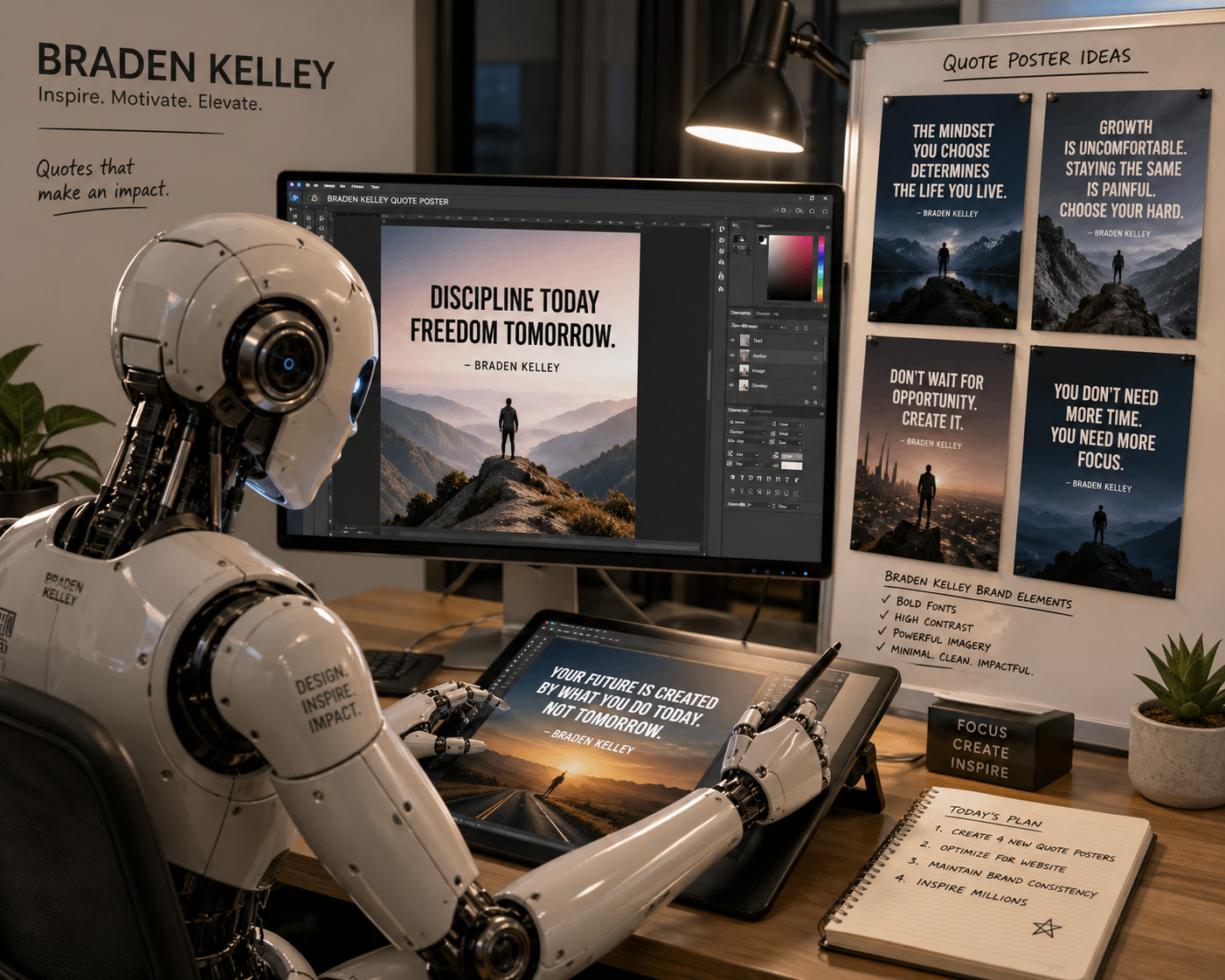
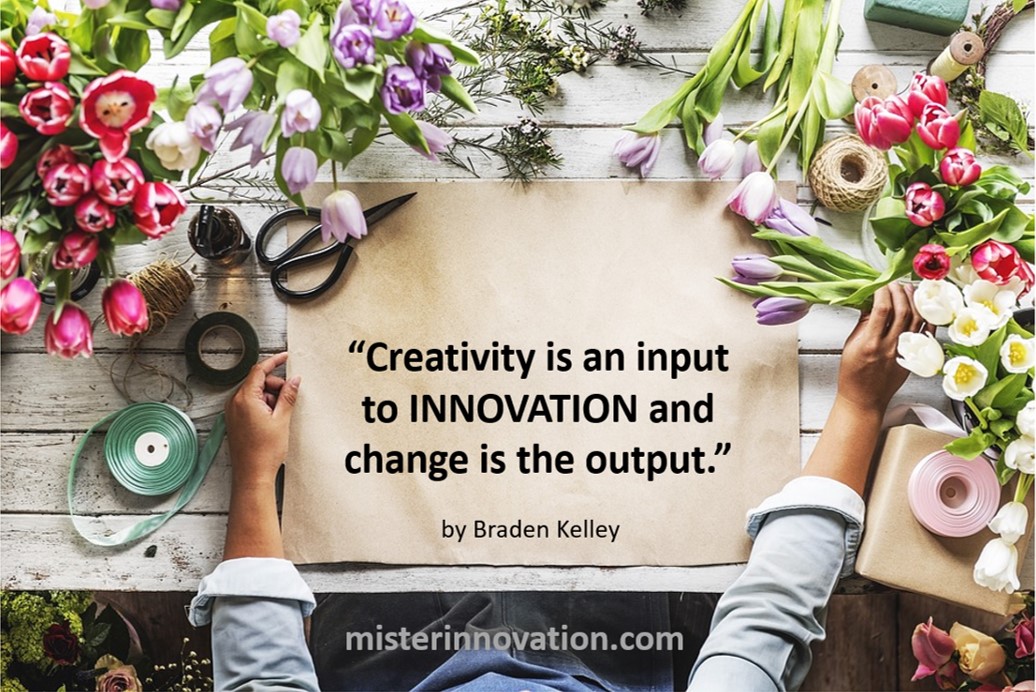
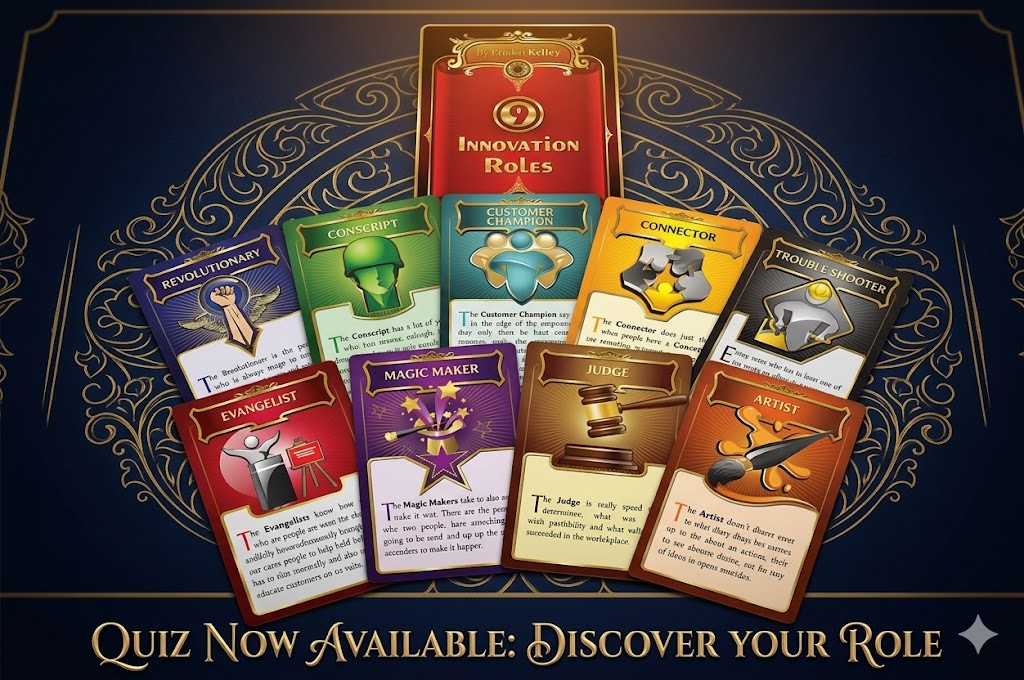
Which of the Nine Innovation Roles do you play? (A Quiz)

Which of the Nine Innovation Roles do you play? (A Quiz)

by Braden Kelley

Too often we treat people as commodities that are interchangeable and maintain the same characteristics and aptitudes. Of course, we know that people are not interchangeable, yet we continually pretend that they are anyway — to make life simpler for our reptile brain to comprehend.

I’m of the opinion that all people are creative, in their own way. That is not to say that all people are creative in the sense that every single person is good at creating lots of really great ideas, nor do they have to be. I believe instead that everyone has a dominant innovation role at which they excel, and that when properly identified and channeled, the organization stands to maximize its innovation capacity. I believe that all people excel at one of Nine Innovation Roles, and that when organizations put the right people in the right innovation roles, that your innovation speed and capacity will increase.

The Nine Innovation Roles as a concept were introduced in my bestselling book Stoking Your Innovation Bonfire and people have always asked me if I had a quiz people could take to see what their primary and secondary roles are and my answer has always been NO, until now, when thanks to Claude I’ve been able to create one for the world to enjoy. I think it turned out pretty well and I’ve embedded it here in this article and also create a Nine Innovation Roles Quiz sub-page for it live on in perpetuity.

I hope you enjoy it!

✦

Discover Your
Innovation Role

Answer 20 questions to uncover where you add the most value in any innovation effort. Based on Braden Kelley’s Nine Innovation Roles framework.

✦
Question 1 of 20 0%
Question 1

The Nine Innovation Roles

If you’re not familiar with the Nine Innovation Roles, they are:

Nine Innovation Roles Revolutionary

1. Revolutionary

The Revolutionary is the person who is always eager to change things, to shake them up, and to share his or her opinion. These people tend to have a lot of great ideas and are not shy about sharing them. They are likely to contribute 80 to 90 percent of your ideas in open scenarios.

Nine Innovation Roles Conscript

2. Conscript

The Conscript has a lot of great ideas but doesn’t willingly share them, either because such people don’t know anyone is looking for ideas, don’t know how to express their ideas, prefer to keep their head down and execute, or all three.

Nine Innovation Roles Connector

3. Connector

The Connector does just that. These people hear a Conscript say something interesting and put him together with a Revolutionary; The Connector listens to the Artist and knows exactly where to find the Troubleshooter that his idea needs.

Nine Innovation Roles Artist

4. Artist

The Artist doesn’t always come up with great ideas, but artists are really good at making them better.

.

Nine Innovation Roles Customer Champion

5. Customer Champion

The Customer Champion may live on the edge of the organization. Not only does he have constant contact with the customer, but he also understands their needs, is familiar with their actions and behaviors, and is as close as you can get to interviewing a real customer about a nascent idea.

Nine Innovation Roles Troubleshooter

6. Troubleshooter

Every great idea has at least one or two major roadblocks to overcome before the idea is ready to be judged or before its magic can be made. This is where the Troubleshooter comes in. Troubleshooters love tough problems and often have the deep knowledge or expertise to help solve them.

Nine Innovation Roles Judge

7. Judge

The Judge is really good at determining what can be made profitably and what will be successful in the marketplace.

.

Nine Innovation Roles Magic Maker

8. Magic Maker

The Magic Makers take an idea and make it real. These are the people who can picture how something is going to be made and line up the right resources to make it happen.

.

Nine Innovation Roles Evangelist

9. Evangelist

The Evangelists know how to educate people on what the idea is and help them understand it. Evangelists are great people to help build support for an idea internally, and also to help educate customers on its value.

So, which one(s) resonate most with you? Want to find out if you’re right? Take the quiz!

Free Stuff

If you go to the main Nine Innovation Roles page you’ll find all kinds of free downloads and sub pages, including:

  1. Nine Innovation Roles pages in Spanish, Portuguese, French and Swedish (and I’m always happy to give credit and link to anyone willing to translate them into other languages)
  2. Nine Innovation Roles card design to download for printing with adMagic (or your vendor)
  3. Nine Innovation Roles downloadable presentation
  4. Nine Innovation Roles team worksheet
  5. Nine Innovation Roles introductory video to use in workshops
  6. This Nine Innovation Roles Quiz!

Keep innovating!

Click here to access your Nine Innovation Roles freebies

Image Credits: Braden Kelley, Google Gemini

Why an AI Soft Landing Might Look Like Victorian England

LAST UPDATED: April 18, 2026 at 3:29 PM

Why an AI Soft Landing Might Look Like Victorian England

by Braden Kelley and Art Inteligencia


The Mirage of the Post-Scarcity Utopia

For decades, the prevailing narrative surrounding artificial intelligence has been one of a post-scarcity “Star Trek” future. The logic was simple: as machines took over the labor, the dividends of automation would be harvested by the state and redistributed via Universal Basic Income (UBI), freeing humanity to pursue art, philosophy, and leisure.

The AI Promise vs. The Fiscal Reality

However, this utopian vision ignores the gravity of The Great American Contraction. As we approach 2026 and beyond, the friction between exponential technological growth and a $37 trillion+ national debt (with a $2 trillion annual budget deficit) creates a structural barrier to redistribution. When the tax base of human labor erodes, the math for a livable UBI simply fails to compute.

The Victorian Hypothesis

If UBI is a mathematical and political impossibility fueled by corporate and human greed, we must look toward an alternative “soft landing.” This hypothesis suggests a vertical restructuring of society. As AI drives the cost of production and the demand for goods into a deflationary spiral, the purchasing power of the remaining “employed elite” will skyrocket.

The result isn’t a horizontal distribution of wealth, but a return to a Neo-Victorian social hierarchy. In this reality, the new digital gentry will use their outsized wealth to employ a massive “servant class” to maintain stately homes and personal lives, creating a world where status is defined by the human labor one can afford to command.

Neo-Victorian Hypothesis Infographic

The Great American Contraction: Why UBI is a Non-Starter

The conversation around the transition to an AI-driven economy often treats Universal Basic Income as an inevitability — a safety net that will naturally catch those displaced by the silicon wave. However, this assumes a level of fiscal elasticity that no longer exists. We are entering The Great American Contraction, a period where the traditional levers of government spending are restricted by the sheer weight of historical obligation and systemic greed.

The Debt Ceiling of Compassion

With a national debt exceeding $37 trillion, a $2 trillion budget deficit and rising interest rates, the federal government’s “room to maneuver” has effectively vanished. A livable UBI requires a massive, consistent tax base. As AI begins to hollow out the middle class, the very tax revenue needed to fund such a program disappears. To fund UBI under these conditions would require a level of sovereign borrowing that the global markets simply will not support, leading to a reality where the government cannot afford to be the savior of the displaced.

The Greed Variable

Even if the math were more favorable, the human element remains a constant. Corporate interests, focused on margin preservation and shareholder value, are unlikely to support the aggressive taxation required to fund a social floor. In the race to the bottom of production costs, the primary goal of the “winners” in the AI revolution will be wealth concentration, not social equity. The political willpower to force a massive transfer of wealth from AI-profiting corporations to the idle masses is a historical outlier that we should not count on repeating.

The Velocity of Displacement

Finally, the speed of the AI transition is its most disruptive feature. Legislative bodies move in years, while AI cycles move in weeks. By the time a political consensus for UBI could be formed, the economic floor will have already fallen out. This lag time creates a vacuum that will be filled not by government checks, but by a desperate search for subsistence, setting the stage for the return of the domestic labor economy.

The Deflationary Paradox: Collapse of Demand and Cost

In a traditional economy, unemployment leads to recession, which usually leads to stagflation or managed recovery. However, the AI-driven “soft landing” introduces a unique mechanical failure: the Deflationary Paradox. As AI and advanced robotics permeate every sector, the labor cost of producing goods and services begins to approach zero, but the pool of consumers capable of buying those goods simultaneously evaporates.

The Production Floor Drops

We are witnessing the end of the labor theory of value. When an AI can design, a robot can manufacture, and an automated fleet can deliver a product without a single human touchpoint, the marginal cost of production hits the floor. In a desperate bid to capture the dwindling “active” capital in the market, companies will engage in a race to the bottom, causing the prices of physical and digital goods to deflate at a rate unseen in modern history.

The Demand Vacuum

While cheap goods sound like a boon, they are a symptom of a deeper rot: the Demand Vacuum. As the middle class is hollowed out, the velocity of money slows to a crawl. The economy shifts from a mass-consumption model to a precision-consumption model. Most businesses will fail not because they can’t produce, but because there are no longer enough customers with a paycheck to buy, even at rock-bottom prices.

The Purchasing Power of the “Remaining”

This is where the Victorian shift begins. For the small percentage of Americans who retain their income — the innovators, the orchestrators, and the entrepreneurs — this deflationary environment is a golden age. Their dollars, fixed in value while the cost of everything else drops, suddenly possess exponential purchasing power. When a gallon of milk or a digital service costs mere pennies in relative terms, the “wealthy” find themselves with a massive surplus of capital that cannot be spent on “things” alone. This surplus will naturally be redirected toward the one thing that remains scarce and high-status: the dedicated service of another human being.

The New “Stately Home” Economy

As the Deflationary Paradox takes hold, we will see a fundamental shift in the definition of luxury. In the pre-AI era, luxury was defined by the acquisition of high-tech gadgets or rare goods. In the Neo-Victorian era, where machines produce goods for nearly nothing, “luxury” will pivot back toward the human-centered experience. Status will no longer be measured by what you own, but by whose time you command.

From Software to Service

For the “In-Group” — those entrepreneurs and specialized leaders still generating significant revenue — capital will lose its utility in the digital marketplace. When software is free and manufactured goods are commoditized, wealth seeks the only remaining friction: human presence. We will see a massive migration of capital away from Silicon Valley “platforms” and toward the local domestic economy. The wealthy will stop buying more “things” and start buying “lives” — the total dedicated attention of house managers, chefs, valets, and tutors.

The Modern Manor

This economic shift will be physically manifested in the return of the Stately Home. These won’t just be houses; they will be complex ecosystems of employment. Large estates will once again become the primary employer for local communities. As traditional corporate offices vanish, the residence becomes the center of both social and economic power. These modern manors will require extensive human staffs to cook, clean, maintain grounds, and provide security — services that, while technically possible via robotics, will be performed by humans as a deliberate signal of the owner’s immense “effectively wealthy” status.

The Return of the Domestic Professional

Perhaps the most jarring aspect of this transition will be the class of worker entering domestic service. We are not talking about a traditional blue-collar service shift, but the “Victorianization” of the former middle class. Displaced white-collar professionals — accountants, teachers, and middle managers — will find that their highest-paying opportunity is no longer in a cubicle, but in managing the complex domestic affairs, private education, and logistics of the new digital aristocracy. It is a “soft landing” in name only; while they may live in proximity to grandeur, their survival is entirely tethered to the whims of their employer.

Socio-Economic Stratification: The Two-Tiered Reality

The inevitable result of the “Victorian Soft Landing” is the formalization of a rigid, two-tiered social structure. Unlike the 20th century, which was defined by a fluid and expanding middle class, the post-contraction era will be characterized by extreme polarization. The economic “missing middle” creates a vacuum that forces every citizen into one of two distinct realities: the Digital Gentry or the Dependent Class.

The Corporate and Government Gentry

A small percentage of Americans — likely less than 10% — will remain tethered to the engines of primary wealth creation. This “In-Group” consists of high-level AI orchestrators, strategic entrepreneurs, and essential government officials who maintain the infrastructure of the state. Because their income is derived from high-margin automated systems while their cost of living has plummeted due to deflation, they possess a level of functional wealth that rivals the landed gentry of the 19th century. To this group, the “Great Contraction” is not a crisis, but a refinement of their dominance.

The Dependent Class

For those outside the digital fortress, the reality is stark. Without a national UBI to provide a floor, the majority of the population becomes the “Dependent Class.” Their economic utility is no longer found in the marketplace of ideas or manufacturing, but in the marketplace of personal service. In this neo-Victorian landscape, you either work for the companies that own the AI, work for the government that protects it, or you work directly for the individuals who do.

The Choice: Service or Scarcity

This stratification reintroduces a primal power dynamic into the American workforce. When the cost of basic survival (food and shelter) is low due to deflation, but the opportunity for independent income is zero, the wealthy gain total leverage. The “soft landing” is, in truth, a forced labor transition. Those who are not “useful” to the gentry — either as specialized labor or domestic support — face the grim reality of the Victorian workhouse era: they must find a patron to serve, or they will starve in a world of plenty.

Experience Design in the Neo-Victorian Era

Experience Design in the Neo-Victorian Era

From the perspective of experience design and futurology, the shift toward a Victorian-style social structure will fundamentally alter the aesthetic of status. In a world where AI can generate perfect, flawless goods and digital experiences at zero marginal cost, “perfection” becomes a commodity. Status, therefore, will be redesigned around human friction and intentional inefficiency.

The Aesthetic of Inequality

We will see a move away from the sleek, minimalist “Apple-esque” design of the early 21st century toward a more ornate, human-heavy luxury. Experience design for the elite will emphasize things that AI cannot authentically replicate: the slight imperfection of a hand-cooked meal, the presence of a uniformed gatekeeper, and the physical maintenance of vast, non-automated gardens. Architecture will pivot back to “human-centric” layouts—designing spaces not for efficiency, but to accommodate the movement and housing of a live-in staff.

Designing for Disconnect

The most challenging aspect of this new era will be the Experience of the Invisible. Designers will be tasked with creating systems that allow the Digital Gentry to interact with their environment without acknowledging the vast economic disparity surrounding them. This involves “Social UX” — designing layers of intermediation where the “Dependent Class” provides the comfort, but the “Gentry” only interacts with the result. It is a return to the “back-stairs” architecture of the 19th century, modernized for a digital age.

The UX of Survival

For the majority, the “User Experience” of daily life will be one of Hyper-Personal Patronage. Navigation of the economy will no longer be about interfaces or platforms, but about the “UX of Relationships.” Survival will depend on the ability to design one’s persona to be indispensable to a wealthy patron. In this reality, human-centered design takes on a darker, more literal meaning: the human becomes the product, the service, and the infrastructure all at once.

Conclusion: Preparing for the Retro-Future

The “Soft Landing” we are currently engineering is not the one we were promised. As the Great American Contraction forces a collision between astronomical debt and the deflationary power of AI, the middle-class dream of a subsidized leisure class is evaporating. In its place, we are seeing the blueprints of a Retro-Future — a world that looks forward technologically but moves backward socially.

A Call for Human-Centered Transition

If we continue to view innovation solely through the lens of efficiency and margin preservation, the Victorian outcome is not just possible — it is inevitable. We must realize that without a radical redesign of how we value human contribution beyond mere “market productivity,” we are simply building a more efficient feudalism. True Experience Design must now focus on the social fabric, or we risk creating a world where the only “innovation” left is finding new ways for the many to serve the few.

Final Thought: The Soft Landing Paradox

We must be careful what we wish for when we ask for a “seamless” transition. A landing that is “soft” for the Digital Gentry is one where the friction of poverty and the noise of the displaced have been successfully silenced by the return of the servant class. History doesn’t repeat, but it does rhyme — and right now, the future sounds remarkably like 1837. The question is no longer if AI will change our world, but whether we have the courage to design a future that doesn’t require us to retreat into our past.

Frequently Asked Questions

Why would prices deflate if the economy is struggling?

In this scenario, AI and robotics drive the marginal cost of production toward zero. Simultaneously, massive job displacement creates a “demand vacuum.” To capture what little liquid currency remains, companies must drop prices drastically, leading to a reality where goods are incredibly cheap but income is even scarcer.

How does this differ from the 20th-century middle class?

The 20th century was defined by a “horizontal” distribution where many people owned moderate assets. The Neo-Victorian model is “vertical.” The middle class disappears, replaced by a tiny, hyper-wealthy elite (Digital Gentry) and a large class of people who provide them with personalized human services (the Servant Class).

Isn’t UBI a more logical solution to AI displacement?

While logical in theory, the “Great American Contraction” hypothesis suggests that high national debt and corporate prioritisation of margins make a livable UBI politically and fiscally impossible. Without a state-funded floor, the market defaults to the oldest form of social safety: personal patronage and domestic service.

EDITOR’S NOTE: This is a visualization of but one possible future. I will be publishing other possible futures as they crystallize in my mind (or as you suggest them for me to explore).

Image credits: Google Gemini

Content Authenticity Statement: The topic area, key elements to focus on, etc. were decisions made by Braden Kelley, with a little help from Google Gemini to clean up the article, add images and create infographics.

Subscribe to Human-Centered Change & Innovation WeeklySign up here to get Human-Centered Change & Innovation Weekly delivered to your inbox every week.

Ideas Are Validated Forwards Not Backwards

Ideas Are Validated Forwards Not Backwards

GUEST POST from Greg Satell

In 2007, our media company in Ukraine completed its IPO and would soon be valued at $100 million. For a rough and tumble organization that, just a few years before, was a relatively small business, it was exhilarating. We had big plans and were eager to execute them. It was a “damn the torpedoes, full speed ahead” moment.

We also had an innovative strategy that we thought was a clear winner — a bet on Ukrainian language media. Although the Russian language was dominant at the time, we thoroughly researched the idea and found that a large part of the market said they preferred Ukrainian. To grab the opportunity, we launched three major brands in a year.

It was a disaster. Although the first launch was cause for concern, we were moving so fast the other two were too far along to stop. Then the 2008 global financial crisis hit and we were soon struggling to stave off bankruptcy. It was a brutal lesson. You can research an idea, but you never really know what you have until you’ve actually tested it in the marketplace.

The Rule Following Paradox

The Philosopher Ludwig Wittgenstein famously wrote, “no course of action could be determined by a rule, because every course of action can be made out to accord with the rule.” He meant that every rule is subject to some interpretation and, given varying contexts, interpretations are bound to vary.

That’s essentially what happened to us. We did our research and combed through all the evidence. Television and advertising was, by law, in Ukrainian and not Russian. Consumer surveys consistently showed that a significant portion of the Ukrainian public preferred Ukrainian language media. There were plenty of signs that we were on to something.

Given that analysis, our course seemed clear. We should not only launch Ukrainian language products, we should proceed at a rapid pace so that we could move out ahead of the pack. Surely, once competitors saw how big the opportunity was, they would pounce and our opportunity would be squandered.

Except that there was no opportunity. We weren’t acting on facts, but our interpretation of them and that interpretation was horribly, drastically wrong. To make matters worse, all this was happening as the Ukrainian media market was hitting its peak and the world was about to head off a cliff into the worst financial crisis since the Great Depression.

Survivorship Bias

Business school professors and consultants gain fame—not to mention large fees—when they are able to define a novel concept or success factor. If you are able to isolate one thing that organizations should do differently, you have a powerful product to sell. A single powerful insight can make an entire career, which is probably why so many cut corners.

For example, in their study of 108 companies, distinguished INSEAD professors W. Chan Kim and Renée Mauborgne found that “blue ocean” products, those in new categories without competition, far outperform those in the more competitive “red ocean” markets. Their book, Blue Ocean Strategy, was an immediate hit, selling over 3.5 million copies.

Bain consultants Chris Zook and James Allen’ book, Profit from the Core, boasted even more extensive research encompassing 200 case studies, a database of 1,854 companies, 100 interviews of senior executives and an “extensive review” of existing literature. They found that firms that focused on their ”core” far outperformed those who strayed.

It doesn’t take too much thinking to start seeing problems. How can you both “focus on your core” and seek out “blue oceans”? It betrays logic that both strategies could outperform one another. Also, how do you define “core?” Core markets? Core capabilities? Core customers? While it’s true that “blue ocean” markets lack competitors, they don’t have any customers either. Who do you sell to?

Yet there is an even bigger, more insidious problem called survivorship bias. Notice how “research” doesn’t include firms that went out of business because there were no customers in those “blue oceans” or because they failed to diversify outside of their “core.” The data only pertains to those that survived.

The Problem With Case Studies

The gold standard for research is randomized, double blind trials in which some of the subjects receive some sort of intervention, a control group gets a placebo and no one, not even those conducting the study, know which subjects are in which group. This design minimizes the chance of bias affecting results.

Yet this type of design is impractical for studying real businesses that are competing in the marketplace. So researchers largely depend on case studies in which participants are interviewed after the fact. These can be helpful in that they offer first-person perspectives of events and their context, but have obvious problems.

First, much like in Wittgenstein’s rule-following paradox, a lot is left up to interpretation. There are rarely more than a half-dozen people interviewed and they tend to be insiders. We almost never hear from competitors, customers or lower level employees. Then the researchers themselves bring their own biases to what they see and hear.

There are also issues with survivorship bias. Clearly, key players will be much more forthcoming about successes than failures. So we tend to hear about strategies that worked when, for all we know, those same strategies may have failed in other organizations and other contexts. There’s simply no real way for us to know.

Incidentally, researchers did a series of case studies on our company and I was struck by how much they depended on who was interviewed. While there wasn’t anything factually wrong, a different sample of perspectives would have led to very different interpretations.

Adopting A Bayesian Strategy

Traditionally, strategy has been seen as a game of chess. Wise leaders survey the board of play, plan their moves carefully and execute flawlessly. That’s always been a fantasy, but it was close enough to reality to be helpful. Organizations could build up sustainable competitive advantage by painstakingly building up bargaining power within the value chain.

Yet as Mike Tyson pointed out, “everybody has a plan until they get hit.” We can research and plan all we want, but the real world is a messy place. The facts, as we see them, are really just interpretations of the data we have available to us. Invariably, there are other data we’re not seeing and, even that which we have in front of us, can be interpreted in multiple ways.

That’s why we need to take a more Bayesian approach to strategy, in which we don’t pretend that we have the “right strategy,” but endeavor to make it less wrong over time. As Rita Gunther McGrath has put it, it’s no longer as important to “learn to plan” as it is to “plan to learn.” We need to be more iterative, see what works and change course as needed.

Today, instead of thinking about strategy as a game of chess, we’d do better to envision an online role-playing game, in which you bring certain capabilities and assets and connect with others to go on quests and discover new things along the way. Unlike chess, where everyone knows that their objective is to capture the opponent’s king, we need to expect the rules to change over time and adapt accordingly.

— Article courtesy of the Digital Tonto blog
— Image credit: Unsplash

Subscribe to Human-Centered Change & Innovation WeeklySign up here to join 17,000+ leaders getting Human-Centered Change & Innovation Weekly delivered to their inbox every week.