Tag Archives: Kodak

We Must Stop Fooling Ourselves and Get Our Facts Straight

We Must Stop Fooling Ourselves and Get Our Facts Straight

GUEST POST from Greg Satell

Mehdi Hasan’s brutal takedown of Matt Taibbi was almost painful to watch. Taibbi, a longtime muckraking journalist of some renown, was invited by Elon Musk to review internal communications that came to be known as the Twitter Files and made big headlines with accusations regarding government censorship of social media.

Yet as Hasan quickly revealed, Taibbi got basic facts wrong, either not understanding what he was looking at, doing sloppy work or just plainly being disingenuous. What Taibbi was reporting as censorship was, in fact, a normal, deliberative process for flagging problematic content, most of which was not taken down.

He looked foolish, but I could feel his pain. In both of my books, I had similarly foolish errors. The difference was that I sent out sections to be fact-checked by experts and people with first-hand knowledge of events before I published. The truth is that it’s not easy to get facts straight. It takes hard work and humility to get things right. We need to be careful.

A Stupid Mistake

Some of the most famous business stories we hear are simply not accurate. Gurus and pundits love to tell you that after inventing digital photography Kodak ignored the market. Nothing could be further from the truth. In fact, its EasyShare line of cameras were top sellers. It also made big investments in quality printing for digital photos. The problem was that it made most of its money on developing film, a business that completely disappeared.

Another popular fable is that Xerox failed to commercialize the technology developed at its Palo Alto Research Center (PARC), when in fact the laser printer developed there saved the company. What also conveniently gets left out is that Steve Jobs was able to get access to the company’s technology to build the Macintosh because Xerox had invested in Apple and then profited handsomely from that investment.

But my favorite mistold myth is that of Blockbuster, which supposedly ignored Netflix until it was too late. As Gina Keating, who covered the story for years at Reuters, explains in her book Netflixed, the video giant moved relatively quickly and came up with a successful strategy, but the CEO, John Antioco, left after a fight with investor Carl Icahn and the strategy was reversed.

Yet that’s not exactly how I told the story. For years I reported that Antioco was fired. I even wrote it up that way in my book Cascades until I contacted the former CEO to fact-check it. He was incredibly generous with his time, corrected me and then gave me additional insights that improved the book.

To this day, I don’t know exactly why I made the mistake. In fact, as soon as he pointed it out I knew I was wrong. Somehow the notion that he was fired got stuck in my head and, with no one to correct me, it just stayed there. We like to think that we remember things as they happened, but unfortunately our brains don’t work that way.

Why We Get Fooled

We tend to imagine that our minds are some sort of machines, recording what we see and hear, then storing those experiences away to be retrieved at a later time, but that’s not how our brains work at all. Humans have a need to build narratives. We like things to fit into neat patterns and fill in the gaps in our knowledge so that everything makes sense.

Psychologists often point to a halo effect, the tendency for an impression created in one area to influence opinion in another. For example, when someone is physically attractive, we tend to infer other good qualities and when a company is successful, we tend to think other good things about it.

The truth is that our thinking is riddled with subtle yet predictable biases. We are apt to be influenced not by the most rigorous information, but what we can most readily access. We make confounding errors that confuse correlation with causality and then look for information that confirms our judgments while discounting evidence to the contrary.

I’m sure that both Matt Taibbi and I fell into a number of these pitfalls. We observed a set of facts, perceived a pattern, built a narrative and then began filling in gaps with things that we thought we knew. As we looked for more evidence, we seized on what bolstered the stories we were telling ourselves, while ignoring contrary facts.

The difference, of course, is that I went and checked with a primary source, who immediately pointed out my error and, as soon as he did, it broke the spell. I immediately remembered reading in Keating’s book that he resigned and agreed to stay on for six months while a new CEO was being hired. Our brains do weird things.

How Our Errors Perpetuate

In addition to our own cognitive biases, there are a number of external factors that conspire to perpetuate our beliefs. The first is that we tend to embed ourselves in networks that have similar experiences and perspectives that we do. Scientific evidence shows that we conform to the views around us and that effect extends out to three degrees of relationships.

Once we find our tribe, we tend to view outsiders suspiciously and are less likely to scrutinize allies. In a study of adults that were randomly assigned to “leopards” and “tigers,” fMRI studies noted hostility to out-group members. Research from MIT suggests that when we are around people we expect to agree with us, we don’t check facts closely and are more likely to share false information.

In David McRraney’s new book, How to Change a Mind, he points out that people who are able to leave cults or reject long-held conspiracy theories first build alternative social networks. Our associations form an important part of our identity, so we are loath to change our opinions that signal inclusion into our tribe. There are deep evolutionary forces that drive us to be stalwart citizens of the communities we join.

Taibbi was, for years, a respected investigative journalist at Rolling Stone magazine. There, he had editors and fact checkers to answer to. Now, as an independent journalist, he has only the networks that he chooses to give him feedback and, being human like all of us, he subtly conforms to a set of dispositions and perspectives.

I probably fell prey to similar influences. As someone who researches innovation, I spend a lot of time with people who regard Netflix as a hero and Blockbuster as something of a bumbler. That probably affected how I perceived Antioco’s departure from the company. We all have blind spots and fall prey to the operational glitches in our brains. No one is immune.

Learning How To Not Fool Ourselves

In one of my favorite essays the physicist Richard Feynman wrote, “The first principle is that you must not fool yourself — and you are the easiest person to fool. So you have to be very careful about that,” He goes on further to say that simply being honest isn’t enough, you also need to “bend over backwards” to provide information so that others may prove you wrong.

So the first step is to be hyper-vigilant and aware that your brain has a tendency to fool you. It will quickly grasp on the most readily available data and detect patterns that may or may not be there. Then it will seek out other evidence that confirms those initial hunches while disregarding contrary evidence.

This is especially true of smart, accomplished people. Those who have been right in the past, who have proved the doubters wrong, are going to be less likely to see the warning signs. In many cases, they will even see opposition to their views as evidence they are on the right track. There’s a sucker born every minute and they’re usually the ones who think that they’re playing it smart.

Checking ourselves isn’t nearly enough, we need to actively seek out other views and perspectives. Some of this can be done with formal processes such as pre-mortems and red teams, but a lot of it is just acknowledging that we have blind spots, building the habit of reaching out to others and improving our listening skills.

Perhaps most of all, we need to have a sense of humility. It’s far too easy to be impressed with ourselves and far too difficult to see how we’re being led astray. There is often a negative correlation between our level of certainty and the likelihood of us being wrong. We all need to make an effort to believe less of what we think.

— Article courtesy of the Digital Tonto blog
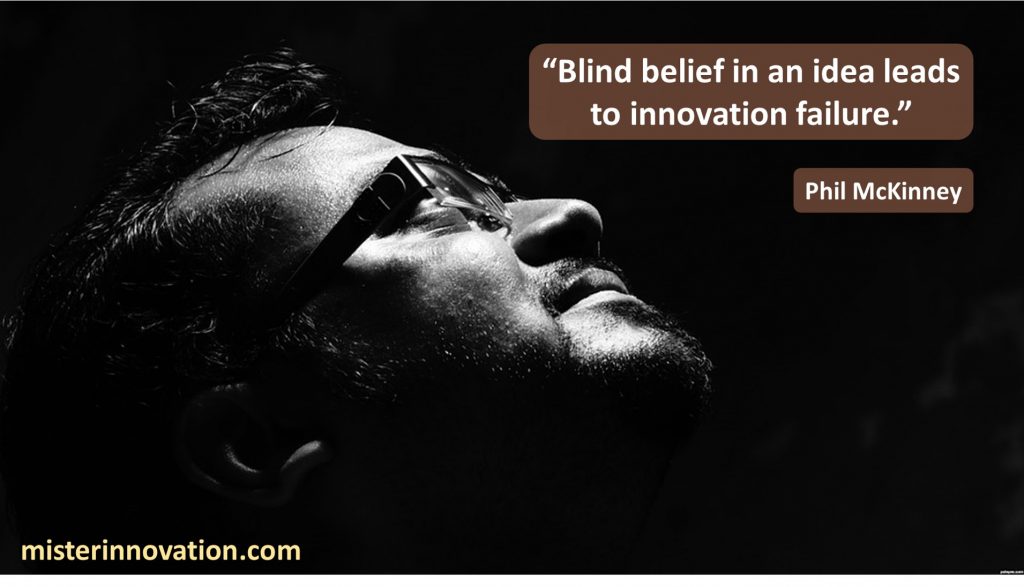
— Image credit: 1 of 1,050+ FREE quotes for your meetings & presentations at http://misterinnovation.com

Subscribe to Human-Centered Change & Innovation WeeklySign up here to join 17,000+ leaders getting Human-Centered Change & Innovation Weekly delivered to their inbox every week.

Unlearning and Relearning Are Keys to Innovative Thinking

Unlearning and Relearning Are Keys to Innovative Thinking

GUEST POST from Art Inteligencia

In the fast-paced world of the 21st century, the ability to think creatively and innovate is more critical than ever. However, a significant barrier often stands in the way of innovation: existing knowledge and beliefs. While knowledge is undoubtedly powerful, it can also create blind spots. Thus, the challenges of unlearning outdated concepts and relearning new approaches are essential to overcome for fostering innovation. Let’s delve into the art and science of unlearning and relearning, and explore how they serve as keys to innovative thinking.

The Process of Unlearning

Unlearning is the process of letting go of old information or approaches that no longer serve us. It is not so much about forgetting but about stepping back from ingrained habits and assumptions. This requires an open mind and a willingness to challenge one’s own mental models. To unlearn, individuals and organizations must cultivate curiosity and humility, recognizing that what worked yesterday may not work today.

Embracing Relearning

Relearning goes hand in hand with unlearning. It involves adopting new perspectives, skills, and ideas that are more relevant to current challenges and future opportunities. Relearning equips individuals with the ability to adapt to emerging trends and technologies. It fosters a mindset of continuous growth and reinforces the importance of lifelong learning. By embracing relearning, we lay the groundwork for developing innovative solutions.

Case Study: Kodak – A Lesson in Unlearning

Kodak’s Missed Opportunity

Once a giant in the photography industry, Kodak provides a stark lesson in the importance of unlearning. In the early 1970s, Kodak engineer Steve Sasson invented the first digital camera. But the innovative idea was shelved due to the company’s strong belief in traditional film photography.

Kodak’s failure to unlearn its reliance on film technology and embrace digital photography eventually led to its downfall. By clinging to existing knowledge and market dominance, Kodak missed the opportunity to lead an emerging digital revolution. The case of Kodak highlights the critical need for companies to unlearn outdated business models to innovate and thrive.

Case Study: Microsoft’s Cultural Shift

Microsoft’s Transformation

In stark contrast, Microsoft’s story is one of successful unlearning and relearning. Under the leadership of Satya Nadella, who became CEO in 2014, Microsoft embarked on a cultural transformation that emphasized ‘growth mindset’ and innovation.

Nadella encouraged employees to unlearn combative work habits and embraced a culture of collaboration. He recognized the need to pivot towards cloud computing and artificial intelligence, investing heavily in these fields and shifting the focus away from the traditional Windows-centric model.

This shift resulted in a reinvigorated Microsoft that regained market leadership and opened new revenue streams. By unlearning its past and relearning new business strategies, Microsoft exemplified how adaptation and innovation can significantly alter a company’s trajectory.

Strategies for Unlearning and Relearning

  • Cultivate Curiosity: Encourage a culture where questions are welcomed, and continual learning is embraced. Curiosity leads to an openness that is fundamental to unlearning old paradigms.
  • Challenge Assumptions: Foster an environment where assumptions can be questioned and debated. This involves promoting diversity of thought and encouraging feedback.
  • Create Safe Spaces for Experimentation: Allow team members to explore new ideas without fear of failure. Learning from both successes and mistakes fosters a culture of innovation.
  • Invest in Continuous Learning: Provide learning opportunities that promote skill development in new areas. Encourage employees to stay up to date with industry trends and emerging technologies.

In conclusion, unlearning and relearning are crucial processes in cultivating an innovative mindset. They require individuals and organizations to embrace change, challenge old assumptions, and stay agile in the face of rapid transformation. By following the examples set by companies like Microsoft and learning from the missteps of others like Kodak, we can unlock new avenues of growth and creativity. It is through continuous learning and adaptation that we will find the keys to tomorrow’s innovations.

Extra Extra: Futurology is not fortune telling. Futurists use a scientific approach to create their deliverables, but a methodology and tools like those in FutureHacking™ can empower anyone to engage in futurology themselves.

Image credit: Pexels

Subscribe to Human-Centered Change & Innovation WeeklySign up here to get Human-Centered Change & Innovation Weekly delivered to your inbox every week.

Best Practices and Pitfalls of Building an Innovation Ecosystem

Best Practices and Pitfalls of Building an Innovation Ecosystem

GUEST POST from Art Inteligencia

In today’s rapidly evolving business environment, fostering innovation isn’t just a strategic advantage—it’s a survival imperative. An effective innovation ecosystem integrates diverse elements, harnessing external and internal synergies to fuel sustained creativity and growth. But as with any complex system, crafting a robust innovation ecosystem comes with its own set of best practices and potential pitfalls. In this article, we’ll delve into both, supported by case studies that illustrate these critical points.

Best Practices for Building an Innovation Ecosystem

1. Foster a Collaborative Culture

The cornerstone of any successful innovation ecosystem is a culture that champions collaboration. Organizations must cultivate environments where ideas are freely exchanged without fear of judgment, encouraging cross-pollination between departments and disciplines. Providing platforms for collaboration—both physically and digitally—enables diverse teams to work together towards breakthrough innovations.

2. Leverage External Partnerships

In the journey to foster innovation, no organization is an island. Building partnerships with startups, academic institutions, and even competitors can inject fresh perspectives and capabilities. Open Innovation, driven by interfacing with external entities, is a key strategy many successful businesses employ to enhance their innovative potential.

3. Invest in Continuous Learning

An innovation ecosystem thrives on continuous learning and development. Encouraging employees to engage in ongoing education, whether through formal programs or earmarked “innovation time,” keeps the ecosystem agile and forward-thinking. It’s about creating a learning organization that can adapt and evolve as new challenges and opportunities arise.

Case Study 1: 3M

The Post-it Note Phenomenon

3M stands out as a paragon of innovation, with the famous invention of the Post-it Note serving as a testament to the company’s innovation ecosystem. Initially, the adhesive technology behind Post-it was considered a failure because it wasn’t strong enough for its intended use. However, 3M’s culture of openness and experimentation enabled this “failure” to be repurposed. The internal 15% rule, where employees could spend a portion of their time on projects of their own choosing, played a crucial role in nurturing this innovation.

3M’s approach highlights the value of a corporate culture that not only tolerates failure but also turns it into opportunities. By encouraging a culture where ideas can be recycled and reused creatively, 3M successfully transformed a dud product into a blockbuster staple. Their innovation ecosystem thrives on sustained encouragement of exploratory projects and cross-departmental collaborations, a model many other companies strive to emulate.

Common Pitfalls in Building an Innovation Ecosystem

1. Over-reliance on Internal Resources

A major misstep in fostering an innovation ecosystem is the tendency to solely rely on internal talents and resources, often leading to echo chambers. Without external input, solutions may be limited to existing knowledge and conventional thinking. This not only stifles creativity but also undermines competitive advantage in the long run.

2. Lack of Strategic Alignment

Innovation efforts that aren’t aligned with an organization’s overarching goals can lead to disjointed initiatives and wasted resources. Ensuring that innovation strategies sync with the broader business objectives is crucial. Strategic misalignment often results in minimal support from top management, under-funding, and ultimately, failure.

Case Study 2: Kodak

The Fall of a Giant

Kodak’s story is often cited as a cautionary tale for organizations attempting to foster innovation ecosystems. Despite inventing the digital camera in 1975, the company failed to capitalize on its potential due to an internal focus that prioritized film sales over technological advancement. This case illustrates a pitfall of missing strategic alignment and over-reliance on existing business models.

Kodak’s downfall underscores the necessity of aligning innovation with future-oriented business goals. Their internal culture, focused heavily on their traditional cash cow, was unable to adapt quickly enough to the disruptive technology they themselves had pioneered. The innovation ecosystem failed not from lack of technological prowess, but a failure to strategically embrace and integrate emerging technologies.

Conclusion

Building a thriving innovation ecosystem is a complex yet rewarding endeavor that requires thoughtful planning and execution. By fostering a collaborative culture, leveraging external partnerships, and investing in continuous learning, organizations can create a fertile ground for innovation. However, avoiding pitfalls such as over-reliance on internal resources and lack of strategic alignment is equally important. The contrasting case studies of 3M and Kodak serve as a poignant reminder that the path to innovation lies not merely in novel ideas but in the capacity to strategically harness and integrate them within a supportive ecosystem framework.

Extra Extra: Futurology is not fortune telling. Futurists use a scientific approach to create their deliverables, but a methodology and tools like those in FutureHacking™ can empower anyone to engage in futurology themselves.

Image credit: Pexels

Subscribe to Human-Centered Change & Innovation WeeklySign up here to get Human-Centered Change & Innovation Weekly delivered to your inbox every week.

Is innovation everyone’s job?

EPISODE SEVEN – Ask the Consultant

Live from the Innovation Studio comes EPISODE SEVEN of a new ‘Ask the Consultant’ series of short form videos. EPISODE SEVEN seeks to answer a strategic question that many innovation leaders struggle with:

“Is innovation everyone’s job?”

Should it be? Can it be?

Check out the video here:

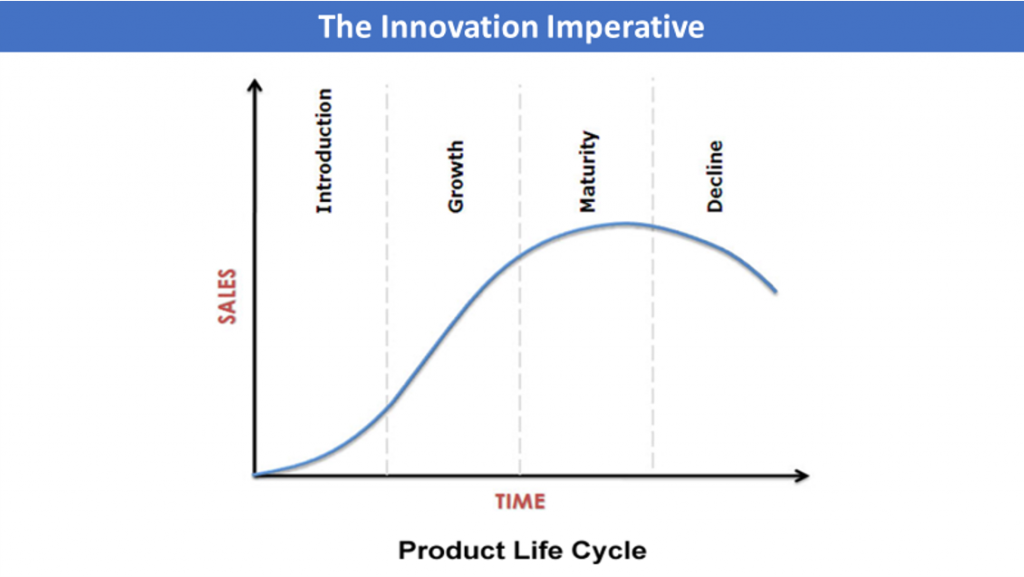
Innovation is the oxygen of business. Without continuous reinvention and renewal of the sources of value for the company and its customers, the inevitability of the Product Life Cycle will eventually defeat even the strongest company if it stands still.

The Innovation Imperative - Product Life Cycle

In the video we look at the difference a commitment to reinvention, reimagination and innovation can make to the survival of an organization by looking at the different fortunes of two companies in the same business faced back in 2010/2011.

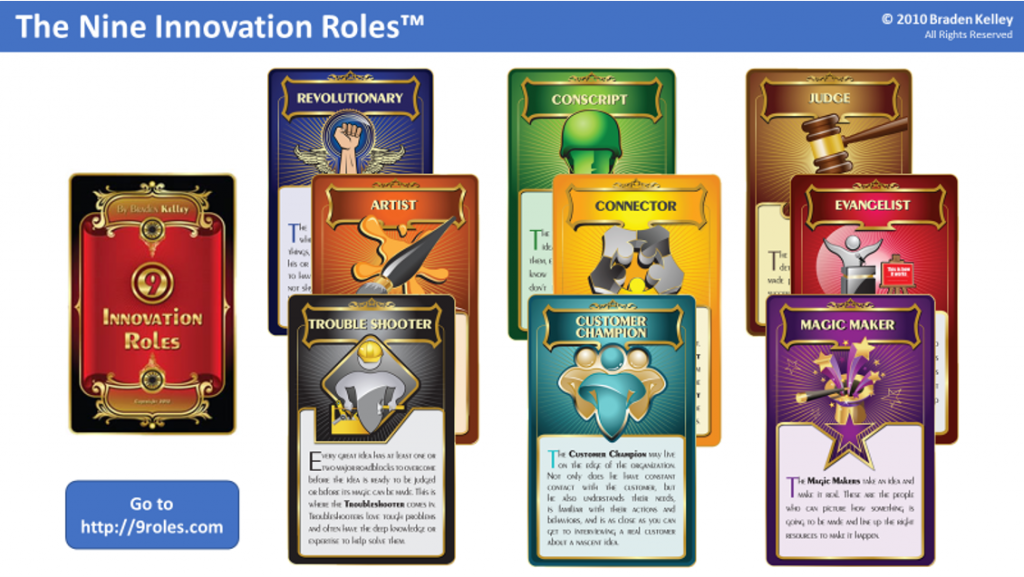
We’ll also look at where innovation comes from, the intersection it sits at, and the power of the Infinite Innovation Infrastructure™ and the Nine Innovation Roles™ that I introduced in my first book Stoking Your Innovation Bonfire.

The video will show you what an innovator looks like, the importance of people to innovation and the roles that well-functioning innovation teams need filled to be successful.

Nine Innovation Roles

We’ll detail in the video what each of the Nine Innovation Roles are — and you can get lots of free gifts at http://9roles.com — but here are the names:

  1. Revolutionary
  2. Artist
  3. Troubleshooter
  4. Conscript
  5. Connector
  6. Customer Champion
  7. Judge
  8. Evangelist
  9. Magic Maker

}} Click here to watch the video {{

Help Shape the Next ‘Ask the Consultant’ Episode

  1. Grab a great deal on Stoking Your Innovation Bonfire on Amazon while they last!
  2. Get a copy of my latest book Charting Change on Amazon
  3. Contact me with your question for the next video episode of “Ask the Consultant” live from my innovation studio

Below are the previous episodes of ‘Ask the Consultant’:

  1. EPISODE ONE – What is innovation?
  2. EPISODE TWO – How do I create continuous innovation in my organization?
  3. EPISODE THREE – What is digital transformation?
  4. EPISODE FOUR – What is the best way to create successful change?
  5. EPISODE FIVE – What is design thinking?
  6. EPISODE SIX – Zoom Tutorial – Amazing New PowerPoint Background Feature
  7. All other episodes of Ask the Consultant

Subscribe to Human-Centered Change & Innovation WeeklySign up here to get Human-Centered Change & Innovation Weekly delivered to your inbox every week.