Tag Archives: Innovation

Google’s Insights into Successful Teams and Managers

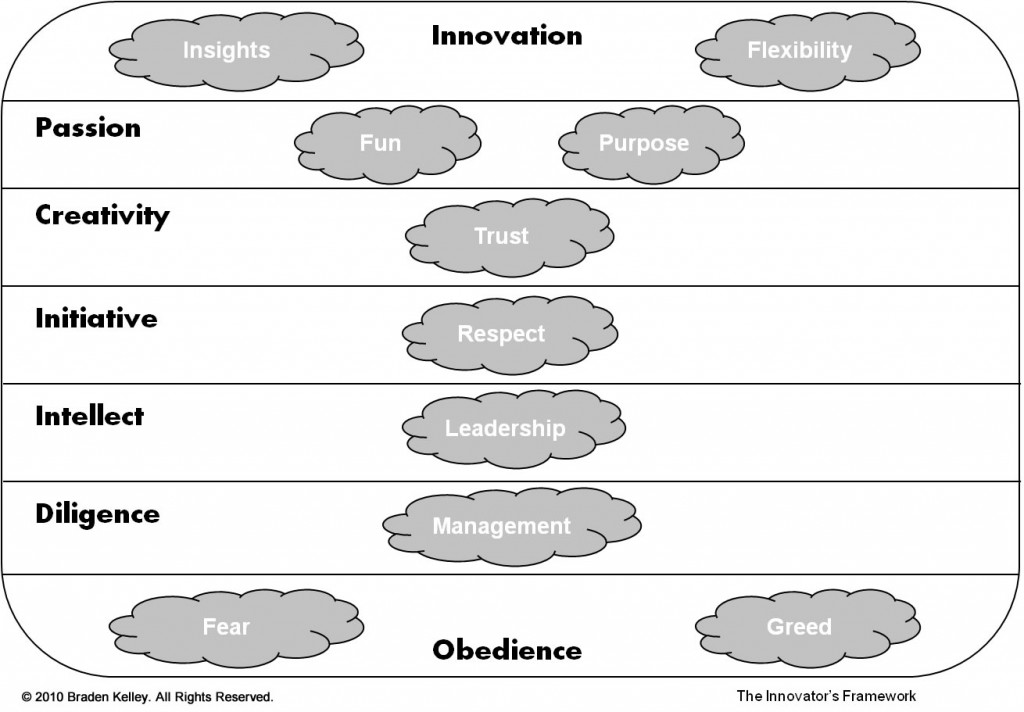
A little over five years ago I created an evolution of a Gary Hamel framework from The Future of Management that I titled The Innovator’s Framework and included in my popular first book Stoking Your Innovation Bonfire.

The Innovator's Framework

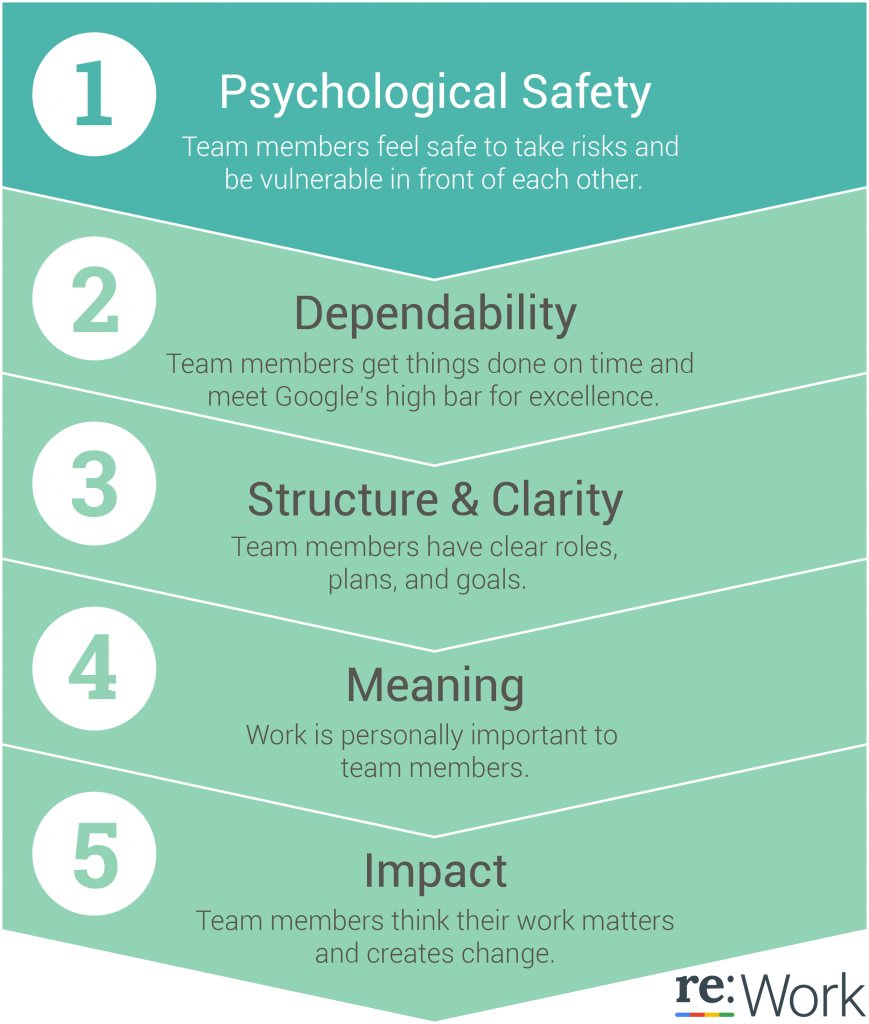
Recently Google recently released some of its extensive research into the skills and character traits of good managers and effective teams, and surprisingly the secret to a high-performing team lies less in the individual team members and more in the broader team dynamics: “Who is on a team matters less than how the team members interact, structure their work, and view their contributions.” High-performing teams, they found, almost always displayed five characteristics:

Google High Performing Teams

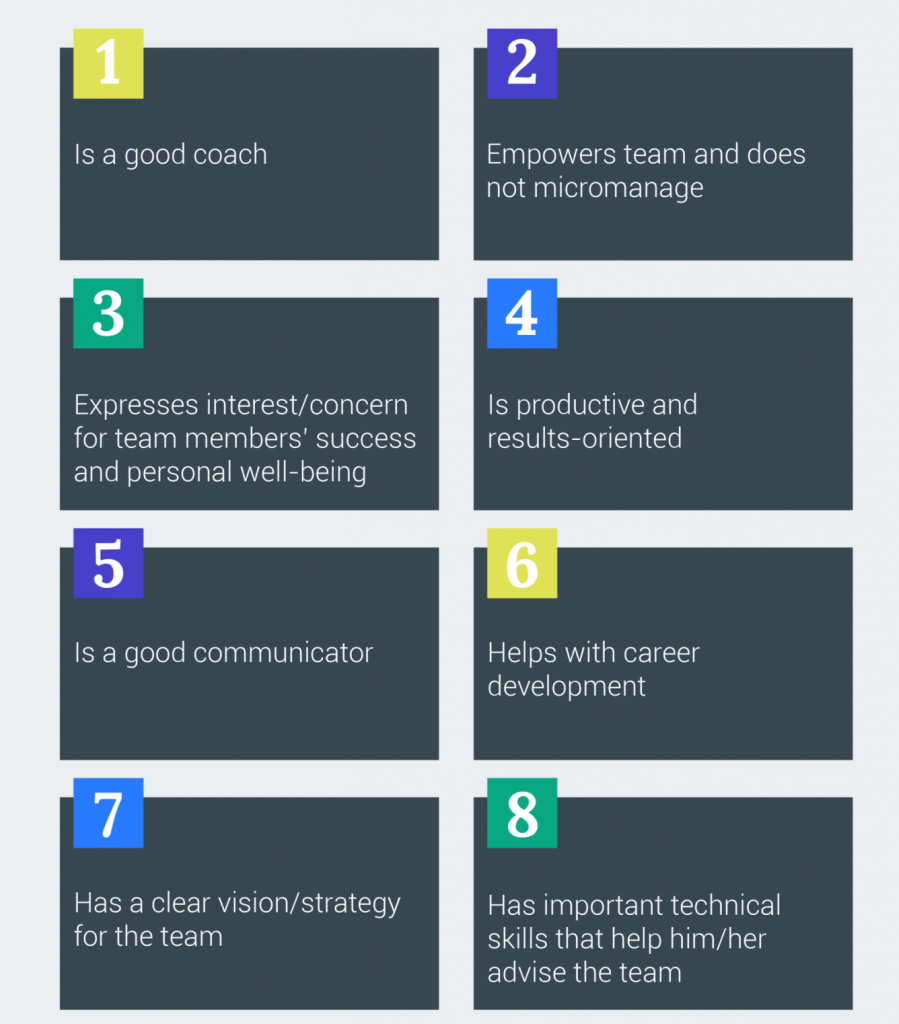
According to their research, by far the most important team dynamic is psychological safety – the ability to be bold and take risks without worrying that your team members will judge you. Now have a look at Google’s previous findings on the Eight Characteristics of Great Managers:

Google High Performing Managers

Eight Characteristics of Great Managers

When you compare the traits of a successful team, a successful manager, and the heirarchy in The Innovators’ Framework its interesting where the three overlap and where they diverge.

What do you see?

Sources: World Economic Forum
Image Credits: Google re:Work

Accelerate your change and transformation success

Subscribe to Human-Centered Change & Innovation WeeklySign up here to get Human-Centered Change & Innovation Weekly delivered to your inbox every week.
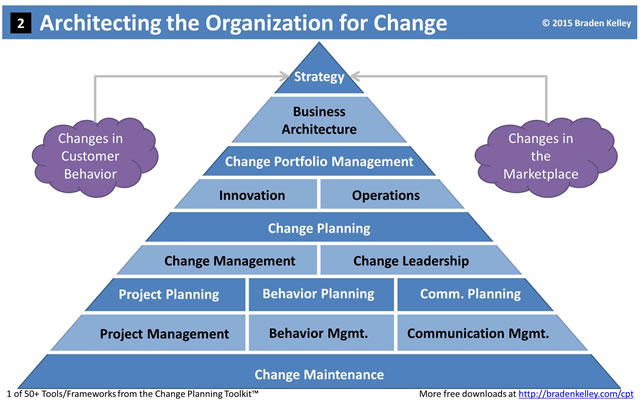
Architecting the Organization for Change

Architecting the Organization for ChangeIn my last article and the first free download from the Change Planning Toolkit™ on The Five Keys to Successful Change™ we looked at the five different disciplines that must come together to make any organizational change effort (or even a project) successful. They included:

  1. Change Planning
  2. Change Leadership
  3. Change Management
  4. Change Maintenance
  5. Change Portfolio Management

While most people would agree that change is a constant, it is not however a constant focus for the business. One of the reasons many organizations are so bad at change is that they are not architected for change and pay attention to only one or two of The Five Keys to Successful Change™. Instead most organizations focus on executing the day-to-day business and they focus on executing a portfolio of projects, hopefully on time and on budget. In some cases, projects may incorporate some elements of Change Management (usually too late in the process) and ignore Change Planning, Change Leadership, Change Maintenance, and Change Portfolio Management.

As a result, most organizations are terrible at change. And ultimately, most organizations are bad at innovation because they’re bad at change.

Most companies focus on delivering a set of new systems, products, and services prioritized purely on the ROI they may return, instead of consciously executing ‘Big C change efforts’ and ‘Little C change projects’ to support a constantly evolving business architecture that changes in support of a fluid strategy driven by constantly changing customer behaviors (including wants/needs), regulation and competition, and influencing changes in employee, supplier, and partner behaviors. Continuous improvement and innovation then are effectively tools used to keep the organization successfully aligned to maintain the optimum levels of competitiveness and customer connection.

In this article we will explore some of the ways that organizations need to re-think the way that the firm is structured, in order to place change purposefully at the center, enabling enable increases in organizational agility and the building of continuous change capabilities.

Architecting the Organization for Change

Architecting the Organization for Change helps organizations:

  • Visualize a new way to increase organizational agility
  • Integrate changes in the marketplace and customer behavior into the strategy
  • Create a new organizational architecture that integrates all five elements of organizational change
  • Make project, behavior and communications planning and management a central component of your change efforts

One thing that should immediately jump out as you look at the image of the Change Planning Toolkit™ download titled Architecting the Organization for Change, is that The Five Keys to Successful Change™ are embedded in the framework.

Change Maintenance forms the foundation of a change-centric organization, ensuring that the changes necessary to ensure a healthy firm continue to persist (or are “maintained”), while the top of the organizational pyramid is driven by a conscious strategy that evolves over time, informed by changes in customer behavior and changes in the marketplace.

The strategy of the firm then determines the appropriate business architecture, and as the organization’s strategy changes, the business architecture may also need to change. Any necessary changes in the architecture of the business (new or updated capabilities or competencies) then will lead to modifications to the portfolio of change initiatives and projects (and remember every project is a change effort). These projects and initiatives will consist of innovation initiatives and efforts to create positive changes in the operations of the business.

The change efforts and projects identified as necessary and invested in as part of the change portfolio then represent projects that impact the innovation and operations for the firm, and in order to successfully execute them in the short term includes change planning, management, and leadership, and in the longer term the maintenance of the required changes.

And for the change efforts and projects to be successful the organization must also focus on project planning and management, behavior planning and management, and communications planning and management. The related projects, behaviors, and communications must all be effectively planned and managed in a way that keeps all three in sync.

I hope you see that by increasing your focus on the Change Planning discipline and increased use of the Change Planning Toolkit™ and tools like the Architecting the Organization for Change framework will allow businesses to more collaboratively and visually plan each change effort and prepare the plans for the Change Management and Change Leadership teams to execute with help from the Project Planning, Project Management, and Change Maintenance professionals in the organization.

I hope you’ll come join me on this journey to improve the pace and execution of change efforts in our organizations!

Sign up for Change Planning Toolkit™ launch updates

Click to access this framework as a scalable 11″x17″ PDF download

Accelerate your change and transformation success

Subscribe to Human-Centered Change & Innovation WeeklySign up here to get Human-Centered Change & Innovation Weekly delivered to your inbox every week.
Innovation is Human

Innovation is Human

In many ways organizations are like humans, and others have described organizations and organizational change in biological terms before. But this biological context applies to innovation as well, and I’d like to put it forward quickly in simple terms.

As humans we must eat to survive, but if we focus too much on eating, we get unhealthy.

If we don’t focus enough on eating or if we eat the wrong things, we get unhealthy.

If we don’t enjoy enough variety in our experiences, we get unhealthy.

If we don’t spend enough time synthesizing those new experiences to uncover insights via sleep, we get unhealthy.

If we don’t eliminate our waste, we get unhealthy.

And finally, and probably most important to our health, we must exercise to increase our strength, flexibility, agility, reduce our stress levels, to build new capabilities, and to increase our longevity.

But, you can exercise too much, and get unhealthy as well.

The key is balance.

And the same is true for organizations, and parallels for all of these human activities can be drawn to the activities of organizations as well.

And while our interactions with food can be compared to our focus on the day to day operations within the context of the organization, the pursuit of innovation is the exercise for the organization.

And in much the same way that many people resist exercise even though they know it is good for them, many organizations do as well.

But for organizations to stay fit and enjoy a long and productive life, they must strike that balance between a healthy diet and exercise.

So, is your organization going to be fit or fat?

And next time someone in your organization says that innovation isn’t important, or that they can’t focus on it right now, ask them if they think exercise is important, then remind them that innovation like exercise is how we reinvigorate our organizations and keep them vibrant and alive, and go find yourself a carrot stick.

Keep innovating!

Image credit: fitinafatworld.wordpress.com

Subscribe to Human-Centered Change & Innovation WeeklySign up here to get Human-Centered Change & Innovation Weekly delivered to your inbox every week.
Most Companies Fail at Innovation Because…

Most Companies Fail at Innovation Because...Most companies fail at innovation because they fail at change.

There you go, there is the entire article in a single sentence. Please click the like button or leave a comment on your way out, and I’ll turn out the lights.

I’m actually serious, but I didn’t come to this single sentence overnight, but through decades of research and experience. It coalesced however this morning in an interview with Chad McAllister that will air next month.

This sentence also highlights the reason why after writing the popular Stoking Your Innovation Bonfire (a book about innovation) and traveling the world delivering innovation keynotes and workshops, that my next book for Palgrave Macmillan (@PalgraveBiz) will be about change, not innovation.

Because after all, my life’s work is to help others change the world for the better by creating and sharing valuable tools and insights that hopefully serve to accelerate innovation and change in communities around the world.

I will continue on to say though that if you want to be successful at innovation you need to get better at planning, leading, managing, and maintaining change.

If you doubt the linkage, please check out my other article Managing Innovation is About Managing Change. This will give you a great example of how innovation inflicts change on the organization.

And if you’d like to learn more about making your organization more change capable, then I encourage you to check out my article Change the World – Step One, which is the first in a series of articles I will be publishing here in the run up to the launch of my book in January 2016 to help organizations build a stronger, more sustainable approach to change. This first article outlines the Four Keys to Successful Change, with much more content and a whole Change Planning Toolkit™ being released over the next few months.


Accelerate your change and transformation success

Subscribe to Human-Centered Change & Innovation WeeklySign up here to get Human-Centered Change & Innovation Weekly delivered to your inbox every week.

Innovation Keynote and Change Planning Workshop Special

January Innovation and Change Planning Toolkit Special

To kickoff January with a bang I thought I would make a special offer to companies and event organizers who would like to get an excellent innovation keynote for their company or event attendees AND get a jump on your competitors by getting trained on how to use my new collaborative, visual change planning toolkit before they do.

This will be a great way to help innovation, change and project managers build strong momentum and results early in 2015.

Here is the offer:

Stoking Your Innovation BonfireBook me between January 21 and March 31, 2015 for either a:

  • 60-90 minute Innovation Keynote
  • 2-4 hour Innovation Workshop
  • 1 Day Innovation Masterclass

… and your attendees will at no additional charge:

  1. Be one of the first groups to get their hands on my revolutionary collaborative, visual change planning toolkit
  2. Get a 1 Day Workshop focused on organizational change and how to use the change planning toolkit

Buy an innovation keynote and get a full-day change planning toolkit workshop for free!

What could be better than that?

Book Braden Kelley for your event

P.S. If you missed my recent webinar ‘Innovation is All About Change’, click here and use PASSCODE 1515 to access the FREE recording (link expired).


Accelerate your change and transformation success

Subscribe to Human-Centered Change & Innovation WeeklySign up here to get Human-Centered Change & Innovation Weekly delivered to your inbox every week.
Now Available in Swedish – Nine Innovation Roles Cards

De Nio InnovationsrollernaI am proud to announce the Swedish language design of my Nine Innovation Roles card deck, made possible by the translation efforts of Aseem Svedberg from Sweden.

Swedish speakers can read more about the Nine Innovation Roles in Swedish thanks to Aseem as well.

I am also excited that I have potential volunteers to translate this information for you in French and Modern Standard Arabic (so stay tuned).

Swedish joins Spanish to become the second non-English translation for the Nine Innovation Roles.

If you facilitate workshops and training sessions, you too can get a valuable new tool for your toolbox and help to take the Nine Innovation Roles global at the same time.

For interested service providers, there are only a few small requirements for becoming a Nine Innovation Roles training partner:

  1. Translate this page on my site (see Swedish example) – will publish and give translation credit with 1-2 links to first translator of each language
  2. Translate this article on Innovation Excellence – will publish and give translation credit with 1-2 links to first translator of each language
  3. #1 and #2 will allow me to get a translated version of the Nine Innovation Roles cards design created for you
  4. Translate the Nine Innovation Roles presentation embedded in #1 (can leverage #1)
  5. Translate the Nine Innovation Roles worksheet I link to in #1 (can leverage #1)
  6. Attend an inexpensive Nine Innovation Roles train the trainer session that I will be holding soon.

To register your interest in becoming a Nine Innovation Roles training partner please fill out the contact form and make a note in the question field.


Build a common language of innovation on your team

Subscribe to Human-Centered Change & Innovation WeeklySign up here to get Human-Centered Change & Innovation Weekly delivered to your inbox every week.

Now Available in Spanish – Nine Innovation Roles Cards

Los Nueve Papeles en la InnovaciónI am proud to announce the Spanish language design of my Nine Innovation Roles card deck, made possible by the translation efforts of Vanessa López De la O from Mexico.

Spanish speakers can read more about the Nine Innovation Roles in Spanish thanks to Vanessa as well.

I am also excited that I have potential volunteers to translate this information for you in French and Modern Standard Arabic (so stay tuned).

For other interested service providers, there are only a few small requirements for becoming a Nine Innovation Roles training partner:

  1. Translate this page on my site (see Spanish example) – will publish and give translation credit with 1-2 links to first translator of each language
  2. #1 will allow me to get a translated version of the Nine Innovation Roles cards design created for you
  3. Translate the Nine Innovation Roles presentation embedded in #1 (can leverage #1)
  4. Translate the Nine Innovation Roles worksheet I link to in #1 (can leverage #1)

To register your interest in becoming a Nine Innovation Roles training partner please fill out the contact form and make a note in the question field.


Build a common language of innovation on your team

Subscribe to Human-Centered Change & Innovation WeeklySign up here to get Human-Centered Change & Innovation Weekly delivered to your inbox every week.
Three Social Media and Innovation Quotes


“Social media serves an incredibly important role in innovation. Social media functions as the glue to stick together incomplete knowledge, incomplete ideas, incomplete teams, and incomplete skillsets.”

– Braden Kelley


“Social media can help ideas grow and thrive that would otherwise wither and die under the boot of the perfectionist in all of us.”

– Braden Kelley


“Do you remember the saying ‘it takes a village to raise a child’? Well, it takes a village to create an innovation from an idea as well, and social media helps to aggregate and mobilize the people and knowledge necessary to do just that.”

– Braden Kelley


This will be the last of the quotes for a while. Things are getting a bit busier around here as interest in my new B2B Pull Marketing Strategy services takes off.

If you’d like to increase the number of inbound sales leads that your business receives, please contact us and we’ll let you know how we can help.

Subscribe to Human-Centered Change & Innovation WeeklySign up here to get Human-Centered Change & Innovation Weekly delivered to your inbox every week.