GUEST POST from Robyn Bolton
Innovation has always had its problems. It’s a meaningless buzzword that leads to confusion and false hope. It’s an event or a hobby that allows executives to check the “Be innovative” box on shareholders’ To-do lists. It’s a massive investment that, if you’re lucky, is break-even.
So, it should be no surprise that interest and investment have dried up to the point that many have declared that innovation is dead.
If you feel an existential crisis coming on, you’re not alone. Heck, I’m about to publish a book titled Unlocking Innovation, which, if innovation is dead, is like publishing Lean Speed: How to Make Your Horse East Less and Go Faster in 1917 (the year automobiles became more prevalent than horses).
But is innovation really dead?
Yes, Innovation is Dead
The word “innovation” is dead, and it’s about time. Despite valiant efforts by academics, consultants, and practitioners to define innovation as something more than a new product, decades of hype have irrevocably reduced it to shiny new objects, fun field trips and events, and wasted time and money.
Good riddance, too. “Innovation” has been used to justify too many half-hearted efforts, avoidable mistakes, and colossal failures to survive.
Except that it is also very much not dead.
While the term “innovation” may have flat-lined, the act of innovating – creating something new that creates value – is thriving. AI continues to evolve and find new roles in our daily lives. Labs are growing everything from meat to fabric to new organs. And speaking of organs, three patients in the US received artificial hearts that kept them alive long enough for donor hearts to be found.
The act of innovation isn’t dead because the need for innovation will always exist, and the desire to innovate – to create, evolve, and improve – is fundamentally human.
Innovation is Metamorphosing (yes, that’s a real word)
Like the Very Hungry Caterpillar, innovation has been inching along, gobbling up money and people, getting bigger, and taking up more space in offices, budgets, and shareholder calls.
Then, as the shock of the pandemic faded, innovation went into a chrysalis and turned to goo.
Just as a caterpillar must break down completely before becoming something new, we’re watching the old systems dissolve:
- Old terms like innovation and Design Thinking were more likely to elicit a No than a Yes
- Old structures like dedicated internal teams and “labs” were shut down
- Old beliefs that innovation is an end rather than a means to an end faded
This is all good news. Except for one tiny thing …
We Don’t Know What’s Next
Humans hate uncertainty, so we’re responding to the goo-phase in different ways:
- Collapse in defeat, lament the end of human creativity and innovation, and ignore the fact that cutting all investment in creativity and innovation is hastening the end you find so devastating
- Take a deep breath, put our heads down, and keep going because this, too, shall pass.
- Put on our big kid pants, muster some courage, ask questions, and start experimenting
- I’ve been in #2 for a while (with brief and frequent visits to #1), but it’s time to move into #3.
I’ll start where I start everything – a question about a word – because, before we can move forward, we need a way to communicate.
If innovation (the term) is dead, what do we use instead?
We’ll explore answers in the next post, so drop your words and definitions in the comments.
Image credit: Google Gemini
 Sign up here to join 17,000+ leaders getting Human-Centered Change & Innovation Weekly delivered to their inbox every week.


 After a week of torrid voting and much passionate support, along with a lot of gut-wrenching consideration and jostling during the judging round, I am proud to announce your Top 40 Innovation Bloggers of 2024:
 Greg Satell is a popular speaker and consultant. His first book,
 Mike Shipulski brings together people, culture, and tools to change engineering behavior. He writes daily on Twitter as
 A twenty-five year Procter & Gamble veteran, Pete has spent the last 8+ years applying insights from psychology and behavioral science to innovation, product design, and brand communication. He spent 17 years as a serial innovator, creating novel products, perfume delivery systems, cleaning technologies, devices and many other consumer-centric innovations, resulting in well over 100 granted or published patents. Find him at pete.mindmatters@gmail.com






 Dainora (a.k.a. Dee) creates customer-centric content at Viima. Viima is the most widely used and highest rated innovation management software in the world. Passionate about environmental issues, Dee writes about sustainable innovation hoping to save the world – one article at the time.
 Soren Kaplan is the bestselling and award-winning author of Leapfrogging and The Invisible Advantage, an affiliated professor at USC’s Center for Effective Organizations, a former corporate executive, and a co-founder of
  Diana heads marketing at
 Jesse Nieminen is the Co-founder and Chairman at

 Arlen Meyers, MD, MBA is an emeritus professor at the University of Colorado School of Medicine, an instructor at the University of Colorado-Denver Business School and cofounding President and CEO of the Society of Physician Entrepreneurs at
 Leo is the founder of
  Rachel Audige is an Innovation Architect who helps organisations embed inventive thinking as well as a certified Systematic Inventive Thinking Facilitator, based in Melbourne.
 Art Inteligencia is the lead futurist at Inteligencia Ltd. He is passionate about content creation and thinks about it as more science than art. Art travels the world at the speed of light, over mountains and under oceans. His favorite numbers are one and zero.
 Phil McKinney is the Author of “Beyond The Obvious”, Host of the Killer Innovations Podcast and Syndicated Radio Show, a Keynote Speaker, President & CEO CableLabs and an Innovation Mentor and Coach.
 Dr. Ralph-Christian Ohr has extensive experience in product/innovation management for international technology-based companies. His particular interest is targeted at the intersection of organizational and human innovation capabilities. You can follow him on Twitter
 Dr. Dean Anderson and Dr. Linda Ackerman Anderson lead

 Scott Anthony is a strategic advisor, writer and speaker on topics of growth and innovation. He has been based in Singapore since 2010, and currently serves at the Managing Director of Innosight’s Asia-Pacific operations.
 Anthony Mills is the Founder & CEO of Legacy Innovation Group (
 Paul Hobcraft runs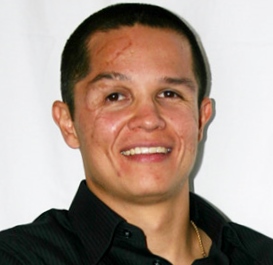
 Chateau G Pato is a senior futurist at Inteligencia Ltd. She is passionate about content creation and thinks about it as more science than art. Chateau travels the world at the speed of light, over mountains and under oceans. Her favorite numbers are one and zero.
 As an experience architect, Alain helps leaders craft customer, employee and shareholder experiences for profit, reinvention and transformation. He does this through his personal consultancy Alain Thys & Co as well as the transformative venture studio


 Happy Holidays!