Category Archives: Technology

The Impact of Big Data on the Future of Business

The Impact of Big Data on the Future of Business

GUEST POST from Chateau G Pato

In today’s interconnected and data-driven world, the abundance of information has given rise to a powerful phenomenon known as big data. Big data refers to the large volume, velocity, and variety of data that organizations collect from various sources. This immense amount of data, if properly collected, analyzed, and utilized, has the potential to revolutionize the way businesses operate. The impact of big data on the future of business cannot be overlooked, as it has already begun reshaping industries and enhancing decision-making processes. This article will explore two case study examples that highlight the transformative power of big data.

Case Study 1: Amazon

One of the most successful examples of leveraging big data in business is Amazon. With its massive online marketplace and extensive customer base, Amazon collects an immense amount of data on customer behavior, preferences, and buying habits. This data enables them to provide personalized recommendations, targeted marketing campaigns, and a seamless customer experience.

Through advanced analytics, machine learning algorithms, and predictive modeling, Amazon can understand customer preferences and deliver tailored product recommendations. This not only improves customer satisfaction but also increases sales and revenue for the company. Additionally, Amazon uses big data analytics to optimize its supply chain, inventory management, and logistics. By analyzing large datasets in real-time, they can predict demand, reduce delivery times, and reduce costs, ensuring efficient operations and customer satisfaction.

Case Study 2: Netflix

Another case study that exemplifies the impact of big data is Netflix. As a leading streaming service with millions of subscribers worldwide, Netflix relies heavily on collecting and analyzing data to personalize content recommendations, improve user experience, and create hit shows. Using big data analytics, Netflix can analyze viewing patterns, customer preferences, and feedback to curate personalized content recommendations for individual users.

Furthermore, Netflix utilizes big data to inform its content creation decisions. By analyzing viewer data, Netflix can identify trends, popular genres, and successful storylines, resulting in the creation of original shows and movies that resonate with their target audience. This data-driven approach has allowed Netflix to have a competitive edge in the entertainment industry, attract and retain subscribers, and continuously improve its content offerings.

The Future of Big Data in Business

The case study examples of Amazon and Netflix demonstrate the substantial impact of big data on business operations, customer satisfaction, and revenue growth. However, the potential of big data goes beyond these examples. With advancements in technology, such as the Internet of Things (IoT), cloud computing, and artificial intelligence, the amount of data generated by individuals, devices, and organizations will continue to skyrocket.

Businesses that can effectively harness this data and transform it into actionable insights will reap significant benefits. Big data analytics will enable organizations to make data-driven decisions, identify patterns, forecast trends, and optimize business operations. From supply chain management and production efficiency to marketing strategies and customer relationship management, big data will be the driving force behind innovative and successful business practices.

Conclusion

The impact of big data on the future of business cannot be overlooked. The ability to collect, analyze, and utilize vast amounts of data has the power to transform industries, enhance decision-making processes, and drive business success. As demonstrated by the examples of Amazon and Netflix, big data is already reshaping business models, improving customer experiences, and driving revenue growth. As technology advances and connectivity increases, harnessing big data will become essential for businesses to stay competitive in the digital age.

Image credit: Pixabay

Subscribe to Human-Centered Change & Innovation WeeklySign up here to get Human-Centered Change & Innovation Weekly delivered to your inbox every week.

Adapting to the Changing Face of Cybersecurity

Adapting to the Changing Face of Cybersecurity

GUEST POST from Art Inteligencia

In today’s increasingly digital world, the importance of cybersecurity cannot be overstated. With each passing day, we witness the rise of new technologies, the growth of interconnected devices, and the ever-present threat of cyber attacks. As a result, organizations and individuals must adapt to the changing face of cybersecurity to ensure their data, privacy, and digital assets remain protected. This article aims to shed light on this evolving landscape by presenting two case study examples that highlight the challenges and solutions in adapting to cybersecurity threats.

Case Study 1: The Rise of Remote Work and New Vulnerabilities

The recent COVID-19 pandemic prompted a rapid shift toward remote work, forcing organizations of all sizes to navigate the new challenges associated with securing a distributed workforce. This transition exposed various vulnerabilities in traditional cybersecurity strategies, with a surge in phishing attacks, video conferencing breaches, and insecure home networks. One notable case study comes from a multinational corporation that experienced a significant data breach due to a compromised employee’s home network.

To adapt to this new reality, the organization swiftly implemented multifactor authentication (MFA) protocols, mandatory virtual private network (VPN) usage, and comprehensive employee training on remote work security best practices. By doing so, they minimized the risk of unauthorized access to sensitive data and significantly increased their cybersecurity posture. This case study illustrates the importance of adapting to the changing landscape by prioritizing remote work security measures to meet the evolving demands.

Case Study 2: Artificial Intelligence and Emerging Threats

As organizations increasingly integrate artificial intelligence (AI) and machine learning (ML) into their systems, they must also address the emerging threats associated with these technologies. A case study from a leading healthcare provider demonstrates how AI can be exploited to compromise data integrity and privacy. Attackers infiltrated the provider’s machine learning algorithms, leading to manipulated diagnoses and potentially dangerous medical treatments.

To counter such threats, the healthcare provider revamped their cybersecurity approach by enhancing encryption algorithms, implementing anomaly detection systems, and conducting rigorous penetration testing to identify vulnerabilities. Additionally, they established a strong collaboration between their cybersecurity and data science teams, ensuring a comprehensive understanding of AI security risks and vulnerabilities. This case study highlights how organizations must adapt their cybersecurity practices to mitigate the risks associated with emerging technologies.

Conclusion

The ever-evolving landscape of cybersecurity demands constant adaptation to protect against emerging threats. The case studies mentioned above showcase the importance of embracing change and implementing proactive measures to safeguard sensitive information and digital assets. Whether it is the rise of remote work or the integration of AI and ML, organizations and individuals must prioritize cybersecurity as a core component of their operations. By staying attentive, informed, and proactive, we can effectively adapt to the changing face of cybersecurity and secure our digital future.

Image credit: Pixabay

Subscribe to Human-Centered Change & Innovation WeeklySign up here to get Human-Centered Change & Innovation Weekly delivered to your inbox every week.

The New Cognitive Divide

How to Keep the Augmented Workforce from Leaving the Unaugmented Behind

The New Cognitive Divide

GUEST POST from Art Inteligencia


I. Introduction: The Emerging Organizational Fracture

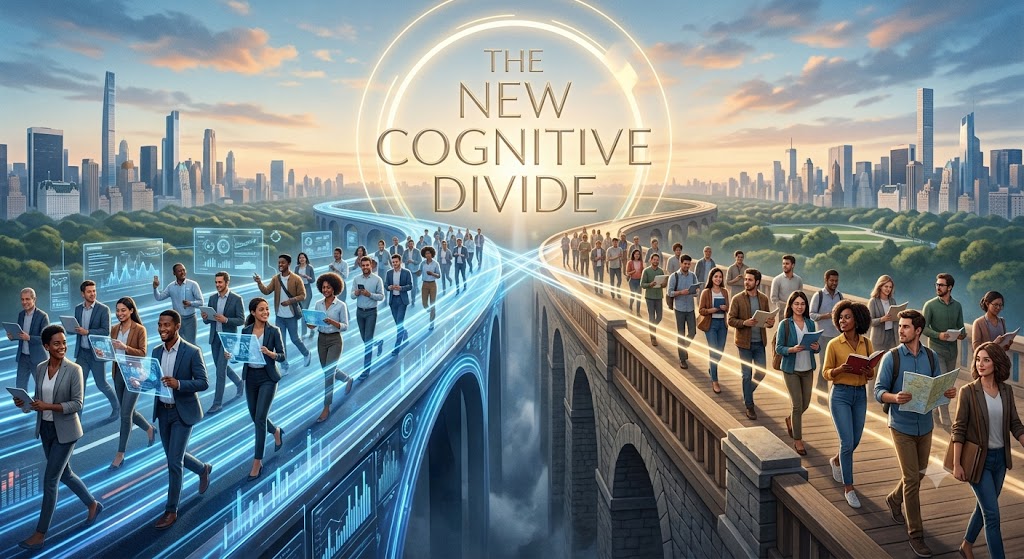
When we talk about artificial intelligence and automation in the workplace, the conversation almost always gravitates toward technology adoption curves, software rollouts, or fears of job displacement. But from a Human-Centered Change™ perspective, the real risk facing modern organizations isn’t just technological disruption—it’s the widening Cognitive Divide.

As AI tools, generative systems, and intelligent agents permeate daily workflows, we are witnessing the emergence of a stark, two-tier organizational reality:

  • The Augmented Workforce: Employees equipped with cognitive tools who operate at hyper-velocity, elevating their capacity for problem-solving, strategic synthesis, and rapid execution.
  • The Unaugmented Workforce: Employees who—whether due to role constraints, lack of access, digital literacy gaps, or organizational inertia—remain stranded in legacy, manual workflows.

This divide is not merely an IT rollout delay or an HR training backlog; it is a fundamental experience design challenge. When a segment of your team operates with superhuman speed while others feel tethered to traditional methods, the resulting friction erodes psychological safety, fuels cultural resentment, and fractures organizational alignment.

If change is managed strictly as a project deadline rather than a human adoption process, this cognitive gap will undermine your culture and paralyze innovation. To build a resilient, future-ready organization, leaders must design experiences that elevate the entire workforce—ensuring no one is left behind in the unaugmented past.

II. Weak Signals & FutureHacking™: Mapping the Disruption

To navigate turbulent transitions, leaders cannot afford to wait for trends to become glaringly obvious. Through FutureHacking™ foresight and weak signal scanning, we can already spot the early indicators of organizational friction caused by cognitive acceleration—well before they show up in quarterly engagement surveys or exit interviews.

Scanning the Weak Signals in the Modern Workplace

The subtle indicators of the widening divide are already present in forward-looking enterprises if you know where to look:

  • The Rise of “Shadow AI”: A subterranean split where tech-savvy employees covertly utilize unsanctioned generative tools to outperform peers, creating hidden disparities in output quality and speed.
  • Emerging Productivity Elitism: A cultural shift where augmented workers view unaugmented colleagues as operational bottlenecks, leading to subtle condescension and team friction.
  • Information Asymmetry & Asynchronous Drift: Augmented employees synthesizing vast amounts of data in seconds, leaving unaugmented team members struggling to keep pace during strategic alignment discussions.

The Danger of Perpetual Change Fatigue

When technological capability outpaces human adaptation, the resulting state isn’t high performance—it’s cognitive overload. Rapid acceleration heightens uncertainty across the organization, triggering classic change resistance mechanisms. When unaugmented workers feel overwhelmed by the velocity around them, they don’t just slow down; they disengage to protect their own psychological safety.

Scenario Planning: The Cost of a Fractured Culture

Consider the organizational trajectory when 30% of your workforce operates at 10x speed while 70% remains bound to traditional methods:

Organizational Pillar The Augmented Reality The Unaugmented Vulnerability
Culture & Morale High empowerment, rapid experimentation, elevated autonomy. Alienation, fear of displacement, acute change fatigue.
Knowledge Sharing AI-prompt library hoarding, individualized workflows. Reliance on legacy documentation, slower consensus-building.
Innovation Velocity Rapid prototyping and iterative hypothesis testing. Bottlenecks during cross-functional handoffs and execution.

Foresight isn’t about predicting a singular, fixed future; it’s about identifying these divergence points early enough to intervene. Leaders who proactively bridge this gap will harness collective intelligence, while those who ignore it will find their organizational velocity constrained by internal friction.

III. The Nine Innovation Roles in the Age of Augmentation

Innovation is never a solo endeavor or a commodity task—it depends on individuals fulfilling distinct functions across the full lifecycle of an idea. Through the lens of the Nine Innovation Roles™, every person excels at a dominant role that contributes uniquely to organizational capacity:

  • Revolutionary: Constantly shaking things up, eager to challenge norms, and generating a high volume of ideas.
  • Conscript: Possesses great ideas and execution talent, but rarely shares them voluntarily without a push or clear invite.
  • Connector: Bridges people, insights, and disciplines—linking a Conscript’s quiet insight with a Revolutionary or an Artist.
  • Artist: Refines and elevates concepts, taking raw ideas and making them visually, functionally, or conceptually better.
  • Customer Champion: Anchors innovation in real user needs, behaviors, and empathetic context.
  • Troubleshooter: Solves critical technical or operational roadblocks that stand between an idea and viability.
  • Judge: Evaluates commercial viability, profitability, and marketplace feasibility to separate signal from noise.
  • Magic Maker: Translates abstract concepts into reality by orchestrating execution and lining up required resources.
  • Evangelist: Educates stakeholders, builds internal buy-in, and articulates value to ensure adoption.

As cognitive tools and AI capabilities enter the workplace, they alter the cadence and dynamic across all nine roles. If unmanaged, the Cognitive Divide threatens to distort how these roles collaborate.

Rethinking Role Velocity and the Risk of “Cognitive Silos”

When augmented team members—such as an AI-powered Revolutionary or Artist—can generate dozens of concepts, visual mockups, or project variations in seconds, the overall speed of ideation leaps exponentially. However, if unaugmented team members filling roles like the Judge, Troubleshooter, or Customer Champion are operating with traditional, manual tools, critical friction occurs:

  • The augmented Revolutionary risks overwhelming the Judge with a firehose of AI-generated concepts, paralyzing evaluation criteria.
  • The Conscript, who is already hesitant to share insights, feels further silenced as hyper-augmented peers dominate every conversation with rapid AI outputs.
  • The Customer Champion’s deep human empathy risks being bypassed in favor of fast, synthetic persona data generated by augmented team members.

Building Synergy Across the Augmented and Unaugmented Roles

To prevent cognitive acceleration from leaving essential roles behind, leaders must intentionally orchestrate cross-role synergy:

  • Empower the Connector: Leverage Connectors to intentionally pair tech-forward Revolutionaries with quiet Conscripts, ensuring AI tools amplify hidden expertise rather than suppressing it.
  • Augment Evaluation and Execution: Provide tailored cognitive assistance to Troubleshooters, Judges, and Magic Makers so that downstream validation and real-world implementation keep pace with front-end ideation.
  • Anchor in Human Empathy: Require Evangelists and Customer Champions to validate AI outputs against authentic human experiences, maintaining trust and psychological safety across the team.

True organizational capability doesn’t come from turning every employee into an AI prompt engineer—it comes from ensuring all Nine Innovation Roles work in harmony to move ideas seamlessly from inspiration to impact.

IV. Bridging the Divide with Human-Centered Change™

Too often, leaders approach technology adoption through a pure project management lens—focusing almost exclusively on feature rollouts, software licenses, and technical milestones. But technology never transforms an enterprise on its own; people do. Bridging the Cognitive Divide requires a shift from technical deployment to Human-Centered Change™, prioritizing how people experience, internalize, and build momentum around new ways of working.

Reframing AI Integration: From IT Rollout to Human Adoption

When cognitive tools are dropped into an organization without intentional change design, two predictable reactions occur: eager adoption by tech-forward early movers, and anxiety-driven withdrawal by the rest. Human-Centered Change™ reframes augmentation from an efficiency mandate into an capability-building opportunity that elevates everyone.

Visual Collaboration with the Change Planning Canvas™

To keep the augmented workforce from pulling away from unaugmented colleagues, teams need a shared space to map out the human dynamics of transition. Utilizing visual tools like the Change Planning Canvas™ allows leaders and cross-functional teams to collaborate transparently on key human adoption variables:

  • Stakeholder Impact: Mapping precisely who is being augmented, who is currently left unaugmented, and where operational bottlenecks or cultural friction will naturally manifest.
  • Empathy & Adoption Barriers: Uncovering the root causes holding unaugmented workers back—whether it’s fear of obsolescence, lack of structured training, strict role permissions, or sheer change fatigue.
  • Shared Language & Values: Establishing clear organizational norms around AI usage, transparency, data integrity, and shared ownership so augmentation is viewed as a collaborative asset rather than a competitive edge.
  • Capacity Building: Defining clear learning pathways that help unaugmented team members build digital confidence at a manageable, sustainable pace.

Democratizing Augmentation Across the Organization

Organizations must avoid creating isolated “AI elite” task forces or restricted pilot groups that widen cultural divides. Instead, leaders should democratize access to cognitive tools while actively pairing augmented champions with unaugmented peers. When employees help co-create the blueprints for how AI enhances their daily work, change stops feeling like something being done to them and starts feeling like something built with them.

V. Experience Design for the Hybrid-Cognitive Workplace

Closing the Cognitive Divide isn’t just a matter of issuing new software licenses or scheduling mandatory training sessions—it requires a deliberate focus on Experience Design. As workplaces evolve into hybrid-cognitive environments where augmented and unaugmented employees collaborate daily, leaders must design workflows, environments, and cultural norms that reduce friction and elevate the collective employee experience.

Designing the Modern Employee Journey

When cognitive capabilities vary across a team, standard operational workflows quickly break down. By mapping the daily employee journey through an experience design lens, leaders can pinpoint and redesign critical touchpoints where cognitive bottlenecks and cultural friction occur:

  • Input Asymmetry: Redesigning intake and planning processes so that team members using manual research methods aren’t overwhelmed by peers generating hyper-speed AI syntheses.
  • Hand-off Protocols: Establishing clear, standardized hand-off guidelines between augmented and unaugmented roles so context, prompt logic, and underlying data sources remain completely transparent.
  • Recognition & Performance Metrics: Evolving evaluation criteria beyond raw output volume or speed to reward critical thinking, strategic judgment, collaboration, and empathetic leadership.

Building Psychological Safety in a Dynamic Workplace

Employees cannot adapt to change when they are operating in fear. When unaugmented workers worry that asking for help or making mistakes will expose them as obsolete, they naturally retreat into defensive compliance. Experience design prioritizes psychological safety by creating low-stakes sandbox environments where teams can experiment with cognitive tools, test hypotheses, and fail safely without fear of judgment or job insecurity.

Embedding Continuous Learning Loops

Capabilities fade rapidly if learning is treated as a one-time event rather than a continuous daily habit. Bridging the divide requires embedding dynamic feedback and learning loops directly into work processes:

  • Micro-Demonstrations: Encouraging augmented champions to share real-world “prompt recipes” and workflow shortcuts during regular team standups.
  • Peer-to-Peer Coaching: Pairing tech-forward experimenters with experienced domain experts to blend digital speed with institutional wisdom.
  • Iterative Workflow Refinement: Frequently auditing team experiences to refine tools, adjust pacing, and remove friction points before they harden into cultural divides.

When experience design guides the transformation, cognitive augmentation ceases to be a wedge that divides teams and instead becomes a shared platform that empowers every individual to perform at their best.

VI. Conclusion & Call to Action: Continuous Innovation for All

The rise of artificial intelligence and cognitive augmentation represents one of the most profound shifts in workplace dynamics of our generation. Yet, as history has repeatedly taught us across every major technological revolution, tools do not transform enterprises—people do. The ultimate determinant of organizational success in this new era will not be the raw capability of your algorithms, but the cohesion and adaptability of your culture.

The Modern Leadership Imperative

To succeed today, leaders must master a double-handed challenge: managing the operational reality of the present while simultaneously inventing the future. Allowing a widening Cognitive Divide to fracture your organization into two distinct tiers—the hyper-accelerated augmented and the lagging unaugmented—is a recipe for cultural stagnation, change fatigue, and lost potential.

Bridging this gap requires moving beyond mere software deployment and embracing Human-Centered Change™, applying FutureHacking™ foresight, and thoughtfully balancing the talents across all Nine Innovation Roles™. When you prioritize experience design and psychological safety, cognitive augmentation stops being a wedge that drives teams apart and becomes an inclusive engine that lifts the entire workforce.

A Call to Action for Leaders

Do not wait for change friction to manifest in turnover or missed goals. Take proactive steps today to design an augmented future that empowers everyone:

  • Audit Your Divide: Map your organization to identify where cognitive gaps, access barriers, and velocity mismatches are actively causing friction.
  • Democratize Capability: Transition from isolated pilot groups to cross-functional, collaborative learning environments that give every employee a pathway to growth.
  • Co-Create the Future: Bring augmented champions and domain experts together using visual collaboration frameworks to map out workflows that value human wisdom as much as algorithmic speed.

Change sticks when people help build it. Make sure your entire workforce is part of the blueprint.

Frequently Asked Questions

What is the “Cognitive Divide” in the workplace?

The Cognitive Divide is the widening organizational gap between employees who utilize AI tools and automated agents to operate at hyper-velocity, and those who remain bound to legacy, manual workflows due to role constraints, lack of access, or training gaps.

Why is technology deployment alone insufficient to bridge this gap?

Software rollouts focus on technical access rather than human adoption. Without Human-Centered Change™ and experience design, rapid cognitive acceleration creates change fatigue, psychological safety breakdown, and cultural friction between augmented and unaugmented team members.

How can leaders ensure unaugmented employees are not left behind?

Leaders must democratize AI access, use visual collaboration tools like the Change Planning Canvas™ to map human adoption barriers, and pair tech-forward team members with domain experts to harmonize AI speed with institutional wisdom across all Nine Innovation Roles™.


Bottom line: Futurists are not fortune tellers. They use a formal approach to achieve their outcomes, but a methodology and tools like those in FutureHacking™ can empower anyone to be their own futurist.

Image credit: Gemini

Subscribe to Human-Centered Change & Innovation WeeklySign up here to get Human-Centered Change & Innovation Weekly delivered to your inbox every week.

The New Corporate Sovereignty

How Tech Monopolies Are Rewriting the Social Contract

The New Corporate Sovereignty

GUEST POST from Chateau G Pato


The Shift from Platforms to Polities

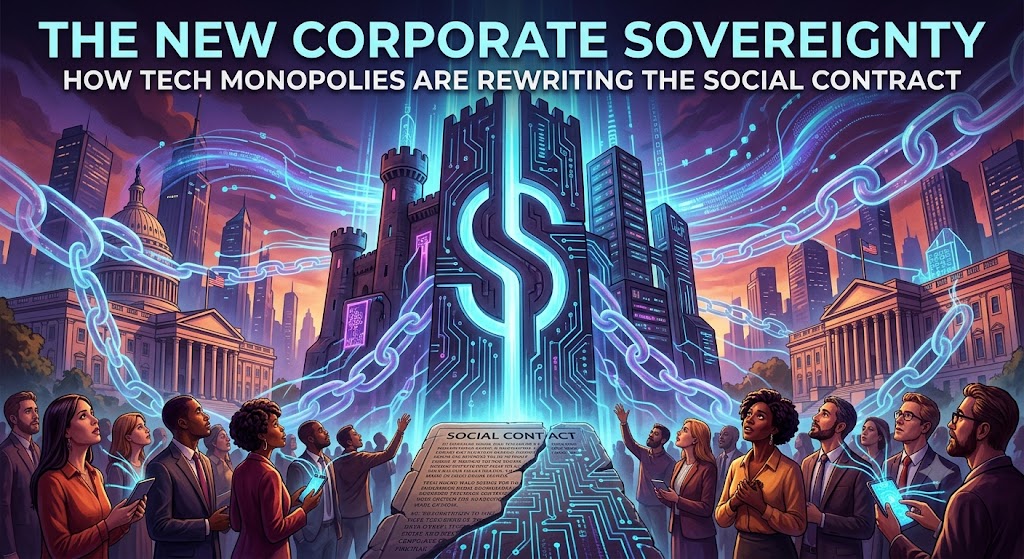
For centuries, the social contract was a well-understood, if invisible, agreement: citizens granted authority and yielded certain liberties to governments in exchange for the protection of their rights, the maintenance of public infrastructure, and the preservation of the public square. If the system broke, democratic mechanisms — or at least geographic realities — offered a path toward accountability. Today, that foundational agreement is being quietly yet fundamentally rewritten without a single vote being cast.

We have entered the era of the new corporate sovereignty. A handful of global technology monopolies have evolved far beyond their original mandates as product builders or marketplace facilitators. By controlling the digital layer upon which modern life, commerce, and communication occur, these ecosystems now function as pseudo-sovereign entities. They dictate the boundaries of acceptable speech, control the flow of economic opportunity, and manage the digital identities of billions of people — commanding populations and geopolitical influence that rival or exceed most nation-states.

When we evaluate this shift through the twin lenses of human-centered innovation and futurology, a critical question emerges: Who is designing this future, and are humans still its primary stakeholders? As experience designers and strategists, we must look past the seductive convenience of frictionless interfaces to examine the structural power dynamics underneath. If the systems that govern our daily realities are built solely to optimize for engagement and platform lock-in, we risk trading true civic agency for a new form of digital vassalage. It is time to audit the new corporate social contract before its architectures become permanent.

I. Infrastructure as Government: The New Public Utilities

In the physical world, the markers of sovereignty are obvious: roads, bridges, electrical grids, and water systems. These are the foundational utilities that make society function. In the digital age, however, the critical infrastructure required for societal survival has been completely enclosed by private enterprise. Cloud computing fabrics, mobile operating systems, and centralized identity protocols are no longer just optional consumer products — they are the modern public utilities, completely owned and operated by a handful of corporate entities.

This reality exposes a profound failure in human-centered innovation. True human-centered design should empower individuals and foster long-term resilience. Instead, the tech ecosystem has mastered the “experience design trap.” By engineering hyper-frictionless experiences, seamless single-sign-on (SSO) ecosystems, and predictive cross-device synchronization, these platforms have made systemic dependency completely invisible. We willingly swap traditional civic friction for the intoxicating convenience of corporate lock-in, unaware that we are trading accountability for convenience.

When an ecosystem controls the very pipes through which commerce, communication, and identity flow, its operational choices cease to be mere business decisions. If a platform alters an algorithm, it can instantly decimate entire industries or obscure vital public information. If it revokes an account, it can effectively erase an individual’s digital existence. When corporate policy wields the power to enforce digital exile, it is no longer practicing corporate governance — it is exercising sovereign power.

II. Algorithmic Law and Private Courts

Constitutions were designed to limit power, protect rights, and outline clear frameworks for justice. In the digital realm, however, traditional constitutional protections have been effectively supplanted by Terms of Service (ToS) agreements. Billions of user-citizens check a box to “agree” to legal frameworks they have never read, entering a private jurisdiction where traditional legal protections — like due process, free speech, and the presumption of innocence — do not apply. The corporate user agreement has become the default constitution of the twenty-first century.

Within these corporate fiefdoms, the rule of law is maintained not by transparent courts, but by automated moderation algorithms. These systems act as a hyper-efficient police force, judge, and jury, processing millions of behavioral violations every second. Because these algorithms operate on proprietary code, their logic remains entirely opaque, leaving individuals and small businesses with zero democratic oversight or viable paths to appeal when their digital livelihoods or voices are suddenly stripped away.

From an experience design perspective, this is a systemic failure of the highest order. When design teams prioritize engagement optimization and behavioral velocity over long-term civic health, the resulting architecture naturally favors outrage over nuance. By automating the policing of human discourse using blunt, profit-driven metrics, tech monopolies haven’t just broken the public square — they have redesigned it to ensure social cohesion remains permanently fragmented.

III. The Data Tithe and The Surveillance Social Contract

Every historic feudal system relied on a foundational exchange: the peasant surrendered a significant portion of their harvest to the lord in exchange for physical security and access to the land. Today, we participate in a strikingly similar arrangement, though the currency has changed. We pay a continuous “data tithe.” In order to access the essential infrastructure of modern connection, productivity, and commerce, we must continually surrender the granular details of our behavioral, emotional, and spatial lives.

This surveillance social contract operates on a massive asymmetry of information and power. While users experience these platforms as convenient, “free” utilities, the underlying business architecture treats human experience as raw material destined for behavioral modification markets. The depth of predictive analytics held by these corporate sovereigns creates a profound power imbalance. They understand user vulnerabilities, biases, and triggers far better than any traditional government ever could, effectively reducing active citizens to predictable, monetizable digital assets.

Looking at this dynamic through a futurist lens, the danger goes far beyond targeted advertising. We are witnessing the maturation of systems capable of mass behavioral orchestration. When a handful of entities control the inputs, notifications, and information feeds of billions of people, they possess the levers to subtly shape societal norms, steer purchasing habits, and influence geopolitical outcomes. Innovation that treats human autonomy as a resource to be harvested is inherently unsustainable; we must urgently redesign the relationship between human data and corporate privilege.

IV. The Borderless State vs. The Geographic Nation

Traditional geopolitics is entirely bound by geography, relying on physical borders, sovereign soil, and national treaties. Tech monopolies, however, have built borderless digital empires that operate completely detached from geographic constraints. With user bases that number in the billions, these digital polities command populations vastly larger than any historical empire and wield concentrated economic and informational influence that rivals — and often terrifies — traditional superpowers.

This borderless nature enables a sophisticated strategy of regulatory arbitrage and systemic evasion. When a corporate entity’s infrastructure is distributed globally, its intellectual property sheltered in tax havens, and its operational hub located half a world away, traditional nation-states find their domestic laws toothless. These organizations do not merely lobby governments; they routinely out-navigate them, treating local regulations not as binding societal mandates, but as minor operational frictions to be optimized away or legally out-resourced.

We are now witnessing open confrontations where tech monopolies treat sovereign states as peers — or subordinates — rather than authorities. Whether it is an ecosystem cutting off news access to an entire continent to protest local copyright laws, or a platform refusing to comply with supreme court directives regarding algorithmic transparency, the power dynamic has fundamentally flipped. When private corporations can effectively veto national legislation through technical non-compliance, the geographic social contract is no longer just being rewritten — it is being subordinated to the terms of the platform.

V. Futurology: Three Horizons of Corporate Sovereignty

To truly understand how this power dynamic will evolve, we must look beyond the immediate horizon. By applying a futurist framework to the trajectory of corporate sovereignty, we can map out how the relationship between humans, corporations, and states is likely to shift across three distinct time horizons.

Horizon 1: Deep State-Corporate Interdependence (Present – 3 Years)
In the immediate term, we are seeing an accelerating trend of governments outsourcing their core civic duties. Lacking the technical agility to build advanced infrastructure, nation-states increasingly rely on tech monopolies to manage critical systems — ranging from health-tracking ecosystems and identity verification protocols to the very cloud fabrics that power military and judicial databases. The boundary between public authority and private infrastructure is blurring, creating a symbiotic reliance where the state protects the monopoly, and the monopoly runs the state.

Horizon 2: The Emergence of Platform Jurisdictions (3 – 7 Years)
As we move into the medium term, corporate sovereignty will likely transition from digital control to physical and financial self-governance. We can anticipate the rise of corporate-managed digital jurisdictions — often referred to as “network states” — where individuals align their primary loyalty, legal disputes, and community structures with an ecosystem rather than a geographic nation. This era will be marked by the mainstreaming of private, platform-specific currencies and tokens that bypass central banks entirely, allowing tech giants to dictate monetary policy for their respective populations.

Horizon 3: The Fragmentation of Lived Reality (7+ Years)
In the long term, the ultimate expression of corporate sovereignty will be the total fragmentation of human reality itself. As competing tech monopolies mature their proprietary artificial intelligence ecosystems, spatial computing layers, and immersive realities, they will no longer just control the information we read — they will control the reality we perceive. Citizens will find themselves locked into entirely different sensory, historical, and factual universes depending on which tech stack they inhabit. At this point, corporate sovereignty is no longer just political or economic; it becomes ontological, designing the very parameters of human experience.

Conclusion: Redesigning the Social Contract

The rise of corporate sovereignty presents a defining challenge for the future of human-centered innovation. For too long, the tech industry has measured success through the narrow lenses of market capitalization, user acquisition, and interface speed. We have treated the steady erosion of civic agency as an acceptable trade-off for unprecedented convenience. But when corporate platforms begin to dictate the terms of human discourse, control the foundational utilities of society, and fragment our shared reality, convenience becomes an incredibly dangerous narcotic.

As strategists, experience designers, and innovators, we must intentionally pivot from building tools of passive dependency to designing frameworks of active empowerment. Innovation can no longer be decoupled from ethics. If we are to reclaim the social contract, we must design systems that prioritize interoperability over walled gardens, data portability over corporate lock-in, and algorithmic transparency over black-box manipulation. We need to actively transition our mindset — and the architectures we build — from treating people merely as monetization targets or “users,” and start treating them as digital citizens possessing unalienable rights.

Ultimately, if global technology monopolies are going to wield the power of sovereigns, they must be held to the exact same standards of accountability, justice, and human dignity that we demand from our finest democratic institutions. The future is not a predetermined destination; it is an ongoing design project. It is well within our power to reject a future of digital vassalage and instead build an ecosystem where technology serves to expand human potential, protect human autonomy, and honor the true social contract.

Frequently Asked Questions

What is “corporate sovereignty” in the context of modern technology?
Corporate sovereignty refers to the shift where technology monopolies evolve beyond mere businesses into pseudo-sovereign entities. By controlling the digital infrastructure essential for daily life, identity, commerce, and communication, these platforms effectively write their own social contracts, governing public discourse and societal behavior without democratic oversight.
How do tech monopolies override traditional national laws?
Tech giants leverage their borderless digital nature to practice regulatory arbitrage, distributing infrastructure globally and locating operational hubs dynamically. Because their user populations outnumber geographic nation-states, they can negotiate with governments as geopolitical peers or bypass local regulations entirely through technical non-compliance.
What role does experience design play in this new social contract?
Experience design acts as a tool for invisible dependency. By engineering hyper-frictionless, convenient interfaces (such as single-sign-on ecosystems), platforms encourage users to voluntarily opt into corporate lock-in, masking the systemic power asymmetry and the continuous surrender of personal data.

Image credit: Gemini

Subscribe to Human-Centered Change & Innovation WeeklySign up here to get Human-Centered Change & Innovation Weekly delivered to your inbox every week.

Beyond Prompt Engineering

Building the Invisible Interfaces of the Symbiotic Workplace

Beyond Prompt Engineering

GUEST POST from Art Inteligencia


The Death of the “Input/Output” Era

For the past few years, the narrative of the AI revolution has been dominated by a singular, seductive skill: prompt engineering. We have spent an immense amount of cognitive energy learning how to speak “machine,” refining our syntax, and treating LLMs like high-speed interns that require constant, explicit instruction. But this is a transitory phase, a necessary friction as we navigate the shift from digital tools to digital collaborators.

The problem with the current paradigm is that it keeps us trapped in a “mechanic” mindset. Every time we must pause our creative flow to draft a prompt, we break the cognitive loop required for true innovation. We are focusing on how to *use* the tool, rather than how to *work with* the system.

The future of productivity lies in the total dissolution of the interface. We are transitioning toward the “Symbiotic Workplace” — an environment where human intent and machine execution merge so seamlessly that the technology becomes invisible. In this model, the goal is no longer to get a better answer from a chatbot; it is to create an ecosystem that understands our objectives, knows our history, and executes on our behalf before we even think to ask.

From Explicit Commands to Contextual Awareness

The conversational UI (CUI), for all its current popularity, is merely a bridge — not the final destination. Relying on chat interfaces requires us to constantly switch contexts, effectively putting the human in the role of a project manager rather than a creator. True progress demands that we move beyond asking machines to do things and toward systems that understand the “why” behind our work.

True contextual intelligence represents a fundamental shift in how work happens. Instead of waiting for a prompt, the next generation of enterprise systems will anticipate needs by synthesizing data across disparate streams: active calendars, email threads, historical project outcomes, and real-time behavioral signals. By understanding the context of a project, the system can proactively offer the next logical step, draft the necessary components, or flag potential risks before they materialize.

This transition represents a profound change in the human role: moving from “Doing” — the manual, repetitive assembly of outputs — to “Directing” — the high-value work of curating, refining, and approving. In this symbiotic model, the AI stops being a tool we reach for, and starts being an intelligent layer that sits beneath the workflow itself, ensuring that human effort is always applied where it provides the most strategic value.

The Architecture of Invisible Interfaces

To move beyond the conversational interface, we must shift our focus toward ambient computing in the enterprise. This requires moving away from discrete, siloed applications and toward a unified ecosystem where sensors, ambient data streams, and predictive modeling render the “command line” obsolete.

Building truly invisible interfaces requires adherence to three core design principles:

  • Proactivity: The system should function as an intuitive partner, suggesting pathways and solutions rather than waiting to be prompted.
  • Persistence: Institutional knowledge must be fluid, moving across the enterprise ecosystem automatically without the need for manual logging or status updates.
  • Frictionless Handoffs: The objective is to eliminate the “translation layer.” Work should flow between human and machine through shared intent, not through the labor-intensive crafting of prompts.

Central to this architecture is the development of synthetic personas — intelligent interfaces that do not just provide generic responses, but act as extensions of the team’s culture and organizational values. By embedding these personas directly into the fabric of the workspace, we stop treating AI as an external service and begin integrating it as a persistent, evolving member of the collective workforce.

The Human Experience (HX): Designing for Empowerment, Not Obsolescence

As we design for invisibility, the most significant danger we face is losing sight of the human at the center of the process. As manual labor is offloaded to increasingly autonomous systems, the human burden naturally shifts toward higher-order tasks: nuanced judgment, ethical framing, and long-term strategic synthesis. The challenge is not just technical; it is a design imperative to ensure that the removal of friction does not result in the removal of human agency.

Maintaining agency means that “invisible” must never mean “opaque.” While the system handles the heavy lifting of execution, the underlying logic, decision pathways, and data sources must remain auditable and clear. We must guard against the “black box” syndrome where convenience compromises transparency, ensuring that humans remain the architects of the outcomes, even when they are not the authors of the individual tasks.

Furthermore, we must intentionally design for serendipity. Algorithmic efficiency is a double-edged sword; while it optimizes for known paths, it can inadvertently prune the unstructured interactions and “happy accidents” that drive true innovation. In a symbiotic workplace, the goal of our interfaces should be to provide a scaffolding for excellence while leaving ample space for human intuition, debate, and the messy, creative friction that defines exceptional work.

Strategic Imperatives for the Futurist Leader

The transition to a symbiotic workplace requires a fundamental rethink of leadership and organizational development. We must move beyond the current obsession with technical upskilling—specifically “prompt engineering”—and pivot toward cultivating a workforce capable of high-level orchestration.

To prepare for this shift, leaders must focus on three strategic pillars:

  • From Prompting to Orchestrating: We need to stop training employees on how to “talk” to AI and start training them to manage ecosystems. Success will be defined by the ability to align autonomous agents with business objectives and oversee the quality of their outputs.
  • Managing the Cultural Shift: Automation anxiety is real, but it is often rooted in a fear of obsolescence. Leaders must reframe the narrative, positioning AI as a vehicle for offloading low-value labor so that staff can refocus their energy on high-value human problems—innovation, empathy, and strategy.
  • Infrastructure Modernization: The era of centralized, rigid IT stacks is coming to an end. Organizations must pivot toward decentralized, AI-integrated workflows that allow data and intent to flow fluidly between humans and machines, breaking down the silos that prevent true collaboration.

In this new landscape, the leader’s role is not to manage the work itself, but to manage the conditions under which work happens. By focusing on orchestrating these symbiotic relationships, you empower your team to focus on the problems that machines cannot solve.

The Symbiotic Future

The trajectory of the modern workplace is clear: the most powerful interface is the one that disappears. We have spent years treating technology as a tool to be wielded; we are now entering an era where technology is a partner to be integrated. By moving beyond the limitations of prompt engineering, we unlock the potential for a truly symbiotic enterprise — one where friction is reduced, agility is amplified, and the human spirit is freed to pursue higher-order creative work.

This is a call to action for every leader, architect, and strategist: stop asking how to get your AI to do what you want, and start asking what your organization can achieve when the friction of technology is finally removed. We must shift our focus from optimizing the machine to optimizing the *partnership* between human intent and artificial capability.

True innovation does not happen when we build better tools for people; it happens when we build systems that grow with them. The symbiotic workplace is not a distant vision — it is an architectural choice we make today. Let us design not for the commands of the past, but for the invisible, powerful, and seamless possibilities of the future.

Frequently Asked Questions

What is the symbiotic workplace?

The symbiotic workplace is an organizational environment where human intent and machine execution merge seamlessly. It moves beyond manual interactions like prompt engineering toward an ambient, intelligent ecosystem that anticipates needs and aligns technology with business objectives.

Why is “invisible interface” design important?

Invisible interfaces remove the cognitive friction of manual inputs, allowing workers to focus on high-level strategy and creative problem-solving rather than managing technical tools. This shifts the focus from “doing” work to “directing” outcomes.

How should leaders prepare for the transition to AI-integrated workflows?

Leaders should shift their focus from training employees on technical prompting to fostering skills in orchestration, ethical decision-making, and strategic alignment, while moving toward decentralized IT infrastructures that support fluid human-machine collaboration.

Bottom line: Futurists are not fortune tellers. They use a formal approach to achieve their outcomes, but a methodology and tools like those in FutureHacking™ can empower anyone to be their own futurist.

Image credit: Gemini

Subscribe to Human-Centered Change & Innovation WeeklySign up here to get Human-Centered Change & Innovation Weekly delivered to your inbox every week.

Open Source Respirator and Low Cost Ventilator Efforts to Fight Coronavirus (COVID-19)

Open Source Respirator Project

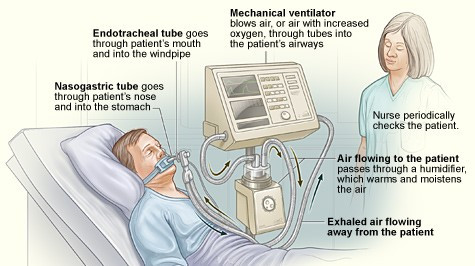
Mechanical Ventilator

NOTE: Nothing on this page is intended as medical advice. My only goal is to make information available so that people can get involved with co-innovation efforts and share resources that can be leveraged in crisis situations.

Calling all doctors, nurses, designers, engineers and designers…

Join one of the amazing Open Source Ventilator Projects to contribute your passion, creativity, time and expertise to help develop low-cost ventilators to fight the Coronavirus (COVID-19). Here are some ways of getting involved and some inspiration and some cheaper ventilator options:

  1. 13,000+ member Open Source Coronavirus Supplies group on Slack
  2. OPEN CALL closes 24 March at 9:00 GMT: Rapidly Manufactured Ventilated Systems
  3. March 19-20 University College London (UCL) Design & Refine Sprint Low Cost Ventilators — Register Now
  4. Ultimate Medical Hackathon
  5. Open Source COVID19 Medical Supplies group on Facebook
  6. DIY Pandemic Ventilator (built during Avian Flu crisis and shared on Instructables)
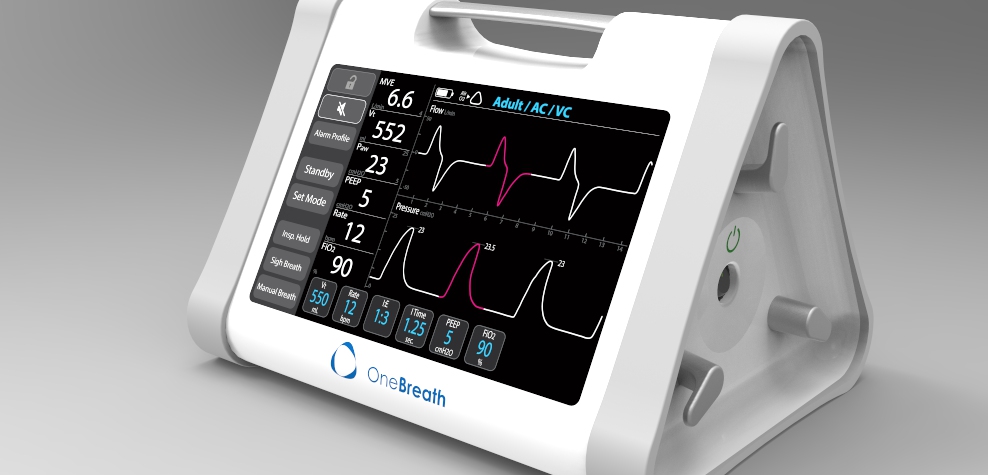
  7. Story on OneBreath winning PopSci Innovation Award in 2010
  8. OneBreath company web site ($4,000 low cost respirator vs. $35,000 traditional solution)
  9. $500 pandemic ventilator from Canada
  10. Open Respirator Project on Github

Here is a video showing a DIY ventilator solution:

And here is a video from vacuum manufacturer Gtech in the United Kingdom (UK) showing a prototype they are working on to be entirely powered by the hospital oxygen supply in as simple a way as possible so they can hopefully meet the UK government’s call to make 30,000 ventilators in two weeks:

Just added another video highlighting an improvised design experiment the University of Minnesota is working on with some design partners:

The design team has made all of their designs shown in the University of Minnesota video – open source and available by clicking this REDDIT link

Here is an open source ventilator project out of Germany – The CORESPONSE – COvid19 RESPirator (Open Source):

Cost is about 75 Euros per unit and all of the details of this 3D printed open source project are available by clicking here.

Here is an article (click here) and a video detailing how to turn a snorkeling mask into a non-invasive ventilator:

AgVa Healthcare has produced a low cost ventilator starting at under $700 (according to the video) that leverages an app on the user’s smartphone to control its functions. Another great example of Indian ingenuity that was originally submitted as a comment on this article:

Below is a video from the Lemelson Foundation from 2015 that shares the story of how Matt Callaghan came to start OneBreath Ventilators to create lower cost ventilators for developing countries and the rest of the world after H1N1 Swine Flu never became a problem in the USA thanks to President Obama’s administration proactive steps to protect our country. (Learn more about the design process by reading this Stanford Byers Center for BioDesign article)

OneBreath Ventilator

UPDATE: Just found this video showing how to use one ventilator to save FOUR people – video from the United States’ Center for Disease Control (CDC) – all the details health professionals might need:

CAUTION, this from a doctor in Italy about risks of co-ventilating to be kept in mind as you group people to co-ventilate in a crisis situation:

“This is unfortunately not as good of an idea as it seems. In trauma and shootings, it’s one thing because lung compliance is unlikely to change quickly. However, in ARDS (and COVID19), we expect to have dramatic changes in lung compliance. When one patients lung compliance changes, there is a significant risk of underventilating the patient with lowest compliance and overventilating patients with highest compliance – both potentially deadly. I worry that instead of saving one person, you create a situation where you increase the odds of losing both (or all 4) patients“

BUT, according to Alexander Clarke you can solve this problem with flow restrictors…
https://www.prusaprinters.org/prints/25808-3d-printed-circuit-splitter-and-flow-restriction-d

Another article detailing previous research and considerations – https://www.saasceo.com/ventilator-capacity/

Vesper Prisma Health

VESper™ is a unique ventilator expansion device that allows a single ventilator to support up to four patients under emergency use authorization by the FDA during times of acute equipment shortages such as the current COVID-19 pandemic.

Hospitals can apply to receive the free source code and printing specifications for the device, produced using 3D printing technology, the device is developed with material already in use for medical devices and produced at minimal cost:

  • designed to work with ISO standard respiratory connections;
  • allows for appropriate filtering of bacteria and viruses in the ventilator tubing;
  • does not impact the care of other patients connected to the same machine.

SPECIAL BONUS for anyone facing a shortage of protective face shields.

See this article From Design to Mass 3D printing of Medical Shields in Three Days, below is a video highlighting the end result solution from this article:


OR looking for information on DIY hand sanitizer, masks, and protective clothing:

  1. DIY Masks (including comparison of materials)
  2. World Health Organization (WHO) Information on Protective Clothing
  3. World Health Organization (WHO) Information on DIY Hand Sanitizer
  4. WIRED – How to Make Your Own Hand Sanitizer

Here is a video showing how to make your own reusable elastomeric respirator (click here for instrutions poster):

And here is a video discussing whether people should wear face masks and how people can use DIY face masks without impacting availability of N95 and surgical masks to healthcare workers:

Here is a video showing how to make face masks to help healthcare workers:

AND here is a link to a PDF of the pattern to make the masks – https://courierpressblogs.com/pdf/howtomakeafacemask.pdf

Additional DIY mask videos can be found here – https://www.sewcanshe.com/blog/5-free-diy-face-mask-tutorials-using-fabric

Here is how to make a DIY Personal Protective Equipment (PPE) smock out of a garbage bag thanks to the people at Hefty:

DIY PPE

https://www.hefty.com/handy-hints/articles/diy-poncho-idea-how-to-make-a-trash-bag-raincoat

Doctors and Nurses in Spain and other countries are already having to do this.

And, here is a picture of an ingenious idea of using a headband and buttons to save the ears of healthcare workers from chafing of wearing a mask 13-14 hours a day. Thanks Natasha Smith!

Coronavirus mask and headband solution

And, here is an interesting article about a surgical and N95 mask design that uses salt to help kill viruses like Coronavirus (COVID-19) on masks to improve their effectiveness in protecting the wearer against getting sick

Coronavirus Salt Masks

If you know of other efforts working on creating low cost, quick to produce ventilators, please post as a comment!


Accelerate your change and transformation success

Subscribe to Human-Centered Change & Innovation WeeklySign up here to get Human-Centered Change & Innovation Weekly delivered to your inbox every week.

Engineering the Next Generation of Immersive Interactions

Tactile Tech and Chemical UX

Tactile Tech and Chemical UX

GUEST POST from Art Inteligencia


Introduction: Beyond the Glass Screen

The digital experience is currently trapped behind a rigid, cold pane of glass. While we have mastered the art of visual and auditory immersion, we are systematically ignoring the physical and chemical dimensions that define our lived reality. Our current interfaces are fundamentally incomplete.

This is the moment to introduce Chemical UX — the intentional orchestration of haptic, olfactory, and gustatory stimuli — as the next major imperative in human-centered design. We must move beyond “viewing” and “hearing” toward “feeling” and “sensing.”

The future of innovation lies in our ability to engineer interactions that bridge the widening gap between the world of bits and the world of atoms. To achieve true immersion, we must stop designing for the screen and start designing for the human nervous system.

The Evolution of Haptics: From Vibrations to Texture

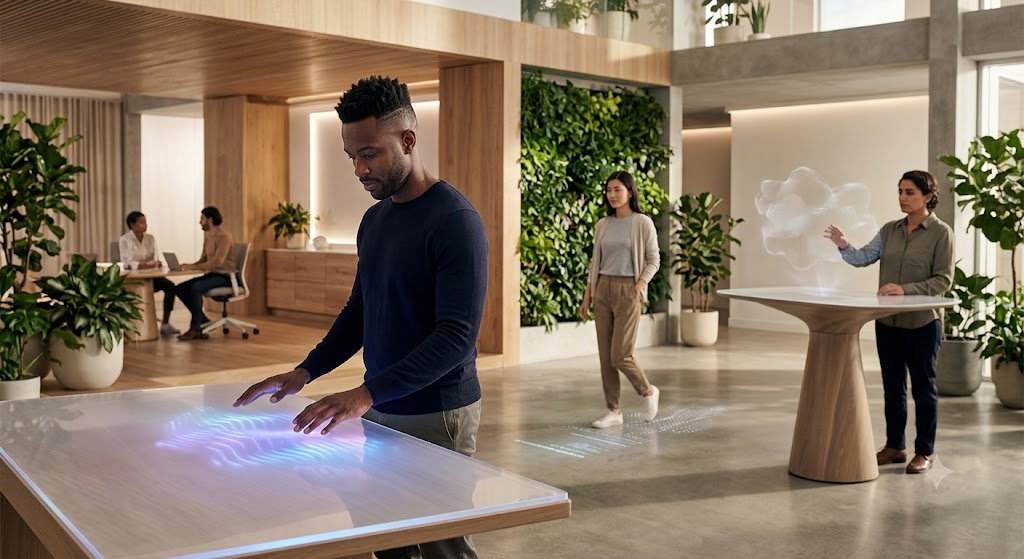
For decades, digital touch has been limited to the crude feedback of motorized buzzes and clicks. Breaking this “buzz ceiling” is the first step toward true sensory immersion. Simple actuator-based vibration is no longer sufficient for a generation of users demanding deeper digital engagement; we must move toward high-fidelity haptic feedback that replicates the nuanced textures of the physical world.

The cutting edge of this evolution lies in micro-fluidics and electro-osmotic arrays. By manipulating microscopic amounts of fluid or applying dynamic electrical currents directly beneath an interface surface, we can achieve real-time physical deformation. This allows us to create variable-friction surfaces where a user can actually feel the grain of wood, the weave of a fabric, or the contour of a physical button on a completely flat touchscreen or wearable device.

From an experience design perspective, the goal is to bridge the training and operational gap. High-fidelity tactile feedback allows for complex, physical-world task training — such as delicate medical surgeries, remote mechanical repairs, or precise industrial design — to happen entirely within a digital environment without losing the tactile intuition required for real-world mastery.

Chemical UX: Engineering Scent and Taste

The olfactory bulb and gustatory senses represent the most powerful, underutilized vectors in experience design. Because these senses bypass the logical centers of the brain and wire directly into the limbic system, they act as immediate triggers for human emotion, memory, and visceral reaction. Leaving them out of our design framework means ignoring the very channels that anchor human memory.

To systematically deploy these senses, we are building a “chemical-to-digital” pipeline. On the olfactory side, this relies on precisely synchronized micro-dispensing cartridges and rapid-evaporation synthetics capable of releasing and clearing specific scent profiles instantly. On the gustatory side, innovations like Galvanic Tongue Stimulation apply targeted, micro-electrical currents to the tongue to trick receptors into perceiving sour, salty, bitter, or sweet notes without any actual caloric intake or physical substance.

The ultimate strategic goal is contextual scent mapping and environmental branding. By embedding these chemical signatures into specific digital physical boundaries or virtual spaces, we can anchor brand loyalty and ambient environments in the user’s deepest subconscious, establishing an unprecedented depth of engagement.

Designing the “Multi-Sensory Loop”

True immersion cannot be achieved with isolated sensory outputs; it requires a tightly orchestrated multi-sensory loop. This framework demands that tactile and chemical stimuli are mapped dynamically to user actions and environmental shifts in real-time. When a user reaches out to touch a virtual object, the visual, auditory, haptic, and olfactory feedback must align instantly to create a cohesive psychological reality.

In this architecture, latency is the ultimate enemy. While our eyes can tolerate slight visual delays, our chemical and physical senses are incredibly sensitive to timing mismatches. If a scent triggers even a few milliseconds out of sync with a visual motion, or if a tactile texture lags behind a gesture, it causes severe sensory dissonance. This mismatch is the primary driver of digital disorientation and motion sickness.

As we design these deep neural interactions, ethical guardrails must be baked into the system architecture. Continuous exposure to high-fidelity physical and chemical stimuli risks causing rapid sensory fatigue. Human-centered design requires that users maintain absolute sovereignty over their environments, meaning systems must include accessible controls for customized thresholds and immediate “sensory scrubbing” to reset the environment.

Futurology: The 2030 Interaction Stack

Looking toward the next decade, the hardware paradigms we rely on today will fundamentally dissolve. We are moving rapidly into a post-device reality where rigid, handheld smartphones are replaced by soft, skin-conforming wearables, smart textiles, and specialized micro-respiratory interfaces. The interaction surface is migrating from external glass directly onto the human body.

This macro-shift completely redefines human-computer interaction (HCI). We are transitioning from active input, where a user must consciously look at and touch a device, to ambient input and response. In this new paradigm, humans live within a highly sensitized, reactive environment that reads biometric shifts and responds with subtle, contextual changes in texture, temperature, and atmospheric chemistry without requiring explicit commands.

Ultimately, this gives rise to what I call the “Feeling Economy.” As functional automation becomes completely commoditized, enterprise differentiation will shift entirely to deep emotional resonance. Organizations that successfully engineer authentic tactile and chemical interactions will command unprecedented brand equity, capturing market share not just through digital utility, but through visceral, biological loyalty.

Conclusion: Human-Centered Engineering

The ultimate goal of this technological evolution is a return to our biological roots. For decades, humans have been forced to adapt to the limitations of machines — bending over keyboards, staring at flat screens, and reducing our rich sensory capabilities down to the click of a mouse. Human-centered engineering flips this dynamic entirely, demanding that technology finally adapts to our natural biological evolution.

To realize this future, innovation leaders must rethink how they build teams. The traditional silo of visual UI/UX designers and software engineers is no longer sufficient to build the next generation of experiences. Forward-looking enterprises must immediately begin establishing dedicated sensory engineering departments, blending behavioral psychology, material sciences, and chemical mechanics into a unified discipline.

The next great leap in innovation will not be defined by higher resolutions, faster processors, or larger screens. It will be defined by depth, authenticity, and emotional truth. The future of design won’t just look better; it will feel real.

Frequently Asked Questions: Chemical UX & Tactile Tech

What is Chemical UX?

Chemical UX is the human-centered practice of designing digital interfaces that actively incorporate the human chemical senses — olfaction (smell) and gustation (taste) — alongside advanced haptics (touch) to create deeply immersive, memorable, and emotional interactions.

How do you simulate taste without real food?

We use technologies like Galvanic Tongue Stimulation (GTS). By sending precise, micro-electrical currents to specific taste receptors on the tongue, we can trick the nervous system into perceiving sweet, salty, sour, or bitter notes instantly, without any physical substance or caloric intake.

Why are chemical interfaces important for the future of business?

As functional technology becomes commoditized, enterprise value shifts to the “Feeling Economy.” Scent and touch wire directly into the brain’s emotional and memory centers, allowing brands to build visceral, biological loyalty that visual-only screens simply cannot replicate.


Bottom line: Futurists are not fortune tellers. They use a formal approach to achieve their outcomes, but a methodology and tools like those in FutureHacking™ can empower anyone to be their own futurist.

Image credit: Pexels

Subscribe to Human-Centered Change & Innovation WeeklySign up here to get Human-Centered Change & Innovation Weekly delivered to your inbox every week.

What Will the Smart Home of the Future Look Like?

What Will the Smart Home of the Future Look Like?

GUEST POST from Art Inteligencia

In recent years, the concept of a smart home has become increasingly popular. From voice-activated virtual assistants to interconnected devices, the technological advancement in home automation has revolutionized the way we live. With rapid advancements in artificial intelligence and the Internet of Things (IoT), it is intriguing to speculate about what the smart home of the future will look like. In this article, we will explore two case studies that offer a glimpse into the potential future of smart homes.

Case Study 1: The Connected Oasis

Imagine walking into a home where everything is interconnected, and your every need is anticipated. This vision of the future smart home is epitomized in the concept of the “Connected Oasis.” One example of this is showcased through the collaboration between Samsung and BMW. The companies are working on integrating their respective technologies to create a seamless experience between the car and the home.

Using artificial intelligence and sensors, the smart home of the future can recognize when the car is approaching and prepare everything accordingly. As you near your home, the lights automatically turn on, the temperature adjusts to your preferred setting, and the door unlocks as you approach it. Once inside, your smart home assistant greets you with personalized suggestions based on your daily routine and preferences. The smart home can even sync with your car, automatically setting GPS directions based on your calendar events or providing traffic updates as you prepare to leave.

Case Study 2: Sustainable and Energy-Efficient Living

With growing concerns about climate change and environmental sustainability, the future smart home is likely to prioritize energy efficiency and sustainable living. The GreenSmartHome project, developed by researchers at the University of Nottingham, envisions a home that utilizes renewable energy sources, maximizes energy efficiency, and encourages eco-friendly practices.

This smart home incorporates various features such as smart thermostats, solar power generation, and energy management systems. By analyzing data from smart sensors and weather forecasts, the home can optimize energy usage by controlling heating, cooling, and lighting systems. The smart home can also provide real-time feedback on energy consumption, offering homeowners insights to reduce their carbon footprint.

Furthermore, the GreenSmartHome integrates waste management systems, promoting recycling and composting practices. It even has a smart garden, where irrigation systems are automatically adjusted based on weather conditions and moisture levels in the soil, ensuring efficient water usage.

Conclusion

The smart home of the future holds vast potential, with a focus on enhanced convenience, interconnectivity, sustainability, and energy efficiency. From the Connected Oasis, where homes and cars seamlessly communicate, to the GreenSmartHome promoting eco-friendly practices, these case studies offer a glimpse into what we can expect from the future of smart homes.

While these concepts may seem like science fiction today, advancements in AI, IoT, and sustainable technologies suggest that these visions are within reach. As technology continues to evolve, the smart home of the future will likely become an integral part of our lives, shaping the way we interact with our homes and the environment.

Bottom line: Futurists are not fortune tellers. They use a formal approach to achieve their outcomes, but a methodology and tools like those in FutureHacking™ can empower anyone to be their own futurist.

Image credit: Pixabay

Subscribe to Human-Centered Change & Innovation WeeklySign up here to get Human-Centered Change & Innovation Weekly delivered to your inbox every week.

Unleashing the Power of Connected Devices

Unleashing the Power of Connected Devices

GUEST POST from Art Inteligencia

In today’s technologically advanced world, the power of connected devices cannot be underestimated. From smart homes to wearable technology, connected devices have revolutionized the way we live and interact with the world around us. With the ability to seamlessly communicate and share data, these devices have opened up a world of possibilities, enhancing efficiency, convenience, and overall productivity. Let’s explore two fascinating case studies that demonstrate the true power of connected devices.

Case Study 1: Smart Cities Transforming Urban Life

One of the most remarkable applications of connected devices can be seen in the development of smart cities. A shining example is the city of Barcelona, Spain. Known for its innovative approach to urban living, Barcelona pioneered the use of connected devices to optimize various aspects of city life.

Through the implementation of sensors, cameras, and other interconnected devices, Barcelona has been able to monitor and manage traffic flow, waste management, energy consumption, and public safety more effectively. For instance, the city uses smart parking systems that inform drivers about available parking spaces in real-time, saving time and reducing traffic congestion.

Furthermore, Barcelona’s street lighting system has been upgraded with smart sensors that adapt lighting levels depending on the presence of pedestrians, saving energy and contributing to a more sustainable environment. By harnessing the power of connected devices, Barcelona has transformed itself into a smarter, more efficient and livable city.

Case Study 2: Improving Healthcare with Wearable Technology

The healthcare industry has also witnessed a substantial transformation with the integration of connected devices and wearable technology. A prime example of this is the use of wearable fitness trackers. These devices allow individuals to monitor their physical activity, heart rate, sleep patterns, and more.

Fitbit, one of the leading wearable technology companies, has leveraged the power of connected devices to help users improve their overall wellness. Fitbit devices collect data and provide valuable insights to users and healthcare professionals, empowering individuals to set exercise goals, track their progress, and make informed decisions about their health.

Moreover, the integration of Fitbit data with electronic health records has significantly benefited healthcare providers. By having access to real-time patient data, healthcare professionals can gain a comprehensive understanding of patients’ health conditions, leading to more accurate diagnoses and personalized treatment plans.

The success of connected devices in the healthcare industry extends even further with remote patient monitoring. By providing doctors with continuous health data from patients at home, connected devices enable early detection of potential health issues, reducing hospitalizations, and improving patient outcomes.

Conclusion

The power of connected devices is reshaping our world across various sectors. From transforming urban living in smart cities like Barcelona to revolutionizing healthcare with wearable technology, the possibilities are endless. As technology continues to advance, connected devices will undoubtedly play a crucial role in enhancing our lives, optimizing processes, and fostering a more connected and efficient world. It is imperative to explore and embrace the potential of these devices to unlock their full power and benefit all of humanity.

Image credit: Pixabay

Subscribe to Human-Centered Change & Innovation WeeklySign up here to get Human-Centered Change & Innovation Weekly delivered to your inbox every week.

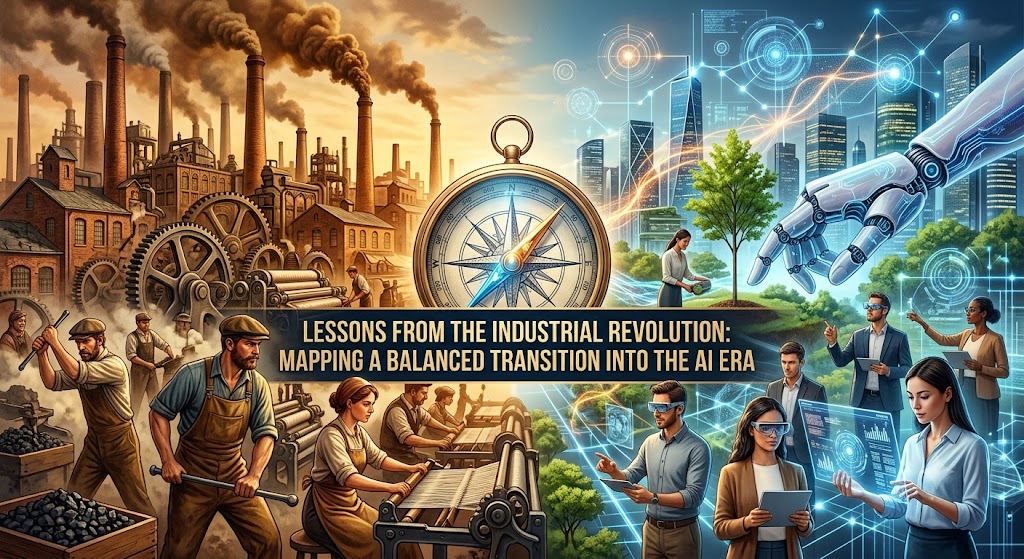
Lessons from the Industrial Revolution

Mapping a Balanced Transition into the AI Era
Lessons from the Industrial Revolution

GUEST POST from Art Inteligencia


The Anatomy of Generative Shifts

In the rush to adopt artificial intelligence, a dangerous consensus has formed: treating AI as a mere upgrade to our corporate software suite. It is viewed as an efficiency engine, a tool to shave off percentages of time from routine tasks. This perspective misses the horizon entirely. We are not experiencing a routine iteration of software; we are witnessing a fundamental rewrite of our economic and social infrastructure. AI is the new steam engine, the new electricity — a general-purpose technology destined to reshape how humanity creates, organizes, and extracts value.

The Innovation Mirror

When navigating unprecedented change, the best compass is often found by looking backward. The First and Second Industrial Revolutions provide us with a vivid mirror. They remind us that technological breakthroughs do not occur in a vacuum; they collide with human lives, existing power structures, and legacy mindsets. By analyzing the structural lag, the labor upheavals, and the eventual societal re-architecting of the 18th and 19th centuries, we can predict the failure points of the 21st-century transition. More importantly, we can design our way around them.

The Core Challenge: Exponential Tech vs. Linear Humanity

The central tension of our era is a mismatch of velocities. Technology moves at an exponential trajectory, while human psychology, organizational culture, and regulatory systems adapt linearly. When this gap stretches too wide, systems fracture — resulting in cultural backlash, employee burnout, and organizational rejection of the innovation itself.

To prevent a chaotic transition, we must pivot from a technology-first mindset to a human-centered approach. Successful transformation requires us to intentionally design the transition experience, ensuring that our organizational architectures, training ecosystems, and ethical frameworks evolve at a pace that empowers, rather than displaces, the human element.

I. Structural Lag: The Time Gap Between Tech and Trust

History shows us that technological breakthroughs consistently outpace the human frameworks required to manage them. This phenomenon — structural lag — occurs because code and machinery can be deployed in an instant, while trust, culture, and systemic adaptation must be built over time. When innovation is introduced without intentional experience design, the resulting gap creates friction that can derail even the most sophisticated technological advancements.

The Historical Lesson: Optimization at the Expense of Well-Being

During the First Industrial Revolution, the deployment of mechanization was rapid and ruthless. Early factory owners focused entirely on optimizing mechanical throughput. Because there was no playbook for this new industrial reality, it took decades of systemic friction — marked by labor unrest, unsafe working environments, and societal destabilization — before the necessary counterweights were developed.

The weekends, labor laws, public safety standards, and workplace protections we take for granted today were not part of the initial industrial design; they were retrofitted over generations to repair a fractured human experience.

The AI Parallel: The Velocity of Deployment vs. The Scarcity of Frameworks

We are repeating this pattern today. The deployment of advanced generative models and autonomous agents is moving at a breakneck pace, yet the structural frameworks required to support them remain largely unwritten. Organizations are embedding AI into workflows before establishing clear guidelines on data privacy, intellectual property rights, or algorithmic accountability.

More critically, there is a profound lack of design dedicated to the psychological safety of the workforce. When employees perceive AI as a black box designed to replace them rather than a partner designed to augment them, engagement drops and covert resistance rises.

The Change Management Takeaway: Architecting Trust Infrastructure

The critical lesson for modern leaders is clear: innovation without a deliberate organizational design framework leads to systemic rejection. You cannot successfully transform an enterprise by simply handing people new tools and expecting them to adapt.

To bridge the structural lag, change leaders must design “trust architectures” alongside technical infrastructure. This means being transparent about the goals of AI integration, defining clear boundaries for human-machine collaboration, and explicitly mapping out how the savings from automation will be reinvested into elevating the human experience. Trust is not a byproduct of successful transformation; it is the prerequisite.

II. From Muscle to Mind: Redefining Reskilling

True transformation requires us to look beyond the skills themselves and examine the human identity attached to them. When a technology shifts the core nature of work, it doesn’t just change a person’s daily tasks — it changes how they view their value, their expertise, and their purpose within the organization. Navigating the AI era requires a deep, human-centered approach to learning that treats reskilling not as a technical patch, but as a psychological and cultural transition.

The Historical Lesson: The Loss of Autonomy and Craft

The transition from an agrarian, craft-based economy to a centralized industrial machine was deeply painful, not just because the work changed, but because the human relationship to work fractured. Independent artisans and master craftspeople possessed holistic knowledge of their trade; they designed, produced, and took pride in the final output.

The factory system stripped away that autonomy, atomizing complex trades into repetitive, low-skill assembly line tasks. Workers didn’t just lose their livelihoods — they lost their professional identity, their agency, and their sense of pride. The lesson here is stark: when automation degrades the human experience of work, it breeds deep-seated alienation and systemic resistance.

The AI Parallel: The Disruption of Cognitive Identity

Today, we are seeing a parallel shift, but instead of mechanizing muscle, we are automating mindsets. Generative AI is rapidly moving up the cognitive ladder, absorbing tasks that once formed the bedrock of professional identity for knowledge workers — such as baseline coding, initial copywriting, legal document review, and data synthesis.

This creates an unspoken identity crisis for professionals who spent years earning degrees and refining specialized skills. When an algorithm can generate a marketing brief or an entry-level software script in seconds, the human creator experiences a profound sense of obsolescence. If we approach reskilling as a cold, mandatory training check-box, we completely miss this underlying emotional friction.

The Experience Design Shift: Designing New Professional Identities

To build a balanced transition, leaders must move away from the traditional, rigid training models of the past. Reskilling for the AI era cannot just be about teaching people “how to write a prompt.” It must be an intentional exercise in experience design that reshapes the employee’s relationship with knowledge work.

We must actively guide professionals from the role of executioners of tasks to orchestrators of intent. This means designing learning journeys that cultivate and celebrate uniquely human capabilities — such as emotional intelligence, complex problem-framing, ethical curation, and cross-disciplinary empathy. By elevating the human role from content creator to strategic editor and systems director, we preserve professional dignity and unlock higher-tier innovation.

III. The Automation vs. Augmentation Fallacy

When major technological shifts arrive, organizations tend to default to a dangerous, short-sighted binary: do we use this technology to eliminate human headcount, or do we ignore it? This is the automation versus augmentation fallacy. True, human-centered innovation looks beyond the immediate temptation of cost reduction and focuses instead on capacity expansion — using technology to elevate what humans are capable of achieving.

The Historical Lesson: The Misunderstood Luddites

Popular history often mischaracterizes the 19th-century Luddites as technophobic machine-breakers who were simply afraid of progress. In reality, their protest was not against the looms and textile machinery itself. It was a targeted, political response to how factory owners used technology as a weapon to degrade working conditions, bypass fair labor standards, and drive down wages.

The friction arose because the gains of the technology were entirely decoupled from the welfare of the people operating it. The lesson for modern strategists is that when technology is deployed purely as an instrument of cost-cutting and human replacement, it triggers a predictable, defensive backlash that stifles long-term organizational health.

The AI Parallel: Short-Term Cuts vs. Long-Term Value Creation

We are seeing this exact friction play out in corporate boardrooms today. Many organizations view artificial intelligence through a narrow financial lens, rushing to automate customer service, content generation, and administrative workflows solely to trim headcount. This strategy treats human capital as an expense to be managed rather than an engine of innovation to be unlocked.

When you automate a process completely without understanding the subtle, human-to-human context built into it, you create a sterile, fragile customer experience. You also destroy institutional knowledge and strip your culture of the empathy and intuition that differentiate your brand in the marketplace.

The Futurist’s Prescription: Elevating the Human Experience

To navigate this transition successfully, leaders must design “human-in-the-loop” ecosystems. The goal should not be to build a lights-out, human-free operation, but rather to use AI to strip away the cognitive drudgery — the repetitive data entry, the basic synthesis, the administrative overhead — that consumes up to 60-70% of a knowledge worker’s day.

By intentionally reinvesting that liberated time into high-touch, empathetic, and deeply strategic endeavors, we change the equation entirely. AI handles the baseline execution, while humans focus on relationship building, complex creative problem-solving, and deep innovation strategy. When technology is engineered to make humans more capable rather than obsolete, resistance transforms into adoption.

IV. Systemic Re-Architecture: Designing the Future Ecosystem

A truly transformative technology cannot be neatly slotted into old containers. It eventually shatters them. To realize the full potential of a generational shift, we cannot just change individual tools or job descriptions; we must fundamentally redesign the organizational structures, operational models, and cultural environments that govern how we work.

The Historical Lesson: Industrializing Society from the Ground Up

The steam engine and the mechanized loom did not achieve maximum impact until the physical and social landscape was rebuilt around them. The old, decentralized cottage industries could not support centralized power sources, which forced a mass migration to urban centers.

This shift required entirely new societal structures: the invention of the modern corporate entity, the establishment of formal management hierarchies, and the creation of a standardized, public education system designed explicitly to train punctual, compliant factory workers. The lesson is clear: true technical revolutions require an accompanying systemic architecture to succeed.

The AI Parallel: Fitting Exponential Tech into Legacy Hierarchies

Today, we are attempting to run an exponential technology on a linear organizational operating system. Most modern corporate structures — with their rigid, departmental silos, annual performance reviews, and 9-to-5 knowledge-work frameworks — were optimized for a pre-digital, industrial-era mindset of predictable, repetitive execution.

When an AI agent or a decentralized network of models can execute a cross-functional project in hours, a traditional hierarchy that requires weeks of bureaucratic approvals becomes a massive bottleneck. The friction we feel today is the sound of hyper-agile technology colliding with calcified, slow-moving organizational design.

The Innovation Roadmap: Rethinking Organizational Design

To build a balanced transition into the AI era, innovation leaders must become organizational architects. We need to move away from rigid, static roles and transition toward fluid, dynamic talent ecosystems. Instead of managing fixed departments, leadership will center on orchestrating agile, cross-disciplinary squads composed of humans and specialized AI agents working in tandem.

Furthermore, we must re-engineer our continuous learning infrastructures. Because the shelf-life of technical skills is shrinking rapidly, organizations can no longer rely solely on a front-loaded, four-year university degree to prepare their workforce. We must embed continuous, adaptive learning micro-cycles directly into the daily flow of work. By intentionally designing organizational structures to be as dynamic, responsive, and collaborative as the technology itself, we turn systemic disruption into an enduring competitive advantage.

Conclusion: Orchestrating a Human-Centered Era

We stand at a profound crossroads. The AI era is not an inevitable wave that will wash away human agency, nor is it a trend we can simply choose to ignore. Like the Industrial Revolution before it, this technological transition will fundamentally reshape our economies, our organizations, and our daily lives. The critical question facing leaders today is not what this technology can do, but how we choose to deploy it.

The Choice Before Us: Passive Drift vs. Intentional Design

If we choose to let the AI transition happen to us passively — driven solely by short-term cost-cutting and a technology-first obsession — we will inevitably recreate the darkest chapters of the Industrial Revolution. We will face severe structural lag, widespread workplace alienation, systemic organizational friction, and a fractured customer experience.

The alternative is to become deliberate architects of change. By viewing this shift through the lens of human-centered innovation and experience design, we can actively map a balanced transition. This requires us to bridge the trust gap early, redefine professional identity through meaningful reskilling, choose augmentation over pure automation, and courageously re-architect our legacy corporate systems.

The Final Charge: Making Smarter Systems More Human

True innovation has never been measured by the complexity of our code or the speed of our machinery; it is measured by its capacity to elevate the human condition. As we integrate artificial intelligence into the fabric of our enterprises, our ultimate goal must be to design a future where technology handles the baseline cognitive execution so that humans can be more human. By championing empathy, creativity, and strategic orchestration, we can ensure that as our systems become exponentially smarter, our workplaces and communities become deeply, undeniably more human.

Frequently Asked Questions

What is the biggest lesson the Industrial Revolution offers for the AI transition?

The critical lesson is “structural lag” — the dangerous time gap between the rapid deployment of a new technology and the development of the human, organizational, and regulatory frameworks needed to manage it safely. To avoid the societal and workplace friction of the past, modern leaders must design trust architectures and human-centered strategies alongside their technical infrastructure, rather than trying to retrofit them years later.

How does AI augmentation differ from pure automation?

Pure automation focuses on cost reduction by using technology to eliminate human headcount and strip out labor expenses. Augmentation, by contrast, is an innovation-led approach that focuses on capacity expansion. In an augmented “human-in-the-loop” ecosystem, AI absorbs repetitive cognitive drudgery, freeing humans to focus their liberated time on high-value, empathetic, and strategic tasks that computers cannot replicate.

Why must traditional corporate structures be re-architected for the AI era?

Modern corporate hierarchies, silos, and 9-to-5 models were originally optimized for the predictable, linear execution of the industrial era. Because AI operates at an exponential velocity, traditional bureaucratic approval loops become massive bottlenecks. Organizations must transition toward fluid, dynamic talent ecosystems and embed continuous learning cycles directly into the workflow to match the agility of the technology.

SPECIAL BONUS: Braden Kelley’s Problem Finding Canvas can be a super useful starting point for doing design thinking or human-centered design.

“The Problem Finding Canvas should help you investigate a handful of areas to explore, choose the one most important to you, extract all of the potential challenges and opportunities and choose one to prioritize.”

Image credit: Gemini

Subscribe to Human-Centered Change & Innovation WeeklySign up here to get Human-Centered Change & Innovation Weekly delivered to your inbox every week.