Category Archives: Design

The Democratic Product

Engaging Communities in the Core Design Lifecycle

GUEST POST from Chateau G Pato


The Death of the Closed-Door Product Blueprint

For decades, product design has been treated like a form of top-down, opaque wizardry. We lock a handful of brilliant minds in a room, wait for the proverbial “Eureka!” moment, and launch the result into the market with fingers crossed. But in an era defined by hyper-connectivity, conscious consumption, and rapid digital transformation, this siloed, insular approach is a fast track to irrelevance.

To thrive in a landscape demanding continuous agility, organizations must undergo a fundamental mindset shift: we have to move away from designing for customers and start designing with communities.

The Core Thesis: “The Democratic Product” is not built on passive, rear-view feedback loops like standard surveys. It is co-created. True human-centered design requires embedding the collective intelligence of your entire ecosystem—customers, partners, and frontline employees—directly into the core of your design lifecycle.

By democratizing the creation process, we don’t just build better features; we ignite an innovation bonfire. We lower adoption friction, accelerate product-market fit, and naturally transform users into passionate, lifelong brand advocates. Let’s explore how to open the doors and design the future together.

I. Moving Beyond “Listening” to Active “Co-Creation”

Most organizations suffer from the illusion of feedback. We launch annual customer satisfaction surveys, host occasional focus groups, and look at trailing telemetry data, convinced we are listening to our market. But these traditional mechanisms are rear-view mirrors—they tell you what occurred yesterday, not what is possible tomorrow. They capture reactions to choices you have already made rather than inviting people to help make those choices.

A truly Democratic Product is built on a vastly different premise. It treats your customer ecosystem not as a passive audience to be analyzed, but as an active group of co-creators. This requires establishing open, visual, and collaborative frameworks where customers, partners, and frontline employees possess genuine agency to shape features, improve accessibility, and align products with real human needs.

The Mindset Shift: The greatest barrier to this transition isn’t technology; it is fear. Leaders worry that inviting the community into the design room means surrendering their executive vision or drowning in a sea of conflicting opinions. But democratic design is not design-by-committee. It is structured participation—fueling your strategic vision with deep, real-world empathy.

When we shift our posture from gathering requirements to facilitating shared exploration, we tap into a massive reservoir of distributed intelligence. We stop guessing what people want and begin building the structures that allow them to show us.

II. Mapping Community into the Core Design Lifecycle

To democratize your product, you must intentionally embed external communities into your operational cadence. We do this by structuring engagement across three primary, sequential phases of the product design lifecycle.

1. Ideation & Sensing (The Discovery Phase)

True innovation starts with active sensing. Instead of relying solely on centralized R&D, organizations can establish global sensing networks—cohorts of passionate users who act as early-warning systems for friction and opportunity. In this phase, we do not just ask the community for ideas; we ask them to help us collaboratively define and frame the right problems worth solving.

2. Co-Design & Validation (The Development Phase)

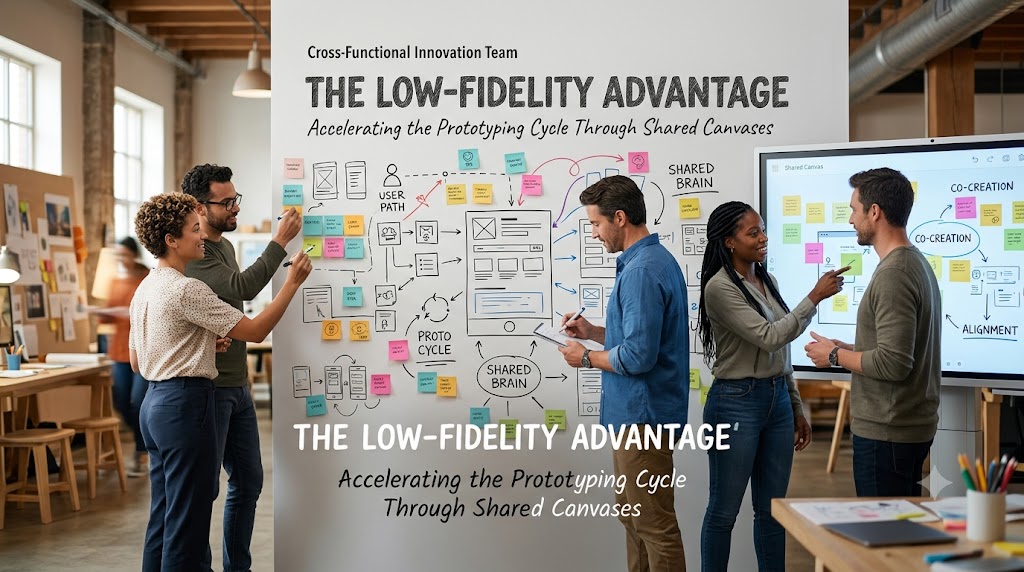
Once a core challenge is identified, the design doors must swing fully open. This is where we bring visual, collaborative frameworks directly to our community cohorts. Working with visual planning canvases allows non-designers to participate in low-fidelity prototyping on equal footing. We co-design the end-to-end emotional journey, validating hypotheses together and ensuring the solution actually eliminates real-world friction before writing a single line of production code.

3. Launch, Adoption & Evolution (The Scaling Phase)

The most overlooked benefit of democratic design is its impact on change management and market adoption. When a community helps build a product, they don’t need to be sold on it—they are already invested in its success and naturally become its loudest champions. Post-launch, the relationship evolves into decentralized governance loops where your ecosystem guides the ongoing roadmap, facilitating continuous agility.

The Takeaway: By systematically inviting stakeholders into these three key inflection points, design transitions from a black-box corporate operation to a transparent, shared journey.

III. The Friction Points: Why Democratic Design Fails (and How to Fix It)

While the promise of community-driven design is immense, execution is where most organizations stumble. Opening up the product lifecycle introduces complex human, cultural, and operational dynamics. If you do not proactively design the boundaries of your collaboration, your democratic initiative will quickly collapse under its own weight.

To build a sustainable co-creation engine, organizations must anticipate and actively mitigate three primary friction points:

1. The Noise vs. Signal Trap

When you open the floodgates, you will be inundated with feature requests, bug reports, and highly niche ideas. Without a structured filter, your product team can easily drown in the noise.

The Fix: Establish clear, visual frameworks to bucket feedback. Organize incoming data into strategic pillars so the community understands exactly what kinds of problems you are solving in any given sprint.

2. The Power User Bias

In any open forum, a tiny fraction of highly vocal “power users” will dominate the conversation. If you design solely for them, you risk over-complicating the product and alienating the silent majority who need simplicity and ease of use.

The Fix: Balance open-forum inputs with targeted, statistically representative sensing cohorts. Ensure you are actively seeking out the quiet voices and newer users to gain a balanced perspective on product friction.

3. The Organizational Change Deficit

The biggest failure point is internal, not external. If your engineering, product, and marketing pipelines are rigid and insular, they will reject community inputs like a foreign body. Democratic design demands organizational agility and a culture that values external empathy over internal ego.

The Fix: Treat the transition to democratic design as a change management initiative. Train your internal teams to view the community as partners, and adapt your roadmapping processes to dynamically ingest and act on external validation.

The Bottom Line: Co-creation is not a hands-off, chaotic free-for-all. It is a highly disciplined, facilitated exercise in human-centered change. Managing these friction points is what separates successful co-creation from empty marketing stunts.

IV. Designing the “Democratic Infrastructure” (Tools of the Trade)

Democratizing the design lifecycle cannot rely on good intentions alone. It requires building a dedicated, robust infrastructure. Just as we use structured tools to facilitate organizational agility, we must deploy specific platforms, governance rules, and value exchanges to make community collaboration seamless, secure, and highly productive.

To build a functional democratic infrastructure, organizations must focus on three core foundational pillars:

1. Visual, Collaborative Spaces

If you want your community to build with you, you must give them a shared language. Complex technical documentation or dense spreadsheets will instantly exclude the non-technical users who often bring the most valuable human-centered insights.

The Standard: Build and utilize visual, intuitive canvas tools and interactive spaces where internal teams and external cohorts can align rapidly. When the barrier to entry is visual and tactile, everyone can contribute on equal footing, getting “on the same page” literally and figuratively.

2. Clear Governance & Boundaries

A healthy democracy has laws, and a democratic product is no different. You must define early and transparently what is open to community influence and what is not. Trying to democratize everything leads to chaos, security risks, and strategic drift.

The Standard: Clearly carve out the sandboxes. For example, invite the community to democratize user experience design, accessibility, feature prioritization, and local use-case adaptions. Keep core architectural decisions, security standards, and proprietary intellectual property under centralized expert control.

3. Mutual Value Exchange

Your community’s time, creativity, and cognitive surplus are highly valuable. If co-creation feels like a one-way street where you extract free labor for corporate profit, your ecosystem will quickly disengage or turn hostile.

The Standard: Design an authentic value loop. Reward active contributors with early access to features, direct exposure to your leadership team, public recognition, and influence over the product’s ultimate roadmap. When they see their ideas actually making it into production, that shared ownership becomes the ultimate motivator.

The Takeaway: Infrastructure is what turns a fleeting initiative into a continuous, repeatable capability. When you build the right spaces, outline clear rules, and honor the contributions of your community, you lay the tracks for a truly democratic design engine.

Conclusion: Getting to the Future First

The era of the isolated genius is over. As we look toward an increasingly interconnected and rapidly shifting horizon, the organizations that thrive won’t be those with the biggest internal R&D budgets or the most guarded secrets. The future belongs to the organizations that can master the art of mobilization—orchestrating entire ecosystems of passionate individuals to solve problems together.

Transitioning to “The Democratic Product” is ultimately a commitment to radical empathy and continuous agility. By breaking down the walls of the traditional design lifecycle, you build something far more durable than just a highly functional tool. You build a living, breathing community that has a literal and emotional stake in your collective success.

The Call to Action: Stop treating your customers as a target demographic. Treat them as your advisory board. Start small: open up just one stage of your next design lifecycle, equip your community with simple visual collaboration tools, and watch your innovation bonfire truly ignite!

To learn more about implementing continuous agility, designing human-centered change, or to book Braden Kelley for an upcoming innovation keynote, visit bradenkelley.com.

Frequently Asked Questions

1. What is the difference between traditional user feedback and democratic co-creation?

Traditional feedback is passive and reactive; it captures a user’s retrospective opinion on choices the company has already made. Democratic co-creation is active and proactive. It invites customers, partners, and employees into the early-stage design process as partners, allowing them to collaboratively frame problems, test hypotheses, and shape features before final development begins.

2. How do you prevent democratic design from turning into messy “design-by-committee”?

Democratic design is not a free-for-all. It succeeds by establishing clear boundaries and strict guardrails. Organizations must Centralize core strategic decisions, baseline technical architectures, and IP security, while opening up the “sandbox” of user experience, accessibility, and local customization to the community. Strong visual collaboration frameworks keep the inputs focused and highly actionable.

3. Why are visual collaboration tools critical for engaging a community in design?

Dense technical specifications or text-heavy spreadsheets create high barriers to entry that exclude valuable voices. Visual collaboration canvases establish a simple, shared, and intuitive language. By shifting the conversation to interactive, tactile layouts, you level the playing field so that everyday users, business stakeholders, and engineers can co-create together without translation friction.


Image credit: Gemini

Subscribe to Human-Centered Change & Innovation WeeklySign up here to get Human-Centered Change & Innovation Weekly delivered to your inbox every week.
Open Source Respirator and Low Cost Ventilator Efforts to Fight Coronavirus (COVID-19)

Open Source Respirator Project

Mechanical Ventilator

NOTE: Nothing on this page is intended as medical advice. My only goal is to make information available so that people can get involved with co-innovation efforts and share resources that can be leveraged in crisis situations.

Calling all doctors, nurses, designers, engineers and designers…

Join one of the amazing Open Source Ventilator Projects to contribute your passion, creativity, time and expertise to help develop low-cost ventilators to fight the Coronavirus (COVID-19). Here are some ways of getting involved and some inspiration and some cheaper ventilator options:

  1. 13,000+ member Open Source Coronavirus Supplies group on Slack
  2. OPEN CALL closes 24 March at 9:00 GMT: Rapidly Manufactured Ventilated Systems
  3. March 19-20 University College London (UCL) Design & Refine Sprint Low Cost Ventilators — Register Now
  4. Ultimate Medical Hackathon
  5. Open Source COVID19 Medical Supplies group on Facebook
  6. DIY Pandemic Ventilator (built during Avian Flu crisis and shared on Instructables)
  7. Story on OneBreath winning PopSci Innovation Award in 2010
  8. OneBreath company web site ($4,000 low cost respirator vs. $35,000 traditional solution)
  9. $500 pandemic ventilator from Canada
  10. Open Respirator Project on Github

Here is a video showing a DIY ventilator solution:

And here is a video from vacuum manufacturer Gtech in the United Kingdom (UK) showing a prototype they are working on to be entirely powered by the hospital oxygen supply in as simple a way as possible so they can hopefully meet the UK government’s call to make 30,000 ventilators in two weeks:

Just added another video highlighting an improvised design experiment the University of Minnesota is working on with some design partners:

The design team has made all of their designs shown in the University of Minnesota video – open source and available by clicking this REDDIT link

Here is an open source ventilator project out of Germany – The CORESPONSE – COvid19 RESPirator (Open Source):

Cost is about 75 Euros per unit and all of the details of this 3D printed open source project are available by clicking here.

Here is an article (click here) and a video detailing how to turn a snorkeling mask into a non-invasive ventilator:

AgVa Healthcare has produced a low cost ventilator starting at under $700 (according to the video) that leverages an app on the user’s smartphone to control its functions. Another great example of Indian ingenuity that was originally submitted as a comment on this article:

Below is a video from the Lemelson Foundation from 2015 that shares the story of how Matt Callaghan came to start OneBreath Ventilators to create lower cost ventilators for developing countries and the rest of the world after H1N1 Swine Flu never became a problem in the USA thanks to President Obama’s administration proactive steps to protect our country. (Learn more about the design process by reading this Stanford Byers Center for BioDesign article)

OneBreath Ventilator

UPDATE: Just found this video showing how to use one ventilator to save FOUR people – video from the United States’ Center for Disease Control (CDC) – all the details health professionals might need:

CAUTION, this from a doctor in Italy about risks of co-ventilating to be kept in mind as you group people to co-ventilate in a crisis situation:

“This is unfortunately not as good of an idea as it seems. In trauma and shootings, it’s one thing because lung compliance is unlikely to change quickly. However, in ARDS (and COVID19), we expect to have dramatic changes in lung compliance. When one patients lung compliance changes, there is a significant risk of underventilating the patient with lowest compliance and overventilating patients with highest compliance – both potentially deadly. I worry that instead of saving one person, you create a situation where you increase the odds of losing both (or all 4) patients“

BUT, according to Alexander Clarke you can solve this problem with flow restrictors…
https://www.prusaprinters.org/prints/25808-3d-printed-circuit-splitter-and-flow-restriction-d

Another article detailing previous research and considerations – https://www.saasceo.com/ventilator-capacity/

Vesper Prisma Health

VESper™ is a unique ventilator expansion device that allows a single ventilator to support up to four patients under emergency use authorization by the FDA during times of acute equipment shortages such as the current COVID-19 pandemic.

Hospitals can apply to receive the free source code and printing specifications for the device, produced using 3D printing technology, the device is developed with material already in use for medical devices and produced at minimal cost:

  • designed to work with ISO standard respiratory connections;
  • allows for appropriate filtering of bacteria and viruses in the ventilator tubing;
  • does not impact the care of other patients connected to the same machine.

SPECIAL BONUS for anyone facing a shortage of protective face shields.

See this article From Design to Mass 3D printing of Medical Shields in Three Days, below is a video highlighting the end result solution from this article:


OR looking for information on DIY hand sanitizer, masks, and protective clothing:

  1. DIY Masks (including comparison of materials)
  2. World Health Organization (WHO) Information on Protective Clothing
  3. World Health Organization (WHO) Information on DIY Hand Sanitizer
  4. WIRED – How to Make Your Own Hand Sanitizer

Here is a video showing how to make your own reusable elastomeric respirator (click here for instrutions poster):

And here is a video discussing whether people should wear face masks and how people can use DIY face masks without impacting availability of N95 and surgical masks to healthcare workers:

Here is a video showing how to make face masks to help healthcare workers:

AND here is a link to a PDF of the pattern to make the masks – https://courierpressblogs.com/pdf/howtomakeafacemask.pdf

Additional DIY mask videos can be found here – https://www.sewcanshe.com/blog/5-free-diy-face-mask-tutorials-using-fabric

Here is how to make a DIY Personal Protective Equipment (PPE) smock out of a garbage bag thanks to the people at Hefty:

DIY PPE

https://www.hefty.com/handy-hints/articles/diy-poncho-idea-how-to-make-a-trash-bag-raincoat

Doctors and Nurses in Spain and other countries are already having to do this.

And, here is a picture of an ingenious idea of using a headband and buttons to save the ears of healthcare workers from chafing of wearing a mask 13-14 hours a day. Thanks Natasha Smith!

Coronavirus mask and headband solution

And, here is an interesting article about a surgical and N95 mask design that uses salt to help kill viruses like Coronavirus (COVID-19) on masks to improve their effectiveness in protecting the wearer against getting sick

Coronavirus Salt Masks

If you know of other efforts working on creating low cost, quick to produce ventilators, please post as a comment!


Accelerate your change and transformation success

Subscribe to Human-Centered Change & Innovation WeeklySign up here to get Human-Centered Change & Innovation Weekly delivered to your inbox every week.

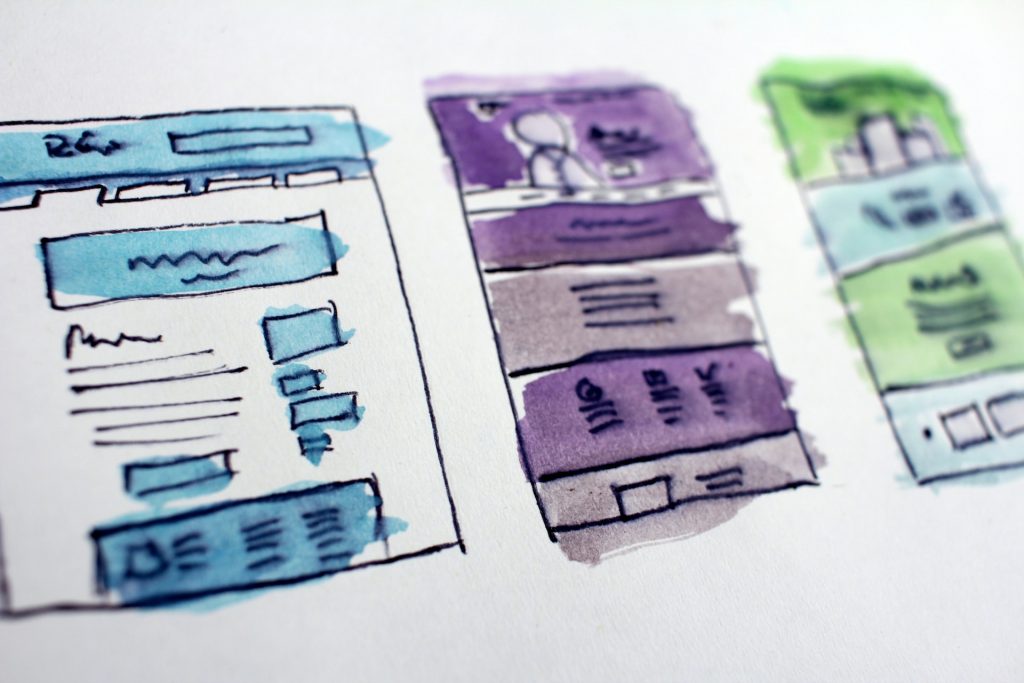
Design Thinking for Innovation: Strategies to Generate New Ideas

Design Thinking for Innovation: Strategies to Generate New Ideas

GUEST POST from Art Inteligencia

Innovation is the driving force behind the success of any organization. In a rapidly evolving world, businesses need to constantly generate new ideas and find creative solutions to stay ahead of the competition. Design thinking has emerged as a powerful approach to encourage innovation by putting the user at the center of the problem-solving process. By empathizing, defining, ideating, prototyping, and testing, design thinking enables organizations to come up with innovative solutions that meet user needs and exceed expectations. In this article, we will explore two case study examples that showcase the effectiveness of design thinking in generating new ideas and fostering innovation.

Case Study 1: Airbnb

Airbnb, an online marketplace for vacation rentals, revolutionized the hospitality industry by utilizing design thinking principles. In the early stages, the founders faced the challenge of building trust between strangers to ensure the success of their platform. Understanding the user’s perspective, the founders discovered that potential guests were hesitant to stay at someone else’s home due to the lack of trust and a fear of the unknown.

To tackle this challenge, Airbnb employed design thinking methodologies to generate innovative ideas. They conducted extensive research, interviewing potential users to understand their concerns and needs. This empathetic approach allowed them to identify the key issues users faced and guided their problem-solving process.

One innovative idea that emerged from this process was the concept of a verified host and guest system. By implementing a robust identity verification process, Airbnb reassured users about the trustworthiness of hosts and guests. This solution helped build trust and elevated the user experience, resulting in increased adoption rates and rapid growth for the company.

Case Study 2: IDEO’s Shopping Cart Project

IDEO, a global design and innovation company, undertook a unique design thinking project aimed at reimagining the shopping cart experience for customers. The project began with deep empathy research, where IDEO’s designers immersed themselves in the customers’ environment, observing their shopping behaviors, and interviewing them to understand their pain points.

After identifying the key challenges, IDEO’s design team brainstormed numerous ideas to improve the shopping cart. They came up with concepts like “the cart as a companion” and “smart shopping carts” which featured innovative functionalities such as personalized shopping recommendations, quick check-out options, and even mobile charging stations.

Prototyping and testing played a vital role in refining the ideas. IDEO created physical prototypes and simulated shopping experiences, allowing real users to test and provide feedback. This iterative process helped IDEO narrow down the design options and eventually develop a more user-centric shopping cart that better aligned with customers’ needs and preferences.

Conclusion

Design thinking has proven to be an effective strategy for generating new ideas and fostering innovation. By prioritizing empathy, defining the problem, brainstorming concepts, prototyping, and testing, companies like Airbnb and IDEO have been able to create transformative solutions that push the boundaries of traditional thinking. By adopting design thinking methodologies, organizations can unlock their creative potential, adapt to changing market demands, and gain a competitive edge in today’s dynamic business landscape.

Bottom line: Futurists are not fortune tellers. They use a formal approach to achieve their outcomes, but a methodology and tools like those in FutureHacking™ can empower anyone to be their own futurist.

Image credit: Pexels

References:
– Brown, T. (2008). Design Thinking. Harvard Business Review, 86(6), 84-92.
– Kelley, T., & Kelley, D. (2013). Creative Confidence: Unleashing the Creative Potential Within Us All. Crown Business.
– Liedtka, J., & Ogilvie, T. (2011). Designing for Growth: A Design Thinking Toolkit for Managers. Columbia University Press.

Subscribe to Human-Centered Change & Innovation WeeklySign up here to get Human-Centered Change & Innovation Weekly delivered to your inbox every week.
Innovation Through Experimentation

Strategies for Rapid Iteration

Innovation Through Experimentation

GUEST POST from Chateau G Pato

In today’s fast-paced and constantly evolving business landscape, innovation is the key to staying ahead of the competition. However, traditional approaches to innovation may not be enough to keep up with rapidly changing customer needs and preferences. To foster innovation, organizations must embrace a culture of experimentation and adopt strategies for rapid iteration. In this article, we will explore the importance of experimentation in driving innovation and discuss two case study examples to illustrate successful implementation.

Case Study 1: Google’s “20% Time”

One of the most famous examples of fostering innovation through experimentation is Google’s “20% time.” This initiative allows employees to spend 20% of their workweek, or one day, working on projects that interest them outside of their core responsibilities. This flexible structure encourages employees to explore new ideas and experiment with innovative solutions.

One notable outcome of Google’s 20% time is the creation of Gmail. Originally developed as an experiment by a Google engineer, the project emerged from the employee’s personal interest in improving email communication. Through rapid iteration and continuous experimentation, Gmail was refined and eventually launched as one of Google’s most successful products. This case study demonstrates how giving employees the freedom to experiment can lead to significant innovation and long-term success.

Case Study 2: Amazon’s A/B Testing

Amazon, the e-commerce giant, is renowned for its customer-centric approach and its relentless pursuit of innovation. One of the strategies Amazon uses to continuously iterate and improve its offerings is A/B testing. By testing different variations of a webpage, product listing, or feature, Amazon gathers quantitative data to make informed decisions about which version performs better. This data-driven approach allows them to quickly adapt and optimize their offerings to meet customer expectations.

An example of Amazon’s A/B testing is its product recommendation engine. By experimenting with different algorithms and design variations, Amazon continuously refines its recommendation engine to provide highly personalized and relevant product suggestions. This iterative process has played a significant role in enhancing the customer experience, boosting sales, and establishing Amazon as an industry leader.

Key Strategies for Rapid Iteration

1. Embrace Failure as Learning: Encourage a culture where failure is seen as an opportunity to learn and improve. Failure should not be punished but celebrated as a stepping stone towards success. By fostering an environment that values experimentation and risk-taking, organizations can encourage employees to think creatively and push boundaries.

2. Establish Rapid Feedback Loops: Implement processes that allow for quick feedback and iteration. Regularly gather feedback from customers, employees, and other stakeholders to identify areas for improvement. This feedback loop enables organizations to make iterative changes based on real-world data and inputs, leading to more relevant and effective solutions.

3. Set Clear Goals and Metrics: Clearly define innovation goals and establish measurable metrics to track progress. By setting concrete objectives, organizations can evaluate the success of their experiments and measure the impact on key performance indicators. This data-driven approach helps focus efforts on what truly matters and ensures that innovation initiatives align with overall business objectives.

Conclusion

Innovation through experimentation is crucial for organizations aiming to thrive in today’s rapidly changing business landscape. By adopting strategies for rapid iteration, businesses can foster a culture that encourages and celebrates innovation. The case study examples of Google’s “20% time” and Amazon’s A/B testing demonstrate how organizations can drive significant innovation by allowing employees to experiment and by leveraging quantitative data to inform decision-making. By embracing failure, establishing feedback loops, and setting clear goals and metrics, organizations can unleash their creative potential, adapt to evolving market dynamics, and stay ahead of the competition.

EDITOR’S NOTE: Braden Kelley’s Experiment Canvas™ can be a super useful FREE tool for your innovation or human-centered design pursuits.

“The Experiment Canvas™ is designed to help people instrument for learning fast in iterative new product development (NPD) or service development activities. The canvas will help you create new innovation possibilities in a more visual and collaborative way for greater alignment, accountability, and more successful outcomes.”

Image credit: misterinnovation.com

Subscribe to Human-Centered Change & Innovation WeeklySign up here to get Human-Centered Change & Innovation Weekly delivered to your inbox every week.

Human-Centered Design and Agile Methodologies

A Powerful Combination

Human-Centered Design and Agile Methodologies

GUEST POST from Chateau G Pato

In today’s fast-paced and competitive market, organizations are increasingly realizing the importance of incorporating both Human-Centered Design (HCD) principles and Agile methodologies into their product development processes. By doing so, companies are able to create innovative and user-centric products while staying agile and responding swiftly to changing customer needs.

Human-Centered Design is an iterative design approach that focuses on understanding and meeting the needs, desires, and behaviors of end-users. It involves continuously involving users throughout the design process, gaining insights through user research, and incorporating their feedback to build products that truly address their pain points. On the other hand, Agile methodologies emphasize flexibility, collaboration, and adaptive planning, enabling teams to iteratively deliver value through frequent and incremental product releases.

When combining HCD with Agile, organizations can leverage the strengths of both methodologies and achieve remarkable results. Let’s explore two case studies that highlight the power of this combination.

Case Study 1: Airbnb

One of the most prominent examples of successful integration of HCD and Agile methodologies is Airbnb. In its early years, Airbnb faced the challenge of low user engagement and failed to attract users to their platform. Recognizing the importance of putting users at the center of their design strategy, Airbnb embraced HCD principles alongside an Agile development approach.

Airbnb extensively researched the needs and preferences of its target audience, even going as far as sending its designers to live with hosts in different cities to truly understand the user experience. The insights gained from these immersive research experiences helped Airbnb identify pain points and develop innovative features that addressed them effectively.

By integrating Agile methodologies, Airbnb was able to quickly implement and test its design ideas, gaining rapid feedback from users. They released regular updates and constantly improved their app based on user feedback, ensuring that the product remained user-centric. Today, Airbnb is a global leader in the accommodation industry, revolutionizing the way people experience travel.

Case Study 2: Intuit

Intuit, a leading financial software company, is another example of successfully combining HCD and Agile methodologies in their product development process. Intuit’s flagship product, TurboTax, enables users to file taxes easily and efficiently. However, in observance of a common challenge faced by many organizations, Intuit realized that users often dropped out during the tax filing process due to its complexity.

To address this issue, Intuit adopted an HCD approach. They conducted extensive user research, including in-depth interviews and usability testing, to understand the pain points hindering user adoption. Based on these insights, Intuit redesigned their tax filing process to be simpler, more intuitive, and less time-consuming.

Intuit complemented their HCD efforts with an Agile development methodology. By releasing regular updates and engaging with users throughout the development process, Intuit ensured that the changes made aligned with user needs. The incremental approach allowed them to constantly improve the product and significantly reduce customer drop-offs during tax filing.

The integration of HCD and Agile methods played a crucial role in the success of TurboTax, making it the most popular tax preparation software in the market today.

Conclusion

The combination of Human-Centered Design and Agile methodologies has proven to be a powerful tool for organizations seeking to create user-centric and innovative products. The case studies of Airbnb and Intuit demonstrate how this integration can lead to significant improvements in user experiences and overall business success. By prioritizing user needs and leveraging feedback through an iterative and adaptive approach, companies can adapt to changing market requirements while delivering products that make a lasting impact.

EDITOR’S NOTE: Braden Kelley’s Problem Finding Canvas can be a super useful starting point for doing design thinking or human-centered design.

“The Problem Finding Canvas should help you investigate a handful of areas to explore, choose the one most important to you, extract all of the potential challenges and opportunities and choose one to prioritize.”

Image credit: misterinnovation.com

Subscribe to Human-Centered Change & Innovation WeeklySign up here to get Human-Centered Change & Innovation Weekly delivered to your inbox every week.

Developing a Design Thinking Mindset

A Step-by-Step Guide

Developing a Design Thinking Mindset

GUEST POST from Art Inteligencia

Design thinking is a problem-solving approach that focuses on empathy, creativity, and teamwork to develop innovative solutions. It has gained popularity across industries for its ability to tackle complex challenges and foster a human-centric mindset. This article provides a step-by-step guide to developing a design thinking mindset, highlighting its practical application through two case studies.

Step 1: Empathize with Users

The first step in design thinking is empathy. Designers must immerse themselves in the users’ world to understand their needs, motivations, and pain points. This involves conducting user interviews, observations, and gathering qualitative data. In the case of a healthcare app, for example, designers might interact with patients, doctors, and caregivers to gain insights into their experiences and identify opportunities for improvement.

Case Study 1 – IDEO’s Redesign of Shopping Carts

IDEO, a renowned design consultancy, applied design thinking to solve the common problem of inefficient shopping cart designs. To empathize with shoppers, IDEO’s team embarked on store visits, observed customer behavior, and conducted interviews. They discovered that shoppers often faced challenges, such as difficulty maneuvering through narrow aisles and juggling items while shopping.

By empathizing with users, IDEO gained valuable insights that guided the redesign process. They created prototypes, tested them in real environments, and iterated their designs based on feedback. The result was an innovative shopping cart with improved maneuverability, additional storage space, and features that made the shopping experience more enjoyable and convenient for users.

Step 2: Define the Problem

Once empathy is established, designers must synthesize their research to define the core problem to be solved. This step involves identifying patterns, uncovering underlying needs, and reframing the problem into a clear and actionable statement. By defining the problem accurately, designers can focus their efforts on finding relevant and meaningful solutions.

Case Study 2 – Airbnb’s Neighborhood Support Project

Airbnb faced a challenge with hosts not receiving sufficient support from their neighbors in some communities. To tackle this issue, Airbnb’s design team defined the problem as “How might we foster positive relationships between hosts and neighbors?”

With a clear problem statement, Airbnb gathered feedback from hosts and neighbors to identify pain points and potential solutions. Through community workshops and collaborative discussions, they developed a range of initiatives, including hosting local events, highlighting host contributions to the neighborhood, and fostering open dialogue between hosts and neighbors. By redefining the problem and involving stakeholders, Airbnb was able to address the issue effectively and strengthen its relationship with the communities it operates in.

Step 3: Ideate, Prototype and Test

In the ideation phase, designers brainstorm potential solutions, encouraging wild and diverse ideas. Quantity and diversity of ideas are emphasized over quality, fostering a creative environment. Once ideas are generated, designers create prototypes of the most promising concepts. Prototypes can be simple sketches, physical mock-ups, or digital representations, allowing designers to gather feedback and refine their ideas further. And then you must test, test, test, ideate, prototype, and test again and again.

Conclusion

Developing a design thinking mindset is crucial for organizations aiming to create innovative and user-centered solutions. By following the steps of empathizing, defining, ideating, and prototyping, companies can overcome challenges and deliver meaningful experiences to their users.

The case studies of IDEO’s shopping cart redesign and Airbnb’s neighborhood support project demonstrate the practical application of design thinking principles and the positive impact they can have. By embracing a design thinking mindset, businesses can cultivate a culture of creativity, empathy, and collaboration, ultimately driving innovation and creating solutions that meet the needs and desires of their users.

SPECIAL BONUS: Braden Kelley’s Problem Finding Canvas can be a super useful starting point for doing design thinking or human-centered design.

“The Problem Finding Canvas should help you investigate a handful of areas to explore, choose the one most important to you, extract all of the potential challenges and opportunities and choose one to prioritize.”

Image credit: Pixabay

Subscribe to Human-Centered Change & Innovation WeeklySign up here to get Human-Centered Change & Innovation Weekly delivered to your inbox every week.
Building Infrastructure Designed for Permanent Adaptation

The Organizational Shock Absorber

Building Infrastructure Designed for Permanent Adaptation

GUEST POST from Art Inteligencia


I. Introduction: The Myth of the “Return to Normal”

For decades, business leaders have treated disruption like a passing storm. The prevailing playbook has been simple: hunker down, weather the gale, minimize the damage, and wait for the skies to clear so the organization can return to its comfortable, steady state. But in an era defined by exponential technological shifts, shifting human expectations, and continuous economic realignment, that “steady state” is a dangerous illusion. There is no normal to return to.

When an organization builds rigid structures designed to withstand impact through sheer strength, it creates a fragile ecosystem. Like a brittle skyscraper in an earthquake, a rigid corporate structure doesn’t adapt to the shaking — it cracks. To survive and thrive in a state of permanent volatility, we must fundamentally reimagine organizational design. We need to move away from static shields and toward a dynamic, human-centered framework: the Organizational Shock Absorber.

An Organizational Shock Absorber isn’t about resisting change; it is about absorbing, dissipating, and redirecting the energy of disruption to propel the company forward. This requires a profound mindset shift. Building for permanence is dead. To build a future-ready enterprise, change capability can no longer be managed as a series of isolated, exhausting projects. It must be woven directly into the foundational infrastructure of the business, engineered for permanent adaptation.

II. The Mechanics of an Organizational Shock Absorber

Building an infrastructure for permanent adaptation requires us to rethink the very anatomy of the enterprise. If the traditional organization is a machine with fixed, rigid gears, the adaptive organization must function like a living organism — highly responsive, interconnected, and structurally fluid. To absorb the impact of constant market shifts, the internal mechanics must be intentionally engineered to flex without breaking.

Fluid Architecture vs. Rigid Silos

Traditional, deeply entrenched functional silos are the enemy of speed and agility. When information and decision-making must travel up and down isolated vertical columns, the organization becomes paralyzed in the face of rapid change. An Organizational Shock Absorber replaces these rigid hierarchies with a fluid, network-based architecture. Cross-functional teams are formed dynamically around specific customer outcomes or innovation challenges, scaling up or pivoting resource allocation rapidly, and dissolving seamlessly once the objective is met.

The Continuous Foresight Engine

An effective shock absorber doesn’t just react to an impact after it happens; it anticipates the terrain ahead. Relying on annual or biannual strategic planning cycles in a hyper-accelerated world is a recipe for irrelevance. Organizations must build a continuous foresight engine — sensory mechanisms embedded throughout the business that actively scan for weak signals, emerging trends, and micro-shifts in customer behavior. By mapping these ripples early, leaders can adjust the tension of the organizational shock absorber before the ripple turns into a catastrophic tidal wave.

The Co-Creation Mandate

The fatal flaw of most organizational transformations is that they are designed in a vacuum by executive leadership and forced top-down onto the rest of the company. This approach inevitably breeds friction, confusion, and active resistance. True adaptive infrastructure must be co-created. By engaging front-line employees — the people who actually interact with customers and operate the systems — in designing the tools and processes of adaptation, you eliminate resistance before it starts. Participatory innovation ensures that the infrastructure is not only robust, but genuinely usable and embraced by the workforce.

III. Human-Centered Change: Protecting the Core Asset

An organizational shock absorber is only as resilient as the people who power it. Too often, leaders treat infrastructure as a purely technical or structural challenge, completely forgetting the human element. If your people are worn down to the point of exhaustion, even the most beautifully designed agile framework will collapse under pressure. To build an infrastructure of permanent adaptation, we must actively protect, sustain, and invest in our human capital.

Combatting Change Fatigue

When change is treated as a continuous barrage of top-down mandates, the predictable result is widespread burnout and change fatigue. People do not naturally resist change; they resist being changed without their input. The shock absorber must be designed to manage the cognitive load of the workforce. This means establishing a sustainable cadence for transformation, eliminating low-value bureaucratic friction, and providing clear visibility into the “why” behind strategic shifts so employees feel like active participants rather than helpless passengers.

Psychological Safety as Infrastructure

Permanent adaptation requires a relentless willingness to experiment, test new ideas, and push boundaries. However, innovation cannot exist without the risk of failure. If an organization’s culture punishes mistakes, employees will naturally default to safe, rigid, and defensive behaviors — effectively locking the shock absorber in place. Psychological safety is not a soft, HR-centric buzzword; it is a critical piece of operational infrastructure. Leaders must deliberately foster an environment where speaking up, challenging assumptions, and failing forward are actively celebrated.

Upskilling for Fluidity

In a rapidly evolving landscape, training employees for static, highly specialized roles is a short-sighted strategy. As automation and artificial intelligence shift the baseline of daily tasks, the core value of human talent lies in learning agility. Organizations must transition their development programs away from rigid technical training and toward fostering transferable, human-centered capabilities. By equipping the workforce with foundational problem-solving frameworks, design thinking mindsets, and collaborative change tools, employees become inherently adaptable — ready to transition seamlessly as business priorities evolve.

IV. Experience Design (EX/CX) for a Moving Target

The true measure of an internal organizational shock absorber is how effectively it preserves the external experience. When an organization’s internal infrastructure is chaotic, brittle, or slow to respond, that friction inevitably spills outward, fracturing the customer experience. To build a system designed for permanent adaptation, leaders must design the employee experience (EX) and the customer experience (CX) as two sides of the exact same coin.

Synchronizing Employee and Customer Experience

You cannot deliver a seamless, delightful experience to your customers if your employees are fighting against broken, rigid internal systems. When disruption hits, the organizations that adapt fastest are those that have tightly aligned their internal capabilities with external customer expectations. By utilizing Experience Level Measures (XLMs) instead of relying solely on traditional operational metrics, leaders can monitor the friction points where internal stress begins to degrade the human experience on either side of the equation.

Adaptive Service Blueprints

Traditional customer journey maps and service blueprints are too often treated as static artifacts — carved in stone and filed away. In an environment of constant market evolution, these blueprints must become living, adaptive documents. By designing service delivery with modular components, organizations can swap out specific touchpoints, automate backend workflows, or integrate new technologies seamlessly without needing to dismantle the entire customer-facing architecture. This modularity ensures the experience remains stable and consistent, even as the landscape shifts beneath it.

V. Case Studies & Signals from the Future

The transition from a rigid organization to an adaptive one is not a theoretical exercise — it is a survival imperative unfolding in real-time across the global market. As we look at the organizations navigating the macroeconomic shifts of our era, the line between those that possess an internal shock absorber and those that do not is becoming starkly apparent.

The Rigid Failure: The Trap of Brute-Force Efficiency

Consider the cautionary tale of a legacy global logistics enterprise that optimized its entire operation for maximum, rigid efficiency. For years, their hyper-specialized silos and tightly locked supply chains produced predictable, incremental returns. However, when a sudden confluence of shifting labor dynamics and rapid automation trends disrupted their core market, their strength became their downfall. Because their infrastructure was engineered for a static environment, it could not flex. They attempted to resist the disruption through top-down mandates and increased operational pressure on their workforce, resulting in unprecedented change fatigue, massive employee turnover, and a fractured customer experience that ultimately eroded their market share.

The Adaptive Triumph: Modular Resilience in Action

Conversely, a mid-sized financial technology firm built its operations around the principles of permanent adaptation. Instead of rigid functional departments, they organized their talent into dynamic, mission-driven networks. When rapid advancements in generative artificial intelligence threatened to disrupt their core service offerings, they didn’t panic or launch a frantic, multi-year restructuring initiative. Their continuous foresight engine had already flagged the ripple. Because they had a culture rooted in psychological safety and a modular infrastructure already in place, front-line teams co-created an entirely new service delivery model within weeks. They effortlessly absorbed the technological impact and redirected that energy to launch an AI-assisted customer experience that set a new industry benchmark.

VI. Conclusion: A Call to Action for Change Leaders

The time for incremental, reactive management is officially over. We can no longer afford to view change as an exceptional event that happens to the business; we must recognize that change is the business. The organizations that continue to rely on rigid structures, top-down mandates, and static strategic plans will inevitably find themselves fractured by the accelerating forces of our modern economy. Survival demands an entirely new blueprint.

The Mindset Shift: Designing for Change

As leaders, our ultimate objective must shift. We must stop trying to manage change and instead start designing organizations that are fundamentally made of change. This requires us to look beyond temporary fixes and commit to building the systemic, human-centered capabilities that define the Organizational Shock Absorber. It means treating psychological safety, continuous foresight, fluid architecture, and co-creation not as optional cultural perks, but as mission-critical infrastructure.

The Final Charge

The next disruption is not waiting for your current transformation project to finish. The ripples are already forming on the horizon. Leaders must stop asking, “How do we survive this disruption?” and start asking, “How do we build the infrastructure that turns permanent disruption into our greatest competitive advantage?” By investing in an infrastructure designed for permanent adaptation, you protect your people, elevate your experiences, and ensure your organization is ready to capture the future — no matter how fast it arrives.

Frequently Asked Questions

What is an Organizational Shock Absorber?

An Organizational Shock Absorber is a human-centered design framework and operational infrastructure built for permanent adaptation. Rather than rigidly resisting market, technological, or economic disruptions, it dynamically absorbs, dissipates, and redirects that energy to drive continuous innovation and change capability.

Why are traditional change management methods failing?

Traditional change management treats disruption as a temporary storm with a fixed beginning and end, aiming for a “return to normal.” In a world of continuous disruption, there is no steady state. Top-down mandates cause severe change fatigue; adaptive organizations require co-creation and fluid structures instead.

How does experience design relate to organizational agility?

Employee experience (EX) and customer experience (CX) are deeply linked. Internal corporate friction caused by rigid, brittle infrastructure inevitably spills outward and fractures the customer experience. Designing modular systems and monitoring Experience Level Measures (XLMs) ensures both sides stay aligned during rapid pivots.


SPECIAL BONUS: Braden Kelley’s Problem Finding Canvas can be a super useful starting point for doing design thinking or human-centered design.

“The Problem Finding Canvas should help you investigate a handful of areas to explore, choose the one most important to you, extract all of the potential challenges and opportunities and choose one to prioritize.”

Image credit: Pexels

Subscribe to Human-Centered Change & Innovation WeeklySign up here to get Human-Centered Change & Innovation Weekly delivered to your inbox every week.

Human-Centered Design and Accessibility

Human-Centered Design and Accessibility

GUEST POST from Art Inteligencia

In today’s digital world, human-centered design (HCD) has become a crucial aspect of creating inclusive and accessible products and services. With an increasing focus on designing for everyone, regardless of ability, it is essential to consider accessibility from the initial stages of product development. This article explores the significance of human-centered design and accessibility through two case studies that showcase the positive impact it can have on people’s lives.

Case Study 1: Airbnb’s Inclusive Experiences

Airbnb, the popular online marketplace for short-term rentals, recognizes the importance of catering to diverse user needs. In 2018, they launched a feature called “Airbnb Experiences” that allows hosts to offer unique activities to guests. However, they realized the platform was not adequately accessible to people with disabilities.

To address this issue, Airbnb conducted extensive research and collaborated with advocacy groups for people with disabilities. They focused on designing an accessible booking flow and improving communication between guests and hosts. The resulting changes allowed hosts to provide detailed accessibility information, such as step-free access, presence of grab bars, and other essential amenities. Guests could also inquire about specific accessibility requirements directly to hosts before booking.

This human-centered approach not only enhanced the experience for guests with disabilities but also increased the number of accessible experiences available. By uncovering and addressing the barriers faced by this user group, Airbnb amplified its commitment to accessibility and made significant strides in creating a more inclusive platform.

Case Study 2: Xbox Adaptive Controller by Microsoft

Microsoft’s Xbox Adaptive Controller is a groundbreaking example of human-centered design, specifically targeted at gamers with limited mobility. Traditional gaming controllers are often challenging for individuals with disabilities to use comfortably.

Recognizing this challenge, Microsoft assembled a team of designers, engineers, and gamers with disabilities to create a more accessible alternative. The Xbox Adaptive Controller features oversized buttons and tactile triggers, making it easier for those with limited dexterity to operate. It also includes 19 3.5mm jacks and USB ports, allowing users to connect a range of adaptive switches, buttons, and joysticks to customize their gaming experience.

By considering the needs and preferences of gamers with disabilities, Microsoft successfully addressed a significant accessibility gap in the gaming industry. The Xbox Adaptive Controller empowers individuals to fully participate in the gaming world, creating a sense of belonging and inclusivity.

Conclusion

The aforementioned case studies highlight the positive outcomes that result from prioritizing accessibility and employing human-centered design principles. By involving diverse users from the early stages of product development and understanding their unique requirements, organizations can foster inclusivity and empower individuals with disabilities.

In conclusion, human-centered design and accessibility go hand in hand, ensuring that products, services, and experiences are accessible to everyone. By adopting a user-centric approach and actively involving people with disabilities in the design process, organizations can create more inclusive solutions that improve the lives of individuals around the world. It is imperative for businesses to embrace the principles of human-centered design and accessibility, striving to build a more inclusive and accessible future for all.

SPECIAL BONUS: Braden Kelley’s Problem Finding Canvas can be a super useful starting point for doing design thinking or human-centered design.

“The Problem Finding Canvas should help you investigate a handful of areas to explore, choose the one most important to you, extract all of the potential challenges and opportunities and choose one to prioritize.”

Image credit: Pexels

Subscribe to Human-Centered Change & Innovation WeeklySign up here to get Human-Centered Change & Innovation Weekly delivered to your inbox every week.
Developing Design Thinking Skills Through Experiential Learning

Developing Design Thinking Skills Through Experiential Learning

GUEST POST from Chateau G Pato

Design thinking is an innovative problem-solving approach that emphasizes looking for creative solutions to complex problems. It encourages people to rethink the way they view an issue, break it down into smaller components, and then come up with solutions that could be developed through experimentation and collective learning. It is an important skill to have in all areas of life, from business to education and beyond.

Fortunately, experiential learning is one of the best ways to develop design thinking skills. This hands-on learning strategy gives participants the opportunity to gain knowledge and skills through direct experience in a range of contexts. Through this approach, individuals can broaden their horizons while engaging in an environment of learning and creative problem solving.

Case Study #1 – StarDesign

StarDesign is an industry leading tech company that utilizes experiential learning to develop design thinking skills in its employees. The company regularly puts its staff members in various challenging situations and calmly encourages them to look for creative solutions.

In one instance, a team of five was asked to develop one brand idea into five operational models for a new product launch. To foster creative thinking, the team was given the task to brainstorm a range of solutions that could be implemented. Through the experience, each member gained an understanding of how design thinking can be utilized to create value and innovate in an ever-changing industry.

Case Study #2 – The Adopt A School Program

The Adopt A School Program is a nonprofit organization in California that is focused on educating and developing young minds. The organization has developed an experiential learning approach to build design thinking skills in fifth graders. Through the program, young students are put into various design thinking challenges that encourage them to search for creative solutions. The organization has also implemented group activities such as team building events and creative brainstorming sessions.

The Adopt A School Program has helped to build an innovative culture in the classrooms by encouraging students to take risks and think outside the box. Through this approach, students have developed a better understanding of “thinking outside the box” and have gained a unique perspective on problem solving.

Conclusion

Experiential learning is an invaluable tool for developing design thinking skills. Through hands-on applications, people can gain an understanding of the unique problem-solving method and apply it to their own life. By engaging in challenging situations, they can expand their horizon and innovate through creative problem solving.

Image credit: Pexels

Subscribe to Human-Centered Change & Innovation WeeklySign up here to get Human-Centered Change & Innovation Weekly delivered to your inbox every week.

The Operational Mechanics of Multi-Stakeholder Participatory Design

Co-Creating Value

The Operational Mechanics of Multi-Stakeholder Participatory Design

GUEST POST from Chateau G Pato


Beyond the Buzzword of Collaboration

For decades, the standard corporate playbook for innovation has relied on a fundamentally flawed premise: that a select group of experts can sit in an isolated room, design a brilliant solution for a target audience, and then hand it over to a change management team to force implementation. The results are entirely predictable — expensive rollouts, deep-seated organizational resistance, and solutions that fail to survive first contact with real-world complexity. The reality is that top-down mandates are obsolete in a highly distributed, interconnected business ecosystem.

To build truly resilient systems, we must shift from designing for people to designing with them. Multi-stakeholder participatory design is not a feel-good, consensus-driven exercise; it is a rigorous operational strategy. By actively pulling frontline employees, cross-functional partners, compliance teams, and end customers directly into the creation engine, organizations can systematically de-risk innovation, accelerate change adoption, and expose critical blind spots before a single dollar is spent on scaling.

The Core Challenge: Everyone enthusiastically champions the concept of co-creation, but very few organizations actually build the operational infrastructure required to manage conflicting agendas, uneven power dynamics, and the messy data that collaborative design inevitably generates.

Moving from accidental collaboration to intentional co-creation requires more than enthusiasm — it requires a deliberate mechanics of engagement. This article breaks down the structural blueprint needed to transform participatory design from a messy workshop into a scalable, high-yield organizational capability.

I. Alignment & Architecture: Setting the Co-Creation Stage

You cannot launch a successful participatory design initiative on a whim. Without a deliberate architectural foundation, inviting multiple stakeholder groups into the same room quickly devolves into a chaotic airing of grievances or a hollow exercise in design theater. Before the first workshop or collaborative session is designed, you must intentionally map the human ecosystem and establish the rules of engagement.

Mapping the Complete Stakeholder Ecosystem

The most common failure point in collaborative design is myopic stakeholder selection. Teams usually invite the obvious subjects — the external customers and the direct product managers — while completely ignoring the broader internal ecosystem. True multi-stakeholder design requires mapping every group touched by the solution’s lifecycle. This means systematically identifying and bringing in:

  • Frontline Workers: The individuals who will actually execute the processes daily and possess unmatched tribal knowledge of current systemic workarounds.
  • Cross-Functional Partners: Downstream teams (such as Operations, IT, and Customer Support) whose workflows will be altered by the new design.
  • Guardians of Governance: Risk, legal, and compliance teams who are traditionally brought in at the very end to audit (and often veto) finalized concepts. Bringing them in early transforms them from gatekeepers into co-designers.

Neutralizing the Power-Equity Matrix

In any corporate ecosystem, hierarchy casts a long shadow. If a Vice President and a customer service representative are placed in the same co-creation session without structural guardrails, the representative will naturally defer to the executive. The executive’s opinions will be amplified, and the frontline reality will remain hidden.

To capture authentic insight, you must operationally neutralize these power dynamics. This is achieved by designing blind contribution mechanisms, utilizing anonymous digital brainstorming tools, and establishing explicit protocols that evaluate ideas based on empirical merit and alignment to project goals rather than the corporate rank of the contributor. Equity in co-creation means ensuring every participant has an equal voice and an equal platform, regardless of their position on the organizational chart.

Defining Shared Value Outcomes Upfront

Multi-stakeholder design cannot rely on altruism; people must understand what is in it for them to sustain their energy and engagement throughout the messy innovation lifecycle. Organizations must run an alignment exercise at the kickoff stage to explicitly define and document what “value” looks like for each distinct group.

While the business might be looking for a 20% increase in operational efficiency, the frontline employee might be looking for a reduction in daily software fatigue, and the compliance team might be looking for built-in risk mitigation. Recognizing, validating, and designing for these parallel value streams ensures that the final output delivers mutual benefit, securing long-term buy-in and eliminating friction during the eventual rollout.

II. The Operational Toolkit: Mechanics of Engagement

Co-creation fails when it is treated as an unstructured social gathering. When you bring diverse stakeholder groups together without a rigorous operational framework, the loudest voice in the room dominates, and the output becomes superficial. To extract deep, actionable insights from a multi-stakeholder ecosystem, you must deploy a structured toolkit that guides human energy into productive creative channels.

Structured Over Unstructured Collaboration

Open-ended brainstorming — the classic “blank whiteboard and a pile of sticky notes” approach — is highly inefficient. It favors extroverts, lacks direction, and rarely surfaces systemic insights. Instead, participatory design requires highly structured visual frameworks and canvas-based mapping tools.

By forcing stakeholders to interact within defined visual constraints — such as mapping out an explicit customer experience journey layer-by-layer, or utilizing structured innovation canvases — you focus the conversation on specific friction points. Visual canvases act as a universal language that translates abstract ideas into tangible concepts, allowing a software engineer, a frontline customer service agent, and an executive to collaborate on equal footing.

Asynchronous vs. Synchronous Collaborative Rhythms

In a fast-paced corporate environment, demanding hours of synchronous, real-time workshop attendance from busy stakeholders creates scheduling friction and leads to burnout. High-yield co-creation relies on a choreographed cadence that balances live collaboration with independent, asynchronous contribution.

  • Asynchronous Contribution: Used for deep reflection, initial data gathering, individual ideation, and reviewing synthesized outputs. Stakeholders contribute on their own time using digital whiteboards, shared documentation, and collaborative feedback loops. This ensures introverted or analytical thinkers have the time to formulate high-quality inputs.
  • Synchronous Co-Creation: Reserved strictly for high-leverage activities that require real-time human connection — such as debating critical trade-offs, building consensus, and running live prototyping simulations. These live sessions are kept tight, fast, and intensely focused because the groundwork was already laid asynchronously.

The Role of the Facilitator-Architect

In this operational model, the facilitator is no longer a passive timekeeper or a neutral scribe scribbling on a flipchart. The facilitator must step into the role of a Facilitator-Architect.

The Facilitator-Architect is an active translator and synthesizer. They must possess the business acumen to spot the hidden connective tissue between a complaint from a frontline worker and a strategic goal from a VP. Their job is to actively bridge communication gaps, challenge assumptions, and dynamically synthesize a messy sea of disparate inputs into cohesive, strategic insights that the organization can actually execute.

III. Managing the Messy Middle: Friction, Conflict, and Divergence

The middle phase of any participatory design initiative is inherently volatile. When you bring together diverse stakeholders with competing incentives, friction is not a possibility — it is a guarantee. The operational challenge is not to eliminate this friction, but to build the psychological and structural scaffolding necessary to harness it as a creative catalyst.

Embracing Productive Friction

Traditional corporate cultures treat conflict as an operational failure to be quickly suppressed or smoothed over with vague compromises. In participatory design, however, conflict is a rich source of raw data. When a compliance officer and a software developer clash over a feature, that tension exposes an underlying systemic truth about organizational risk and technical feasibility.

The goal is to channel this energy away from personal friction and toward productive, conceptual friction. By depersonalizing the debate and focusing purely on the systemic constraints or user needs being challenged, teams can use these moments of tension to unearth latent insights that a more harmonious, compliant group would completely miss.

The Convergence Engine

Allowing stakeholders to diverge and generate a wide pool of ideas is easy; bringing them back together into a single, actionable solution is where most collaborative efforts stall out. To prevent decision paralysis, organizations must deploy a transparent, objective “convergence engine.”

This engine relies on predefined operational mechanisms to filter, prioritize, and narrow down concepts without alienating the participants who proposed them. Rather than relying on arbitrary executive edicts, the group passes ideas through structured evaluation filters:

  • Impact/Effort and Value/Risk Matrices: Visually mapping ideas to separate high-yield quick wins from unrealistic passion projects.
  • Weighted Dot-Voting Protocols: Allowing stakeholders to vote based on specific criteria (e.g., impact on customer experience level measures) rather than personal preference.
  • Scenario Testing: Running rapid, hypothetical stress tests against real-world operational constraints to let unviable ideas filter themselves out empirically.

Psychological Safety as Operational Infrastructure

You cannot have genuine innovation without vulnerability, and you cannot have vulnerability without absolute psychological safety. If stakeholders fear that sharing a radical idea or pointing out a systemic flaw will negatively impact their career or standing, they will default to safe, generic platitudes.

Psychological safety is not an abstract culture goal; it must be built directly into the session’s rules of engagement. This requires implementing clear behavioral protocols from the outset: explicitly legalizing “constructive dissent,” enforcing equal turn-taking during discussions, celebrating the exposure of flaws during early prototyping, and establishing an environment where ideas are aggressively challenged, but the individuals who proposed them are deeply respected.

IV. From Co-Design to Co-Adoption: Driving Sustainable Change

The ultimate metric of success for any participatory design initiative is not the brilliance of the finalized concept — it is the velocity and sustainability of its actual adoption. Too many innovative designs die on the vine because the creation team hands the blueprints over to a traditional, top-down change management apparatus. By keeping the multi-stakeholder ecosystem actively engaged through the transition from strategy to execution, change ceases to be an event forced upon the organization and instead becomes an organic evolution.

Built-In Change Management and the “Not Invented Here” Antidote

One of the greatest inhibitors of corporate innovation is the “Not Invented Here” syndrome — the natural human tendency to resist, sabotage, or ignore solutions handed down by isolated corporate functions. When frontline staff, operational managers, and cross-functional teams feel that a new system is being imposed upon them from an ivory tower, resistance is inevitable.

Participatory design acts as a structural antidote to this resistance. Because these diverse stakeholders actively helped shape the solution, map the constraints, and design the workflows, they possess deep psychological ownership over the outcome. They are no longer the passive targets of a change management campaign; they are the architects of the solution. When it comes time to roll out the initiative, these participants naturally transform into grassroots champions, driving organic peer-to-peer adoption across their respective business units.

Feedback Loops and Continuous Prototyping

The co-creation process does not stop when the workshop ends or when the initial specification document is signed. To maintain momentum and preserve trust, organizations must establish transparent, continuous validation loops during the implementation phase.

As the design moves through active development and piloting, the core stakeholder group must be brought back in to interact with low-fidelity prototypes and early iterations. These feedback loops ensure that the original intent of the design isn’t lost in technical translation or diluted by engineering constraints. When stakeholders see their feedback actively molding the live product, their commitment to the final rollout intensifies.

Measuring Co-Created ROI: Balancing Hard and Soft Metrics

To justify the operational investment of multi-stakeholder design, organizations must move beyond traditional, lagging financial indicators and implement a holistic measurement framework. Evaluating the return on investment (ROI) of co-creation requires balancing hard operational metrics with human-centric Experience Level Measures (XLMs):

Measurement Category Specific Metrics Strategic Value
Hard Metrics
  • Adoption Velocity (Time to proficiency)
  • Post-launch rework and ticket volume
  • Project lifecycle acceleration
Proves the direct reduction of friction, wastage, and resistance during deployment.
Human-Centric Measures (XLMs)
  • Cross-functional trust index
  • Frontline software and process fatigue
  • Perceived psychological safety & empowerment
Quantifies the baseline lift in organizational innovation capability and long-term cultural resilience.

The True Value of Co-Creation: By capturing and optimizing for both hard operational efficiencies and soft human experience measures, leadership gains a rigorous, multi-dimensional view of how collaborative design directly de-risks execution and scales organizational capability.

Conclusion: The Future of Organization-Wide Innovation

The days of successful top-down corporate mandates are officially behind us. In a business landscape defined by hyper-complexity, rapid technological shifts, and distributed networks, no single executive or isolated group of experts possesses enough context to design flawless solutions from an ivory tower. Organizations that continue to rely on siloed, insular design processes will find themselves trapped in a costly cycle of high-resistance rollouts, expensive post-launch rework, and widespread employee fatigue.

The Futurist Outlook: Co-Creation as a Core Competency

As we look to the future of organizational design and business strategy, multi-stakeholder participatory design will quickly shift from an occasional, project-based luxury to an absolute baseline requirement. The most resilient and innovative companies of tomorrow will be those that institutionalize these collaborative mechanics — embedding them directly into their Experience Management Offices (XMOs) and standard operating procedures. Co-creation will become a permanent, scalable capability rather than a temporary workshop methodology.

By moving beyond the passive, feel-good buzzword of “collaboration” and implementing a rigorous operational infrastructure—one that maps entire human ecosystems, neutralizes corporate hierarchies with structured canvases, channels friction productively, and balances hard operational metrics with human-centric Experience Level Measures (XLMs) — organizations can tap into a massive well of latent intelligence.

The Strategic Imperative: The path forward requires a fundamental shift in leadership philosophy. To de-risk innovation and build an agile enterprise capable of thriving amidst continuous change, leaders must stop managing change from the top down and start co-creating value from the bottom up and inside out.

Frequently Asked Questions

1. How do you prevent dominant personalities or executives from taking over the co-creation process?

We use structured visual canvases, anonymous digital brainstorming tools, and strict contribution protocols rather than open-ended talking sessions. By focusing on empirical criteria (like impact on Experience Level Measures) and allowing blind submissions, we evaluate ideas based on their merit rather than the job title of the person who proposed them.

2. Doesn’t involving so many stakeholders slow down the initial design phase?

Yes, the initial alignment phase takes more deliberate planning. However, it drastically reduces the overall time-to-value. By identifying operational blockers, compliance issues, and user friction upfront, you avoid the massive, costly delays caused by post-launch rework, rollout resistance, and system rejection. You slow down to speed up.

3. What is the difference between traditional collaboration and participatory design?

Traditional collaboration often amounts to “design theater” — gathering people to give feedback on an already finished concept or asking them what they want in an unstructured brainstorm. Participatory design provides stakeholders with an operational toolkit to actively co-create the structural mechanics, workflows, and solutions alongside the design team from day one.

Put This Into Practice With the Change Planning Toolkit™

The frameworks in this article are part of the Human-Centered Change™ methodology — a visual, collaborative system of 70+ tools built around the Change Planning Canvas™. 26 of the tools come with every copy of Charting Change.

Image credit: Gemini

Subscribe to Human-Centered Change & Innovation WeeklySign up here to get Human-Centered Change & Innovation Weekly delivered to your inbox every week.