Monthly Archives: January 2022

New Skills Needed for a New Era of Innovation

New Skills Needed for a New Era of Innovation

GUEST POST from Greg Satell

The late Clayton Christensen had a theory about “jobs to be done.” In his view, customers don’t buy products as much as they “hire” companies to do specific “jobs” for them. To be competitive, firms need to understand what that job is and how to do it well. In other words, no one wants a quarter-inch drill bit, they want a quarter-inch hole.

The same can be said for an entire society. We need certain jobs to be done and will pay handsomely for ones that we hold in high regard, even as we devalue others. Just as being the best blacksmith in town won’t earn you much of a living today, great coding skills wouldn’t do you much good in a medieval village.

This is especially important to keep in mind today as the digital revolution comes to an end and we enter a new era of innovation in which some tasks will be devalued and others will be increasingly in demand. Much like Christensen said about firms, we as a society need to learn to anticipate which skills will lose value in future years and which will be considered critical.

The Evolution of Economies

The first consumer product was most likely the Acheulean hand axe, invented by some enterprising stone age entrepreneur over 100,000 years ago. Evidence suggests that, for the most part, people made stone axes themselves, but as technology evolved, some began to specialize in different crafts, such as smithing, weaving, cobbling and so on.

Inventions like the steam engine, and then later electricity and the internal combustion engine, brought about the industrial revolution, which largely put craftsmen out of work and reshaped society around cities that could support factories. It also required new skills to organize work, leading to the profession of management and the knowledge economy.

The inventions of the microchip and the internet have led to an information economy in which even a teenager with a smartphone has better access to knowledge than a specialist working in a major institution a generation ago. Much like the industrial era automated physical tasks, the digital era has automated many cognitive tasks.

Now as the digital era is ending we are entering a new era of innovation in which we will shift to post-digital computing architectures such as quantum computing and neuromorphic chips and enormous value will be created through bits powering atoms in fields like synthetic biology and materials science.

Innovation, Jobs and Wages

As economies evolved, some tasks became devalued as others increased in importance. When people could go to a smith for metal tools, they had no need to create stone axes. In much the same way, the industrial revolution put craft guilds out of business and technologies like tractors and combine harvesters drastically reduced the number of people working on farms.

Clearly replacing human labor with technology is disruptive, but it has historically led to dramatic increases in productivity. So labor displacement effects have been outweighed by greater wages and new jobs created by new industries. For the most part, innovation has made all of us better off, even, to a great extent, the workers who were displaced.

Consider the case of Henry Ford. Because technology replaced many tasks on the family farm, he didn’t need to work on it and found a job as an engineer for Thomas Edison, where he earned enough money and had enough leisure time to tinker with engines. That led him to create his own company, pioneer an industry and create good jobs for many others.

Unfortunately, there is increasing evidence that more recent innovations may not be producing comparable amounts of productivity and that’s causing problems. For example, when a company replaces a customer service agent with an automated system, it’s highly doubtful that the productivity gains will be enough to finance entire new industries that will train that call center employee to, say, design websites or run marketing campaigns.

Identifying New Jobs To Be Done

To understand the disconnect between technological innovation and productivity it’s helpful to look at some underlying economic data. In US manufacturing, for instance, productivity has skyrocketed, roughly doubling output in the 30 years between 1987 and 2017, even as employment in the sector decreased by roughly a third.

It is the increased productivity growth in manufacturing that has fueled employment growth in the service sector. However, productivity gains in service jobs have been relatively meager and automation through technological innovation has not resulted in higher wages, but greater income inequality as returns to capital dwarf returns to labor.

Further economic analysis shows that the divide isn’t so much between “white collar” and “blue collar” jobs, but between routine and non-routine tasks. So warehouse workers and retail clerks have suffered, but designers and wedding planners have fared much better. In other words, technological automation is creating major shifts in the “jobs to be done.”

A recent analysis by the McKinsey Global Institute bears this out. It identified 56 “foundational skills” that are crucial to the future of work, but aren’t in traditional categories such as “engineering” or “sales,” but rather things like self awareness, emotional intelligence and critical thinking.

Collaboration Is The New Competitive Advantage

The industrial revolution drove a shift from animal power to machine power and from physical skills to cognitive skills. What we’re seeing now is a similar shift from cognitive skills to social skills as automation takes over many routine cognitive tasks, increasingly the “job” that humans are valued for is relating to other humans.

There are some things a machine will never do. An algorithm will never strike out at a Little League game, see its child born or have a bad day at work. We can, of course, train computers to mimic these things by training them on data, but they will never actually have the experience and that limits their ability to fully relate to human emotions.

To see how this is likely to play out, simply go and visit your local Apple Store. It is a highly automated operation, without traditional checkout aisles or cash registers. Still, the first thing that catches your eye is a sea of blue shirts waiting to help you. They are not there to execute transactions, which you can easily do online, but to engage with you, understand what you’re trying to achieve and help you get it done.

We’ve seen similar trends at work even in highly technical fields. A study of 19.9 million scientific papers found that not only has the percentage of papers published by teams steadily increased over the past 50 years, the size of those teams has also grown and their research is more highly cited. The journal Nature got similar results and also found that the work being done is far more interdisciplinary and done at greater distances.

What’s becoming clear is that collaboration is increasingly becoming a competitive advantage. The ultimate skill is no longer knowledge or proficiency in a particular domain, but to build a shared purpose with others, who possess a diverse set of skills and perspectives, in order to solve complex problems. In other words, the most important jobs the ones we do in the service of a common objective.

— Article courtesy of the Digital Tonto blog
— Image credit: Unsplash

Subscribe to Human-Centered Change & Innovation WeeklySign up here to get Human-Centered Change & Innovation Weekly delivered to your inbox every week.

Digital Transformation and Navigating Change in the Digital Age

Digital Transformation and Navigating Change in the Digital Age

GUEST POST from Art Inteligencia

In an era where the digital landscape is perpetually evolving, organizations face the necessity of transformation to remain competitive and relevant. Digital transformation isn’t merely about adopting new technologies—it’s a holistic journey that involves shifts in culture, operations, and customer interactions. As a thought leader in human-centered change and innovation, I believe the key to successful digital transformation lies in balancing technology with the human elements of change. Let’s explore how organizations are navigating this complex journey through strategic case studies and actionable insights.

The Essence of Digital Transformation

To truly grasp digital transformation, one must understand that it encompasses much more than digitizing existing processes. It’s about re-imagining how your organization functions and interacts with both employees and customers, leveraging technologies like artificial intelligence, big data, and cloud computing. At its core, digital transformation seeks to enhance efficiency, improve customer experience, and foster innovation to create a sustainable competitive advantage.

Case Study 1: LEGO’s Strategic Resilience

Background

LEGO, the beloved brick maker, is an exemplar of how a traditional company can thrive amidst digital transformation. In the early 2000s, LEGO faced decreasing sales and was nearing the brink of financial collapse. The company needed a thorough digital overhaul to adapt to changing market dynamics and consumer expectations.

Transformation Journey

LEGO embraced digital transformation by integrating digital tools with its physical products. Recognizing the growing influence of digital play, they launched LEGO Mindstorms, a programmable robotics kit that merged software with their iconic bricks. Furthermore, LEGO ventured into the digital gaming space, creating mobile apps and video games that extended their brand universe into digital domains.

The Human Element

LEGO prioritized customer engagement throughout its transformation. By inviting fans to co-create new designs through the LEGO Ideas platform, they effectively tapped into their community’s creative potential. Internally, LEGO fostered a culture of innovation, encouraging employees to experiment and embrace new ideas. This balance of human-centric strategies with digital initiatives has helped LEGO sustain its iconic status while evolving with the times.

Case Study 2: GE’s Digital Industrial Revolution

Background

General Electric (GE), a giant in the industrial sector, embarked on a bold digital transformation strategy aiming to become the world’s leading digital industrial company. Facing the pressures of a rapidly digitizing world, GE sought to revitalize its operations and product offerings through data-driven solutions.

Transformation Journey

GE initiated the development of its Industrial Internet of Things (IIoT) platform called Predix. By equipping industrial equipment with sensors and connecting them to the cloud, GE extracted valuable insights to optimize performance, predict failures, and enhance customer value. This strategic pivot toward digital services represented a significant departure from their traditional manufacturing focus.

The Human Element

GE recognized the crucial role that organizational culture played in supporting this transformation. Leadership prioritized up-skilling employees, ensuring they were equipped with the necessary data analytics and digital skills. By fostering an agile work environment, GE empowered teams to collaborate effectively and innovate continuously. This human-centric approach enabled GE to navigate the challenges of digital transformation while capitalizing on the opportunities it presented.

Guiding Principles for Navigating Digital Transformation

  • Align Strategy with Purpose: Clearly define the purpose behind your digital transformation efforts and ensure they align with your organization’s vision and goals.
  • Engage Stakeholders: Foster open communication and engage employees, customers, and partners early in the transformation process.
  • Iterate and Adapt: Adopt an agile mindset, allowing for iterative improvements and adjustments as new insights emerge.
  • Invest in Learning: Prioritize workforce development to build the digital skills needed to embrace new technologies.
  • Focus on Customer Experience: Leverage digital capabilities to enhance customer interactions and deliver personalized experiences.

Conclusion

Digital transformation is an ongoing journey rather than a one-time project. Organizations must navigate complexities by integrating technology with human-centered strategies. By learning from successful case studies like LEGO and GE, businesses can model effective approaches to transformation that center around innovation, resilience, and sustainable growth. Embrace the digital age with clarity, purpose, and a people-first approach, and your organization will be well-positioned to thrive now and in the future.

Bottom line: Futurology is not fortune telling. Futurists use a scientific approach to create their deliverables, but a methodology and tools like those in FutureHacking™ can empower anyone to engage in futurology themselves.

Image credit: Pexels

Subscribe to Human-Centered Change & Innovation WeeklySign up here to get Human-Centered Change & Innovation Weekly delivered to your inbox every week.
Problem Seeking 101

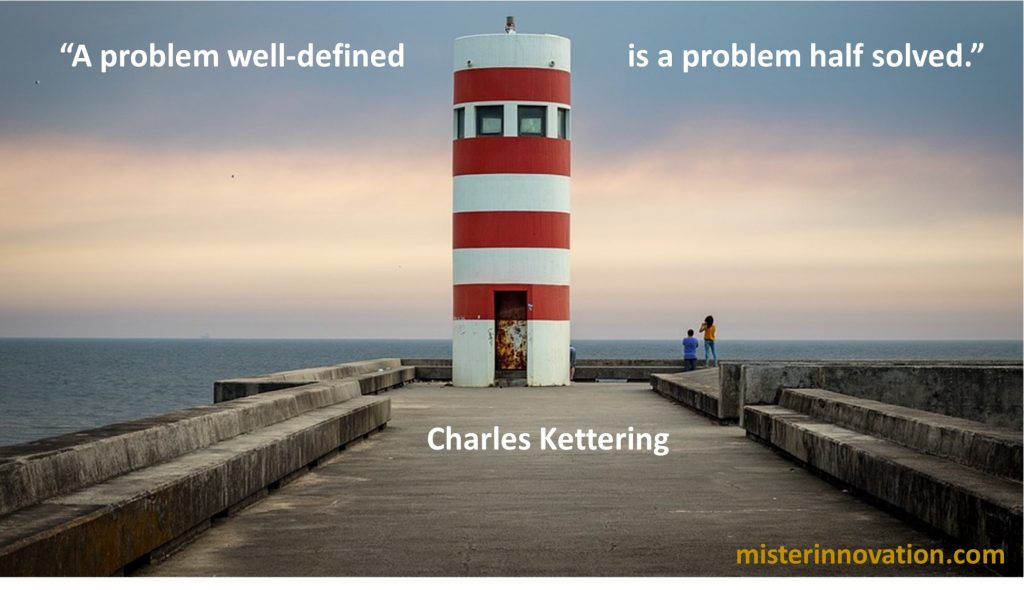
Problem Seeking 101 Charles Kettering

GUEST POST from Arlen Meyers

When federal agencies in charge of protecting Americans’ health recommended that there should be a pause in the administration of the Johnson & Johnson (J&J) COVID-19 vaccine, state health leaders listened and suspended its use. People may experience a mild headache after vaccination. The headaches associated with the blood clot occur one to three weeks after the shot and are more severe.

One expert recommended asking patients, “Is this like headaches you’ve had before? Or is the quality of the headache something that you’ve never experienced before?”

The 12 steps to biomedical innovation starts with being a problem seeker, not a problem solver. Eventually, to be successful, customer problems and solutions need to meld around a VAST business model i.e. one that is not just profitable, but that demonstrates:

1. Validity Regardless or which elements of your model you choose, they have to be valid. In other words, the dogs have to eat the food. When the dog won’t eat the food, you’ll have to change your approach and try again.

2. Automaticity At the very start of planning your venture, you should think about how you are going to work on your business, not in it. Reducing hands on time to manage operations will give you more time to lead the company and create strategies for growth and give you more personal time to enjoy the fruits of your success. Outsourcing, automating or using technologies to ramp up operations, sourcing and distribution is a key part of scaling, and something that investors want to see…which brings us to the next piece.

3. Scalability Your business model is primarily a way to create a business machine that can produce an infinite number of products. Think of it as a device that takes in customers and creates profits out the other end and can do so at quicker and quicker speeds.

4. Time and Traction Finally, your model need to create as much profit as quickly as possible with a growing customer base that is loyal to your brand.

Many doctors, scientists and engineers start with solutions looking for a problem. Some find it or, eventually, as their inventions or technology evolves, markets appear to those who have the talent to see them. The more typical model, and one that is more common among the startup community, is to find a problem and devise a solution.

But, how do you pick the IDEAL opportunity given the almost infinite possibilities? Here are some tips:

I Identify the problem: Seeing a problem is an important skill and core competency of savvy entrepreneurs. It typically is the result of personal experience, primary research talking or watching others or secondary research. Whichever problem you pick, look for ones that:

  1. Will make a very big difference in people’s lives if you solve it
  2. Has the potential to be very profitable or create lots of user defined value, typically at least 10x the value compared to existing offerings or the status quo.
  3. Is something that taps into your passion or satisfies your psychic need
  4. Anticipates future customer/stakeholder wants and needs
  5. Has an extremely high level of market pain and frustration, where customers know they have a problem and have unsuccessfully and repeatedly tried to solve it
  6. Has limited barriers to entry
  7. Has the right potential risk-return profile that matches yours
  8. Is not one dominated by incumbents
  9. Is easy to explain and understand
  10. Someone is willing to pay enough for your solution so that you can make it profitably

Where massive success comes – where a good idea becomes great – is when it meets five simple criteria:

  1. It is the first solution to a problem or gap (it is “innovative”)
  2. It is the first WORKING solution to a problem or gap (it is “innovative and effective”)
  3. It is the most affordable, comparable, option for its market (it is “innovativeeffective and affordable”)
  4. It consistently examines its effectiveness and seeks to improve (it is “innovativeeffectiveaffordableand adaptive”)
  5. It is powerful enough to create a loyal following that naturally wants to – and does – share the idea with others (it is “innovativeeffectiveaffordableadaptive and influential”)

How do you find problems worth solving?

  1. 1. Solve a problem that you already face
  2. 2. Observe a problem and solve it
  3. 3. Anticipate a problem and solve it
  4. 4. Create a problem and solve it
  5. 5. You have a personal stake in solving it
  6. 6. The 3 W’s: Will customers WANT it, is it WORTH it, can you WIN at it?

Identifying a problem starts with identifying a customer archetype that has it. Beyond guessing, identifying that person and describing their problem can only be done by talking to, working with or observing potential customers.

Doctors call it taking a pain history and documenting the chief pain complaint, the history of the present illness and their past medical history. In other words, talk to people and have them describe:

  1. Where is your pain?
  2. How bad is it?
  3. How long have you had it?
  4. On a scale of 1-10, how would you describe it?
  5. What have you done in the past to make it better?
  6. What makes it better or worse?
  7. What other problems do you have that makes the pain better or worse?
  8. How have you treated it in the past?
  9. Is the pain constant or intermittent?
  10. What would you pay to relieve the pain?

Startup geeks call this process customer discovery by “getting out of the building”. Doctors call it making house calls. Here is the ultimate list of customer discovery/development questions.

Here is a customer interview script.

Remote patient programs , for example, don’t just automatically work out. They have to be carefully planned and developed in order to gain traction and produce results. Most importantly, they have to target the right patients.

D Define and represent the problem

Primary or secondary research should give you some idea about :

  1. Market size
  2. Market growth
  3. The competitive landscape
  4. Where you intend to play
  5. What you see that others don’t.

Once you have done these things, then you can:

E Explore and experiment with possible strategies or solutions and risks involved with each by identifying customer segments and creating a value proposition canvas and a business model canvas

Here’s an into to value proposition design

When you create new value propositions and growth you need to focus on high-value customer jobs. These are not necessarily the most important jobs from your customers’ perspective. They are the most promising jobs from your perspective as a solutions provider. High-value customer jobs are characterized by the following, they are:

  • Important: When customer’s success or failure to get the job done leads to essential gains or extreme pains, respectively. Examples are managing the security risk of an ecommerce website, or designing and implementing the strategy at a company.
  • Tangible: When the pains or gains related to a job can be felt or experienced immediately or often. Examples are traffic during your daily commute, or managing a constantly overflowing email inbox.
  • Unsatisfied: When current value propositions don’t help to relieve pains or create desired gains in a satisfying way. Maybe the desired value proposition doesn’t even exist. Examples are the inexistent cure for hangovers, or calorie-free chocolate.
  • Lucrative: When many people have the job with related pains and gains or when a small number of customers are willing to pay a premium. An example of the former is listening to music on the go. An example of the latter are rare diseases for which customers or insurers are willing to pay a premium.

Here is a list of stakeholders that represent customer segments. But, job title is only one part of creating a customer persona. Here’s what Linkedin Sales Navigator won’t tell you and how to fill the gaps.

If you listen to or watch customers enough, you’ll be surprised at what you’ll discover. Here are some examples.

Don’t send out a questionnaire. Here’s why you need to interview stakeholders to identify their value factors that are most important until you get saturation.

A Act on a selected strategy or solution

L Look back and evaluate

Most businesses fail because 1) they don’t offer the right value proposition-market fit or 2) they don’t have a viable business model. Your business model canvas is anchored on your value proposition. Your value proposition (doing the job the customer wants you to do, removing the pain they have to endure to do it now and offering a product that meets or exceeds customer expectations) starts with understanding your customers. Focusing on your customers or market segments starts with those who touch the problem every day.

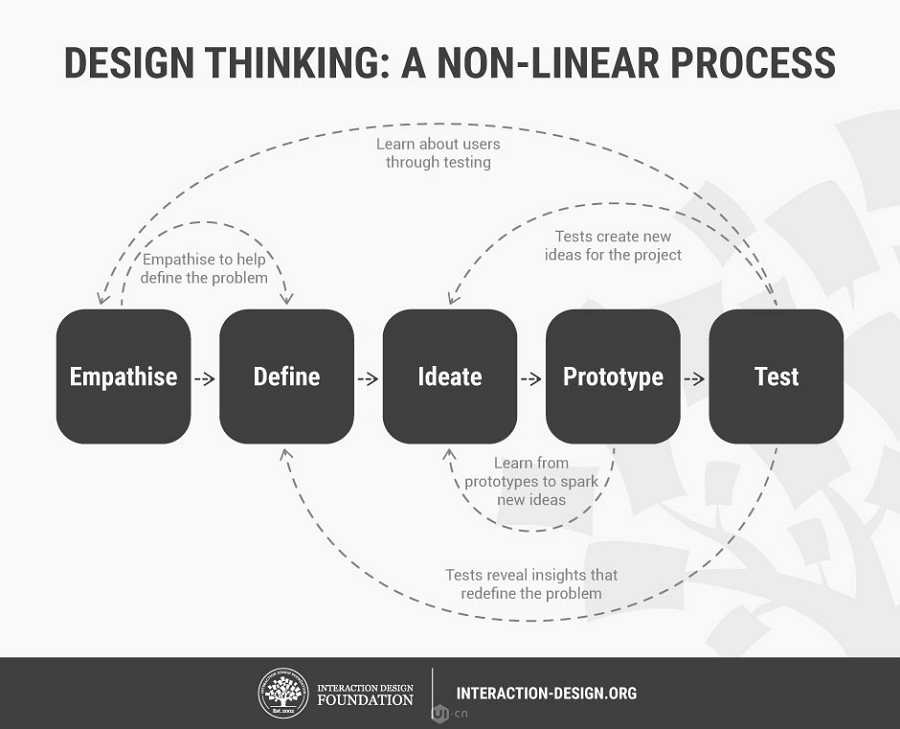
Design thinking describes this process i.e. understanding a problem from the customer perspective, putting yourself in their shoes by either interviewing them, watching them or experiencing what they experience. and create a range of solutions that you then design, prototype and test.

Design Thinking Diagram

Customer centered design means you have to learn how to talk to humans.

Before you do all this, though, decide whether the industry or market you decide to tackle is, the words of my friend, Tom Higley, the CEO at www.101010.net, the right founder-opportunity fit. That usually means finding independence, mastery and purpose and scratching all those psychological itches, be they pathological or not.

Perhaps the most powerful problem is one that you make personal but don’t take personally.

Here’s the problem with saying, “Don’t bring me problems, bring me solutions.”

The education pioneer, John Dewey, said, “a problem well-put is half solved”

That happens when you arm yourself initially with the information you get from being a problem seeker, not a problem solver. Even academic scientists are getting the message.

Image credits: MisterInnovation.com, Interaction Design Foundation

Subscribe to Human-Centered Change & Innovation WeeklySign up here to get Human-Centered Change & Innovation Weekly delivered to your inbox every week.
The Future of Human-Centered Design

Trends and Predictions

The Future of Human-Centered Design

GUEST POST from Chateau G Pato

In a rapidly evolving world, human-centered design (HCD) continues to play a critical role in creating solutions that are not only innovative but also resonate deeply with people. As a thought leader in change and innovation, I am thrilled to explore the future of HCD, share emerging trends, and present predictions shaping this essential discipline.

Trends in Human-Centered Design

As we look to the future of HCD, several key trends are emerging that promise to redefine the way we approach design:

  • Inclusive Design: Designing for diverse populations is becoming more critical. This trend prioritizes the creation of solutions that cater to people with different abilities, ages, and cultural experiences, ensuring accessible and equitable experiences for all.
  • Designing for Emotion: Acknowledging that humans are emotional beings, designers are increasingly focusing on crafting experiences that evoke positive emotional reactions, increasing user satisfaction and loyalty.
  • Sustainable Design: With a greater awareness of environmental impacts, human-centered design is leaning towards sustainability. This involves creating designs that not only meet user needs but also consider long-term environmental impacts.
  • Data-Driven Design: Utilizing data analytics and AI, designers are gaining deeper insights into user behaviors and preferences, allowing for more personalized and effective design solutions.

Predictions for the Future of Human-Centered Design

Looking ahead, HCD will continue to evolve with technological advancements and societal changes. Here are some predictions for the future:

  • Integration with AI: As AI technologies become more sophisticated, we can expect a seamless integration of AI into HCD processes. This will allow for more dynamic and adaptive design systems that can respond to real-time data and user feedback.
  • Rise of Human-Centered AI: AI systems themselves will increasingly be designed with human-centered principles, ensuring they are intuitive, transparent, and augment human capabilities rather than replace them.
  • Evolving Role of Designers: The role of designers will broaden to include facilitation of interdisciplinary collaboration and mediation between diverse stakeholders, emphasizing the importance of empathy and understanding.

Case Studies

Case Study 1: Airbnb’s Inclusive Design Approach

Airbnb has long been an advocate of inclusive design, focusing on creating a platform that caters to the diverse needs of travelers worldwide. By investing in user research and actively involving users with disabilities in the design process, Airbnb has developed features such as accessibility filters for travelers with mobility needs. This commitment to inclusion has not only expanded their market reach but also reinforced their brand as one that values equality and accessibility for everyone.

Case Study 2: Google’s Emotional Design for Digital Wellbeing

Google’s initiative towards Digital Wellbeing is a hallmark of designing for emotion. Recognizing the growing concern over technology addiction, Google introduced features that help users manage screen time and reduce digital distractions. By prioritizing users’ mental health and encouraging mindful technology use, Google has positioned itself as a company that cares about user wellbeing, ultimately enhancing user trust and satisfaction.

Conclusion

The future of human-centered design is brimming with potential. By embracing inclusivity, emotion, sustainability, and data-driven methods, the discipline is poised to craft even more impactful solutions. As we integrate emerging technologies such as AI, the human element will remain at the core of innovation, ensuring that we create a future where technology and humanity thrive together. Stay committed to these principles, and we can collectively design a better, more empathetic world.

Bottom line: Futurology is not fortune telling. Futurists use a scientific approach to create their deliverables, but a methodology and tools like those in FutureHacking™ can empower anyone to engage in futurology themselves.

Image credit: Pixabay

Subscribe to Human-Centered Change & Innovation WeeklySign up here to get Human-Centered Change & Innovation Weekly delivered to your inbox every week.

Aligning Innovation Metrics with Business Objectives

Aligning Innovation Metrics with Business Objectives

GUEST POST from Art Inteligencia

In today’s rapidly evolving business landscape, fostering a culture of innovation is crucial for organizations aiming to maintain a competitive edge. However, one prevalent challenge that leaders face is how to effectively measure innovation. More importantly, how can organizations ensure that the metrics they use to evaluate innovation align with their overarching business objectives? It’s essential to choose the right indicators that not only provide insight into the innovation process but also reflect the value added to the organization. This article explores the importance of aligning innovation metrics with business objectives and presents case studies illustrating successful implementations.

The Importance of Alignment

While innovation is celebrated as the driver of progress, it must be strategically aligned with the organization’s objectives to create meaningful impact. This alignment ensures that resources dedicated to innovation contribute to the achievement of business goals. Misaligned metrics might encourage behaviors that do not necessarily drive desired business outcomes, such as focusing on quantity over quality, or pursuing innovation for its own sake without regard to strategic fit. Thus, aligning innovation metrics with business objectives is critical for ensuring innovation efforts contribute to a sustainable competitive advantage.

Framework for Aligning Innovation Metrics

A well-structured framework for aligning innovation metrics with business objectives involves the following steps:

  1. Understand Business Goals: Begin with establishing a clear understanding of the business’s strategic objectives.
  2. Identify Relevant Innovation Metrics: Select innovation indicators that reflect progress towards those objectives. These might include metrics related to R&D efficiency, time to market, new product introduction rate, or customer satisfaction.
  3. Connect Metrics to Business Outcomes: Ensure that each innovation metric can be directly linked to a specific business goal, such as revenue growth, market share expansion, or operational efficiency improvement.
  4. Continuously Review and Adjust: Innovation is dynamic; thus, regularly review and refine metrics to ensure they remain aligned with evolving business objectives.

Case Study 1: Tech Innovators Inc.

Tech Innovators Inc., a leading technology company, faced challenges in aligning their innovation metrics with business objectives. Initially, the company focused on the number of patents filed as its primary innovation metric. However, leadership realized that while patent filings were increasing, they were not translating into market success or revenue growth.

To address this, the company realigned its innovation metrics by linking them to specific business goals. They introduced metrics such as “Revenue from new products” and “Market penetration rate of products filed under patents.” By shifting their focus, Tech Innovators Inc. successfully transformed their innovation efforts, resulting in a 20% increase in revenues from new products within two years, and a significant improvement in market share.

Case Study 2: Green Future Energy

Green Future Energy is a renewable energy company committed to sustainability. Initially, their innovation efforts were evaluated using metrics such as “Number of green technologies developed.” However, this did not align with the company’s core objective of reducing carbon emissions.

By aligning innovation metrics to business objectives, Green Future Energy adopted measures such as “Reduction in carbon footprint per dollar of revenue” and “Energy efficiency improvement in new technologies.” This realignment allowed the company to focus on impactful innovations. Consequently, they achieved a 30% reduction in carbon emissions over three years, securing their position as a leader in sustainable energy solutions.

Conclusion

Aligning innovation metrics with business objectives is not merely about measurement but about meaningful measurement that drives value creation. By ensuring that metrics reflect strategic priorities, organizations can foster an environment where innovation translates into market success, revenue growth, and operational excellence. The case studies of Tech Innovators Inc. and Green Future Energy illustrate that with the right framework and mindset, aligning metrics with objectives can transform innovation from a nebulous concept into a strategic asset.

Bottom line: Futurology is not fortune telling. Futurists use a scientific approach to create their deliverables, but a methodology and tools like those in FutureHacking™ can empower anyone to engage in futurology themselves.

Image credit: Pexels

Subscribe to Human-Centered Change & Innovation WeeklySign up here to get Human-Centered Change & Innovation Weekly delivered to your inbox every week.

Is Now the Time to Finally End Our Culture of Disposability?

Is Now the Time to Finally End Our Culture of Disposability?Quality used to mean something to companies.

A century ago, when people parted with their hard-earned money to buy something, they expected it to last one or more lifetimes.

Durability was a key design criteria.

But, as the stock market became more central to the American psyche and to executive compensation, the quality of available products and services began to decline in the name of profits above all else.

.

Ford Quality is job oneThere was a temporary consumer revolt decades ago that resulted in companies pretending that quality was more important than profits, but it didn’t last long. In the end, Americans accepted the decline in quality as outsourcing and globalization led to declining prices (and of course higher profits) and fewer goods carrying the “Made in the USA” label, quickly replaced by Japan, China, Mexico, Vietnam, Bangladesh and the rest.

An Inconvenient TruthAround the turn of the century we had the birth of the Cradle-to-Cradle (C2C) movement followed a few years later by Al Gore’s An Inconvenient Truth. Perhaps people were beginning to wake up to the fact that our planet’s resources are not infinite and our culture of disposability was catching up to us.

But these movements failed to maintain their momentum and the tidal wave of stores stocking disposable goods continued unabated – dollar stores and party stores spread across the country like a virus. States like New York began shipping their garbage across borders as their landfills reached capacity. Unsold goods began being dumped on the African continent and elsewhere (think about all those t-shirts printed up for the team that didn’t end up winning the Super Bowl).

Is now the time for the winds to shift yet again in favor of quality and sustainability after decades of disposability?

Will more companies better embrace sustainability like Patagonia is attempting to do?

People have been complaining for years about the high cost to repair Apple products and the increasing difficulty of executing these repairs oneself. Recently Apple was FORCED by shareholder activists to allow people to repair their iPhones. Here is their press release that tries to put a positive spin on what they were pressured into doing.

This is the moment for shareholder activists and governments around the world to force companies to design for repairability, reuse and a true accounting of the costs of their products and services inflict upon the populace and the planet. The European Union and Mexico are working together towards this not just because the planet needs this, but because The Circular Economy Creates New Business Opportunities.

Meanwhile, Toyota recently announced that starting this year (2022) in Japan that they will retrofit late-model cars with new technology if the customer desires it. The company aims to let motorists benefit from new technology without having to buy a new car. The LoraxToyota calls this “uppgrading” and defines it as retrofitting safety and convenience functions, like blind spot monitoring, emergency braking assist, rear cross-traffic alert, and the addition of a hands-free tailgate or trunk lid. Remodeling will also be an option and will include replacing worn or damaged parts inside and out, such as the upholstery, the seat cushions, and the steering wheel.

Are these two companies voluntary and involuntary actions the beginning of a trend – finally?

Or will the culture of disposability continue unabated until our natural resources are exhausted?

Do we truly live in the land of the Lorax?

Image credits: Wikimedia Commons, OldHouseOnline

Subscribe to Human-Centered Change & Innovation WeeklySign up here to get Human-Centered Change & Innovation Weekly delivered to your inbox every week.

600 Free Innovation, Transformation and Design Quote Slides

600 Innovation, Transformation and Design Quote Slides on Innovation, Change and Design

Free Downloads for Keynote Speeches, Presentations and Workshops

Looking for a compelling quote for a keynote speech, workshop or presentation on any of these topics?

  • Innovation
  • Digital Transformation
  • Design
  • Change
  • Creativity
  • Leadership
  • Design Thinking

I’m flattered that people have been quoting my keynote speeches and my first two books Stoking Your Innovation Bonfire and Charting Change.

So, I’m making some of my favorite quotes available from myself and other thought leaders in a fun, visual, easily shareable format.

I’ve been publishing them on Instagram, LinkedIn, Facebook, and Twitter.

But now you can download twelve (12) volumes of fifty (50) quote posters, for a total of 600, for FREE from my store:

You can add them all to your shopping cart at once and download them for FREE.

Print them, share them on social media, or use them in your presentations, keynote speeches or workshops.

They are all Adobe PDF’s and the best way to add them to your presentation is to:

  1. Put the PDF into FULL SCREEN MODE
  2. Take a screenshot
  3. Paste it into your presentation
  4. Crop it and adjust the size to your liking
  5. Change the background color of the slide to a suitable color (if necessary)

Contact me with your favorite innovation, design thinking, change, transformation, or design quotes and I’ll consider adding them to my library of future downloads.

Subscribe to Human-Centered Change & Innovation WeeklySign up here to get Human-Centered Change & Innovation Weekly delivered to your inbox every week.

Inclusivity in UX Design

Practical Tips

Inclusivity in UX Design

GUEST POST from Chateau G Pato

Inclusivity in UX design isn’t just a moral obligation; it’s a design imperative. Striving for inclusivity means considering the diverse range of human beings that interact with digital products. It’s about making sure that everyone, regardless of their abilities, language, or background, can have a meaningful interaction with the technology we create.

As a thought leader in human-centered change and innovation, I’m committed to sharing practical insights into how UX designers can embed inclusivity into their processes. Here are some actionable tips along with two case studies highlighting successful inclusivity efforts.

Practical Tips for Inclusivity in UX Design

1. Understand Your User Base

Begin with comprehensive user research. Go beyond demographics to delve into psychographics and cultural differences. Understand how people interact with your product, considering accessibility needs such as screen readers for the visually impaired or captions for the hearing impaired.

2. Implement Inclusive Design Principles

Inclusive design involves simultaneous consideration of user diversity through sustainable methods. Microsoft’s principles of inclusive design—Recognize Exclusion, Solve for One, Extend to Many, and Learn From Diversity—can guide you in this journey.

3. Prototype and Test with Diverse Groups

Prototype iteratively and engage a broad range of users in your testing phases. Seek feedback from people with different abilities to identify overlooked accessibility issues, ensuring your designs are inherently flexible and adaptable.

4. Leverage Technology for Accessibility

Utilize technology such as voice user interfaces, AI, and adaptive technologies that can enhance usability for diverse user groups. Features like voice search, text-to-speech, and customizable interfaces support various accessibility needs.

Case Studies

Case Study 1: Airbnb’s Inclusive Design Practice

Airbnb exemplifies inclusivity with its mission to create an open and accessible product for everyone. Their Design Language System (DLS) incorporates accessibility from the ground up. One notable practice is their Inclusive Design Workshops, where product teams learn to recognize biases and design for user-centered accessibility.

During one workshop, Airbnb discovered that their booking interface was challenging for older adults unfamiliar with progressive disclosure in UI. By redesigning the interface with more visible cues and clear instructions, they increased usability across age groups, ultimately increasing booking rates by 17%.

Case Study 2: Microsoft’s Xbox Adaptive Controller

Microsoft’s Xbox Adaptive Controller is a prime example of inclusive design in action. Designed in collaboration with organizations like The AbleGamers Charity and The Cerebral Palsy Foundation, the controller provides a customizable gaming experience for players with limited mobility.

This innovation stemmed from feedback from users with disabilities. By conducting inclusive research and design phases, Microsoft created a controller that not only empowers disabled gamers but also extends its usability to other creative and educational applications. This broadened the controller’s market potential and reinforced Microsoft’s commitment to accessibility.

Conclusion

Designing for inclusivity requires a thoughtful, user-centered approach that considers the full spectrum of human diversity. By adopting inclusive design principles and learning from successful case studies like Airbnb and Microsoft, UX designers can create products that are not only accessible but also drive innovation and market success.

As we move forward, let’s redefine our design processes to ensure everyone can fully engage in the digital experiences we create. After all, inclusivity is not just a box to tick; it’s an ongoing journey toward a shared future where everyone has a seat at the table.

Bottom line: Futurology is not fortune telling. Futurists use a scientific approach to create their deliverables, but a methodology and tools like those in FutureHacking™ can empower anyone to engage in futurology themselves.

Image credit: Unsplash

Subscribe to Human-Centered Change & Innovation WeeklySign up here to get Human-Centered Change & Innovation Weekly delivered to your inbox every week.

Customer-Centric Agile Development

Customer-Centric Agile Development

GUEST POST from Art Inteligencia

In a rapidly evolving business landscape, embracing agility while keeping the customer at the center of everything is more than a competitive advantage—it’s a necessity. This article explores how integrating customer insights into Agile development processes leads to superior outcomes and sustainable success. Through examining compelling case studies, we will unearth practices that place the customer at the heart of innovation.

The Essence of Customer-Centric Agile Development

Agile is designed to be iterative and responsive, which naturally pairs well with a customer-centric approach. By actively involving customers throughout the development lifecycle, teams can better anticipate needs, reduce waste, and deliver products that truly resonate with users.

Case Study: Spotify’s Tribe Model

Spotify’s journey to becoming a leader in music streaming is a testament to the power of customer-centric Agile development. The company employs a unique “Tribe” system that decentralizes decision-making and prioritizes user feedback. Each tribe is akin to a mini-startup focused on a specific area of the product.

By maintaining short feedback loops with their users, Spotify’s teams rapidly iterate on features, ensuring they consistently meet and exceed listener expectations. This approach not only boosts innovation but also fosters a deep cultural alignment towards customer delight.

Case Study: Atlassian’s Customer Feedback Loops

Atlassian, renowned for its collaboration tools like Jira and Trello, has integrated customer-centricity into its Agile frameworks through continuous feedback loops. Atlassian’s teams regularly engage with end-users through advisory panels, user tests, and beta releases.

By cultivating an environment where customer feedback isn’t just solicited but acted upon, Atlassian ensures that its product evolution is consistently aligned with user expectations and anticipated trends. This has resulted in high user satisfaction and industry-leading software solutions.

Implementing Customer-Centric Agile Development in Your Organization

To effectively integrate customer-centricity within an Agile framework, organizations should consider these actionable strategies:

  • Establish cross-functional teams that include customer advocates.
  • Create regular touchpoints with customers to gather authentic insights.
  • Empower teams to experiment based on real-time feedback without bureaucratic delay.
  • Measure success not only by deliverables but by customer satisfaction and engagement metrics.

By translating these insights into practice, organizations can foster a culture of empathy that not only meets but anticipates customer needs.

Conclusion

Customer-centric Agile development is not a one-size-fits-all solution, but a mindset—a commitment towards building with empathy and addressing real customer pain points. As the business world continues to transform, those who can adapt and innovate from a place of deep customer understanding will lead the charge towards sustainable success.

In this article, I sought to capture the most pertinent vision and insights, focusing on real-world applications and actionable strategies for integrating customer-centric practices within Agile development frameworks. The case studies of Spotify and Atlassian illustrate how leading organizations successfully leverage this integration to achieve innovation and customer satisfaction.

Bottom line: Futurology is not fortune telling. Futurists use a scientific approach to create their deliverables, but a methodology and tools like those in FutureHacking™ can empower anyone to engage in futurology themselves.

Image credit: Pexels

Subscribe to Human-Centered Change & Innovation WeeklySign up here to get Human-Centered Change & Innovation Weekly delivered to your inbox every week.

Achieving Sustainability Through Design Thinking

Achieving Sustainability Through Design Thinking

GUEST POST from Chateau G Pato

In a world increasingly mindful of sustainability, Design Thinking emerges as a crucial methodology for fostering sustainable innovation. This human-centered approach not only prioritizes user needs but also embraces systemic thinking to solve complex ecological challenges. Through empathy, creativity, and iteration, Design Thinking paves the path to more sustainable products, services, and systems.

The Essence of Design Thinking

Design Thinking is a process that encompasses understanding users, redefining problems, and creating innovative solutions to prototype and test. Its stages—empathize, define, ideate, prototype, and test—ensure a holistic view that extends beyond immediate user needs to consider environmental and societal impacts.

Case Study 1: IKEA’s Sustainable Design Journey

Creating a Better Everyday Life

IKEA, the global leader in affordable home furnishings, showcases a powerful application of Design Thinking in sustainability. Striving to be “people and planet positive,” IKEA integrates sustainable practices from the drawing board to the delivery process.

By empathizing with environmentally conscious consumers, IKEA revamped its product design to incorporate renewable and recyclable materials. For example, the company replaced traditional foam in its sofas with sustainable materials, reducing both carbon footprint and production costs.

Through iterative prototyping, IKEA explored various configurations to enhance the durability and recyclability of its products. The result is a line of furnishings that cater to eco-savvy consumers while contributing to a sustainable future.

Case Study 2: Patagonia’s Regenerative Organic Certification

A Commitment to Environmental Stewardship

Patagonia, a pioneer in outdoor apparel, exemplifies the fusion of sustainability and design thinking. Known for its commitment to environmental causes, Patagonia took a bold step by introducing Regenerative Organic Certification (ROC) for its products.

Using Design Thinking, Patagonia embarked on a deep-dive empathizing phase with farmers, understanding the intricacies of sustainable agriculture. The company redefined its supply chain challenges, ideating a new framework that prioritizes soil health, animal welfare, and fair trade practices.

The prototyping and testing phase involved collaborative experimentation with farmers to refine agricultural practices that rebuild soil and sequester carbon. The result is a line of clothing that not only meets sustainability criteria but actively contributes to environmental restoration.

Toward a Sustainable Future

Design Thinking provides organizations with the tools to create sustainable innovations that resonate with environmentally conscious consumers. By embracing empathy, iteration, and holistic problem-solving, companies can transform challenges into opportunities for a sustainable future.

As industries continue to grapple with ecological imperatives, the journey to sustainability is not just a strategic choice but a moral compass guiding us toward collective prosperity.

Bottom line: Futurology is not fortune telling. Futurists use a scientific approach to create their deliverables, but a methodology and tools like those in FutureHacking™ can empower anyone to engage in futurology themselves.

Image credit: Pixabay

Subscribe to Human-Centered Change & Innovation WeeklySign up here to get Human-Centered Change & Innovation Weekly delivered to your inbox every week.