Tag Archives: customer service

The Benefits of Using Chatbots for Customer Service

The Benefits of Using Chatbots for Customer Service

GUEST POST from Art Inteligencia

The use of chatbots for customer service is becoming increasingly popular, particularly in the e-commerce industry. Chatbots are automated software programs that are designed to simulate human conversations. They are often used to provide customer service and to help customers find the answers they need quickly and easily.

Chatbots have a number of advantages over traditional customer service methods, such as telephone support or email. They are available 24/7, allowing customers to get help whenever they need it. In addition, chatbots can be programmed to respond quickly to customer inquiries, providing fast and efficient service. This can be particularly useful during peak times when customer service representatives may be overwhelmed with calls or emails.

Chatbots also provide a more human-like experience for customers. They can be programmed to use natural language processing, allowing them to understand and respond to customer inquiries in a more conversational way. This helps to create a more pleasant customer experience and can even help to build brand loyalty.

Taken another way, here are five ways chatbots improve customer experience:

1. Proactive Service: Chatbots can be programmed to anticipate customer needs and proactively provide helpful information and services. This can help reduce customer effort and improve the overall customer experience.

2. 24/7 Availability: Chatbots can be available 24/7 to help customers with their inquiries and requests. This eliminates the need for customers to wait in line, or wait for a customer service representative to become available.

3. Fast Response Times: Chatbots can provide fast response times to customer inquiries, typically within seconds. This improves customer satisfaction as customers don’t have to wait long periods of time to receive an answer.

4. Personalized Interactions: Chatbots can be programmed to provide personalized interactions to customers. This helps customers feel that they are engaging with a “real” person and improves the overall customer experience.

5. Automation: Chatbots can automate many processes such as order placement, customer service inquiries, and account management. This reduces customer effort and helps customers complete tasks faster.

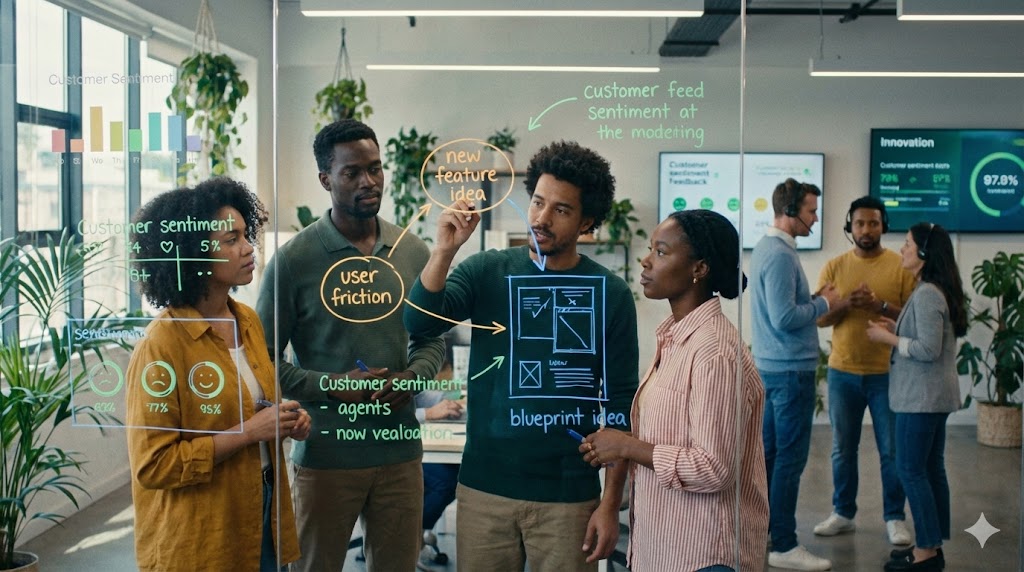
Chatbots can also be used to collect customer feedback, providing valuable insights into customer sentiment and helping businesses to improve their products and services. Chatbots can be programmed to ask customers questions about their experiences and can then analyze the data to identify trends and patterns. This can help businesses to identify areas of improvement and make changes accordingly.

Finally, chatbots can be used to automate certain customer service tasks, such as order processing or product returns. This can help to streamline the customer service process and free up customer service representatives to focus on more complex issues.

In summary, chatbots can be a useful tool for businesses looking to provide better customer service. They are available 24/7, provide a more human-like experience, collect customer feedback, and can automate certain customer service tasks. With the right chatbot software, businesses can improve the customer service experience while reducing costs and increasing efficiency.

Image credit: Unsplash

Subscribe to Human-Centered Change & Innovation WeeklySign up here to get Human-Centered Change & Innovation Weekly delivered to your inbox every week.

FedEx Not Keeping Pace

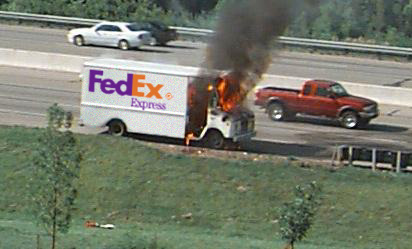
FedEx Not Keeping PaceFedEx took the shipping world by storm about forty years ago, growing to become the defacto shipping leader, unseating UPS and DHL. But, then after thirty years of strong growth they began to lose their mojo. In 2003, in a reaction to UPS’ acquisition of Mail Boxes Etc., FedEx announced they were buying Kinko’s, a large United States based copy center chain. For me this showed that FedEx was beginning to lose its way, and it appears their connection to customer expectations and the current capabilities of technology is failing. For a company based on the promise of speed, FedEx is becoming increasingly slow.

Increasingly frustrated with the performance of FedEx, Amazon has increasingly turned to the United States Postal Service to deliver its packages, striking a special deals with USPS to even deliver packages on Sunday. And now, Amazon is beginning to buy trailers so they can potentially contract directly with truck drivers to help them move inventory from one distribution node to another.

And for me, my latest FedEx misadventure is a perfect example of why FedEx is now in trouble and at risk of falling from its perch. Here’s what’s happened so far.

  1. I ordered a new laptop from HP that was supposed to arrive in three (3) days on Saturday, July 9th
  2. On Saturday, July 9th I received no contact from FedEx or estimate for when my package might be delivered
  3. On Saturday, July 9th FedEx attempted to deliver the package when we weren’t home
  4. For some reason FedEx then determined they were going to wait THREE DAYS before attempting re-deliver the package
  5. On Tuesday, July 12th I received no contact from FedEx or estimate for when my package might be delivered
  6. On Tuesday, July 12th FedEx despite someone being home nearly all day, FedEx attempted to deliver the package when we weren’t home
  7. On Wednesday, July 13th I received no contact from FedEx or estimate for when my package might be delivered
  8. On Wednesday, July 13th FedEx despite someone being home nearly all day, FedEx attempted to deliver the package when we weren’t home
  9. On Thursday, July 14th I received a missed call and voicemail from FedEx
  10. On Thursday, July 14th I attempted to call the FedEx number given and nobody answered the phone, got voicemail and left message
  11. On Friday, July 15th the Web site indicated that package would be delivered again that day, but no delivery came
  12. On Friday, July 15th I called FedEx and got voicemail
  13. On Friday, July 15th I called FedEx again and got a person, hooray! But, the person said my only option was to drive a fair distance to come pick it up or have it delivered to a FedEx location near me.
  14. On Friday, July 15th I chose to have the package delivered to my local FedEx location (a Kinko’s about 5-10 miles away) under the impression it would be available Saturday, July 16th at this location for my pickup and that they would probably call me after it arrived
  15. On Saturday, July 16th I went to the Kinko’s around 7pm figuring that it must be there by that time (How long could it take to ship a package 15-20 miles from one FedEx location to another?)
  16. On Saturday, July 16th at the Kinko’s the employee was unable to find the package
  17. On Saturday, July 16th at the Kinko’s the employee was unable to get any information from their systems because they were down for maintenance
  18. On Saturday, July 16th at the Kinko’s the employee was able to call and using a voice response system get a Tuesday, July 19th delivery estimate to their location
  19. On Monday, July 18th I received a postcard from FedEx saying they had tried to deliver my package three times and to contact them (NOTE: this was a very confusing postcard, not obvious what to do)
  20. On Tuesday, July 19th I received a phone call from the FedEx Kinko’s store saying they had my package, and I picked it up a few hours later after they used my name (no technology) to search a pile of packages in the back

VERY BAD EXPERIENCE – I got my package TEN DAYS AFTER I was supposed to get it, and nearly two weeks after I ordered the laptop.

Inaccurate information on the web site, poor customer service, bad technology, slow resolution…

These are all signs that this logistics company has gone off track and has not kept pace with the capabilities of technology today.

There is no reason why FedEx shouldn’t have been able to:

  • Show me online exactly where my package is
  • When FedEx is estimating it to be delivered based on the packages loaded on the truck and the planned route
  • Offer me the opportunity to select an alternate delivery time or date or location if the likely delivery time doesn’t work for me

This would be customer service.

Build a Common Language of Innovation

Subscribe to Human-Centered Change & Innovation WeeklySign up here to get Human-Centered Change & Innovation Weekly delivered to your inbox every week.

Service Redesign – Lost T-Mobile Smartphone

Service Redesign - Lost T-Mobile Smartphone

Given the health risks of carrying a smartphone (or any kind of mobile device) too close to the body for extended periods, I try to always remove electronic devices from my pockets whenever I can. For ten years this has never caused a problem until Saturday. This marked the first time in more than a decade that I walked off and forgot my smartphone.

Now I’ve had the joy of reporting my lost phone to T-Mobile and getting a less than helpful response. Not because the agent I spoke with didn’t try to be helpful, but because the customer service representative was trapped inside of a service experience that wasn’t designed to meet the goals of the customer.

First I must mention that I don’t have a find my phone type app installed on my phone because I don’t like the idea of someone tracking me all the time. Second, yes, I know that even with location awareness or GPS turned off that my phone is being tracked anyways, but I still like to maintain the illusion that my every move isn’t being tracked. So, please humor me.

The fact is that T-Mobile could tell me exactly where my phone is even without such an app, but then they would have to breach the illusion and admit that they’re always tracking where every phone is at all times. Not such a good customer experience.

Redesigning the Lost Smartphone Experience

I’m only one person so this list won’t be as good as if I was working on this with a small team and prototyping with customers, but let’s ignore that for now and try to come up with a list of customer goals (and thus opportunities to delight) in the lost smartphone scenario:

  1. I don’t want someone to use my phone after I lose it to make calls that I’ll have to pay for (international calls, premium calls, etc.)
  2. I don’t want someone to buy anything (apps, music or other content that I’ll have to pay for)
  3. I don’t want someone to call my contacts
  4. I don’t want someone to use my apps and make in app purchases
  5. I don’t want someone to use my texting function (SMS) – read, send, etc.
  6. I don’t want someone to use my email – read, send, etc.
  7. I don’t want someone accessing my photos
  8. I don’t want someone to steal information about my contacts
  9. I want to be able to call my phone to try and speak with the person who found it so I can try and get it back
  10. I want the person to be able to call me or T-Mobile to let me know that they’ve found my phone

In short, I don’t want someone who finds my phone to be able to do anything other than contact me to let me know when and where I can come pick it up.

But, when I called to T-Mobile to report my phone lost the only option was to have the phone disabled. Prior to doing so, calling my phone was going straight to voicemail, and maybe I should have left a voicemail, but I didn’t, I thought I would try again later. After they disabled my phone, instead of getting voicemail I got a message saying the phone has been reported lost and that I wouldn’t be able to leave a voicemail. This is partially helpful, but not completely. Now I can’t call the phone and if someone has found the phone, they can’t try to contact anyone to arrange a pickup.

T-Mobile has met goal #1 (and possibly #2-4), but likely they could access #5-8 (able to read but probably not to send).

But, there are many other goals that have not been met. Most importantly, T-Mobile has actually made it less likely that I will get my phone back because I have no way of communicating with the person who may have my phone.

What could T-Mobile do to make this experience better?

Simple.

When a phone is reported lost, T-Mobile should make it so that the phone can only call T-Mobile. If the person calls, then T-Mobile knows which number is calling, can get information from the caller to connect the two parties to arrange a pickup, and pass on the contact details to the subscriber via pre-arranged methods.

Second, T-Mobile should allow designated numbers to call the phone, so that the subscriber can try to get in touch with whoever found the phone.

Third, T-Mobile could call the phone every 15-30min with a robot until someone answers and connect them with a T-Mobile representative.

These three small changes to their lost phone service design would make an immediate positive impact in the customer experience for thousands of customers.

How else could T-Mobile make the experience better?

Image credit: easyhacker.com

Subscribe to Human-Centered Change & Innovation WeeklySign up here to get Human-Centered Change & Innovation Weekly delivered to your inbox every week.

Following the Line to Innovation

Following the Line to InnovationOK, it may not really be an innovation, but I appreciated the following operational efficiency anyway:

Going to check out of the Hilton New York City, there was a queue in spite of the several available kiosks and multiple employees staffing the counter to help customers with various requests. Hilton had obviously invested in some business process consulting (or possibly listened to an employee suggestion) because in addition to the kiosks and the employees staffing the counter, they had an employee staffing the line to identify the needs of guests while they waited in line.

In my case, she asked how my stay was and I told her the story about how I had difficulty with the WiFi not allowing me back into my work e-mail after the connection went down and came back up again. I told her that the first night it worked fine and that I expected not to pay for the second night because it didn’t work properly (leaving important time-critical messages stuck in my outbox). She was sympathetic, but I halfway expected to have to tell the story all over again when I got up to the counter (as this is the typical bad customer experience on the phone or in person). I was surprised and impressed when she told the counter person to take off the second night’s WiFi and that I was ready to check out. Thankfully, I didn’t have to tell the story again.

This is good operational practice for a couple of reasons:

  1. It gave them a way of increasing throughput during busy times when they would otherwise be limited by the number of computer workstations.
  2. It provided a good customer experience. I only had to tell the story once.
  3. I was on my way much more quickly as a result, and the counter person was on to their next customer more quickly as well
  4. The poor person behind me didn’t have to wait while I told my story again, and potentially argued with the counter person because this had already been taken care of while we were both waiting in line (except no arguing was necessary).
  5. If the customer has no special needs, the employee can direct the customer to an available kiosk.

This example, while more about good operational practice and customer service than innovation, does provide the opportunity to identify process innovation opportunities if we look at our own business through a lens of separating the customer experience into the following parts:

  1. Information Gathering
  2. Information Evaluation
  3. Information Processing

Are there times in your business when your customers are waiting? Why are they waiting?

Innovation Training for your whole organization from Braden Kelley

Do you have certain resources that reach capacity quickly or for sustained periods during busy times that you can’t expand easily?

Is there a way to utilize that waiting time to separate out the information gathering or information evaluation components of a customer interaction, to allow for a division of labor that can be more easily flexed to accommodate demand spikes?

In a phone scenario, could you not implement an interactive voice response phone system that notifies the customer how long they can expect to wait and then transitions to a “While you are waiting…” message and then asks the customer for their name, account number, and phone number to either be played for the agent before transferring the call, or maybe even trying to do some kind of speech to text and facilitate a record-lookup using that information?

Maybe you need to allow your skilled people to focus on information evaluation and processing, while lower skilled people focus on information gathering. Or, maybe in your industry the skilled people are at the front end, focusing on information gathering and evaluation and need to be separated from the information processing tasks.

In a manufacturing environment, while we don’t talk about information gathering, evaluation, or processing, we still use the same logic to evaluate the overall system throughput. Then, break it down into components so that we can identify and manage critical constraints and manage them in a way that maximizes throughput.

So whether you are in a manufacturing or a service environment, are you constantly looking for ways to optimize throughput and maximize profits or customer service (or maybe even both)?

What are your favorite stories of process innovations that have led to improved customer service or manufacturing efficiencies?

P.S. Continue reading on this topic by reading – Followup – Following the Line to Innovation at Costco

Subscribe to Human-Centered Change & Innovation WeeklySign up here to get Human-Centered Change & Innovation Weekly delivered to your inbox every week.