Finding the Human Premium in an Automated World – An AI Soft Landing Scenario
LAST UPDATED: July 5, 2026 at 11:58 AM

by Braden Kelley and Art Inteligencia
I. Introduction: The Generated Abundance Paradox
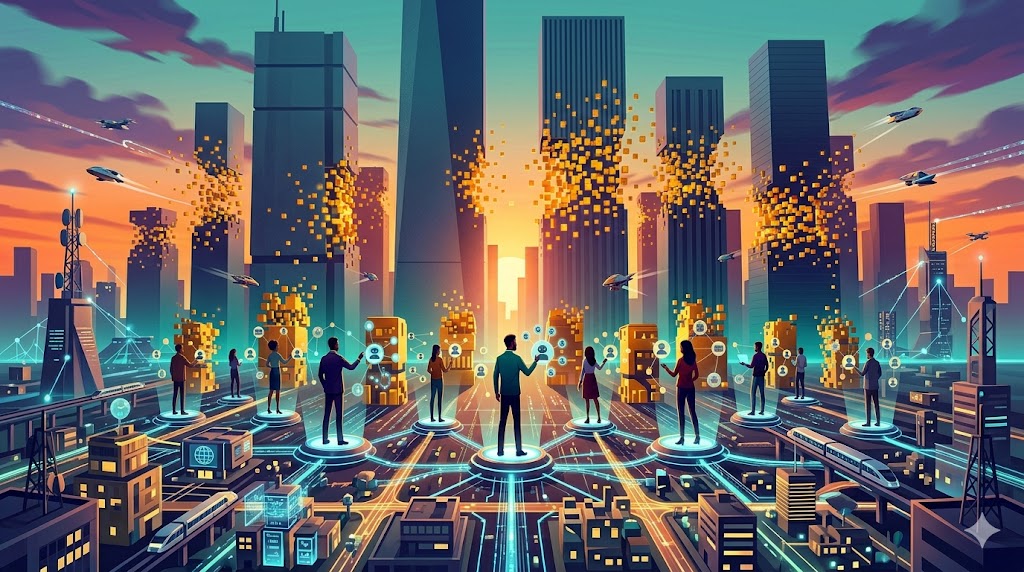
We are witnessing a profound shift in the fabric of digital and physical commerce. As artificial intelligence advances, the marginal cost of producing digital content, functional code, and foundational logic is rapidly plummeting toward zero. We are entering an era of generated abundance, where software can instantly synthesize solutions that once required weeks of human labor.
“When everything can be generated, the things that cannot be automated become priceless.”
This reality introduces a compelling paradox for innovators and experience designers: the more artificial intelligence expands, the more valuable authentic human experiences become. When synthetic perfection becomes the default, human imperfection, intentionality, and presence transform into premium commodities.
This dynamic is not a techno-dystopian roadblock, but rather a human-centered evolution. We are actively transitioning away from the efficiency-first playbook of the early internet and stepping squarely into The Experience Economy 2.0. In this new landscape, technology serves as the invisible infrastructure, while unique, emotionally resonant, and human-designed touchpoints become the ultimate differentiator.
II. The Great Pivot: Efficiency vs. Resonance
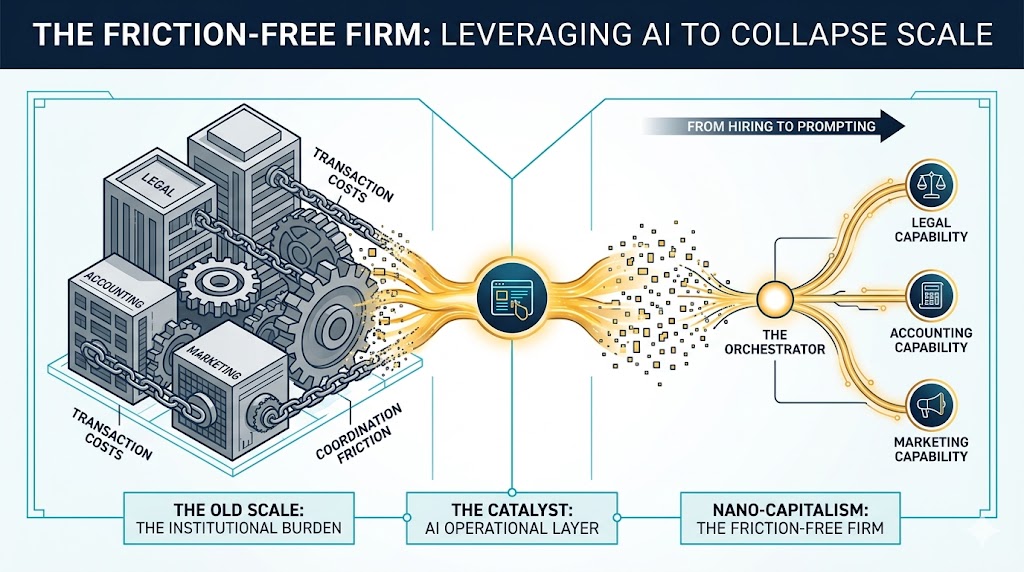
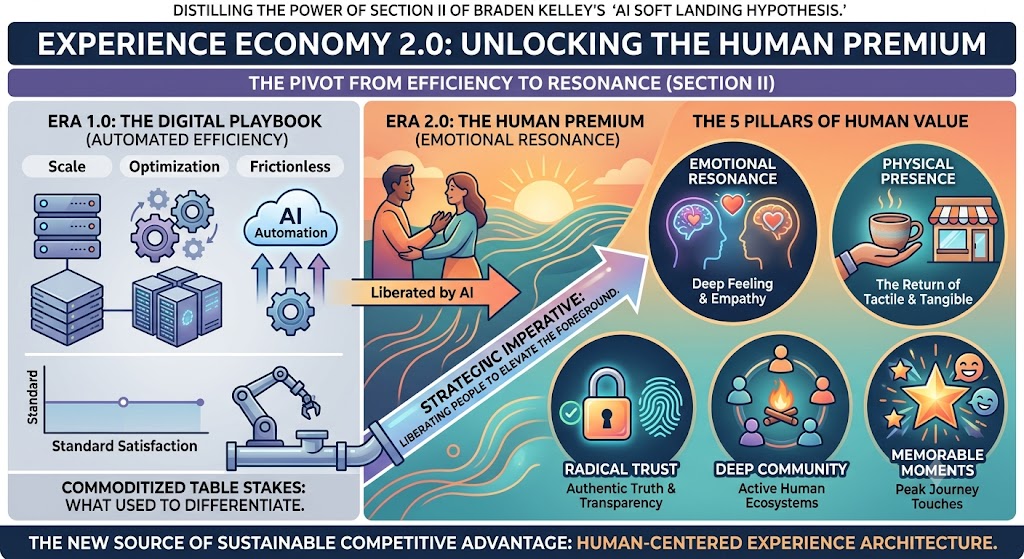
To understand where we are going, we must first look at the foundation we are leaving behind. The first era of the internet age established a highly specific corporate playbook. For decades, organizations competed on their ability to scale rapidly, automate processes, and drive maximum transactional efficiency. Success meant eliminating friction, standardizing touchpoints, and processing interactions at a lower cost than the competition.
In the era of Experience Economy 2.0, that playbook is no longer a differentiator — it is simply the cost of entry. When every organization has access to the same foundational AI tools capable of infinite scale and flawless, hyper-optimized efficiency, those traits become commoditized table stakes. True value is moving away from the cold mechanics of a transaction and toward the warmth of human connection.
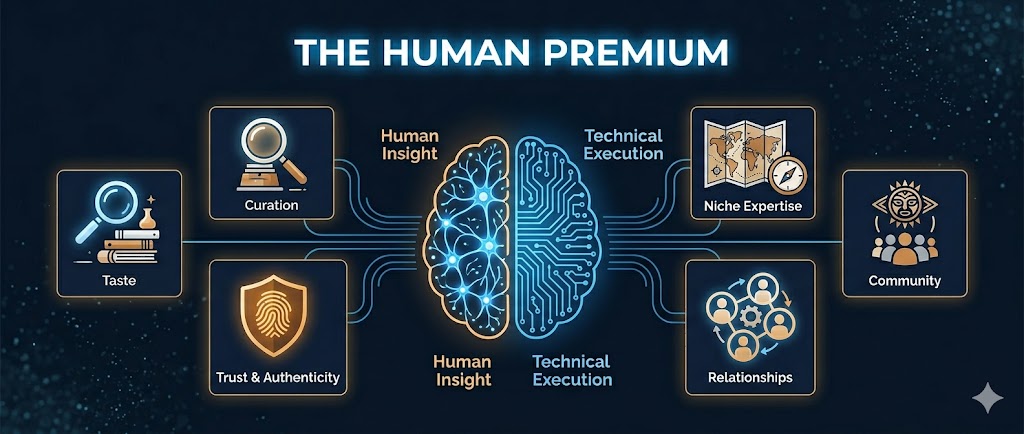
This macro-shift forces us to pivot our focus toward five distinct pillars of human-centered value that algorithms cannot replicate:
- Emotional Resonance: Moving far past basic customer satisfaction to intentionally design interactions that spark genuine feeling, empathy, and shared understanding.
- Physical Presence: Recognizing the returning premium of the tactile, the local, and the tangible. In a hyper-digital world, sharing physical space and holding physical goods becomes a luxury.
- Radical Trust: As deepfakes, synthetic media, and automated noise flood our information ecosystems, verified truth, human integrity, and radical transparency become an organization’s most valuable assets.
- Deep Community: Shifting our focus from building passive digital audiences or follower counts to cultivating active, interconnected human ecosystems rooted in shared values and mutual contribution.
- Memorable Moments: Designing deliberate peaks within the customer and employee journey — unscripted, highly meaningful interactions that linger in the memory long after a transaction is complete.
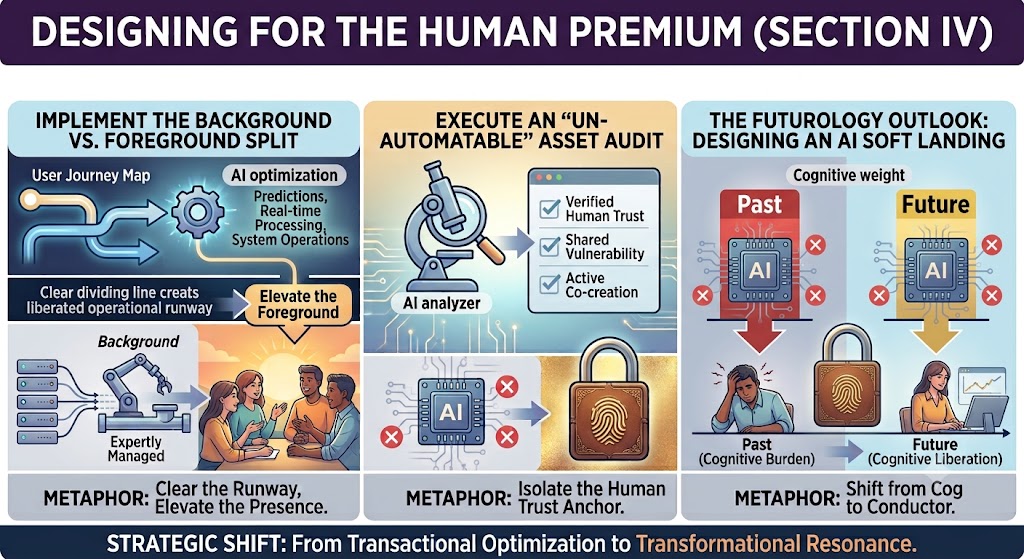
The strategic imperative for innovators is clear: we must stop using technology merely to optimize the background, and start using it to liberate our people to elevate the foreground.
III. The Counter-Intuitive Reality
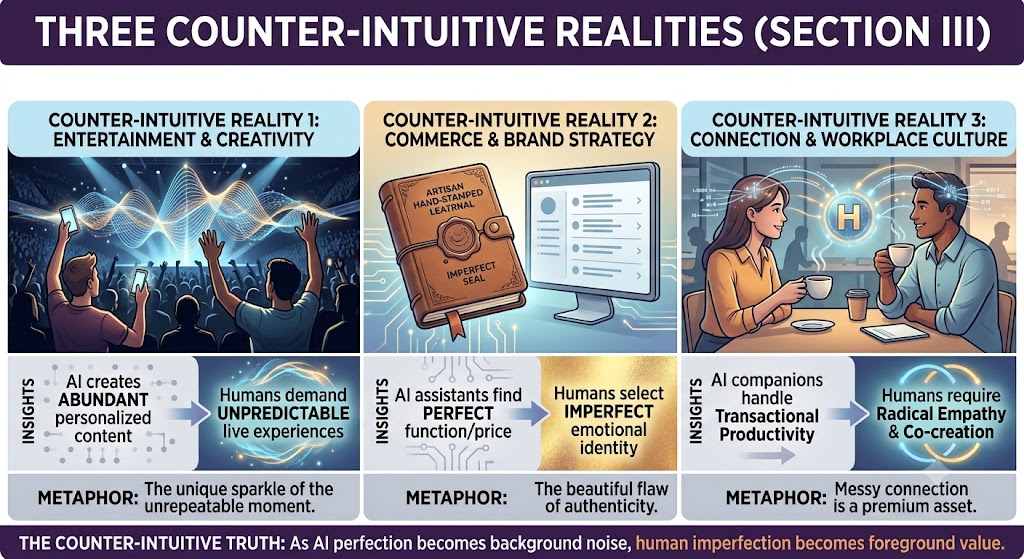
This shift toward the human premium is not a hypothetical future projection; it is a live market dynamic unfolding across industries. As synthetic capabilities reach near-perfection, consumer behavior is shifting in highly counter-intuitive ways, proving that our psychological need for the authentic scales in direct proportion to the volume of automation around us.
We can observe this behavioral correction across three distinct dimensions of daily life:
1. Entertainment & Creativity: The Pull of the Unpredictable
As generative tools make it possible to stream infinite, hyper-personalized, AI-generated music, film, and art at zero marginal cost, a fascinating reversal is occurring. Instead of rendering human creators obsolete, it has triggered an unprecedented premium for raw, collective, and unpredictable live experiences. Audiences are willing to pay significant premiums not just to consume content, but to witness the vulnerability of live performance and share a physical space with thousands of other humans experiencing the exact same unrepeatable moment.
2. Commerce & Brand Strategy: Believing in the Flawed
In a world where sophisticated AI shopping assistants can perfectly scan millions of data points to find the absolute lowest price or the most efficient product, traditional transactional marketing loses its grip. When algorithms handle the cold filtering, human consumers increasingly seek out brands that possess a fierce, distinct, and sometimes beautifully flawed emotional identity. We don’t just buy what works; we buy from organizations that stand for something real. The purchasing decision shifts from a logic problem solved by a machine to an emotional alignment sought by a person.
3. Connection & Workplace Culture: The Premium on Empathy
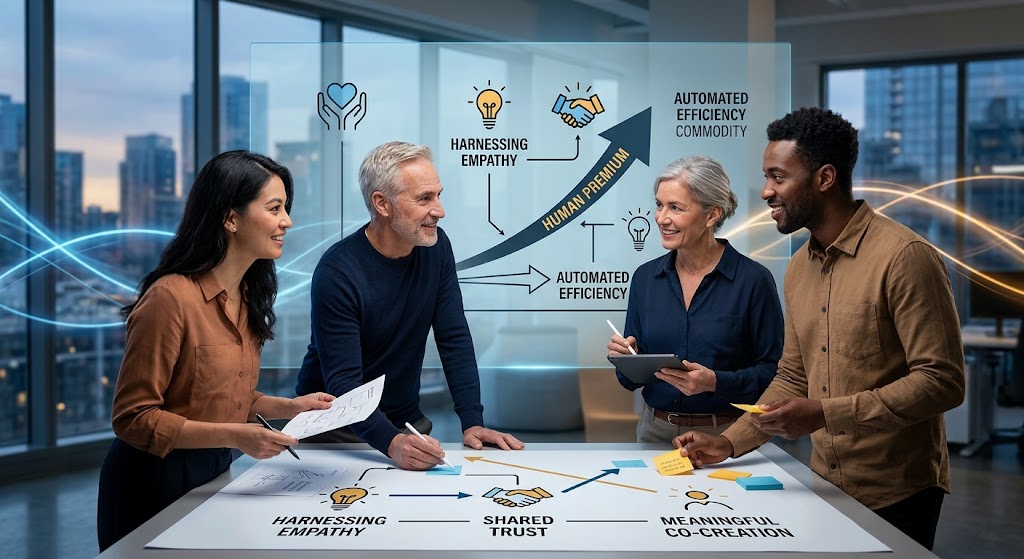
The rise of emotionally intelligent AI companions and highly efficient virtual co-pilots is fundamentally altering how we perceive productivity. As these tools seamlessly streamline our daily communication, schedules, and administrative tasks, they inadvertently shine a spotlight on what they lack. Our baseline appreciation for messy, authentic human relationships, collaborative empathy, and shared vulnerability is skyrocketing. In the modern organization, leadership is no longer about managing transactional throughput — it is about cultivating high-trust, human-centric ecosystems where people feel safe to co-create.
V. Conclusion: The Priceless Future
Ultimately, advanced automation is not a threat to human-centered design — it is its ultimate catalyst. The rise of artificial intelligence does not diminish our worth; rather, it strips away the mechanical, transactional, and repetitive tasks that corporate structures have spent a century forcing humans to perform. AI is a tool for systemic liberation, handling the data-heavy heavy lifting so we can return to what we do best.
As we navigate the transition into the Experience Economy 2.0, the core competitive mandate for innovators completely flips. We must actively resist the urge to measure organizational success purely through the lens of cost reduction and automated throughput. If your entire value proposition can be replicated by a machine at zero marginal cost, you no longer possess a sustainable strategy.
The future belongs to those who design for the human premium. Moving forward, the most critical question an experience leader can ask is no longer, “What can we automate?” The defining question of our era must be: “What can we create that our customers and communities will deeply cherish precisely because it was built by a human hand, driven by human empathy, and designed to be intentionally un-automatable?”
Frequently Asked Questions
What is the core premise of the Experience Economy 2.0?
The core premise is the Generated Abundance Paradox: as AI makes digital content, software, and transactions infinitely abundant and cheap to produce, the value shifts entirely to what cannot be automated. Authentic, human-designed experiences—rooted in trust, physical presence, and emotional resonance—become premium commodities.
How should organizations separate AI tasks from human tasks?
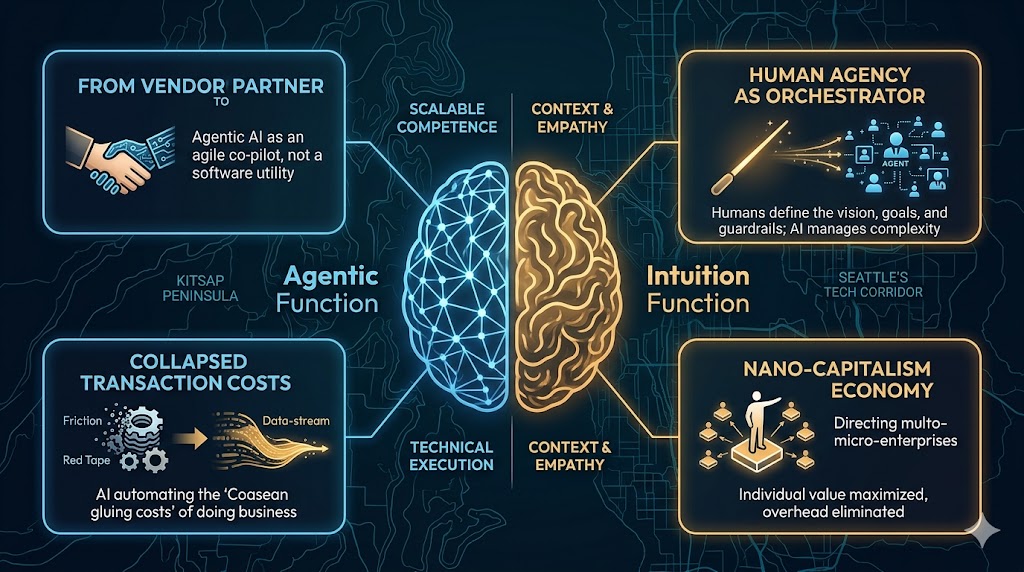
Organizations should use the “Background vs. Foreground Split.” AI should run the invisible infrastructure in the background (predictive analytics, scaling data processing, routine tasks). This clears the operational runway so human workers can focus entirely on the foreground (building relationships, empathy, and creative problem-solving).
What makes an organizational asset completely “un-automatable”?
An asset or touchpoint is un-automatable if its entire economic and emotional value disappears the moment an algorithm replaces it. Examples include verified human trust, raw shared vulnerability, and mutual co-creation within an active community ecosystem.
Operationalize Organizational Empathy
Ready to Bridge the Gap Between Technology and Human Experience?
Technology only provides capability; human adoption creates the value. If you want to move past cold operational metrics and design fear out of your transformation, let’s connect. Get expert guidance on architecting impactful Experience Level Measures (XLMs) or establishing a dedicated Experience Management Office (XMO) tailored to your culture.
EDITOR’S NOTE: This is a visualization of but one possible future. I will be publishing other possible futures as they crystallize in my mind (or as you suggest them for me to explore).
Image credits: Google Gemini
Content Authenticity Statement: The topic area, key elements to focus on, etc. were decisions made by Braden Kelley, with a little help from Google Gemini to clean up the article, add images and create infographics.
 Sign up here to get Human-Centered Change & Innovation Weekly delivered to your inbox every week.