Category Archives: Management

The Evolution of Change Management

From Top-Down to Agile Approaches

The Evolution of Change Management

GUEST POST from Chateau G Pato

Change is an inevitable part of any organization’s growth and survival. In the past, change management strategies primarily followed a top-down approach, where leaders dictated the changes and employees were expected to comply. However, over time, as organizations faced increasing complexity and speed of change, a more agile approach to change management has emerged. This article explores the evolution of change management from top-down to agile approaches and provides two case study examples showcasing the benefits of adopting agile change practices.

The traditional top-down approach to change management involved leaders identifying the need for change, setting objectives, and then cascading the change down through the hierarchy. In this approach, employees were often not adequately involved or consulted, leading to resistance or low engagement. The lack of employee involvement also hampered creativity and innovation, with change initiatives frequently facing roadblocks and slow implementation.

Recognizing the limitations of the top-down approach, organizations began embracing agile change management methodologies, inspired by the principles derived from agile software development. The agile approach emphasizes collaboration, flexibility, and iterative progress, empowering employees to actively participate in the change process. This shift enables organizations to respond swiftly to changing circumstances and capitalize on emerging opportunities.

Case Study 1 – Spotify

One notable case study that highlights the effectiveness of an agile change approach is the transformation of Spotify. This music streaming giant faced the challenge of scaling rapidly while maintaining innovation and adaptability. They shifted from a traditional top-down approach to a squad-based, agile organizational structure. In their agile change management, cross-functional teams were empowered to make decisions, experiment, and continuously improve. This resulted in faster implementation of ideas, increased employee satisfaction, and enhanced customer experiences.

Case Study 2 – Dutch Government

Another case study illustrating the benefits of agile change practices is the digital transformation of the Dutch government. Facing the need to modernize and improve service delivery, they adopted an agile approach to change management. Using this methodology, they formed multidisciplinary teams responsible for specific projects, involving end-users throughout the development process. By conducting frequent iterations and incorporating feedback, the Dutch government successfully rolled out digital initiatives such as the Digital Identity App and the My Belastingdienst portal. The agile change approach ensured that the final products met users’ needs and expectations, leading to improved citizen engagement and satisfaction.

The shift from top-down to agile change management approaches is driven by the understanding that employees are key stakeholders and vital sources of expertise and innovation. By involving employees throughout the change process, organizations can tap into their knowledge, unlock creativity, and improve the quality and sustainability of change initiatives. This collaborative approach results in higher levels of ownership, engagement, and commitment from employees, fostering a culture of continuous learning and adaptation.

Conclusion

The evolution of change management from top-down to agile approaches represents a paradigm shift in how organizations navigate and embrace change. The agile approach, with its emphasis on collaboration, flexibility, and employee involvement, enables organizations to adapt swiftly in an ever-changing environment. Case studies such as Spotify and the Dutch Government’s digital transformation illustrate the positive outcomes of adopting agile change practices. Embracing agile change management not only accelerates the implementation of changes but also nurtures a culture of innovation, empowerment, and resilience in organizations.

Image credit: Pexels

Subscribe to Human-Centered Change & Innovation WeeklySign up here to get Human-Centered Change & Innovation Weekly delivered to your inbox every week.

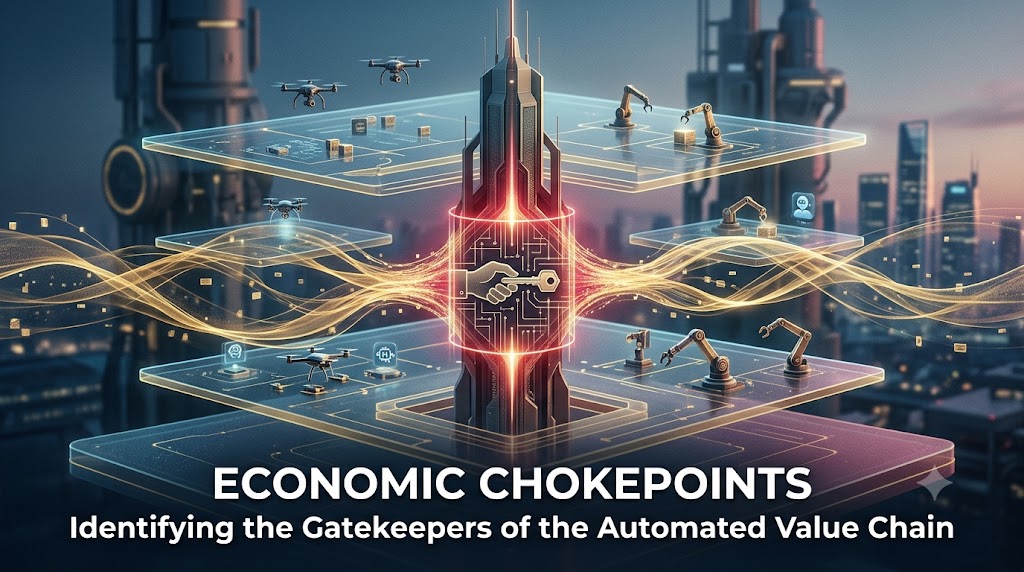
Identifying the Gatekeepers of the Automated Value Chain

Economic Chokepoints

Identifying the Gatekeepers of the Automated Value Chain

GUEST POST from Chateau G Pato


Introduction: The New Geography of Economic Power

Shift from physical supply chain bottlenecks to algorithmic and infrastructural chokepoints.

For decades, competitive advantage belonged to the builders—the organizations that could produce faster, scale cheaper, and execute with relentless efficiency. But as autonomous agent networks, real-time machine learning, and physical robotics converge to drive end-to-end business operations, the traditional rules of scale are breaking down. When execution becomes table stakes, value creation moves elsewhere.

We are witnessing a fundamental redistribution of economic power. Frictionless automation is eroding classical moats, while simultaneously giving rise to new, highly concentrated control points across global commerce. Power no longer rests solely in manufacturing plants or distribution channels; it now concentrates wherever substitution costs are highest and interoperability is lowest.

Defining the Automated Value Chain (AVC)

To understand where power sits today, we must map the Automated Value Chain (AVC)—an interconnected, self-orchestrating ecosystem where foundational AI models, agentic workflows, API routing protocols, and kinetic edge systems interact with minimal human friction.

Unlike legacy supply chains that move physical goods through predictable linear steps, the AVC is dynamic, software-driven, and highly interdependent. A single transaction may cross half a dozen algorithmic platforms, validation layers, and hardware backbones in milliseconds.

The Strategic Imperative: When execution is commoditized by software and automation, durable competitive advantage shifts from who can perform the work to who controls the critical, non-bypassable nodes through which that work must pass.

The Central Question for Modern Leaders

As organizations race to integrate agentic systems and automated workflows, business leaders must confront a critical question: Are you building proprietary value that increases your organizational autonomy, or are you simply becoming an efficient dependent on someone else’s chokepoint?

Navigating this shift requires looking beyond raw technical capability. It demands an intentional strategy that balances technological speed with human-centered agency, resilient ecosystem design, and a clear-eyed understanding of who holds the keys to the future value chain.

Section II

The Five Layers of Automated Value Chain Gatekeepers

Understanding where power concentrates when execution is automated.

Gatekeepers do not emerge by accident. In an automated value chain, control forms at the points of maximum dependency—where replacing a provider creates prohibitive technical friction, financial loss, or operational downtime. Power concentrates across five distinct layers.

The Golden Rule of AVC Control: Power in an automated system concentrates wherever substitution costs are highest and interoperability is lowest.

Layer 1

Infrastructure & Compute Tier

At the bedrock of all digital automation lies physical reality: advanced semiconductor fabrication, specialized acceleration hardware, hyperscale cloud facilities, and high-density energy grids.

The Chokepoint: Compute capacity and power access. Organizations that control chip lithography, data center land rights, and clean power interconnects hold absolute authority over who can train, fine-tune, and run next-generation autonomous models at scale.

Layer 2

Data & Context Tier

Foundational models are broadly accessible, but models without high-resolution domain context are useless in complex operational environments. This layer encompasses real-time sensory feeds, proprietary operational logs, and live telemetry.

The Chokepoint: “Context Monopolies.” Gatekeepers here own the ground-truth data pipelines that autonomous agents need to make safe, accurate decisions in specific industries—from clinical trials to smart supply chains.

Layer 3

Model Orchestration & Middleware Tier

Between raw data and final execution sits the routing infrastructure—the multi-agent frameworks, semantic routing engines, and API orchestration tools that decide which model executes which task.

The Chokepoint: Semantic interfaces and decision routing. The platforms that act as the default “default operating system” for AI agents control which downstream tools, microservices, and commerce channels get invoked—effectively becoming the new digital switchboards.

Layer 4

Physical-Digital Interoperability Tier

Automation ultimately has to reach into the physical world. This layer bridges software logic with kinetic action through warehouse management systems, autonomous fleet dispatching protocols, edge robotics OSs, and IoT control planes.

The Chokepoint: Translation software and kinetic standards. Whoever owns the operating system running the physical fulfillment hardware or autonomous logistics fleet controls the physical throughput of the digital economy.

Layer 5

Trust, Identity & Compliance Tier

In a world filled with synthetic media, agentic transactions, and automated decisions, trust becomes a scarce commodity. This layer covers machine identity verification, cryptographic provenance, real-time auditability, and regulatory compliance clearance.

The Chokepoint: Verification authority. The gatekeepers who certify that an agent-driven transaction is legitimate, safe, legally compliant, and authentic hold veto power over the entire value chain.

When leaders evaluate their long-term strategic posture, they must ask: Which layer are we operating in, and how many layer gatekeepers sit between us and our ultimate end customer or outcome?

Section III

The Human-Centered Impact: Experience, Agency, and Change Management

Balancing algorithmic efficiency with human purpose, trust, and adaptability.

Focusing exclusively on technical architecture and algorithmic throughput misses the most critical failure point in digital transformation: the human element. When an organization optimizes for raw automation without designing for human agency, it risks creating brittle systems, disengaged workforces, and alienated customers.

1. The Experience Friction: Loss of Humanity at the Gatekeeper Interface

When customer and employee experiences are mediated entirely through gatekeeper protocols, hyper-standardization takes over. Algorithms excel at predictability, but they struggle with empathy, nuanced problem-solving, and non-standard human needs.

When every touchpoint is filtered through rigid API rules and automated triage, the customer experience becomes transactional rather than relational. Organizations that default entirely to automated gatekeepers risk surrendering their unique brand voice and customer intimacy to external platform protocols.

2. Preserving Human Agency: Moving from Operators to Orchestrators

The rise of automated value chains doesn’t render humans obsolete—it fundamentally shifts their role. The goal of human-centered change is not to replace people, but to elevate them.

The Past

The Human as Operator

Executing repetitive tasks, manually routing data between systems, following fixed scripts, and acting as the mechanical engine of execution.

The Future

The Human as Orchestrator

Guiding agentic workflows, setting strategic boundaries, auditing algorithmic outputs for bias and ethics, and handling complex edge cases requiring deep empathy.

The Human-Centered Imperative: Technology should handle the routine execution so humans can focus on imagination, empathy, strategic alignment, and complex relationship-building.

3. Guiding Organizational Change: The Psychology of Dependency

Leading an organization through the shift toward automated value chains requires a deliberate change management approach. Leaders must address two distinct psychological hurdles across their teams:

  • The Anxiety of Disintermediation: Employees often view automation as a existential threat to their relevance. Leaders must clearly define the new path for career growth, demonstrating how automated systems empower team members to take on high-value, creative decision-making roles.
  • The Illusion of Control: Executives often struggle with relinquishing operational execution to external algorithmic gatekeepers. Change leaders must build new governance frameworks that allow teams to maintain visibility, trust, and strategic control over automated systems without micromanaging the underlying code.

Sustained competitive advantage in the age of automation will not come from removing humans from the equation. It will belong to the organizations that design seamless, collaborative partnerships between human creativity and automated scale.

Section IV

Strategic Framework: Auditing Your Position in the Value Chain

Evaluating dependency, strategic leverage, and long-term autonomy.

To make proactive, human-centered decisions in an automated economy, leadership teams must first establish a clear-eyed diagnosis of where their organization sits today—and where it risks being squeezed tomorrow. Strategic resilience requires mapping both operational dependencies and unique value drivers.

1. The AVC Audit Matrix

By evaluating two primary dimensions—Degree of Operational Uniqueness and Level of Gatekeeper Dependency—organizations generally fall into one of four distinct positions within the Automated Value Chain (AVC):

High Dependency / Low Uniqueness

The Commoditized Dependent

The Position: Performing interchangeable tasks while relying entirely on external gatekeeper platforms for discovery, routing, and fulfillment.

The Strategic Risk: High vulnerability to margin compression, algorithm updates, and sudden fee adjustments with zero pricing power or direct customer relationships.

Low Dependency / Low Uniqueness

The Bare Utility

The Position: Operating independently of major gatekeepers, but delivering standardized execution with minimal differentiation.

The Strategic Risk: Rapid disintermediation as agentic workflows easily automate, commoditize, or route around low-complexity operations.

Low Dependency / High Uniqueness

The Strategic Node

The Position: Owning indispensable domain context, trusted human relationships, or proprietary physical capabilities that machines cannot easily replicate or bypass.

The Strategic Risk: Continuous pressure from scaling platform ecosystems attempting to duplicate, standardise, or encapsulate your specialized knowledge.

High Dependency (By Others) / High Uniqueness

The Ecosystem Gatekeeper

The Position: Controlling an essential chokepoint—such as identity clearance, context routing, or compute access—that other ecosystem players must pass through.

The Strategic Risk: Regulatory scrutiny, antitrust exposure, and high-stakes responsibility for maintaining system trust and uptime.

Strategic Imperative: The goal for most organizations is not necessarily to become a global gatekeeper, but to secure a resilient position as a Strategic Node—owning non-replaceable context and human value while maintaining modular relationships with platform gatekeepers.

2. Practical Risk Mitigation Strategies

Once leaders recognize their position in the AVC landscape, they can execute targeted strategies to preserve strategic flexibility and prevent platform lock-in:

  • Architect for Model & API Redundancy: Avoid building single-threaded dependencies on one proprietary foundation model or middleware vendor. Ensure agent architectures support multi-model orchestration and open-standard fallback protocols.
  • Own the Ground-Truth Context: Build proprietary, continuously updating telemetry and context loops that external platform algorithms cannot scrape or approximate.
  • Deepen Direct Human Relationships: Cultivate brand equity, trust, and executive intimacy that transcend automated channels, ensuring customers actively prefer dealing directly with your organization.
  • Establish Governance & Exit Protocols: Routinely audit third-party AI dependencies, setting clear financial and operational thresholds for when a platform partner’s lock-in poses an unmanageable risk.

Section V

Futurology & Strategic Conclusion: Designing Resilient Ecosystems

Navigating the tension between open ecosystems and systemic consolidation.

As we look toward the horizon of fully autonomous agent networks and hyper-automated supply chains, two divergent futures emerge. The choices leaders make today will determine whether the automated value chain becomes an engine of open innovation or a system of hyper-concentrated control.

1. The Ecosystem Tug-of-War: Monopolistic Enclosure vs. Open Protocols

The future of the digital economy will be defined by a continuous tension between two structural forces:

Scenario A

The Proprietary Fortress

Hyperscale gatekeepers build end-to-end, vertically integrated walled gardens. By coupling hardware compute, foundational models, proprietary context pipelines, and kinetic fulfillment systems, these mega-platforms make it virtually impossible for businesses to operate outside their controlled ecosystems.

Scenario B

The Open Orchestration Web

Open-source model architectures, decentralized identity protocols, and interoperable agent standards gain critical mass. In this future, switching costs remain low, market access remains democratized, and value accrues to specialized domain experts rather than platform landlords.

In reality, the global economy will likely exist in a hybrid state. Smart organizations must design their technological and operational architectures to thrive in both environments—building modularity that takes advantage of proprietary platform scale without getting trapped inside a single fortress.

2. The Leader’s Imperative: Strategic Courage in the Age of Automation

Innovation leadership in the age of intelligent automation is no longer about who adopts tools the fastest. It is about the intentional, human-centered design of your organization’s role within a broader economic ecosystem.

The Final Takeaway: Technology provides speed, scale, and execution; human vision provides direction, ethics, and meaning. The leaders who succeed will not be those who passively hand off their business to automated gatekeepers, but those who actively shape resilient, human-centered value chains.

Three Questions for Every Leadership Team Today:

  1. Which of our core capability layers are at risk of being commoditized by automated gatekeepers over the next 3 to 5 years?
  2. What irreplaceable human experience, domain context, or trusted relationship do we own that machines and external APIs cannot easily replicate?
  3. Are our digital transformation initiatives empowering our workforce to become creative orchestrators, or merely replacing them with third-party software dependencies?

The automated value chain is being rewritten right now. By understanding where power concentrates, auditing your dependencies, and elevating human agency, you can ensure your organization doesn’t just survive the age of automation—it leads it.


Frequently Asked Questions

Key Insights & Strategic FAQ

Core questions on gatekeepers, human agency, and value chain strategy.

What is an Economic Chokepoint in an Automated Value Chain?

An economic chokepoint is a critical, non-bypassable control point within an automated ecosystem where power concentrates because substitution costs are extremely high and interoperability is low. Unlike traditional physical supply chain bottlenecks, modern chokepoints exist across software and infrastructure—such as specialized chip lithography, proprietary context data feeds, or default agent orchestration engines that control API transaction flow.

How does automation change the role of human workers in the value chain?

Automation shifts human workers from operators (executing repetitive tasks and manual routing) to orchestrators (setting strategic boundaries, guiding agentic workflows, auditing algorithmic decisions for bias/ethics, and managing high-empathy customer relationships). The goal of human-centered innovation is not workforce replacement, but elevating human capacity to focus on imagination, judgment, and trust.

How can an organization prevent platform lock-in from automated gatekeepers?

Organizations can preserve strategic autonomy by maintaining multi-model redundancy, building open-standard fallback protocols, owning their unique domain context, and deepening direct, non-intermediated customer relationships. By ensuring tech stacks are modular rather than single-threaded, leaders can leverage platform scale without becoming commoditized dependents.

Image credit: Gemini

Subscribe to Human-Centered Change & Innovation WeeklySign up here to get Human-Centered Change & Innovation Weekly delivered to your inbox every week.

Shifting from Project-Based Change to Continuous Agility

From Episodic to Perpetual
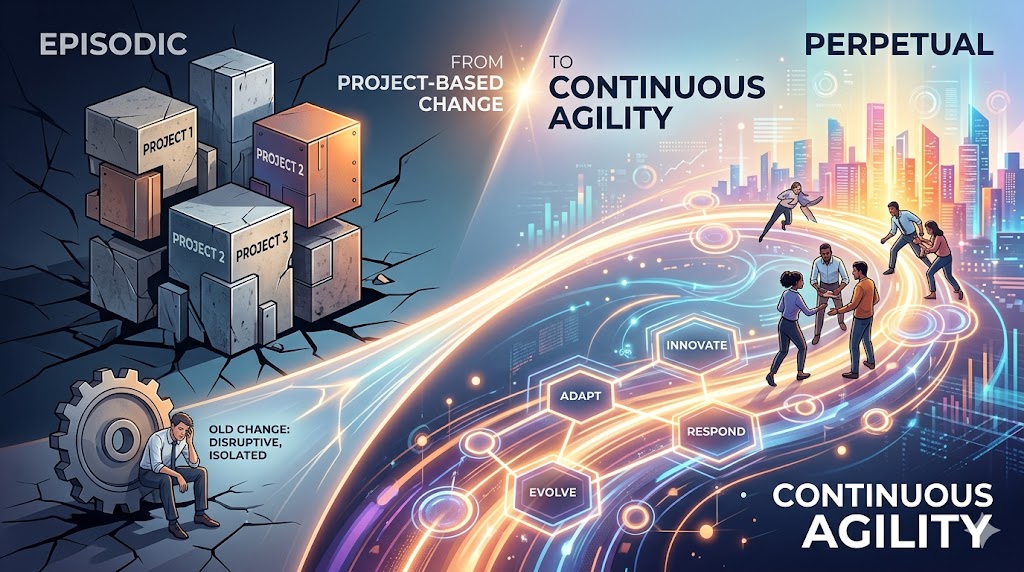
Shifting from Project-Based Change to Continuous Agility

GUEST POST from Art Inteligencia


The Myth of the “Post-Change” Plateau

For decades, organizational leaders have operated under a comforting illusion: that change is a temporary disruption. We have been trained to view transformation as a bridge to be crossed, a painful but finite journey from an old way of working to a stable, predictable new equilibrium. This mindset promises a “post-change” plateau—a comfortable resting place where the team can catch its breath, look back at the milestone achieved, and return to business as usual. But in today’s hyper-accelerated, AI-driven business landscape, that plateau is a mirage.

The traditional model of change management—most famously encapsulated by Kurt Lewin’s classic “Unfreeze-Change-Refreeze” framework—is no longer just outdated; it is actively harming modern organizations. The idea that we can melt down an organization’s behaviors, reshape them into a new configuration, and then “refreeze” them into a permanent state assumes a static environment that no longer exists. By the time a massive, top-down transformation project is successfully “frozen” into place, the market realities that triggered it have already shifted. We are trying to freeze water in the middle of a rapids.

“The traditional model of change management assumes a static environment that no longer exists. We are trying to freeze water in the middle of a rapids.”

When organizations rely on this episodic, project-based approach to change, they pay a massive psychological and operational tax:

  • Change Fatigue: Employees experience transformation as a series of heavy, disruptive jolts. Because each project is treated as an extraordinary event, it requires immense kickoff inertia, resulting in organizational anxiety and eventual cynicism.
  • The Churn of Disbanding Teams: Project-based change relies on temporary task forces and external consultants. When the project officially “ends” and the banners are taken down, the core team disbands. Without continuous care, the organization inevitably regresses to old habits, leading to what I call experience revenue leakage—where the intended value of the transformation quietly drains away.
  • Reactive Innovation: Waiting for a formal “project” to fix a broken process means the organization is always reacting to past disruptions rather than anticipating future shifts.

To survive and thrive, we must abandon the theater of episodic transformation. True organizational agility requires a fundamental paradigm shift: treating change not as a discrete project to be managed, but as a core, human-centered organizational capability that runs continuously and invisibly in the background. We must move from managing change to architecting a perpetual state of readiness.

The Mindset Shift: From “Surviving the Storm” to “Navigating the Currents”

Shifting an organization from episodic to perpetual change is not primarily a structural challenge—it is a psychological one. In a traditional environment, employees view change as a storm to be weathered. They brace themselves, dig their heels in, and look for the fastest path to safety. This reactive survival mechanism creates immense friction because it treats change as an unnatural anomaly rather than an organic reality.

To cultivate continuous agility, leaders must re-engineer the internal narrative. We have to move our teams away from the exhausting cycle of “When will this project be over?” and orient them around a new, human-centered question: “How do we iteratively improve how we work every day?” This requires a profound cultural pivot across three core pillars:

1. Designing for Psychological Safety, Not Just Momentum

Continuous change cannot mean continuous chaos. If employees feel that their roles, tools, and expectations are in a permanent state of frantic upheaval, burnout is inevitable. Human-centered agility balances velocity with stability. While processes and technologies must evolve iteratively, the core values, organizational purpose, and psychological safety of the environment must remain rock-solid. People don’t resist change; they resist the vulnerability and lack of control that poorly designed change forces upon them. When leaders foster a high-safety environment, adaptation becomes a natural habit rather than a threat.

2. Normalizing the “Evolutionary” Mindset

We need to dismantle the idea that a system, software tool, or workflow is ever truly “done.” Instead, we must socialize the concept of the permanent beta. When an organization adopts an evolutionary mindset, everyone understands that a new launch is merely version 1.0, and that feedback loops will naturally dictate versions 2.0, 3.0, and beyond. This shifts the employee experience from a series of high-stakes, stressful disruptions to a continuous rhythm of micro-adjustments.

“People don’t resist change; they resist the vulnerability and lack of control that poorly designed change forces upon them.”

3. From ROI to VOI: Redefining How We Measure Success

Our legacy accounting and management systems are hardwired for project-based thinking. They demand strict Project Return on Investment (ROI) metrics based on fixed scopes and predictable timelines. But you cannot measure continuous adaptability with static tools. Forward-thinking organizations are shifting their focus toward the Value of Innovation (VOI) and the **Adaptability Index** of their teams. Instead of asking, “Did this project finish on time and under budget?” leaders must begin asking:

  • How quickly can our teams pivot when user data or market signals change?
  • Are we reducing our organizational drag and the time-to-market for new ideas?
  • How effectively are our people learning, unlearning, and upskilling in real time?

By shifting our language, our metrics, and our cultural expectations, we stop treating change as an exhausting obstacle course. Instead, we train our organizations to become agile navigators, capable of reading the currents and adjusting the sails without ever losing headway.

The Architectural Blueprint: Building the Continuous Change Infrastructure

A shift in mindset is meaningless without the structural scaffolding to support it. If your organization’s governance, funding, and team structures remain rigidly tied to traditional project boundaries, your people will naturally default back to episodic behaviors. To make agility perpetual, we must redesign the operational architecture—the plumbing of the enterprise—to support continuous, human-centered evolution.

Building this infrastructure requires dismantling the legacy silos that isolate change management and replacing them with three modern operational foundations:

1. De-Siloing Change Management: The Integrated Capability

For too long, change management has been treated as an ambulance that follows a project team around, patching up employee resistance after the strategy and technology decisions have already been made. True agility requires moving change practitioners out of isolated Project Management Offices (PMOs) and embedding them directly into product development, operations, and customer experience teams.

Change capability must become a decentralized, peer-to-peer function. Rather than relying on a central task force to swoop in and “manage” people through a milestone, we must equip frontline managers and team leads with the skills, tools, and autonomy to facilitate micro-changes in real time. When change expertise is woven directly into the daily workflow, the friction of transformation drops precipitously.

2. Perpetual Feedback Loops and Experience Measurement

To adjust continuously, an organization needs to feel what is happening on the front lines instantly. Waiting for an annual engagement survey or a post-project review means you are steering the ship by looking at the wake. Continuous agility relies on real-time feedback loops that capture both the Voice of the Employee (VoE) and the Voice of the Customer (VoC).

We must transition from lagging operational metrics to leading Experience Level Measures (XLMs). By consistently monitoring friction points in software usability, workflow bottlenecks, and employee sentiment, leadership can identify exactly where micro-adjustments are needed before they accumulate into a crisis that requires a macro-intervention. This proactive tuning prevents experience revenue leakage—the steady loss of productivity, engagement, and customer retention caused by clunky, outdated processes.

“Change management should not be an ambulance that patches up resistance after decisions are made. It must be embedded directly into the daily architecture of how we design work.”

3. Dynamic Resource Allocation and Capabilities Funding

The traditional corporate budgeting cycle is the ultimate enemy of agility. When capital is locked into rigid, multi-year project plans, pivoting becomes an bureaucratic nightmare. If a team discovers a better way to solve a problem mid-year, but cannot access funds because the budget is anchored to an inflexible project charter, innovation dies.

Perpetual organizations fund capabilities, value streams, and permanent product teams rather than static projects. By adopting a dynamic resource allocation model, leadership can adjust funding levels, reallocate talent, and shift priorities incrementally based on real-world outcomes and shifting market conditions. This ensures that capital and human talent flow smoothly to where they can deliver the highest value, rather than being trapped in a declining project plan.

By integrating change capability into teams, installing continuous feedback loops, and freeing capital from rigid cycles, organizations build a resilient framework. Change ceases to be a disruptive corporate event—it becomes the natural, fluid rhythm of daily operations.

The Role of the Human-Centered Leader in a Perpetual State

When change becomes a permanent condition rather than a temporary project, the traditional playbook for leadership becomes obsolete. The era of the top-down executive command—the leader who stands at a podium during a quarterly town hall, announces a sweeping five-year transformation plan, and demands compliance—is over. In a state of continuous agility, leaders cannot command commitment; they must design an environment that naturally invites it.

To guide an organization through perpetual evolution without inducing widespread panic and fatigue, leaders must evolve into experience architects. This requires an intentional pivot in how authority is leveraged, how culture is modeled, and how performance is measured across three vital dimensions:

1. From Mandated Directives to Intent Orchestration

In an episodic change environment, leadership dictates the exact steps of a transformation. In a perpetual environment, doing so creates a massive bottleneck. Human-centered leaders practice what I call Intent Orchestration—clearly defining the strategic “North Star,” the guardrails, and the desired outcomes, while radically decentralizing the execution to the frontline teams.

Instead of managing tasks, the leader’s job is to ensure absolute clarity of purpose. When teams deeply understand the *why* behind the organization’s direction, they possess the autonomy to co-create the *how* in real time. This democratic approach to change completely reframes the employee experience: people rarely sabotage a strategy they helped build.

2. Moving from Risk Mitigation to Experimentation Safespaces

Legacy leadership models are fundamentally hardwired for risk avoidance, treating deviations from a plan as failures. But if continuous adaptation is your goal, treating every mistake as a flaw will instantly paralyze your workforce. Leaders must actively de-risk the concept of failure by building bounded experimentation spaces.

This means normalizing small-scale, rapid prototyping where hypotheses can be tested with low stakes. When an experiment fails to yield the expected result, a human-centered leader reframes it not as a performance failure, but as a critical data-gathering exercise. By celebrating the insights gained from these micro-failures, leadership strips away the vulnerability that typically prevents people from trying new ways of working.

“People rarely sabotage a strategy they helped build. When leaders orchestrate intent and decentralize execution, adaptation becomes a collaborative act.”

3. Redesigning Performance Architecture to Reward Adaptability

An organization will always optimize for what is measured and rewarded. If your human resource structures and performance reviews still evaluate employees solely on their adherence to fixed annual goals, your culture will remain rigidly resistant to change. Leaders must work to intentionally redesign the performance architecture.

Continuous agility requires that we begin evaluating, promoting, and compensating individuals based on their capacity to pivot, their commitment to continuous learning, and their cross-functional collaboration skills. We must shift our recognition systems to reward:

  • Unlearning Agility: The ability to quickly discard outdated practices and adopt new methodologies or technologies.
  • Value-Stream Collaboration: Breaking down functional silos to solve problems dynamically across traditional department lines.
  • Mentorship in Change: Championing and supporting peers through structural and technological transitions.

By transforming from direct controllers into cultural architects, leaders provide the psychological anchor their teams need. They prove that a commitment to continuous agility doesn’t mean hanging over a cliff—it means being equipped with the trust, safety, and autonomy to navigate the future together.

Overcoming the Pitfalls of Perpetual Agility

While the benefits of continuous agility are undeniable, executing this shift carelessly can create its own set of organizational hazards. When everything is constantly moving, it is easy for an organization to spin out of control. Without intentional guardrails, “perpetual change” can quickly degenerate into two dangerous pathologies: chronic employee burnout or aimless, chaotic pivoting. As experience designers, we must anticipate these friction points and architect the safeguards to prevent them.

Navigating a continuous state of readiness requires actively mitigating two primary structural and psychological pitfalls:

1. Combating Continuous Fatigue: Designing “Rest Stops” in the Current

The most common objection to continuous change is simple: “We are already exhausted.” If leaders merely accelerate the cadence of traditional, heavy project demands, the workforce will collapse under the weight of change fatigue. Continuous agility must not mean relentless, unpaced sprinting. It requires a predictable operational rhythm that builds recovery directly into the system.

To keep the human engine running sustainably, we must design strategic “rest stops” within our continuous workflows. This involves:

  • Establishing Predictable Rhythms: Utilizing stable, cyclical cadences (such as fixed sprint cycles or quarterly synchronization intervals) so employees always know when intense focus is required and when a stabilization period is coming.
  • Celebrating Micro-Wins: In episodic change, celebration only happens at the massive “Go-Live” milestone. In a perpetual state, leaders must deliberately pause to surface, share, and celebrate small, iterative improvements to keep morale high.
  • Protecting Cognitive Slack: Intentionally allocating time for teams to step away from delivery to focus on reflection, documentation, and personal upskilling. Slack is not wasted time; it is the shock absorber that prevents burnout.

2. Avoiding “Motion Without Progress”: Anchor to the North Star

The second pitfall is structural: an organization becomes so obsessed with pivoting that it forgets where it is going. When a company mistakes activity for progress, it suffers from strategic whiplash. Teams constantly change direction based on the latest micro-signal, creating a fragmented employee experience and a confusing customer journey.

“Continuous agility without a fixed destination isn’t innovation—it’s just organizational vertigo. Agility requires an immovable anchor.”

To prevent continuous evolution from fracturing into aimless chaos, the entire ecosystem must be tightly anchored to an unchanging, overarching purpose—the **Strategic North Star**. While our software, our processes, and our short-term tactics must remain completely fluid, our deep organizational mission, values, and long-term vision must remain absolute constants. Every micro-change proposed by a frontline team must be explicitly mapped back to this North Star. If a pivot doesn’t bring the organization closer to fulfilling its core purpose, it is rejected as background noise.

By protecting human energy with sustainable cadences and shielding strategic focus with an unyielding North Star, leaders ensure that perpetual change remains a disciplined, empowering capability rather than an exhausting corporate tax.

Conclusion: The Ultimate Competitive Advantage

The acceleration of our business environment is not going to slow down. The convergence of advanced AI tools, volatile market shifts, and evolving customer expectations means that the organizations relying on legacy, project-based transformation models will increasingly find themselves trapped in a state of perpetual catch-up. They will continue to launch heavy, disruptive initiatives to solve yesterday’s problems, paying a steep tax in employee burnout and lost momentum.

The future belongs to the organizations that realize the ultimate competitive advantage is no longer about executing a single project perfectly. It is about building a human-centered ecosystem where adaptation is so fluid, so deeply integrated into the daily culture, that change itself becomes invisible. It ceases to be an extraordinary corporate event and simply becomes the way work gets done.

“The ultimate competitive advantage is no longer about executing a single project perfectly. It is about making change invisible because it is simply part of your daily operational fabric.”

This transition doesn’t happen overnight by executive decree; it is built through the accumulation of small, deliberate choices. If you want to break the exhausting cycle of episodic change and start architecting a perpetual state of readiness within your own organization, you can start today with one simple, human-centered micro-shift:

The Next Step: At your very next team alignment or leadership meeting, intentionally banish the phrase “when things get back to normal.” Replace it with a collective focus on identifying just one operational bottleneck or friction point that your team can iteratively improve or automate over the next two weeks. By decentralizing the authority to change and celebrating that first micro-evolution, you begin dismantling the illusion of the plateau—and you plant the seeds for a culture of continuous agility.

Frequently Asked Questions

To help teams navigate this paradigm shift, here are answers to the most common questions about moving from project-based change to continuous agility, structured for both human readers and search technologies.

1. How do you prevent employee burnout if change never actually stops?

Continuous agility does not mean working at a frantic, non-stop pace. Instead, it prevents burnout by replacing massive, high-stress “jolts” of project-based change with small, manageable micro-adjustments. To make this sustainable, leaders must design structured rhythms—such as stable sprint cycles—that include built-in recovery periods, protect “cognitive slack” time for reflection, and actively celebrate small, iterative wins along the way.

2. What is the difference between genuine agility and aimless corporate pivoting?

The difference lies in having a fixed destination. Aimless pivoting occurs when an organization reacts erratically to every short-term signal without a clear strategy, leading to organizational whiplash. Genuine agility pairs a fluid, adaptable execution strategy with an unchanging, rock-solid Strategic North Star (the core organizational mission and long-term vision). Every micro-change must actively advance the team toward that permanent anchor.

3. How do you measure the return on investment (ROI) of an ongoing, continuous capability?

Traditional, static ROI metrics are designed for fixed project scopes and timelines. For continuous capabilities, forward-thinking organizations measure the Value of Innovation (VOI) and track an Adaptability Index. This involves assessing leading Experience Level Measures (XLMs)—such as how quickly teams pivot based on user feedback, the reduction of operational drag, and the speed at which value-stream improvements eliminate experience revenue leakage.


Image credit: Gemini

Subscribe to Human-Centered Change & Innovation WeeklySign up here to get Human-Centered Change & Innovation Weekly delivered to your inbox every week.

Values-Driven Conflict Resolution

LAST UPDATED: May 9, 2026 at 5:19 PM

Values-Driven Conflict Resolution

GUEST POST from Chateau G Pato


The Innovation-Conflict Paradox

In many corporate environments, conflict is viewed as a systemic failure — a breakdown in communication or a lack of team cohesion. We are taught to “de-escalate” and “keep the peace.” However, if we look at conflict through the lens of innovation, we see something different: friction is the prerequisite for fire.

The paradox lies in our approach. Most organizations treat conflict as a fire to be extinguished as quickly as possible. This leads to the “compromise trap,” where teams reach a middle ground that is safe but ultimately uninspired. When we rush to end the discomfort of disagreement, we often extinguish the very energy required to ignite a breakthrough.

To build a future-ready organization, we must shift our paradigm. We are moving away from transactional conflict management — which focuses on who is right and who is wrong — toward Values-Driven Conflict Resolution. This approach uses the organization’s core values as a strategic North Star, transforming interpersonal friction into creative fuel.

Grounding Conflict in Shared Values

When conflict arises, it often feels personal. However, in a high-performing innovation culture, most disagreements aren’t actually about personalities — they are about competing priorities. Without a clear North Star, these disputes devolve into a “battle of wills.” By grounding our resolution process in shared values, we provide the team with an objective tie-breaker that transcends individual ego.

Adopting a human-centered lens means acknowledging that professional friction is frequently rooted in a perceived threat to one’s values or goals. If one team member values stability while another values disruption, conflict is inevitable. The goal isn’t to eliminate these differences, but to align them toward a common “Why.” When the overarching purpose is clear, we can appreciate diverse perspectives as necessary components of a holistic solution.

Central to this transition is the creation of psychological safety. For values-driven resolution to work, individuals must feel safe enough to voice “productive disagreement” without fearing for their status or safety within the group. It is the responsibility of leadership to ensure that the friction of ideas never becomes a friction of people. When trust is the foundation, conflict becomes a collaborative tool rather than a destructive force.

The Framework: The Values-Alignment Audit

To move beyond the surface level of a dispute, we must apply a structured diagnostic approach. The Values-Alignment Audit is designed to strip away the emotional noise and reveal the strategic core of the disagreement. It shifts the conversation from a subjective clash of opinions to an objective evaluation of organizational priorities.

Step 1: Identify the Value Clash

The first step is to name the tension. Most innovation-stifling conflicts are actually invisible tug-of-wars between two positive values. Are we debating Speed vs. Quality? Innovation vs. Compliance? Or perhaps Customer Experience vs. Operational Efficiency? By identifying the specific values at play, we stop fighting people and start weighing priorities.

Step 2: Externalize the Problem

Conflict becomes toxic when it is internalized. Using human-centered design principles, we “externalize” the conflict by placing it on the table between the participants. The mindset shifts from “Me vs. You” to “Us vs. This Value Mismatch.” This psychological distancing allows collaborators to work together to solve the friction, rather than defending their own territory.

Step 3: The Futurologist’s Perspective

Finally, we must apply a temporal lens to the resolution. A solution that solves a conflict today but undermines our long-term brand promise or cultural integrity is a failure. We must ask: “Does this resolution serve our future selves?” By assessing the long-term impact, we ensure that our decisions today are building the organization we want to be tomorrow.

Moving from Compromise to Synthesis

In the traditional model of conflict resolution, the goal is often compromise. In a compromise, both parties give something up to meet in the middle. While this may end the argument, it often results in a “diluted” solution — a beige outcome that lacks the conviction required for true innovation. As change leaders, we must reject the mediocrity of the middle ground.

Instead, we strive for synthesis. Synthesis is the process of taking two seemingly opposing ideas and combining them to create a third, superior option that didn’t exist before. This is where Design Thinking becomes a powerful tool for resolution. By re-framing the conflict as a design challenge — using “How Might We” statements — we can bridge the gap between values like Standardization and Personalization without sacrificing the integrity of either.

Consider a high-stakes pivot where a team is divided between Technical Perfection and Market Readiness. A compromise would be to release a buggy product late. A synthesis, however, might involve a phased rollout or a modular architecture that satisfies the need for immediate feedback while maintaining a roadmap for excellence. When we stop viewing values as “either/or” and start seeing them as “yes/and,” we unlock the creative potential hidden within our disagreements.

Strategic Tools for Leaders

Values-driven resolution requires more than just a change in mindset; it requires a practical toolkit that leaders can deploy when the heat of innovation begins to singe the edges of collaboration. These tools are designed to make the invisible visible and turn abstract tensions into actionable data.

The Value Canvas

Borrowing from the tradition of visual collaboration, the Value Canvas is a shared workspace where stakeholders map their competing priorities. By physically plotting “Value A” against “Value B,” teams can identify where they are aligned and where their perspectives diverge. This visual transparency removes the “hidden agendas” that often derail productive debate and allows the group to iterate on the resolution just as they would a product prototype.

Language as a Catalyst

The words we choose dictate the emotional temperature of the room. We must train ourselves to shift from adversarial language to collaborative inquiry. Instead of saying “I disagree with that direction,” which can trigger a defensive response, try: “I am concerned this choice conflicts with our core value of [Value X]. How might we honor that value while still achieving this goal?” This subtle shift moves the speaker from an opponent to a guardian of the organization’s integrity.

Pre-Mortems as Prevention

The best way to manage conflict is to anticipate it. Before a project kicks off, conduct a Value Pre-Mortem. Ask the team: “If this project fails due to a values clash six months from now, what would that look like?” By identifying potential friction points — such as Security vs. Speed — before they become high-stakes crises, you can design the resolution mechanisms into the project’s governance from day one.

Conclusion: Conflict as a Design Requirement

In the evolving landscape of work, we must stop viewing conflict as an obstacle to be avoided and start seeing it as a design requirement. A team that never disagrees is a team that is likely stagnating, operating within the safe confines of the status quo. To innovate is to challenge, and to challenge is to create friction.

As we move deeper into an era defined by automation and agentic AI, the technical “how-to” will increasingly be handled by machines. This elevates the importance of uniquely human capabilities. Values-driven conflict synthesis — the ability to navigate deep-seated disagreements and emerge with a more robust, ethically aligned truth — will become one of the greatest competitive advantages a leader can possess.

The goal of the modern organization is not to achieve a sterile, conflict-free harmony. Instead, it is to build a culture where the heat of disagreement is consistently channeled through the prism of shared values. When we do this, we don’t just solve problems; we design a more resilient, human-centered future.

“Don’t aim for harmony at the expense of progress. Aim for alignment at the height of the heat.”

Frequently Asked Questions

Why is conflict considered a prerequisite for innovation?

Conflict represents the collision of diverse perspectives and priorities. Without this friction, teams often settle for the safest, most obvious ideas. By harnessing disagreement through a values-driven lens, organizations can move past superficial consensus to reach breakthrough solutions that are both creative and strategically aligned.

What is the difference between compromise and synthesis?

Compromise usually involves both parties “giving up” something to reach a middle ground, often resulting in a diluted or mediocre outcome. Synthesis, however, uses design thinking to integrate the core needs of both sides into a new, superior “third way” that honors the integrity of the competing values without sacrificing quality.

How can leaders prevent toxic conflict in high-pressure environments?

Prevention starts with establishing psychological safety and using tools like the “Value Pre-Mortem.” By identifying potential value clashes before they become personal and establishing shared language that focuses on organizational values rather than individual egos, leaders can keep the focus on the problem rather than the person.


Bottom line: Futurology is not fortune telling. Futurists use a scientific approach to create their deliverables, but a methodology and tools like those in FutureHacking™ can empower anyone to engage in futurology themselves.

Image credit: Gemini

Subscribe to Human-Centered Change & Innovation WeeklySign up here to get Human-Centered Change & Innovation Weekly delivered to your inbox every week.
Decision Paralysis in Teams

A Human-Centered Playbook

LAST UPDATED: March 31, 2026 at 3:46 PM

Decision Paralysis in Teams

GUEST POST from Chateau G Pato


The Anatomy of the Stall: Why Teams Freeze

In the realm of human-centered innovation, we often focus on the spark of the idea, yet the greatest threat to progress isn’t a lack of creativity — it’s the structural and psychological inertia that sets in when it’s time to choose. Decision paralysis occurs when the friction of making a choice outweighs the perceived benefit of the action itself.

The Paradox of Choice in Strategy

We operate in an era of “data abundance,” where teams often mistake more information for more clarity. However, according to the paradox of choice, an increase in options leads to higher cognitive load and increased anxiety. In a strategic context, this manifests as Analysis Paralysis: the team continues to request “one more study” or “one more data point” as a defense mechanism against the vulnerability of choosing.

The Fear of the “Wrong” Move

At the heart of every stalled project is Loss Aversion. Humans are evolutionarily hardwired to feel the pain of a loss twice as strongly as the joy of a gain. When teams face high-stakes innovation, the fear of losing budget, reputation, or “being wrong” creates a bias toward the status quo. To move forward, we must design experiences that re-frame “inaction” as the highest-risk move a team can make.

The Hidden Tax of Consensus

Many organizations confuse collaboration with consensus. While human-centered design thrives on diverse perspectives, requiring 100% agreement before proceeding acts as a tax on speed. This “consensus trap” often results in “vanilla” decisions — watered-down versions of ideas that offend no one but inspire no one, ultimately leading to strategic drift.

Cognitive Overload and the “Decision Fatigue” Cycle

Teams are often asked to make their most critical pivots at the end of exhausting cycles. When cognitive resources are depleted, the human brain defaults to the path of least resistance: postponement. Recognizing that decision-making is a finite resource is the first step in designing a playbook that protects the team’s mental energy for the moments that truly matter.

Designing for Decision Confidence

Confidence is not a personality trait; it is a byproduct of a well-designed environment. To move a team from hesitation to action, we must move away from accidental decision-making and toward intentional decision architecture. This involves creating the “scaffolding” that supports the weight of a choice before that choice is ever made.

Establishing Decision Architecture

The most common cause of paralysis is ambiguity regarding how the choice will be finalized. By implementing clear frameworks — such as RAPID (Recommend, Agree, Perform, Input, Decide) or DACI (Driver, Approver, Contributor, Informed) — we strip away the interpersonal friction. When the rules of engagement are transparent, the team can focus 100% of their cognitive energy on the problem at hand rather than navigating organizational politics.

The Power of the Minimum Viable Decision (MVD)

Innovation often stalls because we treat every choice as if it were carved in stone. We must train teams to identify Type 1 vs. Type 2 decisions. Type 1 decisions are “one-way doors” — nearly impossible to reverse. Type 2 decisions are “two-way doors” — they are reversible and provide a learning opportunity. The Minimum Viable Decision focuses on making the smallest possible move that generates real-world data, effectively lowering the stakes and reducing the barrier to entry.

Reducing Cognitive Load Through Synthesis

Information density is the enemy of clarity. To design a better decision experience, we must act as information curators. This means moving beyond the “50-page deck” and toward visual synthesis tools like:

  • Trade-off Matrices: Visually weighing “Value to User” against “Feasibility to Build.”
  • Impact Mapping: Connecting the decision directly to the desired human outcome.
  • Choice Forcing: Limiting the team to three distinct paths to prevent the dilution of focus.

Managing the “Emotional Tail” of Decisions

Human-centered design acknowledges that decisions carry emotional weight. We must build in “Decision Buffer Zones” — intentional pauses that allow the team to process the emotional impact of a pivot. By acknowledging the human cost of “killing a project” or changing direction, we preserve the team’s long-term psychological safety and their willingness to commit to the next big choice.

The Human-Centered Playbook: Actionable Plays

Overcoming paralysis requires more than just willpower; it requires a set of repeatable “plays” that teams can execute when they feel the momentum slowing. These plays are designed to disrupt the status quo, lower the emotional cost of failure, and refocus the team on the ultimate goal: delivering value to the human beings at the end of the chain.

Play 1: The Pre-Mortem Ritual

While most teams do a post-mortem after a project fails, a human-centered approach uses the Pre-Mortem to neutralize fear at the start. In this play, the team imagines it is one year in the future and the decision they are about to make has resulted in a total disaster. By working backward to identify the causes of this hypothetical failure, the team can address risks proactively rather than avoiding the decision altogether. It transforms “fear of the unknown” into a “checklist of mitigations.”

Play 2: Time-Boxing the Truth

Perfectionism is often procrastination in a tuxedo. To counter this, we implement Decision Sprints. This play involves setting a hard, non-negotiable deadline for a choice. If the team cannot decide by the end of the sprint, the “Default Action” (agreed upon at the start) is automatically triggered. This forces the team to move from abstract debate to active validation, emphasizing that a 70% solution today is often more valuable than a 90% solution in three months.

Play 3: The Safe-to-Fail Boundary

To encourage bold moves, leaders must define the “Sandbox” — specific areas where teams have full autonomy to experiment because the consequences of failure are contained. By clearly mapping out where a “wrong” decision won’t sink the ship, we provide the psychological safety necessary for creative risk-taking. This play relies on the principle of contained blast radius, ensuring that innovation doesn’t get throttled by unnecessary caution.

Play 4: Visualizing the Trade-offs

When teams are stuck, it’s often because they are looking at the decision from an internal, political, or technical lens. This play uses Experience Mapping to visualize how each option directly impacts the end-user’s journey. By shifting the conversation from “What do we want?” to “Which option best solves their friction?”, we remove ego from the equation. Visualizing these trade-offs on a shared canvas makes the “right” path often emerge organically from the data.

Play 5: The “Two-Way Door” Tagging

Every proposed action in a meeting should be tagged as either a One-Way Door (irreversible/high cost) or a Two-Way Door (reversible/low cost). High-velocity teams recognize that 90% of their decisions are actually Two-Way Doors. This simple linguistic play lowers the collective blood pressure of the room and empowers sub-teams to move forward without waiting for top-down approval.

Leading Through the Fog

When a team is paralyzed, they don’t just need a better process; they need a different kind of leadership. In a human-centered framework, the leader’s role shifts from being the “Ultimate Decider” to being the Architect of the Decision Environment. Leading through the fog requires a balance of radical transparency and the courage to maintain momentum even when the destination isn’t fully visible.

From “Commander” to “Curator”

Traditional leadership often assumes the leader must have the right answer. Human-centered leadership assumes the leader must ask the right questions and curate the right information. By acting as a Curator, you ensure that the team isn’t drowning in “noise” (irrelevant data) and instead has access to the “signal” (customer insights and strategic goals). This reduces the cognitive burden on the team, allowing them to focus on the choice rather than the clutter.

Modeling Vulnerability to Build Safety

Psychological safety is the bedrock of decisive teams. If a team feels that a mistake will be met with punishment, they will naturally default to the “safest” path: doing nothing. Leaders must model Strategic Vulnerability — openly acknowledging what they don’t know and sharing their own reasoning processes, including the doubts they have. This gives the team permission to be imperfect and reduces the “performance anxiety” that often leads to a stall.

Defining the “Commander’s Intent”

Borrowing from military strategy, “Commander’s Intent” focuses on the end state rather than the specific tasks. When leaders clearly communicate the “why” and the “what” (the desired human outcome), the “how” (the specific decision) becomes easier for the team to navigate. This clarity acts as a North Star, helping the team filter out options that don’t align with the ultimate experience we are trying to create.

The “Bias for Action” Pulse

A leader’s most important job in a paralyzed team is to monitor the Organizational Pulse. You must recognize when the “Cost of Delay” has exceeded the “Value of Information.” Leading through the fog means making the call to move forward when you have 70% of the information, rather than waiting for 90%. By rewarding decisiveness as much as correctness, you foster a culture where momentum is seen as a competitive advantage.

Implementing “Check-Ins” Over “Check-Ups”

Instead of micromanaging the decision (a “check-up”), leaders should facilitate “check-ins” that focus on the team’s confidence levels. Asking questions like, “What is the one piece of information that would make us 10% more confident to act today?” shifts the focus from the fear of being wrong to the mechanical requirements of being ready.

Measuring Momentum, Not Just Outcomes

In many organizations, we only celebrate the result of a decision, which inadvertently punishes the risk-taking required for innovation. To defeat paralysis, we must shift our metrics to reward the velocity and quality of the decision-making process itself. By measuring momentum, we transform decision-making from a stressful hurdle into a measurable competitive advantage.

Velocity as a Key Performance Indicator (KPI)

High-performing teams don’t just make better decisions; they make them faster. To track this, we monitor Decision Latency: the time elapsed from the moment a decision requirement is identified to the moment an action is initiated. When teams see “Speed of Learning” as a primary metric, the psychological weight of any single choice is distributed across a series of rapid iterations, making “getting started” more important than “being right” on day one.

The Retrospective Pivot

We must move beyond the “Success vs. Failure” binary. A Retrospective Pivot is a formal review of the process used to arrive at a choice. Instead of asking “Did this work?”, we ask:

  • Did we have the right stakeholders in the room?
  • Was the “Commander’s Intent” clear enough to guide us?
  • Did we identify the “Two-Way Doors” early enough to move with confidence?

This meta-analysis ensures that the team is constantly “sharpening the saw” of their collective judgment, turning every choice — regardless of the outcome — into an investment in future agility.

Quantifying the “Cost of Inaction” (COI)

To provide a human-centered counterweight to the fear of failure, we must visualize the Cost of Inaction. This involves calculating the lost opportunity, market drift, and team morale decay that occurs while a project sits in “limbo.” When the COI is made visible on a dashboard or in a meeting, it provides the necessary friction to overcome inertia, making the risk of staying still appear greater than the risk of moving forward.

Celebrating “Smart Fails” and Rapid Reversals

Finally, a human-centered playbook must include a reward mechanism for Rapid Reversals. If a team recognizes a “Two-Way Door” decision was incorrect and pivots within 48 hours, that should be celebrated as a victory for organizational agility. By de-stigmatizing the act of changing direction based on new data, we remove the “ego-attachment” that often causes teams to freeze or double down on failing strategies.

Conclusion: From Stasis to Strategy

Decision paralysis is not a sign of a “bad” team; it is often a sign of a team that cares deeply about the outcomes but lacks the human-centered infrastructure to navigate uncertainty. When we treat decision-making as a design challenge rather than a management hurdle, we shift the focus from the fear of being wrong to the excitement of learning.

The goal of this playbook isn’t to eliminate risk — innovation, by definition, requires it. Instead, the goal is to design a culture where momentum is the default setting. By implementing clear decision architecture, lowering the stakes through “Two-Way Doors,” and measuring our velocity, we transform the “fog of choice” into a clear path for progress.

Immediate Next Steps: Your 48-Hour Action Plan

Don’t let the implementation of this playbook become another source of paralysis. Start small and start now by taking these three steps within the next two working days:

  1. Audit Your Current “Stall”: Identify one project that has been sitting in a “review cycle” for more than two weeks. Label it as either a One-Way or Two-Way door. If it’s a Two-Way door, make the call by EOD tomorrow.
  2. Run a “Pre-Mortem” for Your Next Big Choice: In your next leadership meeting, spend 15 minutes imagining the total failure of your current top priority. Use the identified “failure points” to create a 3-point mitigation checklist.
  3. Define Your Decision Ritual: Pick one framework (like RAPID or DACI) and apply it to a single recurring meeting. Clear the air on who has the “D” (the final decision) and who provides the “I” (input), and watch the meeting friction evaporate.

The most successful teams aren’t the ones that never fail; they are the ones that fail fast, learn faster, and never stop moving. It’s time to stop admiring the problem and start designing the solution.

Let’s get to work.

Frequently Asked Questions

How do we distinguish between “One-Way” and “Two-Way” doors?

A One-Way door is a high-stakes, nearly irreversible decision (e.g., changing your core brand name). A Two-Way door is reversible or has a low cost of failure (e.g., testing a new landing page). Most team paralysis happens because we treat Two-Way doors with the caution required for One-Way doors.

Can human-centered design actually speed up decision-making?

Yes. By shifting the focus from internal consensus to external user value, we remove the “ego friction” that stalls teams. When the user’s needs are the primary filter, the “right” choice becomes a matter of evidence rather than opinion.

What is the most effective way to break a tie in a deadlocked team?

The “Minimum Viable Decision” (MVD) play is best. Instead of debating which path is right, choose the path that allows you to gather the most data in the shortest time. Let the real-world feedback break the tie for you.

Image credits: Gemini

Subscribe to Human-Centered Change & Innovation WeeklySign up here to join 17,000+ leaders getting Human-Centered Change & Innovation Weekly delivered to their inbox every week.

The Invisible Engine

How Psychological Safety Boosts Organizational Recovery

LAST UPDATED: March 25, 2026 at 12:27 PM

The Invisible Engine - How Psychological Safety Boosts Organizational Recovery

GUEST POST from Art Inteligencia


Beyond the Balance Sheet: The Human Core of Recovery

When an organization faces a crisis — whether it’s a market shift, a digital disruption, or a global event — the instinctive reaction of leadership is to tighten the reins. We look at liquidity ratios, supply chain redundancies, and technological “fixes.” However, this traditional recovery model suffers from a Recovery Fallacy: the belief that you can repair a broken system by only fixing the “hard” infrastructure while ignoring the “soft” human infrastructure that actually drives performance.

The Hidden Infrastructure of Resilience

True organizational resilience isn’t just about the ability to bounce back to a previous state; it’s about the ability to leapfrog forward into a new reality. This requires a high-performance environment where psychological safety acts as the primary lubricant for change. Psychological safety is often misunderstood as “being nice” or lowering standards. In reality, it is the exact opposite. It is a rigorous cultural standard where interpersonal risk-taking is not just permitted, but expected.

“Organizational recovery is a collaborative sport. If your team is afraid to point out where the new plan is failing, you aren’t leading a recovery — you’re managing a decline.” — Braden Kelley

The High Cost of Silence

In the wake of a setback, employees naturally move into a “threat” state. Without a deliberate effort to establish safety, the following occurs:

  • Idea Hoarding: People keep “crazy” but potentially transformative ideas to themselves to avoid looking foolish.
  • Error Masking: Small failures are hidden until they become systemic disasters because the cost of admission is too high.
  • Groupthink: Teams align with the leader’s recovery plan — even when they see fatal flaws — simply to maintain a sense of security.

To boost recovery, leaders must shift their focus. We aren’t just balancing books; we are re-engaging the collective intelligence of the workforce. When people feel safe to be vulnerable, they become the most powerful innovation engine an organization possesses.

The Anatomy of a Post-Crisis Organization

In the aftermath of a major organizational setback, the atmosphere is rarely one of immediate renewal. Instead, most companies enter a state of “cultural stasis.” To lead a successful recovery, we must first diagnose the invisible barriers that prevent people from leaning into the future. It’s not a lack of talent that stalls recovery; it’s a lack of certainty in the face of failure.

The ‘Hunker Down’ Instinct

Human biology is hardwired for survival. When an organization experiences trauma — be it a massive market loss, a failed product launch, or a restructuring — the workforce enters a state of defensive silence. This “hunker down” instinct manifests as:

  • Risk Aversion: Choosing the “safe” path even when it leads to stagnation.
  • Silo Protection: Guarding resources and information to ensure individual or departmental survival at the expense of the enterprise.
  • Cognitive Dissonance: Ignoring evidence that a recovery strategy is failing to avoid the emotional weight of another setback.

The Innovation Gap: Silence is a Signal

The most dangerous byproduct of a crisis is the “Innovation Gap.” This occurs when the feedback loop between the front lines and the C-suite is severed by fear. If an employee sees a way to streamline a process but fears that pointing out the current inefficiency will be seen as an attack on leadership, they will remain silent. In a recovery phase, silence is a cost. Every unshared idea is a lost opportunity to accelerate the return to growth.

The Role of Vulnerability in Leadership

Recovery cannot be mandated; it must be modeled. To bridge this gap, leaders must transition from being “the person with all the answers” to “the person with all the questions.” This requires a strategic display of vulnerability:

  • Admitting Uncertainty: Signaling that the path forward is a hypothesis to be tested, not a directive to be followed blindly.
  • Redefining Failure: Distinguishing between “preventable failure” (deviating from known processes) and “intelligent failure” (the inevitable result of experimenting in a new market).
  • The ‘Safe-to-Fail’ Signal: Publicly celebrating a pilot project that didn’t work but provided critical data for the next iteration.

By addressing these anatomical realities, we move from a culture of blame to a culture of inquiry. This shift is the foundational work required before any tactical recovery plan can take root.

Three Pillars of Safety-Driven Recovery

To move beyond theoretical safety and into measurable organizational recovery, we must embed specific structural pillars into the change management process. These pillars ensure that psychological safety isn’t just a “feeling,” but a functional asset that accelerates the speed of learning and adaptation.

1. Open Feedback Loops: From Command to Listen

In a recovery phase, the most valuable data often sits at the edges of the organization — with the customer-facing teams and the individual contributors who see the friction points first. Traditional “Command and Control” structures stifle this data. To boost recovery, we must implement:

  • Blame-Free Retrospectives: Shifting the focus from “Who failed?” to “What happened and how do we prevent it?” This turns every setback into a free masterclass in optimization.
  • The ‘Red-Flag’ Protocol: A formal, protected mechanism for any employee to pause a process if they identify a risk that contradicts the recovery goals.

2. Cognitive Diversity: Crowdsourcing the Cure

Recovery strategies built in a vacuum of executive agreement are prone to blind spots. True resilience requires a mosaic of perspectives. By fostering an environment where dissent is seen as a contribution, we unlock:

  • The Outsider Advantage: Inviting team members from unrelated departments to “audit” a recovery plan. Their lack of “sunk cost” in the current process allows them to see obvious flaws.
  • Inclusive Ideation: Ensuring that the recovery roadmap isn’t just top-down, but reflects the diverse lived experiences of the entire workforce, leading to higher buy-in and smoother implementation.

3. The Permission to Experiment: Safe-to-Fail Zones

Innovation is the only sustainable path out of a crisis, yet innovation requires the possibility of failure. During recovery, the stakes feel too high to miss. We solve this by creating Safe-to-Fail Zones:

  • Micro-Pilots: Breaking large recovery initiatives into small, low-cost experiments. If a micro-pilot fails, the organization learns cheaply and quickly.
  • Iterative Funding: Moving away from massive annual budgets toward “metered funding” based on the evidence generated by these safe experiments.
  • Rewarding the Pivot: Specifically recognizing teams that had the courage to stop a failing project early to redirect resources toward a more promising path.

When these three pillars are in place, psychological safety stops being a HR initiative and starts being the operational backbone of the new, recovered organization.

Measuring What Matters: Safety Metrics for the Boardroom

The greatest challenge in scaling psychological safety is the perception that it is “unmeasurable.” To a Board of Directors or a CFO focused on recovery, if it isn’t on a dashboard, it doesn’t exist. To bridge the gap between culture and capital, we must translate the human experience into Experience Level Measures (XLMs) — qualitative indicators that predict quantitative success.

The ‘Silence’ Metric: Identifying Dangerous Quiet

In a healthy recovery, the volume of constructive dissent should increase, not decrease. We can track the “health of the conversation” by observing:

  • Meeting Participation Variance: Tracking the ratio of speaking time between leadership and individual contributors. A recovery plan dominated by a single voice is a plan at risk.
  • Uninterrupted Dissent: Measuring how often a “contrarian” view is raised in a steering committee and, more importantly, how long that idea is explored before being dismissed or adopted.

Idea Velocity: From Insight to Execution

Recovery is a race against time. The speed at which a front-line observation (e.g., “The customer hates the new portal”) reaches a decision-maker is a direct reflection of psychological safety. We measure this through:

  • The Feedback Lag: The time elapsed between a detected friction point and the initiation of a formal pivot.
  • Cross-Silo Contribution: The percentage of recovery ideas that originate from outside the “official” innovation or strategy departments.

Employee Agency and Cognitive Load

Traditional metrics look at “uptime” or “output.” In a recovery context, we must look at Cognitive Load — the mental effort required for an employee to do their job while navigating organizational fear. High-safety environments reduce this load, freeing up “innovation bandwidth.” We track this via:

  • The ‘Mistake Transparency’ Index: The frequency of self-reported errors versus those discovered by audits. A high rate of self-reporting indicates a high-safety, low-risk environment for the company’s long-term health.
  • Agency Pulse: Regular, micro-surveys asking: “Do you feel you have the authority to change a process that is hindering our recovery?”

By bringing these metrics into the boardroom, we move psychological safety from the “perks and culture” column to the “risk management and growth” column. It becomes an early-warning system for the organization’s most valuable asset: its ability to adapt.

Practical Steps for Today’s Leader: Shifting the Culture

Theory and metrics provide the foundation, but psychological safety is built in the micro-moments of daily interaction. For a leader driving organizational recovery, the goal is to lower the perceived cost of speaking up while raising the perceived cost of silence. This requires a deliberate shift in both behavior and the very language used within the “war room.”

The ‘Check-In’ over the ‘Check-Up’

During a crisis, management tends to obsess over the “Check-Up” — status reports, deadlines, and KPIs. While necessary, these can feel like interrogations. To foster safety, prioritize the “Check-In”:

  • Human-First Inquiry: Start meetings by asking, “What is one thing making your work difficult right now?” rather than “What is the status of project X?”
  • Active Listening: Practice “Level 3” listening — not just hearing the words, but picking up on the emotional subtext and cognitive load your team is carrying.

Rewarding the ‘Early Warning’

In many organizations, the person who brings bad news is treated as a “blocker.” In a recovery context, that person is actually your most valuable asset. Leaders must pivot to:

  • Publicly Celebrating Dissention: When someone identifies a flaw in the recovery roadmap, thank them publicly for “protecting the organization from a blind spot.”
  • The ‘Fail-Forward’ Award: Create a recurring recognition for the team that shared the most impactful lesson learned from a failed experiment. This signals that learning is valued as much as winning.

Language Shifts: From Blame to Inquiry

The words a leader chooses can either open or close the “safety valves” of an organization. Small linguistic tweaks have outsized impacts on cultural trust:

Traditional Language (Blame) Safety-Driven Language (Inquiry)
“Who is responsible for this delay?” “What is the system bottleneck we need to clear together?”
“We need to stick to the plan.” “What is the data telling us about our current hypothesis?”
“Why didn’t you see this coming?” “How can we improve our early-warning signals for next time?”

By implementing these language shifts, you transform the “boss” into a “facilitator of progress.” This reduces the friction of change and allows the organization to move at the speed of trust rather than the speed of permission.

Conclusion: Building the Future-Proof Organization

Organizational recovery is often treated as a finite bridge — a temporary structure to get from a point of crisis back to “business as usual.” However, in a world defined by accelerating digital disruption and shifting human expectations, there is no “usual” to return to. The goal of safety-driven recovery is not just to survive the current storm, but to upgrade the vessel for the oceans ahead. We aren’t just fixing what broke; we are building an Anti-fragile organization that grows stronger through stress.

Recovery as a Catalyst for Transformation

When psychological safety is the foundation of your recovery, the crisis itself becomes a catalyst. It forces the organization to shed legacy behaviors that were already slowing it down. By prioritizing human-centered change during a downturn, you achieve two things simultaneously:

  • Accelerated Problem-Solving: You tap into the collective intelligence of your people, identifying pivots months before your “command-and-control” competitors.
  • Cultural Re-imagination: You move from a culture of “hiring for fit” to “hiring for contribution,” where every voice is a sensor for future opportunities.

The Innovation Mandate

Innovation is not a department or a line item in a recovery budget; it is a direct byproduct of a safe culture. If your people are afraid to fail, they are afraid to innovate. And if they are afraid to innovate, your recovery will be shallow and temporary. The organizations that dominate the next decade will be those that realize that empathy is a strategic advantage and that vulnerability is the precursor to breakthrough value creation.

A Call to Action for Leaders

As you move forward with your recovery roadmap, remember that your primary job is to be the Chief Empathy Officer. Start by making it safe to speak up. Create the “Safe-to-Fail” zones today that will become your growth engines tomorrow. The metrics may live in the spreadsheet, but the recovery lives in the hallway, the Zoom call, and the Slack channel.

“The most resilient organizations don’t just have a plan for the future; they have a culture that is safe enough to invent it.” — Braden Kelley

By embedding psychological safety into the very DNA of your organizational recovery, you don’t just restore what was lost — you create something entirely new, infinitely more capable, and authentically human.

Frequently Asked Questions

Is psychological safety just about being “nice” to employees during a crisis?

No. Psychological safety is about performance, not politeness. It is a cultural rigorousness that allows for candid feedback, the admission of mistakes, and the challenging of the status quo without fear of retribution. In a recovery phase, “being nice” can actually be dangerous if it leads to withholding critical truths that the organization needs to survive.

How does psychological safety specifically accelerate financial recovery?

It reduces the “Information Lag.” When employees feel safe, they report market shifts, customer friction, and internal inefficiencies immediately. This allows leadership to pivot resources toward high-value activities months faster than a fear-based organization, directly impacting the bottom line through reduced waste and faster innovation cycles.

Can psychological safety be measured alongside traditional KPIs?

Absolutely. We use Experience Level Measures (XLMs) to track the health of the human system. By measuring metrics like ‘Idea Velocity’ (how fast an idea moves from front-line to decision-maker) and ‘Mistake Transparency,’ boards can gain a predictive view of organizational resilience that traditional lagging financial indicators miss.

Image credit: Google Gemini

Subscribe to Human-Centered Change & Innovation WeeklySign up here to get Human-Centered Change & Innovation Weekly delivered to your inbox every week.

Trust Repair After Organizational Missteps

A Human-Centered Approach

LAST UPDATED: March 23, 2026 at 2:35 PM

Trust Repair After Organizational Missteps

GUEST POST from Art Inteligencia


Section I: The Anatomy of the Misstep

In a human-centered organization, a misstep is rarely just a technical error; it is a rupture in the social contract between the leadership and the people who power the vision. To repair trust, we must first diagnose the specific nature of the breach. Not all failures are created equal, and the remedy must match the ailment.

1.1 Defining the Breach: Competence vs. Integrity

To move toward a solution, we must categorize the failure. Organizational friction usually stems from one of two core areas:

  • Competence Failures: These occur when the organization had the right intentions but lacked the skill, resources, or timing to execute. People are generally more forgiving of “getting it wrong” if they believe the effort was genuine.
  • Integrity Failures: These are far more damaging. They occur when there is a perceived gap between stated values and actual behavior. When an organization “does the wrong thing,” it signals a breakdown in empathy and ethics, requiring a much deeper level of restorative work.

1.2 The Impact on Cognitive Load and Friction

When trust is high, communication is shorthand; when trust is low, every interaction requires a “tax.” A major organizational misstep significantly increases the Cognitive Load on employees. Instead of focusing on innovation, their mental energy is diverted toward:

  • Hyper-vigilance: Constantly looking for “the other shoe to drop.”
  • Second-guessing: Questioning the intent behind new directives or leadership pivots.
  • Bureaucratic Hedging: Creating excessive documentation or seeking multiple approvals to avoid being blamed for future errors.

1.3 Identifying the “Experience Gap”

The “Experience Gap” is the delta between the brand’s promise — how we told people they would feel — and the reality of their current emotional state. To measure this gap, we look past traditional KPIs (which often hide human pain) and look for:

  • Resonance Mismatch: Where the official narrative no longer aligns with the lived experience of the team.
  • Validation Deficit: The feeling among stakeholders that their frustrations have been ignored or minimized by the organization.

“You cannot innovate in an environment of fear. Every misstep that goes unaddressed adds a layer of ‘organizational scar tissue’ that eventually numbs the creative spirit of the collective.” — Braden Kelley

Section II: The Empathy-First Protocol

The moments immediately following a misstep are the most critical. While the instinct of many organizations is to retreat into legal review or defensive posturing, a human-centered approach requires leaning into the discomfort. The goal of this protocol is not to “fix” the problem instantly, but to stop the bleeding of trust and validate the lived experience of those affected.

2.1 Radical Transparency: Beyond the “Corporate Filter”

Trust cannot be rebuilt on a foundation of ambiguity. Radical transparency means sharing not just what happened, but why it happened, including the internal pressures or systemic frictions that contributed to the failure. This involves:

  • Jargon-Free Communication: Stripping away “corporate-speak” that feels like a shield. Use plain language that demonstrates accountability.
  • The “Known/Unknown” Framework: Clearly stating what the organization knows, what it doesn’t know yet, and exactly when stakeholders can expect the next update.
  • Closing the Information Loop: Ensuring that internal teams hear the news before (or at the same time as) the public to prevent “insider-outsider” resentment.

2.2 Active Acknowledgement and the Anatomy of an Apology

A human-centered apology is a diagnostic tool, not just a social grace. For an apology to resonate and begin the repair process, it must contain three specific elements:

  • Validation: Explicitly naming the harm caused (e.g., “We recognize this caused significant overtime and stress for the engineering team”).
  • Ownership: Accepting full responsibility without pivoting to external excuses or “unforeseen circumstances.”
  • Commitment to Presence: Showing that leadership is not hiding, but is present and available to hear the fallout directly from those impacted.

2.3 Prioritizing Psychological Safety

A misstep often triggers a “threat response” in the organizational brain, leading to silence and fear. To move back toward a culture of innovation, we must restore Psychological Safety immediately:

  • The “No-Blame” Zone: Openly stating that the focus is on fixing the system, not punishing individuals who were operating within a flawed process.
  • Safe Feedback Channels: Creating anonymous or third-party avenues for employees to share their frustrations without fear of career repercussions.
  • Leader Vulnerability: When leaders model vulnerability by admitting their own role in the oversight, it signals to the rest of the organization that it is safe to be human again.

“Empathy isn’t a soft skill; it’s a hard requirement for recovery. You cannot navigate a way out of a crisis if you refuse to acknowledge the emotional reality of the people standing in it with you.” — Braden Kelley

Section III: The Architecture of Repair

Recovery is not a linear process; it is a structural one. Once the initial “bleeding” of trust has been stabilized through empathy, the organization must move into the rigorous work of redesigning the systems that allowed the misstep to occur. This phase shifts the focus from sentiment to systems, ensuring that repair is not just a promise, but a measurable reality.

Pillar 1: Accountability Without Scapegoating

True accountability in a human-centered organization focuses on “the ‘How’ and the ‘What'” rather than “the ‘Who’.” Blaming individuals for systemic failures only drives friction underground. To build a healthier architecture, we must:

  • Perform a Friction Audit: Identify the specific bottlenecks, lack of resources, or misaligned incentives that contributed to the error.
  • Decouple Blame from Responsibility: Ensure that those responsible for fixing the problem have the agency and safety to do so without fear of career-ending consequences.
  • Publicly Share the “Lesson Learned”: Transforming a private failure into a public piece of organizational wisdom.

Pillar 2: Structural Re-calibration

Trust is rebuilt through the observation of consistent, new behaviors. This requires a physical or procedural change to the way work happens. Re-calibration might include:

  • Governance Adjustments: Implementing new “safety valves” or review stages that prioritize human impact over speed.
  • Resource Reallocation: Moving budget or talent to the areas that were previously under-supported, proving that the organization is “putting its money where its mouth is.”
  • Policy Evolution: Updating the “Organizational Playbook” to reflect a more nuanced understanding of the risks involved in innovation.

Pillar 3: The “Experience Level Measure” (XLM) Check

Traditional KPIs like “uptime” or “quarterly revenue” are lagging indicators that rarely capture the health of a relationship. To repair trust, we must monitor Experience Level Measures (XLMs). Unlike SLAs (Service Level Agreements), which track technical compliance, XLMs track human resonance:

  • Cognitive Load Tracking: Are employees finding it easier or harder to get their work done post-misstep?
  • Sentiment Velocity: How quickly is the internal or external perception of the brand moving from “skeptical” to “cautiously optimistic”?
  • Psychological Safety Scoring: Measuring the willingness of team members to voice concerns early in the project lifecycle.

Pillar 4: Shared Visioning and Re-Engagement

The final pillar is about moving from the past to the future. Repair is complete only when the team can look past the misstep and see themselves in the organization’s next chapter. This involves:

  • Collaborative Pathfinding: Inviting those most impacted by the misstep to help design the “Version 2.0” of the project or process.
  • Re-anchoring to Purpose: Reminding the collective of the why — the core human-centered mission that transcends any single failure.
  • Celebrating Incremental Wins: Explicitly pointing out when the new, repaired system works as intended to reinforce the new narrative of reliability.

Four Pillars of Trust Repair - Infographic

“The strongest structures are those that have been reinforced at their weakest points. An organization that repairs trust effectively doesn’t just return to its previous state; it evolves into a more resilient version of itself.”

Section IV: Sustaining the Rebound

Repairing trust is not a “one-and-done” event; it is a continuous practice of organizational hygiene. Once the architecture of repair is in place, the challenge shifts from crisis management to long-term sustainability. To prevent “trust decay,” leadership must move away from reactive fixes and toward a proactive culture of transparency and empathy-driven oversight.

4.1 The Perpetual Trust Audit

Organizations often wait for a crisis to measure trust. A human-centered leader treats trust as a dynamic asset that requires regular auditing. This involves:

  • Relational Health Checks: Moving beyond annual engagement surveys to quarterly “pulse checks” that specifically measure the strength of the social contract.
  • Identifying “Friction Hotspots”: Proactively looking for areas where communication is breaking down or where “workarounds” have replaced official processes.
  • The “Say/Do” Ratio: Auditing leadership’s public commitments against actual resource allocation to ensure consistency remains high.

4.2 Incentivizing Radical Candor

The greatest threat to sustained trust is silence. If employees feel that pointing out a potential “iceberg” will lead to professional repercussions, they will stay quiet until the impact is unavoidable. Sustaining the rebound requires:

  • Rewarding the “Early Warning”: Publicly celebrating (with permission) instances where a team member flagged a potential misstep before it scaled.
  • Lowering the Cost of Truth: Streamlining the process for reporting concerns so that it doesn’t require “extra” emotional labor or administrative hurdles.
  • Causal Analysis as Standard Practice: Making “blame-free post-mortems” a regular part of every project cycle, not just the failed ones.

4.3 Institutionalizing Feedback Loops

Feedback must be a loop, not a one-way street. To sustain trust, stakeholders need to see that their input directly influences organizational evolution. This is achieved through:

  • Visible Iteration: Explicitly stating when a policy or product change was made based on stakeholder feedback (e.g., “We heard you, and here is how we’ve adjusted”).
  • The “Experience Level Measure” (XLM) Dashboard: Making human-centered metrics a standing item in executive board meetings, ensuring they carry the same weight as financial performance.
  • Community of Practice: Creating internal forums where different departments can share their own trust-building successes and failures, fostering cross-functional empathy.

“Sustainable trust is built in the ‘boring’ moments between crises. It is the cumulative result of a thousand small promises kept, and the courage to address friction while it is still a spark, rather than waiting for the fire.”

Conclusion: The Innovation Dividend of Restored Trust

In the high-stakes world of digital transformation and organizational change, missteps are not just possibilities — they are statistical certainties. However, the true measure of a human-centered organization isn’t the absence of failure, but the velocity and empathy of its recovery. When we approach trust repair as a strategic framework rather than a PR hurdle, we unlock what I call the Innovation Dividend.

From Friction back to Flow

An organization that has successfully navigated the architecture of repair is often more resilient than one that has never been tested. By addressing the “Experience Gap” and reducing the cognitive load caused by uncertainty, you create a culture where:

  • Risk-Taking is Calibrated: Teams understand the safety nets are real, allowing for bolder experimentation.
  • Empathy is Operationalized: Leadership moves from “managing people” to “designing experiences” that foster loyalty.
  • Agility is Sustained: High-trust environments move faster because they don’t waste energy on the “friction tax” of second-guessing.

Final Thought

Organizations don’t change; people do. Every policy, product, and pivot is ultimately an exchange of value between human beings. Repairing trust is the ultimate human-centered innovation because it restores the one ingredient essential for any future-ready enterprise: the belief that we are all moving toward the same “why,” together.


“The strongest bond isn’t one that has never been stretched; it’s the one that has been pulled to the breaking point and intentionally re-woven with greater care.”

Bonus: The Human-Centered Trust Repair Checklist

To move from theory to execution, use this checklist as a diagnostic tool for your leadership team. It is designed to ensure no part of the “Experience Gap” is left unaddressed.

Phase 1: The Empathy Response

  • [ ] Have we issued a statement that uses “human language” instead of legal or corporate jargon?
  • [ ] Has leadership explicitly acknowledged the emotional impact (stress, confusion, etc.) on the team?
  • [ ] Have we communicated what we currently know, what we don’t know, and when the next update will arrive?

Phase 2: Systemic Diagnosis

  • [ ] Have we identified the systemic friction that allowed the error to occur?
  • [ ] Are we focusing on fixing the process (the “How”) rather than punishing an individual (the “Who”)?
  • [ ] Have we consulted the front-line employees who are most affected for their perspective on the root cause?

Phase 3: Structural Change

  • [ ] Have we implemented a tangible change in policy or governance to prevent a recurrence?
  • [ ] Have resources (time, budget, or talent) been reallocated to support the repair?
  • [ ] Is there a clear, observable “new behavior” that leadership is modeling?

Phase 4: Measuring the Rebound

  • [ ] Are we tracking Experience Level Measures (XLMs) like cognitive load and sentiment velocity?
  • [ ] Do we have a safe, anonymous channel for ongoing feedback?
  • [ ] Have we scheduled a “Trust Audit” 90 days from today to ensure the repair has held?

“A checklist doesn’t replace a conversation, but it ensures that the conversation covers the ground necessary to build a bridge back to innovation.”

Frequently Asked Questions: Trust Repair

1. What is the difference between a Competence Failure and an Integrity Failure?

A Competence Failure occurs when an organization has the right intentions but lacks the skill or resources to execute, which is often easily forgiven. An Integrity Failure happens when there is a gap between stated values and actual behavior, requiring much deeper restorative work to repair the social contract.

2. What are Experience Level Measures (XLMs)?

Unlike traditional KPIs that track technical or financial data, XLMs measure human resonance. They track qualitative factors like cognitive load (how hard it is to get work done), sentiment velocity, and the level of psychological safety felt by the team during and after a crisis.

3. Why is “Radical Transparency” better than “Strategic Silence” after a mistake?

Strategic silence creates an information vacuum that people fill with their worst fears, increasing organizational friction. Radical Transparency reduces cognitive load by providing a clear “known/unknown” framework, which stops the bleeding of trust and allows the team to focus on solutions rather than rumors.


Image credit: Google Gemini

Subscribe to Human-Centered Change & Innovation WeeklySign up here to get Human-Centered Change & Innovation Weekly delivered to your inbox every week.
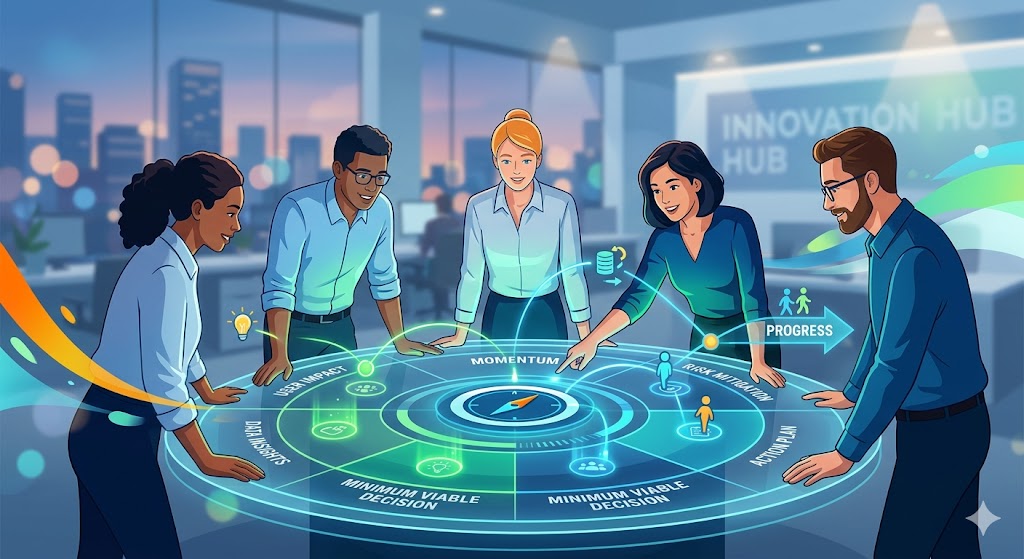
Early Warning Signals Before a Project Fails

(and How to Act)

LAST UPDATED: March 22, 2026 at 10:41 AM

Early Warning Signals Before a Project Fails

GUEST POST from Art Inteligencia


The Myth of the Sudden Failure: Reading the Whispers Before the Roar

In the high-stakes world of human-centered innovation, there is a persistent myth that projects fail in a singular, catastrophic explosion — a “Big Bang” of incompetence or bad luck. In reality, project failure is rarely a sudden event; it is a progressive erosion. It is a series of quiet, cumulative departures from the original vision, the user’s needs, and the team’s collective psychological safety.

As leaders, we often fall into the trap of “Lagging Indicator Leadership.” We wait for the budget to hit the red or the milestone to be missed by a month before we sound the alarm. By then, the “human debt” — the loss of trust, energy, and creative alignment — is often too high to recover. To lead change effectively, we must shift our gaze from the spreadsheet to the “canary in the coal mine”: the behavioral and systemic shifts that precede technical failure.

Core Objectives of Early Detection

  • The “Invisible” Decline: Recognizing why project leads often miss the “canary in the coal mine” until it is too late to pivot effectively.
  • The Human Element: Re-framing failure not just as a missed deadline or a budget overrun, but as a fundamental breakdown in the human-centered design or change process.
  • From Reactive to Proactive: Moving the organizational culture from a state of constant firefighting to one of systemic observation and strategic stewardship.

Project Incubation Bias

The decline of a project often happens in the shadows of “green” status reports. This is a phenomenon where teams hide friction in hopes that extra effort will smooth things out before the next steering committee meeting. When we ignore these subtle tremors, we aren’t being optimistic; we are being negligent. A human-centered approach requires us to acknowledge that if the people behind the project are struggling, the project itself is already failing, regardless of what the current Gantt chart says.

Reframing Failure Through a Human Lens

We must stop viewing failure as a binary outcome and start viewing it as a divergence from value. Every project is a hypothesis. When we stop testing that hypothesis against the reality of human behavior — both of our users and our internal teams — we begin to drift. Identifying early warning signals isn’t about finger-pointing; it’s about honoring the innovation process by maintaining the agility to pivot when the data and the “vibe” of the room changes.

“The goal of proactive observation is to move from reactive firefighting to systemic stewardship. We don’t just want to save the project; we want to save the innovation capacity of the people building it.”

By learning to recognize these signals early, we transform “failure” from a disaster into a strategic, well-timed pivot that preserves resources and protects the organization’s most valuable asset: its people’s passion for change.

The Five Early Warning Signals: Identifying the Silent Tremors

In the framework of organizational agility, the most dangerous risks aren’t the ones on the formal risk register — they are the behavioral shifts that signal a loss of momentum and alignment. Recognizing these “human-centered” indicators allows a leader to intervene while there is still enough social capital to course-correct.

1. The “Silence of the Experts”

Innovation thrives on constructive friction. When your most vocal subject matter experts (SMEs) suddenly stop pushing back, offering critiques, or suggesting alternatives, the project is in peril. This shift from active collaboration to passive compliance usually means the team has lost faith in the outcome or feels their input no longer influences the direction.

  • The Indicator: Meetings that used to be vibrant debates become sessions of quiet nodding.
  • The Risk: You are no longer building a solution; you are merely executing a checklist of flawed assumptions.

2. Metrics Theater and “Green” Reporting

When a project’s status reports are consistently “green” despite a lack of tangible user validation or functional progress, you are witnessing Metrics Theater. Teams often focus on vanity metrics — hours billed, documents completed, or meetings held — because they are easier to achieve than actual value delivery.

  • The Indicator: A heavy emphasis on activity over outcomes.
  • The Risk: The project appears healthy on paper until the very moment of launch, where it fails to meet market or organizational needs.

3. The Incremental Drift (Scope Erosion)

Unlike traditional “scope creep,” which is often additive, Incremental Drift is the quiet removal of the “innovation” elements of a project to meet a deadline. To stay on schedule, teams start cutting the very features or human-centered research that made the project worth doing in the first place.

  • The Indicator: The “Minimum Viable Product” (MVP) starts looking like a “Minimum Viable Bureaucracy.”
  • The Risk: You deliver on time, but you deliver something that provides zero competitive advantage.

4. Shadow Workarounds and “Invisible” Solutions

When the official tools, processes, or project frameworks fail the team, they don’t always complain — they bypass them. If you see team members building their own “shadow” spreadsheets, unofficial communication channels, or manual workarounds to get the job done, your project infrastructure is broken.

  • The Indicator: Discovery of “unofficial” documentation or side-projects designed to fix the main project’s flaws.
  • The Risk: Massive technical and process debt that will collapse once the project scales.

5. The Collapse of Psychological Safety

Innovation requires the safety to be “wrong” early and often. When a team stops sharing “half-baked” ideas or becomes hesitant to admit a mistake, the project’s learning loop has died. Fear is the ultimate killer of agility.

  • The Indicator: A noticeable drop in transparency and an increase in “polished” presentations that hide experimental failures.
  • The Risk: Problems remain hidden until they are too large and expensive to fix.

“The most accurate project health indicator isn’t a dashboard; it’s the level of honest, uncomfortable conversation happening in the breakroom.” — Braden Kelley

Section III. Diagnostic Tools: Validating the Signals

Once you suspect the “silent tremors” of project erosion, you must move from intuition to validation. In human-centered change, we don’t rely on traditional audits that look backward; we use diagnostic tools that assess the current state of alignment and the health of our assumptions. These tools are designed to surface the truth before the “sunk cost fallacy” makes it impossible to pivot.

1. The “Pulse Check” vs. The Formal Survey

Traditional monthly surveys are often too slow and too formal to catch rapid shifts in sentiment. Instead, we implement high-frequency, low-friction “Pulse Checks.” These are single-question interactions designed to gauge the team’s true north.

  • The Diagnostic: Ask the team: “On a scale of 1-10, how confident are you that we are building the right thing for the user today?”
  • The Validation: If the average drops below a 7, or if there is a high variance in scores, your alignment has fractured.

2. Assumption Mapping: Fact-Checking the Foundation

Every project is built on a set of core assumptions regarding technology, user behavior, and market timing. Project failure often occurs because an assumption made in month one is no longer valid in month six, yet the team continues to build as if it were.

  • The Diagnostic: Categorize your project assumptions by Importance and Certainty.
  • The Validation: Any assumption that is “High Importance” but “Low Certainty” is a potential failure point. If these haven’t been validated through experiments recently, the project is flying blind.

3. Stakeholder Empathy Maps: Re-aligning with Reality

Over time, project teams can become “insular,” solving internal technical problems rather than external user problems. We use updated Empathy Maps to see if our internal perception of the stakeholder still matches their actual lived experience.

  • The Diagnostic: Re-run a rapid empathy mapping session focusing on what the stakeholder is currently Thinking, Feeling, Saying, and Doing.
  • The Validation: If the “Pains” and “Gains” of the stakeholder have shifted but the project roadmap hasn’t, you have identified a divergence from value.

4. The “Pre-Mortem” Check-In

Unlike a post-mortem, which happens after the funeral, a pre-mortem asks the team to imagine it is one year from now and the project has failed spectacularly. What happened?

  • The Diagnostic: A facilitated session where “prospective hindsight” is used to identify risks that people are currently too polite or too scared to mention.
  • The Validation: If multiple team members identify the same “cause of death,” you have found your most critical early warning signal.

“Validation isn’t about proving yourself right; it’s about having the professional maturity to find out where you are wrong before the market does it for you.” — Braden Kelley

Section IV. The Pivot Protocol: Turning Insight into Decisive Action

Identifying an early warning signal is only half the battle; the true test of leadership is the ability to act before the “sunk cost fallacy” traps the project in a death spiral. In an agile, human-centered environment, we don’t “fix” projects through brute force — we pivot them back toward value. This requires a structured protocol to transition from a state of decline to a state of re-invention.

1. The “Courageous Pause”: Normalizing the Stop-and-Assess

The most difficult step is often the first: stopping the momentum. We must de-stigmatize the “Pause.” A pause is not an admission of failure; it is a strategic maneuver to ensure resources aren’t being poured into a leaky bucket.

  • The Action: Call a “Transparency Summit” with key stakeholders. Frame the meeting not as a post-mortem, but as a “Strategic Re-alignment.”
  • The Goal: To halt non-essential work while the team validates the early warning signals identified in Section III.

2. Ruthless De-scoping to “Minimum Viable Value” (MVV)

When a project is failing, it’s often because it has become too heavy. To save it, you must strip away the “nice-to-haves” and return to the core problem you were trying to solve. We shift the focus from a “Feature-Complete” mindset to a “Value-Complete” mindset.

  • The Action: Perform a “Value vs. Effort” audit on the remaining backlog. Anything that doesn’t directly address the primary human-centered “Pain Point” is moved to a future phase or deleted.
  • The Goal: To reduce the cognitive load on the team and shorten the path to a win.

3. The Feedback Loop Reset

If the project is drifting, it’s likely because the team has been talking to themselves more than they’ve been talking to the users. The Pivot Protocol requires an immediate injection of external reality.

  • The Action: Within 48 hours of the “Pause,” get a prototype — no matter how rough — in front of three to five actual users.
  • The Goal: To replace internal opinions with external evidence. This evidence provides the “political cover” needed for a major pivot.

4. Re-alignment Workshops: Re-connecting with the “Why”

Project erosion often leaves the team feeling cynical or burnt out. Acting on the signals requires re-energizing the human element. We use the “Stable Spine” concept of organizational agility — providing a clear, unchanging purpose while remaining flexible on the execution.

  • The Action: Facilitate a workshop to re-draft the “Project North Star.” Ask: “If we started this project today, knowing what we know now, how would we solve this problem?”
  • The Goal: To regain psychological safety and collective ownership of the new direction.

“A pivot isn’t a retreat; it’s a redirection of energy toward a target that has finally come into focus. The best leaders don’t just ‘fail fast’; they ‘learn fast’ and ‘pivot precisely’.” — Braden Kelley

By following this protocol, you transform a potential disaster into a demonstration of organizational agility. You prove that the organization is capable of self-correction—a trait far more valuable than any single successful project.

Section V. Conclusion: Cultivating a Culture of Early Detection

The ultimate goal of identifying early warning signals is not just to “save” a single project; it is to build a Resilient Organizational Culture. In high-performing innovation teams, a signal of failure isn’t a cause for punishment — it’s a data point for growth. When we shift the narrative from “Project Success” to “Systemic Agility,” we empower every team member to act as a guardian of the organization’s resources and vision.

1. Celebrating the “Early Save”

We must change what we reward. If we only celebrate the final product launch, we inadvertently encourage teams to hide problems until they are too big to ignore. A human-centered organization celebrates the lead who raises their hand and says, “We are drifting, and we need to pause.”

  • The Cultural Shift: Treat a well-timed pivot with the same prestige as a successful launch.
  • The Benefit: This builds Psychological Safety, ensuring that the next time a “canary in the coal mine” stops singing, someone will actually report it.

2. Building the “Stable Spine” of Agility

True organizational agility requires a “Stable Spine” — a clear, unwavering understanding of the organization’s core purpose and values — coupled with dynamic, flexible execution. When the team knows the “Why” is stable, they are much more comfortable changing the “How” when signals suggest the current path is failing.

  • The Cultural Shift: Focus leadership communication on the Impact we want to create, rather than the Tasks we want to complete.
  • The Benefit: It allows teams to pivot without feeling like they have “lost” their mission.

3. From “Post-Mortem” to “Continuous Learning”

Innovation is a journey of discovery, not a straight line. By embedding these diagnostic tools into the weekly rhythm of a project, failure stops being a destination and starts being a feedback loop. We move from a culture of “Blame” to a culture of “Iterative Excellence.”

“An organization’s capacity to innovate is limited only by its capacity to face the truth. Identifying a failing project early isn’t a failure of leadership; it is the highest form of leadership excellence.”

As you move forward, remember: the goal of human-centered change is to keep the people engaged and the innovation flowing. By watching for the whispers, you ensure you never have to deal with the roar of a total collapse. You protect the people, you protect the investment, and you protect the future of the organization.

Frequently Asked Questions: Navigating Project Turbulence

How do I tell the difference between a “rough patch” and a failing project?

A rough patch is typically a localized technical or resource hurdle that can be cleared with a specific fix. A failing project exhibits systemic erosion: experts stop contributing, the team avoids the “Why,” and metrics are used to hide reality rather than reveal it. If the human-centered alignment is gone, it’s not just a patch; it’s a failure in progress.

Won’t pausing a project to “pivot” just waste more time and money?

Inversely, continuing on a flawed path is the ultimate waste. The “Courageous Pause” is a risk mitigation strategy. By stopping to validate assumptions and de-scope to the Minimum Viable Value (MVV), you prevent the “Sunk Cost Fallacy” from burning through your remaining budget on a solution that the market or user no longer wants.

How can I encourage my team to report bad news early?

You must build a Stable Spine of psychological safety. This means rewarding the “Early Save” as much as the “Final Launch.” When leadership treats a pivot as a successful application of organizational agility rather than a personal failure, teams will feel safe enough to bring the “whispers” to your attention before they become a roar.

Image credit: Google Gemini

Subscribe to Human-Centered Change & Innovation WeeklySign up here to get Human-Centered Change & Innovation Weekly delivered to your inbox every week.
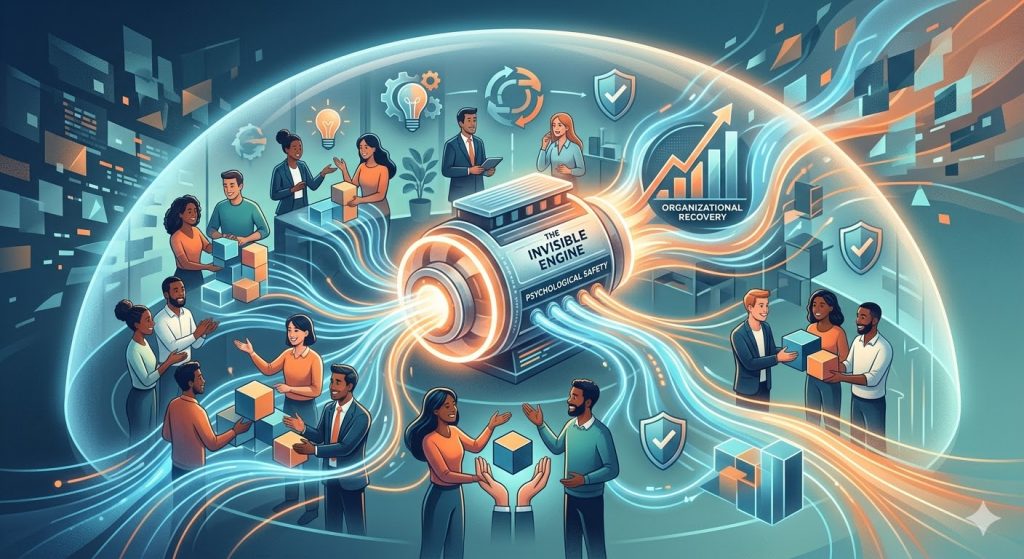
Exploring the Benefits of Automating Business Processes

Exploring the Benefits of Automating Business Processes

GUEST POST from Chateau G Pato

Over the last decade, automation technology has revolutionized the way businesses operate. Automation can improve efficiency, reduce costs, and streamline processes, allowing businesses to maximize their profits while minimizing their overhead. Automating business processes can also improve customer service, reduce risk, and increase accuracy. The benefits of automating business processes are numerous, and companies of all sizes are beginning to capitalize on them.

One of the most prominent benefits of automating business processes is improved efficiency. Automation can automate mundane tasks such as data entry or customer service inquiries, freeing up employees to focus on more important tasks. Automation can also reduce the time needed to complete certain tasks, and can even reduce the number of steps involved in completing certain processes. Automation can also improve accuracy, as automated systems are less likely to make mistakes than humans.

Another benefit of automating business processes is cost reduction. Automation can reduce the need for manual labor, resulting in lower labor costs. Additionally, automated systems are often more efficient than manual processes, resulting in fewer resources being used and therefore lower costs. Automation can also reduce the time needed to complete certain processes, resulting in reduced overhead costs.

Automation can also improve customer service. Automation can automate mundane tasks such as data entry or customer service inquiries, freeing up employees to focus on more important tasks. Automation can also reduce the time needed to complete certain tasks, resulting in faster response times and better customer service. Automation can also improve accuracy, as automated systems are less likely to make mistakes than humans.

Finally, automating business processes can reduce risk. Automation can automate processes that involve risk, such as accounts receivable or payroll. Automating such processes can reduce the risk of mistakes and help ensure accuracy. Automation can also reduce the risk of data loss or theft, as automated systems are often more secure than manual processes.

Case Study – Amazon:

One company that has successfully leveraged the benefits of automation is Amazon. Amazon has automated many of its processes, from its inventory management system to its customer service platform. Automating these processes has allowed Amazon to reduce costs, improve efficiency, and provide better customer service. Amazon has also been able to reduce the risk of mistakes, as automated systems are less likely to make errors than humans.

Case Study – Microsoft:

Another company that has successfully leveraged the benefits of automation is Microsoft. Microsoft has automated many of its processes, from its software development process to its customer service platform. Automating these processes has allowed Microsoft to reduce costs, improve efficiency, and provide better customer service. Additionally, automating processes has allowed Microsoft to reduce the risk of mistakes, as automated systems are less likely to make errors than humans.

Conclusion

Overall, businesses of all sizes can benefit from automating their processes. Automation can improve efficiency, reduce costs, and streamline processes, allowing businesses to maximize their profits while minimizing their overhead. Automation can also improve customer service, reduce risk, and increase accuracy. The benefits of automating business processes are numerous, and companies of all sizes are beginning to capitalize on them.

Image credit: Pixabay

Subscribe to Human-Centered Change & Innovation WeeklySign up here to get Human-Centered Change & Innovation Weekly delivered to your inbox every week.

The Advantages of Investing in Employee Retention

The Advantages of Investing in Employee Retention

GUEST POST from Chateau G Pato

Employee retention is a key factor in the success of any business. A company that is able to retain its employees, as well as attract new ones, is more likely to succeed in the long run. Investing in employee retention is one of the best investments a company can make, as it can lead to increased profitability, improved morale, and a more productive workforce. This article looks at some of the advantages of investing in employee retention.

1. Improved Morale: Investing in employee retention can help to improve morale, as employees feel more valued and appreciated by the company. This can lead to a more positive work environment and increased productivity.

2. Increased Profitability: Retaining employees can help to reduce the costs associated with hiring and training new staff. This can lead to increased profitability, as the company is able to focus more of its resources on other areas of the business.

3. Reduced Turnover: Employee turnover can be costly for a business, as it takes time and money to recruit and train new staff. Investing in employee retention can help to reduce turnover, as employees are more likely to stay with the company if they feel valued and appreciated.

4. Improved Productivity: Retaining employees can help to improve productivity, as they are more likely to be more familiar with the company’s processes and procedures. This can help to reduce mistakes and ensure that tasks are completed more efficiently.

5. Improved Customer Service: When employees feel valued and appreciated, they are more likely to provide good customer service. This can help to improve customer satisfaction, leading to increased sales and profitability.

Investing in employee retention can be beneficial for any business, as it can help to improve morale, increase profitability, reduce turnover, and improve productivity. It is important for companies to recognize the importance of investing in their employees, as it can lead to improved overall business performance.

To illustrate the value of employee retention, consider the case of Google. The company has long been committed to investing in its employees and offering competitive wages, benefits, and perks. This commitment to its employees has paid off in the form of increased productivity, employee satisfaction, and high levels of employee retention. Google’s retention rate is currently at 95%, and the company attributes this to its commitment to employee development, career growth, and a positive work culture.

Another example of an organization that has benefited from investing in employee retention is Amazon. The company has a retention rate of over 95%, with employees staying with the company an average of four to five years. Amazon focuses on creating an environment that encourages innovation, collaboration, and learning. The company also offers competitive salaries, generous benefits, and flexible working arrangements.

In conclusion, investing in employee retention can have numerous benefits for any organization. It can reduce recruitment costs, boost morale, and save money in the long run. Organizations should focus on creating an environment that values employees and provides them with opportunities for growth. Companies such as Google and Amazon have seen the advantages of investing in employee retention and have reaped the rewards.

Image credit: Pexels

Subscribe to Human-Centered Change & Innovation WeeklySign up here to join 17,000+ leaders getting Human-Centered Change & Innovation Weekly delivered to their inbox every week.