Reinforcing that in the arts and other industries, and in our professional and personal lives, newness, creativity, and innovation only happen through people being willing to be both playful and experimental.
This is useful to know, especially with the range of constraints and restrictions occurring globally as a result of fierce governmental reactive response to managing the Covid-19 pandemic. Coupling these with the challenges and limitations of a remote and hybrid workplace, are combining to cause many of us to achingly long for more freedom, fun, play, and adventure. Yet, many of us, are feeling bound to our laptops, TV’s and kitchens, and are locked within the boundaries of our homes and local neighbourhoods.
It is possible to shift the range of negative feelings that lockdowns produce by exploring possibilities and opportunities for expanding our knowledge and learning, by knowing how to be more playful and experimental, and especially by taking up a set of regular reflective practices.
A unique moment in time
Using this unique moment in time to take up a set of reflective practices to ignite our creative juices and expand our appetite and capacity for creativity.
Most of us are aware that, our desire to create, and actually be playful and experiential usually involves learning from some kind of direct experience. Like painting, where our hands are likely to get dirty, where we may produce a number of poor efforts (which we often hide) before we eventually create one, we can accept and live with.
Where research reveals that the effect of reflection on learning is mediated by a greater perceived ability to achieve a goal in that it improves your confidence, self-belief, and conviction that you can achieve it.
Learning from reflecting on experience
Making the learning experience a playful and experimental one allows us to have fun, in ways that engage our multiple intelligences – our cognitive brains, and heart and gut brains in ways that create meta-shifts that challenge our mental maps.
This also helps us develop our learning agility – “learning what to do when you don’t know what to do” especially important in a world of constant and disruptive change.
Which will especially be a very vital and critical skill set to cultivate in the post-Covid-19 world, where there is no playbook, or reliable template for long-term planning the results we might want, in a disruptive and uncertain future.
Starting with elastic thinking
It starts with developing our elastic thinking skills, where according to Leonard Mlodinow – it is now prime time for people to harness the power of “elastic thinking” to navigate an unstable world and underpins our ability to adapt and be creative.
And involves “developing the capacity to let go of comfortable ideas and become accustomed to ambiguity and contradiction; the capability to rise above conventional mindsets and to reframe the questions we ask; the ability to abandon our ingrained assumptions and open ourselves to new paradigms; the propensity to rely on imagination as much as on logic and to generate and integrate a wide variety of ideas; and the willingness to experiment and be tolerant of failure.”
At ImagineNation™ we developed a four-step cognitive process to help people stretch their mental maps, feelings, thinking, behaviours, and actions, enabling them to be playful and experimental by focussing on these key elements that enable reflective practice:
Discovering
Sensemaking
Internalising
Applying
Exploring the role of failing fast
Getting to the creative and innovative outcomes, when playing and experimenting with thinking or acting differently, usually involves some kind of failure, where we fail flat on our faces!
Yet when being brave playful and courageous, and experimenting, you have to be willing to make mistakes and fail. The key is to try out things, and experiment, like children, do, and not worry about what others think and say about you, when you make a mistake or fail.
At the same time, adopting a reflective practice supports our willingness to let go and come from a beginners mind, to unlearn what may have worked previously, whilst being vulnerable and open-hearted, minded and willed to deeply reflect on what happened and what knowledge you may gain and what you might learn from it.
Continuously learning from reflective practice
This means that “work must become more learningful” where an organisations’ or teams’ collective aspiration is set free and people have permission, safety, and trust to be playful and experimental.
To “learn by doing and reflecting” through being:
Encouraged to continually expand their capacity to create the results they truly desire,
Re-educated to elasticize their thinking and develop new mental maps and where expansive patterns of feeling and thinking are nurtured,
Committed to continuously learning how to learn together, at a speed faster than the competition.
Resulting in the intelligence of the organisation or team exceeding the intelligence of individuals in the team and in the organisation, and by harnessing the collective’s capacity to create, invent and innovate through enacting a set of habitual reflective practices.
CCS Cards for play and critical reflection:
As a side note, it’s worth mentioning a tool we like to use that can provide both a sense of play and an opportunity for critical reflection. As many of you may know, CCS Cards are image cards containing a special set of photos, illustrations, and words. Just holding them, sorting them, and talking about what particular cards might mean for you, is an enjoyable, playful activity that often leads to fresh, creative responses.
Furthermore, as a tool for reflective practice, CCS Cards give people a powerful way to recall and recreate their lived experiences by incorporating their feelings and emotions. The cards provide participants with self-selected representations that they can link to all the associated concepts, feelings, words, and actions that were part of the lived experience. Armed with this clearer picture, they are better able to reflect upon and learn from their experience. The cards also provide an easy way to share and compare their reflections with others, which is vital for effective collaboration.
Bringing together theory and practice
Enacting a set of reflective practices helps us effectively bring together and integrate theory and practice, where through reflection, people are able to:
Discover new mental maps, feelings, thoughts, and ideas,
Make sense of these in their own context or situation,
Internalize and assimilate the impact of these mental maps, thoughts, feelings, and actions by introducing options and choices for being, thinking, and acting differently,
Apply that information to add to their existing knowledge base and reach a higher level of understanding,
Adapt how they feel, think and act as resources in new, unknown, unexpected, and disruptive situations, as well as in how they plan, implement, and review their actions.
Surely, these might comprise a helpful set of strategies to embrace to help you thrive in these challenging times?
Isn’t there an inherent opportunity for all of us to discover and explore new ways of having more fun, by being playful and experimental?
Perhaps we might discover new ways of adapting and thriving individually and collectively co-create more individual freedom, wonderful fun, and exciting adventures that we are all craving, and become future-fit, in our constantly changing, uncertain, and unstable world.
Find out about our learning products and tools, including The Coach for Innovators Certified Program, a collaborative, intimate, and deep personalized innovation coaching and learning program, supported by a global group of peers over 9-weeks, starting Tuesday, February 1, 2022. It is a blended and transformational change and learning program that will give you a deep understanding of the language, principles, and applications of an ecosystem focus, human-centric approach, and emergent structure (Theory U) to innovation, to upskill people and teams and develop their future fitness, within your unique context.
Join our next free “Making Innovation a Habit” masterclass to re-engage 2022!
Our 90-minute masterclass and creative conversation will help you develop your post-Covid-19 re-engagement strategy. It’s on Thursday, 10th February at 6.30 pm Sydney and Melbourne, 8.30 pm Auckland, 3.30 pm Singapore, 11.30 am Abu Dhabi and 8.30 am Berlin. Find out more.
Image credit: Unsplash
Sign up here to get Human-Centered Change & Innovation Weekly delivered to your inbox every week.
In a rapidly changing world, the ability to make robust decisions under uncertainty has become a defining trait of successful innovators. This capability does not merely hinge on intuition or foresight; it draws from a calculated approach that blends informed risk-taking, flexibility, and an acute sense of opportunity. As we delve into the stories of leading innovators, we uncover key lessons that can bolster decision-making amid ambiguity and turbulence.
Key Principles of Innovative Decision-Making
Embrace Ambiguity: Innovators thrive by accepting that the absence of complete information is not a barrier but a gateway to opportunity.
Prototype and Iterate: Learning through rapid prototyping and iteration helps gauge what works, reducing risks in the process.
Rely on Diverse Perspectives: Diverse teams bring a range of insights, fostering comprehensive decision-making that anticipates various outcomes.
Value of Failure: Treating failure as a stepping stone rather than a setback is essential in refining strategies and inspiring breakthroughs.
Case Study: SpaceX – Launching Dreams Amidst Uncertainty
Elon Musk’s SpaceX is a prime example of decision-making under extreme uncertainty. In the company’s early days, the prospects of commercial spaceflight were riddled with unknowns. The use of Falcon 1 rocket was met with skepticism, three consecutive failures, and dwindling finances. However, Musk demonstrated a profound belief in a calculated approach to risk-taking; he reinvested in refining technologies with a fourth successful launch as the outcome.
The SpaceX team embraced iteration with rigor. Every failure was meticulously analyzed, and the resultant insights were applied to subsequent designs. This culture of resilience and learning has enabled SpaceX to not only survive repeated adversities but also lead in reusable rocket technology, fundamentally changing the dynamics of aerospace sectors. Their unwavering commitment illustrates that embracing failure and preserving a vision are crucial elements of navigating uncertainty.
Case Study: Airbnb – Redefining the Travel Industry
Airbnb’s journey began at a time when the notion of home-sharing was largely unrealized. Founders Brian Chesky and Joe Gebbia faced significant uncertainties ranging from legal issues to trust deficits among users. Despite these challenges, they saw potential in leveraging the untouched resource of spare rooms to forge a new market.
Their decision-making process was heavily influenced by flexibility and listening to users. The founders prioritized user feedback, transforming invaluable insights into functional platform changes. To tackle trust issues, Airbnb introduced a review system and a range of host/guest assurances, which significantly increased user confidence and adoption.
This case underscores the importance of responsive pivoting and incremental innovation, which eventually helped Airbnb disrupt the travel industry and establish a new modality of travel accommodation amid initial market skepticism.
Conclusion
Top innovators, like those at SpaceX and Airbnb, exemplify decision-making under uncertainty through their strategic approaches to experimentation, collaboration, and adaptation. By embodying the principles of embracing ambiguity, valuing diverse insights, and fostering an iterative mindset, they navigate uncertainties not as obstacles but as part of the growth process.
As industry leaders continue to face unpredictable environments, adopting these lessons will be central to cultivating robust innovation strategies, sustaining growth, and crafting transformative impacts on the world.
In this article, I’ve featured two case studies — SpaceX’s use of iteration and resilience in rocket development and Airbnb’s strategic adaptation in the hospitality sector. Both scenarios highlight the importance of calculated risk, flexibility, and the readiness to learn from both successes and setbacks, providing valuable lessons on decision-making under uncertainty.
SPECIAL BONUS: The very best change planners use a visual, collaborative approach to create their deliverables. A methodology and tools like those in Change Planning Toolkit™ can empower anyone to become great change planners themselves.
Image credit: Pexels
Sign up here to get Human-Centered Change & Innovation Weekly delivered to your inbox every week.
Innovation is, without a doubt, a creative endeavor. However, many people still think it’s all about creativity. There’s a magical a-ha moment, and the rest is history.
Well, as we’ve explained before, that’s just not true. Those that have really been trying to innovate know that there is much more hard work than there is fun and games in the process of creating and scaling an innovation.
Thus, discipline plays a huge role in innovation. In fact, I’d argue that discipline is one of the least spoken about, yet most important factors determining whether individuals and organizations succeed at creating innovations.
So, in this article, we’ll dive deeper into the topic and discuss the role discipline plays in innovation to hopefully help you and your organization do a better job at it.
What is discipline?
As a term, discipline is commonly used to just refer to being strong-willed enough to put in a lot of hard work. In other words, self-discipline.
However, if we look at a dictionary, there are a few distinct but connected uses for the word. One refers to it as a branch of science, skill or type of work, another as the practice of regulating the behavior of people in a system, and the third as a synonym for punishing people for undesirable behavior in that system.
Well, innovation is certainly a discipline in the first meaning of the word, but it’s also one that takes a lot of discipline to succeed at, in the second meaning of the word.
“Innovation is a discipline that takes a lot of discipline to succeed at.”
Let’s dive a bit deeper on that second meaning for the word. For our purposes, we can further divide that it into two categories:
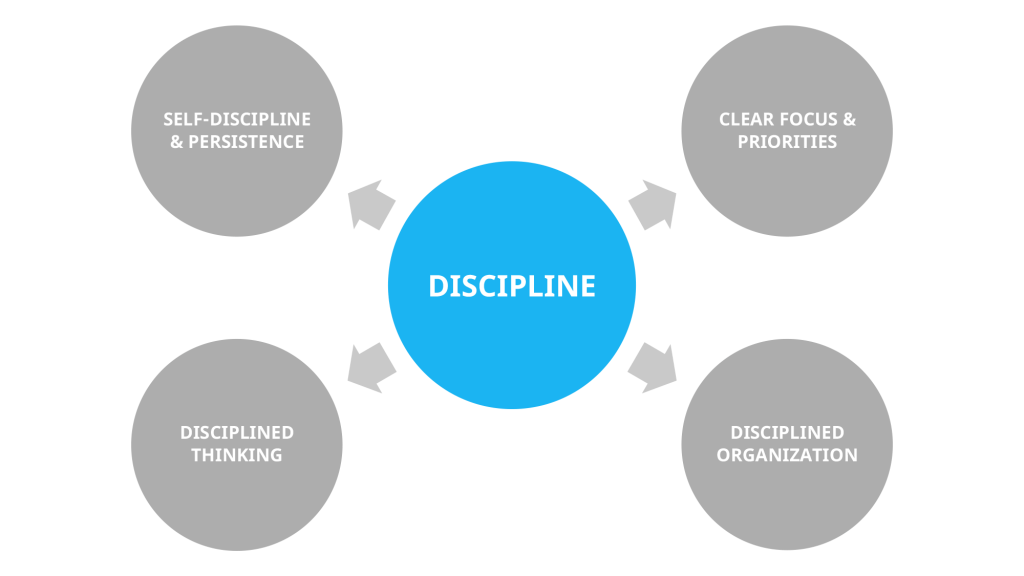
Self-discipline
Organizational discipline
There’s obviously a lot these have in common, but for an organization to succeed at innovation, you need both.
In a nutshell, you need self-disciplined individual willing to put their head down and persist. But you also need organizational discipline to focus on what matters, and to create the incentive structures needed to reinforce all of that.
Why is discipline so important for innovation?
So, with that covered, we can dive deeper into why discipline is so important for innovation and how that happens in practice.
We’ll next cover each of the main points briefly.
It takes hard work, persistence, and focus to create an innovation
Because our software is centerer around ideas, we often have to explain that while every innovation starts from an idea, an idea is maybe 1% of the way there towards a real innovation. It still needs development, refinement, implementation, scaling, and so on.
Going through that whole process takes a lot of hard work for pretty much every idea, even if the idea might seem trivial at first. The fact is that by the time you get an idea, hundreds, thousands or maybe even millions of people have probably had the same idea before. Most have just never bothered to implement it, or at least haven’t succeeded at it.
“Every innovator will face plenty of challenges on the way, and there will be plenty of times when things look dire, and you could give up.”
Every innovator will face plenty of challenges on the way, and there will be plenty of times when things look dire, and you could give up. Most do. But to succeed, you need to persevere and persist through these hardships.
To do that, you’re going to need a lot of discipline to avoid potential distractions, keep your head down and focus on what matter.
Trust the process and keep going
If you’ve ever been following a challenging fitness program, you know the feeling when it looks like you’re working your butt off and not making any progress.
The weights feel even heavier than they did the last time. That’s because you’ve been accumulating stress on your body, and it hasn’t yet had the opportunity to respond. Once you get some rest and recover from that stress caused by the exercise, the body will react to the stress and make you stronger.
Well, the journey is the same with innovation: facing those stressors will feel challenging, but if you don’t give up, that’s what will make both you and the innovation better.
To keep using the same metaphor, if you’d like to run a 3-hour marathon, your fitness program will obviously look very different from if you instead wanted to squat 500 pounds. Similarly, if your strategy calls for incremental innovation, your innovation processes will look very different from those aiming for disruptive innovation, but more on that here.
Regardless, the key in each of these situations is to just trust the process and keep going. Even when things don’t look great. The challenges you face will shape your innovation for the better, and the results will follow – or you’ll run out of money. Regardless, you just need the discipline to persist and stay on track.
While following the process is what will eventually get you there, you of course need to make sure you’re on the right path in the first place, and that is where disciplined thinking comes into play.
It’s easy to fool yourself without disciplined thinking
Our brain has a natural tendency to take mental shortcuts. We have an ability to recognize patterns and use those to make quick decisions efficiently and thus save energy. In most everyday situations, that ability is obviously very beneficial.
However, with innovation, this is often problematic. It’s these mental shortcuts that lead to many of the root causes behind issues that prevent organizations from innovating. This is perhaps easiest captured in common sayings like “This is how we’ve always done it” and “There’s no way that could work”.
“Our brain has a natural tendency to take mental shortcuts, which is the root cause behind many obstacles for innovation. Disciplined thinking is how you combat that.”
What’s more, if you’re an optimistic person, as most people working on innovation usually are, it’s easy to fool yourself to think that you have created something valuable even when you really haven’t. We often prematurely fall in love with that solution, instead of the problem.
Remaining highly analytical and rational in your decision-making while still being creative and aspirational is a tough combination for any person, or even for a team, to have.
Achieving that balance takes a lot of disciplined thinking. You need to stay grounded in reality, be willing to question yourself, and go back to first principleswhile still relentlessly moving forward. It’s a mindset anyone can learn, but that requires constant discipline to maintain.
Most organizations lack discipline
However, even if you are a good innovator, and have a great team that ticks all the boxes we’ve talked about above, it doesn’t mean that you’re automatically going to succeed.
One of the big barriers for that is the lack of organizational discipline. This is common for both startups and large organizations alike.
The idea is simple to understand. Just like an individual must remain focused to become great at something, so does an organization.
You need to make tough choices to have a clear strategy. That means saying no to a lot of things, so that you can focus on the things that will truly make a difference.
Sometimes you might have to keep investing in these truly strategically important areas, even if there’s no quantifiable ROI in the near term. Again, at the same time, the organization needs the discipline to not think about sunk costs and ruthlessly kill innovation projects that have proven to not be able to live up to their potential to free up resources for the ones that have the best odds of success.
That might sound like a paradoxical combination, and to a certain extent, it is. But that’s what makes it interesting.
On the execution side, you need a lot of discipline to have clear roles and set clear goals so that people have the prerequisites for succeeding, but also leave innovators with enough freedom to explore the best way to reach those goals. Again, that is a difficult combination to achieve. It requires a lot of discipline at all levels of the organization.
In our experience, most organizations just aren’t there yet, even if many individuals within the organization would be, and that is a big barrier for innovation.
As a result, corporate innovators often end up burning out or losing their motivation just trying to navigate the maze of organizational hierarchy for one permission and approval after another before they even get to start working on an innovation. That is a clear sign of an organization that isn’t disciplined – or alternatively has chosen to not innovate.
Discipline in practice
We’ve covered a lot of ground, and most of that has been pretty abstract, so before we wrap up, I’ll share a more practical example with you.
It’s a cliché to use Steve Jobs and Apple as an example for innovation, so I don’t usually like to do that. However, for this specific topic, I think it’s the perfect illustration because people usually see Jobs as this creative visionary and the ultimate ideas guy who couldn’t care less about processes or discipline.
But in fact, the first thing he did when coming back to Apple in 1997 wasn’t to come up with cool new products. It was to introduce a ton of discipline in everything they did and ruthlessly cut back on anything that didn’t truly help them innovate and create better products going forward.
Jim Collins does a great job summarizing some of the other actions in his book Great by Choice:
“They cut perks, stopped funding the corporate sabbatical program, improved operating efficiency, lowered overall cost structure, and got people focused on the intense ‘work all day and all of the night’ ethos that’d characterized Apple in its early years. Overhead costs fell. The cash-to-current-liabilities doubled, and then tripled.”
That provided Apple with the financial stability needed to invest in innovation and allowed them to focus their leadership and top talent purely on creating new innovations that ended up shaping the future of the company.
Also, from the Walter Isaacson biography of Jobs (which I highly recommend), it becomes obvious how diligent and disciplined Jobs and the rest of the team at Apple were in perfecting every little detail of their products, processes, and even the look of their stores (sometimes to a fault).
Conclusion
To conclude, it takes a lot of discipline to succeed at innovation. That discipline is at least as important as the creativity we usually associate with the term innovation. And, because it’s so underrated, I’d argue it’s the part most of us need to focus on.
After all, it is that disciplined execution of an idea that usually makes the difference between those that succeed and fail.
Thomas Edison did a great job in summarizing discipline when asked about his failed attempts at a lightbulb:
“I have not failed. I have successfully found 10,000 ways that will not work.”
Discipline is, without a doubt, about putting in the work, but there’s a bit more to it than that. It’s also about staying focused and grounded in reality, both of which are well displayed in that quote.
“Being disciplined, both as an individual as well as an organization can be very challenging. The good thing is that it is a muscle that you can develop.”
Even if it might not be immediately obvious, lack of discipline either as an individual or as an organization, is the root cause behind a significant portion of challenges organizations face when trying to innovate.
To be frank, being disciplined, both as an individual as well as an organization, for extended periods of time can be very challenging. The good thing is that it is, figuratively speaking, a muscle that you can develop. Most would-be innovators and leaders just aren’t quite there yet.
If you recognize yourself or your organization from this article, there’s no need to hide that – and there’s nothing to be ashamed of. We’ve all been there. Each of us has areas in our life where we lack discipline, or at the very least, times when we’ve failed to keep that up.
In fact, as an individual or organization, you need to be honest and admit that this is a problem for you. Once you do, you can take steps to address that, and you’ll be much closer to becoming a successful innovator.
This article was originally published in Viima’s blog.
Image credits: Unsplash, Viima
Sign up here to get Human-Centered Change & Innovation Weekly delivered to your inbox every week.
In today’s rapidly changing world, organizations must adapt to new challenges and opportunities to remain competitive. Transformational leadership is a powerful approach that enables organizations to inspire change from the top. This leadership style focuses on inspiring and motivating employees, encouraging innovation, and fostering a culture of continuous improvement. Let’s delve into the essence of transformational leadership and how it can drive success, illuminated by two compelling case studies.
The Essence of Transformational Leadership
Transformational leadership is characterized by the ability to inspire and motivate followers to exceed their own self-interests for the sake of the organization. A transformational leader is visionary, charismatic, and empowers team members to unleash their full potential. The four components that define transformational leadership are:
Idealized Influence: Acting as a role model that followers admire and trust.
Inspirational Motivation: Inspiring employees with enthusiasm and a shared vision.
Intellectual Stimulation: Encouraging innovation and creativity by challenging beliefs and assumptions.
Individualized Consideration: Providing personalized coaching and mentorship to address individual needs.
Case Study 1: Satya Nadella at Microsoft
Revitalizing a Tech Giant
When Satya Nadella took the helm as CEO of Microsoft in 2014, the company was facing challenges with stagnant growth and a rigid organizational culture. Nadella embraced transformational leadership, prioritizing a growth mindset and collaboration across divisions. He shifted the company towards cloud computing and artificial intelligence, driving cultural and strategic transformation.
Nadella’s leadership style emphasized empathy, innovation, and learning. He encouraged employees to take risks, learn from failures, and strive for continuous improvement. Under his leadership, Microsoft experienced a remarkable turnaround, becoming a trillion-dollar company and a leader in cloud technology, with a renewed focus on products that empower individuals and organizations.
Case Study 2: Indra Nooyi at PepsiCo
Transforming with Purpose
Indra Nooyi’s tenure as CEO of PepsiCo from 2006 to 2018 serves as another exemplary instance of transformational leadership. Facing a market demanding more health-conscious products, Nooyi embarked on a strategy dubbed “Performance with Purpose.”
She drove the company’s focus towards sustainability and health by reshaping the product portfolio to include healthier options, reducing environmental impact, and enhancing resource efficiencies. Nooyi’s visionary approach and capacity to inspire her teams helped PepsiCo adapt to evolving consumer preferences while continuing to grow its core business. This transformational vision solidified PepsiCo’s position as a leader in the global food and beverage industry.
The Path Forward
Through the lens of these case studies, we see transformational leadership as a catalyst for change. It showcases how leaders with a strategic vision can not only adapt to the changing world but also inspire others to join them on the journey of innovation and progress. Leaders who embrace this style cultivate a work environment where creativity flourishes, individuals are uplifted, and collective goals are achieved.
As organizations continue to face unprecedented challenges, transformational leaders will play a pivotal role in steering them towards a resilient and prosperous future. Are you ready to become a transformational leader?
Bottom line: Futurology is not fortune telling. Futurists use a scientific approach to create their deliverables, but a methodology and tools like those in FutureHacking™ can empower anyone to engage in futurology themselves.
Image credit: Pexels
Sign up here to get Human-Centered Change & Innovation Weekly delivered to your inbox every week.
In the fast-paced world of software development and project management, two agile methodologies stand out: Scrum and Kanban. While both aim to improve efficiency and productivity, they each have unique attributes that make them suitable for different types of teams and projects. Understanding these differences is crucial in making an informed decision about which methodology to implement for your team.
Understanding Scrum
Scrum is a structured framework for managing complex projects. It divides work into set periods known as sprints, typically lasting 2-4 weeks. The hallmark of Scrum is its focus on regular, iterative progress and transparency. Key roles include the Scrum Master, who facilitates the process, and the Product Owner, who prioritizes the backlog of work items.
Key Features of Scrum
Time-boxed sprints
Daily stand-up meetings
Defined roles and responsibilities
Regular reviews and retrospectives
Understanding Kanban
Kanban, on the other hand, is a visual method for managing workflow. It doesn’t prescribe fixed iterations or roles but relies on a board (physical or digital) to visualize tasks as they move through different stages of completion. Kanban aims to optimize the flow and limit work in progress (WIP).
Key Features of Kanban
Visual workflow management
Continuous delivery
WIP limits
Flexibility and adaptability
Case Study 1: XYZ Software Development
The Challenge
XYZ Software Development was struggling with long development cycles, leading to delayed product launches and stakeholder dissatisfaction. The company needed a structured approach to manage their complex projects more efficiently.
The Solution: Scrum
Adopting Scrum allowed XYZ to break their projects into manageable sprints. The introduction of clear roles and regular stand-ups fostered better communication and accountability. After implementing Scrum, XYZ saw a 30% reduction in development time and an increase in stakeholder satisfaction.
Case Study 2: Alpha Marketing Agency
The Challenge
Alpha Marketing Agency faced difficulties in adapting to sudden project changes and managing a high volume of small tasks. Their team needed a flexible method to handle continuously incoming work without predefined time constraints.
The Solution: Kanban
Switching to Kanban enabled Alpha to visualize their workflow. The flexible approach allowed them to quickly adapt to changes and effectively manage small, incoming tasks. By implementing Kanban, Alpha improved their task completion rate by 25% and achieved greater flexibility in their operations.
Conclusion
Choosing between Scrum and Kanban largely depends on your team’s specific needs and the nature of your projects. If your team thrives on structure, clear roles, and regular iterations, Scrum may be the better choice. However, if your team needs flexibility and the ability to adapt on the fly, Kanban could be the way to go. By understanding the strengths and applications of each methodology, you can make an informed decision that will drive your team toward greater efficiency and success.
Remember, the goal of both methodologies is to improve productivity and facilitate better project management, so it may also be worth considering a hybrid approach that leverages the strengths of both Scrum and Kanban.
Bottom line: Futurology is not fortune telling. Futurists use a scientific approach to create their deliverables, but a methodology and tools like those in FutureHacking™ can empower anyone to engage in futurology themselves.
Image credit: Pexels
Sign up here to get Human-Centered Change & Innovation Weekly delivered to your inbox every week.
The concept of the Triple Bottom Line (TBL) pivots on the idea that the success of a business should be measured not only by the traditional financial bottom line but also by its impact on the broader social and environmental systems. In today’s rapidly evolving world, businesses face unprecedented scrutiny and new societal expectations. Stakeholders now demand that companies consider a broader array of metrics, leading to the consideration of the Triple Bottom Line: Profit, People, and Planet.
Understanding the Triple Bottom Line
John Elkington introduced the TBL framework in 1994, revolutionizing how organizations perceive their role in society. The TBL framework suggests that companies should commit to focusing equally on:
Profit: Traditional financial performance and value creation for shareholders.
People: Social responsibility, including fair labor practices, community engagement, and equitable growth.
Planet: Environmental sustainability, such as reducing carbon footprints, sustainable resource management, and mitigating climate change.
Case Study 1: Patagonia
Patagonia – A Commitment to Environmental Stewardship
Patagonia, an outdoor apparel company, is a stellar example of an organization successfully balancing the Triple Bottom Line. The company’s commitment to environmental sustainability is woven into its core mission. Patagonia donates 1% of its sales to environmental causes through their self-imposed Earth Tax. They also spearhead initiatives like the Worn Wear program, encouraging customers to repair, share, and recycle products rather than buying new ones.
Socially, Patagonia champions workers’ rights and strives for fair labor practices across its supply chain. Its Fair Trade certification program has benefited thousands of workers by ensuring fair wages and better working conditions.
Financially, Patagonia remains profitable and continues to expand while staying true to its mission of environmental and social responsibility. By embracing the TBL, Patagonia has cultivated a robust and loyal customer base that values the company’s transparency and ethical stance.
Case Study 2: Unilever
Unilever – Integrating Sustainability into Corporate Strategy
Unilever, a giant in the fast-moving consumer goods sector, has made significant strides in embedding sustainability into its corporate strategy. The company’s Sustainable Living Plan sets ambitious goals to improve health and well-being, reduce environmental impact, and enhance livelihoods.
On the environmental front, Unilever commits to halving the environmental footprint of its products across the value chain. Initiatives such as reducing greenhouse gases, using renewable energy, and promoting sustainable agriculture are key components of their strategy.
From a social perspective, Unilever focuses on enhancing livelihoods by supporting smallholder farmers and committing to fair labor practices. They have reached over a billion people with their health and hygiene programs, improving public health outcomes and education.
Financial performance remains strong, with Unilever showing that it is possible to grow the business while prioritizing sustainability. Investors increasingly look to companies like Unilever as they have proven that integrating the Triple Bottom Line can lead to long-term profitability and shareholder value.
Moving Forward
The Triple Bottom Line represents a paradigm shift in how businesses operate in the 21st century. Organizations that successfully integrate profit, people, and planet into their core strategies stand to benefit from enhanced reputation, reduced risk, and sustainable growth. To thrive in the future, businesses must embrace the principles of TBL, fostering innovation that addresses global challenges and creates value for all stakeholders.
As leaders and change-makers, we must continue to push the envelope, encouraging businesses of all sizes and industries to adopt and implement the Triple Bottom Line framework. The path forward is clear: balance profit with social and environmental responsibility to create a sustainable and equitable future for all.
SPECIAL BONUS: The very best change planners use a visual, collaborative approach to create their deliverables. A methodology and tools like those in Change Planning Toolkit™ can empower anyone to become great change planners themselves.
Image credit: misterinnovation.com
Sign up here to get Human-Centered Change & Innovation Weekly delivered to your inbox every week.
In the rapidly changing world of business, innovation is the lifeblood of sustained success. Harnessing creativity, collaboration, and experimentation is crucial, yet these elements can only thrive in an environment where team members feel psychologically safe. Psychological safety is the belief that one will not be punished or humiliated for speaking up with ideas, questions, concerns, or mistakes. This article explores the vital role of psychological safety in fostering innovation and presents case studies to illustrate its impact in real-world scenarios.
Understanding Psychological Safety
Coined by Harvard Business School professor Amy Edmondson, psychological safety describes a workplace culture where individuals feel secure enough to take interpersonal risks. This concept is critical for innovation because it encourages openness, where employees can freely share ideas, experiment without fear of failure, and embrace creative problem-solving processes.
Benefits of Psychological Safety for Innovation
Encourages Idea Generation: Team members are more likely to propose innovative ideas if they are confident they won’t be ridiculed or dismissed.</ li>
Facilitates Learning from Mistakes: A psychologically safe environment allows teams to learn and grow from failures, turning setbacks into stepping stones for future success.
Enhances Collaboration: When employees feel safe, they are more likely to share knowledge, ask for help, and work together effectively.
Increases Employee Engagement: Psychological safety fosters a sense of belonging and motivation, leading to higher levels of engagement and productivity.
Case Studies
Case Study 1: Google’s Project Aristotle
Google embarked on a quest to understand what makes a team effective, which led to Project Aristotle in 2012. Through extensive research, they discovered that psychological safety was the most critical factor in high-performing teams.
Challenges Faced: Google identified that many of their teams struggled with collaboration due to fear of judgment or reproach.
Actions Taken: Google implemented practices to foster psychological safety. This included promoting open dialogue, encouraging risk-taking without penalization, and ensuring every team member’s voice was heard.
Results: Teams that embraced psychological safety showed significant improvements in innovation output, efficiency, and employee satisfaction. The project reinforced that fostering a safe environment for risk-taking and open communications was essential to driving innovation.
Case Study 2: W.L. Gore & Associates
W.L. Gore & Associates, the company behind Gore-Tex, is renowned for its unique organizational culture that emphasizes psychological safety.
Challenges Faced: As a company rooted in innovative product development, ensuring continuous creativity while managing market pressures posed significant challenges.
Actions Taken: W.L. Gore adopted a flat organizational structure and a philosophy called “lattices,” where associates have the freedom to speak up, propose ideas, and lead projects without hierarchical constraints.
Results: This approach led to groundbreaking products and technologies, such as the Gore-Tex fabric. By sustaining an environment where associates felt safe to experiment and potentially fail, Gore consistently maintained a pipeline of innovative products.
Conclusion
Innovation thrives where psychological safety is prioritized. Organizations that nurture an environment of trust and openness not only unlock their employees’ creative potential but also drive sustainable growth and success. Leaders must actively foster psychological safety to build dynamic, innovative teams ready to tackle the challenges of the future.
This article features a thorough examination of the role of psychological safety in innovation, with practical insights conveyed through notable case studies from Google and W.L. Gore & Associates, reinforcing the concept’s critical importance in real-world applications.
Bottom line: Futurology is not fortune telling. Futurists use a scientific approach to create their deliverables, but a methodology and tools like those in FutureHacking™ can empower anyone to engage in futurology themselves.
Image credit: Pixabay
Sign up here to get Human-Centered Change & Innovation Weekly delivered to your inbox every week.
Now that we have all been stuck inside for almost two years, many of us are suffering from an exacerbation of worthless meeting syndrome (WMS) , most recently remotely.
Of course, worthless meeting syndrome is a well-described chronic disease which has periodic exacerbations. It can be endemic or global with recovery and remissions. Here are the signs and symptoms.
One meeting expert notes that bad meetings are the bane of the corporate world — and yet despite what appears to be an overwhelming consensus that they’re often unnecessary and unproductive, many workplaces continue to struggle to avoid them. In this piece, the authors discuss the psychological pitfalls that lead us to schedule and attend too many meetings, and share strategies to help employees, managers, and organizations overcome those challenges. While there’s no way to completely eliminate the universal human biases that drive these tendencies, a greater awareness of the psychological factors at play can help us all work towards healthier communication norms, more-effective interactions, and cleaner calendars.
My recommended treatment is to refuse to attend any meetings:
Where there is no agenda
Where it is informational that could be communicated some other way
Where we discuss what we discussed last time without taking action
Where my input is required to inform a decision or take action on something
Where there is no psychological safety
Where a working group could have done the grunt work offline and reported their findings for approval or modification
On weekends or nights unless absolutely required due to mission critical time zone issues or deadlines
The meeting last longer than 45 min, if not 30
No one takes minutes and there are action items for next (if necessary) meeting
There are more than 7 people in the meeting
Lobby your congressional delegation to make them illegal As remote work becomes more widespread, the parliament of Portugal recently passed a law banning bosses from contacting employees after working hours by phone, message or email. Violations of the new law — designed to “respect the privacy of the worker,” including rest and family time — could result in fines. Employees there have also been given the right to opt out of remote work, and to be reimbursed for expenses incurred while working from home.
Note: Ivermectin has not been shown to be clinically effective.
If your boss insists that you attend and you are accused of not being a team player, then get a note from your doctor. They are available online at www.wms.com
For the meeting junkie who has everything, we are also offering a clock at our WMS store that not only measures the length of the meeting, but also the prorated amount of money you are paying for the people to attend the meeting, similar to the US National Debt clock.
Image credit: BringTIM.com
Sign up here to get Human-Centered Change & Innovation Weekly delivered to your inbox every week.
In today’s rapidly changing business environment, fostering leadership at all levels of an organization is no longer a luxury but a necessity. Leadership isn’t just for those in the C-suite; it’s for everyone in the organization. By empowering employees across the organizational hierarchy to take initiative, innovate, and drive results, companies can adapt more swiftly to market changes, boost employee engagement, and achieve sustained success.
Why Leadership at All Levels Matters
The traditional top-down approach to leadership is becoming obsolete. It fails to leverage the full potential of an organization’s workforce. When leadership is distributed throughout the organization, employees are more likely to take ownership of their roles, collaborate effectively with colleagues, and contribute to the company’s objectives. This democratization of leadership enables organizations to cultivate a culture of continuous improvement and innovation.
Strategies to Cultivate Leadership throughout the Organization
Here are some strategies to foster leadership at all levels:
Provide Training and Development: Offer regular training programs to develop leadership skills, such as problem-solving, decision-making, and emotional intelligence.
Establish Clear Communication Channels: Create platforms where employees can share ideas and feedback openly, fostering a culture of transparency and trust.
Encourage Autonomous Decision-Making: Give employees the autonomy to make decisions within their scope of work, reinforcing their role as leaders.
Recognize and Reward Initiative: Acknowledge and reward employees who take initiative and exhibit leadership qualities, encouraging others to follow suit.
Mentorship and Coaching: Pair less experienced employees with seasoned mentors to guide their professional development.
Case Studies: Successful Implementation of Leadership at All Levels
Case Study 1: Zappos
Zappos, the online shoe and clothing retailer, is renowned for its unique company culture and commitment to customer service. Tony Hsieh, the former CEO, believed in empowering employees at all levels to act like leaders. The company’s culture is built on the principle of ‘Holacracy,’ a management structure where traditional hierarchies are replaced by a series of circles that hold various responsibilities.
Through this approach, employees are encouraged to take ownership of their roles, make decisions, and solve problems without excessive managerial oversight. This decentralized leadership model has led to high levels of employee engagement and customer satisfaction. Employees feel valued and empowered, leading to a more innovative and resilient organization.
Case Study 2: W.L. Gore & Associates
W.L. Gore & Associates, the company behind the famous GORE-TEX® brand, has a long-standing reputation for fostering a leadership culture across all levels. The company operates without traditional managers, instead favoring a lattice structure where employees are encouraged to take the lead on projects and initiatives.
Employees at Gore have the freedom to identify opportunities and take action without needing permission from a superior. This autonomy has led to a highly innovative environment, with numerous breakthrough products emerging from employee-led initiatives. The company’s success in creating a leadership culture is evident in its consistent ranking as one of the best places to work.
Conclusion
Fostering leadership at all levels of the organization is crucial for long-term success. By implementing strategies such as training and development, promoting open communication, and encouraging autonomous decision-making, companies can create an environment where employees thrive as leaders. As demonstrated by the case studies of Zappos and W.L. Gore & Associates, empowering employees to lead not only drives innovation but also enhances overall organizational performance.
In the end, the journey towards a democratized leadership culture is continuous and requires commitment from all stakeholders. The benefits, however, are immense—resulting in a more dynamic, adaptable, and resilient organization ready to face any challenges that the future may bring.
SPECIAL BONUS: The very best change planners use a visual, collaborative approach to create their deliverables. A methodology and tools like those in Change Planning Toolkit™ can empower anyone to become great change planners themselves.
Image credit: Unsplash
Sign up here to get Human-Centered Change & Innovation Weekly delivered to your inbox every week.
Given that innovation is responsible for roughly 85% of economic growth, it’s without a doubt a pretty big deal for the success of both individual organizations, as well as for the society at large.
However, to achieve the level of impact that many are looking for from innovation, you can’t simply “create something new”, and then just hope the results will come. You will need to commit to systematically pursuing those results by scaling viable ideas into products or businesses that create value – at scale.
That is of course easier said than done. If you think it’s hard to come up with innovations, just try scaling one up. In this article, we’ll explore the topic in more detail and provide you with actionable tips on how to actually scale an innovation.
What does it mean to scale an innovation?
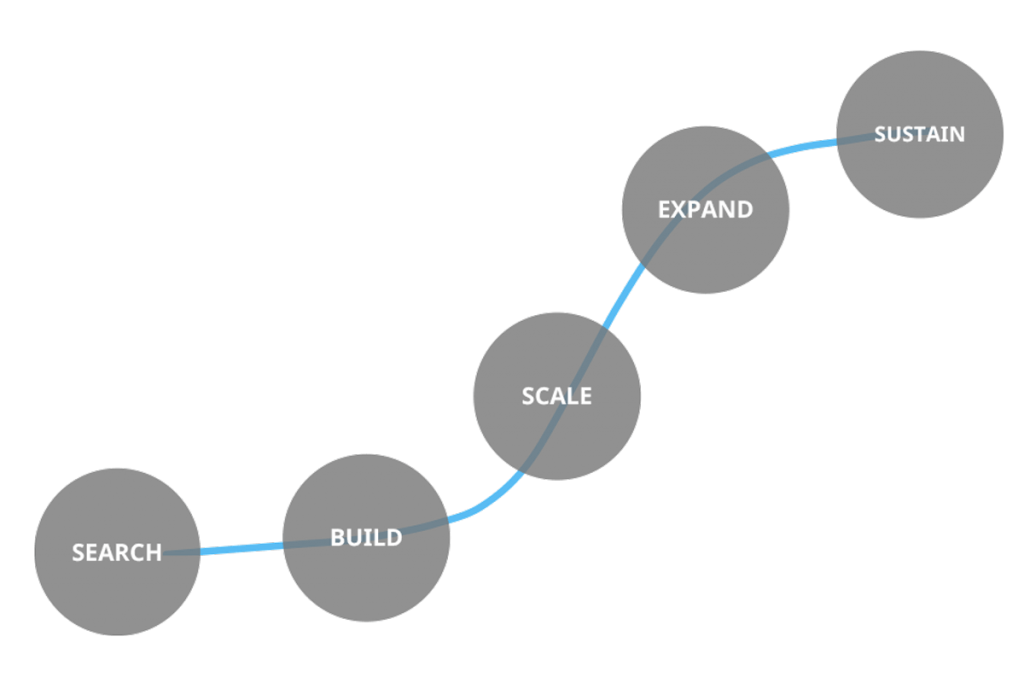
To explain what it means to scale an innovation, let’s first take a step back and look at the lifecycle of an innovation.
To begin, every innovation starts from a rough idea or concept. Often you may have a specific goal in mind, or a problem to be solved, but sometimes it can just be a cool idea that you think could really make an impact. From there, you first need to validate that the idea makes sense, and then build a product or a service that meets a real need in the market.
With these steps taken care of, the next part is to scale the innovation. At this point, we have all the pieces in place to create value, but we haven’t yet unlocked that value for the vast majority of the available market.
So, as you may see from the chart above, scaling is the part where most of the value creation and impact comes from. With that said, we can define scaling an innovation as the process of expanding the presence and the use of the innovation to be as widespread as possible to maximize that impact.
Scaling innovation is the process of expanding the presence and the use of the innovation to be as widespread as possible to maximize the impact the innovation can have.
While on paper that sounds straightforward enough, it’s extremely important to first clarify the vision of what successful scaling looks like for your innovation, and what metrics you will use to measure your success here. For some, it might just be revenue or profit, for others it could be the number of customers or users, the impact you’ve delivered, and so on.
Most of these metrics are of course related, but when you start with the end in mind and gradually work backwards from there, you are much more likely to succeed because everyone in the organization will know what it actually is that you’re aiming for.
With that goal in mind, you can start narrowing in on the methods required to get there, which is what we’ll be focusing on next.
Dimensions of scaling an innovation
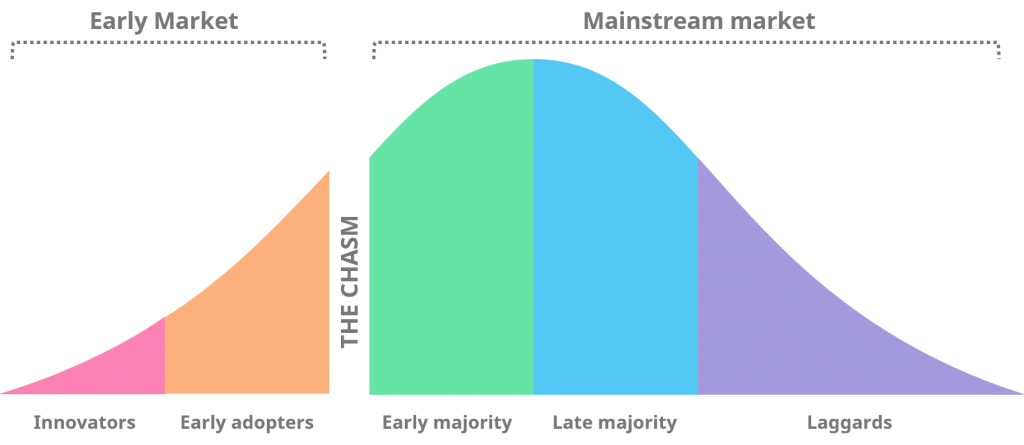
Traditionally, scaling innovation is seen as a matter of advancing the adoption, or the diffusion, of innovation. This is best visualized with a chart depicting the adoption curve, which you’ll find below.
The idea is that to scale an innovation, you need to cross that chasm and go from a few early adopters to the mainstream market where the volumes are significantly higher.
While that is certainly true, we can dig a bit deeper to understand scaling in a more nuanced, and more practical, way.
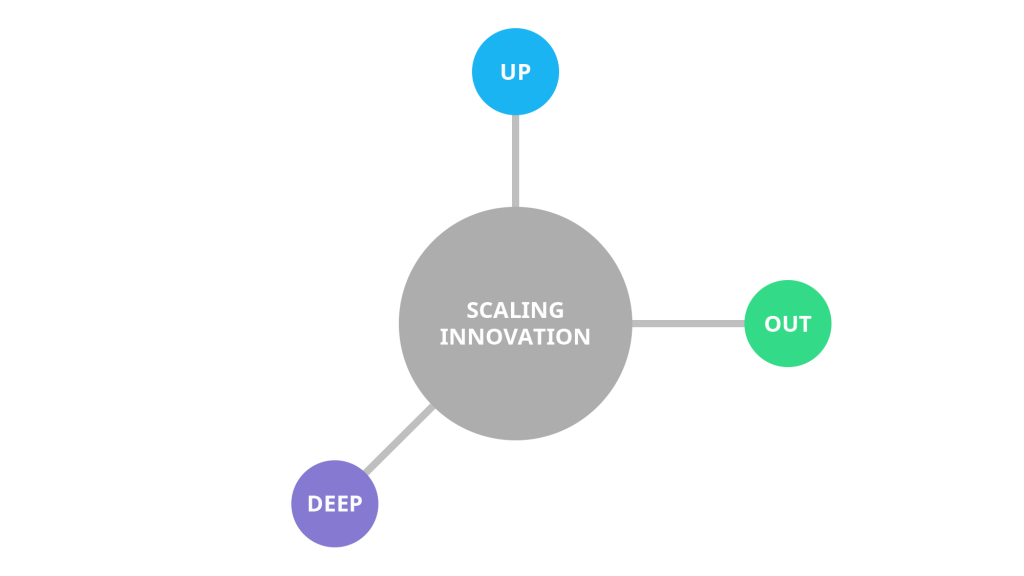
In reality, there are three dimensions to scaling an innovation.
Let’s look at each of them a little closer.
Scaling Up
First, scaling up is about creating the preconditions for scaling effectively.
Before we start talking about scaling up, we’ll assume that the basic prerequisites for scaling are in place, namely that there’s a clear vision and a product-market fit for your innovation, and that the market potential is large enough for there to be something to scale to, even if the market isn’t there today.
Assuming those prerequisites are there, you need to ensure that:
you can produce enough of the innovation to scale
you can do that efficiently enough to be financially and operationally viable
For some products, such as software and other immaterial goods, that first part is pretty straightforward. For others, such as most complex manufactured goods, even the first one will be a real challenge.
Having said that, the second part of being efficient enough will prove to be a challenge for virtually every innovation. Even for a software product, acquiring, serving, and retaining customers profitably at scale is often more difficult than people realize. For other, fundamentally less scalable goods and services, this is often excruciating.
In addition to these two more practical aspects, there’s a third and more ambiguous component to scaling up, and that is the social and institutional adoption of the innovation.
How well you scale up affects how large of a scale you can ultimately reach.
For example, with an innovation as mundane as the modern umbrella, men who used it were initially ridiculed. So, before the umbrella could really take off as an innovation, societal norms needed to change. In other cases, there may be regulatory hurdles or other institutional considerations that might need to be addressed before an innovation can ultimately scale.
Regardless of the specifics, scaling up is necessary for every innovation that wants to reach significant scale.
However, what many people don’t pay enough attention to is that how well you scale up affects how large of a scale you can ultimately reach. If you can’t produce the goods at volume, and at low enough of a price while still being profitable at a unit economics level, there’s an obvious limit to your potential to scale.
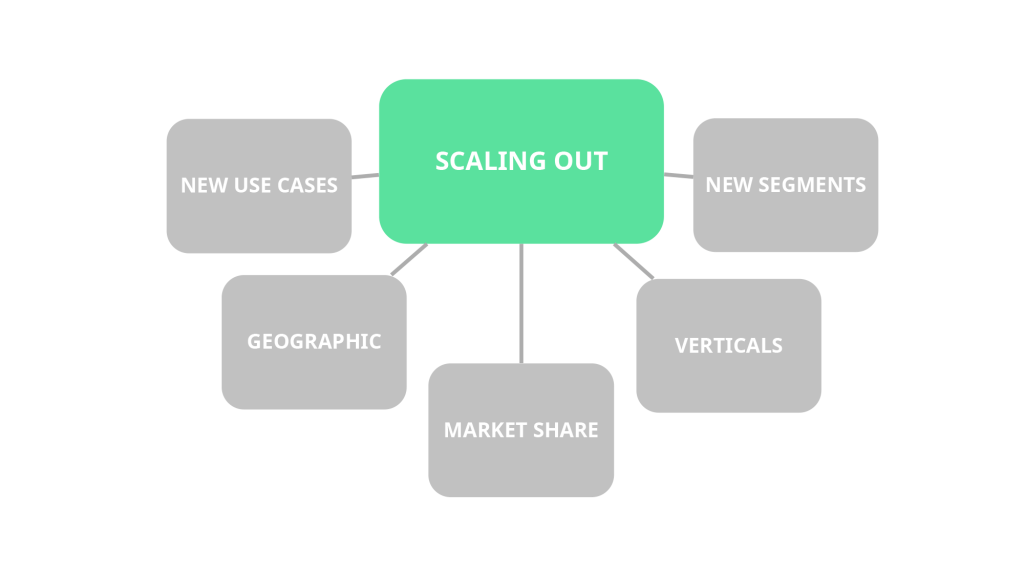
Scaling Out
Scaling out is what most people think of when it comes to scaling an innovation. It’s the geographical or demographical expansion of the innovation to a larger audience.
In its simplest form, scaling out simply means getting a wider market share and audience for the innovation within an existing market. As we covered earlier, this typically means moving from those early adopter market segments towards the mainstream.
Scaling out is what most people think of when it comes to scaling innovation as it’s where you expand the innovation to a larger audience.
However, it doesn’t have to be limited to just that. Sometimes the same products or services can be sold and used in other geographical areas, or even in other industries or entirely different use cases, both of which unlock new markets and additional demand, and thus lead to a larger impact for the innovation. A well-known example of this is Tesla using their experience and innovations in electric car batteries to expand to stationary energy storage.
Regardless of which path you choose, often these efforts to scale out to new segments or industries do require additional work to adapt the innovation or its positioning to the differing characteristics of these new segments, markets, and audiences.
Scaling out to new market segments can increase complexity a lot, so be mindful of the operational implications of your strategic decisions here.
This naturally adds complexity, which makes the scaling up part we covered earlier more challenging. So, be mindful of how you scale out and what the operational implications of your strategic decisions here will be.
Scaling Deep
The third, and the least well-known method for scaling innovation is scaling deep. This essentially means that you unlock more impact for your innovation by expanding and maximizing the use of it, typically for the people who already have access to it.
This usually requires you to either change people’s behavior to increase usage, or alternatively come up with innovative means for improving the utilization rate by enabling more people to make use of the same assets. Scaling deep is partly a matter of culture and mindset, and partly a more practical matter of having the right components in place for enabling and encouraging active use of the innovation.
A classic, albeit somewhat controversial example of the first type would be social media algorithms. They are designed to provide users with engaging content to keep them entertained and thus stay in the service for longer, which leads to more revenue from the same number of users.
An example of the second type would be cloud computing. By adding network, virtualization, and software layers on top of the computing hardware, cloud providers can get more use out of the same hardware, which unlocks value for both the service provider and the customers.
This is how Amazon not just significantly reduced costs in one of their major cost centers, IT infrastructure, but actually turned that into Amazon Web Services (AWS), an additional growth business that now accounts for the majority of the profits for the entire organization.
Scaling deep is about unlocking more impact for your innovation by expanding and maximizing the use of it. This can help reduce the need to scale up or out, or alternatively maximize the impact from doing so.
Scaling Deep can reduce the need to scale up or out, or alternatively, maximize the impact from doing so. As such, it’s an excellent compliment for most innovations. However, it’s just that: a compliment. Your primary method of scaling should always be either to Scale Up or Scale Out depending on whether your bottleneck is more on the supply or demand side.
Even in the case of AWS, which has created entirely new vectors for scaling out and has dramatically subsidized their costs for scaling up, it obviously wouldn’t have been possible without Amazon already being at significant scale.
What’s the takeaway? These dimensions are distinct but very much intertwined.
If you can scale on all three of these dimensions in a coordinated way, you will not only be much more likely to achieve significant scale with your innovation in the first place, but also maximize the potential for scale and impact from those efforts. If you build momentum on one of the dimensions, some of that momentum will carry over to the other dimensions, which again helps you accelerate change going forward.
As such, pay attention to each of these dimensions and try to consider all of them in your plans to scale innovation. That doesn’t mean you should focus on all three from the get-go, on the contrary, but planning with the big picture in mind can allow you to make much more educated decisions.
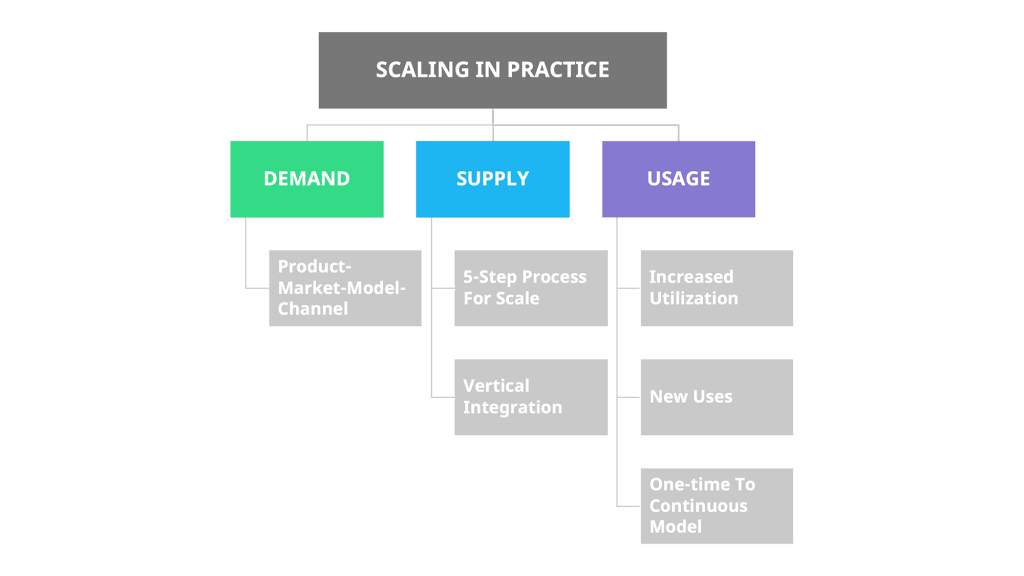
Scaling innovation in practice
As we’ve established above, there unfortunately isn’t a one-size fits all solution to scaling innovation.
Achieving breakthrough success with an innovation, which is the goal of scaling innovation, always requires many related and adjacent (usually more incremental) innovations.
This is an extremely common pattern that you will see happening over and over again if you just start paying attention to it. Square co-founder Jim McKelvey has done a great job in describing that in more detail in his recent book called the Innovation Stack.
A well-known example is the lightbulb. Edison patented his famous design back in 1879, but most households didn’t yet have access to electricity, so it wasn’t something they could benefit from. It took countless other innovations and another 45 years before even half of US homes had one, even though the benefits were obvious.
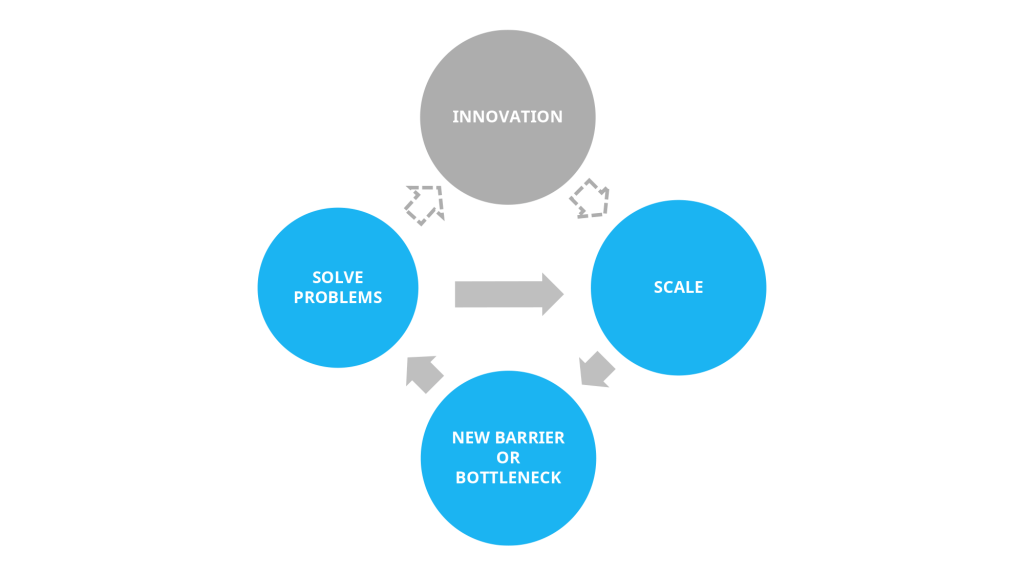
In practice, scaling an innovation is simply an iterative and exploratory process where you focus on eliminating whatever bottleneck is preventing you from scaling, one by one. And, as we saw in the example of the lightbulb, sometimes these can be much bigger and more fundamental than you may think at first.
Often you can just copy solutions other people have already used for the same or a similar problem (which you should always go for if you can), but many times you will also need to innovate something completely new and occasionally even go beyond your core product.
With that said, there are some common patterns that can be helpful for structuring your thinking when faced with some of these bottlenecks. However, as each innovation is ultimately new, and thus unique, these won’t necessarily fit every case.
Having said that, we’ll share one framework for each dimension of scaling below. We’ve also created a toolkit that includes the frameworks as editable templates, along with some examples and other supporting material, which you can download here.
Demand side
For most organizations and innovations, the demand side is likely the source of most bottlenecks.
The way we see it, this is not just about drumming up interest and demand for your product, but also about making sure that it fits the needs and budgets of the buyers in your market. And of course, you need to make sure you’re in a market, or at least one that has the potential to become, large enough to accommodate your scaling efforts.
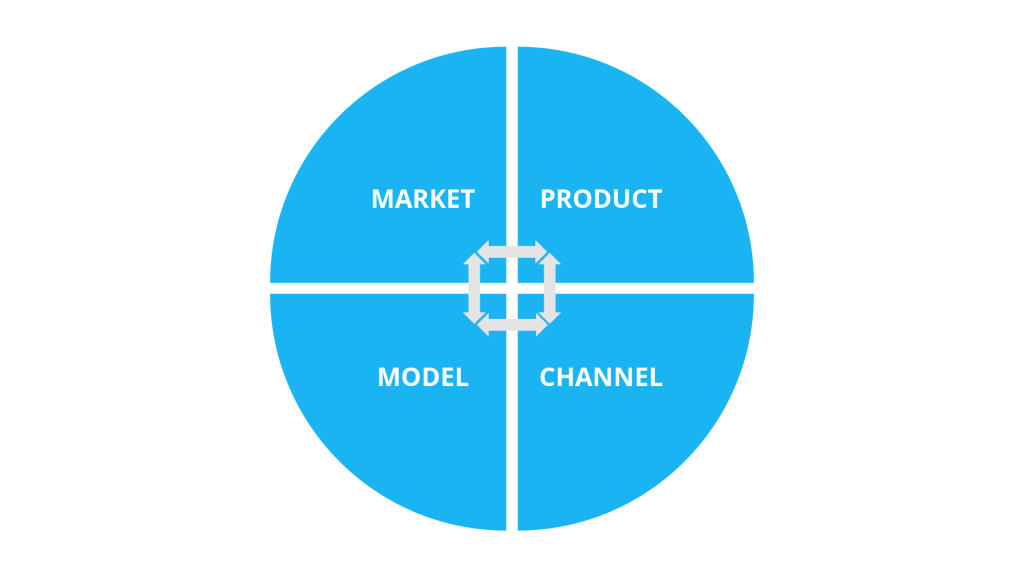
Unlike what people often think, product-market fit isn’t enough for a business to be scalable. You also need to have the right business and operating models, as well as use the right channels.
In other words, scaling out isn’t just about product-market fit, as people often mistakenly think. You also need to have the right business and operating models and use the right channels. Brian Balfour has written an excellent five-part series about this, which I highly recommend you read.
The basic idea is pretty simple: your business needs to align all of these aspects in a cohesive manner to be able to scale. If even one of them is wrong, growth will feel like, as Balfour puts it, “pushing a boulder uphill”. It will take way too much capital, effort, and time. However, get the four elements right together, and the growth will come naturally.
What’s important to understand here is that the model isn’t a static picture you just do once. If the market changes, or you run into challenges that force you to change one of these elements, you’ll need to review each element and make sure the big picture still works.
Supply side
For some products and businesses, especially those with physical products, the supply side often becomes a key consideration.
Here, the bottlenecks can be extremely varied, and dependences on external suppliers can lead to challenges that are hard to overcome.
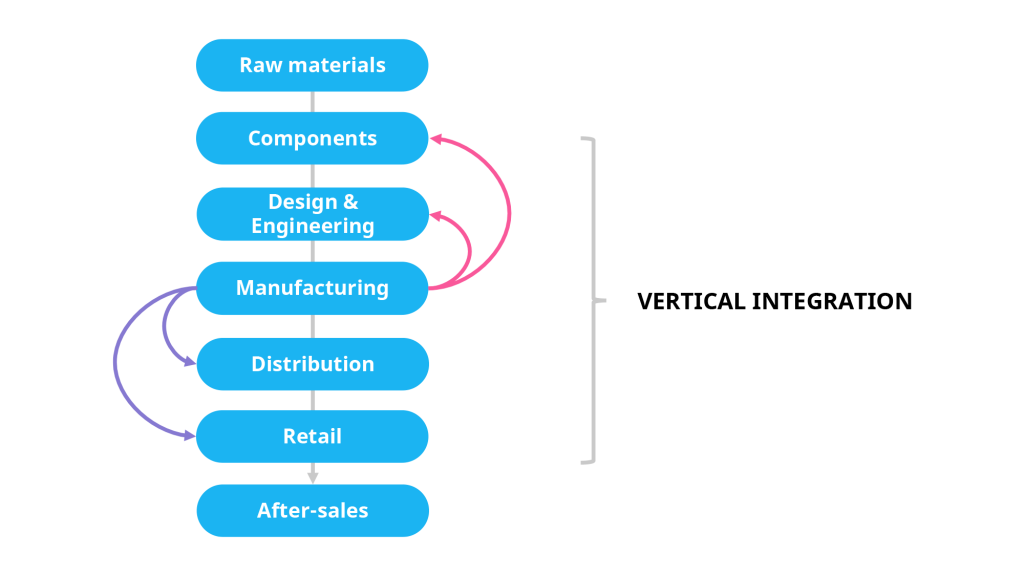
In general, what top innovators do differently from the rest of the companies is that they almost always vertically integrate their value chain as they are working towards scaling up.
There are many benefits to this approach, such as reduced overhead, but the key differences are in increased quality, and most importantly, the company’s ability to control their own destiny and innovate more freely because they’re not being constrained by their supply chain.
Top innovators vertically integrate their value chain to address bottlenecks and turn cost centers into additional sources of growth and profit.
The classic example is Apple, and the way that they control both the hardware and software of their products. In recent years, they’ve been increasing that integration in both directions. They’re moving upstream to offer more services on top of their operating systems, as well as downstream by designing their own processors, which has provided them with a big performance advantage.
However, there are many others. Amazon, Microsoft, Tesla, Google, Netflix, Nvidia, and pretty much every innovative company is trying to do the same in the scope of their own business.
The basic idea is again simple: if a part of your supply chain becomes a major bottleneck, or is a major cost center, you should try to take control of those parts to address the bottlenecks and turn cost centers into additional sources of growth and profit, just like Amazon has done with AWS, but also warehousing and shipping.
That isn’t to say that vertical integration wouldn’t be challenging or have downsides. It certainly is and does. Because of these limitations, it’s generally advisable to only vertically integrate to the parts of your supply chain that either are a clear bottleneck or could become a key competitive advantage for you. However, top innovators often have little choice but to take these steps if they want to move fast enough and have enough control to be able to scale their innovation to its full potential.
Another key consideration on the supply side is simply the architecture of your products and services, and the process you have for delivering them. It’s obviously much easier to have a scalable architecture and automated processes for purely software or content focused businesses, but how you craft these does play a huge role for complex physical products too.
This is again a very extensive topic on its own, but the goal should be to try to make the manufacturing, delivery, and service of your products as seamless and scalable as possible. As with everything else we’ve discussed so far, this too is an iterative process.
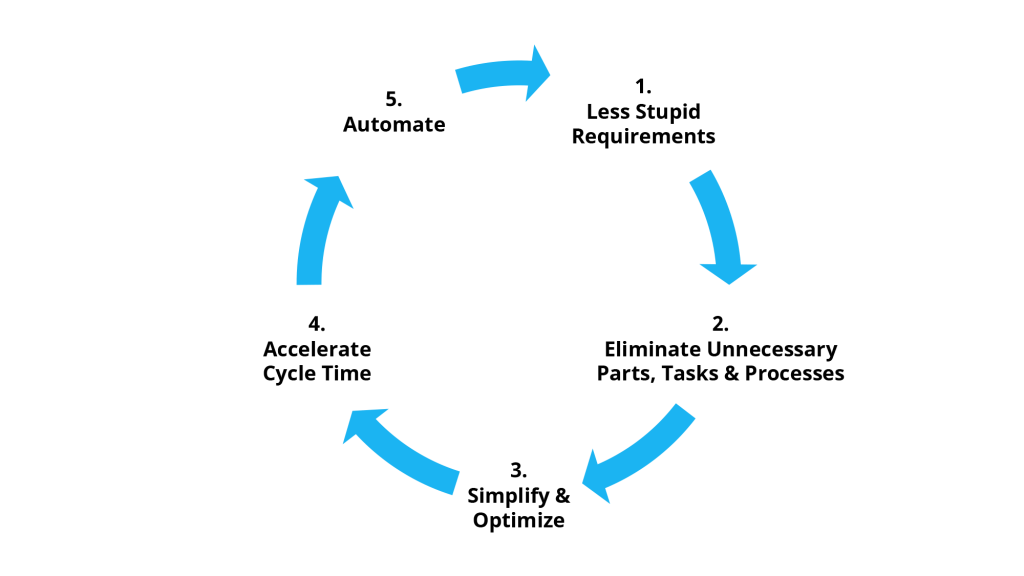
However, to provide you with a slightly more practical framework to get started, here’s Elon Musk explaining how he’s learned to approach this topic after his early struggles of trying to do that with the extremely complex products at SpaceX and Tesla.
While Musk specifically talks about the process in the scope of engineering for scale, these same principles also apply to your organization and internal processes too.
And, as Musk explained in the video, it’s easy to get tempted by the promises of optimizing for efficiency and automation, but if you haven’t addressed the big picture first, these will often end up just being a big waste of time and money.
So, make sure to start by first eliminating those unnecessary requirements and parts or tasks, and try to simplify the design before you focus too much on optimizing for efficiency and automating.
Utilization
In addition to supply and demand, we still have the third dimension of utilization to cover. The idea with this “scaling deep” part is to find creative ways to make the most out of existing supply to either unlock new demand, maximize the utilization of those assets, or simply to increase your customer retention by finding ways to get more value for them from your products.
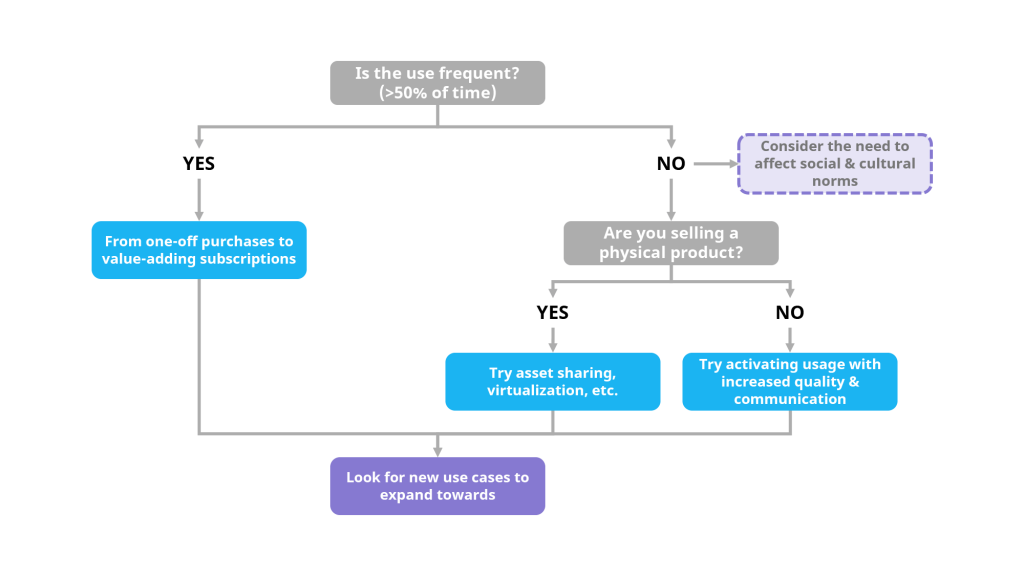
As you may have guessed by now, the specifics vary quite a lot on a case-by-case basis, but the flowchart below can hopefully serve as a starting point for your efforts in this area.
To summarize, there are three common paths you may take here.
The first is to find ways to increase the usage of assets that are only being used a fraction of the time through practices such as asset sharing and virtualization.
The second is to move from one-off purchases to a subscription to eliminate friction and increase the usage of the services.
The third is to find additional ways to expand the use of the product. This is usually done either by finding new value-adding uses for the same product, or simply by activating usage through means such as improved quality, usability, better communication etc.
However, sometimes it might even be necessary to work around tougher and more pervasive issues, such as regulatory considerations or even the changing of societal norms.
While increased utilization isn’t often that glamorous or exciting, it can really make a difference in making your business and operating models efficient enough to allow you to scale volume faster and more sustainably.
Conclusion
Scaling an innovation won’t be easy. It will always take years, and an endless amount of hard work with an extreme focus on solving each and every bottleneck standing in your way.
Hopefully you’ll find some of the frameworks and playbooks we’ve introduced in this article useful for shaping your thinking, and for building your organization and processes, but you’ll inevitably come across plenty of challenges where you’ll just need to figure out the solutions yourself. Still, if you want to truly succeed with innovation, that’s what you’re in for.
So, be prepared for those challenges, and be realistic with your expectations and timelines. For example, the “growth gap” can easily sneak up on your organization if top management has unrealistic expectations for the financial returns of innovation.
In general, large organizations have some disadvantages, but they also have huge advantages when it comes to scaling an innovation, so look for ways to leverage those advantages to your benefit.
And finally, make sure to surround yourself with top talent that’s prepared for the ride. Scaling innovation is teamwork, and it takes a special kind of a team to pull it off. You need people that are used to constant change, have a growth mindset, and the skills needed to solve whatever problems your domain may have.
As mentioned, scaling innovation is a journey that happens in small increments, and at times, it will feel frustrating. But if your team persists, keeps on learning and solving problems, you can eventually close in on whatever the full potential of your innovation is.
Image credits: Pexels, Viima
This article was originally published in Viima’s blog.
Sign up here to get Human-Centered Change & Innovation Weekly delivered to your inbox every week.

 Sign up here to get Human-Centered Change & Innovation Weekly delivered to your inbox every week.