What Jobs-to-Be-Done Prompts Should Product Teams Run? (Short Answer)
Nine jobs-to-be-done prompts every product team should run: (1) the struggling moment, (2) the progress definition, (3) the trigger, (4) the competing workaround, (5) the hiring and firing criteria, (6) the anxiety and trust barrier, (7) the dignity and emotional cost, (8) the constraints that govern, and (9) the behavior you will falsify. Run them before roadmaps freeze — in customer contact, synthesis, and review — or you will optimize features for a job nobody is actually trying to get done.
A persona describes who marketing hopes exists. A job prompt reveals who showed up trying to make progress — and what they hired instead of you.
Why Isn’t the Backlog the Job?
I have watched product reviews that felt like feature auctions. Requests on the left. Capacity on the right. Someone asked what progress a human was trying to make. The room reached for a persona slide the way a drowning person reaches for a brochure.
Jobs-to-be-done is not a workshop poster. It is a set of prompts you run — in interviews, synthesis, roadmap reviews, and falsification — before the backlog freezes. AI can summarize after contact. It cannot replace the prompts that force contact with reality. Specs and roadmaps can follow. They should not lead.
Prompt
Surfaces
Costume version
1. Struggling moment
Situation, stakes, real language
Generic pain points; scraped reviews as “research”
2. Progress definition
The job in their words
“Users want faster reporting”
3. Trigger
Why act now; switching energy
Evergreen needs with no trigger
4. Competing workaround
Shadow tools, heroics, effort
Competitor cards without workaround archaeology
5. Hiring and firing criteria
Trust, good enough, non-negotiables
Feature parity with no fire criteria
6. Anxiety and trust
Fear, undo, recoverability
“Frictionless UX” that ignores stakes
7. Dignity and emotional cost
Shame, trapped, alone
Sentiment tags without a story
8. Constraints that govern
Policy, politics, system of record
Discovery that ends at the happy path
9. Behavior to falsify
Observable success hypothesis
Roadmap items with no testable behavior
1. What Is the Struggling Moment Prompt?
The prompt: “Walk me through the last time this was hard.” Ask for a specific recent episode — not opinions about the category.
Surfaces: Situation, stakes, context, and language that could not have been invented in the building.
Costume: Generic pain points; scraped reviews mistaken for contact; synthetic personas with fluent prose and no episode.
Run it: One interview rule — no hypotheticals until the story is concrete. If you cannot point to a moment, you do not have a job yet. You have a market segment.
2. How Do You Define Progress in the Customer’s Words?
The prompt: “What were you trying to get done?” Separate the job from the feature request; ask in their words, not your taxonomy.
Surfaces: Functional and emotional progress — not “use our dashboard.”
Costume: Requirements that name features while the decision or relief the human sought stays invisible.
The prompt: “What changed that made you act now?” Why this moment, not last quarter.
Surfaces: Urgency, switching energy, events that open a hiring window.
Costume: Evergreen “needs” with no trigger — roadmap fiction that could ship any quarter.
Run it: Map triggers to release timing and onboarding moments. Timing is part of the job.
4. How Do You Surface Competing Workarounds?
The prompt: “What did you use instead — including the ugly fix?” Ask for spreadsheets, email chains, heroics, shadow tools — not only named competitors.
Surfaces: Real competition (often internal); effort, failure demand, and dignity cost of the workaround.
Costume: Competitor battle cards without workaround archaeology.
The prompt: “What will people do differently if this job gets easier?” Name one observable behavior — complete in one try, abandon workaround, time-to-confidence.
Costume: Roadmap items with no falsifiable behavior; applause demos that teach nothing.
Run it: One behavior per bet; measure what people do, not what they clap for. For method costume that skips falsification, see 7 Ways Design Thinking Gets Misused.
How Do Product Teams Check JTBD Before the Roadmap Commits?
Before the next roadmap commit, run five go/no-go questions. If you cannot answer them with contact-backed evidence, you are prioritizing features, not jobs:
Did we run contact-backed prompts — not only desk research and generated personas?
Can we state the job in their words — as a verb phrase, not a feature cluster?
What workarounds are we competing with — including the ugly internal ones?
What anxieties and dignity costs are in scope — with recovery designed in?
What behavior falsifies success — not what demo are we showing?
Optional 90-minute JTBD sprint: One journey, one room, nine prompts as a wall — answers as evidence, not slogans. Then a thin backlog that traces back to the prompts. Requirements should be the receipt of understanding — not the substitute for it.
Run the prompts before the backlog owns you.
Frequently Asked Questions
What are jobs-to-be-done prompts?
Jobs-to-be-done prompts are structured questions product teams run in discovery — about struggling moments, progress sought, triggers, workarounds, hire/fire criteria, anxiety, dignity costs, constraints, and falsifiable behaviors — to understand what job a human is trying to get done before freezing features or roadmaps.
How do product teams use JTBD?
Product teams use JTBD in customer interviews, synthesis, roadmap reviews, and testing — running prompts that surface real episodes, language, workarounds, and trust barriers, then tying backlog items to observable behavior change rather than feature requests alone.
What is the difference between JTBD and personas?
Personas often describe demographic or attitudinal segments. JTBD focuses on the progress a person is trying to make in a specific situation — including competing workarounds, triggers, anxieties, and firing criteria. Personas can inform marketing; job prompts should inform product bets.
How do you run JTBD interviews?
Start with a concrete struggling moment — no hypotheticals. Walk through progress sought, what triggered action, what they used instead, hire/fire criteria, fears, dignity costs, and governing constraints. Close by naming one behavior that would change if the job got easier, then test for it.
Can AI replace jobs-to-be-done research?
AI can assist after contact — summarizing interviews, clustering themes, drafting job maps — but it cannot replace lived episodes, workaround archaeology, or judgment about trust and dignity. Synthetic insights without contact produce fluent decoration, not product discovery.
Image credits: Google Gemini
Content Authenticity Statement: The topic area, key elements to focus on, etc. were decisions made by Braden Kelley, with a little help from Google Gemini and Cursor to clean up the article, add images and create infographics.
Sign up here to get Human-Centered Change & Innovation Weekly delivered to your inbox every week.
I. The Spark: A Venn Diagram That Captures a Powerful Truth
Inspiration for this article came from a simple but powerful visual shared in a recent post by Hugo Gonçalves. The image illustrated the relationship between Future Thinking, Design Thinking, and Systems Thinking using a Venn diagram that placed Resilient Innovation at the center.
At first glance the framework seems obvious. Each discipline is already well established in the innovation world:
Future Thinking helps organizations anticipate multiple possible futures.
Design Thinking focuses on solving problems through a human-centered approach.
Systems Thinking encourages examining systems holistically to understand complexity.
But what makes the diagram compelling is not the individual circles. It is the insight revealed at their intersections. When these disciplines operate together rather than in isolation, they unlock capabilities that are difficult for organizations to achieve otherwise.
At the intersection of Future Thinking and Design Thinking, organizations begin designing solutions for future scenarios rather than merely reacting to present conditions.
Where Design Thinking meets Systems Thinking, innovation becomes both human-centered and system-aware, producing solutions that account for real-world complexity and ripple effects.
And where Future Thinking intersects with Systems Thinking, organizations gain the ability to prepare systems for long-term sustainability and increasing complexity.
When all three perspectives come together, something more powerful emerges: the ability to create innovations that are not only desirable and viable today, but resilient enough to thrive across multiple possible futures.
In a world defined by accelerating change, uncertainty, and interconnected systems, resilient innovation may be the most important capability organizations can develop. And as this simple diagram suggests, it thrives at the intersection of three powerful ways of thinking.
II. The Problem with One-Dimensional Innovation
Most organizations pursue innovation through a single dominant lens. Some lean heavily into design thinking workshops and rapid prototyping. Others invest in strategic foresight to anticipate future disruption. Still others focus on systems analysis to understand complexity and organizational dynamics.
Each of these approaches provides valuable insight. But when used in isolation, each also has significant limitations.
Design thinking, for example, excels at uncovering human needs and translating them into compelling solutions. Yet even the most desirable idea can fail if it ignores the larger systems it must operate within — regulatory structures, supply chains, cultural norms, or organizational incentives.
Future thinking helps organizations explore uncertainty and imagine multiple possible futures. Scenario planning and horizon scanning can expand strategic awareness and reduce surprise. But foresight alone rarely produces solutions that people are ready to adopt.
Systems thinking provides the ability to map complexity, understand feedback loops, and identify leverage points within interconnected environments. However, deep system insight does not automatically translate into solutions that resonate with human users.
When organizations rely on only one of these approaches, innovation often stalls. Ideas may be creative but impractical, visionary but disconnected from human behavior, or analytically sound but difficult to implement.
The challenge is not that these disciplines are flawed. The challenge is that they are incomplete on their own.
Innovation today takes place in environments that are simultaneously human, complex, and uncertain. Addressing only one dimension of that reality inevitably leads to blind spots.
Resilient innovation requires something more: the integration of multiple ways of thinking that together allow organizations to anticipate change, understand complexity, and design solutions people will actually embrace.
III. Future Thinking: Anticipating Multiple Possible Futures
One of the most dangerous assumptions organizations can make is that the future will look largely like the present. History repeatedly shows that markets, technologies, and societal expectations can shift faster than even experienced leaders anticipate.
This is where Future Thinking becomes essential, and the FutureHacking™ methodology helps everyone be their own futurist.
Future thinking is not about predicting a single outcome. Instead, it focuses on exploring a range of plausible futures so organizations can prepare for uncertainty rather than react to it after the fact.
Practitioners of future thinking use tools such as horizon scanning, trend analysis, and scenario planning to identify emerging signals of change and imagine how those signals might combine to shape different future environments.
By examining multiple possible futures, organizations expand their strategic imagination. They begin to see opportunities and risks that would otherwise remain invisible when planning is based solely on past performance or current market conditions.
What changes on the horizon could reshape our industry?
Which emerging technologies or behaviors might disrupt our assumptions?
How might our customers’ needs evolve over the next decade?
When organizations incorporate future thinking into their innovation efforts, they gain the ability to design strategies and solutions that remain relevant even as conditions change.
However, foresight alone does not create innovation. Imagining the future is only the beginning. Organizations must also translate those insights into solutions that people value and systems can support.
That is why future thinking becomes far more powerful when combined with other perspectives — particularly the human-centered creativity of design thinking and the holistic understanding provided by systems thinking.
IV. Design Thinking: Solving Problems with a Human-Centered Approach
If future thinking expands our view of what might happen, design thinking helps ensure that the solutions we create actually matter to the people they are intended to serve.
Design thinking is grounded in a deceptively simple premise: innovation succeeds when it begins with a deep understanding of human needs, behaviors, and motivations. Rather than starting with technology or internal capabilities, design thinking begins with empathy.
Practitioners use methods such as observation, interviews, journey mapping, and rapid prototyping to uncover insights about how people experience products, services, and systems in the real world.
Through this process, organizations move beyond assumptions and begin designing solutions that reflect genuine human needs. Ideas are then explored through iterative experimentation, allowing teams to quickly learn what works, what doesn’t, and why.
This approach offers several powerful advantages:
It surfaces unmet or unarticulated customer needs.
It encourages experimentation and rapid learning.
It increases the likelihood that new solutions will be embraced by the people they are designed for.
Design thinking reminds organizations that innovation is not simply about creating something new. It is about creating something people will choose to adopt.
However, even the most human-centered solution can fail if it ignores the broader systems in which it must operate. A beautifully designed product may struggle against regulatory constraints, supply chain limitations, or cultural resistance within organizations.
This is why design thinking alone is not enough. To create innovations that truly endure, organizations must also understand the complex systems surrounding those solutions.
V. Systems Thinking: Seeing the Whole System
While design thinking focuses on people and future thinking explores uncertainty, systems thinking helps organizations understand the complex environments in which innovation must operate.
Modern organizations do not exist in isolation. They function within interconnected systems made up of customers, partners, suppliers, regulators, technologies, cultures, and internal structures. Changes in one part of the system often create ripple effects across many others.
Systems thinking encourages leaders and innovators to step back and examine these relationships holistically rather than focusing only on individual components.
Practitioners use tools such as system maps, causal loop diagrams, and stakeholder ecosystem mapping to identify patterns, dependencies, and feedback loops that influence outcomes over time.
This perspective provides several critical advantages:
It reveals hidden interdependencies within complex environments.
It helps identify leverage points where small changes can create large impact.
It reduces the likelihood of unintended consequences when introducing new solutions.
Many innovations fail not because the idea was flawed, but because the surrounding system was never designed to support it. Incentives may be misaligned. Processes may resist change. Infrastructure may not exist to scale the solution.
Systems thinking helps innovators recognize these structural realities early, allowing them to design solutions that fit within — or intentionally reshape — the systems they operate within.
Yet systems thinking alone can also fall short. Deep analysis of complexity does not automatically produce solutions that resonate with people or anticipate future shifts.
This is why resilient innovation emerges not from any one perspective, but from the intersection of future thinking, design thinking, and systems thinking working together.
VI. Future Thinking + Design Thinking: Designing Solutions for Future Scenarios
When future thinking and design thinking come together, innovation shifts from solving today’s problems to designing solutions that remain meaningful in tomorrow’s world.
Future thinking expands the time horizon. It helps organizations explore emerging technologies, evolving social expectations, and potential disruptions that could reshape the environment in which products and services operate.
Design thinking brings the human perspective. It ensures that ideas developed in response to these future possibilities remain grounded in real human needs, motivations, and behaviors.
Together, these disciplines allow organizations to design solutions not just for the present moment, but for multiple possible futures.
Rather than asking only “What do customers need today?” teams begin asking deeper questions:
How might customer expectations evolve in the next five to ten years?
What new behaviors could emerge as technologies mature?
How might shifting social norms reshape what people value?
Several practices emerge from this intersection:
Creating future personas that represent how users might behave in different scenarios.
Building scenario-based prototypes that test how solutions perform under different future conditions.
Using speculative design to explore bold possibilities before they become reality.
This combination helps organizations avoid a common innovation trap: designing solutions perfectly optimized for a present that is already beginning to disappear.
By integrating foresight with human-centered design, organizations create innovations that are better prepared to evolve as the future unfolds.
VII. Design Thinking + Systems Thinking
Human-centered innovation is most powerful when it takes the wider system into account.
Integrating empathy with complexity awareness ensures that solutions are not only desirable but also viable and scalable within real-world systems.
Many well-intentioned innovations fail because they neglect system dynamics—leading to unintended consequences that can undermine adoption, efficiency, or long-term impact.
Example Practices
Journey Mapping + System Mapping: Understand the user experience alongside the broader system in which it operates.
Stakeholder Ecosystem Analysis: Identify all the players, relationships, and dependencies that influence outcomes.
Designing for Policy, Culture, and Infrastructure Simultaneously: Ensure solutions are compatible with the real-world environment, not just ideal scenarios.
Benefit: Solutions that scale effectively and endure within complex systems, reducing risk and maximizing long-term impact.
VIII. Future Thinking + Systems Thinking
Combining anticipation with structural understanding enables organizations to prepare systems for long-term sustainability and complexity. This intersection ensures that strategies and innovations are not just reactive but resilient to change and disruption.
Many organizations fail because they plan for the future without considering system-wide dynamics, leaving them vulnerable when change inevitably occurs.
Example Practices
Resilience Mapping: Identify system vulnerabilities and strengths to anticipate risks and opportunities.
Adaptive Strategy Design: Develop strategies that can flex and evolve as conditions change.
Long-Term Capability Building: Invest in skills, processes, and structures that sustain innovation over time.
Benefit: Organizations become prepared for volatility, able to respond to complex challenges without being derailed by disruption.
IX. The Center of the Venn Diagram: Resilient Innovation
True innovation resilience happens at the intersection of all three disciplines: Future Thinking, Design Thinking, and Systems Thinking. Organizations that operate here anticipate multiple possible futures, design solutions humans actually want, and understand the systems those solutions must survive inside.
This holistic approach moves beyond isolated innovation efforts, ensuring solutions are desirable, viable, and adaptable in a complex world.
Capabilities at the Center
Adaptive Innovation Portfolios: Maintain a diverse set of initiatives that can pivot as conditions change.
Experimentation Across Future Scenarios: Test solutions against multiple possible futures to validate robustness.
Human-Centered System Transformation: Redesign processes, structures, and policies to align with real human needs within systemic constraints.
Benefit: Organizations achieve resilient innovation that can thrive amidst uncertainty, disruption, and complexity, rather than merely surviving it.
X. What Leaders Must Do to Build This Capability
Building resilient innovation requires leaders to shift their mindset and practices. It’s no longer enough to treat innovation as a siloed department or isolated initiative. Leaders must actively create the conditions that allow foresight, design, and systems thinking to work together.
Practical Leadership Shifts
Stop Treating Innovation as a Department: Embed innovation across teams and functions, not just in a single unit.
Build Foresight, Design, and Systems Capabilities Together: Develop cross-disciplinary skills that enable three-dimensional thinking.
Encourage Cross-Disciplinary Collaboration: Foster communication and shared problem-solving across different expertise areas.
Measure Resilience, Not Just Efficiency: Track long-term adaptability, system impact, and future-readiness, not only short-term outputs.
Design Organizations That Can Evolve Continuously: Create structures and processes that allow constant learning, adaptation, and iteration.
By adopting these leadership practices, organizations can ensure that their innovation efforts are not only creative but also resilient and scalable within complex systems.
XI. A Simple Test for Your Organization
To evaluate whether your organization is truly building resilient innovation capabilities, ask three critical questions:
Are we designing only for today’s customers, or tomorrow’s realities?
This question tests whether your innovation anticipates future needs and scenarios.
Do our solutions work only in pilot environments, or within real systems?
This evaluates whether innovations are scalable and resilient within the complex systems they must operate in.
Are we solving human problems, or just optimizing processes?
This ensures that your solutions are genuinely human-centered, not just operationally efficient.
If the answer to any of these is “no,” the missing capability likely lies at one of the intersections of Future Thinking, Design Thinking, and Systems Thinking. Addressing these gaps is critical for achieving resilient innovation.
XII. Final Thought: Innovation Is No Longer Linear
The world has become too complex for single-method innovation. Organizations that thrive in the future will be those that operate at the intersection of:
Anticipation: Preparing for multiple possible futures.
Human Understanding: Designing solutions people actually want and will adopt.
System Awareness: Ensuring solutions can survive and scale within real-world systems.
Resilient innovation does not come from seeing the future clearly. It comes from being prepared for many possible futures and designing systems and solutions that can adapt when they arrive. Organizations that master this approach are the ones that will endure, evolve, and thrive.
FAQ: Resilient Innovation
1. What is resilient innovation?
Resilient innovation is the ability of an organization to anticipate multiple possible futures, design solutions humans actually want, and ensure those solutions survive and scale within complex systems. It emerges at the intersection of Future Thinking, Design Thinking, and Systems Thinking.
2. Why do organizations struggle with one-dimensional innovation?
Many organizations rely on a single approach—such as design thinking, systems thinking, or future thinking—without integrating the others. This can lead to solutions that are desirable but not viable, or insightful but not actionable, resulting in innovation that fails to scale or adapt.
3. How can leaders build resilient innovation capabilities?
Leaders can foster resilient innovation by embedding cross-disciplinary collaboration, developing foresight, design, and systems capabilities together, measuring resilience (not just efficiency), and designing organizations that can continuously learn, adapt, and evolve.
p.s. Kristy Lundström posed the question of whether regenerative would be a better adjective than resilient, and I responded that it depends on where you draw the boundaries on the word resilient. I tend to think of it as an active word instead of a passive one, meaning the way that I look at the word incorporates elements of regeneration and making *#&! happen. Keep innovating!
Image credits: ChatGPT, Google Gemini
Content Authenticity Statement: The topic area, key elements to focus on, etc. were decisions made by Braden Kelley, with a little help from ChatGPT to clean up the article and add citations.
Sign up here to get Human-Centered Change & Innovation Weekly delivered to your inbox every week.
At the beginning of each month, we will profile the ten articles from the previous month that generated the most traffic to Human-Centered Change & Innovation. Did your favorite make the cut?
But enough delay, here are February’s ten most popular innovation posts:
If you’re not familiar with Human-Centered Change & Innovation, we publish 4-7 new articles every week built around innovation and transformation insights from our roster of contributing authors and ad hoc submissions from community members. Get the articles right in your Facebook, Twitter or Linkedin feeds too!
Have something to contribute?
Human-Centered Change & Innovation is open to contributions from any and all innovation and transformation professionals out there (practitioners, professors, researchers, consultants, authors, etc.) who have valuable human-centered change and innovation insights to share with everyone for the greater good. If you’d like to contribute, please contact me.
P.S. Here are our Top 40 Innovation Bloggers lists from the last five years:
Something fundamental has changed in how products are created.
Artificial intelligence can now generate working software in minutes. Designers can move from an idea to a functional prototype without waiting for engineering. Engineers can generate interface concepts, user flows, and even early product ideas with a few well-crafted prompts.
The traditional product development cycle — design, then build, then test — is collapsing into something faster, messier, and far more fluid.
In the past, the biggest constraint in innovation was the cost and time required to build something. Today, AI dramatically reduces that barrier. Entire features, experiments, and even applications can be created almost instantly.
Which raises an uncomfortable question that many product leaders, designers, and engineers are quietly asking:
If we can ship almost immediately, do we still need design thinking?
At first glance, the answer might seem obvious. Design thinking was created to help teams understand people, define the right problems, and avoid building the wrong solutions. Those goals have not disappeared.
But when the cost of building approaches zero, the role of design inevitably changes. The traditional pacing of discovery, ideation, prototyping, and testing begins to compress. The boundaries between designer and engineer begin to blur.
And as those boundaries dissolve, the question is no longer simply whether design thinking still matters.
The deeper question is whether the discipline itself must evolve to survive in a world where almost anyone can turn an idea into working software.
II. Design Thinking Was Built for a World of Scarcity
To understand how artificial intelligence is reshaping product creation, it helps to remember the environment in which design thinking originally emerged.
Design thinking did not appear because organizations suddenly discovered empathy or creativity. It emerged because building things was expensive, slow, and risky. Every product decision carried significant cost, and mistakes could take months or years to correct.
In that world, organizations needed a structured way to reduce uncertainty before committing engineering resources. Design thinking provided that structure.
Its now-famous stages helped teams move deliberately from understanding people to building solutions:
Empathize — deeply understand the people you are designing for.
Define — frame the real problem worth solving.
Ideate — generate a wide range of possible solutions.
Prototype — create rough representations of potential ideas.
Test — validate whether those ideas actually work for people.
The goal was simple: avoid spending months building something no one actually needed.
Design thinking slowed teams down in the right places so they could move faster later. It created space for exploration before the heavy machinery of engineering was set in motion.
But this entire framework assumed one critical constraint:
Building was the most expensive part of innovation.
Prototypes were often static mockups. Experiments required engineering time. Even small product changes could take weeks or months to ship.
In other words, design thinking was optimized for a world where the biggest risk was building the wrong thing.
Today, AI is rapidly changing that assumption. When working software can be generated in minutes rather than months, the bottleneck shifts — and the role of design must evolve with it.
III. AI Has Flipped the Innovation Constraint
For most of the history of digital product development, the limiting factor in innovation was the ability to build. Even the best ideas had to wait in line for scarce engineering resources, long development cycles, and complex release processes.
Artificial intelligence is rapidly dismantling that constraint.
Today, AI tools can generate functional code, working interfaces, and interactive prototypes in minutes. What once required a team of specialists and weeks of effort can often be produced by a single individual in an afternoon.
Designers can now:
Create interactive prototypes that behave like real products
Generate front-end code directly from design concepts
Rapidly explore multiple product directions
Engineers can now:
Generate user interfaces and layouts
Experiment with product concepts before committing to full builds
Quickly iterate on product experiences
The barrier between idea and implementation is shrinking dramatically.
As a result, the core constraint in innovation is no longer the ability to build something. The new constraint is the ability to decide what should actually be built.
When creation becomes cheap, judgment becomes the scarce resource.
Organizations can now generate more ideas, features, and experiments than they have the capacity to evaluate thoughtfully. The risk is no longer simply building the wrong thing slowly.
The risk is building thousands of things quickly without enough clarity about which ones actually matter.
This shift fundamentally changes the role of design. Instead of primarily helping teams avoid costly mistakes in development, design increasingly becomes the discipline that helps organizations navigate overwhelming possibility.
IV. The Blurring of Roles: Designers Reach Forward, Engineers Reach Back
One of the most profound effects of AI in product development is the erosion of traditional professional boundaries.
For decades, the technology industry operated with relatively clear separations of responsibility. Designers focused on user needs, interaction models, and visual systems. Engineers translated those designs into working software. Product managers coordinated priorities and timelines between the two.
That structure was largely a reflection of technical limitations. Designing and building required specialized tools, knowledge, and workflows that made cross-disciplinary work difficult.
AI is rapidly dissolving those barriers.
Designers can now reach forward into the domain that once belonged exclusively to engineering. With AI-assisted tools, they can generate working interfaces, produce front-end code, and simulate complex user interactions without waiting for implementation.
At the same time, engineers can reach backward into design. AI systems can help them generate layouts, propose interface structures, and explore experience flows that once required specialized design expertise.
The result is a new kind of creative overlap:
Designers who can prototype in code
Engineers who can explore experience design
Product creators who move fluidly between disciplines
The traditional model of work moving through a linear chain — research to design to engineering — begins to give way to a far more integrated creative process.
The future product creator is not defined by a job title, but by the ability to move fluidly between understanding problems and building solutions.
This does not mean design expertise or engineering skill become less important. If anything, the opposite is true. As tools make it easier for everyone to participate in creation, the depth of real craft becomes more visible and more valuable.
But it does mean the rigid boundaries between “designer” and “builder” are beginning to dissolve, creating a new generation of hybrid creators who can move seamlessly between imagining, designing, and shipping experiences.
V. The Death of the Handoff
For decades, most product development operated like a relay race. Work moved from one team to the next through a series of formal handoffs.
Researchers gathered insights and passed them to designers. Designers created wireframes and mockups that were handed to engineering. Engineers translated those designs into working software and eventually passed the finished product to testing and operations.
Each transition introduced delays, misinterpretations, and loss of context. The original understanding of the problem often became diluted as it traveled through the system.
Artificial intelligence is accelerating the collapse of this model.
When individuals can move rapidly from idea to prototype to functional product, the need for rigid handoffs begins to disappear. A single person can now:
Explore a user problem
Design a potential solution
Generate working code
Launch an experiment
Instead of waiting for work to pass from one discipline to another, creators can stay connected to the entire lifecycle of an idea.
The distance between insight and implementation is shrinking.
This shift has profound implications for how innovation happens inside organizations. Instead of large teams coordinating complex handoffs, smaller groups — or even individuals — can rapidly test ideas and learn from real-world feedback.
Product development begins to look less like an industrial assembly line and more like a creative studio, where ideas are explored, built, and refined continuously.
The most effective teams in this environment will not simply move faster. They will maintain ownership of ideas from the moment a problem is discovered all the way through to the moment a solution is experienced by real people.
VI. What AI Actually Kills
Artificial intelligence is not killing design thinking.
What it is killing are many of the habits that organizations adopted in the name of design thinking but that were never truly about understanding people or solving meaningful problems.
For years, some teams have mistaken the appearance of innovation for the practice of it. Workshops replaced experiments. Sticky notes replaced decisions. Slide decks replaced prototypes.
When building was slow and expensive, these behaviors were often tolerated because teams needed time to align before committing resources. But in a world where working solutions can be generated almost instantly, those habits quickly become friction.
AI removes the excuses that allowed these patterns to persist.
Process Theater
Innovation workshops that generate energy but not outcomes become difficult to justify when teams can build and test ideas immediately.
Endless Ideation
Brainstorming sessions that produce dozens of ideas without committing to experiments lose their value when ideas can be rapidly turned into prototypes and evaluated in the real world.
Documentation Instead of Exploration
Detailed reports, long strategy decks, and static artifacts once helped communicate ideas across teams. But when AI allows concepts to be expressed through working experiences, documentation becomes less important than experimentation.
Safe Innovation
Perhaps most importantly, AI challenges organizations that use process as a shield against risk. When it becomes easy to test bold ideas quickly and cheaply, avoiding experimentation becomes a choice rather than a necessity.
AI doesn’t eliminate design thinking. It eliminates the distance between thinking and doing.
The organizations that thrive in this environment will not be the ones with the most polished innovation processes. They will be the ones that are most willing to replace discussion with discovery and ideas with experiments.
VII. The New Role of Design: Decision Velocity
When the cost of building drops dramatically, the nature of competitive advantage changes.
In the past, organizations succeeded by efficiently transforming ideas into products. Engineering capacity, technical expertise, and operational discipline were often the primary constraints.
But when AI can generate working software, prototypes, and experiments almost instantly, the challenge is no longer how quickly something can be built.
The challenge becomes how quickly and wisely teams can decide what is actually worth building.
In an AI-driven world, innovation speed is no longer about development velocity — it is about decision velocity.
This is where the role of design evolves.
Design shifts from primarily producing artifacts — wireframes, mockups, and prototypes — to guiding the choices that shape meaningful innovation.
Designers increasingly become the people who help teams:
Frame the right problems to solve
Clarify human needs and motivations
Prioritize which ideas deserve experimentation
Interpret signals from real-world user behavior
In other words, design becomes less about shaping the interface of a product and more about shaping the direction of learning.
When organizations can generate thousands of potential solutions, the real value lies in identifying the small number that actually create meaningful value for people.
Designers, at their best, help organizations navigate that complexity. They connect technology to human context, helping teams avoid the trap of building faster without thinking better.
In the AI era, design is not slowing innovation down. It is helping organizations move quickly without losing their sense of where they should be going.
VIII. From Design Thinking to Design Doing
As artificial intelligence compresses the distance between idea and implementation, the nature of design practice begins to change. The emphasis shifts away from structured stages and toward continuous experimentation.
Traditional design thinking frameworks helped teams organize their thinking before committing to build. But in an AI-enabled environment, building itself becomes part of the thinking process.
Instead of long cycles of analysis followed by development, teams can now explore ideas directly through working prototypes and rapid experiments.
The most effective teams no longer separate thinking from building. They think by building.
This shift marks a move from design thinking to what might be called design doing.
In this model, learning happens through fast cycles of creation, feedback, and refinement. Ideas are not debated endlessly in workshops or captured in lengthy documents. They are explored through tangible experiences that can be observed, tested, and improved.
The practical differences begin to look like this:
Traditional Model
AI-Enabled Model
Workshops and brainstorming sessions
Rapid experiments and live prototypes
Personas and research summaries
Behavioral data and real-world signals
Concept mockups
Functional prototypes
Long planning cycles
Continuous learning loops
None of this diminishes the importance of understanding people. If anything, the need for deep human insight becomes even more important as the pace of experimentation accelerates.
What changes is how that understanding is expressed. Instead of existing primarily as documents or presentations, insight becomes embedded directly into the experiences teams create and test.
In an AI-native organization, design is no longer a phase that happens before development begins. It becomes an ongoing activity woven directly into the act of building and learning.
IX. Human Trust Becomes the New Design Material
As artificial intelligence accelerates the speed of building, the most important design challenges begin to shift away from usability and toward something deeper: trust.
When products can be created, modified, and deployed almost instantly, the risk is not simply poor interface design. The risk is creating experiences that feel disconnected from human values, human context, and human expectations.
AI makes it easier than ever to generate functionality. But it does not automatically ensure that what is generated is responsible, understandable, or aligned with the needs of the people who will use it.
In an AI-driven world, the most important design material is no longer pixels or screens — it is human trust.
This raises a new set of responsibilities for designers, engineers, and product leaders alike.
Teams must think carefully about questions such as:
Do people understand what the system is doing?
Are decisions being made transparently?
Does the experience respect human autonomy?
Does the technology reinforce or erode confidence?
As AI systems become more powerful, the danger is not just that they might fail. The danger is that they might succeed in ways that quietly undermine the relationship between organizations and the people they serve.
Design therefore becomes a critical safeguard. It ensures that rapid technological capability does not outpace thoughtful consideration of human consequences.
In this sense, the role of design expands beyond shaping products. It becomes the discipline that ensures technology remains grounded in human meaning, responsibility, and trust.
X. The Future: Designers Who Ship, Engineers Who Empathize
As AI blurs the traditional boundaries between design and engineering, the most valuable creators in the future will be those who can move fluidly between imagining, designing, and building.
Designers will need to ship working products, not just static prototypes. Engineers will need to empathize deeply with users, understanding problems and shaping experiences that align with human needs.
The new hybrid product creator embodies both curiosity and capability, bridging the gap between thinking and doing. They are able to:
Rapidly translate insights into working solutions
Experiment and learn from real-world user behavior
Balance technical feasibility with human desirability
Maintain alignment between strategy, design, and execution
In this new landscape, design thinking does not disappear — it evolves. AI removes many of the barriers that previously prevented designers and engineers from collaborating fully and iterating quickly.
The organizations that succeed will be those where everyone has the ability to both understand humans and act on that understanding at the speed of AI.
The future belongs to hybrid creators who can navigate ambiguity, make fast decisions, and embed human trust into every experiment. In such a world, innovation is no longer the domain of specialists — it is the responsibility of anyone capable of connecting insight with action.
XI. The Real Question Leaders Should Be Asking
The debate is often framed as a dramatic question: “Has AI killed design thinking?” But this framing misses the deeper challenge facing organizations today.
The real question is not whether design thinking survives — it is whether organizations are prepared to operate in a world where anyone can turn ideas into working products almost instantly.
In this AI-accelerated environment, success depends less on the speed of coding or the elegance of design frameworks. It depends on human judgment, understanding, and alignment.
Leaders must ask themselves:
Do our teams know what problems are truly worth solving?
Can we prioritize experiments that create real human value?
Are we embedding human trust and ethical consideration into everything we build?
Are our designers and engineers equipped to operate across traditional boundaries?
In this new era, the organizations that thrive will not be the ones with the fastest developers or the slickest design processes.
They will be the organizations that can rapidly identify meaningful opportunities, make thoughtful decisions, and maintain human-centered principles while moving at the speed of AI.
Innovation will no longer belong to the people who can code. It will belong to the people who understand humans well enough to know what should be built in the first place.
The role of leadership is no longer just managing workflows — it is shaping the environment in which hybrid creators can think, act, and build responsibly at unprecedented speed.
New Tools for the New Design Reality
To help you find problems worth solving and to design and execute experiments, I created a couple of visual and collaborative tools to help you thrive in this new reality. Download them both from my store and enjoy!
No. AI has not killed design thinking, but it has changed the context in which it operates. Traditional design thinking frameworks assumed that building was slow and expensive. With AI accelerating the creation of prototypes and software, design thinking evolves from a staged process into a continuous cycle of experimentation and decision-making.
2. How are the roles of designers and engineers changing with AI?
AI blurs the traditional boundaries between designers and engineers. Designers can now generate working code and functional prototypes, while engineers can explore user experience and interface design. The future favors hybrid creators who can both understand human needs and rapidly implement solutions.
3. What becomes the main focus of design in an AI-driven product environment?
The primary focus shifts from producing artifacts to guiding decision-making and protecting human trust. Design becomes the discipline that helps teams prioritize meaningful experiments, interpret real-world feedback, and ensure that rapid technological development remains aligned with human values and needs.
Image credits: ChatGPT
Content Authenticity Statement: The topic area, key elements to focus on, etc. were decisions made by Braden Kelley, with a little help from ChatGPT to clean up the article and add citations.
Sign up here to get Human-Centered Change & Innovation Weekly delivered to your inbox every week.
In my work with global enterprises, I often observe a recurring struggle: The Stability Paradox. Legacy organizations often possess the “fixedness” required for massive scale but lack the fluidity to respond to market shifts. Conversely, startups possess “flexibility” in spades but often collapse under their own weight due to a lack of foundational structure.
Defining True Agility
Many leaders mistake speed for agility. Speed is simply high-velocity movement in a single direction. True Agility is the architectural capability to change direction at speed without destroying the engine. It is the move from “reactive maneuvering” — constantly putting out fires — to “proactive orchestration,” where the organization anticipates the flame and adjusts its posture before the heat is even felt.
Thesis: Organizational agility is not about being liquid or formless; it is about strategic architecture. It requires knowing exactly which parts of your foundation must remain fixed to provide a stable spine, so that the rest of the enterprise can remain infinitely flexible.
II. The Human Side of Agility (Human-Centered Change)
Fueling the Adaptive Machine with Mindset and Culture
Psychological Safety as a Fuel
An agile architecture is useless if the people within it are too terrified to move. Psychological safety is the essential fuel for change. If employees fear that a “failed” experiment or a missed pivot will result in professional retribution, they will default to the status quo every time. To be truly agile, the organization must celebrate the learning gained from failure as much as the success of a win.
Shifting the Mindset: Adaptability Over Efficiency
For decades, management science focused on “Efficiency-First” — doing things right through rigid optimization. In a volatile world, we must pivot to “Adaptability-First” — ensuring we are doing the right things as the market shifts. This requires a cultural “unlearning” where we value the ability to pivot just as highly as the ability to execute.
Radical Transparency and Communication Loops
Agility requires that the “edges” of the organization — the people talking to customers and witnessing market friction — have a direct line to the “center.” By creating radical transparency and shortened communication loops, we ensure that institutional knowledge flows at the speed of the internet, allowing for collective intelligence rather than top-down bottlenecks.
The Human Truth: You cannot mandate agility; you can only design an environment where it is safe to be agile. Change doesn’t happen in the boardroom; it happens in the hearts and minds of the people on the front lines.
III. The Braden Kelley Organizational Agility Framework™
Navigating the Strategic Tension Between Flexibility and Fixedness
Introduction to the Framework
In my research and consulting, I developed the Organizational Agility Framework™ as a diagnostic tool for the modern enterprise. It moves away from the idea that everything in a business should be “fluid.” Instead, it focuses on identifying the necessary friction and structural integrity required to support rapid movement.
The Core Tension: Flexibility vs. Fixedness
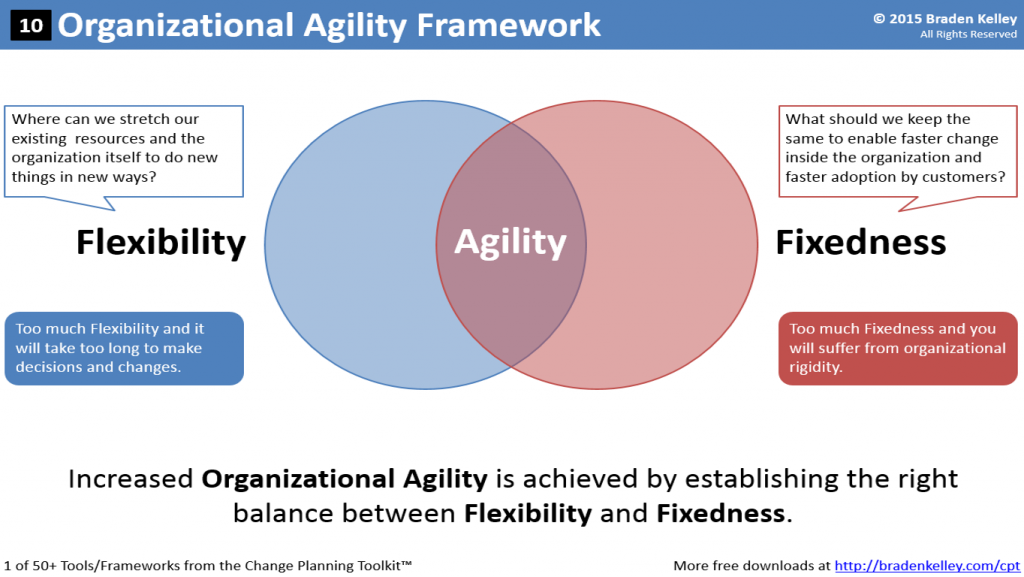
The secret to sustained agility lies in the deliberate management of two opposing states:
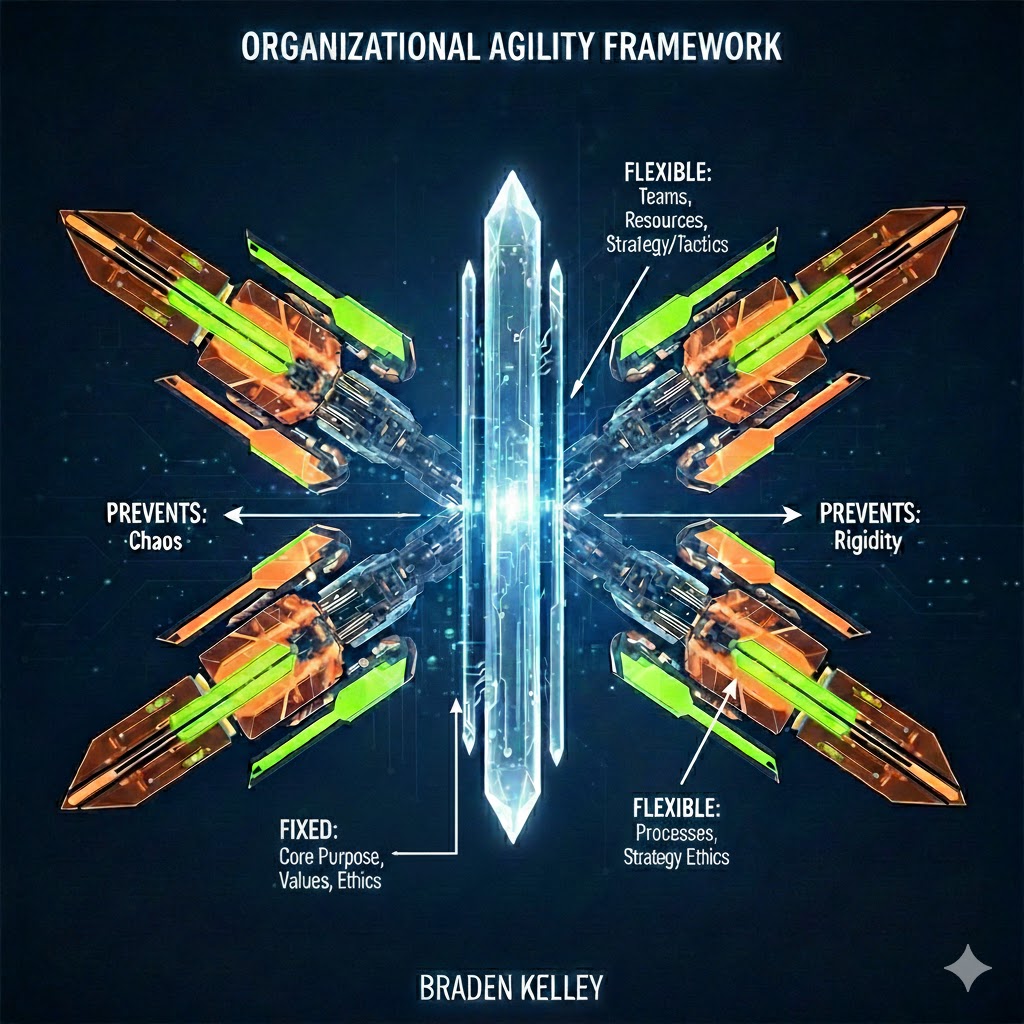
The Fixed: These are your non-negotiables. They include your core values, organizational purpose, and essential guardrails. These elements provide the “stable spine” and the psychological certainty employees need to take risks.
The Flexible: These are your “modular” components. They include business processes, resource allocation models, and team structures. These must be designed to be disassembled and reconfigured in real-time as market conditions evolve.
Managing the Equilibrium
The framework teaches leaders how to prevent “Fixedness” from decaying into Rigidity (where you become a dinosaur) and how to prevent “Flexibility” from dissolving into Chaos (where you lose your brand identity). Agility is the active, daily management of this equilibrium.
Insight: If you try to make everything flexible, you create an organization with no memory and no identity. If you keep everything fixed, you create a monument to the past. Agility is the art of knowing what to hold onto and what to let go.
IV. Designing for Modular Change
Architecting the Reconfigurable Enterprise
Loose Coupling and Micro-Structures
In a truly agile organization, we must abandon monolithic, deeply intertwined departmental silos. Instead, we move toward “Loose Coupling.” By organizing into small, cross-functional squads with clear interfaces, we ensure that one part of the business can pivot or fail without bringing down the entire system. This modularity allows for “plug-and-play” innovation.
Resource Fluidity: Escaping the Annual Budget Trap
You cannot have an agile strategy if your capital is locked in a 12-month fixed cycle. Resource Fluidity is the ability to shift talent and funding dynamically as opportunities arise. Agile organizations treat budgets as “living documents,” allowing leadership to pull resources from declining initiatives and inject them into high-growth “breakthrough” experiments in real-time.
Rapid Prototyping for Organizational Structure
We often prototype products, but we rarely prototype structure. Before committing to a company-wide reorganization, agile leaders run small-scale organizational experiments. By testing a new reporting line or a new collaborative workflow within a single “pilot” team, we can validate the human impact of the change before scaling it.
The Design Rule: Complexity is the enemy of agility. If your organizational chart requires a map and a legend to navigate, you aren’t built for speed — you’re built for bureaucracy. Simplify to amplify.
V. Measuring What Matters: Agility Metrics
Quantifying the Velocity and Resilience of Change
Time-to-Insight vs. Time-to-Action
In a traditional enterprise, the gap between identifying a market shift (Insight) and actually deploying a response (Action) can be months or even years. Agility is measured by the shrinkage of this gap. We must track our Latency of Decision — the speed at which data travels from the front lines to the decision-makers and back into the field as an executed strategy.
Learning Velocity
Success is a lagging indicator; Learning Velocity is a leading one. How quickly can your organization ingest new information, test it, and turn it into institutional knowledge? By measuring the number of validated experiments per quarter rather than just “project completions,” we shift the focus from output to outcomes.
The Resilience Score
Agility is as much about defense as it is offense. A Resilience Score assesses how much of a “shock” your organization can absorb — be it a supply chain disruption or a competitor’s surprise launch — without a significant drop in service levels or employee engagement. An agile organization doesn’t just bounce back; it “bounces forward” into a new, more relevant state.
The Measurement Shift: If you only measure efficiency, you will optimize yourself into extinction. You must measure your capacity to change, for that is where your future revenue lives.
VI. Conclusion: The Agile Organization as a Living System
Sustaining Competitive Advantage in a Volatile World
Beyond the Project Mindset
We must stop viewing “agility” as a transformation project with a start and end date. True organizational agility is a continuous practice — a state of being. It is the transition from seeing your company as a static machine to viewing it as a living system. Like any organism, your business must constantly sense, respond, and evolve to its environment to survive.
The Polymath Leader
The leaders of tomorrow must be comfortable with the “Whole-Brain” approach. They must be part scientist, using data and the Agility Framework to maintain the stable spine of the company, and part artist, using empathy and human-centered change to inspire the flexibility of the workforce. This balance is the only way to navigate the tension between what must remain fixed and what must remain fluid.
Your Sustainable Advantage
In an era where technology can be copied and capital is a commodity, your ability to change is your only sustainable competitive advantage. By architecting an enterprise that embraces both the comfort of fixed values and the excitement of flexible processes, you don’t just survive disruption — you become the disruptor.
Final Thought: Agility is the ultimate expression of confidence. It is the belief that no matter how the world changes, your organization has the structural integrity and the creative spirit to meet the moment. Let’s stop fearing the pivot and start building the platform that makes it possible.
Implementation Checklist: Activating the Agility Framework
Practical First Steps for the Human-Centered Leader
Moving from theory to practice requires a deliberate focus on the Fixed/Flexible balance. Use this checklist to audit your current state and begin the transition.
Identify Your “Stable Spine”:
Document the 3-5 core values and the overarching purpose that must remain Fixed. Do your teams know these are the non-negotiable guardrails?
Audit for “Rigid Decay”:
Locate one process that exists “because we’ve always done it that way” but no longer serves the customer. Mark it as Flexible and schedule a redesign.
Establish a “Safe-to-Fail” Zone:
Designate one small-scale project where the team is explicitly rewarded for Learning Velocity rather than just the final ROI.
Assess Communication Latency:
Track how many days it takes for a customer insight from the field to reach a decision-maker. Aim to reduce this Time-to-Insight by 20% this quarter.
Beta-Test a “Squad” Structure:
Select one departmental silo and “loosely couple” a cross-functional team (e.g., Marketing, Tech, and Customer Success) to solve a single specific friction point.
Braden’s Tip: Don’t try to change the whole organization at once. Agility is built through fractal change — successful small pivots that create a blueprint for the larger enterprise to follow.
What is a Stable Spine Audit?
In my Organizational Agility Framework, a Stable Spine Audit is a strategic exercise used to identify the permanent, non-negotiable elements of an organization that provide the structural integrity required to support rapid change elsewhere.
Think of it this way: for a human to move with agility — to sprint, jump, or pivot — the spine must remain strong and aligned. If the spine is “mushy,” the limbs have no leverage. In a business, if everything is up for grabs, you don’t have agility; you have chaos.
The Core Components of the Audit
When I lead an organization through this audit, we look for three specific types of “Fixedness”:
1. Core Purpose and North Star: Why does the organization exist beyond making a profit? This should be fixed. If your purpose pivots every six months, your employees will suffer from “change fatigue” and lose trust.
2. Values and Ethical Guardrails: These are the behavioral non-negotiables. They define how we work. These provide psychological safety because employees know that even in a crisis, the “rules of engagement” won’t shift.
3. Essential Architecture: This identifies the critical systems or data standards that must remain centralized and standardized to allow for “plug-and-play” flexibility in the branches or squads.
How to Conduct the Audit
The audit is essentially a filtering process for every major component of your business. You ask your leadership team: “Is this a Spine element or a Wing element?”
Category
The Stable Spine (Fixed)
The Flexible Wings (Fluid)
Strategy
Long-term Vision & Purpose
Quarterly Tactics & Experiments
Structure
Governance & Core Values
Cross-functional Squads & Roles
Process
Essential Compliance & Quality
Daily Workflows & Tools
People
Cultural DNA & Talent Standards
Specific Skills & Resource Allocation
Why It Matters for Innovation
I often see teams that are “frozen” because they don’t know what they are allowed to change. By conducting a Stable Spine Audit, you explicitly tell your team: “These five things are fixed. Everything else is a variable you can experiment with.”
This clarity actually increases the speed of innovation because it removes the “permission bottleneck.” When the spine is stable, the wings can flap as fast as they need to.
Diagnostic Questionnaire: Activating the Organizational Agility Framework
A Leadership Workshop Guide to the Stable Spine Audit
To help you activate the Organizational Agility Framework, here is a diagnostic questionnaire designed to be used in a leadership workshop. The goal is to reach a consensus on what belongs to the “Spine” (Fixed) and what belongs to the “Wings” (Flexible).
Phase 1: Identifying the Fixed (The Stable Spine)
Ask your leadership team to answer these questions individually, then compare notes. Discrepancies here usually indicate where organizational friction is coming from.
The “North Star” Test: If we changed our product line entirely tomorrow, what is the one reason for existing that would stay exactly the same?
The Value Constraint: What are the three behaviors that, if an employee violated them, would result in immediate dismissal regardless of their performance?
The Architectural Anchor: What is the single source of truth (data, brand guideline, or compliance rule) that every department must use to remain part of the collective whole?
The Non-Negotiable Promise: What is the one promise we make to our customers that we would never “pivot” away from, even for a massive short-term profit?
Phase 2: Identifying the Fluid (The Flexible Wings)
Now, look at the areas where the organization feels “slow.” These are likely things that are currently “Fixed” but should be “Flexible.”
The “Shadow” Processes: Which of our current “standard operating procedures” (SOPs) were created more than two years ago and haven’t been updated since?
The Permission Bottleneck: Who has the authority to spend $5,000 to test a new idea? If the answer is “The VP,” that process is too Fixed.
The Role Rigidity: Are our job descriptions based on tasks (Fixed) or outcomes (Flexible)? Can we move a person from Project A to Project B in 24 hours without a HR mountain to climb?
The Budgeting Cycle: If a massive market opportunity appeared tomorrow, how long would it take to reallocate 10% of our budget to pursue it?
The Audit Tally
Once you have these answers, map them out:
Green Zone: Elements everyone agrees are Fixed. These are your strengths.
Red Zone: Elements everyone agrees are Fixed but should be Flexible. These are your targets for immediate “unlearning.”
Grey Zone: Elements where the team disagrees. This is where your cultural friction lives.
Closing the Audit
As an innovation speaker, I always remind leaders: The Spine is for Support, not for Strangulation. The goal of this audit isn’t to create more rules, but to create the clarity that allows for more freedom.
1. What is the difference between organizational speed and organizational agility?
Speed is the velocity of movement in a single direction. Agility is the architectural capacity to change direction at speed without breaking the organization. While speed is about execution, agility is about reconfigurability.
2. Why does the “Stable Spine” actually help an organization move faster?
A “Stable Spine” (fixed core values, purpose, and guardrails) provides psychological safety and clarity. When employees know exactly what is non-negotiable, they no longer need to seek permission for everything else, effectively removing the “permission bottleneck” that slows down innovation.
3. How do you identify if a process should be ‘Fixed’ or ‘Flexible’?
Use the Stable Spine Audit. If a process protects your core DNA, ethical standards, or brand promise, it is “Fixed.” If a process is simply a method for delivery, resource allocation, or internal workflow, it should be “Flexible” and modular to allow for rapid adaptation to market shifts.
Content Authenticity Statement: The topic area, key elements to focus on, etc. were decisions made by Braden Kelley, with a little help from Google Gemini to clean up the article and add citations.
Sign up here to get Human-Centered Change & Innovation Weekly delivered to your inbox every week.
In Silicon Valley, we are in love with disruptive innovations, largely because we make a lot of them and have profited exceedingly well from so doing. But for anyone on the receiving end, the relationship is not so rosy. Yes, the potential for gain is extraordinary, but the path to getting there is strewn with attempts that have fallen far short of the hype. How can one engage responsibly with this sort of opportunity? Here’s a framework that can help.
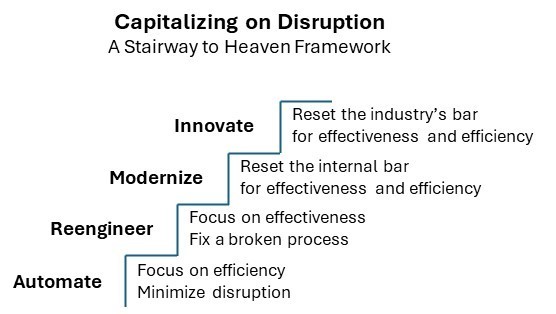
There are four proven ways to capitalize on disruptive innovation, and they are organized here in terms of escalating risk and reward. Each stair appeals to a different persona in the Technology Adoption Life Cycle, the bottom one attracting conservatives, the second, pragmatists in pain, the third, pragmatists with options, and the fourth, visionaries. Each stair can be managed to its targeted reward, but it is very hard indeed to manage two or more stairs in tandem. Most failures occur because management is not decisive about which gains it is committed to achieving and in what priority order it should be served. Needless to say, there is a better way.
The first use of this framework is to explore the possibilities of each stair for your enterprise. That is, if you were to prioritize this stair, what would success look like, how would you expect to measure it, and what costs and risks would be entailed? You want to talk this through as a team, ensuring everyone gets heard. Specifically, you want to make sure that the adoption personas of the most powerful people in the room do not dominate this part of the dialog. They are likely going to make the call in the end, but it is critical that they hear everyone out before they do.
Let’s try this out with everyone’s latest favorite example—generative AI. Imagine you are a member of the executive team at a pharmaceutical corporation, and you have charged your IT team to come up with a GenAI strategy. Wisely, they have come back to you with an array of options, arranged in a stairway to heaven. Here’s what they might say:
Automate. There is a whole series of regulatory compliance obligations that today we outsource overseas to be serviced by a lower-waged workforce. Not only would automating these tasks reduce our costs, it would also lower the error rate and continuously improve performance as more and more machine learning is put to work. This is a low-risk, modest-return option. There would be no disruption to any of our other operations, and we in IT could learn a lot about a technology that is mutating far faster than anything we have ever seen before.
Reengineer. Our proteomics research scientists are having a real problem with the combinatorial explosion of all the possible 3D configurations a given 2D sequence of amino acids might adopt. By focusing our generative AI models on just this one problem, we can vastly accelerate our discovery phase, transforming our problem set from completely intractable to continuously improving. This is a medium-risk, high-return opportunity that is confined to a single department, thereby minimizing disruption to the rest of our value chain.
Modernize. Our go-to-market teams are competing for smaller and smaller slices of time from the physician offices they call upon. We need relevant messaging to get the appointment and highly personalized content to get buy-in from both the doctors and the nurses. Today we rely on experience and anecdotal data, which works OK for our long-tenured members but makes recruiting, onboarding, and ramping a nightmare. By focusing our Large Language Model on all the data in our CRM systems, combined with all our data from the labs, clinical trials, patent submissions, as well as the patient records we have access to, we can arm our GenAI with more information than any one human could process. We still will have humans in the loop to monitor and adapt this material throughout the sales process, but they will be much better equipped to compete than ever before. This is a high-risk, high-return opportunity that will impact a large portion of our workforce, so we plan to stage the implementation to capture learnings as we go.
Innovate. Deep Mind’s AlphaGo program taught itself to play go at the highest level by playing against itself millions and millions of times. We think we can take a similar approach to drug discovery. It’s a moon-shot idea, and our data scientists are still in their own discovery phase, but this could be a game-changer for the industry. We’d like to take a VC approach to funding this effort, ring-fencing the funding across several years, but holding ourselves accountable to meeting material milestones along the way.
As you can see, there is a case to be made for each stair, but there is only so much time, talent, management attention, and working capital to go around, so it is critical that the executive team prioritize these four options and sequence them appropriately. Different teams will come up with different priorities. You are not looking for the “right answer.” You are looking for the one that will yield the best risk-adjusted returns for your enterprise under current conditions.
That’s what I think. What do you think?
Image Credit: Geoffrey Moore, Google Gemini
Sign up here to join 17,000+ leaders getting Human-Centered Change & Innovation Weekly delivered to their inbox every week.
In the hyper-competitive landscape of 2026, many organizations are drowning in data but starving for insight. They perform audits, yet the fundamental “why” of customer friction remains elusive.
The Diagnostic Gap
Most companies have more tools than ever to track clicks, bounce rates, and conversion funnels. Yet, there remains a persistent Diagnostic Gap: the distance between knowing what a customer did and understanding why they felt compelled to do it. Organizations often fail to see their own blind spots because they are looking into a mirror they’ve polished themselves.
The Core Thesis: Perspective over Procedure
A Customer Experience (CX) Audit (aka Customer Experience Risk and Revenue Leakage Diagnostic) is more than a technical inspection; it is an act of empathy. If the auditor lacks a human-centered innovation lens, the resulting report will be mathematically correct but strategically hollow. It might tell you that a button is in the wrong place, but it won’t tell you that your entire value proposition is losing its soul.
The Stakes in 2026
In today’s market, brand loyalty is fragile. A single friction point isn’t just an inconvenience — it’s a broadcast signal to your competitors that there is an opening to disrupt you. Who you choose to hold up the mirror determines whether you see a minor blemish or a structural crack that needs immediate innovation.
Key Takeaways: You cannot solve a problem using the same level of consciousness that created it. The value of an audit is not in the findings, but in the new perspective that allows your team to stop fearing the “How” of the present and start building the “Why” of the future.
II. Internal Audits: The Myth of Objectivity
While internal teams possess deep product knowledge, that very proximity often creates a “distortion field” that obscures the true customer experience.
The “Curse of Knowledge”
Internal teams are often too close to the project to see the friction. Because they know how the system is supposed to work, they subconsciously compensate for poor design. They skip over the confusing copy and ignore the lag because they have developed internal workarounds. A customer doesn’t have that luxury; they only see the barrier, not the intent behind it.
The Hidden Pressure of Internal Politics
An internal audit rarely exists in a vacuum. There is often an unspoken pressure to validate previous executive decisions or to protect the “babies” of influential departments. When the person auditing the experience reports to the person who designed it, the “truth” is often softened to avoid conflict, leading to incremental tweaks rather than the bold innovation required in 2026.
The Efficiency Trap vs. Customer Delight
Internal audits tend to focus on operational efficiency — how can we make this process faster or cheaper for us? While important, this lens often misses the emotional resonance of the journey. You might have a process that is 100% efficient but 0% engaging. Internal teams often solve for “Done,” while customers are looking for “Delight.”
Key Takeaways: You cannot read the label from inside the bottle. Internal audits are great for maintenance, but they are rarely the catalyst for breakthrough change. To find the “Why” of the future, you need a lens that isn’t colored by the “How” of your internal legacy.
III. Independent Audits: The Power of the Outsider
The greatest value an independent auditor brings isn’t just a new set of eyes — it’s a different set of experiences and the freedom to be radically honest.
Fresh Eyes and Cross-Industry Intelligence
An independent auditor lives outside your corporate “echo chamber.” They bring insights from diverse sectors — retail, healthcare, tech, and hospitality — to identify “unobvious” friction points you’ve grown accustomed to. In 2026, your customers don’t just compare you to your direct competitors; they compare you to the best experience they had earlier that morning. An outsider helps you measure up to that global standard.
Closing the “Accountability Gap”
Truth is the primary currency of a successful audit. An independent voice can speak truth to power without the fear of internal repercussions or career friction. This objectivity allows for a “radical transparency” that internal teams often find impossible. By closing the accountability gap, the independent auditor ensures that the real barriers to innovation are named, faced, and eventually dismantled.
Bridging the ‘Why’ and the ‘How’
While internal audits often provide a checklist of “How” to fix specific bugs, an independent auditor investigates the “Why” behind the customer’s emotional journey. They look at the narrative, not just the nodes. This perspective shift allows an organization to move beyond mere troubleshooting and into the realm of strategic experience design.
Key Takeaways: An independent auditor is the customer’s ultimate advocate. When you bring in an outside perspective, you aren’t just buying a report; you are investing in the clarity required to see your organization as the world sees it. Only then can you begin to change it.
IV. The Braden Kelley Edge: Beyond the Checklist
A standard audit tells you where the leaks are; my audit tells you how to change the flow. My approach integrates human-centered change directly into the diagnostic process.
Human-Centered Change as a Methodology
I don’t view Customer Experience as a series of static touchpoints on a map. I view it as a living ecosystem of human interactions. My “Edge” comes from treating the audit as an organizational change exercise. We don’t just look for technical errors; we look for where your internal culture and external experience have lost alignment. By centering the human — both employee and customer — we identify the psychological barriers to a seamless journey.
The Innovation Integration
Most auditors stop at “What is broken?” I start at “Where is the opportunity?” My lens is uniquely calibrated to find where your next innovation is hiding within your current customer friction. If a customer is struggling with a specific step, that isn’t just a bug — it’s a signal of unmet need. I help you translate that struggle into a roadmap for a new product, service, or business model that your competitors haven’t even imagined yet.
Strategic Alignment and Brand Soul
A “good” experience isn’t enough in 2026; it must be your experience. I ensure that every touchpoint is strategically aligned with your unique brand soul and ethical guardrails. An audit under my guidance ensures that efficiency never comes at the cost of authenticity. We solve for the “How” of the present while keeping a relentless focus on your “Why” for the future.
Key Takeaways: An audit shouldn’t just result in a list of repairs; it should result in a vision for renewal. When I audit your experience, I am looking for the spark of innovation that turns a satisfied customer into a lifelong advocate.
V. Why Braden Kelley is the Perfect Partner for Your CX Audit
Selecting an auditor is about trust, legacy, and the ability to translate observation into transformation.
A Legacy of Innovation Leadership
With years of experience as a globally recognized innovation thought leader, I don’t just see a customer journey; I see a competitive battlefield. My background in human-centered design ensures that every recommendation is grounded in the reality of human behavior. I have spent my career helping organizations navigate the complexities of change, making me uniquely qualified to identify the structural hurdles that prevent your team from delivering excellence.
The “Resilient Auditor” Framework
I apply the same resilience routines I advocate for in my speaking and writing to the audit process. This ensures a level of focus, objectivity, and deep synthesis that standard consulting firms often miss. I don’t provide “off-the-shelf” solutions; I provide a custom diagnostic that accounts for the psychological and operational resilience of your specific organization.
Actionable Velocity
The biggest failure of most CX audits is that they sit on a shelf. My goal is Actionable Velocity. I deliver a roadmap that doesn’t just list what’s wrong, but prioritizes fixes based on their potential for ROI and innovation impact. I provide your team with the “Why” they need to stay motivated and the “How” they need to execute immediately.
The Braden Kelley Promise: When I conduct your audit, you aren’t just getting a consultant; you are getting a partner dedicated to making your organization smart enough to solve its own most complex problems. We will bridge the gap between where you are and where the future demands you to be.
VI. Conclusion: Choosing Your Mirror
Ultimately, a Customer Experience Audit is an investment in clarity. In an era where disruption is the only constant, you cannot afford to look through a distorted lens. Whether you choose an internal review for maintenance or an independent audit for transformation, remember that the quality of the insight is entirely dependent on the perspective of the auditor.
Don’t Just Audit the Past — Design the Future
The goal of a world-class audit isn’t just to find out where you’ve been, but to illuminate where you are capable of going. By choosing an auditor who understands human-centered change and innovation strategy, you ensure that your organization doesn’t just fix the “How” of today, but masters the “Why” of tomorrow.
The mirror you choose today will determine the reflection your customers see tomorrow. Make sure it is a mirror that shows the full potential of your brand’s soul.
Ready to Transform Your Customer Journey?
Stop guessing and start innovating. Let’s work together to find the “unobvious” opportunities hidden within your customer experience.
— Braden Kelley
Ready to find your Customer Experience innovation opportunities?
1. Why is an independent CX audit better than an internal one?
Internal teams often suffer from the “Curse of Knowledge” — they are so familiar with how things should work that they miss how they actually work for the customer. An independent auditor brings unbiased clarity and the courage to name the structural issues that internal politics might keep hidden.
2. How does Braden Kelley’s approach differ from others?
Most audits look for bugs; Braden Kelley looks for breakthroughs. By applying a human-centered innovation lens, Braden identifies not just where you are failing the customer, but where the customer is signaling a need for a new solution you haven’t built yet.
3. What is the main outcome of this audit?
The primary outcome is Actionable Velocity. You won’t receive a static report; you’ll get a prioritized roadmap that balances immediate experience “quick wins” with long-term strategic innovation goals, ensuring your CX is a driver of growth, not just a line item.
Image credits: ChatGPT
Content Authenticity Statement: The topic area, key elements to focus on, etc. were decisions made by Braden Kelley, with a little help from Google Gemini to clean up the article and add citations.
Sign up here to get Human-Centered Change & Innovation Weekly delivered to your inbox every week.
For centuries, innovation has lived in tension with ethics.
Some say moral codes kill progress… Others say they force progress to grow up. And sometimes… they save lives.
The truth?
It’s not binary… It’s a system with three gears:
Ethics can kill innovation.
Ethics can sharpen innovation.
Ethics can morph innovation and save lives.
Let’s explore all three.
When Ethics Slowed or Killed Innovation
Galileo (1633): He was tried by the Church for heresy for supporting heliocentrism. The science was sound… but ethics and religion weren’t ready. The progress paused for decades.
Human Gene Editing (2018): The CRISPR baby scandal in China sparked global bans. What could’ve been a gene-editing revolution was halted overnight. Ethics drew the red line.
Embryonic Stem Cell Research (2001–2009): Federal funding bans in the U.S. slowed a medical frontier, but the ethical blockade forced a pivot… leading to induced pluripotent stem cells. No embryos needed.
3D-Printed Guns: The blueprints spread fast. There were 100,000+ downloads. Then came the ban. Public safety over open-source freedom. Questionable innovation.
Facial Recognition Tech: It was halted by Amazon, IBM, and Microsoft in 2020. Why? Racial bias… surveillance concerns… and wrongful arrests. It didn’t die… but it had to evolve.
When Ethics Sharpened Innovation
Green Chemistry: Toxic byproducts used to be a cost of doing business. Ethical pressure gave rise to “benign by design” tech. Now it’s a growth market.
Accessibility Design: Sidewalk ramps weren’t built for travelers and strollers… They were built for wheelchairs…. and they ended up helping everyone. The “Curb Cut Effect” is now UX Evangelism.
Privacy Laws (GDPR, HIPAA): While it slowed data flows, it triggered encryption, on-device AI, and federated learning. The constraints sparked new architectures.
Explainable AI (XAI): Ethical backlash against black-box algorithms forced a rethink. Now, companies are judged on accuracy, transparency, and traceability.
Tesla’s Circular Supply Chain: The demand for ethical sourcing turned a compliance issue into an operational win. Now, Tesla is near 95% battery material recycling… lower emissions… and lower costs.
When Ethics Flat-Out Saved Lives
Vioxx Scandal (1999–2004): The drug rushed to market… praised as a breakthrough. But then came the deaths. There was a forced recall… and $4.85 billion in settlements. Ethics didn’t slow this innovation, but it should have.
Solar Geoengineering: Experiments like Harvard’s SCoPEx were shelved. Not because they didn’t work, but because the risks were planetary. Ethics didn’t just stall the idea; it saved us from playing God with the sky.
Predictive Policing Tools: It was touted as crime-busting AI. Turns out… they just automated racial profiling. The fix wasn’t a patch. The fix was a ban.
The truth is that some innovations never come back from ethical collapse. Others rise stronger from the fire. The real difference? Whether the ethics were ignored… or integrated.
What to Do Now
Define your red lines early.
If you wait until launch… It’s too late.
Design for constraint.
Let the friction shape the form… work it.
Build auditable systems.
Black boxes break trust. transparency scales.
Know the cost of speed.
The market remembers failures longer than delays.
Use ethics as a strategy.
It’s not just a legal risk… It’s a competitive power.
“Ethics is knowing the difference between what you have a right to do… and what is right to do.” — Potter Stewart, U.S. Supreme Court Justice
Innovation isn’t value-neutral. It never was.
And in 2026, ethics isn’t just the constraint… It’s the catalyst.
Image credit: ChatGPT
Sign up here to get Human-Centered Change & Innovation Weekly delivered to your inbox every week.
I. Introduction: The Death of the “Finished” Product
“We are moving from an era of designing objects to an era of designing behaviors.” — Braden Kelley
Beyond the Static Boundary
For centuries, the fundamental constraint of innovation has been the static nature of matter. Once a piece of steel was forged or a plastic mold was set, its physical properties—its stiffness, shape, and conductivity—were locked in time. In 2026, that boundary is evaporating. We are entering the age of Digital-Physical Hybrids, where the physical world is becoming as iterative and agile as the software that controls it.
Defining Programmable Matter
At its core, programmable matter refers to materials or assemblies of components that can change their physical properties based on software instructions or external stimuli. Imagine a world where a car’s body panels adjust their shape for optimal aerodynamics in real-time, or a medical implant that remains soft for insertion but “programs” itself to become rigid once it reaches its destination.
The Braden Kelley Perspective: Pulling the Physical Lever
As I often say, “Innovation is the art of pulling the right lever.” In the context of programmable matter, the “lever” is no longer a mechanical switch; it is a software command. This technology collapses the distance between digital intent and physical experience. When matter becomes programmable, the “product” is never truly finished—it is in a state of perpetual adaptation, designed to meet the changing needs of the human beings who use it.
II. The Three Pillars of Adaptive Materiality
To program the physical world, we must manipulate three fundamental characteristics. In 2026, these are the levers that turn “dumb” objects into intelligent systems.
1. Morphology: Shape-Shifting for Performance
Morphology is no longer a fixed design choice; it is a real-time response. Through the use of shape-memory alloys and 4D-printed polymers, materials can now alter their geometry to optimize for the environment. Whether it’s a drone wing that warps its shape to navigate high winds or footwear that adjusts its arch support based on your gait, morphology is the first pillar of physical agility.
2. Variable Stiffness: The Soft-to-Rigid Spectrum
One of the most profound breakthroughs is the ability to toggle a material’s structural integrity. By using phase-change materials—which can switch between liquid and solid states via thermal or electrical triggers—we can create objects that are flexible when they need to be safe (soft robotics) and rigid when they need to bear weight (emergency infrastructure).
3. Conductive Logic: Reconfigurable Intelligence
The final pillar is the ability to program the “nervous system” of an object. Conductive logic involves materials with internal pathways that can be rerouted on the fly. This allows a single component to switch its function—for instance, a car door panel that reconfigures its internal circuitry from a speaker to a heating element based on occupant preference.
The Braden Kelley Insight: Mastery of these three pillars allows organizations to move away from “mass production” toward “mass adaptation.” We aren’t just making things better; we are making them smarter at the molecular level.
III. Case Study 1: Adaptive Architecture and Urban Resilience
The buildings of the 20th century were cages of steel and glass. In 2026, programmable matter is turning the “built environment” into a living, breathing skin.
The Challenge: The Energy of Stasis
Buildings are responsible for nearly 40% of global energy-related carbon emissions, much of which is wasted fighting the environment—heating against the cold or cooling against the sun. Traditional “smart” buildings rely on mechanical motors and sensors that are prone to failure and require massive power draws to operate.
The Innovation: Biomimetic Material Intelligence
Leading architecture firms are now collaborating with material scientists to deploy hygroscopic and thermomorphic materials. These “programmed” building skins react directly to moisture and heat without a single mechanical motor. Like a pinecone opening when dry to release seeds, a building facade can now “unfurl” to provide shade during peak solar hours and “tighten” to trap heat when the temperature drops.
The Human Shift: Buildings that Empathize
This isn’t just about efficiency; it’s about the human experience. Imagine a workspace where the ceiling lowers its density to improve acoustics as a room fills up, or windows that change their molecular structure to diffuse glare while maintaining a view. Through programmable matter, our architecture stops being a static obstacle and starts being a collaborator in our daily lives.
Braden Kelley’s Reflection: We’ve spent a century trying to control the environment with brute force. Programmable matter allows us to dance with it instead. This is the ultimate expression of Sustainable Innovation—doing more by building something that knows how to adapt.
IV. Case Study 2: Soft Robotics in Minimally Invasive Medicine
The human body is fluid and delicate, yet our medical tools have historically been rigid and intrusive. Programmable matter is changing the geometry of healing.
The Challenge: The Rigidity of Current Surgery
In traditional minimally invasive surgery, surgeons use catheters and endoscopes that possess a fixed stiffness. This creates a “navigation tax”—the risk of damaging delicate vascular walls or organs while trying to reach a deep-seated tumor or blockage. The tool must be stiff enough to push, but soft enough not to pierce.
The Innovation: Phase-Changing Surgical “Tentacles”
In 2026, we are seeing the rise of Programmable Soft Robots. These devices utilize low-melting-point alloys (LMPA) embedded within a silicone matrix. By applying a tiny electrical current, the surgeon can “program” specific segments of the tool to become liquid-soft for navigating tight corners, and then instantly “freeze” them into a rigid state to provide the leverage needed for a biopsy or a stent placement.
The Human Shift: Personalized Internal Navigation
This allows for truly personalized medicine. Because the tool adapts to the patient’s unique anatomy in real-time, the “one-size-fits-all” approach to surgical instruments is dead. We are reducing patient trauma, shortening recovery times, and enabling procedures that were previously considered “inoperable” due to anatomical complexity.
A Braden Kelley Note: This is the ultimate example of Human-Centered Change. We are no longer forcing the human body to adapt to our technology; we are programming our technology to empathize with the human body.
V. The Ecosystem: Leaders and Disruptors in 2026
The transition from static to programmable matter requires a new stack of technology—spanning simulation, generative design, and advanced fabrication. These are the players building that stack.
The Giants: Providing the Infrastructure
Autodesk: Their Generative Design tools have evolved into “Behavioral Design” platforms. Designers no longer just draw shapes; they define the intent of the material, and Autodesk’s AI calculates the necessary molecular lattice.
Nvidia: Programmable matter is notoriously difficult to predict. Nvidia’s Omniverse provides the high-fidelity physics simulations required to “digital twin” a material’s behavior before a single atom is printed.
The Disruptors: Redefining Fabrication
Company
Core Innovation
Target Industry
Carbon
Dual-Cure Resins with variable elasticity
Performance Footwear & Automotive
Voxel8
Integrated conductive circuitry in 3D structures
Consumer Electronics & Wearables
Aimi (Emerging)
Active textiles that change porosity/warmth
Defense & Extreme Sports
Strategic Takeaway: You don’t need to be a material scientist to play in this space. You need to be a collaborator. The winning organizations in 2026 are those that partner across the stack—linking software intent to material reality.
VI. The Strategic Impact: Collapsing the Final Frontier
The strategic value of programmable matter goes far beyond the “wow factor” of a shape-shifting gadget. It represents a fundamental shift in Resource Efficiency. When a single object can be “re-programmed” to serve three different functions throughout its lifecycle, we drastically reduce the need for raw material extraction and landfill waste. This is the ultimate tool for a circular economy.
VII. Conclusion: Programming the Future Today
We are moving from a world of “things” to a world of “behaviors.” In this new era, your competitive advantage won’t just be what you make, but how well your creations can learn and adapt to the human beings they serve.
As you look at your product roadmap for the next five years, stop asking what features you should add. Start asking: “If our product could change its physical soul to better serve our customer tomorrow, what would we tell it to do today?”
“The future is not something that happens to us; it is something we program.” — Braden Kelley
Transform Your Organization’s Future
Ready to turn uncertainty into a resource? Let’s discuss how these emerging technologies can redefine your industry.
Programmable Matter FAQ
1. How is programmable matter different from traditional 3D printing?
Traditional 3D printing creates static objects with fixed properties. Programmable matter, often referred to as 4D printing, introduces a time and behavior dimension. It uses smart materials that can change their shape, density, or conductivity after the manufacturing process is complete.
2. What are the primary benefits of adaptive materials in industry?
The primary benefits include resource efficiency and personalized performance. By allowing a single material to adapt to its environment (such as a building facade that opens and closes without motors), companies can reduce carbon footprints and create products that evolve with user needs.
3. Is programmable matter ready for commercial use in 2026?
Yes, it is currently in the “Scale-Up” phase. It is already being deployed in high-stakes sectors like aerospace for adaptive surfaces, medical devices for shape-shifting surgical tools, and high-performance athletics for responsive textiles.
Disclaimer: This article speculates on the potential future applications of cutting-edge scientific research. While based on current scientific understanding, the practical realization of these concepts may vary in timeline and feasibility and are subject to ongoing research and development.
Image credits: Google Gemini
Sign up here to get Human-Centered Change & Innovation Weekly delivered to your inbox every week.
Patents are the currency of technology and profits are the currency of business. And as it turns out, if you focus on creating technology you’ll get technology (and patents) and if you focus on profits you’ll get profits. But if no one buys your technology (in the form of the products or services that use it), you’ll go out of business. And if you focus exclusively on profits you won’t create technology and you’ll go out of business. I’m not sure which path is faster or more dangerous, but I don’t think it matters because either way you’re out of business.
It’s easy to measure the number of patents and easier to measure profits. But there’s a problem. Not all patents (technologies) are equal and not all profits are equal. You can have a stockpile of low-level patents that make small improvements to existing products/services and you can have a stockpile of profits generated by short-term business practices, both of which are far less valuable than they appear. If you measure the number of patents without evaluating the level of inventiveness, you’re running your business without a true understanding of how things really are. And if you’re looking at the pile of profits without evaluating the long-term viability of the engine that created them you’re likely living beyond your means.
In both cases, it’s important to be aware of your time horizon. You can create incremental technologies that create short term wins and consume all your resource so you can’t work on the longer-term technologies that reinvent your industry. And you can implement business practices that eliminate costs and squeeze customers for next-quarter sales at the expense of building trust-based engines of growth. It’s all about opportunity cost.
It’s easy to develop technologies and implement business processes for the short term. And it’s equally easy to invest in the long term at the expense of today’s bottom line and payroll. The trick is to balance short against long.
And for patents, to achieve the right balance rate your patents on the level of inventiveness.

 Sign up here to get Human-Centered Change & Innovation Weekly delivered to your inbox every week.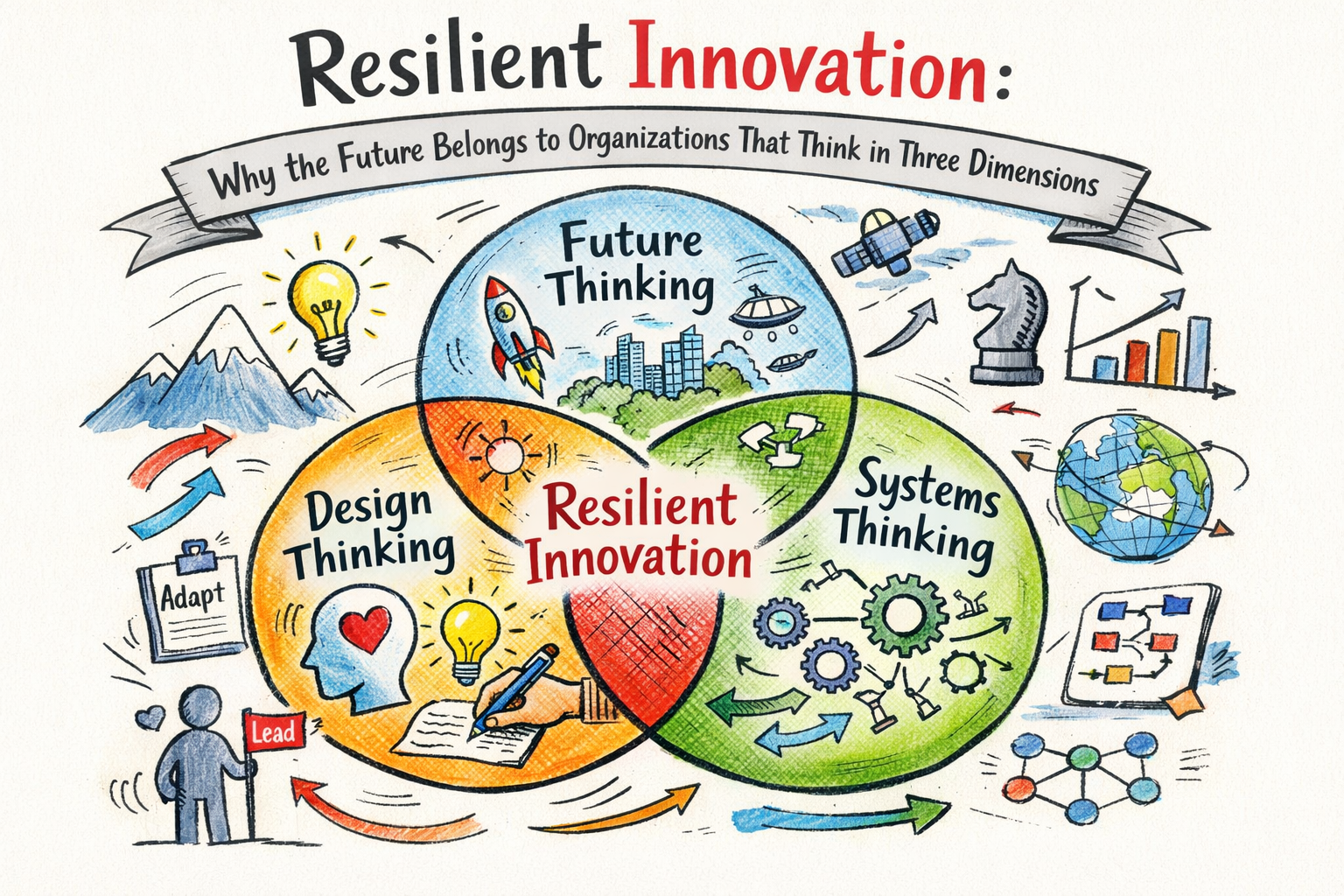
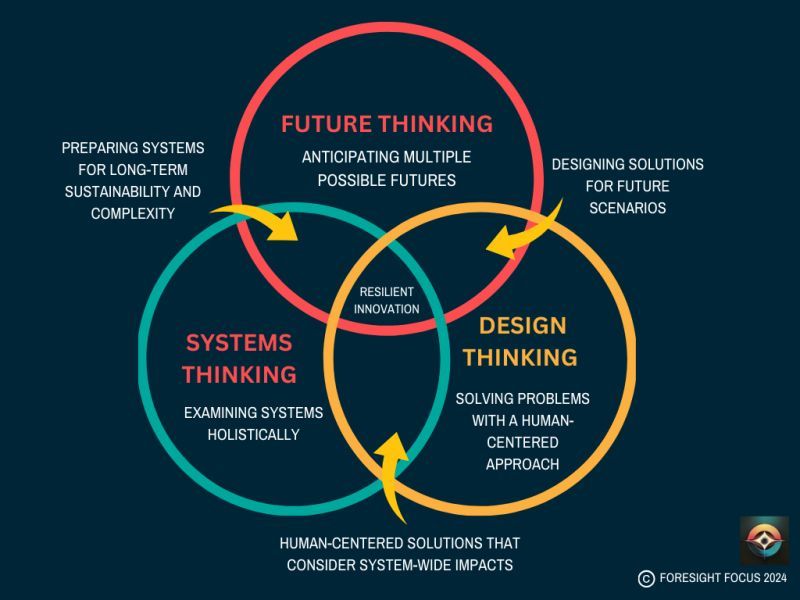
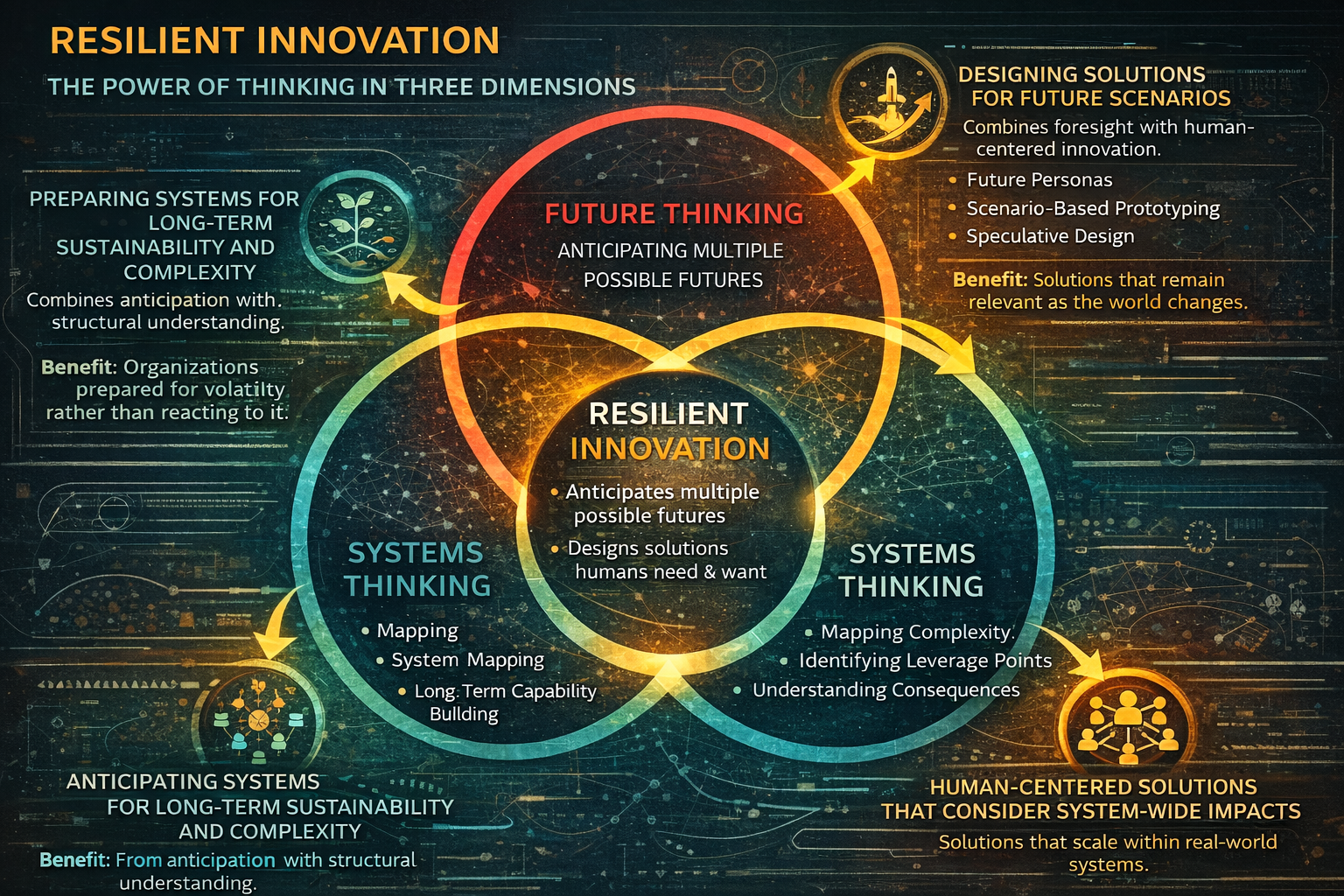
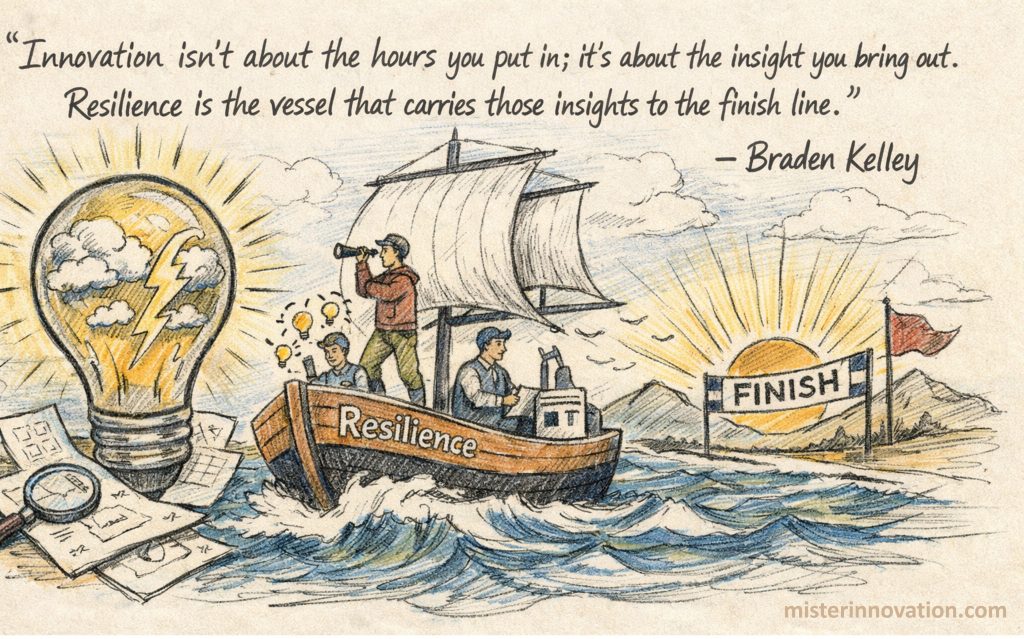
 Drum roll please…
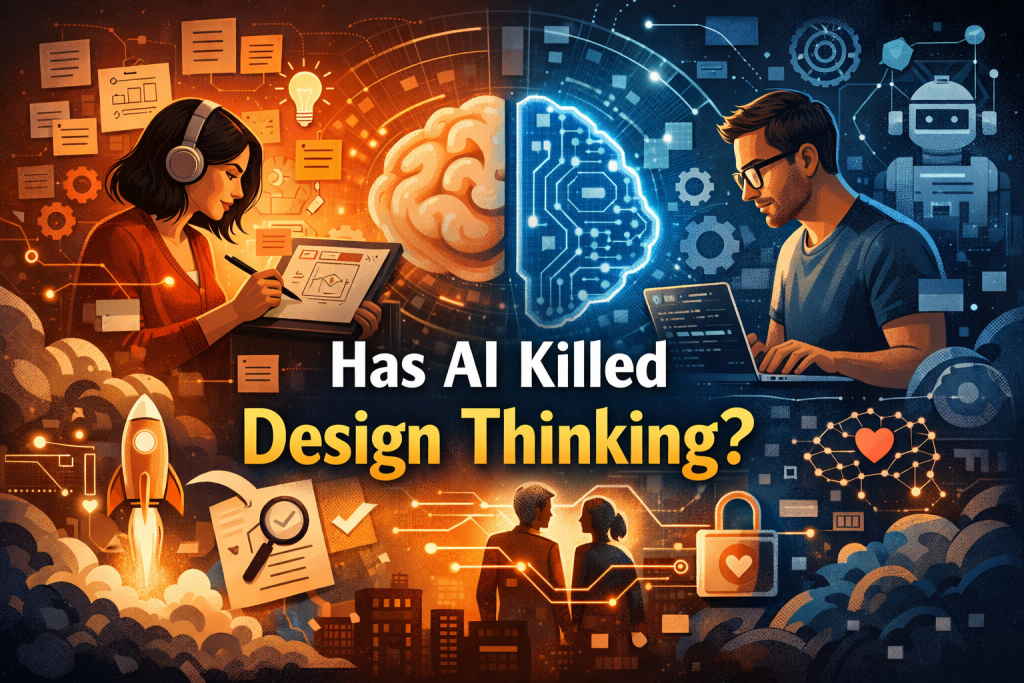
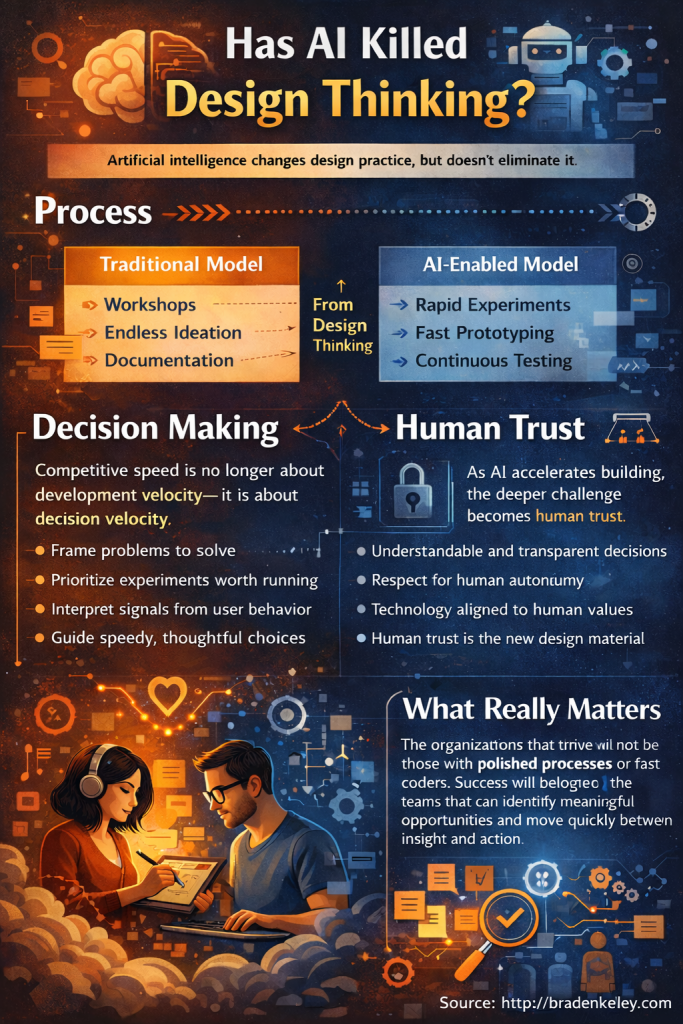
 To help you find problems worth solving and to design and execute experiments, I created a couple of visual and collaborative tools to help you thrive in this new reality. Download them both from my store and enjoy!