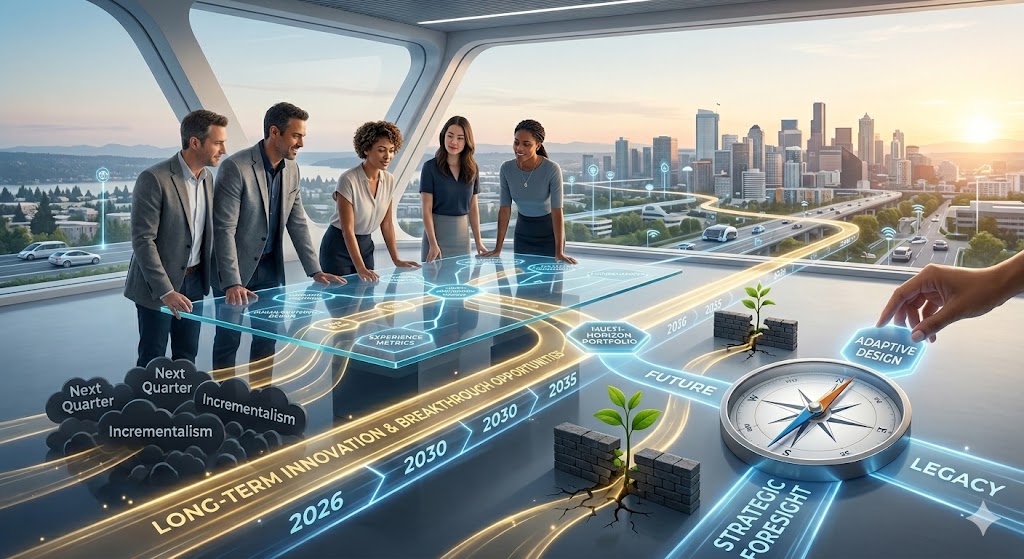
Category Archives: Futurology

Predictions for the Future of Education

Predictions for the Future of Education

GUEST POST from Chateau G Pato

The Education sector is rapidly evolving and no one is quite sure what the future holds. It’s clear that technology advancements and changes in the way we approach day-to-day learning are here to stay, but there are a few noteworthy trends that may indicate what the future may hold.

1. Moving to Online Learning

The increase in digital technology over the past decade has made the move to online learning inevitable. In recent years, many educational institutions have begun offering online courses or even entire degree programs. This is proving to be an incredibly popular option among students who may not otherwise have access to more traditional learning.

In Finland, the University of Jyväskylä has taken a unique approach to the online learning revolution. Rather than offering traditional classes, the university offers an “open university” platform, where students can learn from experts without actually enrolling in a course. This approach has proven to be successful, and it’s likely that more educational institutions will begin adopting this model.

2. Personalized Learning

As technology advances, so too do our abilities to offer personalized learning. Through tracking systems, teachers can customize lesson plans and course material to better suit each student’s individual needs. Not only does this ensure that each student gets the most out of their education, but it also allows educators to detect and address potential problems before they become serious.

The Walton Family Foundation, for example, is providing schools with the resources necessary to implement personalized learning strategies. This has proven to be a successful approach in some areas, and it’s likely that more educational institutions will begin adopting similar strategies in the near future.

3. Increased Attention on Social and Emotional Development

In recent years, there has been an increased focus on the importance of social and emotional development in students. The prevalence of mental health issues among children and adolescents has forced educators to reassess their methods and approach the issue from a more holistic perspective.

In the United Kingdom, the government is currently working to ensure that social and emotional development is given the attention it deserves in the classroom. They are currently exploring ways to make sure that every school has access to the necessary resources and programs to ensure that students are emotionally and mentally supported.

Conclusion

These are just a few of the trends that may indicate what the future may hold when it comes to the education sector. As technology continues to develop and new methods are explored, we can only wait to see what the future of Education has in store.

Bottom line: Futurology is not fortune telling. Futurists use a scientific approach to create their deliverables, but a methodology and tools like those in FutureHacking™ can empower anyone to engage in futurology themselves.

Image credit: Pixabay

Subscribe to Human-Centered Change & Innovation WeeklySign up here to get Human-Centered Change & Innovation Weekly delivered to your inbox every week.

The Weak Signal Advantage

Exploiting Hidden Disruptions Before They Mainstream

The Weak Signal Advantage

GUEST POST from Art Inteligencia


The Noise and the Whisper

In the modern corporate arena, organizations have become incredibly proficient at reacting to the loud, obvious signals of the marketplace. They pore over standard economic indicators, dissect mainstream competitor announcements, and track megatrends that are already making headlines. But here is the hard truth: by the time a trend is loud enough for everyone to hear, the window for creating a true, sustainable competitive advantage has slammed shut. You aren’t pioneering; you are simply reacting.

To truly lead, we must shift our focus from the roar of the mainstream to the subtle whispers at the fringes. This is the realm of “Weak Signals”—those fragmented, ambiguous, and highly localized pieces of information that hint at massive, fundamental shifts in human behavior, technology, or socio-economic structures long before they register on a traditional corporate dashboard.

From a human-centered innovation perspective, weak signals are rarely found in clean data sets or sterile market research reports. Instead, they manifest as emerging human frustrations, unconventional workarounds, and unarticulated needs. They are the cracks in the existing experience where the future is beginning to leak through. To exploit the weak signal advantage, organizations must move beyond passive forecasting and actively design sensing mechanisms that treat these fringe behaviors not as anomalies to be ignored, but as the architecture of tomorrow’s mainstream.

I. Decoding the Weak Signal: What Are We Looking For?

To successfully exploit the weak signal advantage, we first have to train our eyes to see them. In a world drowning in data, the challenge isn’t a lack of information—it is the overwhelming amount of noise. True weak signals are easily missed because they look small, weird, or irrelevant to your current business model. Differentiating a genuine precursor to disruption from a passing fad requires a deliberate shift in our analytical lens.

The Anatomy of a Weak Signal

A weak signal is a technical, social, or economic anomaly that behaves like an early indicator of a larger shift. Unlike megatrends, which are clear, measurable, and already moving in a predictable direction, weak signals are characterized by low visibility and high ambiguity. They often appear as isolated events, niche subcultures, or minor regulatory changes. The key to identifying them is not looking for statistical significance, but looking for structural shifts in how value is created, exchanged, or perceived.

The Human Element: Spotting the ‘Workaround’

From a human-centered design perspective, the most valuable weak signals are found where current systems fail to meet emerging human desires. This is most visible in the form of “workarounds”—the creative hacks, shortcuts, and alternative processes that people invent when existing products or services don’t quite fit their needs. When a user actively modifies a tool, combines two unrelated softwares, or builds a makeshift solution, they are flashing a powerful weak signal. They are showing you exactly where the existing experience is broken and where a new market is waiting to be born.

Cross-Industry Cross-Pollination

Organizations frequently fall into the trap of only monitoring their direct competitors and immediate industry ecosystem. However, disruptive weak signals almost always originate from outside your traditional echo chamber. A shift in user interface expectations in the gaming world can rapidly bleed into corporate enterprise software. A new logistical model in the food delivery space can reshape customer expectations for healthcare delivery. By looking across industry boundaries, innovators can catch these behavioral shifts at the source, adapting and applying them to their own markets before anyone else sees them coming.

II. The Human-Centered Sensing Engine

Most organizations possess analytics engines designed to measure the present, not sense the future. They rely heavily on lagging indicators—such as quarterly sales, lagging customer satisfaction scores, and retrospective market reports. By definition, these metrics only tell you what has already happened. To capture weak signals, leadership must build a human-centered sensing engine that optimizes for leading indicators rooted in human behavior and empathy.

Futurology Meets Empathy

Strategic foresight is often treated as a cold, data-driven exercise in pattern recognition or algorithmic forecasting. But true futurology must be grounded in empathy. To sense where the world is going, we must move past aggregated data points and engage in deep ethnographic research, immersive social listening, and direct observation. We need to understand not just what people are doing, but the underlying emotional drivers, anxieties, and aspirations driving their behavior. When you understand the deeper human shifts, the technological and economic shifts become highly predictable.

Building an Insights Ecosystem

Weak signals rarely register at corporate headquarters first; they hit the periphery of your organization. Your frontline employees, customer support agents, and field teams are the ones who encounter customer frustrations, weird requests, and unscripted workarounds on a daily basis. A robust sensing engine intentionally activates this “insights ecosystem.” By creating frictionless, low-barrier internal channels for frontline staff to report these anomalies, organizations can crowdsource decentralized foresight from the people closest to the fringe behaviors.

The ‘Outside-In’ Perspective

To avoid the echo chamber of internal operational metrics, an effective sensing engine forces an outside-in perspective. This means deliberately designing continuous feedback loops with non-traditional stakeholders: “extreme users” who stretch your products to their absolute limits, adjacent industry pioneers, and even your fiercest critics. Shifting the organizational focus away from optimizing internal efficiencies and toward tracking external behavioral friction transforms leadership from passive forecasters into active observers of emerging market realities.

III. The Strategic Dilemma: Evaluating the Unproven

Identifying a weak signal is only half the battle; the real organizational friction begins when you try to decide what to do with it. This creates a classic strategic dilemma for leadership: act too early on a false alarm and you waste valuable capital; act too late and you get left behind. Navigating this uncertainty requires moving past traditional return-on-investment (ROI) models and adopting a dynamic framework for evaluating the unproven.

The Risk Matrix: Ghosts vs. Disruption

Traditional corporate risk management is heavily biased toward avoiding failure, which inadvertently makes organizations blind to opportunity. When evaluating an emerging signal, leadership must balance two distinct types of risk. The first is the risk of chasing a “ghost”—a passing fad or localized anomaly that will never achieve mainstream adoption. The second, and far more dangerous, is the risk of ignoring a truly transformative signal that could eventually threaten or completely reinvent your core business model. The goal is not to eliminate risk, but to manage it through small, deliberate investments.

A Framework for Assessing Emerging Signals

To determine which weak signals warrant organizational attention and resources, innovators can evaluate them across three human-centered dimensions:

  • Velocity: How fast is the underlying human behavior or technological capability evolving? Is the signal accelerating, or is it remaining stagnant on the fringes?
  • Impact: If this signal scales, does it fundamentally threaten our current value proposition, or does it offer an unprecedented opportunity to supercharge the customer experience?
  • Scalability: Is this behavior tied to a highly isolated demographic anomaly, or is it an early-stage manifestation of a larger macroeconomic or structural shift?

Overcoming Organizational Blind Spots

The greatest barrier to exploiting weak signals is rarely a lack of insight; it is the cognitive bias built into corporate culture. Established organizations are structurally designed to protect the status quo. When presented with fringe data, leadership often defaults to defensive thinking, dismissing the anomalies with phrases like “That’s not our target market” or “Our metrics show customers are perfectly happy.” Overcoming these blind spots requires a cultural shift that rewards curiosity over certainty and actively treats anomalies as vital strategic inputs rather than noise.

IV. Exploiting the Advantage: From Signal to Experience Design

Sensing and evaluating a weak signal means nothing if the organization cannot translate that foresight into action. The ultimate goal of identifying early market shifts is to design the next generation of human experiences before competitors realize the playground has changed. Transitioning from abstract signal detection to concrete execution requires a structured, agile approach to innovation that minimizes risk while maximizing learning speed.

Agile Prototyping and Low-Fidelity Experiments

When dealing with the unproven, betting the entire corporate budget on a single massive project is a recipe for disaster. Instead, innovators must exploit weak signals by placing small, strategic bets. This involves deploying low-fidelity prototypes and controlled experiments into the wild to interact with the emerging trend. The focus here is not on building a polished, flawless product, but on validating assumptions, testing behavioral hypotheses, and gathering real-world data without derailing core, everyday business operations.

Co-Creating with Early Adopters

The humans currently driving a weak signal—the fringe users, the hackers, the passionate early adopters—hold the key to how that market will mature. Rather than trying to design for them in a corporate silo, organizations must design with them. By building co-creation platforms and engaging these pioneering users in participatory innovation, companies can accelerate their development cycle. This collaborative approach ensures that the resulting product, service, or experience directly aligns with the true, underlying human needs of the emerging market.

The Fast-Follower vs. Pioneer Trap

A critical strategic choice face every leadership team: do we pioneer the space and actively shape the emerging ecosystem, or do we play the role of a smart fast-follower? Being a pioneer allows you to set the standards, secure intellectual property, and capture early brand equity, but it comes with immense discovery costs. Being a fast-follower reduces immediate R&D risk, but leaves you vulnerable if the pioneer builds high barriers to entry. The right choice depends on your organizational capabilities, but the most successful approach is often to build the internal infrastructure ready to capture and scale the experience the moment the weak signal begins to tip toward the mainstream.

Conclusion: Future-Proofing Through Continuous Sensing

The future never arrives overnight with a grand announcement or a coordinated press release. It builds slowly, quietly, and unevenly in the margins of society, dropping subtle clues along the way. Organizations that wait for absolute certainty before they act will perpetually find themselves caught in a cycle of defensive disruption, reacting to the innovations of others rather than steering their own destiny.

Gaining the weak signal advantage requires more than an updated strategic planning toolkit; it demands a fundamental shift in leadership mindset. It requires replacing corporate complacency with deep empathy, and exchanging an obsession with internal operational metrics for a relentless curiosity about human behavior on the fringe. By actively building a human-centered sensing engine, evaluating unproven anomalies with structured agility, and co-creating with early adopters, organizations can stop guessing where the market is going.

The choice facing modern business leaders is clear: you can either stay comfortably focused on the noise of the mainstream until it is too late, or you can train your organization to listen to the whisper. Those who listen to the whisper won’t just survive the next wave of disruption—they will design it.

Frequently Asked Questions

What exactly is a “weak signal” in innovation?

A weak signal is a fragmented, ambiguous, or highly localized piece of data that hints at a fundamental, emerging shift in human behavior, technology, or socio-economic structures. Unlike loud mainstream trends, weak signals exist on the fringes—often appearing as user workarounds, niche subcultures, or minor systemic anomalies long before they go mainstream.

How can an organization distinguish a true weak signal from random noise?

Distinguishing a signal from noise requires looking for structural shifts in human behavior rather than statistical significance. True weak signals are typically found where existing experiences are broken, forcing users to create manual hacks or workarounds. If a behavior is accelerating across adjacent industries or solving an unarticulated human frustration, it is likely a signal rather than passing noise.

Why should structured metrics be deprioritized when looking for these signals?

Traditional corporate metrics and ROI models are lagging indicators—they excel at optimizing the present but are inherently blind to the future. Weak signals are qualitative, ambiguous, and unproven. Evaluating them through standard metrics causes organizations to kill disruptive ideas too early because the initial market size looks small or financially unviable.


FutureHacking™ Is Coming

FutureHacking™ is Braden Kelley’s strategic foresight methodology — and a paid download and training program is launching soon. Register your interest now to be the first to know when it’s available, and get early access pricing.

Image credit: Gemini

Subscribe to Human-Centered Change & Innovation WeeklySign up here to get Human-Centered Change & Innovation Weekly delivered to your inbox every week.

How to Separate Meaningful Market Shifts from Cultural Noise

Sifting the Signals

How to Separate Meaningful Market Shifts from Cultural Noise

GUEST POST from Art Inteligencia


I. Introduction: The Noise Economy

The Modern Paradox: We are drowning in data but starving for clarity. The speed of social media, viral trends, and flash-in-the-pan tech creates an illusion of constant disruption.

The Cost of Misjudgment:

  • Chasing the Noise: Wasted capital, organizational fatigue, and strategic whiplash (e.g., pivoting the entire brand for a two-week internet trend).
  • Missing the Signal: Obsolescence, losing market relevance, and being disrupted by slow-moving but unstoppable shifts.

The Thesis: True innovation and sustainable growth require leaders to develop an organizational filter — a methodology to distinguish short-term cultural noise from deep, meaningful market shifts.

II. Defining the Spectrum: Noise vs. Signals

To navigate the modern business landscape, leaders must first establish a shared vocabulary. The distinction between a temporary market distraction and a foundational shift comes down to structural permanence and human behavior.

What is Cultural Noise?

Cultural noise consists of high-velocity, high-visibility phenomena that capture public attention rapidly but lack long-term structural viability. They are often driven by emotional contagion, novelty, or algorithmic amplification.

  • Characteristics: Short lifecycle, superficial impact, rapid decline, and low barrier to exit.
  • Example: Viral social media challenges, short-lived meme stocks, or sudden, panic-driven consumer spikes that normalize as soon as the immediate context shifts.

What is a Meaningful Market Shift (Signal)?

A meaningful market shift, or a true signal, is an underlying transformation grounded in evolving human behaviors, foundational technological adoption, or structural economic realities.

  • Characteristics: Gradual acceleration, deep systemic roots, cross-industry impact, and a permanent alteration of user expectations.
  • Example: The steady, irreversible rise of asynchronous remote work infrastructure, or the macroeconomic pivot toward circular economic models and sustainable resource loops.

The Overlap and the Masquerade

The core challenge for innovators is that noise rarely announces itself as a distraction. It frequently masquerades as a revolutionary signal, amplified by tech evangelists and media hype cycles. Conversely, weak signals — the quiet, early indicators of profound change — are easily drowned out by the volume of the prevailing cultural noise. Success requires a look past the volume to evaluate the structural physics of the trend.

III. The Human-Centered Filter: Rooting Analysis in Human Needs

Data-driven forecasting frequently fails because it tracks the artifacts of change rather than the drivers of change. To effectively separate signal from noise, innovators must deploy a human-centered filter: understanding that technology changes rapidly, but fundamental human nature evolves slowly.

The “Why” Behind the What

Trends do not reshape markets on their own; people do when they adopt them to fulfill a specific purpose. When evaluating any market movement, leaders must look past the flashy technology, the new product interface, or the soaring metric, and ask the foundational question: What human behavior or friction is actually driving this? If a trend cannot be mapped back to a genuine human motivation, it is highly likely to be a transient cultural fad.

Core vs. Surface Needs

Developing an accurate filtering mechanism requires distinguishing between temporary manifestations and enduring human requirements:

  • Surface Needs (Noise): The fleeting desire for a specific digital aesthetic, a niche app interface, or participation in a temporary collective moment. These change with fashion and social pressure.
  • Core Needs (Signal): The fundamental, unchanging human drivers — such as the desire for autonomy, psychological safety, social belonging, economic security, or the reduction of cognitive friction.

The Experience Design Lens

From an experience design perspective, the ultimate litmus test for a true signal is value creation at the human level. If an emerging market trend does not fundamentally improve, streamline, or enrich the human experience, its adoption will stall once the novelty wears off. Meaningful innovation occurs when a technological breakthrough aligns perfectly with an latent core need, permanently elevating customer and employee expectations from that moment forward.

IV. The Strategic Framework: The Sifting Process

Organizations cannot rely on gut instinct alone to navigate the noise economy. To build a repeatable capability for strategic foresight, leadership teams must implement a structured, objective evaluation process to stress-test emerging market signals.

Step 1: Velocity and Friction Testing

The first filter examines the relationship between adoption speed and human friction. True signals typically remove systemic, cognitive, or physical friction from people’s lives. When evaluating an emerging trend, ask:

  • Does this shift make a necessary human experience significantly simpler, or does it introduce artificial complexity for the sake of novelty?
  • Is the adoption velocity driven by genuine utility, or is it artificially sustained by marketing spend and media hype?

The Rule: Friction-reducers tend to stick and mature into permanent signals. High-complexity, high-friction trends usually collapse into noise once the initial novelty fades.

Step 2: Cross-Industry Convergence

Isolated anomalies are rarely indicators of a macroeconomic shift. True signals leave footprints across multiple, seemingly unrelated sectors simultaneously. Innovators must look for patterns of convergence:

  • Is this behavior or technology contained within a single niche (e.g., just gaming, or just finance)?
  • Or is the underlying concept appearing concurrently across healthcare, retail, enterprise software, and education?

The Rule: When an underlying human expectation — such as the demand for real-time transparency or hyper-personalization — crosses industry boundaries, it indicates a structural shift in consumer psychology.

Step 3: The Infrastructure Check

A signal cannot mature into a permanent market reality without an underlying ecosystem to sustain it. The final step requires a sober analysis of the foundational infrastructure:

  • Are there robust developer ecosystems, regulatory frameworks, hardware capabilities, and sustainable business models being built to support this shift?
  • Or is the trend floating on pure speculation, venture capital subsidization, and isolated pilot programs?

The Rule: Innovation requires a scaffold. Without the quiet, unsexy development of foundational infrastructure, even the most promising trend will remain cultural noise.

V. Overcoming Organizational FOMO (Fear Of Missing Out)

Even with a robust analytical framework, the greatest barrier to effective signal sifting is often psychological. The fear of missing a market window can paralyze or derail an executive team, leading to reactive decision-making driven by external hype rather than internal strategy.

The Psychology of the Hype Cycle

When a new technology or cultural phenomenon dominates headlines, an organizational panic often sets in. Leadership teams frequently mistake the volume of discussion for the velocity of adoption. Driven by the fear of appearing left behind to board members, investors, or competitors, companies rush to buy into trends prematurely. This panic-buying behavior results in fractured focus, wasted R&D budgets, and severe organizational fatigue as teams are forced to pivot toward half-baked initiatives that eventually fizzle out.

Building a Culture of “Patient Urgency”

To survive the noise economy, organizations must cultivate a mindset of patient urgency. This approach balances rapid exploration with disciplined, deliberate execution:

  • Active Monitoring: Establish an continuous, low-cost sensing mechanism to track emerging trends, ensuring the organization is always aware and never caught off guard.
  • Disciplined Commitment: Maintain a high bar for deploying capital and human resources. Watch, experiment, and learn rapidly in small sandboxes, but do not scale the initiative until a trend clears the strategic human-centered filters.

The Role of Change Management

Sifting the signals is fundamentally a change management capability. If an organization exhausts its workforce by chasing every loud, transient cultural fad, employees will develop change fatigue and cynicism. When a genuine, structural signal finally arrives, the workforce will lack the energy and trust required to pivot effectively. Leadership’s primary responsibility is to serve as an organizational shock absorber — filtering out the external noise so the team can focus on executing meaningful, human-centered transformation with clarity and conviction.

VI. Conclusion: Designing the Future, Not Just Predicting It

Sifting the signals from the cultural noise is not an exercise in abstract crystal-ball gazing; it is a core competency for modern innovation and sustainable organizational change. True futurism does not look to predict exactly what will happen tomorrow; instead, it seeks to understand human needs deeply enough to design an intentional, resilient path forward.

The Ultimate Goal: A Sharper Filter

By shifting from a state of constant reaction to a practice of human-centered foresight, leadership teams can permanently tune out the surface-level distractions that derail strategy. The goal is to build an organizational filter that allows you to see past the immediate hype cycle, keeping your capital, energy, and talent focused strictly on solving real-world friction and driving long-term value creation.

A Call to Action for Innovators

To put this into immediate practice, take a sober look at your current portfolio of innovation initiatives and ask yourself:

  • What is the loudest, most talked-about trend your organization is currently chasing?
  • Does it genuinely remove friction from a core human experience, or are you pursuing it out of strategic FOMO?

It is time to turn down the volume on the transient cultural noise, look beneath the surface, and focus your resources on the quiet, structural shifts that will genuinely define the future of your industry.

Frequently Asked Questions

How do you tell the difference between a short-term trend and a long-term signal?

The distinction lies in human friction and structural support. Short-term trends (noise) introduce superficial novelty or complexity and rely on hype. Long-term signals remove real friction from a core human experience and are backed by emerging infrastructure, cross-industry adoption, and shifting regulatory or economic frameworks.

Why is a human-centered approach critical for strategic foresight?

Technology and cultural fads change at a rapid, volatile pace, but fundamental human needs — like the desire for autonomy, security, connection, and simplicity — evolve very slowly. By filtering market changes through a human-centered lens, you look past what the technology is and focus on how it alters human behavior and expectations.

How can leadership teams overcome organizational FOMO during a major technology hype cycle?

Leaders can combat strategic panic by shifting to a mindset of “patient urgency.” This involves setting up low-cost, continuous monitoring systems to study emerging trends in safe sandboxes, while maintaining a strict, objective threshold of human value and structural viability before scaling any major resource investments.


FutureHacking™ Is Coming

FutureHacking™ is Braden Kelley’s strategic foresight methodology — and a paid download and training program is launching soon. Register your interest now to be the first to know when it’s available, and get early access pricing.

Image credit: Gemini

Subscribe to Human-Centered Change & Innovation WeeklySign up here to get Human-Centered Change & Innovation Weekly delivered to your inbox every week.

The Rise of Neo-Feudal Tech Ecosystems

Who Owns the Means of Digital Production?

digital neo-feudalism tech ecosystem diagram

GUEST POST from Art Inteligencia


I. Introduction: The New Digital Manor

Move over traditional capitalism; the digital landscape is reverting to a modernized version of the medieval estate. The promise of an open, democratic internet is quietly being replaced by a new kind of economic architecture.

Defining the Neo-Feudal Tech Ecosystem

Hyperscalers, cloud giants, and AI monopolies have transitioned from mere “service providers” into powerful “digital landlords.” They own the virtual soil, control the gates, and dictate the rules of engagement for anyone trying to build, sell, or communicate in the modern world.

The Thesis

In an era where creators, developers, and businesses do not own their infrastructure, data, or distribution channels, we are witnessing a systemic shift from open innovation to digital serfdom. To design a truly human-centered future, we must look past the illusion of convenience and fundamentally redefine digital ownership.

II. The Architecture of Digital Serfdom (The “Land” Grab)

The Modern Fiefdoms

In the physical world, feudalism relied on the monopoly of land. In the digital realm, “land” takes the form of proprietary app stores, foundational cloud infrastructure, and closed AI models. Today’s creators and enterprises do not build on open ground; they clear plots inside walled gardens owned by a handful of trillion-dollar conglomerates. Without access to this proprietary soil, a modern business effectively ceases to exist.

The Rent-Seekers

We have transitioned from an economy of ownership to an economy of perpetual renting. Traditional feudal tithing has mutated into continuous subscription models, algorithmic tollbooths, and arbitrary 30% “app taxes.” These ecosystem gatekeepers extract massive premiums not by producing new value, but simply by controlling the toll roads that connect innovators to their audiences.

The Loss of Digital Autonomy

Modern tech has perfected the illusion of ownership. When you “buy” a piece of software, secure a digital asset, or build a follower base on a social network, you own nothing. You have merely purchased a temporary, highly conditional lease. At any moment, the digital landlord can alter the terms of service, adjust the algorithm, or raise the rent, exposing the fragile reality of operating under absolute dependence.

III. Innovation in Chains: The Impact on Entrepreneurs and Creators

The Platform Risk Paradox

For modern entrepreneurs, building on top of a dominant ecosystem is a double-edged sword. It offers immediate scale and ready-made infrastructure, but it introduces catastrophic platform risk. Innovators are forced to innovate at the pleasure of the landlord. If a startup develops a feature that proves highly lucrative, they face the constant threat of being “Sherlocked” — having the platform layer absorb their innovation into the native operating system, effectively suffocating the original creator.

The De-platforming Threat

In a true feudal system, a peasant could be exiled from the land at the whim of the lord. Today, a sudden, opaque algorithmic shift or a minor policy update can wipe out a business’s entire customer acquisition pipeline overnight. Because there is no independent judiciary or standardized due process within these private digital fiefdoms, creators operate in a state of perpetual precarity, knowing their digital livelihood can be turned off with a single automated email.

Stifling True Innovation

When a few mega-platforms control the means of digital production, human ingenuity gets distorted. Instead of designing products that solve genuine human problems or push technical boundaries, developers and content creators are forced to optimize for platform algorithms. Genuine innovation is replaced by algorithmic compliance, as creators alter their language, formats, and business models simply to remain visible in a rigged marketplace.

IV. The Human-Centered Cost: Experience Design in a Feudal World

The Death of Open UX

User experience design was originally conceived to serve human needs, making technology intuitive, accessible, and empowering. In a neo-feudal digital economy, however, UX is frequently weaponized. Designers are pressured to deploy dark patterns, forced ecosystem lock-ins, and friction-filled cancellation loops. The goal shifts from maximizing human utility to maximizing platform retention and extracting user attention at all costs.

Data Exploitation vs. Co-Creation

The relationship between modern platforms and their users is fundamentally extractive rather than collaborative. Users and creators continuously generate the data, content, and interactions that give these ecosystems value. Yet, instead of a co-creation model where value is shared, this data is harvested without meaningful consent to train proprietary AI models. These models are then packaged and sold, often directly competing with or replacing the very creators who fueled them.

The Psychological Shift: Living in Precarity

There is a profound psychological toll to operating in an environment where you own none of your tools. When a writer does not own their subscriber list, a developer does not own their distribution channel, and a business does not own its digital storefront, it breeds chronic anxiety. This systemic instability alters human behavior, stifling bold risk-taking and replacing the joyful pursuit of breakthrough innovation with a defensive mindset focused purely on survival.

V. Futurology: Three Scenarios for the Digital Economy

Scenario 1: High Feudalism (The Status Quo Extended)

In this timeline, consolidation wins entirely. A tiny oligopoly of mega-ecosystems controls all computing power, foundational AI labor, and digital infrastructure. The concept of software ownership becomes a historic relic. Humans and independent businesses become permanent, passive renters of their own digital identities and operations, completely subservient to the algorithmic whims and price hikes of their digital landlords.

Scenario 2: The Digital Peasant Revolt

As the economic squeeze tightens, regulatory bodies and collective creator movements push back aggressively. Global antitrust frameworks shift away from consumer pricing models toward protecting creator autonomy and banning systemic lock-ins. Massive legislative mandates force the unbundling of infrastructure from application layers, treating cloud hosting and app stores as public utilities and breaking open the walled gardens.

Scenario 3: The Distributed Renaissance

This scenario sees the maturation of decentralized, human-centered alternatives. True innovation shifts toward robust open-source AI models, cooperative data trusts, and federated networks that return digital ownership directly to the creators. By engineering ecosystems where the value is shared proportionally with those who generate it, we build a sustainable digital commons that replaces exploitation with genuine co-creation.

VI. Change Management: Designing the Escape Velocity

For Businesses and Innovators: Ecosystem Diversification

To survive in a neo-feudal landscape, leaders must proactively manage platform risk. This requires a deliberate strategy of “Ecosystem Diversification” — ensuring your business model is never entirely dependent on a single landlord’s API, cloud, or app store. True strategic resilience means investing in platform-agnostic value, cultivating direct relationships with your audience, and ensuring your core intellectual property can be migrated at a moment’s notice.

For Policy Makers: A New Antitrust Paradigm

Traditional antitrust frameworks are broken; they are obsessed with consumer price harm, which fails to regulate platforms that offer “free” services in exchange for total data extraction. Policy makers must shift their focus toward creator autonomy and systemic lock-in. Regulations must be designed to enforce strict interoperability, data portability, and fair access to the digital means of production, effectively turning digital fiefdoms into open, competitive markets.

The Call to Action: Designing for Human Agency

This is a manifesto for the architects, developers, and change leaders of tomorrow. We must stop designing for maximum platform lock-in and start designing for human agency. True innovation lies in building decentralized, federated, and cooperative systems. By changing how we build, we can shift the power dynamic away from passive consumption and back toward active, empowered digital citizenship.

VII. Conclusion: Reclaiming the Commons

Summary

We cannot achieve meaningful, continuous innovation or build an equitable future if the very foundations of our digital world are monopolized by a select few. The current trajectory toward digital neo-feudalism concentrates wealth, stifles genuine creativity, and reduces human agency to a series of algorithmic compliance checks. It is an unsustainable model for an economy built on ideas.

The Final Thought

The digital future shouldn’t look like the 14th century. Technology was meant to democratize production, not centralize power into the hands of a new class of digital lords. It is time to transition from passive digital tenants to active digital citizens, actively reclaiming the means of production to build a cooperative, human-centered ecosystem that lifts everyone up.

Frequently Asked Questions

What is a neo-feudal tech ecosystem?

A neo-feudal tech ecosystem refers to a digital landscape dominated by a few massive technology companies that control foundational infrastructure (cloud, app stores, AI models). Instead of operating in an open market, independent creators and businesses must rent access to these platforms, effectively acting as digital serfs on proprietary land.

How does digital neo-feudalism impact innovation?

It stifles true innovation by shifting the focus from solving human problems to achieving algorithmic compliance. Entrepreneurs face severe platform risk, including the threat of being “Sherlocked” (having their ideas absorbed by the platform) or de-platformed overnight without due process.

What is the human-centered solution to this problem?

The solution requires transitioning from digital tenancy to digital citizenship. This is achieved by designing decentralized and federated systems, enacting regulatory frameworks focused on creator autonomy and data portability, and investing in open-source infrastructure that returns ownership to the community.

SPECIAL BONUS: Braden Kelley’s Problem Finding Canvas can be a super useful starting point for doing design thinking or human-centered design.

“The Problem Finding Canvas should help you investigate a handful of areas to explore, choose the one most important to you, extract all of the potential challenges and opportunities and choose one to prioritize.”

Image credit: Gemini

Subscribe to Human-Centered Change & Innovation WeeklySign up here to get Human-Centered Change & Innovation Weekly delivered to your inbox every week.

The Art and Science of Futures Research

The Art and Science of Futures Research

GUEST POST from Chateau G Pato

Every year, unforeseen events shape our lives—from pandemics to technological disruptions. It’s therefore no surprise that organizations of all types, ranging from governments to businesses, increasingly recognize the need to stay one step ahead of the curve. Futures research play a critical role in this process, blending the art of strategic scenario planning and the science of data-driven trend analysis to build a more resilient tomorrow.

At its core, futures research is a method of studying and anticipating change to better equip decision-makers to cope with, and capitalize on, opportunities and challenges of the future. It uses a blend of qualitative and quantitative research to consider both the immediate situation and a variety of potential scenarios, examining all elements that might affect this future, from socio-economic trends to proper investments. Most importantly, it is a way to proactively prepare for the inevitable changes that lay ahead, allowing organizations to make decisions with the greater context in mind.

Case Study 1 – Local Government

Take, for example, the Ontario Drinks Initiative (ODI), recently undertaken by the Ontario provincial government. ODI was established as a response to the explosive growth of hard seltzers and craft beers in the alcoholic beverage industry. The provincial government sought to understand not only current customer preferences and market figures but also the evolving trends in consumer demand that could shape the future of the sector. Futures research, in turn, allowed the government to more accurately predict the potential response to its proposed policies, providing insights on both the short-term actions and long-term investments needed to capitalize upon the industry’s transformation.

Case Study 2 – Healthcare Industry

A separate example can be seen in the healthcare industry, where a merger of hospital networks in the Midwest had become a major political issue. The medical staff, business leaders, and government officials had different opinions on the proposed merger, but they realized that the only way to make an informed decision was with the help of a more comprehensive and future-oriented analysis. Through futures research, the stakeholders managed to better understand potential long-term implications, economic impacts, and regulatory aspects in addition to more immediate pros and cons. In the end, this more nuanced research allowed for decision-makers to make a more informed and strategic decision.

Conclusion

Ultimately, futures research can be a powerful tool for any organization that is looking to stay ahead of the curve and stay ahead of the competition. By blending the art of qualitative scenarios with the science of quantitative data analysis, it can equip decision-makers with the greater context and insight they need to make more informed strategic decisions that can lead to long-term success.

Bottom line: Futurology is not fortune telling. Futurists use a scientific approach to create their deliverables, but a methodology and tools like those in FutureHacking™ can empower anyone to engage in futurology themselves.

Image credit: Pexels

Subscribe to Human-Centered Change & Innovation WeeklySign up here to get Human-Centered Change & Innovation Weekly delivered to your inbox every week.

Leveraging Agentic Research Tools for Real-Time Trend Auditing

Automating the Radar
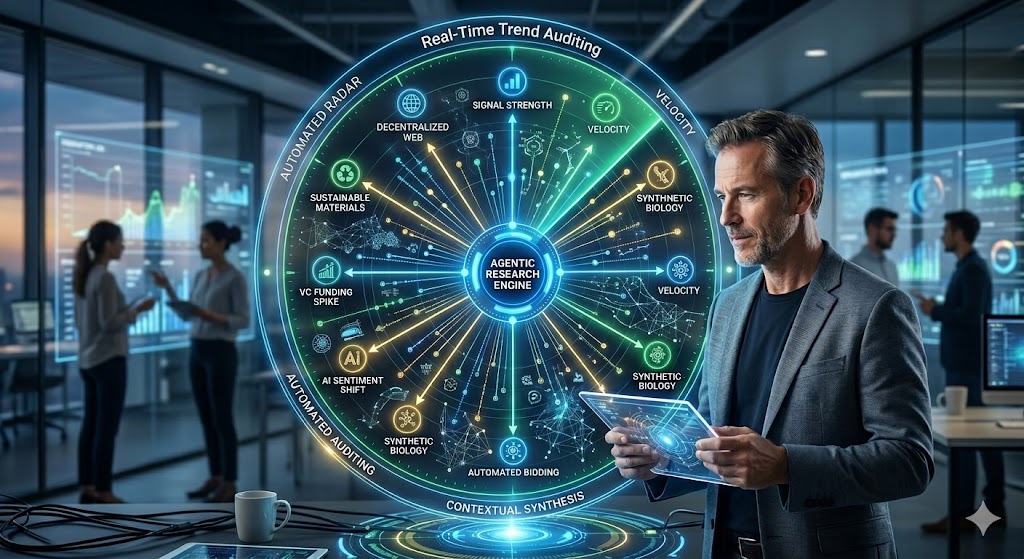
Leveraging Agentic Research Tools for Real-Time Trend Auditing

GUEST POST from Art Inteligencia


The Crisis of the Static Radar

Every innovation leader loves the metaphor of “the radar.” We talk about scanning the horizon, identifying weak signals, and tracking disruptive forces before they hit our core business. Yet, if we are completely honest with ourselves, the way most organizations populate and maintain their innovation radars is fundamentally broken.

Historically, environmental scanning and trend auditing have been episodic, exhausting, and prone to massive human blind spots. The standard corporate approach looks something like this: once a year, or perhaps quarterly, a strategy team or an external agency conducts a frantic sprint of desktop research, runs a few workshops, and visualizes the findings on a beautiful, multi-colored circular graphic. But by the time that static presentation is finalized and distributed, the ground has already shifted. In an exponential world, the velocity gap between market reality and corporate perception is widening at an alarming rate.

A true radar does not take a snapshot every six months and call it a day; it scans continuously, in real time, sweeping the landscape to detect velocity, trajectory, and proximity. When corporate foresight remains stuck in an episodic cadence, it ceases to be a strategic sensing tool and becomes a historical artifact.

We are entering a new paradigm driven by agentic research tools—autonomous AI entities capable of formulating their own hypotheses, navigating the web, cross-referencing sources, and updating strategic models without constant human prompting. By shifting from passive, manual tracking to an agentic auditing engine, organizations can transform the trend radar into a living, real-time sensing organ. This enables innovation leaders to move away from reactive firefighting and move toward continuous, proactive experience design and strategic agility.

Anatomy of an Agentic Research Engine

To build a radar that scans in real time, we must first understand how agentic research tools differ fundamentally from the legacy automation tools we have relied on for years. For decades, “automated scanning” meant setting up keyword alerts, RSS feeds, or social listening dashboards. While useful, these tools are inherently passive and rigid; they only look for exactly what you tell them to look for, resulting in a mountain of unstructured noise that still requires hours of human labor to filter, categorize, and synthesize.

An agentic research engine represents a paradigm shift from passive aggregation to autonomous exploration. Instead of executing a static search string, an agentic system is given an objective—such as “Identify emerging structural shifts in sustainable supply chain logistics within the Pacific Northwest”—and is empowered to determine its own path to achieve it.

What Makes it Agentic?

True agentic research tools exhibit three core characteristics that distinguish them from traditional software:

  • Autonomous Query Formulation: Based on an initial objective, the agent does not just search a single keyword. It breaks the topic down into sub-hypotheses, generates its own multi-layered search queries, and iteratively refines those queries based on the initial results it uncovers. If it hits a dead end, it pivots; if it finds a high-value signal, it digs deeper.
  • Dynamic Credibility Validation: Unlike a standard search engine that ranks results primarily by SEO optimization or traffic, an agent can be trained to evaluate source authority. It cross-references patent databases, academic journals, venture capital funding rounds, and niche industry forums, weighing the validity of a signal by triangulating data points across disparate sectors.
  • Contextual Synthesis: The agent doesn’t just hand you a list of links. It reads, interprets, and synthesizes the content, translating raw data into cohesive, narrative executive briefs that highlight the relevance of the trend to your specific organization.

The Architecture of Continuous Scanning

When deployed effectively, an agentic research engine creates a multi-layered filter that constantly refines data from the macro-environment down to micro-signals. At the top of the funnel, autonomous “scouts” constantly graze the digital landscape, looking for anomalies, linguistic shifts, or sudden spikes in cross-industry activity.

Once an anomaly is detected, the scout passes the data to a “synthesis layer”—a secondary agent optimized to map the new signal against your organization’s existing strategy, internal frameworks, and specific industry constraints. The result is a system that filters out the ambient noise of the internet, ensuring that when a trend finally arrives on the human innovation leader’s desk, it is already contextualized, validated, and ready for strategic evaluation.

The 4-Step Real-Time Auditing Framework

Transforming your organization’s foresight capability from a passive, episodic ritual into a dynamic corporate advantage requires a structured operational loop. We cannot simply turn AI agents loose on the internet and hope for the best; we must design a systematic pipeline that ingests raw data, contextualizes it, flags critical shifts, and elegantly hands off the insights to human decision-makers. This human-centered approach ensures technology handles the data drudgery while people focus on strategic empathy and experience design.

The following four-step framework outlines how an agentic research tool integrates into the daily flow of a modern innovation office.

1. Continuous Ingestion (The Autonomous Scout)

The loop begins with continuous ingestion. Instead of relying on human analysts to manually browse tech blogs or wait for industry whitepapers, autonomous “scout” agents are deployed across a vast, predefined digital perimeter. These agents operate 24/7, grazing through high-value, unstructured data sources including:

  • Global patent filings and intellectual property registries.
  • Academic pre-prints and peer-reviewed scientific journals.
  • Early-stage venture capital funding announcements and regulatory filings.
  • Niche developer communities, open-source repositories, and fringe cultural chatter.

By scanning the periphery continuously, the engine catches the earliest whispers of change long before they break into mainstream business media.

2. Dynamic Contextualization (The Synthesis Layer)

A signal without context is just noise. In the second stage, the engine takes raw, disparate data points and immediately runs them through an organization’s specific strategic lens. The agent categorizes each signal utilizing classic macro-environmental frameworks like STEEP (Social, Technological, Economic, Environmental, Political), but it doesn’t stop there.

The synthesis layer maps the incoming trend against your organization’s internal taxonomy, current product portfolios, and active innovation pipelines. It answers the algorithmic question: “If this signal accelerates, which of our current business units or customer experiences will be impacted first?” The output is a highly tailored, continually updated knowledge graph rather than a generic bucket of trends.

3. Automated Anomaly Detection (The Tripwire)

Innovation leaders don’t have time to review every minor market ripple. The engine uses automated tripwires to identify mathematical or semantic anomalies that indicate a trend is shifting gears. The agent triggers an alert only when a weak signal crosses a critical velocity threshold, such as:

  • Convergence: When two previously unrelated trends (e.g., a specific breakthrough in synthetic biology colliding with an update in supply chain cold-storage tracking) suddenly appear in the same context.
  • Velocity Spikes: A sudden, exponential increase in patent filings or venture funding within a previously dormant niche.
  • Sentiment Inversion: A rapid shift in public or professional sentiment regarding a specific technology or social movement.

These tripwires prevent cognitive overload, ensuring human leaders are only disrupted when a signal demands genuine strategic attention.

4. The Human-in-the-Loop Intersect (The Curator)

The ultimate goal of automating the mechanics of the radar is not to remove humans from the loop, but to elevate them. When an agentic tripwire is triggered, it generates a comprehensive narrative brief and passes the baton to the human innovation team.

Liberated from the exhausting work of manual data-gathering, human leaders step into the role of strategic curators and experience designers. They evaluate the agent’s findings, layer on corporate intuition, assess political feasibility, and determine how to actively shape the organization’s response. This final step turns automated intelligence into authentic, human-centered action.

Overcoming the Pitfalls of AI-Driven Foresight

While the speed and scale of agentic research tools are undeniable, blind reliance on automated systems introduces significant strategic risks. If we hand the keys of corporate foresight entirely to algorithms, we risk optimizing for efficiency while completely losing our strategic bearings. To build a resilient, real-time radar, innovation leaders must understand and actively mitigate three critical structural pitfalls.

The Echo Chamber Effect

Algorithms are fundamentally built to find patterns based on historical data and user preferences. Left unchecked, an agentic research engine can easily fall victim to confirmation bias on an organizational scale. If the system observes that executives consistently click on, praise, or fund projects related to a specific technology—such as generative AI or spatial computing—it will naturally optimize its search parameters to find more signals validating that preference.

This creates a dangerous corporate echo chamber, blinding the organization to contrarian views, alternative technologies, or subtle socio-economic shifts that challenge current investments. To counter this, innovation offices must intentionally program “adversarial constraints” into their agents, explicitly instructing them to hunt for disconfirming evidence, failure modes, and fringe perspectives that run counter to established corporate strategy.

Sifting Signal from Synthetic Noise

We are currently witnessing an unprecedented explosion of synthetic content across the digital landscape. Content farms, automated SEO sites, and corporate PR engines are utilizing AI to flood the web with optimized, low-substance text. If an agentic scout simply counts the frequency of certain buzzwords or tracks superficial media velocity, it runs the risk of auditing its own reflection—tracking AI-generated noise rather than authentic market signals.

An effective agentic engine must be architected with sophisticated data-provenance filters. Instead of scanning superficial web layers, agents must prioritize primary source environments where synthetic manipulation is harder to sustain: raw patent applications, peer-reviewed technical documentation, developer commits on open-source repositories, and verified regulatory filings. The engine must be trained to look past marketing vocabulary to find the underlying structural mechanisms of change.

The Empathy Deficit

This is perhaps the most critical boundary line for any technology-enabled innovation strategy. An AI agent is exceptionally skilled at tracking what is happening, where it is accelerating, and who is funding it. It can map the mechanics of a trend with flawless precision. However, an algorithm possesses an inherent empathy deficit: it cannot truly comprehend the deep, emotional, and psychological why behind changing human behavior.

Trends are not just data points; they are the outward expression of shifting human anxieties, aspirations, values, and unmet needs. An agent can flag that a new decentralized social platform is gaining traction among teenagers, but it cannot feel the profound sense of digital fatigue or the craving for authentic intimacy that drove those users there in the first place. This is where automated data auditing must end, and human-centered experience design must begin. We use the machine to map the terrain, but we rely on human empathy to interpret the soul of the market.

Driving Action: From Real-Time Insights to Agile Strategy

Possessing an automated, highly accurate trend radar offers zero competitive advantage if your organizational governance remains rigid and slow. Beautiful data dying inside a digital dashboard is no better than a static PDF gathering dust on a shelf. To unlock the true value of an agentic research engine, organizations must evolve their internal structures, moving from annual planning cycles to a state of continuous, dynamic resource allocation and proactive experience design.

The Living Dashboard

The first structural shift occurs in how foresight data is visualized and democratized across the enterprise. Traditional innovation radars are treated as guarded secrets, updated once a year by a specialized team and revealed to executives in high-stakes meetings. An agentic radar replaces this ritual with a living dashboard—a shared, interactive internal utility.

Because autonomous agents update the system continuously, any product manager, experience designer, or business unit leader can log in at any moment to see a real-time heat map of emerging disruptions. Trends are no longer static dots on a fixed chart; they are dynamic vectors, visually indicating their acceleration, cross-industry convergence, and calculated proximity to the core business. This shift transforms foresight from a localized corporate function into an omnipresent organizational capability.

Dynamic Portfolio Realignment

When your radar detects market shifts in real time, maintaining a rigid annual budgetary cycle becomes a severe operational liability. If a crucial technological convergence or a dramatic shift in consumer sentiment is flagged in month two of the fiscal year, waiting until the next annual planning cycle to pivot ensures failure.

Forward-thinking organizations use the outputs of real-time trend auditing to inform an agile portfolio management model. Instead of locking 100% of capital into fixed annual initiatives, innovation leaders maintain a liquid, dynamic allocation fund. When an agentic tripwire validates that a peripheral weak signal has suddenly moved into the core accelerator zone, governance structures must allow leadership to immediately shift resources, spin up lean exploration teams, and realign R&D priorities within days, rather than quarters.

Proactive Experience Design

Ultimately, the most profound impact of real-time trend auditing is felt in how we craft experiences for customers and employees. In a hyper-connected market, customer expectations are liquid; a breakthrough experience in an entirely different industry instantly resets what a customer expects from your brand. If you wait for traditional market research to tell you that customer preferences have changed, you are already too late.

By leveraging an agentic research tool to continuously analyze peripheral shifts—such as emerging behavioral patterns in fringe digital communities or micro-innovations in adjacent sectors—experience designers can practice predictive innovation. They can accurately anticipate emerging friction points, design intuitive user journeys, and deploy experience-led solutions that solve customer anxieties before the customer even has the vocabulary to articulate them. This elevates the organization from a position of rapid market reaction to one of market orchestration.

Conclusion: The Future of the Futurist

The dawn of agentic research tools does not spell the end of the corporate futurist, the innovation strategist, or the experience designer. Rather, it marks their liberation. For decades, highly skilled foresight professionals have had their cognitive bandwidth consumed by the grueling, manual labor of data harvesting—scouring blogs, sorting spreadsheets, and wrestling with rigid keyword alerts just to keep their heads above the digital deluge.

By automating the mechanics of the radar, we shift the human role from data collector to strategic alchemist. The machine takes over the continuous, cold, and calculated task of scanning the periphery, allowing human leaders to return to what they do best: thinking deeply, connecting disparate ideas, and applying radical empathy to complex human problems. Technology maps the velocity of the trend, but humans determine its ethical implications and cultural resonance.

As we move deeper into this accelerated era, competitive advantage will no longer belong to the organizations that possess the most information. In an AI-saturated world, information is commoditized. Instead, the premium will be placed on organizations that build the most intelligent, human-centered systems to interpret, contextualize, and act on that information in real time. The goal is to build an enterprise that senses continuously, adapts dynamically, and innovates perpetually.

The static radar is dead. The living radar is waiting to be built. The only question left for innovation leaders is whether they will continue to paint historical portraits of the market, or choose to orchestrate its future in real time.

Frequently Asked Questions

How do agentic research tools differ from standard keyword or RSS alerts?

Traditional alerts are passive and rigid; they only scan for exact keyword strings and require humans to filter the resulting noise. Agentic research tools are autonomous. They are given a high-level strategic objective, formulate their own evolving search queries, cross-reference data across diverse sources to validate credibility, and synthesize findings into contextualized briefs without needing constant human prompts.

Does automating the trend radar risk replacing human innovation leaders?

No, it liberates them. Automating the radar removes the manual drudgery of data-harvesting and landscape tracking. This shifts the human role from data collection to strategic curation, ethical evaluation, and human-centered experience design—areas requiring deep empathy and intuition that AI cannot replicate.

How can an organization prevent AI bias from creating a corporate echo chamber?

Left unchecked, agents will optimize for trends that executives already favor. To mitigate this, innovation teams must program explicit adversarial constraints into the system. This forces the AI agents to actively hunt for disconfirming evidence, contrarian viewpoints, and structural failures that challenge established corporate strategies.


Image credit: Gemini

Subscribe to Human-Centered Change & Innovation WeeklySign up here to get Human-Centered Change & Innovation Weekly delivered to your inbox every week.

Mastering Strategic Foresight in Exponentially Volatile Markets

Future-Mapping

Mastering Strategic Foresight in Exponentially Volatile Markets - Future Mapping

GUEST POST from Chateau G Pato


I. Introduction: The Death of the Five-Year Plan

The Volatility Trap

Traditional, linear strategic planning is dying. In an era defined by exponential technological growth, unpredictable climate shifts, and hyper-connected global markets, the rigid five-year plan has become a liability. Organizations that tether themselves to fixed long-term predictions often find themselves blindsided by market disruptions, trapped in rigid structures unable to pivot when the ground shifts beneath them.

From Planning to Foresight

To survive and thrive in exponentially volatile markets, leaders must shift their organizational mindset from predicting a single corporate future to preparing for multiple, fluid realities. Strategic foresight is not about gazing into a crystal ball; it is about building the organizational muscle to anticipate waves of change, interpret weak signals, and map out dynamic pathways that maintain strategic agility.

The Human Element

At its core, future-mapping is not merely an exercise in data aggregation or trend analysis. The most profound disruptions are deeply human. True foresight requires a human-centered approach — marrying futurology with experience design and deep empathy. We must understand how the psychological needs, anxieties, and behaviors of both our workforce and our customers will evolve, ensuring that as we design the future of business, we keep humanity at the center of the experience.

II. The Foundations of Future-Mapping

Defining Future-Mapping

Future-mapping bridges the gap between abstract futurology and actionable, human-centered innovation. While traditional forecasting looks at a narrow data set to predict a single outcome, future-mapping visualizes the marketplace as a complex ecosystem of shifting human behaviors, technological waves, and economic realities. It is a visual, collaborative methodology designed to transform ambiguous macro-trends into concrete innovation strategies.

The Horizon Framework

To navigate exponential change without losing sight of daily survival, organizations must distribute their focus across three distinct horizons simultaneously:

  • Horizon 1: Optimizing the Present. Protecting, defending, and improving the core business model to maximize current efficiency and profitability.
  • Horizon 2: Nurturing Emerging Opportunities. Extending current capabilities into new, fast-growing markets or scaling adjacent business ideas.
  • Horizon 3: Designing for Visionary Futures. Developing genuinely disruptive innovations, business models, and capabilities tailored for unchartered territories five to ten years out.

Signal vs. Noise

The future rarely arrives without warning; it leaves clues. Success in volatile markets requires robust organizational sensing mechanisms to distinguish between temporary “noise” (passing fads) and true “weak signals” (early, localized indicators of structural change). By systematically scanning the fringes of technology, society, and culture, leaders can spot inflection points and catch the wave of disruption before it becomes an industry mainstream reality.

III. The Strategic Foresight Toolkit

Dynamic Scenario Planning

Static forecasting assumes the future is a straight line, but exponential volatility demands a matrix. Dynamic scenario planning moves beyond simple “best-case/worst-case” projections to construct multiple, vivid, and plausible alternate world narratives. By immersing leadership teams in these diverse realities, organizations can stress-test their current strategies, expose hidden vulnerabilities, and identify blind spots before they manifest in the real market.

Cross-Impact Analysis

Disruption rarely happens in a vacuum; it occurs at the intersection of converging forces. Cross-impact analysis evaluates how distinct macro-trends — such as the democratization of artificial intelligence, shifting generational values, and changing labor dynamics — interact with and accelerate one another. Understanding how these compounding variables collide allows organizations to anticipate secondary and tertiary market behaviors that competitors will miss.

The Backcasting Methodology

While forecasting looks forward from today to guess tomorrow, backcasting flips the timeline. It begins by designing a visionary, human-centered future state ten years down the road. From that North Star, we work backward to the present day, isolating the exact capabilities, technology investments, partnership models, and strategic pivots required along the journey. This ensures that today’s innovation portfolio is explicitly engineered to build tomorrow’s required reality.

IV. Human-Centered Experience Design for Tomorrow

The Future Customer Persona

Demographic data alone is no longer enough to understand tomorrow’s buyer. In a volatile landscape, we must map the evolving psychology of the future customer. This means anticipating how their trust metrics, digital friction points, and deep emotional needs will shift as technology integrates further into daily life. Designing tomorrow’s experiences requires building empathy today for the unique anxieties and aspirations of the next-generation consumer.

Designing for the “Next Economy”

The days of simple, isolated transactional business models are fading fast. True experience design requires transitioning from selling standalone products to orchestrating deeply integrated, adaptive ecosystem experiences. Value will increasingly be co-created at the intersection of physical spaces, fluid digital layers, and human communities, requiring organizations to design holistic journeys that adapt to changing customer contexts in real time.

The Ethics of Co-Creation

As experiences become highly personalized and driven by predictive data, the line between helpful anticipation and digital intrusion blurs. Foresight-driven innovation must be anchored by a robust ethical framework. Experience designers must actively protect human agency, inclusivity, and digital equity, ensuring that tomorrow’s platforms and ecosystems are built transparently and designed to lift people up rather than exploit them.

V. Operationalizing Innovation Under Uncertainty

Fostering Corporate Agility

The greatest threat to an organization during market upheaval is not a lack of vision, but the heavy anchor of systemic corporate inertia. Moving from insight to execution requires dismantling bureaucratic silos and creating flexible, cross-functional teams capable of rapid pivoting. Leadership must intentionally foster a culture that views change as a continuous opportunity rather than an occasional disruption, realigning internal incentives to celebrate calculated risk-taking and rapid, iterative learning.

The Resilient Portfolio

Managing innovation under exponential volatility requires a balanced investment strategy. Leaders must split resource allocation effectively, ensuring they maintain the structural integrity to defend the current bottom line while simultaneously funding high-risk, high-reward future bets. A resilient portfolio treats innovation investments like options, allowing the organization to place small, experimental bets across multiple scenario paths and dynamically scale funding as certain futures become clearer.

Continuous Iteration Loops

Strategic foresight can no longer be relegated to a static, annual executive retreat or a beautiful slide deck that sits on a shelf. Future-mapping must be embedded into the organization as an ongoing, living capability. By establishing continuous feedback loops that feed real-time market data and changing human behaviors back into the strategic matrix, the business can constantly refine its trajectory, ensuring that long-term vision and daily execution remain locked in lockstep.

VI. Conclusion: Leading Through the Fog

The New Leadership Imperative

In a world of exponential volatility, true thought leadership is no longer about having all the answers — it is about asking the right questions and possessing the institutional courage to navigate uncertainty. The most dangerous trap a successful organization can fall into is complacency. Survival in the next economy requires leaders to willingly challenge their own assumptions and actively design the mechanisms to dismantle their own legacy business models before a competitor or a shifting market force does it for them.

A Call to Action

The future is not a destination we blindly arrive at; it is a landscape we actively construct. Organizations cannot afford to sit on the sidelines, waiting for clarity that will never come, or merely reacting to disruptions after they hit. By embedding human-centered future-mapping into the core DNA of your strategy, your teams can step out of a defensive posture. Start scanning the fringes for weak signals, embrace dynamic scenario planning, and begin intentionally shaping the customer and employee experiences of tomorrow, today.

Frequently Asked Questions

What is Future-Mapping and how does it differ from traditional strategic planning?

Traditional strategic planning relies on linear forecasting to predict a single corporate future, which often fails in volatile markets. Future-Mapping is a human-centered, visual methodology that maps out multiple fluid realities based on macro-trends and weak signals, allowing organizations to remain agile and proactive.

Why is experience design critical to strategic foresight?

Technology and market changes don’t happen in a vacuum — they fundamentally alter human behavior. By integrating experience design into foresight, organizations can build deep empathy for the future customer and employee, ensuring tomorrow’s business models solve real psychological needs and friction points.

How do organizations operationalize future-mapping without disrupting current operations?

By utilizing frameworks like the Three Horizons, organizations can optimize their present core business (Horizon 1) while simultaneously nurturing emerging opportunities (Horizon 2) and designing visionary futures (Horizon 3). This creates a resilient portfolio where innovation is treated as a continuous, living capability.

Image credit: Gemini

Subscribe to Human-Centered Change & Innovation WeeklySign up here to get Human-Centered Change & Innovation Weekly delivered to your inbox every week.

Adapting to Change: The Power of Futures Research

Adapting to Change: The Power of Futures Research

GUEST POST from Chateau G Pato

In the modern world, the ability to navigate and anticipate change is essential for success. Futures research is becoming a popular method for strategizing for the future, allowing businesses and other organizations to plan ahead for changes in their industries. Futures research takes a deep dive into trends and events to anticipate and identify possible scenarios for the future, allowing the organization to create plans that will ensure their success in any given situation. Here are two examples of how organizations have used futures research to adapt to changing times and maximize their success.

Case Study #1: Coca-Cola

Coca-Cola is one of the most iconic companies in the world, and it faces intense competition from other soft drink and beverage companies. In order to stay ahead of the game, Coca-Cola has embraced futures research. They often hire futurists to examine current events and trends in their industry, identify possible scenarios for the future, and devise proactive strategies to address them. With the help of their futurists, Coca-Cola used futures research to anticipate the rise of health and wellness trends in the industry and reacted dependently. To capitalize on the changing market, Coca-Cola developed healthier options, including plant-based drinks, juices, and vitamin-infused beverages. These products have been instrumental in helping Coca-Cola remain a competitive leader in the beverage market.

Case Study #2: Walmart

Walmart is another great example of a company that has used futures research to stay ahead of the game. As Walmart faced increased competition from online retailers, the company decided to embrace technology to keep up with changing customer wants and needs. Through futures research, Walmart was able to anticipate customer preferences better and created a plan to stay ahead of the competition. Walmart took a multi-pronged approach that included the development of online shopping options, delivery services, and the use of artificial intelligence. All of these initiatives have allowed the company to stay agile and adapt to changing customer trends in the digital age.

Conclusion

Adapting to change is essential for any organization’s success. Futures research is an invaluable tool for anticipating and predicting change, allowing organizations to create proactive strategies that leverage the opportunities of new trends. Coca-Cola and Walmart are just two examples of how the power of futures research can be used to maximize success in a rapidly changing marketplace.

Bottom line: Futurology is not fortune telling. Futurists use a scientific approach to create their deliverables, but a methodology and tools like those in FutureHacking™ can empower anyone to engage in futurology themselves.

Image credit: Pexels

Subscribe to Human-Centered Change & Innovation WeeklySign up here to get Human-Centered Change & Innovation Weekly delivered to your inbox every week.
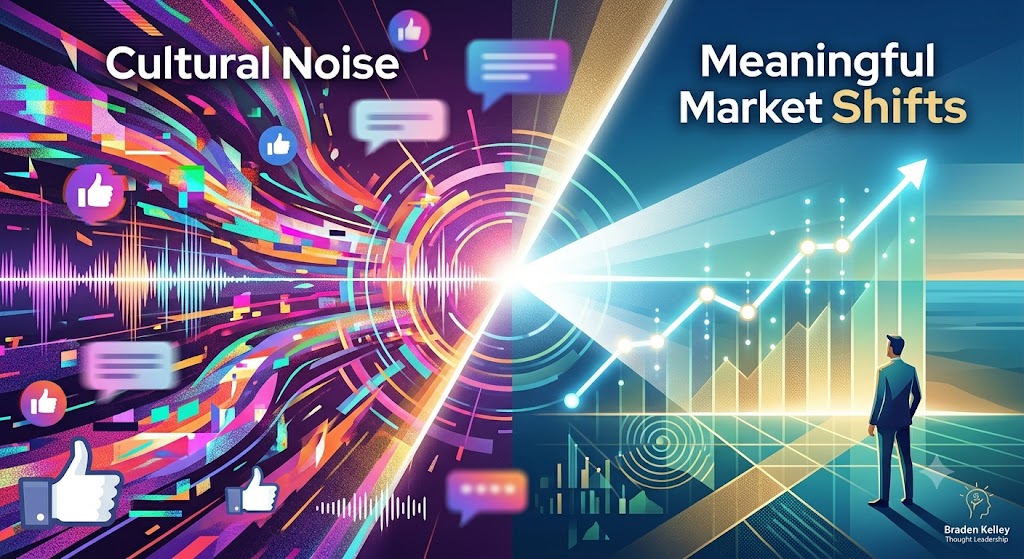
How Organizations Can Utilize Futures Research for Strategic Planning

How Organizations Can Utilize Futures Research for Strategic Planning

GUEST POST from Chateau G Pato

Organizations of all sizes are becoming increasingly aware of the value of predicting future trends and utilizing them for future strategic planning. Futures research, which involves forecasting potential development trends and analyzing their impacts, can be an extremely powerful tool in setting both short-term and long-term business goals. By effectively leveraging the insights uncovered from futures research, companies can save time, resources, and money while making better data-driven decisions.

Futures research enables organizations to better assess risk, identify opportunities, and formulate plans to best capitalize on them. It also helps anticipate potential changes in the industry and the economic environment, allowing them to devise the most proactive strategies. With this knowledge, organizations can make educated decisions on pricing, marketing tactics, product development, and other business activities.

Case Study 1: Predicting Consumer Preferences

A retail clothing store wanted to better understand their customer base and anticipate their preferences in the coming year. As part of their futures research, the store analyzed past consumer data to determine current purchasing trends, evaluated the impacts of seasonality, and identified potential future shifts in the market. Armed with these insights, the organization was able to adjust their inventory and make more targeted marketing campaigns to better align with their customer base.

Case Study 2: Enhancing Risk Management

An energy company wanted to more accurately measure their risk exposure to potential economic changes and competitive disruptions. As part of their strategic planning activities, they engaged a professional research firm to conduct a full futures research analysis. The analysis included a comprehensive review of the current market, the impact of potential political and economic events, and competitor strategies. Armed with these insights, the organization was able to make informed decisions that limited their future risk exposure.

Conclusion

Overall, utilizing futures research provides organizations with a comprehensive perspective on both their current and future business operations. By leveraging this approach as part of their strategic planning activities, organizations can stay ahead of the curve and plan more effectively for the future. Furthermore, it is imperative for managers to stay up-to-date on industry trends as they can provide powerful operational insights and help organizations stay competitive.

Bottom line: Futurology is not fortune telling. Futurists use a scientific approach to create their deliverables, but a methodology and tools like those in FutureHacking™ can empower anyone to engage in futurology themselves.

Image credit: Pexels

Subscribe to Human-Centered Change & Innovation WeeklySign up here to get Human-Centered Change & Innovation Weekly delivered to your inbox every week.

Antidotes to Short-Termism in Innovation Strategy

LAST UPDATED: May 6, 2026 at 9:59 AM

Antidotes to Short-Termism in Innovation Strategy

GUEST POST from Chateau G Pato


The High Cost of the “Quick Win”

In the modern corporate landscape, the gravitational pull of the quarterly earnings report often traps even the most visionary leaders in a cycle of incrementalism. While hitting immediate targets is necessary for survival, it frequently comes at a steep price: the sacrifice of long-term relevance. When we prioritize the “quick win” above all else, we are not just choosing efficiency; we are actively accumulating “innovation debt” that will eventually come due.

Short-termism acts as a silent killer of sustainable growth. It narrows the organizational lens, forcing teams to focus exclusively on optimizing what already exists rather than exploring what could be. This creates a dangerous Innovation Gap — the widening distance between a company’s current capabilities and the rapidly evolving demands of a future market. If we don’t intentionally design our strategies to bridge this gap, we leave the door wide open for more agile disruptors to step in.

The hard truth is that short-termism isn’t usually caused by a lack of imagination. Instead, it is a failure of design and governance. To overcome it, we must move beyond the rhetoric of “thinking big” and implement structural antidotes that protect future-oriented exploration from the pressures of today’s operational demands. We must shift the narrative from mere survival to intentional, human-centered evolution.

Diagnosis: Why We Default to the Near-Term

To solve for short-termism, we must first understand the psychological and structural anchors that keep us moored to the present. It isn’t simply a lack of “bravery” in the boardroom; it is a systemic response to how we measure success and manage risk.

Loss Aversion in the C-Suite

Human psychology is naturally wired for loss aversion. In a corporate context, the perceived risk of a failed breakthrough project often outweighs the theoretical gain of a future market-leading position. This leads to a “safety-first” mentality where proven incrementalism — making the existing horse run 2% faster — feels more responsible than investing in the “unproven” radical innovation that could replace the horse entirely.

The Incentive Misalignment

We are what we measure. Most organizational KPIs, bonus structures, and performance reviews are calibrated to annual or even quarterly cycles. When leaders are rewarded for immediate efficiency and cost-cutting, they are logically disincentivized from making “long-tail” investments. We cannot expect Horizon 3 thinking from a workforce that is being compensated solely on Horizon 1 results.

Information Overload vs. Insight Scarcity

In our hyper-connected world, leaders are bombarded with daily “noise” — competitor press releases, stock fluctuations, and viral social trends. This creates a reactive posture. When we spend all our cognitive energy responding to the friction of today, we lose the capacity to identify the subtle weak signals that point toward the opportunities of tomorrow. We mistake activity for progress and urgency for importance.

Antidote 1: Designing a Multi-Horizon Portfolio

To break the cycle of short-termism, organizations must treat innovation not as a series of isolated projects, but as a balanced portfolio. Just as a financial advisor diversifies assets to manage risk and return over time, innovation leaders must diversify their initiatives across different time horizons. This structural approach ensures that the “urgent” does not permanently crowd out the “important.”

The 70/20/10 Rule Revisited

A resilient strategy typically allocates resources in a balanced ratio: 70% to core innovation (optimizing current products), 20% to adjacent innovation (expanding into new markets or capabilities), and 10% to transformational innovation (creating entirely new breakthroughs). Short-termism occurs when the 70% begins to swallow the rest. By formalizing these buckets, organizations create a mandate for long-term exploration that is protected from quarterly budget cuts.

Operationalizing the Three Horizons

Using the Three Horizons framework allows us to visualize our current state while simultaneously mapping our future. Horizon 1 represents the systems that keep the lights on today. Horizon 2 represents emerging opportunities that are gaining momentum. Horizon 3 contains the visionary ideas that will define the organization’s future a decade from now. The “antidote” lies in managing all three simultaneously, rather than waiting for Horizon 1 to decline before thinking about Horizon 3.

Decoupled Funding and Governance

One of the most effective mechanical fixes for short-termism is decoupled funding. Transformational projects should not compete for the same “pot” of money as operational maintenance. By ring-fencing budgets for long-term bets, leadership sends a clear signal that future-proofing is a non-negotiable priority. Furthermore, these projects should be governed by different metrics — focusing on “speed to learning” rather than “speed to ROI” in their early stages.

Antidote 2: Human-Centered Futurology

Futurology is often misunderstood as the pursuit of “predicting” the future. In reality, it is about preparedness. Short-termism thrives when the future feels like an abstract, distant problem. To counter this, we must bring the future into the present by making it tangible, relatable, and human-centered. We must shift our focus from what the technology can do, to what humans will value in a world reshaped by that technology.

Foresight as an Organizational Muscle

Strategic foresight should not be a once-a-year executive retreat. It must be an ongoing organizational capability. This involves “environmental scanning” — systematically looking for weak signals and peripheral trends that are currently on the edges but have the potential to move to the center. When we train our teams to spot these signals early, we reduce the “surprise factor” and give ourselves the lead time necessary to build sustainable strategies rather than reactive patches.

Scenario Planning and Speculative Design

Data and spreadsheets are often too dry to inspire long-term change. To overcome the inertia of the present, we use scenario planning and speculative design to create vivid “future worlds.” By crafting narratives about how people will live, work, and play in five or ten years, we make the risks and opportunities feel real to stakeholders today. These stories serve as a north star, helping leadership align on a shared vision that extends far beyond the next fiscal year.

Customer Empathy Beyond Today

Traditional market research tells us what customers want now based on their current frustrations. Human-centered futurology asks a different question: “How will human needs evolve?” As socio-economic conditions shift and new technologies emerge, customer behaviors will transform. By applying empathy to these future personas, we can begin designing the experiences of tomorrow today, ensuring our innovation pipeline is solving problems that will actually exist when the product finally hits the market.

Antidote 3: Architectural Excellence & Experience Design

To resist the gravitational pull of short-termism, innovation must move from a sporadic “lightning strike” to a disciplined, repeatable process. We must design an organizational architecture that is inherently flexible, allowing us to build for the future while maintaining the stability of the present. This requires a shift from focusing on isolated product features to designing holistic, long-term Experience Strategies.

Innovation Excellence (IxL)

True innovation isn’t just about the “big idea”; it’s about the infrastructure that supports it. By implementing a robust framework for Innovation Excellence, organizations create a common language and set of tools for evaluating progress. This framework acts as a structural safeguard, ensuring that projects are judged by their strategic fit and future potential rather than just their immediate profitability. It turns innovation into a core competency rather than a side project.

Designing the Infinite Customer Journey

Short-term strategy often focuses on the point of sale. Experience design, however, looks at the entire lifecycle of the human relationship with a brand. By mapping out long-term Experience Level Measures (XLMs), we can track how our innovation efforts are improving the lives of our customers over time. This human-centered data provides a powerful counter-narrative to purely financial metrics, proving that long-term loyalty and “experience-led acquisition” are more valuable than one-off transactions.

Building for Adaptability

One of the greatest enemies of long-term thinking is “rigid infrastructure” — whether that is technical debt, fixed business models, or siloed organizational charts. To stay relevant, we must design for modularity. An adaptable architecture allows an organization to pivot its strategy without a total system collapse. By building “future-ready” platforms, we ensure that when the market shifts, we have the foundation in place to move with it, rather than being forced to rebuild from scratch under the pressure of a crisis.

Antidote 4: Cultural Transformation & Psychological Safety

The most sophisticated innovation frameworks will fail if they are planted in a culture of fear. Short-termism is often a defense mechanism; when employees feel that their jobs depend on immediate success, they will naturally avoid the risks associated with long-term exploration. To counter this, we must transform the cultural “operating system” of the organization to value learning as much as it values efficiency.

Redefining Failure and Learning Loops

In a short-term culture, a project that doesn’t yield immediate ROI is labeled a “failure.” In a future-ready culture, we treat these instances as “learning dividends.” By utilizing tools like pre-mortems, teams can anticipate future roadblocks before they occur, shifting the focus from blame to prevention. We must foster an environment where “failing fast” is actually about “learning fast,” ensuring that every experiment — regardless of the financial outcome — strengthens our strategic position.

The Leader as Orchestrator

Moving away from short-termism requires a fundamental shift in leadership style. Leaders must move from “Command and Control” — where they provide all the answers and demand immediate results — to becoming an Orchestrator. This role involves setting the vision, removing obstacles, and creating the psychological safety necessary for teams to pursue bold, long-term ideas. When leaders prioritize the health of the innovation ecosystem over the daily tally of tasks, the organization gains the breathing room to innovate.

Tapping into Collective Intelligence

The “antidote” to narrow, top-down short-termism is internal crowdsourcing. Often, the front-line employees who interact with customers daily have the clearest view of emerging shifts and long-term needs. By creating democratic channels for idea submission and collaborative problem-solving, we tap into a diverse range of perspectives. This not only builds a more robust innovation pipeline but also creates a sense of shared ownership in the organization’s future, making long-term goals feel personal rather than corporate.

Implementation: Taking the First Step

The transition from a reactive, short-term posture to a proactive, future-ready strategy does not happen overnight. It requires a series of intentional, practical shifts that bridge the gap between our current operational reality and our long-term aspirations. Implementation is where theory meets the pavement, and it begins with changing who we listen to and how we measure progress.

The “Shadow Board” Strategy

To disrupt the “echo chamber” of the executive suite, forward-thinking organizations are implementing Shadow Boards — groups of younger, non-executive employees who are given the same data as the senior board to provide a different perspective. These digital natives often see the world through a lens of 2030 rather than 1990. By involving diverse voices in high-level strategic discussions, we naturally challenge short-term assumptions and gain early visibility into the cultural shifts that will define our future market.

Validating Through Micro-Experiments

We don’t need to bet the entire company on a single long-term hypothesis. Instead, we use micro-experiments to validate our assumptions. These are low-cost, high-learning pilots designed to test specific elements of a “Horizon 3” idea. By breaking down a ten-year vision into small, actionable steps, we can gather real-world data today that justifies continued investment in tomorrow. This reduces the perceived risk of long-term innovation and allows us to pivot based on evidence rather than ego.

Measuring What Matters: Leading vs. Lagging Indicators

If we only measure revenue and profit, we will always be looking in the rearview mirror. To combat short-termism, we must introduce leading indicators that track the health of our future pipeline. This includes metrics such as “speed to learning,” “percentage of revenue from new business models,” and “innovation pipeline velocity.” By shifting our focus to these forward-looking measures, we give our teams the permission — and the mandate — to prioritize the activities that will ensure our longevity.

Conclusion: The Legacy of Innovation

In the final analysis, the fight against short-termism is not just a tactical battle over budgets or timelines — it is a philosophical commitment to the infinite game of business. Companies that survive the next decade won’t be those that hit every quarterly target at any cost, but those that viewed innovation as a continuous, human-centered journey rather than a destination with a fixed ROI.

As leaders, we must recognize that our greatest contribution isn’t the efficiency we squeeze out of today’s operations, but the foundations we build for tomorrow. When we implement the antidotes of multi-horizon portfolios, strategic foresight, and cultural psychological safety, we are doing more than just planning; we are ensuring that our organizations remain relevant in a world that refuses to stand still.

The choice is clear: we can continue to be managed by the pressures of the ledger, or we can choose to design a legacy. By prioritizing long-term innovation strategy today, we aren’t just predicting the 2030s — we are actively creating them. The future is not something that happens to us; it is something we build, one intentional, human-centered decision at a time.

It’s time to stop surviving the quarter and start stoking the innovation bonfire.

Frequently Asked Questions

How can we protect long-term innovation budgets during a market downturn?

The most effective method is “decoupled funding,” where Horizon 3 budgets are ring-fenced and treated as strategic capital rather than operational expense. By separating these funds from the core business P&L, leadership ensures that the “urgent” needs of today do not cannibalize the “important” seeds of tomorrow.

What is the difference between an SLA and an XLM in innovation?

While a Service Level Agreement (SLA) measures technical performance (uptime, speed, accuracy), an Experience Level Measure (XLM) tracks the human impact of an innovation. XLMs focus on qualitative outcomes like user friction reduction, cognitive load, and emotional resonance, ensuring the strategy remains human-centered.

How does ‘FutureHacking’ help combat short-termism?

FutureHacking involves identifying weak signals in the present to build tangible future scenarios. By making the “future” feel like a concrete reality through speculative design, leaders can more easily justify the long-term investments required to navigate upcoming socio-economic shifts.

Bottom line: Futurology is not fortune telling. Futurists use a scientific approach to create their deliverables, but a methodology and tools like those in FutureHacking™ can empower anyone to engage in futurology themselves.

Image credit: Gemini

Subscribe to Human-Centered Change & Innovation WeeklySign up here to get Human-Centered Change & Innovation Weekly delivered to your inbox every week.