Category Archives: Futurology

The Future of Education

Leveraging Technology for Improved Outcomes

The Future of Education

GUEST POST from Chateau G Pato

Education plays a crucial role in shaping society and preparing future generations for success. With the rapid advancements in technology, it is essential to explore how it can be leveraged to enhance education and improve outcomes. This article will delve into the future of education, highlighting two case studies where technology has revolutionized learning methods and brought about positive results.

Case Study 1: Khan Academy’s Personalized Learning

Khan Academy, a non-profit educational organization, has been at the forefront of using technology to personalize education. Traditional classroom settings often struggle to cater to the unique learning needs of diverse students, leading to students falling behind or becoming disengaged. However, Khan Academy’s online platform provides students with personalized learning experiences, adapting to their individual progress and needs.

The platform offers a wide range of subjects, enabling students to learn at their own pace and revisit concepts until they grasp them fully. Detailed analytics and progress reports provide teachers with valuable insights into students’ strengths and areas of improvement, allowing for more targeted instructional strategies.

Several studies have shown the positive impact of Khan Academy on student learning outcomes. For instance, a study by the Center for Research on Education Outcomes found that students who used Khan Academy for at least 30 minutes a week outperformed their peers in mathematics by 0.29 standard deviations. This personalized learning approach has transformed education by giving students the agency to drive their own learning experience and achieve improved academic performance.

Case Study 2: Virtual Reality in Medical Education

Advancements in virtual reality (VR) technology have opened up new possibilities in medical education. One innovative example is the use of VR simulations to train future surgeons. Traditional medical training would often rely on observing surgeries and practicing on cadavers or dummies, limiting exposure and hands-on experience.

With VR, medical students can engage in realistic surgical simulations, gaining practical experience and refining their skills in a controlled environment. The ability to repeat procedures and receive instant feedback contributes to accelerated learning. Moreover, VR also enables collaboration among students and instructors in virtual operating rooms, creating a community of practice and fostering teamwork.

A study published in the Journal of Medical Internet Research compared the efficacy of VR simulation training with traditional methods for laparoscopic surgery. The results revealed that VR training significantly improved participants’ technical skills, compared to those using traditional methods. VR not only enhances the learning process but also helps reduce risks and costs associated with live surgical training.

Conclusion

Technology holds immense potential to transform education and improve academic outcomes. The case studies discussed above illustrate just a glimpse of the possibilities that lie ahead. Khan Academy’s personalized learning approach showcases how technology can adapt to the unique needs of each learner, leading to enhanced results. Additionally, the use of virtual reality in medical education revolutionizes hands-on training and provides an immersive environment for students to acquire crucial skills.

As we move towards the future, it is essential to harness technology’s full potential and integrate it seamlessly into education. By doing so, we can create a more inclusive, personalized, and engaging learning experience for students across the globe, ultimately equipping them with the skills and knowledge necessary to thrive in tomorrow’s world.

Bottom line: Futurology is not fortune telling. Futurists use a scientific approach to create their deliverables, but a methodology and tools like those in FutureHacking™ can empower anyone to engage in futurology themselves.

Image credit: Pixabay

Subscribe to Human-Centered Change & Innovation WeeklySign up here to get Human-Centered Change & Innovation Weekly delivered to your inbox every week.

Futures Research and the Emergence of New Technologies

Futures Research and the Emergence of New Technologies

GUEST POST from Art Inteligencia

Advancements in technology have always played a pivotal role in shaping our future. From the wheel to the internet, innovations have revolutionized the way we live, work, and interact with the world. However, understanding the trajectory of technological advancements is no easy task. This is where futures research comes into play. Futures research is the systematic study of the future to better inform decision-making in the present. By analyzing trends, considering alternative scenarios, and forecasting potential outcomes, futures research helps us navigate the complexities of the unknown. In this article, we explore the power of futures research in predicting the emergence of new technologies through two case study examples.

Case Study 1: Artificial Intelligence

Artificial Intelligence (AI) has emerged as one of the most transformative technologies of the 21st century. It is revolutionizing industries and reshaping our daily lives. However, the development and widespread adoption of AI were not merely strokes of luck. Futurists and researchers began exploring the possibilities of AI decades before it became a reality.

In the 1950s, the field of cybernetics paved the way for AI research. Early pioneers like Alan Turing envisioned the idea of machines that could simulate human intelligence. Despite numerous setbacks and disappointments, researchers continued to push the boundaries of AI. They invested in understanding the underpinnings of human cognition, machine learning, and pattern recognition.

Throughout the 1970s and 80s, futures researchers forecasted the potential impact of AI on various industries. They envisioned advancements in robotics, autonomous vehicles, natural language processing, and expert systems. The research and anticipation led governments, academia, and industry leaders to invest significantly in AI research, creating a snowball effect that eventually propelled AI to its current state.

Case Study 2: Renewable Energy

The quest for sustainable energy sources has been a recurring theme in futures research for decades. As concerns about climate change grew, researchers and futurists focused on the need to transition from fossil fuels to renewable energy sources. They recognized the finite nature of conventional energy sources and the environmental harm they inflicted.

In the early 1970s, during the oil crisis, the importance of alternative energy became evident. Futures researchers explored the possibilities of harnessing solar, wind, geothermal, and tidal energy. They analyzed trends in energy consumption, resource availability, and technological advancements. By identifying barriers and potential catalysts, they highlighted the need for investment and policy changes.

As a result of futures research, governments and companies began investing heavily in renewable energy. The development and affordability of solar panels, the increase in wind turbine efficiency, and the rise of electric vehicles can be attributed, in part, to the foresight provided by futures research.

Conclusion

Futures research enables us to anticipate and prepare for the emergence of new technologies by analyzing trends, assessing potential scenarios, and shaping policies. The examples of AI and renewable energy highlight the power of futures research in influencing and accelerating technological advancements.

By investing in futures research, governments, businesses, and individuals can make informed decisions that shape a more sustainable, equitable, and technologically advanced future. Embracing the insights gained from futures research will allow us to navigate the complexities of rapid technological change and ensure that emerging technologies serve the greater good of society as we move forward into a new era.

Bottom line: Futurists are not fortune tellers. They use a formal approach to achieve their outcomes, but a methodology and tools like those in FutureHacking™ can empower anyone to be their own futurist.

Image credit: Pixabay

Subscribe to Human-Centered Change & Innovation WeeklySign up here to get Human-Centered Change & Innovation Weekly delivered to your inbox every week.

Designing Corporate Strategy for Multiple Simultaneous Futures

Scenario Architecture

Designing Corporate Strategy for Multiple Simultaneous Futures

GUEST POST from Chateau G Pato


I. Introduction: Beyond the Illusion of the Linear Horizon

The Failure of Single-Track Planning

Traditional three- to five-year strategic plans rest on a dangerous assumption: that tomorrow will look substantially like today, only slightly faster, larger, or more digital. In an era marked by geopolitical shifts, rapid technological breakthroughs, and persistent economic volatility, linear forecasting is no longer just ineffective—it is a organizational liability. When strategy relies on a single target horizon, even minor market deviations can render long-term roadmaps obsolete overnight.

Introducing Scenario Architecture

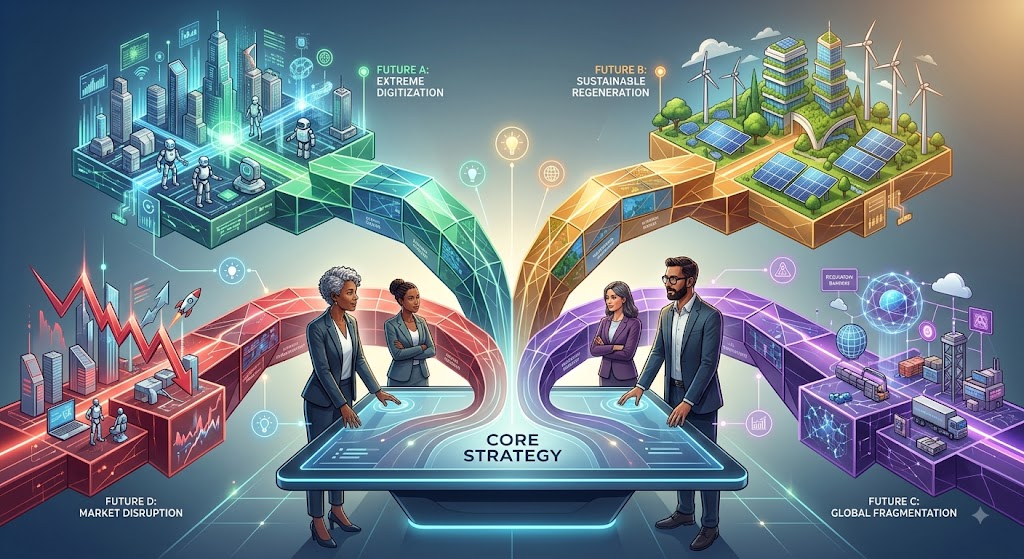
To navigate perpetual disruption, organizations must move away from static predicting and adopt Scenario Architecture. Far from an academic exercise or a passive speculative essay, Scenario Architecture is a active, human-centered framework designed to craft corporate strategy across multiple simultaneous futures. Rather than selecting one path forward, leaders build a flexible structure capable of operating, pivoting, and thriving across divergent potential realities.

The Core Principle

The goal of modern enterprise strategy isn’t to guess what comes next; it is to design the organizational agility and structural resilience needed to excel no matter which future takes shape. Scenario Architecture transforms uncertainty from a source of paralysis into a source of competitive advantage.

II. The Human Foundations of Scenario Architecture

Overcoming Strategic Myopia

Strategy fails not for lack of data, but from human constraint. Cognitive biases, status quo traps, and leadership anxiety naturally pull organizations toward comfort—leading executives to plan for the future they desire rather than the multiple futures that could emerge. Scenario Architecture directly addresses these blind spots, forcing teams to confront uncomfortable disruptions within a safe, structured strategic context.

Experience-Centric Design in Strategy

Future scenarios are abstract until grounded in human experience. By applying human-centered design principles to strategic foresight, we map how each plausible future transforms daily touchpoints for customers, employees, and broader ecosystems. This experience-centric focus ensures that strategic options aren’t just theoretically sound on a spreadsheet, but emotionally resonant and practical in execution.

Culture as the Anchor

The best scenario architecture remains purely theoretical without a culture equipped to navigate constant change. True organizational agility requires embedding a continuous innovation mindset—one where shift indicators are met with curiosity and action rather than friction and resistance. When culture acts as the anchor, teams hold their long-term vision tightly while holding their tactical pathways lightly.

III. Building the Architectural Framework

Identifying Macro-Pillars

Every robust scenario architecture begins by anchoring itself in the structural drivers re-shaping the broader ecosystem. Rather than tracking isolated trends, leaders must map macro-pillars across technological breakthroughs, social and demographic shifts, economic realignments, and environmental imperatives. Identifying these foundational forces creates the boundary conditions within which future possibilities will collide and unfold.

Designing Plausible Multi-Worlds

Strategic foresight breaks down when reduced to simplistic best-case, worst-case, or baseline modeling. True resilience requires constructing three to four distinct, highly believable future scenarios—each defined by unique combinations of macro-pillar interactions. These multi-worlds should challenge core assumptions, expose hidden vulnerabilities, and illuminate unexpected market opportunities.

Defining Core vs. Contingent Strategy

With plausible worlds established, strategy bifurcates into two distinct, deliberate posture types:

  • No-Regret Moves: Foundational initiatives, capability builds, and core innovations that deliver undeniable value regardless of which future materializes.
  • Option Bets: Targeted, scalable investments designed to remain lightweight until specific early-warning triggers signal that a particular scenario is gaining momentum.

IV. Operationalizing Continuous Foresight & Innovation

Early-Warning Indicator Dashboards

Scenario architecture only moves strategy from static to active when paired with continuous monitoring. Organizations must establish clear, quantitative and qualitative early-warning indicators linked directly to each plausible future. By tracking these subtle signals across market shifts, regulatory moves, and emerging customer behaviors, leaders gain the lead time required to pivot proactively rather than react defensively.

Integrating Change Management & Execution

A strategic shift is only as effective as an organization’s capacity to absorb it. Operationalizing multiple futures requires visual, collaborative change tools that break down silos and align cross-functional teams around evolving priorities. When strategy is transparent and shared, teams can rapidly realign resources, adjust operational cadences, and execute tactical pivots without organizational friction.

Prototyping Future Experiences

To de-risk option bets before full-scale deployment, leaders must apply service design and rapid prototyping methods directly to scenario demands. By creating low-fidelity prototypes of prospective customer interactions, supply chain flows, and business models, teams can stress-test strategy against specific scenario conditions—learning faster and failing cheaper in simulated futures before market forces demand it in real life.

V. Conclusion: Dynamic Leadership in an Unscripted Future

The Architectural Imperative

The traditional mandate of strategic planning—to chart a singular, predictable path—is fundamentally broken in a hyper-connected, fast-moving world. Future-proofed organizations don’t attempt to predict what comes next; they build the architectural capacity to thrive in whatever reality emerges. By framing strategy as a flexible, human-centered blueprint, leaders can transform volatility from an operational threat into a profound engine of opportunity.

Call to Action

The transition to Scenario Architecture requires an intentional shift in leadership mindset. It demands moving away from static, annual binder exercises and embracing dynamic, living strategic architecture. Leaders must begin today by challenging single-horizon assumptions, designing for parallel plausible futures, and empowering their teams with the tools, clarity, and culture needed to navigate an unscripted future with confidence.

Frequently Asked Questions

What is Scenario Architecture and how does it differ from traditional strategic planning?

Scenario Architecture is a dynamic, human-centered framework for designing strategy across multiple plausible futures simultaneously. Unlike traditional strategic planning—which relies on a single linear forecast—Scenario Architecture prepares organizations to pivot and thrive regardless of how market conditions unfold by balancing foundational “no-regret moves” with trigger-based “option bets.”

How do organizations operationalize multiple strategy scenarios without spreading resources too thin?

Organizations avoid resource dilution by categorizing strategic actions into Core vs. Contingent postures. “No-regret moves” receive immediate baseline funding because they deliver value across all potential futures, while “option bets” remain lightweight, targeted investments that are only fully activated when early-warning indicator dashboards signal that a specific future scenario is gaining momentum.

What role does human-centered design play in scenario architecture?

Human-centered design grounds abstract future scenarios into concrete human experiences. By applying service design, rapid prototyping, and experience mapping to strategic foresight, leaders can stress-test how divergent futures impact touchpoints for customers, employees, and ecosystems—ensuring strategic choices are emotionally resonant, practical, and executable.


Bottom line: Futurology is not fortune telling. Futurists use a scientific approach to create their deliverables, but a methodology and tools like those in FutureHacking™ can empower anyone to engage in futurology themselves.

Image credit: Gemini

Subscribe to Human-Centered Change & Innovation WeeklySign up here to get Human-Centered Change & Innovation Weekly delivered to your inbox every week.

The Benefits and Challenges of Futures Research

The Benefits and Challenges of Futures Research

GUEST POST from Art Inteligencia

As the world continues to evolve at a rapid pace, it becomes increasingly vital for individuals, businesses, and governments to anticipate future trends and develop effective strategies to navigate the uncertainties that lie ahead. Futures research, also known as futurology or foresight, is an interdisciplinary field that aims to uncover potential futures and provide valuable insights for decision-making processes. This article explores the benefits and challenges of futures research and highlights two case study examples that demonstrate its practical applications.

Benefits of Futures Research:

1. Anticipating and Planning for Change: One of the primary benefits of futures research is its ability to help individuals and organizations anticipate and plan for change. By employing various analytical methods and tools, futures researchers can identify potential trends, disruptions, and emerging issues that may shape the future landscape. This gives decision-makers a valuable advantage in understanding the scope of potential challenges and opportunities, allowing them to proactively adapt their strategies and make informed decisions accordingly.

Case Study Example: Shell’s Scenarios Planning

Shell, one of the world’s largest oil and gas companies, has successfully utilized futures research techniques to adapt to changing energy landscapes. In the 1970s, amidst the oil crisis and mounting environmental concerns, Shell developed a set of scenarios to explore alternative futures in the energy sector. These scenarios provided a framework for decision-making and helped Shell anticipate the rise of renewable energy, leading to investments in solar, wind, and biofuels. This groundwork enabled Shell to diversify its portfolio and transition to a more sustainable energy company over time.

2. Inspiring Innovation and Resilience: Futures research fosters a culture of innovation by encouraging individuals and organizations to explore new possibilities and challenge conventional thinking. By examining potential futures, researchers can identify gaps, unmet needs, and disruptive trends, stimulating creative thinking and novel approaches. This, in turn, enables the development of innovative products, services, and strategies that can lead to a competitive advantage.

Case Study Example: Xerox’s PARC Research Center

Xerox established the Palo Alto Research Center (PARC) in the early 1970s to focus on exploring the future of computing and technology. PARC researchers anticipated various advancements in personal computing, including graphical user interfaces, ethernet networking, and laser printing. These foresight-inspired innovations laid the foundation for Xerox’s success in the technology market and significantly influenced the development of modern computing as we know it today.

Challenges of Futures Research:

1. Uncertainty and Complexity: Futures research is inherently confronted with uncertainty and complexity, making it challenging to accurately predict specific future outcomes. Multiple variables, unexpected events, and the interconnectedness of systems can often lead to inaccurate forecasts. The future is shaped by a multitude of factors, including political, social, economic, technological, and environmental influences, making it difficult to capture all possibilities comprehensively.

2. Perceived Lack of Relevance and Adoption: Another challenge of futures research lies in its perceived lack of relevance and adoption across various sectors. Many decision-makers tend to prioritize short-term goals and immediate challenges, overlooking the long-term view that futures research provides. Overcoming this challenge requires a shift in mindset that recognizes the value of investing time, resources, and attention in long-term foresight, as it offers unique insights and strategic advantages.

Conclusion:

Futures research holds immense value as a tool for planning, inspiring innovation, and enabling better decision-making by anticipating potential future trajectories. Through case study examples like Shell’s Scenarios Planning and Xerox’s PARC Research Center, we have seen how futures research can lead to successful adaptations to changing landscapes and the development of groundbreaking innovations. However, it is essential to acknowledge the challenges inherent in such endeavors, including the inherent uncertainty and the need for widespread adoption. By embracing futures research and embedding it into decision-making processes, individuals, organizations, and societies can proactively prepare for the unknowns and shape a more resilient and sustainable future.

Bottom line: Futurists are not fortune tellers. They use a formal approach to achieve their outcomes, but a methodology and tools like those in FutureHacking™ can empower anyone to be their own futurist.

Image credit: Pixabay

Subscribe to Human-Centered Change & Innovation WeeklySign up here to get Human-Centered Change & Innovation Weekly delivered to your inbox every week.

Data-Driven Intuition

Balancing Predictive Analytics with Strategic Foresight

Data-Driven Intuition

GUEST POST from Art Inteligencia


I. Introduction: The False Dichotomy of Data vs. Instinct

In boardrooms across the globe, a subtle but dangerous rift has formed. On one side sit the data evangelists, clutching dashboard metrics, predictive models, and algorithmic forecasts as if they were holy writ. On the other side sit the design thinkers, strategists, and visionaries, relying on qualitative human insights, strategic foresight, and lived experience to point toward where the world is actually going.

This divide has created a false dichotomy: that modern leadership must choose between cold, quantitative precision or warm, intuitive creativity. In reality, choosing either in isolation is a recipe for strategic stagnation.

The Predictive Analytics Trap

To be clear: predictive analytics is an extraordinary tool. It allows organizations to optimize operations, streamline customer journeys, and detect micro-efficiencies with surgical precision. But predictive models share a fundamental flaw — they are built entirely on historical data. They look through the rearview mirror to map the road ahead.

When you rely exclusively on predictive analytics to determine your strategic direction, you create an echo chamber. You optimize for what was and what is, while remaining completely blind to black swan events, emerging cultural sea-changes, and the subtle shift in human expectations. Algorithms excel at incremental optimization, but they rarely invent radical transformation.

Reframing “Intuition” in a Data-Rich World

Part of the problem stems from how we define “intuition.” Critics often dismiss intuition as a polite word for guessing, shooting from the hip, or indulging executive hubris. But true strategic intuition is nothing of the sort.

In a human-centered innovation context, intuition is high-velocity pattern recognition built on deep empathy, environmental scanning, and domain experience. It is the ability to connect seemingly disparate weak signals, spot emerging unmet needs, and understand the emotional realities of human beings in ways a spreadsheet never could.

The Path Forward: Data-Driven Intuition

Sustainable competitive advantage does not come from choosing data over human insight, or vice versa. It emerges at the intersection of both: Data-Driven Intuition.

Data-Driven Intuition is a strategic discipline where quantitative analytics validate our current reality, while human empathy, experience design, and strategic foresight unlock our potential futures. By using data to sharpen our instincts and human vision to give our data direction, organizations can stop simply reacting to trends and start actively shaping the future.

II. The Blind Spots of Purely Predictive Models

The allure of predictive analytics is understandable. In an increasingly complex business environment, numbers offer the comforting illusion of certainty. Leaders are often tempted to defer major decisions to algorithms under the guise of being “data-driven.” However, an over-reliance on predictive models creates critical blind spots that can quietly undermine an organization’s future relevance.

Looking in the Rearview Mirror

Every predictive algorithm is fundamentally a historical construct. It learns by analyzing past behaviors, transactions, and environmental factors, extrapolating those patterns into the future. This approach functions exceptionally well in stable, linear environments, but breaks down completely during periods of volatility, uncertainty, complexity, and ambiguity (VUCA).

Algorithms are inherently structured to miss weak signals — the quiet, fringe behaviors, emerging cultural shifts, and subtle non-linear changes that signal genuine disruption. When organizations rely solely on historical data to chart their course, they end up double-downing on the status quo right before the floor falls out from under them.

The Erosion of Customer Experience (CX)

When you optimize strictly for data metrics, you risk stripping the humanity out of experience design. Predictive tools naturally favor metrics that are easy to quantify: speed, conversion rates, click-throughs, and immediate cost savings. What they fail to capture are the nuanced, emotional, and qualitative aspects of human connection — trust, delight, loyalty, and brand affinity.

By over-indexing on short-term numerical efficiency, companies often create friction-free experiences that are entirely forgettable. They build hyper-optimized pathways that solve transactional needs while completely missing the deeper, unmet emotional needs of their customers.

Risk Aversion vs. Breakthrough Innovation

Perhaps the most dangerous byproduct of an exclusively predictive culture is the systematic suppression of bold, breakthrough innovation. Predictive models require historical data to validate potential success. Consequently, true radical innovations — concepts that have no historical precedent — will almost always score poorly or appear unjustifiably risky under traditional analytical scrutiny.

When “proof” is required before an idea can be explored, teams naturally gravitate toward safe, incremental tweaks over transformative leaps. This creates an organizational culture where risk mitigation eclipses opportunity creation, leaving the door wide open for more agile, foresight-led competitors to reshape the industry.

III. Strategic Foresight: The Human Engine of Future-Proofing

If predictive analytics provides the map of where we have been and where momentum is pushing us today, strategic foresight is the compass that helps us navigate entirely new territories. Strategic foresight is not about predicting a single, definitive future — it is a structured discipline for expanding our strategic radar, anticipating systemic shifts, and actively designing the future we want to inhabit.

Scanning for Weak Signals

Disruption rarely arrives without warning; it starts at the edges. Long before a trend shows up in high-volume quantitative market data, it manifests as a “weak signal” — a subtle anomaly, fringe behavioral change, or novel application of technology that challenges existing assumptions.

While traditional analytics models dismiss weak signals as statistical noise or outliers, human-centered strategists treat them as early indicators of change. By actively scanning across social, technological, economic, environmental, and political landscapes (STEEP), organizations can spot the first ripples of disruption while there is still time to shape the outcome rather than merely react to it.

Scenario Planning & Future-Hacking

Relying on a single linear forecast creates fragile strategies that buckle under unexpected stress. Strategic foresight counters this vulnerability through scenario planning — the practice of constructing multiple plausible, rigorous future worlds based on intersecting drivers of change.

By exploring diverse scenarios — from the highly optimistic to the wildly disruptive — leaders can test their current business models against extreme conditions. This enables organizations to build robust, flexible strategic portfolios, identifying no-regret moves that pay off across multiple futures while preparing contingent plays for specific inflection points.

Human-Centered Anchoring

Technology changes rapidly, but core human needs evolve at a much more deliberate pace. The most resilient strategic foresight does not focus on technology for technology’s sake; it anchors future scenarios in human realities, motivations, and emotional dynamics.

By pairing strategic foresight with deep empathy and experience design, we move beyond asking “What technology will exist in ten years?” to asking “How will human expectations, values, and definitions of value transform?” When foresight is anchored in human-centered design, future strategies don’t just anticipate market shifts — they create meaningful, lasting value for the people they serve.

IV. The Framework: Synthesizing Analytics & Foresight

To move from theory to action, organizations need a structured framework that brings quantitative analytics, human empathy, and strategic foresight into continuous dialogue. Rather than treating these methodologies as sequential hand-offs, Data-Driven Intuition integrates them across three core operational phases: Discovery, Strategy, and Execution.

1. Discovery: Weak Signal Triangulation

In the discovery phase, traditional organizations use analytics to measure existing customer behavior, while strategy teams conduct qualitative research in isolation. The synthesis lies in Weak Signal Triangulation.

Data analytics identifies what is happening in the immediate landscape, isolating anomalies and micro-trends. Strategic foresight and human-centered research step in to ask why those patterns are emerging and what if they scale. By using quantitative data to validate qualitative observations, teams can spot meaningful behavioral shifts early without chasing every shiny distraction.

2. Strategy: Agile Portfolio Strategy

Strategy is often where data and foresight collide. Analytics demands predictable ROI, pushing organizations toward low-risk, incremental improvements. Foresight envisions radical change, but often struggles to secure capital without immediate historical proof.

A balanced synthesis employs an Agile Portfolio Strategy. High-confidence predictive data informs core operational optimizations and short-term bets, while strategic foresight guides exploratory investments designed to capture future market shifts. Data sharpens the execution of today’s core business, while foresight provides the directional intent for tomorrow’s growth horizon.

3. Execution: Human-Centered Change & Adaptive Feedback Loops

Even the most brilliant strategy fails if an organization lacks the capacity to execute or adapt. During execution, predictive analytics provides real-time telemetry — tracking performance metrics, conversion rates, and adoption velocity.

However, numbers alone cannot measure organizational health or user sentiment. Integrating human-centered change management ensures leaders evaluate the qualitative signals: employee readiness, emotional resonance, friction in the user experience, and cultural momentum. Real-time quantitative feedback loops allow for agile pivots, while qualitative insight ensures those adjustments remain aligned with human needs and long-term strategic vision.

V. Building an Organizational Culture of Data-Driven Intuition

Tools, frameworks, and methodologies are useless without an organizational culture capable of sustaining them. Transitioning from a purely reactive, data-obsessed posture to a culture grounded in Data-Driven Intuition requires a intentional rethink of how teams are structured, how failure is evaluated, and how leaders navigate uncertainty.

Empowering Cross-Functional, Hybrid Teams

In many organizations, data scientists, user experience researchers, and business strategists operate in distinct silos. Data teams hand off quantitative reports; design teams run isolated empathy sessions; executives make strategic bets based on high-level summaries of both. This compartmentalization breeds friction and missed opportunities.

Building a culture of Data-Driven Intuition requires breaking down these boundaries to create truly collaborative, cross-functional units. Pairing data analysts directly with experience designers, futurists, and change agents ensures that quantitative findings are immediately contextualized by human insight, and that qualitative hypotheses are subjected to rigorous data testing from the start.

Reframing Experimentation and Hypothesis-Led Failure

A culture that demands absolute statistical certainty before taking action inevitably defaults to incrementalism. To unlock strategic foresight, organizations must shift from requiring “proof of outcome” to encouraging “proof of concept” through rapid, structured experimentation.

Leaders must foster a psychological safety zone where foresight-led hypotheses can be tested cheaply and quickly in the real world. When an experiment yields unexpected results or fails to validate a hypothesis, it should not be viewed as wasted capital, but as valuable, high-velocity intelligence that sharpens the organization’s strategic radar for the next iteration.

Leading Through Human-Centered Change

Navigating the space between hard data and future possibilities creates inherent ambiguity — and ambiguity triggers resistance. Employees and middle management often cling to historical metrics because they offer a sense of safety and predictability, even when those metrics no longer serve the broader mission.

Guiding an organization through this cultural shift requires active, empathetic change leadership. Leaders must clearly communicate the *why* behind strategic pivots, helping teams understand that data is a tool to empower human judgment, not replace it. By involving employees directly in foresight exercises and experience design, leaders can cultivate organizational agility, enthusiasm, and shared ownership over the future being built.

VI. Conclusion: Shaping the Future, Not Just Responding to It

The debate between quantitative analytics and qualitative human insight was always a false choice. Predictive analytics will always be indispensable for understanding current momentum, optimizing operational performance, and illuminating immediate patterns. But data can only ever report on what has already been measured. It cannot imagine new possibilities, build deep human connections, or chart a bold direction through uncharted territory.

That is the domain of human-centered change, strategic foresight, and intentional experience design. When organizations embrace Data-Driven Intuition, they transform quantitative data from a rigid dictator into a powerful catalyst for human creativity and strategic clarity.

The leaders and institutions that thrive in the years ahead will not be those with the largest data sets or the most complex algorithmic models. They will be the ones who pair data-backed precision with empathy, curiosity, and foresight— using analytics to ground their decisions today while drawing on human intuition to shape, design, and lead the world of tomorrow.

Frequently Asked Questions

What is Data-Driven Intuition?

Data-Driven Intuition is a strategic decision-making approach that combines quantitative predictive analytics with qualitative human insight, design thinking, and strategic foresight. Rather than choosing between data and instinct, organizations use data to validate current realities and sharpen human intuition to anticipate emerging future shifts.

Why is relying solely on predictive analytics risky for long-term strategy?

Predictive analytics models are built entirely on historical data, meaning they look backward to extrapolate the future. Relying exclusively on analytics creates an echo chamber that excels at short-term optimization, but remains blind to non-linear disruptions, changing human motivations, and weak signals of market change.

How do strategic foresight and analytics work together in practice?

Strategic foresight identifies weak signals, explores multiple future scenarios, and anchors strategy in human needs, while analytics provides real-time operational feedback and validates emerging trends. Together, analytics provides the ground truth for today, while foresight provides directional intent and innovation opportunities for tomorrow.


Bottom line: Futurists are not fortune tellers. They use a formal approach to achieve their outcomes, but a methodology and tools like those in FutureHacking™ can empower anyone to be their own futurist.

Image credit: Gemini

Subscribe to Human-Centered Change & Innovation WeeklySign up here to get Human-Centered Change & Innovation Weekly delivered to your inbox every week.

Futures Research and the Evolution of the Global Economy

Futures Research and the Evolution of the Global Economy

GUEST POST from Art Inteligencia

As the world becomes increasingly interconnected and complex, understanding the future of the global economy is of paramount importance. Businesses, governments, and individuals alike are constantly seeking ways to navigate the ever-changing economic landscape. In this article, we will explore the field of futures research and examine two case studies that highlight its significance in predicting and shaping the evolution of the global economy.

Futures research, also known as foresight or futurology, is a systematic approach that anticipates and analyzes potential future developments and their consequences. By employing various methodologies such as scenario planning, trend analysis, and simulation modeling, futures researchers aim to minimize uncertainty and inform decision-making for a wide range of stakeholders.

Case Study 1 – Green Energy

One prominent case study that illustrates the impact of futures research on the global economy is the rise of green energy. In the early 2000s, as concerns about climate change and the depletion of fossil fuel resources grew, some researchers and organizations began exploring alternative sources of energy. Through futures research, they identified the potential for renewable energy technologies, such as solar and wind power, to become cost-competitive with traditional energy sources.

By accurately predicting the decreasing costs and increasing efficiency of renewable energy technologies, futures researchers enabled governments and investors to allocate resources towards the development and deployment of these technologies. As a result, the global renewable energy industry experienced tremendous growth, contributing to the de-carbonization of economies worldwide and creating new opportunities for job creation and economic development.

Case Study 2 – Digital Economy

Another compelling case study that showcases the power of futures research is the evolution of the digital economy. In the 1990s, as the internet and digital technologies began to reshape various industries, futurists predicted the transformative impact they would have on the global economy. By identifying trends such as the rise of e-commerce, the sharing economy, and the proliferation of digital platforms, futurists helped business leaders and policymakers anticipate and adapt to the emerging digital landscape.

These insights enabled companies to invest in digital infrastructure, innovate new business models, and enhance their competitiveness in the global market. Governments, too, recognized the importance of fostering digital ecosystems and created regulatory frameworks that facilitated the growth of digital industries. Today, the digital economy is a dominant force, driving innovation and connectivity across the globe and significantly influencing economic growth.

Conclusion

In both case studies, futures research played a vital role in shaping the evolution of the global economy. By accurately anticipating future trends and developments, researchers and practitioners were able to inform strategic decisions, allocate resources effectively, and align their organizations with the changing economic landscape. Since uncertainty is inherent in any forecast, futures research provides a valuable tool to navigate uncertainty and plan for the future.

As we move forward, the importance of futures research will only continue to grow. Challenges such as climate change, automation, and geopolitical shifts require foresight and proactive planning. By investing in futures research, individuals, organizations, and governments can stay ahead of the curve, understand potential risks and opportunities, and ensure a sustainable and prosperous future for the global economy.

Bottom line: Futurists are not fortune tellers. They use a formal approach to achieve their outcomes, but a methodology and tools like those in FutureHacking™ can empower anyone to be their own futurist.

Image credit: Pixabay

Subscribe to Human-Centered Change & Innovation WeeklySign up here to get Human-Centered Change & Innovation Weekly delivered to your inbox every week.

Unleashing the Power of Connected Devices

Unleashing the Power of Connected Devices

GUEST POST from Art Inteligencia

In today’s technologically advanced world, the power of connected devices cannot be underestimated. From smart homes to wearable technology, connected devices have revolutionized the way we live and interact with the world around us. With the ability to seamlessly communicate and share data, these devices have opened up a world of possibilities, enhancing efficiency, convenience, and overall productivity. Let’s explore two fascinating case studies that demonstrate the true power of connected devices.

Case Study 1: Smart Cities Transforming Urban Life

One of the most remarkable applications of connected devices can be seen in the development of smart cities. A shining example is the city of Barcelona, Spain. Known for its innovative approach to urban living, Barcelona pioneered the use of connected devices to optimize various aspects of city life.

Through the implementation of sensors, cameras, and other interconnected devices, Barcelona has been able to monitor and manage traffic flow, waste management, energy consumption, and public safety more effectively. For instance, the city uses smart parking systems that inform drivers about available parking spaces in real-time, saving time and reducing traffic congestion.

Furthermore, Barcelona’s street lighting system has been upgraded with smart sensors that adapt lighting levels depending on the presence of pedestrians, saving energy and contributing to a more sustainable environment. By harnessing the power of connected devices, Barcelona has transformed itself into a smarter, more efficient and livable city.

Case Study 2: Improving Healthcare with Wearable Technology

The healthcare industry has also witnessed a substantial transformation with the integration of connected devices and wearable technology. A prime example of this is the use of wearable fitness trackers. These devices allow individuals to monitor their physical activity, heart rate, sleep patterns, and more.

Fitbit, one of the leading wearable technology companies, has leveraged the power of connected devices to help users improve their overall wellness. Fitbit devices collect data and provide valuable insights to users and healthcare professionals, empowering individuals to set exercise goals, track their progress, and make informed decisions about their health.

Moreover, the integration of Fitbit data with electronic health records has significantly benefited healthcare providers. By having access to real-time patient data, healthcare professionals can gain a comprehensive understanding of patients’ health conditions, leading to more accurate diagnoses and personalized treatment plans.

The success of connected devices in the healthcare industry extends even further with remote patient monitoring. By providing doctors with continuous health data from patients at home, connected devices enable early detection of potential health issues, reducing hospitalizations, and improving patient outcomes.

Conclusion

The power of connected devices is reshaping our world across various sectors. From transforming urban living in smart cities like Barcelona to revolutionizing healthcare with wearable technology, the possibilities are endless. As technology continues to advance, connected devices will undoubtedly play a crucial role in enhancing our lives, optimizing processes, and fostering a more connected and efficient world. It is imperative to explore and embrace the potential of these devices to unlock their full power and benefit all of humanity.

Image credit: Pixabay

Subscribe to Human-Centered Change & Innovation WeeklySign up here to get Human-Centered Change & Innovation Weekly delivered to your inbox every week.
Four Key Skills All Futurists Must Have

What is a Futurist?

GUEST POST from Art Inteligencia

In the ever-changing world of modern technology, being able to adapt to new trends is essential for success. Futurists are individuals who study the implications of current technological developments, and predict how these technologies will shape the future. As technology continues to advance, the skills that futurists need to remain ahead of the curve are becoming increasingly important.

1. The primary skill of a futurist is the ability to think critically and analytically.

They must be able to analyze data sets and trends, and draw conclusions on how those trends could affect the future. They need to understand the complex relationships between various technologies and industries, and recognize how certain developments could impact the world. Additionally, they must be able to identify emerging trends and technologies, and anticipate how they could alter the landscape in the near and long term.

2. Futurists must also be well-versed in a wide range of topics.

This includes not just technology, but also economics, sociology, psychology, and politics. Understanding the nuances of these topics is important for predicting the future, as all of these fields are inextricably linked.

3. Futurists need to be able to communicate their ideas effectively.

This includes being able to present complex data and analysis in an accessible way, and engaging in dialogue with stakeholders from a variety of backgrounds. Furthermore, a futurist must be able to think outside the box and come up with creative solutions to difficult problems.

4. A futurist must have excellent problem-solving skills.

They must be able to identify potential issues before they arise, and develop strategies to mitigate them. This includes analyzing the potential consequences of certain technological developments and making decisions that will benefit society in the long term.

As technology continues to advance, the skills needed to be a successful futurist will only become more important. By developing these skills, one can stay ahead of the curve and shape the future.

Does your organization employ a futurist?

Bottom line: Futurists are not fortune tellers. They use a formal approach to achieve their outcomes, but a methodology and tools like those in FutureHacking™ can empower anyone to be their own futurist.

Image credit: Pixabay

Subscribe to Human-Centered Change & Innovation WeeklySign up here to get Human-Centered Change & Innovation Weekly delivered to your inbox every week.

Shifting the Executive Mindset from Forecasting to Trend Auditing

From Reactive to Proactive

Shifting the Executive Mindset from Forecasting to Trend Auditing

GUEST POST from Art Inteligencia


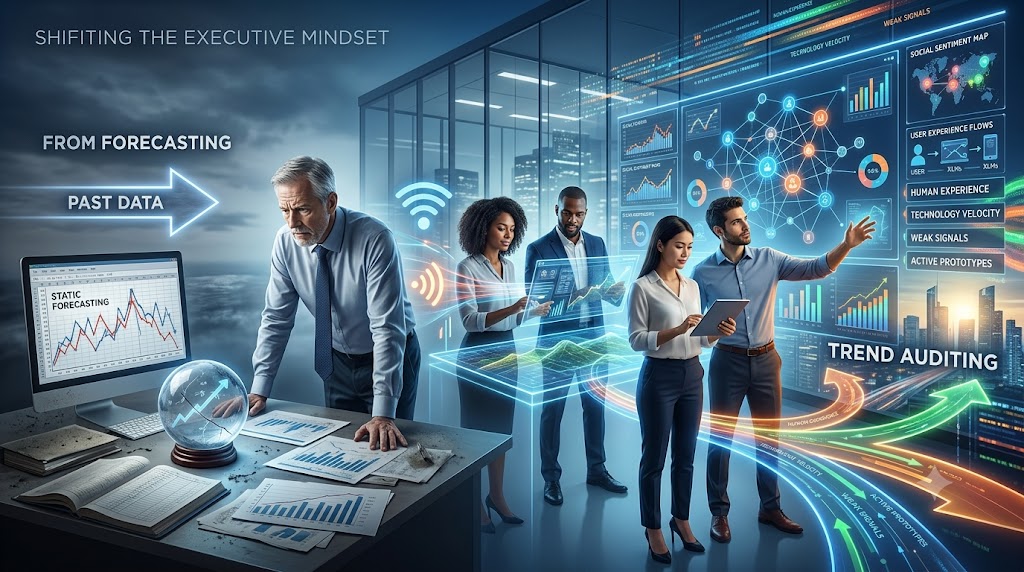
The Failure of the Crystal Ball

Traditional forecasting is broken. For decades, the C-suite has relied on linear projections and lagging market data to predict what comes next. But in an era defined by rapid macroeconomic shifts and accelerating technological integration, treating the future as a straight-line extension of the past is a dangerous trap. It creates an illusion of certainty, locking organizations into rigid plans that fall apart the moment reality deviates from the spreadsheet.

When we treat forecasting as a crystal ball, we naturally adopt a reactive posture. We wait for the predicted future to arrive, only to find ourselves scrambling when a blind spot disrupts our assumptions. More importantly, this mechanical approach completely misses the human element. It ignores the shifting employee dynamics, evolving customer expectations, and cultural friction that ultimately dictate whether an organization thrives or stumbles.

The Paradigm Shift: We must move from predicting the future to preparing the organization to actively shape it. This requires shifting our executive mindset from traditional forecasting to continuous Trend Auditing.

Trend Auditing is a human-centered, dynamic approach to evaluating, mapping, and testing the real-world signals occurring right now. Instead of guessing where the dart will land years from today, a Trend Audit inventories the velocity and relevance of emerging shifts, filtering them through the lens of human experience. It is the ultimate tool for moving leadership from passive observation to proactive ecosystem design — turning systemic disruption into a distinct strategic advantage.

The Pitfalls of Linear Forecasting

The traditional corporate planning cycle is built on a fundamental flaw: the belief that the future can be accurately mapped using a rearview mirror. When executives sit down to plan for the coming years, they typically reach for historical data, linear growth curves, and static market reports. While these tools provide a comforting sense of structure, they ultimately create an illusion of certainty that leaves organizations highly vulnerable to sudden shifts.

Linear forecasting treats the business ecosystem as a controlled environment where variables behave predictably. In reality, modern markets are complex, non-linear systems. When an organization locks itself into a single, rigid forecast, it builds institutional blindness. Leadership becomes so focused on hitting the milestones of a predetermined plan that they completely miss the weak signals of disruption bubbling up at the periphery. By the time those signals become large enough to impact the balance sheet, the window for a proactive response has already closed.

Furthermore, standard forecasting models suffer from a critical blind spot: they are fundamentally detached from the human experience. They prioritize cold financial metrics and surface-level technology trends while ignoring the underlying human dynamics that actually drive adoption, resistance, and market transformation. Technology doesn’t change markets on its own; human behavior in response to technology does.

The Agility Trap: When organizations optimize for efficiency against a static forecast, they inadvertently strip out the agility required to pivot. True resilience isn’t about being right about a single future; it’s about being prepared for multiple potential realities.

When we evaluate organizational readiness solely through traditional metrics, we miss the growing friction within our workforce and customer base. To build a strategy capable of navigating an uncertain landscape, executives must move away from defensive, spreadsheet-driven predictions and begin assessing the real-world velocity of change through a human-centered lens.

Defining the Trend Audit Framework

To break free from the constraints of traditional forecasting, leadership teams must adopt a rigorous methodology for evaluating the present landscape. This is where Trend Auditing diverges sharply from casual trend scanning. While scanning is a passive exercise—essentially making a list of interesting things happening in the world—a Trend Audit is an active, human-centered inventory designed to measure the velocity, relevance, and structural impact of emerging shifts on the organization.

Instead of treating every new headline or technological buzzword as an equal priority, a Trend Audit filters external signals through a systematic framework. It forces leadership to ask: How fast is this signal moving, how deeply does it intersect with our core business, and what is the friction of adoption? This process transforms a chaotic sea of information into a prioritized matrix of strategic realities, allowing executives to identify which shifts require immediate experimentation and which simply demand close observation.

Crucially, this framework introduces a vital “Human-Centered” Filter to the strategic process. True trend auditing does not evaluate an emerging technology or macroeconomic shift in isolation; it measures how that shift alters human behavior and expectations. By focusing on Experience Level Measures (XLMs), executives can gauge the real-world impact a trend has on customers and employees alike. After all, a trend only gains commercial and operational velocity when humans choose to embrace it, reject it, or adapt to it.

The Core Difference: Linear forecasting asks, “What will the market look like in five years?” Trend Auditing asks, “What signals are actively reshaping human experience today, and how agile must our architecture be to capitalize on them?”

By shifting the focus from abstract future points to the tangible trajectory of current human experiences, Trend Auditing provides the baseline data needed to re-engineer corporate strategy. It moves the organization away from speculative bets and grounds executive decision-making in a clear, actionable understanding of the shifting ecosystem.

Shifting Executive Leadership Mechanics

Moving from forecasting to trend auditing isn’t just a change in strategy; it requires a fundamental restructuring of how leadership teams operate. In a volatile landscape, executives can no longer afford to be passive observers of quarterly reports. Instead, they must become active curators of emerging signals. This means moving away from closed-door, top-down predictions and intentionally distributing the responsibility for foresight across the entire organizational ecosystem.

To operationalize this mindset, leadership must align accountability with clear visual frameworks. By leveraging the Nine Innovation Roles, executives can move past ambiguous ownership and assign specific individuals to act as the organization’s Anthropologists (to study human behavior shifts), Experimenters (to test the impacts of those shifts), and Cross-Pollinators (to connect disparate trends across business units). This ensures that audited trends are not just logged into a database, but are actively championed and explored by the right people.

Furthermore, organizations require a dedicated operational anchor to manage the human impact of these external shifts. This drives the necessity of the Experience Management Office (XMO). While a traditional PMO focuses on project timelines and budgets, the XMO acts as the central engine monitoring how external macro trends collide with internal culture, employee friction, and customer reality. It ensures that the organization’s response to a trend remains deeply rooted in human-centered design rather than mere technological implementation.

The Power of Participatory Foresight: The most critical weak signals rarely show up first in the boardroom; they are caught on the front lines by employees interacting daily with customers and technology. Replacing top-down mandates with participatory, inclusive contribution reduces organizational resistance and drastically accelerates response times.

By democratizing the foresight process and embedding human experience metrics directly into leadership mechanics, executives can build a highly responsive ecosystem. This structural alignment turns trend auditing from an abstract exercise into a dynamic corporate capability, setting the stage for targeted, intentional innovation.

Activating the Strategy: From Audit to Innovation

An audit is only as valuable as the action it provokes. To truly capitalize on the insights generated from a Trend Audit, leadership must embed this practice directly into the organization’s operational DNA. Rather than treating it as an annual static exercise to populate a strategy deck, Trend Auditing must function as a continuous feedback loop that feeds, shapes, and challenges the strategic planning cycle on an ongoing basis.

When properly integrated, a clear trend audit serves as the precise fuel needed to spark targeted, intentional innovation. It puts an end to “random acts of digital transformation” — those reactionary, expensive tech implementations driven by FOMO (fear of missing out) rather than strategic alignment. By understanding the velocity and human friction associated with audited trends, executives can ignite their internal innovation engines with absolute intentionality, ensuring every initiative solves a real human or operational need.

Activating this strategy is also the ultimate method for de-risking the future. In a complex business ecosystem, top-down mandates are obsolete and high-risk. Instead, the insights from the Trend Audit allow leadership to design low-stakes experiments and prototype solutions in real time. This approach allows the organization to test assumptions against emerging macro shifts safely, paving the way for a smooth, calculated soft landing during major operational and workforce transitions.

The Operational Reality: Innovation without continuous auditing is just guesswork. By coupling a rigorous understanding of current trends with agile experimentation, organizations stop guessing where the market is going and start actively building the capabilities required to lead it.

By moving fluidly from auditing to experimentation, leadership transforms the organization from a rigid structure vulnerable to disruption into a fluid, adaptive organism. This seamless connection between insight and execution ensures that the business is always positioned ahead of the curve, ready to convert macro shifts into sustainable growth.

The Proactive Premium

The future cannot be predicted, but it can be anticipated, designed, and co-created. As the complexity of our macroeconomic and technological landscape intensifies, the premium on proactive leadership has never been higher. Executives who cling to traditional, linear forecasting will find themselves perpetually on the defensive, reacting to disruptions they failed to see coming because they were looking at the wrong metrics.

By shifting the corporate mindset to continuous Trend Auditing, leadership teams reclaim control of their trajectory. This human-centered approach strips away the dangerous illusion of certainty and replaces it with a dynamic, resilient capability. It allows organizations to ground their strategies in the velocity of real-world human behavior, leveraging frameworks like the Nine Innovation Roles and the XMO to translate emerging signals into immediate, low-stakes experiments.

The Ultimate Takeaway: Master the trend audit, and you stop reacting to the ecosystem that others create. You start designing the ecosystem yourself.

The choice facing today’s executive is simple: continue chasing the mirage of a perfect forecast, or build an organization agile enough to thrive in any version of tomorrow. It is time to challenge your leadership team to cancel their next static forecasting session, step away from the spreadsheets, and initiate a rigorous, human-centered Trend Audit. The future isn’t waiting—and neither should your strategy.

Frequently Asked Questions

What is the core difference between trend forecasting and trend auditing?

Traditional trend forecasting tries to predict a specific outcome at a future point in time using linear projections and historical data. Trend auditing, by contrast, is a human-centered inventory of existing macro shifts and micro signals. It measures their current velocity, organizational relevance, and impact on human behavior so leadership can adapt to multiple potential realities in real time.

How do human-centered metrics like XLMs fit into a Trend Audit?

A trend only gains commercial or operational momentum when humans choose to adopt or resist it. By applying Experience Level Measures (XLMs) rather than just technical or financial data, a Trend Audit evaluates how a shift alters customer and employee experiences. This ensures strategy is grounded in real-world human behavior rather than technology buzzwords.

What organizational structures are needed to support continuous trend auditing?

Successful trend auditing requires shifting from a top-down mandate to participatory foresight. Structurally, this is driven by an Experience Management Office (XMO) to monitor human impact and friction, alongside the deliberate assignment of clear innovation responsibilities — such as those defined in the Nine Innovation Roles — to ensure emerging signals are continuously captured, tested, and cross-pollinated.

SPECIAL BONUS: Braden Kelley’s Problem Finding Canvas can be a super useful starting point for doing design thinking or human-centered design.

“The Problem Finding Canvas should help you investigate a handful of areas to explore, choose the one most important to you, extract all of the potential challenges and opportunities and choose one to prioritize.”

Image credit: Gemini

Subscribe to Human-Centered Change & Innovation WeeklySign up here to get Human-Centered Change & Innovation Weekly delivered to your inbox every week.

Exploring the Application of Futures Research in Business

Exploring the Application of Futures Research in Business

GUEST POST from Chateau G Pato

Futures research, also known as strategic foresight, is a valuable discipline that enables businesses to anticipate and prepare for future trends and challenges. By studying emerging technologies, social changes, and economic shifts, companies can shape their strategies to stay ahead of the curve. This article delves into the application of futures research in business through two compelling case studies that demonstrate its effectiveness.

Case Study 1: Tesla’s Disruptive Vision for Electric Vehicles

Tesla, the renowned electric vehicle manufacturer, revolutionized the automotive industry through its visionary approach. By applying futures research, Tesla identified the impending need for sustainable transportation and recognized the potential market for electric cars. Tesla’s CEO, Elon Musk, envisioned a future where electric vehicles would dominate the market, offering a cleaner and more efficient alternative to traditional combustion engines.

Rather than conforming to existing industry norms, Tesla focused on developing advanced battery technology, creating a robust charging infrastructure, and designing sleek and high-performance electric vehicles. This forward-thinking approach, based on insights gained from futures research, positioned Tesla as a leader in the electric vehicle market and set the stage for increased demand and adoption of sustainable transportation worldwide.

Case Study 2: McDonald’s Embracing Changing Consumer Preferences

McDonald’s, the global fast-food chain, experienced considerable challenges as shifting consumer preferences favored healthier and more sustainable dining options. In response to these emerging trends, McDonald’s embraced the insights provided by futures research and undertook substantial strategic transformations.

The company diversified its menu by introducing healthier options such as salads, wraps, and fruit smoothies. They also implemented sustainable practices, such as sourcing cage-free eggs and responsibly harvested coffee. Moreover, McDonald’s introduced digital ordering and payment systems to cater to changing customer behaviors.

By leveraging futures research, McDonald’s proactively adapted its business model, appealing to a wider range of customers and aligning with evolving consumer expectations. This strategic shift allowed McDonald’s to remain relevant and competitive in an industry that demanded changes to stay ahead.

Conclusion

Futures research offers immense value to businesses by providing foresight into emerging trends and transforming challenges into opportunities. The case studies of Tesla and McDonald’s demonstrate the impact of leveraging futures research to drive innovation, adapt to changing dynamics, and meet customer demands effectively.

By incorporating strategic foresight into their decision-making processes, businesses can identify new markets, anticipate future needs, mitigate risks, and develop sustainable strategies for long-term success. With the ever-increasing pace of change in today’s business landscape, futures research has become an invaluable tool for companies that seek to thrive in a future-oriented and rapidly evolving world.

Bottom line: Futurology is not fortune telling. Futurists use a scientific approach to create their deliverables, but a methodology and tools like those in FutureHacking™ can empower anyone to engage in futurology themselves.

Image credit: Pixabay

Subscribe to Human-Centered Change & Innovation WeeklySign up here to get Human-Centered Change & Innovation Weekly delivered to your inbox every week.