Category Archives: culture

How to Balance a Culture of Conformity with Creativity in Medicine

How to Balance a Culture of Conformity with Creativity in Medicine

GUEST POST from Arlen Meyers, M.D.

Medicine, by its nature, is a culture of conformity. We are trained to do no harm, be risk averse, and conform to the standard of care. We follow “best practices” i.e. what everyone else is doing, and are encouraged to follow evidence based guidelines. Medical students are chosen by their ability to score highly on standardized tests and check off the requisite boxes in their application. They know what to say in interviews…over and over again. Physicians have to pass standardized tests to get a license and be board certified to practice and maintain certification.

Now that medicine has become corporatized and more and more doctors in grey flannel suits are working for the man, things have worsened.

Successful innovation and entrepreneurship, on the other hand, encourages a culture of creativity. Now that students, trainees and clinicians are getting more and more interested in physician entrepreneurship and the business of medicine, how do we encourage and balance the two cultures?

  1. Encourage cognitive diversity, not just demographic diversity, in decision making
  2. Don’t penalize failure. Showcase it instead.
  3. Create ambidextrous organizational departments and units that can plan for not just the now, but the next and new as well.
  4. Use evidence based techniques for ideation and creative problem solving. Here are 3 to get you started.
  5. Recruit, hire, develop and promote for creativity
  6. Create psychologically safe spaces to say things
  7. Forget brainstorming
  8. Hire leaderpreneurs who can drive cultural change
  9. Know the difference between good rebels and bad rebels
  10. Don’t confuse disruptive doctors with disruptive doctors
  11. Learn to resolve the conflict between the ethics of medicine and the ethics of business

Sometimes thinking outside of the box will get you in trouble. Other times, not doing so will box you in. You decide.

Image credit: Pixabay

Subscribe to Human-Centered Change & Innovation WeeklySign up here to get Human-Centered Change & Innovation Weekly delivered to your inbox every week.

Impact of Cultural Differences on Innovation

Innovation and Impact of Cultural Differences

GUEST POST from Jesse Nieminen

The effects of cultural differences for innovation are an interesting and extremely multifaceted topic.

For most of us, it probably goes without saying that cross-cultural and multicultural capabilities are crucial in today’s globalized and hyperconnected world, and innovation is no exception. These capabilities are especially important if you’re working on it in a large international organization, as many of our customers are.

Such an organization must obviously think about how to adapt new innovative products and services to the cultures and unique characteristics of different markets and regions. But, in addition to that, they also need to manage the cultural differences within their organization while trying to innovate. Given that we have customers all over the world, it’s a theme we often get asked about.

And, of course, there’s also the age-old debate about the cultures of certain regions or countries being better suited to innovation to begin with.

So, in this today’s article, we’ll dive deeper on this nuanced topic and each of those three themes around cultural differences in innovation. We’ll also end by providing you with practical advice on how to look at and take these into account in your innovation work.

How can cultural differences be observed?

However, before we dive deeper, let’s first take a step back and consider the question of how to observe cultural differences in the first place.

I’m sure we all agree that there are significant cultural and behavioral differences between people coming from different backgrounds, be it based on geographical, ethnic, religious, or just the past corporate cultures people have been a part of.

As these differences are often hard to pin down, people usually have an innate urge to try to group people into specific buckets to make sense of those differences. There are significant challenges in doing that as it can lead to putting people into predefined boxes and reinforcing stereotypes, and then treating people based on those stereotypes instead of the individuals they really are. That is why these kinds of approaches shouldn’t be considered universal truths or used as recipes for making decisions even from a purely pragmatic point-of-view, let alone from an ethical one.

Still, with that major caveat, there are also benefits in using such frameworks since they can help us make sense of the world in a more structured way. They can help everyone get a better understanding of the big picture and can serve as a starting point for creating a shared understanding, as well as debating the practical implications of cultural differences.

There are many such methods available, but the general approach is always the same: to break a culture down into several behavioral and/or value-based dimensions ranging from one extreme to another, and then rating each culture on each of these dimensions to form an overview of their respective cultures.

The most popular and widely researched of these are probably the GLOBE project, and the Hofstede cultural dimensions model, but there are also other popular ones like the Culture Map. Each of these frameworks uses the above described approach, and most of the research on them is primarily focused on the differences between individual nations. Having said that, the same approaches have also been applied to other levels, such as gender, organizational, etc. often just with slightly different dimensions.

Next, we’ll briefly explain the Hofstede cultural dimensions model because it’s one of the earliest, and by far the most popular model in the field. If you’re already familiar with the model, you can skip the next paragraph and jump right into the takeaways.

Hofstede’s Cultural Dimensions

Geert Hofstede worked at IBM back in the 60’s when it was one of the first true global, multinational corporations. As part of his work on improving cross-cultural communication, he ran the same survey on values for more than 100,000 employees from different countries and analyzed the differences, which then led to the creation of his model some years later.

Initially the model consisted of four dimensions, but upon additional research, has since been expanded to six. I’ll briefly explain each of these next, and then share a few examples to illustrate how that works.

Power Distance Index (PDI) determines how equally power is distributed and how hierarchical a society is. High scores indicate a structured and hierarchical society, whereas low values indicate a more distributed power structure and willingness to question authority.

Individualism vs. Collectivism (IDV) looks at how heavily individuals are integrated into groups. This is mostly self-explanatory, but it’s worthy pointing out that collectivist cultures are highly loyal to the close-knit groups they belong to.

Uncertainty Avoidance (UAI) determines how much ambiguity and uncertainty a society is comfortable with. High scores indicate that a society values clear, often strict, rules and guidelines and believes in there being a “singular truth”. Low scores mean that a society is more willing to explore new ideas and divergent thoughts and is less structured overall.

Masculinity vs. Femininity (MAS) is of a dimension that’s subject to some controversy, but here refers to values associated with traditional gender roles. A masculine society values achievement, assertiveness, and material rewards for success, whereas a more feminine one values cooperation, modesty, care, and quality of life.

Long-term orientation vs. Short-term orientation (LTO) is pretty self-evident. Long-term oriented societies tend to think more about the future and view adaptation and pragmatic problem-solving as important, whereas more short-term oriented one tends to value traditions and the current state and be less willing to change.

Indulgence vs. Restraint (IND) in turn refers to how much a society indulges and encourages freedom for individuals to “just have fun and enjoy life”. More restrained societies tend to have stricter social norms regarding such behavior as they see these indulgences as counter-beneficial for bigger, longer-term ambitions.

There’s been some research on how these tendencies affect innovation, and as you can probably guess, some tend to be more favorable for high innovation performance than others. Which brings us to the big question: are some cultures intrinsically better at innovation than others?

Are some cultures better than others at innovation?

Well, in short, the answer is yes. At least to some extent. As mentioned, there’s research that shows a relatively strong correlation between certain cultural characteristics and innovation performance.

However, here it’s worth pointing out that almost all of the research done on the topic would seem to focus on country level data as that is widely and freely available thanks to studies like the Global Innovation Index (GII).

While certainly useful, we should take these findings with a grain of salt due to a number of factors, such as the studies again being high-level generalizations based on correlations, and the indices like GII being predominantly focused on inputs for innovation such as education and R&D spending. Even the output focused parts tend to be a bit biased towards activity metrics, such as number research papers and patents, instead of the real value and economic impact of innovation.

What’s more, I think it’s important to point out that most natural cultures evolve much slower than the GII rankings change, so it should be quite evident that there are also many other factors than culture that affect these scores.

But with that out of the way, let’s now look at the actual findings.

Characteristics of top innovation cultures

Based on the available studies, there would seem to be a pretty good consensus on the ideal innovation cultures having the following characteristics on the Hofstede model, in rough order of importance:

  • Low power-distance
  • High levels of long-term orientation and pragmatism
  • High levels of individualism
  • High levels of indulgence
  • Low levels of uncertainty avoidance
  • Lower levels of masculinity

These findings are obviously mostly in line with what most of us think of as a pro-innovation culture, so there aren’t really that many surprises here.

If people can question authority, are comfortable with ambiguous and uncertain environments, and can think about the long-term instead of just the next quarterly results, innovation is a lot more likely to happen.

While there’s more to innovation performance than culture, certain characteristics are likely to lead to a culture being better at innovation.

In most studies, the level of masculinity seemed to make the least amount of difference of any of the variables for innovation performance. Some studies found no correlation, but some did find a preference for a feminine, more collaborative culture instead of the more competitive and assertive, masculine one.

However, in my opinion, the most interesting findings are that high levels of individualism and indulgence are favorable for innovation, when intuitively we might think that a culture that is more collaborative and favors restraint and delayed gratification would be preferable.

This can be explained with the way that the Hofstede dimensions are constructed.

A more collaborative culture is one where certain in-groups, typically your own family, come first, and where loyalty and obedience are absolute values. So, collaboration according to the Hofstede model isn’t so much for the “greater good”, but more about the benefit of that specific “inner circle” ahead of your own interests. More individualist societies, on the other hand, tend to be more comfortable disagreeing, exploring, and “letting the best ideas win”, which is what likely led to these cultures over-performing.

A similar explanation also applies for the preference for indulgence. According to the authors of the study linked above, people in indulgent cultures have a greater drive for improving things and making life more enjoyable, and are generally more optimistic, which they viewed as the primary factors driving innovation here, perhaps alongside a general willingness to just try new things.

So, in that context, I do think the findings make sense, but I think it’s also a good example of some of the challenges associated with more nuanced sides of these cultural frameworks.

Takeaways from country level innovation performance

Looking at the GII study, and the mapping of the top countries from that to the Hofstede model, there are a couple of points worth noting out.
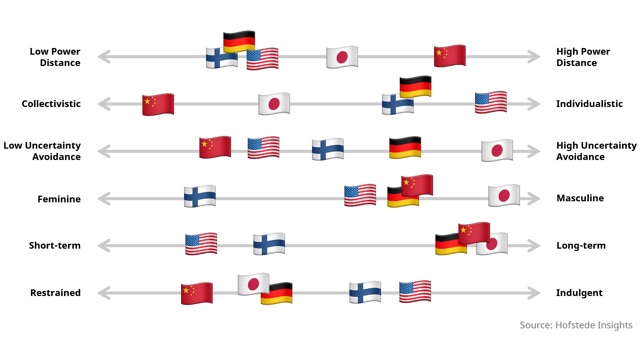
Viima Hofsted Insights GII study of cultural dimensions

First, the top countries in the GII are pretty much what most people would probably expect. The top 15 consists primarily of the US, the Nordics, as well as some Western European and East Asian countries.

However, the interesting part is that when we map these out to the Hofstede model, it’s immediately obvious that even the top performing countries are essentially all over the spectrum. Once we look a bit closer, it’s also evident that no individual country has the perfect innovation culture, as defined above.

To elaborate further, I think there are a few key takeaways from all of this:

  1. There’s more than just one way to be a great innovator
  2. While there are a few distinct types of cultures that generally do better, every culture has its own strengths and weaknesses when it comes to innovation
  3. You can improve your odds of succeeding at innovation by quite a bit if you recognize the biases of your culture that are likely holding you back

Top performing organizations should thus take these biases and cultural differences into account, and purposefully shape an organizational culture that is distinct from the average of any individual country and instead designed to drive more innovation. Here, diversity can be a real asset, but that’s another massive topic on its own.

Every culture has its own strengths and weaknesses when it comes to innovation. You can improve your odds of succeeding at it by recognising the biases that are holding yours back.

Having said that, there’s quite a bit more to creating this kind of an innovation culture than just what the Hofstede model captures, and we’ve written about that in detail in this earlier article.

However, one aspect that I’d like to highlight here is that innovation is requires a strong combination of both exploration and execution, so your culture should have a good mix of capabilities in both extremes.

If you’d like to start shaping your culture in practice, you can download our free Innovation Culture Toolkit for actionable tools that can help you do just that.

With that said, let’s now move on to the more practical implications of cultural differences for innovation work.

Multi and cross-cultural innovation capabilities

Let’s start from the first and most obvious challenge innovators in a globalized world face: how can their products and services, as well as sales and marketing efforts be relevant when doing international business, especially in different, highly culturally diverse regions?

In certain situations, and for certain products, it can be completely fine to just do minor localizations like translations, and primarily use the same channels, models, and messaging across the world. This will keep things much simpler and there are situations where these benefits can outweigh the costs for both your customers and your business. For example, this is the route we’ve so far decided to take with Viima.

Having said that, if you don’t adapt your offering and operations to different cultural and market preferences, you often can’t reach your full potential. In some situations, it might even take a completely different approach to reach the same goal in different cultures.

P&G is these days often cited as an example of a multinational company that has been able to successfully grow in emerging markets, but one of the lessons they learned the hard way was that just operating with the same products and models as they did back home wouldn’t work.

For example, according to ex-CEO Lafley, when P&G decided to focus on the baby-care market in Asia, the initial approach was to just cut away material from the diapers sold in Western markets. The problem was that to get to a cost-level that was acceptable, they had to cut out so much that the products no longer worked as intended. Once they went back to the drawing board and created an entirely new product with a completely different design focused primarily on costs instead of the latest technology, they succeeded in creating an attractive product and eventually became the market leader in China.

Pampers Cultural Tailoring

However, in most cases, either extreme isn’t the way to go. You need to look for a solution that allows you to build on your strengths, but still cater to the different cultural preferences of those whom you choose to serve – and usually that isn’t everyone.

Of course, for most of us who are innovators, that isn’t really that different from what we do anyway: we know that whatever great ideas we have, many will never survive first contact with the real world.

Cultural differences and local preferences of different markets are just another variable that we’ll need to take into account in our innovation work. Still, if you’re aiming for international business, it is a topic that you’d be wise to consider during your development process as it can save you a lot of trouble down the road.

Now, if you already have team members that are intimately familiar with these different cultures, it’s just common sense that the whole process is likely to be quite a bit smoother. And the evidence backs it up: this is one of the reasons for diversity being an asset for innovation.

But with that, let’s finally cover the practical considerations of what all of the above means for our organization before we wrap up.

Managing cultural differences within the organization

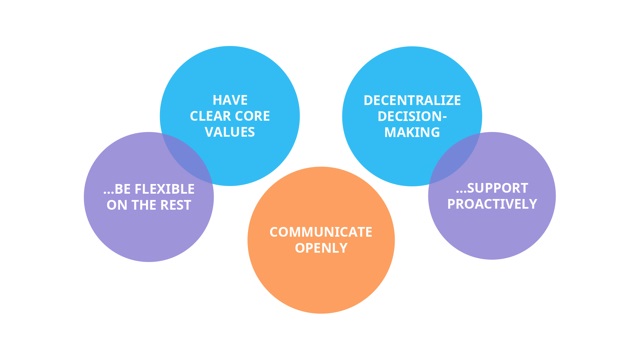
This is of course another massive topic, so we’ll keep things focused and will seek to provide you with the three key principles we’ve generally found to work well for getting great innovation outcomes in an international, multicultural organization in our work with such organizations.

While many of these are quite practical, depending on your role, you might not be able to put all of them into practice right away. Still, I’d recommend thinking about ways you can apply the same core ideas within the scope of your innovation work.
Cultural Differences for Innovation

Communicate about cultural biases and expectations openly

To illustrate this, I’ll share a story from No Rules Rules, which is a great book that I’d warmly recommend if you’ve made it this far into the post.

Before Netflix expanded internationally, it had a somewhat stereotypical US style task-oriented culture. It was quite common for employees to have lunch while working on their computers. However, as they expanded to Brazil, it quickly became obvious that this was a bit of a problem as, in general, Brazilians really value the relationships built over shared meals. As a result, early employees didn’t exactly feel welcome.

After some time, this came up in discussions, and while it was a trivial thing to fix, it still made a huge impact on morale. And not only did that help them adapt to local habits, but the changes also enriched the culture of the organization globally.

Netflix is known for its company culture

So, the takeaway here is that it’s important to pay attention to cultural differences and discuss them openly. Usually, the issues are easy enough to fix, but when they aren’t discussed, you easily miss them, and that’s what leads to many challenges down the road. The reality is that most people won’t be familiar with everyone else’s culture by default and expecting that to be the case just isn’t realistic.

Have core values and some norms, be flexible on the rest

Each organization’s culture is a result of its background. A sum of its parts, if you will. Be it the nationality of the company, past strategic and hiring decisions, and even simple practices and ways of working that have stuck around for one reason or another.

A few of these factors are core for the identity and competitiveness of the organization, and it’s these core values that you should hold on to. However, most of these factors are simple habits that are inconsequential in the grand scheme of things.

Making the difference between the two is key.

The core values and norms are something you simply need to succeed as an organization, and those you simply can’t compromise on. New employees, whatever their background or experience, do need to adhere to these few essentials. And for that to happen, you need to train them on these values and principles and tell why that is so important for your organization.

You should be adamant about upholding your core values, but be flexible and willing to give up or change the more inconsequential parts of your culture so that it can evolve and improve

On the other hand, the rest of inconsequential norms and habits you should be willing to give up or change when needed so that everyone can feel welcome and be the best version of themselves. Everybody doesn’t have to be a carbon copy of one another.

But there’s more to it than just that. The right changes can, in fact, make your culture better. This is essentially what “hire for culture add, not culture fit” means in practice.

Let’s again use the Netflix lunch example. Was it crucial for the company to have employees to eat at their desks? Of course not. It was just an inconsequential habit. However, it was vital to have the new Brazilian employees feel welcome, not just because it’s the right thing to do, but also because it improved the company’s performance. Plus, introducing this conscious habit globally helped have a positive impact elsewhere too!

Shared Lunch Brazil

The same can be applied even within the scope of your innovation work. For example, if you’re working on a new medical device, quality and safety are much more important than absolute speed to market. On the other hand, for a consumer web app, it’s probably the other way around. The exact values mentioned here aren’t important, it’s that they should support your strategy and innovation capabilities.

Figure out what the true core values and norms are for your innovation efforts, and make sure to reinforce these – and then be flexible on the rest.

Push decision-making down whenever possible

We’re a strong advocate for decentralized innovation. I won’t recap the whole topic here, but in a nutshell, it’s people who are closest to the market and the real work that often come up with the best ideas. Also, a decentralized approach allows you to dramatically scale your innovation work, which is key for long-term results.

While we’d argue that this is usually the preferable approach, it’s even more important when you’re operating in a multicultural and international environment, as we pointed out earlier.

Not only is this likely to lead to better decisions, but it’s guaranteed to improve the accountability and motivation of the employees making those decisions, which will lead to better results.

This is a key characteristics of the Netflix culture, and CEO Hastings prides himself in doing as few decisions as possible. And, at large, it’s seemed to work really well for them.

However, a market where they are struggling is India. And, at least on the surface, it looks like the problem has been that they’ve tried to adapt the same success formula to India as most other markets: using local top talent to produce new hit TV shows. The problem is that apparently Indians value sports and movies much more than they do TV shows, which has led to competitors focused on those areas dominating the market and a big commercial disappointment for Netflix. From the outside, it’s hard to say if they didn’t really live up to their values here, or if the mistake happened regardless of that. Still, I’m sure there were people on the ground in India that knew of these cultural preferences beforehand.

India Cricket

In practical terms, there are naturally some opportunities and capabilities that make sense to work on centrally, but in an international organization there are also plenty that would be best tackled by empowering people further down the organization to make decisions that best drive the key interests of the organization.

For example, some of our customers have launched big international innovation campaigns or other initiatives and struggled. They might find it difficult to engage people in the field because the centralized effort just doesn’t feel relevant for many of these people, or they might not be able to implement enough good ideas with that same centralized approach.

While there are others that have succeeded in similar centralized efforts, our most successful and advanced customers have nearly without exception evolved the way they work to really embrace innovation at the scale of the organization at large.

…and make sure innovators have the support they need

However, for that decentralized approach to work, you need to guide and support the people innovating across the organization. This is of course not specific to just an environment where there are cultural differences, but for innovation in general.

You likely have plenty of smart and capable people working for you who’d be more than capable of driving innovation, but if they don’t have the right resources, tools, and mindset, they might struggle.

So, in practice, you should:

  • share strategic priorities, and make sure people continue to work towards those
  • provide tools and resources that help people with the innovation process
  • communicate and oversee the above-mentioned core cultural values and norms of the organization
  • help people with challenges in being heard, understood, or taken seriously by others
  • help facilitate discussions and share innovation best practices between different parts of the organization

Often, the most convenient way to accomplish the above goals is to make these efforts a priority of your centralized innovation team, instead of having that small team try to drive innovation themselves.

The right approach and specific methods, tools, and frameworks obviously depend on the situation, but the point is that with the right support, you’ll find that people will often surprise you with the innovations that they’re able to create. The key to success with this model is to proactively invest in improving capabilities and supporting innovators across the organization.

Anyway, with this kind of an approach, you can move from just trying to manage cultural differences, to embracing and using them to drive value for your organization.

Conclusion

The topic of cultural differences is such a complex and nuanced topic that  we’ve barely scratched the surface on here, even though this has been a pretty long article.

But to summarize, if ignored, cultural differences can become a big challenge for innovators. Yet, if embraced and properly managed, it can turn out to be a real advantage for you.

The first step is to understand that these differences exist in the first place, and that teams and people from different backgrounds are likely to have certain strengths, but also certain weaknesses, when it comes to innovation.

Then, reflect on what the ideal culture for innovation looks like in your specific business, and discuss these differences openly with your team.

And finally, try to approach the whole process systematically, with the help of tools like our Innovation Culture Scorecard, one by one addressing challenges that are holding your team back from reaching its true innovation potential.

As mentioned, when embraced and properly managed, cultural differences can turn out to be a real competitive advantage for an innovator.

This article was originally published in Viima’s blog.

Image credits: Viima, Pixabay, Unsplash, Pexels

Subscribe to Human-Centered Change & Innovation WeeklySign up here to get Human-Centered Change & Innovation Weekly delivered to your inbox every week.

Building a Culture of Engagement and Empowerment

Building a Culture of Engagement and Empowerment

GUEST POST from Art Inteligencia

In today’s rapidly evolving world, organizations face unprecedented challenges that require innovative thinking, resilience, and adaptability. The pathway to thriving in such environments often lies in the deeply intertwined culture of engagement and empowerment. These two pillars are critical in unleashing the potential of individuals and driving organizations toward success. A culture of engagement and empowerment ensures that employees are not only motivated and committed but also have the autonomy and resources to bring their best ideas to life.

Understanding Engagement and Empowerment

Engagement is the emotional commitment an employee has towards the organization and its goals. A highly engaged workforce is enthusiastic about their work, actively involved, and willing to go the extra mile. Empowerment, on the other hand, is about providing employees with the authority, tools, and resources they need to make decisions and take actions that impact their work and the organization. When blended seamlessly, these elements cultivate an environment where innovation flourishes and employees feel valued and confident.

Core Principles for Cultivating Engagement and Empowerment

1. Transparent Communication

Open and transparent communication is the foundation of engagement. When employees are informed and included in decision-making processes, they feel valued and more connected to the organization’s mission. Regular updates, open-door policies, and feedback loops can create a culture where communication flows freely and openly.

2. Recognition and Reward

Recognizing and rewarding employees for their contributions is essential in building a culture of engagement. Reward systems should be aligned with the organization’s goals and reflect fair and transparent criteria. Both formal recognition programs and day-to-day acknowledgements play a crucial role in maintaining high morale and motivation.

3. Ownership and Responsibility

Empowerment is synonymous with ownership. Encourage employees to take responsibility for their work and outcomes by providing them with the autonomy to make decisions. This can be facilitated by establishing clear goals, expectations, and boundaries, while allowing employee creativity and initiative to guide their execution strategies.

Case Studies

Case Study 1: Google – Harnessing Employee Innovation

Google has long been heralded as a model of innovation, in large part due to its culture of engagement and empowerment. Their approach, known as “Innovation Time Off,” permits engineers to spend 20% of their time working on projects of their choosing. This policy empowers employees to explore new ideas, develop personal projects, and create innovations that benefit both them and the company.

Products such as Gmail and Google News were born from this initiative, exemplifying how empowerment can lead to significant innovations. Additionally, Google fosters an inclusive culture through regular “TGIF” meetings, where leadership openly shares company information and solicits employee feedback, thus ensuring ongoing engagement and transparency.

Case Study 2: Zappos – Commitment to Employee Autonomy

Zappos, renowned for its customer service, also leads in fostering a culture of engagement and empowerment. The company’s core values are centered around delivering “WOW” experiences and embracing and driving change, which is facilitated by empowering employees to make decisions.

A shining example of Zappos’ commitment to empowerment is their decision to adopt “Holacracy,” a system of organizational governance where traditional hierarchies are replaced with self-governing teams. Employees at Zappos are encouraged to take initiative and lead projects, with resources and support readily available. This structure not only ensures engagement but also allows employees to maximally contribute to the company’s growth and success.

Practical Steps to Build a Culture of Engagement and Empowerment

1. Craft a Shared Vision and Purpose

A collective purpose promotes buy-in and unity. Involve employees in the creation of a shared vision by engaging them in meaningful dialogues about the company’s future. This fosters ownership and clarifies how each individual’s work contributes to organizational success.

2. Develop Leaders as Coaches

Leadership plays a crucial role in promoting engagement and empowerment. Transition managers into coaches, focusing on mentorship rather than micromanagement. Leaders should facilitate development, provide constructive feedback, and support problem-solving efforts.

3. Create a Safe Environment for Experimentation

Empower employees to innovate by creating a safe space where they can experiment without fear of failure. Encourage trial-and-error processes, and celebrate learning from mistakes as a growth opportunity. This acceptance of risk ultimately fuels innovation and engagement.

Conclusion

A committed focus on building a culture of engagement and empowerment is not just beneficial but essential for organizations aiming to lead and innovate in their fields. By nurturing environments that prioritize transparent communication, recognition, ownership, and continuous support, organizations can unlock the full potential of their workforce. As seen with industry leaders like Google and Zappos, a robust culture of engagement and empowerment paves the way for sustained innovation, competitive advantage, and long-term success.

Extra Extra: Futurology is not fortune telling. Futurists use a scientific approach to create their deliverables, but a methodology and tools like those in FutureHacking™ can empower anyone to engage in futurology themselves.

Image credit: Pexels

Subscribe to Human-Centered Change & Innovation WeeklySign up here to get Human-Centered Change & Innovation Weekly delivered to your inbox every week.

Fueling a Culture of Innovation with Diversity and Inclusion

Fueling a Culture of Innovation with Diversity and Inclusion

GUEST POST from Art Inteligencia

In today’s rapidly evolving business landscape, the capacity for innovation stands as a critical differentiator among leading organizations. At the heart of fostering this innovation is the commitment to diversity and inclusion (D&I). The melding of varied perspectives, backgrounds, and experiences not only drives creative outcomes but also builds resilient, adaptive business enterprises. As thought leaders at the helm, we must champion a culture where diversity and inclusion are not mere policies but key drivers of innovation.

The Power of Diverse Perspectives

Diverse teams bring a wealth of perspectives that ignite creativity and challenge entrenched assumptions. A study by Boston Consulting Group found that diverse management teams lead to a 19% increase in revenue due to innovation. When individuals from different cultural, gender, and generational backgrounds convene, they contribute unique viewpoints that enhance problem-solving capabilities and stimulate breakthrough innovations. The convergence of these perspectives facilitates more rounded and comprehensive decision-making processes, which can yield novel products and services.

Case Study 1: Global Tech Innovators

Consider the case of a leading global technology firm that set out to invigorate its product development process. By championing a diverse workforce, the firm curated project teams inclusive of members from varied cultural backgrounds, educational disciplines, and genders. This not only mirrored their diverse customer base but also fueled unprecedented growth in innovation-led initiatives.

One notable success involved a team working on a next-generation wearable technology. By leveraging insights from team members in Asia, Africa, and Latin America, who understood the regional health and wellness nuances, the team developed features that resonated globally, driving product adoption in markets previously untapped. This was achieved through a continuous dialogue fostering an inclusive atmosphere where all team members felt empowered to voice their ideas without fear of dismissal or ridicule.

Fostering an Inclusive Culture

Building a truly inclusive culture involves more than just assembling a diverse team. It entails creating an environment where all employees feel valued and heard, and where contributions are recognized and rewarded. Organizations should implement training programs that underscore the importance of inclusivity, where leaders are equipped to nurture and mentor diverse talent.

“An inclusive culture is one where every employee can bring their full selves to work and contribute towards the innovation journey.”—Anonymous

It’s crucial for leadership to model inclusive behaviors that permeate throughout the organizational culture. This can include forming employee resource groups that celebrate diversity or establishing forums for open dialogue and collaborative ideation sessions. The net result is a fertile environment ripe for innovation.

Case Study 2: Healthcare Innovators

The healthcare industry illustrates another compelling example where D&I powered innovation. A national healthcare provider faced the challenge of designing patient outreach programs that connected with a wide array of demographics. By integrating a diverse group of healthcare professionals, the provider was able to tailor communication strategies to suit different cultural norms and practices.

The diversity within the team ensured that the insights went beyond mere language translation, addressing deeper cultural contexts, and resulting in higher patient engagement and satisfaction rates. The innovative outreach models developed were expanded into full-scale implementations that fundamentally transformed patient-provider interactions across various communities.

Sustaining Innovation through Continuous Commitment

To sustain innovation, organizations must maintain a steadfast commitment to D&I. It is an ongoing journey requiring regular reflection and renewal of strategies. Metrics should be in place to measure the impact of D&I efforts on innovation outcomes, with goals evolving in response to the shifting dynamics of the workforce.

Success stories and best practices should be shared throughout the organization, highlighting how diversity and inclusion have propelled improvements and sparked new initiatives. This storytelling not only inspires but also reinforces the value of D&I as fundamental pillars of innovation.

Conclusion

Fostering a culture of innovation through diversity and inclusion is not optional in today’s competitive business world—it is imperative. The cases presented exemplify how embracing a broad set of voices leads to solutions that are not only innovative but also deeply resonant with a global demographic. As leaders, our role is to build and sustain environments where diversity and inclusion are integral to our organizational DNA, driving forward our vision for continuous innovation.

This article is designed to provide a thoughtful exploration of how diversity and inclusion fuel innovation, along with practical case studies to illustrate these principles. Let me know if there are any further changes or additions you’d like to make!

Extra Extra: Futurology is not fortune telling. Futurists use a scientific approach to create their deliverables, but a methodology and tools like those in FutureHacking™ can empower anyone to engage in futurology themselves.

Image credit: Pexels

Subscribe to Human-Centered Change & Innovation WeeklySign up here to get Human-Centered Change & Innovation Weekly delivered to your inbox every week.

Creating a Culture of Experimentation with Innovative Leadership

Creating a Culture of Experimentation with Innovative Leadership

GUEST POST from Art Inteligencia

In today’s rapidly changing business environment, fostering a culture that embraces experimentation is not just desirable—it’s essential. Innovative leadership plays a critical role in instilling this culture by encouraging teams to explore new ideas, learn from failures, and perpetually seek better solutions. This article delves into how leaders can cultivate such an environment, supported by real-world case studies that highlight successful implementations.

The Fundamentals of a Culture of Experimentation

A culture of experimentation thrives on curiosity, creativity, and a safe space for failing forward. Leaders can initiate this by:

  • Encouraging open-mindedness: Leaders should foster environments where team members feel free to express and explore novel ideas without the fear of failure or retribution.
  • Promoting risk-taking: Recognize and reward calculated risks, and view failures as learning opportunities rather than setbacks.
  • Providing resources and tools: Equip teams with the necessary resources, including time, tools, and skill development opportunities, to experiment and iterate effectively.

Case Studies

Case Study 1: Google’s ‘20% Time’

Google’s innovative ‘20% Time’ policy allows employees to dedicate 20% of their working hours to projects they are passionate about, outside of their regular responsibilities. This initiative has been instrumental in fostering a culture of experimentation and innovation at Google.

Through this program, several successful products, such as Gmail and Google News, were developed. The concept reinforces the importance of giving employees the autonomy to pursue their ideas, which can lead to breakthrough innovations that benefit the organization as a whole.

Case Study 2: Amazon’s ‘Fail Fast’ Philosophy

Amazon’s ‘Fail Fast’ philosophy is embedded deeply into its organizational culture, emphasizing the importance of quick experimentation and learning. Leaders at Amazon encourage teams to experiment rapidly and broadly, learn promptly, and move forward swiftly with the gained insights.

This approach has allowed Amazon to remain at the forefront of innovation, continually evolving and adapting to market demands. By supporting frequent small-scale testing and learning cycles, Amazon cultivates an environment where experimentation is integral to continuous improvement and long-term success.

Guiding Principles for Leaders

To effectively nurture a culture of experimentation, leaders must:

  • Lead by example: Demonstrate a willingness to take calculated risks and transparently share their learnings from both successes and failures.
  • Empower teams: Trust teams to make decisions about their experimental journeys, providing them with the guidance and autonomy needed to innovate.
  • Create psychological safety: Ensure that the workplace is a safe environment for sharing ideas, free of ridicule or punitive measures for failed experiments.

Conclusion

Creating a culture of experimentation requires innovative leadership that champions curiosity, supports risk-taking, and continuously fosters an open-minded approach to learning. Through strategic leadership and the implementation of proven practices, organizations can unlock new levels of innovation and remain agile in a constantly evolving market. As demonstrated by industry leaders like Google and Amazon, integrating a systematic approach to experimentation can not only drive successful outcomes but also create a thriving and resilient organizational culture.

Extra Extra: Futurology is not fortune telling. Futurists use a scientific approach to create their deliverables, but a methodology and tools like those in FutureHacking™ can empower anyone to engage in futurology themselves.

Image credit: Pixabay

Subscribe to Human-Centered Change & Innovation WeeklySign up here to get Human-Centered Change & Innovation Weekly delivered to your inbox every week.

Cultivating a Risk-Taking Culture in Your Organization

Cultivating a Risk-Taking Culture in Your Organization

GUEST POST from Art Inteligencia

In today’s rapidly evolving marketplace, organizations face the dual challenge of maintaining operational efficiency and fostering innovation. To stay ahead, many companies are finding that cultivating a risk-taking culture is essential. Embracing calculated risks can lead to breakthroughs, foster creativity, and fuel long-term success. This article explores how organizations can nurture an environment where risk-taking is encouraged, supported, and rewarded.

The Need for a Risk-Taking Culture

Organizations that prioritize safety and predictability may find themselves falling behind more agile competitors. A culture that embraces risk-taking opens the door to innovation and opportunity, allowing businesses to pivot quickly, respond to change, and seize new opportunities. However, building such a culture requires deliberate effort, strategic alignment, and a supportive environment.

Case Study 1: Netflix’s Decision to Stream

Netflix is a powerful example of a company that effectively adopted a risk-taking culture to propel its growth. In the early 2000s, Netflix made the strategic decision to shift from a DVD rental service to streaming digital content—a move that was incredibly risky considering the high costs and the nascent state of streaming technology at the time.

What set Netflix apart was its willingness to disrupt its own business model and invest in an uncertain future. Today, it stands as a giant in the entertainment industry. Netflix’s calculated risk-taking exemplifies the importance of envisioning future trends and aligning organizational resources and culture to pursue them, even when the path is uncertain.

Case Study 2: Amazon’s Launch of AWS

Amazon’s creation of Amazon Web Services (AWS) is another illustrative case. In the early 2000s, the idea of a retail company selling cloud computing services was unconventional, if not risky. Despite these challenges, Amazon ventured into this domain, identifying an unmet need for scalable, reliable, and affordable computing services.

Today, AWS is a major part of Amazon’s profit mix, illustrating how a willingness to take risks on seemingly unrelated business ventures can lead to new revenue streams and market dominance. Amazon’s leadership recognized the strategic potential of cloud services and was willing to allocate resources and support to see it through, a hallmark of a risk-taking culture.

Building a Risk-Taking Culture

Cultivating a risk-taking culture involves several strategic actions. Here are some steps organizations can take:

  • Create a safe environment: Encourage open communication and create a safe space where employees can express ideas without fear of rejection or punishment. Psychological safety is paramount.
  • Flat hierarchy and decentralized decision-making: Empowering employees at various levels to make decisions can speed up innovation and allow faster responses to challenges.
  • Celebrate failures and successes alike: Establish mechanisms to learn from failures and celebrate the courage to venture into the unknown.
  • Provide resources and support: Allocate time, budget, and mentorship to develop new ideas and test assumptions.

The Long-term Payoff of Risk-Taking

An organization’s capacity for risk-taking is a critical aspect of its innovativeness. As highlighted in both Google and 3M’s cases, fostering an environment that embraces risk enhances employee engagement and has direct correlations with business success. Organizations that prioritize nurturing risk-taking behaviors will likely discover a broader range of creative solutions and more sustainable growth trajectories.

Further Reading

If this article piqued your interest, I encourage you to explore these related articles here on the site:

Conclusion

Cultivating a risk-taking culture is not just a strategy—it’s an essential part of navigating today’s unpredictable business landscape. By prioritizing open-mindedness and experimentation, organizations can unlock the latent potential of their teams and foster innovations capable of driving growth and resilience. As you consider initiatives within your organization, remember that supporting calculated risks today can lead to the game-changing innovations of tomorrow.

Extra Extra: Futurology is not fortune telling. Futurists use a scientific approach to create their deliverables, but a methodology and tools like those in FutureHacking™ can empower anyone to engage in futurology themselves.

Image credit: Pixabay

Subscribe to Human-Centered Change & Innovation WeeklySign up here to get Human-Centered Change & Innovation Weekly delivered to your inbox every week.

Invest Yourself in All That You Do

Invest Yourself in Everything You Do

GUEST POST from Douglas Ferguson

Diversity of thought and diversity of perspective is crucial to innovative solutions within teams. Building a work culture around diversity and inclusion is proven to provide performance rates that outshine the competition.

“If everybody is thinking alike, then somebody isn’t thinking.” — General George S. Patton Jr

The market environment that we find ourselves in is ever-changing, especially when we look at ideating and problem-solving in a remote or hybrid landscape. Being acutely aware that not only do you have a diverse workforce but that there are measures in place to promote psychological safety within that diverse pool of ideas and emotions will lead to a transformation from complex problem solving, into simple and often beautiful solutions. The critical fact here is that we must always be exploring ways to unleash everyone in order to promote true idea-sharing.

Matthew Reynolds, a dear friend, and peaceful warrior built a Diversity and Inclusion Consultancy inspired by finding a sense of belonging within the industry. By exploring how to shift the consciousness of humanity we begin to open the door to whom we think we are, we begin to discover our authentic self, and with that knowledge, we can shift our consciences to a more inclusive mindset. To hear more on Crafting Your Equity Lens, listen in on the Control the Room Podcast with Matthew.

No alt text provided for this image

When we listen to ideas, like the one Matthew presents, and we take a moment to look inward, we begin to make important shifts within ourselves that have an outward effect. As John Coltrane says, “Invest yourself in everything you do. There is fun in being serious.” When you brake that down, and truly invest in shifting your perspective to one that embraces diversity and inclusion there is a natural shift into building a psychologically safe foundation for your community. When that is achieved, there is much and more fun to be had! Every voice being heard and appreciated means new ideas, and it means more effective problem-solving.

We hold diversity, equity, and inclusion very close here at Voltage Control as one of our core values and we invite you and your community to do the same.

Image credit: Pixabay, unknown

Subscribe to Human-Centered Change & Innovation WeeklySign up here to get Human-Centered Change & Innovation Weekly delivered to your inbox every week.

Top 10 Benefits of Doing Annual Employee Experience Audits

Top 10 Benefits of Doing Annual Employee Experience Audits

GUEST POST from Art Inteligencia

Employee experience is paramount to organizational success. Ensuring that employees feel valued, empowered, and engaged has a direct impact on productivity, innovation, and retention. One powerful tool in achieving this is conducting annual employee experience audits. Let’s delve into the top ten benefits of this practice, supported by real-world case studies.

1. Enhanced Employee Engagement

Regular audits help organizations identify what truly matters to employees, leading to enhanced engagement strategies.

2. Improved Retention Rates

Understanding and addressing employee concerns through audits can significantly improve retention rates.

3. Increased Productivity

By pinpointing and removing barriers, audits can enhance workplace efficiency and productivity.

4. Better Talent Attraction

Companies committed to improving employee experiences are more attractive to top talent.

5. Strengthened Company Culture

Regular audits foster a culture of openness and continuous improvement.

6. Boosted Innovation

When employees feel heard and valued, they are more likely to contribute innovative ideas.

7. Enhanced Employee Well-being

Insights from audits can help tailor well-being programs to employee needs.

8. Informed Decision-making

Data from audits provide a solid foundation for strategic decision-making.

9. Increased Organizational Agility

Regular feedback loops enable organizations to remain agile in the face of change.

10. Competitive Advantage

Companies that prioritize employee experience gain a significant competitive edge.

Case Study 1: Tech Innovators Inc.

Tech Innovators Inc., a major software company, implemented annual employee experience audits three years ago. Since then, they’ve seen a 40% reduction in turnover and a 25% increase in productivity. By regularly gathering feedback and acting on it, they’ve cultivated a dynamic and motivated workforce, allowing them to maintain a leading position in their sector.

Case Study 2: Health & Wellness Corporation

Health & Wellness Corporation, a global leader in healthcare services, integrated annual audits into their HR practices. By listening to employee feedback, they revamped their benefits package to better address employee needs, which resulted in a notable improvement in employee satisfaction scores and a significant decline in absenteeism. This proactive approach has turned their employee experience into a benchmark for the industry.

Engaging in annual employee experience audits not only nurtures a thriving organizational environment but also serves as a catalyst for business growth and success. To further deepen your understanding, check out How to Create a Culture of Innovation and 5 Essential Elements for Driving Successful Change.

Extra Extra: Futurology is not fortune telling. Futurists use a scientific approach to create their deliverables, but a methodology and tools like those in FutureHacking™ can empower anyone to engage in futurology themselves.

Image credit: Pixabay

Subscribe to Human-Centered Change & Innovation WeeklySign up here to get Human-Centered Change & Innovation Weekly delivered to your inbox every week.

High-Performing Innovative Culture Case Studies

High-Performing Innovative Culture Case Studies

GUEST POST from Art Inteligencia

In today’s fast-paced business environment, cultivating a high-performing innovative culture is not just an advantage—it’s a necessity. Organizations that manage to embed innovation into their cultures can harness the creativity and problem-solving capabilities of their employees to deliver sustained competitive advantages. Here, we explore three compelling case studies of organizations that have successfully fostered such cultures. To deepen your understanding of fostering innovation in a work environment, check out my innovation strategies page.

Case Study 1: Google

Google has long been heralded as a paragon of innovative culture. With its famous ‘20% time’, where employees can dedicate a portion of their workweek to personal projects, Google encourages creativity and exploration. This policy has led to the creation of products like Gmail and Google News. Google’s culture emphasizes psychological safety, allowing team members to express ideas without fear of ridicule. To understand more about managing successful innovation programs, explore our deep dive into innovation programs.

Case Study 2: Spotify

Spotify’s organizational model is known for its flexibility and adaptability, encapsulated in what it calls “squads, tribes, chapters, and guilds.” Spotify encourages autonomous teams, or “squads”, to develop and iterate quickly while maintaining alignment with broader company goals through cross-functional “tribes”. This decentralized model enables rapid innovation while fostering a strong sense of team ownership and accountability.

Case Study 3: 3M

3M is often cited as a pioneer of innovative culture, with its commitment to innovation deeply embedded into its history. The company dedicates a significant percentage of its annual revenue directly to research and development. Known for its ‘15% culture’, 3M allows employees to allocate 15% of their working time to developing projects of their own choosing, which has been instrumental in creating breakthrough products like the Post-it Note. This approach highlights 3M’s focus on long-term innovation and sustained market leadership.

Conclusion

As demonstrated by these organizations, a high-performing innovative culture does not materialize overnight. It requires deliberate strategies, such as promoting psychological safety, decentralizing decision-making, and encouraging creative freedom. The success stories of Google, Spotify, and 3M offer valuable insights into the elements necessary to create such an environment. For more insights into innovation and culture, visit more of the articles here on the Human-Centered Change and Innovation blog.

Bottom line: Futurology is not fortune telling. Futurists use a scientific approach to create their deliverables, but a methodology and tools like those in FutureHacking™ can empower anyone to engage in futurology themselves.

Image credit: Pexels

Subscribe to Human-Centered Change & Innovation WeeklySign up here to get Human-Centered Change & Innovation Weekly delivered to your inbox every week.

The Interplay Between Culture and Organizational Change

The Interplay Between Culture and Organizational Change

GUEST POST from Chateau G Pato

In today’s rapidly evolving business landscape, successful organizational change is not merely a strategic imperative but an existential necessity. At the heart of this change lies an intricate and often underappreciated force – organizational culture. Culture, the unwritten ethos of any organization, influences how change is perceived, implemented, and sustained. As a human-centered change and innovation thought leader, I aim to explore this interplay between culture and change through insightful case studies that underline this dynamic relationship.

Case Study 1: Acme Corp – The Culture Catalyst

Acme Corp, a leading player in the tech industry, was facing a critical phase. Despite strong technical capabilities, they found themselves lagging in innovation and customer satisfaction. The root cause was traced back to the company’s culture, which was mired in risk aversion and departmental silos, stifling cross-functional collaboration and creativity.

Recognizing this, the leadership embarked on a cultural transformation journey aimed at fostering a more agile and collaborative environment. Here’s how they did it:

  • Leadership as Culture Champions: Leaders demonstrated the desired behaviors, championing open communication and empowering employees to take calculated risks.
  • Redefining Values and Behaviors: They revisited their core values, aligning them with the new strategic vision, and communicated these through storytelling and workshops.
  • Structural Adjustments: The company restructured teams to promote cross-functional collaboration and introduced dynamic project teams to address complex challenges.

Within two years, Acme Corp experienced a marked increase in innovation output and customer satisfaction scores. By making culture a focal point, they were able to unlock the full potential of their organizational change initiatives.

Case Study 2: HealthCo – Navigating Cultural Resistance

HealthCo, a large healthcare provider, embarked on a digital transformation journey aimed at enhancing patient care and operational efficiency. However, the initiative faced significant resistance rooted in a deeply ingrained hierarchical culture. Employees were accustomed to rigid procedures and hesitant to embrace new technologies.

HealthCo’s approach to overcoming this challenge involved:

  • Inclusive Change Design: Involving employees at all levels in designing the change process, which provided a sense of ownership and reduced resistance.
  • Targeted Training Programs: Comprehensive training sessions were held to equip staff with the necessary skills and confidence to use new digital tools effectively.
  • Recognition and Feedback Loops: Establishing mechanisms for recognizing adaptation efforts and fostering an ongoing feedback culture to continually refine the processes.

While the transformation at HealthCo took longer than anticipated, the focus on gradually reshaping their culture ensured a sustainable, long-term embrace of digital practices, ultimately leading to improved patient outcomes.

Conclusion

The interplay between culture and organizational change is both intricate and profound. As seen through the experiences of Acme Corp and HealthCo, understanding and harnessing cultural dynamics is crucial to effective change management. Leaders must recognize that culture is not merely an abstract concept but a tangible influence on strategy and execution. By proactively aligning culture with change objectives, organizations can drive innovation, enhance performance, and thrive in a fast-paced world.

Whether you are in the nascent stages of a transformation or managing ongoing change, always remember: culture is the lens through which change is viewed and valued. Cultivate it wisely, and it becomes your greatest ally in transformation efforts.

Bottom line: Futurology is not fortune telling. Futurists use a scientific approach to create their deliverables, but a methodology and tools like those in FutureHacking™ can empower anyone to engage in futurology themselves.

Image credit: Pixabay

Subscribe to Human-Centered Change & Innovation WeeklySign up here to get Human-Centered Change & Innovation Weekly delivered to your inbox every week.