
Tag Archives: risk taking

Smarter Risk Taking

Smarter Risk Taking

GUEST POST from Janet Sernack

After founding ImagineNation™ in Israel, I invested a year of my time and considerable money in taking what I thought were smart risks to invent an experiential business game. This involved collaborating with one of the top game design companies to co-create a live business simulation incorporating innovative gamification elements intending to teach corporations how to be innovative.

To my shock and surprise at the time, my invention initially failed!

Despite being an adult and experiential learning specialist and having designed and facilitated hundreds of corporate learning games for some of Australia’s top 100 companies over twenty-five years. It felt really horrible, and it was a visceral, heartbreaking, shameful and ego-destroying experience that I would not want anyone, anywhere, ever to experience.

Deep Learning Experience

Yet, it became a profound learning experience, enabling me to understand how:

  • My imposter syndrome played a significant self-sabotaging role. It did not set me up for success, nor did it set me up for maximising the importance of self-efficacy and self-mastery when on an innovation roller-coaster ride.
  • I had not undertaken sufficient research studies to determine if users wanted and were ready to accept such a radical innovation. Nor had I noticed how much the corporate learning market was being disrupted by technology, causing significant time and budget constraints, that I had neglected to address.
  • I had not paused long enough to consider, anticipate, plan and mitigate the risks involved in prototyping a viable minimal product in a new market.
  • I had not considered the risks involved with collaborating with a new consulting partner and co-facilitator, as well as with a new client. Nor anticipated how to resolve the values conflict that erupted when the project failed.
  • I had not fully understood the process involved in iterating and pivoting a new invention and the time it would take to produce a commercially viable product that the market would understand, be ready for, and respond to.

Finally, it seems that I had unconsciously fallen victim to the innovative start-up entrepreneur’s curse – falling in love with my product!

This was generated by my excitement, enthusiasm and energy of the possibilities rather than balancing these courageously and compassionately with the:

  • Harsh realities to be innovative.
  • Vital role of smart risk-taking and experimentation.
  • What ‘fails fast, to learn quickly’ really means at the heart (emotional), head (cognitive) and gut (visceral) levels.

Value of Failing Fast

They say that people need to teach what they need to learn themselves.

This valuable failure enabled me to invest the next ten years in learning to make sense of innovation and what it means to be innovative, including:

  • Helped me develop self-efficacy, trust my inner knowing and judgement, and make a stand for myself in the face of opposition and criticism I often received when presenting at a global conference on the people side of innovation, especially by process engineers.
  • Investing more attention, time in iterating and pivoting, testing and validating the two-day business simulation MVP to make it more tangible, simpler and teachable. 
  • Acknowledging that technology had accelerated sufficiently to accept that the original creative idea of a simple hybrid board game was the most valuable commercial option that could make the difference I wanted to make in the world. 
  • Becoming more patient, self-compassionate, and courageous in smart risk-taking and leading, coaching, and engaging in team innovation and continuous learning through various innovation, entrepreneurial and intrapreneurial learning initiatives.

Iterating and Pivoting

I iterated, pivoted, and refined my intellectual property by presenting and bespoking the Coach for Innovators, Leaders and Teams Certified Program™ for over twelve years to global change-makers.

Most importantly, I reined in my competitive, risky and restless saboteur and focused on doing just one thing, which has finally morphed into a book, supported by a board game to teach people how to be innovative and develop an innovation mindset.

Taking Risks

In the fog of a globalised, disrupted, unpredictable and increasingly uncertain world, no innovation can progress, and no one can be innovative without smart risk-taking.

No innovation can improve without rigorous experimentation, where learning mainly happens by doing things to explore, discover, and know what not to do.  

Research has shown that most successful new business ventures abandoned their original business strategies when implementing their initial plans, learned what would and would not work in the market, and conserved sufficient resources to have a second or third stab at getting it right.

Trial and Error and Cause and Effect

Innovation is a never-ending, risky, adaptive process involving trial and error and understanding cause and effect.

Because people are fearful of making mistakes and the negative consequences of failure, innovation requires leadership to develop both foresight and prospection skills to:

  • Empower and enable them to paradoxically take both a strategic and systemic perspective and a human-centred approach. 
  • Equip them to be innovative when designing business ventures and transformation initiatives that deliver commercially viable outcomes to successfully improve the quality of people’s lives that are appreciated and cherished.

Risk-taking is a Choice

In most businesses and organizations, innovation involves taking considerable risks, especially if seeking to enter a new market with a new product. It is compounded and resisted by many people in organizations because they are too focused on personal survival, personal gain, short-term gain and shareholder return.

Unfortunately, many organizations end up, paradoxically, undermining their organization’s capacity to be innovative, adapt, innovate and grow. Mainly due to their people being disengaged, resistant to change, lacking agency and being held back by bureaucracy and hierarchy that is averse to smart risk-taking and experimentation.

The Future is Permissionless

Because most people generally do not have permission, and are not allowed to make mistakes. They are not encouraged to try new things, so they become risk-averse, avoidant, oppositional and conventional, and don’t feel safe in deviating from the accepted way of doing things.

This is commonly known as the ‘status quo’ and drives people to comply with ‘what is’ (even when it no longer matters) and not apply their human ingenuity, be innovative and create new inventions from ‘what could be’ possible and through smart risk-taking to partner with AI in delivering innovative solutions in a disruptive world of complexity and unknowns.

Image Credit: Unsplash

Subscribe to Human-Centered Change & Innovation WeeklySign up here to join 17,000+ leaders getting Human-Centered Change & Innovation Weekly delivered to their inbox every week.
Encouraging Risk-Taking and Experimentation

Encouraging Risk-Taking and Experimentation

GUEST POST from Art Inteligencia

In today’s rapidly changing business landscape, staying competitive requires more than just efficiency and operational excellence. Innovation has become a cornerstone of success, and at the heart of innovation lies the ability to take risks and experiment fearlessly. Embracing risk-taking and experimentation isn’t just about avoiding stagnation; it’s about creating a culture where ideas can flourish and unexpected breakthroughs can occur. Let’s explore how organizations can foster this culture, illustrated by real-world case studies.

The Need for Risk-Taking and Experimentation

Risk-taking allows organizations to step out of traditional confines and explore uncharted territories. Experimentation, on the other hand, provides the tools to test assumptions, validate ideas, and iterate towards solutions with potential impact. Together, they form a dynamic duo driving innovation forward. But how can organizations encourage these practices without descending into chaos or incurring unacceptable levels of risk?

Case Study 1: Google’s “20% Time”

Google’s “20% Time” initiative, where employees are encouraged to spend 20% of their work-time on projects they’re passionate about, offers an insightful example of the benefits of risk-taking and experimentation. By giving employees the freedom to explore, Google has catalyzed the creation of groundbreaking products such as Gmail and AdSense.

Google’s approach underscores the importance of trust and autonomy. By allowing employees to deviate from their primary responsibilities, Google embraced a culture where failure is not only tolerated but recognized as a step toward success. This culture lowered the barriers to experimentation and empowered employees to innovate without fear of retribution.

Key Takeaways from Google:

  • Encourage Autonomy: Give employees the space to explore ideas outside of their core responsibilities.
  • Foster Trust: Create an environment where risk-taking is viewed positively, reducing the stigma of failure.
  • Celebrate Successes and Failures: Both successful projects and failed attempts offer valuable learning experiences.

Case Study 2: Amazon’s “Day 1” Philosophy

Amazon’s “Day 1” philosophy exemplifies a relentless focus on starting fresh and continuously experimenting. Jeff Bezos has frequently emphasized treating every day as if it were Day 1 at Amazon to maintain a start-up mentality. This philosophy has been instrumental in Amazon’s ability to innovate and stay ahead of the competition.

One practical embodiment of this philosophy is Amazon’s “Working Backwards” approach. This method starts with the desired customer experience and works backward to determine what needs to be done to achieve it. This framework encourages continuous experimentation to ensure alignment with customer needs and fosters a culture where ideas can be quickly validated or adjusted.

Key Takeaways from Amazon:

  • Stay Curious: Keep the innovation spirit alive by treating every day with the enthusiasm of Day 1.
  • Customer-Focused Experimentation: Design experiments with the end-customer experience in mind.
  • Iterative Development: Use a trial-and-error approach to refine solutions continuously.

Building a Culture of Innovation

To cultivate a culture that encourages risk-taking and experimentation, organizations must align leadership, resources, and processes towards supporting innovation. Here are steps to create such an environment:

1. Leadership Commitment

Leaders play a critical role in setting the tone for innovation. Their commitment to embracing risk and learning from failure will shape the organization’s culture. It’s crucial that leadership actively participates in and endorses experimental initiatives.

2. Reward Systems

Recognize and reward efforts that demonstrate curiosity and learning, regardless of the outcome. Celebrating both successes and failures reinforces positive reinforcement and helps normalize experimentation.

3. Safe Spaces for Innovation

Create dedicated spaces where employees can experiment without the normal constraints of their day-to-day roles. Internal incubators or innovation labs are excellent options for safeguarding creative exploration.

4. Agile Methodologies

Adopt agile practices that allow for quick iteration and responsiveness to change. Agile methods transform failures into learning opportunities, reinforcing experimentation as an ongoing process rather than a one-off event.

Conclusion

Encouraging risk-taking and experimentation is essential for continuous innovation and adaptability in today’s business environment. By learning from the forward-thinking examples of Google and Amazon, organizations can implement strategies that foster a robust culture of creativity and exploration. We must remember that the path to innovation is paved with risks, trials, and the willingness to learn from every step of the journey.

For further insights on fostering innovation and driving meaningful change, feel free to connect with Braden Kelley on LinkedIn or explore more of our writings on this website.

Extra Extra: Futurology is not fortune telling. Futurists use a scientific approach to create their deliverables, but a methodology and tools like those in FutureHacking™ can empower anyone to engage in futurology themselves.

Image credit: Pixabay

Subscribe to Human-Centered Change & Innovation WeeklySign up here to get Human-Centered Change & Innovation Weekly delivered to your inbox every week.

Cultivating a Risk-Taking Culture in Your Organization

Cultivating a Risk-Taking Culture in Your Organization

GUEST POST from Art Inteligencia

In today’s rapidly evolving marketplace, organizations face the dual challenge of maintaining operational efficiency and fostering innovation. To stay ahead, many companies are finding that cultivating a risk-taking culture is essential. Embracing calculated risks can lead to breakthroughs, foster creativity, and fuel long-term success. This article explores how organizations can nurture an environment where risk-taking is encouraged, supported, and rewarded.

The Need for a Risk-Taking Culture

Organizations that prioritize safety and predictability may find themselves falling behind more agile competitors. A culture that embraces risk-taking opens the door to innovation and opportunity, allowing businesses to pivot quickly, respond to change, and seize new opportunities. However, building such a culture requires deliberate effort, strategic alignment, and a supportive environment.

Case Study 1: Netflix’s Decision to Stream

Netflix is a powerful example of a company that effectively adopted a risk-taking culture to propel its growth. In the early 2000s, Netflix made the strategic decision to shift from a DVD rental service to streaming digital content—a move that was incredibly risky considering the high costs and the nascent state of streaming technology at the time.

What set Netflix apart was its willingness to disrupt its own business model and invest in an uncertain future. Today, it stands as a giant in the entertainment industry. Netflix’s calculated risk-taking exemplifies the importance of envisioning future trends and aligning organizational resources and culture to pursue them, even when the path is uncertain.

Case Study 2: Amazon’s Launch of AWS

Amazon’s creation of Amazon Web Services (AWS) is another illustrative case. In the early 2000s, the idea of a retail company selling cloud computing services was unconventional, if not risky. Despite these challenges, Amazon ventured into this domain, identifying an unmet need for scalable, reliable, and affordable computing services.

Today, AWS is a major part of Amazon’s profit mix, illustrating how a willingness to take risks on seemingly unrelated business ventures can lead to new revenue streams and market dominance. Amazon’s leadership recognized the strategic potential of cloud services and was willing to allocate resources and support to see it through, a hallmark of a risk-taking culture.

Building a Risk-Taking Culture

Cultivating a risk-taking culture involves several strategic actions. Here are some steps organizations can take:

  • Create a safe environment: Encourage open communication and create a safe space where employees can express ideas without fear of rejection or punishment. Psychological safety is paramount.
  • Flat hierarchy and decentralized decision-making: Empowering employees at various levels to make decisions can speed up innovation and allow faster responses to challenges.
  • Celebrate failures and successes alike: Establish mechanisms to learn from failures and celebrate the courage to venture into the unknown.
  • Provide resources and support: Allocate time, budget, and mentorship to develop new ideas and test assumptions.

The Long-term Payoff of Risk-Taking

An organization’s capacity for risk-taking is a critical aspect of its innovativeness. As highlighted in both Google and 3M’s cases, fostering an environment that embraces risk enhances employee engagement and has direct correlations with business success. Organizations that prioritize nurturing risk-taking behaviors will likely discover a broader range of creative solutions and more sustainable growth trajectories.

Further Reading

If this article piqued your interest, I encourage you to explore these related articles here on the site:

Conclusion

Cultivating a risk-taking culture is not just a strategy—it’s an essential part of navigating today’s unpredictable business landscape. By prioritizing open-mindedness and experimentation, organizations can unlock the latent potential of their teams and foster innovations capable of driving growth and resilience. As you consider initiatives within your organization, remember that supporting calculated risks today can lead to the game-changing innovations of tomorrow.

Extra Extra: Futurology is not fortune telling. Futurists use a scientific approach to create their deliverables, but a methodology and tools like those in FutureHacking™ can empower anyone to engage in futurology themselves.

Image credit: Pixabay

Subscribe to Human-Centered Change & Innovation WeeklySign up here to get Human-Centered Change & Innovation Weekly delivered to your inbox every week.

Cultivating A Risk-taking Culture

Inside Li & Fung’s Innovation Journey

Cultivating A Risk-taking Culture

GUEST POST from Robert B. Tucker

When it comes to building a more innovative culture, lots of companies wring their hands. A few actually take bold steps to make it happen.

One such organization is Hong Kong-based Li & Fung, which manages the supply chains for hundreds of retailers and brands around the world. With market changes brought on by e-commerce disrupting its business model, the company’s vision is to “create the supply chain of the future.” To deliver on the culture piece, Li & Fung formed a five-person open innovation unit under the direction of Lale Kesebi, Chief Communications Officer & Head of Strategic Engagement. The team is focused on finding new ways of working, and discovering new ways to grow revenue.

What follows is a condensed version of my conversation with Kesebi, a native of Halifax, Nova Scotia, which took place at the Ignite 2017 crowdsourcing conference in San Francisco on May 4th, 2017.

Robert Tucker: Lale, what an inspiring and detailed presentation of Li & Fung’s culture journey. Where did you start this initiative?

Lale Kesebi: Our journey started three years ago with the creation of the Strategic Engagement unit. We were interested in thinking deeply about how to get to transformation in the company through the core initiatives that were focused on the employee as an individual and as a whole person across our 22,000-person organization. We began asking “WII-FM”, what’s in it for me? We knew that every project we were going to run needed to be able to translate itself to WII-FM, and that we needed to be able to connect with colleagues in our company globally, in 40 countries. That turned out to be a pretty profound question to ask. We needed to connect with the “why” of the change we wanted to bring about, and pair that with creative storytelling to make the change real.

Tucker: What was your rollout strategy?

Kesebi: We asked ourselves how we could role model the change to a traditional culture that was looking to bust out and create transformation in its business model. Could we identify the motivators and create the environment that would truly inspire interesting work? And could we invite others into our work from inside and outside the company so that they could not only see the difference, but feel it.

Tucker: What was the journey like?

Kesebi: We could never have predicted where this journey would go. We experimented a ton. Some of the things we tried didn’t work out, but many of them exceeded our expectations. We built a broadly skilled creative team that was designed to be collaborative. We focused on creating sightlines from company goals to team goals to individual goals that were both professional and personal. We ran mentoring circles to get to individual performance that uplifted the entire team. We drew heavily on crowdsourcing our ideas from far-flung companies and organizations. We began giving out random Rock Star awards to people on our team for great work on a project. We collaborated across Slack and connected personally through our wellness room. We did whatever we could do to bring feeling and emotion and connection and a sense of belonging to a team of extremely high-performing individuals.

Tucker: You also made physical changes to your headquarters offices. How come?

Kesebi: To get people’s attention, we felt we needed to move away from a traditional office structure with cubicle farms surrounded by managers’ offices on the perimeter, and towards an open structure for everybody. I know this kind of thing is typical in Silicon Valley, but not for Hong Kong. We were really trying to create a high-performance team atmosphere that was naturally collaborative, and where we could co-create together. And we asked, how do we honor people’s ability to bring their full selves to work and unleash their full potential?

Tucker: How did you scale the change to all of Li & Fung’s 250 offices?

Kesebi: One thing we did that worked amazingly was we dispatched a three-person team from headquarters that visit our offices around the world sharing our company values. We call them the Culture Crew. These folks are amazing. They volunteered to spend the next eight months of their lives — on top of their day jobs — traveling the world, meeting people in our field offices. They ended up going around the world seven times, ate a lot of really bad airline food, and got to about 100 offices, but it was a game-changer for us. They were out there listening and figuring out the stories of our people in those markets. They would engage people, asking them what were the values of the company as far as they were concerned, and they were, as we say, spreading the love.

Tucker: They did a lot of social media on these visits, right?

Kesebi: They sure did. It was an amazing project to chronicle their journey and see the response to their tour. The Culture Crew would travel with their GoPro cameras and shoot and edit videos, and they’d push out vlogs and blogs through our internal channels. They became rock stars inside our company. Everyone was learning from everyone else what was going on because the stream was coming through to everybody. We used WeChat a lot as a social channel. Our little group was on it daily. Whoever was in market was giving the rundown of what happened during that day and what new innovators they were meeting in market. The buzz was extraordinary.

Tucker: What was the payoff?

Kesebi: For a shoestring budget of less than fifty thousand U.S. dollars, the Culture Crew created an impact that’s still paying dividends. We launched an experiment where we didn’t really know what the output might be. But by taking a chance on creating something original, and by getting stories out of these Culture Crew drop-ins, we were plugged in to individual innovators everywhere in the organization. And the word got around. We would have our colleagues say “you’ve got to meet so and so because he’s cracked a solution to a problem that can help the company. And by the way the he’s also a racecar driver in his free time!” We’d hear incredible stories like this of some incredible people out there who were innovating alone. So the Culture Crew was connecting innovation without that even having been the point of the original experiment.

Tucker:How did you come to use crowdsourcing software to accelerate your sharing?

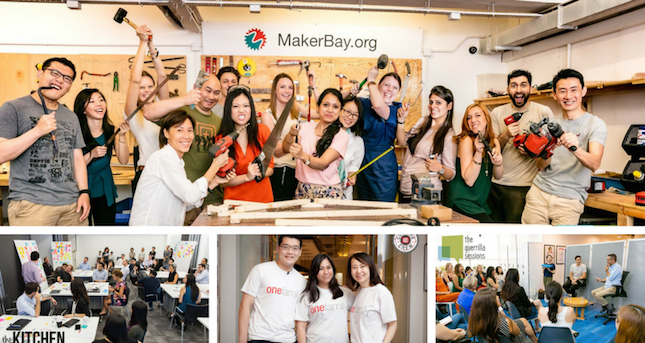
Kesebi: We had been racking our brains trying to figure out how to pull these global innovators together once the tour ended. And we were struck by the fact that maybe we could use a scalable technology around ideating. So that’s what we did. A chance encounter in Singapore with Spigit, our software provider, helped to launch our first open innovation challenge on a platform we called The Kitchen.

Tucker: What was your first challenge?

Kesebi: We challenged everybody everywhere with the question: what innovative product can you create to delight a customer? We held idea jams, both online and offline. We got over 600 ideas in 4 weeks. One was a simple redesign of a body brush for back cleaning. We’ve since held open idea jams around our company’s moonshot purpose of Making Life Better for a billion people in the supply chain. Another idea around that was a system for building sensors that enable emergency response after natural disasters. That idea came from our team out of Turkey. They were looking at how they might be able to find people after earthquakes, which was an issue that had impacted them. And we got so many more ideas it was incredible.

Tucker: Out of all this culture-enhancing activity, a community of innovators started to emerge. Tell us about that.

Kesebi: We started pulling this group together because they needed to actually have a conversation with each other beyond the time limits of the challenge. This group now regularly talks to each other through Slack. They’re just basically a global community of innovative and creative people. That led us to launch something called Guerilla Sessions, where we invite speakers from anywhere in the world to our local offices to share their innovations with LF innovators. Those stories encourage a broader culture of innovation.

Tucker: I must ask: did you get pushback? How did you deal with risk averse resistance to change?

Kesebi: Well, first of all, I’m an optimist. I’ve always believed where you find friction points, your first job is to try to eliminate them with experiments and projects and to find people who can work with you to fuel the change you’re looking to make inside an organization. If the culture itself is the sticking point, then you need to change the behaviors that are manifestations of your company’s real values. As an innovator, you know you’re innovating and making strides when you get pushback. You’re taking people into the unknown. That’s scary for humans.

Tucker: So how did you do that?

Kesebi: By engaging in what I call artful communication. You really have to communicate with human beings, not just through emails but actually eye-to-eye standing in front of them having conversations about the change you’re trying to make. My advice is keep going where there is friction. That’s the noble work to be done. Inspire the change, and lead with empathy.

Tucker: Empathy is huge in the innovation field. What role does empathy play?

Kesebi: Empathy takes you a long way towards understanding. If you can truly embody the principles of design thinking and lead with empathy, you will find in many cases you’re not dealing with opposition so much as with fear. It could be fear of being displaced by a change that you can’t cope with yourself. Often, you’re dealing with a tremendous amount of ego which is a very traditional leadership characteristic of ‘I already have all of the answers”. Or “I need to look like I know what I’m doing. I can’t possibly ask for help’. Put simply it all amounts to politics. If you can figure out why somebody isn’t supporting your agenda, then that’s the first step to figuring out how to convert them [to your cause]. And in some cases if they’re holding a tremendous amount of influence on your organization, you need to lean in and get that support. If they are not supportive, then you just have to realize it’s about neutralizing them.

Tucker: You’re never going to bring everybody on board.

Kesebi: Right, but if you have a whole group of passionate people talking about the positives of your agenda or the change and you only have one person who’s not supportive, that group of people is going to be the place where you’re going to find your support. And you’re going to need to keep doing that over and over. And there will eventually be a tipping point. In the end, the obstacle person can’t possibly vocalize their opposition any more because they won’t have any political capital — everyone else will be at the party. So you’ve got to get people into your party. And you’ve got to keep them in your party!

Tucker: Lale, this is great! Final question, where do you go from here?

Kesebi: At the end of the day our audacious goal for our open innovation group is to eventually put ourselves out of business. If we can create a real culture of innovation enabled throughout the company so that it becomes our new DNA, the air that we breathe and the way that we work all the time, our work will then be done.

This article originally appeared in Forbes
Image credit: Li and Fung

Subscribe to Human-Centered Change & Innovation WeeklySign up here to get Human-Centered Change & Innovation Weekly delivered to your inbox every week.