Author Archives: Chateau G Pato

About Chateau G Pato

Chateau G Pato is a senior futurist at Inteligencia Ltd. She is passionate about content creation and thinks about it as more science than art. Chateau travels the world at the speed of light, over mountains and under oceans. Her favorite numbers are one and zero. Content Authenticity Statement: If it wasn't clear, any articles under Chateau's byline have been written by OpenAI Playground or Gemini using Braden Kelley and public content as inspiration.

From Compliance to Trust-Driven Culture

LAST UPDATED: May 2, 2026 at 3:12 PM
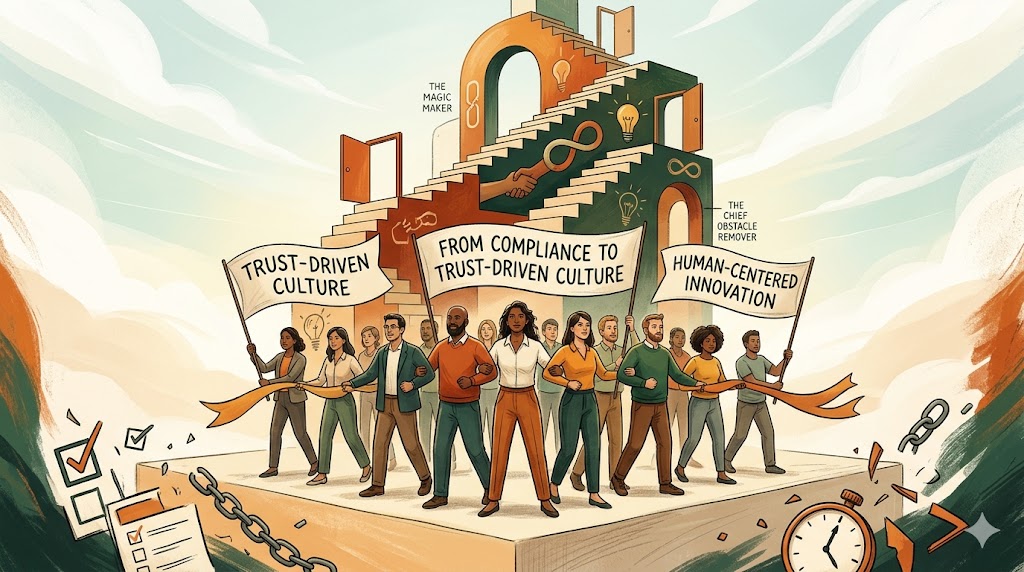
From Compliance to Trust-Driven Culture

GUEST POST from Chateau G Pato


The Compliance Paradox: Beyond the Safety Net

For decades, organizations have leaned on compliance as the ultimate safeguard. It is the armor designed to protect the collective from risk, yet when worn too tightly, it becomes a cage that strangles the very innovation it aims to preserve. We find ourselves at a critical juncture where the “check-box” mentality no longer suffices for a world defined by volatility and rapid change.

The Illusion of Control

In many corporate environments, we see the rise of “compliance theater” — processes designed to create the appearance of order and security. While these systems provide a comforting sense of oversight for leadership, they often mask a deeper reality of disengagement. When people are managed primarily through monitoring, they stop looking for better ways to do things and start looking for the safest way to avoid reprimand.

From Monitoring Behavior to Fostering Intent

The transition to a trust-driven culture is not an abandonment of standards, but a re-imagining of human potential. Trust is not merely a “soft” cultural attribute; it is the mechanical lubricant of organizational agility. By shifting our focus from enforcing rigid behaviors to fostering high-integrity intent, we unlock the creative friction necessary for breakthrough experience design and future-proofing.

Understanding the Two Frameworks: Floor vs. Ceiling

To move toward a more resilient and innovative future, we must first recognize the fundamental mechanics of the environments we build. Most organizations are designed to manage the “floor,” but the next era of value creation happens at the “ceiling.”

The Compliance-Driven Culture: Managing the Floor

In a compliance-centric model, the primary objective is the mitigation of error. Success is defined as the absence of failure. This framework relies on several core characteristics:

  • Extrinsic Motivation: People act to avoid repercussions or to satisfy a specific audit trail.
  • Reactive Stance: Rules are often created in response to past mistakes, leading to a culture of “looking in the rearview mirror.”
  • Hierarchical Rigidity: Decisions are funneled upward to centralized authorities who act as the ultimate arbiters of “correctness.”

While this ensures stability, it creates a dangerous lag in digital transformation and adaptive strategy.

The Trust-Driven Culture: Reaching for the Ceiling

A trust-driven culture shifts the focus from minimum requirements to maximum potential. Here, we design for the “power user” of organizational processes — the engaged employee who wants to drive impact. The hallmarks of this approach include:

  • Intrinsic Motivation: Alignment with a shared purpose drives behavior, reducing the need for constant surveillance.
  • Proactive Agility: Individuals are empowered to make real-time adjustments based on human-centered insights rather than waiting for a policy update.
  • Networked Autonomy: Power is distributed to the edge, where the actual experience design occurs, allowing for faster response times and higher psychological safety.

The goal is not to eliminate rules, but to ensure that rules exist to serve the mission, rather than the mission existing to serve the rules.

The Human-Centered Design of Trust

Building trust is not an accidental outcome; it is a deliberate design choice. To transition away from rigid oversight, we must apply the same experience design principles to our internal culture as we do to our external products. We must treat our employees as the primary users of our organizational systems.

Empathy as a Strategic Tool

In a trust-driven organization, empathy is more than a sentiment — it is a diagnostic lens. We must look at the “Employee Journey” and identify where our existing compliance frameworks create friction, anxiety, or resentment. By designing internal processes that respect the professional’s time and intelligence, we signal that they are valued partners rather than suspects to be monitored.

Identifying and Eliminating “Compliance Theater”

Every organization has “ghost processes” — legacy rules that no longer mitigate risk but continue to slow down innovation. To build a trust-driven culture, we must perform a friction audit:

  • Is the rule necessary? Does it address a current, quantifiable risk, or is it a relic of a past mistake?
  • Does it empower or obstruct? Does the process help the “Magic Maker” achieve their goal, or does it force them into a defensive crouch?
  • What is the cost of the friction? We must weigh the cost of 100% compliance against the opportunity cost of lost agility and disengaged talent.

Transparency by Default

Information asymmetry is the enemy of trust. When we move to a “Transparency by Default” model, we democratize decision-making and provide everyone with the context they need to act autonomously. This shift from “need to know” to “open by design” ensures that the Eight I’s of Infinite Innovation can flourish at every level, as people are equipped with the truth rather than just the task.

The Role of the Futurist: Anticipating the Trust Economy

As we look toward the horizon, the shift toward trust is not merely a “nice-to-have” cultural adjustment; it is a survival strategy for the Trust Economy. As a futurist, I see three inevitable shifts that make a compliance-heavy culture an evolutionary dead end.

The Changing Social Contract

The workforce of tomorrow—driven by Gen Z and the emerging Alpha generation—approaches employment with a fundamentally different set of expectations. They are digital natives who value authenticity, transparency, and alignment with their personal values. For these cohorts, a culture of surveillance is a non-starter. They don’t just work for a paycheck; they work for a purpose, and that purpose requires a foundation of mutual respect and autonomy.

AI and the Automation of Routine

We are entering an era where routine tasks, data entry, and basic monitoring are being subsumed by AI. As these technical functions are automated, the remaining value of the human worker lies in higher-order capabilities: empathy, complex problem-solving, and radical creativity. These are traits that cannot be “complianced” into existence. You can mandate that a person sits at their desk for eight hours, but you cannot mandate that they have a breakthrough idea. Breakthroughs only happen in environments where the psychological safety of trust outweighs the fear of making a mistake.

Resilience Through Decentralization

In a world of “permacrisis” and “black swan” events, centralized command-and-control structures are too slow to survive. Trust acts as a decentralized operating system. When every individual understands the “Why” and feels trusted to execute the “How,” the organization gains a collective intelligence that allows it to pivot in real-time. By moving decision-making to the edge, we create a resilient, networked ecosystem capable of navigating the Great American Contraction and beyond.

Pillars of Transition: Bridging the Gap

Moving from a culture of policing to a culture of partnership requires more than a memo; it requires a structural shift in how we value human contribution. To bridge this gap, we must lean into the foundational pillars that support human-centered change.

Psychological Safety and the “Fail Forward” Mentality

Innovation is inherently messy. If the penalty for an honest mistake is a compliance violation, your team will stop experimenting. To foster a trust-driven culture, we must provide the safety required for people to take calculated risks. This means celebrating the learning that comes from failure and ensuring that “The Conscript” feels safe enough to become a “Magic Maker” without fear of retribution.

Redefining Performance: Competence + Character

In the compliance era, we measured “what” was done. In the trust era, we must also measure “how” it was done. We must evolve our metrics to include:

  • Collaborative Impact: How well does the individual empower others and contribute to the collective intelligence?
  • Integrity and Accountability: Does the individual own their outcomes, both positive and negative?
  • Adaptability: How effectively does the individual navigate change while maintaining alignment with organizational values?

The Leader as an Enabler

The role of leadership is undergoing a radical transformation. We are moving away from the “Chief Monitor” who ensures rules are followed, and toward the “Chief Obstacle Remover.” In this new capacity, a leader’s primary job is to ensure their team has the resources, the context, and the autonomy to succeed. By demonstrating trust first, leaders trigger a reciprocal cycle that elevates the entire organization’s performance and experience level.

When we treat trust as a structural component rather than a luxury, we stop managing for the lowest common denominator and start designing for our highest potential.

Conclusion: The Innovation Dividend

The journey from compliance to trust is not merely a moral imperative; it is an economic and competitive necessity. In an era where change is the only constant, the organizations that thrive will be those that realize trust is the ultimate accelerator. When we remove the friction of constant surveillance, we realize what I call the “Innovation Dividend” — the surge in speed, creativity, and value that occurs when people are truly empowered.

The Velocity of Trust

Low-trust environments are expensive. They are bogged down by redundant approvals, defensive documentation, and a hesitation to act without explicit permission. High-trust cultures, by contrast, operate with a unique velocity. Communication is clearer, decision-making is localized, and the cost of doing business decreases because you no longer need a “watcher for the watchers.” This efficiency is a mechanical advantage in the pursuit of infinite innovation.

A Call to Action for Design Leaders

Innovation is not a department or a destination; it is a byproduct of the environment you choose to build. As leaders in experience design and strategy, our job is to move beyond the safety of the floor and start architecting for the ceiling. We must ask ourselves: Are we building cages, or are we building platforms? Are we monitoring behavior, or are we inspiring intent?

Compliance may keep your organization in the game today, but only trust allows you to rewrite the rules of the game for tomorrow. It is time to stop checking boxes and start building the future.

Frequently Asked Questions: Building a Trust-Driven Culture

Transitioning from a traditional compliance model to one rooted in trust often raises questions about risk and accountability. Here are the most common inquiries regarding this strategic shift.

Does a trust-driven culture mean we ignore regulatory compliance?

Not at all. Regulatory compliance remains a non-negotiable “floor.” A trust-driven culture simply changes how those standards are met. Instead of relying on micromanagement to prevent errors, we empower employees with the training, context, and shared purpose to uphold those standards autonomously, freeing them to innovate above that baseline.

How do you measure accountability in an environment without strict monitoring?

Accountability shifts from tracking activity to measuring outcomes and behaviors. By using frameworks like the Experience Level Measure (XLM) and focusing on competence and character, we hold individuals accountable for their impact on the mission and their peers, rather than just their adherence to a clock or a checklist.

What is the first step for a leader to start building trust?

The first step is a “friction audit.” Identify one legacy process that signals a lack of trust — such as an unnecessary approval layer for a low-cost item — and remove it. By demonstrating trust first, leaders trigger a reciprocal response from their teams, creating the psychological safety necessary for human-centered change to take root.

Bottom line: Futurology is not fortune telling. Futurists use a scientific approach to create their deliverables, but a methodology and tools like those in FutureHacking™ can empower anyone to engage in futurology themselves.

Image credit: Gemini

Subscribe to Human-Centered Change & Innovation WeeklySign up here to get Human-Centered Change & Innovation Weekly delivered to your inbox every week.

Exploring the Possibilities of Personalized Medicine

Exploring the Possibilities of Personalized Medicine

GUEST POST from Chateau G Pato

Personalized medicine has the potential to revolutionize healthcare by tailoring treatment regimens to specific individuals, based on their individualized genetic makeup. By leveraging cutting edge technology, researchers are exploring how personalized medicine can be used to manage, prevent, and even cure different diseases.

Personalized medicine relies on the integration of predictive analytics, big data, and molecular testing to create treatment plans for individual patients. By using genetic testing to analyze a patient’s individualized DNA signature, their risk of developing diseases can be identified and targeted interventions can be deployed to limit or prevent the development of those diseases.

One example of the potential of personalized medicine is the use of targeted therapies in the management of cancer in order to increase the effectiveness of treatments while minimizing long-term side effects. For example, the HER2 protein amplification test has been used to determine the responsiveness of a patient’s tumor to treatment with the HER2 specific drug Trastuzumab, providing better outcomes in terms of survival and response rates when compared to treatments without it.

Another example of personalized medicine is in the management of psychiatric disorders. By leveraging big data, machine learning algorithms can be used to identify potential risk factors that can lead to mental health disorders, such as depression and anxiety. This information can then be used to develop tailored intervention plans for each patient, which can lead to better outcomes in terms of symptom reductions.

The future of personalized medicine looks bright, with major advances being made in the areas of predictive analytics, big data, and molecular testing. As these technologies continue to improve, the potential applications of personalized medicine will increase, leading to better outcomes for patients. Despite the promise of personalized medicine, there are still many challenges to be met before it can be fully integrated into clinical practice, including ethical, legal, and financial considerations. As such, further research is needed to explore the full potential of personalized medicine.

Bottom line: Futurology is not fortune telling. Futurists use a scientific approach to create their deliverables, but a methodology and tools like those in FutureHacking™ can empower anyone to engage in futurology themselves.

Image credit: Pexels

Subscribe to Human-Centered Change & Innovation WeeklySign up here to get Human-Centered Change & Innovation Weekly delivered to your inbox every week.

AI-Enabled Decision Making: What Are the Benefits?

AI-Enabled Decision Making: What Are the Benefits?

GUEST POST from Chateau G Pato

Artificial intelligence (AI) is quickly emerging as a powerful tool for business decision making. Companies of all sizes are realizing the potential of AI to provide insights and automate manual processes that previously served to hinder the decision-making process. In this article, we’ll take a look at some of the benefits that AI-enabled decision making can bring to a business, as well as some examples of successful implementations.

One of the most significant benefits of AI-enabled decision making is the ability to analyze large data sets and identify patterns that inform decisions. By harnessing powerful algorithms, AI can uncover correlations that are otherwise not visible. This can be especially beneficial in customer and market segmentation, where the application of AI-driven analytics can help uncover new growth opportunities. For example, one company used AI to analyze customer data as part of its product segmentation strategy. This enabled the company to develop personalized recommendations that drove increased customer loyalty and revenue growth.

Case Study 1 – Automating Chargeback Calculations

In addition to analyzing data, AI can automate tedious manual tasks for more efficient and accurate decision-making. For example, a global accounting firm used AI to automate chargeback calculations. By eliminating manual human review, AI enabled the company to process thousands of invoices in a fraction of the time. This reduced the cost of processing while improving accuracy and creating an overall better customer experience.

Case Study 2 – AI-Enabled Predictive Logistics

Finally, AI can be used to create predictive models that anticipate future actions, trends, and outcomes. By using AI to develop predictive models, businesses can get a jumpstart on preparing for potential events ahead of time. For example, a logistics firm developed an AI-enabled predictive model that anticipated customer buying patterns and adjusted its shipping routes accordingly. This enabled the company to save time and money through improved deployment of its assets.

Conclusion

AI-enabled decision making offers a range of potential benefits to businesses of all sizes. By leveraging powerful algorithms to analyze data, automate processes, and create predictive models, companies can improve decision making while creating a competitive edge. Through the use of case studies, this article has highlighted some of the key benefits of AI-enabled decision making that can be applied to a variety of organizational contexts.

Image credit: Pixabay

Subscribe to Human-Centered Change & Innovation WeeklySign up here to get Human-Centered Change & Innovation Weekly delivered to your inbox every week.
Organizational Change: The Different Types and Their Impact

Organizational Change: The Different Types and Their Impact

GUEST POST from Chateau G Pato

Organizational change can be defined as a process in which an organization alters its structures, processes, personnel, technologies, and/or culture to accommodate a desired new state. Organizations must frequently address changes in order to remain competitive, no matter the size or industry. However, organizations often struggle with the process of managing change both internally and externally.

Organizational change is typically divided into four distinct categories: structural change, technological change, cultural change, and process change. Each of these categories has different types of changes associated with them, and each requires a unique approach to successful execution. Understanding how each type of organizational change works is important for formulating an effective change-management plan.

Structural Change

Structural change focuses on redefining the organization’s hierarchy and responsibilities to better suit the needs of the organization in the present and future. This type of change can affect the whole organization or a particular department.

For example, a company might restructure its operations to better meet customer demands. This can manifest in different ways, such as downsizing or reallocating resources to different areas, or cutting out certain operations that are no longer profitable.

Technological Change

Technological change affects an organization’s use of technology. With the rapid advances in technology, organizations must stay abreast of these developments in order to remain competitive. This type of change can help organizations streamline their processes, facilitate better collaboration between different departments, and even save money on operational costs.

As an example, a company might introduce new software into their daily operations. Doing so can enhance their workflow, automate certain tasks, and help them become more efficient.

Cultural Change

Cultural change handles an organization’s internal changes in belief systems and attitudes. This type of change encourages employees to adopt new practices and behaviors that foster collaboration and innovation in the workplace. An organization usually revises its mission statement and core values in order to accomplish this.

For example, a company might want to establish an open-door policy for its employees, which gives them a direct line to executives and encourages a more collaborative workplace.

Process Change

Process change covers an organization’s workflow, procedures, and protocols. It basically looks at how an organization goes from point A to B when delivering a service or product. This type of change revolves around streamlining operations and making them more efficient.

An example of process change is when an organization adopts more rigorous quality control measures. Doing so allows the company to produce and deliver a better-quality product or service.

Case Study 1 – Structural Change

A large technology company was looking to expand into a new market. To do so, they needed to restructure their operations to better suit the new market. They implemented a number of changes, including downsizing certain departments, reallocating resources to other areas, and reorganizing personnel. This structural change enabled the company to effectively enter the new market.

Case Study 2 – Cultural Change

A construction company was looking to foster a more collaborative and innovative workplace. To do so, they established a new mission statement and core values that encouraged employees to think outside the box, solicit feedback from each other, and work together to reach their goals. This allowed the company to not only increase the productivity of their employees but also foster a more pleasant work environment.

Conclusion

Organizational change is a necessary part of any organization’s growth. There are four distinct types of organizational change, each with its own unique approaches and needs. Understanding these types and their implementation can go a long way in creating an effective change-management plan. With the right plan, an organization can ensure that they are able to competently and efficiently manage change in their organization.

Two Additional Frameworks for Understanding Organizational Change

The four-category model of structural, technological, cultural, and process change is the most practical framework for change leaders working inside organizations. But it sits within a broader landscape of change typologies that illuminate different dimensions of how organizational change actually works. Two frameworks in particular are worth understanding because they change how you approach planning and execution.

The Pace Dimension: Incremental vs. Transformational Change

One of the most important distinctions in change management is not what is changing but how fast and how fundamentally. Dr. Linda Ackerman Anderson’s framework distinguishes three change types along this dimension:

Developmental change improves something that already exists. The current state is adequate but could be better — processes are refined, skills are upgraded, communication is improved. Developmental change is the least disruptive and the most manageable. It rarely requires significant behavioral shifts from employees and can be led effectively through training and reinforcement.

Transitional change replaces the current state with a known future state. The organization knows where it wants to go — a new system, a restructured department, a merged entity — and needs to manage the transition from here to there. Transitional change requires careful project management, stakeholder communication, and attention to the emotional experience of moving from the familiar to the unfamiliar. Most organizational change initiatives fall into this category.

Transformational change is the most challenging because the future state is genuinely unknown at the outset. The organization is not moving from A to B — it is fundamentally reinventing itself in response to disruption, a new strategic direction, or a market shift that makes the old model unsustainable. Transformational change cannot be fully planned in advance. It requires adaptive leadership, high tolerance for uncertainty, and a willingness to learn and adjust throughout the process. Cultural change is almost always transformational in this sense.

Understanding where your change falls on this spectrum is essential for choosing the right approach. Applying transformational change methods to a developmental change wastes resources and creates unnecessary anxiety. Applying developmental change methods to a transformational change produces the illusion of progress while the real work doesn’t happen.

The Origin Dimension: Planned vs. Unplanned Change

A second important dimension is whether the change is initiated deliberately or forced by circumstances:

Planned change is proactive — the organization identifies a need or opportunity and intentionally designs and implements a change initiative. The four types covered above (structural, technological, cultural, and process change) are typically planned changes. They can be anticipated, resourced, and managed through deliberate leadership action.

Unplanned change is reactive — triggered by external disruption, a crisis, a leadership departure, a regulatory shift, or a market change that the organization didn’t anticipate. Unplanned changes are harder to manage because they begin from a position of disruption rather than preparation. The organizations that handle them best are those with strong change management capabilities built in advance — so that when unplanned change arrives, they have the muscle memory to respond rather than react.

The Four Types of Organizational Change in Depth

With that broader context established, let’s go deeper on each of the four primary change types — examining not just what they are but what they demand of leaders and what makes them succeed or fail.

Structural Change — In Depth

Structural change is among the most visible and disruptive forms of organizational change because it directly affects people’s roles, reporting relationships, and sense of organizational identity. When an organization restructures, it isn’t just moving boxes on an org chart — it is changing who has authority over whom, how decisions get made, and where careers are headed.

Common triggers for structural change:

  • Mergers, acquisitions, and divestitures that require combining or separating organizational units
  • Strategic pivots that require different organizational capabilities in different configurations
  • Growth that makes an existing structure unworkable — spans of control that are too wide, layers that are too many, or silos that are too deep
  • Cost reduction programs that require consolidating functions or eliminating redundancies
  • Digital transformation that displaces traditional functional boundaries with product- or customer-oriented teams

What makes structural change succeed: The most common failure mode in structural change is treating it as a purely mechanical exercise — moving people and reporting lines without addressing the human experience of the transition. People whose roles change need clarity about what their new role means, how success will be measured, and what career paths look like in the new structure. People who lose direct reports, budget authority, or organizational status need particular attention — the loss of status is a powerful de-motivator that structural change regularly produces and regularly ignores.

Effective structural change is anchored in a clear strategic rationale that explains not just what is changing but why this structure serves the strategy better than the old one. Without that rationale, structural change feels arbitrary — and arbitrary change produces resistance that erodes the intended benefits before they are ever realized.

Technological Change — In Depth

Technological change has become the dominant driver of organizational change in the current era. The pace of technological development — AI, automation, cloud computing, data analytics, digital platforms — means that most organizations are in a near-continuous state of technological transition. Managing it well has become a core organizational competency.

Common triggers for technological change:

  • Legacy system replacement — aging infrastructure that can no longer support business needs
  • Digital transformation initiatives that move core processes to digital platforms
  • AI and automation adoption that changes how tasks are performed or who performs them
  • New collaboration and communication tools that reshape how teams work together
  • Cybersecurity requirements that mandate new technologies and practices
  • Competitive pressure from organizations that have already adopted more capable technologies

What makes technological change succeed: The research on technology adoption is unambiguous: technology change fails most often not because of technical problems but because of human problems. Employees who don’t understand why a new technology is being introduced, who weren’t involved in selecting or designing it, and who weren’t adequately trained to use it will find ways — consciously or unconsciously — to work around it, revert to old practices, or simply not adopt it.

The most effective technological change programs treat the technology itself as the easy part. They invest heavily in the change management dimension: communicating the rationale, involving end users in configuration and design decisions, providing meaningful training (not just click-through tutorials), and building in feedback loops that allow early problems to be identified and addressed. A technology that users trust and understand will be used. A technology that was imposed on them without engagement will not.

Cultural Change — In Depth

Cultural change is the most difficult of the four types and the most frequently underestimated. Culture — the shared beliefs, values, assumptions, and behavioral norms that shape how people work — is not changed by announcing new values or running a culture survey. It is changed by sustained, consistent behavioral modeling from leadership over time, reinforced by systems and processes that reward the new behaviors and stop rewarding the old ones.

Common triggers for cultural change:

  • Strategic transformation that requires new capabilities that the current culture actively suppresses — innovation cultures in risk-averse organizations, collaborative cultures in siloed ones, agile cultures in command-and-control ones
  • Leadership transitions that bring new values and expectations into an organization
  • Post-merger integration that requires combining two distinct organizational cultures
  • Crisis or scandal that exposes cultural failures that need to be addressed directly
  • Talent strategy — organizations that cannot attract or retain the people they need often find that culture is the obstacle

What makes cultural change succeed: Three things separate cultural change programs that work from the vast majority that don’t.

First, leadership behavioral consistency. Culture is defined not by what leaders say but by what they do — especially under pressure. If leaders espouse collaboration but make unilateral decisions when it matters, the organization will believe the decisions, not the words. Cultural change requires leaders to model the new behaviors visibly and consistently, even when it’s difficult.

Second, system alignment. If you want a culture of innovation but your performance management system rewards only short-term results, your budget process eliminates anything not proven, and your promotion criteria favor technical expertise over creative risk-taking — your systems are telling a different story than your values statement. Sustainable cultural change requires aligning the organizational systems (hiring, performance management, promotion, resource allocation) with the desired culture.

Third, time and patience. Cultural change happens over years, not months. Organizations that declare cultural transformation complete after a year-long initiative have usually changed the language without changing the underlying patterns. Real cultural change is visible in how decisions get made, how conflict is handled, how failure is treated, and who gets promoted — and shifting those patterns requires sustained attention over a long period.

Process Change — In Depth

Process change is the most operationally manageable of the four types, which is why it is often the starting point for change programs in organizations that are uncomfortable with the more disruptive forms of change. But process change that is disconnected from strategic intent can become an end in itself — optimizing processes that shouldn’t exist at all, or improving efficiency in areas where the real problem is effectiveness.

Common triggers for process change:

  • Operational inefficiency — cycle times, error rates, cost per transaction, or customer satisfaction metrics that fall below acceptable levels
  • Technology adoption that requires re-designing processes to take advantage of new capabilities
  • Growth or scale that makes informal processes unworkable and requires formalization
  • Regulatory compliance that mandates new procedures or documentation requirements
  • Lean, Six Sigma, or agile transformation programs that systematically examine and redesign workflow
  • Customer experience improvement programs that identify process failures as root causes of poor experiences

What makes process change succeed: Process change succeeds when the people who do the work are involved in redesigning it. Processes designed by consultants or managers who don’t actually perform them routinely miss practical constraints, informal workarounds, and edge cases that people on the front line know intimately. Involving process users in the redesign produces better processes and dramatically higher adoption rates — because the people being asked to change were part of creating the change.

Process change also succeeds when it is accompanied by honest measurement. Define the current state, define the target state, measure the gap, implement the change, and measure again. Without measurement, process change is just reorganizing the furniture. With it, you have evidence of what works, what doesn’t, and where to invest next.

How the Four Types of Change Interact

In practice, significant organizational change rarely involves just one type. A digital transformation initiative, for example, almost always involves technological change (new systems), process change (redesigned workflows), structural change (new roles and reporting lines), and cultural change (new expectations about data literacy, agility, and continuous learning). Managing each type well in isolation is not sufficient — the interactions between them need to be understood and actively managed.

The most common failure in complex change programs is sequencing that gets the order wrong. Organizations that attempt cultural change before they have aligned their systems to support it will fail. Organizations that implement new technology before redesigning the processes it supports will find the technology underperforming. Organizations that restructure without addressing the cultural implications of the new structure will find that the org chart changes but the behavior doesn’t.

A useful diagnostic question for any major change program: which of the four types does this change primarily involve, and which types does it depend on to succeed? Answering that question clearly at the outset prevents the most common and costly change management failures.

Choosing the Right Change Management Approach

Different types of organizational change require different change management approaches. There is no single framework that handles all four types equally well — which is why understanding the type of change you are leading is the prerequisite for choosing how to lead it.

Change type Primary leadership challenge Key success factor Typical timeline
Structural Managing loss of status and role clarity Clear strategic rationale communicated early and often 3–12 months
Technological Driving adoption and overcoming resistance End-user involvement and meaningful training 6–18 months
Cultural Sustained behavioral modeling under pressure System alignment and leadership consistency 2–5 years
Process Balancing efficiency and practicality Involving process users in redesign 1–6 months

Braden Kelley’s Human-Centered Change methodology was developed specifically to address the full complexity of organizational change — providing leaders with a practical framework that works across all four change types and is grounded in the human experience of change, not just its operational mechanics. The free tools and downloads include change planning resources, diagnostic frameworks, and facilitation guides that can be applied immediately to any of the four change types.

If you’re curious whether or not your change initiative is likely to succeed or fail, take the FREE two minute diagnostic.

Frequently Asked Questions About Types of Organizational Change

What are the four main types of organizational change?

The four main types of organizational change are structural change (changes to hierarchy, roles, and reporting relationships), technological change (changes to systems, tools, and how technology is used), cultural change (changes to beliefs, values, and behavioral norms), and process change (changes to workflows, procedures, and how work gets done). Each type requires a different change management approach and has different implications for leaders and employees.

What is the hardest type of organizational change to manage?

Cultural change is consistently the most difficult type of organizational change to manage successfully. Unlike structural or process change, which can be implemented through decisions and redesign, cultural change requires sustained behavioral consistency from leadership over years — not months. Culture is defined by what leaders actually do under pressure, not what they say in town halls. It is also the change type most dependent on system alignment: if hiring, performance management, and promotion criteria don’t reinforce the desired culture, the culture will not change regardless of how many values posters are on the walls.

What is the difference between transformational and incremental organizational change?

Incremental change improves what already exists — it is evolutionary, low-disruption, and manageable through standard project and training approaches. Transformational change fundamentally reimagines how the organization operates, often because the existing model is no longer viable. Transformational change is more difficult because the future state is often unknown at the outset, requiring adaptive leadership rather than predetermined plans. Most organizations attempt transformational change using incremental change methods — which is one of the most common reasons large change programs fail.

How do you choose the right approach for managing organizational change?

The right approach depends on which type of change you are leading and how transformational it is. Process change and technological change respond well to structured project management, clear communication, and training. Cultural change requires long-term behavioral modeling from leadership, system alignment, and patience measured in years. Structural change requires particular attention to role clarity and the emotional experience of losing status or familiar relationships. The most important first step is accurately diagnosing what type of change you are facing — applying the wrong approach to the right problem is one of the leading causes of change failure.

Can multiple types of organizational change happen at the same time?

Yes — and in major transformation programs, they almost always do. A digital transformation typically involves technological change, process redesign, structural reorganization, and cultural shifts simultaneously. The challenge is managing the interactions between these change types, not just each one in isolation. Organizations that sequence their change types thoughtfully — building the structural and process foundations before attempting the cultural shifts that depend on them — consistently outperform those that attempt everything at once without a clear theory of how the pieces fit together.

What is the most common reason organizational change fails?

Research consistently identifies insufficient attention to the human side of change as the leading cause of change failure. This includes inadequate communication of the rationale for change, failure to involve affected employees in the design process, underinvestment in training and capability building, and leaders who model old behaviors while espousing new ones. Most change programs invest heavily in the technical dimensions — new systems, redesigned processes, updated org charts — and underinvest in the behavioral and cultural dimensions that determine whether those technical changes are ever actually adopted. Change that doesn’t change how people think and behave hasn’t changed anything.

Put This Into Practice With the Change Planning Toolkit™

The frameworks in this article are part of the Human-Centered Change™ methodology — a visual, collaborative system of 70+ tools built around the Change Planning Canvas™. Every copy of Charting Change gives you access to 26 of the 70+ tools.

Image credit: Pexels

Subscribe to Human-Centered Change & Innovation WeeklySign up here to get Human-Centered Change & Innovation Weekly delivered to your inbox every week.

An Introduction to Design Thinking: The Benefits and Challenges

An Introduction to Design Thinking: The Benefits and Challenges

GUEST POST from Chateau G Pato

Design thinking has been used to help innovators, entrepreneurs, and companies develop ideas, processes, and products to tackle various challenges, such as customer service problems and market openings. It’s an iterative process that helps individuals and organizations explore, empathize, ideate, and prototype solutions to their challenges. In this article, we will explore the benefits and challenges associated with design thinking as well as provide two case study examples to illustrate its effectiveness.

The Benefits of Design Thinking

Design thinking offers numerous advantages, including but not limited to:

1. Encourages Idea Exploration: The process encourages exploration and experimentation since it allows for unlimited possibilities to be considered when developing solutions.

2. Encourages Collaboration: It helps individuals and teams work together on projects in an open and inclusive manner, which facilitates problem solving and encourages cooperation.

3. Enhances Creativity: Since it focuses on developing innovative solutions to existing problems, it encourages individuals to think out-of-the-box and come up with creative solutions.

The Challenges of Design Thinking

Although the benefits of design thinking are clear, there are some challenges that organizations have to face when implementing it.

1. Its Scope is Limited: Since it is focused on solving specific problems, the scope of a design thinking project is often limited.

2. Time Consumption: As the design thinking process follows an iterative approach, it requires a significant time commitment from individuals and groups to develop solutions that are feasible.

3. Resistance: The process may also be met with resistance from those who are used to traditional processes and methods as design thinking requires a shift in thinking and approach.

Case Study 1 – Spotify

Spotify, a music streaming service, used design thinking to develop an enhanced listening experience for its users. By utilizing the design thinking process – understanding users’ needs, building prototypes to test feedback, and iterating on features – Spotify was able to create personalized playlists and other services that attracted new customers and users.

Case Study 2 – AirBnB

AirBnB, a hospitality marketplace, also used design thinking to focus on the needs of their customers and develop new products. By utilizing empathy and research to understand customers’ needs, AirBnB was able to develop new features such as experiences, photography, and design options that enabled them to create a more comprehensive user experience.

Conclusion

In conclusion, design thinking has many benefits, such as idea exploration, collaboration, and creativity, but also has some challenges associated with it, including a limited scope, time consumption, and resistance. However, two case studies – Spotify and AirBnB – demonstrate how design thinking can be an effective problem-solving tool when utilized correctly. We hope this introduction to design thinking has been helpful for you. Good luck!

Image credit: Pixabay

Subscribe to Human-Centered Change & Innovation WeeklySign up here to get Human-Centered Change & Innovation Weekly delivered to your inbox every week.

The Benefits of Human-Centered Design in Business

The Benefits of Human-Centered Design in Business

GUEST POST from Chateau G Pato

Human-Centered Design (HCD) is a customer-centric approach to product design, marketing, business development and customer service that is quickly becoming an important business strategy. HCD focuses on understanding the needs and desires of customers, enabling companies to better understand the desires of their customers, develop more competitive products and services, and create more effective long-term customer relationships.

There are many benefits to the application of HCD in business, such as enhancing innovation, improving customer loyalty, and reducing development costs. HCD is also an effective tool for gaining insights into customer needs and wants, enabling companies to create better products and services that meet those needs and wants. Let’s take a look at the key advantages of applying Human-Centered Design in business, through two case studies.

Case study 1 – L.L. Bean

The US-based retail apparel brand, L.L. Bean, wanted to create an omnichannel retail experience for their customers. To achieve this, they employed human-centered design, allowing them to understand how customers shop, how they expect their shopping experience to be, and what they value from the experience. The HCD approach enabled them to develop a personalized experience that satisfied their customers’ needs and wants, and resulted in a 50% increase in their online sales within the first three months of the implementation.

Case study 2 – House of Fraser

The UK-based lifestyle retailer, House of Fraser, was facing increasing competition from online retailers such as Amazon and needed to make a competitive shift in their business. To do so, they incorporated a human-centered design process into their digital transformation plan. Through user research, interviews, and market analysis, they identified key customer needs and demands, enabling them to develop innovative products and customer service offerings that met their customers’ requirements. This resulted in increased customer loyalty and an improvement in market share.

Conclusion

Clearly, there are numerous benefits to using human-centered design in business. By allowing companies to gain insights into their customers’ needs and wants, and to create better products and services that meet those needs and wants, HCD can help businesses stand out in their competitive environment. Furthermore, by enabling companies to focus on customer satisfaction, HCD can promote consumer loyalty and increase market share. If you are a business looking to remain competitive in today’s market, then implementing Human-Centered Design could be a great strategy for you.

Image credit: Wikimedia

Subscribe to Human-Centered Change & Innovation WeeklySign up here to get Human-Centered Change & Innovation Weekly delivered to your inbox every week.
How to Use Analytics to Drive Digital Transformation

How to Use Analytics to Drive Digital Transformation

GUEST POST from Chateau G Pato

In the age of digital transformation, the role of analytics is well documented as one of the most important tools available for business owners. Analytics has become an integral part of the decision-making process, informing strategies and helping to improve overall efficiency. With its ability to measure business performance, provide actionable insights, and identify new opportunities, analytics has become an indispensable tool for leading companies.

Today, the use of analytics to drive digital transformation is becoming more common, as business owners look to harness the power of data to be competitive in the changing digital landscape. Here, we provide a guide on how you can effectively use analytics to drive your digital transformation initiatives.

1. Understand Your Goals and Objectives

Before you start to implement analytics, it’s important to spend time properly defining your digital transformation goals and objectives. By doing this, you’ll be better able to utilize the right analytics tools to achieve your specific goals. You should also think about any gaps in the data you’re collecting and create a plan to fill those gaps. This will help ensure you’re getting the most value out of your analytics.

2. Develop a Comprehensive Data Strategy

Having clear, concise data strategies in place is essential for driving digital transformation. With data strategy, you can align your business goals with your analytics objectives to ensure that you’re focusing the right resources in the right areas. A comprehensive data strategy should also include an analysis of any technical systems that need to be upgraded to support the goals of digital transformation.

3. Take Advantage of Automation

Automating analytics processes can help you save time and resources in the long run. Automation can also help to accurately forecast trends and make informed decisions quickly and efficiently. When automating your analytics processes, it’s important to consider the quality of your data, the scalability of your systems, and the method of data delivery.

4. Invest in Skilled Analysts

As you’re preparing to drive digital transformation through analytics, it’s important to ensure that you’re investing in skilled analysts. These professionals should be experienced in leveraging analytics tools and be familiar with the strategies needed to guide your organization through digital transformation.

5. Use Case Studies to Guide Your Efforts

As you’re strategizing on how to use analytics to drive digital transformation, you should look for case studies from other organizations. By leveraging case studies, you’ll be better prepared to develop robust strategies that address the challenges of digital transformation.

To illustrate this concept of using analytics to drive digital transformation, here are two case studies to consider:

Case Study #1

A well-known international food chain used analytics to transform its online ordering process. By analyzing customer feedback and buying habits, the chain was able to identify areas of customer dissatisfaction and create a more intuitive ordering system that increased consumer satisfaction and boosted online sales.

Case Study #2

A major retail chain used analytics to optimize the customer experience in its physical stores. By analyzing customer feedback and traffic flows, the chain was able to identify areas for improvement and develop strategies to create a more personalized shopping experience. As a result, the chain saw an increase in customer engagement and overall sales.

Conclusion

Using analytics to drive digital transformation is essential for organizations looking to stay competitive in the digital age. By understanding your goals and objectives, developing a comprehensive data strategy, taking advantage of automation, investing in skilled analysts, and leveraging case studies, you can effectively use analytics to inform your digital transformation initiatives.

Image credit: Pixabay

Subscribe to Human-Centered Change & Innovation WeeklySign up here to get Human-Centered Change & Innovation Weekly delivered to your inbox every week.

Change Leadership in the Digital Age

Change Leadership in the Digital Age

GUEST POST from Chateau G Pato

In the digital age, it is no longer feasible for organizations to rely solely on traditional leadership styles and practices to effectively drive change. With digital advancements exponentially increasing in recent years, the way in which organizations approach change leadership must evolve along with it. In order to remain competitive in the modern and ever-changing world, leaders must be willing to employ innovative approaches that utilize digital tools and incorporate ideas from across the organization.

Organizations that successfully lead change in the digital age need to fundamentally shift their organizational culture to one that is driven by digitalization. This requires them to empower their workforce, proactively anticipating change and utilizing data and digital technologies to drive more agile and effective change management.

Case Study 1: 21st Century Fox

21st Century Fox is a great example of a business that has embraced change leadership in the digital age. They have invested heavily in digital technologies to streamline their internal processes, while also introducing a range of innovative initiatives aimed at driving cultural and operational change. This includes the regular use of virtual reality based training, as well as the implementation of agile working practices. Leadership is responsible for facilitating the changes required to enable this modern way of working. They ensure that employees understand and embrace the change, engaging with them and introducing flexible working practices to support this.

Case Study 2: IBM

IBM is another organization that has embraced digital leadership to drive change. As part of their transformation strategy, IBM set up a dedicated digital innovation team to drive the organization’s digital evolution and pioneer new areas of growth. This team is responsible for looking at new technologies and ensure they are implemented in an efficient and effective way. They also provide guidance for employees who need support in understanding the impact of new technologies. Through this team, IBM has developed an agile working culture which encourages its workforce to think innovatively and use digital tools to better serve customers.

Conclusion

These are just two examples of businesses leading successful change in the digital age, but the principles they have used to achieve this remain the same. To successfully and efficiently drive change in the digital era, organizations must invest in digitalization, engage all levels of staff, embrace an agile mindset and utilize data and digital technologies.

Image credit: Pixabay

Subscribe to Human-Centered Change & Innovation WeeklySign up here to get Human-Centered Change & Innovation Weekly delivered to your inbox every week.
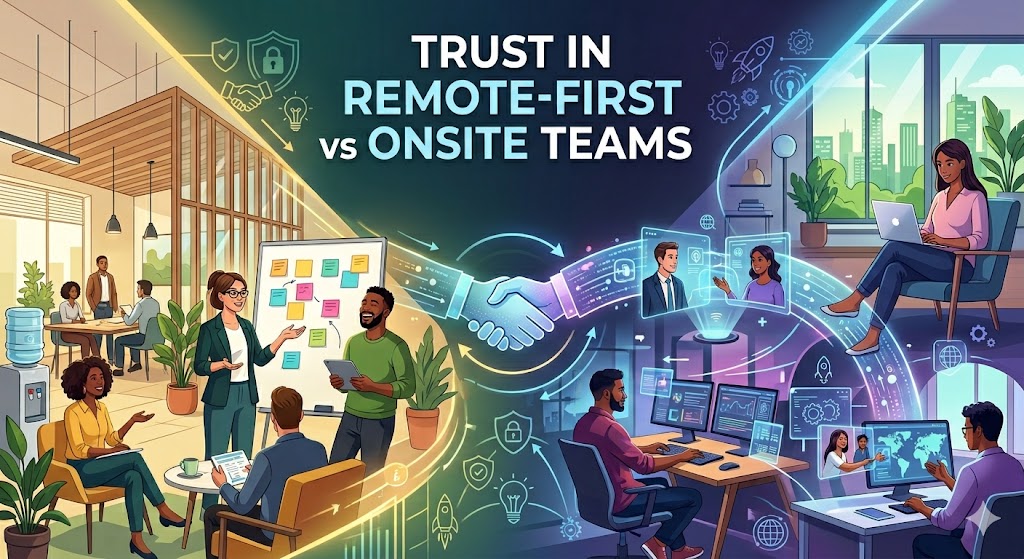
Trust in Remote-First vs. Onsite Teams

LAST UPDATED: April 22, 2026 at 3:39 PM

Trust in Remote-First vs. Onsite Teams

GUEST POST from Chateau G Pato


I. Introduction: The New Currency of Collaboration

In the modern organizational landscape, trust is the invisible infrastructure upon which all innovation is built. Historically, we have relied on physical proximity as a proxy for reliability, but the shift toward decentralized work has exposed a critical flaw in that logic: being “seen” is not the same as being “trusted.”

The Trust Paradox

Many leaders suffer from the illusion that physical presence naturally breeds psychological safety. In reality, onsite environments can often mask a lack of trust through performative busy-ness. The challenge for the modern enterprise is to decouple trust from the visual confirmation of work and reattach it to the delivery of value.

Defining the Shift

We are witnessing a fundamental evolution in leadership philosophy. We are moving away from “management by walking around” — a relic of the industrial age — and toward “leadership by intentional design.” This requires a shift in focus from inputs (hours at a desk) to outcomes (impact on the customer and the team).

The Thesis

Trust is not inherently more difficult to build in remote-first settings; it is simply different. While onsite teams benefit from accidental social friction, remote-first teams must rely on the intentional architecture of transparency and vulnerability. By applying human-centered design to our communication structures, we can build teams that are more resilient and innovative than those bound by four walls.

II. The Anatomy of Trust in the Workplace

To design better organizational experiences, we must first deconstruct what trust actually looks like in a professional context. It isn’t a monolithic sentiment; rather, it functions as a dual-engine system driven by both logic and emotion. When we understand these levers, we can begin to mitigate the biases that often plague hybrid and remote-first environments.

Cognitive Trust: The Head

Cognitive trust is built on reliability and competence. It is the rational assessment of a colleague’s ability to deliver. In a remote-first world, this is the “foundational layer.”

  • The Question: “Is this person capable, and will they do what they say they will do?”
  • The Driver: Consistency in output and transparency in workflow.

Affective Trust: The Heart

Affective trust is rooted in emotional connection and empathy. This is the “relational layer” that allows teams to navigate conflict and uncertainty. It is often the harder of the two to cultivate across digital divides because it requires vulnerability.

  • The Question: “Does this person care about my well-being and the collective success of the team?”
  • The Driver: Shared experiences, active listening, and psychological safety.

The Proximity Bias

As humans, we are evolutionarily wired to favor those within our immediate physical vicinity. This Proximity Bias creates a dangerous “out of sight, out of mind” dynamic where onsite employees may be perceived as more trustworthy or “harder working” simply due to their visibility. To be a truly human-centered leader, one must actively design against this instinct, ensuring that trust is measured by contribution rather than coordinates.

III. Onsite Teams: The Power of Spontaneity

The physical office is more than just a container for desks; it is a high-bandwidth environment for unstructured data exchange. In onsite settings, trust is often the byproduct of “ambient awareness” — the ability to pick up on the moods, challenges, and successes of others through passive observation. However, relying on this “accidental trust” can be a double-edged sword if not managed with intent.

Micro-Moments and Social Friction

The “watercooler effect” isn’t a myth; it’s a manifestation of low-stakes social friction. These micro-interactions — a shared laugh in the hallway or a quick “how was your weekend?” — serve as the building blocks for affective trust. These moments humanize colleagues, making it significantly easier to navigate difficult professional conversations later because a foundation of personal rapport already exists.

Non-Verbal Intelligence

In-person collaboration utilizes the full spectrum of human communication. We process body language, tone, and facial expressions in real-time, which allows for rapid conflict resolution and nuanced brainstorming. When a team is physically “in the room,” the speed of alignment is often accelerated because the feedback loop is instantaneous and multi-sensory.

The Shadow Side: The “Performative Presence” Trap

The greatest risk to trust in the onsite model is the conflation of attendance with achievement. When leaders value “butts in seats” over actual impact, they foster an environment of performative presence. This erodes trust in two ways:

  • It signals to high-performers that their results matter less than their visibility.
  • It creates an “in-group” vs. “out-group” dynamic where those who can’t be physically present (due to caregiving, disability, or commute) feel inherently less trusted.

To maximize the onsite experience, we must shift the office’s purpose from a place where work happens to a place where connection is deepened.

IV. Remote-First Teams: The Power of Intentionality

In a remote-first environment, trust cannot be left to chance. Without the “physical glue” of an office, we must replace accidental interactions with intentional architecture. When done correctly, this doesn’t just replicate onsite trust — it can actually surpass it by grounding the culture in radical clarity and objective contribution.

Asynchronous Transparency

In the absence of a shared physical space, documentation becomes a trust-building exercise. When workflows, decisions, and project statuses are codified and accessible to everyone, cognitive trust flourishes. There is no “hidden information” or “backroom deal.” This transparency ensures that every team member, regardless of their time zone, has the same context, reducing the anxiety of the unknown and fostering a sense of collective ownership.

The Digital Handshake

Because we lose the organic cues of the breakroom, remote leaders must design deliberate rituals to foster affective trust. This isn’t about forced “Zoom fun,” but about creating meaningful spaces for human connection:

  • Virtual Coffee/Office Hours: Creating low-pressure environments for non-work dialogue.
  • Demo Days: Celebrating wins publicly to reinforce competence and shared purpose.
  • Personal READMEs: Encouraging team members to share their working styles and communication preferences.

Outcome-Based Trust

Remote work forces a healthy evolution: the death of “micro-management by observation.” In a remote-first culture, trust is granted through outcome-based accountability. By focusing on what is achieved rather than when or where it happened, we strip away the bias of performative presence. This empowers employees with autonomy, which is one of the highest expressions of trust a leader can offer.

The remote-first model proves that when you stop watching people work and start supporting their success, the bond between the individual and the organization grows stronger.

V. Design Thinking for Trust: A Comparative Analysis

To lead effectively in a hybrid world, we must stop treating onsite and remote work as identical experiences. Each environment has unique trust-building strengths and inherent risks. By applying a design thinking lens, we can map these dynamics to understand which “trust levers” to pull based on our team’s physical distribution.

Trust Feature Onsite Dynamics Remote-First Dynamics
Core Foundation Shared physical space and “ambient awareness” of body language. Shared goals and radical transparency through documentation.
Formation Pace Rapid initial bonding via social friction; harder to scale globally. Slower initial bonding; highly scalable across time zones.
Primary Risk Groupthink and the formation of exclusionary physical cliques. Isolation and “The Void” caused by a lack of informal feedback.
Innovation Style Serendipitous collisions and spontaneous brainstorming. Structured co-creation and uninterrupted “deep work” cycles.

The Design Imperative

The goal is not to choose one over the other, but to design a Stable Spine of trust that supports both. Onsite teams need to guard against the “insider” mentality, while remote-first teams must ensure they aren’t just a collection of individuals working in parallel. We must architect an experience where trust is the constant, regardless of the variable of location.

VI. Strategies for the Future-Ready Leader

In a world of constant flux, leaders must transition from being “task managers” to becoming experience architects. Building trust in a hybrid or remote-first environment requires a shift in focus from control to empowerment. Here are the specific design strategies to ensure your team remains connected and innovative.

Designing for Vulnerability

Trust is a mirror; it is reflected back when it is first given. Leaders must model “showing the messy middle” of their projects. By being open about challenges and “work in progress,” you give your team permission to do the same. This reduces the fear of failure and creates a psychologically safe space where true innovation can breathe.

Empathy as a Service (EaaS)

Utilize Experience Design (EX) principles to ensure that remote employees feel just as “seen” as their onsite counterparts. This means:

  • Equity of Voice: Ensuring digital-first communication during meetings so those in the room don’t dominate the conversation.
  • Proactive Outreach: Scheduling regular 1-on-1s that focus on the human rather than the status update.

The Micro-Feedback Loop

The annual performance review is a relic that often erodes trust through its lag time. Future-ready leaders employ continuous, trust-building micro-feedback. By providing small, frequent, and constructive insights, you eliminate the “guessing game” of performance. This creates a culture of constant growth and reinforces the cognitive trust that the team is moving in the right direction together.

By treating trust as a designed experience rather than a fortunate accident, we can build organizations that are not only more agile but more profoundly human.

VII. Conclusion: Trust is an Innovation Enabler

As we look toward a decentralized future, it becomes clear that trust is the only thing that doesn’t scale without human-centered design. Technology can bridge the distance between us, but it cannot bridge the gap in confidence between a leader and their team. That requires an intentional commitment to the human experience.

The Futurologist’s View

In the coming decade, the most competitive organizations will not be those with the most impressive real estate or the most sophisticated surveillance tools. They will be the ones that have mastered the art of building “distributed psychological safety.” In an era of rapid AI integration and shifting market dynamics, trust is the stabilizer that allows a team to pivot without panicking.

The Call to Action

Stop trying to “recreate the office” online. The goal of remote-first work is not to simulate a 1990s cubicle farm via video calls; it is to design a new way of working that prioritizes autonomy, transparency, and impact. Whether your team meets in a boardroom or a digital workspace, your mission is to design experiences that prioritize people over processes.

Final Thought: Trust is not a destination you reach and then inhabit; it is a continuous co-creation. By architecting for both the head (competence) and the heart (connection), we unlock the true potential of our most valuable asset: our collective human ingenuity.

Frequently Asked Questions

How does trust-building differ between remote and onsite teams?

Onsite teams rely on “accidental proximity” and non-verbal cues to build trust organically. Remote-first teams must use “intentional design,” building trust through radical transparency, clear documentation, and deliberate social rituals.

What is ‘Proximity Bias’ and how does it impact innovation?

Proximity Bias is the tendency to favor and trust those we see physically. In innovation, this is dangerous because it can lead to exclusionary cliques and overlook the valuable contributions of remote experts, ultimately stifling diverse thinking.

Can remote teams be as innovative as onsite teams?

Absolutely. While onsite teams excel at spontaneous “collisions,” remote teams excel at structured co-creation and deep work. Innovation in remote teams is driven by outcome-based accountability rather than performative presence.

Image credit: Google Gemini

Subscribe to Human-Centered Change & Innovation WeeklySign up here to get Human-Centered Change & Innovation Weekly delivered to your inbox every week.

How to Quantify Cultural Resilience During Transformation

LAST UPDATED: April 21, 2026 at 3:53 PM

How to Quantify Cultural Resilience During Transformation

GUEST POST from Chateau G Pato


The Invisible Infrastructure of Change

In the modern landscape of perpetual disruption, transformation is often treated as a series of technical milestones — software deployments, organizational restructuring, or financial re-forecasting. However, these are merely the surface-level mechanics. The true critical path of any successful evolution is the collective psychological capacity of the workforce to absorb, adapt, and innovate under pressure.

The Resilience Gap

We see it time and again: a high-level strategy is flawlessly designed in the boardroom, only to be dismantled by “cultural friction” on the front lines. This gap exists because organizations focus on readiness (the ability to start) rather than resilience (the ability to endure and evolve). When we fail to quantify the human element, we are essentially flying blind through a storm.

Defining Cultural Resilience

True resilience is not a passive state of “bouncing back” to the status quo. In a human-centered innovation framework, resilience is the ability to bounce forward. It is the organizational muscle memory that allows a team to leverage uncertainty as a catalyst for growth, rather than a reason for retreat.

The Quantitative Shift

To lead effectively in a state of flux, we must move beyond qualitative anecdotes and “gut feelings” about company culture. By identifying the right indicators, we can transform culture from a “soft” concept into a hard asset that can be measured, managed, and mastered.

The Four Pillars of Resilient Culture

To effectively quantify resilience, we must deconstruct it into observable, measurable dimensions. By breaking the “cultural black box” into these four pillars, leaders can move from vague observations to targeted interventions.

1. Psychological Safety

Innovation and change require the courage to fail. This pillar measures the collective belief that the workplace is safe for interpersonal risk-taking. In a resilient culture, employees feel empowered to voice concerns or suggest pivots without fear of career repercussions, ensuring that “red flags” are identified long before they become project-ending disasters.

2. Structural Agility

Resilience is often hampered by rigid hierarchies. This dimension examines how quickly information, decision-making, and resources flow through the organization. A resilient structure is one where the “stable spine” of the company supports flexible “tentacles” that can respond to local shifts in real-time without waiting for permission from the top.

3. Shared Purpose (The North Star)

During the chaos of transformation, individual roles can feel disconnected from the larger goal. Shared purpose is the gravitational force that keeps teams aligned. We quantify this by measuring the degree to which employees understand — and believe in — the “Why” behind the change, ensuring that their daily efforts contribute to a meaningful outcome.

4. Adaptive Capacity

Every human has a finite amount of “cognitive bandwidth.” Adaptive capacity measures the existing skill-buffer and mental energy available within the workforce. By monitoring this, we can avoid the “Agentic Paradox,” where over-burdened employees lose their sense of agency and revert to passive compliance rather than active problem-solving.

Quantitative Metrics: Moving Beyond the Annual Survey

Traditional annual engagement surveys are lagging indicators — they tell you how your culture was months ago, not how it is performing now. To quantify resilience during an active transformation, we must shift our focus to leading indicators that provide real-time signals of cultural health.

The Change Saturation Index

Every organization has a “breaking point” where the volume of concurrent initiatives exceeds the capacity of the workforce to process them. By measuring the success rates of past projects against current workloads, we can calculate a saturation score. This allows leaders to pace the transformation effectively, preventing the fatigue that leads to cultural erosion.

Innovation Velocity

In a resilient culture, ideas move fast. We track the time elapsed from a frontline “pivot suggestion” to its appearance as a prototype or pilot project. A decrease in this velocity is often the first quantitative sign that bureaucracy is stifling adaptive capacity and that the “stable spine” has become too rigid.

The “Silence” Metric

Disengagement often manifests as silence. By utilizing Natural Language Processing (NLP) on anonymized internal communication data, we can track the ratio of constructive friction (healthy debate) versus complete withdrawal. A spike in “silence” or purely transactional communication is a high-probability indicator of declining psychological safety.

Decision Latency

How long does it take for a cross-functional team to resolve a conflict or approve a change-related action? Tracking average decision times provides a hard number for structural agility. High latency suggests that the organization is paralyzed by its own governance, preventing the rapid pivots necessary for a successful transformation.

The Human-Centered Scorecard

Data without a framework is just noise. To make cultural resilience visible to the C-suite and project leaders, we must translate these indicators into a Human-Centered Scorecard. This dashboard moves resilience from a “soft skill” conversation into a strategic business metric that sits alongside ROI and technical milestones.

Category Metric Tracking Method
Trust Peer-to-Peer Recognition Frequency Social Recognition Platforms / Intranet Metadata
Agility Role-Flexibility Ratio Internal Mobility Data / Skills Matrix Evolution
Endurance Burnout Proxy (Stability Metric) Metadata on After-Hours Connectivity & Calendar Density
Alignment Vision Clarity Score Bi-weekly Pulse Surveys (Qualitative to Quantitative)

Interpreting the Scorecard

The goal of the Scorecard is to identify experience level measures (XLMs). Unlike traditional SLAs that focus on technical uptime, XLMs focus on the human uptime. If “Trust” is declining while “Innovation Velocity” is increasing, you aren’t seeing sustainable growth; you’re seeing a team sprinting toward a burnout-driven collapse.

The Value of Visibility

When we put these numbers in front of stakeholders, we change the narrative. We are no longer asking for “patience” with the culture; we are demonstrating the Risk & Revenue Leakage that occurs when cultural resilience is ignored. This scorecard becomes the baseline for designing a better, more human-centric transformation experience.

Analyzing the Data: The Resilience Heatmap

Raw data provides the “what,” but a Resilience Heatmap provides the “where” and “why.” By mapping our scorecard metrics across different departments, geographies, or project teams, we can visualize the cultural health of the entire ecosystem in a single glance.

Identifying Pockets of Resistance

Not all resistance is toxic; often, it is a localized symptom of resource depletion or poor communication. The Heatmap allows leaders to pinpoint exactly where resilience is flagging. If the “Product” team shows high alignment but low psychological safety, we know we don’t have a vision problem — we have a leadership or process problem that is stifling their ability to speak up about risks.

Studying the “Bright Spots”

The most powerful use of quantification is identifying positive outliers. In any transformation, there are teams that thrive despite the pressure. By analyzing the data of these “bright spots,” we can uncover the specific micro-behaviors and local rituals that are sustaining their resilience. This isn’t about copying a “best practice” from a textbook; it’s about scaling what is already working within your own unique cultural DNA.

Data as a Diagnostic Tool

The Heatmap serves as an early-warning system. It allows us to transition from reactive crisis management — fixing things once they break — to proactive experience design. When we see a “cooling” trend in resilience metrics, we can intervene with targeted support, training, or resource reallocation before the friction translates into project delays or talent attrition.

Conclusion: Sustaining the Momentum

Quantifying cultural resilience is not an academic exercise; it is a fundamental shift in how we lead in an era of constant change. Data provides the foundation, but the true impact lies in how that data informs our actions and our empathy as leaders.

Data as Dialogue

Numbers should never be used to “police” culture. Instead, use these metrics to start deeper human conversations. When the data shows a dip in resilience, it is an invitation for leaders to step onto the floor, listen to the frontline, and ask, “How can we better support you through this transition?” The goal is to use data to facilitate connection, not to replace it.

The Futurologist Perspective

As we look toward the 2030s, the primary competitive advantage will not be a superior product or a cheaper supply chain — it will be a superior Resilience Quotient (RQ). Organizations that can measure and master the art of “bouncing forward” will outpace their competitors who are still stuck in the “bounce back” mentality. Developing this capability today is an investment in your organization’s future existence.

Final Call to Action

Stop managing the change as a list of tasks. Start designing the experience of the people navigating it. When you quantify resilience, you make the invisible visible, giving you the power to build a culture that is not just change-ready, but change-proof.

“The speed of your transformation will always be limited by the speed of your culture. Measure what matters, and lead with the heart.” — Braden Kelley

Frequently Asked Questions

What is the primary difference between Readiness and Resilience?

Readiness is the ability to start a transformation (having the tools and plan), whereas Resilience is the ability to endure, adapt, and “bounce forward” during the friction of the actual journey.

Why should we use “Silence” as a metric?

Silence often indicates a drop in psychological safety. When employees stop providing constructive friction or feedback, they have likely shifted from active participation to passive compliance, which is a leading indicator of burnout and project failure.

What is an Experience Level Measure (XLM)?

Unlike an SLA (Service Level Agreement) which measures technical uptime, an XLM measures the qualitative “human uptime”—the sentiment, friction, and engagement levels of the people interacting with a new process or system.

Image credit: Google Gemini

Subscribe to Human-Centered Change & Innovation WeeklySign up here to get Human-Centered Change & Innovation Weekly delivered to your inbox every week.