Author Archives: Chateau G Pato

About Chateau G Pato

Chateau G Pato is a senior futurist at Inteligencia Ltd. She is passionate about content creation and thinks about it as more science than art. Chateau travels the world at the speed of light, over mountains and under oceans. Her favorite numbers are one and zero. Content Authenticity Statement: If it wasn't clear, any articles under Chateau's byline have been written by OpenAI Playground or Gemini using Braden Kelley and public content as inspiration.

The Art and Science of Futures Research

The Art and Science of Futures Research

GUEST POST from Chateau G Pato

Every year, unforeseen events shape our lives—from pandemics to technological disruptions. It’s therefore no surprise that organizations of all types, ranging from governments to businesses, increasingly recognize the need to stay one step ahead of the curve. Futures research play a critical role in this process, blending the art of strategic scenario planning and the science of data-driven trend analysis to build a more resilient tomorrow.

At its core, futures research is a method of studying and anticipating change to better equip decision-makers to cope with, and capitalize on, opportunities and challenges of the future. It uses a blend of qualitative and quantitative research to consider both the immediate situation and a variety of potential scenarios, examining all elements that might affect this future, from socio-economic trends to proper investments. Most importantly, it is a way to proactively prepare for the inevitable changes that lay ahead, allowing organizations to make decisions with the greater context in mind.

Case Study 1 – Local Government

Take, for example, the Ontario Drinks Initiative (ODI), recently undertaken by the Ontario provincial government. ODI was established as a response to the explosive growth of hard seltzers and craft beers in the alcoholic beverage industry. The provincial government sought to understand not only current customer preferences and market figures but also the evolving trends in consumer demand that could shape the future of the sector. Futures research, in turn, allowed the government to more accurately predict the potential response to its proposed policies, providing insights on both the short-term actions and long-term investments needed to capitalize upon the industry’s transformation.

Case Study 2 – Healthcare Industry

A separate example can be seen in the healthcare industry, where a merger of hospital networks in the Midwest had become a major political issue. The medical staff, business leaders, and government officials had different opinions on the proposed merger, but they realized that the only way to make an informed decision was with the help of a more comprehensive and future-oriented analysis. Through futures research, the stakeholders managed to better understand potential long-term implications, economic impacts, and regulatory aspects in addition to more immediate pros and cons. In the end, this more nuanced research allowed for decision-makers to make a more informed and strategic decision.

Conclusion

Ultimately, futures research can be a powerful tool for any organization that is looking to stay ahead of the curve and stay ahead of the competition. By blending the art of qualitative scenarios with the science of quantitative data analysis, it can equip decision-makers with the greater context and insight they need to make more informed strategic decisions that can lead to long-term success.

Bottom line: Futurology is not fortune telling. Futurists use a scientific approach to create their deliverables, but a methodology and tools like those in FutureHacking™ can empower anyone to engage in futurology themselves.

Image credit: Pexels

Subscribe to Human-Centered Change & Innovation WeeklySign up here to get Human-Centered Change & Innovation Weekly delivered to your inbox every week.

The Impact of Autonomous Vehicles on Society

The Impact of Autonomous Vehicles on Society

GUEST POST from Chateau G Pato

With the emergence of autonomous vehicles (AVs), society is now at a crossroads, on the cusp of a whole new reality in transportation and mobility. AVs offer many benefits, including improved safety, reduced emissions, and increased efficiency. They also come with some risks, including a disruption of infrastructure and labor, as well as the potential for increased privacy concerns. As AVs become increasingly integrated into our society, it is important to consider both the benefits and risks of this new technology so that we can maximize its potential and minimize its drawbacks.

The potential benefits of AVs are immense. In terms of safety, human error is the leading cause of automotive fatalities, accounting for 90 percent of fatal accidents. AVs are equipped with advanced sensory systems that can enable them to be significantly safer drivers than their human counterparts. They can sense potential hazards on the road better than a human driver, and their reaction times are significantly faster. Furthermore, due to their automation, the risk of fatigue among drivers is eliminated, which can reduce the risk of accidents.

In terms of efficiency, AVs can help reduce traffic congestion due to their increased accuracy in predicting road conditions and their ability to plan routes more efficiently. By reducing congestion, AVs could result in improved efficiency for transportation, reducing both fuel consumption and air pollution. Additionally, by removing the need for direct human control, AVs can enable people to engage in other tasks while in transit, potentially improving productivity and reducing commute times.

While there are many potential benefits to AVs, it is important to recognize the potential risks as well. One of the most pressing concerns is the potential for AVs to displace existing workers. Truck drivers, taxi drivers, and other occupations that rely on human driving could become obsolete as self-driving vehicles become more commonplace. This could result in an increase in unemployment and social unrest. Furthermore, AVs require robust infrastructure and connectivity for them to work efficiently. This could also have a disruptive effect on existing infrastructure and require significant investment, both financially and in terms of time. Additionally, AVs raise serious concerns about the potential for surveillance and privacy, as data collected by the vehicles could be exploited by third parties.

As AVs become increasingly integrated into our society, it is important to recognize the potential benefits and risks. To illustrate this, two case studies are worth looking at.

Case Study 1 – GoMentum Station (USA)

The first is a pilot program in California called “GoMentum Station”, which was launched in 2017 by Honda to test autonomous vehicles on a closed-off track. The program has had great success and opened the door to further discussion of the potential for AVs in the public space.

Case Study 2 – Drive.ai (Singapore)

The second is a pilot program in Singapore called Drive.ai, which launched in 2018 and is testing AVs in a variety of situations, including mixed traffic roads, highways, and bad weather. These case studies provide insight into the potential for AVs to benefit society, while also highlighting the potential risks.

Conclusion

Overall, AVs have the potential to revolutionize transportation and mobility. With their increased safety features and efficiency, they could offer many benefits to society in the long run. However, it is important to consider the potential risks before introducing AVs into the public space, so that we can ensure that their benefits are maximized while their drawbacks are minimized.

Bottom line: Futurology is not fortune telling. Futurists use a scientific approach to create their deliverables, but a methodology and tools like those in FutureHacking™ can empower anyone to engage in futurology themselves.

Image credit: Pixabay

Subscribe to Human-Centered Change & Innovation WeeklySign up here to get Human-Centered Change & Innovation Weekly delivered to your inbox every week.

Exploring the Benefits of Blockchain Technology

Exploring the Benefits of Blockchain Technology

GUEST POST from Chateau G Pato

The rise of blockchain technology has revolutionized the way businesses, governments, and individuals store and share data, as well as transact with each other. Because of its inherent security and digital record-keeping properties, blockchain technology presents a new level of assurance to organizations and offers unparalleled digital security. As the world increasingly shifts to more digitized processes, it’s becoming more important to explore the benefits of blockchain technology and consider how businesses can take advantage of its capabilities.

One of the most notable benefits of blockchain technology is its transparency. Data stored on blockchain networks is immutable and recorded in publicly available ledgers, meaning that it is resistant to tampering or manipulation. This level of visibility induces trust and improves collaboration between disparate parties through greater assurance that the data is authentic and secure.

The digital identity security that blockchain technology provides is another attractive benefit. By using private and public encryption keys, users can protect sensitive data and ensure that it is only accessible by appropriate parties. This further increases the trustworthiness of data and transactions as users can rest assured that their information is in the right hands and can be easily traced.

Case Study 1 – BBVA

The banking and financial industry has already begun to explore the many advantages of blockchain technology. A noteworthy case study is BBVA, a global bank that implemented blockchain technology to process multi-currency transactions. By utilizing distributed ledgers, the bank was able to reduce the time required to process international transactions from 2-3 days to under a minute. In addition, the transparency of the technology meant that customers could more easily verify that their transaction was secure and monitored, and it also allowed the bank to save on costs and improve operational efficiency.

Case Study 2 – eBay

Another example is well known online marketplace eBay, which utilizes blockchain technology to facilitate digital payments. By using distributed ledgers, eBay is able to securely store user payments and verify the authenticity of transactions, as well as support cross-border payments with confidence in the certainty of records. The technology has also enabled the company to reduce the risk of fraud and improve the speed and security of its digital transactions.

Conclusion

As businesses continue to migrate to the digital realm, blockchain technology offers several potential advantages that organizations should examine as they explore ways to improve data security and collaboration. Secure data storage, improved trustworthiness, and enhanced communication are just a few of the benefits that blockchain technology can provide businesses. By leveraging the technology’s capabilities, organizations can ultimately gain a competitive edge and improve operational efficiency.

Image credit: Pixabay

Subscribe to Human-Centered Change & Innovation WeeklySign up here to get Human-Centered Change & Innovation Weekly delivered to your inbox every week.

The Ideation Lifecycle

Aligning Distinct Behavioral Archetypes with Stages of Growth

The Ideation Lifecycle

GUEST POST from Chateau G Pato


The Human Engine of Growth

Too often, organizations face an invisible wall. They have the capitalization, the market opportunity, and a product that shows immense promise, yet scaling stalls. Leaders pore over financial models, tweak operational processes, and restructure reporting lines, completely missing the underlying reality: companies fail to scale because they have the wrong human behaviors driving the wrong stage of growth. Growth is not merely a sequence of financial milestones; it is a human evolution.

The Paradigm Shift: From Persona to Archetype

For years, design and marketing have leaned heavily on static personas—demographic and psychographic snapshots of who people are. But in the fast-moving landscapes of innovation and change management, who someone is matters far less than how they act, think, and decide under pressure.

By shifting our focus toward fluid behavioral archetypes, we unlock a deeper understanding of organizational chemistry. Archetypes capture dynamic mindsets and problem-solving styles. When we map these behavioral patterns to the distinct horizons of business expansion, we gain the ability to intentionally design the human ecosystem required for sustained success.

The Core Thesis

Sustainable innovation, seamless customer experiences, and successful organizational scaling require leaders to dynamically align distinct behavioral archetypes with the specific cultural and strategic demands of each growth stage. To try to solve tomorrow’s scaling problems with yesterday’s behavioral archetypes is a recipe for stagnation. Success lies in matching the right mindsets to the right moment.

Demystifying Behavioral Archetypes vs. Growth Stages

To build a truly agile, human-centered organization, we must first change how we look at our people. Traditional demographic profiles or rigid job descriptions are no longer sufficient. Innovation and digital transformation require a shift toward behavioral archetypes—and a clear understanding of how these mindsets interact with the natural lifecycle of organizational growth.

Why Behavioral Archetypes Supercharge Innovation and Change

Unlike traditional personas, which anchor people to static identities or demographic boxes, behavioral archetypes focus purely on mindsets, decision-making patterns, and operational motivations. They answer the critical questions: How does this person approach ambiguity? What drives their problem-solving? How do they handle risk?

In times of rapid change, archetypes allow leaders to look past job titles and tap into the underlying cognitive diversity of their workforce. By focusing on behavioral archetypes rather than static roles, organizations can build fluid, cross-functional teams optimized for specific challenges, fostering an environment where Adaptability Quotient (AQ) can truly thrive.

The Lifecycle of Growth: From Inception to Renewal

Every product, service, or organization moves through a predictable lifecycle of evolution. While various business models slice these phases differently, from a human and experience design perspective, growth breaks down into four critical cultural horizons:

  • Inception & Exploration: Navigating extreme ambiguity to uncover deep customer needs and find a problem worth solving.
  • Validation & Fit: Turning raw, chaotic ideas into a structured, repeatable, and high-value customer experience.
  • Acceleration & Scaling: Stripping out operational friction, optimizing processes, and expanding market reach rapidly.
  • Maturity & Renewal: Protecting and optimizing the highly successful core business while actively exploring the next S-curve of growth.

The Friction Point: When Mindsets and Milestones Misalign

The most dangerous operational blind spot occurs when an organization successfully transitions to a new growth phase financially or structurally, but its culture remains stuck in the previous one. This mismatch creates severe organizational friction.

For instance, if a company enters the Scaling phase but tries to run it using the chaotic, highly unstructured behavioral mindsets that worked beautifully during Inception, the result is operational whiplash and strategic burnout. Conversely, injecting highly rigid, process-driven optimization mindsets into the early Exploration phase will suffocate creativity before it can take root. Recognizing and proactively managing this alignment is the core responsibility of modern leadership.

Mapping the Matrix: Archetypes Aligned to Growth Stages

To successfully navigate the organizational lifecycle, leaders must intentionally place specific mindsets at the helm of each stage. Below is the behavioral blueprint for matching human archetypes to business horizons.

Stage 1: Inception & Exploration (The “Zero to One” Phase)

Primary Objective: Finding a problem worth solving under conditions of extreme ambiguity.

The Ideal Archetype: The Catalyst Explorer

  • Key Characteristics: High tolerance for ambiguity, deeply empathetic listener, naturally curious, comfortable with rapid failure and pivot cycles.
  • Role in this Stage: The Catalyst Explorer is built to wade into chaos. They excel at talking to customers, looking past surface-level complaints, and uncovering deep, unspoken frustrations. They do not look for clean data; they look for friction points and insights.
  • Strategic Impact: They prevent the organization from falling in love with a solution too early, ensuring that the initial value proposition is rooted in a real, deeply felt human need rather than internal assumptions.

Stage 2: Validation & Product-Market Fit (The “One to Ten” Phase)

Primary Objective: Proving commercial value, refining the experience, and establishing a repeatable value delivery model.

The Ideal Archetype: The Value Architect

  • Key Characteristics: Expert pattern-recognizer, holistic systems thinker, analytical yet user-obsessed, highly iterative refiner.
  • Role in this Stage: If the Explorer finds the raw gold, the Value Architect builds the mine. They take the raw insights and scattered prototypes from Stage 1 and translate them into a structured, functional, and repeatable customer journey. They bridge the gap between creative chaos and operational commercialization.
  • Strategic Impact: They ensure that the product or service isn’t just a “good idea,” but a stable, high-value ecosystem that can reliably deliver an exceptional user experience at a justifiable cost.

Stage 3: Acceleration & Scaling (The “Ten to One Hundred” Phase)

Primary Objective: Rapid market expansion, organizational optimization, and stripping out operational friction.

The Ideal Archetype: The Scalability Evangelist

  • Key Characteristics: Highly collaborative, process-oriented, champion of operational excellence, master of cross-functional alignment.
  • Role in this Stage: This phase requires a cultural shift from “building” to “multiplying.” The Scalability Evangelist codifies the experience. They build the playbooks, break down operational silos, and ensure that as the company grows by 10x or 100x, the core quality of the human experience doesn’t degrade. They evangelize the vision across expanding teams.
  • Strategic Impact: They remove individual dependencies, turning a bespoke operation into an optimized growth machine capable of handling volume without losing its cultural or experiential soul.

Stage 4: Maturity, Continuous Improvement & Renewal (The “One Hundred to Beyond” Phase)

Primary Objective: Defending core market share while simultaneously identifying and seeding the next S-curve of growth.

The Ideal Archetype: The Dual-Drive Futurist

  • Key Characteristics: Long-term vision, cognitively ambidextrous, risk-intelligent, capable of balancing present operations with future possibilities.
  • Role in this Stage: Mature organizations naturally default to complacency and risk aversion. The Dual-Drive Futurist fights this inertia. They possess the unique ability to respect and protect the highly profitable core business (the “Cash Cow”) while simultaneously advocating for, funding, and protecting the fragile new innovations that will replace it tomorrow.
  • Strategic Impact: They prevent corporate obsolescence. By constantly injecting fresh, human-centered foresight back into the mature ecosystem, they trigger a renewal phase before the decline curve sets in.

The Dilemma of the “Archetype Shift” (Managing the Change)

Identifying the right archetypes is only half the battle; the real test of leadership lies in managing the transitions between them. As an organization successfully moves from one stage of growth to the next, the dominant cultural mindset must shift accordingly. This transition is rarely seamless, and if unmanaged, it creates profound organizational friction and human anxiety.

The Human Cost of Growth

Growth is inherently disruptive to the human ecosystem. When a company transitions, for example, from validation to rapid scaling, the unconstructed freedom that early employees loved is replaced by standard operating procedures and metrics.

The “Catalyst Explorers” who thrived in the chaotic early days may feel constrained, micromanaged, or sidelined by the arrival of process-driven “Scalability Evangelists.” Conversely, if a company needs to pivot and reinvent itself, employees optimized for optimization may resist the sudden reintroduction of ambiguity. Left unaddressed, these shifts lead to cultural fracturing, loss of key talent, and operational paralysis.

The Leader’s Responsibility: Intentional Realignment and Upskilling

Thoughtful leadership requires recognizing that people do not need to be discarded when a growth stage changes; instead, their focus must be intentionally realigned. Leaders must act as talent orchestrators by taking the following steps:

  • Conduct Regular Mindset Audits: Continually evaluate the Adaptability Quotient (AQ) and natural behavioral inclinations of the team against the current strategic horizon.
  • Provide Clear Paths for Upskilling: Help team members understand how their core strengths can manifest differently in a new phase—such as helping an Explorer apply their deep customer empathy to training new hires during a scaling phase.
  • Honor Past Contributions: Ensure that the foundational work of previous stages is celebrated, preventing a cultural divide between the “old guard” and “new scaling experts.”

Designing Organizational On-Ramps and Off-Ramps

To prevent friction, organizations must design explicit behavioral handoffs. This means creating a psychologically safe environment where one archetype can gracefully pass the baton to the next.

For instance, when a product moves from validation to scaling, a formal “hand-off architecture” should be established. The Value Architects should collaborate directly with the Scalability Evangelists, ensuring that the operational blueprints preserve the core integrity of the original user experience. By designing these structural on-ramps and off-ramps, leadership transforms what could be a jarring disruption into a smooth, predictable, and empowering cultural evolution.

Conclusion: Designing a Dynamic Human Ecosystem

Growth is never a purely financial, structural, or technological milestone—it is fundamentally a human journey. The most beautifully architected digital transformation strategy or the most disruptive innovation pipeline will stall if the organization fails to align its dominant human behaviors with the strategic needs of the moment. True organizational agility requires looking past static personas and rigid job descriptions to embrace the fluid power of behavioral archetypes.

The Ultimate Innovation Lever

By intentionally orchestrating the transitions from Catalyst Explorers to Value Architects, expanding through Scalability Evangelists, and constantly renewing via Dual-Drive Futurists, leadership builds a sustainable engine for continuous growth. This intentional alignment doesn’t just drive market value; it creates a thriving, high-AQ workplace culture where individuals are uniquely positioned to do their best work exactly when the company needs it most.

A Call to Action for Modern Leaders

As you look at your own organization or product portfolio today, look past the quarterly metrics and ask yourself the tougher human questions:

  • What growth horizon are we actually operating in right now?
  • Are we trying to solve tomorrow’s complex scaling and optimization challenges with yesterday’s unstructured, exploratory mindsets?
  • Are we suffocating our next big growth engine by forcing it through rigid, mature operational frameworks too early?

The blueprint for sustained innovation lies in matching the right mindsets to the right moment. Audit your human ecosystem, design your behavioral hand-offs with empathy and intention, and build an organization capable of evolving as fast as the future demands.

Frequently Asked Questions

How do behavioral archetypes differ from traditional user personas?

Traditional personas anchor individuals to static demographic and psychographic profiles (who they are). Behavioral archetypes focus purely on fluid mindsets, decision-making patterns, and operational motivations (how they act under pressure). This makes archetypes far more effective for managing dynamic organizational change and innovation timelines.

What is the biggest mistake leaders make when transitioning between growth stages?

The most common failure point is “mindset misalignment”—trying to solve a new stage’s problems with the previous stage’s behaviors. For example, forcing a creative exploration team to follow rigid scaling processes too early suffocates innovation, while attempting to scale a business using chaotic, unstructured early-stage mindsets leads to operational burnout.

How can a leader assess if their team has the right Adaptability Quotient (AQ) for growth?

Leaders can conduct regular mindset audits to evaluate how team members handle risk, respond to ambiguity, and collaborate across silos. Measuring AQ involves observing behavioral patterns during rapid pivots rather than relying on fixed job descriptions or technical skill sets.


Image credit: Gemini

Subscribe to Human-Centered Change & Innovation WeeklySign up here to get Human-Centered Change & Innovation Weekly delivered to your inbox every week.

How Visual Frameworks Align Remote and Global Teams

The Collaborative Canvas
How Visual Frameworks Align Remote and Global Teams

GUEST POST from Chateau G Pato


I. Introduction: The Global Alignment Crisis

In the modern corporate landscape, organizations do not suffer from a scarcity of brilliant ideas or a lack of global talent. Instead, they suffer from a crippling friction of alignment. As teams have become increasingly distributed across continents, cultures, and time zones, our methods for connecting them have fundamentally failed to keep pace. We have swapped physical proximity for digital proximity, but in the process, we have lost the contextual fabric that makes human collaboration work.

Today’s remote and global collaboration is plagued by a pervasive “digital fatigue.” Teams find themselves drowning in a sea of fragmented tools—endless email threads, disjointed chat channels, static slide decks, and disconnected spreadsheets. Information is scattered, and worse, context is stripped away. When communication becomes purely transactional and linear, the big picture disappears. People begin working in isolation, optimizing for their local tasks while losing sight of the broader organizational objective.

This is not just an operational challenge; it is a profoundly human one. True innovation and successful organizational transformation require psychological safety and a deeply shared understanding. Both of these cultural pillars suffer when teams lack a physical or contextual “room” to gather in. When people cannot see how their work connects to the whole, engagement drops, miscommunication spikes, and resistance to change hardens. We cannot expect cross-functional, global teams to execute a unified strategy when they are viewing that strategy through fifty different lenses.

To overcome this divide, we must intentionally shift global organizations away from passive communication—where information is simply pushed at people—and toward active, visual co-creation. We need to provide a digital environment that replicates the collaborative energy of a shared physical space.

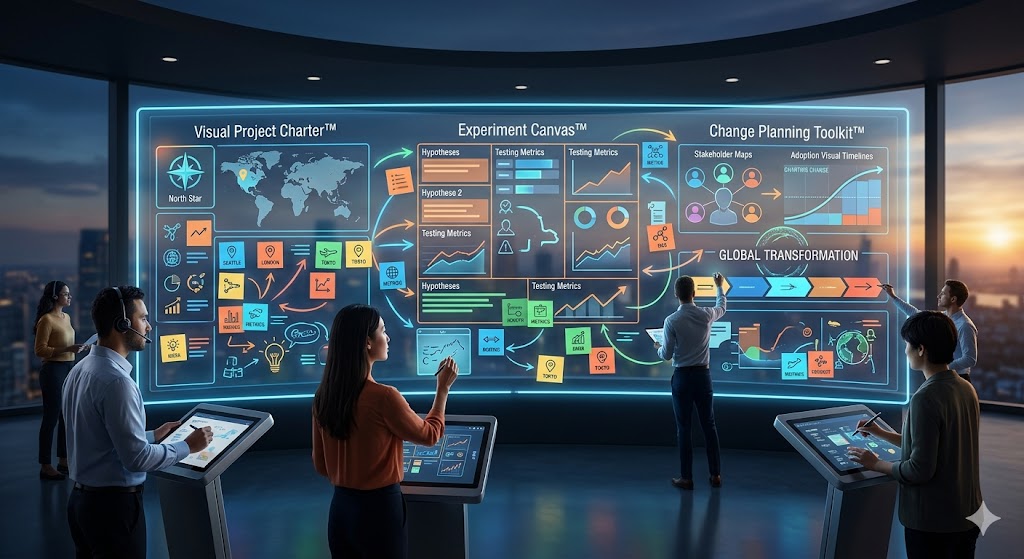
This is where the concept of the Collaborative Canvas becomes essential. Visual frameworks possess a unique ability to transform abstract, isolated ideas into a unified, spatial reality. By moving strategy out of dense text documents and onto an open, structured visual plain, we create an immediate cognitive bridge across geographic distances. Utilizing structured, human-centered methodologies—such as those introduced in my book, Charting Change, and expanded upon in the upcoming Human-Centered Innovation Toolkit™ — organizations can transcend the limitations of traditional remote work. We can finally turn a fragmented, distributed workforce into a highly synchronized, collaborative unit capable of moving at speed.

II. The Psychology of the Visual Canvas

To understand why visual frameworks are so effective at aligning global teams, we have to look beneath the surface of the software and examine the cognitive mechanics of how humans process information. Traditional business communication relies heavily on text and linear presentations. We write dense, multi-page business cases or flip through thirty-slide decks. The human brain, however, did not evolve to understand complex, interconnected systems through a sequential stream of words. When we force distributed teams to collaborate purely through text, we introduce massive cognitive friction.

Visual frameworks fundamentally alter this dynamic by enabling cognitive load reduction. Text-heavy documents force the brain to process information serially—one word, one sentence, one bullet point at a time. This requires significant working memory to hold previous context while trying to synthesize new data. In contrast, a visual canvas allows for simultaneous, parallel processing. The brain can absorb spatial relationships, color-coded groupings, and structural hierarchies all at once. By mapping out a strategy or a process visually, we help people instantly spot patterns, identify hidden gaps, and see systemic connections that would remain buried in a standard text document. We effectively offload cognitive strain from the individual’s working memory onto the shared workspace.

Beyond the cognitive benefits, a visual canvas serves as a powerful cultural equalizer by leveling the playing field for international collaboration. In global teams, traditional meetings are often dominated by specific dynamics: native fluency in the corporate language, timezone privilege, or simply the loudest, most extroverted voices in the room. Brilliant ideas from quieter teammates or those navigating a language barrier are frequently lost. A visual canvas democratizes participation. When collaboration is anchored around dropping a digital sticky note, voting with a click, or mapping a user journey, the barrier to entry drops significantly. Everyone has equal real estate on the canvas. Ideas can be contributed asynchronously or simultaneously without the need to fight for airtime, allowing the best insights to surface based on merit rather than volume.

Finally, visual frameworks solve one of the greatest challenges of remote work: the lack of a shared environmental context. In a physical office, teams utilize whiteboards and war rooms to anchor their thoughts. When everyone goes remote, that shared physical anchor vanishes. A digital canvas recreates this by establishing a structured “shared workspace” that leverages human spatial memory. Our brains are hardwired to remember where things are located in space. When a global team establishes that “our core customer friction lives in the bottom-left corner” or “our primary experiment metrics are tracked in the top-right quadrant,” it builds a collective mental model. Long after a live workshop ends, team members across Seattle, London, and Tokyo retain a synchronized mental map of the project. The canvas becomes a persistent, living anchor point that transcends geographic distance, ensuring everyone is always looking at the exact same big picture.

III. The Architecture of Alignment: Key Frameworks for Global Co-Creation

Moving global alignment from a theoretical ideal to an operational reality requires more than just an open digital whiteboard; it requires structure. An empty digital canvas can be just as intimidating and paralyzing as a blank sheet of paper. To truly unlock the power of visual collaboration across distributed teams, organizations must deploy purposeful, structured frameworks. These frameworks act as the architecture of alignment, providing the guardrails and common language that cross-functional, global teams need to co-create effectively.

The first step in any global initiative is establishing a unified North Star, and this is where the Visual Project Charter™ becomes invaluable. Traditional project charters are notoriously dense, text-heavy documents filled with legalese and corporate jargon that stakeholders skim but rarely internalize. By collapsing these boundaries into a single-page visual framework, the Visual Project Charter™ forces absolute clarity. Global stakeholders—regardless of their department or native language—can look at a single visual space and immediately align on project scope, strategic goals, roles, and boundaries. It eliminates the dangerous assumptions that often breed in the margins of long text documents, ensuring that every team member kicks off the journey with the exact same destination in mind.

As a project transitions from a static definition into a dynamic, living initiative, managing the human element of transformation becomes the primary challenge. This is the core focus of the Change Planning Toolkit™, a methodology I introduced in my book, Charting Change. When a transformation impacts thousands of employees across multiple global regions, you cannot manage change from a siloed spreadsheet. The visual, collaborative tools within the Change Planning Toolkit™ provide a shared canvas where cross-functional global teams can collectively map out the entire change journey. From identifying stakeholders and cultural friction points to planning communications and tracking adoption, these canvases ensure that change is planned with people, not forced upon them. It transforms change management from a top-down mandate into a highly collaborative, visual, and empathetic process.

Of course, true innovation requires experimentation, which brings inherent risk. In a distributed environment, keeping track of what we are testing, what we are learning, and what we are discarding can quickly descend into chaos. The Experiment Canvas™ solves this by offering an asynchronous visual anchor for validation. Instead of getting bogged down in endless status alignment meetings or waiting for a weekly synchronized call across incompatible time zones, distributed teams can use the Experiment Canvas™ to design, track, and evaluate business experiments in real time. Team members in Seattle can design an experiment layout, colleagues in Europe can execute the test, and a team in Asia can analyze the metrics—all within the same visual framework. It creates a continuous, transparent loop of hypothesis testing and learning that accelerates velocity while drastically reducing organizational risk.

Looking ahead, the need for a unified visual vocabulary will only intensify as business ecosystems grow more complex. This is why I am currently developing the upcoming Human-Centered Innovation Toolkit™. This next-generation toolkit expands our visual framework library, intentionally bridging the gap between deep empathy, experience design, and continuous innovation pipeline management. It will provide global organizations with the visual scaffolding necessary to embed human-centered design principles directly into their scalable innovation workflows. By anchoring global collaboration in these proven and evolving visual architectures, organizations can finally stop talking about alignment and start executing it at scale.

IV. Overcoming the Remote & Asynchronous Divide

The realities of modern global business mean that “same time, same place” collaboration is a luxury of the past. Distributed organizations are structurally fractured by competing time zones, geographic distances, and cultural communication variances. To build true organizational agility, leaders must stop fighting these constraints and instead design workflows that turn distance into an advantage. Visual frameworks serve as the ultimate bridge across this divide, optimizing both the hours teams spend together and the hours they spend working apart.

When global teams do manage to overlap in real time, that synchronous window is incredibly precious. Far too often, organizations squander these rare moments on status updates or passive slide presentations where one person speaks and dozens tune out. We must replace this passive consumption with synchronous magic. By anchoring live workshops around a structured digital canvas on platforms like Mural or Miro, the entire dynamic shifts from “talking at” people to “doing with” people. Instead of watching slides, a cross-functional team immediately rolls up their sleeves to co-create. Because the framework provides explicit boundaries and prompts, it maximizes participation and condenses hours of debate into minutes of highly focused, visual decision-making.

However, live collaboration is only half of the equation. The true power of a collaborative canvas lies in its ability to enable asynchronous continuity. A visual framework is not a temporary workshop artifact; it is a persistent, living ecosystem. It allows global teams to seamlessly pass the baton across time zones without losing contextual momentum. For instance, a product team in Seattle can map out a series of hypotheses on an Experiment Canvas™ before they log off for the evening. When the European team logs on a few hours later, they don’t need a summary email or a recorded sync call; they can visually trace the logic, view the sticky notes, and immediately begin executing the tests. By the time Asia-Pacific teams start their day, they can update the results directly within the same framework. This visual trail of progress eliminates the need for midnight status alignment calls, turning a multi-timezone structure into a 24-hour innovation engine.

Beyond the logistics of time, visual collaboration eleganty navigates the delicate landscape of cultural nuance. Different global regions possess deeply ingrained communication styles, ranging from high-context, indirect feedback cultures to low-context, intensely direct ones. In standard verbal meetings, these differences can inadvertently create political friction, misunderstandings, or psychological discomfort. A visual canvas acts as an objective, neutralizing canvas. It shifts the focus from conversational politics and hierarchy to the structural placement of ideas. When feedback is structured visually—such as placing a risk sticky note into a designated “Obstacles” box on a canvas from the Change Planning Toolkit™—it depersonalizes the critique. The framework allows diverse global minds to collaborate intensely on the problem itself, ensuring that cultural friction is minimized and creative friction is maximized.

V. Best Practices for Facilitating on a Digital Canvas

Transitioning from traditional, text-heavy business operations to a visual-first collaborative culture requires more than just distributing access to digital whiteboard software. It requires a fundamental shift in how we facilitate human interaction. An unguided group on a digital canvas can quickly descend into visual noise, while a poorly structured environment will stifle the exact organic creativity it was meant to unleash. To unlock the true potential of these toolkits across global teams, facilitators must master three core practices.

The first critical balance to strike is between structure and freedom. An empty canvas triggers the digital equivalent of writer’s block, leaving teams paralyzed by the infinite possibilities of a blank space. Conversely, a framework that is too rigid leaves no room for unexpected insights or serendipitous connections. The visual frameworks within the Change Planning Toolkit™ and the upcoming Human-Centered Innovation Toolkit™ are intentionally designed to solve this paradox. They provide rigid structural constraints—such as predefined boxes, flows, and categories—to establish focus and prevent cognitive overwhelm. Yet, within those bounded boxes, teams possess absolute freedom to express ideas, challenge assumptions, and sketch possibilities. The architecture guides the thinking process without dictating the outcome.

This structural balance alters the role of the facilitator. In a traditional meeting, the leader or facilitator often acts as a presenter, lecturer, or scribe, controlling the flow of conversation from the front of the room. On a collaborative canvas, the facilitator must transition into a visual “space-maker.” Your job is no longer to deliver content, but to manage collective attention, energy, and psychological safety. This is achieved by utilizing the tactical toolsets of modern digital whiteboards—leveraging features like anonymous voting to eliminate hierarchy, deploying built-in timers to maintain momentum, and using laser pointers or “summon” features to guide distributed eyeballs to the same quadrant of a Visual Project Charter™. The facilitator acts as a conductor, orchestrating the global team’s interactions with the canvas itself.

Finally, a collaborative canvas must be treated as a dynamic journey rather than a static destination, requiring a commitment to documenting the evolution of the work. Too often, teams treat a workshop canvas as a throwaway artifact—a digital whiteboard to be wiped clean or ignored once the meeting concludes. In contrast, tools like the Experiment Canvas™ are explicitly built to capture historical context over time. Facilitators must ensure that the canvas serves as a living, breathing record of the team’s co-creation journey. By preserving early iterations, archival sticky notes, and historical voting rounds, global team members who join a project late can visually trace the decision-making history of the initiative. The canvas becomes the single source of truth, documenting not just what the strategy is today, but exactly how and why the global team evolved it to get here.

VI. Conclusion: The Canvas as a Cultural Catalyst

Ultimately, visual frameworks are far more than a collection of operational templates or tactical productivity tools—they are profound cultural enablers. They provide global organizations with something that standard corporate communication completely lacks: a visual, human-centered baseline for empathy, clarity, and shared purpose. By anchoring distributed teams around a unified spatial layout, we dismantle the invisible silos that geographic distance naturally creates, replacing fragmented isolation with a vibrant culture of open, continuous co-creation.

Throughout this exploration, we have seen how these methodologies fundamentally change the anatomy of global work. From the initial strategic alignment forged by a Visual Project Charter™, through the deep behavioral synchronization driven by the Change Planning Toolkit™ and the principles in Charting Change, to the agile, decentralized validation cycles enabled by the Experiment Canvas™, the impact is undeniable. As we look toward the future with the upcoming Human-Centered Innovation Toolkit™, the organizations that thrive will be those that actively cultivate a unified visual vocabulary. They will treat collaboration not as a series of disparate operational handoffs, but as a continuous, human-centered journey.

The imperative for leadership is clear. It is time to challenge the outdated status quo of the legacy workplace. I invite you to ditch the next fifty-page text brief, cancel the passive status alignment meeting, and retire the standard bulleted slide deck. Instead, hand your global teams a digital marker, step back, and invite them to co-create, align, and innovate on a collaborative canvas. The future of global transformation is visual—and the canvas is yours to design.

Frequently Asked Questions

What is a Collaborative Canvas, and how does it differ from a standard digital whiteboard?

A standard digital whiteboard provides an open, blank space for sketching or writing, which can often lead to visual chaos or participation paralysis for distributed teams. A Collaborative Canvas applies intentional structure and human-centered frameworks (like the Visual Project Charter™ or Experiment Canvas™) to that space. It provides specific guardrails and a shared visual language that guides focus, reduces cognitive load, and enables meaningful asynchronous and synchronous co-creation across global teams.

How do visual frameworks help overcome language and cultural barriers in global teams?

Traditional text-heavy and verbal meetings often favor native language speakers or dominant corporate cultures. Visual frameworks level the playing field by shifting the focus from conversational politics to the objective, spatial placement of ideas. Contributing via digital sticky notes, matrix sorting, and visual voting allows every team member to participate equally and simultaneously, depersonalizing critiques and minimizing cultural communication friction.

Can these visual tools be used effectively when teams cannot collaborate at the same time?

Yes. While visual frameworks create high-engagement live workshops, they are designed as persistent, living environments for asynchronous continuity. Because canvases from methodologies like the Change Planning Toolkit™ leave a clear, spatial trail of progress and context, global teams can seamlessly “pass the baton” across time zones. A team in Seattle can map out an initiative, and a team in Europe or Asia can instantly understand the context and pick up exactly where they left off without needing a midnight alignment call.


Image credit: Gemini

Subscribe to Human-Centered Change & Innovation WeeklySign up here to get Human-Centered Change & Innovation Weekly delivered to your inbox every week.

Redefining True Fairness in the Modern Enterprise

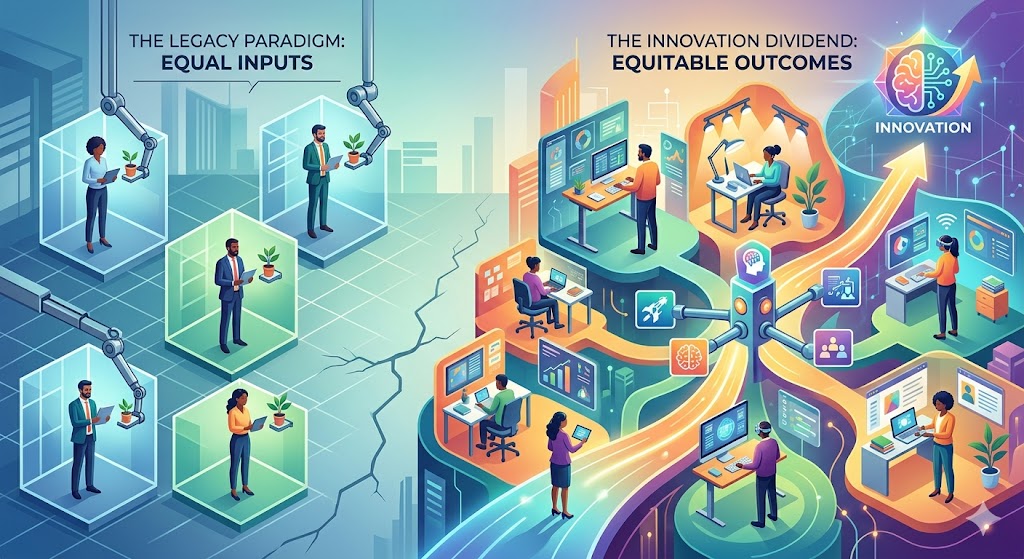
Equitable Outcomes vs. Equal Inputs

Redefining True Fairness in the Modern Enterprise

GUEST POST from Chateau G Pato


The Illusion of the Level Playing Field

For decades, the corporate playbook has relied on a comforting, mathematically clean definition of fairness: equal inputs. The logic seemed bulletproof—give every employee the exact same tools, the same standardized training, and the same rigid compliance mandates, and the corporate race would inherently be fair. This assembly-line mentality assumed that by standardizing the starting line, we had successfully leveled the playing field.

But in the modern, distributed, and rapidly evolving enterprise, this legacy paradigm is fracturing. Equal inputs assume a reality that simply does not exist: that every individual starts from the same baseline, possesses the same lived experiences, and navigates the same workspace friction. When we design experiences for a mythical “average” employee, we inadvertently design for no one. Standardized inputs frequently mask deep systemic gaps, leaving brilliant talent struggling not from a lack of effort or capability, but from a lack of appropriate, contextual support.

True organizational fairness is not about treating everyone the same; it is about meeting people where they are to unlock their unique potential.

As we navigate an era disrupted by automation and generative technologies, the primary drivers of enterprise value are shifting entirely toward deeply human capabilities—creativity, empathy, strategic foresight, and collaborative innovation. These assets cannot be cultivated on an organizational conveyor belt. To build a resilient, future-ready culture, leadership must boldly shift its focus from equal inputs to equitable outcomes. True fairness means designing systems and experiences that provide the specific, adaptive resources individuals need to thrive, ensuring everyone has an authentic opportunity to achieve excellence.

I. The Anatomy of the Inputs vs. Outcomes Dynamic

To redefine fairness in the modern enterprise, we must first dissect the fundamental mechanics of how organizations distribute resources and evaluate success. For generations, corporate design has conflated equality with equity, treating them as interchangeable concepts when they are, in fact, structurally opposed.

Defining the Boundaries

  • Equal Inputs: This is the homogeneous, flat distribution of resources. It manifests as standardizing a one-size-fits-all training program, deploying identical hardware setups without regard for accessibility, or enforcing blanket hybrid-work mandates. It is the practice of measuring fairness purely by what the organization hands out.
  • Equitable Outcomes: This is the intentional customization of the support structure. It recognizes that different people require different tools, environments, or cadences to achieve the same level of performance. It shifts the definition of fairness to what the individual is actually empowered to achieve.

The Experience Design Flaw

When organizations default to equal inputs, they fall into a dangerous experience design trap: treating human beings as uniform components in a corporate machine. Human experience is non-linear and deeply contextual. A standardized digital workspace that feels seamless to one employee might present invisible cognitive or accessibility barriers to another. By failing to account for these variances, a system built on “equal inputs” unintentionally penalizes individuals who do not fit the historical archetype of the standard worker, resulting in massive, unmeasured experience revenue leakage.

The Futurist Perspective

This dynamic becomes critical as we advance deeper into the era of continuous technological disruption. As artificial intelligence, advanced automation, and intent orchestration systems rapidly absorb routine, task-based execution, the premium on human labor shifts entirely. The enterprise value of tomorrow is generated through high-cognitive, human-centric skills—complex problem solving, diverse creative thinking, and cross-functional empathy.

These capabilities cannot be optimized through rigid, industrialized standardization. You cannot mandate a creative breakthrough with a standardized input. Cultivating these high-value human assets requires highly adaptive, human-centered environments that recognize individual friction points and actively dissolve them, shifting the focus permanently toward the ultimate outcome.

II. Barriers to Transitioning: The Standardization Trap

If the argument for equitable outcomes is so compelling, why do so many legacy organizations remain fiercely tethered to equal inputs? The reality is that shifting an enterprise mindset requires dismantling decades of industrial-era conditioning. Organizations routinely fall into a series of cultural and operational traps that stall progress and reinforce the status quo.

The Comfort of Equality

The primary reason leadership defaults to equal inputs is simple: it is comfortable, predictable, and remarkably easy to measure. In a traditional corporate hierarchy, inputs fit neatly into spreadsheets. It requires very little organizational effort to verify that every employee received the same 40-hour training block, the same budget allocation, or the same laptop model. This approach creates a powerful illusion of objective neutrality and provides a convenient shield for risk-averse compliance and human resource departments. Under the banner of “treating everyone exactly the same,” organizations can bypass the complex, nuanced work of understanding individual human needs.

The Fear of “Special Treatment”

When enterprises begin discussing equity, an immediate wave of organizational anxiety often ripples through leadership and the rank-and-file alike. Skeptics frequently misinterpret equity as favoritism, special treatment, or worse—a lowering of the performance bar. There is a deeply ingrained fear that tailoring resources to individual circumstances creates an unfair playing field for those who require less structural support.

Equity is not about lowering the bar; it is about providing the right scaffolding so that everyone has a genuine shot at clearing it.

Overcoming this barrier requires a rigorous cultural reframing. Leaders must clearly communicate that equity does not compromise standards; rather, it maximizes the collective capability of the workforce by removing the artificial friction that keeps high-potential talent from performing at their peak.

The Cost of Inertia

Maintaining an inputs-only mindset under the guise of organizational simplicity carries a steep, often hidden financial and cultural price tag. When brilliant individuals realize that their unique challenges are invisible to the organization—and that the enterprise values rigid adherence to process over their actual ability to contribute—they don’t just underperform; they check out.

This inertia drives widespread disengagement, quietly stifles the diverse viewpoints necessary for true corporate agility, and ultimately accelerates expensive talent churn. In a world where the cognitive divide is widening, the organizations that refuse to evolve past standardized inputs will find themselves starved of the very human ingenuity they need to survive.

III. The Innovation Dividend: Why Equity Powers Growth

Shifting from equal inputs to equitable outcomes is not a mere exercise in corporate compliance or philanthropy—it is a cold, hard strategic imperative. In a hyper-competitive global market, the organizations that unlock the highest levels of human ingenuity win. Embracing equity directly impacts the bottom line by transforming the modern enterprise into an adaptive powerhouse designed for continuous growth.

Psychological Safety as Infrastructure

When an enterprise intentionally designs experiences around individual needs, it sends a powerful cultural signal: we see you, and we value your unique contribution. This deliberate systemic care builds profound organizational trust, which serves as the bedrock for psychological safety. In an equitable environment, employees are no longer wasting cognitive energy masks-wearing, navigating invisible friction, or worrying that their unique circumstances make them an outlier. When people feel secure and structurally supported, they are far more willing to take calculated creative risks, challenge legacy assumptions, and pitch the disruptive ideas that fuel the corporate innovation pipeline.

Unlocking Cognitive Diversity

True innovation is born at the chaotic intersections of differing perspectives, lived experiences, and distinct mental models. However, when an enterprise forces a highly diverse workforce through the homogenizing pipeline of identical inputs, it actively flattens that diversity. Standardized tools and rigid frameworks yield standardized thinking. By tailoring resources, communication cadences, and collaboration models to meet individuals where they are, we empower distinct minds to articulate their insights in their most potent form. Equity ensures that cognitive diversity isn’t just a metric on a hiring report, but an active, uninhibited engine of corporate value creation.

The Ecosystem View

The industrial-era enterprise was modeled after the assembly line—a brittle, linear machine where every part was expected to be uniform. The modern enterprise, by contrast, is a complex, living ecosystem. In nature, resilient ecosystems do not survive by distributing sunlight, water, and nutrients perfectly evenly across every square inch of soil. Instead, resources are dynamically channeled where they are needed most to optimize the health of the entire system.

Forward-thinking organizations must adopt this exact ecosystem mentality. By abandoning flat homogenization and treating resource distribution as a dynamic, adaptive capability, the enterprise builds deep structural resilience, ensuring that every node in the organizational network is optimized to drive collective growth and weather market disruption.

IV. A Framework for Designing Equitable Outcomes

Transitioning an entire enterprise from a legacy mindset of rigid standardization to a fluid model of equitable outcomes requires more than inspiring rhetoric—it demands a deliberate architectural framework. We must re-engineer our organizational systems, changing how we listen to our people, how we deploy our resources, and how we measure corporate success.

Empathy-Driven Auditing

The journey toward equity cannot rely on standard, superficial annual engagement surveys, which frequently flatten data and obscure the real challenges within an organization. Instead, enterprises must deploy deep ethnography, qualitative experience mapping, and comprehensive experience audits. This means actively listening to employees across diverse segments to uncover invisible friction points and identify where experience revenue leakage is occurring. By mapping the actual day-to-day employee journey, leadership can pinpoint the exact structural bottlenecks that prevent high-potential talent from fully contributing.

Adaptive Resource Allocation

Once the organizational friction points are clearly mapped, the enterprise must replace its rigid, one-size-fits-all infrastructure with dynamic, adaptive systems. Rather than forcing employees to adapt to inflexible corporate structures, the environment must adapt to them. This involves implementing personalized learning and development pathways that cater to different cognitive styles, designing asynchronous collaboration models that respect diverse regional or personal realities, and offering highly customizable wellness and workspace architectures. Providing flexible scaffolding ensures that every individual has access to the precise environment they need to maximize their focus and impact.

Outcome-Based Accountability

The final and most critical pillar of the framework requires rewriting the managerial playbook. For decades, management has been addicted to tracking easily quantifiable inputs—hours logged at a desk, badges earned in a training module, or physical presence in an office. In a human-centered enterprise, these metrics are obsolete. Leaders must transition to rigorous outcome-based accountability.

Managers must be trained and incentivized to evaluate teams based on the quality of their outputs, their collaborative impact, and the systemic health of their team ecosystems. When we shift performance indicators to focus entirely on the value generated rather than the uniform path taken to get there, we grant employees the autonomy to work in the ways they are most effective, naturally unlocking a higher standard of enterprise performance.

Conclusion: The Future of the Enterprise is Human-Centric

The choice facing the modern enterprise is no longer between efficiency and empathy; it is a choice between rigid stagnation and adaptive survival. Clinging to the industrial-era illusion of equal inputs might offer a fleeting sense of operational comfort and regulatory simplicity, but it does so at the direct expense of human ingenuity. In an increasingly complex and automated marketplace, treating a diverse, highly capable workforce as a uniform mass is a recipe for institutional irrelevance.

Leadership in the modern era requires a profound shift in perspective. The mandate of the forward-thinking executive is no longer to enforce compliance and manage uniformity, but to orchestrate harmony among remarkably diverse talents. This requires moving beyond standard metrics and actively engineering an organizational ecosystem where the support structures are as dynamic and nuanced as the people within them.

True fairness isn’t about giving everyone the exact same pair of shoes; it’s about making sure everyone has a pair that actually fits them so they can run the race to the best of their ability. By boldly shifting the corporate paradigm from equal inputs to equitable outcomes, enterprises do more than just build a fairer workplace—they unlock the full spectrum of human potential, driving the sustained innovation, deep resilience, and human-centered growth necessary to dominate the future.

Frequently Asked Questions

What is the core difference between equal inputs and equitable outcomes?

Equal inputs focus on distributing resources identically across the entire workforce, assuming everyone starts from the same baseline. Equitable outcomes focus on customizing the support structure and resources to meet individuals where they are, ensuring everyone has an equivalent opportunity to succeed and innovate.

Does shifting to an equitable outcomes model lower performance standards?

No. Equity does not mean lowering the bar or offering favoritism. Instead, it involves providing the precise scaffolding, tools, and environments individuals need to eliminate artificial friction, allowing everyone to meet and exceed high-performance standards.

How can managers transition from input tracking to outcome-based accountability?

Managers must shift their focus from easily quantifiable metrics like hours logged or physical desk presence to qualitative impact. This involves defining clear, strategic goals and giving employees the autonomy to determine how they achieve them, while measuring success based on output quality and collaborative value.


Image credit: Gemini

Subscribe to Human-Centered Change & Innovation WeeklySign up here to get Human-Centered Change & Innovation Weekly delivered to your inbox every week.

Why Top-Down Design is Obsolete in Complex Ecosystems

Participatory Innovation

Participatory Innovation

GUEST POST from Chateau G Pato


The Death of the Dictated Solution

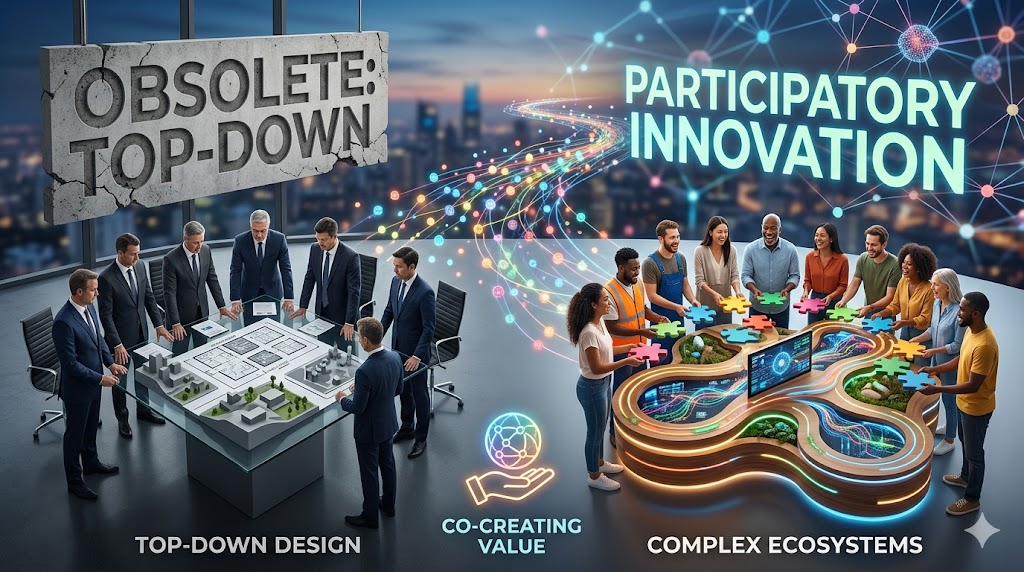
For decades, the corporate world has fallen prey to the myth of the lone genius. We have operated under the assumption that a select group of executives, elite strategists, or isolated designers hidden away in a boardroom can perfectly predict, design, and mandate solutions for an entire organization. We map out linear plans, package them beautifully, and push them down the ladder, expecting seamless adoption.

But in today’s hyper-connected world, that approach is dead on arrival. The environments we operate in are no longer just complicated — systems like a watch or an engine that can be dismantled and fixed with linear logic. Instead, they are complex ecosystems. They are living, breathing, unpredictable networks of humans, technologies, and shifting behaviors. When you attempt to force a rigid, top-down design into a complex ecosystem, the system naturally rejects it like a foreign object.

In a complex ecosystem, value is never truly delivered; it must be co-created. Top-down design builds friction, but participatory innovation builds ownership.

When we design for people instead of with them, we miss the vital nuances known only to those on the front lines. To build experiences, products, and organizational changes that actually stick, we must fundamentally shift our approach. It is time to retire the dictated solution and embrace Participatory Innovation — democratizing the creative process to harness the collective intelligence of the entire ecosystem.

I. The Anatomy of Complex Ecosystems

To understand why traditional, linear planning fails, we have to stop viewing organizations and markets as machines. Machines are predictable; you turn a gear, and you get a specific output. Modern businesses, customer bases, and communities don’t work that way. They operate as living organisms — vibrant, interconnected, and highly sensitive to change.

The Hidden Networks

Every organization has two structures: the formal org chart printed on paper, and the informal, hidden network of relationships, trust, and influence that actually gets things done. Innovation doesn’t travel down formal reporting lines; it flows through these organic pathways. When a top-down mandate ignores these social fabrics, it inadvertently tears at the trust required to make change successful.

The Cascade Effect

In a complex environment, components never exist in isolation. A single, well-intentioned decision made at the executive level can trigger a cascade of unintended consequences across the entire ecosystem. For example, optimizing a digital interface to make life easier for the customer might inadvertently double the administrative workload for frontline customer service agents. Without an ecosystem-wide view, top-down design solves one problem by creating three new ones elsewhere.

Information Asymmetry

There is a fundamental truth that every modern leader must humble themselves to accept: the people closest to the problem always possess the insights that leaders lack. Executive leadership views the organization from 30,000 feet, which is great for seeing the horizon but terrible for seeing the ground. The frontline employees, the daily users, and the customers are the ones navigating the friction points every single day. If they aren’t actively designing the solution, the design is based on incomplete data.

II. Why Top-Down Design Fails (The Friction Points)

When leadership relies strictly on authority to push a new design, product, or process into the wild, they inevitably collide with human psychology and operational reality. Forced compliance creates an illusion of progress, but beneath the surface, friction points quickly stall or dismantle the initiative entirely.

The “Not Invented Here” Syndrome

It is a fundamental piece of human psychology: people naturally resist change when they feel it is being done to them rather than with them. When a beautifully polished solution descends from corporate headquarters, the immediate reaction from the ground floor is often skepticism or outright rejection. Because the people affected had no hand in shaping it, they have no emotional investment in its success. They don’t see it as their solution; they see it as someone else’s burden.

The Danger of Averages

Top-down design relies heavily on aggregate data, leading creators to design for a mythical “average user.” In a complex ecosystem, however, the average user does not exist. There are only individuals with highly nuanced, context-specific needs. By flattening these unique realities into a single generalized profile, corporate initiatives end up producing solutions that are mediocre for everyone and exceptional for no one. It satisfies the spreadsheet, but fails the human test.

The Speed Gap

Traditional top-down structures operate on a lag. Information must travel up the chain of command, be analyzed by committees, turn into a strategic plan, and slowly filter back down. By the time a top-down solution is finally deployed, the real-world dynamics on the ground have already shifted. This structural inertia makes it impossible to compete in fast-moving, complex environments where agility and real-time adaptation are the prerequisites for survival.

III. The Core Principles of Participatory Innovation

Moving away from the top-down model requires more than just changing our processes — it requires changing our fundamental beliefs about where value and wisdom reside. To successfully navigate a complex ecosystem, organizations must anchor their collaborative efforts in three foundational pillars.

Radical Inclusivity

True participatory innovation demands that we shift the role of the designer from “expert-led” to “facilitator-led.” Instead of gathering a homogenous group of like-minded strategists, we must actively bring diverse voices into the room from day one. This means inviting frontline staff, end-users, and crucially, the vocal skeptics. The people who point out why a system will fail are often your most valuable assets; their critiques act as early stress-tests for your ideas, saving months of misdirected effort.

Psychological Safety as Infrastructure

You cannot have co-creation without vulnerability, and you cannot have vulnerability without safety. If frontline stakeholders fear that sharing a flawed idea or pointing out a corporate blind spot will damage their career, they will remain silent. Leaders must treat psychological safety not as a soft human resources initiative, but as critical infrastructure. We must design environments where experimentation is celebrated, failures are treated as data, and challenging the status quo is viewed as an act of loyalty.

Continuous Feedback Loops

In a living ecosystem, the concept of a static “launch date” is an obsolete relic of industrial-age thinking. Complex environments change too quickly for a single, final rollout. Participatory innovation relies on continuous, iterative feedback loops. We build small, test quickly, and refine our designs in real-time alongside the people using them. The goal is to move away from rigid, multi-year master plans and move toward continuous, evolutionary adaptation.

IV. From Intent to Impact: The Framework for Co-Creation

Transitioning from a top-down mindset to participatory innovation requires more than good intentions; it demands a structured, deliberate approach to collaboration. To successfully harness the collective intelligence of your ecosystem, you need a repeatable framework that translates co-creation into measurable impact.

Mapping the Ecosystem

Before you can design with your community, you must truly understand who populates it. This step goes far beyond analyzing an organizational chart or standard customer demographics. We must map the entire living web of stakeholders—including the hidden influencers, the frontline operators, and the marginalized users who are often left out of the conversation. By understanding these relational dynamics early on, we ensure that the right voices are driving the design from the very beginning.

The Shared Canvas

To democratize innovation, you must give people a common language. When you bring diverse groups together — such as software engineers, frontline managers, and end-users — they often talk past one another. Utilizing highly visual, collaborative toolkits and open innovation canvases levels the playing field. These shared frameworks strip away corporate jargon, allowing everyone to visualize the ecosystem’s friction points, map out human experiences, and co-design solutions on equal footing.

Decentralizing Decision-Making

The ultimate failure point of many corporate “innovation programs” is that while ideation is collaborative, the final decision-making power remains tightly bottlenecked at the top. True participatory innovation requires decentralizing that authority. We must empower the local communities and cross-functional teams to vote on, rapidly prototype, and stress-test ideas within their own environments. By shifting from executive sign-off to real-world validation, the ecosystem itself determines which solutions survive and scale.

Conclusion: The Leader as a Facilitator, Not a Dictator

The realization that top-down design is obsolete shouldn’t panic leaders; it should liberate them. For generations, corporate culture has placed an unsustainable burden on executives, expecting them to possess a god-like omniscience — the ability to sit at the apex of an organization and accurately predict the future, solve every operational crisis, and perfectly design every human experience.

In a complex ecosystem, that is a mathematical impossibility. The new leadership mandate requires a profound shift in ego. True innovators must transition from being the person with all the answers to being the person who asks the best questions. They must stop acting as dictators and start serving as facilitators — architects who design the collaborative playing fields, hold the space for psychological safety, and provide the toolkits that unlock the brilliance already latent within their teams.

The true measure of a modern leader is no longer the brilliance of their own ideas, but their capacity to orchestrate the collective intelligence of their entire ecosystem.

When you fully embrace participatory innovation, the ultimate payoff isn’t just a better product, a smoother customer journey, or a more efficient process. The real transformation is cultural. By inviting people into the creative process, you dissolve the natural friction of change and replace it with a deep sense of shared ownership. You stop building brittle, top-heavy structures that fracture under pressure, and instead cultivate a living, breathing organization that is naturally adaptive, fiercely resilient, and inherently ready for whatever the future brings.

Frequently Asked Questions

Does participatory innovation mean we operate by pure consensus, and won’t that slow us down?

No, participatory innovation is not about absolute consensus or design-by-committee, which can lead to watered-down ideas. Instead, it is about inclusive contribution and transparent synthesis. Leaders and facilitators still steward the strategy and make definitive choices, but those choices are informed by deep, real-world insights from the frontline rather than executive assumptions. By investing time in co-creation upfront, you eliminate the massive, costly friction and resistance that typically drags down top-down rollouts later, making the overall execution significantly faster.

How do you get vocal skeptics or disengaged employees to actively participate?

You don’t win skeptics over with a slick presentation; you win them over by giving them a pen. Skeptics are often just passionate employees who have been burned by poorly executed top-down mandates in the past. To engage them, give them a formal role in stress-testing prototypes on a shared canvas. When they see that their critiques are being treated as valuable diagnostic data rather than insubordination, their resistance transforms into deep engagement. For broader teams, using visual, low-barrier collaboration tools lowers the stakes and makes participation feel safe and intuitive.

What is the very first step a traditionally top-down organization should take to transition?

Start small and localize. You do not need to restructure your entire enterprise overnight. Pick a single, contained friction point — such as a specific frontline workflow issue or a distinct customer touchpoint — and run a cross-functional co-creation workshop. Bring together the executives, the frontline operators, and the users, and use a shared canvas to map out the problem together. Document the rapid wins from this pilot to prove the ROI of collaboration. Showing that a co-created solution worked better and faced zero adoption resistance is the best way to build a mandate for broader cultural change.


Image credit: Gemini

Subscribe to Human-Centered Change & Innovation WeeklySign up here to get Human-Centered Change & Innovation Weekly delivered to your inbox every week.

Mastering Strategic Foresight in Exponentially Volatile Markets

Future-Mapping

Mastering Strategic Foresight in Exponentially Volatile Markets - Future Mapping

GUEST POST from Chateau G Pato


I. Introduction: The Death of the Five-Year Plan

The Volatility Trap

Traditional, linear strategic planning is dying. In an era defined by exponential technological growth, unpredictable climate shifts, and hyper-connected global markets, the rigid five-year plan has become a liability. Organizations that tether themselves to fixed long-term predictions often find themselves blindsided by market disruptions, trapped in rigid structures unable to pivot when the ground shifts beneath them.

From Planning to Foresight

To survive and thrive in exponentially volatile markets, leaders must shift their organizational mindset from predicting a single corporate future to preparing for multiple, fluid realities. Strategic foresight is not about gazing into a crystal ball; it is about building the organizational muscle to anticipate waves of change, interpret weak signals, and map out dynamic pathways that maintain strategic agility.

The Human Element

At its core, future-mapping is not merely an exercise in data aggregation or trend analysis. The most profound disruptions are deeply human. True foresight requires a human-centered approach — marrying futurology with experience design and deep empathy. We must understand how the psychological needs, anxieties, and behaviors of both our workforce and our customers will evolve, ensuring that as we design the future of business, we keep humanity at the center of the experience.

II. The Foundations of Future-Mapping

Defining Future-Mapping

Future-mapping bridges the gap between abstract futurology and actionable, human-centered innovation. While traditional forecasting looks at a narrow data set to predict a single outcome, future-mapping visualizes the marketplace as a complex ecosystem of shifting human behaviors, technological waves, and economic realities. It is a visual, collaborative methodology designed to transform ambiguous macro-trends into concrete innovation strategies.

The Horizon Framework

To navigate exponential change without losing sight of daily survival, organizations must distribute their focus across three distinct horizons simultaneously:

  • Horizon 1: Optimizing the Present. Protecting, defending, and improving the core business model to maximize current efficiency and profitability.
  • Horizon 2: Nurturing Emerging Opportunities. Extending current capabilities into new, fast-growing markets or scaling adjacent business ideas.
  • Horizon 3: Designing for Visionary Futures. Developing genuinely disruptive innovations, business models, and capabilities tailored for unchartered territories five to ten years out.

Signal vs. Noise

The future rarely arrives without warning; it leaves clues. Success in volatile markets requires robust organizational sensing mechanisms to distinguish between temporary “noise” (passing fads) and true “weak signals” (early, localized indicators of structural change). By systematically scanning the fringes of technology, society, and culture, leaders can spot inflection points and catch the wave of disruption before it becomes an industry mainstream reality.

III. The Strategic Foresight Toolkit

Dynamic Scenario Planning

Static forecasting assumes the future is a straight line, but exponential volatility demands a matrix. Dynamic scenario planning moves beyond simple “best-case/worst-case” projections to construct multiple, vivid, and plausible alternate world narratives. By immersing leadership teams in these diverse realities, organizations can stress-test their current strategies, expose hidden vulnerabilities, and identify blind spots before they manifest in the real market.

Cross-Impact Analysis

Disruption rarely happens in a vacuum; it occurs at the intersection of converging forces. Cross-impact analysis evaluates how distinct macro-trends — such as the democratization of artificial intelligence, shifting generational values, and changing labor dynamics — interact with and accelerate one another. Understanding how these compounding variables collide allows organizations to anticipate secondary and tertiary market behaviors that competitors will miss.

The Backcasting Methodology

While forecasting looks forward from today to guess tomorrow, backcasting flips the timeline. It begins by designing a visionary, human-centered future state ten years down the road. From that North Star, we work backward to the present day, isolating the exact capabilities, technology investments, partnership models, and strategic pivots required along the journey. This ensures that today’s innovation portfolio is explicitly engineered to build tomorrow’s required reality.

IV. Human-Centered Experience Design for Tomorrow

The Future Customer Persona

Demographic data alone is no longer enough to understand tomorrow’s buyer. In a volatile landscape, we must map the evolving psychology of the future customer. This means anticipating how their trust metrics, digital friction points, and deep emotional needs will shift as technology integrates further into daily life. Designing tomorrow’s experiences requires building empathy today for the unique anxieties and aspirations of the next-generation consumer.

Designing for the “Next Economy”

The days of simple, isolated transactional business models are fading fast. True experience design requires transitioning from selling standalone products to orchestrating deeply integrated, adaptive ecosystem experiences. Value will increasingly be co-created at the intersection of physical spaces, fluid digital layers, and human communities, requiring organizations to design holistic journeys that adapt to changing customer contexts in real time.

The Ethics of Co-Creation

As experiences become highly personalized and driven by predictive data, the line between helpful anticipation and digital intrusion blurs. Foresight-driven innovation must be anchored by a robust ethical framework. Experience designers must actively protect human agency, inclusivity, and digital equity, ensuring that tomorrow’s platforms and ecosystems are built transparently and designed to lift people up rather than exploit them.

V. Operationalizing Innovation Under Uncertainty

Fostering Corporate Agility

The greatest threat to an organization during market upheaval is not a lack of vision, but the heavy anchor of systemic corporate inertia. Moving from insight to execution requires dismantling bureaucratic silos and creating flexible, cross-functional teams capable of rapid pivoting. Leadership must intentionally foster a culture that views change as a continuous opportunity rather than an occasional disruption, realigning internal incentives to celebrate calculated risk-taking and rapid, iterative learning.

The Resilient Portfolio

Managing innovation under exponential volatility requires a balanced investment strategy. Leaders must split resource allocation effectively, ensuring they maintain the structural integrity to defend the current bottom line while simultaneously funding high-risk, high-reward future bets. A resilient portfolio treats innovation investments like options, allowing the organization to place small, experimental bets across multiple scenario paths and dynamically scale funding as certain futures become clearer.

Continuous Iteration Loops

Strategic foresight can no longer be relegated to a static, annual executive retreat or a beautiful slide deck that sits on a shelf. Future-mapping must be embedded into the organization as an ongoing, living capability. By establishing continuous feedback loops that feed real-time market data and changing human behaviors back into the strategic matrix, the business can constantly refine its trajectory, ensuring that long-term vision and daily execution remain locked in lockstep.

VI. Conclusion: Leading Through the Fog

The New Leadership Imperative

In a world of exponential volatility, true thought leadership is no longer about having all the answers — it is about asking the right questions and possessing the institutional courage to navigate uncertainty. The most dangerous trap a successful organization can fall into is complacency. Survival in the next economy requires leaders to willingly challenge their own assumptions and actively design the mechanisms to dismantle their own legacy business models before a competitor or a shifting market force does it for them.

A Call to Action

The future is not a destination we blindly arrive at; it is a landscape we actively construct. Organizations cannot afford to sit on the sidelines, waiting for clarity that will never come, or merely reacting to disruptions after they hit. By embedding human-centered future-mapping into the core DNA of your strategy, your teams can step out of a defensive posture. Start scanning the fringes for weak signals, embrace dynamic scenario planning, and begin intentionally shaping the customer and employee experiences of tomorrow, today.

Frequently Asked Questions

What is Future-Mapping and how does it differ from traditional strategic planning?

Traditional strategic planning relies on linear forecasting to predict a single corporate future, which often fails in volatile markets. Future-Mapping is a human-centered, visual methodology that maps out multiple fluid realities based on macro-trends and weak signals, allowing organizations to remain agile and proactive.

Why is experience design critical to strategic foresight?

Technology and market changes don’t happen in a vacuum — they fundamentally alter human behavior. By integrating experience design into foresight, organizations can build deep empathy for the future customer and employee, ensuring tomorrow’s business models solve real psychological needs and friction points.

How do organizations operationalize future-mapping without disrupting current operations?

By utilizing frameworks like the Three Horizons, organizations can optimize their present core business (Horizon 1) while simultaneously nurturing emerging opportunities (Horizon 2) and designing visionary futures (Horizon 3). This creates a resilient portfolio where innovation is treated as a continuous, living capability.

Image credit: Gemini

Subscribe to Human-Centered Change & Innovation WeeklySign up here to get Human-Centered Change & Innovation Weekly delivered to your inbox every week.
The Chemistry of Resistance

Dissecting the Psychological Architecture of Transformation

The Chemistry of Resistance

GUEST POST from Chateau G Pato


I. Introduction: The Myth of the “Difficult” Employee

In the high-stakes arena of organizational transformation, a dangerous narrative persists. When a brilliant new digital strategy stalls, or an innovative framework faces friction, leadership all too often points the finger at the workforce. Resistance is labeled as stubbornness, complacency, or a simple failure to “get it.” This diagnosis is not only lazy; it is fundamentally flawed. People do not resist change because they are inherently difficult; they resist because the human architecture is wired to survive, and survival favors the known.

To truly understand why transformation fails, we have to look past the surface-level behavioral pushback and explore the underlying emotional and psychological equilibrium of our people. Think of your organization as a delicate chemical compound. Every workflow, cultural norm, and established expertise represents a stable bond. When leadership introduces a massive strategic pivot, they are dropping a highly reactive agent into that stable compound. Without a proper catalyst, the reaction is almost always volatile.

The paradigm shift we must embrace is a move away from enforcing compliance and toward designing a safer human experience. True, human-centered change management isn’t about building a bigger battering ram to smash through employee resistance. It is about fundamentally altering the underlying formula of the environment, lowering the activation energy required to evolve, and ensuring that movement toward the future feels safer and more rewarding than standing still.

II. The Biology of the Status Quo: Why the Brain Fights Change

To design an experience that guides people through transformation, we must first respect the biological reality of the human brain. Evolution has spent millions of years optimizing the mind to conserve energy and predict threats. When leaders demand a sudden pivot, they aren’t just changing a workflow; they are asking the human nervous system to override its deepest survival programming.

The Cognitive Tax of Innovation

The brain is an energy-hungry organ, consuming roughly 20% of the body’s metabolic resources despite making up only 2% of its weight. To maintain efficiency, the brain relies heavily on established mental models — cognitive shortcuts developed through years of repetition. When an employee operates on “autopilot,” their brain burns minimal fuel. Introducing a new enterprise tool or a restructured operating model abruptly shatters those shortcuts. It forces the prefrontal cortex into overdrive, burning massive amounts of glucose to map out unfamiliar territory. In a very literal, biological sense, innovation feels exhausting because it imposes a massive cognitive tax.

The Amygdala Hijack

When leadership announces a major transformation without psychological preparation, the subconscious mind rarely interprets it as an “exciting opportunity.” Instead, the amygdala — the brain’s ancient radar for danger — registers the ambiguity of change as a threat. Before the rational mind can process the strategic benefits, the body is flooded with cortisol and adrenaline. This “amygdala hijack” narrows focus, heightens anxiety, and triggers a defensive fight, flight, or freeze response. The employee who aggressively questions a new process isn’t necessarily being difficult; their biology is actively fighting a perceived threat to their safety and stability.

Loss Aversion in High Definition

Human psychology is deeply governed by what behavioral economists call loss aversion. The pain of losing something we already possess is roughly twice as powerful as the pleasure of gaining something of equal value. In an organizational shift, the losses are immediate and concrete: a familiar routine, a hard-won piece of subject matter expertise, or a comfortable team dynamic. Conversely, the promised gains of the transformation are distant, abstract, and uncertain. When we look through the lens of loss aversion, resisting change isn’t irrational — it is a perfectly natural human equation trying to protect what is known from the risk of the unknown.

III. Dissecting the Psychological Architecture (The Four Elements)

When resistance manifests in an organization, it rarely looks like a thoughtful critique of strategy. Instead, it surfaces as passive aggression, missed deadlines, or a sudden dip in morale. To transform effectively, leaders must look past these surface behaviors and dissect the four foundational pillars that form the psychological architecture of resistance.

1. Identity and Autonomy

At the core of every high-performing employee is a sense of professional identity. People build their self-worth around what they are exceptionally good at doing. When you introduce artificial intelligence, automation, or a dramatic restructuring, the unvoiced fear isn’t just about losing a job — it is about losing an identity. Employees quietly ask themselves: “Who am I if the expertise I spent a decade building is suddenly automated or rendered obsolete?” When a transformation strips away an individual’s autonomy and alters their professional narrative without their input, resistance becomes an act of self-preservation.

2. Competence and Fear of Failure

Nobody wakes up hoping to do a mediocre job. Yet, transformation frequently demands that seasoned experts step away from their zone of mastery and become absolute beginners again. This transition creates immense anxiety. The psychological friction of feeling clumsy, slow, or incompetent while learning a new framework can be paralyzing. If the organizational culture prioritizes flawless execution over iterative learning, employees will naturally cling to legacy systems where their competence is guaranteed, rather than risking failure on an unfamiliar stage.

3. Inertia and Habits

Organizations run on habits. These deeply ingrained routines allow teams to collaborate and deliver results without burning out from constant decision-making. However, these habits also create immense organizational inertia. Unlearning an old workflow requires significantly more psychological energy than learning a new one from scratch. When leaders underestimate the sheer friction involved in breaking daily habit loops, they mistake the gravitational pull of old routines for willful defiance.

4. Trust and Psychological Safety

The final and most critical element is the relational foundation between leadership and the workforce. In an environment lacking transparency, ambiguity is instantly filled with fear, rumor, and worst-case scenarios. Psychological safety — the belief that one can take risks, speak up, and make mistakes without fear of retaliation — acts as the primary neutralizer to the threat response. Without it, any new strategic initiative is viewed with skepticism, and resistance becomes a protective shield against a system that hasn’t earned the right to be trusted.

IV. From Resistance to Reaction: Designing the Catalyst

Understanding the psychological chemistry of resistance is only the first step. The true work of an innovation leader lies in designing the catalyst — the deliberate interventions that alter the environment and allow a positive, collaborative reaction to occur. We must transition from managing change as a top-down mandate to designing it as a human-centered employee experience.

Human-Centered Experience Design (XD) for Change

For decades, organizations have heavily invested in customer experience (CX) design, mapping out every emotional high and low of the buyer’s journey to remove friction. Yet, when it comes to internal transformation, that same level of empathy is rarely applied to our own people. Human-centered experience design for change means treating the employee journey during a rollout as a premium product. Leaders must map out the emotional arc of the transformation, identifying precisely where cognitive fatigue, anxiety, or confusion will peak, and proactively design support systems, clear communication, and intuitive training to smooth those specific valleys.

Co-Creation as an Antidote

One of the most effective ways to neutralize the brain’s threat response is to restore a sense of autonomy. When a change is pushed down from an isolated executive suite, it feels like an external threat. However, when employees are actively invited into the design process, the psychological dynamic completely shifts. Co-creation turns passive recipients of change into active authors of the future. By utilizing collaborative workspaces, visual canvases, and iterative feedback loops, we can leverage the unique insights of frontline teams. When people help build the solution, they don’t resist the outcome — because they are defending a future they helped create.

Re-framing the Narrative

Every transformation requires a narrative shift. Traditional change management focuses heavily on the “what” and the “when” — the timelines, the features, and the cost savings. This purely logical approach fails to speak to the emotional brain. To inspire movement, leaders must re-frame the narrative from a story of loss to a story of liberation. The conversation should pivot away from “what we are forced to leave behind” and focus intensely on “what this transformation unlocks for your personal capability.” We must paint a vivid picture of a future where mundane tasks are stripped away, allowing people to focus on higher-value, more creative, and deeply fulfilling work.

V. The Futurist’s Perspective: Building Change Fluidity

As we look toward the horizon of business and technology, one reality becomes undeniable: the velocity of disruption is accelerating. The traditional cycles of stability interrupted by occasional shifts are gone. To thrive in an era shaped by continuous technological evolution, we must fundamentally reinvent how our organizations approach the concept of adaptation itself.

The End of “Static” Organizations

For decades, change management has been anchored to classic linear models — most notably the idea of “Unfreeze, Change, Refreeze.” The assumption was that an organization could disrupt its steady state, implement a new strategy, and then settle back into a comfortable, frozen equilibrium. In a world of fluid market demands, that model is obsolete. Attempting to “refreeze” an organization today only creates a brittle structure that breaks the next time a market disruption hits. We must abandon the pursuit of a permanent static state and accept that transformation is no longer a project with a start and end date; it is a core business competency.

Designing for Elasticity

Instead of building rigid structures that require massive, painful overhauls to pivot, future-ready organizations must design for elasticity. This means embedding adaptability directly into the daily habit loop of the enterprise. By utilizing modular team structures, continuous learning pathways, and visual alignment tools, we can make small, iterative adjustments a natural part of daily operations. When minor experiments, feedback loops, and process refinements are normalized, the organization builds collective muscle memory for agility. This gradual exposure drastically lowers the activation energy required for larger strategic shifts, turning a potentially volatile reaction into a smooth transition.

The Role of Leadership as Experience Architects

This shifting landscape demands a profound evolution in leadership style. The era of the top-down change manager who drives compliance through governance and metrics is giving way to a new paradigm. Tomorrow’s leaders must act as experience architects. Their primary responsibility is not to police a implementation schedule, but to intentionally curate a psychological and physical environment where safe experimentation can flourish. This means actively rewarding fast learning, dismantling the silos that stall cross-functional collaboration, and providing the steady, human-centered vision that keeps teams grounded — even when the ground beneath them is constantly moving.

VI. Conclusion: The Balanced Formula

When we look beneath the surface of organizational friction, we find that resistance is not an obstacle to innovation — it is a vital component of it. Resistance is simply unchanneled energy, a natural biological signpost pointing directly to where our people feel exposed, unprotected, or unheard. When leaders stop trying to override this energy and instead choose to respect, diagnose, and integrate it into the design process, it transforms into the very friction that stabilizes, tests, and refines a strategy.

Managing transformation successfully requires balancing a clear, strategic vision with deep human empathy. By moving away from rigid, top-down compliance and adopting a human-centered design approach, we can turn a potentially volatile organizational reaction into a powerful, sustained evolution. The future belongs to the organizations that don’t just tolerate change, but build a collective capability for it.

For change leaders, the mandate is clear: stop trying to manage resistance. Step up as an experience architect, respect the biology of your workforce, co-create the path forward, and start designing human experiences worthy of the people driving your future.

Frequently Asked Questions

Why do employees naturally resist organizational transformation?

Employee resistance is primarily driven by biological and psychological defense mechanisms rather than stubbornness. The human brain treats unfamiliar changes as a cognitive tax that burns massive metabolic energy, frequently triggering an “amygdala hijack” that treats the unknown as a physical threat. Additionally, psychological factors like loss aversion make the immediate loss of familiar routines feel twice as painful as the abstract promise of future gains.

How can leaders neutralize the brain’s threat response during change?

Leaders can lower the workforce’s threat response by introducing co-creation and human-centered experience design (XD). Instead of mandating changes from the top down, involving employees in designing the transition restores their sense of autonomy. Reframing the strategic narrative from what is being lost to what the transformation personally unlocks for their professional capability also shifts the mind from a defensive state to an opportunistic one.

What is organizational elasticity and why is the “unfreeze-refreeze” model dead?

The classic “unfreeze-change-refreeze” model fails because market disruption and technological evolution are now continuous; attempting to “refreeze” an organization creates a brittle structure prone to breaking. Organizational elasticity is the practice of embedding adaptability directly into daily workflows through modular teams and iterative feedback loops. This builds collective muscle memory, making constant adaptation a normal habit rather than a disruptive event.

Image credit: Gemini

Subscribe to Human-Centered Change & Innovation WeeklySign up here to get Human-Centered Change & Innovation Weekly delivered to your inbox every week.
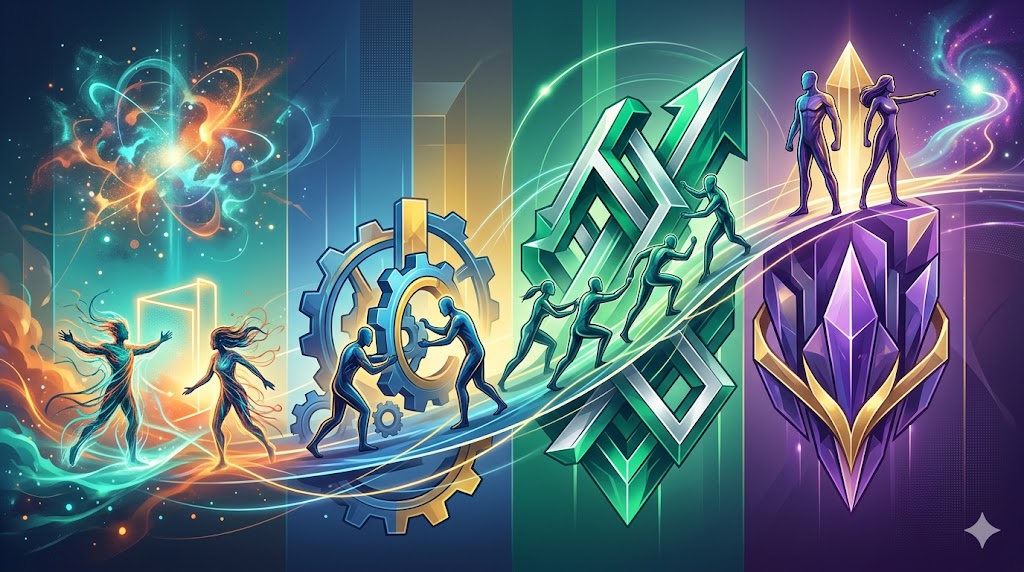
The Final Frontier of Design

Breaking the Dual Barriers of Machine Olfaction to Unlock the Next Era of Multi-Sensory Innovation

The Final Frontier of Design

GUEST POST from Chateau G Pato


I. Introduction: The Flatness of the Digital World

Breaking the Dual Barriers of Machine Olfaction to Unlock the Next Era of Multi-Sensory Innovation

For decades, human-centered design has mastered the pixels, micro-interactions, and spatial acoustics of the digital landscape. We have engineered an era of unprecedented visual and auditory fidelity, yet our interactions remain trapped behind cold glass. From a futurist perspective, the modern digital experience suffers from an artificial flatness — a sensory deficit that strips away the visceral, chemical essence of how humans natively navigate reality. By designing exclusively for the eyes and ears, we have sanitized technology, separating it from our most primal cognitive pathways.

Olfaction represents the ultimate untapped frontier for experience design. Unlike sight or sound, which are processed through the thalamus, scent has an unmediated, direct line to the limbic system — the evolutionary core of human memory, emotion, and behavior. A single volatile organic compound can instantly trigger vivid nostalgia or alter physiological arousal before the conscious mind even registers its identity. To build experiences that truly resonate on a deeply human level, innovation leaders must evolve beyond the binary constraints of audiovisual media and embrace the intricate syntax of smell.

The Strategic Innovation Paradox: The obstacle to this multi-sensory future is not a lack of imagination, but a profound dual technical constraint. To bridge the digital-chemical divide, human-centered change frameworks must simultaneously dismantle two systemic barriers: The Ingestion Wall (the challenge of artificial chemical perception) and The Projection Wall (the challenge of safe, dynamic, and contextually aware synthesis back to the human user).

Dismantling these barriers requires an alchemical blend of emerging technologies and design discipline. On the perception side, we must capture a world devoid of a standardized “color wheel,” where environmental inputs vary based on complex fluid dynamics. On the emission side, we must overcome the physical latency of chemical transport, where molecules cannot instantly refresh at the speed of light (c ≈ 299,792 km/s). Only by breaking both barriers can we transform machine olfaction from a laboratory novelty into an invisible, transformative utility for healthcare, learning, and immersive computing.

II. Barrier 1: The Ingestion Wall (The Challenge of Machine Perception)

Deconstructing the Complexities of Artificial Chemical Perception

To design an experience around scent, a system must first be able to listen to the environment. This brings us to the first fundamental barrier: The Ingestion Wall. In fields like computer vision or acoustics, mapping sensory input to data is relatively linear — we rely on predictable spectrums of light frequencies or sound waves. Olfaction completely breaks this mold. The chemical world is radically multi-dimensional, composed of thousands of volatile organic compounds (VOCs) that interact non-linearly to form a single scent profile. Capturing this data in a meaningful way requires moving away from traditional static sensing paradigms.

The State of the Art: Moving Beyond the Lab

Current advancements in Electronic Noses (e-noses) have heavily relied on Metal Oxide Semiconductors (MOS) to track chemical interactions. However, the true breakthrough in modern human-centered innovation lies at the intersection of biology and machinery. We are witnessing a paradigm shift toward bio-hybrid sensors that utilize actual Insect Odorant Binding Proteins (OBPs). These proteins offer a level of real-time specificity, sensitivity, and sustainable deployment that synthetic sensors simply cannot replicate on their own.

Furthermore, true digital transformation demands that these sensors move out of sterile laboratory environments and into the real world. Modern research has successfully integrated these bio-hybrid sensors onto agile, soft-growing robotic platforms. Because scent travels dynamically via airflow and ambient drift, these flexible robotic systems can naturally navigate complex, changing physical environments to track, isolate, and classify odors directly at the source.

The Experience Design Flaw: The Missing Vocabulary

The deepest challenge of the Ingestion Wall is not just hardware limitations — it is a lack of a standardized design framework. Digital design thrives on coordinates like RGB for color or Hz for sound. Olfaction has no universal “color wheel.” To bypass this linguistic and systemic deficit, current artificial intelligence models are utilizing self-supervised learning. By pairing raw olfactory signatures with computer vision, AI is learning to construct “visual-smell” crossmodal representations. The machine learns what an object should smell like by looking at it, effectively building a standardized bridge between visual geometry and chemical identity.

Overcoming the Ingestion Wall fundamentally redefines the role of data collection in experience design. It turns environmental context into a dynamic, machine-readable asset. However, capturing the chemical fingerprint of the physical world is only half the battle. To complete the human-centered loop, we must understand how to project that data back into the human sensory apparatus without causing cognitive friction or sensory distortion — leading us directly to the second barrier.

III. Barrier 2: The Projection Wall (The Challenge of Human Delivery)

Navigating the Fluid Dynamics and Cognitive Constraints of Scent Synthesis

Once a machine can accurately ingest and interpret the chemical world, it encounters an entirely different obstacle on the output side: The Projection Wall. In traditional digital experience design, we are accustomed to instant execution. Pixels refresh at sixty frames per second, and sound waves travel efficiently through space to our ears. Scent, however, is bound by the messy laws of fluid dynamics, airflow, and physical molecule dispersion. You cannot instantly clear a room of a fragrance when a user closes an application or switches tasks; the chemical residue lingers, creating a physical latency that digital systems are fundamentally unequipped to handle.

The “Smellody” Problem and Sensory Fatigue

This physical latency introduces what sensory architects call the “Smellody” problem. Human olfactory receptors operate on a much slower physiological time scale than our visual or auditory systems. When digital platforms attempt rapid sensory delivery — such as cycling through different ambient scents to match fast-paced visual cuts—the human brain experiences profound sensory fatigue and adaptation. Instead of a cohesive multi-sensory narrative, the user is left disoriented, overwhelmed, and chemically desensitized, destroying the psychological immersion the designer intended to build.

Designing the Crossmodal Bridge

To scale this delivery bottleneck, experience designers must leverage human psychology rather than relying solely on chemical brute force. This is achieved by engineering crossmodal bridges. Because our senses do not operate in silos, we can manipulate the perception of a smell using other sensory inputs. For example, recent innovation shows that pairing light chemical dispersion with specifically calibrated musical soundscapes can mentally evoke, amplify, or fundamentally alter the perceived quality of a fragrance. By harmonizing sight, sound, and scent, we can create the illusion of a rapid, dynamic olfactory shift without overloading the user’s physical environment.

Breaking the Projection Wall means accepting that we cannot force chemistry to move at the speed of software. Instead, the future of interaction design relies on elegant synchronization — using cross-modal illusions, micro-dosing technologies, and localized airflow to deliver scent precisely when and where it matters most. Only by mastering this delicate human delivery loop can we move toward functional, real-world applications that bring true value to daily life.

IV. The Human-Centered Experience Paradigm (Designing the Interface)

Elevating Machine Olfaction from Novelty Gimmick to Functional Human Utility

To truly break through the dual barriers of machine olfaction, we must shift our design philosophy away from pure engineering milestones and look through a deeply human-centered lens. For years, adding scent to technology has been relegated to the fringes of entertainment — think primitive gaming smell-packs or short-lived cinema gimmicks. These applications failed because they treated scent as an isolated novelty rather than an integrated, functional component of the human experience. The next era of design demands that we transition olfaction into a meaningful, life-enhancing utility that solves real human friction[cite: 1, 2].

Augmented Reality and Cognitive Optimization

One of the most profound applications of this new paradigm is within spatial computing and modern education. By introducing ambient olfactory cues into augmented reality (AR) learning environments, we can fundamentally alter how the brain encodes information[cite: 1, 2]. Carefully designed, context-aware scents have been shown to significantly lower cognitive load during complex tasks, spike user attention, and drastically improve delayed memory retention[cite: 1, 2]. Instead of forcing a student or worker to rely solely on heavy visual text, we can use the olfactory pathway to create an invisible, intuitive layer of cognitive support[cite: 1, 2].

Proactive Wellness and Non-Invasive Diagnostics

Beyond education, the ultimate human-centered interface is one that invisibly protects our health. Overcoming the Ingestion Wall allows us to build proactive wellness tools directly into our daily routines[cite: 1, 2]. By integrating highly sensitive electronic noses into everyday objects, technology can sample the volatile organic compounds (VOCs) in a user’s breath or skin on a daily basis[cite: 1, 2]. This transitions medical diagnostic tools away from intimidating, reactive hospital visits and transforms them into a seamless, friction-free experience capable of early cancer and chronic disease detection before physical symptoms ever manifest[cite: 1, 2].

By embedding machine olfaction into the very fabric of our learning and health systems, we move closer to technology that truly respects human biology. The interface of the future is not a brighter screen or a faster click; it is an environment that adapts to and communicates with our chemistry, opening up entirely new vectors for empathy, transformation, and strategic value.

V. Strategic Imperatives for Innovation Leaders

Driving Organizational Change, Ethical Guardrails, and Contextual Design Systems

As we approach the boundaries of this new frontier, machine olfaction transitions from a technical experiment to a profound strategic differentiator. For innovation leaders, navigating this shift requires more than just capital investment; it demands a fundamental evolution in how we structure data, build design systems, and manage human-centered change. To successfully spearhead this transformation and unlock true market value, leadership must execute on three core imperatives.

1. Champion the Olfactory Data Commons

Innovation cannot thrive in a vacuum of proprietary, siloed datasets. Because the chemical world lacks a natural, linear vocabulary, building a scalable architecture for scent requires massive collaboration. Forward-thinking leaders must champion the creation of an open-source, multi-modal data commons. By pooling diverse chemical signatures and pairing them with computer vision and environmental data, we can accelerate the machine learning required to create a reliable digital map of the physical, sensory world.

2. Design for Adaptive, Spatial Context

Unlike flat screens, scent is intrinsically tied to the real world. A digital interface utilizing olfaction must recognize that a smell’s intensity, narrative impact, and emotional reception change dynamically based on distance, ambient airflow, and the surrounding background environment. Experience design systems must become hyper-adaptive, evolving beyond rigid, static layouts to dynamically balance chemical delivery based on real-time environmental physics and immediate user context.

3. Establish Rigid Ethical Guardrails

Because olfaction bypasses our rational, analytical cognitive filters and speaks directly to the emotional centers of the brain, it holds unparalleled power over human behavior. This creates a profound ethical responsibility. Leaders must proactively establish strict guardrails prioritizing absolute user consent. We must fiercely protect consumers from intrusive sensory marketing, chemical tracking, or subtle emotional manipulation. Human-centered innovation must mean that the user always retains total sovereignty over their own sensory environment.

By establishing these foundational open data standards, context-aware frameworks, and deep ethical commitments, organizations can lead the multi-sensory market with authority and integrity. True innovation isn’t just about what technology can achieve — it’s about building the strategic, intentional scaffolding required to introduce that technology to humanity safely and effectively.

VI. Conclusion: A Call to De-Sanitize the Future

The Evolution of Interaction Design into Experience Alchemy

Breaking the dual barriers of machine olfaction represents far more than a triumph of bio-hybrid sensors, spatial data commons, or fluid dynamics. It signals a fundamental paradigm shift in the definition of design itself. For too long, our digital ecosystems have forced humanity to adapt to the limitations of the machine, filtering our rich, three-dimensional reality through flat panes of glass and sterile audio streams. By intentionally de-sanitizing our digital interactions, we begin to build technology that finally speaks the native, chemical language of human biology.

The Evolution of the Designer

As the lines between physical environments and digital interfaces completely dissolve, the role of the interaction designer must radically evolve. We can no longer think of ourselves merely as pixel architects, information layout engineers, or workflow mapping experts. The multi-sensory frontier demands that we step into the shoes of experience alchemists. Tomorrow’s design leaders must master the art of crossmodal synthesis, balancing the speed of sight and sound with the lingering, emotional depth of smell to orchestrate cohesive cognitive landscapes that truly respect human psychology.

The Ultimate Vision: A Truly Human Reality

The final frontier of design is not about creating artificial worlds to escape into; it is about enriching and protecting the world we already inhabit. Whether through non-invasive wellness networks that subtly monitor our health, or immersive educational environments that supercharge memory retention, machine olfaction allows us to build an empathetic layer of technology. When we unlock the full spectrum of human perception, we create a future that is not colder, faster, or more isolated—but one that is profoundly more vibrant, intuitive, and deeply human.

The scaffolding has been laid, the technological pieces are converging, and the strategic imperatives are clear. The only question that remains is whether innovation leaders possess the creative courage to move past the screen, look beyond the horizon, and design for the full human experience.

Frequently Asked Questions

Human-Centered Perspectives on Machine Olfaction

1. What exactly are the “Dual Barriers” holding back machine olfaction?

The dual barriers represent the Ingestion Wall and the Projection Wall. The Ingestion Wall is the challenge of machine perception — capturing, classifying, and digitizing highly complex, non-linear chemical volatile organic compounds (VOCs) without a standardized color wheel. The Projection Wall is the challenge of human delivery — synthesizing and emitting scents dynamically despite the physical latency of fluid dynamics and the constraints of human olfactory desensitization.

2. How can experience designers overcome the physical slowness of scent emission?

Because chemical molecules travel slowly and linger in environments, designers cannot refresh scents at the speed of pixels. To circumvent this, designers must build cross-modal bridges. By pairing micro-dosed chemical emissions with specifically calibrated auditory soundscapes or visual shifts, we can leverage human psychology to mentally evoke, alter, or accelerate the perceived transition of a scent.

3. What are the most immediate, practical applications for digital scent technology?

Moving far beyond novelty gaming gimmicks, the most impactful applications reside in cognitive optimization and proactive healthcare. In spatial computing and AR learning, context-aware ambient scents lower cognitive load and increase long-term memory retention. In health tech, highly sensitive bio-hybrid electronic noses can continuously analyze breath or skin VOCs, transforming early disease diagnostics into an invisible, friction-free daily routine.


Image credit: Gemini

Subscribe to Human-Centered Change & Innovation WeeklySign up here to get Human-Centered Change & Innovation Weekly delivered to your inbox every week.