Author Archives: Chateau G Pato

About Chateau G Pato

Chateau G Pato is a senior futurist at Inteligencia Ltd. She is passionate about content creation and thinks about it as more science than art. Chateau travels the world at the speed of light, over mountains and under oceans. Her favorite numbers are one and zero. Content Authenticity Statement: If it wasn't clear, any articles under Chateau's byline have been written by OpenAI Playground or Gemini using Braden Kelley and public content as inspiration.

Matching Your Organization’s Talent Mix to Long-Term Strategy

The Temperament Audit
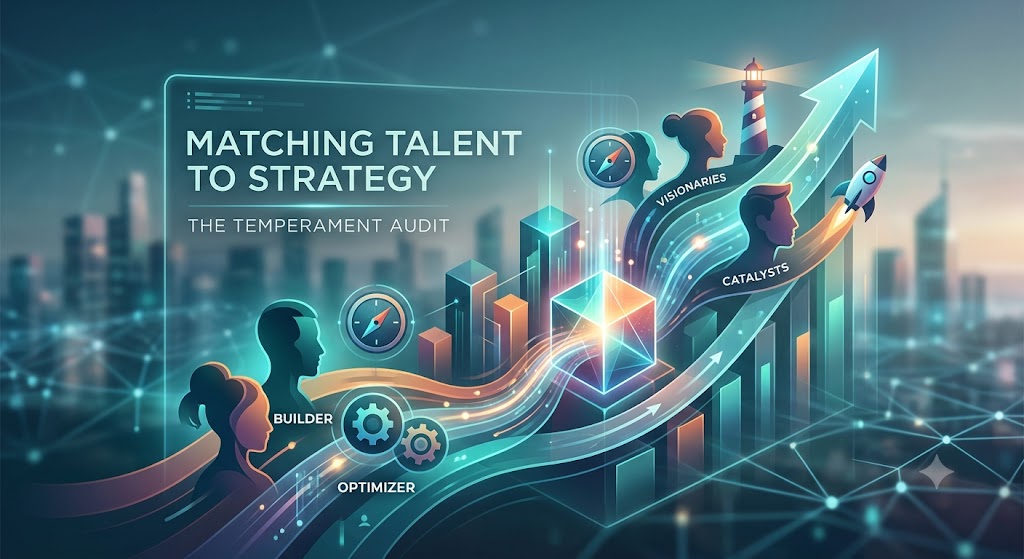
Matching Your Organization’s Talent Mix to Long-Term Strategy

GUEST POST from Chateau G Pato


The Strategy-Talent Mismatch

Too often, organizations treat strategy as a purely analytical exercise — a roadmap drawn in a boardroom that assumes the current workforce can simply execute the plan through sheer will. However, strategic failure is rarely a result of poor planning. Instead, it stems from a fundamental mismatch between an organization’s “innovation temperament” and its stated objectives.

The “Vision vs. Reality” Gap

The gap between “Strategic Intent” and “Tactical Reality” is the graveyard where most ambitious initiatives go to die. Leaders often articulate a bold future-state, but they lack a method to evaluate whether their existing team’s psychological and behavioral makeup is actually wired to get them there. When the strategy demands agility but the organization is temperamentally built for risk-aversion, the resulting friction creates a culture of stagnation.

Defining the Temperament Audit

It is time to move beyond the limiting scope of skills-based hiring and performance reviews. A Temperament Audit goes deeper. It identifies the cognitive and creative predispositions — the intrinsic ways individuals process change, view risk, and approach problem-solving. By auditing the temperaments currently present within your organization, you gain visibility into what your team is naturally capable of achieving and where you are culturally inhibited.

The Cost of Misalignment

Misalignment is expensive. When you force a team dominated by “Optimizers” to execute a “Disruption” strategy, you aren’t just slowing down innovation — you are inducing organizational trauma. You end up with a team that feels like they are failing because they are being asked to solve problems for which their temperament is ill-suited, leading to rapid burnout and the quiet abandonment of the strategic vision. Recognizing this mismatch is the first step toward building a truly resilient organization.

The Four Archetypes of Innovation Temperament

To audit your organization effectively, you must first understand the primary temperaments that drive behavior. While individuals possess a complex blend of traits, most team members will exhibit a dominant mode of engagement that defines how they contribute to innovation.

The Visionary (The Architect)

Visionaries are the architects of the future. They possess the cognitive ability to scan the horizon, connecting disparate dots to foresee 10-year shifts in markets and technology. They are essential for setting the “North Star,” but they can often feel detached from the ground-level work required to execute their own grand designs.

The Builder (The Engineer)

Builders are the bridge between abstraction and reality. They thrive when tasked with taking a rough concept and defining the tactical steps necessary to make it functional. While Visionaries dream the “What,” the Builders engineer the “How,” providing the structural integrity that prevents good ideas from collapsing under their own weight.

The Optimizer (The Refiner)

Optimizers are the masters of efficiency, scale, and consistency. They are critical for the long-term survival of an organization because they ensure that processes are lean and profitable. However, in an innovation context, they can become the “silent killers” of radical ideas, inadvertently applying rigid efficiency metrics to experiments that require breathing room to survive.

The Catalyst (The Disruptor)

Catalysts are the high-energy agents of change who challenge the status quo. They are inherently uncomfortable with “the way we’ve always done it” and are the most likely to push for radical, human-centered shifts. They are the friction that creates the spark of innovation, but they require a steady hand to channel their energy toward constructive organizational outcomes.

Assessing Your Current Portfolio

Knowing the archetypes is only the first step; the true challenge lies in mapping the distribution of these temperaments within your current workforce. An organization that is “temperamentally heavy” in one area will face predictable blind spots.

Diagnostic Tools

Moving toward a data-informed approach, we must implement diagnostic frameworks that go beyond static job descriptions. These tools should assess where your team members naturally gravitate when faced with ambiguity, conflict, or the need for creative problem-solving, creating a heatmap of your organizational cognitive diversity.

The “Innovation Roles” Perspective

To ensure alignment with your broader strategy, we must map these temperaments against the Nine Innovation Roles. By evaluating whether your current talent pool can effectively fill roles like the Trend Spotter, the Experimenter, or the Connector, you can pinpoint the specific functional gaps preventing your strategy from gaining traction.

Identifying the “Silent Voids”

The most dangerous gaps are often the ones you cannot see. It is easy to recognize when you lack a Visionary, but it is much harder to realize that you have an abundance of Builders and an total absence of Catalysts. This “Silent Void” creates an organization that is excellent at executing yesterday’s strategy, but completely unable to pivot toward tomorrow’s opportunities. Auditing your portfolio forces you to confront these voids and determine whether you need to recruit new talent, or provide the psychological safety necessary for your existing team to flex into underrepresented roles.

Matching Talent to Strategic Phases

Strategy is not a static destination; it is a series of shifting cycles. As your organization moves through different stages of the innovation lifecycle, the temperament required to succeed changes. Failing to adjust your talent focus accordingly is a primary driver of strategic drift.

Phase 1: Exploration (The Need for Catalysts)

In the early-stage exploration of new opportunities, the organization must prioritize risk-tolerance and high-velocity learning. This phase requires a high density of Catalysts who are willing to break existing models and challenge ingrained assumptions. Attempting to manage this phase with a heavy hand of Optimizers will stifle the creative volatility necessary to uncover disruptive potential.

Phase 2: Execution & Scaling (The Need for Builders/Optimizers)

Once a viable innovation is identified, the focus must shift. The chaotic energy of the exploration phase becomes a liability if not tempered. You must transition your organizational focus to Builders and Optimizers who can refine the concept, establish repeatable processes, and drive market scalability. Success here is defined by consistency, not disruption.

Phase 3: Transformation (The Need for Visionaries)

Even the most successful organizations eventually face the “plateau of maturity,” where established efficiency begins to impede long-term relevance. During this phase, you must re-infuse the organization with Visionaries capable of identifying the next “Great American Contraction” or technological shift. Transformation is not about doing the same thing better; it is about having the foresight to pivot before the market renders your current model obsolete.

Strategic Recommendations

Once you have diagnosed your organization’s temperament gaps, the final step is moving from insight to action. Creating a temperamentally aligned organization is not about firing and hiring, but about creating the conditions for fluid, intentional contribution.

Dynamic Talent Mobility

Static job descriptions are the enemy of innovation. Instead of keeping individuals tethered to a fixed set of duties, implement dynamic talent mobility. This allows you to shift individuals into roles that match the organization’s current strategic cycle — moving a team member from a Builder role during execution to a Catalyst role during a new exploration phase — based on their temperament strengths rather than their historical title.

Managing the Friction

Productive tension is not just inevitable; it is desirable. The goal is not to eliminate friction between your Optimizers and your Catalysts, but to manage it. Foster environments where these temperaments are encouraged to challenge one another — the Optimizers ensuring feasibility and the Catalysts pushing for possibility. Without this friction, you either end up with unscalable fantasies or stagnant, risk-averse execution.

The Human-Centered Approach

Above all, remember that a Temperament Audit is a tool for empowerment, not exploitation. It should focus on placing individuals in roles where they are most likely to thrive, reducing the cognitive dissonance that comes from forcing “round-peg” people into “square-peg” roles. When you treat talent as human beings with specific creative predispositions rather than resources to be moved across a spreadsheet, you create a culture of belonging that naturally fosters higher performance and innovation resilience.

Conclusion: The Future of Organizational Resilience

The landscape of work is undergoing a seismic shift. As we navigate the “AI Soft Landing” and the increasing automation of routine, task-based labor, the true competitive advantage for any organization will no longer be technical proficiency alone. Instead, it will be the temperamental alignment of your workforce with your strategic vision.

The “AI Soft Landing” Context

In an era where AI can handle the heavy lifting of data analysis and tactical execution, the value of human labor shifts toward synthesis, empathy, and strategic foresight. Understanding your organization’s collective temperament is the key to ensuring that your human talent is focused on the high-value, creative work that machines cannot replicate, effectively future-proofing your human capital.

Final Thought

The winning organizations of the future will not necessarily be those with the largest budgets or the most advanced technology; they will be the ones that can successfully navigate the transition between distinct modes of work. By auditing your temperament mix and intentionally matching your people to the strategic phase at hand, you build a foundation of true resilience. It is time to stop managing people as static resources and start leading them as a dynamic, temperamentally aligned force capable of shaping the future.

Frequently Asked Questions

What is an Innovation Temperament Audit?

An Innovation Temperament Audit is a strategic diagnostic process that evaluates the cognitive and creative predispositions of your workforce. Rather than focusing solely on technical skills, it maps how individuals naturally process change, approach risk, and handle problem-solving to ensure your team is aligned with your organization’s specific strategic goals.

Why is matching talent to strategic phases important?

Different phases of innovation — such as exploration, scaling, and transformation — require different behavioral strengths. If your team’s collective temperament does not match the current phase (for example, relying on risk-averse optimizers during an exploration phase), your strategy will likely fail due to lack of cultural agility.

How does a Temperament Audit differ from traditional performance management?

While traditional performance management focuses on past output and competency against static job descriptions, a Temperament Audit is forward-looking. It prioritizes human-centered design by identifying the environment where an individual will naturally thrive, facilitating better talent mobility and reducing burnout by aligning work roles with inherent creative predispositions.

Bottom line: Futurology is not fortune telling. Futurists use a scientific approach to create their deliverables, but a methodology and tools like those in FutureHacking™ can empower anyone to engage in futurology themselves.

Image credit: Gemini

Subscribe to Human-Centered Change & Innovation WeeklySign up here to get Human-Centered Change & Innovation Weekly delivered to your inbox every week.

How Diverse Perspectives Defend Against Strategic Blind Spots

Inclusivity as a Shield

How Diverse Perspectives Defend Against Strategic Blind Spots

GUEST POST from Chateau G Pato


The High Cost of the Echo Chamber

In a fast-evolving marketplace, the greatest threat to an organization’s survival isn’t a competitor’s budget or a sudden shift in technology. It is the leadership team’s collective blind spots. Too often, successful companies fall victim to the “Innovation Illusion” — the dangerous belief that past success guarantees future relevance. Homogeneous thinking creates comfortable but fragile echo chambers, leaving organizations vulnerable to disruption because everyone is looking at the horizon through the exact same lens.

To survive and thrive, we must shift the narrative. True inclusivity is not a check-the-box human resources initiative or a corporate compliance requirement; it is a core strategic shield and a critical driver of continuous innovation. When we limit our perspectives, we limit our foresight.

Inclusivity acts as the ultimate defense mechanism against strategic blind spots. By actively inviting, valuing, and integrating diverse perspectives into our decision-making architectures, we transform organizational vulnerability into competitive resilience. We move from reactive damage control to proactive future-shaping, ensuring that the human experiences we design and the strategies we deploy are robust enough to withstand the unexpected.

The Anatomy of a Strategic Blind Spot

Strategic blind spots are not accidental gaps in data; they are systemic failures of perception. In the boardroom, these blind spots are fueled by deep-seated cognitive biases. Groupthink rewards conformity over critique, confirmation bias causes leaders to cherry-pick data that validates their current worldview, and proximity bias elevates the voices of those closest to the center of power while silencing the realities of the frontline. When leadership teams share the same background, education, and career trajectories, their collective blind spots expand exponentially.

This homogeneity often leads to the “User Persona” Fallacy. Organizations frequently design strategies, products, and experiences for a monolithic customer base that exists only in slide decks. They build for an idealized version of the end-user, entirely ignoring shifting human behaviors, cultural nuances, and regional demographic realities. When you don’t have diverse voices participating in the design of an experience, you inherently design an experience full of friction for anyone outside the dominant demographic group.

From a futurology perspective, a lack of diversity severely limits an organization’s ability to recognize weak signals on the periphery. Disruptive trends and market shifts rarely emerge from the mainstream; they begin at the margins. If your strategy team lacks cognitive diversity, you will miss the early indicators of shifting consumer values, emerging technologies, or evolving labor dynamics. By the time a threat is obvious enough for a homogeneous team to recognize it, the window for proactive innovation has already closed.

Inclusivity as the Ultimate Defense Mechanism

To insulate an organization against fast-moving market disruptions, leadership must actively expand its strategic perimeter. Homogeneous teams naturally struggle to identify risks outside their collective comfort zone. In contrast, teams rich in cognitive diversity and varied lived experiences act as a natural early warning system. They bring distinct mental models to the table, allowing the organization to stress-test strategies from multiple angles and uncover hidden vulnerabilities before they manifest as operational failures.

However, simply assembling a diverse team is not enough; the environment must support them through robust psychological safety. True risk mitigation requires a culture where “constructive friction” is celebrated rather than suppressed. When frontline employees — who interact daily with the realities of the market — feel safe to challenge executive assumptions, wave red flags, and voice dissenting opinions without fear of professional retaliation, the organization gains a powerful shield against catastrophic blind spots.

This is where experience design and strategic foresight converge into a human-centered approach to governance. True inclusivity means bringing the principles of co-creation directly into the boardroom. Rather than designing top-down strategies and forcing compliance, organizations must build participatory architectures. By ensuring that the individuals who actually experience the operational or customer friction are actively involved in designing the solutions, companies can create resilient, future-ready strategies that eliminate blind spots from the very start.

Operationalizing the Shield: From Philosophy to Action

Moving from a philosophy of inclusivity to an actionable defensive shield requires changing how we build, launch, and manage strategic initiatives. It starts by deliberately de-biasing our innovation pipelines. Instead of allowing a uniform group of stakeholders to move projects from ideation to execution, organizations must embed diverse checkpoints into standard change management and product development frameworks. These checkpoints force a pause to ask: Whose voice is missing from this stage, and what assumptions are we making on their behalf?

One of the most effective ways to operationalize this is by institutionalizing the “Pre-Mortem” framework, supercharged by cross-functional diversity. Before a major strategy, product, or change initiative is launched, leadership should assemble a diverse team that spans different departments, seniority levels, and backgrounds. This team is given a singular mission: assume the launch has completely failed, and work backward to identify exactly why. By leveraging diverse lived experiences, this exercise uncovers subtle, non-obvious failure modes — such as cultural missteps or front-line operational friction — long before they impact the bottom line.

Finally, we must look beyond internal corporate structures and extend this participatory architecture to our entire ecosystem. Building an inclusive shield means involving diverse external partners, suppliers, and customer co-creation cohorts. Co-creation reduces organizational resistance and builds immediate buy-in. When you invite your broader ecosystem to actively shape your solutions, you shift from a fragile, top-down mandate to a resilient network that naturally defends against disruption and accelerates human-centered change.

The Human-Centered Future of Strategy

Defending against strategic blind spots is not a one-time crisis response; it is an ongoing leadership commitment. To build a truly resilient organization, leaders must step back and actively audit their inner circles, advisory boards, and decision-making processes for homogeneity. If everyone around the executive table shares the same perspective, has the same background, and agrees on every direction, the organization is structurally vulnerable to the next major market disruption.

The transition to a human-centered, inclusive model requires shifting our entire view of organizational change. Top-down mandates are inherently fragile because they fail to account for the nuanced realities of a diverse workforce and customer base. By replacing rigid, top-down approaches with participatory innovation and robust co-creation architectures, we don’t just protect our companies from hidden risks — we unlock the collective intelligence required to see around corners.

Ultimately, embedding inclusivity into the DNA of your strategy yields a powerful double dividend. It provides a defensive shield that intercepts catastrophic blind spots before they cause harm, while simultaneously creating an offensive engine for breakthrough value. When people feel valued, heard, and empowered to contribute their unique perspectives, you create an agile, future-ready culture capable of navigating change and actively shaping the future of your industry.

Frequently Asked Questions

1. Why is inclusivity considered a strategic shield rather than just an HR initiative?

Traditional HR initiatives often treat diversity as a compliance metric. As a strategic shield, inclusivity is an active risk-mitigation tool. By bringing diverse perspectives into decision-making, organizations deliberately break up executive echo chambers, challenge flawed assumptions, and expose critical blind spots before they lead to market disruption.

2. How do diverse teams help an organization spot “weak signals” in the market?

Disruptive trends rarely start in the mainstream; they emerge at the margins. Homogeneous teams tend to focus on familiar data and established patterns. Diverse teams bring varied lived experiences and distinct mental models, allowing them to notice, interpret, and validate subtle shifts in human behavior and technology that others overlook.

3. What is a “Pre-Mortem” and how does diversity make it more effective?

A Pre-Mortem is an exercise where a team assumes a project has completely failed before it even launches, and works backward to find the causes. When this is done with a highly diverse, cross-functional team, it uncovers a much wider array of potential failures — such as front-line friction or cultural missteps — that a uniform leadership team would never see coming.

Bottom line: Futurology is not fortune telling. Futurists use a scientific approach to create their deliverables, but a methodology and tools like those in FutureHacking™ can empower anyone to engage in futurology themselves.

Image credit: Gemini

Subscribe to Human-Centered Change & Innovation WeeklySign up here to get Human-Centered Change & Innovation Weekly delivered to your inbox every week.
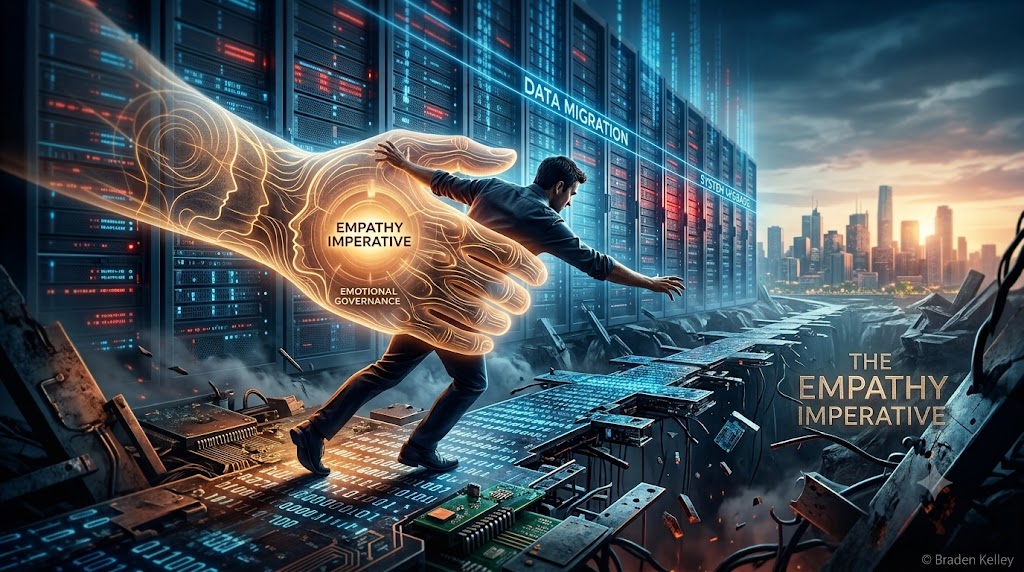
The Empathy Imperative

Why Technical Migrations Fail Without Emotional Governance

The Empathy Imperative

GUEST POST from Chateau G Pato


The Ghost in the Machine

Walk into any corporate boardroom during a major technical migration — whether it’s a massive cloud transition, an enterprise resource planning (ERP) overhaul, or a data architecture upgrade — and you will see the same dashboard. It is a sea of green, yellow, and red status indicators tracking server uptimes, data pipeline integrity, budget burn rates, and code deployment deadlines. The assumption baked into these rooms is as dangerous as it is common: that a successful technical migration is purely an engineering and timeline problem.

Yet, history tells a far more expensive story. Billions of dollars are poured into flawless deployments that check every technical box, only to result in a catastrophic post-launch drop in productivity, a surge in employee turnover, and widespread operational drag. When the system goes live, the code works, but the business stalls. The issue isn’t that the software is broken; it’s that the human operating system has rejected the change. This invisible friction exists because leaders treat technical transitions as structural shifts rather than deeply emotional human experiences.

Introducing Emotional Governance

To bridge this gap, organizations must move beyond traditional, top-down change management and introduce a framework of Emotional Governance. Emotional Governance is the systematic methodology of measuring, managing, and designing for the human emotional transitions that occur during technical shifts. It recognizes that every modified workflow represents a disruption to a person’s daily mastery, autonomy, and professional identity.

When we ignore the emotional infrastructure of a migration, we leave the human element to chance. But when we prioritize empathy as a strategic imperative, aligning emotional governance with technical milestones, we unlock the true return on investment of our innovation. You cannot build a resilient, digital-first organization on top of a bruised, alienated, and resistant workforce. The migration must happen with your people, not to them.

The Architecture of Anxiety

To understand why technical migrations encounter massive, unyielding resistance, leaders must first dismantle the myth of the “stubborn employee.” People rarely resist change simply because they are lazy or contrarian; they resist change when it threatens their survival metrics within an organization. When you replace an enterprise tool, you are not just changing software — you are rewriting the unwritten social contract of how work gets done and how value is perceived.

The Loss of Mastery and Status Anxiety

Every piece of legacy software, no matter how clunky or outdated, represents a domain of human expertise. Over years of use, employees have developed workarounds, mastered shortcuts, and built their professional identity around being the “go-to” expert who can solve any system quirk. They possess deep, institutional mastery.

The moment you mandate a new platform, you instantly reset that mastery to zero. Overnight, a high-performing veteran is reduced to a hesitant novice, fumbling through a new user interface while trying to maintain their usual output. This creates profound status anxiety. The fear of appearing incompetent or slow to adapt triggers a primal self-defense mechanism, forcing employees to cling to the old way of working to protect their perceived value.

The “Invisible Work” Tax

Another major oversight in technical deployments is the failure to account for the heavy emotional and cognitive load placed on teams during the transition phase — what I call the Invisible Work Tax. Leadership frequently expects employees to seamlessly adopt complex new workflows while simultaneously maintaining 100% of their daily operational targets.

The hours spent troubleshooting unfamiliar errors, attending mandatory training modules, and manually re-entering data into an unstable staging environment are completely invisible on executive dashboards. When organizations fail to provide operational breathing room, treating the transition as an “add-on” task rather than a core corporate priority, empathy evaporates. The resulting burnout turns into active resentment toward the technology itself.

The Legacy of Historical Scarring

Finally, no migration occurs in a vacuum. Every organization carries the psychological scar tissue of past, poorly executed IT rollouts. When employees hear the word “upgrade,” they don’t think of innovation; they remember the time a previous platform crashed for three days, or when a top-down mandate forced them to use a tool that made their jobs twice as hard.

This historical scarring breeds a deeply ingrained culture of cynicism. Without deliberate emotional governance to acknowledge and heal those past organizational failures, employees will look at your new migration and say, “This is just another management fad. If I ignore it long enough, it will go away.” To overcome this inertia, you must design an experience that proves this time is fundamentally different.

Designing the Empathy-Driven Migration Framework

Overcoming the architecture of anxiety requires more than standard corporate communication or generic training videos. It demands a fundamental shift from top-down change management to participatory Experience Design. Traditional change management treats people as objects to be managed, pushed, and trained into compliance. Experience design, however, views employees as active users and co-creators of the transition, focusing on how the journey feels from their perspective.

From Push Communication to Participatory Innovation

The classic mistake in technical rollouts is relying on “push” communication — sending broadcast emails or top-down mandates declaring the system is changing and everyone must comply. This approach naturally breeds resistance because it strips users of their agency.

An empathy-driven framework replaces mandates with co-creation. By actively involving frontline users during the vendor selection, testing, and staging phases, you shift the dynamic from a forced transition to a shared journey. When people help build the sandbox, they don’t fight the rules of the game. This collaborative approach ensures that the unique edge cases and daily realities of frontline workflows are built into the architecture from day one, significantly reducing post-launch friction.

The Critical Role of Psychological Safety

To unlock the true return on investment of any technological innovation, leaders must establish a culture of psychological safety during the migration process. If employees are terrified of making mistakes, clicking the wrong button, or slowing down metrics on an unfamiliar platform, they will default to the safest, most restrictive behaviors. They will find underground workarounds, stick to manual processes, or avoid using the new tool altogether.

True human-centered innovation only happens when users feel safe enough to experiment, fail, and learn out loud without fear of penalization. An empathy-driven framework deliberately designs “safe-to-fail” zones — such as extended sandboxes and blame-free staging environments — allowing teams to rebuild their confidence and mastery at a manageable pace. When you secure the human foundation, the technical superstructure will naturally succeed.

Implementing Emotional Governance in Practice

Moving from the philosophy of empathy to operational reality requires structure, intent, and actionable metrics. Emotional governance cannot merely be a set of nice sentiments in a kickoff meeting; it must be built directly into your project management methodology. Just as you have risk registers for security vulnerabilities and data compliance, you must establish an operational framework to manage the emotional risks of your workforce.

The Emotional Risk Audit

Before a single line of code is migrated, organizations must conduct an Emotional Risk Audit. This process goes beyond standard stakeholder mapping to analyze the human disruption coefficient of the upcoming change. Leaders must evaluate every department across two critical dimensions: the degree of workflow disruption and the impact on professional identity.

For example, transitioning a customer service team from a familiar, macro-heavy legacy tool to a modern, AI-assisted platform may look like a massive upgrade on paper. However, the audit might reveal that this team derives its sense of status from knowing those complex legacy shortcuts. By identifying this emotional vulnerability early, leaders can proactively design targeted recognition and transition strategies to protect employee confidence before the technical deployment begins.

Sentiment Metrics vs. Completion Metrics

The traditional way IT project managers measure readiness is fundamentally flawed. Tracking that “92% of staff completed the mandatory 45-minute training video” tells you absolutely nothing about their psychological readiness or their willingness to adopt the tool. It only measures compliance, not alignment.

An empathy-driven migration tracking system prioritizes sentiment metrics over simple completion rates. This involves deploying frequent, lightweight pulse surveys and analyzing qualitative feedback loops to measure real-time frustration peaks, psychological safety levels, and perceived utility. If your technical deployment timeline is at 90% but employee sentiment is at 20%, your migration is failing. Emotional governance gives leaders the visibility to pause, adjust, and address human friction before a rollout becomes a trainwreck.

Empowering Transition Sherpas

The final piece of practical implementation is changing who guides the journey. Relying solely on external consultants or distant IT personnel to drive adoption creates an “us versus them” dynamic. Instead, organizations must identify, train, and empower internal Transition Sherpas.

Transition Sherpas are highly respected, influential frontline peers who are embedded within the affected teams. They are not chosen simply because they are tech-savvy; they are selected for their high emotional intelligence and empathy. Armed with deep knowledge of both the technical tool and the emotional governance framework, these peer leaders act as trusted translators. They handle technical triage, provide safe-to-fail guidance on the floor, and elevate frontline anxieties directly to leadership, ensuring that no employee feels abandoned in the wilderness of change.

Futurology: The Next Frontier of Enterprise Change

As we look toward the horizon of enterprise architecture, the nature of technology deployment is undergoing a fundamental mutation. The traditional model of the “big bang” migration — where an organization spends two years preparing for a massive, disruptive software launch — is rapidly becoming obsolete. In a hyper-connected, AI-driven corporate landscape, migration is no longer a discrete event with a clear start and end date; it is an environment of continuous disruption.

AI-Driven Transitions and Predictive Sentiment

The integration of advanced artificial intelligence into enterprise systems is changing how we understand user adoption. Tomorrow’s emotional governance frameworks will leverage predictive sentiment analysis and hyper-personalized learning pathways to mitigate friction before it manifests as resistance.

Instead of waiting for an employee to experience a frustration peak or submit a support ticket, AI-driven telemetry will detect subtle changes in user behavior — such as prolonged hesitation over a new interface, repeated cursor loops, or micro-delays in standard workflows. By identifying these friction points in real time, the system can dynamically adapt, offering contextual, tailored micro-learning interventions and adjusting the transition pace to match the individual’s cognitive load. Empathy will scale through intelligent design.

The Continuous Migration Era

We are moving decisively into the Continuous Migration Era, where cloud-native applications and decentralized enterprise platforms update perpetually. This shift requires a massive evolution in organizational design. Emotional governance can no longer be treated as a temporary project phase or a specialized change management task force that dissolves after a launch.

To survive in this landscape, organizations must build emotional governance directly into their operational DNA, treating it as a permanent corporate capability. Leaders must establish dedicated Experience Management Offices (XMOs) that continuously monitor human-centered Experience Level Measures (XLMs). When you build an enterprise that expects, embraces, and smoothly processes constant technical evolution, change stops being a source of organizational trauma and becomes your ultimate competitive advantage.

Conclusion: The Human ROI

When we peel back the layers of enterprise strategy, technical specifications, and migration roadmaps, we are left with an undeniable truth: the ultimate bottleneck of any digital transformation is never the technology. It is the collective emotional capacity of your people to absorb, adapt to, and champion that technology. A business cannot build a high-velocity, digital-first future on top of a bruised, alienated, and culturally exhausted workforce.

The True Measure of Success

The true return on investment of a technical migration is not realized on the day the legacy system is turned off; it is realized when your teams actively leverage the new platform to innovate, create, and drive value. That level of engagement cannot be forced through top-down mandates or tracked via superficial compliance checklists. It must be earned through deliberate, human-centered experience design.

As leaders, it is time to elevate our standards. We must stop treating emotional governance as a soft afterthought and start funding, measuring, and prioritizing it with the exact same rigor we apply to our technical architecture. When you secure and respect the emotional infrastructure of your organization, the technical superstructure will inevitably thrive. Stop managing change, and start designing the transition.

Frequently Asked Questions

1. What is Emotional Governance, and how does it differ from traditional change management?

Traditional change management focuses on driving compliance through top-down mandates, push communications, and tracking training completion rates. Emotional Governance is a human-centered framework that treats migrations as an experience design problem. It systematically measures and manages the psychological readiness, status anxiety, and workflow friction of users, shifting the focus from forcing compliance to co-creating the transition with employees.

2. How do you measure the success of emotional governance during a migration?

Instead of relying on superficial completion metrics (like the percentage of staff who watched a training video), success is measured using real-time sentiment metrics, Experience Level Measures (XLMs), and tracking user frustration peaks through continuous qualitative feedback loops. A migration is only successful when technical execution aligns with high employee confidence and psychological safety.

3. What is the role of a Transition Sherpa in this framework?

A Transition Sherpa is an influential, highly empathetic frontline peer embedded within a team undergoing change — not an outside consultant or IT representative. They act as trusted translators on the ground, handling micro-learning, offering safe-to-fail guidance, and escalating frontline anxieties directly to leadership so no employee feels abandoned in the wilderness of a new rollout.


Bottom line: Futurology is not fortune telling. Futurists use a scientific approach to create their deliverables, but a methodology and tools like those in FutureHacking™ can empower anyone to engage in futurology themselves.

Image credit: Gemini

Subscribe to Human-Centered Change & Innovation WeeklySign up here to get Human-Centered Change & Innovation Weekly delivered to your inbox every week.
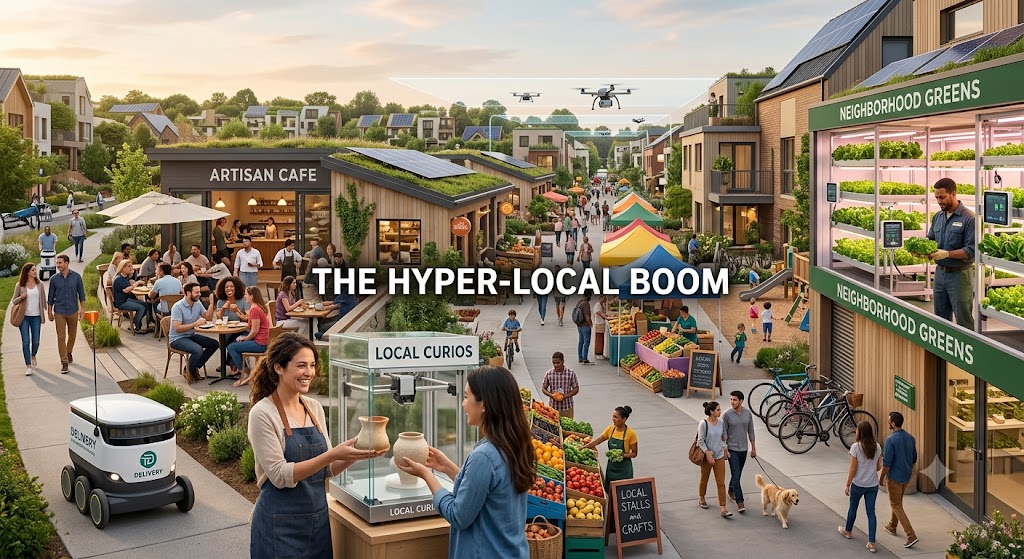
The Hyper-Local Boom

How Autonomous Tools Revitalize Community-Centric Economies

The Hyper-Local Boom

GUEST POST from Chateau G Pato


I. Introduction: The Pendulum Swings Back

The Globalist Peak

For decades, the narrative of progress was defined by hyper-globalization. Massive, centralized platforms and sprawling global supply chains optimized for efficiency, driving down costs at the expense of local economic resilience. While this interconnectedness brought unprecedented access to goods, it simultaneously stripped communities of their unique flavor, hollowed out local marketplaces, and left neighborhoods vulnerable to systemic global shocks.

The Catalyst

Today, we are witnessing a profound structural shift. The convergence of autonomous AI, decentralized manufacturing, and hyper-local logistics is fundamentally rewriting the rules of production and distribution. Technologies once feared as cold or isolating are maturing into the foundational infrastructure for a new era of localized commerce.

The Thesis

Autonomous tools are not isolating us; they are doing the exact opposite. By shifting the economics of production and distribution away from distant fulfillment centers and back to the neighborhood block, automation is enabling a massive, human-centered renaissance of community-centric economies. This is not a step backward into isolationism, but a leap forward into an empowered, self-sustaining future where technology serves to anchor us closer to home.

II. The Architecture of the Autonomous Local Engine

Micro-Production & Decentralized Supply Chains

The traditional model relies on massive, centralized factories pushing goods across vulnerable, thousands-of-miles-long supply chains. The autonomous local engine flips this paradigm to on-demand, decentralized creation. Advanced 3D printing micro-factories, automated vertical farming pods, and localized CNC routing stations are embedding production directly into our neighborhoods. This shifts the focus from economies of scale to economies of proximity, allowing communities to build, grow, and manufacture exactly what they need, the moment they need it, vastly improving local resilience.

Autonomous Micro-Logistics

The “last mile” of delivery has historically been the most expensive and carbon-intensive leg of commerce, often forcing local businesses to rely on monopolistic logistics giants. The introduction of autonomous micro-logistics—sidewalk delivery bots, neighborhood drone networks, and automated local dispatchers — slashes these barriers to near zero. By making neighborhood-to-neighborhood commerce functionally frictionless, we empower local makers and growers to distribute their goods just as efficiently as multinational conglomerates, but with a vastly smaller footprint.

Intelligent Local Marketplaces

Technology must serve as a bridge, not a barrier. As artificial intelligence integrates with hyper-local commerce, we are seeing the rise of intelligent local marketplaces. These are not just digital storefronts; they are dynamic, predictive ecosystems that anticipate community needs and seamlessly match local supply with local demand. By decentralizing the marketplace, AI tools strip away the need for massive corporate middlemen, ensuring that the economic value generated by a community remains within that community, fueling a new era of participatory innovation.

III. Elevating Human Experience (The HX Factor)

From Transactional to Relational

The true value of automation lies not in replacing humans, but in freeing them to do what they do best. When autonomous tools seamlessly absorb the burden of routine backend logistics — handling inventory forecasting, automated billing, and micro-routing — local business owners are liberated from the keyboard and the stockroom. They can redirect their energy toward what truly drives customer loyalty: deep relationship-building, bespoke customization, and genuine empathy. Commerce shifts from a cold, transactional exchange back to a warm, relational experience.

The “New Artisan” Economy

Historically, scaling a business meant taking on massive capital risk, securing complex infrastructure, and giving up creative control. Today, autonomous micro-production and frictionless local logistics drastically lower the barrier to entry. This democratization gives rise to a “New Artisan” economy. Local creators, boutique chefs, and precision builders can leverage automated tools to manage the complexities of production and distribution, allowing them to scale their unique craft sustainably within their immediate geographic region without needing venture capital.

Designing Frictionless Community Spaces

To fully realize this shift, we must rethink the physical spaces where we live and gather. The community hub of the future is an experience-first destination. By moving autonomous fulfillment, micro-storage, and sorting infrastructure quietly into the background — or beneath the floorboards — the storefront is reclaimed. It ceases to be a mere warehouse for boxes and becomes a sanctuary for human connection, sensory engagement, and experiential retail where people come to gather, co-create, and share stories.

IV. Navigating the Change: Friction, Equity, and Adoption

The Human-Centered Transition

Every major technological shift introduces friction, and the hyper-local boom is no exception. As autonomous tools take over the predictable mechanics of retail and traditional logistics, we face a critical transition period. Navigating this change requires a deliberate, human-centered approach to upskilling. We must invest heavily in community-led training programs that empower displaced workers to step into higher-value roles as community experience designers, digital artisans, and local system orchestrators — ensuring that technology serves to elevate human potential rather than sideline it.

Bridging the Digital Divide

Innovation must be participatory; if it only benefits wealthy tech hubs, it has failed. We must intentionally design policies and funding frameworks that deploy autonomous micro-factories, vertical farming pods, and micro-logistics networks into historical food deserts, rural outposts, and underserved urban neighborhoods. True fairness means ensuring that these decentralized economic engines are accessible to all, providing equitable wealth-generation tools where rewards remain relative to local effort, and directly revitalizing communities that the globalist model left behind.

Regulatory & Trust Hurdles

Building the infrastructure for an autonomous neighborhood requires navigating significant regulatory, safety, and psychological barriers. Communities will rightfully push back against a sudden influx of sidewalk delivery bots and low-altitude drones without clear boundaries. Overcoming this social friction means developing clear, community-governed data privacy standards and localized safety frameworks. By bringing residents into the design process early, municipal leaders can foster genuine trust and ensure that autonomous systems respect the physical and digital boundaries of the neighborhoods they are meant to serve.

V. Conclusion: The Future is Homegrown

The Futurist View

If we look forward to the neighborhood of 2035, we do not see a sterile, tech-dominated dystopia. Instead, we see a vibrant, deeply human ecosystem. We see sidewalks reclaimed for outdoor dining and community markets, while quiet, low-profile autonomous bots deliver fresh, vertically-grown produce from a block away. We see thriving local artisans whose businesses are powered by micro-manufacturing tools hidden inside community hubs. Technology, in this future, does not pull us away from our neighbors — it acts as the unseen foundation that allows local relationships and localized wealth to flourish.

The Final Charge

This decentralized, hyper-local future will not happen by accident; it must be designed with intention. It requires urban planners, entrepreneurs, civic leaders, and change agents to actively collaborate on human-centered frameworks. We must ensure that emerging autonomous systems are integrated into our towns and cities as tools of empowerment rather than extraction. The pendulum is swinging away from the distant and impersonal, back toward the close and meaningful. The tools are ready. Now, we must use them to build an economy where the future is proudly, and sustainably, homegrown.

Frequently Asked Questions

How do autonomous tools help local businesses instead of replacing them?

Autonomous tools take over the predictable, time-consuming backend mechanics of a business — such as managing inventory, automated billing, and micro-routing. By absorbing these routine logistical burdens, technology frees local business owners to focus on higher-value, human-centered activities like deep relationship-building, bespoke customization, and delivering an exceptional, empathetic customer experience.

What is the “New Artisan” economy?

The “New Artisan” economy refers to a decentralized market model where local creators, boutique chefs, and precision builders can sustainably scale their craft within their immediate geographic region. By using autonomous micro-production tools (like 3D printers and vertical farming pods) and low-cost micro-logistics networks, small businesses can match the operational efficiency of global conglomerates without needing massive venture capital or sprawling physical infrastructure.

How can communities ensure this technological shift is equitable?

Ensuring equity requires a deliberate, human-centered approach to change. Communities must invest in localized training programs to upskill workers into roles as experience designers and system orchestrators. Additionally, civic leaders must intentionally deploy autonomous infrastructure — like vertical farming and micro-manufacturing hubs — into historically underserved neighborhoods and food deserts to ensure wealth-generation tools are accessible to all.

Bottom line: Futurology is not fortune telling. Futurists use a scientific approach to create their deliverables, but a methodology and tools like those in FutureHacking™ can empower anyone to engage in futurology themselves.

Image credit: Gemini

Subscribe to Human-Centered Change & Innovation WeeklySign up here to get Human-Centered Change & Innovation Weekly delivered to your inbox every week.

Managing the Mind-Machine Friction

Managing the Mind-Machine Friction

GUEST POST from Chateau G Pato


The New Frontier of Collective Intelligence

Technology has quietly crossed a profound psychological threshold. It has evolved from a passive utility — a tool we operate, like a spreadsheet or a word processor — into an active collaborator. When we introduce AI co-piloting into the enterprise, we aren’t just deploying software; we are fundamentally shifting the psychological contract between people and their daily work. This transition creates a distinct, visceral friction.

The industry is currently obsessed with the technical mechanics of integration, yet the real bottleneck isn’t computational — it is cognitive. To build an ecosystem where humans and algorithms actively elevate each other, we must move the narrative away from “AI replacing humans” and focus on building true Collective Intelligence. True innovation occurs when we treat artificial intelligence not as a surrogate worker, but as an augmentative partner.

“The companies that thrive in the automation age won’t just possess the fastest models; they will be the ones that design the most frictionless human-to-machine collaborative experience.”

Overcoming the barriers to AI co-piloting is, at its core, a human-centered change management and experience design challenge. As leaders, we must actively architect organizational change to bridge the psychological gap between human instinct and machine logic, transforming digital friction into a collaborative competitive advantage.

Deconstructing the Friction: The Psychological Barriers to Co-Piloting

Before we can design a seamless partnership between humans and machines, we must first diagnose the hidden psychological resistance that stalls adoption. This resistance rarely stems from a lack of technical capability. Instead, it is rooted in deep-seated human anxieties regarding identity, trust, and autonomy. When an algorithm enters the creative or analytical workspace, it triggers a predictable sequence of psychological barriers that leaders must intentionally dismantle.

1. The Identity Crisis (Role Erosion)

The introduction of an AI co-pilot frequently precipitates what can be described as the “expert’s paradox.” Knowledge workers who have spent decades honing specific analytical, writing, or coding skills suddenly find that a machine can execute 60% of their foundational tasks in seconds. This creates an immediate threat to professional identity: “If the machine does what I am valued for, what is my worth?”

Left unaddressed, this anxiety manifests as subtle, passive resistance or outright rejection of the tool. Overcoming this barrier requires an intentional effort to shift an employee’s perceived value away from pure tactical execution and toward strategic curation, orchestration, and systemic problem-solving. This fatigue and anxiety often compound existing organizational stress, making it critical to address these fears directly. You can read more about managing these workplace pressures in my article on Overcoming Burnout and Fostering Innovation.

2. The Trust Gap (The Black Box Problem)

Human collaboration is built on transparency and shared intent. We trust a colleague’s recommendation because we understand their rationale, their past experience, and their logical progression. Machine learning models, by contrast, operate within a “black box” — they deliver highly optimized outputs without an easily traceable line of reasoning.

This creates profound cognitive dissonance for the human worker. When the AI co-pilot suggests an unconventional strategy or identifies a non-obvious data pattern, the human instinct is to reject it out of hand due to a lack of visibility. To close this trust gap, the human-machine interface must be designed to expose the context, confidence scores, and core parameters behind algorithmic decisions, transforming blind faith into verified confidence.

3. Autonomy vs. Automation (The Loss of Agency)

No one likes to feel micro-managed, and the psychological friction intensifies when the micro-manager is a piece of software. If an AI co-pilot is implemented as a rigid, top-down enforcement mechanism that dictates the pace, sequence, or style of work, employees experience a severe loss of agency.

The human mind requires autonomy to innovate. The collaborative experience must be architected so that the human remains the definitive pilot—retaining final creative control, accountability, and the explicit authority to override the machine. The co-pilot must always feel like an empowering wind at the worker’s back, never an algorithmic leash.

Designing the Collaborative Experience (Human-Centered Design)

Overcoming psychological friction requires more than a standard software training module; it demands a deliberate application of human-centered experience design. If the interface between human and machine is poorly constructed, cognitive fatigue sets in, and the co-pilot becomes an administrative burden rather than an intellectual accelerator. To build a harmonious digital workspace, we must design the interaction with the same rigor we apply to external customer journeys.

1. Empathy-Driven Integration

Every successful innovation framework begins with empathy. When introducing an automated partner into an existing workflow, leaders must build internal empathy maps that look beyond operational efficiency. We must deeply understand what the employee feels, sees, hears, and fears at the exact touchpoints where the AI intervenes.

By mapping these emotional friction points, we can identify where the machine’s cadence disrupts the human’s creative flow. Designing with continuous internal empathy ensures that the technology adapts to human cognitive rhythms, rather than forcing the human to warp their thinking to satisfy the machine. This methodical mapping of the internal experience mirrors the broader discipline of service design, which I explore extensively in Charting Your Innovation Journey: A Guide to Service Design.

2. Creating a Shared Vocabulary

The current state of human-machine interaction is heavily strained by the clunkiness of “prompt engineering.” Expecting everyday knowledge workers to become expert prompt engineers is a design failure. It treats the machine like a temperamental command-line interface instead of a teammate.

The next evolution of co-piloting relies on creating an intuitive, shared vocabulary through advanced UI/UX design. The interface must evolve into a fluid, conversational, and iterative canvas. It should allow the human and the machine to co-sketch ideas, refine parameters in real time, and pass contextual context back and forth seamlessly, mimicking the natural shorthand of two creative peers brainstorming at a whiteboard.

3. Mapping the Value Hand-off

Friction occurs when a machine attempts to perform tasks that require nuanced human judgment, or when a human wastes valuable cognitive energy on tasks better suited for algorithmic speed. To prevent this, organizations must explicitly map the “value hand-off.”

We must establish clear, visual swimlanes within our operational workflows that define where algorithmic efficiency should streamline data gathering, pattern recognition, and initial drafting, and precisely where human creative variance, ethical oversight, and strategic empathy must dominate. By design, the machine should handle the cognitive heavy lifting of processing complexity, leaving the human worker with the clear space required for breakthrough conceptualization.

Change Management Strategies for the Co-Piloting Era

Even the most elegantly designed human-machine interface will fail if it is dropped into a toxic or change-resistant corporate culture. Overcoming the deep psychological barriers to AI co-piloting requires a structured, human-centered change management methodology. We cannot rely on the old playbook of top-down mandates and passive training videos. To bridge the mind-machine gap, leaders must actively reshape the cultural infrastructure of the organization.

1. Overcoming Institutional Inertia Through Co-Creation

Traditional change management frequently treats employees as passive recipients of new technology. This approach inevitably sparks resistance. In the co-piloting era, top-down implementation is obsolete. Employees should not be handed an instruction manual for a pre-configured AI tool; instead, they must be active participants in defining how that tool augments their specific workflows.

By involving knowledge workers in the early stages of configuration and testing, you transform them from threatened onlookers into active co-creators of their new digital roles. This inclusive approach dramatically reduces adoption anxiety and ensures that the technology solves real, frontline frustrations rather than theoretical executive pain points. To successfully navigate this cultural evolution and build lasting operational agility, leaders must design change as an enterprise-wide capability, a concept I break down in The Architecture of Change: Building Agility into Modern Corporate Culture.

2. Fostering Psychological Safety and “Safe-to-Fail” Sandboxes

Fear is the ultimate enemy of innovation. If employees believe that a mistake made while using an AI co-pilot—such as a missed hallucination or an improperly calibrated prompt — will result in a negative performance review or job loss, they will simply refuse to engage with the tool.

Leaders must deliberately establish psychological safety by creating dedicated, low-stakes experimental sandboxes. These are structured environments where teams are given explicit permission to push their AI co-pilots to the breaking point, test unconventional collaborative prompts, and make mistakes without any fear of administrative penalty. Innovation thrives when people feel safe enough to discover where the machine excels — and exactly where it stumbles.

3. Continuous Human-Machine Feedback Loops

Deploying an AI co-pilot is not a static, one-time IT project; it is the launch of a living, breathing collective intelligence ecosystem. The ways humans work with algorithms will naturally shift as the models evolve and as human proficiency increases.

Organizations must establish continuous qualitative feedback loops. Teams need structured avenues to share what is working, report unexpected cognitive friction, and flag moments where the tool hinders rather than helps productivity. By treating human-machine alignment as an ongoing, iterative innovation cycle, leadership can continuously tune the organizational culture, interface touchpoints, and training workflows to ensure the partnership remains empowering, intuitive, and highly productive over the long term.

IV. Measuring Alignment: Tracking the Human Experience of Automation

We cannot manage what we do not measure, but when it comes to the delicate psychology of human-machine collaboration, traditional operational metrics fall short. Tracking pure “time-to-completion” or “output volume” completely misses the underlying friction. If a team is producing twice as much content but experiencing severe cognitive burnout and deep-seated alienation, the implementation is a ticking time bomb, not a success.

1. Behavioral Adoption Over Technical Access

True adoption isn’t measured by how many employees have logged into their AI co-pilot seats this week. Instead, leadership must evaluate deep behavioral integration. Are workers simply using the machine to rubber-stamp tasks, or are they engaging in an iterative, conversational back-and-forth? High-value collaboration is visible when we see creative variance, calculated overrides of the machine’s suggestions, and an increase in time spent on strategic orchestration rather than tactical execution.

2. Designing Sentiment and Friction Audits

To continuously optimize the workplace experience, organizations must deploy regular, human-centric friction audits. These pulse checks should gauge the emotional landscape of the workforce — specifically tracking shifts in perceived agency, psychological safety, and role clarity. By treating human sentiment as a leading indicator of technological health, leadership can intervene and redesign workflows before cognitive fatigue turns into active resistance or cultural erosion.

The Ultimate Goal of Human-Machine Collaboration

As we look toward the future of work, it is clear that the true competitive differentiator will not be the raw computational power an organization possesses, but the quality of its human-to-machine integration. The enterprises that win the next decade will not simply be those that buy the most sophisticated algorithmic models; they will be the ones that design the most seamless, high-trust, and frictionless workplace experiences for their people.

Managing the mind-machine friction requires us to look past the technical allure of automation and focus squarely on the human beings executing the work. When we dismantle the psychological barriers of role erosion, alleviate the trust gap of the black box, and preserve human agency, we unlock a completely new tier of organizational capability. We transition from simple automation to true collective intelligence.

The mandate for modern leadership is clear: stop treating AI deployment as a pure IT initiative. Shift your focus toward intentionally engineering a collaborative culture grounded in empathy, psychological safety, and co-creation. By consciously designing the human experience around these emergent tools, we can transform technological friction into a powerful catalyst for infinite innovation.

Frequently Asked Questions

What is mind-machine friction in the context of AI co-piloting?

Mind-machine friction refers to the psychological, cognitive, and emotional resistance that occurs when knowledge workers collaborate with active AI tools. Unlike passive software, AI co-pilots act as active collaborators, which can trigger human anxieties regarding professional identity, a lack of operational trust (the black box problem), and a perceived loss of creative autonomy.

How can organizations bridge the “Trust Gap” with automated tools?

Organizations can close the trust gap by designing user experiences that demystify algorithmic decisions. Instead of presenting AI outputs as absolute conclusions, interfaces should expose context, confidence metrics, and the baseline parameters used by the model. This transparency allows human workers to verify, rather than blindly accept, the machine’s recommendations.

Why is a top-down implementation strategy ineffective for AI co-piloting?

Top-down mandates ignore the personal and creative nature of knowledge work, often fueling job-security anxieties and passive resistance. Successful implementation relies on co-creation, where employees actively participate in shaping and refining how the AI co-pilot augments their specific workflows, transforming them from threatened onlookers into empowered orchestrators.


Bottom line: Futurology is not fortune telling. Futurists use a scientific approach to create their deliverables, but a methodology and tools like those in FutureHacking™ can empower anyone to engage in futurology themselves.

Image credit: Gemini

Subscribe to Human-Centered Change & Innovation WeeklySign up here to get Human-Centered Change & Innovation Weekly delivered to your inbox every week.
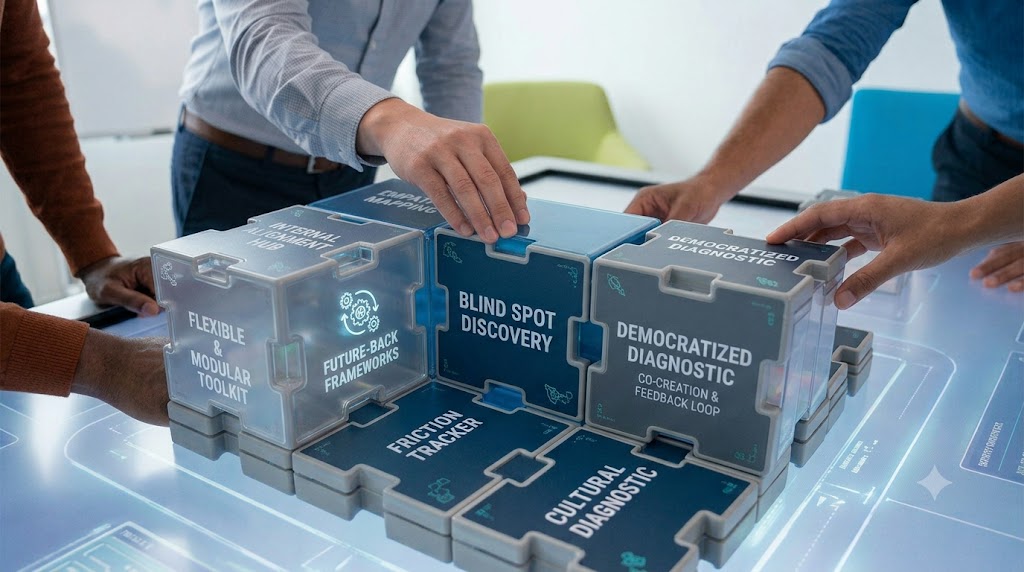
Building Open-Source Toolkits to Uncover Corporate Blind Spots

The Innovation Diagnostic

Building Open-Source Toolkits to Uncover Corporate Blind Spots

GUEST POST from Chateau G Pato


The Invisible Walls of Corporate Innovation

Organizations regularly pour millions into transformation initiatives only to hit an invisible wall. They rely on traditional innovation audits that act as lagging indicators — expensive, top-down compliance exercises that measure superficial metrics rather than cultural reality. These rigid assessments might look good in an executive summary, but they consistently fail to surface the true bottlenecks stifling growth.

The Shift to Open-Source Discovery

True transformation requires moving away from proprietary, rigid maturity models and embracing human-centered, open-source diagnostic toolkits. When the frameworks used to measure innovation are locked behind a consultant’s “black box,” the organization remains a passive participant in its own diagnosis. By decentralizing and democratizing these tools, we give frontline employees the agency to map their own operational realities.

The Thesis: Uncovering the Unvarnished Truth

To uncover deep-seated corporate blind spots, organizations must distribute the tools of discovery. Making innovation diagnostics open-source and modular democratizes the change management process, fosters cross-functional collaboration, and forces the unvarnished truth about friction points into the light. We don’t just need better answers; we need an open architecture that empowers everyone to ask the right questions.

The Anatomy of a Corporate Blind Spot

Before an organization can fix its innovation engine, it must understand exactly where and why it is losing sight of reality. Corporate blind spots aren’t accidental; they are structurally manufactured by legacy business designs.

The Structural Silo: Horizontal Friction

Functional isolation is the enemy of innovation. When departments operate as independent kingdoms, information gets trapped, and the horizontal flow of ideas grinds to a halt. Marketing doesn’t know what R&D is discovering; operations has no visibility into customer success insights. This fragmentation creates a massive blind spot where systemic vulnerabilities thrive unnoticed in the gaps between teams.

The Success Trap: The Peril of Optimization

The most dangerous blind spots often develop when business is booming. Organizations fall into the success trap, focusing all their energy on optimizing “what works today” to maximize short-term returns. In doing so, they become blind to shifting customer expectations, macro trends, and emerging disruptions. By the time the current model starts to fail, the organization has lost the muscle memory required to pivot.

The Fear Factor: The Psychological Reality

You cannot diagnose a problem that people are terrified to talk about. Psychological safety is the absolute prerequisite for any accurate corporate diagnostic. If employees believe that pointing out a flaw, a failed project, or an operational bottleneck will damage their career, your diagnostic data will be hollow and useless. Uncovering blind spots requires building a culture where truth is valued over comfort.

The Open-Source Imperative: Why Open and Adaptable Wins

Legacy change management relies heavily on external gatekeepers. High-priced consultancies enter an organization, apply a proprietary “black box” methodology, and leave behind a static report. This model is built for a static world. In a dynamic business landscape, the tools used to diagnose organizational health must be as agile as the market itself.

Breaking the Consultant Monopoly

When you rely on proprietary diagnostic frameworks, your organization remains dependent on external life support. Shifting to an open-source model means publishing, sharing, and freely modifying the diagnostic blueprints. It strips away the mystique of the “black box” and replaces it with an accessible, living toolkit that belongs to the organization, not a third-party vendor.

Co-Creation as Engagement

The traditional approach to change management treats employees as subjects to be changed rather than authors of the transformation. By open-sourcing the diagnostic toolkit, you invite the workforce to help design, tweak, and expand the tools themselves. This co-creation naturally dissolves the friction and skepticism that usually accompanies top-down mandates. When people help build the diagnostic, they are inherently invested in acting on the findings.

Flexibility Over Formality: The Modular Approach

Every corporate culture and department operates under a unique set of constraints. A rigid, one-size-fits-all survey fails because it cannot account for these nuances. An open-source toolkit thrives on modularity. Teams can pick and choose the specific components they need — whether that is a customer journey mapping canvas, a friction-point tracker, or a cultural velocity index — adapting the diagnostic framework to fit their immediate operational reality.

Designing the Toolkit: Human-Centered Pillars

An open-source diagnostic toolkit is only as good as the principles guiding its design. To truly uncover operational blind spots, the tools must look past cold financial metrics and focus heavily on the human dynamics — both inside and outside the organization — that drive or stall innovation velocity.

Empathy-Driven Assessment

Traditional business audits measure spreadsheets; human-centered diagnostics measure experiences. This pillar focuses on capturing the qualitative realities of both the employee experience (EX) and customer experience (CX). By designing tools like empathy maps and qualitative sentiment trackers into the toolkit, organizations can measure the emotional and psychological friction points that quantitative data routinely misses.

Friction Mapping: Tracking Where Ideas Die

Innovation is rarely stopped by a lack of good ideas; it is killed by organizational sludge. The toolkit must include tactical friction-mapping frameworks that allow teams to trace an idea’s path through the corporate ecosystem. This means systematically identifying where concepts stall — whether that is an overly complex procurement cycle, risk-averse legal bottlenecks, or middle-management layers designed to defend the status quo rather than explore the horizon.

Future-Back Frameworks: Frontline Foresight

Strategic foresight should not be restricted to the C-suite. The open-source diagnostic democratizes futurology by introducing simple, visual “future-back” frameworks that frontline workers can use. These tools empower teams to analyze current macro trends and stress-test their day-to-day operational processes against potential disruptions, ensuring the organization is actively building for tomorrow rather than just optimizing for yesterday.

Operationalizing the Diagnostic: From Insight to Action

An open-source diagnostic toolkit is not meant to sit on a digital shelf. The value lies in its deployment. Transitioning from theoretical framework to operational reality requires shifting how the organization gathers, visualizes, and acts upon cultural and structural data.

The “Hackathon” Approach to Discovery

Traditional corporate audits crawl through months of bureaucratic surveys and interviews, delivering outdated insights by the time the final report is compiled. Instead, open-source diagnostics should be deployed via intensive, cross-functional sprints. Gathering diverse teams for rapid “discovery hackathons” allows organizations to compress the diagnostic timeline from months to days, creating immediate psychological momentum and breaking down functional silos in real time.

Synthesizing the Data: Transparent, Shared Dashboards

When insights are hidden behind closed doors, accountability vanishes. To ensure the discovered blind spots are addressed, the diagnostic output must be managed through completely transparent, shared dashboards. Visualizing operational bottlenecks, experience gaps, and culture friction points across the entire enterprise makes it impossible for leadership to ignore systemic issues. It shifts the conversation from defensive denial to collaborative problem-solving.

The Continuous Feedback Loop: An Ongoing Operating System

A corporate diagnostic should never be treated as a static annual event or a check-the-box exercise. Organizations operate in a continuous state of flux; therefore, the diagnostic must function as an ongoing, open-source operating system. By embedding these modular tools into regular team retro-perspectives and project post-mortems, the organization establishes a permanent feedback loop, allowing it to dynamically course-correct as new blind spots inevitably emerge.

The Open Architecture of Future-Ready Organizations

The ultimate goal of open-sourcing your innovation diagnostics is to achieve a profound cultural evolution: shifting the corporate mindset from “protecting the castle” to “exploring the horizon.” When tools are proprietary and controlled by a select few, an organization instinctively defaults to a defensive posture, hiding flaws and reinforcing existing structures. An open-source approach flips this dynamic on its head, turning every employee into an active architect of the company’s future.

A Call to Action: Handing Over the Keys

Sustained transformation cannot be mandated from the top down; it must be co-created from the inside out. To truly eliminate corporate blind spots, leadership must have the courage to democratize the discovery process. By handing the keys of the diagnostic engine to the change champions and frontline workers across your organization, you build a highly resilient, deeply empathetic, and future-ready enterprise that doesn’t just survive disruption — it drives it.

Frequently Asked Questions

Why should we use an open-source diagnostic instead of a traditional consulting framework?

Traditional frameworks are often static, expensive, “black box” solutions that treat employees as passive subjects. An open-source diagnostic democratizes the process, allowing teams to customize the tools to their specific operational realities. It drives organic engagement and co-creation, which naturally reduces employee resistance to the resulting change initiatives.

How do you ensure psychological safety when frontline employees are uncovering corporate blind spots?

The diagnostic toolkit must be introduced through a human-centered lens where the focus is on uncovering structural friction and broken processes, not assigning individual blame. By leveraging cross-functional “discovery hackathons” and collaborative mapping canvas tools, the process becomes about collective problem-solving rather than top-down policing.

Can this open-source approach integrate with existing corporate KPIs and financial metrics?

Absolutely. The open-source diagnostic is designed to complement existing quantitative metrics by injecting critical qualitative data, such as Experience Level Measures (XLMs). It connects operational realities — like where ideas bottleneck in procurement or legal — directly to lagging financial indicators, providing leadership with a complete, holistic view of organizational health.


Bottom line: Futurology is not fortune telling. Futurists use a scientific approach to create their deliverables, but a methodology and tools like those in FutureHacking™ can empower anyone to engage in futurology themselves.

Image credit: Gemini

Subscribe to Human-Centered Change & Innovation WeeklySign up here to get Human-Centered Change & Innovation Weekly delivered to your inbox every week.

Exploring the Application of Futures Research in Business

Exploring the Application of Futures Research in Business

GUEST POST from Chateau G Pato

Futures research, also known as strategic foresight, is a valuable discipline that enables businesses to anticipate and prepare for future trends and challenges. By studying emerging technologies, social changes, and economic shifts, companies can shape their strategies to stay ahead of the curve. This article delves into the application of futures research in business through two compelling case studies that demonstrate its effectiveness.

Case Study 1: Tesla’s Disruptive Vision for Electric Vehicles

Tesla, the renowned electric vehicle manufacturer, revolutionized the automotive industry through its visionary approach. By applying futures research, Tesla identified the impending need for sustainable transportation and recognized the potential market for electric cars. Tesla’s CEO, Elon Musk, envisioned a future where electric vehicles would dominate the market, offering a cleaner and more efficient alternative to traditional combustion engines.

Rather than conforming to existing industry norms, Tesla focused on developing advanced battery technology, creating a robust charging infrastructure, and designing sleek and high-performance electric vehicles. This forward-thinking approach, based on insights gained from futures research, positioned Tesla as a leader in the electric vehicle market and set the stage for increased demand and adoption of sustainable transportation worldwide.

Case Study 2: McDonald’s Embracing Changing Consumer Preferences

McDonald’s, the global fast-food chain, experienced considerable challenges as shifting consumer preferences favored healthier and more sustainable dining options. In response to these emerging trends, McDonald’s embraced the insights provided by futures research and undertook substantial strategic transformations.

The company diversified its menu by introducing healthier options such as salads, wraps, and fruit smoothies. They also implemented sustainable practices, such as sourcing cage-free eggs and responsibly harvested coffee. Moreover, McDonald’s introduced digital ordering and payment systems to cater to changing customer behaviors.

By leveraging futures research, McDonald’s proactively adapted its business model, appealing to a wider range of customers and aligning with evolving consumer expectations. This strategic shift allowed McDonald’s to remain relevant and competitive in an industry that demanded changes to stay ahead.

Conclusion

Futures research offers immense value to businesses by providing foresight into emerging trends and transforming challenges into opportunities. The case studies of Tesla and McDonald’s demonstrate the impact of leveraging futures research to drive innovation, adapt to changing dynamics, and meet customer demands effectively.

By incorporating strategic foresight into their decision-making processes, businesses can identify new markets, anticipate future needs, mitigate risks, and develop sustainable strategies for long-term success. With the ever-increasing pace of change in today’s business landscape, futures research has become an invaluable tool for companies that seek to thrive in a future-oriented and rapidly evolving world.

Bottom line: Futurology is not fortune telling. Futurists use a scientific approach to create their deliverables, but a methodology and tools like those in FutureHacking™ can empower anyone to engage in futurology themselves.

Image credit: Pixabay

Subscribe to Human-Centered Change & Innovation WeeklySign up here to get Human-Centered Change & Innovation Weekly delivered to your inbox every week.

Predictions for the Future of Education

Predictions for the Future of Education

GUEST POST from Chateau G Pato

The Education sector is rapidly evolving and no one is quite sure what the future holds. It’s clear that technology advancements and changes in the way we approach day-to-day learning are here to stay, but there are a few noteworthy trends that may indicate what the future may hold.

1. Moving to Online Learning

The increase in digital technology over the past decade has made the move to online learning inevitable. In recent years, many educational institutions have begun offering online courses or even entire degree programs. This is proving to be an incredibly popular option among students who may not otherwise have access to more traditional learning.

In Finland, the University of Jyväskylä has taken a unique approach to the online learning revolution. Rather than offering traditional classes, the university offers an “open university” platform, where students can learn from experts without actually enrolling in a course. This approach has proven to be successful, and it’s likely that more educational institutions will begin adopting this model.

2. Personalized Learning

As technology advances, so too do our abilities to offer personalized learning. Through tracking systems, teachers can customize lesson plans and course material to better suit each student’s individual needs. Not only does this ensure that each student gets the most out of their education, but it also allows educators to detect and address potential problems before they become serious.

The Walton Family Foundation, for example, is providing schools with the resources necessary to implement personalized learning strategies. This has proven to be a successful approach in some areas, and it’s likely that more educational institutions will begin adopting similar strategies in the near future.

3. Increased Attention on Social and Emotional Development

In recent years, there has been an increased focus on the importance of social and emotional development in students. The prevalence of mental health issues among children and adolescents has forced educators to reassess their methods and approach the issue from a more holistic perspective.

In the United Kingdom, the government is currently working to ensure that social and emotional development is given the attention it deserves in the classroom. They are currently exploring ways to make sure that every school has access to the necessary resources and programs to ensure that students are emotionally and mentally supported.

Conclusion

These are just a few of the trends that may indicate what the future may hold when it comes to the education sector. As technology continues to develop and new methods are explored, we can only wait to see what the future of Education has in store.

Bottom line: Futurology is not fortune telling. Futurists use a scientific approach to create their deliverables, but a methodology and tools like those in FutureHacking™ can empower anyone to engage in futurology themselves.

Image credit: Pixabay

Subscribe to Human-Centered Change & Innovation WeeklySign up here to get Human-Centered Change & Innovation Weekly delivered to your inbox every week.

The Emergence of Smart Cities: Challenges and Opportunities

The Emergence of Smart Cities: Challenges and Opportunities

GUEST POST from Chateau G Pato

The concept of ‘smart cities’ has been gaining traction in the past decade. Smart cities integrate technology-enabled sensing, analysis and communication across vital city operations, for example, transportation and energy management. The term may also refer to a vision of a city that is connected and efficient, safer, and more livable. With their introduction into urban environments comes both challenges and opportunities.

One major challenge for smart cities is the amount of data that the connected infrastructure is expected to collect, analyze and report. For this reason, city governments require the right infrastructure and platform to store, protect and analyze the data safely to improve urban services and decision making. Security and privacy are also major concerns. Cities need to deploy new technologies and protocols for data security and privacy protection, while also managing the resilience of the data existing in such systems.

Cost is another major challenge for smart cities. The introduction of new technologies can incur high financial costs. This may include the development of interface-oriented smart systems, power supplies and real-time control. Moreover, the maintenance costs for managing and running smart city systems will be a challenge for city management.

Despite these challenges, smart cities also present lucrative opportunities. For example, two notable examples of successful implementations of smart cities are Barcelona in Spain and Amsterdam in the Netherlands.

Case Study 1 – Barcelona

Barcelona is known for its pioneering implementation of city-wide Wi-Fi. This initially included the deployment of 360 antennas across the city, providing free public access. Barcelona has since incorporated a range of digitalized services, for example, a collaboration program to create an open data platform for civic services such as waste management and pollution monitoring.

Case Study 2 – Amsterdam

Amsterdam is also an example of a successful smart city. The city collects data from a variety of sources, including sensors, wearables and smartphones, to generate a centralized control platform. This platform is then used for crime prediction, the efficient delivery of healthcare services, improved traffic management, and better environmental tracking.

Conclusion

It is clear that smart cities present both challenges and opportunities. Despite the high investments required for data collection and infrastructure, it is evident that the implementation of these frameworks can result in improved urban services and decision making, a modernized public infrastructure, and advanced safety standards. Cities that demonstrate innovation and effective management strategies could benefit from the potential of smart cities, making urban life more connected and efficient.

Bottom line: Futurology is not fortune telling. Futurists use a scientific approach to create their deliverables, but a methodology and tools like those in FutureHacking™ can empower anyone to engage in futurology themselves.

Image credit: Pexels

Subscribe to Human-Centered Change & Innovation WeeklySign up here to get Human-Centered Change & Innovation Weekly delivered to your inbox every week.

Leveraging Technology for Faster Change Management

Leveraging Technology for Faster Change Management

GUEST POST from Chateau G Pato

Managing change can be a challenging task that requires agile strategies, effective communication, and motivated team members. As businesses continue to move faster and become more digitally focused, technology plays an incredibly important role in enabling organizations to manage change more quickly and efficiently. From automated workflows to advanced analytics, organizations have available to them a range of tools and strategies that can help them move from inception to implementation in a shorter amount of time.

One way for businesses to leverage technology for faster change management is to use automation and artificial intelligence for complex tasks. Automation can be used to streamline workflows and ensure that stakeholders have everything they need to move from the planning stage to the implementation stage. For example, using automated workflows can help to keep track of changes, as well as quickly identify any conflicts that may arise between stakeholders. Automation can also allow organizations to collect data from a variety of sources quickly, making it easier to analyze the situation and make decisions accordingly. Additionally, using tools such as machine learning can help to identify any patterns of behavior throughout the change process, allowing organizational leaders to make decisions that are based on data rather than assumptions.

Another key factor in leveraging technology for faster change management is data visualization. Data visualization tools can be used to map out the entire process in a simple, visual format, allowing everyone involved to clearly understand what needs to be done and when. Teams are also able to see how different tasks and decisions might affect the overall timeline, helping them to adjust accordingly and ensure all objectives are met. Additionally, data visualization can help to identify areas of conflict that may arise between stakeholders, and ensure that teams are able to problem solve quickly and efficiently.

Case Study 1 – City of Vancouver

As a case study, the City of Vancouver was able to successfully leverage technology to manage a major rezoning process. Using data visualization tools, the city was able to map out the rezoning process, as well as pinpoint any conflicts between stakeholders. This enabled project managers to quickly identify any potential roadblocks and develop solutions to move forward with the project. Additionally, by using automation to collect data from sources such as GIS mapping and public records, they were able to make decisions that were based on facts rather than assumptions.

Case Study 2 – Abbott

Another example of leveraging technology for faster change management is the global medical device manufacturer, Abbott. As part of the company’s digitization initiative, Abbott developed an analytics platform that allowed them to streamline processes and shed light on areas of improvement more quickly. The company was able to leverage data visualization to map out the entire digitization process, as well as quickly identify any risks or opportunities along the way. Additionally, their data analytics and machine learning tools enabled the company to quickly identify any patterns in the data and make informed decisions more quickly.

Conclusion

By leveraging technology, organizations can accelerate their change management process and ensure a successful outcome. Automation tools can streamline workflows, allowing for faster project execution. Data visualization helps to ensure that all stakeholders have a clear understanding of what needs to be done, as well as identify any potential conflicts. Additionally, analytics tools such as machine learning can help to quickly identify any patterns in the data, enabling teams to make decisions that are backed by facts. As exemplified by the examples of Vancouver and Abbott, leveraging technology can help organizations to move from inception to implementation in a shorter amount of time.

Image credit: Pixabay

Subscribe to Human-Centered Change & Innovation WeeklySign up here to get Human-Centered Change & Innovation Weekly delivered to your inbox every week.