LAST UPDATED: March 16, 2026 at 11:21 AM

GUEST POST from Art Inteligencia
The Architecture of Human Systems
In the traditional corporate world, culture is often treated as a “soft” variable — something that happens by accident, shaped by the personalities of founders or the unspoken habits of a legacy workforce. When organizations face stagnation, the typical response is “Change Management,” a top-down approach that focuses on persuasive communication and executive mandates.
However, these methods frequently fail because they treat the organization as a collection of individuals who simply need to be “convinced.” In reality, an organization is a complex adaptive system. To influence it effectively, we must stop thinking like psychologists and start thinking like architects and engineers.
The Bridge Between Strategy and Execution
There is a recurring structural failure in modern business: the gap between high-level strategy and boots-on-the-ground execution. This gap is almost always filled by culture. If the structural integrity of your cultural framework is weak, even the most brilliant strategy will collapse under the weight of daily friction, misaligned incentives, and systemic inertia.
Moving from Accidental to Intentional Design
Engineering principles provide us with a vocabulary for precision. Instead of vague notions of “engagement,” we look at:
- Load Distribution: How vision is carried throughout the hierarchy.
- Structural Integrity: The resilience of values under market pressure.
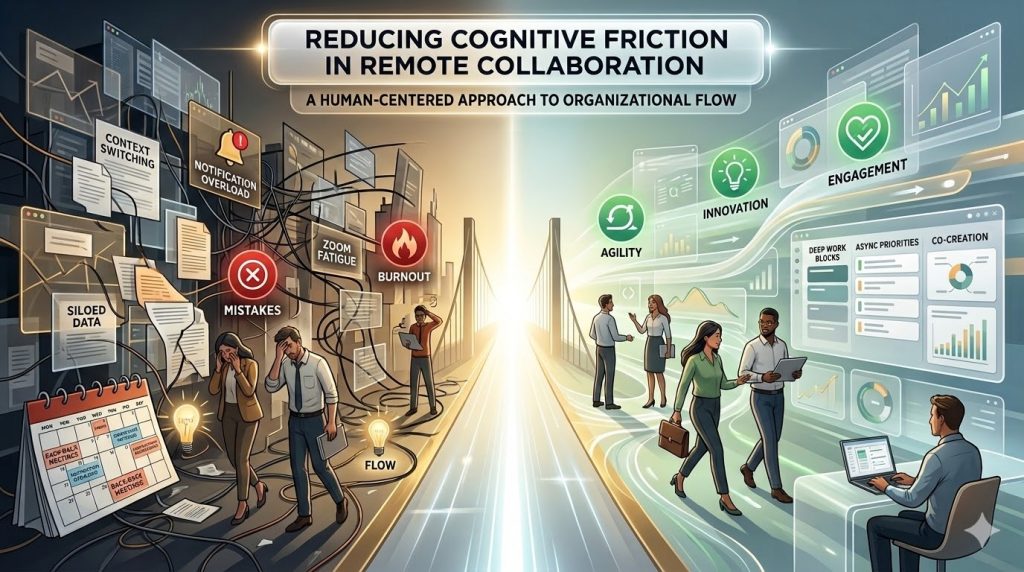
- Friction Points: Where processes slow down human momentum.
“Culture is not just the ‘vibe’ of the office; it is the underlying operating system that dictates every decision, interaction, and innovation.”
The Core Objective
The goal of applying engineering rigor to cultural change is to move away from “fixing people” and toward re-engineering the environment. When you change the environment — the systems, the feedback loops, and the structural supports — the behavior of the people within that environment changes naturally and sustainably.
Section II: Structural Integrity and the “Load-Bearing” Values
In engineering, structural integrity refers to the ability of an object — a bridge, a skyscraper, or a wing — to hold together under a load, including its own weight, without breaking or deforming excessively. When we apply this to organizational culture, we must differentiate between decorative values and load-bearing values.
1. Identifying Load-Bearing vs. Decorative Values
Most companies have values written on their walls (Integrity, Innovation, Collaboration). These are often decorative — they look nice, but they don’t actually support the weight of the organization’s daily operations or difficult decisions.
- Decorative Values: These are aspirational. They are easily discarded when a deadline is missed or a quarterly target is at risk.
- Load-Bearing Values: These are the non-negotiables. They are the principles that dictate behavior even when it is expensive, inconvenient, or results in a lost sale. They are the “foundation” that keeps the culture upright during a crisis.
2. Stress Testing Cultural Integrity
Engineers use stress tests to determine the breaking point of a material. Leaders must do the same for their culture. To identify your true load-bearing values, ask:
- “What is a behavior we have fired a high-performer for?” (This reveals a true boundary.)
- “What is a project we killed because it violated our core principles, despite its profit potential?”
- “Where does the system ‘buckle’ when we increase the workload by 20%?”
3. Strengthening the “Beams” (Middle Management)
In a physical structure, the roof (Executive Vision) is only as secure as the beams (Middle Management) supporting it. If there is a disconnect between the vision and the ground floor, the “beams” are likely experiencing shear stress — being pulled in two directions by competing priorities.
To ensure structural integrity, we must provide middle managers with the bracing they need: clear decision rights, consistent incentives, and the psychological safety to uphold values when they conflict with short-term metrics.
“If your values don’t cost you anything, they aren’t load-bearing; they are just wallpaper.”
4. Alignment of Forces
Engineering excellence requires that all forces are aligned to prevent structural failure. If your “Incentive System” is pulling left while your “Innovation Goal” is pulling right, the culture will eventually develop fatigue cracks. True human-centered innovation requires aligning these forces so the structure is self-reinforcing.
Section III: Systems Thinking and Interconnectivity
In engineering, no component exists in isolation. A change in the tension of a single cable on a suspension bridge redistributes forces across the entire structure. Similarly, culture is a dynamic system of interconnected nodes. When leaders attempt to “fix” a cultural issue in a vacuum — such as addressing “lack of innovation” with a single brainstorming workshop — they often fail to account for the systemic torque this creates elsewhere.
1. Mapping the Cultural Ecosystem
To re-engineer a culture, we must first map the nodes and the linkages between them. In a human-centered innovation system, these nodes typically include:
- Incentives: What behaviors are actually rewarded? (The “Power Source”)
- Tools & Infrastructure: Do employees have the “equipment” to execute?
- Narratives: What stories do people tell about “how things get done here”?
- Governance: Who has the permission to say “yes” or “no”?
If you change the Narrative (e.g., “We are a fail-fast culture”) but leave the Incentive node untouched (e.g., “Failure results in a smaller bonus”), the system will experience internal friction and eventually stall.
2. Root Cause Analysis (RCA) and the “5 Whys”
Engineers don’t just patch a leak; they find out why the pipe burst. When cultural friction arises — such as a sudden drop in collaboration — we apply Root Cause Analysis:
- Why are teams not collaborating? (They are focused on siloed KPIs.)
- Why are KPIs siloed? (Department heads are measured on individual output.)
- Why are they measured that way? (The legacy reporting system doesn’t track cross-functional value.)
- Why hasn’t the system been updated? (It’s tied to a 10-year-old software architecture.)
- Why is that architecture still in place? (Lack of investment in digital transformation.)
By the fifth “Why,” we realize the “collaboration problem” is actually a technical debt and resource allocation issue, not a personality conflict.
3. The Input vs. Output Equation
In any engineered system, the Output is a direct function of the Inputs and the Process.
$Output = f(Inputs, Environment, Incentives)$
If the output you are getting is “low-risk, incremental ideas,” you cannot simply demand “disruptive innovation.” You must change the inputs (diverse talent, broader data) or the environment (psychological safety, time for exploration) to change the resulting output.
4. Managing “Systemic Torque”
When you introduce a major change — like shifting to a remote-first model — you create torque on the social fabric of the company. Engineering-led change involves identifying where that tension will land. Will it strain the Mentorship node? Will it weaken the Spontaneous Innovation node? By predicting these stresses, we can design “compensators” (like structured virtual watercoolers or hybrid off-sites) before the system breaks.
Section IV: Feedback Loops and Real-Time Calibration
In mechanical and electrical engineering, a feedback loop is a process where the output of a system is circled back and used as an input. This allows for self-regulation and stability. Unfortunately, most corporate cultures operate on “Open-Loop” systems: leadership sets a direction, assumes it is being followed, and only checks the results months later during an annual review. By then, the “engine” may have already overheated.
1. The Thermostat vs. The Thermometer
A thermometer merely measures the temperature; it is a lagging indicator. A thermostat, however, is a real-time regulator. It measures the environment and triggers an immediate corrective action to maintain a desired state.
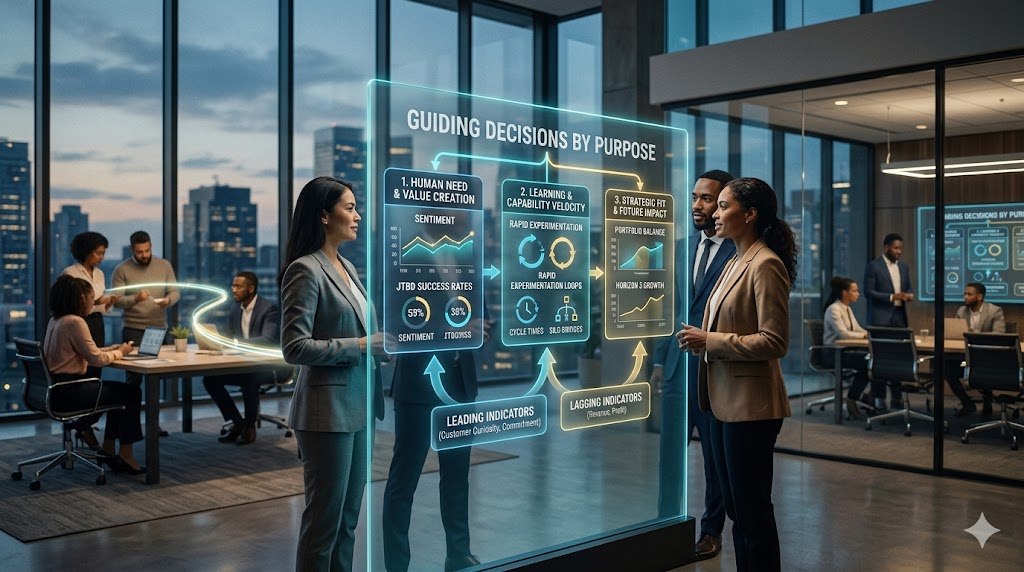
- Lagging Indicators (The Thermometer): Annual engagement surveys, turnover rates, and quarterly profit margins. These tell you what happened, but they are too late to influence the current state.
- Leading Indicators (The Thermostat): Weekly pulse checks, project “post-mortems” performed in real-time, and psychological safety scores. These allow for calibration before a cultural drift becomes a disaster.
2. Dampening vs. Amplifying Loops
Engineers use different types of loops to control system behavior. In a human-centered culture, we must design both:
- Dampening Loops (Negative Feedback): These are designed to bring a system back to equilibrium. If “Fear of Failure” begins to rise and stall innovation, a dampening loop — such as a “Failure Celebration” or a no-fault retrospective — neutralizes that fear and returns the team to a creative state.
- Amplifying Loops (Positive Feedback): These create momentum. When a team successfully collaborates across silos, the system should automatically “amplify” that behavior through public recognition, resource allocation, or career advancement. This creates a virtuous cycle of innovation.
3. Iterative Design and the “Cultural MVP”
In software engineering, we don’t release a finished product without testing a Minimum Viable Product (MVP). Cultural change should follow the same logic. Rather than a global rollout of a new “Innovation Framework,” start with Cultural Sprints:
- Prototype: Test a new meeting structure or decision-making protocol with one small team.
- Measure: Use real-time feedback to see if it reduces friction or improves output.
- Iterate: Adjust the protocol based on the data.
- Scale: Only once the “code” is stable do you push the update to the rest of the organization.
“A system without a rapid feedback loop isn’t being managed; it’s being left to chance.”
4. Signal vs. Noise
A major engineering challenge is filtering out “noise” to find the true “signal.” In cultural transformation, noise is the grumbling about minor inconveniences (office snacks, parking). The signal is the recurring data point that shows people are afraid to speak up in meetings. Re-engineering culture requires leaders to build filters that prioritize the signals that impact velocity and integrity.
Section V: Eliminating Friction (The Law of Least Resistance)
In physics and engineering, friction is the force resisting the relative motion of solid surfaces, fluid layers, and material elements sliding against each other. It converts kinetic energy into heat — effectively wasting it. In an organizational context, cultural friction is any process, habit, or hierarchy that drains energy away from productive innovation and redirects it into “busy work” or internal politics.
1. Cultural Thermodynamics: Energy Preservation
Every organization has a finite amount of “Cognitive Energy.” If your employees must spend 40% of their energy navigating convoluted approval layers, fighting for budget, or attending redundant meetings, you only have 60% left for actual value creation. Engineering-led change focuses on maximizing efficiency by smoothing the “surfaces” where teams interact.
2. Designing the “Path of Least Resistance”
People generally follow the path that requires the least effort. If your “Innovation Lab” requires a 20-page business case to get $500 for a prototype, but your “Maintenance Budget” allows for immediate spending, people will stick to maintenance. To re-engineer behavior, you must make the desired behavior the easiest behavior.
- Default Settings: Design systems where the default option is the one that supports the culture. For example, if you want transparency, make all project folders “public by default” rather than “private by default.”
- Nudge Theory: Small, engineered adjustments to the environment that encourage specific choices without mandates (e.g., placing collaborative tools at the center of the digital dashboard).
3. Identifying and Eliminating “Cultural Debt”
Just as software engineers deal with technical debt (quick fixes that cause long-term problems), organizations accumulate cultural debt. This consists of:
- Legacy Meetings: Recurring meetings that no longer serve a purpose but continue because “we’ve always done them.”
- The “Tax Trap”: Adding new layers of reporting every time a mistake is made, which permanently slows down the system to prevent a one-time error.
- Silo Friction: The “interfacial tension” that occurs when two departments have conflicting protocols for the same task.
“Innovation isn’t always about adding new features; often, it’s about removing the friction that prevents the existing ones from working.”
4. Increasing Organizational Velocity
In engineering, velocity isn’t just speed; it’s speed in a specific direction. By removing friction, you don’t just make people work “faster” — you increase the velocity of ideas. When the resistance between a concept and a prototype is minimized, the organization becomes more agile, allowing it to pivot without the structural “heat” of internal conflict.
Section VI: Scaling and Modularity
In large-scale engineering projects, from software architectures to aerospace design, modularity is the key to managing complexity. A modular system is composed of separate components that can be connected, replaced, or scaled independently. When we attempt to scale a culture across a global organization, we often fail because we try to force a “monolithic” culture — a one-size-fits-all approach that lacks the flexibility to adapt to local realities.
1. The “Micro-Culture” Framework
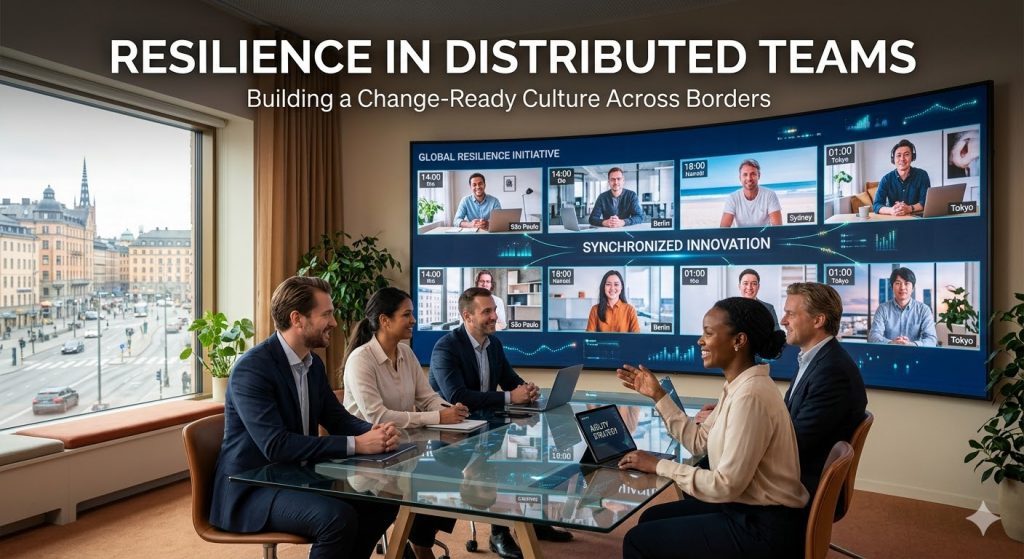
Just as a microservices architecture allows different software functions to operate independently while sharing a common backbone, a modular culture allows for localized high-performance. A Sales team in Tokyo and an Engineering team in Berlin do not need to behave identically; they need to be interoperable.
- The Core “Kernel”: The non-negotiable values and protocols (e.g., integrity, data security, customer centricity) that every “module” must run.
- Localized Plugins: Department-specific or region-specific norms that optimize performance for that specific environment without breaking the system.
2. Cultural “APIs” (Application Programming Interfaces)
In computing, an API defines how different systems talk to each other. In a modular organization, we must define the interfaces between departments. When friction occurs between Marketing and Product, it is often because their “APIs” don’t match — they use different terminology, different success metrics, and different communication cadences.
Engineering-led change focuses on standardizing these hand-offs. By creating clear “contracts” for how information and work move between modules, you reduce the need for constant “re-translation” and manual intervention.
3. Avoiding the “Monolithic Collapse”
A monolithic culture is brittle. If one part of the system becomes toxic, the lack of boundaries allows that toxicity to spread rapidly (a “cascading failure”). Modularity provides fault tolerance. By empowering teams to own their internal sub-cultures within a shared framework, you create a more resilient organization that can contain failures and replicate successes more efficiently.
“Scalability is not about making everyone the same; it’s about making sure everyone can work together while being different.”
4. Interoperability and the “Stable Spine”
To maintain order amidst this modularity, the organization needs a Stable Spine — a set of centralized systems and human-centered principles that provide the necessary “scaffolding” for growth. This spine ensures that as the organization adds more modules (new hires, new departments, or acquisitions), the structural integrity remains intact.
Section VII: Conclusion — From Architect to Gardener
The application of engineering principles to cultural change is not about turning an organization into a cold, mechanical factory. On the contrary, it is about using the rigor of design to protect and empower the human element. By architecting a “Stable Spine” of systems, feedback loops, and friction-free processes, leaders create the necessary structure for human-centered innovation to flourish.
1. The Shift in Leadership Persona
As we move from accidental culture to engineered culture, the role of the leader undergoes a fundamental transformation:
- From Fixer to Architect: Instead of spending your day putting out individual behavioral “fires,” you focus on designing the systems that prevent those fires from starting in the first place.
- From Dictator to Gardener: An engineer understands that you cannot “force” a plant to grow; you can only design an irrigation system (incentives), ensure the soil quality (psychological safety), and remove the weeds (friction). The growth itself is a natural output of a well-engineered environment.
2. Cultural Maintenance and Technical Debt
No engineered system is “set and forget.” Just as a bridge requires regular inspections for fatigue and corrosion, a culture requires continuous monitoring. Leaders must be vigilant against “Cultural Debt” — the buildup of outdated rituals and inefficient communication patterns that slowly degrade the system’s velocity over time.
3. Final Call to Action: Start with the Blueprint
If your organization’s culture feels amorphous or resistant to change, stop trying to “change minds” and start mapping the system.
- Audit your Load-Bearing Values to ensure they aren’t just wallpaper.
- Install Feedback Loops that act as thermostats, not just thermometers.
- Identify the Friction Points that are draining your team’s cognitive energy.
“The most successful organizations of the future will not be those with the smartest individuals, but those with the most intentionally engineered cultures — systems designed to make innovation the path of least resistance.”
Summary of the Engineering Framework
By moving through these six principles — Integrity, Systems Thinking, Feedback, Friction Reduction, and Modularity — you move beyond the “softness” of traditional change management. You build a resilient, scalable, and human-centered innovation bonfire that burns brighter, longer, and more efficiently.
BONUS: The Cultural Engineering Audit – A Diagnostic Checklist
To move from theory to execution, leaders must evaluate their organizational “machinery.” This audit is designed to identify where your cultural architecture is sound and where it is suffering from structural fatigue or systemic friction. Use this checklist to pinpoint your highest-priority “re-engineering” tasks.
1. Structural Integrity (The Foundation)
2. Systems & Feedback (The Controls)
3. Friction & Thermodynamics (The Efficiency)
4. Modularity & Scaling (The Architecture)
Engineer’s Note: If you checked fewer than 50% of these boxes, your organization is likely losing significant energy to “Heat” (internal friction and misalignment). Focus your next “Cultural Sprint” on the section with the fewest checks.
Frequently Asked Questions
Does “Engineering” culture mean removing the human element?
Quite the opposite. Engineering principles are used to design environments that actually protect the human element. By removing systemic friction and clarifying structural values, we free people to focus on creative, high-value work rather than navigating bureaucratic hurdles.
What is the difference between a “Thermostat” and a “Thermometer” in culture?
A thermometer (like an annual survey) simply measures the temperature when it’s often too late to change it. A thermostat (like real-time pulse checks) measures the environment and triggers immediate, corrective action to keep the culture aligned with its “set point” or core values.
How do you identify “Cultural Debt”?
Cultural debt is identified by looking for “legacy” processes — meetings, approval layers, or silos — that were created to solve a past problem but now serve only to slow down the current system. If a process creates more “heat” (frustration) than “work” (value), it is likely cultural debt.
Image credit: Google Gemini
 Sign up here to get Human-Centered Change & Innovation Weekly delivered to your inbox every week.