
Exclusive Interview with Eric Ries
This candid, wide-ranging Q&A dives deep into what Eric Ries calls the “physics of organizations” — the hidden structural and financial forces that dictate whether a company thrives or decays over time. Moving past superficial business trends, the conversation tackles the intense psychological toll of entrepreneurship, the systemic flaws of shareholder primacy, and the historical reality of alternative corporate governance.
Over the last two decades, Eric Ries’ ideas about continuous innovation, long-term thinking, governance, and market reform have reshaped company building and management practices. He is the creator of the Lean Startup method, and the author of the New York Times bestseller The Lean Startup; The Leader’s Guide; and The Startup Way.
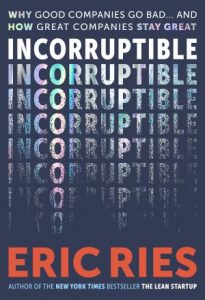
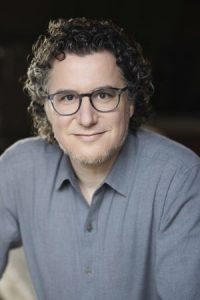 As a founder, he has put his own ideas into practice with The Long-Term Stock Exchange (LTSE); Answer.AI, an AI R&D lab; Virgil, a legal services startup; and IMVU. On The Eric Ries Show, he talks with world-class technologists, thought leaders, and executives building for the long-term. He lives in the San Francisco Bay Area with his wife and three children. He is excited to announce his latest book Incorruptible: Why Good Companies Go Bad… and How Great Companies Stay Great.
Ries offers a provocative look at how truly resilient, mission-driven institutions can protect themselves from the gravitational pull of short-term financial systems to prioritize long-term human flourishing.
Below is the text of my interview with Eric and a preview of the kinds of insights you’ll find in Incorruptible presented in a Q&A format:
1. Why do purpose-driven companies create so much value for society?
The evidence shows that purpose driven companies outperform conventional companies financially as well as in almost any other dimension you care to measure, including the social dimension. Intuitively, this makes a lot of sense, because entrepreneurship is very difficult. Everyone says they know this, but I don’t think we really grapple with this fact nearly enough. If you just want to make money, there simply are better, more convenient ways than entrepreneurship. So to get not just the founder, but the early team, the early investors, all these people to take a risk to do this crazy thing generally requires some kind of extra-financial purpose or goal. Sometimes we call that vision, sometimes we call that, in a more demeaning way, strategy. But it’s also fine to call it purpose, which is really what intuitively makes the most sense to people that do this. This is one of those cases where intuition and the evidence agree, yet it is somehow still considered a controversial fact.
2. What were some of the most important lessons you absorbed during your time on the bathroom floor?
As I’ve been going around talking about the book, this is one of the stories that actually gets a very different reaction depending on whether I’m talking to an entrepreneur or somebody else. Entrepreneurs all recognize this moment, where I really thought my company was going to fail and I couldn’t handle it. A lot of non-entrepreneurs don’t get it. They’re like, “Why? It seems like a bit of an overreaction. Okay, you had a business setback. We’ve all had career setbacks — what’s the big deal?” But what you don’t realize until you’re in it is how much, especially if you’re doing something out of a sense of purpose or passion that’s personally meaningful to you, you start to identify with it and start to become inseparable from it. So that story is very important in the book because I learned a lot of important business lessons. I thought the company was going to die, but it didn’t. It survived precisely because of its mission, not in spite of it. I learned, in a very visceral way, about the forces, that prevent reform from coming to fruition in so many areas of our life, not just financial. And of course I learned a personal lesson about the importance of equanimity and the need to tackle the psychological and even spiritual dimensions of entrepreneurship if we’re going to create real change in the world.
3. How much chance is there of us getting companies to more broadly redefine profit to include elements of maximizing human flourishing?
This question reminds me of a of an incredible video of the great Steve Jobs before he died. He’s being interviewed at an industry conference at the time of the launch of the iPhone, when the Blackberry was the dominant smartphone in the world. It had something like 80 or 90% market share. A journalist asks this question something like, “Do you really think realistically you can take share from this dominant player?” And you can tell Steve is irked by this question, and I’m expecting because we all know his famous temper, that he’s going to lash out at the person. But he doesn’t. Instead, he says, “You know, that’s not really up to me. My job, our job at Apple, is to make the best phone we can, the one that we’re proud of. Market share is up to the customer. That’s their decision, their choice. We don’t think about that, we don’t know, and we don’t need to know in order to do our best work.” I’m paraphrasing because I haven’t seen this video in a long time, but that’s how I feel about this, too. I get this question a lot because people want to feel like, if I’m going to jump on the bandwagon, I want to know that it’s going to work. But the truth is none of us know what’s going to work, even those of us who advocate for these ideas. You, who’s reading this, are the only one who gets to decide if this is likely or unlikely. This is not what the economist John Maynard Keyes called a beauty contest. You don’t have to worry about what everyone else is going to do. You only have to decide for yourself if you think this makes sense to you. And if it does, well, like I said — like Steve said — it’s up to you.
4. As America becomes more capitalist and less of a free market economy, what steps can we take to reverse the regulatory capture, lawfare and other methods that degrade competition, purchasing power, class mobility and the American dream? Do we need a pCombinator? (purpose-driven company accelerator)
You’re asking questions about words that we no longer have consensus about what they mean. What is a free market economy? What is capitalism? What is regulatory capture? The very definition of these words is what’s under threat. If you look at the broader media landscape, the political landscape, in many, many pockets of our society now the very idea of a for-profit company is being attacked as inherently exploitative or extractive. The consensus that we used to have that we can be working commercially to improve the world and make it a better place, that used to be seen as quite obvious and now that whole idea is under threat. I don’t blame the people doing the attacking, especially the young people who have, after all, lived their whole lives, under this regime of a very extractive flavor of capitalism that goes by the anodyne-sounding name “shareholder primacy”. This is the simple idea that customers, employees, communities all exist as resources to be mined for the benefit of shareholders. But this question is also loaded with so many other political issues of our time that we are going to have to tackle if we’re going to come out of this darkness, as our grandparents who battled fascism once had to do. So, I don’t think it’s going to be as simple as fixing one thing. But I think that one of the things we have to do, among many, is build a power base, an economic gravity pulling towards the values aligned with human flourishing. And many of the political, economic, and social challenges of our time are downstream of this action in the same way that the catastrophes that we’re currently living through are downstream of what seem like very simple and relatively benign policy changes from the past century.
5. What should purpose-driven companies look for in a CEO as the company outgrows or outlives the founder(s)?
 This is a really important part of the architecture of institutional longevity. Most companies fail the test of succession. The evidence seems to suggest that people who train and hire from within have a big advantage here. I think that is something we don’t even really teach anymore as a corporate value, but that is actually super valuable. There’s a reason why that old story of the employee that worked their way up from the mail room was such an important legend in the previous century. Now we hardly tell stories like that anymore. We tend to want the big fancy turnaround, the bold new strategy, the external CEO, which for companies that are in crisis makes sense. And since our modern best practices tend to ruin companies, they tend to be in crisis quite a lot. But what we want to do is we want to find a CEO who combines two really important elements. One, they personally, deeply and profoundly reflect the ethos of the company. This is why a company that doesn’t have an ethos can never pass this test because they don’t even know who to pick. But you don’t want someone who, who apes the values of the past, or is slavishly loyal to the specific things that worked in the past. You need someone who is both deeply aligned to the ethos, and who nonetheless is very performance oriented, meaning they see that when the ethos is working, it should generate long-term performance. They can’t get distracted by short-term blips but they have to have the adaptability to realize when sacred cows need to be challenged. Now, it’s commonly said that only a founder can have the moral authority to do this unique combination of things I’m describing, only they can go into founder mode, as it’s called. But I don’t think that is supported by the evidence. When companies have the right structure, they actually can imbue subsequent generations of managers with this moral authority.
6. Why is magnetic alignment so important for purpose-driven organizations and their survival?
I conceived of this book as a look into the physical forces, the underlying forces, that affect organizations. So not the surface level characteristics that we spill so much ink about, org chart, culture, business model strategy, even vision, things we can touch and taste and control. Those things are important, don’t get me wrong. But there is a deeper layer to this, like a physics of organizations. In the book, I explore very dominant force that I call financial gravity. This is the gravity that pulls companies down into mediocrity or worse and is exacerbated by our heavily financialized economy. So to build an organization that is going to endure and is going to maintain its distinctiveness or its sovereignty over time, we have to have a force that is stronger than gravity with which we can power both the alignment that we need of people, and the structural integrity to resist outside pressure. And I call that the force of magnetic alignment. This is the mechanism by which companies gain that most valuable and underrated asset: trustworthiness. And the evidence shows that companies that have this asset, that activate this force, have numerous superpowers that conventional companies simply cannot touch.
7. Is super voting stock the silver bullet for purpose driven companies or are their other possibly better or complementary ways for purpose-driven companies to protect themselves?
It’s funny because the simple answer to your question is no. And yet I advocate for super voting shares all the time. I may be the most negative advocate of super voting shares! To understand, you have to see it this way: Imagine I went to a political science professor, an expert in political philosophy and I said, “I’m thinking of setting up a new city state, a new polis. I want your advice about what kind of governance it should have.” The professor’s going to be really excited. “Oh, great. What are you considering?” And I’ll say, “Well, I’ve only got two options. Option one is a situation in which whoever borrows the most money gets the most votes. Also, the tourists can vote, and you only have to borrow the money or be a tourist on election day, after which you can release your loans or leave the country and your vote is still binding on the whole polity.” The professor’s going to look at me and be like, “That’s pretty terrible. What else you got?” So, I’ll say, “Okay, option two is despotic emperor for life and my heirs and assigns.” The professor is going to say, “That’s all you got? Those are the only two options you can think of, really? You know, in the political science department, we’ve been working on this problem for a couple hundred years. We could maybe suggest a few other things!” That is the state of corporate governance today. It is such a paucity of thinking and originality. It is so bare of our human birthright, which is to imagine different ways that power can be shared amongst people. Human beings have been experimenting with this question since there have been human beings. So, the fact that companies are choosing despotic emperor for life to me should be read not as an endorsement of autocracy, but rather as an indictment of standard governance. Standard governance is so bad that emperor for life looks like an improvement. So yes, I do think it is an improvement. I do think there are times when that’s the best we can do, but we know from the research that it is not really the best long-term solution. We know that having too much power centralized in too few people leads to what psychologists called hubris syndrome, and many other problems besides. On top of being, ultimately not that long-term, since it’s limited by the human lifespan, this also puts a lot of founders into really an untenable and very undesirable psychological situation, where they are basically indentured servants and can never leave, for fear that their creation will be destroyed. So, maybe it’s the least bad of the current available options. But of course, we can think of far better ideas. In the book I argue for what I call “constitutional governance”, which is a set of concepts that take us beyond this false dichotomy.
8. How do you think we escape the big food doom loop? (healthy food company starts, wins customers, seeks an exit to get paid, big food makes it unhealthy and lower quality – i.e. Naked, Ben ‘n’ Jerry’s, Breyer’s, etc.)
This question is not really about food, so I’m not going to address big food. What does that even mean? Because we have a tendency to want to personalize these dramas, looking for villains. I understand that there are some villains out there. I get it. But this phenomenon that you’re describing, where someone figures out a more enlightened way to create any kind of product — doesn’t matter if it’s a food product or a tech product or a product design to bring a little beauty into people’s lives — it doesn’t matter what it is. The more successful it becomes, the more valuable it is as a target. And the more of a premium someone bigger will pay to acquire it. On this book tour, I have encountered many people who’ve told me their horror stories. They tend to want to tell food stories. That’s why I like this question. They’ll be like, look, private equity took over my favorite restaurant. Now the food is disgusting. Someone said to me a couple of weeks ago about a certain brand, “I hope they’re really successful,” and then they had to amend their statement to “Well, actually, I hope they’re somewhat successful. Successful enough to keep going, but not so successful that they get bought out by private equity.” That’s how much this idea that when things become successful, they get ruined has passed into the mainstream culture. So this is not about food. In the book, I describe this phenomenon, dating back at least two hundred years, and give the mechanics of how it happens and why. Why are we so conditioned to reenact the parable of the killing of the golden goose? And more importantly, what we can do to stop it?
9. Is it time to change the ‘corporations number one duty is to its shareholders’ narrative (aka shareholder primacy)? Is that part of what you’re trying to do with this book?
Yes. I believe that the era of shareholder primacy is actually already over, for two reasons. One is, this is an idea that has proved to be self-defeating. It was originally enacted — not in ancient times, but in the 1980s, at least in Delaware — to be beneficial to shareholders, but that is not how it has proved. We’ve actually metastasized into what I would call “extraction primacy”, in which investors themselves are now locked in a zero sum prisoner’s dilemma struggle where each has to try to squeeze as much out of everything they invest in lest someone else beat them to it. I think even investors are ready for change. The second reason I think it’s already over, and that we’re like the road runner having run off this cliff and haven’t looked down yet, is there’s a massive generational shift underway. As I mentioned before, the younger generation who has lived their whole lives under the hegemony of this idea, increasingly find it absolutely repugnant. They may not know to call it shareholder primacy, they may not realize that this is an idea that, by the way, has never been democratically enacted ever in history and therefore has no democratic legitimacy. But they are hungry for something new. And so I think our energy needs to be spent not on complaining about shareholder privacy anymore. It’s over. The question needs to be, what should the successor idea be? In the book I suggest mission primacy as one alternative.
10. You mention Novo Nordisk and its foundation in the book, which apparently is about to be passed by the OpenAI foundation for the mantle of the largest foundation (much bigger than the Bill & Melinda Gates Foundation) through their 26% ownership of OpenAI shares. Is this a model that we should encourage more startups to embrace from the outset?
I’d be very careful drawing lessons from the OpenAI experience because that company is quite singular and there’s a lot of stuff going on there quite unusual, a lot of big ego people like Elon and Sam. But interestingly, people often claim that the foundation ownership of OpenAI is unusual, and that’s not true. The idea that a for-profit company can be governed by a nonprofit foundation is an old one. The German optics company Zeiss had the structure in the 1880s. And as the question asked, Novo Nordisk has had it since the 1920s. In fact there are so many of these companies in the world that they have been studied and found to be dramatically more stable. Companies that have this structure are simply more likely to invest counter-cyclically. They are more likely to invest more in R&D. They have better financial performance and they are something like five or six times more likely to live to year fifty than conventional companies. Now the key to the structure’s stability is to have a system of checks and balances, which, as far as I understand, OpenAI struggled with for much of its existence. OpenAI had only one board, but what makes companies like Novo Nordisk, Patagonia, and Tony’s Chocolonely distinctive is that they have two entities — a for-profit board of directors who’s held accountable or in some cases even appointed by an outside board of trustees. That checks and balances, two-entity structure seems in the data to the most stable corporate form in the world.
11. As we enter the age of AI and the disruption it is beginning to cause, can the displaced really rely on enlightened capitalism to keep their families from starving?
This is a very grim question, and it presupposes one of the many, many doomsday scenarios about AI that is circulating. In order to think clearly about what it makes sense to do with AI, you have to realize two really interesting facts about this moment. The first is that almost every future scenario about this technology depends on a series of empirical facts that no one on this planet really knows the answer to. And these facts are very strange. Only a few years ago, they would have been considered post-modernist, irrelevant debates in your local philosophy department about questions like, “is there such a thing as reasoning or is it all just language?” And “what is the nature of intelligence and consciousness?” Of course, we as human beings have studied these questions for many generations. But I was on CNBC talking about this the other day — it’s rare that they are of such economic import that stock traders are wondering about them. To give one example, one of the most important questions you have to ask about AI is when or if the scaling laws will ever run out. So far, for quite a number of years,, thanks to pioneering researchers, including many far-sighted ones like my co-founder at Answer.AI Jeremy Howard, have figured out that simply by applying more computation to a very simple learning algorithm, you can create language models that seem quite intelligent, at least at first glance. So far, the more computation we use to train and run these models, the more capable they become. I think most people generally assume that this is some kind of S-curve and that eventually this curve will level off. Some even think that it already has leveled off. Others think we are years, or even decades, away from it leveling off, and of course some people believe it will never level off. This is the law of the universe. Depending on which of those things is true, the future scenarios are almost comically different from each other. A world in which the scaling laws level off next year is almost unimaginably different from one in which we have ten more years of this. And many of the doomsday scenarios, but also many of the utopia scenarios, depend critically on knowing the answer to this fundamental question about the universe that nobody knows. So, back to your question: How do we know what actions to take when the range of possible futures is so wide, so different from each other and so dependent on facts not in evidence. I think there’s only one thing that makes sense, which is to ask ourselves what are actions that would make sense, that you’ll be glad that you did, in a wide variety of potential futures? And I think that takes us out of the job of having to predict the future, which is very difficult, and rather into a more prudence-based mindset of what can be done to prepare for many possible futures. And when you go through that analysis, many of the things that you want to do to protect yourself against future AI scenarios are actually things you probably should be doing anyway. Think about having better mandatory disclosure, hardening our critical infrastructure, making sure that the gains from new technologies are widely distributed, going back to the era of widely shared prosperity. So if people are going to be displaced, should they just sit around and hope that the leaders who do the displacing will wind up being enlightened? Absolutely not. Of course not. In fact, the whole point of this book is to show how unless we make changes, the gravitational field of our financial system will warp and even destroy, turn malignant, any company. But where does the gravitational field come from? I think the most surprising part of the book for many readers is in later chapters when we reveal how the same tools that we’ve been discussing about how to create more resilient companies are also tools that can be wielded by all of us to shape the gravitational field of the future and affect what kinds of companies can and can’t form, how those companies can and cannot behave. And while some of those levers are traditional levers, like policy changes, of course., the book is primarily about the other, more surprising lovers, that I bet most readers have not thought of before.
I hope everyone has enjoyed this peek into the mind of the man behind the insightful new title Incorruptible!
Image credits: Eric Ries, Google Gemini
 Sign up here to join 17,000+ leaders getting Human-Centered Change & Innovation Weekly delivered to their inbox every week.