Monthly Archives: September 2022

The Augmented Innovator

Partnering with AI for Breakthrough Ideas

The Augmented Innovator

GUEST POST from Art Inteligencia

For decades, the innovation conversation has centered on the human mind—the lone genius, the creative team in a brainstorming session, the serendipitous “aha!” moment. While human ingenuity remains the North Star of innovation, a new, indispensable partner has emerged: Artificial Intelligence. The question is no longer “will AI replace us?” but rather, “how can we partner with AI to amplify our creative potential and achieve breakthrough ideas that were previously out of reach?”

The future of innovation isn’t about AI versus human. It’s about AI plus human. It’s about the Augmented Innovator—a leader, a team, or an entire organization that consciously and strategically partners with AI to augment their innate human capabilities. This partnership frees us from the mundane, helps us identify patterns we would have otherwise missed, and empowers us to focus on the uniquely human aspects of innovation: empathy, ethics, emotional intelligence, and storytelling.

The Innovation Partnership: Humans Lead, AI Amplifies

The key to this partnership is understanding and respecting the unique strengths of each player. Humans are exceptional at generating original, often illogical, and deeply empathetic ideas. We possess a nuanced understanding of human needs, desires, and irrationalities. AI, on the other hand, is a master of data synthesis, pattern recognition, and rapid iteration. It can process vast datasets in seconds, identify correlations that would take humans years to find, and generate thousands of variations on a theme.

By combining these strengths, we create a powerful innovation engine. The human innovator leads with a “Why” – a problem to solve, a user need to address. The AI then becomes a force multiplier, assisting with the “What” and the “How,” providing the data-driven insights and creative scaffolding that accelerate the journey from idea to impact.

Three Strategic Pillars for AI-Powered Innovation

  1. AI as a Discovery Engine: AI can be an unparalleled tool for ethnographic research and trend spotting. Instead of relying solely on small-sample focus groups or surveys, AI can analyze social media conversations, customer support tickets, search query data, and market reports to identify latent needs, emerging trends, and unmet frustrations on a massive scale. This provides a data-rich foundation for human-led ideation, ensuring our creativity is grounded in genuine market needs.
  2. AI as a Creative Catalyst: The blank page can be an innovator’s greatest foe. AI can serve as a powerful brainstorming partner, generating prompts, suggesting unexpected associations, and rapidly producing design variations. Think of it as a limitless library of ideas, allowing the human to focus on curating, refining, and injecting the emotional depth and cultural context that AI lacks. This co-creation process is where truly novel ideas emerge.
  3. AI as a Prototyping Accelerator: The innovation process is often slowed by the time it takes to build and test prototypes. AI-powered tools can generate code, create design mockups, and even simulate user experiences in a fraction of the time. This rapid prototyping cycle allows human innovators to test more ideas, fail faster, and get to the right solution quicker, transforming the bottleneck of execution into a sprint.

Case Study 1: The Retailer’s AI-Powered Product Line

A global apparel retailer was struggling to predict fashion trends and reduce product waste. Their traditional process involved human designers and trend forecasters relying on intuition, trade show data, and historical sales numbers. This often led to overproduction of unpopular items and a missed opportunity to capitalize on emerging styles.

The company implemented an AI-driven trend analysis platform. The AI ingested massive amounts of data from social media, fashion blogs, online purchase histories, and even satellite imagery of popular public gatherings. It identified subtle, micro-trends that human analysts had missed—like a specific shade of ochre becoming popular in street fashion in a handful of major cities. Human designers then used these AI-generated insights as a creative springboard. They didn’t just copy the trends; they infused them with their brand’s unique identity, ethical sourcing commitments, and storytelling. The AI became their research assistant and creative muse.

The takeaway: This partnership created a product line that was both data-informed and emotionally resonant, proving that AI’s analytical power, combined with a human’s creative judgment, is a potent recipe for market success and sustainability.

Case Study 2: Accelerating Breakthroughs in Scientific R&D

A major pharmaceutical company faced a monumental challenge: the traditional drug discovery process is incredibly long, expensive, and has a high failure rate. Identifying promising drug candidates and testing their efficacy and safety often takes a decade or more.

The company began using an AI-powered drug discovery platform. The AI was trained on a vast database of molecular structures, genetic information, and scientific research papers. Its task was to analyze billions of possible molecular combinations and predict which ones were most likely to bind to a specific protein target. This process, which would have been impossible for humans to perform in a lifetime, was completed by the AI in just a few months. The AI then presented a list of the most promising candidates to the human research team.

The human scientists, freed from the drudgery of manual data analysis, could now focus on the complex, qualitative work of lab testing, clinical trials, and ethical considerations. The AI didn’t invent the drug; it identified the most probable starting points. The human-led team then applied their deep domain expertise and intuition to navigate the nuanced challenges of medical science.

The takeaway: This partnership accelerated the discovery process by a factor of five, leading to a promising new drug candidate entering clinical trials years ahead of schedule. The human-AI partnership didn’t just make the process faster; it made a previously impossible task achievable.

Final Thoughts: Designing the Partnership for the Future

The promise of AI in innovation is not about a technological magic wand; it’s about a well-designed partnership. As leaders, our role is to create the conditions for this partnership to thrive. This means:

  • Clarifying the Human Role: We must define that AI is a tool to empower, not replace. Our value lies in our empathy, our judgment, and our ability to tell compelling stories. We are the architects of the “Why.”
  • Building Trust and Transparency: We must ensure that AI tools are transparent, explainable, and used ethically. Trust is the foundation of any successful partnership, and without it, adoption will fail.
  • Fostering a Learning Culture: We must encourage continuous learning and experimentation, empowering our teams to become masters of both their craft and the new AI tools that can augment their work.

The Augmented Innovator is the next evolution of human-centered innovation. By consciously and creatively partnering with AI, we can move beyond incremental improvements and unlock a new era of breakthrough ideas that will shape a better, more innovative future. This is the opportunity of our time—to not just use the tools of tomorrow, but to master the art of working alongside them.

Extra Extra: Futurology is not fortune telling. Futurists use a scientific approach to create their deliverables, but a methodology and tools like those in FutureHacking™ can empower anyone to engage in futurology themselves.

Image credit: Microsoft CoPilot

Subscribe to Human-Centered Change & Innovation WeeklySign up here to get Human-Centered Change & Innovation Weekly delivered to your inbox every week.
Driving Change Forward Requires a Shared Purpose

Driving Change Forward Requires a Shared Purpose

GUEST POST from Greg Satell

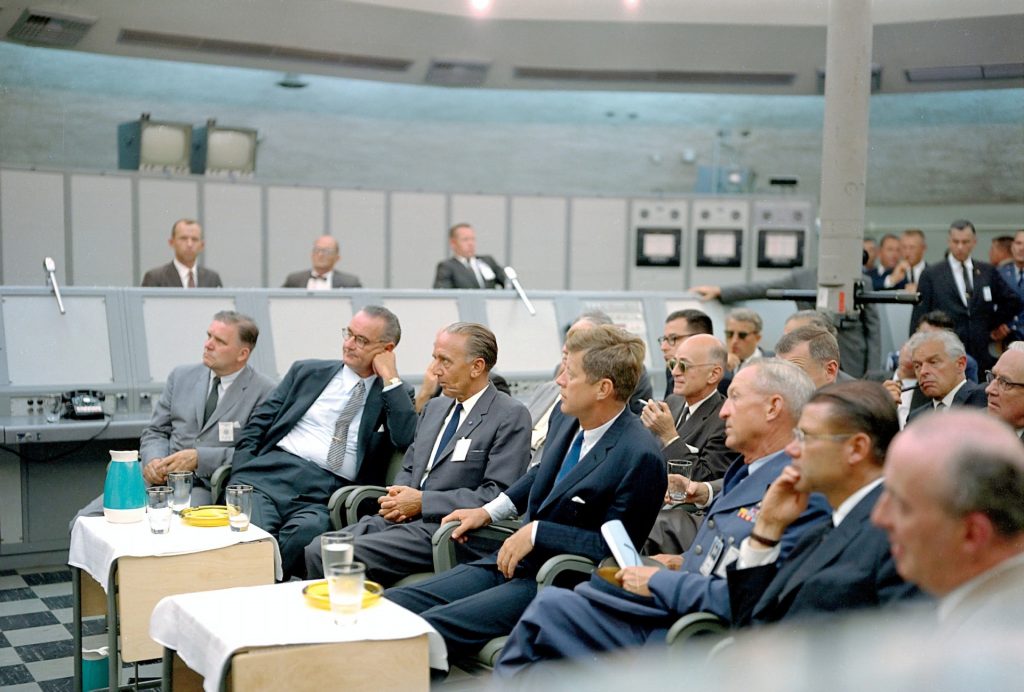
On September 12, 1962, President Kennedy addressed the nation from Rice University. “We choose to go to the moon,” he said. “We choose to go to the moon in this decade and do the other things, not because they are easy, but because they are hard, because that goal will serve to organize and measure the best of our energies and skills.”

The speech galvanized the country into one of the most vast collective efforts in history, involving politicians, scientists, engineers and the general public to achieve that goal. Perhaps even more importantly, it imbued the country with a sense of shared purpose that carried over into our business, personal and community life.

Today, that sense of shared purpose is much harder to achieve. Our societies are more diverse and we no longer expect to spend an entire career at a single company, or even a single industry. That’s why the most essential element of a leader’s job today isn’t so much to plan and direct action, but to inspire and empower belief in a common mission.

Start with Shared Identity

When Lou Gerstner first arrived at IBM, the company was going bankrupt. He quickly identified the root of the problem: Infighting. “Units competed with each other, hid things from each other,” he would later write. Huge staffs spent countless hours debating and managing transfer pricing terms between IBM units instead of facilitating a seamless transfer of products to customers.”

The problem is a common one. General Stanley McChrystal experienced something similar in Iraq. As he described in Team of Teams, his forces were split into competing tribes, such as Navy SEALS, Army Special Forces, Night Stalker helicopter pilots, and others, each competing with everyone else for resources.

We naturally tend to form groups based on identity. For example, in a study of adults that were randomly assigned to “leopards” and “tigers,” fMRI studies noted hostility to outgroup members. Similar results were found in a study involving five-year-old children and even in infants. So, to a certain extent, tribalism is unavoidable.

It can also be positive. Under Gerstner, his employees continued to take pride in their unit, just as under McChrystal commando teams continued to build an esprit de corps. Yet those leaders, and President Kennedy as well, expanded those tribes to include a second, larger identity as IBMers, warriors in the fight against terrorism and as Americans, respectively.

Anchor Shared Identity with Shared Values

Shared identity is the first step to building a true sense of shared purpose, but without shared values shared identity is meaningless. We can, as in the study mentioned above, designate ourselves “leopards” or “tigers,” but that is a fairly meaningless distinction. It may be enough to generate hostility to outsiders, but not enough to create a genuine team dynamic.

In the 1950s there were a number of groups opposed to Apartheid in South Africa. Even though they shared common goals, they were unable to work together effectively. That began to change with the Congress of the People, a multi-racial gathering which produced a statement of shared values that came to be known as the Freedom Charter.

Nelson Mandela would later say that the Freedom Charter would have been very different if his organization, the African National Congress (ANC) had written it by themselves, but it wouldn’t have been nearly as powerful. It not only gave anti-Apartheid groups a basis for collective action, by being explicit values, it formed a foundation for those outside of South Africa, who shared the same values, to share the anti-Apartheid purpose.

Perhaps most importantly, the Freedom Charter imposed costs and constraints on the anti-Apartheid movement. By committing itself to a multi-racial movement the African National Congress lost some freedom of action. However, constraining itself in that way was in itself a powerful argument for the viability of a multi-racial society in South Africa.

One of the most powerful moments in our Transformation and Change Workshops is when people make the shift from differentiating values, such as the black nationalism that Mandela favored as a young man, to shared values, such as equal rights under the law that the Freedom Charter called for. Of course, you can be a black nationalist and also support equal rights, but it is through shared values that your change effort will grow.

Engaging in Shared Action

Shared identity and shared values are both essential elements of shared purpose, but they are still not sufficient. To create a true sense of a common mission, you need to instill bonds of trust and that can only be done through engaging in shared action. Consider a study done in the 1960s, called the Robbers Cave Experiment, which involved 22 boys of similar religious, racial and economic backgrounds invited to spend a few weeks at a summer camp.

In the first phase, they were separated into two groups of “Rattlers” and “Eagles” that had little contact with each other. As each group formed its own identity, they began to display hostility on the rare occasions when they were together. During the second phase, the two groups were given competitive tasks and tensions boiled over, with each group name calling, sabotaging each other’s efforts and violently attacking one another.

In the third phase, the researchers attempted to reduce tensions. At first, they merely brought them into friendly contact, with little effect. The boys just sneered at each other. However, when they were tricked into challenging tasks where they were forced to work together in order to be successful, the tenor changed quickly. By end of the camp the two groups had fallen into a friendly camaraderie.

In much the same way, President Kennedy’s Moonshot wasn’t some obscure project undertaken in a secret lab, but involved 400,000 people and was followed on TV by millions more. The Congress of the People wasn’t important just for the document that it produced, but because of the bonds forged in the process. General McChrystal didn’t just preach collaboration, but made it necessary by embedding his personnel in each other’s units.

Becoming a Transformational Leader

Times like these strain any organization. The Covid-19 crisis alone forces enterprises to change. Put racial and political tensions on top and you can quickly have a powder keg waiting to explode. On the other hand, much like the boys in the “Robbers Cave” experiment, common struggle can serve to build common bonds.

When President Kennedy gave his famous speech in 1962, the outlook didn’t look very bright. The launch of the Russian satellite Sputnik in 1957 had put America on its heels. Kennedy’s disastrously failed Bay of Pigs invasion was only compounded by his humiliation at the hands of Khrushchev in Vienna.

Yet instead of buckling under the pressure, Kennedy had the grit and imagination to conceive a new project that would “serve to organize and measure the best of our energies and skills.” He pledged that we would go to the moon before the decade was out and we did, putting America back on top of the world and imbuing the country with a sense of pride and ambition.

We can do the same. The Covid pandemic, while tragic, gives us the opportunity to reimagine healthcare and fix a broken system. The racial tensions that George Floyd’s murder exposed have the potential to help us build a new racial consciousness. Revolutions do not begin with a slogan, they begin with a cause.

That’s what makes transformational leaders different. Where others see calamity, they see potential for change.

— Article courtesy of the Digital Tonto blog
— Image credit: Unsplash

Subscribe to Human-Centered Change & Innovation WeeklySign up here to get Human-Centered Change & Innovation Weekly delivered to your inbox every week.

Neuroscience-Backed Strategies for Embracing Disruption

The Brain on Change

Neuroscience-Backed Strategies for Embracing Disruption

GUEST POST from Chateau G Pato

In today’s hyper-accelerated world, the only constant is change. Yet, for all our talk of agility and transformation, up to 70% of organizational change initiatives still stumble or outright fail. Why? Because we often overlook the most powerful and complex component in the equation: the human brain. We mandate, we communicate, we train, but we rarely design for how the brain actually processes disruption.

Our brains are exquisitely wired for survival. They crave predictability, efficiency, and safety. When faced with the unknown, the uncertain, or a perceived loss of control, our ancient limbic system – specifically the amygdala – fires up, triggering a “threat response.” This isn’t a conscious choice; it’s a primal, neurobiological reaction that floods our system with stress hormones, impairs rational thought, and leads directly to resistance, disengagement, and even outright rebellion. Trying to force change against this innate wiring is like trying to drive a car with the brakes on.

But what if we could shift our approach? What if we could harness the incredible power of neuroplasticity – the brain’s lifelong ability to rewire itself and form new connections – to cultivate a workforce not just tolerant of change, but genuinely adaptable and innovative? The burgeoning field of neuro-leadership offers a compelling, science-backed roadmap for doing just that.

The SCARF Model: A Compass for Navigating the Inner Landscape of Change

At the heart of understanding the brain on change lies Dr. David Rock’s insightful SCARF model. This framework identifies five key social domains that strongly influence whether our brains perceive a situation as a threat or a reward:

  • Status: Our sense of relative importance or standing. A perceived reduction in status can be deeply threatening.
  • Certainty: Our need for predictability and clear expectations about the future. Ambiguity is a major threat trigger.
  • Autonomy: Our sense of control over our own lives and work. Being told what to do without input can feel disempowering.
  • Relatedness: Our need for social connection, belonging, and trust. Feeling isolated or excluded is a significant threat.
  • Fairness: Our perception of equitable exchanges and just treatment. Injustice triggers strong threat responses.

When these domains are threatened during a period of organizational change, resistance is a natural, albeit often unconscious, outcome. Conversely, by consciously designing change initiatives that bolster these elements, leaders can foster psychological safety and activate the brain’s reward pathways, making people more receptive and engaged.

Neuroscience-Backed Strategies for a Human-Centered Transformation

Translating this understanding into actionable strategies is where the real power lies:

  1. Cultivate Unwavering Psychological Safety: This is the bedrock. For true embrace of disruption, people must feel safe to voice concerns, ask “dumb” questions, experiment, and even fail without fear of retribution. Leaders must actively model vulnerability, admit what they don’t know, and create open forums for dialogue. When the amygdala is calm, the prefrontal cortex – our center for rational thought, creativity, and problem-solving – can engage fully. A culture that embraces “failing fast” subtly reinforces safety around risk-taking.
  2. Break Down Change into Digestible Increments (and Celebrate Each Bite): Large, amorphous changes can overwhelm the brain, triggering an “energy drain” threat response. Our brains seek efficiency, and tackling a massive, ill-defined task feels incredibly inefficient. Instead, break down the transformation into smaller, clearly defined, and achievable steps. Each successful completion, no matter how minor, triggers a dopamine release – the brain’s natural reward chemical – reinforcing the new behavior and building momentum. This consistent positive reinforcement literally helps to hardwire new neural pathways, making the desired behaviors more automatic over time.
  3. Maximize Autonomy and Empower Co-Creation: Nothing triggers a threat response faster than a feeling of powerlessness. Mandating change from the top down, without input, crushes individual autonomy. Instead, involve employees in the design and implementation of the change. Empower teams to explore solutions, define processes, and even identify problems. This sense of ownership not only vastly increases buy-in but also taps into the collective intelligence and creativity of your workforce, activating the brain’s reward centers associated with competence and control.
  4. Strengthen Relatedness and Build Community: Humans are profoundly social creatures; our survival historically depended on strong group bonds. During periods of uncertainty, social isolation is a major threat. Foster collaboration, build strong cross-functional teams, and create frequent opportunities for people to connect, share experiences, and support one another. Initiatives that reinforce a sense of “we’re in this together” mitigate threat responses and build the trust essential for navigating disruption.
  5. Prioritize Transparency and Reduce Ambiguity (Where Feasible): While complete certainty is a mirage in a disruptive world, leaders can significantly reduce the brain’s cognitive load – and thus its threat response – by providing clear, consistent, and transparent communication. Explain the “why” behind the change, the anticipated outcomes, and the evolving roadmap. Even when details are uncertain, communicate what is known and what is still being figured out. This honest approach helps the brain create a clearer mental map, conserving precious cognitive energy that can then be redirected towards adapting to the change itself.

Case Study 1: Transforming a Legacy Financial Institution

A venerable financial institution, facing existential threats from nimble fintech startups, embarked on a sweeping digital transformation. Their initial top-down directives to adopt new technologies were met with palpable fear, resistance, and an alarming spike in employee turnover. Recognizing the human cost, the executive team pivoted, bringing in a change consultancy that prioritized neuroscience-backed approaches.

Instead of simply rolling out new software, they launched “Digital Reimagination Labs.” These were safe spaces where employees from all levels and departments could experiment with emerging technologies without fear of judgment or failure. This directly addressed Status (by valuing their input and learning) and Autonomy (by giving them control over their exploration). Regular “Future of Finance” town halls, led by transparent executives, directly confronted anxieties about job displacement by outlining new skill development programs and career pathways (boosting Certainty and Fairness). Small, cross-functional “Agile Pods” were formed to prototype new digital products, giving members immense Autonomy and fostering strong Relatedness. Each successful pilot was widely celebrated, reinforcing positive neural pathways.

The transformation was profound. Employee engagement soared, internal innovation flourished, and the institution successfully launched several cutting-edge digital products, not just staving off disruption but reclaiming market leadership. The shift was less about technology implementation and more about a deliberate rewiring of the organizational culture.

Case Study 2: Agile Adoption in a Global Manufacturing Giant

A global manufacturing powerhouse aimed to implement agile methodologies across its product development divisions to accelerate innovation and time-to-market. The deeply entrenched, hierarchical “waterfall” processes had created a culture where rigidity was king. Engineers and project managers, accustomed to meticulous planning, saw agile as a chaotic threat to their expertise and stability.

The leadership team, informed by neuroscientific principles, recognized that simply mandating agile would fail. They began by re-framing agile not as a radical overthrow, but as an evolution that would empower teams and lead to more satisfying, impactful work (appealing to Status and Autonomy). They introduced agile incrementally, starting with small, volunteer pilot teams in non-critical areas. This “small batch” approach significantly reduced the perceived Certainty threat. “Agile Coaches” were introduced, not as process police, but as supportive mentors and facilitators, fostering strong Relatedness and psychological safety. Critically, regular “Lessons Learned & Wins” sessions openly discussed challenges and celebrated every small success, from a smoother stand-up meeting to a completed sprint. This consistent positive reinforcement (dopamine hit) and normalization of learning from mistakes helped to literally rewire the perception of agile from a threat to an opportunity.

Within two years, over 70% of product development teams had adopted agile practices, leading to a 30% reduction in time-to-market and a dramatic improvement in cross-functional collaboration. The success wasn’t just about new processes; it was about intelligently engaging the human brain.

The Path Forward: Leading with the Brain in Mind

Embracing disruption is no longer just a strategic imperative; it’s a profound challenge to our very biology. By consciously applying neuroscience-backed strategies, leaders can move beyond simply managing change to truly cultivating a human-centered culture of continuous adaptation and innovation. It’s about creating environments where the brain feels safe, empowered, and rewarded, allowing our incredible human capacity for creativity, collaboration, and resilience to truly flourish. The future, without a doubt, belongs to those who understand and leverage the brain on change.

Extra Extra: Because innovation is all about change, Braden Kelley’s human-centered change methodology and tools are the best way to plan and execute the changes necessary to support your innovation and transformation efforts — all while literally getting everyone all on the same page for change. Find out more about the methodology and tools, including the book Charting Change by following the link. Be sure and download the TEN FREE TOOLS while you’re here.

Image credit: Gemini

Subscribe to Human-Centered Change & Innovation WeeklySign up here to get Human-Centered Change & Innovation Weekly delivered to your inbox every week.

The Seven P’s of Raising Money from Investors

The Seven P's of Raising Money from Investors

GUEST POST from Arlen Meyers, M.D.

Budding sickcare entrepreneurs inevitably want to know, “How do I raise money for my idea?” Most of the time, they are not ready for fundraising prime time and they have not taken the necessary steps to begin to do so or understand when and if it is the prudent thing or right time to do.

Here are the 7 P’s of raising money from investors:

1. Preparation

You should prepare to raise money by 1) derisking your idea as much as possible and 2) understanding what it will take to raise money i.e. technical, clinical and commercial (traction) validation.

When you have an exciting new idea, it’s easy to focus on all its benefits and jump to action. But doing so can lead to failure. Your limited perspective may mean you’re not seeing potential hurdles — and you may be leaving other promising options unexplored.

If you want the best ideas to flourish, you need to open your mind to different people from people beyond your team, whom you don’t usually talk to — and ask open-ended questions. After presenting your idea, ask: What stands out to you, and what’s missing? What would our critics say? Consider the failure of your idea: What would your premortem reveal? Consider other people outside the room and ask: What would someone on the frontlines say? Finally, put yourself in your competitors’ shoes. What flaws or weaknesses in your idea would they celebrate if you were successful?

  1. Do you understand the regulatory requirements and rules for raising private money?
  2. Do you know how much money you should raise and in what form: debt, diluting funds or non-diluting funds, like grants, contracts or some proof of concept awards?
  3. Have you validated the underlying hypotheses of your business model and demonstrated product-market fit? Do you have traction? What is the evidence? But, is product-market fit really enough?
  4. Do you have a reimbursement or revenue plan?
  5. Do you have a plan to create and protect your intellectual property?
  6. Do you have a regulatory approval or compliance plan?
  7. Have you created the appropriate corporate entity and corporate governance documents?
  8. Are you prepared to bootstrap your startup and dedicate the time, effort and capital required to be successful?
  9. Have you created the necessary fundraising and marketing collateral like a website, executive summary, social media channels to create awareness, engagement and buzz about your company?
  10. Can you answer these three questions: Is the market for the problem you want to solve big enough to make your journey worth it? How many customers want it and are willing and able to pay for it or get someone else to pay for it? Can you win at it give market competitors?

2. Plan/Strategy

After answering these questions, assuming you decide to proceed, you will need a capital raising plan and strategy. A capital raising strategy is essentially a roadmap for how your organization will pursue and obtain the funds it needs to fuel its growth. The capital raising process can take a long time and it’s a serious undertaking. However, while you may stay up late at night searching for new investors, writing pitch decks, and pouring over financial spreadsheets, building your strategy is the simplest part of the entire process. Here are the parts to the plan.

3. Pitch deck

Your pitch deck should tell your story. Who are the villains? Who are the heros? How did they win? There are many resources available to help you craft and polish your short, medium and long pitches, depending on the circumstances and the audience. Here is something to start:

4. Platform

You will need a CRM or tracking platform to keep track of the people who have contacted and how you intend to convert them as leads to investors. Crowdfunding platforms are another resource.

5. People

Do you have the right people on your startup team who can raise money? Are the founders the right people to do it? Do you have robust enough networks and contacts? Do you need a fractional of full-time accountant, controller or chief financial officer?

6. Process

The process should describe how and who will execute your fundraising plan, whether you are starting a company or scaling one. Since what you are doing is selling and marketing your idea and your team, what is your marketing, sales operations and sales enablement process?

7. Performance indicators

Performance indicators help you measure your progress and inform your strategy and execution adjustments moving forward. Here are some fundraising metrics for non-profits.

Raising money from investors is a lot like renovating your kitchen. It will take much longer than you thought it would, the costs in time, money and effort will be much bigger than you assumed and, when you see the final results, you will wish you had done some things differently.

Good luck and be sure to follow the right rainbow.

Subscribe to Human-Centered Change & Innovation WeeklySign up here to get Human-Centered Change & Innovation Weekly delivered to your inbox every week.

Practical Futures Thinking for Leaders

Beyond the Crystal Ball

Practical Futures Thinking for Leaders

GUEST POST from Art Inteligencia

My partner in crime Braden Kelley’s focus is relentlessly on empowering leaders to navigate and drive change in a world that shifts faster than ever before. We’ve all seen the dazzling presentations of “futurists” with their glossy predictions, but true leadership demands more than passive stargazing. It demands a pragmatic, actionable approach to what’s coming next. That’s why today, I want to demystify strategic foresight in ‘Beyond the Crystal Ball: Practical Futures Thinking for Leaders’.

The future isn’t a fixed destination we can predict; it’s a dynamic landscape we actively shape. The traditional planning cycles, rigid five-year strategies, and reliance on historical data are increasingly insufficient in an age of exponential change. Leaders who merely react to disruptions will inevitably fall behind. Those who thrive will be the ones who cultivate a continuous, systematic practice of futures thinking, moving beyond speculation to strategic preparedness and proactive innovation.

Why “Futures Thinking” Isn’t Just for Futurists

Many leaders shy away from futures thinking, viewing it as an academic exercise detached from daily realities. This is a critical misconception. Practical futures thinking is not about making precise predictions; it’s about:

  • Anticipating Disruption: Identifying emerging trends, weak signals, and potential discontinuities before they become crises.
  • Challenging Assumptions: Breaking free from mental models based on the past, which often limit our perception of future possibilities.
  • Exploring Multiple Futures: Understanding that various plausible futures exist, enabling robust strategies that are resilient across different scenarios.
  • Identifying Opportunities: Spotting white space for innovation and new value creation that might be invisible through a traditional lens.
  • Building Resilience: Developing adaptable plans and organizational capacities to navigate uncertainty rather than being paralyzed by it.
  • Empowering Action: Translating insights about potential futures into concrete strategic choices and immediate innovation initiatives.

This isn’t about guesswork; it’s about structured inquiry, creative exploration, and critical analysis applied to uncertainty. It’s about proactive leadership in a volatile world.

Case Study 1: The Retail Giant That Foresaw the Experience Economy

In the early 2000s, a major department store chain was grappling with declining foot traffic and intense competition from burgeoning e-commerce. Traditional metrics pointed to optimizing store layouts and discount strategies. However, their internal futures thinking unit began to identify weak signals pointing to a profound shift in consumer values.

They didn’t just read reports; they ran workshops using scenario planning. They explored futures where:

  1. “Pure Efficiency” dominated, with consumers only caring about price and speed (Amazon’s rise).
  2. “Hyper-Personalization” was key, driven by advanced AI.
  3. “Experience as the Ultimate Luxury” redefined value, with consumers seeking unique, immersive interactions over mere product acquisition.

Through this exercise, they realized that while efficiency was important, the “Experience as Luxury” scenario presented both the greatest threat and the biggest opportunity for a physical retailer. They foresaw that simply selling products would no longer suffice; they needed to sell experiences.

Practical Futures Thinking in Action: This foresight led to a radical strategic pivot. Instead of doubling down on traditional retail, they began experimenting with in-store cafes, pop-up events featuring local artisans, interactive product demonstrations, and personal styling services. They transformed their flagship stores into “cultural hubs” that offered more than just merchandise. This wasn’t a sudden epiphany; it was the result of a deliberate, human-centered futures thinking process that challenged their core assumptions about what a retail store is. While many legacy retailers struggled and disappeared, this company adapted, evolving its business model to become a destination for unique consumer experiences, carving out a distinct niche that was resilient against pure e-commerce disruption. They didn’t predict the future, they prototyped for it.

Case Study 2: The Healthcare Provider Anticipating the Blurring Lines of Care

A large integrated healthcare provider was historically focused on brick-and-mortar hospitals and clinics. Their operational planning revolved around capacity management, staffing, and insurance models. However, their strategic foresight team initiated a deep dive into the “Future of Health and Wellness.”

They employed a technique called trend analysis and wild cards to explore forces like:

  • The rise of consumer wearables and home diagnostics.
  • The aging global population and increasing chronic disease burden.
  • Advances in AI for diagnostics and remote monitoring.
  • Changing patient expectations for convenience and personalized care.
  • Potential “wild cards” like novel pandemics or widespread mental health crises.

They generated scenarios where traditional hospitals became less central, and care shifted dramatically to homes, community centers, and virtual platforms. They saw a future where “healthcare” blurred with “wellness,” “lifestyle management,” and even “preventative coaching.”

Practical Futures Thinking in Action: This comprehensive analysis helped them understand that simply building more hospitals wasn’t a sustainable long-term strategy. Instead, they began investing heavily in telehealth infrastructure, developing remote patient monitoring programs, partnering with community wellness organizations, and exploring AI-driven preventative health apps. They started training their medical staff not just as diagnosticians but as “health coaches.” By anticipating the shift from reactive, episodic care to proactive, continuous wellness management, this provider positioned itself as a leader in a transformed healthcare landscape. They didn’t just plan for incremental growth; they prepared for a foundational shift in how humans receive and manage their health, enabling them to meet future demand effectively and deliver human-centered care more broadly.

Cultivating a Foresight Culture in Your Organization

Futures thinking isn’t a one-off project; it’s a continuous capability that must be embedded into an organization’s DNA. Here’s how leaders can foster this culture:

  • Designated Foresight Function (Even Small): Dedicate resources (people, time, budget) to systematically scan the horizon, even if it’s just a small cross-functional team meeting monthly.
  • Democratize Access to Insights: Share foresight outputs (scenarios, trend reports, weak signals) broadly across the organization to spark conversations and challenge status quo thinking.
  • Integrate into Strategy & Innovation: Make futures insights an explicit input into annual strategic planning, R&D roadmaps, and new product development processes.
  • Encourage “What If” Thinking: Create safe spaces for employees to ask provocative questions, challenge assumptions, and explore radical possibilities without fear of judgment.
  • Learn from the Edges: Actively seek out perspectives from diverse sources—startups, academics, artists, marginalized communities—who often see the future forming before mainstream.
  • Practice Scenario Planning: Regularly engage leadership and key teams in workshops to build multiple plausible future scenarios and develop robust, adaptable strategies for each.

Beyond the crystal ball lies not certainty, but clarity. Clarity about the forces shaping our world, the potential paths ahead, and the choices we can make today to create a desired future. By embracing practical futures thinking, leaders move from being victims of change to architects of progress, ready to innovate for the human challenges and opportunities that lie ahead. It’s time to build the future, not just observe it.

Extra Extra: Futurology is not fortune telling. Futurists use a scientific approach to create their deliverables, but a methodology and tools like those in FutureHacking™ can empower anyone to engage in futurology themselves.

Image credit: Pixabay

Subscribe to Human-Centered Change & Innovation WeeklySign up here to get Human-Centered Change & Innovation Weekly delivered to your inbox every week.

Beyond ROI: Measuring the Human Impact of Innovation

Beyond ROI: Measuring the Human Impact of Innovation

GUEST POST from Chateau G Pato

My unwavering commitment is to innovation that genuinely serves humanity. In boardrooms and brainstorms, we often hear the relentless drumbeat of “ROI” — Return on Investment. While financially prudent, this narrow focus risks blinding us to the true, holistic value of our innovations. Today, I want to champion a broader, more profound metric: Beyond ROI: Measuring the Human Impact of Innovation.

The pursuit of innovation isn’t merely about optimizing profit margins or shaving off a few percentage points of cost. True, sustainable innovation transforms lives, empowers individuals, strengthens communities, and shapes a better future. When we prioritize only financial returns, we risk creating technologies and solutions that are technically brilliant but humanly deficient, failing to resonate or even causing unintended harm. Human-centered innovation demands that we look beyond the balance sheet to the profound effects our work has on people.

The Imperative of Human Impact Metrics

Why is this so crucial now? Because the complexity and pervasiveness of modern technology mean its impact—positive or negative—is amplified. An innovation designed solely for efficiency might inadvertently dehumanize work, erode trust, or create new forms of exclusion. Conversely, an innovation that deliberately targets human well-being can yield exponential societal benefits that far outweigh direct financial gains, often leading to unforeseen economic opportunities down the line.

Measuring human impact isn’t about being altruistic at the expense of business success; it’s about redefining what success truly means in the 21st century. It’s about building resilient, future-proof organizations that are deeply connected to the needs and aspirations of their users, employees, and the broader society. It requires a shift from:

  • Outputs to Outcomes: Not just what we produce, but what change we effect in people’s lives.
  • Transactions to Relationships: Valuing long-term engagement and trust over single sales.
  • Efficiency to Well-being: Recognizing that human flourishing is a powerful driver of productivity and creativity.
  • Quantitative to Qualitative (and Blended): Incorporating richer, narrative data alongside traditional numbers.

Case Study 1: Transforming Education – Beyond Test Scores with Personalized Learning Platforms

For decades, the success of educational innovation was often measured by improved test scores or reduced administrative overhead. While these are valid metrics, they often miss the deeper, human impact. Consider the introduction of personalized learning platforms in schools. Initially, ROI might focus on software licensing costs versus teacher salaries saved, or a slight uptick in standardized test performance.

However, the true innovation lies in its human impact. One ed-tech company, in partnership with a school district, shifted its focus to measuring student engagement, self-efficacy, and tailored learning pathways. They didn’t just track grades; they tracked:

  • Student Voice: Surveys and qualitative interviews about how students felt about their learning experience, their sense of progress, and their ability to get help when needed.
  • Teacher Empowerment: How the platform freed up teachers’ time from grading to focus on one-on-one mentorship, creative lesson planning, and addressing individual student needs.
  • Reduced Learning Anxiety: Tracking anecdotal evidence and student feedback on reduced stress levels and increased confidence due to self-paced learning and immediate feedback.
  • Parental Involvement: How accessible dashboards and communication tools fostered greater parent-teacher collaboration and understanding of student progress beyond just report cards.

Measuring Human Impact in Action: By moving beyond simply tracking test scores to understanding the experience of learning, the company and district uncovered profound benefits: students felt more motivated and less stressed, teachers felt more effective and engaged, and parents became more integrated partners in their children’s education. This “human ROI” led to higher student retention, greater teacher satisfaction, and ultimately, a more vibrant and effective learning environment, all of which indirectly contributed to the school’s long-term success and reputation in ways that pure financial metrics could never capture.

Case Study 2: Reimagining Urban Mobility – Enhancing Community Well-being with Smart City Solutions

Smart city innovations often promise economic efficiency, reduced congestion, and lower carbon footprints. While important, focusing solely on these can overlook critical human elements. Imagine a city implementing an AI-powered traffic management system. The initial ROI might be calculated in terms of reduced commute times and fuel consumption.

However, a forward-thinking urban planning initiative recognized the need to measure the human impact on community cohesion and accessibility. They implemented a smart mobility platform that went beyond just traffic flow, tracking metrics like:

  • Access to Essential Services: How effectively the new system connected residents, especially those in underserved areas, to healthcare, grocery stores, and job centers, measured by travel time and mode availability.
  • Social Interaction and Public Space Use: Qualitative and quantitative data on how easily people could access public parks, community centers, and local businesses, and whether reduced traffic noise improved the quality of public spaces.
  • Sense of Safety and Security: Resident surveys on their perception of safety while walking, cycling, or using public transport due to better lighting, integrated surveillance (with privacy safeguards), and optimized pedestrian flows.
  • Reduced Stress and Improved Mental Health: Anecdotal evidence and surveys capturing residents’ reported stress levels related to commuting and navigating the city.

Measuring Human Impact in Action: By measuring beyond simple efficiency—by actively seeking to understand how the smart mobility solution influenced people’s ability to access opportunities, connect with others, and feel safe in their environment—the city found unexpected dividends. Residents reported greater satisfaction with urban living, a stronger sense of community belonging, and even improved mental well-being due to less stressful commutes and superbly accessible public spaces. This human-centric approach solidified public support for further smart city initiatives and attracted new businesses and residents seeking a high quality of urban life, demonstrating that human well-being is a powerful, albeit indirect, driver of economic prosperity.

The Path Forward: Integrating Human-Centered Metrics

Integrating human impact metrics into our innovation processes is not a simple task. It requires:

  • Empathy-Driven Research: Deeply understanding user needs, pain points, and aspirations through qualitative research (interviews, ethnographic studies).
  • Clear Definitions: Defining what “human impact” means for your specific innovation and how it aligns with your organizational values.
  • Diverse Data Collection: Blending quantitative data (e.g., usage patterns, time saved) with qualitative insights (e.g., sentiment analysis, testimonials, observational data).
  • Long-Term Perspective: Recognizing that human impact often unfolds over time and requires sustained monitoring.
  • Collaborative Design: Involving users and affected communities in the design and evaluation process from the outset.
  • Ethical Review: Ensuring that the pursuit of impact doesn’t inadvertently lead to privacy breaches, data misuse, or other ethical compromises.

As human-centered change leaders, our greatest challenge—and our greatest opportunity—lies in expanding our definition of success. When we look beyond the immediate financial returns and actively measure the human impact of our innovations, we don’t just create better products or services. We create a better world. Let’s champion this broader vision, for it is in the true flourishing of humanity that the ultimate value of our innovation will be found.

Extra Extra: Because innovation is all about change, Braden Kelley’s human-centered change methodology and tools are the best way to plan and execute the changes necessary to support your innovation and transformation efforts — all while literally getting everyone all on the same page for change. Find out more about the methodology and tools, including the book Charting Change by following the link. Be sure and download the TEN FREE TOOLS while you’re here.

Image credit: Gemini

Subscribe to Human-Centered Change & Innovation WeeklySign up here to get Human-Centered Change & Innovation Weekly delivered to your inbox every week.

People Cannot Work Forever

People Cannot Work Forever

GUEST POST from Mike Shipulski

When cars run out of gas, they can no longer get the job done until their tanks are filled up. And it’s the same with people, except people are asked to keep on truckin’ even though their tanks are empty.

When machines are used for a certain number of hours, they are supposed to be given rest and routine maintenance. If the maintenance isn’t completed as defined in the operator’s manual, the warranty is voided.

Maybe we could create a maintenance schedule for people. And if it’s not done, we could be okay with reduced performance, like with a machine. And when the scheduled maintenance isn’t performed on time, maybe we could blame the person who prevented it from happening.

If your lawnmower could tell you when you were using it in a way that would cause it damage, would you listen and change your behavior? How about if a person said a similar thing to you? To which one would you show more compassion?

When your car’s check engine light comes on, would you pretend you don’t see it or would you think that the car is being less than truthful? What if a person tells you their body is throwing a warning light because of how you’re driving them? Would you believe them or stomp on the accelerator?

We expect our machines to wear out and need refurbishment. We expect our cars to run out of gas if we don’t add fuel. We expect our lawnmowers to stall if we try to mow grass that’s two feet tall. We expect that their capacities and capabilities are finite. Maybe we can keep all this in mind when we set expectations for our people.

Subscribe to Human-Centered Change & Innovation WeeklySign up here to get Human-Centered Change & Innovation Weekly delivered to your inbox every week.

The Narrative Advantage

How Storytelling Fuels Innovation Adoption

The Narrative Advantage

GUEST POST from Art Inteligencia

My work centers on understanding how human beings embrace and drive change. In this pursuit, I’ve consistently found that logic and data, while essential, often fall short of igniting true transformation. What truly captures hearts and minds, what bridges the gap between a novel idea and widespread adoption, is the power of story. Today, I want to explore The Narrative Advantage: How Storytelling Fuels Innovation Adoption.

We are wired for stories. From ancient cave paintings to modern-day blockbusters, narratives have been the primary vehicle for transmitting knowledge, building connections, and inspiring action. Innovation, at its core, represents a change from the familiar. To overcome the inherent resistance to the new, we must frame our innovations not just as solutions, but as compelling stories that resonate with human needs, desires, and aspirations.

Beyond Features and Benefits: The Emotional Connection

Too often, we launch innovations by focusing on technical specifications, features, and benefits. While this information is important, it primarily appeals to the rational mind. Adoption, however, is often an emotional decision. People need to see themselves within the innovation’s narrative, to understand how it will impact their lives, solve their problems, or fulfill their ambitions on a personal level.

Storytelling allows us to create this emotional connection. A well-crafted narrative can:

  • Build Empathy: By sharing stories of real people whose lives have been improved by the innovation, we foster empathy and make the abstract tangible.
  • Create Understanding: Complex technologies become more accessible and understandable when woven into a relatable narrative.
  • Inspire Action: Compelling stories can ignite passion and motivate individuals to embrace the new.
  • Foster Trust: Authentic and transparent storytelling builds trust in the innovation and the organization behind it.
  • Drive Advocacy: People who connect with an innovation’s story are more likely to become advocates, spreading the word and encouraging adoption.

Case Study 1: The Little Blue Elephant That Could – Democratizing Data with a Human Touch

Consider the challenge of introducing sophisticated data analytics tools to teams that have traditionally relied on intuition or basic spreadsheets. The technology might offer immense potential for improved decision-making and efficiency, but the learning curve and perceived complexity can be significant barriers to adoption.

One company I worked with faced this exact scenario. Their new data platform, while technically brilliant, was met with lukewarm reception. Teams felt overwhelmed by the dashboards and the sheer volume of information. That’s when we shifted our approach to emphasize storytelling.

Instead of bombarding teams with technical manuals, we developed a series of “day-in-the-life” stories featuring individuals from different departments. We created a fictional persona, “Eleanor the Analyst” (represented internally by a small blue elephant plush toy – a memorable visual anchor). Each story showcased Eleanor using the new platform to overcome a specific challenge her team faced – optimizing marketing campaigns, streamlining supply chain issues, or improving customer service.

These weren’t dry use cases; they were narratives with relatable characters, clear challenges, and triumphant resolutions, all made possible by the new data platform. We focused on the “how it felt” for Eleanor and her team – the sense of empowerment, the clarity gained, the time saved.

The Narrative Advantage in Action: By personifying the technology and illustrating its impact through engaging stories, we made the abstract concrete and the complex accessible. The little blue elephant became a symbol of data-driven success. Adoption rates soared as teams began to see themselves as the protagonist in similar success stories. The narrative shifted from “a complicated new tool we have to learn” to “a powerful ally that can help us achieve our goals.”

Case Study 2: The Silent Guardian – Building Trust in Autonomous Vehicles Through Transparent Storytelling

The advent of autonomous vehicles (AVs) presents a paradigm shift in transportation. The technology promises increased safety, efficiency, and accessibility. However, it also evokes anxieties related to trust, control, and the unknown. Overcoming this resistance is crucial for widespread adoption.

One leading AV developer understood that simply showcasing the technology’s capabilities wouldn’t be enough. They recognized the need to build a narrative of safety and reliability. Their approach centered on transparent storytelling that addressed public concerns head-on.

They created a series of short videos and blog posts that went behind the scenes of their rigorous testing processes. They featured the engineers and safety experts who were meticulously designing and validating the AV software and hardware. They shared stories of the countless simulations and real-world trials their vehicles underwent, highlighting the redundancies and fail-safe mechanisms built into the system.

Crucially, they also addressed potential failure scenarios openly and honestly, explaining how the AV system was designed to respond safely in unexpected situations. They didn’t shy away from the complexities but rather sought to demystify them through clear and accessible language.

The Narrative Advantage in Action: By telling the story of their meticulous development process, their commitment to safety, and their proactive approach to addressing potential risks, this AV developer built a narrative of trust and reliability. This transparency helped to alleviate public anxieties and fostered a greater sense of confidence in the technology. The narrative shifted from “a potentially dangerous robot car” to “a carefully engineered and rigorously tested silent guardian.”

Crafting Your Innovation Narrative

Developing a compelling innovation narrative requires more than just telling a story; it demands strategic thinking and a deep understanding of your audience. Consider these elements:

  • Identify Your Protagonist: Who is the hero of your story? Often, it’s the user whose problem is being solved or whose life is being improved.
  • Define the Challenge: What problem or pain point does your innovation address? Make it relatable and emotionally resonant.
  • Present Your Innovation as the Guide: How does your innovation help the protagonist overcome their challenge and achieve their goal?
  • Illustrate the Transformation: What does the “happily ever after” look like? How will the protagonist’s life or work be better because of your innovation?
  • Maintain Authenticity: Your story must be genuine and believable. Avoid hyperbole and focus on the real impact of your innovation.

In conclusion, in a world saturated with information, stories cut through the noise and forge meaningful connections. By harnessing the power of narrative, we can transform innovative ideas from abstract concepts into compelling realities that people understand, trust, and ultimately adopt. The narrative advantage isn’t a marketing afterthought; it’s the very foundation upon which successful innovation adoption is built. So, let us ask ourselves not just what our innovation does, but what story it tells. For it is in that story that we will find the key to unlocking widespread embrace and realizing the full potential of our creations.

Extra Extra: Futurology is not fortune telling. Futurists use a scientific approach to create their deliverables, but a methodology and tools like those in FutureHacking™ can empower anyone to engage in futurology themselves.

Image credit: Pexels

Subscribe to Human-Centered Change & Innovation WeeklySign up here to get Human-Centered Change & Innovation Weekly delivered to your inbox every week.
6 Ways to Create Trust with Your Employees

6 Ways to Create Trust with Your Employees

GUEST POST from Shep Hyken

Last week I wrote an article, 4 Ways to Create Trust with Your Customers. I don’t think anyone would argue (and the stats prove it) that a customer who trusts you is more likely to do more business with you. After all, why would they want to risk doing business elsewhere?

Well, it’s the same for employees. With so many employment issues today, it’s more important than ever to get and keep good employees. One of the crucial areas that can drive employee retention is trust. Just like customers, if employees don’t trust you, they may eventually leave for a competitor. And in the world of employee retention, a competitor is any other company that offers employment opportunities.

With that in mind, here are six ways to build trust with your employees.

1. Listen to your employees. Ask them for feedback. Frontline employees often have a better opportunity to know what customers think and say about you than anyone else in the company. Listen to them. And many employees have suggestions about processes and systems that can be improved. Creating an easy way for employees to share feedback and make suggestions can be a powerful way to improve the experience—for both customers and the employees themselves.

2. Act on the feedback and insights employees share with you. If you ask your employees for their feedback and insights and do nothing with it, employees eventually resent that they took the time to offer up their ideas and suggestions. And at some point, they will see it as a futile effort and waste of time, even if what they share with you is important. Employees often provide even more valuable feedback than customers. So, even if you choose not to use their suggestions, at least acknowledge their effort, express appreciation and let them know why.

3. Make sure leadership and management are accessible. If there is a metaphorical wall between employees and leadership, employees will always feel like they are on the outside. And if they feel like outsiders, any organization that may make them feel more included and appreciated could be the next place your employee—who you thought was happy—ends up working. There are different ways to go about this. An open-door policy is not always realistic. As an alternative, consider having “office hours”—a special time each week when employees can make an appointment. The point is that it needs to be easy for employees to connect with their managers, supervisors, and leadership.

4. Get out of the office and mingle with “the people.” If the only time employees see management or leadership is when there are problems, then the sight of them will create a level of fear and tension. Years ago, I read Tom Peter’s strategy he referred to as MBWA, Management by Wandering Around. The idea is that employees would not fear the sight of management, because they become used to seeing their bosses and leaders walking around. If a manager shows up just to point out problems or criticize, employees will always have concern whenever they see a manager or leader walking anywhere near them. The goal is to achieve trust, not fear.

5. Trust employees to do the jobs you hired them to do. If you hire good people and train them well, let them do their jobs. If employees feel like they are always being watched, scrutinized for their work and not being allowed to make the decisions you hired them to make, they will feel unfulfilled and frustrated. This is “Empowerment 101.”

6. Treat employees the way you want the customer to be treated. I refer to this as The Employee Golden Rule. You can’t expect employees to behave toward customers and each other in a way that’s different—as in better—than the way they are treated by their managers and leaders. Your actions and attitude toward your employees must be congruent with how you want them to treat your customers. You can’t invite them to your office, yell at them and then them, “Now go out there and be nice to our customers.”

What’s happening on the inside of the organization is felt on the outside by customers. To create the best customer experience, you must create a similar employee experience, if not even better. While there are many components that go into creating a great culture for an organization, trust is one of the essentials. Without it, you can’t expect to get and keep your best employees.

This article originally appeared on Forbes

Image Credit: Shep Hyken

Subscribe to Human-Centered Change & Innovation WeeklySign up here to get Human-Centered Change & Innovation Weekly delivered to your inbox every week.

Innovation with Integrity

Navigating the Ethical Minefield of New Technologies

Innovation with Integrity - Navigating the Ethical Minefield of New Technologies

GUEST POST from Chateau G Pato

My life’s work revolves around fostering innovation that truly serves humanity. We stand at a fascinating precipice, witnessing technological advancements that were once the stuff of science fiction rapidly becoming our reality. But with this incredible power comes a profound responsibility. Today, I want to delve into a critical aspect of this new era surrounding innovating with integrity.

The breakneck speed of progress often overshadows the ethical implications baked into these innovations. We become so enamored with the “can we?” that we forget to ask “should we?” This oversight is not just a moral failing; it’s a strategic blunder. Technologies built without a strong ethical compass risk alienating users, fostering mistrust, and ultimately hindering their widespread adoption and positive impact. Human-centered innovation demands that we place ethical considerations at the very heart of our design and development processes.

The Ethical Imperative in Technological Advancement

Think about it. Technology is not neutral. The algorithms we write, the data we collect, and the interfaces we design all carry inherent biases and values. If we are not consciously addressing these, we risk perpetuating and even amplifying existing societal inequalities. Innovation, at its best, should uplift and empower. Without a strong ethical framework, it can easily become a tool for division and harm.

This isn’t about stifling creativity or slowing progress. It’s about guiding it, ensuring that our ingenuity serves the greater good. It requires a shift in mindset, from simply maximizing efficiency or profit to considering the broader societal consequences of our creations. This means engaging in difficult conversations, fostering diverse perspectives within our innovation teams, and proactively seeking to understand the potential unintended consequences of our technologies.

Case Study 1: The Double-Edged Sword of Hyper-Personalization in Healthcare

The promise of personalized medicine is revolutionary. Imagine healthcare tailored precisely to your genetic makeup, lifestyle, and real-time health data. Artificial intelligence and sophisticated data analytics are making this increasingly possible. We can now develop highly targeted treatments, predict health risks with greater accuracy, and empower individuals to take more proactive control of their well-being.

However, this hyper-personalization also presents a significant ethical minefield. Consider a scenario where an AI algorithm analyzes a patient’s comprehensive health data and identifies a predisposition for a specific condition that, while not currently manifesting, carries a social stigma or potential for discrimination (e.g., a neurological disorder or a mental health condition).

The Ethical Dilemma: Should this information be proactively shared with the patient? While transparency is generally a good principle, premature or poorly communicated information could lead to anxiety, unwarranted medical interventions, or even discrimination by employers or insurance companies. Furthermore, who owns this data? How is it secured against breaches? What safeguards are in place to prevent biased algorithms from recommending different levels of care based on demographic factors embedded in the training data?

Human-Centered Ethical Innovation: A human-centered approach demands that we prioritize the patient’s well-being and autonomy above all else. This means:

  • Transparency and Control: Patients must have clear understanding and control over what data is being collected, how it’s being used, and with whom it might be shared.
  • Careful Communication: Predictive insights should be communicated with sensitivity and within a supportive clinical context, focusing on empowerment and preventative measures rather than creating fear.
  • Robust Data Security and Privacy: Ironclad measures must be in place to protect sensitive health information from unauthorized access and misuse.
  • Bias Mitigation: Continuous efforts are needed to identify and mitigate biases in algorithms to ensure equitable and fair healthcare recommendations for all.

In this case, innovation with integrity means not just developing the most powerful predictive algorithms, but also building ethical frameworks and safeguards that ensure these tools are used responsibly and in a way that truly benefits the individual without causing undue harm.

Case Study 2: The Algorithmic Gatekeepers of Opportunity in the Gig Economy

The rise of the gig economy, fueled by sophisticated platform technologies, has created new forms of work and flexibility for millions. Algorithms match individuals with tasks, evaluate their performance, and often determine their access to future opportunities and even their earnings. This algorithmic management offers efficiency and scalability, but it also raises serious ethical concerns.

Consider a ride-sharing platform that uses an algorithm to rate drivers based on various factors, some transparent (e.g., customer ratings) and some opaque (e.g., route efficiency, acceptance rates). Drivers with lower scores may be penalized with fewer ride requests or even deactivation from the platform, effectively impacting their livelihood.

The Ethical Dilemma: What happens when these algorithms contain hidden biases? For instance, if drivers who are less familiar with a city’s layout (potentially newer drivers or those from marginalized communities) are unfairly penalized for slightly longer routes? What recourse do drivers have when they believe an algorithmic decision is unfair or inaccurate? The lack of transparency and due process in many algorithmic management systems can lead to feelings of powerlessness and injustice.

Human-Centered Ethical Innovation: Innovation in the gig economy must prioritize fairness, transparency, and worker well-being:

  • Algorithmic Transparency: The key factors influencing algorithmic decisions that impact workers’ livelihoods should be clearly communicated and understandable.
  • Fair Evaluation Metrics: Performance metrics should be carefully designed to avoid unintentional biases and should genuinely reflect the quality of work.
  • Mechanisms for Appeal and Redress: Workers should have clear pathways to appeal algorithmic decisions they believe are unfair and have their concerns reviewed by human oversight.
  • Consideration of Worker Well-being: Platform design should go beyond simply matching supply and demand and consider the broader well-being of workers, including fair compensation, safety, and access to support.

In this context, innovating with integrity means designing platforms that not only optimize efficiency but also ensure fair treatment and opportunity for the individuals who power them. It requires recognizing the human impact of these algorithms and building in mechanisms for accountability and fairness.

Building an Ethical Innovation Ecosystem

Navigating the ethical minefield of new technologies requires a multi-faceted approach. It’s not just about creating a checklist of ethical considerations; it’s about fostering a culture of ethical awareness and responsibility throughout the innovation lifecycle. This includes:

  • Ethical Frameworks and Guidelines: Organizations need to develop clear ethical principles and guidelines that inform their technology development and deployment.
  • Diverse and Inclusive Teams: Bringing together individuals with diverse backgrounds and perspectives helps to identify and address potential ethical blind spots.
  • Proactive Ethical Impact Assessments: Before deploying new technologies, organizations should conduct thorough assessments of their potential ethical and societal impacts.
  • Continuous Monitoring and Evaluation: Ethical considerations should not be a one-time exercise. We need to continuously monitor the impact of our technologies and be prepared to adapt and adjust as needed.
  • Open Dialogue and Collaboration: Engaging in open discussions with stakeholders, including users, policymakers, and ethicists, is crucial for navigating complex ethical dilemmas.

Innovation with integrity is not a constraint; it’s a catalyst for building technologies that are not only powerful but also trustworthy and beneficial for all of humanity. By embracing this ethical imperative, we can ensure that the next wave of technological advancement truly leads to a more just, equitable, and sustainable future. Let us choose to innovate not just brilliantly, but also wisely.

Extra Extra: Because innovation is all about change, Braden Kelley’s human-centered change methodology and tools are the best way to plan and execute the changes necessary to support your innovation and transformation efforts — all while literally getting everyone all on the same page for change. Find out more about the methodology and tools, including the book Charting Change by following the link. Be sure and download the TEN FREE TOOLS while you’re here.

Image credit: Gemini

Subscribe to Human-Centered Change & Innovation WeeklySign up here to get Human-Centered Change & Innovation Weekly delivered to your inbox every week.