Monthly Archives: September 2021

Resolving Team Conflicts in the Remote Work Era

Resolving Team Conflicts in the Remote Work Era

GUEST POST from Chateau G Pato

The rapid transition to remote work brought on by the global pandemic has presented numerous challenges for organizations worldwide. One of the most significant hurdles has been managing team conflicts in this new remote work era. As a human-centered design professional, I firmly believe that addressing team conflicts promptly and effectively is essential for maintaining harmony, productivity, and employee satisfaction. In this thought leadership article, we will explore two compelling case studies showcasing successful conflict resolution strategies tailored to remote work environments.

Case Study 1: Leveraging Technology for Collaborative Conflict Resolution

Background:

A tech firm with a distributed workforce experienced an increase in team conflicts due to remote work. The lack of face-to-face interactions, reduced communication avenues, and misunderstandings caused tensions among team members.

Approach:

1. Conducted Surveys: The human resources team conducted anonymous surveys to gauge the frequency and severity of remote work conflicts. This allowed them to identify recurring patterns and specific areas needing intervention.

2. Implement Technology Solutions: Leveraging digital tools, the organization implemented a team collaboration platform that included real-time messaging, video conferencing, and project management capabilities. This tool centralizes communication, allowing teams to organize tasks, collaborate, and address conflicts more efficiently.

3. Training and Workshops: The HR team provided remote conflict resolution training and workshops to equip team members with communication and conflict management skills suitable for remote work environments. They emphasized the importance of active listening, empathy, and mediating virtual meetings effectively.

Results:

By emphasizing effective communication methods and providing robust technology solutions, the organization witnessed a significant reduction in team conflicts within six months. The team collaboration platform helped bridge communication gaps, encouraging open dialogue, and fostering a more positive work environment.

Case Study 2: Emphasizing Emotional Intelligence for Conflict Mitigation

Background:

A marketing agency predominantly working remotely experienced a surge in team conflicts primarily due to miscommunication and intra-team rivalries. These conflicts often resulted in missed deadlines, reduced creativity, and decreased team morale.

Approach:

1. Conflict Resolution Training: The agency invested in providing conflict resolution training sessions specifically tailored to remote work dynamics. The sessions focused on developing emotional intelligence, emphasizing empathy, active listening, and effective communication in virtual settings.

2. Individual Coaching and Support: Recognizing that some team members needed personalized guidance, the agency initiated one-on-one coaching sessions to address specific conflicts and provide a safe space for employees to express concerns. Coaches helped team members understand their emotions better and encouraged them to find common ground through genuine conversation.

Results:

Following the conflict resolution training and personalized coaching sessions, the marketing agency observed a remarkable improvement in team dynamics. Team members reported reduced conflicts, enhanced collaboration, and heightened creativity. The emphasis on emotional intelligence enabled them to address conflicts proactively and find mutually beneficial solutions that allowed the team to move forward cohesively.

Conclusion

Resolving team conflicts has always been crucial for organizational success, and the remote work era presents its unique set of challenges. By leveraging technology, fostering effective communication, and prioritizing emotional intelligence, organizations can successfully mitigate conflicts in remote work environments. As human-centered design professionals, understanding the intricacies of remote work dynamics enables us to develop tailored conflict resolution strategies that empower teams, enhance productivity, and cultivate a positive work culture even in decentralized settings.

SPECIAL BONUS: The very best change planners use a visual, collaborative approach to create their deliverables. A methodology and tools like those in Change Planning Toolkit™ can empower anyone to become great change planners themselves.

Image credit: Pixabay

Subscribe to Human-Centered Change & Innovation WeeklySign up here to get Human-Centered Change & Innovation Weekly delivered to your inbox every week.

The Key Steps to Fostering a Culture of Collaboration in Innovation

The Key Steps to Fostering a Culture of Collaboration in Innovation

GUEST POST from Art Inteligencia

Innovation has become the lifeblood of successful organizations, enabling them to adapt, grow, and thrive in rapidly changing environments. However, fostering a culture of collaboration is crucial for effective innovation. In this thought leadership article, we will explore the key steps to cultivating a collaborative culture and illustrate their application through two compelling case studies.

1. Establish a Shared Vision and Purpose:

To foster collaboration in innovation, organizations must define a common vision and purpose that resonates with each individual involved. A shared purpose inspires diverse teams to work together towards a common goal. One exemplary case study is Google’s 20% time policy, where employees are allowed to dedicate 20% of their work time to personal projects that align with their passion. This initiative not only promotes collaboration but also empowers individuals to contribute innovative ideas and solutions. The shared purpose and autonomy granted by Google’s policy have resulted in breakthrough products such as Gmail and Google Maps.

2. Create an Open and Inclusive Environment:

Collaboration thrives in an atmosphere of openness and inclusivity. By promoting psychological safety, where individuals feel comfortable sharing ideas and engaging in constructive debates, organizations can unlock the full potential of their teams. One illustrative case study is IDEO, a global design consultancy. IDEO champions a culture that embraces diverse perspectives, encouraging collaboration across disciplines. Their multidisciplinary teams work closely together to design groundbreaking products and services, such as Apple’s first mouse and the One Laptop per Child initiative. By actively fostering an environment where every idea is valued, IDEO has effectively nurtured a culture of collaboration.

3. Encourage Cross-functional Collaboration:

To drive innovation, organizations must break down silos and foster collaboration across teams and departments. Bridging functional boundaries brings together different expertise, insights, and perspectives, leading to more holistic and impactful solutions. Procter & Gamble (P&G) provides an enlightening case study in this context. P&G’s Connect + Develop program encourages cross-functional collaboration by inviting external partners and experts to contribute to their innovation processes. This approach has allowed P&G to tap into a diverse pool of ideas and resources, resulting in successful products like Swiffer and Febreze.

4. Promote a Learning Culture:

Collaboration thrives when there is a constant thirst for knowledge and growth. Organizations that foster a learning culture empower individuals to develop new skills, share knowledge, and support each other’s professional growth. Airbnb, a disruptor in the hospitality industry, exemplifies this approach. They have established a learning and development platform called Airbnb University, where employees can access training resources and connect with internal mentors. By prioritizing learning and providing opportunities for continuous development, Airbnb has nurtured a collaborative culture that fuels their innovation efforts.

Conclusion

Cultivating a culture of collaboration is essential for organizations striving for innovation and sustained success. By following the key steps outlined in this article and drawing inspiration from case studies such as Google, IDEO, Procter & Gamble, and Airbnb, organizations can foster collaboration, unlock the full potential of their teams, and drive transformative innovation. Embracing collaboration as a core value and nurturing it throughout the organization paves the way for breakthrough ideas, increased employee engagement, and ultimately, a competitive edge in today’s rapidly evolving business landscape.

Bottom line: Futurology is not fortune telling. Futurists use a scientific approach to create their deliverables, but a methodology and tools like those in FutureHacking™ can empower anyone to engage in futurology themselves.

Image credit: Pexels

Subscribe to Human-Centered Change & Innovation WeeklySign up here to get Human-Centered Change & Innovation Weekly delivered to your inbox every week.

No Regret Decisions: The First Steps of Leading through Hyper-Change

GUEST POST from Phil Buckley

Workplace change has never been at a higher rate or faster pace than now. Everything from consumer preferences to product sourcing models is in flux. ‘Reinvention,’ ‘transformation,’ and ‘disruption’ are popular terms to describe how private and public organizations are evolving to accommodate changing operating environments, stakeholder expectations and regulatory requirements. Leaders and their teams must enable multiple, complex changes when most organizational practices are obsolete and the future is at best uncertain.

In today’s dynamic environment, many leaders default to strategies that have worked under very different conditions. Relying on past practices to solve present challenges is often naive and highly risky. Other leaders instinctively select courses of action that feel right or appear credible based on limited or easily available data. In these cases, the speed of response and hope for simple solutions trump rigorous assessment and disciplined evaluation.

Addressing Uncertainty with No Regret Decisions

A pragmatic way to move forward through unknown conditions is to identify ‘no regret’ decisions. A no regret decision provides a net benefit under any future scenario. For example, building awareness of sanitation and hygiene good practices at the beginning of the pandemic was a no regret decision because it benefited people even if the virus didn’t spread through surface contact.

The Benefits of No Regret Decisions

There are four benefits of making no regret decisions. The first is they align stakeholders to a course of action. There is strength in agreement that leads to positive team dynamics and a foundation of success to build upon.

The second is that no regret decisions move a team from a static state to one of motion. Success in change is not about being perfect; it’s about responding to circumstances based on available information, identifying options, and selecting the best way forward. Delaying action is rarely a good strategy during change because issues amplify with time—speed of execution matters; inactivity is harmful. Taking action transitions people from being observers to participants, preparing them to address future time-bound situations and make bigger decisions. Momentum is a source of strength that ignites future efforts.

Creating a fact-base is essential to understanding the interplay of environmental factors that lead to analysis, hypotheses, and action. The third benefit is it provides opportunities to test and learn, to challenge assumptions and modify strategies to deliver the highest value.

The fourth benefit is the building of confidence of individuals and teams. They foster a belief in capabilities, decision-making process, and a high probability of success. Also, taking concrete actions minimizes the “fight, flight, or freeze” effect triggered by uncertainty. It renews people’s belief in their abilities and avoids the emotional responses of self-doubt and fear that come with unknown or vague circumstances.

No Regret Decision Examples

What decisions provide net benefits regardless of future outcomes? Capability development is an enabler of performance. The current focus on resiliency training is an example of equipping people with mindsets, tools, and behaviors, irrespective of the emerging scenarios. Critical thinking, ideation and creativity are other skills that add value when addressing all forms of hyper-change.

Simplifying and standardizing processes is another no regret decision. The decision-making process is a good example of how a consistent framework leads to shared understanding, assessment, and alignment on actions. When people use the same process, they follow the same rules and speak the same language. The symmetry of the approach leads to clarity and agreement.

Soliciting customer feedback to inform strategy development and execution offers benefits regardless of the operating environment. It is easy to skip this step of intelligence gathering when faced with multiple, complex changes requiring quick responses. The risk of doing so is that solutions don’t address client needs, risking relationships and sales.

Leaders and their teams are navigating business environments never seen before. Internal and external realities require them to rethink their operating models and pivot their strategies, initiatives, and resources to achieve their performance goals. Making no regret decisions enables them to align stakeholders on actions that lead to positive outcomes. They also provide the opportunity to test assumptions and hypotheses and refine the understanding of marketplace dynamics. The forward motion and small gains generated by no regret decisions build the confidence of individuals and teams to face challenges head-on to mitigate risks and seize opportunities.

The only regret from this type of decision is not making them. What no regret decisions can you make to help you lead through hyper-change?

Image credit: Pexels

Subscribe to Human-Centered Change & Innovation WeeklySign up here to get Human-Centered Change & Innovation Weekly delivered to your inbox every week.

The Role of Leadership in Driving Innovation Culture

Insightful Lessons from Visionary Leaders

The Role of Leadership in Driving Innovation Culture

GUEST POST from Chateau G Pato

In today’s rapidly changing world, organizations that embrace innovation are better positioned for long-term success. However, fostering an innovative culture requires leadership that not only recognizes the importance of innovation but also actively supports and cultivates it. In this article, we delve into the pivotal role leaders play in shaping an innovative culture and explore real-life case studies of effective leaders who have successfully fostered innovation. By gaining actionable insights from these examples, we can understand how to drive innovation culture within our own organizations.

Case Study 1: Apple Inc. – Steve Jobs

Steve Jobs, the visionary leader behind Apple Inc., exemplified the profound impact leadership can have on driving an innovative culture. Jobs transformed and established Apple as a remarkable innovator in the technology industry. He instilled a sense of creativity, relentless pursuit of perfection, and the courage to challenge conventions.

Actionable Insights:

1. Encourage risk-taking and experimentation: Jobs embraced a culture that encouraged employees to take calculated risks and think outside the box. He fostered an environment where failure was viewed as a valuable learning experience rather than a negative outcome, thereby empowering individuals to innovate fearlessly.
2. Drive a customer-centric approach: One of Jobs’ greatest strengths was his ability to understand and anticipate customer needs. By placing the customer at the core of the company’s innovation efforts, Apple consistently delivered revolutionary products that exceeded expectations.

Case Study 2: Google – Larry Page

Larry Page, co-founder of Google, provides another exemplary case study on fostering an innovation culture within an organization. Page recognized that innovation thrives when teams are given the freedom to explore and experiment, leading to remarkable advancements in various fields.

Actionable Insights:

1. Create an environment for open collaboration: Page promoted a culture of open communication and collaboration at Google. He believed that diverse perspectives and ideas fuel creativity and innovation. By providing ample opportunities for employees to collaborate across teams and disciplines, Google became a melting pot of ideas.
2. Empower employees through moonshot thinking: Moonshot thinking, a concept Page introduced, encourages employees to pursue audacious goals. By setting big, ambitious targets, Page pushed his teams to think beyond traditional boundaries and embrace exponential thinking.

Conclusion

Leadership plays a pivotal role in driving an innovative culture within organizations. The case studies of Steve Jobs at Apple and Larry Page at Google demonstrate how effective leaders can foster and sustain an environment where innovation thrives. By encouraging risk-taking, fostering a customer-centric approach, promoting collaboration, and empowering employees through ambitious goals, leaders can shape an innovative culture. As human-centered professionals, we must harness these actionable insights to create organizations that continually evolve, adapt, and lead the way in an ever-changing world.

SPECIAL BONUS: The very best change planners use a visual, collaborative approach to create their deliverables. A methodology and tools like those in Change Planning Toolkit™ can empower anyone to become great change planners themselves.

Image credit: Pixabay

Subscribe to Human-Centered Change & Innovation WeeklySign up here to get Human-Centered Change & Innovation Weekly delivered to your inbox every week.

Growing Influence of ESG Factors on Business Strategies

(Environmental, Social, and Governance)

Growing Influence of ESG Factors on Business Strategies

GUEST POST from Art Inteligencia

In today’s ever-evolving business landscape, a noticeable shift is taking place. Companies around the world are realizing the importance of aligning their operations with principles focused on sustainability, responsibility, and ethical practices. This transformational shift is driven by the rising influence of Environmental, Social, and Governance (ESG) factors on business strategies. Embracing ESG considerations not only benefits society and the environment but also presents tremendous opportunities for businesses to thrive in the long term. In this thought leadership article, we will explore the growing influence of ESG factors on business strategies through two compelling case studies.

Case Study 1: Unilever – Driving Sustainable Growth:

Unilever, a multinational consumer goods company, has emerged as a champion of ESG-led business strategies. Recognizing the interconnectedness of sustainability and profitability, Unilever has embedded ESG principles throughout its value chain. One notable initiative is the company’s commitment to reducing environmental impact. Unilever’s Sustainable Living Plan, launched in 2010, sets ambitious targets for carbon reduction, water stewardship, and waste management. By prioritizing eco-friendly innovation, the company generated impressive financial gains, including a 7% increase in sales of sustainable products in 2019. Unilever’s success demonstrates that integrating ESG considerations into business strategy can drive growth, enhance brand reputation, and foster consumer trust.

Case Study 2: Patagonia – Leading with Purpose:

Patagonia, an iconic outdoor clothing and gear retailer, embraces ESG factors as a core part of its business strategy. The company’s commitment to environmental conservation spans decades. One outstanding example is its “Worn Wear” program, which encourages customers to repair, reuse, and recycle their Patagonia products. By emphasizing product durability and reducing waste, Patagonia demonstrates its dedication to reducing its environmental footprint. Furthermore, the company has actively engaged in social initiatives such as workforce diversity, fair labor practices, and supporting grassroots environmental activism. By embodying its values and genuinely connecting with customers, Patagonia has not only cultivated a loyal following but also experienced consistent revenue growth, reaching nearly $1 billion in sales in 2019. Patagonia’s success serves as a powerful reminder that combining purpose-driven initiatives with strong business acumen can yield remarkable outcomes.

Conclusion

The influence of ESG factors on business strategies is undeniably increasing. As demonstrated by Unilever and Patagonia, incorporating principles of sustainability, social responsibility, and sound governance can be a catalyst for growth, innovation, and enhanced brand value. Adopting ESG strategies in a genuine and integrated manner enables businesses to respond to shifting consumer preferences, attract talent, reduce environmental risks, and build stronger relationships with stakeholders. By embracing this paradigm shift and embedding ESG considerations into their operations, businesses can position themselves as not only leaders in their industries but also responsible stewards of a sustainable future. Embracing ESG is not just a choice but an imperative for building a resilient future for our planet and society.

Bottom line: Futurology is not fortune telling. Futurists use a scientific approach to create their deliverables, but a methodology and tools like those in FutureHacking™ can empower anyone to engage in futurology themselves.

Image credit: Unsplash

Subscribe to Human-Centered Change & Innovation WeeklySign up here to get Human-Centered Change & Innovation Weekly delivered to your inbox every week.

Where Do Innovation Strategies Usually Go Wrong?

GUEST POST from Jesse Nieminen

Innovation strategy is a common source of anxiety for many innovation managers: they always want one, but few think their organization has a clearly defined one.

However, the good news is that innovation strategy is just a set of decisions on how to best fulfill the company’s overall strategic goals related to creating something new or improved. So, even if your organization doesn’t yet have a clearly defined innovation strategy, it’s often a surprisingly straightforward task to derive it from the overall corporate strategy.

Having said that, there still are a handful of ways in which innovation strategies often go wrong. In this article, we’ll explore some of these more common mistakes, and seek to provide you with some actionable tips for avoiding them.

Innovation Strategy

The Classic Strategy Mistakes

Let’s start by covering the five classic strategy mistakes. These are not specific to innovation strategies but are by far the most common problems in those too.
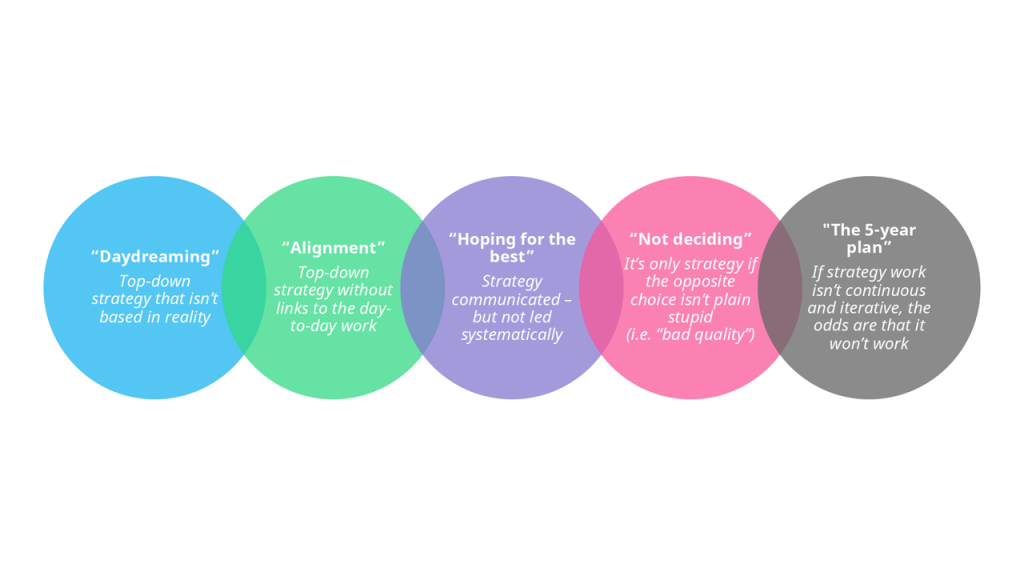
The Five Classic Strategy Mistakes

At first glance, these classic mistakes seem like very basic rookie mistakes that no senior leader worth their salt will make. However, they are actually very difficult to avoid completely in a large organization. Most strategies, even some of the best, thus usually include some of these elements.The point is that if you start to see more than one or two of these, or if they’re obvious issues, odds are that your strategy will run into challenges down the road. Let’s next cover each of these mistakes briefly.

  1. Daydreaming. This is the classic case of management coming up with a big, bold vision but not having any idea on how to get there, and no concrete plans for figuring that out. For front-line employees and managers, it’s immediately obvious that the strategy just isn’t rooted in reality.
  2. Alignment is a related, but more nuanced challenge, and one that almost every large organization struggles with. Bridging the gap between the big picture goals and the day-to-day across the entire organization is just a very difficult task that is nearly impossible to get right from the get-go. The key is getting most of the way there, and then actively working to further improve alignment as you execute on the strategy.
  3. Hoping for the best is a classic mistake for the big-picture style of leaders who think that their job is to get the big picture right, and its’ then other people’s job to make things happen. In reality, as Professor Martin well put it, it just doesn’t work like that. If your strategy doesn’t consider the execution, you’re just hoping for the best and usually that won’t happen. There’s a reason for the CEO being the Chief Executive
  4. Not deciding is probably the second most common challenge right after alignment. We’ve all seen strategies that are basically a variation of “we do everything for everyone because that’s the biggest market”, and that lack of focus can only lead to spectacular failure when it comes time to execute the strategy. Another variation of this is strategies like “we focus on growth”, “we will become a market leader”. These aren’t meaningful choices; they are the end results, and very abstract ones at that. Nevertheless, growth can be made into an effective strategy if it’s focused on a very specific area, and the strategy includes the compromises you’re willing to make to achieve that growth, for example profitability. However, that’s just not what most companies are doing when they say their strategy is growth.
  5. The 5-year plan is our nickname for running an extremely intensive one-off strategy process where a detailed roadmap is created for the next five (or however many) years. The problem is that no matter how well you know the business and do your research, no one gets it right from the get-go, and even if you theoretically would, there are very few markets that are so stagnant that nothing significant will change in the next five years. Good strategies are always a result of an iterative, on-going process.

In a nutshell, innovators plan for the long-term and towards specific goals – but remain flexible on the ways to get there and make strategy an iterative learning process focused on getting things done and continuously moving in the right direction. There are many good frameworks for this. Be it Future-Back, Discovery-Driven Planning, Blue Ocean Strategy, or the Lean Startup, they all essentially talk about variations of the same thing.

The Real Challenge is Implementation

Let’s say you get the big picture right and avoid the classic mistakes we’ve just covered. The good news is that you’re now in the game! The bad news is that you’re still a long way from successfully pulling off your strategy.

The implementation is the hard part, and the part that makes all the difference. In essence, a great strategy, be it an innovation strategy or any other kind of strategy, sets the upper limit for the performance of the organization. A poor strategy, even when executed perfectly, will still lead to poor performance. But so does a perfect strategy when implemented poorly.

Strategy execution is the hard part

Reliable figures for the failure rate of strategy execution are hard to come by, but the consensus seems to be in the range of 60-90%. I haven’t seen research on the same figures for innovation focused strategies but based on the stats that are available, I’m quite confident they aren’t much better.

Anyone can, after all, say that they want to change the world or become a global leader at something, but few can make that happen.

So, a great innovation strategy is built on a nuanced understanding of an organization’s operating environment and is built on choices that give the organization the best possible odds of success. And, in that, keeping the implementation and the day-to-day realities top of mind during each phase of the strategy work is key.

A great innovation strategy is built on a nuanced understanding of an organization’s operating environment and is built on choices that give the organization the best possible odds of success.

The details will naturally vary depending on the business and industry, but before we wrap up, we’ll briefly cover some of the key principles that most organizations pursuing an innovation focused strategy should pay attention to.

Getting Implementation Right

1. Tell the What, focus on the Why, and leave room for the How

The first of our principles is to understand that you as a leader don’t have all the answers. Whatever plan you create will need to be adjusted, and it should be done by the people executing the strategy. So, make sure your strategy tells the big picture mission and key choices you’ve made (the What), but focuses especially on the rationale behind them (the Why) while leaving room for people to figure out what the best methods are for achieving those goals (the How).

Statistically speaking, no one will remember your strategic goals, but with a couple of well-chosen examples, you can get your employees to remember the rationale behind key choices, which has far reaching consequences throughout the organization. If you get that right, alignment and execution will become dramatically easier.

2. Speed is key, systematically seek out and remove barriers for it

As we’ve covered earlier, executing an innovative strategy is an iterative learning process. The faster you can move, the faster you will learn, and the more you can accomplish. This leads to compounding returns, and that’s why I think pace of innovation is the ultimate competitive advantage any organization may have.

There are a number of things that can help make an organization more agile, innovative, and faster, but in the end it comes down to systematically seeking out and removing any and all barriers that prevent people from executing the strategy – and innovating. Sometimes this is straightforward if you just keep an ear to the ground, but often you may need to resolve more complex structural issues.

3. Decentralize

While it’s been shown that an extraordinary CEO can temporarily get an organization to execute well with sheer will of force, things will unravel the moment they leave if capabilities and responsibilities aren’t spread out across the organization. Thus, smart leaders will focus on controlled decentralization and capability building from the get-go.

The same principle applies for both strategy execution and innovation. Simply put, decentralization will help your organization make more informed decisions and move even faster.

Conclusion

As we all know, strategy plays a big role in determining the success of any organization. It essentially sets the upper limit for their performance, and a poor one will prevent the organization from ever reaching its full potential.

But, in any industry, there are likely dozens if not hundreds of companies with great, often even nearly identical strategies. Some just seem to pull it off, where others don’t.

Thus, it’s the implementation that makes the difference and really determines the success of an organization, and planning for execution and adapting to a changing reality must be crucial parts of your strategy from the get-go.

Image credits: Unsplash, Jesse Nieminen, unsplash

Subscribe to Human-Centered Change & Innovation WeeklySign up here to get Human-Centered Change & Innovation Weekly delivered to your inbox every week.

Design Thinking vs. Traditional Problem-Solving

Which Approach Fosters Better Business Innovation?

Building a Culture of Innovation

GUEST POST from Chateau G Pato

In today’s rapidly evolving business landscape, innovation is the key driver of growth and success. To stay ahead of the competition, businesses must adopt an approach that not only solves problems effectively but also incorporates human-centered thinking and fosters creativity. This thought leadership article explores the two prominent problem-solving methodologies – Design Thinking and Traditional Problem-Solving – and delves into their effectiveness in driving business innovation. Through the analysis of two case studies, we examine how each approach can impact an organization’s ability to innovate and ultimately thrive in a competitive market.

1. Design Thinking: Embracing Empathy and Creativity:

Design Thinking is a customer-centric approach that places emphasis on empathy, active listening, and iterative problem-solving. By gaining a deep understanding of end-users’ needs, aspirations, and pain points, businesses can create innovative solutions that truly resonate with their target audience. This methodology comprises five key stages: empathize, define, ideate, prototype, and test. Let’s explore a case study that illustrates the power of Design Thinking in fostering business innovation.

Case Study 1: Airbnb’s Transformation:

When Airbnb realized their business model needed a refresh, they turned to Design Thinking to reimagine the experience for users. By empathizing with both hosts and guests, Airbnb identified pain points, such as low trust levels and inconsistent property quality. They defined the core problem and developed innovative solutions through multiple brainstorming sessions. This iterative approach led to the creation of user-friendly features such as verified user profiles, secure booking processes, and an enhanced rating system. As a result, Airbnb disrupted the hospitality industry, revolutionizing how people book accommodations, and became a global success story.

2. Traditional Problem-Solving: Analytical and Linear Thinking:

Traditional problem-solving methods often follow a logical, linear approach. These methods rely on analyzing the problem, identifying potential solutions, and implementing the most viable option. While this approach has its merits, it can sometimes lack the human-centered approach essential for driving innovation. To delve deeper into the impact of traditional problem-solving on business innovation, let’s examine another case study.

Case Study 2: Blockbuster vs. Netflix:

Blockbuster, once an industry giant, relied on traditional problem-solving techniques. Despite being highly skilled at analyzing data and trends, Blockbuster failed to tap into their customers’ unmet needs. As the digital revolution occurred, Netflix recognized an opportunity to disrupt the traditional video rental business. Netflix utilized Design Thinking principles early on, empathizing with customers and understanding that convenience and personalized recommendations were paramount. Through their innovative technology and business model, Netflix transformed the way people consume media and eventually replaced Blockbuster.

Conclusion

Design Thinking and Traditional Problem-Solving are both valuable methodologies for business problem-solving. However, when it comes to fostering better business innovation, Design Thinking stands out as an approach that encourages human-centered thinking, empathy, and creativity. By incorporating Design Thinking principles into their problem-solving processes, organizations can develop innovative solutions that address the unmet needs of their customers. The case studies of Airbnb and Netflix demonstrate how adopting a Design Thinking approach can lead to significant business success, disrupting industries while putting the user experience at the forefront. As businesses continue to face dynamic challenges, embracing Design Thinking can empower them to drive continuous innovation and secure competitive advantage in the modern era.

SPECIAL BONUS: The very best change planners use a visual, collaborative approach to create their deliverables. A methodology and tools like those in Change Planning Toolkit™ can empower anyone to become great change planners themselves.

Image credit: Pexels

Subscribe to Human-Centered Change & Innovation WeeklySign up here to get Human-Centered Change & Innovation Weekly delivered to your inbox every week.

How AI is Revolutionizing Workplace Productivity

The Future of Work

The Future of Work: How AI is Revolutionizing Workplace Productivity

GUEST POST from Art Inteligencia

As the world rapidly embraces technological advancements, Artificial Intelligence (AI) is emerging as a transformative force in reshaping the future of work. From automating mundane tasks to augmenting human capabilities, AI is revolutionizing workplace productivity. This thought leadership article explores the profound impact of AI on the future of work, focusing on two noteworthy case studies that highlight its potential to enhance efficiency, creativity, and collaboration in diverse industries. By understanding these examples, we can proactively adapt and capitalize on the benefits AI brings to drive productivity in our own professional lives.

Case Study 1: Manufacturing and Supply Chain

AI has ushered in a new era of productivity in the manufacturing and supply chain industry. Traditional labor-intensive processes have been streamlined, optimized, and made more efficient through the implementation of AI-driven technologies. One such example is the global conglomerate General Electric (GE), which integrated AI-powered robots into their production lines to automate repetitive tasks. The introduction of AI reduced production time, decreased error rates, and increased overall process efficiency. This augmentation of human labor with AI resulted in improved workplace productivity and allowed employees to focus on more complex and strategic tasks. By embracing AI, GE demonstrated that automation, when applied thoughtfully, can be a powerful tool for transforming the workplace and optimizing productivity.

Case Study 2: Creative Industries and Content Creation

AI is making significant strides in enhancing productivity within creative industries. Companies like Adobe have leveraged AI to streamline content creation processes, saving valuable time and boosting creativity. Through their AI-powered platform, Adobe Sensei, they enable automated image and video analysis, simplifying time-consuming editing tasks. For instance, content creators can now rely on AI algorithms to auto-generate complex graphics, suggesting potential enhancements based on design trends and user preferences. By alleviating repetitive design work, professionals can focus on higher-value creative decision-making, resulting in greater productivity and improved output quality. This integration of AI in creative industries demonstrates the synergy between human ingenuity and AI-driven automation, empowering professionals and stimulating their creative potential.

The Future of Work: AI as a Collaborative Partner

While the aforementioned case studies highlight the profound impact of AI on workplace productivity, it is essential to recognize that AI’s role is not limited to automation alone. The future of work lies in collaborative synergy between humans and AI, with AI serving as an intelligent partner rather than a complete replacement. By leveraging AI’s capabilities, professionals can amplify their creative thinking, problem-solving skills, and strategic decision-making. AI can effortlessly analyze vast amounts of data, making predictions and suggesting insights that humans might overlook. As a result, professionals can focus on leveraging their unique human skills, such as empathy, critical thinking, and relationship building. By adopting AI as an augmenting ally, professionals in various industries can unlock unprecedented levels of productivity and innovation.

Conclusion

AI is undoubtedly revolutionizing workplace productivity, as showcased by the case studies in manufacturing and supply chain management, as well as creative industries. The transformative potential of AI lies in augmenting human capabilities, automating mundane tasks, and facilitating informed decision-making. By embracing AI as a collaborative partner, professionals can free up time, optimize their performance, and focus on high-value tasks that leverage their unique talents. As the future of work unfolds, it is imperative for human-centered professionals to actively embrace and adapt to AI, harnessing its power to revolutionize workplace productivity for the betterment of society.

Bottom line: Futurology is not fortune telling. Futurists use a scientific approach to create their deliverables, but a methodology and tools like those in FutureHacking™ can empower anyone to engage in futurology themselves.

Image credit: Pixabay

Subscribe to Human-Centered Change & Innovation WeeklySign up here to get Human-Centered Change & Innovation Weekly delivered to your inbox every week.

What you should learn from the Google Health failure

What you should learn from the Google Health failure

GUEST POST from Arlen Meyers

There used to be a time when almost everyone was asking, “What would Google do with sickcare?”

Google health has pulled the plug on their sickcare venture. So did Haven. So did Microsoft. Maybe if the folks in the corner offices (remember those) or at their beach villas working from home talked to some doctors sooner, things might have been better. You remember who doctors are, right? They are those people in the white coats who actually take care of the patients you are trying to convince to use your products.

However, Google, by no means, is getting out of the sickcare business. Google says it is ramping up its investments in health-focused initiatives even as it dissolves its single unified health division. They are reorganizing and focusing on other products and services.

What can startups, scaleups and other grownups trying to tame the sickcare beast learn from these megafailures?

  1. Know when to pull the plug and learn from your mistakes

2. Don’t make the two most common reasons why your venture will fail. Adam Bosworth, a former manager of Google Health, who left in 2007 before the service was introduced, said the service could not overcome the obstacle of requiring people to laboriously put in their own data.

“In the end,” Mr. Bosworth said, “it was an experiment that did not have a compelling consumer proposition.” In other words, it was a solution looking for a problem.

  1. Don’t buy into the myth that patients are good consumers and are eager to take care of themselves. Even when the relatively few patients do give DIY medicine a shot, to use a COVIDism, here are the perils and pitfalls.
  2. Realize how hard it is to change doctor and patient behavior
  3. Sickcare is a personal services business, not a technology business that happens to take care of patients.
  4. Patients rarely, if ever, want to pay for anything that has to do with their health if someone else will. That’s why everyone is chasing B2B models, like self-insured employers, instead of B2C models
  5. You have to offer a compelling value proposition to multiple sickcare stakeholders simultaneously, not just the patient, to be successful
  6. Follow the money
  7. Automate your technology solution so end users have to do as little work as possible. I recently bought an at home blood pressure cuff from an online medical department store (no, not Amedzon) that measures my blood pressure, tells you when the cuff in not on my arm correctly, measures pulse rate too, sends the information to an app for storage where it calculates the average of the readings, and allows me to send the info to whomever I want with the push of a big button , all for under $60 (no delivery charge). It even synchs to Apple health. The bad news is that I don’t want to use Apple health. I’ve done enough already.
  8. Be a problem seeker, not a problem solver
  9. Don’t fall prey to the distraction of traction.
  10. Constantly evaluate your underlying business model hypotheses by repeatedly testing them

The bottom line is that all entrepreneurs and new product developers have one and only one job: figure out what the customer wants you to do and give it or sell it to them at a profit. It’s too bad you can’t just push one big button to make that happen. Well, at least they didn’t call it Google Sick.

Image Credit: Google

Subscribe to Human-Centered Change & Innovation WeeklySign up here to get Human-Centered Change & Innovation Weekly delivered to your inbox every week.

Join Me for Innovation Day 2021 – October 15, 2021

Join Me for Innovation Day 2021 - October 15, 2021

Join me for the American Society for Quality’s (ASQ) Innovation Day 2021 on October 15,2021.

The theme for this year’s event is intersectional global value.

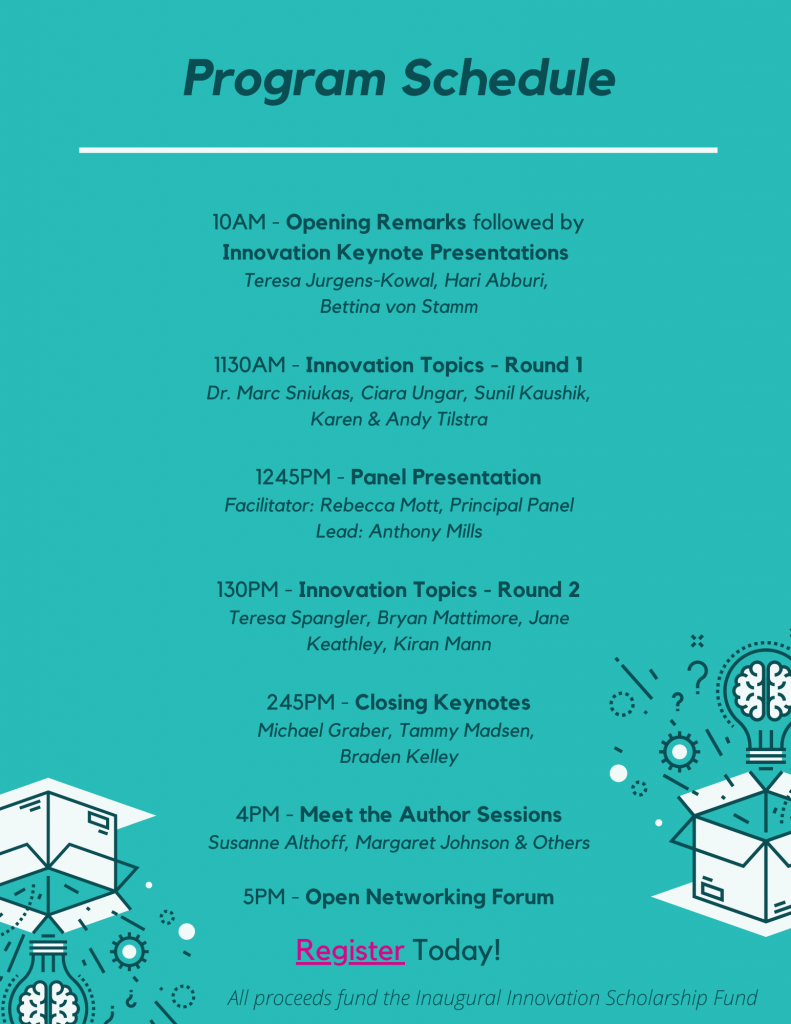
There will be an exciting line-up of innovation-oriented keynotes, in-depth topic speakers, practitioner and student lightning-talk sessions, panel discussions, workshops, round-tables, meet the author sessions, and a diversity-oriented networking experience.

I will be delivering the closing keynote to the event in my role as innovation speaker.

I hope you will join me for this live virtual event.

More details coming soon!
(including more details on the speakers and sessions)

Please register here: https://events.eply.com/ASQTCInnovationDay2021

All proceeds go to funding our inaugural ASQ Innovation Scholarship.

ASQ Innovation Day 2021 Page 1ASQ Innovation Day 2021 Page 2

Subscribe to Human-Centered Change & Innovation WeeklySign up here to get Human-Centered Change & Innovation Weekly delivered to your inbox every week.