Moving Beyond Prediction to Purpose
LAST UPDATED: February 13, 2026 at 5:13 PM
GUEST POST from Art Inteligencia
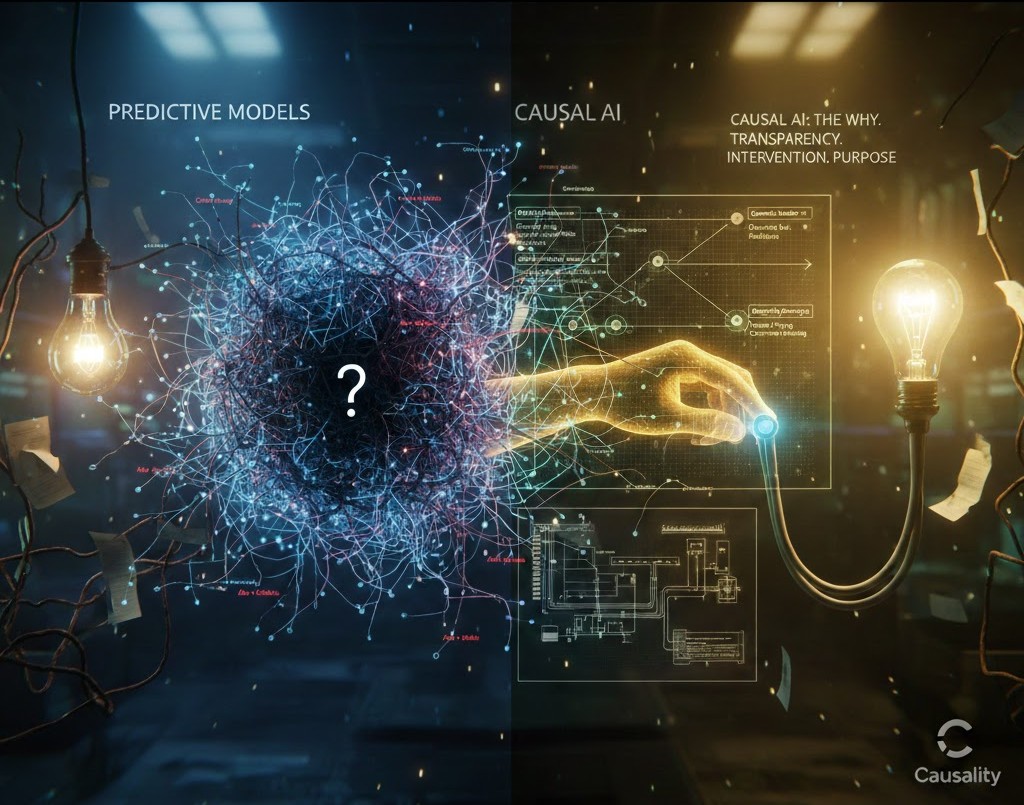
Causal AI is the next frontier of FutureHacking™. Instead of merely identifying patterns, it seeks to understand the why. It maps the underlying “wiring” of a system to determine how changing one variable will influence another. This shift is vital because innovation isn’t about following a trend; it’s about making a deliberate intervention to create a better future.
“Data can tell you that two things are happening at once, but only Causal AI can tell you which one is the lever and which one is the result. Innovation is the art of pulling the right lever.”
— Braden Kelley
The End of the “Black Box” Strategy
One of the greatest barriers to institutional trust is the “Black Box” nature of traditional machine learning. Causal AI, by its very nature, is explainable. It provides a transparent map of cause and effect, allowing human leaders to maintain autonomy and act as the “gardener” tending to the seeds of technology.
Case Study 1: Personalized Medicine and Healthcare
A leading pharmaceutical institution recently moved beyond predictive patient modeling. By using Causal AI to simulate “What if” scenarios, they identified specific causal drivers for individual patients. This allowed for targeted interventions that actually changed outcomes rather than just predicting a decline. This is the difference between watching a storm and seeding the clouds.
Case Study 2: Retail Pricing and Elasticity
A global retail giant utilized Causal AI to solve why deep discounts led to long-term dips in brand loyalty. Causal models revealed that the discounts were causing a shift in quality perception in specific demographics. By understanding this link, the company pivoted to a human-centered value strategy that maintained price integrity while increasing engagement.
Leading the Causal Frontier
The landscape of Causal AI is rapidly maturing in 2026. causaLens remains a primary pioneer with their Causal AI operating system designed for enterprise decision intelligence. Microsoft Research continues to lead the open-source movement with its DoWhy and EconML libraries, which are now essential tools for data scientists globally. Meanwhile, startups like Geminos Software are revolutionizing industrial intelligence by blending causal reasoning with knowledge graphs to address the high failure rate of traditional models. Causaly is specifically transforming the life sciences sector by mapping over 500 million causal relationships in biomedical data to accelerate drug discovery.
“Causal AI doesn’t just predict the future — it teaches us how to change it.”
— Braden Kelley
From Correlation to Causation
Predictive models operate on correlations. They answer: “Given the patterns in historical data, what will likely happen next?” Causal models ask a deeper question: “If we change this variable, how will the outcome change?” This fundamental difference elevates causal AI from forecasting to strategic influence.
Causal AI leverages counterfactual reasoning — the ability to simulate alternative realities. It makes systems more explainable, robust to context shifts, and aligned with human intentions for impact.
Case Study 3: Healthcare — Reducing Hospital Readmissions
A large health system used predictive analytics to identify patients at high risk of readmission. While accurate, the system did not reveal which interventions would reduce that risk. Nurses and clinicians were left with uncertainty about how to act.
By implementing causal AI techniques, the health system could simulate different combinations of follow-up calls, personalized care plans, and care coordination efforts. The causal model showed which interventions would most reduce readmission likelihood. The organization then prioritized those interventions, achieving a measurable reduction in readmissions and better patient outcomes.
This example illustrates how causal AI moves health leaders from reactive alerts to proactive, evidence-based intervention planning.
Case Study 4: Public Policy — Effective Job Training Programs
A metropolitan region sought to improve employment outcomes through various workforce programs. Traditional analytics identified which neighborhoods had high unemployment, but offered little guidance on which programs would yield the best impact.
Causal AI empowered policymakers to model the effects of expanding job training, childcare support, transportation subsidies, and employer incentives. Rather than piloting each program with limited insight, the city prioritized interventions with the highest projected causal effect. Ultimately, unemployment declined more rapidly than in prior years.
This case demonstrates how causal reasoning can inform public decision-making, directing limited resources toward policies that truly move the needle.
Human-Centered Innovation and Causal AI
Causal AI complements human-centered innovation by prioritizing actionable insight over surface-level pattern recognition. It aligns analytics with stakeholder needs: transparency, explainability, and purpose-driven outcomes.
By embracing causal reasoning, leaders design systems that illuminate why problems occur and how to address them. Instead of deploying technology that automates decisions, causal AI enables decision-makers to retain judgment while accessing deeper insight. This synergy reinforces human agency and enhances trust in AI-driven processes.
Challenges and Ethical Guardrails
Despite its potential, causal AI has challenges. It requires domain expertise to define meaningful variables and valid causal structures. Data quality and context matter. Ethical considerations demand clarity about assumptions, transparency in limitations, and safeguards against misuse.
Causal AI is not a shortcut to certainty. It is a discipline grounded in rigorous reasoning. When applied thoughtfully, it empowers organizations to act with purpose rather than default to correlation-based intuition.
Conclusion: Lead with Causality
In a world of noise, Causal AI provides the signal. It respects human autonomy by providing the evidence needed for a human to make the final call. As you look to your next change management initiative, ask yourself: Are you just predicting the weather, or are you learning how to build a better shelter?
Strategic FAQ
How does Causal AI differ from traditional Machine Learning?
Traditional Machine Learning identifies correlations and patterns in historical data to predict future occurrences. Causal AI identifies the functional relationships between variables, allowing users to understand the impact of specific interventions.
Why is Causal AI better for human-centered innovation?
It provides explainability. Because it maps cause and effect, human leaders can see the logic behind a recommendation, ensuring technology remains a tool for human ingenuity.
Can Causal AI help with bureaucratic corrosion?
Yes. By exposing the “why” behind organizational outcomes, it helps leaders identify which processes (the wiring) are actually producing value and which ones are simply creating friction.
Disclaimer: This article speculates on the potential future applications of cutting-edge scientific research. While based on current scientific understanding, the practical realization of these concepts may vary in timeline and feasibility and are subject to ongoing research and development.
Image credits: Google Gemini
 Sign up here to get Human-Centered Change & Innovation Weekly delivered to your inbox every week.