Why It Matters WHO Conducts Your Customer Experience Audit

LAST UPDATED: May 29, 2026 at 4:42 PM

Why It Matters WHO Conducts Your Customer Experience Audit

by Braden Kelley and Art Inteligencia

I. Introduction: The Audit as a Mirror

In the hyper-competitive landscape of 2026, many organizations are drowning in data but starving for insight. They perform audits, yet the fundamental “why” of customer friction remains elusive.

The Diagnostic Gap

Most companies have more tools than ever to track clicks, bounce rates, and conversion funnels. Yet, there remains a persistent Diagnostic Gap: the distance between knowing what a customer did and understanding why they felt compelled to do it. Organizations often fail to see their own blind spots because they are looking into a mirror they’ve polished themselves.

The Core Thesis: Perspective over Procedure

A Customer Experience (CX) Audit (aka Customer Experience Risk and Revenue Leakage Diagnostic) is more than a technical inspection; it is an act of empathy. If the auditor lacks a human-centered innovation lens, the resulting report will be mathematically correct but strategically hollow. It might tell you that a button is in the wrong place, but it won’t tell you that your entire value proposition is losing its soul.

The Stakes in 2026

In today’s market, brand loyalty is fragile. A single friction point isn’t just an inconvenience — it’s a broadcast signal to your competitors that there is an opening to disrupt you. Who you choose to hold up the mirror determines whether you see a minor blemish or a structural crack that needs immediate innovation.

Key Takeaways: You cannot solve a problem using the same level of consciousness that created it. The value of an audit is not in the findings, but in the new perspective that allows your team to stop fearing the “How” of the present and start building the “Why” of the future.

II. Internal Audits: The Myth of Objectivity

While internal teams possess deep product knowledge, that very proximity often creates a “distortion field” that obscures the true customer experience.

The “Curse of Knowledge”

Internal teams are often too close to the project to see the friction. Because they know how the system is supposed to work, they subconsciously compensate for poor design. They skip over the confusing copy and ignore the lag because they have developed internal workarounds. A customer doesn’t have that luxury; they only see the barrier, not the intent behind it.

The Hidden Pressure of Internal Politics

An internal audit rarely exists in a vacuum. There is often an unspoken pressure to validate previous executive decisions or to protect the “babies” of influential departments. When the person auditing the experience reports to the person who designed it, the “truth” is often softened to avoid conflict, leading to incremental tweaks rather than the bold innovation required in 2026.

The Efficiency Trap vs. Customer Delight

Internal audits tend to focus on operational efficiency — how can we make this process faster or cheaper for us? While important, this lens often misses the emotional resonance of the journey. You might have a process that is 100% efficient but 0% engaging. Internal teams often solve for “Done,” while customers are looking for “Delight.”

Key Takeaways: You cannot read the label from inside the bottle. Internal audits are great for maintenance, but they are rarely the catalyst for breakthrough change. To find the “Why” of the future, you need a lens that isn’t colored by the “How” of your internal legacy.

III. Independent Audits: The Power of the Outsider

The greatest value an independent auditor brings isn’t just a new set of eyes — it’s a different set of experiences and the freedom to be radically honest.

Fresh Eyes and Cross-Industry Intelligence

An independent auditor lives outside your corporate “echo chamber.” They bring insights from diverse sectors — retail, healthcare, tech, and hospitality — to identify “unobvious” friction points you’ve grown accustomed to. In 2026, your customers don’t just compare you to your direct competitors; they compare you to the best experience they had earlier that morning. An outsider helps you measure up to that global standard.

Closing the “Accountability Gap”

Truth is the primary currency of a successful audit. An independent voice can speak truth to power without the fear of internal repercussions or career friction. This objectivity allows for a “radical transparency” that internal teams often find impossible. By closing the accountability gap, the independent auditor ensures that the real barriers to innovation are named, faced, and eventually dismantled.

Bridging the ‘Why’ and the ‘How’

While internal audits often provide a checklist of “How” to fix specific bugs, an independent auditor investigates the “Why” behind the customer’s emotional journey. They look at the narrative, not just the nodes. This perspective shift allows an organization to move beyond mere troubleshooting and into the realm of strategic experience design.

Key Takeaways: An independent auditor is the customer’s ultimate advocate. When you bring in an outside perspective, you aren’t just buying a report; you are investing in the clarity required to see your organization as the world sees it. Only then can you begin to change it.

IV. The Braden Kelley Edge: Beyond the Checklist

A standard audit tells you where the leaks are; my audit tells you how to change the flow. My approach integrates human-centered change directly into the diagnostic process.

Human-Centered Change as a Methodology

I don’t view Customer Experience as a series of static touchpoints on a map. I view it as a living ecosystem of human interactions. My “Edge” comes from treating the audit as an organizational change exercise. We don’t just look for technical errors; we look for where your internal culture and external experience have lost alignment. By centering the human — both employee and customer — we identify the psychological barriers to a seamless journey.

The Innovation Integration

Most auditors stop at “What is broken?” I start at “Where is the opportunity?” My lens is uniquely calibrated to find where your next innovation is hiding within your current customer friction. If a customer is struggling with a specific step, that isn’t just a bug — it’s a signal of unmet need. I help you translate that struggle into a roadmap for a new product, service, or business model that your competitors haven’t even imagined yet.

Strategic Alignment and Brand Soul

A “good” experience isn’t enough in 2026; it must be your experience. I ensure that every touchpoint is strategically aligned with your unique brand soul and ethical guardrails. An audit under my guidance ensures that efficiency never comes at the cost of authenticity. We solve for the “How” of the present while keeping a relentless focus on your “Why” for the future.

Key Takeaways: An audit shouldn’t just result in a list of repairs; it should result in a vision for renewal. When I audit your experience, I am looking for the spark of innovation that turns a satisfied customer into a lifelong advocate.

V. Why Braden Kelley is the Perfect Partner for Your CX Audit

Selecting an auditor is about trust, legacy, and the ability to translate observation into transformation.

A Legacy of Innovation Leadership

With years of experience as a globally recognized innovation thought leader, I don’t just see a customer journey; I see a competitive battlefield. My background in human-centered design ensures that every recommendation is grounded in the reality of human behavior. I have spent my career helping organizations navigate the complexities of change, making me uniquely qualified to identify the structural hurdles that prevent your team from delivering excellence.

The “Resilient Auditor” Framework

I apply the same resilience routines I advocate for in my speaking and writing to the audit process. This ensures a level of focus, objectivity, and deep synthesis that standard consulting firms often miss. I don’t provide “off-the-shelf” solutions; I provide a custom diagnostic that accounts for the psychological and operational resilience of your specific organization.

Actionable Velocity

The biggest failure of most CX audits is that they sit on a shelf. My goal is Actionable Velocity. I deliver a roadmap that doesn’t just list what’s wrong, but prioritizes fixes based on their potential for ROI and innovation impact. I provide your team with the “Why” they need to stay motivated and the “How” they need to execute immediately.

The Braden Kelley Promise: When I conduct your audit, you aren’t just getting a consultant; you are getting a partner dedicated to making your organization smart enough to solve its own most complex problems. We will bridge the gap between where you are and where the future demands you to be.

VI. Conclusion: Choosing Your Mirror

Ultimately, a Customer Experience Audit is an investment in clarity. In an era where disruption is the only constant, you cannot afford to look through a distorted lens. Whether you choose an internal review for maintenance or an independent audit for transformation, remember that the quality of the insight is entirely dependent on the perspective of the auditor.

Don’t Just Audit the Past — Design the Future

The goal of a world-class audit isn’t just to find out where you’ve been, but to illuminate where you are capable of going. By choosing an auditor who understands human-centered change and innovation strategy, you ensure that your organization doesn’t just fix the “How” of today, but masters the “Why” of tomorrow.

The mirror you choose today will determine the reflection your customers see tomorrow. Make sure it is a mirror that shows the full potential of your brand’s soul.

Ready to Transform Your Customer Journey?

Stop guessing and start innovating. Let’s work together to find the “unobvious” opportunities hidden within your customer experience.

— Braden Kelley

Ready to find your Customer Experience innovation opportunities?

Request a Customer Experience Audit

For more on Customer Experience Audits check out:

Customer Experience Audit 101
Why a Customer Experience Audit is Non-Negotiable in 2026
Is Your Customer Experience a Lie?

CX Audit: Frequently Asked Questions

1. Why is an independent CX audit better than an internal one?

Internal teams often suffer from the “Curse of Knowledge” — they are so familiar with how things should work that they miss how they actually work for the customer. An independent auditor brings unbiased clarity and the courage to name the structural issues that internal politics might keep hidden.

2. How does Braden Kelley’s approach differ from others?

Most audits look for bugs; Braden Kelley looks for breakthroughs. By applying a human-centered innovation lens, Braden identifies not just where you are failing the customer, but where the customer is signaling a need for a new solution you haven’t built yet.

3. What is the main outcome of this audit?

The primary outcome is Actionable Velocity. You won’t receive a static report; you’ll get a prioritized roadmap that balances immediate experience “quick wins” with long-term strategic innovation goals, ensuring your CX is a driver of growth, not just a line item.

Image credits: ChatGPT

Content Authenticity Statement: The topic area, key elements to focus on, etc. were decisions made by Braden Kelley, with a little help from Google Gemini to clean up the article and add citations.

Subscribe to Human-Centered Change & Innovation WeeklySign up here to get Human-Centered Change & Innovation Weekly delivered to your inbox every week.
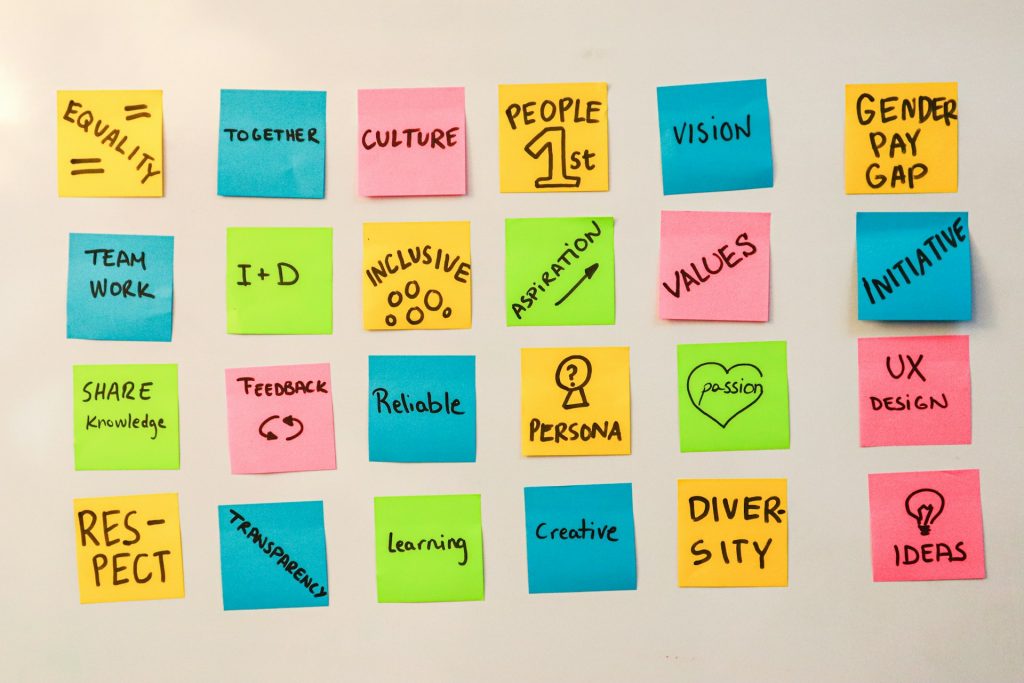
Values Always Cost You Something

That’s What Makes Them Different From Platitudes

Values Always Cost You Something

GUEST POST from Greg Satell

When I was in Panama a couple of years ago for a keynote I had the opportunity to speak with Erika Mouynes, the country’s former Foreign Minister, about the war in Ukraine. Her ministry had strayed from its traditionally neutral stance by calling for “respect for the sovereignty, political independence and territorial integrity of Ukraine based on international law.”

She told me that when she later met with Russia’s Foreign Minister, Sergey Lavrov, he asked her why she cared about a country thousands of miles away where Panama has no tangible interests. What did she expect to gain? She told him that sometimes you need to make decisions based on values that are important to you.

Her position was not without risk. Panama depends on broad international support for its canal. Yet many of the executives at the event told me how proud they were of her support for sovereignty, an issue that Panama has sometimes struggled with in its history. The truth is that, to mean something, values always cost you something. Otherwise they’re just platitudes.

Gandhi’s Ahimsa

Today, many dismiss Mohandas Gandhi as guileless and quixotic. He himself once said, “Men say that I am a saint losing myself in politics. The fact is I am a politician trying my hardest to be a saint.” He was, in truth, a master strategist, luring opponents into a dilemma that would put them in an impossible position of choosing either surrender or damnation.

One of the first principles of his philosophy of Satyagraha was ahimsa, or nonviolence, which was rooted in the quest for truth. If no one could claim to have absolute knowledge of the truth, then it followed that using violence—or any other means for that matter—to compel people to accede to your will would be to undermine, rather than support truth.

To the modern ear, Gandhi’s views seem idealistic at best, if not completely naive, yet there was much more to his philosophy than met the eye. His aim was to undermine his opponents’ legitimacy. He sought to back them into a corner in which both action and inaction would yield essentially the same result —an upending of the existing order.

As General Jan Smuts, Gandhi’s chief adversary in South Africa, put it, “It was my fate to be the antagonist of a man for whom even then I had the highest respect… For me—the defender of law and order—there was the usual trying situation, the odium of carrying out the law, which had not strong popular support.” Smuts had not only been defeated; he had been won over and lost any rationale to keep fighting.

Gerstner’s Devotion To The Customer

When Lou Gerstner took over as CEO of IBM in 1993, the company was near bankruptcy. Many thought it should be broken up. Yet Gerstner saw that its customers needed the firm to help them run their mission-critical systems and the death of IBM was the last thing they wanted. He knew that to save the company, he would have to start with its values.

“At IBM we had lost sight of our values,” Irving Wladawsky-Berger, one of Gerstner’s chief lieutenants, told me. “IBM had always valued competitiveness, but we had started to compete with each other internally rather than working together to beat the competition. Lou put a stop to that and even let go some senior executives who were known for infighting.”

Gerstner had been a customer and knew that IBM did not always treat him well. At one point the company threatened to pull service from an entire data center because a single piece of competitive equipment was installed. So as CEO, he vowed to shift the focus from IBM’s “own “proprietary stack of technologies” to its customers’ “stack of business processes.”

Yet he did something else as well. He made it clear that he was willing to forego revenue on every sale to do what was right for the customer and he showed that he meant it. Over the years I’ve spoken to dozens of IBM executives from that period and virtually all of them have pointed this out. Not one seems to think IBM would still be in business today without it.

“Lou refocused us all on customers and listening to what they wanted and he did it by example,” Wladawsky-Berger, remembers. “We started listening to customers more because he listened to customers.”

The World’s Debt To Katalin Karikó

In the early ’90s, Katalin Karikó was trying to solve a tough problem. A young researcher at the University of Pennsylvania, she had been working on an idea to hijack the protein manufacturing machinery in our cells (called ribosomes) to directly produce things that could help our bodies fight disease. Yet despite her best efforts, she was making little progress.

To understand the problem, imagine you want to hijack someone else’s factory to make your own product. Because the factory is automated, it is just a matter of installing software at the factory, but to do that you need to get past security. Replace “software” with genetic instructions and “security” our body’s immune system and, in a nutshell, that is what Katalin had to overcome.

By 1995, things came to a head. Unable to secure grants to fund her work, the university told her that she could either direct her energies in a different way, or be demoted. “I thought of going somewhere else, or doing something else,” Katalin would later recall. “I also thought maybe I’m not good enough, not smart enough. I tried to imagine: Everything is here, and I just have to do better experiments.”

She decided to stick it out and eventually struck up a partnership with Drew Weissman, an immunologist who had some ideas about how to slip the genetic instructions past the cell’s natural defenses. Their work led to a breakthrough and, when the Covid pandemic broke out in 2020, the mRNA technology they invented led to life saving vaccines in record time.

Today, mRNA is being used to develop a number of therapies beyond vaccines, including cures for cancer and other diseases. Sticking to her values certainly cost Katalin Karikó, but the rest of us benefited enormously.

Values Are How An Organization Honors Its Mission

Values are essential to how an enterprise honors its mission. They represent choices of what an organization will and will not do, what it rewards and what it punishes and how it defines success and failure. Perhaps most importantly, values will determine an enterprise’s relationships with other stakeholders, how it collaborates and what it can achieve.

When we sit down with executive teams to help them drive transformation and change, one of the first things we ask them is to define their values. Usually, they can easily rattle off a list such as, “the customer,” “excellence,” “integrity,” and so on. Then we ask them what those values cost them and we get blank stares.

The problem is that values are often confused with beliefs. When you’re sitting around a conference table, it’s easy to build a consensus about broad virtues such as excellence, integrity and customer service. True values, on the other hand, are idiosyncratic. They represent choices that are directly related to a particular mission.

Make no mistake. Real values always cost you something. They are what guides you when you need to make hard calls instead of taking the easy path. They are what makes the difference between looking back with pride or regret. Perhaps most importantly, they are what allows others to trust you.

Without genuine commitment values there can be no trust. Without trust, there can be no shared purpose.

— Article courtesy of the Digital Tonto blog
— Image credit: Unsplash

Subscribe to Human-Centered Change & Innovation WeeklySign up here to join 17,000+ leaders getting Human-Centered Change & Innovation Weekly delivered to their inbox every week.

Are Ethics a Constraint or Catalyst for Innovation?

Are Ethics a Constraint or Catalyst for Innovation?

GUEST POST from David Sable

For centuries, innovation has lived in tension with ethics.

Some say moral codes kill progress… Others say they force progress to grow up. And sometimes… they save lives.

The truth?

It’s not binary… It’s a system with three gears:

  • Ethics can kill innovation.
  • Ethics can sharpen innovation.
  • Ethics can morph innovation and save lives.

Let’s explore all three.

When Ethics Slowed or Killed Innovation

Galileo (1633): He was tried by the Church for heresy for supporting heliocentrism. The science was sound… but ethics and religion weren’t ready. The progress paused for decades.

Human Gene Editing (2018): The CRISPR baby scandal in China sparked global bans. What could’ve been a gene-editing revolution was halted overnight. Ethics drew the red line.

Embryonic Stem Cell Research (2001–2009): Federal funding bans in the U.S. slowed a medical frontier, but the ethical blockade forced a pivot… leading to induced pluripotent stem cells. No embryos needed.

3D-Printed Guns: The blueprints spread fast. There were 100,000+ downloads. Then came the ban. Public safety over open-source freedom. Questionable innovation.

Facial Recognition Tech: It was halted by Amazon, IBM, and Microsoft in 2020. Why? Racial bias… surveillance concerns… and wrongful arrests. It didn’t die… but it had to evolve.

When Ethics Sharpened Innovation

Green Chemistry: Toxic byproducts used to be a cost of doing business. Ethical pressure gave rise to “benign by design” tech. Now it’s a growth market.

Accessibility Design: Sidewalk ramps weren’t built for travelers and strollers… They were built for wheelchairs…. and they ended up helping everyone. The “Curb Cut Effect” is now UX Evangelism.

Privacy Laws (GDPR, HIPAA): While it slowed data flows, it triggered encryption, on-device AI, and federated learning. The constraints sparked new architectures.

Explainable AI (XAI): Ethical backlash against black-box algorithms forced a rethink. Now, companies are judged on accuracy, transparency, and traceability.

Tesla’s Circular Supply Chain: The demand for ethical sourcing turned a compliance issue into an operational win. Now, Tesla is near 95% battery material recycling… lower emissions… and lower costs.

When Ethics Flat-Out Saved Lives

Vioxx Scandal (1999–2004): The drug rushed to market… praised as a breakthrough. But then came the deaths. There was a forced recall… and $4.85 billion in settlements. Ethics didn’t slow this innovation, but it should have.

Solar Geoengineering: Experiments like Harvard’s SCoPEx were shelved. Not because they didn’t work, but because the risks were planetary. Ethics didn’t just stall the idea; it saved us from playing God with the sky.

Predictive Policing Tools: It was touted as crime-busting AI. Turns out… they just automated racial profiling. The fix wasn’t a patch. The fix was a ban.

The truth is that some innovations never come back from ethical collapse. Others rise stronger from the fire. The real difference? Whether the ethics were ignored… or integrated.

What to Do Now

  1. Define your red lines early.
  2. If you wait until launch… It’s too late.
  3. Design for constraint.
  4. Let the friction shape the form… work it.
  5. Build auditable systems.
  6. Black boxes break trust. transparency scales.
  7. Know the cost of speed.
  8. The market remembers failures longer than delays.
  9. Use ethics as a strategy.
  10. It’s not just a legal risk… It’s a competitive power.

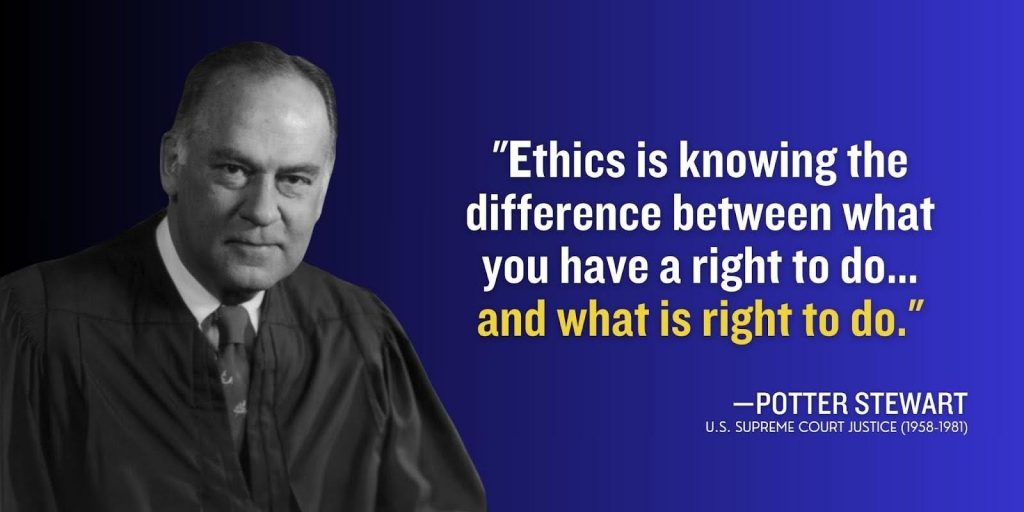
Potter Stewart ethics quote

“Ethics is knowing the difference between what you have a right to do… and what is right to do.”
— Potter Stewart, U.S. Supreme Court Justice

Innovation isn’t value-neutral. It never was.

And in 2026, ethics isn’t just the constraint… It’s the catalyst.

Image credit: ChatGPT

Subscribe to Human-Centered Change & Innovation WeeklySign up here to get Human-Centered Change & Innovation Weekly delivered to your inbox every week.

The End of Static Reality

Leading the Shift to Programmable Matter

LAST UPDATED: February 19, 2026 at 6:48 PM

The End of Static Reality - Programmable Matter

GUEST POST from Art Inteligencia


I. Introduction: The Death of the “Finished” Product

“We are moving from an era of designing objects to an era of designing behaviors.” — Braden Kelley

Beyond the Static Boundary

For centuries, the fundamental constraint of innovation has been the static nature of matter. Once a piece of steel was forged or a plastic mold was set, its physical properties—its stiffness, shape, and conductivity—were locked in time. In 2026, that boundary is evaporating. We are entering the age of Digital-Physical Hybrids, where the physical world is becoming as iterative and agile as the software that controls it.

Defining Programmable Matter

At its core, programmable matter refers to materials or assemblies of components that can change their physical properties based on software instructions or external stimuli. Imagine a world where a car’s body panels adjust their shape for optimal aerodynamics in real-time, or a medical implant that remains soft for insertion but “programs” itself to become rigid once it reaches its destination.

The Braden Kelley Perspective: Pulling the Physical Lever

As I often say, “Innovation is the art of pulling the right lever.” In the context of programmable matter, the “lever” is no longer a mechanical switch; it is a software command. This technology collapses the distance between digital intent and physical experience. When matter becomes programmable, the “product” is never truly finished—it is in a state of perpetual adaptation, designed to meet the changing needs of the human beings who use it.

II. The Three Pillars of Adaptive Materiality

To program the physical world, we must manipulate three fundamental characteristics. In 2026, these are the levers that turn “dumb” objects into intelligent systems.

1. Morphology: Shape-Shifting for Performance

Morphology is no longer a fixed design choice; it is a real-time response. Through the use of shape-memory alloys and 4D-printed polymers, materials can now alter their geometry to optimize for the environment. Whether it’s a drone wing that warps its shape to navigate high winds or footwear that adjusts its arch support based on your gait, morphology is the first pillar of physical agility.

2. Variable Stiffness: The Soft-to-Rigid Spectrum

One of the most profound breakthroughs is the ability to toggle a material’s structural integrity. By using phase-change materials—which can switch between liquid and solid states via thermal or electrical triggers—we can create objects that are flexible when they need to be safe (soft robotics) and rigid when they need to bear weight (emergency infrastructure).

3. Conductive Logic: Reconfigurable Intelligence

The final pillar is the ability to program the “nervous system” of an object. Conductive logic involves materials with internal pathways that can be rerouted on the fly. This allows a single component to switch its function—for instance, a car door panel that reconfigures its internal circuitry from a speaker to a heating element based on occupant preference.

The Braden Kelley Insight: Mastery of these three pillars allows organizations to move away from “mass production” toward “mass adaptation.” We aren’t just making things better; we are making them smarter at the molecular level.

III. Case Study 1: Adaptive Architecture and Urban Resilience

The buildings of the 20th century were cages of steel and glass. In 2026, programmable matter is turning the “built environment” into a living, breathing skin.

The Challenge: The Energy of Stasis

Buildings are responsible for nearly 40% of global energy-related carbon emissions, much of which is wasted fighting the environment—heating against the cold or cooling against the sun. Traditional “smart” buildings rely on mechanical motors and sensors that are prone to failure and require massive power draws to operate.

The Innovation: Biomimetic Material Intelligence

Leading architecture firms are now collaborating with material scientists to deploy hygroscopic and thermomorphic materials. These “programmed” building skins react directly to moisture and heat without a single mechanical motor. Like a pinecone opening when dry to release seeds, a building facade can now “unfurl” to provide shade during peak solar hours and “tighten” to trap heat when the temperature drops.

The Human Shift: Buildings that Empathize

This isn’t just about efficiency; it’s about the human experience. Imagine a workspace where the ceiling lowers its density to improve acoustics as a room fills up, or windows that change their molecular structure to diffuse glare while maintaining a view. Through programmable matter, our architecture stops being a static obstacle and starts being a collaborator in our daily lives.

Braden Kelley’s Reflection: We’ve spent a century trying to control the environment with brute force. Programmable matter allows us to dance with it instead. This is the ultimate expression of Sustainable Innovation—doing more by building something that knows how to adapt.

IV. Case Study 2: Soft Robotics in Minimally Invasive Medicine

The human body is fluid and delicate, yet our medical tools have historically been rigid and intrusive. Programmable matter is changing the geometry of healing.

The Challenge: The Rigidity of Current Surgery

In traditional minimally invasive surgery, surgeons use catheters and endoscopes that possess a fixed stiffness. This creates a “navigation tax”—the risk of damaging delicate vascular walls or organs while trying to reach a deep-seated tumor or blockage. The tool must be stiff enough to push, but soft enough not to pierce.

The Innovation: Phase-Changing Surgical “Tentacles”

In 2026, we are seeing the rise of Programmable Soft Robots. These devices utilize low-melting-point alloys (LMPA) embedded within a silicone matrix. By applying a tiny electrical current, the surgeon can “program” specific segments of the tool to become liquid-soft for navigating tight corners, and then instantly “freeze” them into a rigid state to provide the leverage needed for a biopsy or a stent placement.

The Human Shift: Personalized Internal Navigation

This allows for truly personalized medicine. Because the tool adapts to the patient’s unique anatomy in real-time, the “one-size-fits-all” approach to surgical instruments is dead. We are reducing patient trauma, shortening recovery times, and enabling procedures that were previously considered “inoperable” due to anatomical complexity.

A Braden Kelley Note: This is the ultimate example of Human-Centered Change. We are no longer forcing the human body to adapt to our technology; we are programming our technology to empathize with the human body.

V. The Ecosystem: Leaders and Disruptors in 2026

The transition from static to programmable matter requires a new stack of technology—spanning simulation, generative design, and advanced fabrication. These are the players building that stack.

The Giants: Providing the Infrastructure

  • Autodesk: Their Generative Design tools have evolved into “Behavioral Design” platforms. Designers no longer just draw shapes; they define the intent of the material, and Autodesk’s AI calculates the necessary molecular lattice.
  • Nvidia: Programmable matter is notoriously difficult to predict. Nvidia’s Omniverse provides the high-fidelity physics simulations required to “digital twin” a material’s behavior before a single atom is printed.

The Disruptors: Redefining Fabrication

Company Core Innovation Target Industry
Carbon Dual-Cure Resins with variable elasticity Performance Footwear & Automotive
Voxel8 Integrated conductive circuitry in 3D structures Consumer Electronics & Wearables
Aimi (Emerging) Active textiles that change porosity/warmth Defense & Extreme Sports
Strategic Takeaway: You don’t need to be a material scientist to play in this space. You need to be a collaborator. The winning organizations in 2026 are those that partner across the stack—linking software intent to material reality.

VI. The Strategic Impact: Collapsing the Final Frontier

The strategic value of programmable matter goes far beyond the “wow factor” of a shape-shifting gadget. It represents a fundamental shift in Resource Efficiency. When a single object can be “re-programmed” to serve three different functions throughout its lifecycle, we drastically reduce the need for raw material extraction and landfill waste. This is the ultimate tool for a circular economy.

VII. Conclusion: Programming the Future Today

We are moving from a world of “things” to a world of “behaviors.” In this new era, your competitive advantage won’t just be what you make, but how well your creations can learn and adapt to the human beings they serve.

As you look at your product roadmap for the next five years, stop asking what features you should add. Start asking: “If our product could change its physical soul to better serve our customer tomorrow, what would we tell it to do today?”

“The future is not something that happens to us; it is something we program.”
— Braden Kelley

Transform Your Organization’s Future

Ready to turn uncertainty into a resource? Let’s discuss how these emerging technologies can redefine your industry.

Programmable Matter FAQ

1. How is programmable matter different from traditional 3D printing?

Traditional 3D printing creates static objects with fixed properties. Programmable matter, often referred to as 4D printing, introduces a time and behavior dimension. It uses smart materials that can change their shape, density, or conductivity after the manufacturing process is complete.

2. What are the primary benefits of adaptive materials in industry?

The primary benefits include resource efficiency and personalized performance. By allowing a single material to adapt to its environment (such as a building facade that opens and closes without motors), companies can reduce carbon footprints and create products that evolve with user needs.

3. Is programmable matter ready for commercial use in 2026?

Yes, it is currently in the “Scale-Up” phase. It is already being deployed in high-stakes sectors like aerospace for adaptive surfaces, medical devices for shape-shifting surgical tools, and high-performance athletics for responsive textiles.

Disclaimer: This article speculates on the potential future applications of cutting-edge scientific research. While based on current scientific understanding, the practical realization of these concepts may vary in timeline and feasibility and are subject to ongoing research and development.

Image credits: Google Gemini

Subscribe to Human-Centered Change & Innovation WeeklySign up here to get Human-Centered Change & Innovation Weekly delivered to your inbox every week.
What is the right time horizon for technology development?

What is the right time horizon for technology development?

GUEST POST from Mike Shipulski

Patents are the currency of technology and profits are the currency of business. And as it turns out, if you focus on creating technology you’ll get technology (and patents) and if you focus on profits you’ll get profits. But if no one buys your technology (in the form of the products or services that use it), you’ll go out of business. And if you focus exclusively on profits you won’t create technology and you’ll go out of business. I’m not sure which path is faster or more dangerous, but I don’t think it matters because either way you’re out of business.

It’s easy to measure the number of patents and easier to measure profits. But there’s a problem. Not all patents (technologies) are equal and not all profits are equal. You can have a stockpile of low-level patents that make small improvements to existing products/services and you can have a stockpile of profits generated by short-term business practices, both of which are far less valuable than they appear. If you measure the number of patents without evaluating the level of inventiveness, you’re running your business without a true understanding of how things really are. And if you’re looking at the pile of profits without evaluating the long-term viability of the engine that created them you’re likely living beyond your means.

In both cases, it’s important to be aware of your time horizon. You can create incremental technologies that create short term wins and consume all your resource so you can’t work on the longer-term technologies that reinvent your industry. And you can implement business practices that eliminate costs and squeeze customers for next-quarter sales at the expense of building trust-based engines of growth. It’s all about opportunity cost.

It’s easy to develop technologies and implement business processes for the short term. And it’s equally easy to invest in the long term at the expense of today’s bottom line and payroll. The trick is to balance short against long.

And for patents, to achieve the right balance rate your patents on the level of inventiveness.

Image credit: 1 of 1,050+ FREE quotes for your meetings & presentations at http://misterinnovation.com

Subscribe to Human-Centered Change & Innovation WeeklySign up here to join 17,000+ leaders getting Human-Centered Change & Innovation Weekly delivered to their inbox every week.

Five Ways to React to Online Customer Feedback

Five Ways to React to Online Customer Feedback

GUEST POST from Shep Hyken

It’s one thing to listen to what your customers are saying when they reach out to you directly through calls, emails, texts, or direct messages. But many customers prefer to “go social” and comment on social media, review sites, and online forums.

So the question is, “Are you listening?”

By “listening,” I mean social listening, paying attention to what customers are saying about you everywhere except directly to you.

In the past month, I’ve been asked twice about social listening, responding to surveys, and monitoring online comments and reviews. However, let me emphasize that comments and reviews are not limited to the typical review sites, such as Google, Yelp, TripAdvisor, and others. Your customers will also share comments on Facebook, Instagram, and other social media sites.

So, even though we call it social listening, a better name might be social reacting. If you take the time to “listen,” which means reading or watching what customers are saying about you, it is in your best interest to react with an appropriate response.

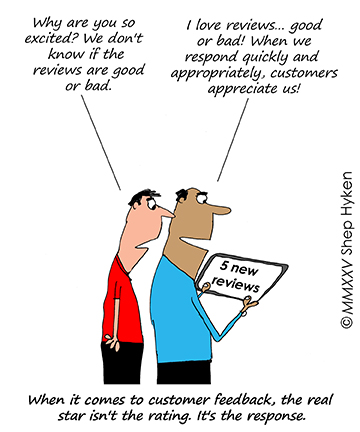
Negative Reviews Shep Hyken Cartoon

While I believe you should respond to all comments and reviews, it’s especially important to respond to the negative. By the way, negative reviews aren’t so bad. In one of my articles about embracing negative reviews, I mentioned that a perfect five-star rating causes some customers to think, “This is too good to be true.” Perfection is not reality, and customers know this.

With that in mind, here are five social reaction strategies and tactics:

  1. React to Positive Comments: A short thank you is appropriate. If you can personalize it, even better.
  2. React to Negative Comments: As mentioned, it’s especially important to respond to negative reviews and comments, and I’ll add, in a timely fashion. The sooner the better. This adds a sense of urgency and creates credibility. If possible, take the complaint “offline” and deal directly with the customer. Then return to the site where the comment or review was first shared and let the world know you resolved the issue.
  3. React to Unreasonable Comments: Not every comment will be reasonable. Some people will be unreasonable. A simple and professional response is appropriate. Offer a way for the customer to contact you directly. Don’t be defensive, or you’ll add fuel to the fire.
  4. It’s Okay to Use AI and Templates When Reacting: Depending on how many comments you get, AI and templates can save you time. But, make sure to customize them to the situation. Don’t just copy and paste comments. Customers will notice.
  5. Treat Customer Comments as Learning Opportunities: This idea goes beyond social channels and review sites. Any comment that comes your way, positive or negative, is a learning opportunity. If you get negative feedback, find ways to prevent it from happening again. If the feedback is positive, find ways to make sure it always happens.

Companies spend a lot of money to get customers to notice them through marketing and advertising. Don’t waste that investment by not considering social reacting as part of your marketing and customer experience (CX) plan.

Image credits: Pixabay

Subscribe to Human-Centered Change & Innovation WeeklySign up here to join 17,000+ leaders getting Human-Centered Change & Innovation Weekly delivered to their inbox every week.

Innovation Lessons from the 50 Most Admired Companies of 2026

The Architecture of Admiration

LAST UPDATED: February 18, 2026 at 2:22 PM

Innovation Lessons from the 50 Most Admired Companies of 2026

by Braden Kelley and Art Inteligencia

Every year, the Fortune World’s Most Admired Companies list serves as a masterclass in reputation management. In 2026, the stakes have shifted. We are no longer just looking at who can build a better widget; we are looking at who can navigate the “perpetual pivot.”

“Innovation is no longer a department — it is a survival reflex built on human trust.”

— Braden Kelley

The 2026 All-Star Circle

  1. Apple
  2. Microsoft
  3. Amazon.com
  4. Nvidia
  5. JPMorgan Chase
  6. Berkshire Hathaway
  7. Costco Wholesale
  8. Alphabet
  9. Walmart
  10. American Express
  11. Delta Air Lines
  12. Netflix
  13. Coca-Cola
  14. Marriott International
  15. Walt Disney
  16. Goldman Sachs Group
  17. Eli Lilly
  18. FedEx
  19. Procter & Gamble
  20. Salesforce
  21. Home Depot
  22. BlackRock
  23. Toyota Motor
  24. Singapore Airlines
  25. Nike
  26. BMW
  27. USAA
  28. Starbucks
  29. Johnson & Johnson
  30. Morgan Stanley
  31. Bank of America
  32. IBM
  33. Accenture
  34. Caterpillar
  35. Visa
  36. Taiwan Semiconductor
  37. Samsung Electronics
  38. ServiceNow
  39. Danaher
  40. Mastercard
  41. L’Oréal
  42. Lowe’s Companies, Inc.
  43. UPS
  44. GE Aerospace
  45. Airbus
  46. Pfizer
  47. Lockheed Martin
  48. Advanced Micro Devices (AMD)
  49. Workday
  50. Publix Super Markets

The companies that stay on this list aren’t just “big”; they are masters of Human-Centered Innovation. They create environments where the cost of failure is lower than the cost of standing still.

Case Study: Walmart (No. 9)

The AI-Augmented Associate

Walmart has successfully rewired retail by treating its massive physical footprint as an innovation asset. In 2026, their “Agentic AI” assistant, Sparky, manages everything from grocery budgets to real-time meal planning.

The Human Shift: Rather than replacing staff, Walmart used AI to automate the “drudge work” of inventory scanning. This freed 1.5 million associates to focus on higher-value human interaction, proving that technology works best when it empowers people.

Case Study: Eli Lilly (No. 17)

Manufacturing the Future of Health

Eli Lilly’s rise into the top 20 is a story of manufacturing foresight. By partnering with Nvidia to build a DGX SuperPOD, they created the pharmaceutical industry’s most powerful AI supercomputer.

The Human Shift: Through “LillyDirect,” they bypassed traditional pharmacy friction. Innovation here wasn’t just the molecule; it was the Customer Experience of getting life-changing medication directly to those who need it.

Case Study: Nvidia (No. 4)

The Culture of Radical Openness

Nvidia’s meteoric rise to No. 4 isn’t just about GPUs; it’s about their organizational “operating system.” In 2026, CEO Jensen Huang has operationalized a culture where learning is a “group sport.”

The Human Shift: Nvidia avoids the “manager-as-gatekeeper” model. Feedback is a live, company-wide clinic where errors are dissected openly. By making it safe to fail in public, Nvidia accelerates the collective intelligence of the entire firm, ensuring they out-learn their competition every single day.

Case Study: Singapore Airlines (No. 24)

The Ultra-Long-Haul Experience

Ranking as the top airline and No. 24 overall, SIA has committed $1.1 billion to a massive retrofit of its Airbus A350 fleet, introducing Low Earth Orbit (LEO) satellite internet across all classes.

The Human Shift: SIA understands that in 2026, “luxury” means “continuity.” By providing broadband-speed Wi-Fi that allows for Zoom calls at 30,000 feet, they’ve solved the “digital isolation” problem of long-haul travel. They aren’t just flying planes; they are extending the passenger’s lifestyle into the clouds.

Why These Companies? The Innovation Multiplier

Innovation at the “Most Admired” level is about the Innovation Multiplier: the ability to apply new technology to old problems in a way that creates defensible value. Companies like Apple (No. 1) stay at the top because they wait until they can deliver the most human-centered version of a technology.

How the Rankings are Calculated:
To create the 2026 list, Fortune partnered with Korn Ferry to survey 3,700 executives, directors, and analysts. Starting with 1,500 candidates (the largest U.S. and Global 500 firms), respondents rated companies in their own industry on nine criteria: Innovation, People Management, Use of Corporate Assets, Social Responsibility, Quality of Management, Financial Soundness, Long-Term Investment Value, Quality of Products/Services, and Global Competitiveness. A company must score in the top half of its industry peer group to be listed.

Image credits: Google Gemini

Content Authenticity Statement: The topic area, key elements to focus on, etc. were decisions made by Braden Kelley, with a little help from Google Gemini to clean up the article and add citations.

Subscribe to Human-Centered Change & Innovation WeeklySign up here to get Human-Centered Change & Innovation Weekly delivered to your inbox every week.

Digital Phenotyping and the Future of Preventative Experience Design

The Silent Pulse

LAST UPDATED: February 16, 2026 at 6:01 PM

Digital Phenotyping and the Future of Preventative Experience Design

GUEST POST from Art Inteligencia


I. Introduction: Beyond the Survey

The Death of “Self-Reporting”

For decades, the gold standard for understanding employee well-being or customer satisfaction has been the survey. We ask people how they feel, and they give us an answer filtered through their own biases, current mood, or what they think we want to hear. In the world of innovation, self-reporting is a lagging indicator — and a flawed one at that.

Defining Digital Phenotyping

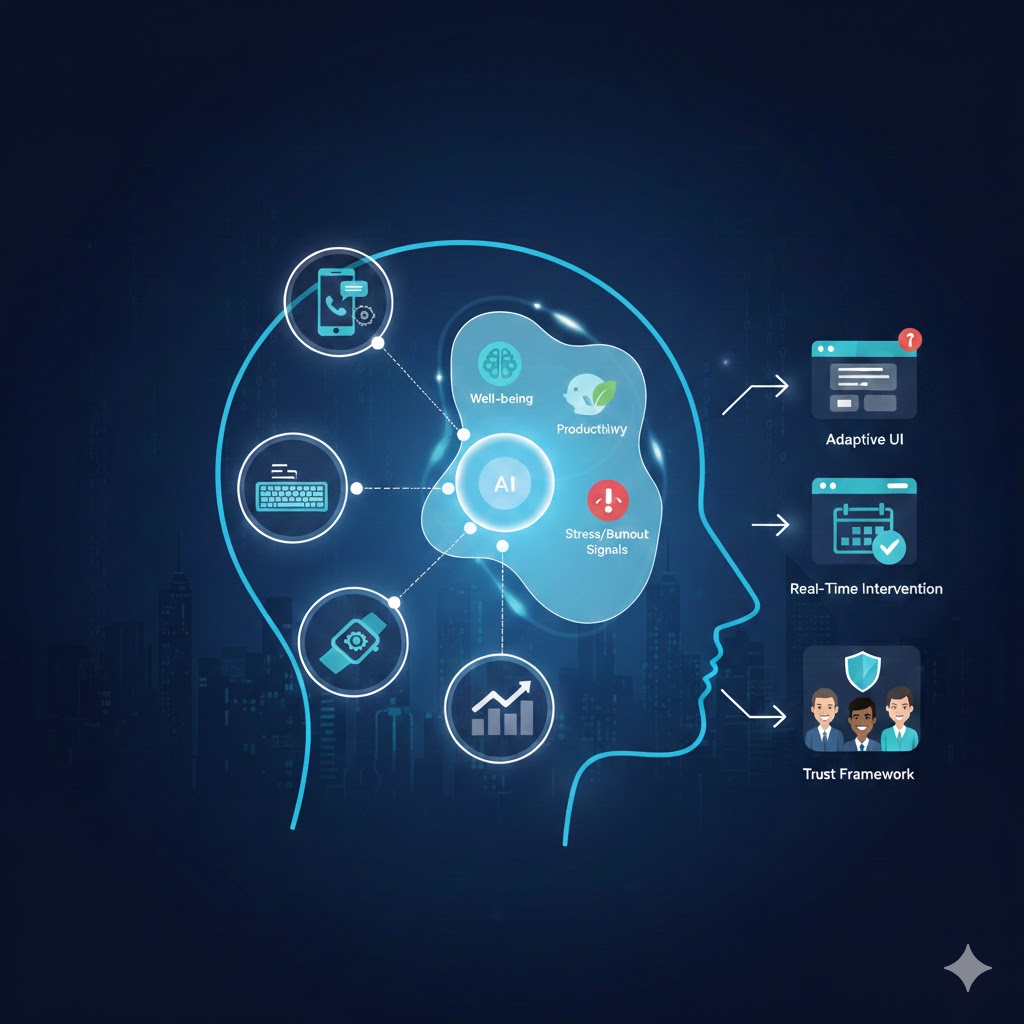
We are entering the era of Digital Phenotyping: the moment-by-moment quantification of the individual-level human phenotype in situ using data from personal digital devices. By analyzing the “digital exhaust” from smartphones and wearables — mobility patterns, social interactions, and even typing rhythm — we can infer behavioral, emotional, and cognitive states with unprecedented accuracy.

The Paradigm Shift: From Reactive to Preventative

The true power of this technology lies in its ability to turn experience design from a reactive fix into a preventative strategy. We no longer have to wait for a “burnout crisis” or a drop in productivity to realize our team is under excessive stress. The signals are there, in real-time, hidden in the cadence of our digital lives.

“Innovation is about solving the problems that people haven’t yet found the words to describe. Digital Phenotyping gives us the ears to hear those unspoken needs.”
— Braden Kelley

As we move beyond the survey, we must lead with a human-centered lens. The goal isn’t to monitor; it’s to support. We are shifting from a world that reacts to failure to a world that senses — and sustains — human flourishing.

II. The Mechanics of Passive Sensing

Digital phenotyping relies on passive data — information collected in the background without requiring any active input from the user. This removes the “friction” of participation and provides a continuous stream of objective reality.

The Three Primary Data Streams

1. Mobility and Physical Activity

Using GPS and accelerometers, we can map “life space.” A sudden constriction in a person’s physical movement — fewer locations visited or reduced steps — can be a powerful proxy for depressive states or social withdrawal. Conversely, erratic movement patterns might signal high levels of anxiety or agitation.

2. Social and Communication Meta-data

This isn’t about what is being said, but how the person is interacting. Call frequency, text latency, and social media engagement patterns reveal shifts in social connectivity. A drop in outbound communication often precedes a burnout phase before the employee even feels “tired.”

3. Human-Computer Interaction (HCI)

The way we interact with our screens is a window into our cognitive health. Typing speed, the frequency of “backspacing,” and scrolling patterns can indicate cognitive overload or a lapse in focus. These “digital biomarkers” are the most immediate indicators of whether a task is designed for human success or human failure.

The Synthesis: From Signals to Insights

The magic happens in the AI synthesis layer. By correlating these streams, machine learning models can identify a “baseline” for an individual. When the data deviates from that baseline, the system identifies a “glitch” — a moment where the human-centered design of the environment is no longer supporting the human within it.

“Data is just a signal; insight is the story. In digital phenotyping, we are learning to read the stories written in the rhythm of our daily digital interactions.”
— Braden Kelley

III. Value Creation: Turning Insight into Action

The true ROI of digital phenotyping isn’t found in the data itself, but in the Experience Design it enables. By moving from reactive to preventative models, we can create environments that adapt to the human state in real-time.

Preventative Experience Design in Practice

Real-Time Burnout Mitigation

Imagine a project management tool that senses cognitive overload through typing patterns and erratic screen switching. Instead of pushing another notification, the system “softens” — delaying non-essential alerts and suggesting a recovery break. This is human-centered design in action: protecting the asset (the person) before the damage occurs.

Adaptive User Interfaces (AUI)

In high-stakes environments like healthcare or emergency response, digital phenotyping allows interfaces to simplify themselves when stress markers are detected. By reducing the “information density” during moments of high stress, we prevent human error and improve outcomes.

The Strategic Advantage of “Wellness as a Service”

Organizations that implement these tools as a benefit rather than a monitor will see a massive shift in retention and engagement. When an employee knows the “system” is looking out for their mental health — flagging potential depression signals or isolation patterns early — the relationship between employer and employee evolves from transactional to collaborative.

“Value in the future of work won’t be measured by output alone, but by the sustainability of the human spirit behind that output.”
— Braden Kelley

By leveraging these insights, we aren’t just innovating products; we are innovating the way we treat people.

IV. The Innovation Ethical Frontier

Digital phenotyping sits at the intersection of extreme utility and extreme vulnerability. As innovators, we must acknowledge that data is a surrogate for intimacy. When we measure a person’s gait or typing rhythm, we are entering their private mental space. Without a robust ethical framework, we risk building a “Digital Panopticon” rather than a supportive ecosystem.

The Three Pillars of Ethical Phenotyping

1. Radical Transparency & Consent

Standard “Terms and Conditions” are insufficient. Consent must be active and ongoing. Users should know exactly what biomarkers are being tracked and have the “Right to Disconnect” without penalty. Transparency isn’t just a legal hurdle; it’s a trust-building feature.

2. Purpose-Driven Data Minimization

The temptation to “collect it all” is the enemy of ethics. We must practice data minimalism: collecting only the specific signals required to provide the promised human-centered value. If a signal doesn’t directly contribute to a preventative intervention, it shouldn’t be gathered.

3. The “Benefit Flow” Guarantee

The value derived from the data must flow primarily back to the individual. If the organization is the only one benefiting (through higher productivity), it’s surveillance. If the individual benefits (through better mental health and reduced stress), it’s empowerment.

Leading with Empathy-Led Ethics

We must move beyond “compliance-based” privacy. In a human-centered organization, we ask: “Would our employees feel cared for or watched if they knew how this worked?” If the answer is “watched,” the innovation is flawed at the architectural level.

“Trust is the only currency that matters in the future of innovation. Once you spend it on surveillance, you can never buy it back.”
— Braden Kelley

By establishing these guardrails early, we ensure that digital phenotyping remains a tool for human flourishing rather than a weapon for corporate control.

V. Leading the Human-Centered Change

Implementing digital phenotyping is not a technical deployment; it is a cultural transformation. If leaders treat this like a software update, they will face immediate resistance. To succeed, we must lead with transparency and a clear focus on the “human” in human-centered innovation.

The Role of the “Architect” in Rollout

Leaders must act as the architects of trust. This means the Chief Innovation Officer and the CHRO must work in lockstep to ensure that the purpose of the data is clearly defined and that those definitions are unshakeable.

Strategies for Successful Integration:

  • The “Opt-In” Mandate: Never make passive sensing mandatory. The power of these tools comes from voluntary participation. When people choose to participate, they become stakeholders in their own well-being.
  • Stakeholder Education: We must educate every level of the organization — especially our “Sensors” (the employees) — on what digital biomarkers are and how they are used to trigger supportive interventions.
  • Feedback Loops: Create a mechanism where employees can provide feedback on the interventions. If a system suggests a “burnout break,” was it helpful or annoying? The human must remain the final authority.

Transparency as a Competitive Feature

In the future, the most successful organizations will be those that are radically transparent about their data practices. By being open about the algorithms and the “why” behind the sensing, we remove the mystery and the fear. Transparency turns a “black box” into a “glass box.”

“Change happens at the speed of trust. If you want to innovate at the edge of human behavior, you must first build a foundation of absolute integrity.”
— Braden Kelley

By focusing on the human-centered change, we ensure that digital phenotyping isn’t something done to people, but something done for them.

VI. Conclusion: Designing a More Intuitive World

The transition from reactive to preventative design represents one of the most significant leaps in the history of Human-Centered Innovation. Digital phenotyping allows us to stop guessing and start knowing — not for the sake of control, but for the sake of care.

The Future is Empathetic

We are moving toward a world where our tools understand our limits as well as we do. Imagine a workplace that recognizes your stress before you have a headache, or a digital assistant that knows you’re cognitively overloaded and helps you prioritize. This is the Intuitive World we are designing.

A Leader’s Final Responsibility

As innovators and leaders, our responsibility is to ensure that as our machines become more “human-literate,” we do not become less human in our leadership. Digital phenotyping is a tool of immense power. Used correctly, it can eradicate burnout, foster deep engagement, and support mental health on a global scale.

“The most advanced technology is the one that makes us feel most human. Our job is to ensure digital phenotyping does exactly that.”
— Braden Kelley

The signals are all around us, pulsing through the devices in our pockets and on our wrists. The question is no longer whether we can hear them, but whether we have the innovation leadership and ethical courage to act on what they are telling us.

Deep Dive: Frequently Asked Questions

Does Digital Phenotyping mean my boss is reading my texts?

Absolutely not. Ethical digital phenotyping focuses on metadata and patterns, not content. It looks at the frequency of communication or the speed of your typing, not the words you say. As an innovation leader, I advocate for systems where the content remains private and encrypted.

Why is this better than a monthly wellness survey?

Surveys are “lagging indicators” — they tell us how you felt in the past. By the time a survey is analyzed, burnout has often already occurred. Digital phenotyping provides real-time signals, allowing for immediate, helpful interventions that can prevent a crisis before it starts.

Can I opt-out of this kind of data collection?

In any human-centered organization, the answer must be yes. Trust is the foundation of innovation. For digital phenotyping to work, it must be an opt-in benefit that employees use because they see the value in their own well-being and professional growth.

Disclaimer: This article speculates on the potential future applications of cutting-edge scientific research. While based on current scientific understanding, the practical realization of these concepts may vary in timeline and feasibility and are subject to ongoing research and development.

Image credits: Google Gemini

Subscribe to Human-Centered Change & Innovation WeeklySign up here to get Human-Centered Change & Innovation Weekly delivered to your inbox every week.

Dualism is Bunk – Emergentism Rules!

Dualism is Bunk - Emergentism Rules!

GUEST POST from Geoffrey A. Moore

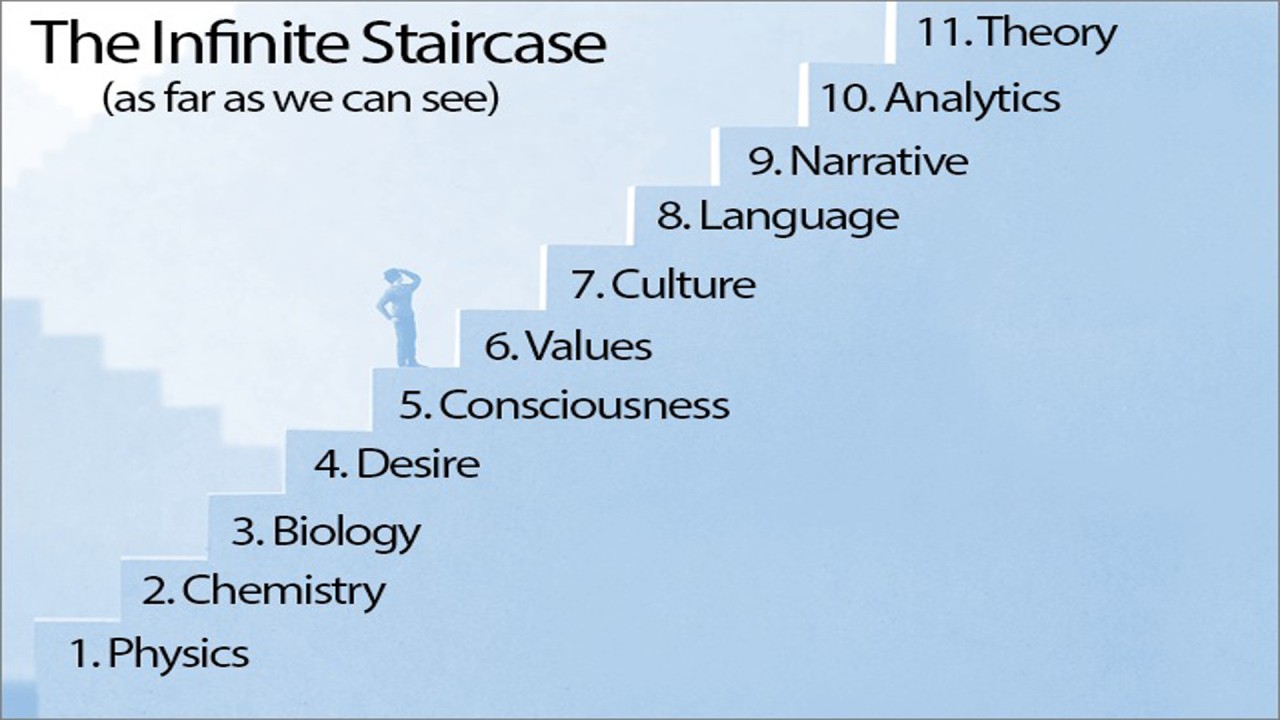
Readers of The Infinite Staircase (who are not many but whom I highly esteem) will know that it describes reality as constituted not of two but rather of eleven separate levels. At the bottom of the staircase is physics, all matter, no mind. At the top is theory, all mind, no matter. But there are nine layers in between, and here is the amazing thing. Each one is not only distinctly separable from the one above and below it, it is also defined by what I will call a characteristic attribute.

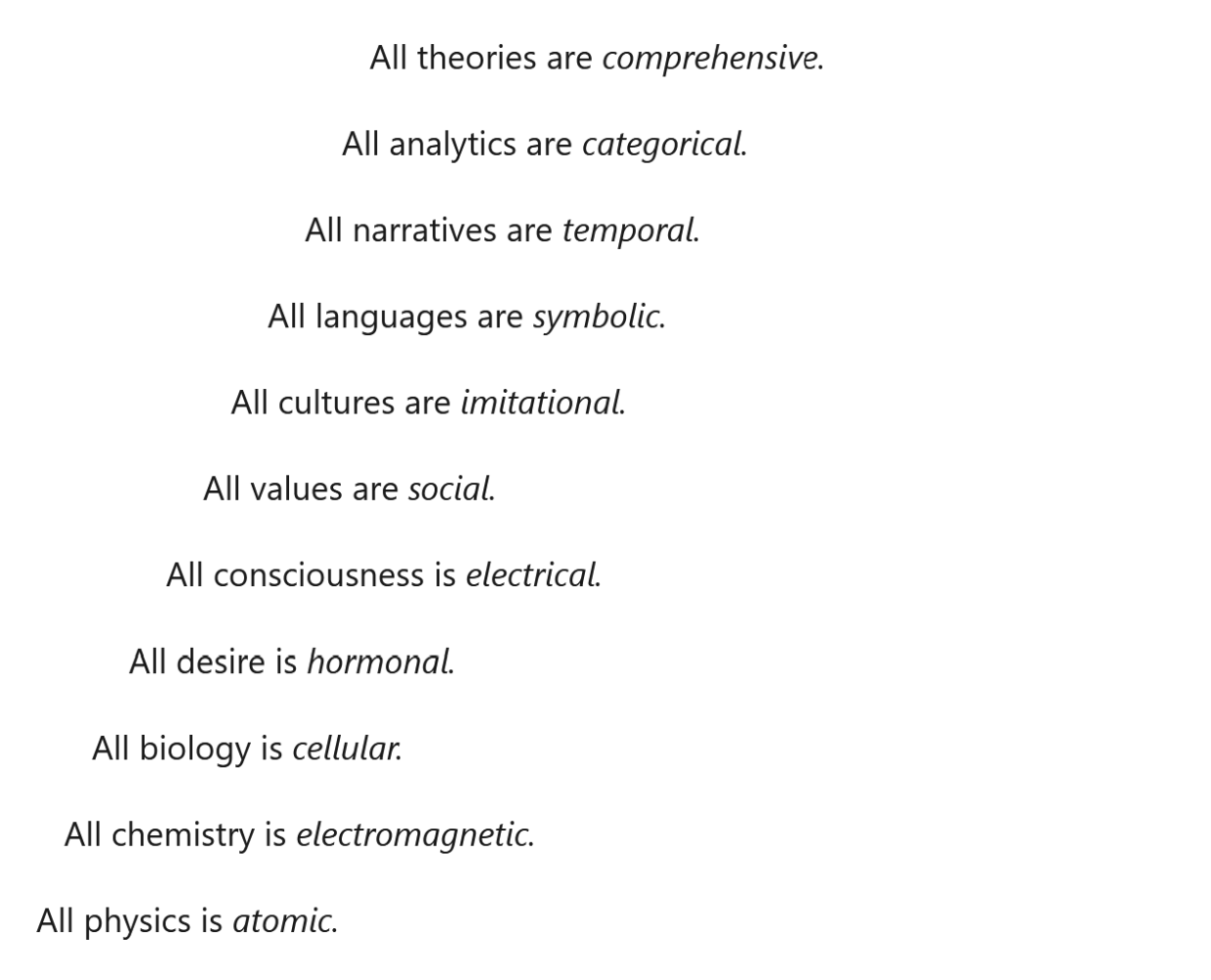
Now, getting that characteristic attribute right is no small feat, so consider the following a first cut at something that undoubtedly can be improved upon. (Start at the bottom and work your way up the staircase.)

OK, I am not crazy about the word imitational, but setting that aside, this list specifies an amazing amount of structure in a relatively confined space. All the italicized words represent fruitful fields of study in themselves, and taken together might constitute a Masters Degree in Reality.

Needless to say, every one of these claims is debatable, so let me just close by saying,

That’s what I think. What do you think?

Image Credit: Geoffrey Moore

Subscribe to Human-Centered Change & Innovation WeeklySign up here to join 17,000+ leaders getting Human-Centered Change & Innovation Weekly delivered to their inbox every week.

Top 10 Human-Centered Change & Innovation Articles of January 2026

Top 10 Human-Centered Change & Innovation Articles of January 2026Drum roll please…

At the beginning of each month, we will profile the ten articles from the previous month that generated the most traffic to Human-Centered Change & Innovation. Did your favorite make the cut?

But enough delay, here are January’s ten most popular innovation posts:

  1. Top 40 Innovation Authors of 2025 — Curated by Braden Kelley
  2. Trust is a Gold Mine for Organizations, but it Takes a Bit of Courage — by Oscar Amundsen
  3. Outcome-Driven Innovation in the Age of Agentic AI — by Braden Kelley
  4. Building Your Dream Organization — by Braden Kelley
  5. Why Photonic Processors are the Nervous System of the Future — by Art Inteligencia
  6. Reimagining Personalization — by Geoffrey Moore
  7. We Must Hold AI Accountable — by Greg Satell
  8. The Keys to Changing Someone’s Mind — by Greg Satell
  9. Concentrated Wealth, Consolidated Markets, and the Collapse of Innovation — by Art Inteligencia
  10. It’s Impossible to Innovate When … — by Mike Shipulski

BONUS – Here are five more strong articles published in December that continue to resonate with people:

If you’re not familiar with Human-Centered Change & Innovation, we publish 4-7 new articles every week built around innovation and transformation insights from our roster of contributing authors and ad hoc submissions from community members. Get the articles right in your Facebook, Twitter or Linkedin feeds too!

Build a Common Language of Innovation on your team

Have something to contribute?

Human-Centered Change & Innovation is open to contributions from any and all innovation and transformation professionals out there (practitioners, professors, researchers, consultants, authors, etc.) who have valuable human-centered change and innovation insights to share with everyone for the greater good. If you’d like to contribute, please contact me.

P.S. Here are our Top 40 Innovation Bloggers lists from the last five years:

Subscribe to Human-Centered Change & Innovation WeeklySign up here to get Human-Centered Change & Innovation Weekly delivered to your inbox every week.