Should Owners or Employees Come First?

Should Owners or Employees Come First?

GUEST POST from Stefan Lindegaard

“It’s crucial that we succeed in securing a competitive return for our owners and meet the expectations of consumers and society. But the foundation for all of this is creating a workplace and a culture that attracts the best talent.”

– Niels Duedahl, CEO at Danish Crown

Yes, it’s always a balance.

But it’s telling how Niels Duedahl sees people and culture as the true foundation.

I couldn’t agree more.

If we don’t get the workplace right, nothing else will follow.

What about you – how do you see it?

Image Credit: Pexels

Subscribe to Human-Centered Change & Innovation WeeklySign up here to get Human-Centered Change & Innovation Weekly delivered to your inbox every week.

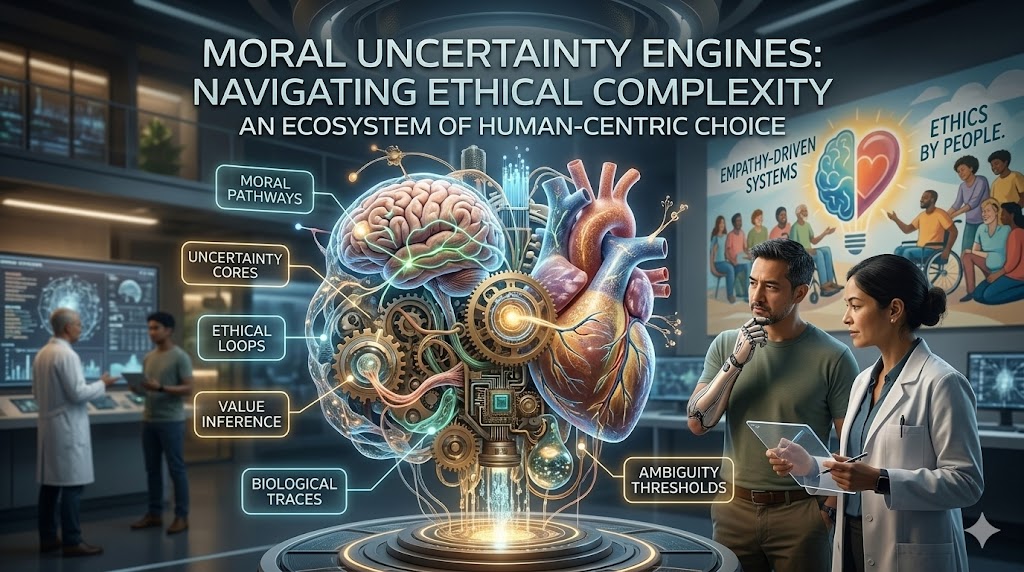
Bio-Computing & DNA Data Storage

The Human-Centered Future of Information

LAST UPDATED: December 12, 2025 at 5:47 PM

Bio-Computing & DNA Data Storage

GUEST POST from Art Inteligencia

We are drowning in data. The digital universe is doubling roughly every two years, and our current infrastructure — reliant on vast, air-conditioned server farms — is neither environmentally nor economically sustainable. This is where the most profound innovation of the 21st century steps in: DNA Data Storage. Rather than using the binary zeroes and ones of silicon, we leverage the four-base code of life — Adenine (A), Cytosine (C), Guanine (G), and Thymine (T) — to encode information. This transition is not merely an improvement; it is a fundamental shift that aligns our technology with the principles of Human-Centered Innovation by prioritizing sustainability, longevity, and density.

The scale of this innovation is staggering. DNA is the most efficient information storage system known. Theoretically, all the world’s data could be stored in a volume smaller than a cubic meter. This level of density, combined with the extreme longevity of DNA (which can last for thousands of years when properly preserved), solves the two biggest crises facing modern data: decay and footprint. We must unlearn the limitation of physical space and embrace biology as the ultimate hard drive. Bio-computing, the application of molecular reactions to perform complex calculations, is the natural, faster counterpart to this massive storage potential.

The Three Pillars of the Bio-Data Revolution

The convergence of biology and information technology is built on three revolutionary pillars:

1. Unprecedented Data Density

A single gram of DNA can theoretically store over 215 petabytes (215 million gigabytes) of data. Compared to a standard hard drive, which requires acres of physical space to house that much information, DNA provides an exponential reduction in physical footprint. This isn’t just about saving space; it’s about decentralizing data storage and dramatically reducing the need for enormous, vulnerable, power-hungry data centers. This density makes truly long-term archival practical for the first time.

2. Extreme Data Longevity

Silicon-based media, such as hard drives and magnetic tape, are ephemeral. They require constant maintenance, migration, and power to prevent data loss, with a shelf life often measured in decades. DNA, in contrast, has proven its stability over millennia. By encapsulating synthetic DNA in glass or mineral environments, the stored data becomes essentially immortal, eliminating the costly and energy-intensive practice of data migration every few years. This shifts the focus from managing hardware to managing the biological encapsulation process.

3. Low Energy Footprint

Traditional data centers consume vast amounts of electricity, both for operation and, critically, for cooling. The cost and carbon footprint of this consumption are rapidly becoming untenable. DNA data storage requires energy primarily during the initial encoding (synthesis) and subsequent decoding (sequencing) stages. Once stored, the data is inert, requiring zero power for preservation. This radical reduction in operational energy makes DNA storage an essential strategy for any organization serious about sustainable innovation and ESG goals.

Leading the Charge: Companies and Startups

This nascent but rapidly accelerating industry is attracting major players and specialized startups. Large technology companies like Microsoft and IBM are deeply invested, often in partnership with specialized biotech firms, to validate the technology and define the industrial standard for synthesis and sequencing. Microsoft, in collaboration with the University of Washington, was among the first to successfully encode and retrieve large files, including the entire text of the Universal Declaration of Human Rights. Meanwhile, startups are focusing on making the process more efficient and commercially viable. Twist Bioscience has become a leader in DNA synthesis, providing the tools necessary to write the data. Other emerging companies like Catalog are working on miniaturizing and automating the DNA storage process, moving the technology from a lab curiosity to a scalable, automated service. These players are establishing the critical infrastructure for the bio-data ecosystem.

Case Study 1: Archiving Global Scientific Data

Challenge: Preserving the Integrity of Long-Term Climate and Astronomical Records

A major research institution (“GeoSphere”) faced the challenge of preserving petabytes of climate, seismic, and astronomical data. This data needs to be kept for over 100 years, but the constant migration required by magnetic tape and hard drives introduced a high risk of data degradation, corruption, and enormous archival cost.

Bio-Data Intervention: DNA Encapsulation

GeoSphere partnered with a biotech firm to conduct a pilot program, encoding its most critical reference datasets into synthetic DNA. The data was converted into A, T, C, G sequences and chemically synthesized. The resulting DNA molecules were then encapsulated in silica beads for long-term storage.

  • The physical volume required to store the petabytes of data was reduced from a warehouse full of tapes to a container the size of a shoebox.
  • The data was found to be chemically stable with a projected longevity of over 1,000 years without any power or maintenance.

The Innovation Impact:

The shift to DNA storage solved GeoSphere’s long-term sustainability and data integrity crisis. It demonstrated that DNA is the perfect medium for “cold” archival data — vast amounts of information that must be kept secure but are infrequently accessed. This validated the role of DNA as a non-electronic, permanent archival solution.

Case Study 2: Bio-Computing for Drug Discovery

Challenge: Accelerating Complex Molecular Simulations in Pharmaceutical R&D

A pharmaceutical company (“BioPharmX”) was struggling with the computational complexity of molecular docking — simulating how millions of potential drug compounds interact with a target protein. Traditional silicon supercomputers required enormous time and electricity to run these optimization problems.

Bio-Data Intervention: Molecular Computing

BioPharmX explored bio-computing (or molecular computing) using DNA strands and enzymes. By setting up the potential drug compounds as sequences of DNA and allowing them to react with a synthesized protein target (also modeled in DNA), the calculation was performed not by electrons, but by molecular collision and selection.

  • Each possible interaction became a physical, parallel chemical reaction taking place simultaneously in the solution.
  • This approach solved the complex Traveling Salesman Problem (a key metaphor for optimization) faster than traditional electronic systems because of the massive parallelism inherent in molecular interactions.

The Innovation Impact:

Bio-computing proved to be a highly efficient, parallel processing method for solving specific, combinatorial problems related to drug design. This allowed BioPharmX to filter billions of potential compounds down to the most viable candidates in a fraction of the time, dramatically accelerating their R&D pipeline and showcasing the power of biological systems as processors.

Conclusion: The Convergence of Life and Logic

The adoption of DNA data storage and the development of bio-computing mark a pivotal moment in the history of information technology. It is a true embodiment of Human-Centered Innovation, pushing us toward a future where our most precious data is stored sustainably, securely, and with a life span that mirrors humanity’s own. For organizations, the question is not if to adopt bio-data solutions, but when and how to begin building the competencies necessary to leverage this biological infrastructure. The future of innovation is deeply intertwined with the science of life itself. The next great hard drive is already inside you.

“If your data has to last forever, it must be stored in the medium that was designed to do just that.”

Frequently Asked Questions About Bio-Computing and DNA Data Storage

1. How is data “written” onto DNA?

Data is written onto DNA using DNA synthesis machines, which chemically assemble the custom sequence of the four nucleotide bases (A, T, C, G) according to a computer algorithm that converts binary code (0s and 1s) into the base-four code of DNA.

2. How is the data “read” from DNA?

Data is read from DNA using standard DNA sequencing technologies. This process determines the exact sequence of the A, T, C, and G bases, and a reverse computer algorithm then converts this base-four sequence back into the original binary code for digital use.

3. What is the current main barrier to widespread commercial adoption?

The primary barrier is the cost and speed of the writing (synthesis) process. While storage density and longevity are superior, the current expense and time required to synthesize vast amounts of custom DNA make it currently viable only for “cold” archival data that is accessed very rarely, rather than for “hot” data used daily.

Your first step into bio-data thinking: Identify one dataset in your organization — perhaps legacy R&D archives or long-term regulatory compliance records — that has to be stored for 50 years or more. Calculate the total cost of power, space, and periodic data migration for that dataset over that time frame. This exercise will powerfully illustrate the human-centered, sustainable value proposition of DNA data storage.

Disclaimer: This article speculates on the potential future applications of cutting-edge scientific research. While based on current scientific understanding, the practical realization of these concepts may vary in timeline and feasibility and are subject to ongoing research and development.

Image credit: Google Gemini

Subscribe to Human-Centered Change & Innovation WeeklySign up here to get Human-Centered Change & Innovation Weekly delivered to your inbox every week.

Do You Have the Courage to Speak Up Against Conformity?

Do You Have the Courage to Speak Up Against Conformity?

GUEST POST from Mike Shipulski

If you see things differently than others, congratulations. You’re thinking for yourself.

If you find yourself pressured into thinking like everyone else, that’s a sign your opinion threatens. It’s too powerful to be dismissed out-of-hand, and that’s why they want to shut you up.

If the status quo is angered by your theory, you’re likely onto something. Stick to your guns.

If your boss doesn’t want to hear your contrarian opinion, that’s because it cannot be easily dismissed. That’s reason enough to say it.

If you disagree in a meeting and your sentiment is actively dismissed, dismiss the dismisser. And say it again.

If you’re an active member of the project and you are not invited to the meeting, take it as a compliment. Your opinion is too powerful to defend against. The only way for the group-think to survive is to keep you away from it. Well done.

If your opinion is actively and repeatedly ignored, it’s too powerful to be acknowledged. Send a note to someone higher up in the organization. And if that doesn’t work, send it up a level higher still. Don’t back down.

If you look into the future and see a train wreck, set up a meeting with the conductor and tell them what you see.

When you see things differently, others will try to silence you and tell you you’re wrong. Don’t believe them. The world needs people like you who see things as they are and have the courage to speak the truth as they see it.

Thank you for your courage.

Image credit: Unsplash

Subscribe to Human-Centered Change & Innovation WeeklySign up here to join 17,000+ leaders getting Human-Centered Change & Innovation Weekly delivered to their inbox every week.

Does Every Customer Get Your First-Time Energy?

Does Every Customer Get Your First-Time Energy?

GUEST POST from Shep Hyken

While this isn’t formal research, I’ve asked many people the question, “What do you think is the most common question that customers ask employees?” I made the point that this isn’t about calling customer support; it’s a people-to-people interaction.

Almost everyone answers correctly: “Where’s the bathroom?”

If you were asked that every day – sometimes multiple times throughout the day – at what point would you start to act frustrated with any customer who asked you that question?

Here’s the point: The 50th person asking you where the bathroom is doesn’t know they are the 50th person. For them, it’s their first time asking you, and your response should make them feel that way.

This reminds me of my days performing magic shows at trade shows. One of my clients hired me for 10 straight days, during which time I performed twelve 20-minute shows daily – that’s 120 shows!

After the final show, my client asked, “How is it that after doing all of those shows throughout the week, you seem to be just as fresh as the first show?”

Feels Like the First Time Shep Hyken Cartoon

I hadn’t thought about it, but with not much thought, I answered, “I think about each audience. Everyone in the audience deserves my best effort and energy, as if they were my first. If I came off as bored or tired, I’d be letting them down, not to mention letting my client down. So, even though I may have performed the same tricks and delivered the same lines for every show, each audience – even the 120th audience after 119 shows – deserved my very best effort – my first-time energy.”

When a server at a restaurant recites the daily specials for the 12th time that night, do you want to hear them delivered with enthusiasm or with the boredom of repetition? Or maybe it’s a chef who has been asked 20 times a night for many years to prepare a dish that earned him a reputation and keeps customers coming back again and again.

Baseball legend Joe DiMaggio understood this principle perfectly. The story is a perfect example of this concept. A reporter interviewed DiMaggio and asked why he played every game so hard. He replied, “Because there might have been somebody in the stands today who’d never seen me play before and might never see me again.”

The best employees, chefs, athletes, and entertainers understand that repetition is their challenge, not the customer’s problem. They find ways to keep their responses and reactions fresh, be it the first or 500th time. This mindset transforms an ordinary customer experience into something extraordinary. Every customer deserves your first-time energy.

Image credit: Pixabay

Subscribe to Human-Centered Change & Innovation WeeklySign up here to join 17,000+ leaders getting Human-Centered Change & Innovation Weekly delivered to their inbox every week.

What’s Next for Humanity in the Age of Acceleration?

Polycrisis

What's Next for Humanity in the Age of Acceleration?

GUEST POST from Robert B. Tucker

Never in the three decades I’ve been a practicing futurist have I been so uncertain about what lies ahead. Think of the many issues that confront humanity right now: a nagging war in Ukraine, job loss due to automation and AI, the rise of authoritarianism in the U.S. and other countries, and potential bubbles setting off the next global financial crisis.

The future arriving at our doorstep will be unlike anything we’ve seen before. As I illustrate in Build a Better Future, a book that probes where we’re headed in the next 10 years, colliding issues such as these are likely to ignite the next “polycrisis,” a disruption where multiple crises occur simultaneously, interacting in ways that amplify their overall impact.

Unlike isolated crises, a polycrisis involves interconnected challenges that feed into one another, making them harder to resolve.

The COVID-19 pandemic gave us a stark illustration of how a polycrisis ignites. What started as a flu virus in Wuhan, China, quickly morphed into a public health crisis, economic meltdown, supply chain disruption, and a social upheaval, all at once.

More recently, the CrowdStrike crisis on July 19, 2024, was a stark reminder of just how deeply interconnected our systems have become and how fragile our systems are.

On July 19, 2024, thousands of travelers found themselves stranded in airports worldwide as flights were canceled en masse, their carefully laid plans thrown into disarray. In hospitals, the consequences were even more dire. Emergency rooms struggled to access patient records, delaying critical treatments and surgeries, while doctors and nurses were left scrambling to work around the digital blackout.

Meanwhile, as ATM’s stopped working, banking customers faced their own disruptions, transactions froze, and businesses and consumers were unable to process payments. While Microsoft was able to restore systems in a matter of days, it was a polycrisis wake-up call — a seemingly isolated tech failure that cascaded into worldwide economic turmoil, public frustration, and operational paralysis, exposing just how vulnerable we are to the unintended consequences of our digital era dependencies.

The war in Ukraine is an example of a poly-crisis multiplier. What started as a regional conflict quickly became a geopolitical crisis unseen since WWII. As Europe scrambled for alternatives to Russian gas, a food crisis ensued as wheat exports from the region ground to a halt, and an inflationary shock rippled through global markets. Layer in climate-driven disasters — wildfires in Canada blanketing the U.S. East Coast in smoke, record-setting heat waves in the Middle East, and extreme flooding in Asia—and you begin to see how today’s crises can combine and multiply.

The rapid advance of technology is bringing both promise and peril. AI and automation upend industries, displacing millions, while social media platforms — once heralded as tools for global connectivity — become breeding grounds for misinformation and disinformation that further erode trust in institutions.

Add to this a world where biodiversity loss threatens food security, and geopolitical conflicts spark energy crises that send shockwaves through global markets. Those who can anticipate these polycrises and navigate their complexities will not just survive, they will prevail in the future.

Looking ahead at the rapid proliferation of AI and the trend of nationalism and isolation, the world is facing not just individual problems, but deeply intertwined issues that exacerbate one another and require holistic, systemic approaches. The question is: are we prepared?

This article originally appeared in Forbes

Image credit: Pexels

Subscribe to Human-Centered Change & Innovation WeeklySign up here to get Human-Centered Change & Innovation Weekly delivered to your inbox every week.
How Knowledge Emerges

Understanding Epistemology

How Knowledge Emerges - Understanding Epistemology

GUEST POST from Geoffrey A. Moore

Epistemology is that branch of philosophy that addresses the theory of knowledge. But what do philosophers mean by knowledge? Traditionally, it is defined as justified true belief, and it is established by applying logic and reason to whatever set of claims is under discussion. That is the path we are going to follow here as well. But to get the full picture, we need to look at both knowledge and knowing through the lens of emergence.

In The Infinite Staircase, we offered a global model of emergence that seeks to span all of reality, organizing itself around eleven stairs, as follows:

Infinite Staircase Geoffrey Moore

Justified true belief is a product of reason employing the top four stairs of language, narrative, analytics, and theory to test claims to truth. It is the cumulative impact of all these stairs building one atop the next that allows knowledge to ultimately emerge in its fullest sense. That is the path we are about to trace. Before so doing, however, we should acknowledge that there are seven stairs below language, all of which are “pre-linguistic,” that also seep into the way we know things. A complete epistemology would therefore go all the way down to the bottom stair, with particular attention to culture (what we learn from others) and values (what we learn from mammalian nurture and governance). Nonetheless, we are going to focus on just the top four because that is where the bulk of the action is.

Beginning with the stair of language, its major contribution to justified true belief is its ability to communicate facts. All facts are expressed through declarative sentences. Each sentence makes a claim. What makes a claim a fact is that we are willing to accept its assertion without further verification or validation. For the ultimate skeptic who is never willing to do this, there are no facts. For the rest of us, who are continually making real-life decisions in real-time, facts are necessary, and we accept or reject claims of fact based on the information we have at hand, including the reliability of the source and the probability of the claim given current circumstances.

That said, facts by themselves don’t mean much. What gives them meaning are narratives. Narrative is the cornerstone of all knowledge, the medium by which we communicate beliefs. The book of Genesis represents one such belief-supporting narrative, The Origin of Species another, the Big Bang a third. Each of these narratives not only explains how things have come to be as they are, at the same time they foreshadow how they can be expected to turn out in the future. Whether it is the hand of God, the workings of natural selection, or the ceaseless operation of the Second Law of Thermodynamics, narratives spotlight the governing forces in whatever situation they describe. That in turn lets us identify actions we can take to turn our situation to best advantage. Narratives, in other words, are essential equipment for any kind of decision-making. The question, however, is are they credible?

This is where analytics comes in. The role of analytics is to justify belief in the claims embedded in the narrative. In The Infinite Staircase, I summarize Stephen Toulmin’s model for conducting such an analysis. It is organized around six elements:

  1. What are the claims being made? Are they clear, precise, and unambiguous?
  2. What evidence is there that these claims might be true? What are the facts of the case as best we can determine them?
  3. What warrants us to believe that this evidence supports these claims? Are there clear lines of reasoning that take us from the facts to the claims and back?
  4. Do the warrants themselves require additional backing to be credible? Is there evidence to support their claims?
  5. What counter-arguments could potentially invalidate our claims, and do we have a credible rebuttal to refute them?
  6. Where do we draw the line between our claims and these alternatives?
  7. Based on all five precious steps, is there some qualification we can apply to our claim to secure its overall justification more firmly? What is our final statement of our core claim?

By applying this model to our beliefs, we can transform them into justified beliefs. But that still begs one question: are they true?

To address the question of truth, we have to draw upon the resources of the highest stair in our model, the one labeled theory. There are multiple theories of truth, but three stand out in particular:

  1. The correspondence theory, which says that claims are true when they are consistent with how things actually turn out to be, leading to a verifiable view of the world.
  2. The coherence theory, which says that claims are true when they are consistent with all the other claims you believe, leading to a coherent view of the world.
  3. The pragmatism theory, which says that claims are true when you act on them and your actions are consistent with your intentions, leading to an effective view of the world.

Rather than think of these theories as competing with one another, consider them as three dimensions of one and the same thing, namely knowledge that helps further one’s strategy for living. In that context, knowledge does indeed consist of justified true beliefs. It emerges from language contributing facts, interacting with narratives contributing beliefs, tested by analytics contributing justification, and confirmed by theory contributing truth. In this context, it is neither complicated nor mysterious.

That’s what I think. What do you think?

Image Credit: Pexels

Subscribe to Human-Centered Change & Innovation WeeklySign up here to join 17,000+ leaders getting Human-Centered Change & Innovation Weekly delivered to their inbox every week.

Strengthen Your Human Agency to Thrive in the Age of AI

Strengthen Your Human Agency to Thrive in the Age of AI

GUEST POST from Robert B. Tucker

In a recent podcast, Sam Altman, CEO of OpenAI, was asked: “Who are the 20-something company founders of our era?” His response was telling: “They seem to be almost nonexistent. It’s not good. I hope this is just a weird accident of history. But something has really gone wrong.”

Actually, we do know what has gone wrong. In my just-released book, Build a Better Future: 7 Mindsets for Navigating the Age of Acceleration, I argue that what has gone wrong is a condition the futurist Alvin Toffler described 50 years ago: future shock. Too much change in too short a time. We are currently reeling under the pressure of so much political, technological, and social change. We are simply not ready for the profound changes just ahead.

While Silicon Valley tech “visionaries” promise that A.I. will bring quantum benefits in productivity, with our lives filled with abundance, superintelligence, and even a coming renaissance, other observers see a New Dark Age ahead for humanity.

Already, A.I. is responsible for the loss of tens of thousands of white-collar jobs, with more cuts on the way. On a recent edition of “60 Minutes,” Anthropic CEO Dario Amodei predicted that A.I. could wipe out half of all entry-level white-collar jobs, beginning with consulting firms, law firms, and financial service firms. Already, A.I. is not just helping employees with tasks; it is completing them.

For many young people, the age of A.I. is anything but abundant. The system seems rigged by robots and algorithms, and is a dizzying maze of complexity. The first rung on the ladder is missing entirely. There is little talk of the New Renaissance nor of A.I. as an enabler of human flourishing.

Instead, there’s bewilderment that we’ve travelled so far, so fast from that period in 2021 that came to be known as “The Great Resignation,” when 41 million Americans voluntarily left their jobs, exercising their agency to pursue new careers, start businesses, or follow their bliss.

Today, a leaner employment picture has taken hold. Large employers are shedding jobs at a pace not seen in years, shrinking career paths that once sustained middle-class families and long-term security. Nearly two million Americans have been out of work for six months or more, according to government data.

Consider the plight of job seekers today. For any open position, applicants are competing with hundreds of other job seekers on multiple job websites. For employers, A.I. performs the first few rounds of culling, so job seekers have no choice but to try and game the system. And when an interview is obtained, the exchange is often with a bot rather than a human being. The rejected applicant receives no feedback on which to hone their approach for the next opportunity.

AI did not set off these trends, but has exacerbated them. And combine AI with the “affordability crisis,” and you have a sense of why young people are often depressed and cynical.

People under the age of 40 are 24 percent less well off financially than a generation ago. Very few of them can afford a home, afford college, or pay off debilitating debt. Young men are especially challenged by the dawning age and are simply checking out instead. In five years, projections are that two women will graduate from college for every one man.

As AI changes how we work and how we add value, new mindsets will be needed. Meanwhile, problem-solving, critical thinking, and numeracy are in decline. A 2024 global assessment found that 34 percent of U.S. adults possess math skills below primary school level. One study noted that 45 percent of college students showed no significant gains in critical thinking, complex reasoning, or writing skills upon earning their four-year degree.

For many, “adulting” is becoming more difficult. Everything from paying bills on time to scheduling your own doctor’s appointments, keeping track of passwords, living within your means, cooking something that isn’t microwaved, and navigating modern life is what adulting entails. Young people often report struggling with these very tasks, especially relationship building. Surveys suggest nearly half of Americans have no close personal friends.

A key component of flourishing in the years ahead will be nurturing one’s human agency, or what people used to call motivation. By whatever name you call it, unleashing one’s agency to meet the challenge of hyper change will be essential to success in the Age of Acceleration.

Human agency is the capacity to act intentionally. It’s the ability and willingness to make choices and shape our own futures, rather than be controlled by circumstances. Human agency is the “make it happen” component in ourselves that is essential to navigating change, seizing opportunity, and building the future we most desire for ourselves.

Whatever we call it, it involves believing you can make your way in this world, and that “if it’s going to be, it’s up to me.” Start by noticing your thought patterns, replacing reactive thinking with intentional thinking. Practice self-management by asking, “What can I control here?” and acting on that. And you cultivate the conviction that your ideas and actions still matter — no matter the headlines. In an era of accelerating change, rediscovering and strengthening that sense of agency may be the most vital skill we can train ourselves to master.

When I speak to audiences of young people, I emphasize that we are not powerless. Even when it feels like the world is being driven by algorithms and A.I.-generated bots, your choice is to strive to become a fully functioning human being. Even when you’ve applied for a hundred jobs, been interviewed by bots, not by humans who gave you zero feedback, agency is a muscle. Agency is the belief that your choices matter.

Agency is the belief that if one door closes, another door opens, and it may turn out for the better.

This article originally appeared in Forbes

Image credit: Gemini

Subscribe to Human-Centered Change & Innovation WeeklySign up here to get Human-Centered Change & Innovation Weekly delivered to your inbox every week.
Was Your AI Strategy Developed by the Underpants Gnomes?

Was Your AI Strategy Developed by the Underpants Gnomes?

GUEST POST from Robyn Bolton

“It just popped up one day. Who knows how long they worked on it or how many of millions were spent. They told us to think of it as ChatGPT but trained on everything our company has ever done so we can ask it anything and get an answer immediately.”

The words my client was using to describe her company’s new AI Chatbot made it sound like a miracle. Her tone said something else completely.

“It sounds helpful,”  I offered.  “Have you tried it?”

 “I’m not training my replacement! And I’m not going to train my R&D, Supply Chain, Customer Insights, or Finance colleagues’ replacements either. And I’m not alone. I don’t think anyone’s using it because the company just announced they’re tracking usage and, if we don’t use it daily, that will be reflected in our performance reviews.”

 All I could do was sigh. The Underpants Gnomes have struck again.

Who are the Underpants Gnomes?

The Underpants Gnomes are the stars of a 1998 South Park episode described by media critic Paul Cantor as, “the most fully developed defense of capitalism ever produced.”

Claiming to be business experts, the Underpants Gnomes sneak into South Park residents’ homes every night and steal their underpants. When confronted by the boy in their underground lair, the Gnomes explain their business plan:

  1. Collect underpants
  2. ?
  3. Profit

It was meant as satire.

Some took it as a an abbreviated MBA.

How to Spot the Underpants AI Gnomes

As the AI hype grows, fueling executive FOMO (Fear of Missing Out), the Underpants Gnomes, cleverly disguised as experts, entrepreneurs and consultants, saw their opportunity.

  1. Sell AI
  2. ?
  3. Profit

 While they’ve pivoted their business focus, they haven’t improved their operations so the Underpants AI Gnomes as still easy to spot:

  1. Investment without Intention: Is your company investing in AI because it’s “essential to future-proofing the business?”  That sounds good but if your company can’t explain the future it’s proofing itself against and how AI builds a moat or a life preserver in that future, it’s a sign that  the Gnomes are in the building.
  2. Switches, not Solutions: If your company thinks that AI adoption is as “easy as turning on Copilot” or “installing a custom GPT chatbot, the Gnomes are gaining traction. AI is a tool and you need to teach people how to use tools, build processes to support the change, and demonstrate the benefit.
  3. Activity without Achievement: When MIT published research indicating that 95% of corporate Gen AI pilots were failing, it was a sign of just how deeply the Gnomes have infiltrated companies. Experiments are essential at the start of any new venture but only useful if they generate replicable and scalable learning.

How to defend against the AI Gnomes

Odds are the gnomes are already in your company. But fear not, you can still turn “Phase 2:?” into something that actually leads to “Phase 3: Profit.”

  1. Start with the end in mind: Be specific about the outcome you are trying to achieve. The answer should be agnostic of AI and tied to business goals.
  2. Design with people at the center: Achieving your desired outcomes requires rethinking and redesigning existing processes. Strategic creativity like that requires combining people, processes, and technology to achieve and embed.
  3. Develop with discipline: Just because you can (run a pilot, sign up for a free trial), doesn’t mean you should. Small-scale experiments require the same degree of discipline as multi-million-dollar digital transformations. So, if you can’t articulate what you need to learn and how it contributes to the bigger goal, move on.

AI, in all its forms, is here to stay. But the same doesn’t have to be true for the AI Gnomes.

Have you spotted the Gnomes in your company?

Image credit: AI Underpants Gnomes (just kidding, Google Gemini made the image)

Subscribe to Human-Centered Change & Innovation WeeklySign up here to join 17,000+ leaders getting Human-Centered Change & Innovation Weekly delivered to their inbox every week.

Three Reasons Change Efforts Fail

Three Reasons Change Efforts Fail

GUEST POST from Greg Satell

There’s no question we have entered a transformative age, with major shifts in technology, resources, demography and migration. Over the next decades, we will have to move from digital from post-digital, from carbon to zero-carbon and from the Boomer values to those of Millennials and Zoomers. Migration will strain societies’ social compact.

Unfortunately, we’re really bad at adapting to change. We’ve known about the climate threat for decades, but have done little about it. The digital revolution, for all the hoopla, has been a big disappointment, falling far short of its promise to change the world for the better. Even at the level of individual firms, McKinsey finds that the vast majority of initiatives fail.

One key factor is that we too often assume that change is inevitable. It’s not. Change dies every day. New ideas are weak, fragile, and in need of protection. If we’re going to bring about genuine transformation, we need to take that into account. The first step is to learn the reasons why change fails in the first place. These three are a good place to start.

1. A Flawed Idea

One obvious reason that change fails is that the idea itself is flawed in some way. Barry Libenson found this out when he was hired to be CIO at the industrial conglomerate Ingersoll Rand. It was his first CIO role and Barry was eager to please the CEO, who he saw as a mentor. So he agreed to aggressive very performance targets for modernizing systems.

Yet while Barry was being financially incentivized to upgrade technology, each of the division leaders were financially incentivized to maximize profit growth. Every dollar they invested in modernizing systems would eat into their performance bonus. Perhaps not surprisingly, Barry’s modernization program didn’t go as well as he’d hoped.

There are a number of tools that can help to troubleshoot ideas and uncover flaws. Pre-mortems force you to imagine how a project could fail. Red Teams set up a parallel group specifically to look for flaws. Howard Tiersky, CEO of the digital transformation agency From Digital and author of the Wall Street Journal bestseller Winning Digital Customers, often uses de Bono’s Six Thinking Hats to help the team take different perspectives.

Most of all, we need to come to terms with the reality that our ideas are always wrong. Sometimes they’re off by a little and sometimes they’re off by a lot, but they’re always wrong, so we always need to be on the lookout for problems. As the physicist Richard Feynman put it.“The first principle is that you must not fool yourself — and you are the easiest person to fool. So you have to be very careful about that.”

2. Failure To Build Trust

Proposed in 1983 by Ira Magaziner, the Rhode Island’s Greenhouse Compact is still considered to be an impressive policy even today, 40 years later. In fact, the bipartisan CHIPS Act is based on the same principle, that targeted, strategic government investments can help simulate economic development in the private sector.

The plan in Rhode Island was to establish four research centers or “greenhouses” throughout the state to help drive development in new technologies, like robotics, medicine and thin film materials, as well as existing industries in which the state had built-in advantages, such as tourism, boat-building and fishing. It quickly gained support among the state’s elite

Yet things quickly soured. There were a number of political scandals that reduced faith in Rhode Island’s government and fed into the laissez-faire zeitgeist of the Reagan era. Critics called the plan “elitist,” for taxing “ordinary” citizens to subsidize greedy corporations. When the referendum was held, it plan got less than a fifth of the vote.

Magaziner’s mistake — one he would repeat with the healthcare plan during the Clinton Administration—was ignoring the need to build trust among constituencies. Getting the plan right is never enough. You need to methodically build trust and support as you go.

3. Identity and Dignity

One of the biggest mistakes change leaders make is assuming that resistance to change has a rational basis. They feel that if they listen to concerns and address them, they will be able to build trust and win over skeptics. Unfortunately, while doing those things is certainly necessary for a successful change effort, it is rarely sufficient.

The simple fact is that human beings form attachments to people, ideas and things and when they feel those attachments are threatened, it offends their identity, dignity and sense of self. This is the most visceral kind of resistance. We can argue the merits of a particular idea and methodically build trust, but we can’t ask people to stop being who they think they are.

Don’t waste your time trying to convince the unconvincible. Your efforts will be very unlikely to succeed and very likely to exhaust and frustrate you. The good news is that irrational resistors, if left to their own devices, will often discredit themselves eventually. You can also speed up the process by designing a dilemma action.

What can be hardest about change, especially when we feel passionately about it, is that at some point, we need to accept that others will not embrace it and we will have to leave some behind. Not every change is for everybody. Some will have to pursue a different journey, one to which they can devote their passions and seek out their own truths.

Change Is Not Inevitable

People like to quote the ancient Greek philosopher Heraclitus, who said things like “the only constant is change” and “no man ever steps in the same river twice, for it’s not the same river and he’s not the same man.” They’re clever quotes and they give us confidence that the change we seek is not only possible, but inevitable.

Yet while change in general may be inevitable, the prospects for any particular change initiative are decidedly poor and the failure to recognize that simple fact is why so many transformation efforts fall short. The first step toward making change succeed is to understand and internalize just how fragile a new, unproven initiative really is.

To bring genuine change about you can’t expect to just push forward and have everyone fall in line. No amount of executive sponsorship or program budget will guarantee victory. To move forward, you will need to listen to skeptics, identify and fix flaws in your idea to methodically build trust. Even then, you will have to outsmart those who have an irrational lust to kill change and who act in ways that are dishonest, underhanded and deceptive.

Change is always, at some level, about what people value. That’s why to make it happen you need to identify shared values that reaffirm, rather than undermine, people’s sense of identity. Recognition is often a more powerful incentive than even financial rewards. In the final analysis, lasting change always needs to be built on common ground.

— Article courtesy of the Digital Tonto blog
— Image credit: Pixabay

Subscribe to Human-Centered Change & Innovation WeeklySign up here to join 17,000+ leaders getting Human-Centered Change & Innovation Weekly delivered to their inbox every week.

Getting the Most Out of Quiet Employees in Meetings

Getting the Most Out of Quiet Employees in Meetings

GUEST POST from David Burkus

Getting quiet employees to speak up in meetings can feel like a challenge, but it doesn’t have to be. The truth is silence doesn’t mean disengagement. Often, quiet team members are the most reflective, thoughtful contributors—they just need the right environment to share their insights. If you’ve ever wondered how to help them find their voice, you’re not alone. It’s a question many leaders face, and the answer lies not in fixing the individual but in fixing the environment.

Let’s explore how to create a space where everyone feels confident contributing and where the team benefits from the diverse perspectives that emerge.

What Leaders Often Get Wrong

A common tactic leaders use to engage quiet employees is calling on them directly during meetings. It seems logical—put someone on the spot, and they’ll contribute, right? Wrong. Forcing participation in this way often backfires. When you call someone out with, “We haven’t heard from you, what do you think?” you’re not creating an opportunity; you’re creating pressure. This can leave the individual feeling unprepared or even embarrassed, which only reinforces their reluctance to speak up in the future.

One-on-one conversations with quiet employees can also miss the mark. Phrasing like, “I haven’t heard from you in meetings lately,” may seem supportive, but it can come across as criticism. Employees may interpret it as, “You’re not contributing enough,” which puts them on the defensive. The issue isn’t the individual’s nature; it’s the dynamics of the meeting itself.

Build an Environment That Encourages Input

Instead of focusing on “fixing” the quiet employee, focus on creating a space that naturally draws out their input. The foundation of this approach is psychological safety, a concept championed by researcher Amy Edmondson. Psychological safety ensures team members feel respected and valued, even when sharing dissenting ideas. Leaders play a pivotal role in cultivating this environment.

One powerful tool is asking better questions. Broad, open-ended prompts signal that all perspectives are welcome and needed. For example:

  • “What perspectives might we not have considered?” This invites team members to think expansively without feeling the pressure to speak directly from their own viewpoint.
  • “How do you see this issue affecting our team or organization as a whole?” This leverages the natural reflective tendencies of quieter team members, giving them an entry point to share their thoughts.
  • “What insights from your work could help us solve this?” By focusing on an individual’s expertise, this question creates a comfortable way for them to contribute.
  • “What have you seen work well in similar situations?” Grounding the conversation in personal experience allows quieter team members to share insights on their terms.

These types of questions help build trust and demonstrate that every voice matters.

Rethink Meeting Dynamics

The structure of your meetings can either foster or stifle participation. Too often, meetings are tailored to the preferences of more vocal team members, leaving quieter employees without a natural space to contribute. To counteract this, vary the formats of your meetings to accommodate different communication styles. Some team members thrive in group discussions, others in chat-based brainstorming, and still others prefer to provide detailed input via email. By alternating your approach, you give everyone an opportunity to engage in the way that suits them best.

Another powerful tactic is structured silence. When you pose a key question during a meeting, instead of opening the floor immediately, give everyone a few minutes to think and jot down their ideas. If you’re meeting virtually, ask participants to type their responses into a shared chat or document. This approach levels the playing field by giving everyone equal time to formulate their thoughts before louder voices dominate the conversation. Research consistently shows that this kind of silent brainstorming not only generates more ideas but also produces better ones.

Support Contributions in the Moment

When a quiet employee does speak up in meetings, how you respond matters. A positive reaction reinforces their willingness to participate again. Start by praising their contribution and ensuring it gets the attention it deserves. Avoid allowing others to immediately dismiss or talk over their idea. Instead, amplify it by saying something like, “That’s an interesting perspective. Let’s explore that further.”

This approach sends a clear message: their input is valued, and this team appreciates diverse ideas. Over time, these affirming responses build confidence and encourage more frequent participation.

Amplify Voices Outside the Meeting

Sometimes, even with the right environment, a quiet employee may hesitate to contribute in the moment. In these cases, follow up with them privately after the meeting. Instead of framing the conversation as a critique, approach it as an opportunity. For example, you might say, “I’d love to hear your thoughts on what we discussed today. What’s your perspective?”

When they share, praise their ideas and encourage them to bring them up in future meetings. If they do, reinforce their contribution publicly. Highlight the value of their insights to the team, ensuring they feel recognized and respected. This two-step process—private encouragement followed by public amplification—builds their confidence and strengthens their connection to the team.

Create Space for Every Voice

Quiet employees aren’t a problem to be fixed; they’re a strength waiting to be unlocked. By shifting your focus from “Why won’t they speak up?” to “How can I create an environment where they feel comfortable contributing?” you’ll foster a more inclusive and innovative team dynamic. Start by rethinking your meeting structures, asking better questions, and supporting contributions both in and out of the meeting room. Over time, you’ll see not just one employee speaking up more but a cultural shift where every voice is heard—and valued.

By encouraging everyone to speak up in meetings, you’ll unlock the full potential of your team. After all, the best ideas don’t come from the loudest voices. They come from the collective brilliance of the group. It’s your job as a leader to make sure every voice has its chance to shine.

This article originally appeared on DavidBurkus.com

Image credit: Pixabay

Subscribe to Human-Centered Change & Innovation WeeklySign up here to get Human-Centered Change & Innovation Weekly delivered to your inbox every week.front