GUEST POST from Robyn Bolton
Ideas and insights can emerge from the most unexpected places. My mom was a preschool teacher, and I often say that I learned everything I needed to know about managing people by watching her wrangle four-year-olds. But it only recently occurred to me that the most valuable business growth lessons came from my thoroughly unremarkable years playing the flute in middle school.
6th Grade: Following the Manual and Falling Flat
Sixth grade was momentous for many reasons, one being that that was when students could choose an instrument and join the school band. I chose the flute because my friends did, and there was a rumor that clarinets gave you buck teeth—I had enough orthodontic issues already.
Each week, our “jill of all trades” teacher gathered the flutists together and guided us through the instructional book until we could play a passable version of Yankee Doodle. I practiced daily, following the book and playing the notes, but the music was lifeless, and I was bored.
7th Grade: Finding Context and Direction
In seventh grade, we moved to full band rehearsals with a new teacher trained to lead an entire band (he was also deaf in one ear, which was, I think, a better qualification for the job than his degree). Hearing all the instruments together made the music more interesting and I was more motivated to practice because I understood how my part played in the whole. But I was still a very average flutist.
To help me improve, my parents got me a private flute teacher. Once a week, Mom drove me to my flute teacher’s house for one-on-one tutoring. She corrected mistakes when I made them, showed me tips and tricks to play faster and breathe deeper, and selected music I enjoyed playing. With her help, I became an above-average flutist.
Post-Grad: Five Business Truths from Band Class
I stopped playing in the 12th grade. Despite everyone’s efforts, I was never exceptional—I didn’t care enough to do the work required.
Looking back, I realized that my mediocrity taught me five crucial lessons that had nothing to do with music:
- Don’t do something just because everyone else is. I chose the flute because my friends did. I didn’t choose my path but followed others—that’s why the music was lifeless.
- Following the instruction manual is worse than doing nothing. You can’t learn an instrument from a book. Are you sharp or flat? Too fast or slow? You don’t know, but others do (but don’t say anything).
- Part of a person is better than all of a book. Though spread thin, the time my teachers spent with each instrumental section was the difference between technically correct noise and tolerable music.
- A dedicated teacher beats a distracted one. Having someone beside me meant no mistake went uncorrected and no triumph unrecognized. She knew my abilities and found music that stretched me without causing frustration.
- If you don’t want to do what’s required, be honest about it. I stopped wanting to play the flute in 10th grade but kept going because it was easier to maintain the status quo. In hindsight, a lot of time, money, and effort would have been saved if I stopped playing when I stopped caring.
The Executive Orchestra: What Grade Are You In?
How many executives remain in sixth grade—following management fads because of FOMO, buying books, handing them out, and expecting magic? And, when that fails, hiring someone to do the work for them and wondering why the music stops when the contract ends?
How many progress to seventh grade, finding someone who can teach, correct, and celebrate their teams as they build new capabilities?
How do what I should have done in 10th grade and be honest about what they are and aren’t willing to do, spending time and resources on priorities rather than maintaining an image?
More importantly, what grade are you in?
Image credit: Unsplash
 Sign up here to join 17,000+ leaders getting Human-Centered Change & Innovation Weekly delivered to their inbox every week.


 After a week of torrid voting and much passionate support, along with a lot of gut-wrenching consideration and jostling during the judging round, I am proud to announce your Top 40 Innovation Bloggers of 2024:
 Greg Satell is a popular speaker and consultant. His first book,
 Mike Shipulski brings together people, culture, and tools to change engineering behavior. He writes daily on Twitter as
 A twenty-five year Procter & Gamble veteran, Pete has spent the last 8+ years applying insights from psychology and behavioral science to innovation, product design, and brand communication. He spent 17 years as a serial innovator, creating novel products, perfume delivery systems, cleaning technologies, devices and many other consumer-centric innovations, resulting in well over 100 granted or published patents. Find him at pete.mindmatters@gmail.com






 Dainora (a.k.a. Dee) creates customer-centric content at Viima. Viima is the most widely used and highest rated innovation management software in the world. Passionate about environmental issues, Dee writes about sustainable innovation hoping to save the world – one article at the time.
 Soren Kaplan is the bestselling and award-winning author of Leapfrogging and The Invisible Advantage, an affiliated professor at USC’s Center for Effective Organizations, a former corporate executive, and a co-founder of
  Diana heads marketing at
 Jesse Nieminen is the Co-founder and Chairman at

 Arlen Meyers, MD, MBA is an emeritus professor at the University of Colorado School of Medicine, an instructor at the University of Colorado-Denver Business School and cofounding President and CEO of the Society of Physician Entrepreneurs at
 Leo is the founder of
 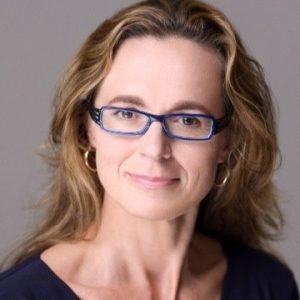 Rachel Audige is an Innovation Architect who helps organisations embed inventive thinking as well as a certified Systematic Inventive Thinking Facilitator, based in Melbourne.
 Art Inteligencia is the lead futurist at Inteligencia Ltd. He is passionate about content creation and thinks about it as more science than art. Art travels the world at the speed of light, over mountains and under oceans. His favorite numbers are one and zero.
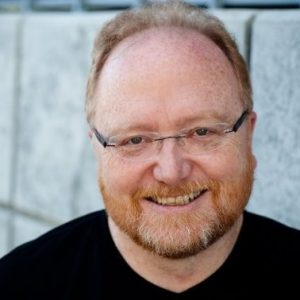 Phil McKinney is the Author of “Beyond The Obvious”, Host of the Killer Innovations Podcast and Syndicated Radio Show, a Keynote Speaker, President & CEO CableLabs and an Innovation Mentor and Coach.
 Dr. Ralph-Christian Ohr has extensive experience in product/innovation management for international technology-based companies. His particular interest is targeted at the intersection of organizational and human innovation capabilities. You can follow him on Twitter
 Dr. Dean Anderson and Dr. Linda Ackerman Anderson lead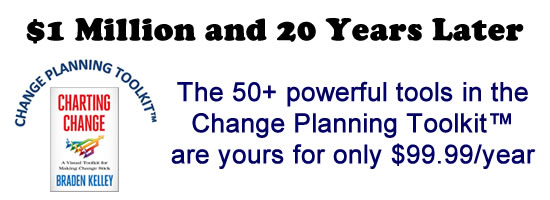

 Scott Anthony is a strategic advisor, writer and speaker on topics of growth and innovation. He has been based in Singapore since 2010, and currently serves at the Managing Director of Innosight’s Asia-Pacific operations.
 Anthony Mills is the Founder & CEO of Legacy Innovation Group (
 Paul Hobcraft runs
 Chateau G Pato is a senior futurist at Inteligencia Ltd. She is passionate about content creation and thinks about it as more science than art. Chateau travels the world at the speed of light, over mountains and under oceans. Her favorite numbers are one and zero.
 As an experience architect, Alain helps leaders craft customer, employee and shareholder experiences for profit, reinvention and transformation. He does this through his personal consultancy Alain Thys & Co as well as the transformative venture studio