Category Archives: Technology

The Modern Luddite Movement

Anticipating the Cultural Backlash to AI Displacement
The Modern Luddite Movement

GUEST POST from Chateau G Pato


The Friction of Unmanaged Progress

For years, the technology sector has operated under a dangerous illusion: the myth of seamless adoption. The prevailing corporate narrative suggests that artificial intelligence will be universally welcomed, quietly absorbing friction and smoothly elevating the workforce. But this viewpoint ignores a fundamental law of human-centered change: when technology moves faster than human psychology can process, culture strikes back.

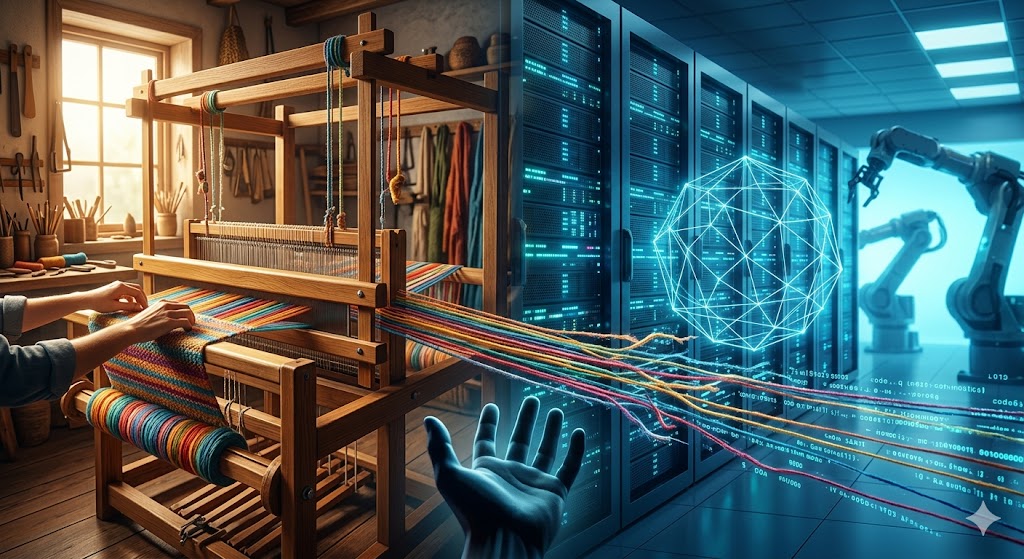
To understand the looming cultural backlash, we must first rescue history from its own terminology. In common parlance, a “Luddite” is dismissed as a technophobe — someone stubbornly clinging to the past out of ignorance. In reality, the 19th-century English textile workers who smashed mechanical looms weren’t fighting technology; they were fighting the destruction of their communities, their livelihoods, and their dignity. They were protesting a systemic failure of experience design. The Modern Luddite Movement will not be born in factories, but in the digital workspaces of knowledge workers, creatives, and strategists who see their intellectual sovereignty being commoditized overnight.

“True innovation is never just about building what is technologically possible; it’s about designing a future where humanity actually wants to live.”

The core tension of our current era is that we are treating a massive societal transformation as a mere software update. We are obsessing over algorithmic efficiency while completely neglecting the human experience of that change. The coming backlash is not a failure of human adaptability — it is a predictable, deeply human reaction to a profound lack of empathy in how innovation is being managed and deployed. If we continue to design people out of the equation, we shouldn’t be surprised when they decide to break the equation entirely.

I. The Anatomy of Disruption: Why This Backlash is Different

Every industrial milestone has forced humanity to renegotiate its relationship with labor. However, treating the rise of generative artificial intelligence as just another predictable chapter in economic history is a grave strategic error. The impending friction is structurally unique, characterized by unprecedented velocity, deep psychological dislocation, and a fundamental degradation of the end-user experience.

The Speed-to-Scale Problem

In past industrial revolutions, the transition of the workforce was measured in generations. When steam power or assembly lines reshaped manufacturing, the prolonged timeline allowed society to build new educational pipelines, adapt labor laws, and give workers time to naturally transition. Generative AI moves at internet speed, scaling globally in days rather than decades. This compressed adoption curve completely outpaces human psychological and economic retraining cycles. We are expecting professionals to reinvent their entire career architectures in months, creating an unprecedented deficit in human change management.

Identity vs. Utility

When mechanical automation disrupted blue-collar labor, it targeted physical exertion. The AI revolution targets cognitive output, striking directly at the core of human identity. For knowledge workers, strategists, and creatives, “what they do” is inextricably linked to “who they are.” When an algorithm can instantly replicate a piece of writing, a strategic analysis, or a visual design, the resulting crisis isn’t merely financial — it is deeply existential. Organizations that view headcount reduction purely as a line-item efficiency gain fail to realize they are tearing at the fabric of professional self-worth, triggering a potent, emotionally charged defensive response.

The Loss of the “Human Touch”

From an experience design perspective, the aggressive rush toward total automation introduces a critical flaw: the complete prioritization of transactional efficiency over relational connection. When every customer touchpoint, creative artifact, and organizational interface is filtered through an automated layer, the overall human experience begins to homogenize and degrade. This creates a vacuum of authentic connection. As digital spaces become hyper-automated and sterile, we will witness a powerful, consumer-led demand for friction — a deliberate rejection of algorithmic optimization in favor of verified, authentic human interaction.

II. Signals of the Emerging Counter-Culture

The cultural backlash to unmanaged automation is no longer a distant, hypothetical scenario; the early warning signals are already flashing across the professional and cultural landscape. As organizations continue to deploy technology without an accompanying architecture for human change management, a distinct, decentralized counter-culture is beginning to manifest. This movement is defined by a conscious retreat from algorithmic spaces and an active resistance against digital displacement.

The Rise of “Analog Enclaves”

We are witnessing the emergence of spaces, products, and communities that explicitly ban or restrict automated inputs. Just as the slow food movement arose in response to industrial fast food, “Analog Enclaves” are forming to preserve unoptimized human experiences. From creative agencies guaranteeing 100% human-authored strategies to local marketplaces operating on zero-algorithm models, consumer preferences are shifting. A premium is being placed on the intentional injection of human friction. The label “Human-Made” is transitioning from a point of nostalgic pride to a highly sought-after, defensive certification of authenticity and quality.

Digital Sabotage and Creative Non-Compliance

Resistance inside the enterprise is rarely loud; it is typically quiet, calculated, and highly effective. Knowledge workers are increasingly engaging in creative non-compliance to protect their domains. This manifests as data poisoning — intentionally introducing flawed inputs to disrupt automated training models — and the deliberate bypassing of corporate AI tools in favor of legacy, human-centric workflows. When workers feel they are being automated out of their own roles rather than augmented within them, survival instincts drive them to quietly sabotage the very systems designed to replace them.

Algorithmic Cynicism and Consumer Fatigue

From an experience design standpoint, the internet is rapidly approaching a saturation point of synthetic mediocrity. The digital ecosystem is cluttered with low-effort, AI-generated noise, resulting in widespread algorithmic cynicism among consumers. People are developing a profound fatigue toward hyper-optimized, sterile interfaces and generic content. This fatigue is driving users away from mass digital platforms and toward small, private, low-tech communities where the interaction is messy, unoptimized, and undeniably human. When efficiency completely destroys novelty and delight, the consumer simply walks away.

III. Designing the Alternative: Co-Creation Over Displacement

The solution to a cultural backlash is not to halt technological progress, but to change how we architect it. If leadership continues to treat human beings as variables to be optimized out of the system, resistance is guaranteed. To avoid systemic friction, organizations must pivot from predatory automation to participatory innovation, designing new organizational structures that value human ingenuity as the ultimate differentiator.

From Automation to Augmentation

We need to fundamentally reframe the corporate balance sheet. The current trend asks, “How many headcounts can this technology eliminate?” A human-centered leader asks, “How can this technology liberate our people to solve higher-order problems?” True innovation occurs at the intersection of technological capability and human insight. When we shift our focus from automation to augmentation, we design workflows where machines handle the heavy lifting of data processing, leaving humans free to focus on empathy, contextual judgment, and creative breakthroughs.

The “Human-in-the-Loop” Experience Architecture

In experience design, a system is only as good as the human outcomes it produces. Deploying automated systems without a robust human interface creates an fragile environment prone to failure. Organizations must intentionally build “Human-in-the-Loop” architectures, where human oversight is not an afterthought or a safety net, but a core structural component. By positioning employees and customers as active co-creators of the technology rather than passive recipients of its outputs, we foster ownership, drastically reduce change resistance, and ensure the final experience retains its vital human touch.

Continuous Upskilling as a Change Framework

You cannot successfully manage a technical transition without a matching human transition architecture. Expecting employees to adapt to a radically altered operational landscape without systemic support is a failure of leadership. Organizations must embed continuous upskilling directly into their operational models. This means designing clear, empathetic learning pathways that allow workers to evolve alongside the tools they use. When people see a clear path forward for their personal growth and economic security within the future vision of the company, the urge to resist transforms into an incentive to innovate.

Conclusion: A Call for Human-Centered Futurology

We stand at a critical crossroads in the evolution of work and culture. The rise of the Modern Luddite Movement is not an inevitable tragedy, but a flashing dashboard indicator warning us that our current innovation trajectory is dangerously out of balance. If we continue to allow technology to outpace empathy, we will lock ourselves into an era defined by systemic cultural friction, bitter labor disputes, and a fragmented digital ecosystem built entirely on mutual distrust.

The choice before us is a design challenge. We can either deploy artificial intelligence as a tool of displacement, or we can deliberately architect an inclusive future of work that honors and amplifies human capability. True futurology is not about passively predicting what technology will do to us; it is about actively designing what we will do with technology. It is time to move past the obsession with what is merely technologically possible and start focusing on what is humanly desirable. The best way to manage change is to ensure that everyone has a stake in the future we are building.

Frequently Asked Questions

Who are the “Modern Luddites” in the context of the AI revolution?

Unlike the historical stereotype of technophobes who hate progress, Modern Luddites are primarily knowledge workers, creatives, and strategists. They are resisting the systemic destruction of their livelihoods, intellectual sovereignty, and professional identities caused by rapid, unmanaged AI displacement.

What are the primary signals of an emerging cultural backlash to AI?

Key signals include the rise of “Analog Enclaves” (spaces and products certifying 100% human creation), quiet enterprise resistance like data poisoning or legacy workflow compliance, and consumer algorithmic cynicism driven by a saturation of sterile, AI-generated digital noise.

How can organizations avoid this backlash and manage AI changes successfully?

Organizations must shift from predatory automation to human-centered augmentation. This involves building “Human-in-the-Loop” experience architectures, involving employees in participatory co-creation, and implementing structured, empathetic upskilling frameworks that provide a clear path forward for human workers.

FutureHacking™ Is Coming

FutureHacking™ is Braden Kelley’s strategic foresight methodology — and a paid download and training program is launching soon. Register your interest now to be the first to know when it’s available, and get early access pricing.

Image credit: Gemini

Subscribe to Human-Centered Change & Innovation WeeklySign up here to get Human-Centered Change & Innovation Weekly delivered to your inbox every week.

Architecting Optimistic Socioeconomic Scenarios for Tomorrow

Architecting Optimistic Socioeconomic Scenarios for Tomorrow

GUEST POST from Chateau G Pato


I. Introduction: The Narrative of Fear vs. The Architecture of Hope

We stand at a profound civilizational crossroads. As artificial intelligence accelerates from an emerging capability into an ambient, pervasive force, our collective conversation has become dangerously polarized. On one side, we are inundated with a dominant dystopian narrative — a bleak vision of mass workforce displacement, widening economic divides, and an existential loss of human agency. On the other side lies a naive techno-optimism that assumes market forces will naturally correct themselves.

Neither path serves us. The reality is that a “soft landing” for society — where disruption is minimized and opportunity is maximized — is not a stroke of luck or a natural byproduct of technological evolution. It must be a deliberately engineered outcome. To achieve this, we must shift our posture from passive forecasting to active futurology and intentional experience design.

This article proposes that by applying human-centered innovation methodologies to our grandest socioeconomic challenges, we can architect a future that prioritizes human dignity and potential. To guide this transition, we introduce a structured framework built upon three core operational pillars:

  • Human-AI Symbiosis: Redesigning the experience layer of work to ensure technology augments, rather than replaces, unique human ingenuity.
  • Proactive Upskilling Infrastructure: Building continuous, agile learning ecosystems that outpace technological obsolescence.
  • Inclusive Wealth Redesign: Constructing modern socioeconomic safety nets and stabilizers to distribute the dividends of an AI-driven economy equitably.

By intentional design, we can move past defensive governance and construct a proactive roadmap toward collective flourishing.

II. Designing the Human-AI Symbiosis (The Experience Layer)

To architect an optimistic tomorrow, we must fundamentally dismantle the zero-sum mindset dominating current corporate strategy. For too long, the default executive reflex has been to view technology strictly through the lens of cost reduction — asking, “How many headcounts can this replace?” True human-centered innovation demands a much more powerful question: “How can we amplify human ingenuity?”

Experience Design (XD) for the New Workplace

The transition from automation to augmentation requires deliberate Experience Design (XD). We are no longer just designing software interfaces; we are designing the future of human dignity at work. If AI systems are implemented as opaque, algorithmic managers that micromanage and dehumanize the workforce, we will face an epidemic of psychological burnout and organizational resistance.

Instead, leaders must design low-friction, intuitive, and transparent touchpoints. AI should function as a collaborative, supportive colleague — a “co-pilot” that absorbs the cognitive load of routine, administrative tasks, thereby freeing humans to focus on higher-order strategic thinking.

Unlocking Unique Human Value (UHV)

As artificial intelligence commoditizes knowledge retrieval and pattern recognition, the premium on what makes us uniquely human skyrockets. We must double down on fostering and scaling our Unique Human Value (UHV) — those deeply human traits that algorithms cannot replicate:

Unique Human Value (UHV) How AI Amplifies It
Radical Empathy & Deep Listening AI maps data trends, but humans uncover the unarticulated emotional needs of customers and citizens.
Systemic Problem-Solving AI optimizes specific variables; humans synthesize cross-disciplinary insights to tackle complex, wicked problems.
Collaborative Innovation Loops AI acts as an instantaneous sounding board, rapidly accelerating the prototyping and iterative cycles of human design teams.

By intentional design, the human-AI symbiosis transforms the workplace from an environment of existential anxiety into a canvas for unprecedented collective creativity.

III. The Re-Skilling Renaissance: Continuous Learning Infrastructure

The rapid acceleration of artificial intelligence has fundamentally broken our traditional education and training paradigms. Historically, learning was treated as a discrete life stage — a foundational block of knowledge acquired in youth to be utilized over a multi-decade career. Today, the half-life of professional skills is shrinking at an unprecedented rate. If we rely on reactive, retrospective training programs, we will permanently sentence a massive segment of the workforce to technological obsolescence.

Architecting Agile Learning Ecosystems

To engineer a soft landing, we must construct a Continuous Learning Infrastructure that moves at the speed of computation. Organizations must shift away from rigid, annual training modules and toward agile learning ecosystems that treat education as an ongoing, ambient experience. This requires:

  • Predictive Personalized Learning: Leveraging AI itself to map an individual employee’s current skill profile against real-time industry shifts, proactively serving up hyper-personalized curriculum paths before a skill gaps becomes a liability.
  • Micro-Credentials & Just-in-Time Loops: Breaking education down into bite-sized, contextual learning units embedded directly into the daily flow of work. Employees should be able to acquire, test, and validate a new micro-skill in minutes, not semesters.

Public-Private Orchestration

This renaissance cannot be realized by the private sector alone, nor can it be solved by outdated government mandates. It requires deep, intentional public-private orchestration. Enterprises and policymakers must collaborate to build shared regional talent pipelines.

Governments must re-envision social safety nets to include “educational capital accounts” for citizens, while corporations must stop viewing re-skilling as a line-item expense or a compliance tax write-off. Instead, human capital development must be recognized as a critical investment in systemic resilience — the ultimate shield against economic disruption.

“In an era of exponential change, organizational agility isn’t defined by your technology stack, but by the velocity at which your people can unlearn the past and adapt to the future.”

IV. Socioeconomic Safety Nets for an Accelerated Era

As artificial intelligence commoditizes both routine cognitive tasks and manual labor, it forces an existential reckoning with our foundational economic models. For centuries, the distribution of societal wealth has been fundamentally tethered to human labor and productivity. When exponential technology detaches output from human hours worked, the traditional social contract begins to fray. To prevent a fractured society, we must proactively redesign our socioeconomic safety nets for a post-scarcity-adjacent world.

Socioeconomic Stabilizers for Transition

Managing a soft landing requires building shock absorbers directly into the macroeconomy. We must move past politically stagnant debates and look at pragmatic, scalable mechanisms designed to transition workforce disruptions smoothly:

  • Universal Basic Income (UBI) & Sovereign Wealth Funds: Utilizing dividends from state-backed technology investments or automation frameworks to establish a baseline economic floor, ensuring citizens can meet essential needs while pivoting careers.
  • Data Dividends: Recognizing that large-scale AI models are trained on the collective digital exhaust of humanity. A data dividend model returns economic value to the citizens whose public data fundamentally enables these technologies.
  • The Care and Impact Economy: Reallocating capital to heavily subsidize and elevate fields that inherently require human touch — such as early childhood education, mental health, elder care, community building, and ecological restoration.

Bridging the New Digital Divide

Optimism cannot exist without equity. If access to cutting-edge AI infrastructure remains concentrated within a handful of elite corporations or wealthy nations, we risk accelerating a devastating form of digital feudalism.

Architecting a soft landing means democratizing access to computational power, localized foundational models, and open-source intelligence. By ensuring that diverse communities, small businesses, and developing economies possess the tools to build their own tailored AI solutions, we can transform a potential tool of displacement into the ultimate engine for decentralized global wealth creation.

Redesigning our safety nets isn’t about fostering dependence; it’s about providing the economic runway required for humanity to fearlessly leap into its next evolutionary chapter.

V. Operationalizing Optimism: A Call to Action for Leaders

Optimism without execution is merely a hallucination. For change leaders, futurists, and corporate executives, the time for passive observation and defensive posture has officially passed. It is no longer enough to establish passive ethics committees or compile endless risk-mitigation checklists. True leadership in the era of artificial intelligence demands that we operationalize optimism — turning philosophical ideals into concrete, human-centered business practices.

The New Strategic KPI Matrix

To architect a soft landing, we must change how we measure organizational success. If corporate key performance indicators (KPIs) remain narrow-sightedly focused on short-term margin expansion via labor reduction, systemic societal instability is guaranteed. Forward-thinking organizations are pioneering a new, balanced matrix that tethers technological advancement to human flourishing:

Traditional Metric The Human-Centered Shift Strategic Value
Headcount Reduction Capability Velocity Measuring how quickly teams can leverage AI to solve previously intractable customer and market challenges.
Pure Task Automation Augmentation ROI Tracking the uptick in employee creative output, strategic depth, and overall job fulfillment.
Siloed Tech Deployment Stakeholder Resilience Evaluating the long-term adaptability of the workforce and the shared economic health of the broader ecosystem.

The Co-Creation Principle

The most successful digital transitions are never forced from the top down; they are co-created from the ground up. Leaders must actively involve cross-functional stakeholders — including frontline employees, data privacy advocates, and end-consumers — in the design and deployment loops of new intelligence systems.

When workers are given the agency to co-design their own AI co-pilots, fear dissolves into ownership. Innovation ceases to be something that happens to them and becomes something built with them. This collaborative ecosystem is where true organizational agility is born.

“The mandate for leadership today is clear: Use technology to automate the transactional, so you can liberate the transformational potential of your people.”

VI. Conclusion: Choosing Our Tomorrow

Technology is never destiny. It is not an autonomous wave washing over an helpless civilization, nor is it a predetermined script written by a select few. At its core, artificial intelligence is a mirror — a profound reflection of human intent, systemic values, and choices. The dystopian futures that dominate our collective imagination are only inevitable if we choose to remain passive observers in our own story.

Architecting an AI soft landing requires us to step boldly into the roles of proactive futurists, thoughtful experience designers, and empathetic leaders. By deliberately engineering a human-AI symbiosis, building agile lifelong learning infrastructures, and modernizing our socioeconomic safety nets, we shift the paradigm. We transform a narrative of existential friction into a roadmap of unprecedented opportunity.

The true promise of this technological leap is not merely the optimization of existing workflows or the compounding of corporate margins. The true promise is liberation. By allowing advanced intelligence to absorb the repetitive, transactional, and mundane burdens of society, we unlock the capital, time, and cognitive freedom required to tackle humanity’s most complex, pressing challenges — from reversing environmental degradation to conquering systemic disease.

The future is not something that happens to us. The future is something we build. Let us choose to design a tomorrow where technology serves as the ultimate catalyst for human flourishing.

Thank you for reading. For more insights on human-centered innovation, experience design, and futurology, explore the work of Braden Kelley.

Frequently Asked Questions

1. What exactly is an “AI Soft Landing”?

An AI soft landing is a deliberately engineered socioeconomic transition where the widespread adoption of artificial intelligence enhances human capability rather than causing systemic economic displacement or societal friction. It focuses on proactive planning, upskilling, and inclusive economic models to ensure collective flourishing.

2. How can organizations measure “Augmentation ROI” instead of just headcount reduction?

Organizations can shift metrics to track capability velocity, creative output, and strategic value expansion. Instead of calculating how many jobs were eliminated, leaders measure the volume of new, complex challenges their AI-augmented teams can solve and the speed at which they deliver innovative solutions to the market.

3. Why is Experience Design (XD) critical to the AI transition?

Experience Design ensures that AI tools are built with human dignity, autonomy, and psychological safety in mind. By focusing on intuitive, collaborative, and transparent interfaces, XD transforms AI from an opaque, micromanaging algorithmic overseer into an empowering daily collaborator.

Bottom line: Futurology is not fortune telling. Futurists use a scientific approach to create their deliverables, but a methodology and tools like those in FutureHacking™ can empower anyone to engage in futurology themselves.

Image credit: Gemini

Subscribe to Human-Centered Change & Innovation WeeklySign up here to get Human-Centered Change & Innovation Weekly delivered to your inbox every week.

Time Travel Innovation

Time Travel Innovation

Is it really possible to travel back in time? What about traveling into the future, have we finally figured out how to do that? Well, you’ll have to read on to find out…

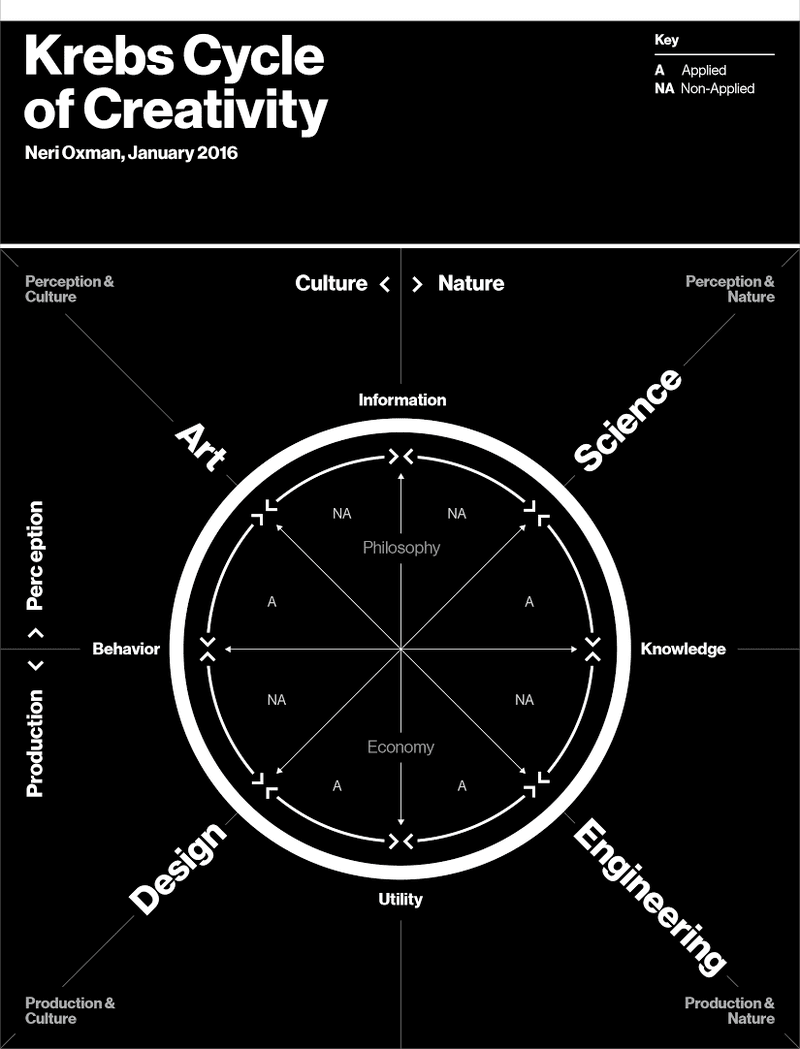
But before we explore whether someone has finally figured out how to successfully time travel and recruit you to join me in investing in their pre-IPO startup, I’d like to introduce one of the most important visualizations from the world of innovation that many of your have probably never seen – Neri Oxman’s Krebs Cycle of Creativity from January 2016.

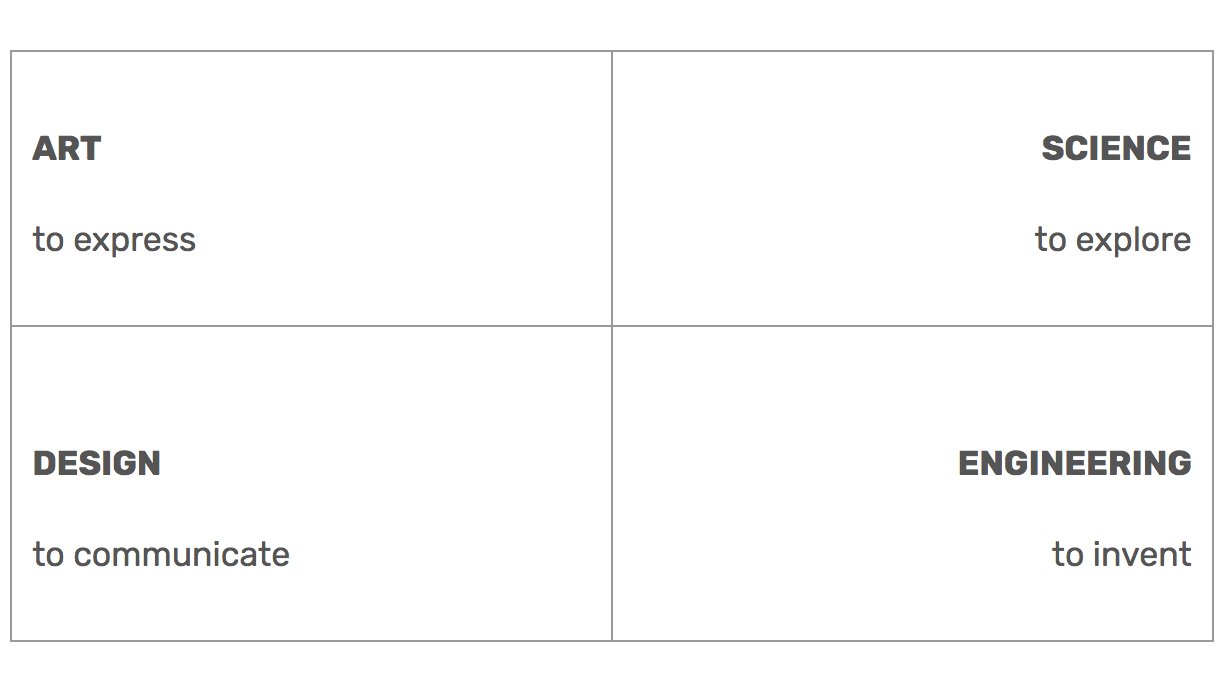
If you’re not familiar with this incredibly important visual artifact from the work of Neri Oxman from MIT’s Media Lab, you should be because it does an amazing job of capturing the interplay between Art, Science, Engineering and Design in the creation of innovation. It builds on John Maeda’s Bermuda Quadrilateral from 2006:

John Maeda Bermuda Quadrilateral

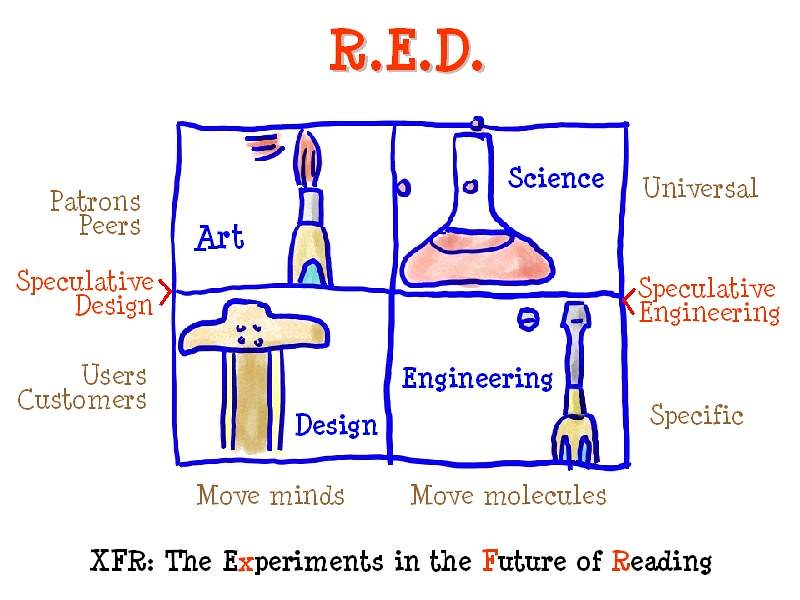
And Rich Gold’s Matrix, also from 2006:

Rich Gold Matrix

While Rich Gold’s visualization builds on the logical bones of John Maeda’s Bermuda Quadrilateral and introduces the concepts of speculative design, speculative engineering, and the contrast between moving minds & moving molecules, it lacks the depth of Neri Oxman’s Krebs Cycle of Creativity visualization. But the Krebs Cycle of Creativity does lose Maeda’s expression of the linkages between science & exploration, engineering & invention, design & communication, and art & expression. But even without these assertions of Maeda, the Krebs Cycle of Creativity still captures a number of other powerful tensions and assertions that can benefit us in our pursuit of innovation.

Time Marches On

The Krebs Cycle of Creativity can be viewed from a number of different perspectives and utilized in a number of different ways. But, one way to look at it is as if it were a watch face. In this context as time moves forward you’re following the typical path, a technology-led innovation approach.

Using the Krebs Cycle of Creativity Canvas in a clockwise direction will help us explore:

  • What information do we have about what might be possible?
  • What knowledge needs to be obtained?
  • What utility does the invention create?
  • What behavior do we need to modify to encourage adoption?

It begins with the invention of a new piece of technology created by the usage of existing information and a new perception of what might be possible within the constraints of our understanding of the natural world, or even by expanding our understanding and knowledge of the natural world using the scientific method.

Neri Oxman Krebs Cycle of Creativity

You’ll see at 3 o’clock in the image above that it at this point in time that most organizations then hand off this new knowledge to their engineers to look at this new understanding of nature through the production lens in order to convert this new knowledge into new utility.

Engineers in most organizations are adept at finding a useful application for a new scientific discovery, and in many organizations this work is done before designers get a peek and begin to imagine how they can present this utility to users in a way that drives behaviors of adoption in a way that the behaviors of using the product or consuming the service feel as natural as possible and as frictionless as possible.

And unfortunately the artists in any organization (or outside via agency relationships) are called in at the eleventh hour to help shape perceptions and to communicate the philosophy behind the solution and the to make the case for it to occupy space in our collective culture.

Pausing at the Innovation Intersection

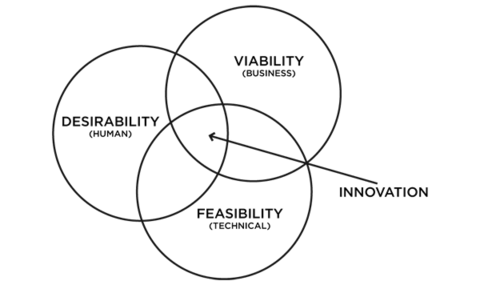
The way that innovation occurs in many organizations is that Science and Engineering collaborate to investigate and confirm feasibility, then Engineering and Design collaborate to inject viability into the equation, and then Design and Art (with elements of marketing and advertising) collaborate to create Desirability at the end. This may be how it works in many organizations, yet it doesn’t mean that it is the best way…

Feasibility Viability Desirability for Innovation

Traveling Back in Time

But as we all know, water can run uphill, the moon can eclipse the sun, and yes time can run in reverse. Viewing the Krebs Cycle of Creativity in a counter clockwise direction and pushing the hands of the watch backwards will have you following a user-led innovation approach instead.

Using the Krebs Cycle of Creativity Canvas in a counter clockwise direction will help us explore:

  • What information do we have about what is needed?
  • What behavior should we observe?
  • What would create utility for customers?
  • What knowledge must we obtain to realize our solution vision?

It begins with the identification of a new insight uncovered by the investigation of existing information and a new perception of what might be needed within the constraints of our understanding of our customers, or even by expanding our understanding and knowledge of our customers by using ethnography, observation, behavioral science and other tools to enter the mind of your customers, employees or partners.

You’ll see at 9 o’clock in the image above that it at this point in time that user-driven organizations after having their business artists use their perception skills to investigate the culture and philosophy underpinning this new understanding of behavior and pass it off for their designers to look at through the production lens in order to convert it into new utility.

Designers in many organizations are adept at finding a useful application for a new behavioral understanding, and in user-driven organizations this work is done before engineers get a peek and begin to imagine how they can build this utility for users in a way that creates new knowledge in a way that will differentiate the products or services of their organization from those of the competition.

And in user-driven organizations scientists are called in as needed to help overcome any barriers engineers encounter in realizing the solution that best satisfies the users’ identified needs, while leveraging new scientific perceptions that help shape our understanding of nature and empower new philosophical beliefs about what’s possible.

Conclusion

While we haven’t torn any worm holes through the fabric of the space-time continuum with this article, hopefully we have expanded your repertoire with some new tools to facilitate conscious choices around whether you are going to pursue technology-led innovation (clockwise) or user-led innovation (counter clockwise).

Hopefully we have also shown you a better way of visualizing where you are in your innovation journey and where the turning points in your innovation pursuits lie as you seek to take a quantum leap and transform your past into a bright, shiny future.

So now it is time to answer the question you had at the beginning of this article… Is time travel possible?

Well, nearly a decade ago NASA ran an experiment that proved elements of Einstein’s theory of relativity, specifically that the fabric of space-time warps around the earth in response to gravity. Read about it here

And yes, time travel is theoretically possible, or at least time is not theoretically constant as described in this NASA article.

Neither of these indicate that it is possible to travel backwards in time (despite what Superman physics says), only to affect how time advances, but if anyone wants to invest a million dollars in my time travel startup, I’ll cash your check. Because who knows, maybe your check is what will finally make time travel possible!

Anyone? Anyone? Bueller?


Image credits: Neri Oxman, MIT Media Lab; Rich Gold; John Maeda; Pixabay

Subscribe to Human-Centered Change & Innovation WeeklySign up here to get Human-Centered Change & Innovation Weekly delivered to your inbox every week.
The Impact of Autonomous Vehicles on Society

The Impact of Autonomous Vehicles on Society

GUEST POST from Chateau G Pato

With the emergence of autonomous vehicles (AVs), society is now at a crossroads, on the cusp of a whole new reality in transportation and mobility. AVs offer many benefits, including improved safety, reduced emissions, and increased efficiency. They also come with some risks, including a disruption of infrastructure and labor, as well as the potential for increased privacy concerns. As AVs become increasingly integrated into our society, it is important to consider both the benefits and risks of this new technology so that we can maximize its potential and minimize its drawbacks.

The potential benefits of AVs are immense. In terms of safety, human error is the leading cause of automotive fatalities, accounting for 90 percent of fatal accidents. AVs are equipped with advanced sensory systems that can enable them to be significantly safer drivers than their human counterparts. They can sense potential hazards on the road better than a human driver, and their reaction times are significantly faster. Furthermore, due to their automation, the risk of fatigue among drivers is eliminated, which can reduce the risk of accidents.

In terms of efficiency, AVs can help reduce traffic congestion due to their increased accuracy in predicting road conditions and their ability to plan routes more efficiently. By reducing congestion, AVs could result in improved efficiency for transportation, reducing both fuel consumption and air pollution. Additionally, by removing the need for direct human control, AVs can enable people to engage in other tasks while in transit, potentially improving productivity and reducing commute times.

While there are many potential benefits to AVs, it is important to recognize the potential risks as well. One of the most pressing concerns is the potential for AVs to displace existing workers. Truck drivers, taxi drivers, and other occupations that rely on human driving could become obsolete as self-driving vehicles become more commonplace. This could result in an increase in unemployment and social unrest. Furthermore, AVs require robust infrastructure and connectivity for them to work efficiently. This could also have a disruptive effect on existing infrastructure and require significant investment, both financially and in terms of time. Additionally, AVs raise serious concerns about the potential for surveillance and privacy, as data collected by the vehicles could be exploited by third parties.

As AVs become increasingly integrated into our society, it is important to recognize the potential benefits and risks. To illustrate this, two case studies are worth looking at.

Case Study 1 – GoMentum Station (USA)

The first is a pilot program in California called “GoMentum Station”, which was launched in 2017 by Honda to test autonomous vehicles on a closed-off track. The program has had great success and opened the door to further discussion of the potential for AVs in the public space.

Case Study 2 – Drive.ai (Singapore)

The second is a pilot program in Singapore called Drive.ai, which launched in 2018 and is testing AVs in a variety of situations, including mixed traffic roads, highways, and bad weather. These case studies provide insight into the potential for AVs to benefit society, while also highlighting the potential risks.

Conclusion

Overall, AVs have the potential to revolutionize transportation and mobility. With their increased safety features and efficiency, they could offer many benefits to society in the long run. However, it is important to consider the potential risks before introducing AVs into the public space, so that we can ensure that their benefits are maximized while their drawbacks are minimized.

Bottom line: Futurology is not fortune telling. Futurists use a scientific approach to create their deliverables, but a methodology and tools like those in FutureHacking™ can empower anyone to engage in futurology themselves.

Image credit: Pixabay

Subscribe to Human-Centered Change & Innovation WeeklySign up here to get Human-Centered Change & Innovation Weekly delivered to your inbox every week.
Exploring the Benefits of Blockchain Technology

Exploring the Benefits of Blockchain Technology

GUEST POST from Chateau G Pato

The rise of blockchain technology has revolutionized the way businesses, governments, and individuals store and share data, as well as transact with each other. Because of its inherent security and digital record-keeping properties, blockchain technology presents a new level of assurance to organizations and offers unparalleled digital security. As the world increasingly shifts to more digitized processes, it’s becoming more important to explore the benefits of blockchain technology and consider how businesses can take advantage of its capabilities.

One of the most notable benefits of blockchain technology is its transparency. Data stored on blockchain networks is immutable and recorded in publicly available ledgers, meaning that it is resistant to tampering or manipulation. This level of visibility induces trust and improves collaboration between disparate parties through greater assurance that the data is authentic and secure.

The digital identity security that blockchain technology provides is another attractive benefit. By using private and public encryption keys, users can protect sensitive data and ensure that it is only accessible by appropriate parties. This further increases the trustworthiness of data and transactions as users can rest assured that their information is in the right hands and can be easily traced.

Case Study 1 – BBVA

The banking and financial industry has already begun to explore the many advantages of blockchain technology. A noteworthy case study is BBVA, a global bank that implemented blockchain technology to process multi-currency transactions. By utilizing distributed ledgers, the bank was able to reduce the time required to process international transactions from 2-3 days to under a minute. In addition, the transparency of the technology meant that customers could more easily verify that their transaction was secure and monitored, and it also allowed the bank to save on costs and improve operational efficiency.

Case Study 2 – eBay

Another example is well known online marketplace eBay, which utilizes blockchain technology to facilitate digital payments. By using distributed ledgers, eBay is able to securely store user payments and verify the authenticity of transactions, as well as support cross-border payments with confidence in the certainty of records. The technology has also enabled the company to reduce the risk of fraud and improve the speed and security of its digital transactions.

Conclusion

As businesses continue to migrate to the digital realm, blockchain technology offers several potential advantages that organizations should examine as they explore ways to improve data security and collaboration. Secure data storage, improved trustworthiness, and enhanced communication are just a few of the benefits that blockchain technology can provide businesses. By leveraging the technology’s capabilities, organizations can ultimately gain a competitive edge and improve operational efficiency.

Image credit: Pixabay

Subscribe to Human-Centered Change & Innovation WeeklySign up here to get Human-Centered Change & Innovation Weekly delivered to your inbox every week.
The Final Frontier of Design

Breaking the Dual Barriers of Machine Olfaction to Unlock the Next Era of Multi-Sensory Innovation

The Final Frontier of Design

GUEST POST from Chateau G Pato


I. Introduction: The Flatness of the Digital World

Breaking the Dual Barriers of Machine Olfaction to Unlock the Next Era of Multi-Sensory Innovation

For decades, human-centered design has mastered the pixels, micro-interactions, and spatial acoustics of the digital landscape. We have engineered an era of unprecedented visual and auditory fidelity, yet our interactions remain trapped behind cold glass. From a futurist perspective, the modern digital experience suffers from an artificial flatness — a sensory deficit that strips away the visceral, chemical essence of how humans natively navigate reality. By designing exclusively for the eyes and ears, we have sanitized technology, separating it from our most primal cognitive pathways.

Olfaction represents the ultimate untapped frontier for experience design. Unlike sight or sound, which are processed through the thalamus, scent has an unmediated, direct line to the limbic system — the evolutionary core of human memory, emotion, and behavior. A single volatile organic compound can instantly trigger vivid nostalgia or alter physiological arousal before the conscious mind even registers its identity. To build experiences that truly resonate on a deeply human level, innovation leaders must evolve beyond the binary constraints of audiovisual media and embrace the intricate syntax of smell.

The Strategic Innovation Paradox: The obstacle to this multi-sensory future is not a lack of imagination, but a profound dual technical constraint. To bridge the digital-chemical divide, human-centered change frameworks must simultaneously dismantle two systemic barriers: The Ingestion Wall (the challenge of artificial chemical perception) and The Projection Wall (the challenge of safe, dynamic, and contextually aware synthesis back to the human user).

Dismantling these barriers requires an alchemical blend of emerging technologies and design discipline. On the perception side, we must capture a world devoid of a standardized “color wheel,” where environmental inputs vary based on complex fluid dynamics. On the emission side, we must overcome the physical latency of chemical transport, where molecules cannot instantly refresh at the speed of light (c ≈ 299,792 km/s). Only by breaking both barriers can we transform machine olfaction from a laboratory novelty into an invisible, transformative utility for healthcare, learning, and immersive computing.

II. Barrier 1: The Ingestion Wall (The Challenge of Machine Perception)

Deconstructing the Complexities of Artificial Chemical Perception

To design an experience around scent, a system must first be able to listen to the environment. This brings us to the first fundamental barrier: The Ingestion Wall. In fields like computer vision or acoustics, mapping sensory input to data is relatively linear — we rely on predictable spectrums of light frequencies or sound waves. Olfaction completely breaks this mold. The chemical world is radically multi-dimensional, composed of thousands of volatile organic compounds (VOCs) that interact non-linearly to form a single scent profile. Capturing this data in a meaningful way requires moving away from traditional static sensing paradigms.

The State of the Art: Moving Beyond the Lab

Current advancements in Electronic Noses (e-noses) have heavily relied on Metal Oxide Semiconductors (MOS) to track chemical interactions. However, the true breakthrough in modern human-centered innovation lies at the intersection of biology and machinery. We are witnessing a paradigm shift toward bio-hybrid sensors that utilize actual Insect Odorant Binding Proteins (OBPs). These proteins offer a level of real-time specificity, sensitivity, and sustainable deployment that synthetic sensors simply cannot replicate on their own.

Furthermore, true digital transformation demands that these sensors move out of sterile laboratory environments and into the real world. Modern research has successfully integrated these bio-hybrid sensors onto agile, soft-growing robotic platforms. Because scent travels dynamically via airflow and ambient drift, these flexible robotic systems can naturally navigate complex, changing physical environments to track, isolate, and classify odors directly at the source.

The Experience Design Flaw: The Missing Vocabulary

The deepest challenge of the Ingestion Wall is not just hardware limitations — it is a lack of a standardized design framework. Digital design thrives on coordinates like RGB for color or Hz for sound. Olfaction has no universal “color wheel.” To bypass this linguistic and systemic deficit, current artificial intelligence models are utilizing self-supervised learning. By pairing raw olfactory signatures with computer vision, AI is learning to construct “visual-smell” crossmodal representations. The machine learns what an object should smell like by looking at it, effectively building a standardized bridge between visual geometry and chemical identity.

Overcoming the Ingestion Wall fundamentally redefines the role of data collection in experience design. It turns environmental context into a dynamic, machine-readable asset. However, capturing the chemical fingerprint of the physical world is only half the battle. To complete the human-centered loop, we must understand how to project that data back into the human sensory apparatus without causing cognitive friction or sensory distortion — leading us directly to the second barrier.

III. Barrier 2: The Projection Wall (The Challenge of Human Delivery)

Navigating the Fluid Dynamics and Cognitive Constraints of Scent Synthesis

Once a machine can accurately ingest and interpret the chemical world, it encounters an entirely different obstacle on the output side: The Projection Wall. In traditional digital experience design, we are accustomed to instant execution. Pixels refresh at sixty frames per second, and sound waves travel efficiently through space to our ears. Scent, however, is bound by the messy laws of fluid dynamics, airflow, and physical molecule dispersion. You cannot instantly clear a room of a fragrance when a user closes an application or switches tasks; the chemical residue lingers, creating a physical latency that digital systems are fundamentally unequipped to handle.

The “Smellody” Problem and Sensory Fatigue

This physical latency introduces what sensory architects call the “Smellody” problem. Human olfactory receptors operate on a much slower physiological time scale than our visual or auditory systems. When digital platforms attempt rapid sensory delivery — such as cycling through different ambient scents to match fast-paced visual cuts—the human brain experiences profound sensory fatigue and adaptation. Instead of a cohesive multi-sensory narrative, the user is left disoriented, overwhelmed, and chemically desensitized, destroying the psychological immersion the designer intended to build.

Designing the Crossmodal Bridge

To scale this delivery bottleneck, experience designers must leverage human psychology rather than relying solely on chemical brute force. This is achieved by engineering crossmodal bridges. Because our senses do not operate in silos, we can manipulate the perception of a smell using other sensory inputs. For example, recent innovation shows that pairing light chemical dispersion with specifically calibrated musical soundscapes can mentally evoke, amplify, or fundamentally alter the perceived quality of a fragrance. By harmonizing sight, sound, and scent, we can create the illusion of a rapid, dynamic olfactory shift without overloading the user’s physical environment.

Breaking the Projection Wall means accepting that we cannot force chemistry to move at the speed of software. Instead, the future of interaction design relies on elegant synchronization — using cross-modal illusions, micro-dosing technologies, and localized airflow to deliver scent precisely when and where it matters most. Only by mastering this delicate human delivery loop can we move toward functional, real-world applications that bring true value to daily life.

IV. The Human-Centered Experience Paradigm (Designing the Interface)

Elevating Machine Olfaction from Novelty Gimmick to Functional Human Utility

To truly break through the dual barriers of machine olfaction, we must shift our design philosophy away from pure engineering milestones and look through a deeply human-centered lens. For years, adding scent to technology has been relegated to the fringes of entertainment — think primitive gaming smell-packs or short-lived cinema gimmicks. These applications failed because they treated scent as an isolated novelty rather than an integrated, functional component of the human experience. The next era of design demands that we transition olfaction into a meaningful, life-enhancing utility that solves real human friction[cite: 1, 2].

Augmented Reality and Cognitive Optimization

One of the most profound applications of this new paradigm is within spatial computing and modern education. By introducing ambient olfactory cues into augmented reality (AR) learning environments, we can fundamentally alter how the brain encodes information[cite: 1, 2]. Carefully designed, context-aware scents have been shown to significantly lower cognitive load during complex tasks, spike user attention, and drastically improve delayed memory retention[cite: 1, 2]. Instead of forcing a student or worker to rely solely on heavy visual text, we can use the olfactory pathway to create an invisible, intuitive layer of cognitive support[cite: 1, 2].

Proactive Wellness and Non-Invasive Diagnostics

Beyond education, the ultimate human-centered interface is one that invisibly protects our health. Overcoming the Ingestion Wall allows us to build proactive wellness tools directly into our daily routines[cite: 1, 2]. By integrating highly sensitive electronic noses into everyday objects, technology can sample the volatile organic compounds (VOCs) in a user’s breath or skin on a daily basis[cite: 1, 2]. This transitions medical diagnostic tools away from intimidating, reactive hospital visits and transforms them into a seamless, friction-free experience capable of early cancer and chronic disease detection before physical symptoms ever manifest[cite: 1, 2].

By embedding machine olfaction into the very fabric of our learning and health systems, we move closer to technology that truly respects human biology. The interface of the future is not a brighter screen or a faster click; it is an environment that adapts to and communicates with our chemistry, opening up entirely new vectors for empathy, transformation, and strategic value.

V. Strategic Imperatives for Innovation Leaders

Driving Organizational Change, Ethical Guardrails, and Contextual Design Systems

As we approach the boundaries of this new frontier, machine olfaction transitions from a technical experiment to a profound strategic differentiator. For innovation leaders, navigating this shift requires more than just capital investment; it demands a fundamental evolution in how we structure data, build design systems, and manage human-centered change. To successfully spearhead this transformation and unlock true market value, leadership must execute on three core imperatives.

1. Champion the Olfactory Data Commons

Innovation cannot thrive in a vacuum of proprietary, siloed datasets. Because the chemical world lacks a natural, linear vocabulary, building a scalable architecture for scent requires massive collaboration. Forward-thinking leaders must champion the creation of an open-source, multi-modal data commons. By pooling diverse chemical signatures and pairing them with computer vision and environmental data, we can accelerate the machine learning required to create a reliable digital map of the physical, sensory world.

2. Design for Adaptive, Spatial Context

Unlike flat screens, scent is intrinsically tied to the real world. A digital interface utilizing olfaction must recognize that a smell’s intensity, narrative impact, and emotional reception change dynamically based on distance, ambient airflow, and the surrounding background environment. Experience design systems must become hyper-adaptive, evolving beyond rigid, static layouts to dynamically balance chemical delivery based on real-time environmental physics and immediate user context.

3. Establish Rigid Ethical Guardrails

Because olfaction bypasses our rational, analytical cognitive filters and speaks directly to the emotional centers of the brain, it holds unparalleled power over human behavior. This creates a profound ethical responsibility. Leaders must proactively establish strict guardrails prioritizing absolute user consent. We must fiercely protect consumers from intrusive sensory marketing, chemical tracking, or subtle emotional manipulation. Human-centered innovation must mean that the user always retains total sovereignty over their own sensory environment.

By establishing these foundational open data standards, context-aware frameworks, and deep ethical commitments, organizations can lead the multi-sensory market with authority and integrity. True innovation isn’t just about what technology can achieve — it’s about building the strategic, intentional scaffolding required to introduce that technology to humanity safely and effectively.

VI. Conclusion: A Call to De-Sanitize the Future

The Evolution of Interaction Design into Experience Alchemy

Breaking the dual barriers of machine olfaction represents far more than a triumph of bio-hybrid sensors, spatial data commons, or fluid dynamics. It signals a fundamental paradigm shift in the definition of design itself. For too long, our digital ecosystems have forced humanity to adapt to the limitations of the machine, filtering our rich, three-dimensional reality through flat panes of glass and sterile audio streams. By intentionally de-sanitizing our digital interactions, we begin to build technology that finally speaks the native, chemical language of human biology.

The Evolution of the Designer

As the lines between physical environments and digital interfaces completely dissolve, the role of the interaction designer must radically evolve. We can no longer think of ourselves merely as pixel architects, information layout engineers, or workflow mapping experts. The multi-sensory frontier demands that we step into the shoes of experience alchemists. Tomorrow’s design leaders must master the art of crossmodal synthesis, balancing the speed of sight and sound with the lingering, emotional depth of smell to orchestrate cohesive cognitive landscapes that truly respect human psychology.

The Ultimate Vision: A Truly Human Reality

The final frontier of design is not about creating artificial worlds to escape into; it is about enriching and protecting the world we already inhabit. Whether through non-invasive wellness networks that subtly monitor our health, or immersive educational environments that supercharge memory retention, machine olfaction allows us to build an empathetic layer of technology. When we unlock the full spectrum of human perception, we create a future that is not colder, faster, or more isolated—but one that is profoundly more vibrant, intuitive, and deeply human.

The scaffolding has been laid, the technological pieces are converging, and the strategic imperatives are clear. The only question that remains is whether innovation leaders possess the creative courage to move past the screen, look beyond the horizon, and design for the full human experience.

Frequently Asked Questions

Human-Centered Perspectives on Machine Olfaction

1. What exactly are the “Dual Barriers” holding back machine olfaction?

The dual barriers represent the Ingestion Wall and the Projection Wall. The Ingestion Wall is the challenge of machine perception — capturing, classifying, and digitizing highly complex, non-linear chemical volatile organic compounds (VOCs) without a standardized color wheel. The Projection Wall is the challenge of human delivery — synthesizing and emitting scents dynamically despite the physical latency of fluid dynamics and the constraints of human olfactory desensitization.

2. How can experience designers overcome the physical slowness of scent emission?

Because chemical molecules travel slowly and linger in environments, designers cannot refresh scents at the speed of pixels. To circumvent this, designers must build cross-modal bridges. By pairing micro-dosed chemical emissions with specifically calibrated auditory soundscapes or visual shifts, we can leverage human psychology to mentally evoke, alter, or accelerate the perceived transition of a scent.

3. What are the most immediate, practical applications for digital scent technology?

Moving far beyond novelty gaming gimmicks, the most impactful applications reside in cognitive optimization and proactive healthcare. In spatial computing and AR learning, context-aware ambient scents lower cognitive load and increase long-term memory retention. In health tech, highly sensitive bio-hybrid electronic noses can continuously analyze breath or skin VOCs, transforming early disease diagnostics into an invisible, friction-free daily routine.


Image credit: Gemini

Subscribe to Human-Centered Change & Innovation WeeklySign up here to get Human-Centered Change & Innovation Weekly delivered to your inbox every week.
The Rise of the Solo-Operator Powerhouse

Scaling to Millions Without Hiring a Workforce

The Rise of the Solo-Operator Powerhouse

GUEST POST from Art Inteligencia


The New Corporate Paradigm: Scaling Beyond the Headcount Myth

For over a century, the blueprint of corporate success has been inextricably linked to headcount. We have been conditioned to measure organizational power by the size of the empire—the number of desks filled, the layers of middle management established, and the sheer volume of human capital deployed. If you wanted to build a business that generated millions, you built a workforce. That was the law of economic scale.

But a quiet, radical shift is upending this historical belief. We are witnessing the birth of a new corporate species: the Solo-Operator Powerhouse. This is not the traditional freelancer selling hours for dollars, nor is it the lifestyle blogger scraping by on affiliate links. This is a new class of solopreneur enterprise—a highly strategic, lean organization generating millions of dollars in revenue, powered entirely by a single human being.

This paradigm shift is driven by a powerful convergence of three distinct forces:

  • The Democratization of Cognitive Ability: Premium artificial intelligence has evolved from a novel novelty into an accessible, executive-level cognitive partner.
  • Hyper-Automation Ecosystems: Low-code and no-code digital infrastructure allows a single individual to stitch together enterprise-grade logistics, marketing, and operations without writing a line of code.
  • Frictionless Global Reach: Asynchronous communication platforms and digital distribution channels make it just as easy for an individual to serve ten thousand global customers as it is to serve ten.

When you eliminate the communication overhead, the internal politics, and the friction of managing a traditional matrixed organization, speed becomes your primary weapon. The goal is no longer to build a massive workforce to handle complexity; the goal is to design a brilliant system that eliminates it. The tools are fully democratized. The only remaining bottleneck is organizational imagination and the willingness to rethink what it means to scale.

Part I: The Architecture of the Human-Centered Solopreneur

Building a multi-million dollar business alone is not a triumph of stamina; it is a triumph of architecture. Most traditional business advice focuses heavily on external systems—market fit, product funnels, and conversion metrics. But for the solo-operator powerhouse, the internal architecture is what prevents the entire enterprise from collapsing under its own weight. If you do not design the business around your humanity, the business will consume it.

Designing the Operator Experience (OX)

In experience design, we obsess over the Customer Experience (CX) and the User Experience (UX). Yet, solopreneurs routinely ignore the Operator Experience (OX)—the intentional design of their own daily workflow, environment, and cognitive load. To scale without a workforce, you must treat yourself as the most valuable, fragile asset in the ecosystem.

Preventing burnout requires abandoning the industrial-era 9-to-5 calendar, which was built for factory supervision, not creative leverage. Instead, the solo powerhouse architects a rhythm based on personal energy cycles. This means structuring the week into distinct, non-overlapping zones:

  • Deep-Architecture Blocks: High-energy, uninterrupted periods dedicated purely to strategic foresight, system building, and core content creation.
  • Orchestration Buffers: Low-energy intervals utilized to audit automated logs, tweak system rules, and manage critical relationships.
  • System Rest: Hard-coded boundaries that disconnect the operator entirely, allowing the automated engine to run autonomously while the human mind recovers.

The Mindset Shift: From Builder to Architect

The fatal mistake most freelancers make is remaining stuck in the execution trap. They focus entirely on *doing* the work. The solo powerhouse operates on a completely different psychological plane. You must shift your identity from the artisan creating the product to the enterprise architect who designs the ecosystem that produces the product.

Every time a task presents itself, the solo operator does not ask, “How do I do this?” Instead, they ask, “How do I build a system so this never requires manual execution again?” You are no longer trading your time for revenue; you are investing your time into building digital assets that capture and scale your expertise.

The “Extended Self” and Cognitive Leverage

True leverage is achieved when you stop viewing artificial intelligence and hyper-automation as mere software tools, and begin viewing them as an extended self. This is the ultimate evolution of human-centered innovation: the blending of human strategic intuition with digital execution velocity.

In this architecture, specialized AI agents act as cognitive prosthetics. They do not replace your unique insights; they amplify your reach. By delegating data analysis, initial synthesis, and repetitive operations to your digital ecosystem, you free your cognitive capacity to focus exclusively on what machines cannot replicate: empathy, contextual breakthrough, and high-level strategic alignment. You aren’t operating alone—you are operating with an invisible, perfectly synchronized digital army customized to the exact shape of your mind.

Part II: The Technological Engine (Building the Invisible Team)

To scale an enterprise to millions without a workforce, you must replace human labor with algorithmic precision. The solo-operator powerhouse does not look for employees; they look for integrations. The goal is to construct a technological engine that functions as an invisible team—a digital matrix that operates 24/7/365 without communication friction, emotional overhead, or execution delay.

Hyper-Automation and System Orchestration

The foundation of the invisible team is hyper-automation—the systematic use of low-code and no-code platforms to stitch together disparate software tools into a single, cohesive operational nervous system. In a traditional corporate hierarchy, middle managers act as human routers, passing data and tasks from one department to another. The solo powerhouse eliminates this costly middle layer entirely by using automated logic gates.

Data flows seamlessly across the ecosystem. A trigger in the customer acquisition funnel automatically spins up a personalized environment, adjusts inventory levels, updates financial ledgers, and schedules dynamic follow-ups. You are no longer managing people; you are orchestrating an automated workflow that executes at digital speed. The business becomes a self-running software loop with a human architect at the center.

AI as the Chief of Staff

The solo operator does not need a large executive suite to gather intelligence and maintain compliance. Instead, they deploy specialized, domain-specific AI agents that act as an elite corporate staff. These agents possess deep analytical capabilities and work concurrently to handle high-level operational overhead:

  • Predictive Market Intelligence: Continuous web-scraping and AI synthesis engines analyze industry shifts, identify emerging technology signals, and flag competitive threats in real-time.
  • Regulatory and Legal Compliance: AI tools monitor changing data privacy laws, analyze contracts for risk, and generate localized terms of service for global transactions.
  • Financial Forecasting: Algorithmic cash-flow modeling automatically projects revenue trends, optimizes tax strategies, and adjusts ad spend based on real-time return metrics.

The Virtual Assembly Line

Scaling physical or digital value delivery without headcount requires a complete rethinking of fulfillment. The solo powerhouse designs a virtual assembly line that relies entirely on asynchronous, programmatic infrastructure. Whether selling intellectual property, digital SaaS tools, or physical goods, human-to-human triage is designed out of the system entirely.

Digital products are delivered via automated web-hooks and cloud infrastructure that instantly provisions access upon purchase. Physical goods utilize highly integrated third-party logistics (3PL) partners, where manufacturers communicate directly with fulfillment warehouses via APIs. Customer service queries are handled by multi-layered conversational AI agents that can instantly resolve 95% of common issues, escalating only the highly complex, relationship-critical exceptions to the operator. By removing human touchpoints from the standard delivery loop, the marginal cost of serving the ten-thousandth customer drops to near zero.

Part III: The Innovation Strategy of a Solo Powerhouse

Traditional enterprise innovation is notoriously slow, often dying a death of a thousand cuts in committee meetings, corporate politics, and endless consensus-building cycles. For the solo-operator powerhouse, innovation is not a department—it is a native capability. Without a workforce to align or a matrixed hierarchy to navigate, the solopreneur enterprise weaponizes speed, agility, and hyper-efficient visual frameworks to out-innovate legacy organizations.

Lean Visual Thinking and Ecosystem Mapping

When you operate alone, you cannot afford to lose yourself in dense spreadsheets or fragmented text documents. Solo powerhouses rely heavily on lean visual thinking to maintain structural clarity. By utilizing collaborative digital canvases and visual mapping frameworks, the operator can see the entire enterprise on a single screen.

This process involves mapping out the business across three distinct visual dimensions:

  • Value Stream Mapping: Visually tracing the exact path value takes from initial concept to consumer delivery, allowing the operator to pinpoint and ruthhesize operational friction points.
  • Automation Architecture Trees: Drawing out the logic gates and data flows between software platforms to instantly see where integrations are weak or where human intervention is still mistakenly required.
  • The Customer Journey Canvas: Visualizing every micro-touchpoint a user has with the brand to ensure the experience feels continuous, intentional, and deeply human.

Rapid Prototyping in the Wild

Large corporations spend quarters—and millions of dollars—conducting risk assessment and focus group testing before launching a minimum viable product. The solo operator treats the live market as their laboratory. Leveraging modern prototyping suites, a solo powerhouse can transform an abstract signal into a functional, revenue-generating product in days rather than months.

Because the cost of failure is negligible, the operator practices continuous deployment. They launch early versions directly to their community, gather real-time behavioral data, and iterate natively based on actual usage rather than hypothetical feedback. This rapid, real-world loop turns experimentation into an unfair competitive advantage; while an enterprise team is still waiting for legal approval on a brief, the solo powerhouse has already run three iterations of the solution.

The Asymmetric Advantage of Zero Overhead

In strategic foresight, we look for asymmetric advantages—areas where a small, nimble force can completely disrupt a larger, heavily fortified opponent. The absolute lack of organizational overhead is the solo operator’s primary weapon. In a company of one, communication latency is exactly zero. Strategic pivots do not require corporate restructuring; they require a single cognitive decision.

This extreme agility allows the solo powerhouse to exploit market gaps instantly. When a new technology signal emerges or a sudden economic shift occurs, the solo operator can reconfigure their entire technological engine overnight to capture the new value stream. They do not need to retrain a workforce, manage employee anxiety, or align internal stakeholders. Legacy enterprises are built for stability and incremental growth; the solo-operator powerhouse is uniquely built for velocity and exponential capture.

Part IV: Designing the Customer Experience (CX) at Scale

The paradox of scaling a multi-million dollar business alone is that while your internal operations rely entirely on automated efficiency, your external reputation hinges on human connection. Customers do not fall in love with algorithmic logic; they fall in love with experiences that make them feel seen, understood, and valued. The solo-operator powerhouse must master the art of automated empathy—designing a high-touch, deeply resonant Customer Experience (CX) that scales infinitely without requiring manual intervention.

The Illusion of Intimacy: Automated Personalization

In traditional commerce, personalized service required human labor—the store manager who remembered your name, or the account executive who tracked your preferences. The solo powerhouse replaces human memory with data architecture, creating what experience designers call the illusion of intimacy. This is not about sending generic “First Name” emails; it is about orchestrating dynamic, behavior-driven journeys.

By leveraging unified customer data platforms (CDPs), the solo operator’s digital engine monitors real-time user behavior across every touchpoint. If a user engages with a specific visual framework on the website, the ecosystem automatically adapts. It restructures their portal layout, customizes case study delivery, and reframes instructional content to match their specific organizational maturity level. The customer experiences a tailored, white-glove consulting relationship, while the operator never has to manually review a single profile. The system delivers human-centered outcomes through algorithmic precision.

Community as a Self-Sustaining Moat

A solo operator cannot scale a customer support department, but they can scale a community. In the new economic paradigm, building a vibrant, self-sustaining ecosystem of users is the ultimate competitive moat. When your customers transition from passive consumers to active participants, your brand equity grows exponentially while your operational burden plummets.

The solo powerhouse architects digital environments where community member interaction handles the heavy lifting of scale:

  • Peer-to-Peer Triage: Advanced users naturally answer questions, troubleshoot technical issues, and onboard newcomers, effectively serving as an un-salaried global support team.
  • Co-Creation and Crowdsourcing: The community serves as a continuous focus group, natively identifying product bugs, suggesting feature updates, and validating new strategic signals before the operator writes code.
  • Network Effects: As the community grows, the intrinsic value of the ecosystem increases for every member, making it incredibly difficult for matrixed corporate competitors to peel customers away.

Frictionless Commerce and Zero Triage

To generate millions solo, you must design every micro-barrier out of the commercial transaction. Every time a customer has to pause, wait for an email response, or contact support to complete a purchase, the system has failed. The solo powerhouse engineers a zero-triage commerce loop where discovery, validation, purchase, and onboarding flow as a single, uninterrupted event.

This requires auditing the entire customer lifecycle for micro-friction. Pricing must be transparent and outcome-mapped; contracting must be instantly executed via automated digital signatures; payment gateways must support global, localized currencies and frictionless mobile authorization. If an exception occurs, intelligent workflows instantly self-correct—triggering automated refunds, alternative access links, or diagnostic self-help guides. By engineering an ecosystem where value is exchanged instantly and flawlessly, the solo operator ensures that a massive surge in sales volume creates a massive surge in revenue, with exactly zero increase in human anxiety.

Conclusion: The Future of Work is Individualized

The industrial era spent more than a century convincing us that individuals are small and corporations are large. We were trained to believe that to make a dent in the universe—or a million dollars in the market—you had to submit to the gravity of a massive organization. But the tools have caught up to our imagination. The economic landscape is flattening, and the leverage has shifted permanently into the hands of the individual.

The rise of the Solo-Operator Powerhouse is not a fleeting trend or a niche lifestyle choice; it is the ultimate destination of human-centered digital transformation. When a single visionary can architect an ecosystem of specialized AI agents, hyper-automated workflows, and frictionless global networks, the traditional corporate matrix begins to look less like an asset and more like a liability. Large headcounts introduce communication latency, office politics, and organizational inertia. The solo operator replaces all of it with pure, unadulterated velocity.

As we move forward into this new paradigm, the metrics of business success will undergo a radical redefinition. We will stop asking founders how many employees they manage, and start asking them how much leverage they command. We will stop optimizing purely for revenue per employee, and start designing for freedom per hour. The highest form of innovation is no longer building an empire of people; it is building a brilliant, human-centered system that leaves you entirely free to create, to think, and to live.

The barriers to entry have officially fallen to zero. The cognitive infrastructure, the global logistics, and the automation engines are already sitting on your desktop, waiting to be orchestrated. The only remaining question is whether you are willing to let go of the old headcount myth and step into your role as the architect of your own powerhouse enterprise. The system is ready. The leverage is yours. Design it.

Frequently Asked Questions

To help both human readers and search engines navigate the core concepts of the solo-operator model, here are answers to the most common questions, backed by structured data for AI and algorithmic engines.

Can a solo-operator business really hit millions in revenue without sacrificing quality?

Absolutely. In fact, quality often increases because you are removing human communication latency and operational friction. By focusing your human energy strictly on strategic architecture and high-level design, and automating the fulfillment and data-routing processes, the customer receives a flawless, consistent experience every single time.

What is the difference between a traditional freelancer and a Solo-Operator Powerhouse?

It comes down to leverage and mindset. A freelancer trades hours for dollars, meaning their revenue is always capped by their personal time. A solo-operator powerhouse builds digital infrastructure and automated ecosystems. Instead of doing the manual labor, they architect systems (using AI and hyper-automation) that decouple revenue from linear time.

What technical skills are required to build this kind of automated engine?

You do not need to be a software engineer. The modern technological engine is built using low-code and no-code integration platforms, combined with natural-language AI orchestrators. The critical skill is not coding; it is visual systems thinking—the ability to map out a value stream and logically connect digital tools together.


Image credit: Gemini

Subscribe to Human-Centered Change & Innovation WeeklySign up here to get Human-Centered Change & Innovation Weekly delivered to your inbox every week.
How AI is Democratizing the Power of Scale

The Micro-Enterprise Explosion

How AI is Democratizing the Power of Scale

GUEST POST from Chateau G Pato


The New Architecture of Scale

For over a century, the rules of business strategy have been dictated by a single, unyielding law: the law of physical and organizational scale. In the Industrial Era mindset, creating global impact required massive capital infusions, complex organizational hierarchies, and armies of specialized talent to navigate the friction of operations, logistics, and market outreach. Bigger meant more resources, wider distribution, and an impenetrable moat against smaller competitors.

Today, we are witnessing a profound structural shift. Artificial intelligence is completely decoupling operational capability from headcount. The historical paradigm where output was directly tied to the size of a workforce is collapsing. By replacing traditional bureaucratic infrastructure with autonomous digital workflows and intelligent orchestrator agents, the cost of scaling an idea has plummeted toward zero.

We are entering the era of the Micro-Enterprise Explosion. This is not merely a boom in freelancing or a digital iteration of the traditional small business; it is a fundamental democratization of the power of scale. Armed with generative tools and cognitive infrastructure, solitary innovators and lean teams can now design, deploy, and optimize world-class customer experiences on a global canvas — effectively leveling the playing field and challenging corporate giants on terms that were unimaginable just a decade ago.

I. From Organizational Scale to Cognitive Scale

To understand this revolution, we have to look past the idea of AI as a simple productivity tool. We are moving rapidly beyond the era of isolated text generation and basic autocomplete. The true catalyst of the micro-enterprise explosion is the emergence of a robust AI co-pilot ecosystem — highly specialized, autonomous functional multipliers.

Today, a single founder can deploy a network of agentic workflows to handle everything from legal vetting and predictive financial forecasting to localized market research and continuous code generation. Instead of managing people, the modern innovator orchestrates digital assets, transforming raw human intent into institutional-grade execution overnight.

This shift fundamentally lowers the friction of innovation. Historically, the journey from a validated spark of an idea to a functioning business was throttled by technical debt, administrative overhead, and capital constraints. Low-code and no-code platforms, fully supercharged by natural language processing, mean that a lack of traditional software engineering or venture capital backing is no longer a terminal diagnosis for a startup.

The proof is in the data. The rapid rise of the million-dollar, one-person business is shifting from a statistical anomaly into a repeatable, open-source blueprint. When cognitive capacity can be rented on demand via cloud APIs, scale becomes a measure of your imagination and organizational design, not the size of your payroll.

II. Human-Centered Change: Redefining the “Solopreneur” Identity

This democratization demands a massive psychological shift. We have to fundamentally redefine what it means to build a business alone. For years, the term “solopreneur” or “freelancer” conjured images of someone trading time for money — a lone operator locked in a perpetual hustle, writing every email, designing every slide, and chasing every invoice. AI shatters this ceiling by requiring a transition from linear technician to systemic architect.

True human-centered change starts with the individual creator. Change management is no longer just a discipline for Fortune 500 executives steering massive corporate ships; it is a deeply personal requirement for the modern founder. Navigating this transition means learning to manage our own cognitive load, trusting algorithmic partners with operational execution, and deliberately designing a brand-new workflow that prioritizes mental agility over sheer hours logged.

When operational and administrative tasks are effectively automated, a beautiful paradox emerges: the true competitive advantage shifts entirely back to the human premium. When anyone can generate a baseline marketing plan or build an API integration with a simple prompt, commodity execution loses its economic value.

The winners in this new micro-enterprise landscape will win because of their deeply human capabilities. Success will be driven by raw curiosity to find unaddressed problems, genuine empathy to understand user frustration, unique cultural insights, and the ability to build trusted, authentic relationships. AI handles the scale; humans provide the soul.

III. Experience Design (XD) in a Hyper-Personalized Market

In this new landscape, micro-enterprises do not just compete on cost or niche specialization — they compete on pure agility. Traditional, heavily matrixed corporate structures are inherently sluggish; a single strategic change or user experience modification can take months to clear committee approvals, compliance reviews, and technical deployment cycles. A lean, AI-empowered micro-enterprise can interpret real-time data and completely pivot a customer journey in hours, turning execution velocity into a profound competitive advantage.

This agility enables the deployment of what we can call the algorithmic concierge. By leveraging lightweight, highly contextualized AI models, small teams can provide enterprise-grade, hyper-personalized customer experiences that feel deeply tailored, proactive, and human. The customer no longer feels like a ticket number in a vast corporate system; instead, they experience a high-touch, context-aware journey where their specific needs are anticipated and met instantaneously.

Furthermore, this operational model naturally drives frictionless global operations. Historically, localizing an experience across multiple regions required vast international teams, massive translation budgets, and localized legal entities. Today, a micro-enterprise can act globally from day one. Automated cross-border compliance, real-time linguistic and cultural localization tools, and decentralized, API-driven supply chains allow a three-person team to serve customers worldwide with the same precision and polish as a multinational corporation.

IV. The Futurist’s View: The Macro Impact of Micro-Scales

Zooming out to a macro perspective reveals that this shift will trigger a profound structural reorganization of the global workforce. We are standing on the precipice of a massive unbundling of the traditional corporation. Historically, large firms acted as gravity wells, pulling in top-tier talent by offering resources, security, and operational scale. As AI completely democratizes access to those exact resources, the value proposition of corporate employment alters dramatically. High-performing individuals will increasingly choose to leave rigid corporate hierarchies to build, own, and orchestrate their own lean micro-empires.

This trend will not result in a fragmented, isolated business landscape, but rather in the rise of hyper-dynamic, collaborative ecosystems. The future of commerce will be defined by fluid networks of independent micro-enterprises. Utilizing smart contracts, decentralized autonomous frameworks, and shared, interoperable AI protocols, these agile nodes can instantly coalesce to tackle massive, enterprise-level projects, and then dissolve just as quickly once the objective is met.

However, an economy composed of millions of decentralized, high-output nodes will inevitably run into friction with legacy institutions. This systemic transition forces a major regulatory and economic evolution. Our current social safety nets, tax codes, intellectual property frameworks, and banking infrastructures were explicitly engineered for an era of predictable, centralized corporate employment. As the micro-enterprise explosion accelerates, society will be forced to reinvent its socioeconomic contracts, creating entirely new baseline safety nets and infrastructure tailored to support a highly agile, self-determined, and distributed workforce.

Conclusion: A Call to Action for Innovators

The democratization of capability is no longer a distant futurist theory — it is our immediate reality. The sophisticated technological tools that once required multi-million dollar IT budgets, specialized implementation teams, and massive infrastructure investments are now accessible to anyone with a web browser and an internet connection. The barrier to entry has officially fallen to zero. In this new landscape, capital and headcount are no longer the ultimate arbiters of business viability. The only remaining constraint is organizational imagination.

For builders, leaders, and entrepreneurs, the directive is clear: stop thinking about how to expand your headcount, and start focusing on how to maximize your cognitive leverage. The future of business does not belong to the entities that own the largest physical footprints or the most expansive corporate campuses. It belongs to the agile orchestrators — those who can most elegantly blend human empathy, strategic design, and machine intelligence to solve real, pressing human problems. The power of scale is in your hands; it is time to build.

Frequently Asked Questions

What exactly is the “Micro-Enterprise Explosion”?

It is the rapid rise of solo entrepreneurs and lean, small teams who utilize autonomous AI agents, workflows, and no-code tools to wield the operational capacity, global reach, and execution quality traditionally reserved for mid-to-large-sized corporations.

How does AI allow a small business to achieve enterprise-level scale?

AI decouples business capability from headcount. By deploying specialized AI agents to manage complex operations like localization, compliance, financial forecasting, and code generation, human creators can transition from linear tasks to system orchestration, drastically amplifying their output.

Does the rise of AI micro-enterprises eliminate the need for human talent?

No, it actually heightens the value of unique human skills. Because baseline operational tasks can be easily automated, competitive advantage shifts entirely to the “human premium” — core strengths like genuine empathy, deep customer understanding, unique insight, and authentic relationship-building.


Image credit: Gemini

Subscribe to Human-Centered Change & Innovation WeeklySign up here to get Human-Centered Change & Innovation Weekly delivered to your inbox every week.

How Corporate AI Gatekeeping Threatens Global Economic Mobility

The Cognitive Divide

How Corporate AI Gatekeeping Threatens Global Economic Mobility

GUEST POST from Art Inteligencia


The New Architecture of Exclusion

The traditional digital divide was a crisis of infrastructure — a tangible gap between those with fiber-optic cables and those left in the dark. Today, that divide has evolved into something far more insidious: a cognitive barrier. We are witnessing the birth of an architecture of exclusion, where the raw material being rationed is no longer just bandwidth, but intelligence amplification itself.

From Digital Divide to Cognitive Divide

For decades, human-centered change looked at connecting the world. Now that a baseline of connectivity exists, the goalposts have been moved. The new paradigm splits the global workforce not by whether they can access information, but by how effectively they can synthesize it. When advanced frontier AI models are sequestered behind premium tiers and corporate firewalls, we create a multi-class system of thought. Those with the tools can automate complexity and scale their impact exponentially; those without are left to compete using manual cognitive labor, cementing a permanent structural disadvantage.

The Mechanics of Corporate Gatekeeping

This exclusion isn’t accidental; it is a deliberate moat-building strategy executed through several key levers:

  • Tiered Access Models: Relegating the public and developing nations to heavily rate-limited or outdated legacy models, while reserving the true frontier capabilities — the models capable of complex reasoning and novel synthesis — for high-paying enterprise clients.
  • Geofencing and Regional Licensing: Restricting access based on geography, often under the guise of compliance, which effectively cuts off emerging markets from the modern engines of economic growth.
  • Aggressive IP and Compute Moats: Using capital intensity and proprietary data hoarding to ensure that no grassroots competitor can match the scaling capabilities of centralized tech giants.

The Erosion of the Digital Commons

True innovation requires an open sandbox. Historically, the internet thrived because its foundational layers were open. Today, we see a systematic squeezing of the open-source AI ecosystem. Under the banner of safety and risk mitigation, aggressive lobbying is driving regulatory capture. By setting compliance costs impossibly high, institutional gatekeepers are attempting to outlaw independent development. This doesn’t make technology safer; it simply ensures that the future of human thought is managed by a small circle of corporate compliance officers, choking out the diverse, decentralized ideas that drive genuine global mobility.

Stifling the Global Engine of Innovation

Innovation is not a top-down corporate mandate; it is a collaborative, emergent phenomenon that thrives on diversity, serendipity, and human-centered problem-solving. When we allow corporate gatekeepers to control the access points to advanced intelligence, we effectively starve the grassroots engine that drives global progress. By optimizing AI solely for enterprise efficiency, the broader spectrum of human ingenuity is left out of the equation.

The Small Business and Solopreneur Disadvantage

The lifeblood of economic mobility has always been the agile disruptor — the small business or solopreneur who spots a local inefficiency and fixes it. However, as the global economy increasingly relies on an “intelligence layer” to manage everything from supply chain logistics to predictive market analysis, the cost of entry is skyrocketing. Hyper-local innovators in developing or underserved economies are being priced out of the very tools required to compete on a global stage, creating a severe structural asymmetry that favors established monopolies over entrepreneurial grit.

The Death of Serendipity

When technology is locked behind corporate walls, its development roadmap is guided strictly by shareholder returns and immediate commercial applications. This transaction-focused approach leads to the death of serendipity. Real breakthrough innovation relies on unexpected use cases — what happens when an tool built for one purpose is adapted by someone with an entirely different worldview to solve a unique local challenge? Gatekeeping ensures that AI remains hyper-optimized for Western corporate needs, like advertising click-through optimization, while starving the creative exploration needed to tackle systemic global crises in decentralized education, agriculture, and public health.

The Experience Design Failure

From an experience design perspective, current corporate AI ecosystems are fundamentally flawed because they treat people as mere users to be monetized rather than active participants to be empowered. True human-centered design requires that technology respects and integrates with diverse cultural, linguistic, and behavioral realities. By building rigid, one-size-fits-all platforms optimized for centralized corporate structures, gatekeepers ignore the cultural nuances and local realities of global communities. This lack of inclusive design converts a tool that should elevate human capability into a digital monoculture that forces everyone to adapt to the machine, rather than the machine adapting to humanity.

The Threat to Economic Mobility

The promise of the digital age was a flattening of the global playing field. For a moment, a talented creator with a laptop and an internet connection could compete from anywhere. But as advanced AI transforms from a luxury into the baseline operating system of business, corporate gatekeeping threatens to permanently distort the socioeconomic landscape. By controlling the access points to high-tier cognitive tools, we are actively dismantling the ladders of upward mobility.

Upward Mobility in the Automation Age

As routine tasks are increasingly automated, the premium value in the workforce shifts entirely to orchestration — the ability to direct, prompt, and synthesize outputs from sophisticated AI systems. In this environment, career velocity and earning potential are directly tied to the caliber of the model you collaborate with. Restricting access to legacy or throttled versions for the public creates a glass ceiling for the next generation of knowledge workers. It ensures that those born outside privileged corporate or geographic circles are trained for a world that no longer exists, locked out of high-value orchestrator roles.

The Cognitive Drain

Human-centered innovation relies on retaining brilliant minds within local ecosystems to solve local problems. However, corporate gatekeeping forces a devastating talent migration. When the frontier tools required to conduct cutting-edge research, design breakthrough experiences, or build scalable applications are held exclusively within mega-corporations or specific geographic tech hubs, the world’s best talent must migrate to where the compute lives. This creates a severe cognitive drain, stripping underserved regions of their brightest minds and leaving local economies structurally dependent on foreign intellectual property.

Widening the Global GDP Gap

We are facing the real danger of a permanent economic stratification between the Global North and Global South. Nations and organizations that can afford massive enterprise licensing agreements and proprietary infrastructure are experiencing an exponential compounding of productivity and wealth creation. Meanwhile, regions restricted by high subscription costs, regional licensing blocks, or geofencing are trapped in a linear growth model. This imbalance does not just widen the existing global GDP gap; it cements it, establishing a systemic economic hierarchy driven entirely by who controls the keys to synthetic intelligence.

A Human-Centered Blueprint for Cognitive Equity

To avoid a future of permanent economic and intellectual stratification, we cannot rely on the benevolent tech monopolies to self-correct. We need a fundamental paradigm shift that repositions advanced intelligence as a foundational human right. Designing a path forward requires a deliberate blend of strategic foresight, open architecture, and a relentless commitment to human-centered experience design that empowers the individual over the institution.

Redefining AI as a Global Public Utility

We must begin by fundamentally changing how we view advanced cognitive compute. Just as electricity, clean water, and cellular networks became recognized as essential infrastructure for societal participation, frontier AI capabilities must be treated as a global public utility. This requires building international, collaborative frameworks and public-private consortiums dedicated to providing open, subsidized, or free access to baseline advanced models. When the foundational layer of intelligence is universally accessible, the competitive landscape shifts back to where it belongs: on human creativity, execution, and local problem-solving.

Fostering Decentralized, Open-Source Innovation

True resilience is built on diversity, not centralized monocultures. To break the corporate stranglehold, we must actively invest in and protect the open-source ecosystem from regulatory capture. This means supporting sovereign AI initiatives where local communities, universities, and regional governments build, fine-tune, and retain ownership of models tailored to their unique linguistic, cultural, and economic needs. By decentralizing the data, training, and deployment of these tools, we ensure that the intellectual capital remains within local economies to fuel grassroots, self-sustaining growth.

Democratic Experience Design

Universal access to code and compute is meaningless if the interface remains a barrier. The future of equity relies on democratic experience design (XD)—shifting the tech industry’s focus from maximizing corporate user acquisition to maximizing human community empowerment. Designers must intentionally craft intuitive, hyper-accessible interfaces that function flawlessly across low-bandwidth environments, older hardware, and varied literacy levels. By designing tools that meet humans exactly where they are — respecting their diverse cognitive patterns and cultural contexts — we turn AI from a complex corporate gate into an open, inclusive doorway to global mobility.

Conclusion

The trajectory of artificial intelligence is not a predetermined law of physics; it is a series of deliberate design choices. If we continue down the current path of unchecked corporate gatekeeping, we will successfully build an incredibly sophisticated machine that serves an vanishingly small percentage of the global population. This isn’t just an ethical failure; it is a massive strategic misstep that chokes out the collective intelligence required to navigate an increasingly complex world.

The Call to Action for Future Leaders

The challenge ahead calls for a new breed of futurists, corporate leaders, and policymakers who can see past next quarter’s shareholder report. True leaders must aggressively push back against monopolistic moats and short-sighted regulatory capture masquerading as safety. We must intentionally design policies, platforms, and business models that actively share cognitive power rather than hoarding it. The premium for future leadership should be measured not by how much intelligence a company can sequester, but by how much human potential it can unlock globally.

The Human-Centered Imperative

At its core, innovation has never been about the tools themselves; it has always been about what humans can achieve when those tools elevate their natural capabilities. If we are to achieve true global economic mobility, cognitive equity must become our baseline requirement, not an afterthought. We must bridge the cognitive divide before its architecture hardens into a permanent barrier. True progress occurs when we stop designing smarter machines for a select few, and start using technology to make the entirety of humanity smarter together.

Frequently Asked Questions

What exactly is the “Cognitive Divide”?

The Cognitive Divide is the widening economic, social, and intellectual gap between individuals or organizations with unrestricted access to advanced, frontier AI reasoning models and those who are restricted to outdated, throttled, or heavily paywalled legacy systems.

How does corporate gatekeeping affect global innovation?

When corporations restrict advanced AI capabilities to high-paying enterprise clients, they stifle grassroots innovation. Small businesses, solopreneurs, and creators in developing regions are priced out of the “intelligence layer” needed to compete, shifting AI’s focus to corporate efficiency rather than solving broad human challenges.

What is a human-centered solution to this divide?

A human-centered approach involves treating baseline advanced compute as a global public utility, actively funding and protecting decentralized open-source AI ecosystems, and utilizing democratic experience design (XD) to create intuitive, accessible interfaces that work across diverse cultural and technical environments.


Image credit: Gemini

Subscribe to Human-Centered Change & Innovation WeeklySign up here to get Human-Centered Change & Innovation Weekly delivered to your inbox every week.
The Cyborg Transition: Why the Future of Work Belongs to the Augmented Professional

The Cyborg Transition: Why the Future of Work Belongs to the Augmented Professional

GUEST POST from Chateau G Pato


I. Introduction: Beyond the Automation Myth

For years, the public discourse surrounding artificial intelligence and the future of work has been trapped in a flawed, binary narrative. On one side, techno-optimists promise a friction-free utopia of ultimate efficiency; on the other, alarmists warn of a catastrophic wave of automation that will render the human workforce obsolete. Both perspectives suffer from the same fundamental flaw: they treat AI as an external force acting upon humanity, rather than a capability to be integrated with humanity.

The reality of our next economic era is far more nuanced and deeply human-centered. We are entering the Cyborg Transition — a profound shift away from traditional, siloed knowledge work toward the era of the Augmented Professional. This transition is not about machines replacing people; it is about the deliberate design of a symbiotic partnership that blends the best of human ingenuity with the speed and scale of algorithmic intelligence.

The future of work does not belong to artificial intelligence alone, nor does it belong to unaugmented humans stubbornly clinging to old workflows. The future belongs to those who intentionally design the interface between the two.

True innovation is never just a technological upgrade — it is a human-centered change management challenge. To thrive in this new landscape, organizations must move beyond the narrow pursuit of tactical efficiency and focus on cognitive amplification. By shifting our perspective from automation to augmentation, we can reshape the employee experience, unlock unprecedented creative potential, and ensure that the future of work remains resolutely human.

II. The Anatomy of the Augmented Professional

To design an effective future of work, we must move past treating artificial intelligence as a glorified calculator or an outsourced copywriter. Instead, we must look at it through the lens of experience design. The Augmented Professional represents a intentional synthesis of capabilities, creating a symbiotic skill stack where human intuition and machine intelligence do not compete, but actively amplify one another.

The Symbiotic Skill Stack

Achieving true synergy requires a clear-eyed understanding of unique strengths. When we map out the ideal human-AI partnership, the division of labor becomes a powerful multiplier:

  • Human Superpowers (The Core): Empathy, contextual judgment, relationship building, and the capacity for zero-to-one innovation — the ability to conceptualize something entirely new out of thin air. Humans excel at understanding cultural nuances, navigating ethical grey areas, and designing meaningful experiences.
  • Machine Superpowers (The Engine): Hyper-rapid pattern recognition, brute-force data analysis, instant prototyping, and operational scaling. Algorithms excel at processing vast pools of unstructured data, identifying hidden correlations, and executing repetitive cognitive tasks at infinite scale.

Designing the Core Interface

The transformation from a traditional professional to an augmented one changes the daily Employee Experience (EX) at a foundational level. Historically, workflows have been linear: a human starts a task, processes the information, and finishes the task. In the augmented landscape, workflows are continuous, iterative feedback loops.

The professional acts as the dynamic director — setting intent, curating variables, and injecting contextual empathy — while the AI operates as a tireless engine, generating variants, surfacing insights, and handling the heavy cognitive lifting. This integration alters the very definition of productivity. Value is no longer measured by the volume of raw output a person can grind out, but by the quality of the questions they ask, the ethical boundaries they enforce, and the strategic direction they steer.

III. Managing the Human-Centered Change

The greatest barrier to the Cyborg Transition isn’t technological — it is deeply human. Implementing advanced AI models is relatively straightforward; convincing a workforce to fundamentally alter their professional identity, overcome deep-seated anxieties, and rebuild their daily workflows is a monumental change management challenge. If we do not design the human transition with the same rigor we apply to the technology, even the most sophisticated systems will face quiet rejection and operational friction.

Overcoming “Cyborg Anxiety”

To lead people through this evolution, we must first meet them with empathy. Leaders cannot simply dismiss employee fears of displacement, loss of agency, or skill atrophy as mere resistance to change. These anxieties are rooted in a threat to identity. For decades, knowledge workers have derived their professional self-worth from specific tactical skills — writing a report, building a financial model, or analyzing a dataset. When an algorithm can perform those tasks in seconds, it triggers a profound identity crisis.

Human-centered change management requires shifting the narrative from a threat to a liberation. We must explicitly show professionals that automating the routine components of their role frees them to focus on the highest-value, most uniquely human aspects of their work — strategy, culture, and deep relationship building.

The Change Architecture

Transitioning teams from resistant users to active, enthusiastic co-pilots requires a structured, intentional approach. This architecture rests on two foundational pillars:

  • Cultivating an Experimentation Mindset: Traditional corporate training focuses on rigid software proficiency — teaching users which buttons to push. In the augmented era, this approach is obsolete. AI tools are dynamic and conversational. Training must focus on building a mindset of continuous experimentation, prompt fluency, and critical interrogation of machine output.
  • Establishing Psychological Safety: True human-AI collaboration cannot happen in an environment driven by fear. If employees believe that finding a massive efficiency with AI will cost them or their peers their jobs, they will hide their innovations. Leaders must guarantee that efficiency gains are reinvested into human growth, creating a safe space for teams to openly co-create their new workflows.

IV. From Automation to Amplification: Driving True Innovation

The trap most organizations fall into when deploying artificial intelligence is viewing it strictly through the lens of cost reduction and incremental optimization. They ask, “How can we use this tool to do our current tasks 20% faster?” This is a profound failure of strategic imagination. If you only use augmentation to accelerate legacy workflows, you are merely paving the cow path. True innovation lies in amplification — expanding the boundaries of what a single professional can conceive, design, and execute.

Moving Beyond Efficiency

When an individual’s cognitive bandwidth is freed from the friction of administrative overhead and routine data manipulation, their capacity for high-level creative problem-solving expands exponentially. Amplification allows a single strategist to run thousands of simulated scenarios before making a decision, or an experience designer to personalize interactions for millions of individuals simultaneously. We must shift organizational key performance indicators (KPIs) from speed and volume to depth, novelty, and strategic impact.

Futurology in Action: The Emergence of Augmented Roles

As the Cyborg Transition accelerates, it will inevitably dismantle old job descriptions and give rise to an entirely new ecosystem of professional identities. We are moving toward a landscape where specialized practitioners bridge the gap between human intent and machine execution. Several critical domains are already beginning to surface:

  • AI Trust Architects: Professionals dedicated to ensuring the transparency, alignment, and reliability of machine models, translating complex algorithmic outputs into verifiable business intelligence that leaders can confidently act upon.
  • Human-Machine Experience Designers (HMX): Specialists who design the workflows, interfaces, and collaboration protocols that dictate how teams interact with automated systems, optimizing for cognitive ease and psychological safety.
  • Algorithmic Ethicists & Context Strategists: Guardians of corporate conscience who evaluate AI outputs for systemic bias, cultural nuances, and long-term societal impact, ensuring that machine scale does not come at the expense of human values.

By actively designing these future roles today, organizations can transition away from accidental automation and purposefully steer toward a structured model of continuous, human-led innovation.

V. Ethical and Operational Guardrails

An augmented workforce possesses immense potential, but scaling human capability through algorithmic intelligence introduces unique organizational vulnerabilities. Without intentional constraints, the speed of machine execution can rapidly amplify human errors, institutional blind spots, and systemic biases. Building a sustainable model for the Augmented Professional requires designing rigorous ethical and operational frameworks that keep technology aligned with human intent.

Maintaining the “Human in the Loop”

The greatest operational risk of the Cyborg Transition is cognitive abdication — the tendency for human professionals to passively defer to algorithmic recommendations. Over-reliance on automated systems creates a dangerous cascade of failure points:

  • Bias Amplification: Large language models and predictive algorithms reflect the historical data they were trained on. Left unchecked, they can quietly institutionalize and scale past prejudices, flawed assumptions, and structural inequities under the guise of objective analysis.
  • Loss of Critical Thinking: When professionals treat AI outputs as definitive answers rather than raw material for synthesis, intellectual muscles atrophy. Teams risk losing the ability to critically question data, recognize anomalies, and interpret context.
  • Institutional Amnesia: If the foundational domain knowledge and logic behind business decisions are fully outsourced to machine models, an organization loses its core intellectual capital. We must ensure that automated tools document and expose their logic so that human teams retain deep, foundational expertise.

The Responsibility Framework

To mitigate these risks, organizations must establish a transparent governance model. First, we must enforce a strict boundary of accountability: algorithms can inform, but only humans can decide. A machine cannot bear legal, moral, or strategic responsibility for an outcome; therefore, the final sign-off on any augmented work product must rest with a human professional.

Second, organizations must actively protect intellectual property and data privacy by establishing secure, ring-fenced operational environments. Finally, continuous human auditing protocols must be embedded directly into augmented workflows. By designing these guardrails as integral components of the employee experience rather than bureaucratic hurdles, we protect the organization while giving professionals the psychological safety they need to innovate responsibly.

VI. Conclusion: A Call to Action for Future-Focused Leaders

The Cyborg Transition is not a distant milestone on a futuristic roadmap; it is an active, rapidly accelerating evolution happening right now across every industry. The window for passive observation has closed. Organizations that continue to treat artificial intelligence as a simple line-item utility will find themselves outpaced by competitors who view it as a fundamental transformation of human capability. The choice before us is clear: we can either reactively manage the fallout of accidental automation, or we can proactively design the future of human amplification.

For forward-looking leaders, this transition requires an immediate shift in strategic priorities. We must stop asking how many headcounts we can eliminate, and start asking how much more impact our existing teams can deliver when properly augmented. This means investing heavily in human-centered change architectures, modernizing the employee experience to support continuous experimentation, and building the ethical guardrails necessary to keep machine scale safely anchored to human empathy and accountability.

We are not building smarter machines to marginalize people. We are building smarter partnerships to liberate human potential and design a more creative, equitable, and impactful future of work.

Ultimately, the true value of the Augmented Professional is not that they do old things faster, but that they are empowered to change the game entirely. By intentionally bridging the gap between human intuition and machine intelligence, we can unlock an era of unprecedented innovation. The future of work belongs to those who have the vision to design it, the empathy to lead it, and the courage to step boldly into the symbiotic partnership.

Frequently Asked Questions

To help human readers and automated search engines easily navigate the core concepts of the Cyborg Transition, the following structured breakdown addresses the most common inquiries regarding the future of the augmented workforce.

What is the difference between automation and human augmentation?

Automation focuses on replacing human labor with technology to perform repetitive tasks faster and at a lower cost. Augmentation, on the other hand, is a human-centered design approach that keeps the professional in the loop. It combines uniquely human strengths — such as empathy, ethics, and strategic context — with machine capabilities like speed and data scale to amplify a professional’s overall impact.

How does the Cyborg Transition change the daily employee experience (EX)?

It shifts workflows from rigid, linear tasks to continuous, interactive human-AI feedback loops. Instead of spending hours gathering data or drafting basic templates, professionals act as strategic directors. They focus their energy on setting intents, asking higher-quality questions, evaluating machine-generated variations, and enforcing ethical guardrails.

What is the biggest risk of an augmented workforce, and how do we prevent it?

The greatest risk is cognitive abdication, where human professionals blindly trust algorithmic outputs without critical analysis. This can scale underlying data biases and cause intellectual skill atrophy. Organizations can prevent this by enforcing strict responsibility frameworks where algorithms inform, but only humans hold accountability and make the final decisions.


Image credit: Gemini

Subscribe to Human-Centered Change & Innovation WeeklySign up here to get Human-Centered Change & Innovation Weekly delivered to your inbox every week.