Anticipating the Cultural Backlash to AI Displacement
GUEST POST from Chateau G Pato
The Friction of Unmanaged Progress
For years, the technology sector has operated under a dangerous illusion: the myth of seamless adoption. The prevailing corporate narrative suggests that artificial intelligence will be universally welcomed, quietly absorbing friction and smoothly elevating the workforce. But this viewpoint ignores a fundamental law of human-centered change: when technology moves faster than human psychology can process, culture strikes back.
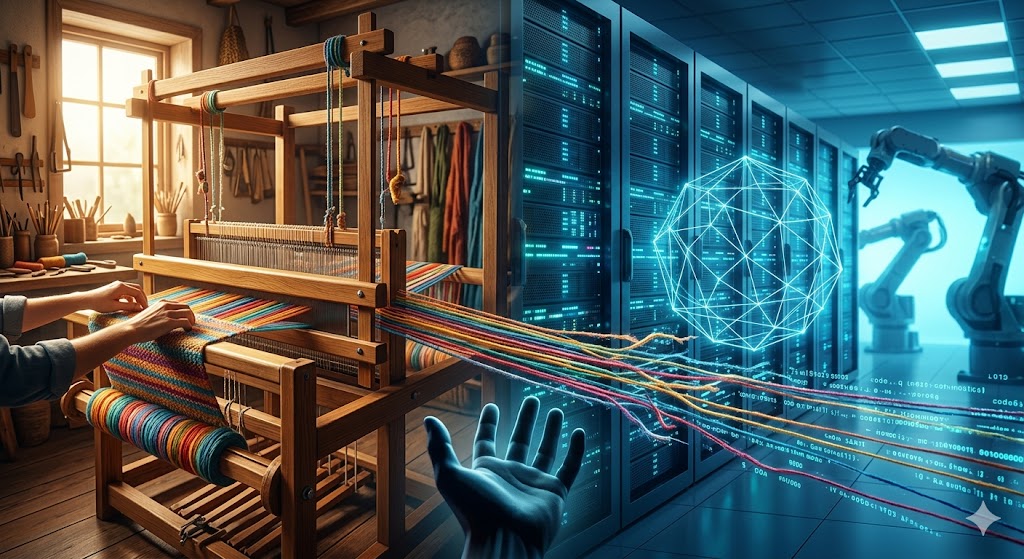
To understand the looming cultural backlash, we must first rescue history from its own terminology. In common parlance, a “Luddite” is dismissed as a technophobe — someone stubbornly clinging to the past out of ignorance. In reality, the 19th-century English textile workers who smashed mechanical looms weren’t fighting technology; they were fighting the destruction of their communities, their livelihoods, and their dignity. They were protesting a systemic failure of experience design. The Modern Luddite Movement will not be born in factories, but in the digital workspaces of knowledge workers, creatives, and strategists who see their intellectual sovereignty being commoditized overnight.
“True innovation is never just about building what is technologically possible; it’s about designing a future where humanity actually wants to live.”
The core tension of our current era is that we are treating a massive societal transformation as a mere software update. We are obsessing over algorithmic efficiency while completely neglecting the human experience of that change. The coming backlash is not a failure of human adaptability — it is a predictable, deeply human reaction to a profound lack of empathy in how innovation is being managed and deployed. If we continue to design people out of the equation, we shouldn’t be surprised when they decide to break the equation entirely.
I. The Anatomy of Disruption: Why This Backlash is Different
Every industrial milestone has forced humanity to renegotiate its relationship with labor. However, treating the rise of generative artificial intelligence as just another predictable chapter in economic history is a grave strategic error. The impending friction is structurally unique, characterized by unprecedented velocity, deep psychological dislocation, and a fundamental degradation of the end-user experience.
The Speed-to-Scale Problem
In past industrial revolutions, the transition of the workforce was measured in generations. When steam power or assembly lines reshaped manufacturing, the prolonged timeline allowed society to build new educational pipelines, adapt labor laws, and give workers time to naturally transition. Generative AI moves at internet speed, scaling globally in days rather than decades. This compressed adoption curve completely outpaces human psychological and economic retraining cycles. We are expecting professionals to reinvent their entire career architectures in months, creating an unprecedented deficit in human change management.
Identity vs. Utility
When mechanical automation disrupted blue-collar labor, it targeted physical exertion. The AI revolution targets cognitive output, striking directly at the core of human identity. For knowledge workers, strategists, and creatives, “what they do” is inextricably linked to “who they are.” When an algorithm can instantly replicate a piece of writing, a strategic analysis, or a visual design, the resulting crisis isn’t merely financial — it is deeply existential. Organizations that view headcount reduction purely as a line-item efficiency gain fail to realize they are tearing at the fabric of professional self-worth, triggering a potent, emotionally charged defensive response.
The Loss of the “Human Touch”
From an experience design perspective, the aggressive rush toward total automation introduces a critical flaw: the complete prioritization of transactional efficiency over relational connection. When every customer touchpoint, creative artifact, and organizational interface is filtered through an automated layer, the overall human experience begins to homogenize and degrade. This creates a vacuum of authentic connection. As digital spaces become hyper-automated and sterile, we will witness a powerful, consumer-led demand for friction — a deliberate rejection of algorithmic optimization in favor of verified, authentic human interaction.
II. Signals of the Emerging Counter-Culture
The cultural backlash to unmanaged automation is no longer a distant, hypothetical scenario; the early warning signals are already flashing across the professional and cultural landscape. As organizations continue to deploy technology without an accompanying architecture for human change management, a distinct, decentralized counter-culture is beginning to manifest. This movement is defined by a conscious retreat from algorithmic spaces and an active resistance against digital displacement.
The Rise of “Analog Enclaves”
We are witnessing the emergence of spaces, products, and communities that explicitly ban or restrict automated inputs. Just as the slow food movement arose in response to industrial fast food, “Analog Enclaves” are forming to preserve unoptimized human experiences. From creative agencies guaranteeing 100% human-authored strategies to local marketplaces operating on zero-algorithm models, consumer preferences are shifting. A premium is being placed on the intentional injection of human friction. The label “Human-Made” is transitioning from a point of nostalgic pride to a highly sought-after, defensive certification of authenticity and quality.
Digital Sabotage and Creative Non-Compliance
Resistance inside the enterprise is rarely loud; it is typically quiet, calculated, and highly effective. Knowledge workers are increasingly engaging in creative non-compliance to protect their domains. This manifests as data poisoning — intentionally introducing flawed inputs to disrupt automated training models — and the deliberate bypassing of corporate AI tools in favor of legacy, human-centric workflows. When workers feel they are being automated out of their own roles rather than augmented within them, survival instincts drive them to quietly sabotage the very systems designed to replace them.
Algorithmic Cynicism and Consumer Fatigue
From an experience design standpoint, the internet is rapidly approaching a saturation point of synthetic mediocrity. The digital ecosystem is cluttered with low-effort, AI-generated noise, resulting in widespread algorithmic cynicism among consumers. People are developing a profound fatigue toward hyper-optimized, sterile interfaces and generic content. This fatigue is driving users away from mass digital platforms and toward small, private, low-tech communities where the interaction is messy, unoptimized, and undeniably human. When efficiency completely destroys novelty and delight, the consumer simply walks away.
III. Designing the Alternative: Co-Creation Over Displacement
The solution to a cultural backlash is not to halt technological progress, but to change how we architect it. If leadership continues to treat human beings as variables to be optimized out of the system, resistance is guaranteed. To avoid systemic friction, organizations must pivot from predatory automation to participatory innovation, designing new organizational structures that value human ingenuity as the ultimate differentiator.
From Automation to Augmentation
We need to fundamentally reframe the corporate balance sheet. The current trend asks, “How many headcounts can this technology eliminate?” A human-centered leader asks, “How can this technology liberate our people to solve higher-order problems?” True innovation occurs at the intersection of technological capability and human insight. When we shift our focus from automation to augmentation, we design workflows where machines handle the heavy lifting of data processing, leaving humans free to focus on empathy, contextual judgment, and creative breakthroughs.
The “Human-in-the-Loop” Experience Architecture
In experience design, a system is only as good as the human outcomes it produces. Deploying automated systems without a robust human interface creates an fragile environment prone to failure. Organizations must intentionally build “Human-in-the-Loop” architectures, where human oversight is not an afterthought or a safety net, but a core structural component. By positioning employees and customers as active co-creators of the technology rather than passive recipients of its outputs, we foster ownership, drastically reduce change resistance, and ensure the final experience retains its vital human touch.
Continuous Upskilling as a Change Framework
You cannot successfully manage a technical transition without a matching human transition architecture. Expecting employees to adapt to a radically altered operational landscape without systemic support is a failure of leadership. Organizations must embed continuous upskilling directly into their operational models. This means designing clear, empathetic learning pathways that allow workers to evolve alongside the tools they use. When people see a clear path forward for their personal growth and economic security within the future vision of the company, the urge to resist transforms into an incentive to innovate.
Conclusion: A Call for Human-Centered Futurology
We stand at a critical crossroads in the evolution of work and culture. The rise of the Modern Luddite Movement is not an inevitable tragedy, but a flashing dashboard indicator warning us that our current innovation trajectory is dangerously out of balance. If we continue to allow technology to outpace empathy, we will lock ourselves into an era defined by systemic cultural friction, bitter labor disputes, and a fragmented digital ecosystem built entirely on mutual distrust.
The choice before us is a design challenge. We can either deploy artificial intelligence as a tool of displacement, or we can deliberately architect an inclusive future of work that honors and amplifies human capability. True futurology is not about passively predicting what technology will do to us; it is about actively designing what we will do with technology. It is time to move past the obsession with what is merely technologically possible and start focusing on what is humanly desirable. The best way to manage change is to ensure that everyone has a stake in the future we are building.
Frequently Asked Questions
Who are the “Modern Luddites” in the context of the AI revolution?
Unlike the historical stereotype of technophobes who hate progress, Modern Luddites are primarily knowledge workers, creatives, and strategists. They are resisting the systemic destruction of their livelihoods, intellectual sovereignty, and professional identities caused by rapid, unmanaged AI displacement.
What are the primary signals of an emerging cultural backlash to AI?
Key signals include the rise of “Analog Enclaves” (spaces and products certifying 100% human creation), quiet enterprise resistance like data poisoning or legacy workflow compliance, and consumer algorithmic cynicism driven by a saturation of sterile, AI-generated digital noise.
How can organizations avoid this backlash and manage AI changes successfully?
Organizations must shift from predatory automation to human-centered augmentation. This involves building “Human-in-the-Loop” experience architectures, involving employees in participatory co-creation, and implementing structured, empathetic upskilling frameworks that provide a clear path forward for human workers.
FutureHacking™ Is Coming
FutureHacking™ is Braden Kelley’s strategic foresight methodology — and a paid download and training program is launching soon. Register your interest now to be the first to know when it’s available, and get early access pricing.
Image credit: Gemini
 Sign up here to get Human-Centered Change & Innovation Weekly delivered to your inbox every week.