Beyond the Skillset
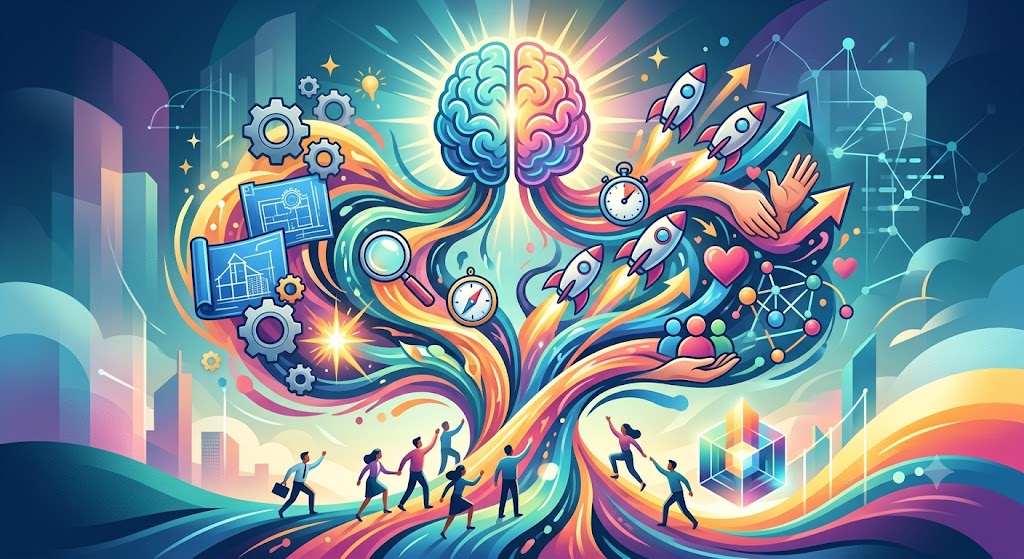
GUEST POST from Art Inteligencia
The Missing Metric: Cognitive Style
To build truly resilient initiatives, leaders must look beyond what people know and focus on how they think. Cognitive Style represents the distinct, fundamental way an individual perceives information, navigates ambiguity, and approaches problem-solving. It is the invisible force shaping team dynamics, determining whether a group will clash during strategic pivots or seamlessly pivot together.
The Thesis
Technical skills define what a team can build, but cognitive style dictates how they adapt, collaborate, and execute when change hits. In an environment defined by continuous disruption and human-centered transformation, cognitive alignment—not functional capability alone—is the ultimate predictor of project success.
The Archetypes of Project Dynamics
Effective change and experience design require balancing four core cognitive archetypes, each bringing a distinct operational lens to the table:
Explorers (Generative)
Thrive in ambiguity, framing problem spaces, identifying unmet user needs, and spotting non-obvious opportunities.
Architects (Structural)
Excel at translating fluid ideas into scalable systems, governance frameworks, and repeatable operational models.
Accelerators (Execution)
Focus on velocity, rapid prototyping, and translating strategy into tangible, testable project milestones.
Integrators (Relational)
Focus on empathy, cross-functional alignment, and ensuring human-centered adoption across stakeholder groups.
The Pivot Crisis
The true test of a team’s cognitive balance occurs when unexpected disruptions strike. Cognitively uniform teams suffer from systemic blind spots: a team composed entirely of Accelerators may rush down a flawed path without pausing to reframe the problem, while a team dominated by Explorers can get trapped in endless discovery loops. Without a diverse cognitive mix, teams lack the internal mechanics required to gracefully absorb scope adjustments, emerging risks, or shifting user needs.
The Experience Design Gap
Traditional project environments and legacy governance frameworks heavily favor linear, structural processing. This systemic bias frequently marginalizes generative Explorers during technical execution and sidelines relational Integrators until late-stage change management. Excluding these perspectives during critical design phases results in technically sound deliverables that fail to resonate with end users or achieve meaningful organizational adoption.
Designing Human-Centered Workflows
Cognitive diversity yields value only when the operating environment supports different modes of processing information. Leaders must design collaboration norms, decision-making frameworks, and feedback loops that honor these styles. This means balancing real-time, high-energy brainstorming sessions favored by Accelerators with asynchronous, reflective feedback spaces required by Architects to synthesize complexity before committing to a path.
Cognitive Diversity in Governance
Traditional gatekeeping models often enforce rigid compliance that stifles experimentation, or default to unstructured agility that lacks accountability. Implementing cognitively inclusive governance ensures that stage-gates serve as strategic checkpoints rather than bureaucratic hurdles. By structuring decision criteria to validate problem reframing (Explorers), structural integrity (Architects), momentum (Accelerators), and stakeholder empathy (Integrators), governance becomes an accelerator for human-centered change.
Measurable Impact
Shifting focus toward cognitive alignment delivers tangible, bottom-line advantages. Teams built with intentional cognitive harmony experience significantly lower interpersonal drag, demonstrate greater resilience during strategic pivots, and accelerate change adoption. When human-centered experience design meets cognitively balanced execution, organizations consistently see higher innovation yields and faster time-to-value for strategic initiatives.
Closing Thought
Projects rarely fail due to a deficit of technical skill or intelligence—they fail because highly capable individuals are wired to process ambiguity and solve problems in fundamentally incompatible ways. Master the art of cognitive style, and you turn change from an operational hazard into your greatest competitive advantage.
Why does technical talent alone fail to guarantee project success?
Even high-performing technical experts struggle when their problem-solving styles conflict under pressure. Without cognitive synergy, teams encounter friction, struggle to handle scope changes, and experience delays during critical strategic pivots.
How can leaders orchestrate teams for optimal cognitive balance?
Leaders should map team composition to the lifecycle stages of an initiative—leveraging Explorers and Integrators during early discovery, and shifting toward Architects and Accelerators during structured build and execution phases.
Bring This Thinking to Your Next Event
Braden Kelley is a LinkedIn Top Voice, bestselling author, and innovation keynote speaker who helps organizations get to the future first and build sustainable innovation cultures.
Image credit: Gemini
 Sign up here to get Human-Centered Change & Innovation Weekly delivered to your inbox every week.