Category Archives: Finance

Design Thinking in Financial Services

Enhancing Customer Experience in Banking

Design Thinking in Financial Services - Enhancing Customer Experience in Banking

GUEST POST from Art Inteligencia

In today’s highly competitive financial services industry, banks are constantly seeking innovative ways to differentiate themselves and provide exceptional customer experiences. One approach gaining popularity is design thinking. By applying this human-centered design approach, banks can better understand customer needs and create solutions that truly enhance their experience. This article explores the concept of design thinking in financial services, highlighting its benefits and presenting two case studies that showcase how this approach can revolutionize the customer experience in banking.

Case Study 1: DBS Bank – Reinventing the Branch Experience

DBS Bank, one of Asia’s leading financial institutions, undertook a comprehensive redesign of its branches to align with design thinking principles. The bank conducted extensive research to understand customer pain points and preferences. By mapping the customer journey, DBS Bank gained insights into areas where it could improve the customer experience.

Using design thinking, DBS Bank transformed its branches into vibrant and welcoming spaces, departing from the traditional cold and impersonal atmosphere. The bank incorporated technology seamlessly into the branch experience, providing customers with self-service kiosks, touch-screen displays for product information, and interactive tools for personalized financial planning. These changes not only enhanced efficiency but also encouraged customers to engage more actively with their banking needs.

As a result, DBS Bank saw a significant increase in customer satisfaction and engagement. The branch transformation project showcased how design thinking can positively impact the customer experience, making traditional banking more accessible and enjoyable.

Case Study 2: Simple – A Digital-First Banking Solution

Simple, an online banking platform in the United States, embraced design thinking to create a truly customer-centric banking experience. Simple aimed to simplify banking, addressing the frustrations customers encountered with traditional banks’ complex products and processes.

Through extensive user research and empathy mapping, Simple identified key pain points experienced by their target customers. Armed with these insights, the company created a streamlined online platform with an intuitive user interface. It focused on providing real-time financial insights, goal-oriented savings features, and transparent fee structures—all while eliminating unnecessary bureaucracy.

By leveraging design thinking in their digital-first approach, Simple ensured that its platform catered to users’ needs, resulting in high customer satisfaction and loyalty. Simple’s success demonstrated how design thinking can be applied not only to physical spaces but also to digital solutions, revolutionizing the customer experience in banking.

Conclusion

Design thinking is transforming the financial services industry by enabling banks to put customers at the center of the design process. By gaining deep customer insights, banks can create innovative solutions that enhance the customer experience, driving customer satisfaction and loyalty. The case studies of DBS Bank and Simple highlight how design thinking can be applied in both physical and digital environments, leading to remarkable improvements in customer engagement and overall brand reputation. As financial institutions continue to prioritize customer experience, embracing design thinking becomes pivotal for their success in an increasingly competitive landscape.

SPECIAL BONUS: Braden Kelley’s Problem Finding Canvas can be a super useful starting point for doing design thinking or human-centered design.

“The Problem Finding Canvas should help you investigate a handful of areas to explore, choose the one most important to you, extract all of the potential challenges and opportunities and choose one to prioritize.”

Image credit: Wikimedia Commons

Subscribe to Human-Centered Change & Innovation WeeklySign up here to get Human-Centered Change & Innovation Weekly delivered to your inbox every week.
Change Management Best Practices for Mergers and Acquisitions

Change Management Best Practices for Mergers and Acquisitions

GUEST POST from Art Inteligencia

Mergers and acquisitions (M&A) can be one of the most challenging events any business will ever experience. Change management is essential to ensure the successful integration of two organizations, cultures, and systems. To ensure a smooth transition, it’s important to have a plan in place that covers every aspect of the process. Here are some key best practices for change management during mergers and acquisitions.

1. Establish Clear Goals and Objectives: Before beginning any merger or acquisition, it’s important to set clear goals and objectives. This includes the desired outcomes of the transaction, the timeline for the integration process, and the resources that will be required. Having a clear understanding of the objectives will help ensure that everyone is on the same page throughout the process.

2. Develop a Change Management Plan: A comprehensive change management plan should be developed to guide the transition process. The plan should address the impact of the merger or acquisition on the people, processes, and technologies involved. It should also include strategies for communicating the changes to stakeholders, as well as plans for training and supporting employees during the transition.

3. Create an Open Communication Platform: Open and effective communication is essential for managing change during a merger or acquisition. All stakeholders should be kept informed of the progress of the merger or acquisition, and any changes that arise should be communicated in a timely manner. An open communication platform should be established to ensure that information is shared quickly and accurately.

4. Stress the Benefits: It’s important to emphasize the positive aspects of the merger or acquisition to all stakeholders. Employees should be made aware of the benefits they will experience as a result of the transaction. This could include new job opportunities, expanded markets, or access to new technologies.

5. Monitor and Adjust: The transition process should be constantly monitored and adjusted as needed. This could include changing the timeline, adjusting the resources required, or even scrapping the plan altogether and starting over. It’s important to remain flexible and be prepared to adjust the plan as needed.

Mergers and acquisitions can be a difficult and stressful process, but with the right change management plan in place, the transition can be much smoother. By following these best practices, businesses can ensure that the transition is successful and that stakeholders are satisfied with the outcome.

Image credit: Pexels

Subscribe to Human-Centered Change & Innovation WeeklySign up here to join 17,000+ leaders getting Human-Centered Change & Innovation Weekly delivered to their inbox every week.

Democratizing Investment in Employee Ideas

Internal Crowdfunding

Democratizing Investment in Employee Ideas

GUEST POST from Chateau G Pato
LAST UPDATED: January 4, 2026 at 9:53AM

In our current world, the traditional hierarchies of innovation are not just outdated; they are becoming a liability. For years, the path an idea took from a front-line employee to a realized project was fraught with gatekeepers, budget cycles, and the ever-present “corporate antibody.” We relied on a small group of executives to play the role of the all-knowing Oracle, deciding which useful seeds of invention deserved water and which should be left to wither. But as I have long advocated, innovation is change with impact, and impact is maximized when the power to invest is placed back into the hands of the community.

Internal Crowdfunding is the architectural shift we need to move from a “permission-based” culture to an “empowerment-based” one. By allowing employees to act as micro-Venture Capitalists within their own organizations, we aren’t just funding projects; we are rebuilding the Psychological Contract. We are telling our people that we trust their judgment, their expertise, and their passion. In 2026, the most successful organizations are those that have democratized the “Yes,” ensuring that brilliance can emerge from any corner of the enterprise, regardless of title or department.

“The greatest untapped resource in any organization is not the data in its servers, but the dormant ‘investor’ within every employee. When we democratize the funding of ideas, we transform a workforce of task-takers into a community of future-builders.” — Braden Kelley

The Mechanics of Democratized Innovation

Internal crowdfunding typically involves allocating a specific “innovation budget” to employees in the form of virtual tokens or actual micro-grants. These individuals then “invest” their tokens into the projects proposed by their peers. This creates a Marketplace of Ideas where the signal of collective intelligence replaces the noise of political maneuvering. It provides a mechanism for Human-Centered Innovation™ by ensuring that the problems being solved are the ones the employees actually feel and see every day.

This approach effectively bypasses the “Innovation Theater” often seen in standard suggestion boxes. When people have “skin in the game” — even if that skin is virtual currency — they become more discerning. They ask better questions, offer more constructive feedback, and become natural champions for the projects they choose to support. This is the essence of FutureHacking™: using the present’s social dynamics to force a more equitable and innovative future.

Case Study 1: Siemens and the “Quick Pitch” Revolution

The Challenge: Siemens, a global powerhouse in electronics and electrical engineering, faced the challenge of a “legacy mindset” where ideas from younger engineers or non-technical staff were often ignored in favor of established product roadmaps.

The Approach: They implemented an internal crowdfunding platform where employees were given “i-coins.” Employees could post 90-second video pitches for process improvements or product features. If a pitch reached a certain funding threshold from the community, the company committed to providing the “time and tools” (rather than just cash) to prototype the idea.

The Result: Over 1,500 projects were funded in the first two years. More importantly, the data showed that the community-funded projects had a 30% higher success rate in reaching the prototyping stage than those selected by a traditional management committee. It proved that the corporate antibody is weakest when the community stands together.

Case Study 2: Bosch and the “Innovation Framework”

The Challenge: Bosch needed to pivot toward digital services and software-driven solutions but found that the rigid budget cycles of their hardware divisions were stifling “lean” experimentation.

The Approach: Bosch established an internal crowdfunding mechanism as part of their broader innovation ecosystem. They allowed teams to “raise” small amounts of seed funding from their colleagues to prove a concept before ever presenting to a formal board. This effectively acted as a pre-seed round that filtered out the noise and surfaced the most viable useful seeds of invention.

The Result: This democratized investment led to the development of several new IoT-based service lines that now account for a significant portion of their growth. By shifting the “Proof of Concept” burden to the community, Bosch accelerated their transformation and significantly improved employee engagement scores.

Conclusion: From Resources to Investors

To truly embrace Human-Centered Innovation™, we must stop viewing our employees as “resources” to be managed and start seeing them as “investors” in the company’s future. Internal crowdfunding is the tool that facilitates this mental shift. It requires us to unlearn the “command and control” operating system of the past and install a new, more transparent system based on trust and collective agency.

If you are looking for an innovation speaker or a thought partner to help your organization navigate these complex shifts requiring innovation and transformation, I suggest Braden Kelley because he is always focused on the human side of the equation. We don’t innovate for the sake of the technology; we innovate for the sake of the people. Democratizing investment is the highest expression of that principle.

Frequently Asked Questions

How does internal crowdfunding prevent “popularity contests” over quality?

By combining crowdfunding with “Social Proof” and peer-review mechanics, the best platforms allow for critical feedback alongside the investment. Additionally, many companies use a “hybrid” model where community funding unlocks a formal review by experts, ensuring that the ideas are both popular and viable.

What is the “Corporate Antibody” in this context?

The corporate antibody is the organizational resistance to change. In innovation, it often manifests as mid-level managers who “kill” new ideas to protect their existing budgets or status quo. Internal crowdfunding bypasses these antibodies by allowing ideas to get traction through peer support first.

Can virtual tokens really drive real innovation?

Yes, because the tokens represent social capital and influence. Even without a direct cash value, the act of “backing” a colleague’s project creates a sense of shared ownership and accountability. In 2026, the psychological reward of being an “early investor” in a successful company project is a powerful motivator.

Extra Extra: Because innovation is all about change, Braden Kelley’s human-centered change methodology and tools are the best way to plan and execute the changes necessary to support your innovation and transformation efforts — all while literally getting everyone all on the same page for change. Find out more about the methodology and tools, including the book Charting Change by following the link. Be sure and download the TEN FREE TOOLS while you’re here.

Image credits: Google Gemini

Subscribe to Human-Centered Change & Innovation WeeklySign up here to get Human-Centered Change & Innovation Weekly delivered to your inbox every week.

Apple iPhone 6 Killer App Revealed

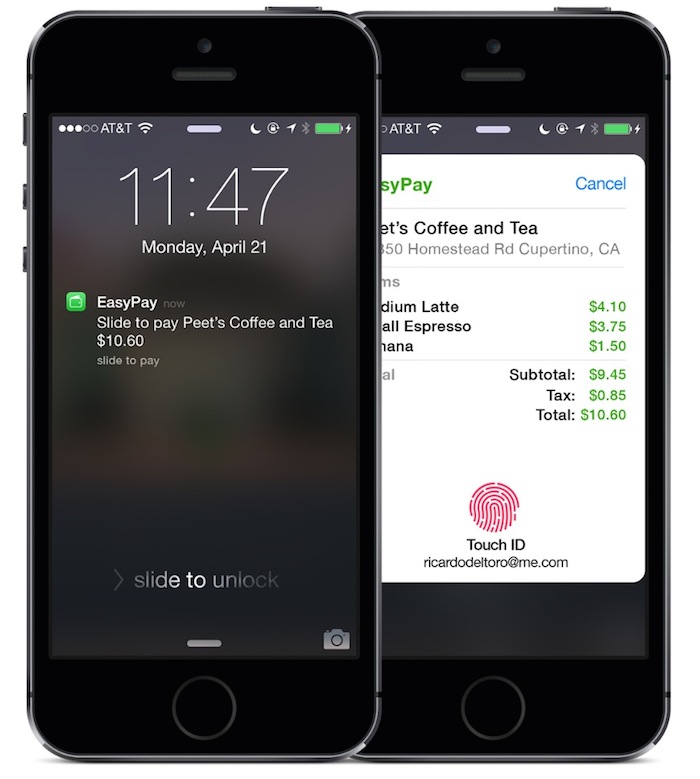
Apple iPhone 6 Killer App RevealedWhile most people are focused on what the new Apple iPhone 6 hardware might look like and what new gizmos it might have, the real killer app for Apple’s latest refresh of their flagship mobile device will be an App and a little tiny NFC chipset.

Rumored for the iPhone 5 (rumors which were heightened by Apple’s acquisition and subsequent inclusion of fingerprint sensor technology), mobile payments may finally be a built-in feature of the Apple’s newest handset, the iPhone 6.

Apple has been reportedly out talking to the likes of Visa, American Express, Nordstrom and others, and if that is all true then expect part of Apple’s Tuesday September 9th announcement to be focused on the new mobile payment capabilities of the iPhone 6.

I was one of those who thought that mobile payments might launch as part of the iPhone 5’s capabilities, but obviously the technology, or more likely the relationships and contracts, were not ready for prime time a year ago.

Will mobile payments authenticated by your fingerprint finally appear in the iPhone 6?

If so, soon we will finally be able to stop carrying around wallets and switch to money clips and mobile phones, as such a feature will not only replace credit cards, but loyalty cards, insurance cards, and more.

Yes, Samsung may have done it first with the Galaxy S5, but you know Apple will do it bigger (and better).

I guess we’ll find out next week.

Image credit: Ricardo Del Toro


Build a common language of innovation on your team

Subscribe to Human-Centered Change & Innovation WeeklySign up here to get Human-Centered Change & Innovation Weekly delivered to your inbox every week.

Where is your Innovation Friction?

Innovation Perspectives - Where is your Innovation Friction?How should firms develop the organizational structure, culture, and incentives (e.g., for teams) to encourage successful innovation?

When it comes to creating an innovation culture, often people make it far too complicated. If you’re part of the senior leadership team and you’re serious about innovation then your job is simple – reduce friction.

If you’re serious about innovation and you’re not a senior leader, then your job is to do what you can to convince senior leadership that innovation is important. Then, gently help your execs see the areas of greatest friction in your organization so they can do something about it.

When it comes to creating a culture of innovation, the most frequently cited area of friction in organizations is the acquisition of resources for innovation projects (the infamous time and money). Senior leaders serious about innovation must eliminate the friction that makes it difficult for financial and personnel resources to move across the organization to the innovation projects that need them (amongst other things).

But this particular impediment is just a part of a much larger barrier to innovation – the lack of an innovation strategy. When senior leadership commits to innovation and sets a strong and clear innovation strategy then policies and processes get changed and resources move.

A couple of years ago I ran a poll on LinkedIn asking people to identify their organization’s biggest barrier to entry. 566 people responded and 58% of respondents identified either the absence of an innovation strategy or the psychology of the organization as the biggest barrier. ‘Organizational psychology’ came out on top with 32% of the vote, with ‘Absence of an innovation strategy’ a close second (26%). Other choices in the poll included – ‘Organizational structure’, ‘Information sharing’, and ‘Level of trust and respect’.

(poll results timed out on LinkedIn)

A second major area of innovation friction is the movement of information. Too often there is information in disparate parts of our organizations that remains separated and unknown to the people who need it. Organizations that reduce the friction holding back the free flow of relevant information to where it is needed will experience a quantum leap in not only their product or service development opportunities, but in many other parts of their organization including sales, marketing, and operations.

So, what are the areas of friction that are holding your organization back from reaching its full innovation potential?

What are the barriers to innovation that have risen in your organization as you struggle to maintain a healthy balance between your exploration and exploitation opportunities?

I’ve explored the idea of barriers to innovation further in my book Stoking Your Innovation Bonfire from John Wiley & Sons. It’s been called “accessible and comprehensive” and companies have been acquiring it in bulk to both identify and knock down barriers to innovation, but also to build a common language of innovation.

Build a Common Language of Innovation

Subscribe to Human-Centered Change & Innovation WeeklySign up here to get Human-Centered Change & Innovation Weekly delivered to your inbox every week.

Innovation Costs of Reducing the Flow of Immigrants and Travelers to USA

Innovation Costs of Reducing the Flow of Immigrants and Travelers to USA

September 11th was a traumatic event for the psychology of the nation but also for its innovation capacity. After 9/11 the United States started admitting fewer highly skilled immigrants, invited fewer students to come study here, and companies and consumers cut back on their travel budgets.

These factors, along with many others, combined to reduce the amount of face to face collaboration and created new innovation headwinds for the country.

In 2001, Michael Porter of Harvard Business School published a report ranking the United States as #1 in terms of innovative capacity. By 2009, the Economist Intelligence Unit had dropped the United States in its innovation rankings from #3 between 2002 – 2006 to #4 between 2004 – 2008. The most recent Global Innovation Index has the United States falling from #1 in 2009 to #7 in 2011 — behind Switzerland, Sweden, Singapore, Hong Kong, Finland, and Denmark.

If you’re the United States, not being #1 anymore is a definite concern. Innovation drives job creation, and any decrease in the pace of domestic innovation will ultimately lead to lower economic growth. As the United States slides down the innovation rankings, restrictive immigration policies suddenly look less smart.

The number of foreign student visas increased by a third during the 90s, peaking in 2001 at 293,357 before dropping post-9/11 by 20 percent nearly overnight. It took five years before foreign student visa numbers recovered to 2001 levels. Last year, 331,208 foreign student visas were issued.

But a drop-off in highly skilled immigration does not account for the entire drop in America’s innovation leadership. Another headwind that hit post-9/11 was the drop-off in travel in America. In August 2001, 65.4 million airline passengers traveled to the country. It took three years for passenger growth to resume.

Travel — both corporate and leisure — is important to innovation for three main reasons:

  1. People see and experience things that spark new ideas
  2. Face-to-face meetings deepen human connection and improve productivity and collaboration.
  3. Innovation partnerships and acquisitions are often made in-person.

The United States is at an innovation crossroads. We must commit to attracting more innovators to this country, and to traveling abroad more. Not doing so is guaranteed to exacerbate America’s slide from innovation leader to laggard.

This article first appeared on The Atlantic before drifting into the archive

Build a Common Language of Innovation

Subscribe to Human-Centered Change & Innovation WeeklySign up here to get Human-Centered Change & Innovation Weekly delivered to your inbox every week.

Business Model Innovation?

Business Model Innovation?

Nearly five years ago I wrote this article, but I think it is worth dredging it up out of the archives because there is such misunderstanding out there about what business model innovation is. This article highlights some of the misconceptions people have about what business model innovation truly is and looks quickly at a couple of more appropriate examples of business model innovation. But of course I’d love to hear your thoughts in the comments, including your favorite business model innovation examples.

Here’s the article from 2007:

I came across an article on BusinessWeek.com that I just have to write about because it asserts that GM has achieved a business model innovation by shunting its retiree medical obligations onto the Union (and getting away with only contributing 70% of the outstanding obligations to the fund).

This is not a business model innovation, but purely a negotiation outcome and nothing that will give GM any sustainable competitive advantage. Ford and Chrysler will end up doing the same thing and the parity of competition amongst US manufacturers will be restored. A business model innovation is Southwest Airlines establishing a new airline focused on providing low fare point to point air travel instead of creating another airline based on a hub and spoke model, or Saturn selling their cars for a fixed price, not GM pushing obligations off their balance sheet.

GM is not losing in the automobile industry because of health care costs for retirees. They are losing because their operations result in cars that less and less people want to buy. GM needs to stop complaining about peripheral issues and trying to be like Toyota and instead focus on how they can be better than Toyota.

When workers come back on the job, nothing will have changed in their business, the business of designing, manufacturing and selling cars. If anything the workers are going to come back to work feeling like they have just given even more away to the corporation, just so that the CEO’s balance sheet look better. This is not a business model innovation. The Big Three will not avoid the inevitable by simply squeezing their union workforce, they need to design and manufacture better cars. This deal with the unions may slow the inevitable, but not avoid it. Toyota is passing GM, the Korean manufacturers are quickly improving their quality, and the Chinese will begin entering the US market in the next few years. One of the Big Three will go out of business in the next ten years. The real question is which one?

Build a Common Language of Innovation

Subscribe to Human-Centered Change & Innovation WeeklySign up here to get Human-Centered Change & Innovation Weekly delivered to your inbox every week.
4 Days to Innovate

4 Days to InnovateThe clock is ticking on the congressional “supercommittee” – a panel comprised of six Republicans and six Democrats charged with issuing a plan to balance the nation’s budget. The bipartisan gathering has only four days until their deadline to submit such a plan. But how well can they, or anyone, innovate while the clock is ticking?

Continue reading the rest of this article on The Washington Post

Subscribe to Human-Centered Change & Innovation WeeklySign up here to get Human-Centered Change & Innovation Weekly delivered to your inbox every week.