
Update — May 2026
This article was originally published in 2012 when trendspotting was still an emerging discipline in business strategy. More than a decade later the practice has become central to how forward-thinking organizations monitor signals and anticipate disruption. The core trifecta framework described here remains sound — though the tools, data sources, and speed at which trends emerge have changed dramatically. For a more comprehensive look at what trendspotting means today, see our guide to what trend spotting is and how to apply it in modern organizations.
‘Who should be responsible (if anyone) for trend-spotting and putting emerging behaviors and needs into context for a business?’
I believe this question should really be broken up because there are three VERY different (and incredibly important) pursuits intermingled here:
- Trend spotting
- Putting emerging behaviors into context for a business
- Putting emerging needs into context for a business
Only at the very beginning of a business, when it is all or nothing for a small team of founders, should responsibility for these three tasks be combined. The reason responsibility for these three different pursuits should be split up is because each requires a different way of thinking, that often requires different types of people to generate the most relevant and actionable insights.
As I’ve written before, insights and execution are the real keys to business success, and in building any successful innovation – the insights come first. So, combining these three pursuits properly and getting the insights correct is incredibly important – otherwise you’ll design, build, and distribute a solution that misses the mark with customers.
Trend spotting requires big picture thinking, a talent for separating the notable from the unimportant, the ability to see how potential trends connect together, and the vision to see the impact of this trend intersection (what megatrends might they point to, etc.).
Putting emerging behaviors into context for a business requires an incredible capacity for insightful observation, the ability to spot influential thinkers who are good at identifying and describing changing behaviors, and the skills to synthesize a collection of perspectives into a cohesive view of the future. This view of the future must of course have a strong chance of being correct.
Putting emerging needs into context for a business is incredibly difficult and requires understanding how emerging trends and behaviors will intersect with new technologies and other business capabilities to expose new customer needs. Those new needs then represent potential growth areas for businesses to enter with new solutions. The goal of course is to identify and act upon these emerging needs before the competition has the opportunity to observe these needs as expressed behaviors and actions and react.
The one skill that all three share in common however, is the ability to disconnect one’s own perspective from the changing perspectives of others. Whether you as an organization choose to hire people into these roles, hire in consultants to provide this insight, or to spread the responsibilities around the organization, you must have a strategy.
Personally, I believe organizations may soon begin creating insight networks within their organizations in the same way that they currently do with innovation. This means having a central insights team at Corporate HQ with strong executive support that is responsible for managing the process, the distributed global network, its training/certification, and its outputs. This does not have to mean starting a new team – companies could incorporate these responsibilities within an existing dedicated-innovation infrastructure. So, can an insight management software industry be far behind?
And last but not least you will need to assign people to monitor trends and emerging behaviors and needs from Six Ways to Sunday:
- Demographic and Psychographic Changes
- Legal and Political Changes
- Different Geographies
- Different Industries
- New Supplier and Technology Capabilities
- New Business Capabilities and Business Models
Do you have a strategy and responsibilities in place for spotting trends and emerging needs/behaviors in your organization?
What are you waiting for?
 Sign up here to get Human-Centered Change & Innovation Weekly delivered to your inbox every week.
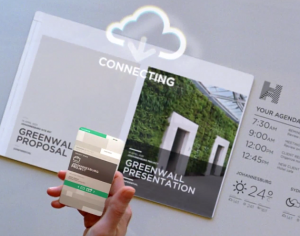 I came across the latest vision of future productivity from Microsoft today and thought I would share it with you, along with a whole series of previous videos from Microsoft taking a look at the same subject area, ranging from 2009-2015. It is interesting to see what has changed and what has stayed the same over those six years in their view of the future.